



Medium hair is the sweet spot for choppy layered haircuts for medium hair. You get enough length for movement, but not so much weight that every shape disappears under its own bulk. That middle ground is why these cuts can look polished one day and a little undone the next without turning messy.
A good choppy cut is not about hacking off random pieces and hoping for the best. It’s about where the weight comes out, where the face gets framed, and how the ends are softened. Point cutting, razor work, and internal layers all do different jobs, and a decent stylist knows the difference. The bad versions of these cuts usually fail in the same way: too many short layers near the crown, too much thinning at the ends, or a shape that only works after a 20-minute styling session.
Medium hair can carry a lot. It can also sit flat in a heartbeat. That’s why the best cuts below are built to add movement without stealing density, and they all behave a little differently once they grow out. Some are cleaner. Some are messier. Some lean soft and face-framing, while others have that broken-up, airy finish people keep asking for because it looks easy, even when it isn’t.
1. Collarbone Lob With Broken Ends

The collarbone lob with broken ends is the anchor cut in this group. It sits in that sweet spot where the hair still has enough length to swing, but the shape doesn’t drag down your face or flatten at the sides. I like this one because it works on straight, wavy, and slightly curly hair without asking for a giant styling routine.
Why It Works
The collarbone length keeps the outline clean. The broken ends stop it from looking too blunt or boxy.
Ask for soft point cutting through the bottom inch and a few longer interior layers that start below the cheekbones. That keeps the movement low and the bulk balanced. If the stylist goes too high with the layers, the cut can puff out at the shoulders. Nobody wants that triangle shape.
A quick blow-dry with a round brush gives it a little bend, but it also air-dries well if your hair already has a natural wave. This is one of those cuts that looks expensive when it falls into place, even if you did almost nothing.
Best for: people who want movement without a shaggy finish.
2. Curtain Bangs and Airy Layers

Want the easiest way to make medium hair feel lighter around the face? Curtain bangs do a lot of the work for you. They open the forehead, soften the cheek area, and make the rest of the layered cut look more deliberate.
How to Wear It
The trick is the length. A good curtain bang should hit somewhere between the cheekbones and the jaw, depending on your face shape and how much forehead you want to show. Too short, and it can feel choppy in the wrong way. Too long, and it stops reading as a fringe at all.
The layers behind the bangs should move in the same direction, not fight them. That means soft face-framing pieces that blend instead of hard steps that look cut into the hair with no thought. I’d ask for a little more length at the temples if your hair lies flat there. It helps the whole cut fold back nicely when you tuck one side behind the ear.
Styling Notes
- Blow-dry the bangs away from the face first, then split them down the middle.
- Use a small round brush or a large velcro roller if you want lift.
- Keep the ends smooth, but not stiff.
- A pea-sized amount of cream is enough. More turns the fringe greasy fast.
3. Razor Shag With a Soft Edge

The first thing you notice about a razor shag is the texture. The ends don’t sit in a hard line. They look feathered, almost sliced open, and that little bit of looseness changes the whole haircut.
A razor is a sharp tool, so this cut needs a hand that knows when to stop. On medium hair, it removes bulk fast and gives the layers a wispy finish that shears sometimes can’t match. The soft version is better than the full-on rock-and-roll one if you want something wearable for daily life. You still get the attitude, just without the overstyled look.
What to Ask For
- Layers that start around the cheekbone or lower
- Razor-textured ends, not shredded ends
- Extra movement through the top, not just the bottom
- A perimeter that still keeps some weight
This cut is happiest on hair that already has some wave. On very brittle hair, though, too much razor work can make the ends look dry faster than you’d like. If that sounds like your hair, ask the stylist to keep the razor away from the last inch. That small change matters a lot.
4. Face-Framing Layers That Start at the Cheekbones

Sometimes you do not need a dramatic haircut. You need the front of your hair to stop hiding your face.
That’s where cheekbone-starting layers come in. They pull the eye upward, soften the line around the jaw, and give medium hair some movement without taking away the overall length. This is the cut I’d point to if someone says they want to keep their hair long enough for a ponytail but still see a change when they wear it down.
The best version has a gentle slope from the cheekbone to the collarbone. Nothing abrupt. If the layers begin too high, the front can go stringy. If they begin too low, the haircut reads flat from the front.
Best When You Want
- Movement around the eyes and cheekbones
- A shape that works with glasses
- Less heaviness at the front without a full shag
- Hair that tucks behind the ear cleanly
This is one of those cuts that looks simple in the chair and quietly good everywhere else.
5. U-Shaped Cut With Choppy Ends

Not every choppy cut needs a shaggy silhouette. A U-shaped cut keeps the back longer and the sides slightly shorter, which gives medium hair a soft curve instead of a hard shelf. The choppy part comes from the ends, not from a stack of high layers.
That matters. A lot.
With thick hair, the U shape prevents the bottom from turning into a wide block. With straighter hair, it stops the ends from looking too blunt or heavy. The curve is subtle, but it changes how the whole haircut hangs when you move.
I like this version for people who want a little texture but still like a neat outline. Ask for the perimeter to be softened with point cutting, then keep the internal layering light. The point is movement, not a chopped-up mess.
A center part shows off the curve. A side part makes the front pieces swing a little more. Either way, this cut keeps its shape without needing constant attention.
6. Wolf-Lite Layers for Wavy Hair

The wolf-lite is basically the friendlier cousin of the wolf cut. It keeps the crown a bit shorter, leaves more length through the bottom, and softens the whole thing so it does not look like a costume haircut. On medium wavy hair, that balance works beautifully.
What to Tell Your Stylist
- Keep the top layers short enough to lift, not so short they spike up
- Leave the perimeter long enough to graze the shoulders
- Blend the sides into the face instead of carving them off
- Use texture through the mid-lengths, not just the ends
The wavy version tends to sit better than the straight-hair version because the natural bend helps connect the layers. You don’t need perfect styling here. A little wave cream, a diffuser, and a scrunch with your hands usually gets you most of the way there.
This cut does have a personality of its own. If you like clean lines, skip it. If you like hair that looks a little wild in a good way, this one has real charm.
7. Bottleneck Bangs and Medium-Length Texture

Do you like curtain bangs but want something a little more shaped at the center? Bottleneck bangs are the move. They start shorter in the middle, taper softly toward the temples, and blend into choppy medium-length layers without that heavy curtain effect.
The front opens the face in a nice way. Not too much, not too little. It feels intentional, and that’s the part most people notice first.
This cut works especially well if your forehead is on the broader side or if you want to soften a strong brow. The longer side pieces help the fringe melt into the rest of the cut, so the front doesn’t end abruptly. That blending is the whole game.
Styling Tip
Use a blow-dryer with a concentrator nozzle and direct the bangs forward first, then sweep them side to side as they cool. It sounds fussy. It isn’t. Thirty seconds of that little back-and-forth gives the fringe a softer fall and keeps it from splitting awkwardly.
8. Invisible Layers for Thick Hair

Thick hair can take a lot of shape, but it can also turn into a solid wall if the cut ignores its density. Invisible layers fix that by removing weight inside the haircut instead of carving obvious steps through the surface.
That’s the part I love. The outside still looks clean. The inside feels lighter.
Where the Weight Comes Out
A stylist can take bulk out through the midsection, around the nape, and just behind the ears. The outer line stays strong, which is useful if you want your medium hair to still look full when it’s down. Too many visible layers on thick hair can make the ends flare out, and that is a hard look to tame.
This kind of cut is excellent if you like low-frizz styling. The surface stays smoother because the shape isn’t fighting itself underneath. Add a little smoothing cream and let the layers do the work.
The one thing I would avoid here is over-thinning the ends. Thick hair needs release, not a wispy finish that makes the bottom look sparse.
9. Blunt Base With Piecey Interior Layers

A blunt base with piecey internal layers sounds like a contradiction, and that is exactly why it works. The outer edge gives the haircut strength. The hidden layers bring in movement so the shape doesn’t sit like a block.
This is the cut for someone who likes a polished line but hates hair that hangs heavy. It’s especially good on straight medium hair, where the blunt edge can feel modern and clean, while the interior texture keeps it from looking too severe.
The best version has a perimeter that stays solid at the shoulders, then shorter pieces tucked inside that show up when the hair moves. You get that little flash of texture when you turn your head. It’s subtle. That’s the point.
If you like flat-ironed hair, this one behaves nicely. The ends still look neat, and the piecey layers keep it from feeling too blunt or too formal.
10. Soft Mullet-Inspired Medium Cut

A soft mullet-inspired cut is not nearly as intense as people think. On medium hair, it usually means a little extra lift around the crown and shorter texture near the top, while the back stays long enough to keep the whole thing wearable.
The important word here is soft. You are not asking for a hard 80s throwback unless that is your thing. You want movement, shape, and a bit of edge without losing the ability to tuck it behind your ears and move on with your day.
This cut looks especially good on wavy hair because the texture keeps the transition smooth. Straight hair can wear it too, but it needs a bit more styling, usually with a round brush or a bend from a flat iron.
If you’re nervous, ask for a gentle version first. You can always go shorter at the crown later. Growing it out is easier than living with a cut that feels too sharp for your face.
11. Side-Swept Fringe and Choppy Sides

A side-swept fringe gives medium hair a different kind of energy. It breaks symmetry, adds lift near the front, and makes choppy layers feel less centered and more relaxed.
Why It Helps
Side-swept bangs are useful if your hair has a stubborn part or a cowlick that keeps splitting the front in half. They also help if you want softness around one side of the face without giving up the fullness of medium length. The layers on the sides should follow the same angle so the fringe doesn’t sit like a separate piece.
I’d keep the fringe long enough to tuck behind the ear if needed. Short side bangs can be cute, but they can also feel high-maintenance fast. A longer sweep has more ways to behave.
How to Wear It
- Blow-dry the fringe in the opposite direction first for lift.
- Brush it back across the forehead while it cools.
- Keep the side layers soft, not overly razored.
- Use a light spray, not a sticky wax.
That last part matters. Sticky bangs are a mood killer.
12. Long Internal Layers for Fine Hair

Fine hair does not need to be overloaded with short layers. That’s where a lot of bad advice starts. If you cut too much into the top, the hair can end up see-through and flat at the same time, which is a strange little disaster.
Long internal layers solve that by keeping the outside length intact while giving the hair some shape underneath. The result is movement without the stringy ends. On medium hair, that balance is gold.
A good stylist will usually keep the shortest layers well below the chin and avoid over-texturizing the perimeter. The shape should feel airy, not shredded. If you already lose volume at the crown, this is a better choice than a high shag.
Use a root-lifting mousse and dry the hair with the head turned upside down for the first few minutes. Then smooth the top section back into place. That little trick keeps the roots from collapsing while the ends stay light.
13. Rounded Layers With Crown Lift

There’s a difference between hair that is layered and hair that actually has shape. Rounded layers create that shape by building height near the crown and a soft curve through the sides, which keeps medium hair from falling flat on top.
This cut is a quiet fix for hair that lies close to the head. Not limp. Just low-energy. The rounded structure gives the illusion of more body without making the haircut look teased or overdone.
What to Ask For
- Slight lift at the crown
- Layers that curve into the cheek area
- A soft, rounded perimeter rather than a straight shelf
- Enough length left at the ends to hold weight
This shape is especially kind to hair that gets bigger near the bottom. The top gets some air, the ends keep their fullness, and the whole thing feels balanced. A round brush helps, but even a velcro roller at the crown can make a real difference if you’re short on time.
14. Deep Side Part With Uneven Texture
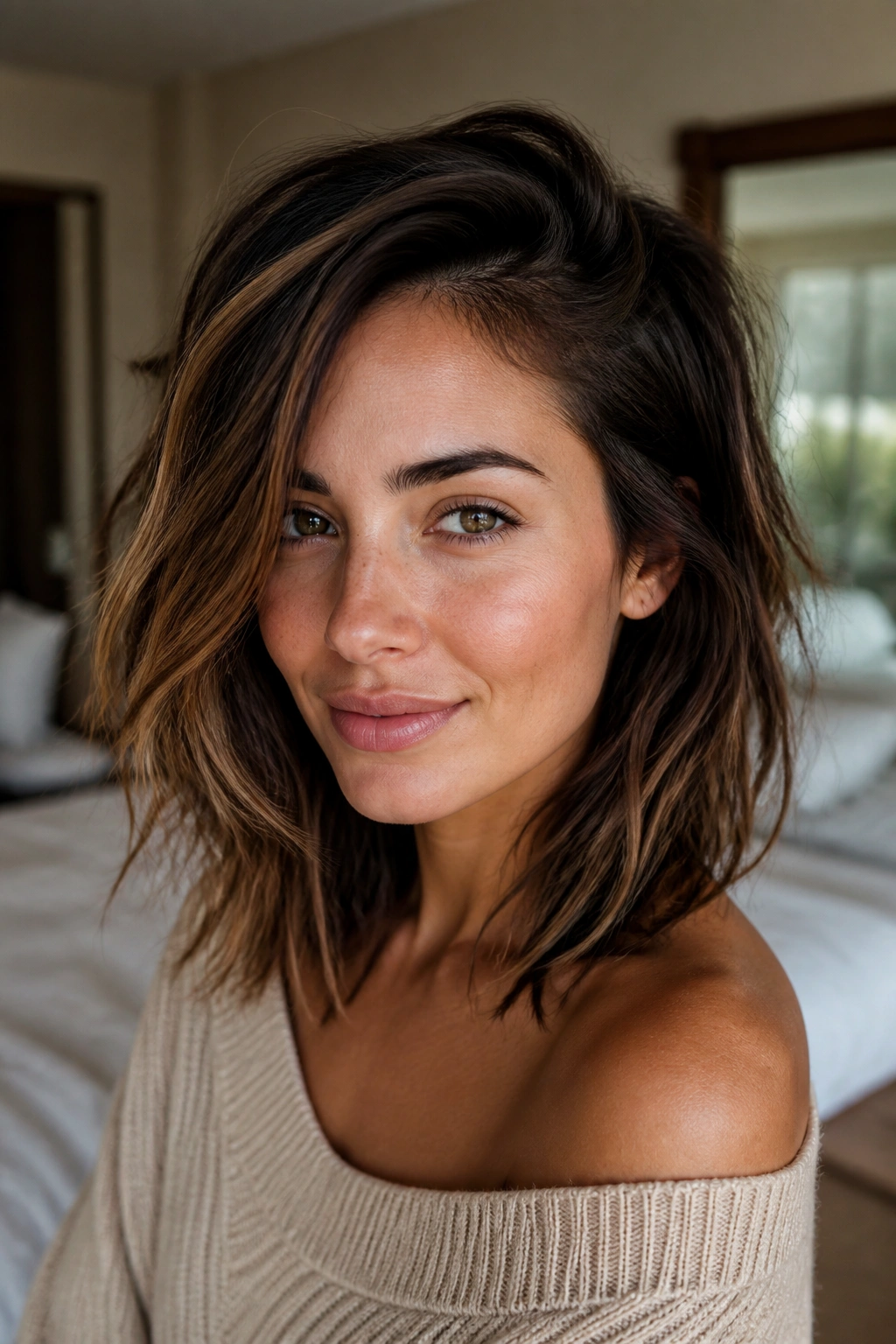
A haircut can change shape completely once the part moves. A deep side part gives medium hair a lifted side, a tucked side, and a little drama without adding any real length.
That uneven texture is the charm. One side can sit close to the face while the other side gets more bounce and volume. It’s a clean way to make a choppy layered cut feel a little less expected.
I like this on people with strong cheekbones or a rounder face that needs a bit more vertical line. The deep part pulls the eye across the forehead and can make the whole silhouette feel longer. It also works well if one side of your hair naturally wants to fall flatter than the other. Stop fighting it. Use it.
You do not need a huge amount of product here. A bit of mousse at the roots and a quick rough-dry with your fingers is often enough.
15. Flipped-Out Ends and Shorter Top Layers

The ends do the talking in this cut. They kick out just enough to feel lively, while the shorter layers on top keep the shape from going limp.
A flipped-out medium cut has a little retro energy, but it doesn’t have to look old-fashioned. Done with a modern, choppy finish, it feels fresh and slightly playful. The movement sits mostly at the bottom, which is useful if you like the rest of your hair to stay smooth.
Styling Notes
- Use a 1.25-inch round brush and roll the ends away from the neck.
- Or bend the last inch with a flat iron if you want a faster version.
- Keep the top layers smooth so the flip at the bottom stands out.
- Finish with a light mist of flexible spray, not a helmet.
This cut is nice for straight or slightly wavy hair. On very curly hair, the ends may fight the shape unless you heat-style them. That’s not a flaw. It’s just a matter of texture and how much work you want to do.
16. Air-Dried Choppy Layers for Natural Waves

If you hate the idea of styling your hair every morning, this is one of the smartest cuts in the bunch. Air-dried choppy layers should work with your natural wave pattern, not against it.
That means the stylist has to think about how your hair behaves when it dries on its own. Some waves stack more at the bottom. Some swell around the crown. Some bend in strange places near the temples. The cut should respect that pattern, which usually means checking the shape dry before taking off too much.
How to Get the Shape Right
- Ask for layers that follow your wave, not fight it
- Keep the ends soft enough to scrunch
- Avoid heavy thinning if your hair frizzes easily
- Use a leave-in conditioner and a small amount of wave cream
This is where people often go wrong. They want movement, so they ask for too much texturing. Then the waves separate, the frizz takes over, and the haircut starts looking thin. A better cut gives the wave room to move without stripping away the body that makes it look good.
17. Mid-Length Cut With Grown-Out Shag Bangs

A grown-out shag bang is one of those happy accidents that ends up looking intentional. The fringe sits longer, brushes the brows or cheekbones, and blends into the rest of the choppy layers instead of sitting there like a separate section.
This cut is ideal if you are growing out bangs and do not want the awkward middle stage to drag on forever. The medium length gives the fringe a place to disappear into, which means the whole haircut can stay shaped while the bangs catch up.
The fringe should be soft enough to tuck to one side if needed, but not so long that it loses its point. The rest of the layers can be loose and slightly uneven, which keeps the haircut from feeling too neat.
I like this one because it looks easy on purpose. There’s movement, a bit of face framing, and no pressure for the front to behave perfectly every second.
18. Low-Maintenance Choppy Layers That Grow Out Gracefully

A good medium haircut should still look decent when it has grown out a bit. This is the version I’d choose for anyone who wants choppy layers but does not want to live in the salon chair.
The shape matters more than the drama. Keep the shortest layers lower, let the perimeter hold some weight, and avoid a cut that depends on constant styling to show its shape. A little pieceiness at the ends is enough. You do not need every strand carved into something trendy-looking under bright lights.
The best grow-out cuts leave room for change. After a few weeks, the layers should still blend into the rest of the hair instead of turning into obvious shelves. That is where thoughtful layering beats trendy layering every time.
If you want one practical rule, it’s this: ask for movement first and attitude second. The hair will still have both. It will just grow out in a way that makes sense, which is rarer than it should be.
