



Face framing layers for long curly hair can make a heavy curtain of curls look lighter without sacrificing the length you fought to keep. The catch is that curly hair does not behave like straight hair with a bend in it. A piece that brushes your cheek when it’s wet may land near your eyebrow once it dries, and that shrinkage changes everything.
Curly hair remembers everything.
That’s why the front of a curly cut needs its own plan. If the pieces nearest your face are too blunt, the whole shape can feel boxy or triangle-shaped. If they’re too short, you end up with a halo of frizz that sits in the wrong place and never quite settles. The sweet spot is a frame that works with your curl pattern, your face shape, and the amount of width you actually want around your cheeks and jaw.
I like this topic because it’s one of those haircut details that looks small on paper and huge in real life. A good face frame can give long curls movement, definition, and a little lift without stealing the length from the back. A bad one can make you spend the next few months trying to tuck pieces behind your ears like they were never meant to be there.
1. Soft Cheekbone Layers That Open the Face
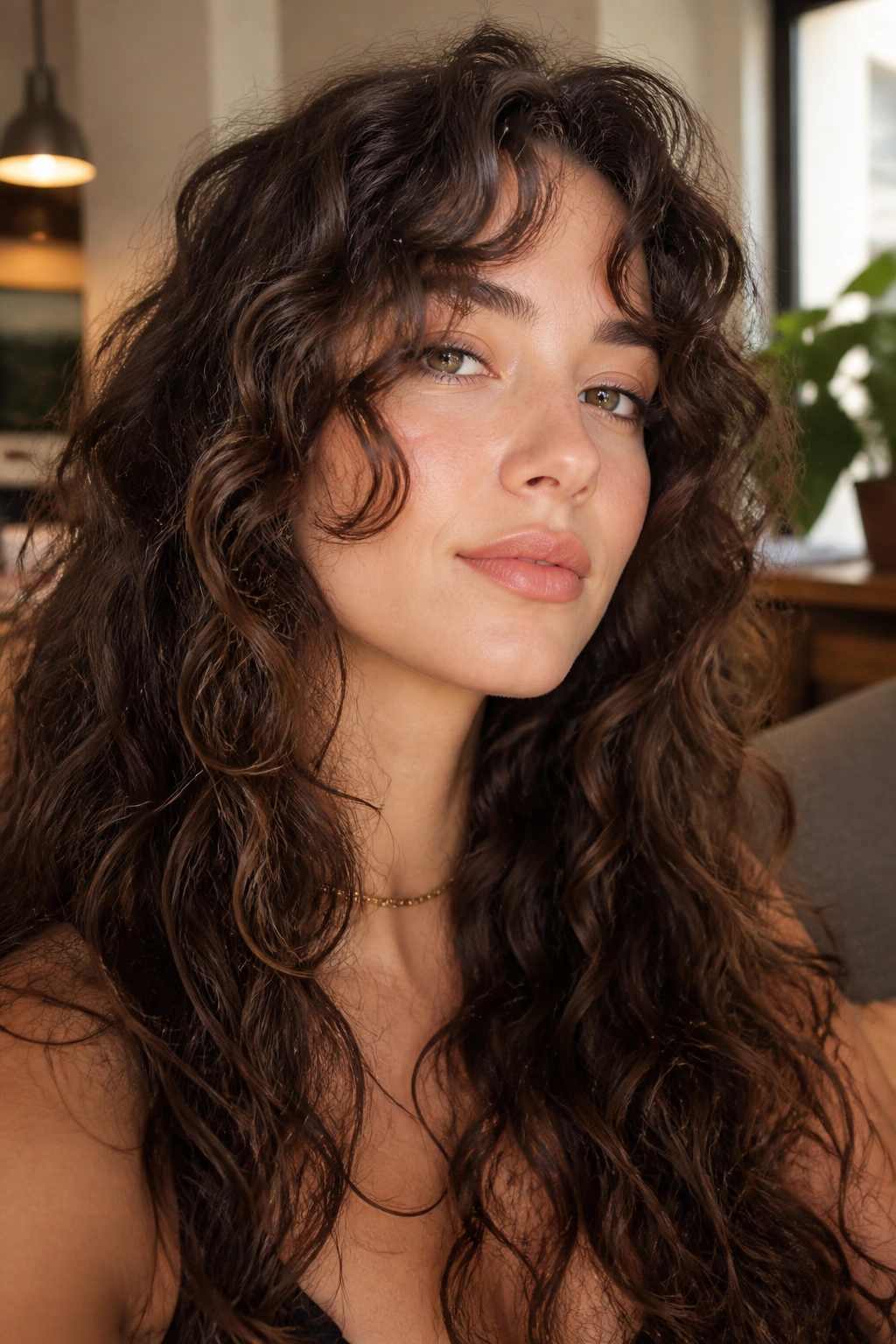
Cheekbone layers are the cut I reach for when long curls start to feel heavy right under the eyes. They lift the front of the hair just enough to show your features without turning the whole haircut into a short front, long back shape.
Why They Work
The cleanest version starts around the outer corner of the eye or the top of the cheekbone, then angles down into the rest of the length. On curly hair, that angle matters more than people think. A hard horizontal line can sit like a shelf once the curl dries; a soft diagonal lets the front pieces fall into the rest of the haircut.
This cut is especially good if your curls bunch up around the jaw and make your face feel hidden. It’s also a smart choice when you want movement near the eyes but don’t want a big commitment to bangs. The front pieces should look like they belong there, not like they were cut from a different haircut and dropped in.
Quick Things to Tell Your Stylist
- Start the shortest piece near the cheekbone, not above it.
- Keep the angle soft so the layer blends into the longer hair.
- Ask for the front to be cut in the way you wear your part most often.
- Leave extra length if your curls spring up a lot when dry.
Best tip: ask for the first front piece to be left 1 to 2 inches longer than your instinct says. Curly shrinkage is sneaky.
2. Chin-Grazing Layers That Add Shape

A chin-length front on curly hair sounds dramatic because it is. Done well, it gives the face a clear frame and makes long curls feel intentional instead of heavy.
The big mistake is cutting the shortest piece right on the chin and calling it a day. Curly hair has a way of bouncing up and sitting higher than you planned, which can turn a flattering frame into a puffed-up little shelf. I prefer this shape when the shortest front piece sits just below the chin while the curls are dry, or a touch lower if the hair is especially springy.
This version works well for square and round faces when you want a little softness near the corners of the jaw. It can also help if your hair is thick and you need a stronger shape than a whisper of layers. On looser curls, it creates a nice swing. On tighter curls, it brings the whole front forward in a way that feels bold, not busy.
And no, it doesn’t have to make you lose all your length. The back can stay long and full while the front does the framing work.
3. Long Curtain Layers for a Center Part
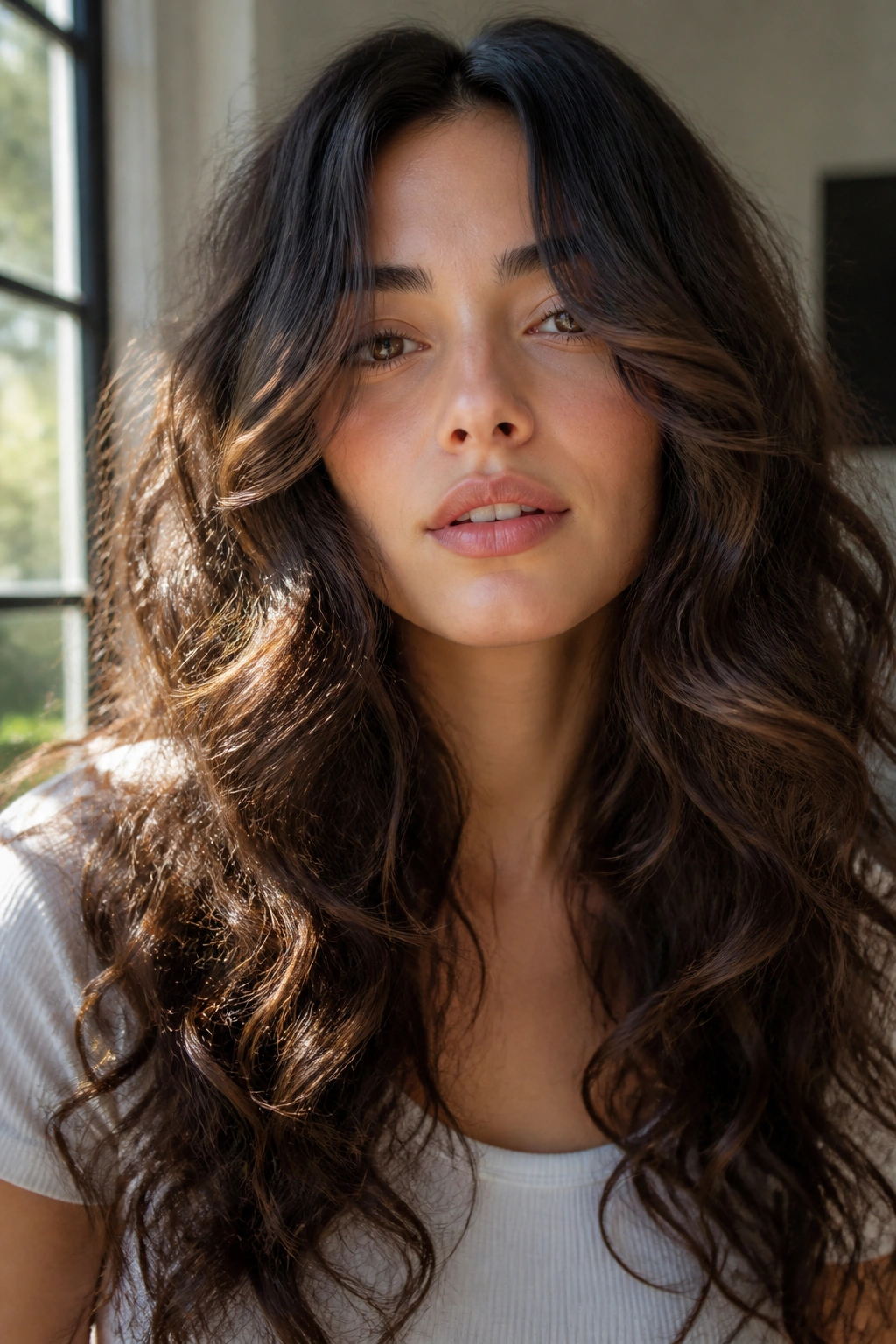
Want the front to look lighter without losing that long, curly sweep down your back? Long curtain layers do that job without making the haircut feel too chopped up.
How to Ask for It
Ask for the shortest face-framing piece to begin around the lips or a touch below, then angle the rest down toward the collarbone. That keeps the shape soft when your curls spring up. If your hair parts in the center most days, this is one of the safest, most flattering ways to add movement without changing the overall length much.
Curtain layers are nice because they move with you. They open the face when the hair is worn down, then blend into a ponytail or half-up style without leaving you with two lonely pieces hanging in the front. That matters more than people admit.
A lot of stylists like this cut for looser curls and waves because it gives the front some swing. I like it on medium-density curls too, especially when the hair falls flat around the cheeks and needs a little air. The look is easy to live with, which is not a boring thing. It means fewer bad hair days spent wrestling the front pieces into place.
4. Collarbone-Grazing Layers That Keep the Front Soft
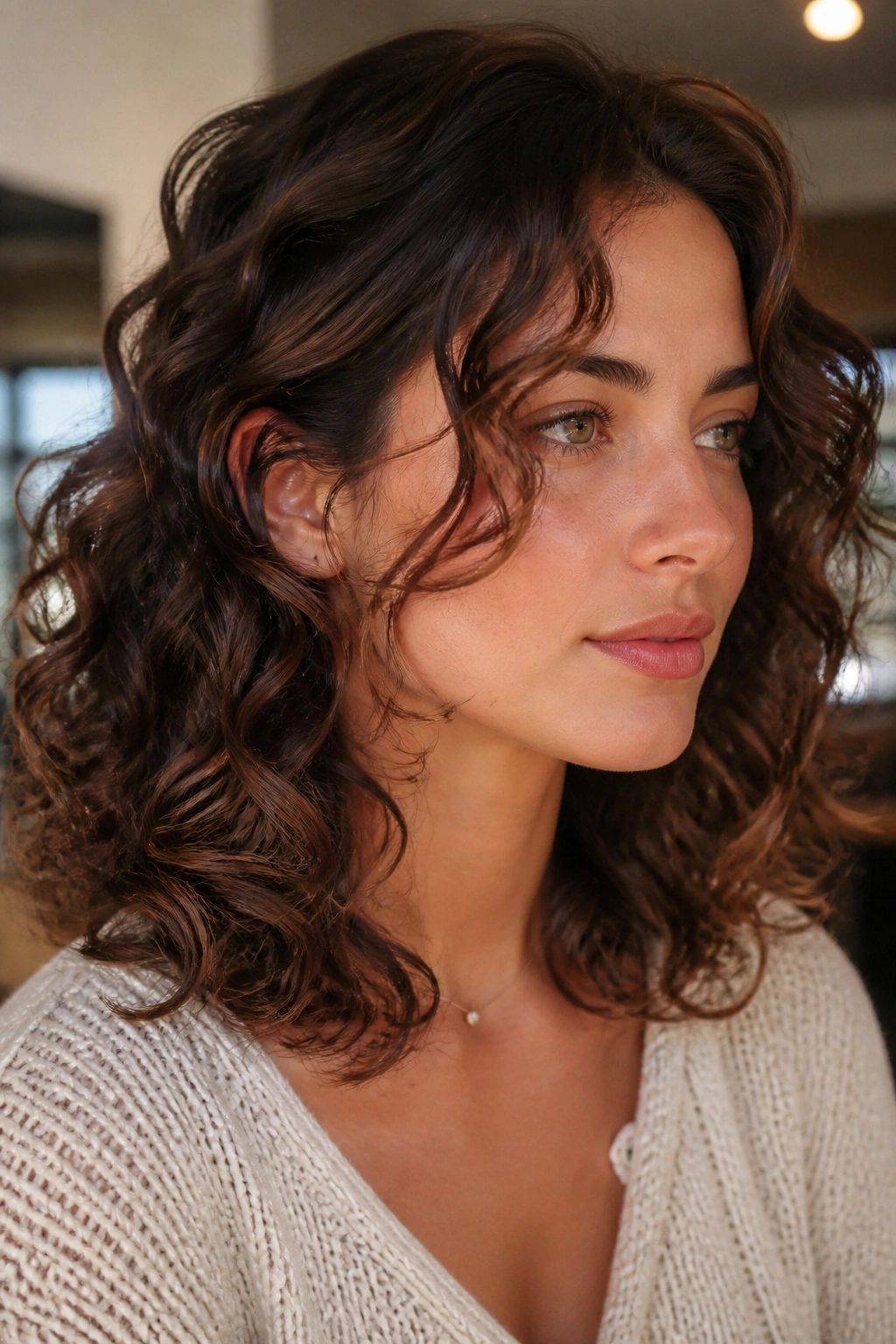
Picture this: your curls fall forward, hit around the collarbone, and then fold back into the rest of the length instead of stopping abruptly at the jaw. That’s the whole appeal of collarbone-grazing layers.
They give you shape without making the haircut look obviously layered from across the room. On long curly hair, that matters. The curl pattern already brings texture; the cut should organize it, not shout over it.
What Makes This Cut Useful
- The front pieces stay long enough to tuck behind the ears.
- The layer line lands below the widest part of the cheek.
- It keeps volume from bunching only around the face.
- It works well if you wear your hair up half the time.
This is a smart option for people who want versatility. Wear it down and the front pieces soften the face. Tie it back and the collarbone length still leaves something interesting at the front, not just a flat puff at the scalp.
If your curls are dense, this shape keeps the haircut from feeling like a triangle with a long tail. If your curls are loose, it gives the front more presence. Either way, the result feels calm, not fussy. That’s a good thing.
5. Invisible Internal Layers That Remove Bulk
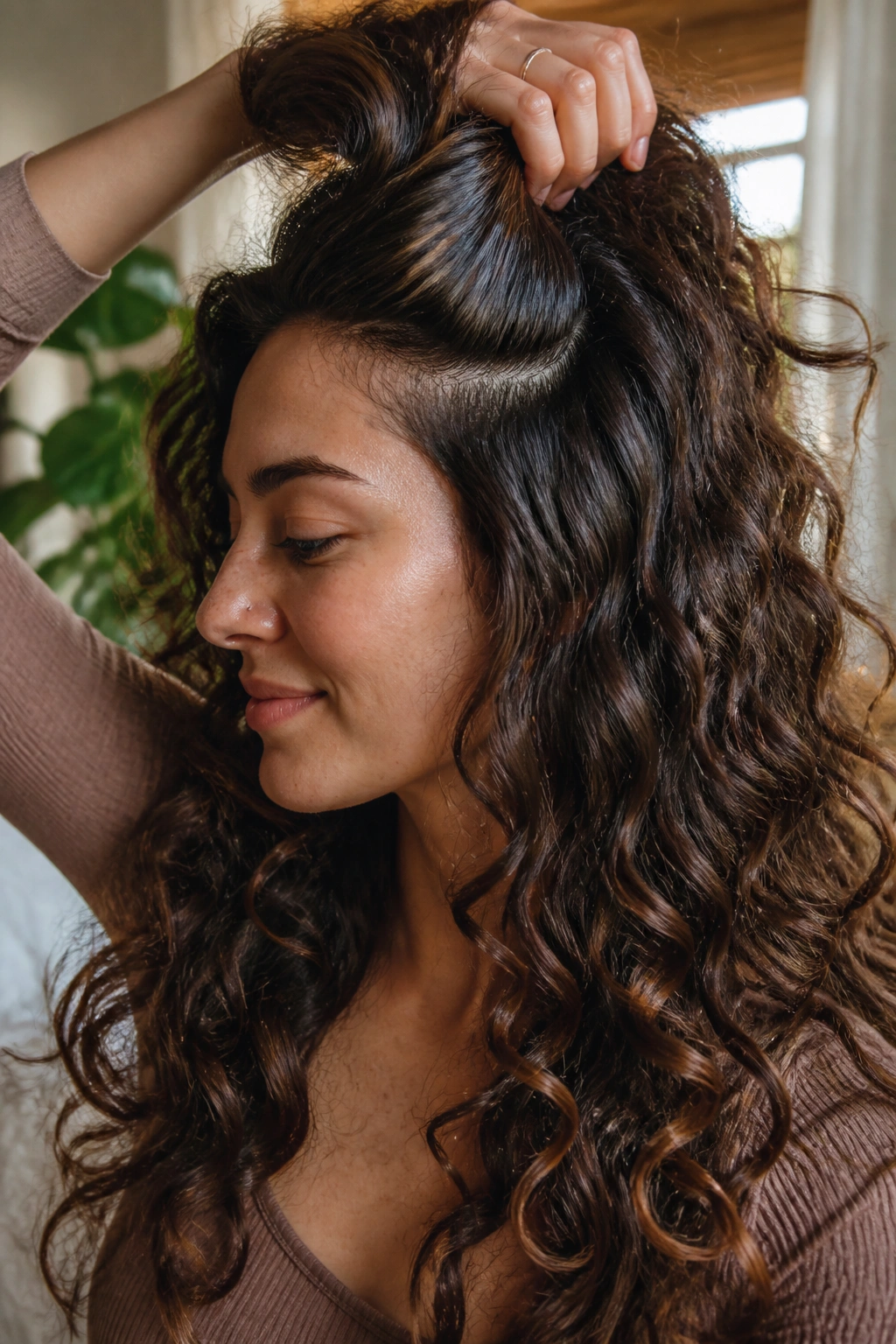
Hidden layers are the quiet fix when the outside shape is good but the inside feels like too much hair. They don’t scream “layered haircut,” and that’s exactly why I like them on long curls that already have decent face framing.
The idea is simple: remove weight from inside the shape so the hair can move. Not every curl needs obvious front pieces. Sometimes the front is already flattering, but the bulk underneath is dragging everything down. Internal layers solve that by cutting away density deeper in the shape, which lets the front pieces sit more lightly around the face.
This works especially well if your curls are thick, coarse, or prone to triangle shape. You know the look: roots sit flat, the middle swells, and the ends don’t get enough movement. Hidden layers break that up without turning the haircut into a stack of short pieces. The front still feels long and feminine, but it stops acting like a heavy curtain.
One warning. Fine curls can lose too much body if the inside is over-thinned. That’s where a careful hand matters. I’d rather see a little bulk than a haircut that goes wispy and stringy by week two.
That’s the whole trick.
6. Rounded Halo Layers That Follow the Curl Cloud

Unlike blunt face-framing, rounded layers follow the curve of your curls around the temples and down the sides. The result feels softer and more natural, especially when your curl pattern already makes a full halo around the head.
What Makes It Different
A rounded shape avoids the “two front pieces and everything else” look. Instead, it builds a gentle curve from the shortest front area into the sides and down through the length. On long curly hair, that can keep the silhouette from looking too square or top-heavy. It’s a very good choice if your hair has a lot of volume already and you don’t want the front to look chopped into separate chunks.
This shape suits oval, heart, and longer faces especially well. It can also help balance wider cheeks by keeping the volume spread across the sides instead of concentrated right at the chin. The haircut still has structure, but it doesn’t feel severe.
If you’re asking for this, say you want a rounded face frame that blends into the side layers. That phrase matters. The stylist should be thinking in curves, not straight lines. Curly hair lives in curves anyway, so the cut should respect that.
7. Side-Swept Layers That Loosen a Strong Part
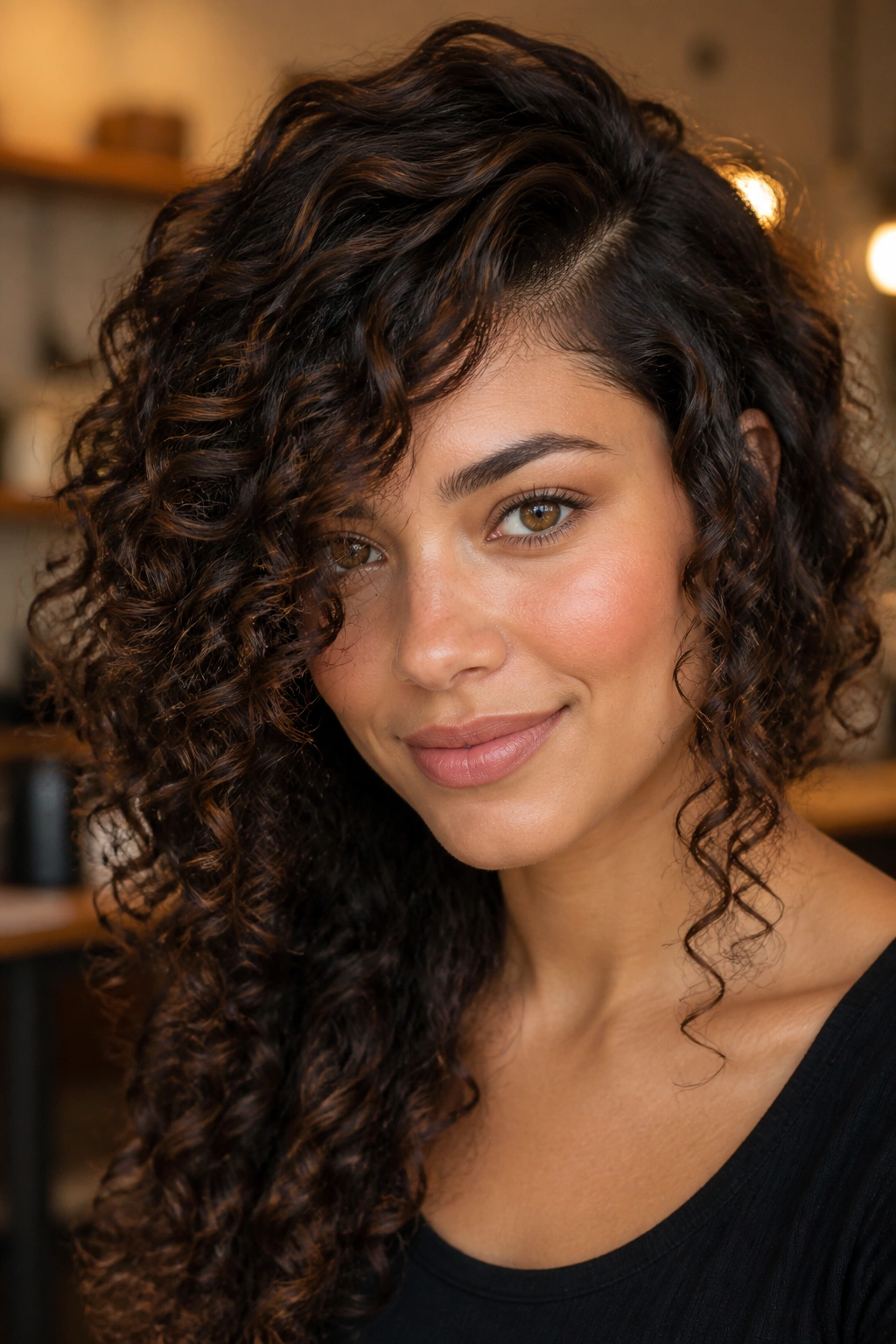
A side part changes the whole story. Suddenly the face frame has a direction, and the layers can sweep across the forehead instead of falling evenly on both sides.
Why It Works
Side-swept layers are especially useful if one side of your hair grows flatter, or if a center part makes your face feel too symmetrical. A little asymmetry can soften a strong jaw, balance a high forehead, or just make a long curly cut feel less predictable. The shape is still long and feminine, but it has movement that a center-part curtain sometimes lacks.
How to Ask for It
- Keep the heavier side longer so it can sweep across the cheek.
- Let the shorter side land around the cheekbone or lip.
- Cut the front while the hair is in the part you wear most often.
- Ask for the sides to blend into the back instead of stopping abruptly.
Side-swept layers are also handy for curls with a stubborn cowlick or a front section that refuses to sit in the middle. Work with the bend you already have. Fighting it usually ends badly.
If you like to tuck one side back, this cut gives you room to do that without exposing a blunt line. It’s polished, but not stiff. Good haircuts should move when you move.
8. Jawline Layers That Soften the Lower Face
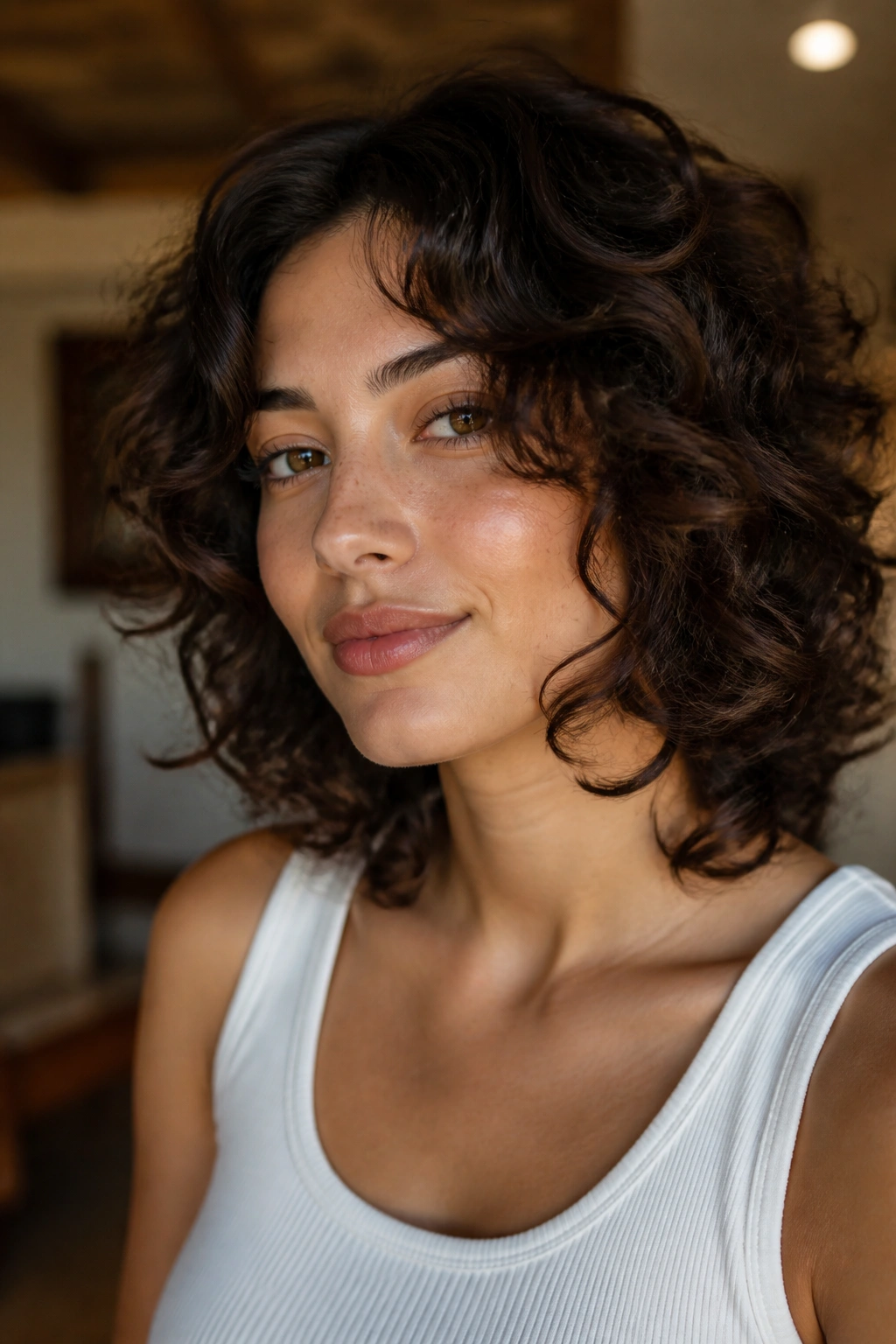
Jawline pieces matter more than people think. They sit in one of the most visible spots on the whole head, and they can change the feel of a long curly haircut in a heartbeat.
For square or angular faces, a layer that lands around the jaw can soften the lower corners and keep the curl volume from sitting only at the bottom. For longer faces, it can add width in the right place so the face feels a little more balanced. The key is placement. Too high and the layer looks disconnected. Too low and it disappears into the rest of the hair.
I like jawline framing when the curls have a little bounce and enough definition to show the shape. If the curls are very loose, the pieces can blend away. If they’re very tight, the jawline layer can stand out in a nice way, almost like a soft frame around the face. Either way, the front should graze the jaw, not sit above it like a chopped-off fringe.
The best versions don’t fight your cheekbones. They just nudge the eye down and out a little, which is often all you need.
9. Subtle Cascading Layers That Move Downward
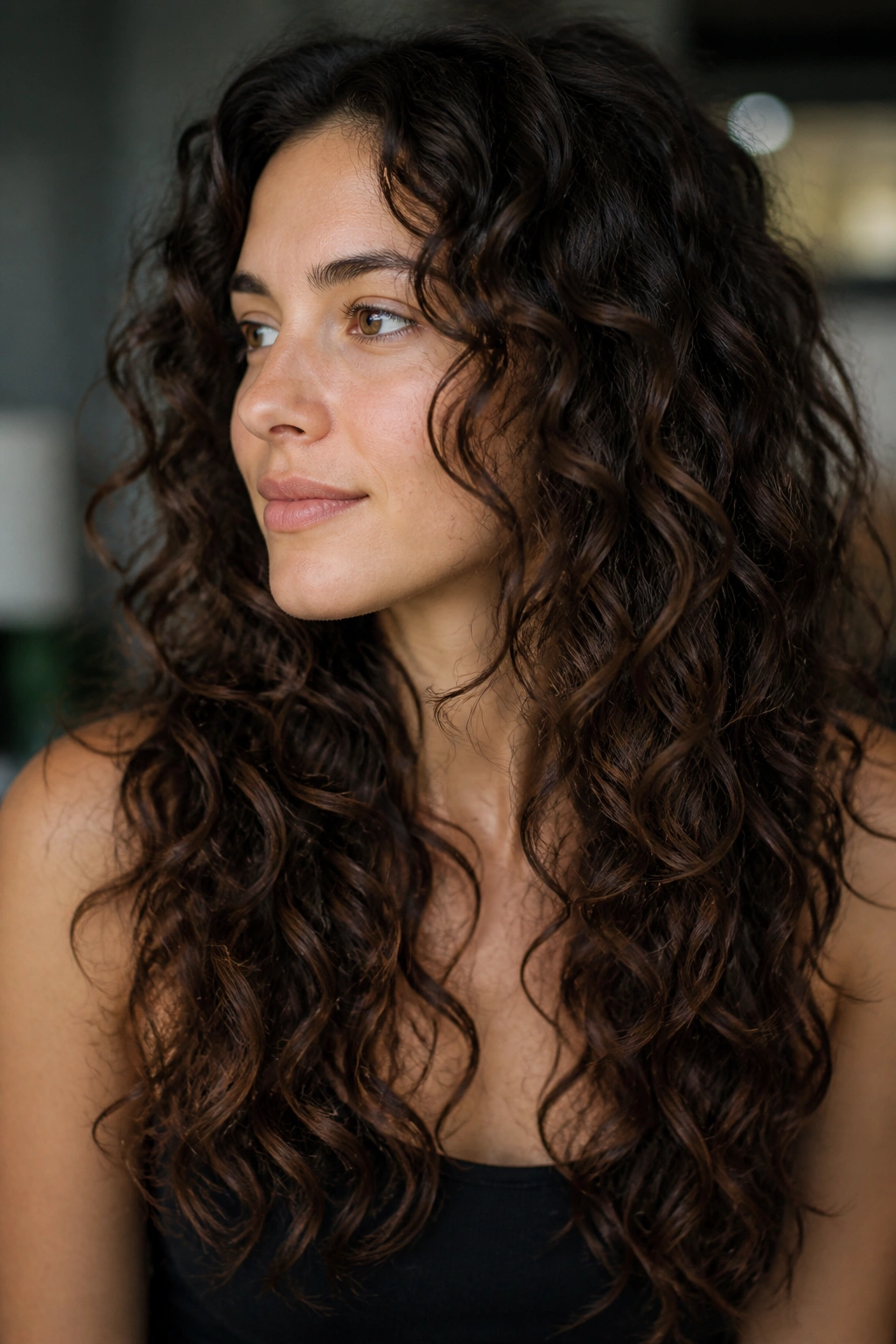
Why does a gentle cascade work so well on long curls? Because the eye likes a line it can follow, and a soft downward flow makes the whole haircut feel longer, lighter, and more expensive-looking without being showy.
How to Keep the Cascade Soft
Think in small shifts rather than big jumps. A difference of 1 to 2 inches between layer lengths is enough for many curl patterns. Larger jumps can create shelves, especially around the front where the curl pattern is most visible.
A cascading shape is ideal if you want the face frame to melt into the rest of the hair. The shortest front piece might begin near the cheekbone, then the next layer falls near the mouth, and the rest keeps sliding down in a staggered line. That stagger is what creates movement. It also helps thick curls avoid the heavy, blocky look that can happen when every section is cut too bluntly.
This shape flatters people who like to wear their hair loose more than pinned up. It reads as soft and flowing, which is lovely on long curly hair, but it does ask for thoughtful cutting. If the stylist rushes it, the cascade becomes messy. If they take their time and respect the curl pattern, it can be one of the prettiest ways to frame the face.
10. Curly Fringe Layers That Bring the Eyes Forward
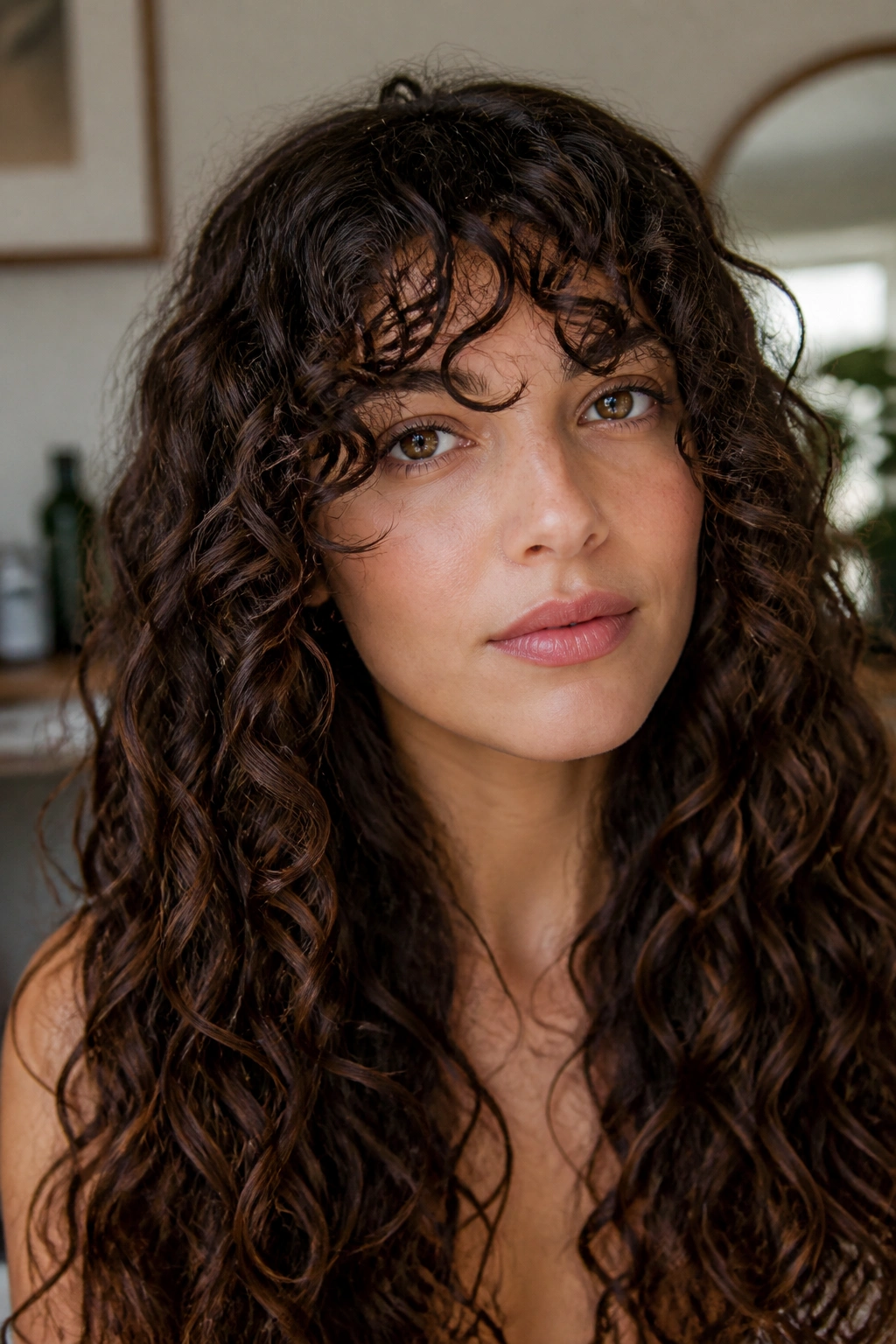
A few snipped pieces at the forehead can change the whole cut. That’s the simple truth behind curly fringe with face-framing layers.
The front of the haircut suddenly becomes active. Your curls don’t just hang beside your face; they lead it. That can be a great move if you want your eyes to feel more open, or if you’ve always liked a little softness across the brow but never wanted straight bangs. Curly fringe has a lot of personality. It also has a little attitude.
What to Watch For
- Short fringe pieces shrink faster than you think.
- Dense curls can puff if the fringe is cut too wide.
- The edge should be soft, not blunt.
- A fringe works best when the rest of the frame stays long enough to balance it.
I’d be cautious with this on very springy hair unless the stylist is experienced with curl behavior. A fringe that looks perfect when wet can jump up and sit much shorter dry. That is not a small detail. It changes the whole face frame.
Used well, though, it’s gorgeous. The fringe gives you a focal point, and the longer layers around it keep the shape grounded. It’s a nice compromise between bangs and no bangs.
11. High-Start Layers for Tighter Curls

Tighter curls can handle a higher starting point at the front because the curl spring naturally compresses the shape. That doesn’t mean the cut should be short. It means the shortest piece can begin higher on the face without looking chopped in half once the hair dries.
On 3C, 4A, and denser curl types, a high-start face frame can help the front sit where you want it instead of collapsing into the cheeks. The style can open the face near the brow or temple, then drop into longer pieces through the jaw and collarbone. When this works, it gives the whole cut a lifted shape that feels alive. When it’s done badly, the front looks like it was attacked with scissors. So yes, the margin for error is smaller here.
I prefer a higher start when the curls have enough spring and the density can support some lift around the face. Fine tight curls can lose shape quickly if the front is overcut. Thick curls, though, often benefit from the extra air. The shorter front pieces keep the outline from becoming too heavy while the long back keeps the length intact.
Drying method matters here too. If you diffuse, those layers will show more shape. If you air-dry and let the hair settle on its own, the cut needs to be left a touch longer at the start.
12. Low-Start Layers for Looser Curls and Waves
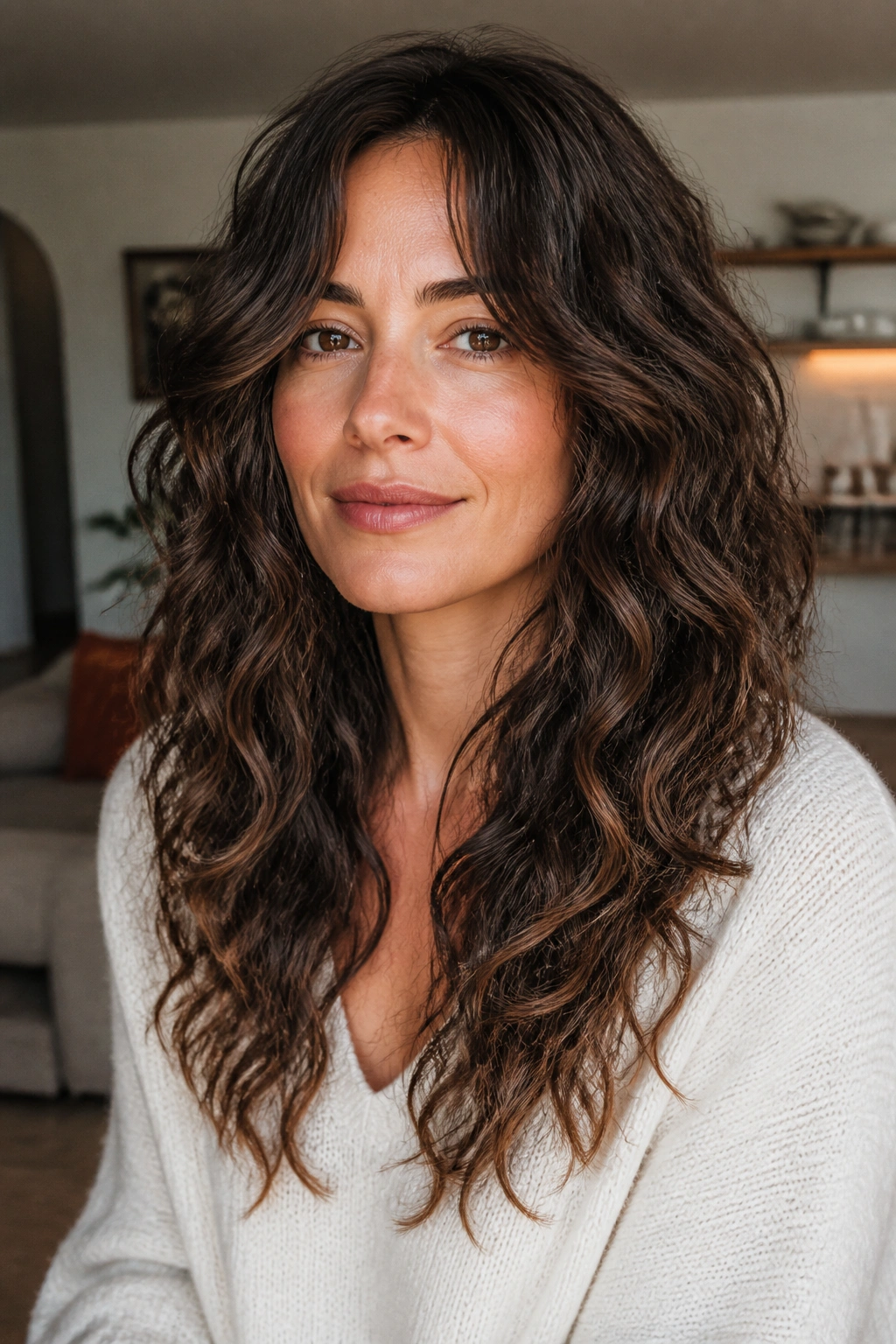
Unlike high-start layers, low-start framing keeps the shortest piece closer to the lips, collarbone, or upper chest. That makes the haircut feel calmer, which is exactly what a lot of looser curl patterns need.
Loose curls and waves can look over-layered fast. A cut that starts too high can make the front flip out in odd directions or leave the face frame looking thin. A lower start keeps the line long enough to stretch the silhouette and preserve weight where the curls need it most. It’s a better fit if your hair already has movement and you don’t want to create more than you need.
I usually like this for 2C to 3A curls, especially if the hair is fine or medium density. The face frame still does its job, but it doesn’t take over the haircut. You get softness around the face and a little movement through the ends, without the layers shouting every time you turn your head.
If your hair falls flat at the top and expands at the bottom, low-start layers are a quiet fix. They stop the front from ballooning and keep the weight in the right places. Not fancy. Just smart.
13. U-Shape Back With Long Front Pieces
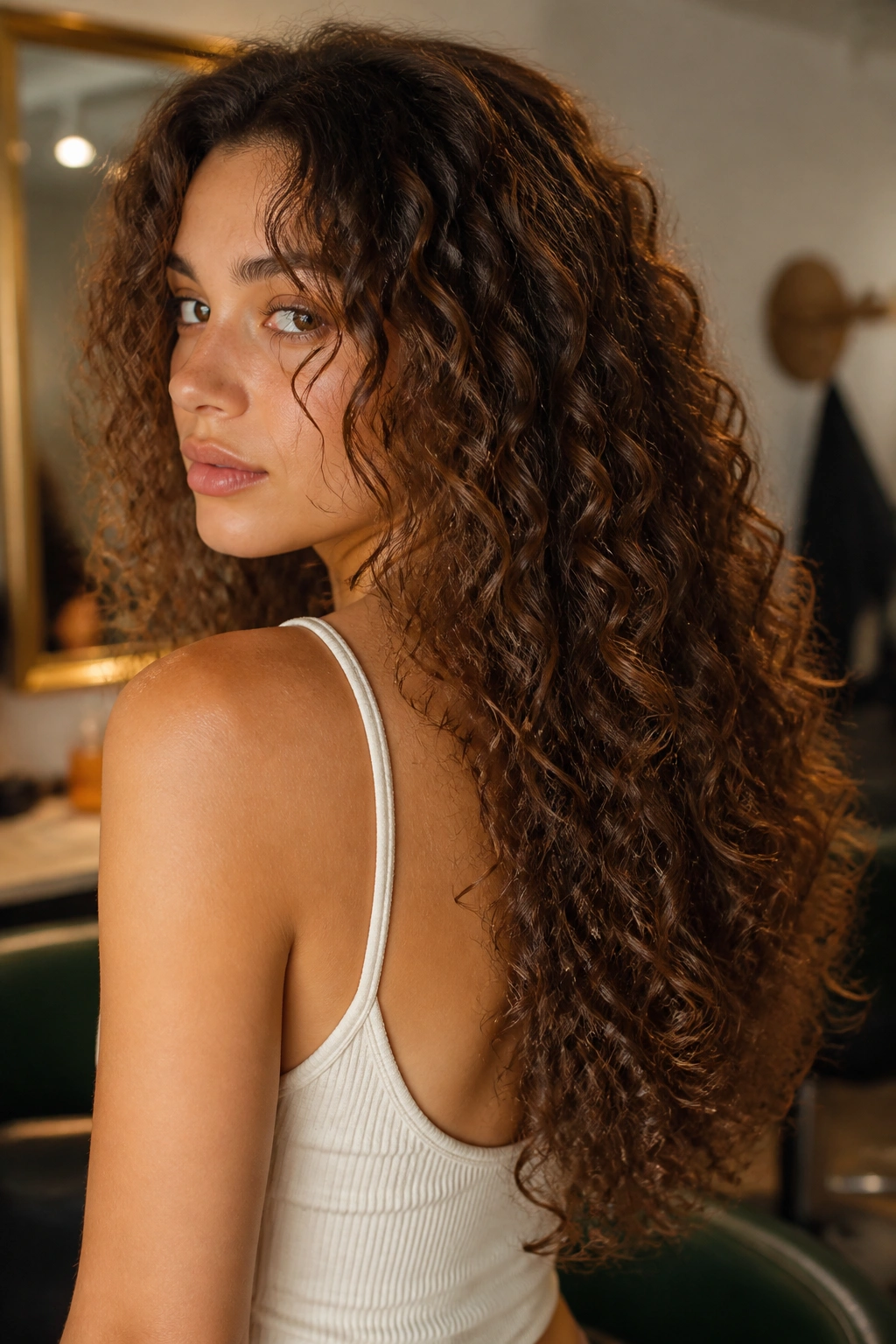
A U-shaped back keeps the length fuller in the center while the front pieces carve out the face. It’s one of my favorite shapes for people who want long curly hair to stay long curly hair, not turn into a heavily layered cloud.
Why the Silhouette Matters
The back of the haircut follows a soft U instead of a straight line. That gives the curl pile a nice curve and prevents the ends from looking blunt or boxy. The front pieces then act like a frame, not a separate haircut. You keep the drama of length, but you also get movement where the eyes land first.
This shape is especially useful if you like wearing your hair down most days and want it to look full from the front and the back. It also plays nicely with half-up styles because the long front pieces leave some softness near the cheeks even when the rest of the hair is pulled back.
Ask for These Details
- A soft U rather than a sharp V.
- Front layers that blend into the sides, not just the cheeks.
- Enough length left in back to keep the curl pattern heavy enough to hang.
- A dry check after the first cut so the front doesn’t jump too high.
The U-shape is not flashy. That’s exactly why it works so well.
14. Dry-Cut Face Framing Layers That Respect Shrinkage
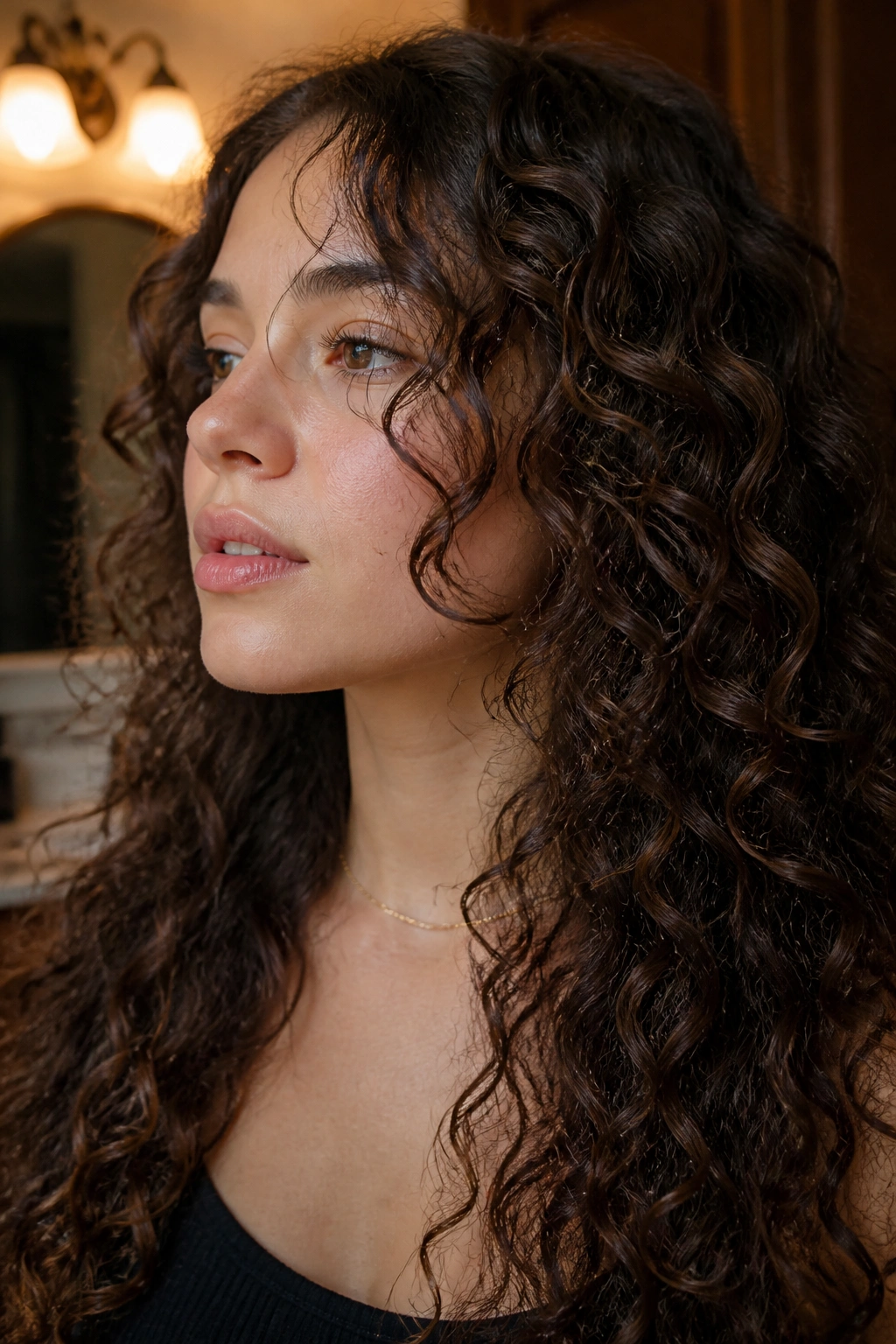
Wet hair can lie. Curly hair lies even harder.
That’s why a dry cut is such a big deal for face framing layers for long curly hair. When curls are cut in their natural state, the stylist can see exactly where the pieces land around your cheekbones, jaw, and mouth. No guessing. No hoping that a wave will calm down later. No cutting to a line that disappears once the hair dries.
I’m blunt about this: if your curls shrink a lot, a wet cut can be risky unless the stylist really knows curly hair. The front is the easiest place to overdo it because you can see the shape right away and get tempted to keep going. Then the hair dries, the curls bounce up, and suddenly the front sits an inch or two shorter than planned. That’s the kind of haircut people spend months growing out.
A dry cut also helps if you wear your hair in the same part most days. The stylist can shape the frame exactly where your face actually is, not where it would be in a perfect salon-chair universe. It sounds small. It isn’t.
15. Lived-In Face Framing Layers That Grow Out Softly

What do you want when you’re three months past a haircut and the front still looks decent? A soft grow-out. That’s the real test.
Lived-in layers are cut with enough length and blend that the face frame doesn’t turn choppy as it grows. The shortest pieces stay long enough to keep moving into the rest of the haircut, which means you don’t get that awkward stage where one curl sits in your eye and another sits near your chin. The goal is not perfection. The goal is a front section that keeps behaving itself as the months pass.
What to Ask for in the Chair
- A soft transition from the front into the sides.
- No sudden jumps in length around the cheek.
- Enough room in the front for shrinkage and growth.
- A shape that still looks good tucked, pinned, or air-dried.
This version is great if you hate frequent trims or if your curls tend to change from week to week depending on humidity, styling, or how much you scrunch. It also suits people who want face framing without a high-maintenance finish. The cut should look better with a little mess, not worse.
Long curly hair can take a lot of shape and still stay easy to live with. That’s the magic of the right front layers. They guide the eye, soften the face, and leave the length doing what length does best.
