



A tall forehead isn’t a flaw, but the wrong haircut can make it the first thing people notice. The best hairstyles for a tall forehead don’t try to hide your whole face; they break up that long vertical space with bangs, diagonal parts, cheekbone layers, or enough texture to make the eye move around instead of going straight to the hairline.
Flat, center-parted hair is usually the problem. So is anything pulled tight and high at the crown, because that leaves the forehead sitting out in the open with nowhere to go. A little softness at the temples, a little width near the brow line, and a front section that actually lands somewhere useful — that’s what changes the shape.
Some people want a cut that needs almost no styling. Others are fine with bangs and a round brush if the result is worth it. Both camps can win here, and the good news is that there are more options than the old “just get bangs” advice people toss around when they run out of ideas.
1. Curtain Bangs for a Tall Forehead
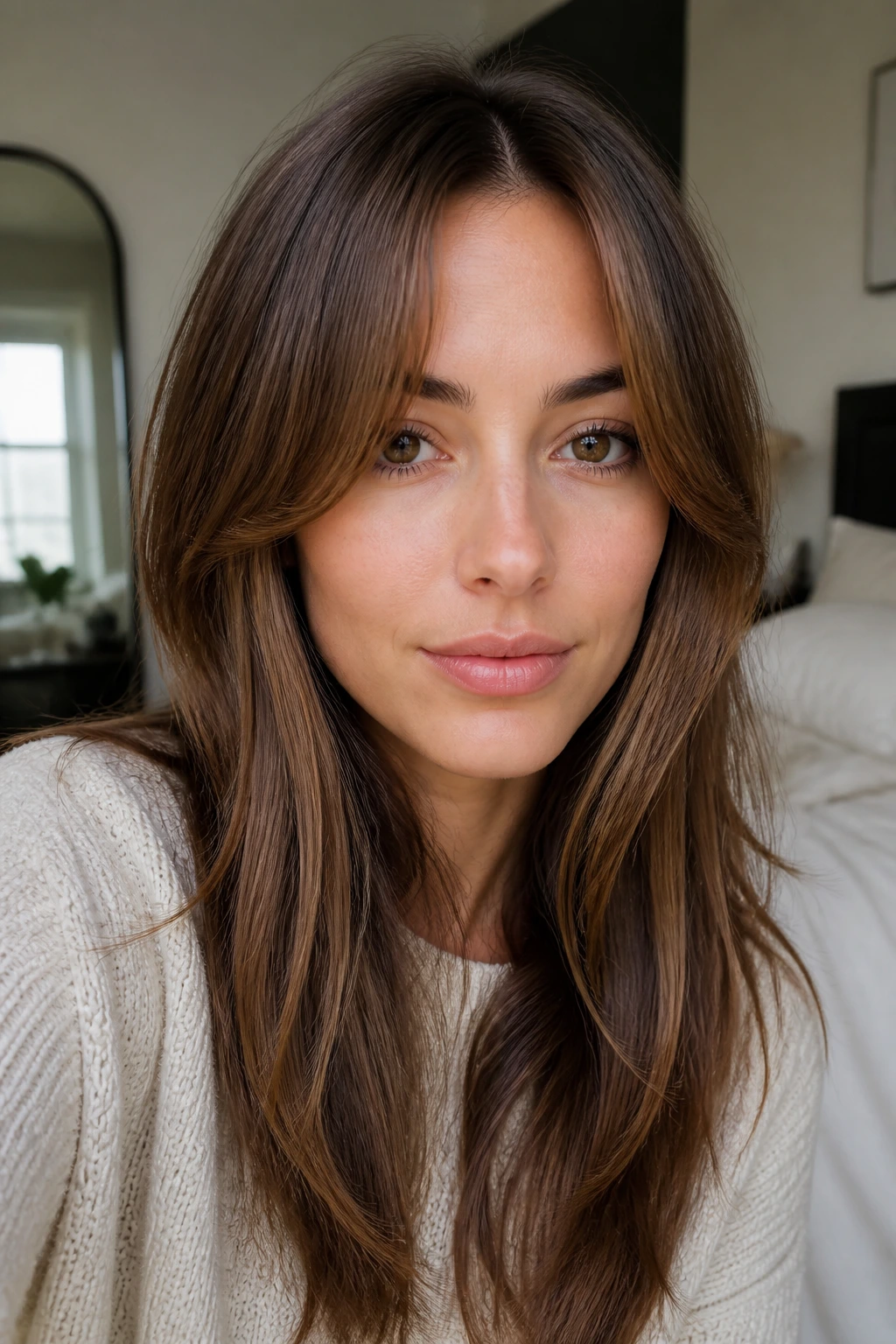
Curtain bangs are the safest place to start if you want forehead coverage without committing to a heavy fringe. They split in the middle and sweep outward, which gives the face a softer frame instead of a hard line straight across the brow.
The detail that matters is length. The shortest piece should usually land somewhere around the bridge of the nose or just below it, then taper longer toward the cheekbones. If the bangs are cut too short, they can make a tall forehead look even taller. That little mistake is common, and it is annoying.
What to ask your stylist
- Keep the center shorter, but not chopped high above the brows.
- Let the sides fall toward the cheekbones or upper lip.
- Blend the bangs into face-framing layers so they do not look like a separate piece.
- Leave enough length to tuck them behind the ear on lazy days.
Curtain bangs work because they create a soft opening instead of a blunt wall. They also grow out well, which is a relief if you hate the awkward middle stage. A quick blow-dry with a round brush, rolling the front sections away from the face, is usually enough.
Best for: straight, wavy, and lightly textured hair that can hold a bend without looking puffy.
2. Side-Swept Fringe with Long Layers
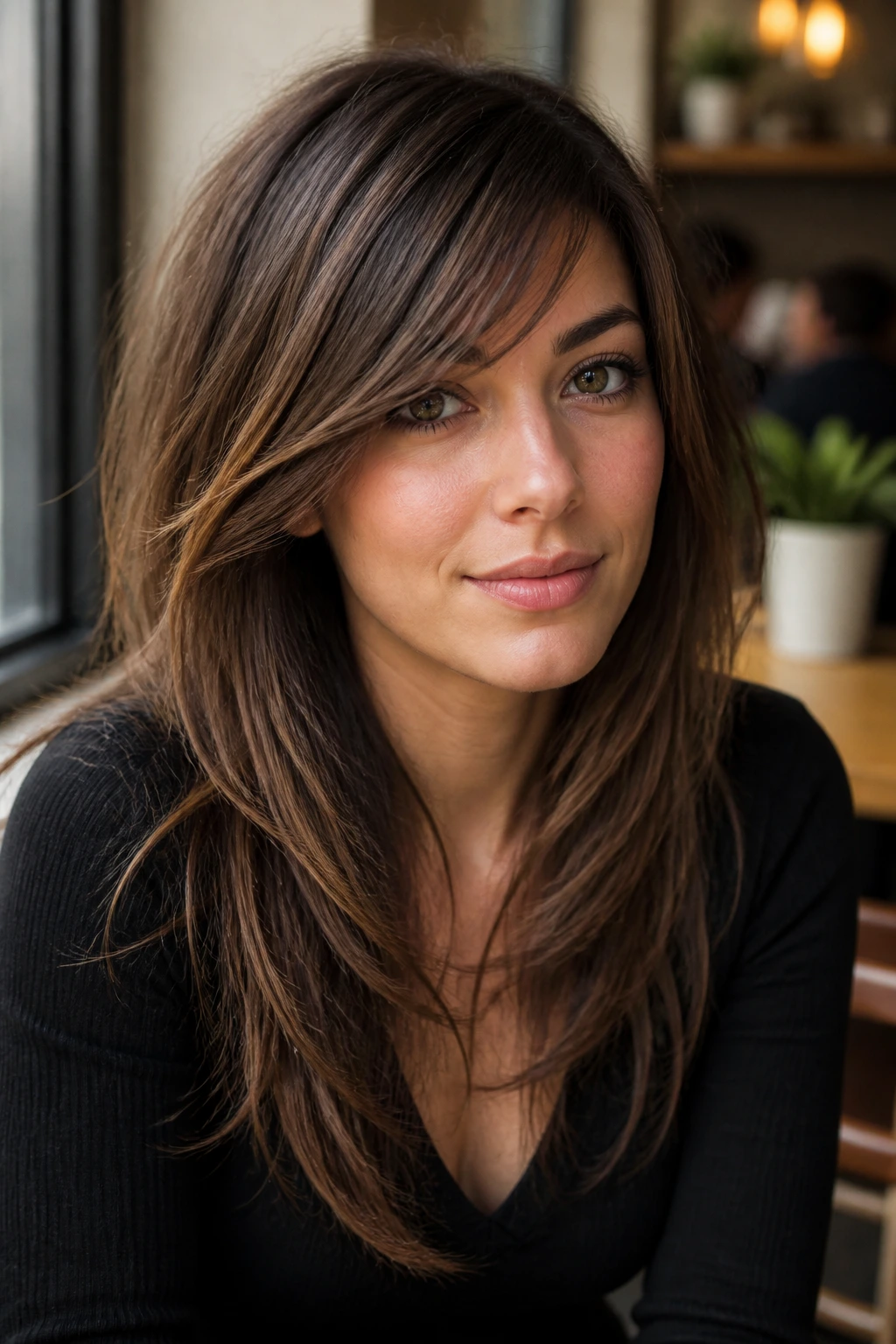
What if you want coverage, but you do not want bangs in your eyes all day? Side-swept fringe is the quieter answer. It moves the line of the hair diagonally across the forehead, which is one of the easiest ways to make a tall forehead feel less dominant.
Long layers keep the look from feeling heavy. A fringe that blends into shoulder-length or longer pieces gives the face shape without making the haircut look cut up or trendy in a way you may regret later. I like this option for people with fine hair because the diagonal sweep adds movement fast.
The part matters more than people think. Shift it a little deeper than your usual side part, then direct the fringe so it lands across the temple and toward one eye. You are not trying to build a curtain. You are drawing a soft line that interrupts the forehead’s height.
A flat iron bend or a velcro roller at the front can help this style stay put, especially if your hair has a mind of its own. And if the fringe gets too long, it still looks intentional as it grows.
3. Bottleneck Bangs on a Shoulder-Length Cut
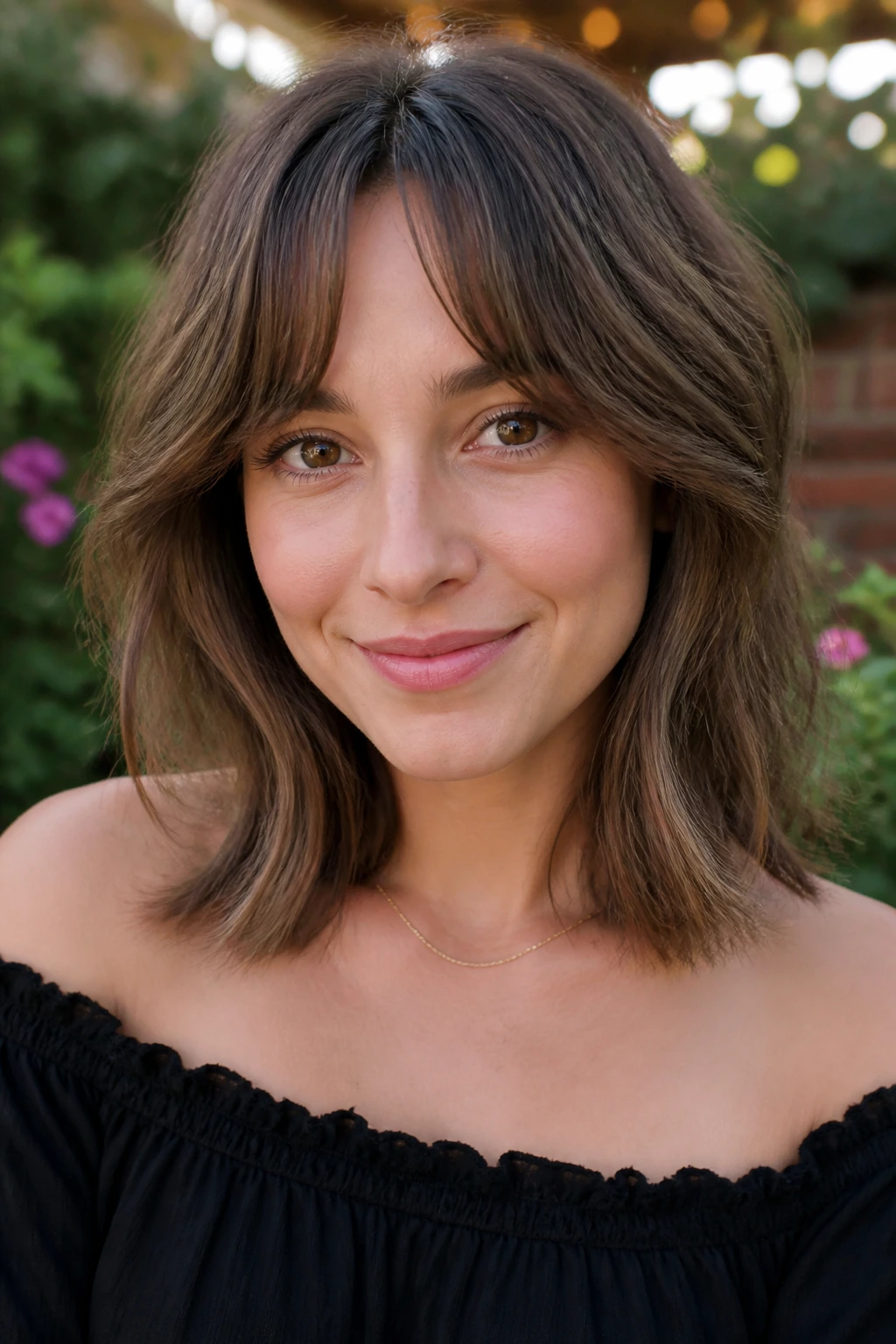
Bottleneck bangs sit in a sweet spot between curtain bangs and a fuller fringe. They are shorter in the center, then flare out with longer pieces at the sides, which gives the forehead a softer edge without boxing it in.
This style is especially useful if your face is longer and you want a little width near the eyes. Shoulder-length hair keeps the whole cut feeling balanced. Too much length with these bangs can drag the face down; too little can make the bangs feel disconnected from the rest of the cut.
Styling notes
- Blow-dry the fringe first, before the rest of your hair dries fully.
- Use a small round brush or a flat brush with a bend at the ends.
- Keep the center piece soft, not razor-short.
- Plan on a trim every 4 to 6 weeks if you want the shape to stay clean.
Bottleneck bangs are not as fussy as a blunt fringe, and that is part of their charm. They give you forehead coverage, but they still let skin show at the sides, which keeps the face open and fresh. If curtain bangs are the easy crowd-pleaser, bottleneck bangs are the slightly cooler cousin.
4. A Deep Side Part with Soft Waves

A deep side part can change the whole balance of your face in five seconds. If you normally part your hair down the middle, shifting it over just a few inches creates a diagonal line that takes attention away from the center of the forehead.
Soft waves do the rest of the work. They widen the shape at the sides and stop the hair from hanging flat and long, which is exactly the look that can make a tall forehead feel even taller. You do not need curls. You need bend.
A little root lift helps here, especially near the heavier side of the part. Work a mousse or lightweight foam into damp hair, then lift the front section with a clip while it dries. The goal is not height at the crown. The goal is movement around the temples and cheekbones.
This is one of the few no-bang styles that really helps. It is easy to wear, easy to pin back, and it looks polished without trying too hard. That matters on days when you want your hair to do its job and leave you alone.
5. A Textured Shag with Cheekbone Layers

A shag is the haircut people underestimate until they see it move. The layers break up a tall forehead by putting texture all around the face, especially at the cheekbones and jaw, so the eye never gets stuck at the top.
The fringe can be soft and feathered rather than full. That makes a difference. A heavy, straight-across bang can feel too blunt on a shag, while a broken-up front section keeps the cut loose and easy to wear. Thick hair loves this shape because the layers remove bulk without making the head look flat.
Who it suits best
- Hair that has some natural wave or bend.
- Thicker strands that can hold texture.
- People who like a lived-in look more than a neat one.
- Anyone who wants forehead coverage without a strict fringe.
The catch is simple: a shag can look messy if it is cut without enough shape. On fine hair, ask for softer internal layers instead of a ton of choppy pieces. Otherwise, the cut can start showing the scalp in unflattering places. A good shag should feel airy, not thin.
6. A Wispy Fringe Bob

A bob does not have to be severe. In fact, a jaw-length or chin-length bob with a wispy fringe can be one of the easiest ways to shorten the look of a tall forehead without making your hair feel heavy.
The fringe should be light enough to see through a little. That keeps the style from swallowing the face. I prefer this look when the bob has a soft edge rather than a hard, sharp line, because the whole point is to frame the forehead, not trap it inside a box.
This cut works well if you like structure but still want some softness around the eyes. The bang line gives your face a horizontal break, while the bob keeps attention lower on the jaw. That’s a useful trick if your forehead is tall and your chin is narrow.
It does need upkeep. A bob loses its shape fast if the ends get too long, and wispy bangs can go from airy to vague in a hurry. If you are fine with a trim schedule, though, this is a sharp, flattering option.
7. A Pixie Cut with a Long Top and Side Sweep
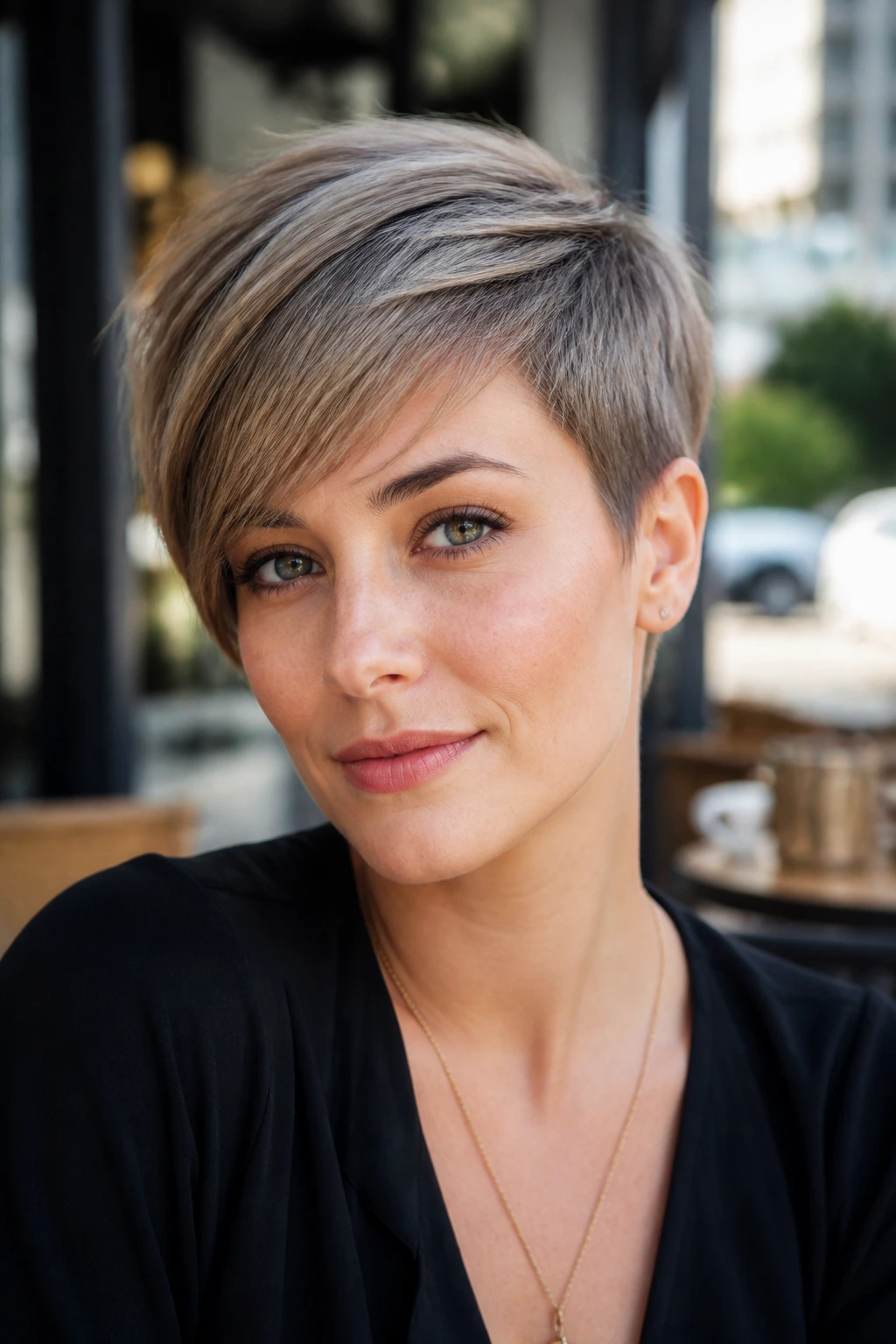
Can a short haircut help cover a tall forehead? Yes — if the top is long enough to sweep forward or across the brow. A pixie with length on top gives you that control, while the tapered sides keep the cut from looking bulky.
Ask for about 2 to 4 inches on the top, depending on your hair texture and how much movement you want. The fringe should be long enough to fall diagonally instead of standing up in a tiny spike. That diagonal line does the face-balancing work.
Ask for these details
- Longer top layers that can be swept to one side.
- Soft texture through the crown, not a stiff helmet shape.
- Tapered sides so the cut stays close to the head.
- A fringe that can fall toward the temple or brow.
This style is excellent for fine hair because short lengths create lift quickly. It is also a smart choice if you do not want to style long hair every morning. A little paste or cream can push the front where you want it, and a touch of dry shampoo keeps the roots from going limp.
8. A Wolf Cut with Choppy Face-Framing Pieces

The wolf cut gets a lot of attention for its edge, but the reason it works for a tall forehead is much simpler: it builds shape everywhere. The layers pile up around the crown, the sides, and the face, so no single area dominates.
Face-framing pieces are the real help here. They start higher than a standard layer and break up the vertical line from the forehead downward. If the fringe is cut with a little grit instead of a smooth finish, it can soften a wide forehead without sitting heavy on the skin.
This is a strong match for thick or wavy hair. Air-dried texture actually helps the cut look better, because the messier movement gives it life. Straight, slippery hair can still wear a wolf cut, but it usually needs a bit more styling to keep the shape from collapsing.
I would not call this the most polished option. It is not supposed to be. If you want neat and quiet, skip it. If you like hair that looks intentional in a messy way, the wolf cut is hard to beat.
9. A Half-Up Style with Loose Front Pieces
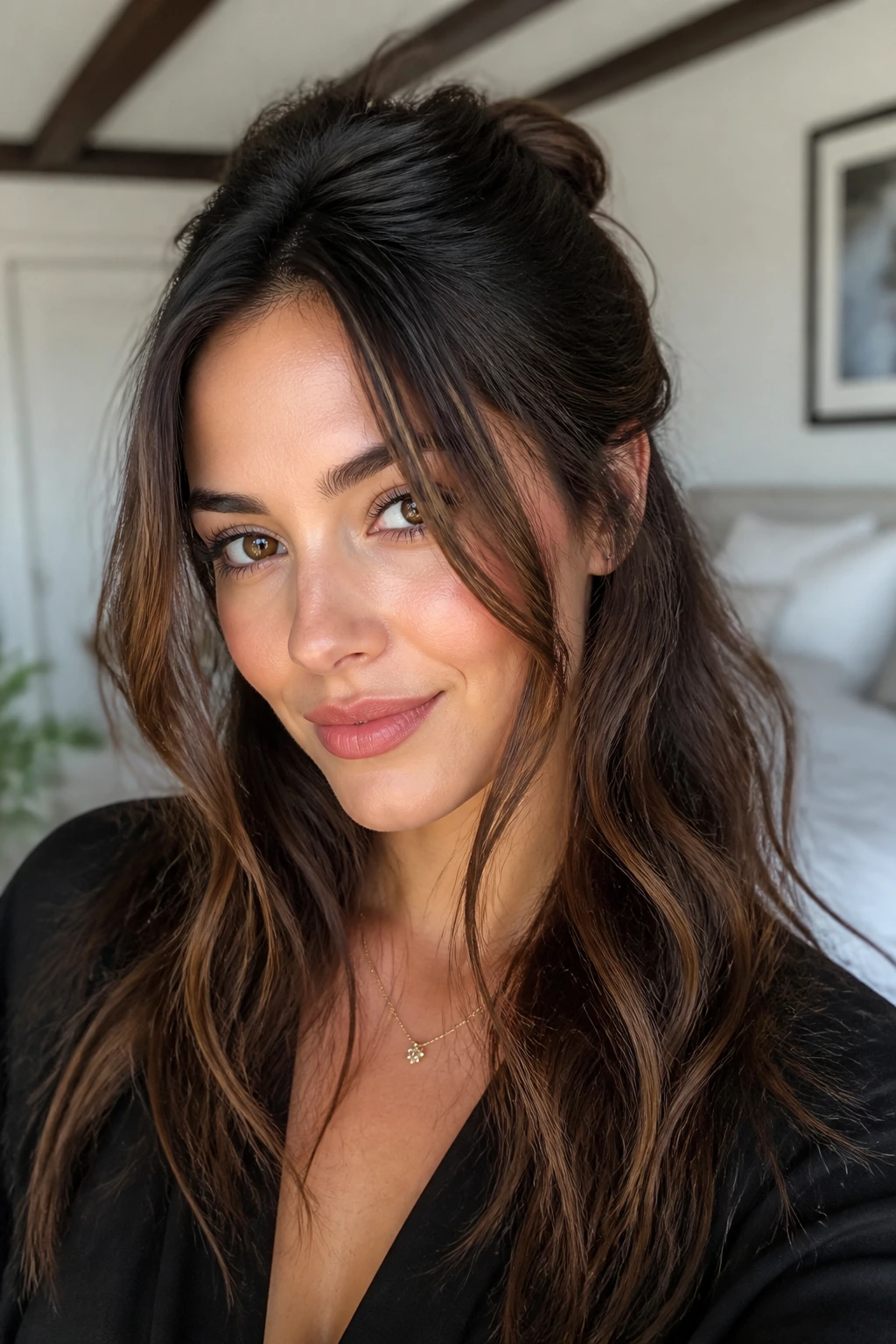
The half-up style solves a very specific problem: you want your hair away from your face, but you do not want the whole forehead exposed. Pull the top section back, leave the front pieces loose, and the haircut does a lot of the work for you.
Those loose pieces should start around the temples or cheekbones, not right at the hairline. If they are too short, they can stick out in a funny way. If they are too long and dead-straight, the style loses its softness. The sweet spot is a piece that curves along the face and falls where the eye wants a break.
A little lift at the crown helps, but keep it subtle. A high bump can pull the eye upward, which defeats the point. The shape should feel relaxed, almost casual, even if you are wearing it for something more dressed up.
This is one of those styles that works on a weekday and at a dinner table. You can twist the top section, secure it with a clip or small elastic, and leave the rest down. Easy. Effective. No drama.
10. A Low Ponytail with Swooped Front Strands

A low ponytail is the opposite of a high one, and that matters more than people think. High ponytails pull everything back and expose the whole forehead, while a low ponytail keeps the top of the head calm and lets the front pieces do some framing.
The trick is in the front strands. Leave a soft section on each side, then guide it so it swoops along the temples rather than hanging straight. If you want a cleaner finish, wrap a small piece of hair around the elastic and pin it under the ponytail. That tiny detail makes the style look finished instead of thrown together.
A side part can help here too, especially if your forehead is very tall. The off-center line gives the style a little movement before the ponytail even starts. If the hair is fine, a little texturizing spray at the roots keeps the crown from going flat.
Not every ponytail needs to be sleek to work. This one should look relaxed, slightly soft, and deliberate. That is what keeps it flattering.
11. A Braided Crown with Soft Tendrils
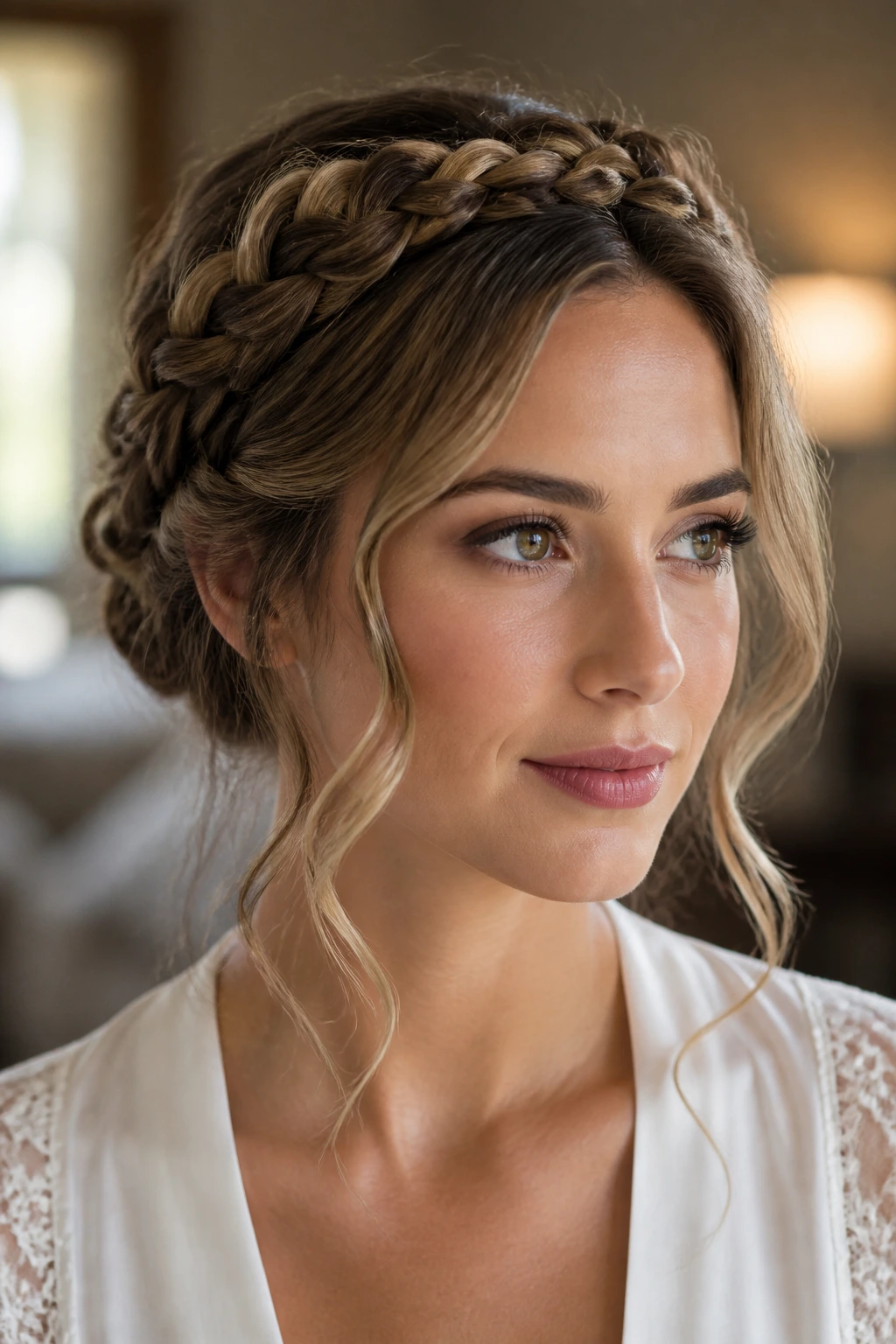
Need something that works for a wedding, a humid day, or just a morning when your hair refuses to behave? A braided crown is worth knowing. The braid creates a horizontal line across the head, which immediately interrupts the height of a tall forehead.
You can do a halo braid, a Dutch braid wrapped around the head, or two side braids pinned together at the back. The specific braid matters less than the shape it makes. Keep the braid a little loose, then leave a few soft tendrils at the temples so the forehead does not sit completely bare.
What to watch for
- Do not braid so tightly that the style pulls all the hair straight back.
- Leave thin pieces around the face for softness.
- Keep the braid slightly wider if your forehead is especially long.
- If you want more coverage, let the braid sit a touch lower on the head.
This style gives a romantic look without relying on bangs. It also handles second-day hair well, which is one reason people keep coming back to it. A little dry shampoo at the roots and a few pins are often enough.
12. Curly Bangs for a High Forehead
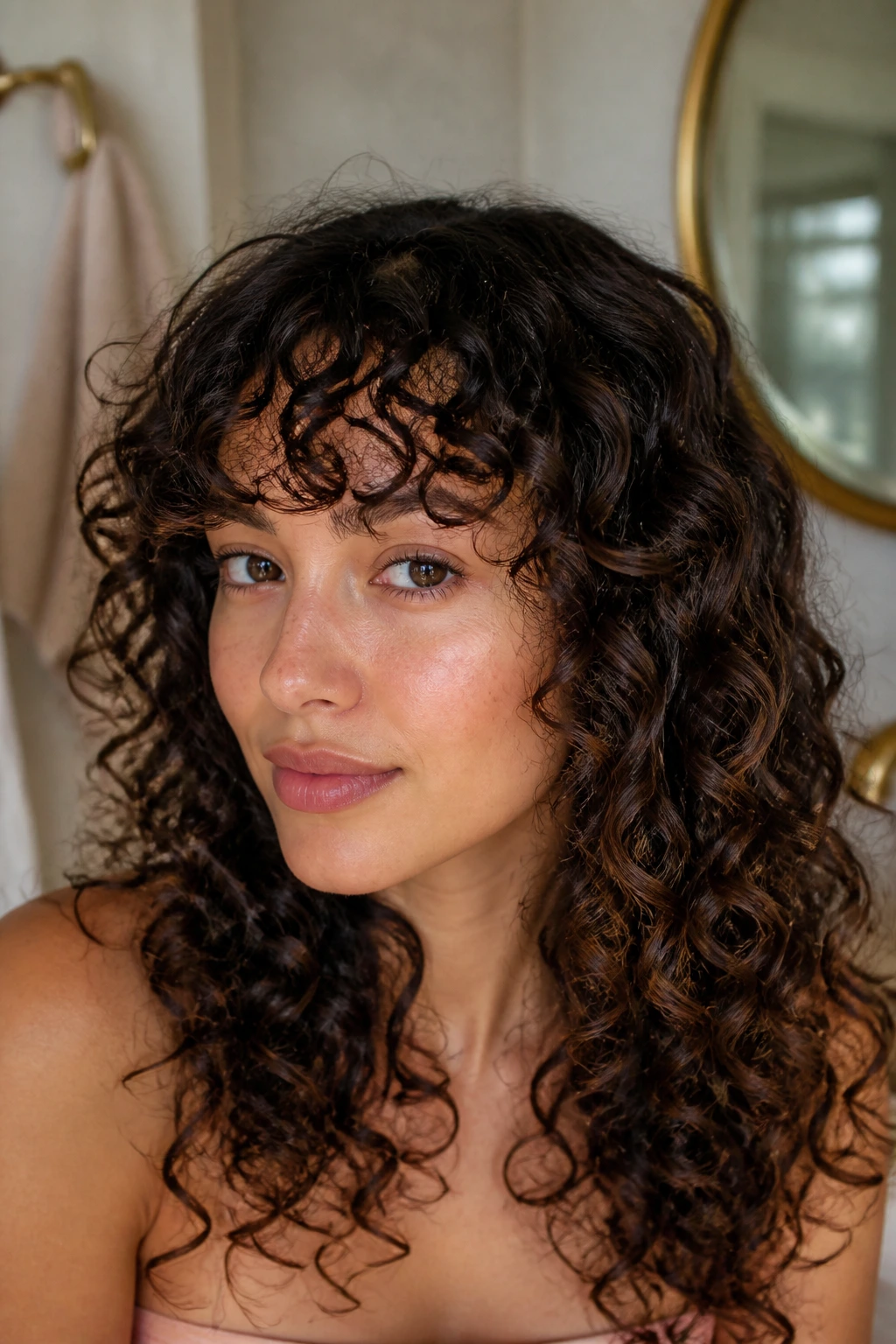
Curly bangs are their own thing. They spring up, move around, and land differently from straight bangs, which means you have to cut them with a little extra room. That extra room is worth it, because curly bangs can be one of the best ways to soften a tall forehead.
The bangs should usually be cut dry or mostly dry, so the stylist can see the true curl pattern. If they are cut wet and straight across, they can bounce up far shorter than you wanted. The safest approach is to leave them longer than you think you need, then shape them after they dry.
How to keep them from shrinking too short
- Cut the bangs in the hair’s natural curl pattern.
- Leave extra length for shrinkage.
- Use curl cream or gel to keep the shape clumped together.
- Diffuse on low heat, or air-dry without touching them too much.
Curly bangs look best when they are part of the whole haircut, not pasted onto the front like an afterthought. Start the face-framing layers around the cheekbone so the curls fall in a curve instead of ballooning out at the forehead. That curve is what gives the face balance.
13. A French Bob with Eyebrow-Grazing Bangs

The French bob is one of the cleanest answers if you want forehead coverage and shape in the same cut. It usually hits around the jaw, sometimes slightly above, and the bangs skim the brows instead of sitting miles above them.
That brow-grazing line does a lot. It shortens the visible height of the forehead and gives the face a crisp horizontal edge. The bob underneath keeps everything compact, so the style feels neat instead of fussy.
Not a lazy haircut. That is the part people forget.
It works best when the ends are clean and the bangs are trimmed often enough to keep their line. Straight and wavy hair wear this cut easily. Looser curls can wear it too, but the shape needs to be adjusted so the bob does not puff out too much at the sides.
If you want a cut that looks like you have made a decision, this is a strong one. It is sharp without looking severe, and it gives a tall forehead a clear frame.
14. An Asymmetrical Lob with Side Volume

Sometimes the smartest move is not a fringe at all. An asymmetrical lob — or even a regular lob styled with more volume on one side — creates a diagonal shape that makes the forehead feel less long and open.
The trick is to keep the heavier side full near the temple and cheekbone. That pulls the eye outward and downward. One side can sit a little longer, or the part can be deep enough to create that asymmetry without a dramatic cut change. Either way, the shape feels intentional.
A gentle bend through the ends helps, too. Straight hair that hangs in a clean column tends to show every inch of the forehead. A bit of curve at the base of the haircut makes the whole face look softer. That is especially useful if you wear minimal makeup and want the hair to do more of the balancing.
This is a good office haircut. It is also a good “I want polish but not bangs” haircut. Those are not the same thing, and that distinction matters.
15. Knotless Braids with a Braided Fringe
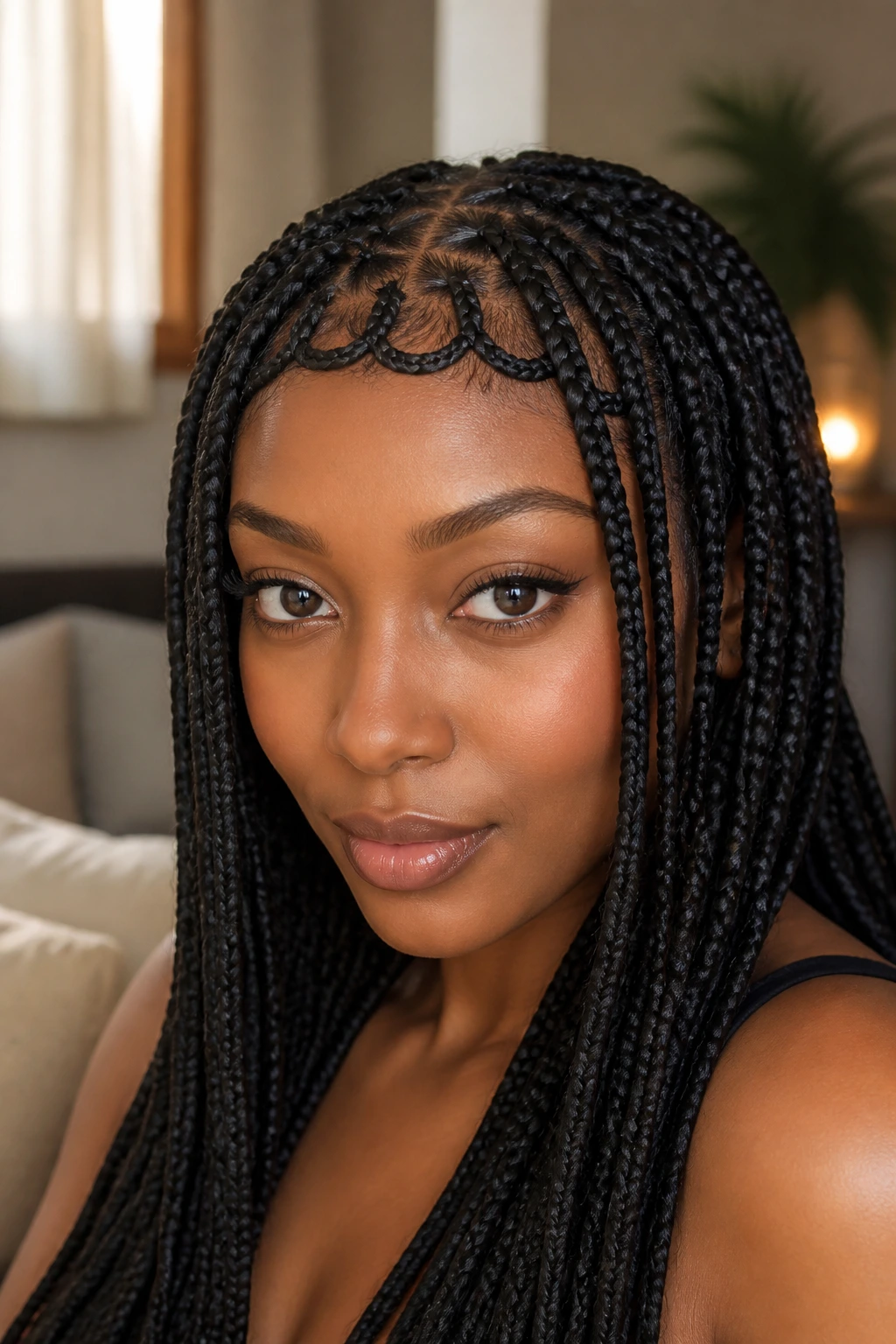
Protective styles can help here as well, and knotless braids are a smart choice if you want forehead coverage with less tension at the hairline. A braided fringe, side-part braids, or a few face-framing braids can soften a tall forehead without relying on loose hair.
The key is placement. If every braid is pulled straight back from the hairline, the forehead looks wider and taller. Leave a braided fringe, part the braids slightly off center, or let a couple of braids fall toward the temples. Those small adjustments change the whole look.
The details that matter
- Ask for light tension around the edges.
- Keep the first braid line soft, not too tight against the scalp.
- Use a side part if you want a more forgiving frame.
- Leave a few braids forward near the face for softness.
Knotless braids are also practical if you want a style that lasts and does not demand daily heat styling. They are especially useful for natural hair, but the fit has to be gentle. A hairstyle should never feel like it is fighting your scalp. If it does, the style is wrong, no matter how neat it looks.
Final Thoughts
The easiest way to handle a tall forehead is not to hide it. It is to interrupt it. Bangs, side parts, waves, braids, and cheekbone layers all work because they give the eye somewhere else to go.
If you hate upkeep, start with a deep side part, long layers, or a soft shag. If you like the structure of bangs, curtain bangs and bottleneck bangs are the most forgiving place to begin. And if you wear your hair up a lot, keep a few face-framing pieces in play so the forehead does not sit out in the open every single day.
One last thing: the cut matters, but the finish matters too. A little root lift, a bend at the front, or a softer part can change a style fast, which is good news if you are trying to make one haircut do more than one job.
