



A bad layered cut can make a round face look wider. A good one does the opposite, and it does it without screaming for attention.
That’s the real appeal of layered haircuts for round faces: the right shape can pull the eye downward, sharpen the jawline a little, and keep the cheeks from feeling like the widest point in the whole haircut. The wrong shape? It stops right at the cheekbones, fluffs out at the sides, and gives you more width exactly where you do not want it.
The trick is never “more layers” for the sake of it. It’s where the shortest pieces land. A face-framing layer that starts at the chin behaves very differently from one that starts at the cheekbone, and a V-cut down the back changes the silhouette more than most people expect. Hair texture matters too. Fine hair needs movement without too much chopping; thick hair needs weight removed without building a triangle; curls need layers that respect shrinkage or the whole cut can balloon out.
Some of these cuts are soft and polished. Some are shaggy and cool. A few are the sort of haircut that looks almost plain on the hanger and then quietly becomes the best thing you’ve worn in months. That’s the fun part.
1. Long V-Cut Layers for Round Faces

If your hair tends to sit heavy at the sides, a long V-cut is one of the cleanest ways to narrow the shape without losing length. The back forms a soft point, which gives the whole haircut direction instead of letting it fall in a blunt curtain.
Why It Works
The V shape pulls the eye down. That matters on a round face, because it breaks up the widest part of the cheeks and adds a little visual length through the center. It also keeps thick hair from spreading out like a bell.
- Best for medium to thick hair
- Ask for the shortest layers to start below the chin
- Style with a large round brush or a 1.25-inch curling iron
- Works well with a center part or a slight off-center part
Pro tip: Keep the face-framing pieces soft, not chunky. If the front layers are too blunt, the cut loses that long, clean line.
2. Curtain Bang Layers That Break Up Full Cheeks

Why do curtain bangs look so good on round faces? Because they split the forehead, soften the top of the face, and create a vertical line right where you need one. That little opening in the middle changes everything.
The bangs should be longer than eyebrow level, usually grazing the cheekbones or just below them. Short curtain bangs can widen the face if they sit too high. The longer version feels easier, more flattering, and far less fussy on a normal day when you do not want to wrestle with a round brush for twenty minutes.
How to Ask for It
Tell your stylist you want soft curtain bangs that blend into long face-framing layers. Ask them to keep the shortest pieces around the lip or chin area, not at the fullest part of the cheek. That tiny difference matters more than people realize.
If you wear your hair wavy, these bangs work fast. If your hair is straight, a little bend at the ends keeps them from looking flat and awkward.
3. The Butterfly Cut With Lift Around the Crown

The butterfly cut has a bit of attitude, and that’s why it works. It gives you the drama of shorter layers around the face while keeping the overall length intact, which is a good deal if you like hair that still feels feminine and full.
The crown gets lift. The lower lengths stay long. That contrast helps a round face because it creates height on top without adding bulk at the cheeks. The best versions keep the shortest pieces around the chin or collarbone, then let everything else fall in soft, cascading sections.
This cut does need styling. Not every day, but enough to matter. A quick blow-dry with a round brush or a hot-air styler makes the shape show up properly; air-drying alone can hide the whole point. Still, when it’s done well, it has that easy, bouncy shape people pay attention to.
4. Collarbone Lob With Hidden Internal Layers
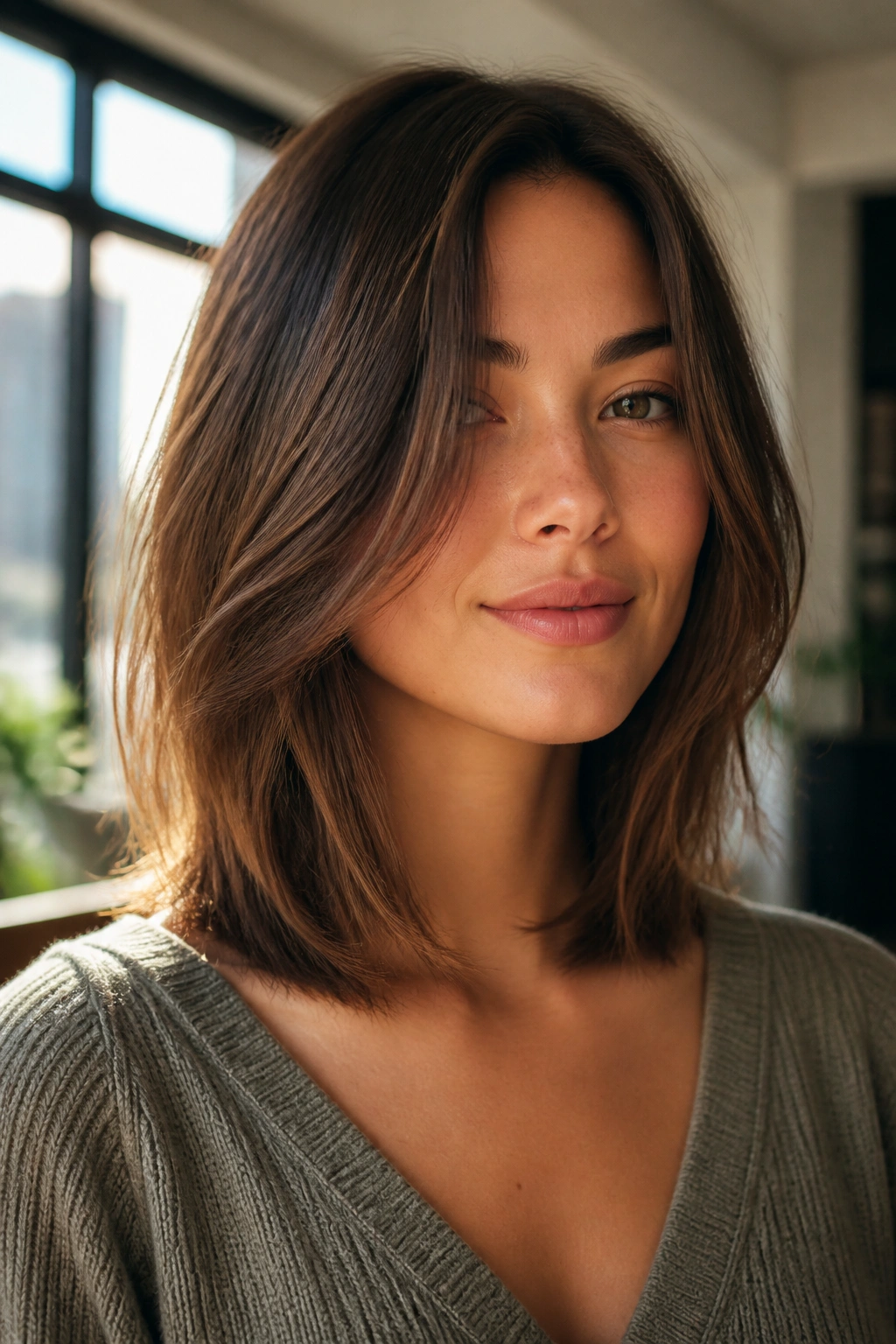
A collarbone-length lob is already a smart choice for round faces, but hidden internal layers make it better. Instead of obvious steps, the cut removes weight from inside the shape, so the ends still look full while the middle moves a little more freely.
That’s the nice part. You get softness without a choppy look.
This haircut works especially well if you want something that can be tucked behind the ears, flipped under, or worn straight with a slight bend. The collarbone length is long enough to elongate the face, but not so long that it feels heavy and endless. Ask for layers that begin below the chin so the width stays low.
It’s also one of the easier cuts to grow out. That matters. A lot of layered styles look great for six weeks and then get weird; this one usually stays useful longer.
5. A Soft Shag That Skims the Cheekbones
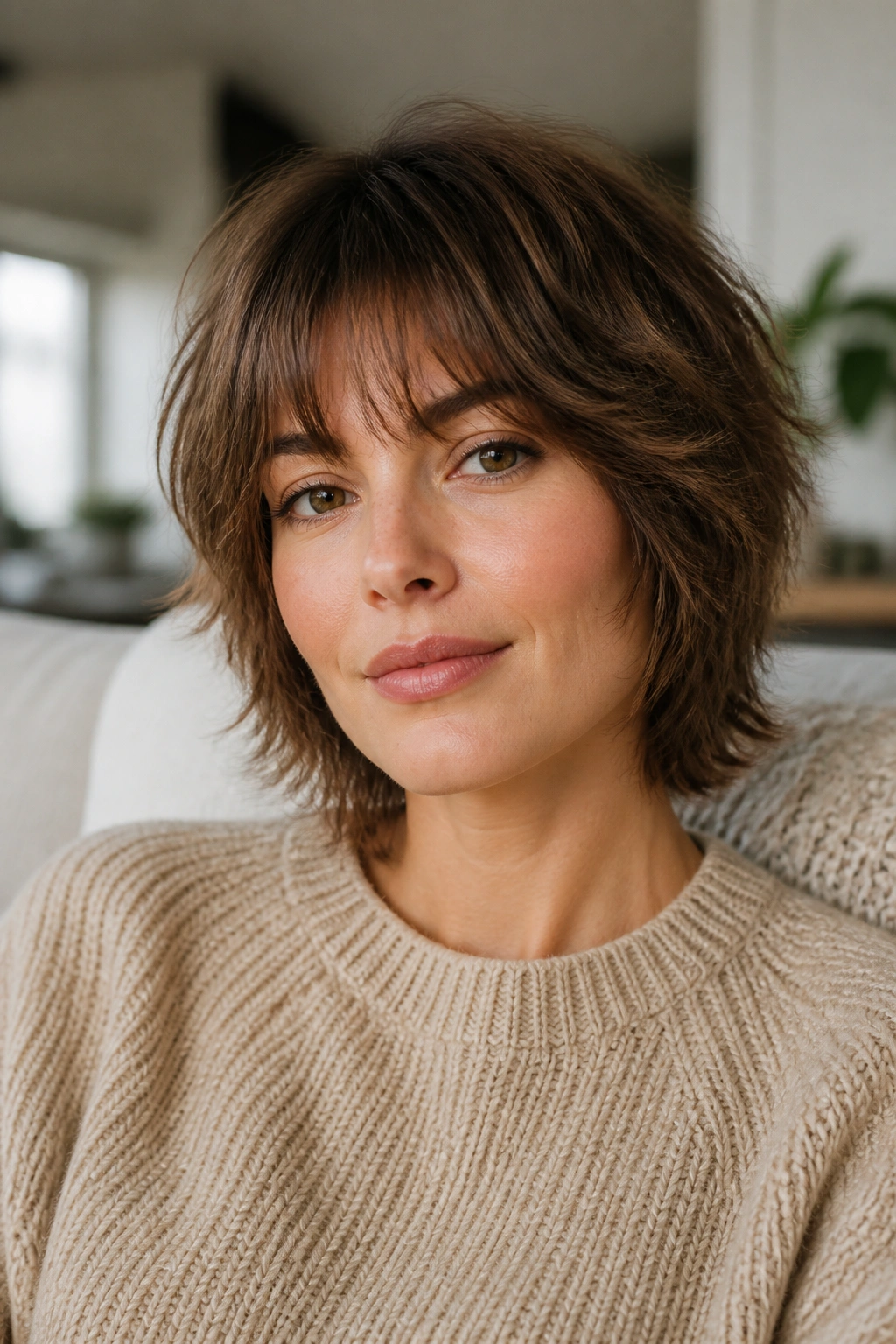
A shag can be amazing on a round face. Or it can be a puffball. There’s not much middle ground if the shape is off.
The version you want is soft, with layers that move around the cheekbones instead of stopping there. Think loose texture, airy ends, and a little crown lift rather than a full-on choppy mess. The shape should feel broken up, not triangular. If the stylist leaves too much width at the sides, it can make the face look shorter. You want movement that drops down through the center.
What to Watch For
- Short layers at the crown should stay soft, not helmet-like
- The fringe should be wispy or curtain-like, not blunt
- Texture spray helps more than heavy cream
- This cut looks better with a little mess in it
One good shag is enough. Don’t over-style it. The whole point is that it looks lived-in, not lacquered.
6. Deep Side-Part Layers for a Longer Look
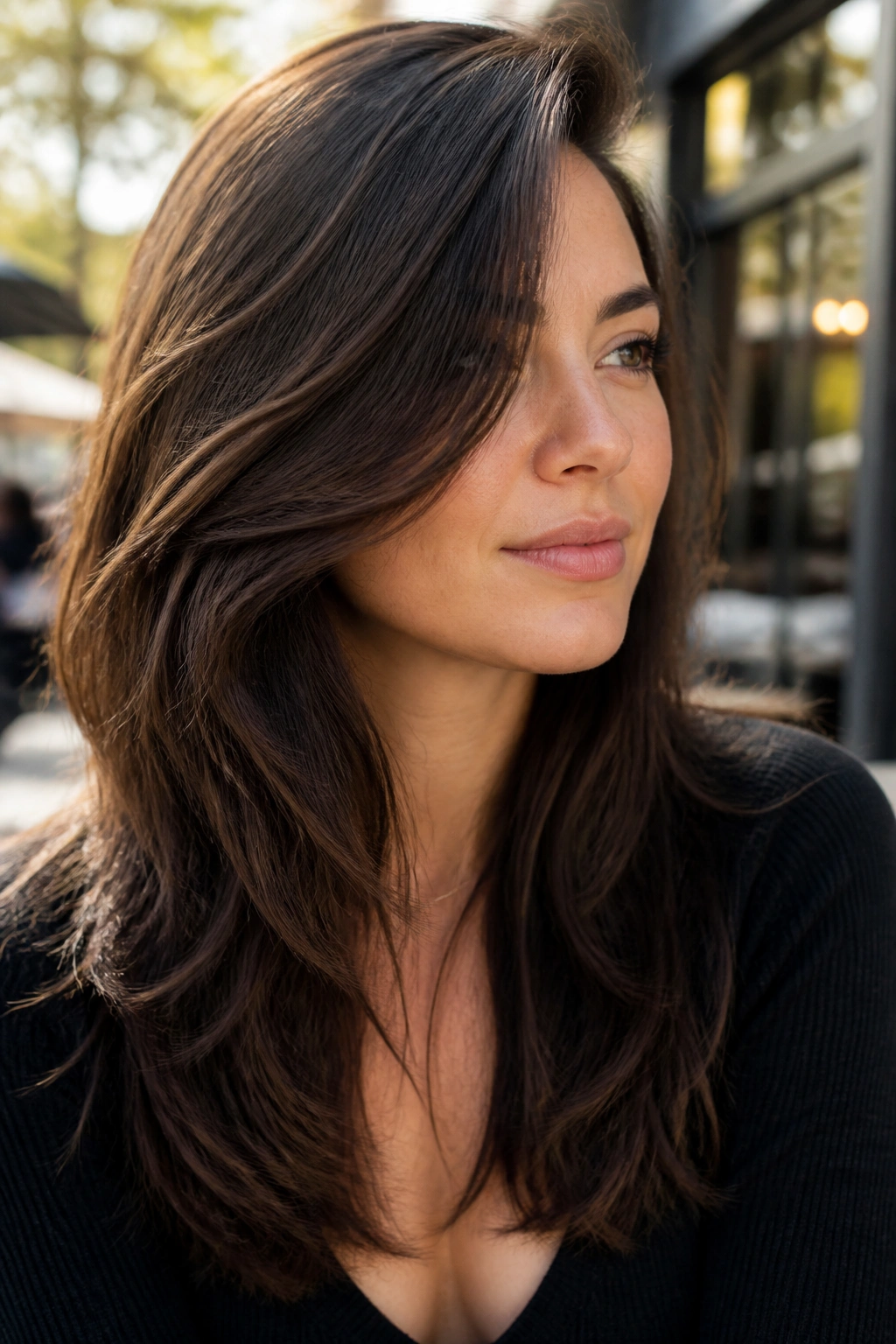
A deep side part can change the whole mood of layered haircuts for round faces. It breaks symmetry, adds height at the roots, and gives the face a diagonal line instead of a circle.
Unlike a center part, which can be soft and pretty but sometimes too even, a deep side part creates movement before the cut even starts. Pair that with long layers that begin below the cheekbones and you get a shape that leans long rather than wide. It’s a simple trick, and honestly, it works more often than people give it credit for.
This is a good option if you don’t want bangs. Some people love a fringe; others hate the maintenance. A side part gets you many of the same face-slimming benefits without the trimming schedule. Add a bit of root lift at the crown and you’re halfway there.
7. A Wolf Cut That Stays Soft, Not Boxy
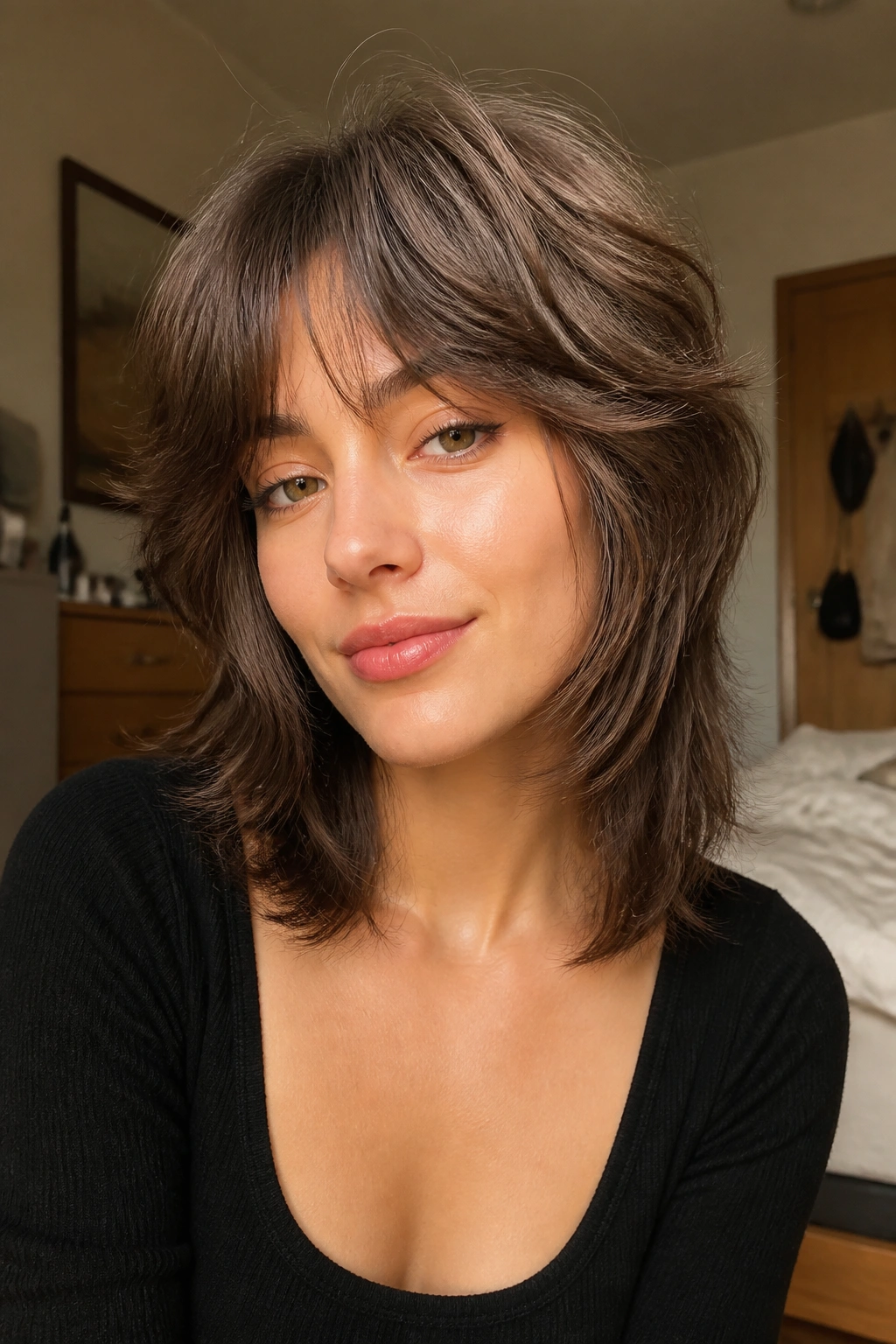
Why do some wolf cuts look cool and others look like a bad home trim? The difference is usually in the perimeter. A round face needs the layers to stay soft and slightly elongated, not puffed out at the sides.
The version worth asking for keeps the top pieces airy and the bottom length intact. You want texture through the crown, some disconnection around the face, and ends that still fall past the chin. If the cut gets too short around the ears, it can widen the face in a hurry. That’s the mistake.
Best Styling Move
Use a diffuser if your hair is wavy or curly. If it’s straight, rough-dry it first, then add a few bends with a flat iron on the mid-lengths only. Keep the ends loose.
The wolf cut is not delicate. That’s the appeal. It feels a little unruly, a little cool, and far less precious than a polished layered lob.
8. U-Shaped Long Layers for Thick Hair
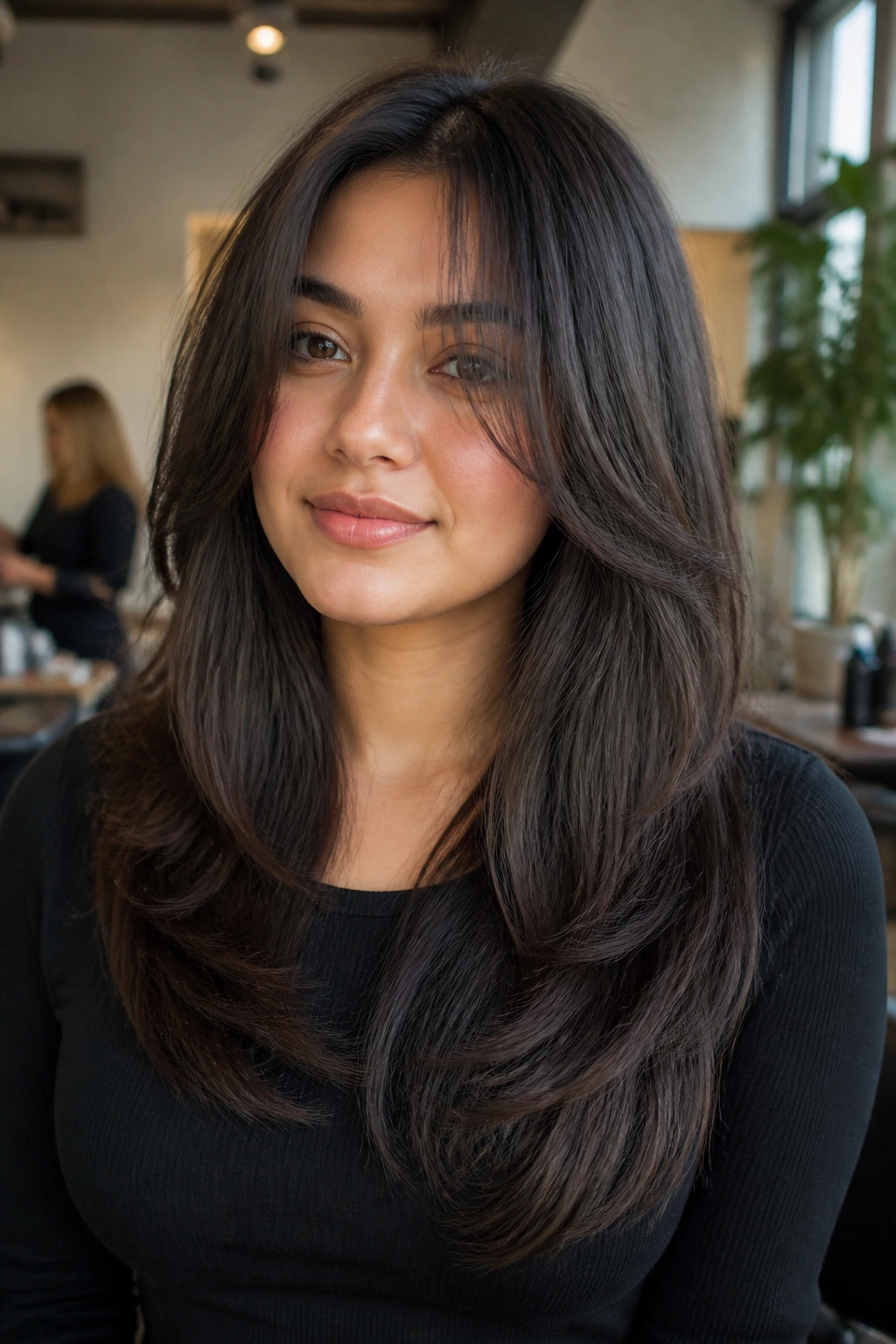
Thick hair can turn round faces into a triangle if the cut is blunt and heavy at the bottom. A U-shape with long layers fixes that by keeping the back rounded and the sides controlled.
The U shape is softer than a V-cut, which makes it a nice choice if you want less drama in the back and more balance around the face. Long layers reduce bulk without stripping away density, so the hair still feels rich. That’s important. Thin-looking long hair is not the goal here.
This is one of those styles that behaves well in a ponytail too. The longer front pieces fall out naturally, which keeps the updo from looking severe. If your hair grows fast or you hate salon visits, that’s a real bonus.
9. Wispy Layers for Fine Hair That Falls Flat

Fine hair on a round face needs a careful hand. Too many chopped layers and the ends look sparse; too few and the shape sits flat against the cheeks. Wispy layers land in the sweet spot.
The goal is movement, not reduction. Ask for long, soft layers that start below the cheekbones and a few face-framing pieces that skim the jaw. That gives the haircut lift without taking away the body that fine hair often struggles to keep. A little root spray helps, but the cut itself should do the heavy lifting.
Straight, fine hair can look limp if the layers are too subtle. On the other hand, aggressive layering makes the tips look stringy. This is one of those times when restraint pays off. Less can be better, but only if the shape is intentional.
10. Layered Pixie Bob With a Longer Top
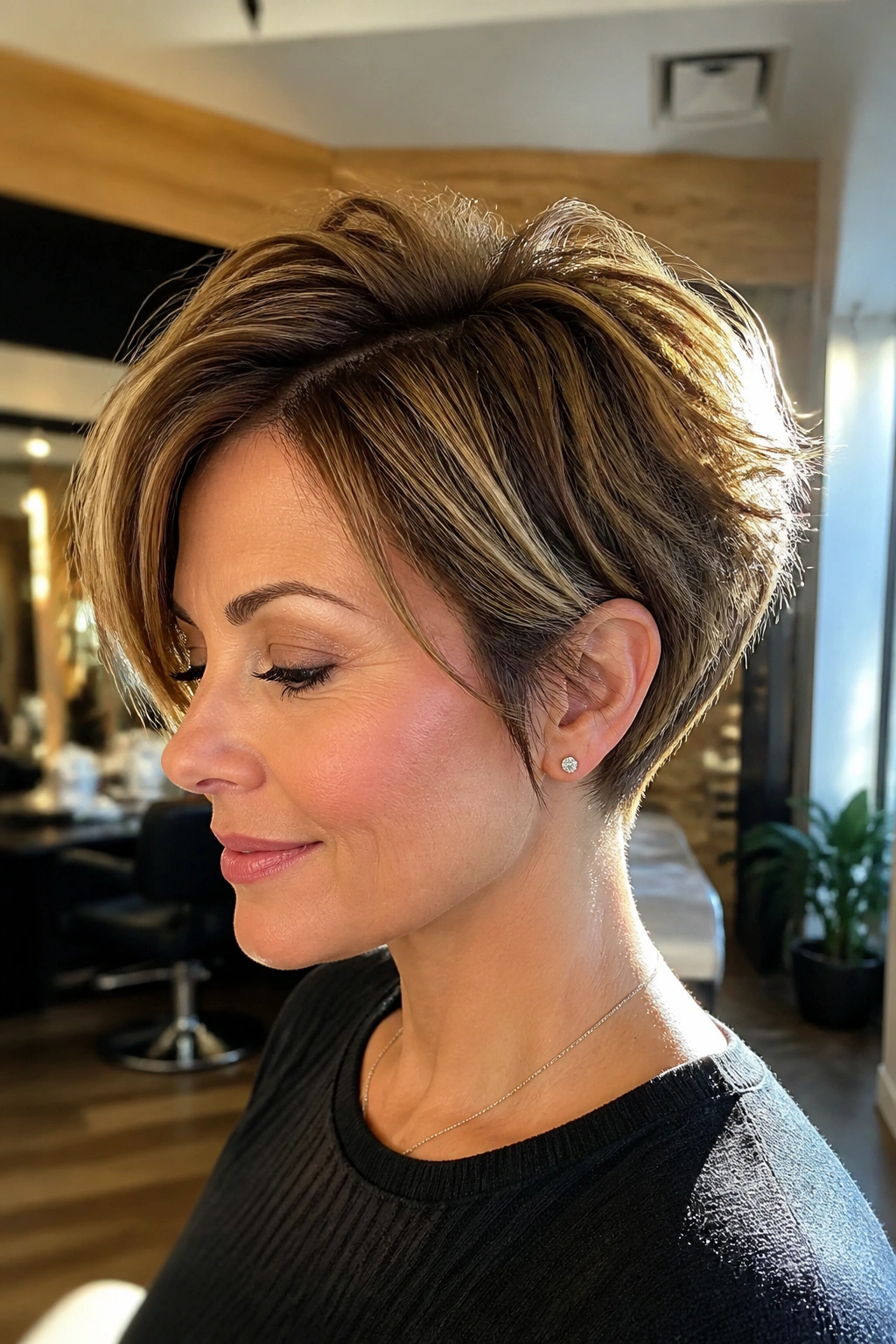
Short hair on a round face can be tricky, but a layered pixie bob gives you options. The longer top adds height, the shorter nape keeps things neat, and the sides stay controlled instead of spreading outward.
This cut is sharp without being severe. It works because the volume lives at the crown, not the widest point of the face. A few soft pieces around the temples can help too, especially if they curve forward a little. You do not want the shape to stop at the cheeks and flare out. That’s the fast way to make a round face look even rounder.
It’s a good haircut for people who like to style with their fingers instead of a blow dryer. A bit of paste or lightweight cream is enough. Done right, it looks modern and clean, not fussy.
11. Feathered Shoulder-Length Layers With Movement

Feathering gets dismissed sometimes because people picture old salon photos with too much spray. Fair. But the modern version is lighter and better controlled.
What Makes It Different
The layers are sliced to move away from the face in soft arcs, which gives a round face a little breathing room. Shoulder length matters here because it gives the feathers space to fall without building width at the cheeks. If the cut is too short, the effect gets cramped.
- Ask for the shortest face-framing layer at the lip or chin
- Keep the perimeter at or just below the shoulders
- Use a round brush to bend the ends away from the face
- A light mousse adds grip without crunch
The finish should feel airy. Not stiff. If the hair looks sprayed into place, the cut has lost its point.
12. A Textured Midi Cut With Face-Framing Angles
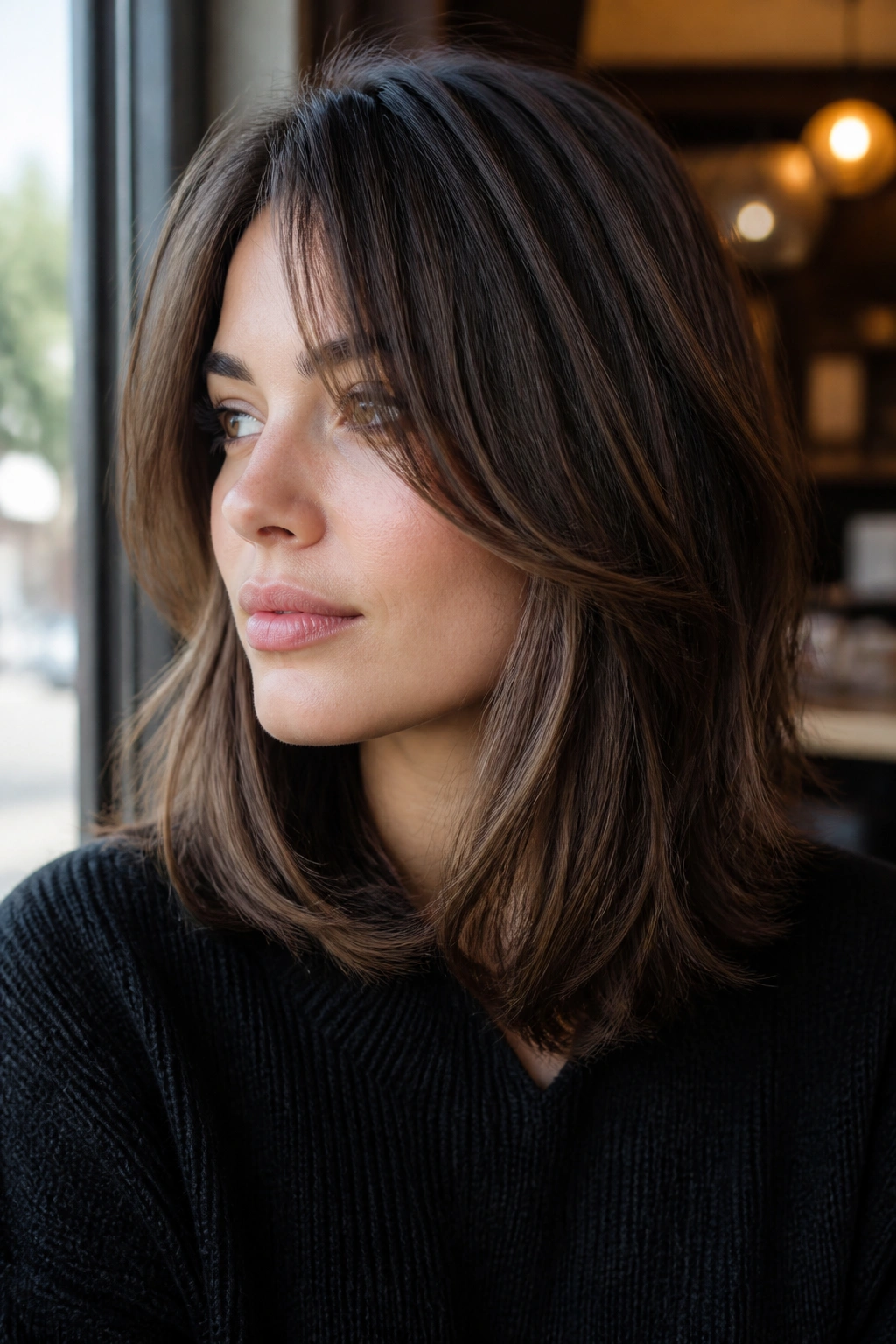
A midi cut sits in that useful middle zone between short and long. Add texture, and it becomes one of the most wearable layered haircuts for round faces because it gives shape without forcing a big style shift.
The face-framing angles matter more than the rest of the cut. Start them near the chin, then let them taper into longer sections so the eye keeps moving downward. That slight diagonal line helps break up the roundness without making the haircut obvious. It’s a nice option if you want to look polished but not overdone.
This one suits people who wear their hair half up a lot. The layers keep the sides from looking bulky when pulled back, and the front pieces soften the face instead of exposing everything. Easy is underrated.
13. Razor-Cut Layers for Straight Hair
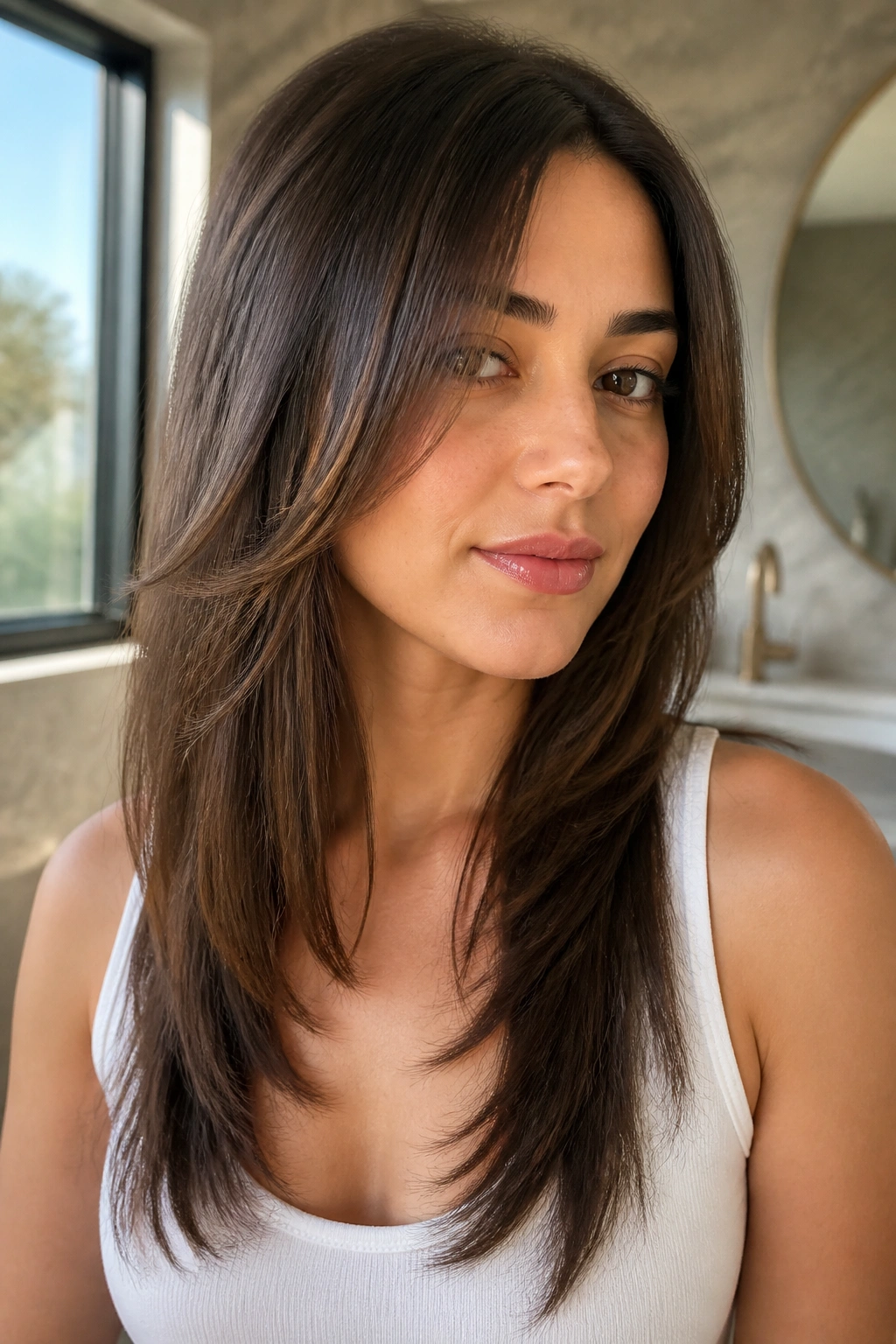
Straight hair can look heavy fast, especially on a round face. Razor-cut layers remove weight in a softer way than blunt scissors, which helps the ends lie flatter and move better.
The texture from a razor gives the cut a slightly wispy edge. That’s useful if your hair tends to sit like a sheet. The motion creates a longer line, which is what you want. Keep the layers below the cheekbones and make sure the stylist doesn’t over-thin the sides. A little movement is enough.
This cut is better for medium-density to thick straight hair than for very fine hair. Fine hair can lose too much body if the razor work gets aggressive. That’s the catch. Used carefully, though, it’s one of the cleanest ways to soften a broad-looking silhouette.
14. Bottleneck Bangs With Blended Layers
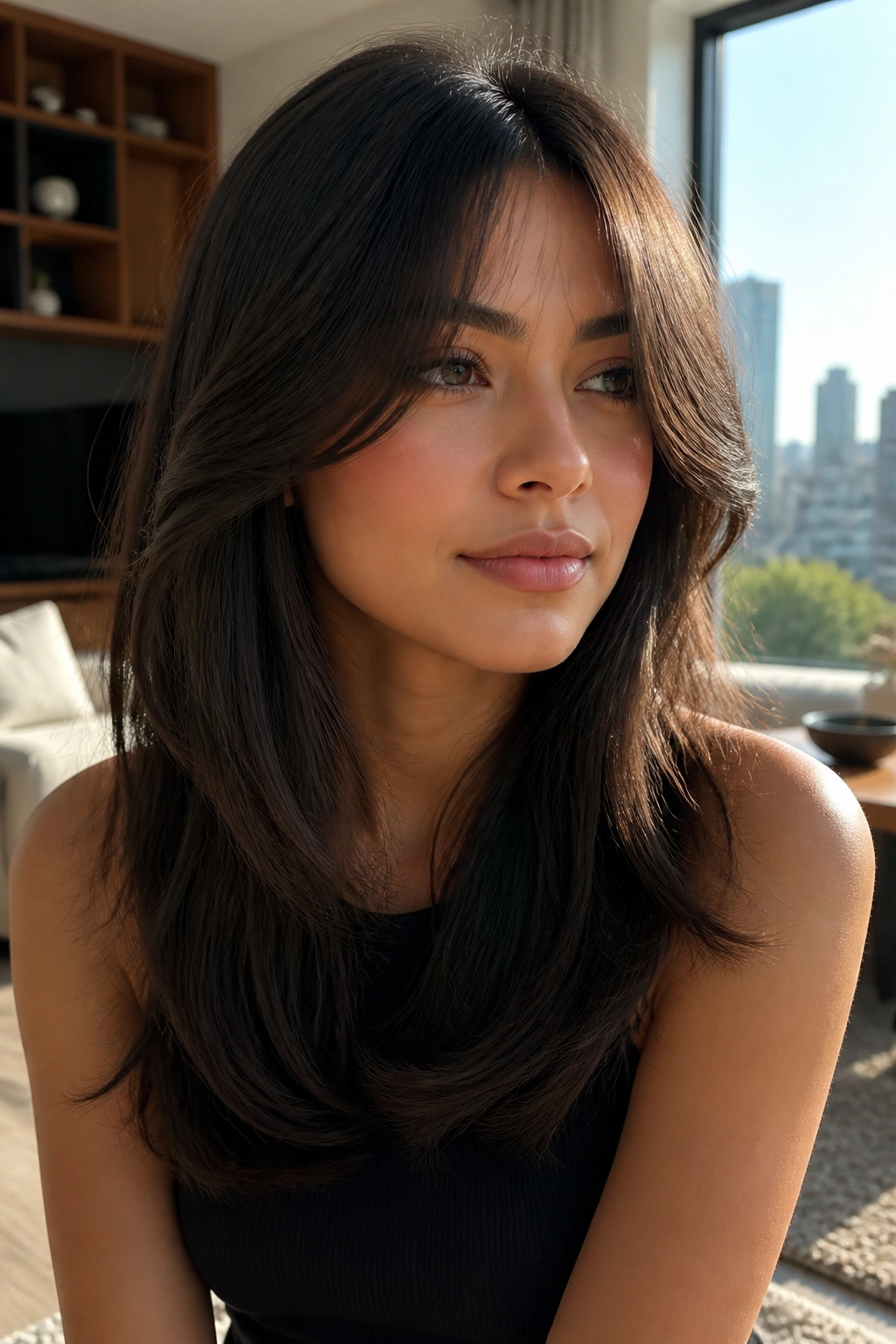
Bottleneck bangs are a quiet little cheat code. They start narrow at the center, then open out as they drop toward the temples, which keeps the forehead from feeling too wide and makes the face look more oval.
On a round face, that shape works because it does not cut the face in a hard horizontal line. Instead, it creates a soft frame that blends into layered sides. The transition should be smooth. No sudden chop at the cheeks. No heavy shelf of hair sitting across the widest part of the face.
They’re also easier to grow out than blunt bangs, which is reason enough for a lot of people. If you’ve been curious about fringe but don’t want to commit to constant trimming, this is the sensible choice.
15. An Angled Lob That Stretches the Jawline

An angled lob does one job well: it gives the eye a path to follow. Shorter in the back, longer in the front, it naturally creates length through the jaw.
For round faces, that front angle matters. It makes the haircut feel directional instead of even all the way around. The best versions are not severe; you do not need a dramatic wedge. A gentle angle with soft layers is enough to sharpen the outline without making the cut look dated or harsh.
I like this cut for people who want structure but still want to tuck hair behind one ear. You get that little swing in the front, and it feels deliberate. Add a slight bend with a flat iron and it comes alive fast.
16. Dry-Cut Layers for Curly Hair
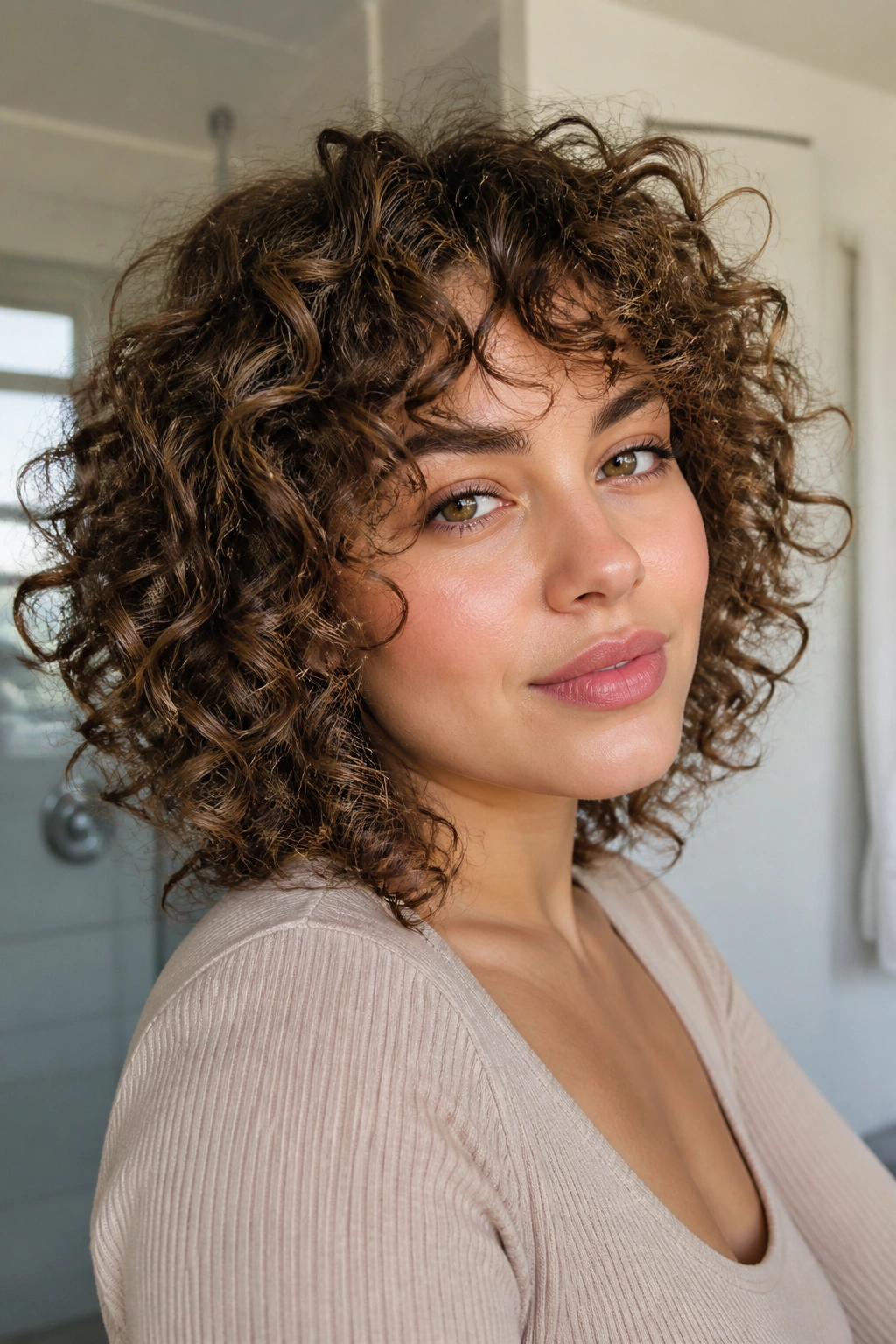
Curly hair and round faces need honesty from a haircut. A shape that looks great wet can explode when it dries, which is why dry cutting matters so much.
Why Dry Cutting Helps
When curls are cut dry, the stylist sees where the curls actually sit, how much they shrink, and where the volume wants to live. That makes it easier to keep width under control. The best layered curly cut keeps the shortest pieces above or around the cheekbones only if they’re soft and springy; otherwise, the layers should begin lower.
- Dry-cut curls to read the real length
- Keep weight at the bottom if the hair grows wide
- Ask for face-framing pieces that curl under the chin or below it
- Finish with a diffuser and a light gel, not a heavy cream
Curly hair should look shaped, not puffed. That’s the line.
17. Long Layers With a Curtain Fringe
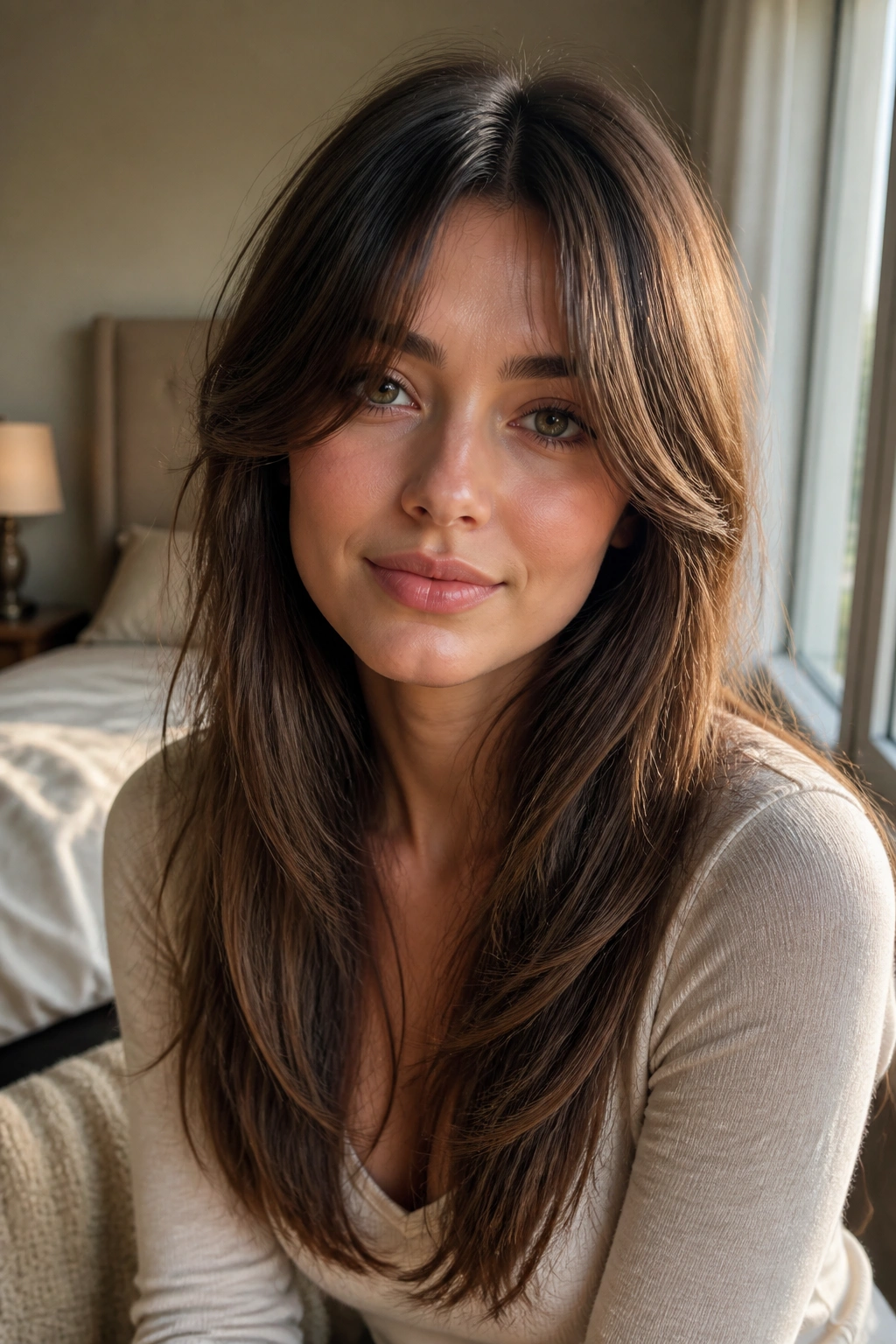
Long layers and a curtain fringe are a good pair because they do two different jobs at once. The layers keep the length from feeling flat, and the fringe breaks up the top third of the face.
Why does that matter on a round face? Because the eye keeps moving. The fringe draws attention inward, then the long layers pull it down. That combination makes the face feel less circular without making the haircut stiff. It’s soft, but not bland.
The fringe should stay long enough to tuck into the sides. If it lands too high, it can widen the forehead area and throw off the balance. A quick blow-dry with a small round brush is enough for most people. Nothing fancy. Just enough bend to separate the pieces.
18. Feathery 70s Layers With Big Crown Lift
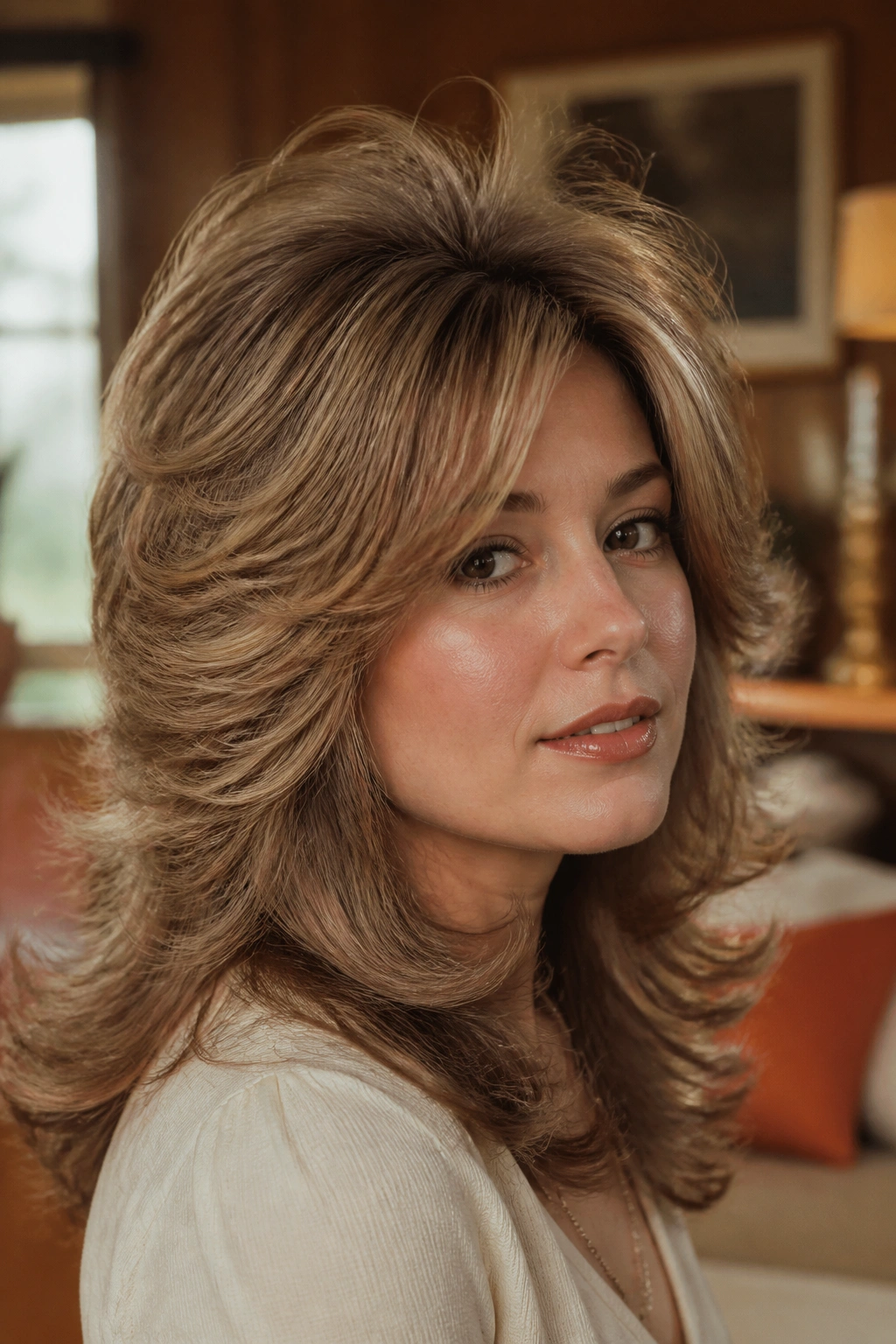
Feathery layers from the 70s have made their way back for a reason: they know how to frame a face without boxing it in. On a round face, that feathered lift at the crown is worth gold.
The shape is all about motion away from the face. The top gets height, the mid-lengths soften, and the ends flick outward or under depending on your styling mood. That upward energy helps stretch the face vertically. It also makes thick hair feel lighter, which is a relief on its own.
This cut is at its best with a round brush or rollers. Let the top section set with some lift and don’t flatten it with too much product. If you prefer movement over sleekness, this is a strong pick.
19. A Bouncy Blowout Cut With Soft Ends
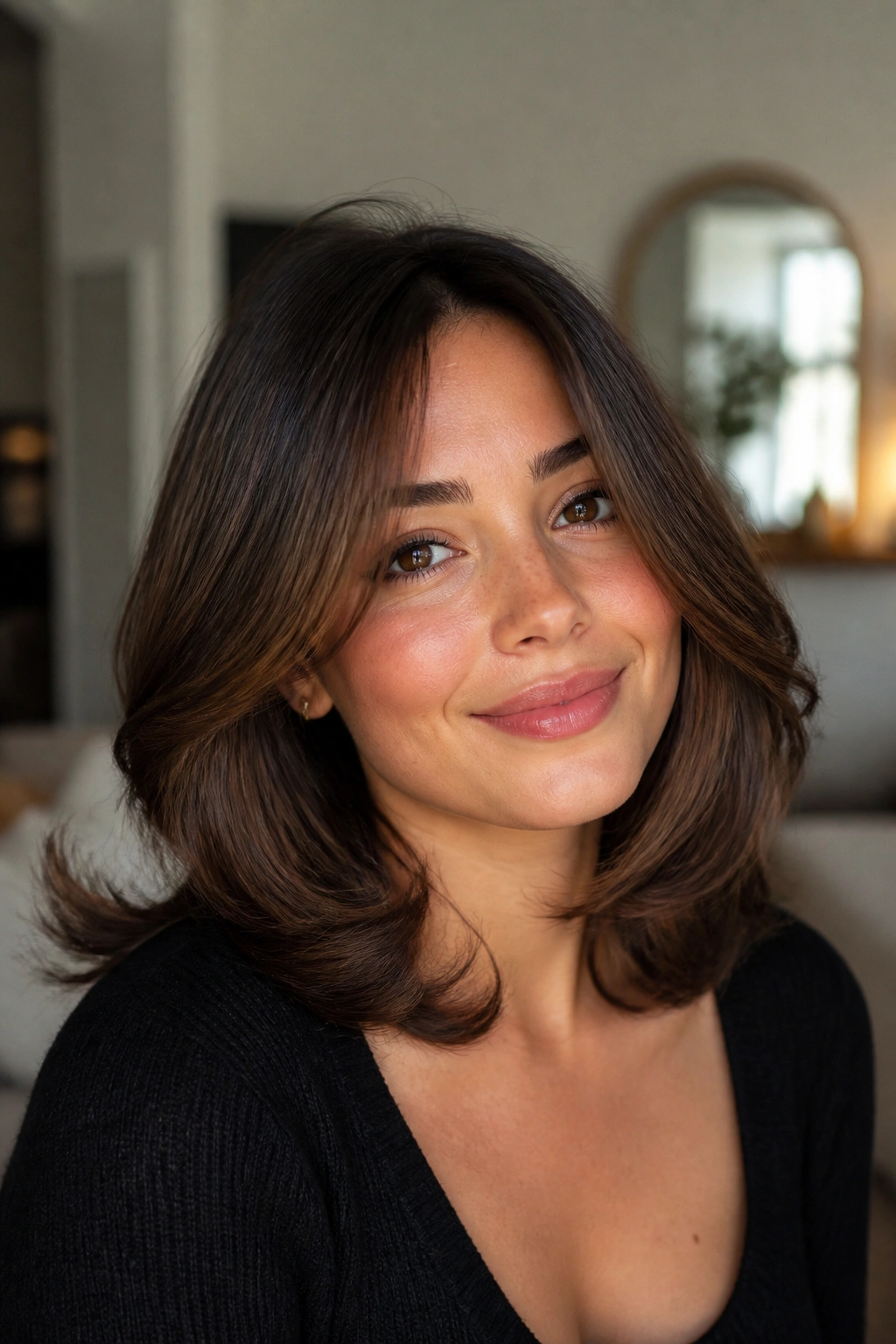
Some haircuts are built to air-dry. This one is built to blow out. The layers are placed so the hair swings, lifts, and curls under a little at the ends, which makes the whole face look more open.
The reason it flatters a round face is simple: the bounce happens below the cheeks, not around them. That keeps the width low and gives the jaw a cleaner line. If the layers are cut too high, the bounce moves up too much and the shape gets puffy. That is not what you want.
This cut is a good match for someone who likes a polished finish and doesn’t mind using a brush dryer. It can look expensive without trying hard. Or at least it looks like you made an effort, which is sometimes the whole point.
20. Minimal Layers and a Deep Side Part

Not every round face needs a lot of layer action. Sometimes the smartest move is fewer layers, more direction.
A deep side part with minimal layering keeps the ends full while shifting the weight off the center of the face. That asymmetry matters more than people think. It adds angle without turning the haircut into a shag or a bob with a thousand pieces. If your hair is already fine or medium, this can be the cleanest route. Too many layers would steal body you actually need.
This is a strong choice for straight hair that resists curl and for people who wear their hair long but still want some shape. It’s understated. It does not shout. That is the whole appeal.
21. A Tapered Nape Bob With Lift at the Crown
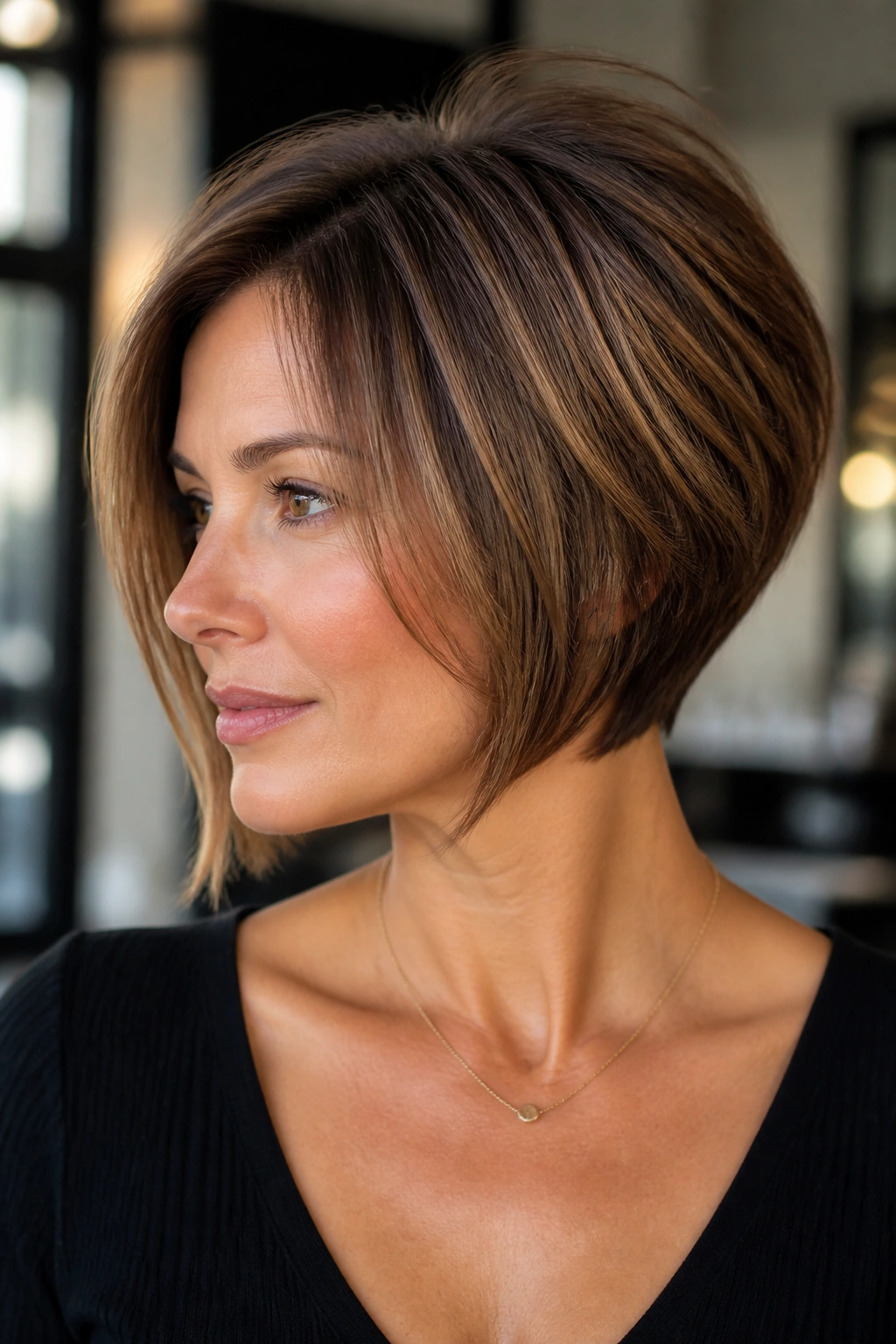
A tapered nape bob sounds technical, but the idea is simple: keep the back snug and neat, then build a little height on top so the face feels longer.
The Shape in Plain English
The nape sits close to the neck. The crown gets some lift. The sides stay controlled instead of puffing out around the cheeks. That combination is useful on round faces because it keeps the visual bulk away from the widest zone.
- Best on straight to lightly wavy hair
- Ask for a soft taper, not a stacked wedge
- Keep the front pieces grazing the chin or a touch longer
- Use root spray at the crown for hold
I’d skip this if you hate styling the top. The shape depends on a little lift up there, and flat roots can make it look boxy. But when it’s done right, it looks crisp and fresh.
22. Swoopy Layers That Tame Thick Hair
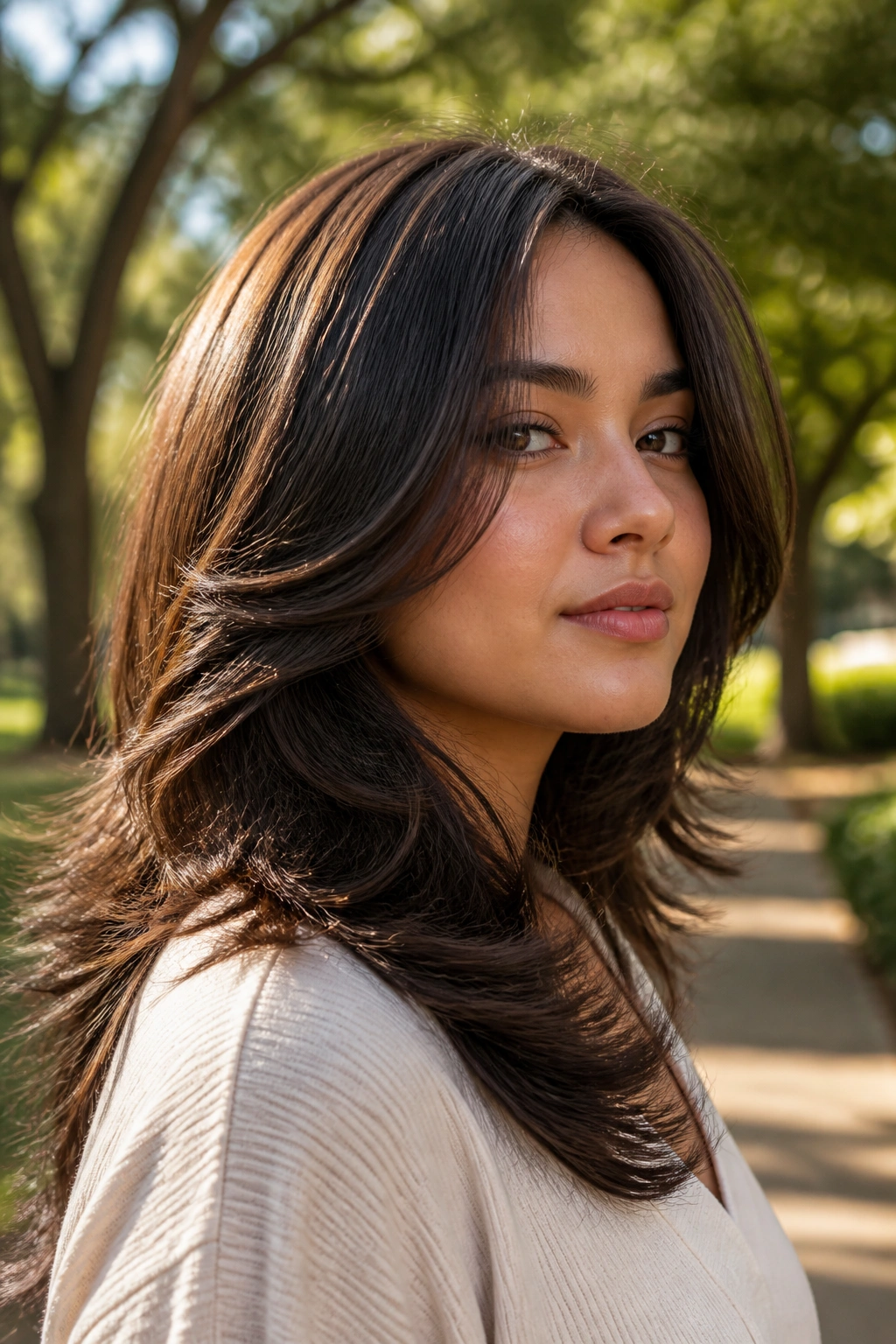
Thick hair has a way of doing what it wants. Swoopy layers help it cooperate.
Why are they so useful on a round face? Because they redirect the bulk. Instead of sitting full at the sides, the layers curve away from the cheeks and drop longer through the jaw and collarbone area. That keeps the silhouette from spreading out. The style is especially good if your hair gets fluffy in humidity or puffs up when it’s shorter.
Ask for long, connected layers with a soft sweep through the front. Avoid short, choppy side pieces unless you love a lot of volume around the face. Thick hair can handle drama, but it needs direction. Without that, the shape gets wide fast.
23. Air-Dried Wave Layers for Low-Maintenance Days
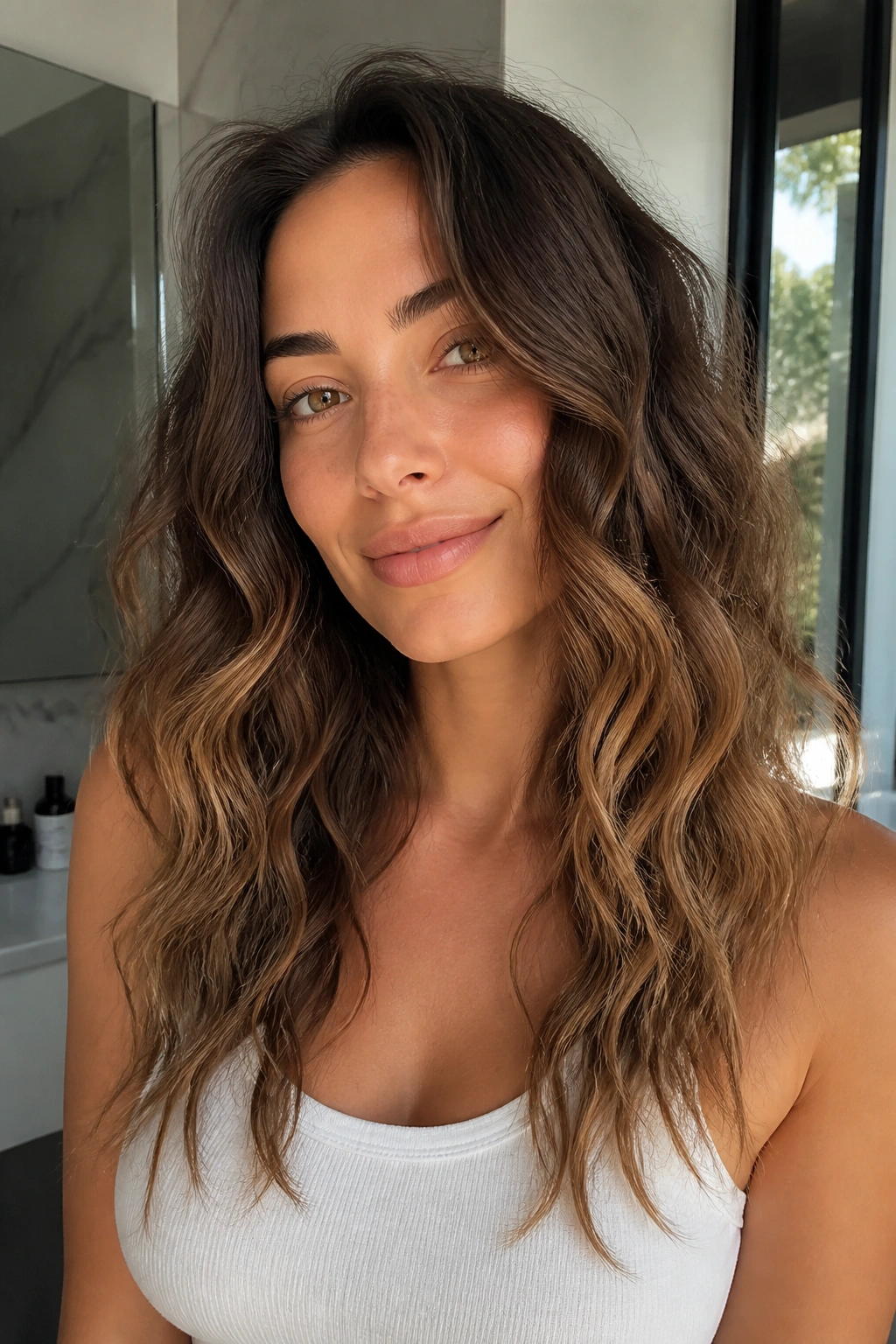
Some cuts need a blowout to make sense. This one survives a towel dry and a little product.
The layers should encourage your natural wave to fall in vertical movement rather than outward fluff. On a round face, that means keeping the shortest pieces below the fullest part of the cheek and letting the wave bend from there down. A salt spray or light cream is enough for most textures. Too much product weighs the waves down and makes the whole thing droop.
If you hate hot tools, this is one of the most forgiving layered cuts you can wear. It still looks styled when it isn’t perfect. That matters more than people admit.
24. Money Piece Layers That Brighten the Face
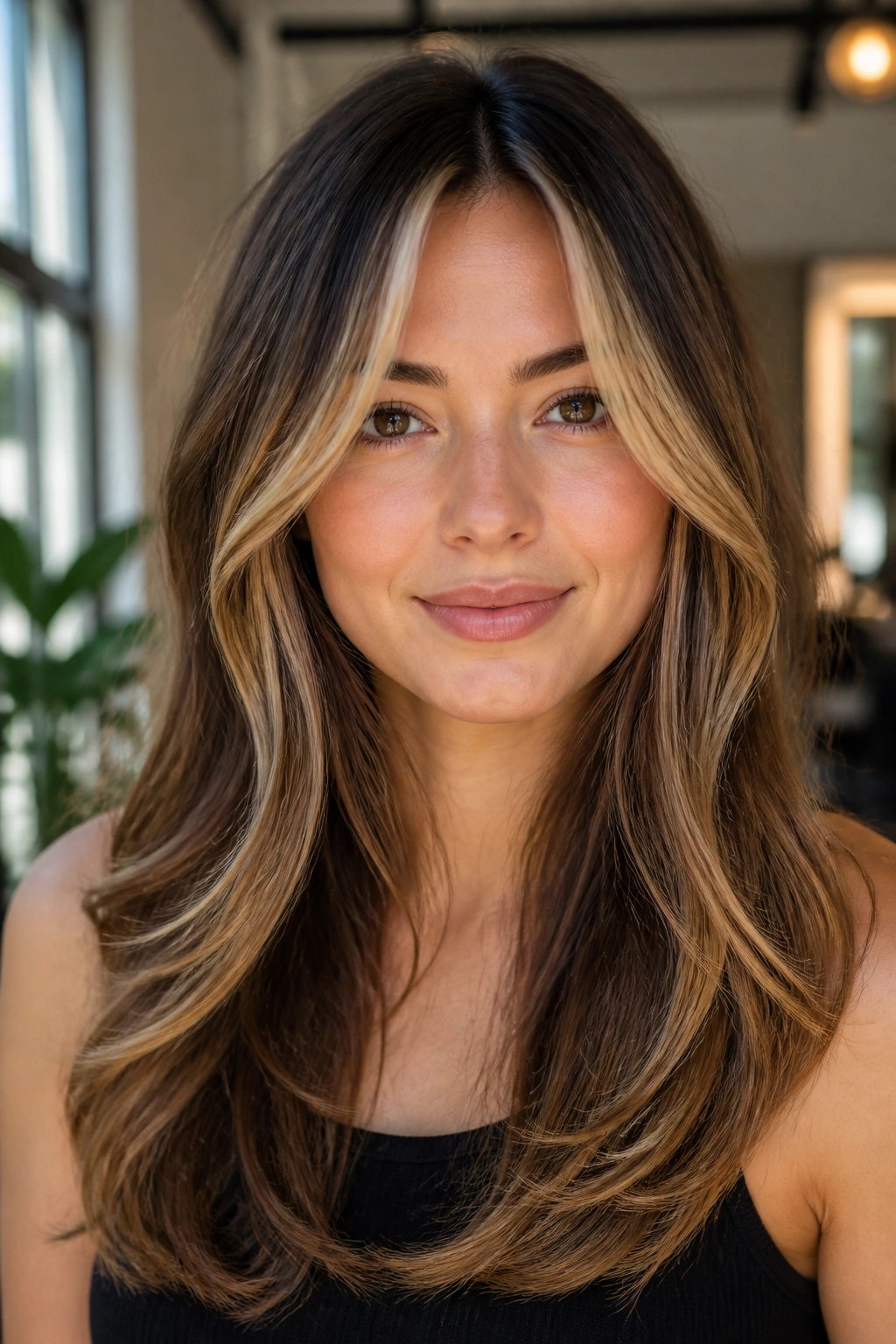
A money piece is not a haircut by itself, but paired with layered lengths, it changes the whole frame. Those brighter front pieces act like a spotlight, pulling attention toward the center of the face instead of the widest points.
The layers around them should stay soft and long enough to blend. If the face-framing cut is too short, the light pieces can look harsh. Longer layers, especially those starting near the chin, keep everything smooth. This works on dark hair, light hair, curly hair—pretty much anything that can hold a visible front section.
It’s a good pick if you want the haircut to feel a little fresher without chopping off length. Small visual changes count. Sometimes a few inches near the face do more than a whole dramatic cut.
25. Choppy Shoulder Layers With Controlled Texture
A shoulder-length chop can go wrong on round faces when the texture gets too big at the sides. Controlled choppiness avoids that problem.
The layers should be broken enough to add movement, but not so short that they stick out at the cheekbones. Think piecey ends, some separation, and a little softness through the front. The shoulders are a useful landing point because they let the hair move vertically instead of sitting right at the jawline.
This style feels modern when it’s styled with a bend, not a curl. If you use a flat iron, keep the bends loose and alternate directions a little so the pieces do not clump together. Clean, slightly undone, nothing overworked.
26. Mixed-Length Layers With a Long Fringe
When a cut needs more shape without more width, mixed-length layers do the job. The trick is making the lengths look deliberate rather than random.
How to Ask for It
Tell your stylist you want a long fringe that blends into several soft lengths around the face. The shortest pieces should fall below the cheekbone, and the longest ones can taper past the chin. That spread gives the haircut movement while keeping the roundness in check.
- Great for medium-density hair
- Works with straight, wavy, or lightly curly textures
- Ask for point-cut ends so the fringe stays soft
- Style with a light cream or heat protectant before blow-drying
This haircut has a nice lived-in feel. It is not precious, which makes it easier to wear every day.
27. An Asymmetrical Layered Bob
A little asymmetry goes a long way on a round face. Even a subtle difference in length can break the circle and make the haircut look sharper.
The version I like best keeps one side a touch longer and uses layered texture to soften the transition. It should feel intentional, not lopsided. That means the cut needs clean lines near the nape and softer movement through the front. If both sides flare out, the face gets lost in the shape.
This bob suits people who want something a little more fashion-forward but not extreme. It’s easy to wear with a side part, and it looks good with earrings. Small detail, yes. But those details matter.
28. Long Layers With a Hidden Undercut
Thick hair can get heavy around the jaw, which is why a hidden undercut can be so useful. The hair on top stays long and pretty; the underside loses some bulk where no one sees it.
That hidden removal keeps the silhouette cleaner. On a round face, cleaner is good. It stops the hair from spreading outward and lets the long layers lie closer to the head. The top still has movement, but it doesn’t mushroom.
This is not a cut for someone who wants the easiest grow-out. Hidden undercuts need maintenance if you like them neat. Still, for very dense hair, they solve a problem that layers alone sometimes cannot.
29. Flipped-Out Ends With Soft Layering
Flipped-out ends can look playful instead of dated when the layering is soft and the flip starts low. That’s the key.
A round face benefits because the flip directs the eye away from the cheeks and down through the jawline. If the ends are flipped too high, the volume sits in the wrong place. Keep the motion near the collarbone or below, and the effect stays flattering. A flat iron or a blow-dry brush can create the bend in a few minutes.
This style has a little personality. Not everyone wants sleek hair all the time. Sometimes the shape needs some kick at the bottom to feel alive.
30. A Shaggy Lob With Loose, Lived-In Movement
A shaggy lob is the cut for someone who wants texture without committing to a short shag. It sits at the shoulder or just below, so there’s enough length to keep the face from widening.
The layers should be broken up enough to move, but not so ragged that the cut loses shape. Loose ends help here. They keep the outline soft and let the layers do the work around the face instead of piling on bulk. This is a nice middle ground if you like a little edge but still need the haircut to behave at work.
Dry shampoo and texture spray are useful, but not mandatory. The shape should work even when the hair is only half-styled. That’s the mark of a good lob.
31. Crown-Boosting Layers for Fine Hair
Fine hair on a round face often needs lift more than it needs length. Crown-boosting layers focus volume where it changes the silhouette the most.
The Main Idea
You want height on top and softness at the sides. That means shorter layers through the crown, but nothing that balloons at the cheeks. A little root lift changes the shape fast.
- Blow-dry the crown first for maximum lift
- Use a lightweight mousse instead of a heavy cream
- Keep the perimeter longer than the shortest pieces
- Avoid too many layers through the sides
This cut can look small if it’s not styled, so a bit of effort helps. Even ten minutes makes a difference. Fine hair loves that kind of payoff.
32. Blunt Ends With Internal Movement
A blunt perimeter does not have to fight a round face. The problem is usually what happens above it. When the interior has movement and the bottom stays strong, the cut looks full but not wide.
That balance is useful if you like a cleaner shape and do not want visible choppiness. The internal layers stop the hair from sitting like a block, while the blunt ends keep it looking dense and healthy. On a round face, that combination can be surprisingly flattering because it creates a long line without the jagged look some people dislike.
It’s a good choice for medium to thick hair that needs control more than it needs flair. If you want the haircut to look expensive in a quiet way, this is one of the stronger picks.
33. A Razor Shag With Piecey Fringe
A razor shag gives you texture with a little bite. The fringe is piecey, the lengths are loose, and the whole cut looks a bit airier than a standard layered shape.
What makes it work on round faces is the spacing. The fringe shouldn’t sit as one hard bar across the forehead. It should break apart and fall into the layers so the eye keeps moving. That breaks up the face instead of boxing it in. The razor finish also helps straight or wavy hair avoid that heavy, blunt feeling.
This cut is not for someone who likes perfect symmetry. It lives better when it is a little messy. That is half the charm.
34. A Curly Layered Cut That Keeps Width Low
Curly hair can make a round face look broader if the cut builds too much volume at the sides. The answer is not fewer curls. It’s smarter layers.
The best version keeps the shape taller and longer, with layers that encourage curls to fall downward instead of outward. A dry cut helps the stylist see the real curl pattern, and a longer face-framing section keeps the cheeks from getting buried. If the curls spring up a lot, the shortest layer should still land lower than you think. Shrinkage is real.
This cut looks best when the curls are hydrated but not weighed down. A leave-in and a light gel usually do the job. Heavy cream can make the shape droop and widen at the sides.
35. Soft Elongated Layers With a Center Part
If you want one cut that quietly handles a round face without making a big scene, this is the one I keep coming back to. Soft elongated layers with a center part create a long, clean line from forehead to ends, and that line is the whole game.
The layers should begin below the chin, then taper into the lengths so the front pieces skim rather than stop. The center part adds symmetry, but the softness of the layers keeps it from feeling flat or severe. It’s polished, easy to wear, and less dependent on daily styling than some of the more dramatic cuts on this list.
If I had to send someone into a salon with one simple request, it would be this: keep the width low, keep the front pieces long, and let the movement happen below the cheekbones. That formula works more often than people expect. It’s quiet. It’s flattering. And it does the job without making the haircut the entire conversation.
