



Long face shapes look best when the hair adds width, not more height. That’s the whole game, and it’s easier to miss than people think. A style that sits flat on top, falls straight past the jaw, and keeps everything centered can make the face read even longer than it is.
Length on length is a trap.
The flattering move is usually one of three things: interrupt the forehead with bangs, build fullness around the cheekbones, or stop the cut at a spot that creates a strong horizontal line. Chin-length bobs, side parts, soft waves, rounded curls, and fringe all do that in different ways. A super-long, pin-straight cut can work on a long face, sure, but it needs some kind of break in the silhouette or it starts to look like a curtain hanging from the crown.
Texture matters too. Fine hair needs a stronger outline. Thick hair can handle layers, but not so many that the top goes puffy and the ends disappear. Curly hair already has width, so the cut has to shape that width in the right place instead of fighting it. That little detail changes everything.
The styles below cover short cuts, mid-length shapes, long-hair options, and a few styling tricks for days when you don’t want to change your haircut at all. Some are low-effort. Some need a decent blow-dry. All of them work with the geometry of a long face instead of against it.
1. Curtain Bangs with Loose Waves

Curtain bangs are one of the easiest ways to soften a long face because they cut across the forehead without feeling heavy. The middle part keeps the look open, while the longer sides fall right around the cheekbones and do a lot of quiet work. Add loose waves, and the whole shape starts to feel wider through the middle.
Why the Shape Works
The point is not to hide your face. It’s to break up the long vertical line. Curtain bangs do that by creating movement right where the eye wants to travel, and soft waves keep the length from reading too severe. If the bangs start around the brows and slide down toward the cheekbones, the face usually looks shorter and more balanced.
Ask for bangs that are shorter in the center and longer at the outer edges. The longest pieces should graze the lip or cheekbone, not the jawline, or the effect gets dragged downward. And please, don’t overdo the crown volume. A little lift is fine. Big height on top is not your friend here.
How to Wear It
- Use a 1-inch curling iron or wand to make bends instead of tight curls.
- Blow-dry the bangs away from the face, then let them fall back into place.
- Keep the wave pattern loose and lived-in, not polished into submission.
- Finish with a light mist of flexible spray so the fringe moves.
Best tip: keep the root lift modest and let the width happen at the cheeks.
2. Chin-Length Blunt Bob
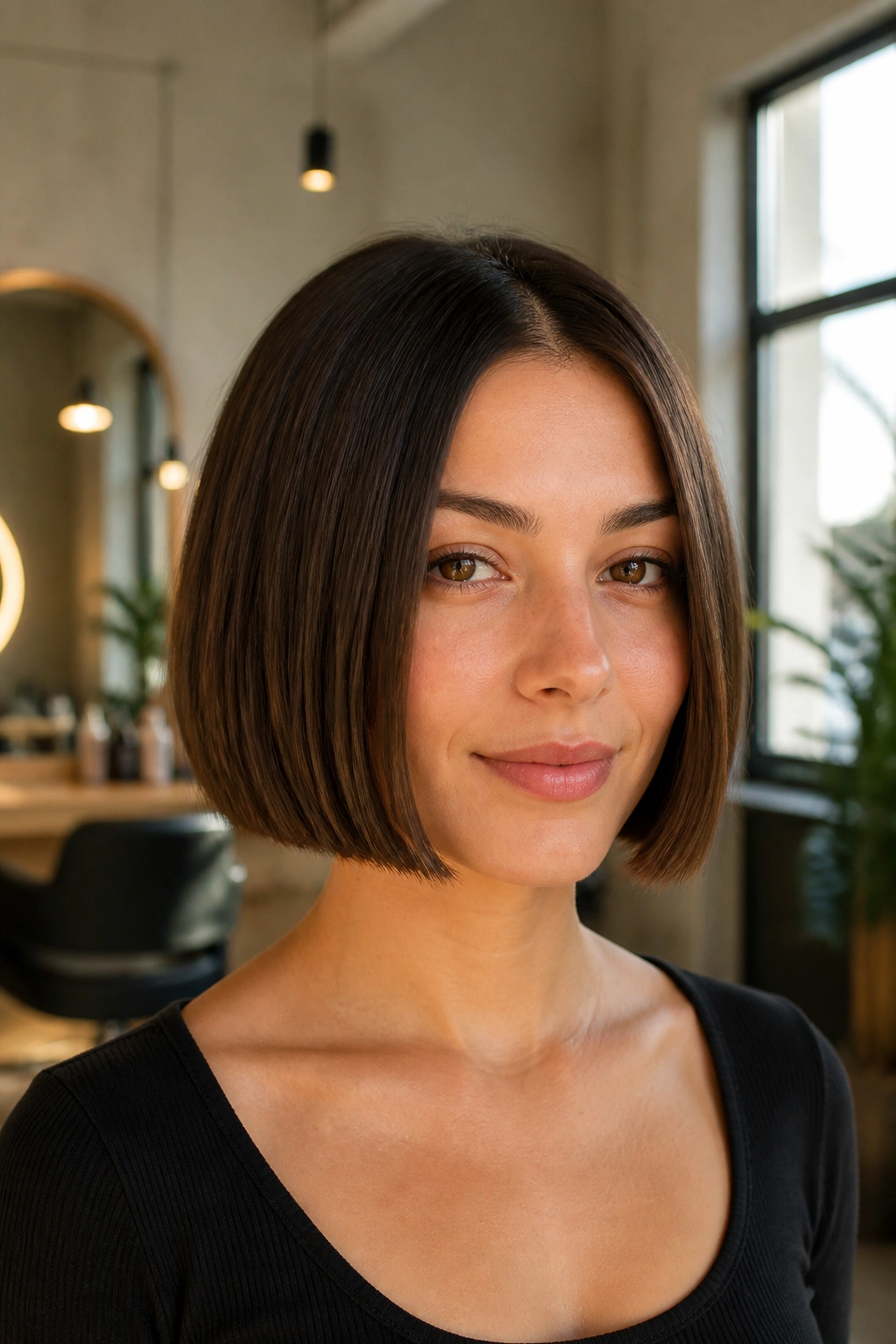
A chin-length blunt bob is one of those cuts that changes proportions fast. It gives the eye a hard stop at the jawline, which is exactly what a long face needs when the goal is to look a little shorter and fuller through the middle. No soft tapering. No wispy ends that disappear into the neck. Just a clean line.
That line matters more than people realize. A blunt edge adds visual weight at the bottom, so the face doesn’t feel like it keeps going forever. It also works especially well on fine hair, because the hair looks denser when the ends are kept full and even. If your hair is wavy, ask for a slightly beveled finish so it still curves under without collapsing.
A chin bob is not the cut to choose if you want tons of styling options or if you hate touching up your ends every few weeks. It does ask for upkeep. But when it’s right, it’s sharp in the best way.
- Best for straight to wavy hair
- Ask for the length to hit right at the chin
- Keep layers minimal
- Tuck one side behind the ear for an easy, face-opening finish
The jawline should feel like the point of the style, not a place the hair passes by and ignores.
3. French Bob with a Soft Fringe

Why does the French bob keep showing up in flattering hair conversations for long face shapes? Because it does two useful things at once: it shortens the visible length of the face and it gives the cheek area some actual presence. A soft fringe keeps the forehead from taking over, while the bob itself builds shape around the lower half of the face.
What to Ask For
A French bob does best when it lands somewhere around the cheekbone to just below the chin. Too long, and it turns into a regular bob. Too short, and it can start to look harsh unless the texture is perfect. The fringe should feel airy, not like a thick block across the forehead. Brow-grazing or slightly shorter is usually the sweet spot.
This cut looks especially good when the ends are slightly undone. A tiny bend, some dry texture, a little separation at the fringe — that keeps it from looking too neat. If your hair is wavy, you’re halfway there already. If it’s straight, a quick bend with a small iron is enough.
What Makes It Different
- It creates width at the cheeks
- The fringe shortens the forehead visually
- The shape works with air-dried texture
- It keeps the style chic without piling height on top
If you want a shorter cut that doesn’t make your face look even longer, this is a smart place to land.
4. Collarbone Lob with a Side Part

A lob can look ordinary on a long face if it hangs straight down the middle. Move the part to one side, though, and the whole thing wakes up. The side part breaks the vertical line, and the collarbone length keeps the hair from dragging the face downward. It’s a very useful cut. Maybe boring on paper. Much better in the mirror.
This is the cut for people who want to keep some ponytail length while still shaping the face. The ends should hit around the collarbone, maybe a touch above or below depending on your neck length. I like a slightly blunt edge here, with just enough layering around the front to keep the hair from looking heavy.
A side part also gives you a little volume where it matters. Not on top. On the side. That asymmetry softens the length of the face without making the style feel fussy.
Good Signs to Ask For
- Collarbone length
- A deep or medium side part
- Two face-framing pieces that start around the cheekbone
- Ends that curve in or out slightly, not stick straight
If your face feels long and your current hair feels flat, this is one of the cleanest fixes.
5. Shoulder-Length Shag with Airy Layers

A shag should feel a little wild, but not sloppy. That’s the line. On a long face, the best shag adds width through the sides and keeps the top from shooting up like a helmet. The layers should hit around the cheekbones, jaw, and shoulders, which gives the face more balance without chopping the shape to pieces.
The reason this works is simple: a shag puts movement where a long face needs it. The eye catches the texture at the sides instead of running straight down the center. If you have wavy hair, this cut can look almost effortless with a bit of mousse and rough drying. If your hair is thick, the layers help remove weight without making the ends thin.
The mistake is asking for layers that start too high. That can make the crown puffy and the face look longer, not shorter. Keep the shag soft around the top and fuller around the lower half of the face. That’s the good stuff.
One sentence is enough here: placement beats aggressiveness.
A shag with the right balance feels modern without trying too hard, and that matters more than people admit.
6. Deep Side-Parted Blowout with Face-Framing Layers

A deep side part can change the whole face in about ten seconds. It interrupts the long vertical line, gives the forehead less space to dominate, and lets the hair fall across the temples in a way that reads wider. Add face-framing layers, and you get a blowout that feels expensive without needing a dramatic cut.
This style is especially useful if you like keeping your hair long or medium-long. The layers should start somewhere below the cheekbone so they swing, not stick. If they’re cut too high, the style turns into a puffball near the cheek area, and that’s a mess you’ll spend time fixing every morning. A clean side part, a round brush, and a few bends around the front pieces usually do more than a whole drawer full of products.
The trick is to dry the hair in the opposite direction first, then sweep it over once it cools. That gives the roots enough memory to stay lifted at the side. You do not need giant volume. Just enough body to break the length of the face and keep the shape moving.
This is the style I reach for when a face needs softness but the haircut itself is staying long.
7. Textured Pixie with a Long Side Fringe
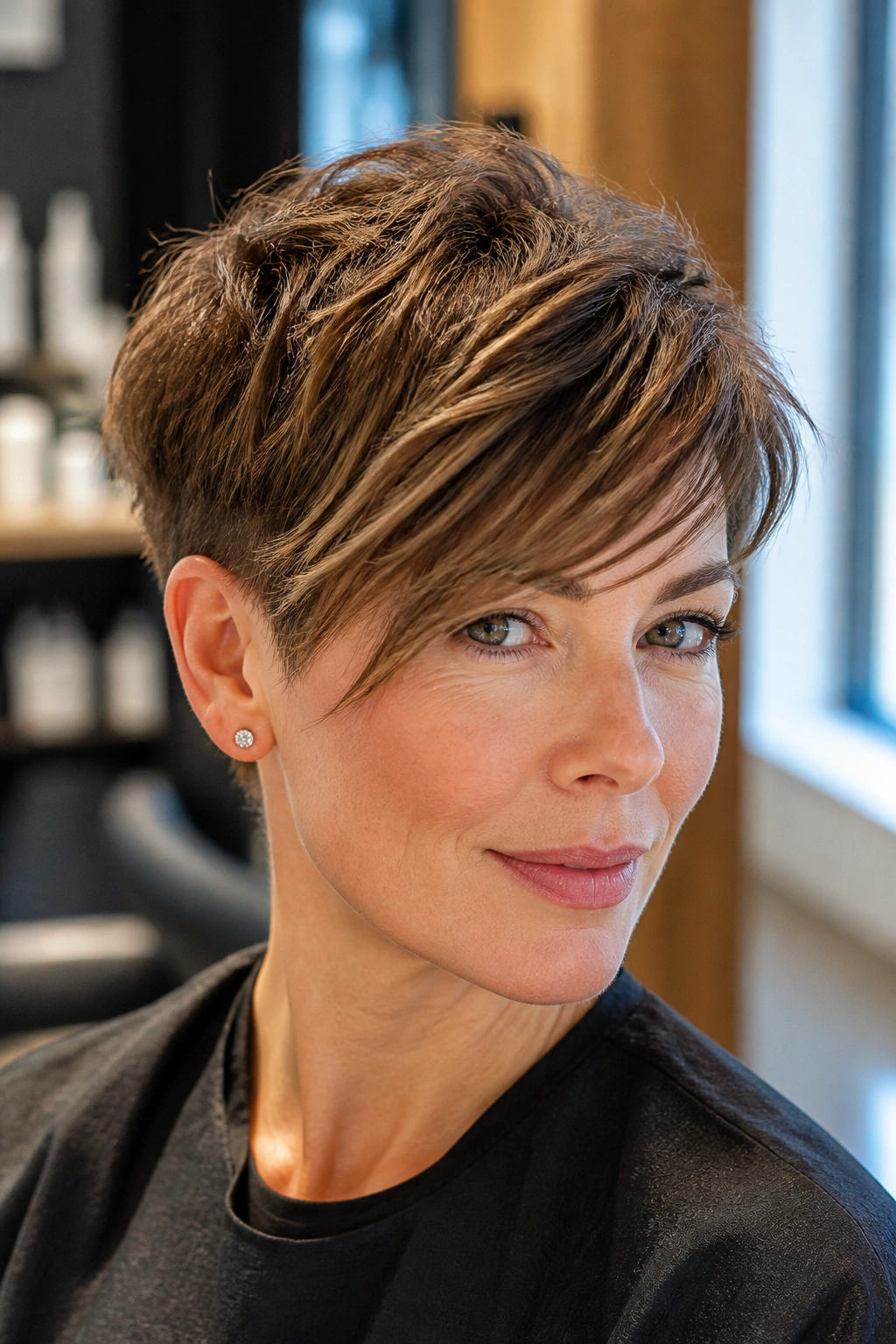
Pixies get blamed unfairly on long faces. The wrong pixie is too tall on top and too tight at the sides, which only stretches everything upward. The right pixie does the opposite. It keeps softness around the temples, leaves a longer side fringe, and lets the shape move forward instead of straight up.
What to Ask For
- Keep the top around 2.5 to 4 inches so it can sweep, not spike
- Leave a side fringe that lands near the brow or cheekbone
- Don’t shave the sides too tightly unless you want extra vertical drama
- Use texture, but not spiky texture
That last part matters. A long face usually needs width, so the fringe should cross the forehead a bit and the sides should have some softness around the ear. A pixie with this shape can feel sharp, modern, and easy to style in under five minutes. It also works well with glasses, which is one reason I keep recommending it to people who think they “can’t do short hair.”
The best pixies for long faces look grounded. Not airy and tall. Grounded.
8. Rounded Curly Bob
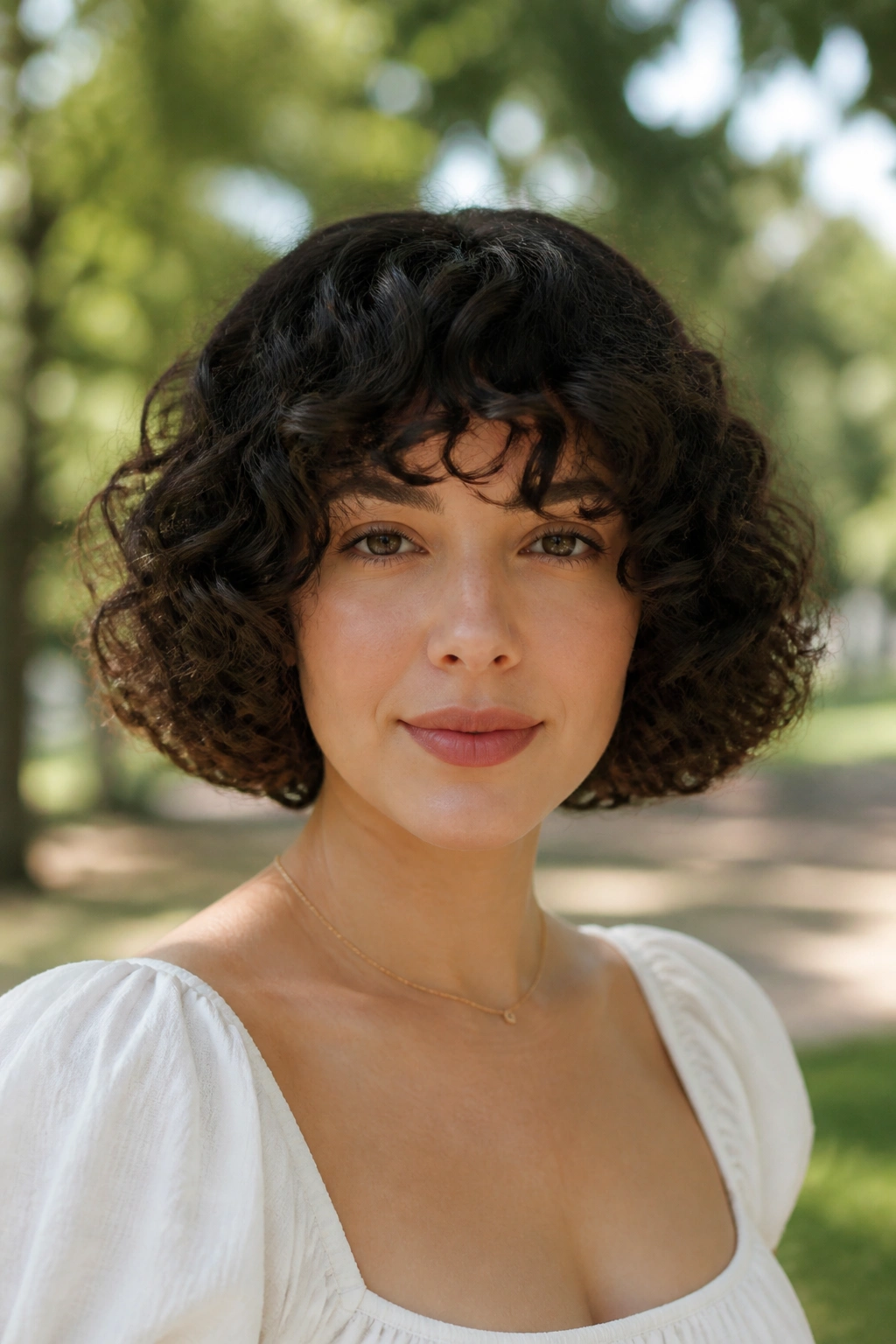
Curly hair has a built-in advantage for long face shapes: width. The trick is making sure that width lands around the cheeks and jaw instead of floating at the crown. A rounded curly bob does exactly that. It keeps the outline soft and full, which gives the face a shorter, broader read.
If your curls are tight, ask for the length to fall around the chin or just below it when dry. If your curls are looser, you can go a touch longer, but the silhouette should still stay rounded. Too many layers at the top make the style rise too high. Too much weight at the bottom makes it hang. Neither one is flattering here.
How to Keep the Shape Round
- Apply curl cream to damp hair in small sections
- Diffuse with the head upright, not upside down the whole time
- Scrunch the sides gently so they stay full
- Trim the shape every 8 to 10 weeks to keep the outline from stretching
A triangle shape is the enemy. A rounded bob is the answer.
There’s a reason this cut keeps coming back. It makes curls look intentional while doing the quiet face-balancing work that long faces need.
9. Blunt Cut with Beveled Ends

A blunt cut sounds plain, but on a long face it can be a quiet little miracle. The reason is simple: a sharp, even edge gives the face a horizontal stop. If the cut lands at the jaw or collarbone and the ends are beveled slightly under, the shape feels fuller and more balanced without needing a lot of styling.
This is one of the best options for fine hair because the edge looks thick and deliberate. It’s also good if you’re tired of layers that keep slipping into nothing. A blunt line holds its own. It doesn’t disappear. And on a long face, that visual weight is useful.
Compared with a shag or layered lob, this cut feels cleaner and more controlled. Less movement. More structure. That can be a relief if your hair already has a lot going on. Ask for the ends to be dusted rather than thinned out, and keep the part either soft-side or slightly off-center so the cut doesn’t make the face feel too formal.
If you want the simplest route to a better shape, this one is hard to beat.
10. Bottleneck Bangs with Medium Layers

What if you want bangs, but not the commitment of a full straight fringe? Bottleneck bangs are the answer a lot of long faces have been waiting for. They start shorter in the middle, then get longer toward the sides, which means they shorten the forehead without boxing the face in.
The shape matters because it keeps the front soft. A blunt bang can work too, but it asks for more upkeep and can feel heavy if your hair is fine. Bottleneck bangs are easier to grow out and easier to live with. They also sit nicely with shoulder-length or mid-length layers, which helps the hair move around the cheeks instead of dragging straight down.
How to Wear Them
Dry the bangs first. Always. If you let the rest of the hair dry before the fringe is shaped, you end up fighting the front pieces all day. Use a small round brush or your fingers, depending on the texture, and let the longest side pieces skim the cheekbones. That little sweep is what softens the long-face line.
This is one of those cuts that looks casual on purpose. Not messy. Casual.
11. Half-Up Styles with Volume at the Temples
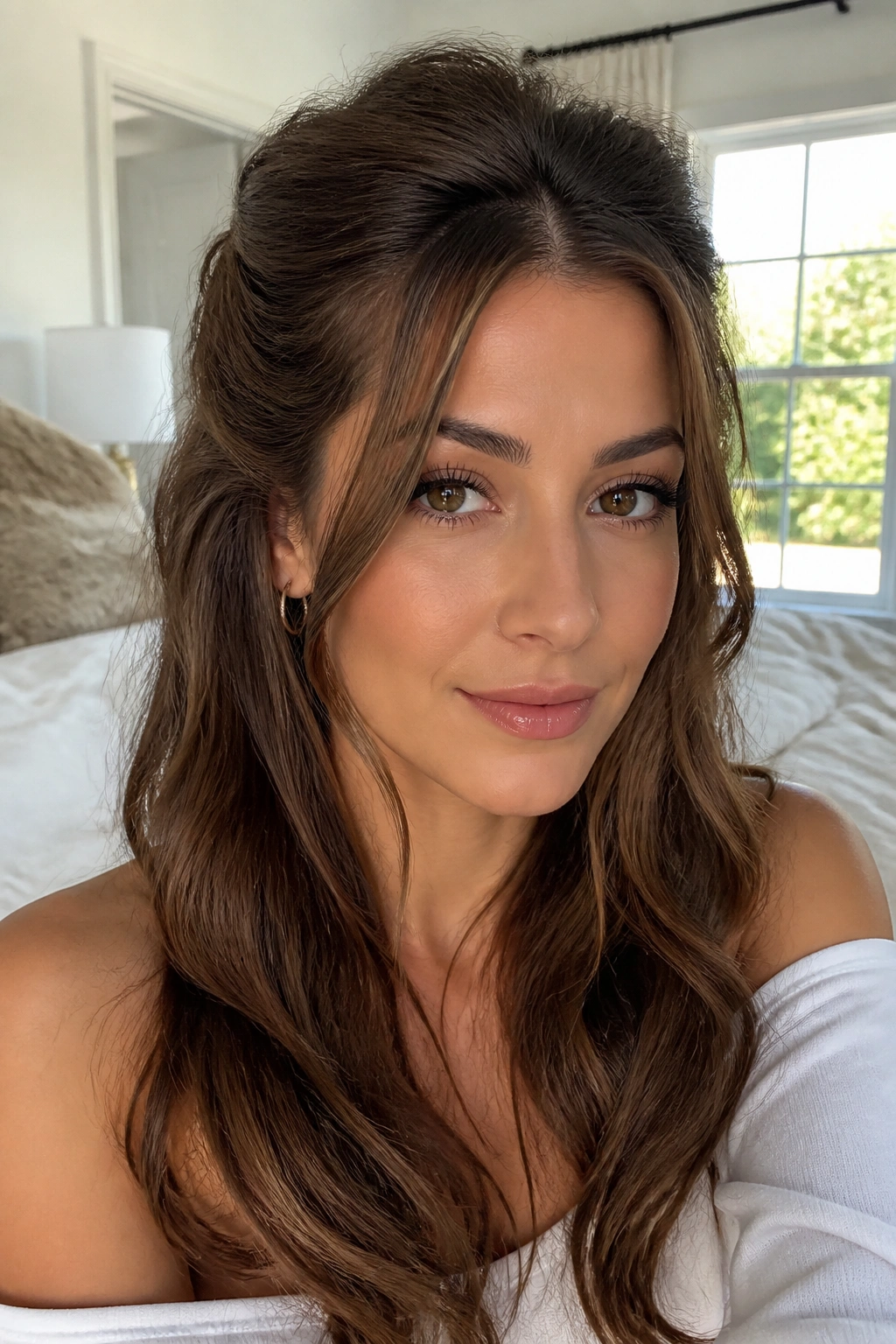
A half-up style can go wrong fast on a long face if all the lift gets piled onto the crown. That just adds height where you do not need it. The smarter version keeps the volume at the temples and along the sides, which creates width without stretching the face upward.
A loose half-up twist, a half-up claw clip, or a low half-up knot can all work. The key is to leave enough hair down around the cheeks and jaw so the face doesn’t feel bare. A few front pieces can help, too, but they should be soft and slightly bent, not stuck to the face in neat little strands.
What Helps Most
- Clip the back section low enough that the crown stays smooth
- Leave the temples a little full
- Pull a small section from each side instead of lifting everything
- Keep the top relaxed, not taut
This style is handy on busy mornings because it gives you shape without a full blow-dry. It also works on second-day hair, which is a nice bonus when the roots need a reset but the ends still look decent.
12. Low Ponytail with Side Pieces and a Soft Bend
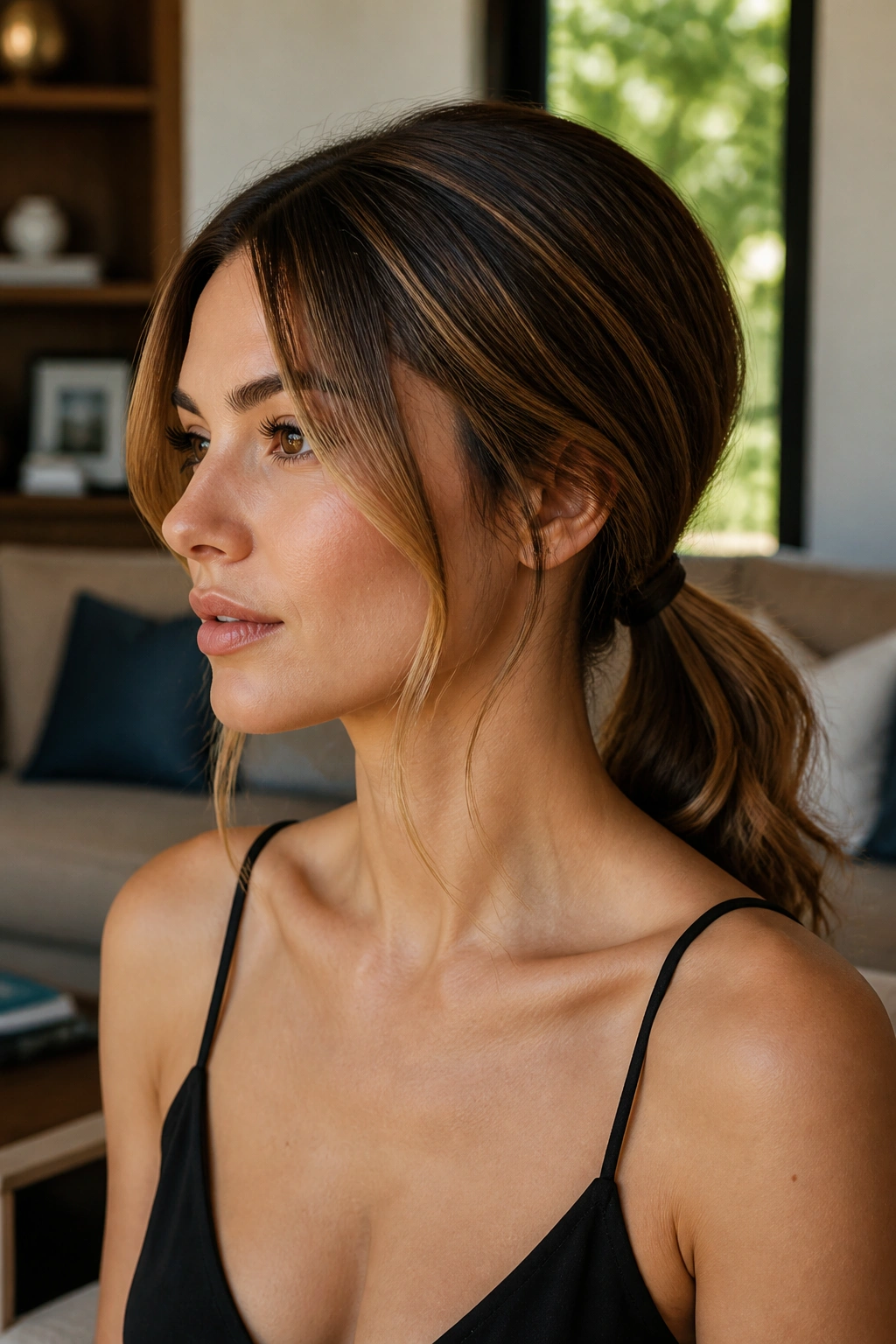
A high ponytail stretches a long face. A low ponytail does the opposite. It keeps the line low and calm, which is exactly what you want when the face already has a lot of vertical length. Add a side part and a couple of loose face pieces, and the style gets even better.
The pony itself should sit at the nape or just above it. If you want it to feel polished, wrap a small strand around the elastic and tuck the end underneath with a pin. If you want it to feel softer, curl the tail with a 1.25-inch iron and let the ends bend instead of sticking straight down. That bend matters. It gives the style a wider read near the shoulders, which helps balance the face.
This is also one of the easiest styles to wear with a bit of root spray or dry shampoo, especially when the hair wants to fall flat on top. You want the top to stay smooth, not puffy. Then let the interest happen lower down.
A low ponytail can be plain. It can also be one of the smartest shapes in the room.
13. Side-Swept Fishtail Braid
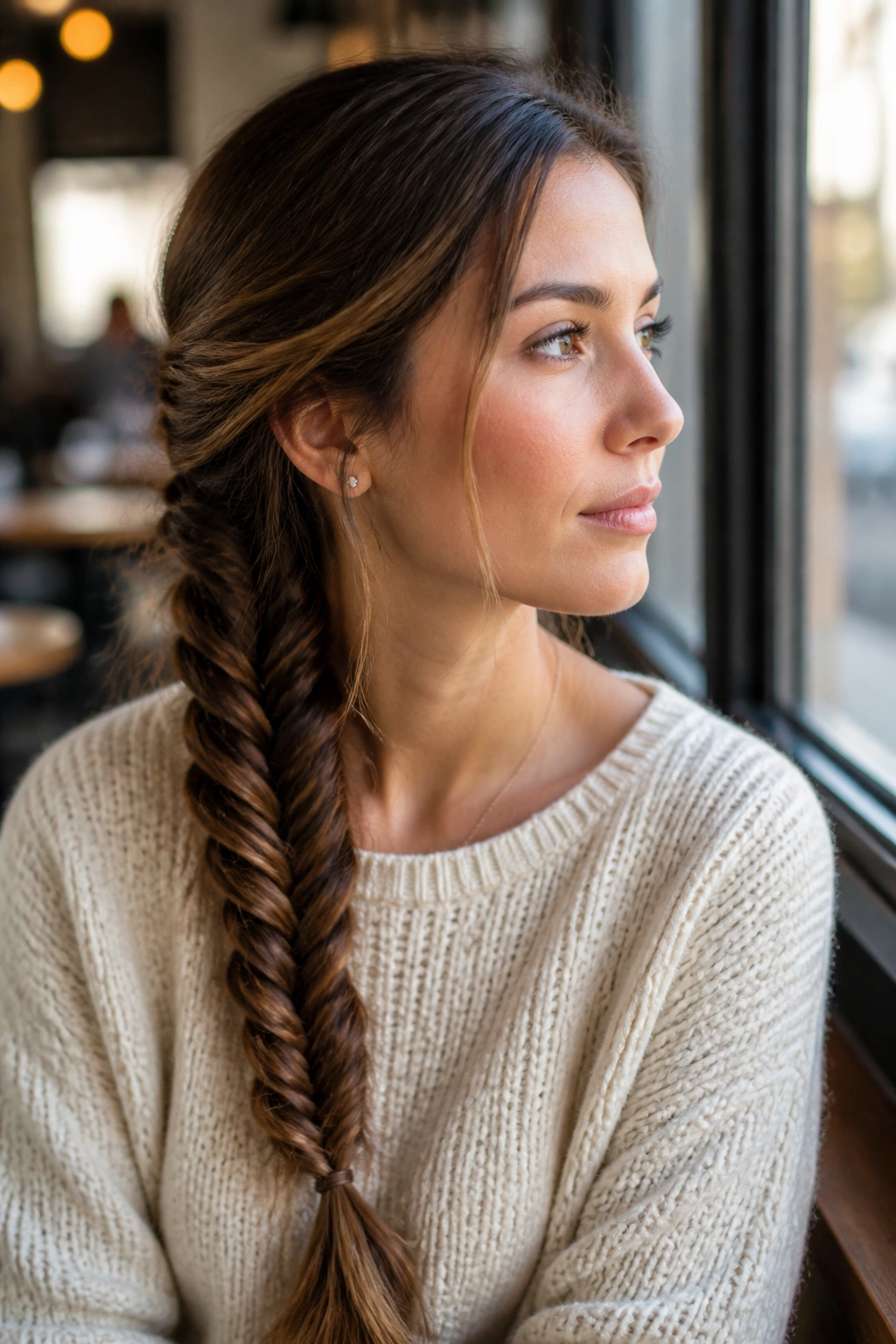
Can a braid flatter a long face? Absolutely, if it lives lower and wider. A side-swept fishtail braid works because it moves the eye diagonally instead of straight down. That diagonal breaks the length of the face, and the braid itself adds texture at the sides where you want it.
A fishtail braid looks best when it starts behind one ear or just below the temple, not high on the crown. The crown should stay fairly smooth. If you pull the braid apart gently after securing it, the braid gets a little width and looks less tight. That extra width is useful. Tight braids can make a long face look longer. A looser one softens the whole picture.
The Details That Matter
- Start the braid low and off-center
- Keep the top section sleek
- Pancake the braid lightly after tying it off
- Leave a few short pieces around the cheekbones
This style works for school, work, weddings, or any day when you want your hair out of the way but still shaped. It’s one of the few braided looks that gives structure without adding height.
14. Long Hair with U-Shaped Layers and Full Fringe

Long hair can work on a long face, but only if the shape gives the eye somewhere to stop. A U-shaped cut does that by keeping the center a bit longer while the sides rise slightly. Add a full fringe, and the forehead gets visually shortened, which is a big win if the face already runs long.
This is the long-hair option for people who do not want to go shorter but still want more balance. The layers should begin below the chin so the front doesn’t get too wispy. If they start too high, the length can turn feather-light in the wrong way. The fringe should feel full enough to matter, but not so dense that it sits like a wall. Brow-skimming is usually the sweet spot.
The styling here matters more than the cut alone. Long hair without any bend can look flat and straight down. A soft wave, a blowout with curved ends, or even a large-iron bend through the mid-lengths helps the style keep width where the face needs it.
I’ll say it plainly: long hair is not the problem. Flat long hair is the problem.
15. Sleek Mid-Length Flip with Outward Ends
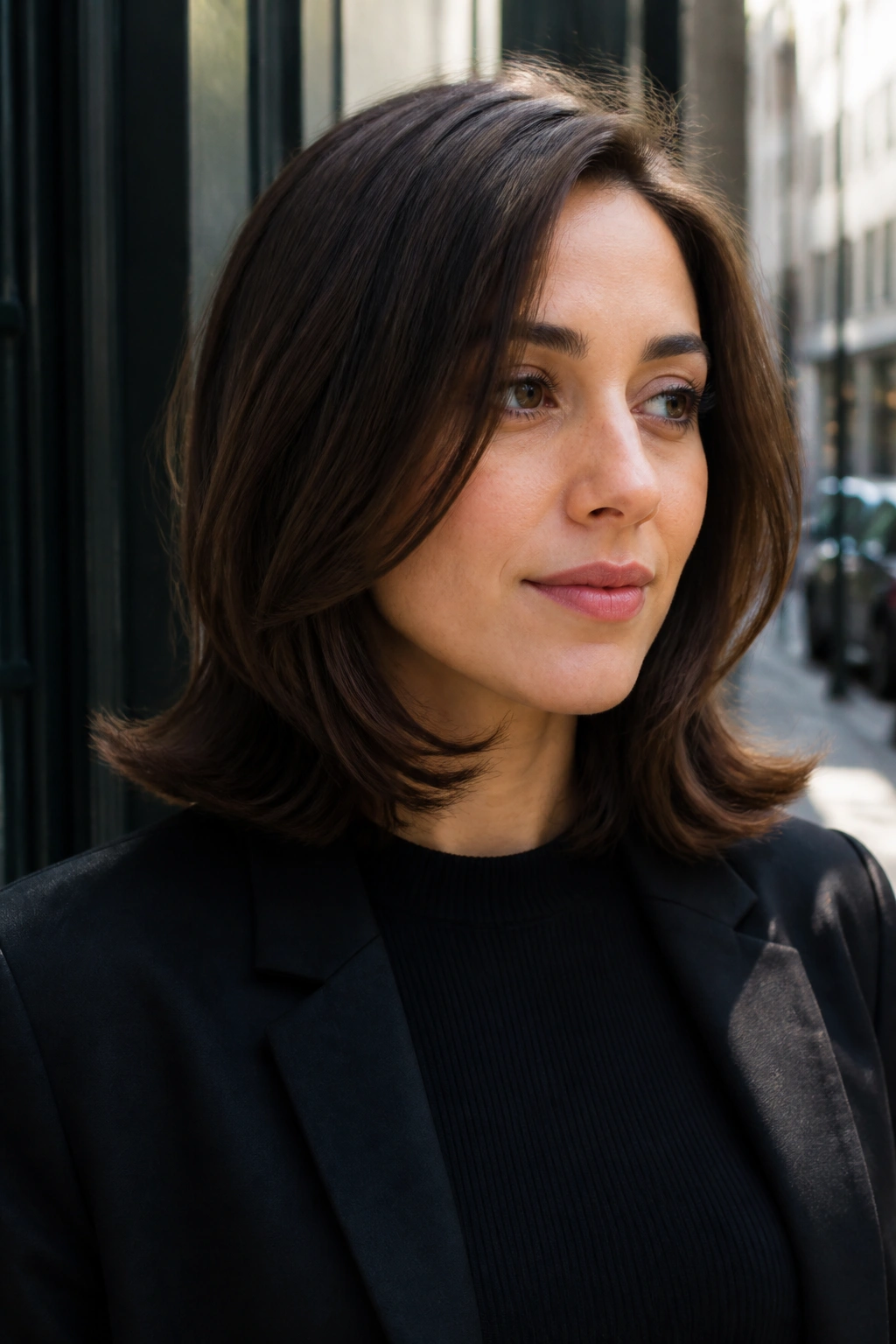
The little flip at the ends does more than people think. A shoulder-grazing cut with outward-bent ends creates width around the lower half of the face, and that width helps long face shapes look a bit shorter and more even. It has a polished feel, but it doesn’t have to look stiff.
This shape is especially good if you like smooth hair and don’t want a lot of layers. The length can sit around the shoulders or just below the collarbone, and the ends can be turned out with a round brush or a flat iron. The flip should feel light, not retro-costume. Just enough bend to keep the silhouette from falling straight down.
A side part helps. So does a little face-framing piece that curves toward the cheek. If your hair is very straight, a touch of mousse at the roots and a blow-dry with the ends rolled away from the neck can hold the shape longer than you’d expect. If your hair is wavy, even better. Let the texture do part of the job.
It’s a clean, easy shape. And for a long face, clean is often better than busy.
Some of the most flattering hairstyles for long face shapes are not dramatic at all. They just change where the eye lands. That’s why a fringe, a side part, or a bob at the jaw can matter more than another six inches of length.
If you remember one thing, make it this: width at the cheeks, softness at the forehead, and a shape that stops the eye before it runs too far down. That’s the formula hiding behind almost every style above, whether it’s a pixie, a braid, or long layers with bangs.
