



Medium hairstyles for square face shapes can be tricky when the cut lands right at the jaw. That’s the spot that can make the face feel wider and more angular than it really is. The fix is usually not extra length. It’s shape.
I like hair that moves. A collarbone lob, a bent-out bob, a soft shag — each one changes the way the jawline sits in profile. Side parts and face-framing layers help too, but only when they’re cut with enough length to fall away from the chin instead of stopping on top of it.
That edge matters.
The mistake I see most often is width in the wrong place. Volume at the temples and blunt ends right at the jaw can box the face in fast; length that brushes the collarbone or curves softly around the cheekbones usually feels kinder. If you have thick hair, fine hair, straight hair, or waves, the fix looks a little different, and that’s where the haircut starts to feel personal instead of generic.
A square face does not need to be hidden. It needs balance. The cuts below do that in different ways, from polished and minimal to shaggy and lived-in.
1. Soft Layered Lob With a Side Part

A soft layered lob is the starting point I trust most for square face shapes. It keeps the length long enough to stretch the face visually, but the layers stop the haircut from sitting in a hard, flat line.
The side part does a lot of quiet work here. It breaks up symmetry, which keeps the eye moving instead of landing straight on the jaw. Ask for the shortest face-framing pieces to begin around the cheekbone or just below it, not right at the chin. That small shift makes a bigger difference than most people expect.
Styling note
- Blow-dry the front section away from the face with a 1.25-inch round brush.
- Add a soft bend through the ends instead of a tight curl.
- Finish with a light cream or serum, used only on the mid-lengths and ends.
The whole cut should feel easy, not sculpted to death. That’s the point.
2. Collarbone Cut With Bent Ends

Why do bent ends matter so much? Because they stop a medium haircut from drawing a hard line across the widest part of a square face. When the ends flip slightly under or outward at the collarbone, the line looks softer and the jaw feels less boxed in.
This cut works especially well on straight hair. The shape is clean, but it never feels severe if the ends are touched with a round brush or a flat iron bend. Keep the length just below the collarbone if you want the most flattering effect. If it lands directly on the jaw, the whole cut can start to look blunt in a way that works against you.
I also like this for people who want low-maintenance styling. Air-dried hair can look a little too rigid on a square face if it dries stick-straight, but a quick pass with a medium brush gives it a softer finish. A tiny bit of smoothing cream is enough. Too much product makes the ends hang there like wet rope, and that’s not the vibe.
3. Curtain Bang Lob

Curtain bangs are not automatically soft. Cut too short, they can make a square face look sharper by opening the forehead too high and crowding the cheeks. The version that works is longer, feathered, and split enough to sit around the temples.
What to ask for
- Shortest point at the bridge of the nose or just below
- Outer corners that graze the cheekbone or lip
- A lob length that reaches the shoulders or collarbone
- Light, movable texture rather than a heavy fringe
The charm of this cut is the way it shifts attention away from the jaw and toward the eyes. It also plays nicely with medium hair that has a little bend in it already. Straight hair can wear it too, but the bangs need a round-brush set or they can hang in your face like a curtain that never got the memo.
One more thing: keep the center part soft, not carved. A razor-straight line can make the contrast feel too sharp.
4. Textured Mid-Length Shag
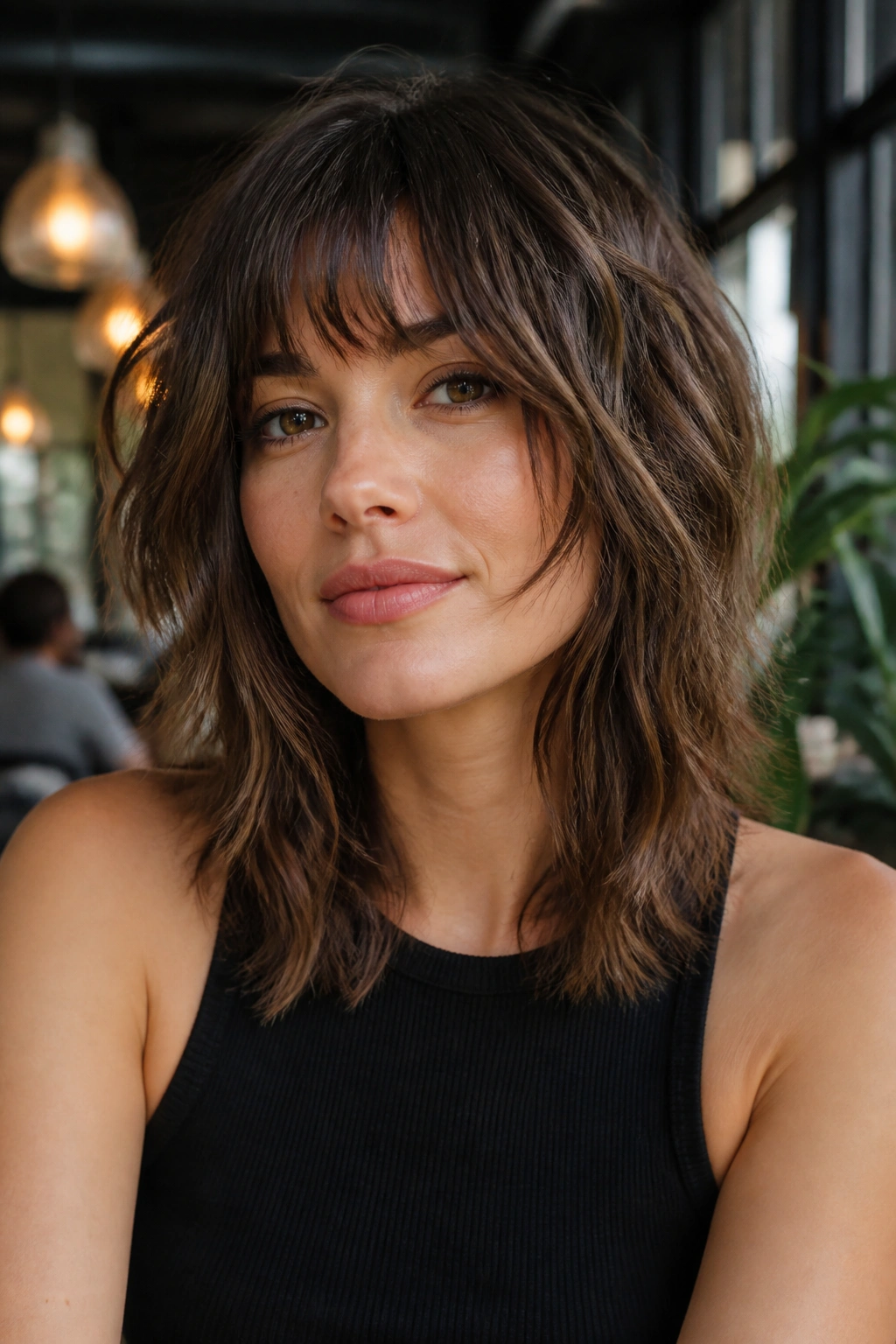
A square face with thick or wavy hair can look heavy fast if the sides are one solid block. A textured shag breaks that block apart. It removes weight in the right places and leaves the haircut with movement around the cheeks instead of bulk around the jaw.
This style works because it refuses to sit still. The shorter layers give lift at the crown, while the longer pieces fall below the widest part of the face. Ask for soft, piecey layers rather than a heavily razored chop. There’s a fine line here. Too much razoring and the ends can fray; too little and the shag loses its shape.
That line matters most if your hair is dense. A good stylist will thin the right sections without stripping out all the body. If the cut looks like it could float on air, that’s a problem. You want texture, not wisps.
A dab of texture spray through dry hair keeps it from collapsing into itself by lunch. Easy, but not flat.
5. Deep Side-Part Wavy Lob

A deep side part can be a square face’s secret weapon. It breaks the face’s symmetry, which makes the jaw feel less wide and the forehead less boxy. A center part can work too, but a deep side part has more drama and usually more softness.
The waves should start below the cheekbones. That’s the part people miss. If the wave begins at the temples, it can add width where you do not want it. Start the bend lower, then brush it out a little so the texture looks airy instead of curled into place. A 1.25-inch iron or wand is usually enough.
How to wear it
- Part hair about 2 to 3 inches off center.
- Curl away from the face on the heavier side.
- Leave the ends a touch straighter for a more relaxed shape.
- Mist a light spray on the lower half only.
This cut has a little glamour without feeling stiff. That balance is rare.
6. Shoulder-Length Cut With Invisible Layers

Some people want softness without seeing obvious layers everywhere. Invisible layers are the answer. They remove weight inside the haircut, so the outer line stays smooth while the hair still moves around the face.
That makes this cut a smart pick for fine hair that needs a fuller outline. It also works on straight hair that tends to hang in a single sheet. The trick is not to over-layer the perimeter. If the bottom line gets too thin, the whole haircut starts to look tired instead of polished.
I like this cut with a middle or slightly off-center part. The part choice is less important than the way the front pieces are shaped. Ask for the shortest front section to sit around the lip or chin, not at the jaw. That tiny detail keeps the haircut from stopping at the face’s widest point.
Minimal doesn’t mean flat. It means edited.
7. Flipped-Out Medium Cut
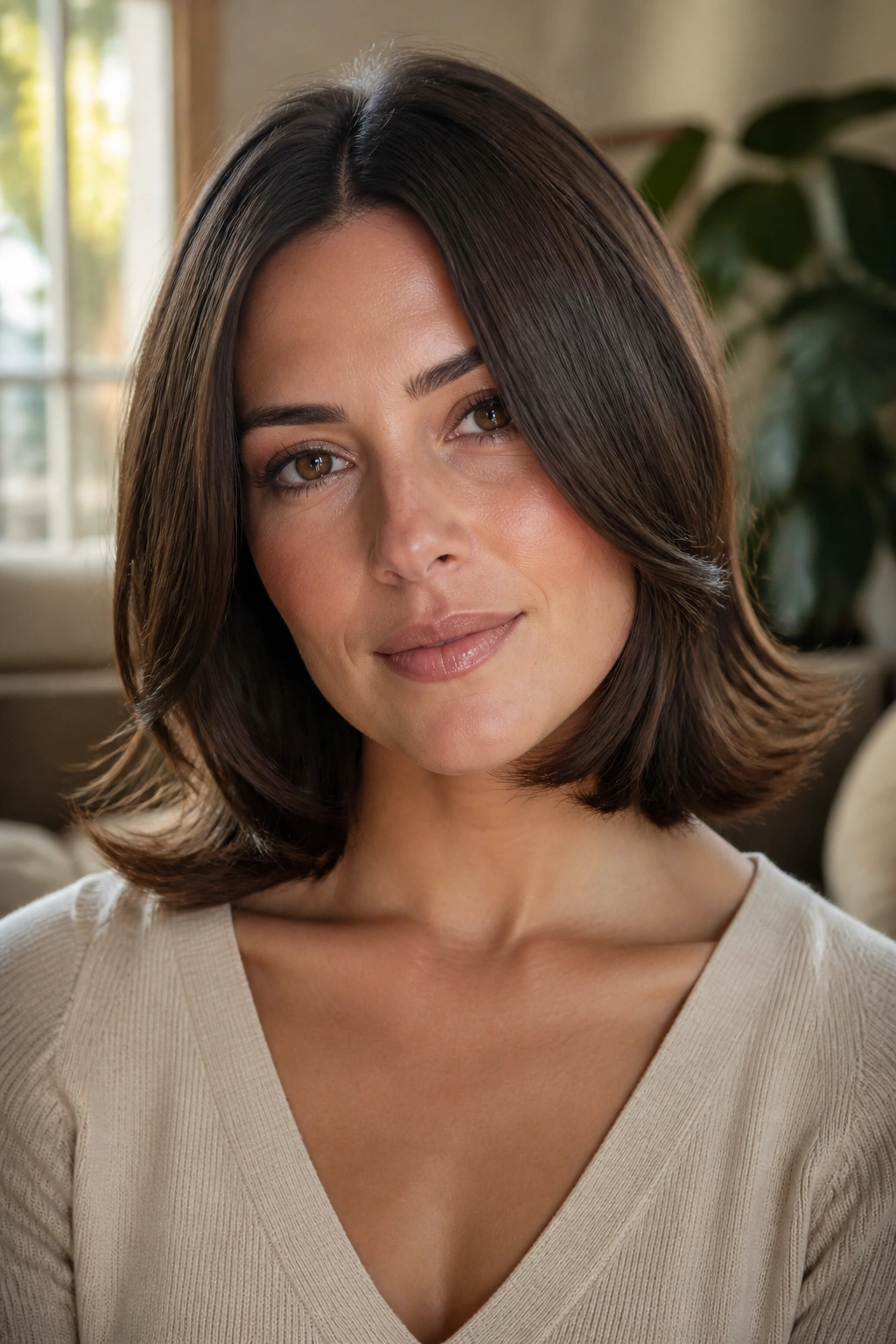
Flips are a little more forgiving on square faces than a hard-under bob. When the ends kick outward, the line around the jaw loosens up and the cut feels lighter. The shape also creates a bit of motion near the collarbone, which helps stretch the face visually.
This cut is especially good if you wear your hair straight or mostly straight. A round brush gives the cleanest flip, but a flat iron works too if you turn the last inch of hair away from the neck. Don’t flip the ends right at the jaw. That can widen the face instead of softening it.
Quick styling cues
- Use a heat protectant before any hot tool.
- Set the ends with a small outward turn, not a dramatic curl.
- Keep the crown smooth so the shape stays focused at the bottom.
- Finish with a light mist of flexible spray.
It has a little retro energy, which I happen to like. Done right, it looks sharp without feeling severe.
8. Modern C-Shaped Layers
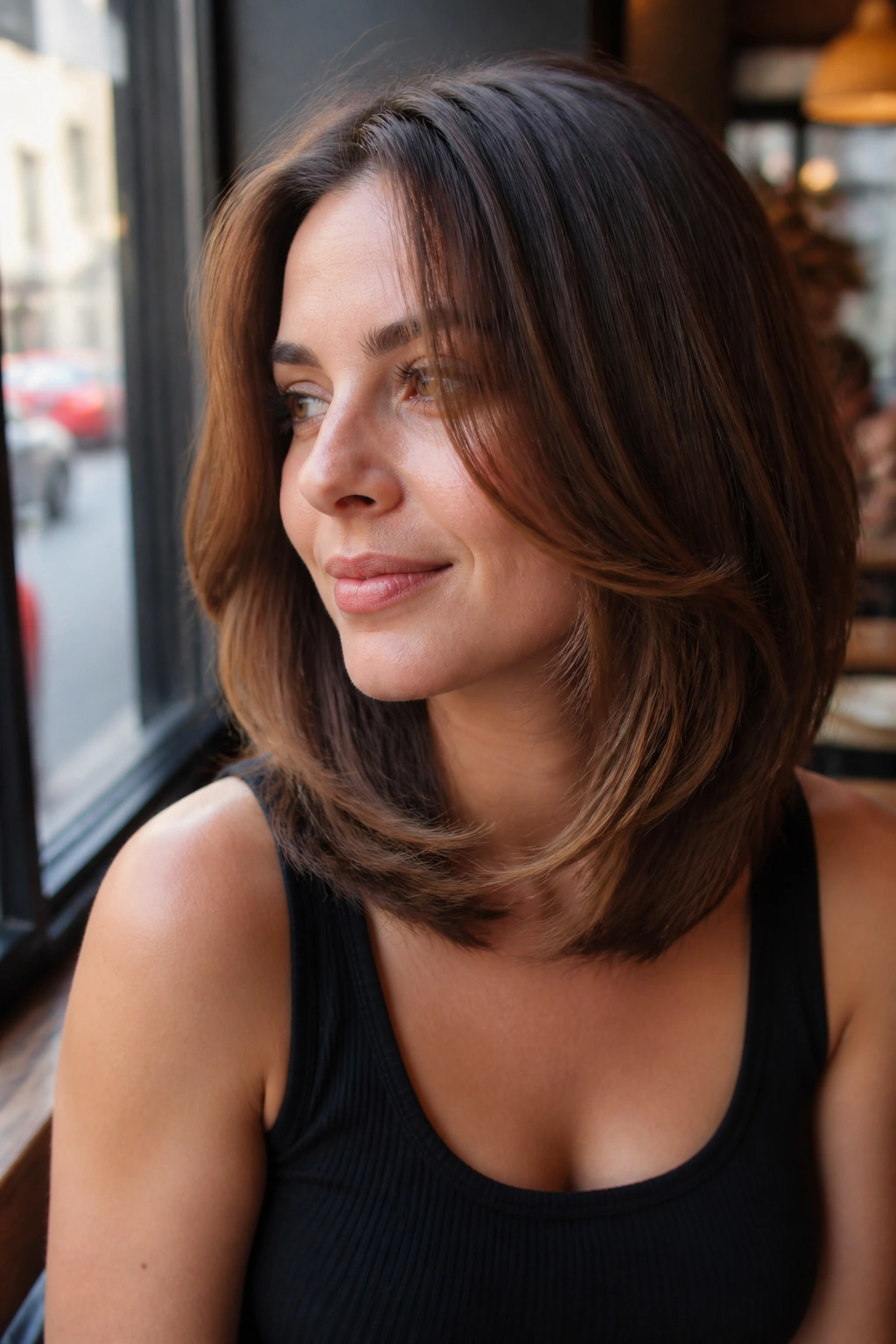
C-shaped layers curve around the face in the way square faces usually need most. The layers form a soft arc from temple to cheekbone to collarbone, so the haircut never reads as a hard block. That curve is doing the heavy lifting.
A good C-shape is subtle. You should see it when the hair moves, not necessarily when it’s sitting still. The front pieces curve in toward the face and then sweep away at the ends, which creates a soft frame without trapping the jaw. It’s a nice choice if you like blowouts, because the round brush naturally brings the shape to life.
This is one of those cuts that looks expensive even when it’s not styled much. Not fancy. Just controlled. If you have medium-thick hair and you want shape without a shaggy finish, this is one of the cleaner options on the list.
Ask for the longest face frame to hit the collarbone and the shortest to start around the cheekbone. That range keeps the curve believable.
9. Blunt Lob With Soft Surface Texture

Blunt does not have to mean harsh. On a square face, a blunt lob can look polished and balanced if the surface texture is soft enough to keep it from feeling like a helmet.
The reason this works is simple: the strong line at the bottom gives the hair weight, while the soft texture on top keeps the style from looking boxy. I like this most on fine hair or hair that loses density at the ends. The clean outline makes the hair look fuller, and the subtle movement up top keeps the jaw from feeling boxed in.
Keep the length a little below the chin, ideally somewhere between the jaw and collarbone. An off-center part can help, too. A dead-center part plus a chin-length blunt line can feel a little too exact on a square face.
There’s also a nice honesty to this cut. It doesn’t pretend to be effortless. It’s neat, and that’s the point.
10. Medium Cut With Bottleneck Bangs

Bottleneck bangs work because they open the center of the forehead and soften the outer edges at the same time. That shape flatters square face shapes better than a heavy straight fringe, which can feel boxy fast.
The bangs should start narrow in the middle and widen as they pass the brow and temples. Think of them as a soft funnel, not a curtain dragged across the face. Paired with medium-length layers, they pull the eye inward and downward, which helps smooth out the sharpness of the jawline.
The bang shape to request
- Shortest area at the center, around the bridge of the nose
- Side pieces that blend into the cheekbone
- No hard line across the forehead
- Light layering through the sides so the bangs don’t sit heavy
This cut needs a bit of styling, but not much. A small round brush on the center section and a larger brush on the sides usually does it. If you let the bangs dry flat against the forehead, they can lose that airy shape fast.
A little bit of shape goes a long way here.
11. Choppy Midi Shag

Choppy layers give square faces some break-up and air. That matters when your natural hair wants to sit heavy around the sides, which is common with thicker textures. The chop keeps the haircut from becoming one solid frame around the jaw.
This is the less polished cousin of the softer shag, and I mean that as a compliment. It has movement you can see from across the room. It also works well if your hair has a natural wave and you do not want to fight it every morning. A little mousse at the roots, a little texture spray at the ends, and done.
Keep the shortest pieces around the cheekbone, not the jaw. That one choice changes the whole effect. Pieces that land at the jaw can make the face look broader; pieces that skim the cheekbone soften the transition into the neck.
If you like your hair to look a little undone, this is a strong option. If you want sleek and tidy, skip it.
12. Swoopy Fringe With Shoulder-Grazing Ends

A side-swept fringe can do a lot of quiet work on a square face. The diagonal line across the forehead breaks up the strong geometry, and the shoulder-grazing ends keep the length long enough to soften the jaw.
This style is especially nice if you want bangs but don’t want full bangs. The fringe should sweep rather than drop. It’s less about covering the forehead and more about adding a curve where the face usually reads straight. When the ends touch the shoulders or hover just above them, the cut feels gentle instead of blunt.
Straight hair wears this well, but it also helps wavy hair look more deliberate. A round brush at the root of the fringe gives it lift, and a few bends through the lower half of the hair keep it from turning stiff. You do not need perfect symmetry here. A little shift in the part keeps the whole thing alive.
It’s an understated haircut, which is exactly why it works.
13. Soft Wolf Cut at Medium Length

A wolf cut does not need to look wild. The medium-length version can be surprisingly flattering on square faces if the layers are controlled and the side volume stays light.
The structure is what matters. You want a lifted crown, soft texture through the top, and longer ends that fall past the jaw. That keeps the haircut from widening the face in the wrong place. The shortest pieces should live above the cheekbones or at the temple, not on the jawline itself.
What to avoid
- Heavy fullness right at the sides
- Short face-framing pieces that stop at the jaw
- Too much razoring on the bottom
- Flat roots with bulky ends
A soft wolf cut likes mousse, root lift, and a little diffused wave. It is not the haircut for someone who wants every strand in place. But if you want movement and you don’t mind a bit of edge, it gives a square face something useful: softness without losing shape.
14. One-Length Lob With Tucked Styling
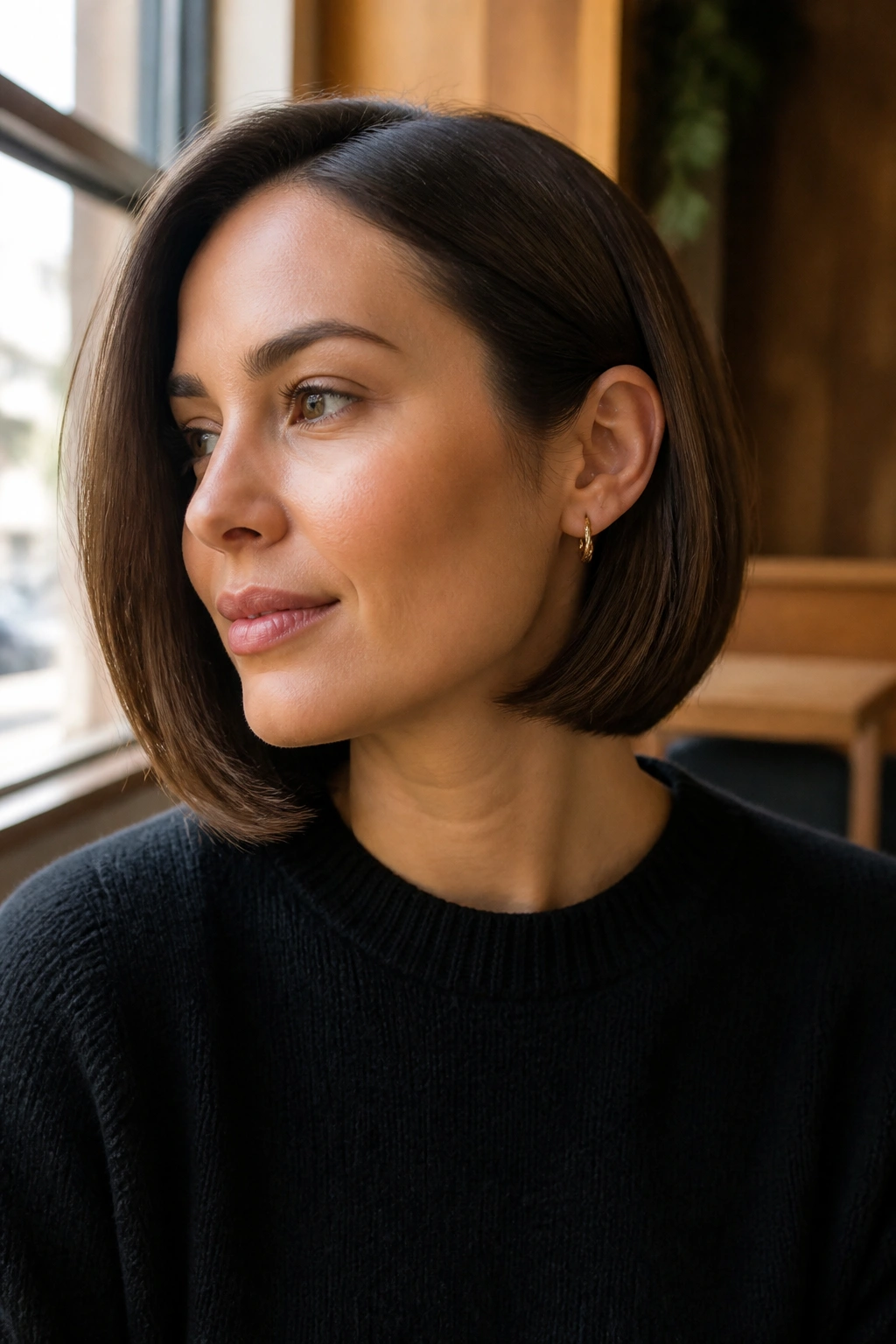
Minimal cuts can work. They just need the right styling. A one-length lob gives you a clean base, which is handy if your hair is fine, straight, or tends to frizz when layers are too aggressive.
The trick is to keep the line below the chin and play with how the hair sits around the face. Tucking one side behind the ear opens the cheek and makes the square jaw feel less boxed in. A soft bend through the front pieces keeps the style from looking too severe. If you wear a center part, leave the front a touch longer so it can fold inward gently.
This is a good cut for people who hate fuss. There’s not much to manage, and it still looks considered. Just don’t let the length stop at the jaw. That is the one place this style can go from sleek to boxy fast.
It’s the sort of haircut that looks better when you stop trying to make it perfect.
15. Beach Waves With Face-Framing Pieces
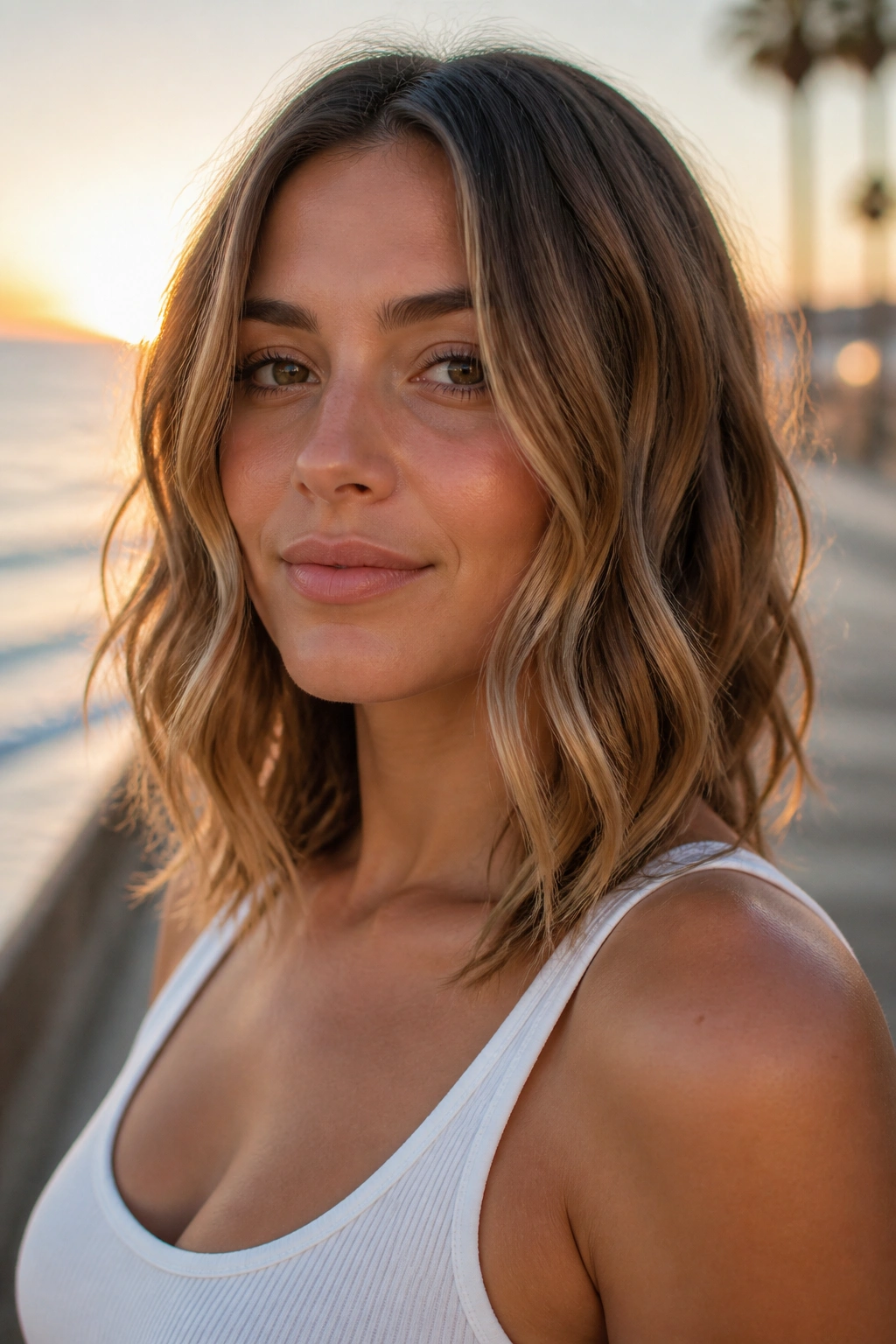
Beach waves are easy to get wrong. If every wave starts at the same height, the whole head can puff outward like a triangle. On a square face, that’s not the move. The better version begins lower and stays loose.
The front pieces should frame the face at the lip, chin, or collarbone, depending on how much softness you want. That length helps blur the jaw without hiding it. Keep the roots a little smoother than the ends so the style has an easy fall instead of a curl-heavy halo around the temples.
Loose wave rules
- Start the wave below the cheekbone
- Leave the ends a little straighter
- Brush the waves out after cooling
- Use mousse for hold, not too much salt spray
This is one of those styles that looks casual but still takes a few thoughtful moves. A flat wave set that starts too high can widen the face, while a lower, softer bend gives you movement where it counts. If you want a medium hairstyle that works for weekend hair and a dinner out, this one pulls its weight.
16. Side Bangs With a Layered Flip
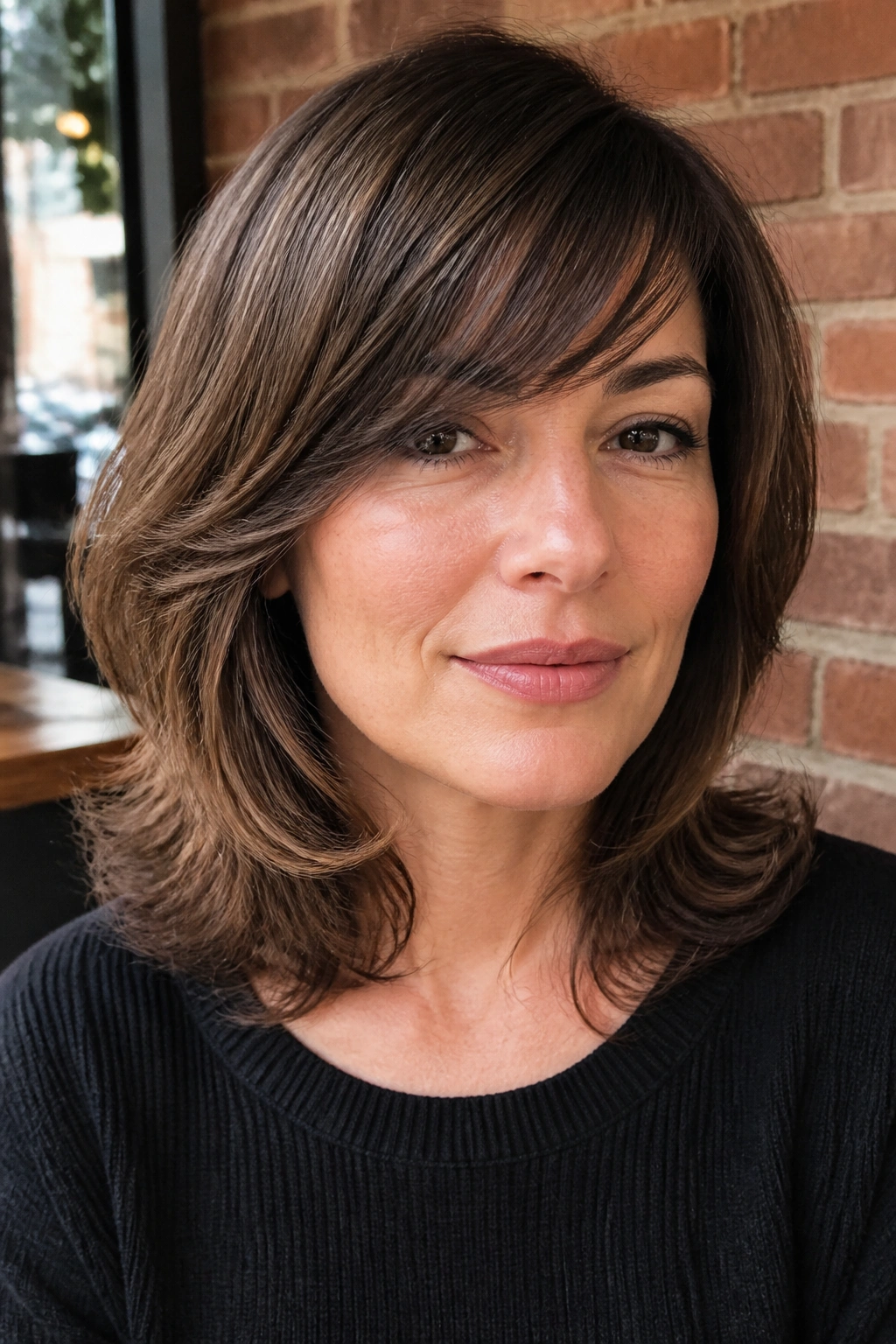
Side bangs are underrated on square faces. They create a diagonal line across the forehead, and diagonal lines are your friend when the face has strong angles. Add a layered flip at the ends, and the whole haircut starts to feel softer around the jaw.
This cut works well for medium to thick hair because the layers help the hair move instead of sit in one heavy block. The bangs should be long enough to blend into the side layers, not chopped short like a separate piece. If the bang ends at the brow and stops there, the look can feel abrupt. If it sweeps into the cheekbone area, it feels connected.
A small round brush can shape the fringe quickly. Then use the brush or a flat iron to turn the ends slightly outward. That little bit of motion matters more than a lot of volume at the sides. Too much side volume makes square faces look wider. A controlled flip keeps the shape light.
It’s a practical cut. Not boring. Practical.
17. Collarbone Lob With Rounded Ends
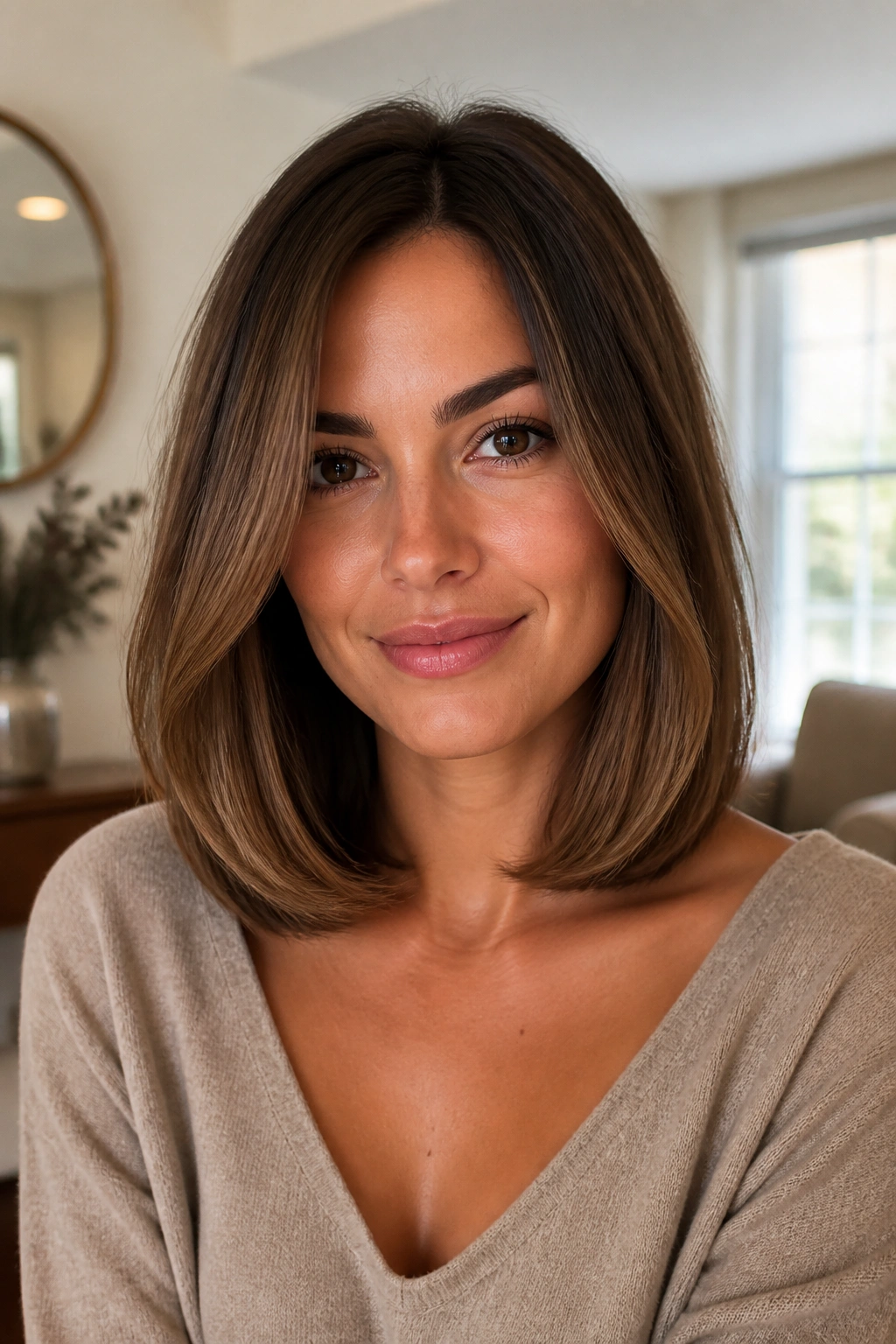
If you only try one medium cut, make it this one. A collarbone lob with rounded ends hits the sweet spot for square face shapes because the length stretches the face and the soft curve keeps the jaw from feeling hard.
The collarbone is such a useful landing point. Hair that ends there sits below the jaw, moves with the shoulders, and gives the face room to breathe. Rounded ends make the shape feel finished without turning it into a strict blunt line. You can wear it straight, bent, or with loose waves, and it still works because the base is right.
This is also the cut I’d choose for someone who wants flexibility. Want a sleek day? Blow it smooth with a paddle brush and tuck one side behind the ear. Want movement? Add a few bends from mid-shaft down and leave the front pieces a touch longer. Want softness? Keep the face frame near the cheekbone and let the ends curl under slightly.
Simple, yes. Flat, no. That’s the whole appeal.
