



A heart-shaped face can be a dream to cut—and a little unforgiving if the shape is ignored. Wide through the forehead, often sharper at the chin, and usually strongest at the cheekbones, it asks for haircuts that bring the eye down and out instead of piling more width on top.
That’s the part a lot of people miss. A flattering cut for a heart face shape does not hide the forehead like it’s something to apologize for. It uses fringe, layers, length, and weight placement to make the whole face feel more even, with the jawline getting a little more visual support than it started with.
Texture changes the answer, too. Fine hair needs different handling than dense curls. Straight hair can look severe if the line is too blunt. Wavy hair often gives you a head start, which is unfair in the nicest way.
The cuts below all work for heart face shapes, but they do not work in the same way. Some soften the forehead, some fill out the lower half, and some just make the whole silhouette feel less top-heavy. That’s the sweet spot.
1. Curtain Bangs With Long Layers

Curtain bangs are the easy answer for a lot of heart-shaped faces, and I mean that in the best way. They split the forehead visually, soften the top half of the face, and blend into long layers without looking fussy.
Why This Shape Works
The magic is in the length. Curtain bangs usually start around the brow or just below it, then sweep down toward the cheekbones, which draws attention away from a wide forehead and into the center of the face. Long layers keep the rest of the cut light, so the whole look moves instead of sitting there like a helmet.
Ask for bangs that are long enough to tuck behind the cheekbones. That matters. Too-short curtain bangs can kick the eye back up to the forehead. You want a soft diagonal line, not a blunt curtain that feels chopped off.
- Best for: medium to long hair, especially straight or wavy textures
- Styling note: blow-dry the bangs with a round brush and bend them away from the face
- Stylist cue: keep the shortest piece around brow level, then connect into cheekbone layers
One good rule: if your bangs stop too high, the forehead starts shouting again.
2. Chin-Length French Bob
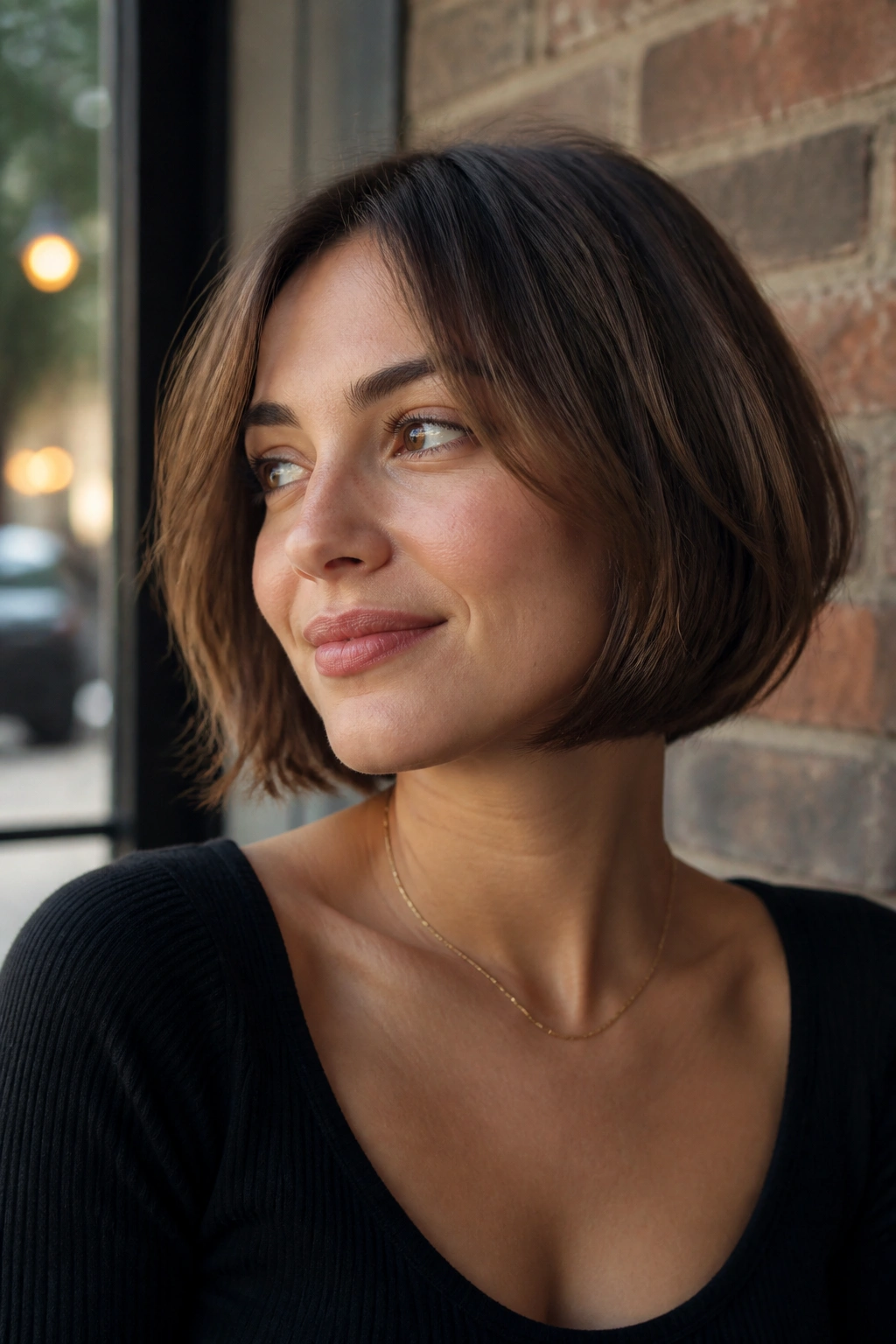
A chin-length French bob can look excellent on a heart face shape, but only when it’s cut with a little softness. The point is to land right around the jawline and let the cut bring weight to the lower half of the face.
A lot of people picture a rigid bob when they hear “chin-length,” and that’s not the move here. The better version has a slight bend, a gentle inward edge, and enough movement at the ends to keep the jaw from looking narrow. If you wear glasses, even better. The line of the bob can frame the face cleanly without crowding it.
I like this cut most on hair that has some body. Fine hair can wear it too, but the ends need a little bevel so they don’t float away and make the chin look sharper than it is. A soft side part helps, especially if your forehead is broad.
Short hair. Big payoff.
3. Side-Swept Pixie

Can a pixie work on a heart face shape? Absolutely—if it keeps softness around the temples and some length through the fringe.
What to Ask For
A side-swept pixie gives you lift without making the forehead feel wider. The key is leaving enough length on top to sweep diagonally across the face, rather than clipping everything up and exposing the top half too much. That diagonal line matters more than most people realize.
You also want a little softness near the ears. A tight, shaved-sides pixie can feel harsh on a heart face because it narrows the lower half even more. A better version leaves feathered texture around the hairline and a fringe that brushes one eyebrow.
If you want a sharper finish, keep the crown short but not spiky. If you want something softer, ask for point cutting around the front. That gives the ends a broken-up edge instead of a hard line.
This is a good cut for someone who likes cheekbone emphasis and does not mind a little styling each morning.
4. Collarbone Lob With Soft Ends

A collarbone lob is one of those cuts that looks calm on paper and quietly does a lot of work in real life. It sits below the chin, which is the whole point, because that extra length helps balance a narrower jaw.
I like this length for heart faces that want movement without committing to long hair. A lob that hits right at the collarbone gives the jaw room to breathe. If the ends are softened with a razor or subtle point cutting, the cut feels lighter and less square. A clean one-length lob can be pretty, sure, but on some heart shapes it reads a little too crisp.
This is also one of the easiest cuts to style if you wear your hair both straight and wavy. A rough blow-dry, a bend with a flat iron, or even air-drying with a little cream can all work. The line does not need to be perfect.
If you want low drama and good proportions, this is a smart place to land.
- Best for: medium-density hair and people who want shoulder-skimming length
- Styling note: tuck one side behind the ear to soften the forehead-to-jaw contrast
- Ask for: ends that graze the collarbone, not the top of the shoulder
5. Textured Shag
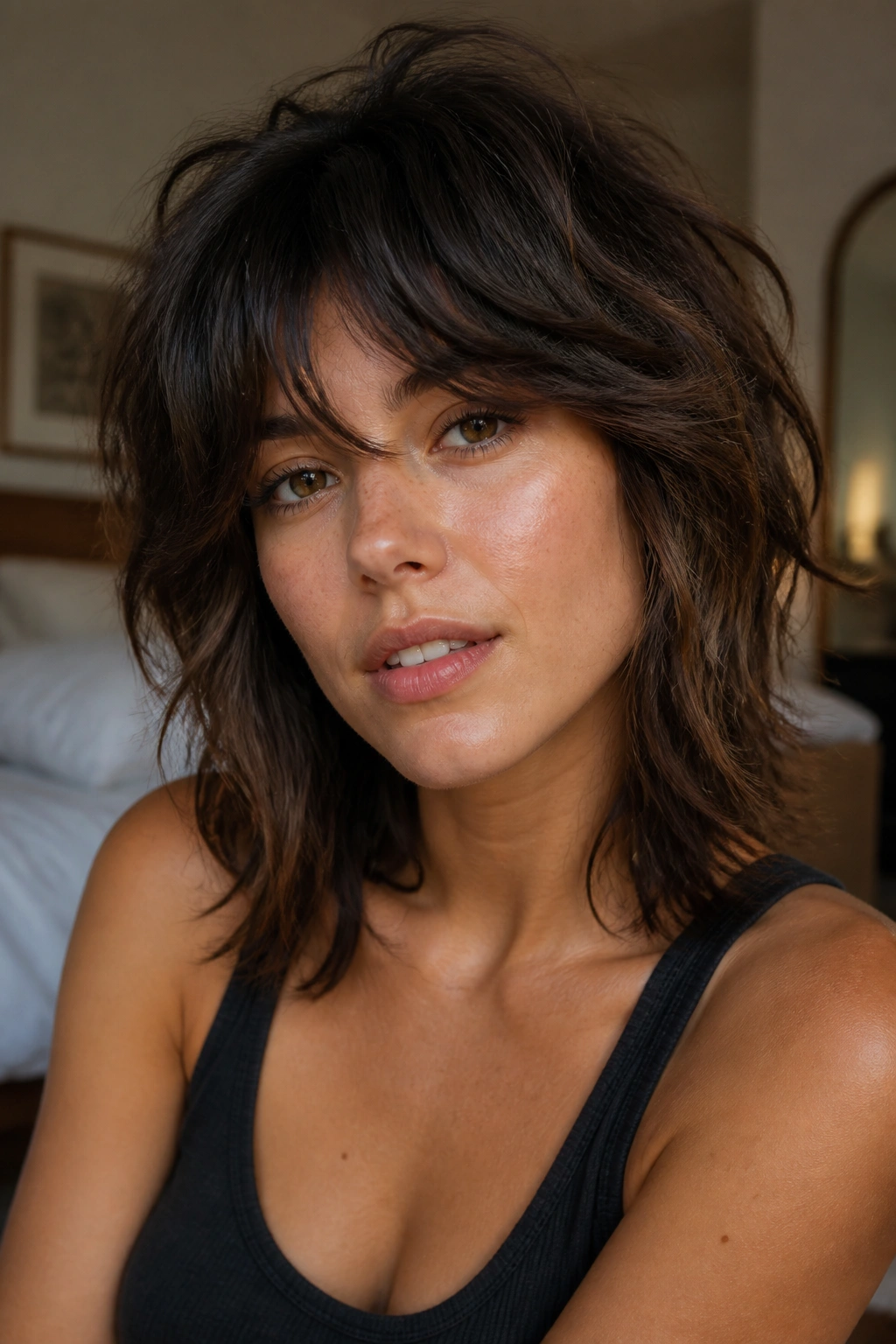
A textured shag can be brilliant on a heart face shape, especially if your hair has any wave, bend, or natural volume. The reason is simple: the shag breaks up the heavy top-to-pointed-bottom contrast that heart faces can have.
Instead of one strong line, you get layers at different lengths. That makes the cut feel airy around the crown and fuller around the cheeks and jaw, which is exactly where the face usually wants help. A good shag should not explode upward at the top. That’s the mistake. Too much crown volume makes the forehead look broader, and then the whole thing tips out of balance.
The better version keeps the shortest layers around the cheekbone area and lets the rest of the cut fall with some swing. Pair it with curtain fringe or a broken fringe if you want even more softness across the top.
My honest take: this is one of the best “messy on purpose” cuts for heart faces, but it only works if the layers are controlled. Random chopping is not the same thing.
6. Butterfly Cut

The butterfly cut has a built-in trick that heart-shaped faces usually like: shorter face-framing layers in front, long length in back. That front-and-back contrast helps widen the lower half without sacrificing length.
What makes this cut different from plain long layers is the shape of the front pieces. They’re meant to fall around the cheekbones and jaw, creating that soft, winged effect people like to talk about. On a heart face, those front pieces give the chin more company. The face ends up looking less top-heavy, and the hair feels like it has a frame instead of just length.
This cut does need styling. A round brush or large rollers help the front layers curve away from the face and then back in. If you leave it completely flat, the whole silhouette gets lost. Thick hair does well here because it holds the shape. Fine hair can work too, but the layers should not be over-thinned.
The butterfly cut is for someone who wants drama without losing inches.
7. Asymmetrical Bob

A slight asymmetry can do a lot for a heart face shape. One side a little longer than the other changes how the eye travels, and that can take attention off a wide forehead in a clean, modern way.
The cut works best when the shorter side still touches the jawline instead of floating above it. If the asymmetry is too extreme, the face can look lopsided in a way that feels more costume than style. The goal is a subtle shift, usually about half an inch to 1.5 inches difference, not a dramatic angle that steals all the attention.
A deep side part helps this bob read well. It creates a diagonal line over the face, which is useful on heart shapes because it brings visual weight down and across instead of straight up. Keep the ends blunt or gently beveled depending on how much softness you want.
This is a good cut if you like structure but do not want something sleepy. It has edge. Just enough.
8. Long Layers With a Center Part

A center part on a heart-shaped face is not automatically a bad idea. That old advice gets repeated too often, and it is lazy. If the cut is long enough and the layers are smart enough, the center part can look clean and balanced.
The trick is keeping the front pieces soft and long enough to graze the cheekbones or chin. That way, the part opens the face without exposing the forehead like a spotlight. Long layers keep the weight low, which helps the face feel more oval overall. If the hair is stick-straight and all one length, the look can get severe fast. Add movement, or it loses shape.
I especially like this on hair that falls past the shoulders. The length acts like a counterweight. It pulls the eye down, and that matters more than people think.
If you want a middle part but fear it will exaggerate your forehead, do not ditch the idea too quickly. The cut may be the issue, not the part.
9. Wolf Cut With Airy Crown
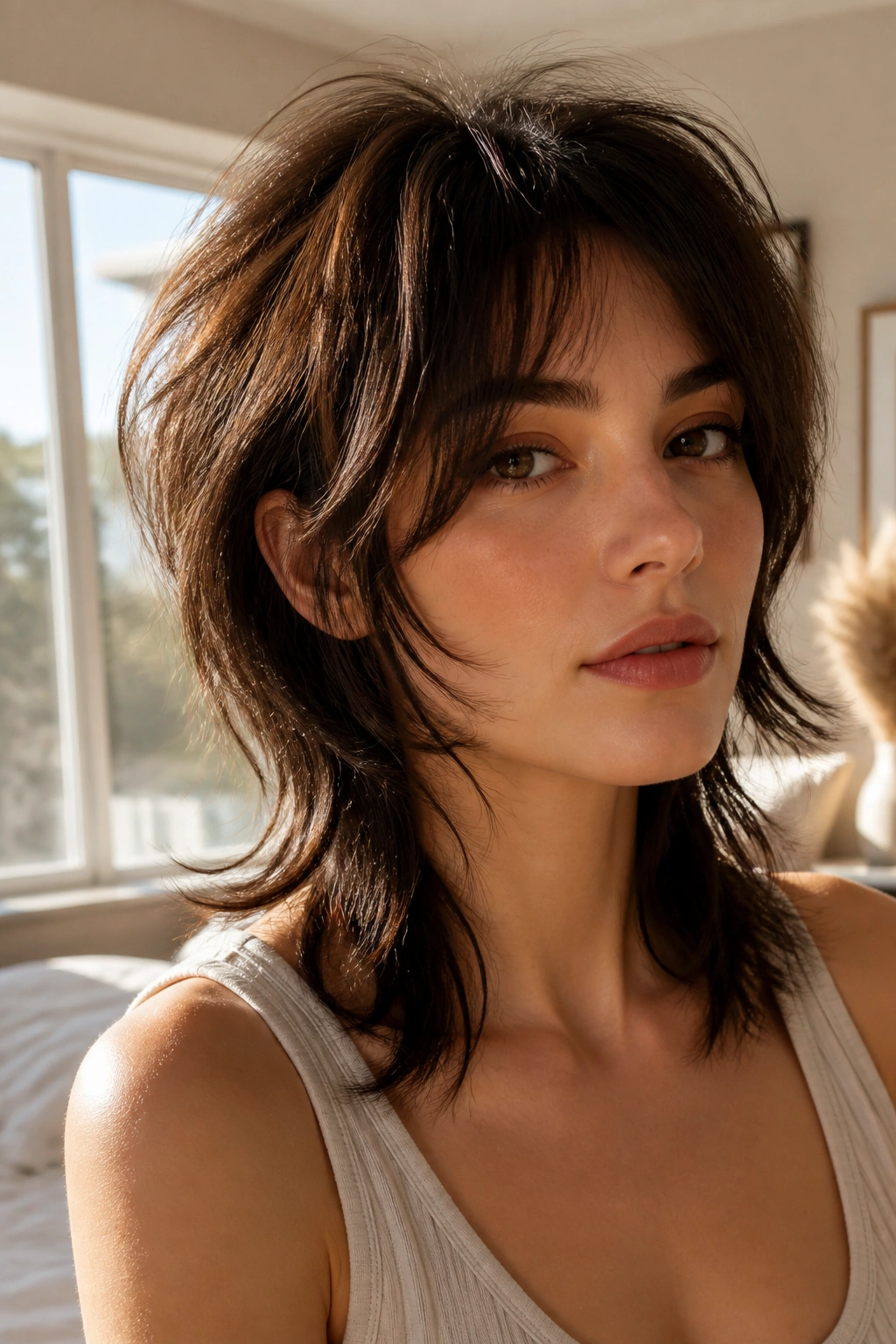
A wolf cut sounds chaotic, but on a heart face shape it can be very useful when it’s handled with restraint. The softer versions keep the top airy and the bottom a little fuller, which takes pressure off the forehead without making the chin look tiny.
The Shape Behind It
The wolf cut is all about contrast. You get short, choppy layers through the top and crown, then longer, ragged lengths through the bottom. On heart faces, that shape needs moderation. If the crown gets too tall, you’ve just made the forehead look larger. Not helpful. If the lower layers are too sparse, the face loses the fullness that balances the chin.
A better wolf cut keeps the crown close, not puffed up, and lets the face-framing pieces hit around the cheekbones. That gives some of the movement people want from the style without turning the top of the face into the loudest part of the haircut.
- Good for: thick hair, natural waves, and people who like a lived-in finish
- Avoid: aggressive crown teasing and super short top layers
- Works best with: soft fringe or broken curtain bangs
This is a bold cut, but it does not have to be messy in a bad way.
10. Blunt Bob With Tapered Ends
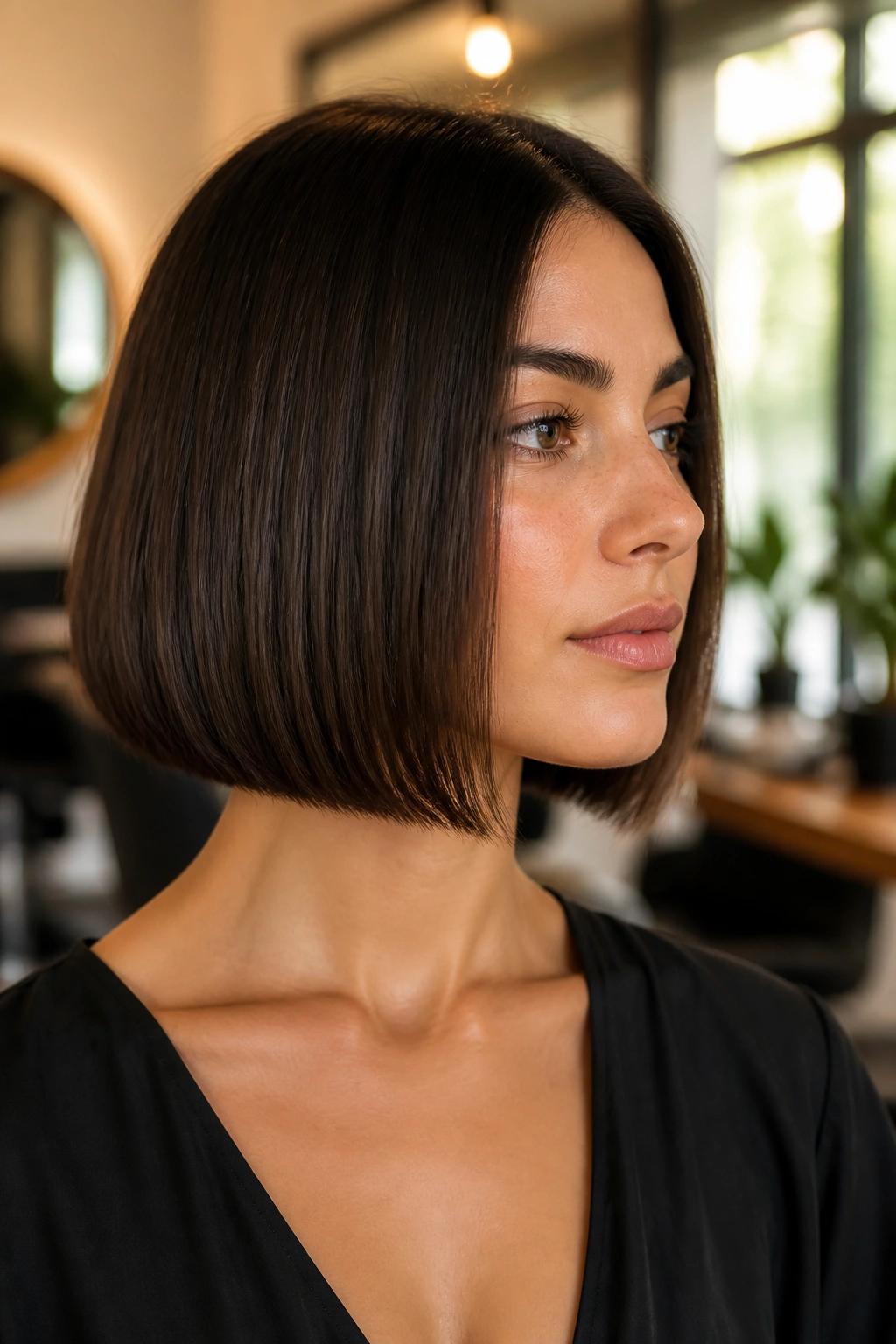
A blunt bob can sound risky for a heart face shape, and sometimes it is. But if the ends are softened just a touch, the cut can actually bring welcome structure to the lower half of the face.
The problem with a pure blunt bob is the hard horizontal line. On some heart-shaped faces, that line is too boxy at the jaw. Taper the last inch, though, and the whole thing changes. The cut still feels crisp, but it does not sit like a shelf. That small taper keeps the bob from fighting the chin.
This version works especially well on fine hair because the bluntness makes the ends look thicker. If your hair is dense, ask for internal weight removal so it does not balloon out at the sides. The bob should sit cleanly, not wedge itself outward.
It’s a sharp look. Clean, tailored, and a little bit bossy. I like that.
11. Soft Pixie With Longer Fringe

A soft pixie with a longer fringe is the more forgiving cousin of the side-swept pixie. It keeps the cropped feel, but the front stays long enough to soften the forehead and let the cut move.
The difference is subtle, and that’s why I like it. Instead of building the whole look around one dramatic sweep, the softness is spread through the front, temples, and crown. The result feels less stark. For a heart face shape, that matters. Too much contrast between the forehead and the jaw can make the lower half disappear in a mirror, and this cut helps that problem without pretending the face is something else.
If your hair grows out fast, this is worth considering because it still looks decent when it starts to lose its edge. The longer fringe can be tucked, brushed forward, or parted off-center depending on the day.
A regular pixie can feel severe. This one has more room to breathe.
12. C-Cut Layers

Why do C-cut layers work so well on heart-shaped faces? Because they curve around the face in a way that feels deliberate without looking dated.
How the Shape Helps
A C-cut uses longer front layers that bend inward and then sweep down, making a loose “C” shape around the cheeks and jaw. That shape is flattering on heart faces because it widens the lower half just enough to bring the face into better proportion. It also keeps the eye from stopping at the forehead, which is one of the common problems with haircuts that are too flat around the top.
This cut shines on medium to long hair. The front pieces should start somewhere around the cheekbone or lip, then blend into longer lengths. If the shortest front layer starts too high, the effect can get puffy at the temples. Nobody wants that.
- Ask for front pieces that hit near the cheekbone, then curve toward the jaw
- Keep the layers soft rather than choppy
- Style with a round brush or a large blow-dry brush for that curved finish
A C-cut is a smart choice if you want shape without obvious layering everywhere.
13. Wavy Mid-Length Cut With a Side Part

A wavy mid-length cut can be one of the easiest wins for a heart face shape, especially if your hair already wants to bend a little. Add a side part and the whole thing starts working in your favor.
The side part creates a diagonal line that breaks up the width at the forehead. The waves do the rest. They add softness through the cheeks and jaw, which is where a heart face often needs a little visual help. When the cut sits around the shoulders or just below, the proportions feel relaxed and not over-edited.
This is also a forgiving cut for daily life. Air-dried waves look good. A diffuser gives a little lift. A curling wand with alternating directions makes it feel a bit fuller without turning into a pageant curl situation. Good. We do not need that.
If your hair is naturally wavy, this may be the easiest haircut on the list to live with.
14. Shaggy Lob With Bottleneck Bangs

Bottleneck bangs are one of the smartest fringe choices for a heart face shape because they start narrow at the top and widen as they fall. That shape mirrors the face in reverse, which is exactly what makes it useful.
What Makes It Different
A shaggy lob with bottleneck bangs gives you movement at the ends and softness around the forehead without committing to a heavy bang. The bangs open up the center of the face, then curve outward toward the cheekbones. The lob keeps length near the jaw, where a heart face benefits from a little more visual fullness.
This haircut looks best when the texture is a bit imperfect. Pin-straight styling can make it feel stiff. A loose wave, a rough-dry, or a bend through the mids and ends makes the fringe and lob blend better. Thick hair should be thinned carefully; otherwise, the bangs can go bulky fast. Fine hair can wear this cut too, but the fringe needs enough density to sit right.
It’s one of my favorites for people who want something current-looking without chasing a high-maintenance finish.
15. Curly Layered Cut
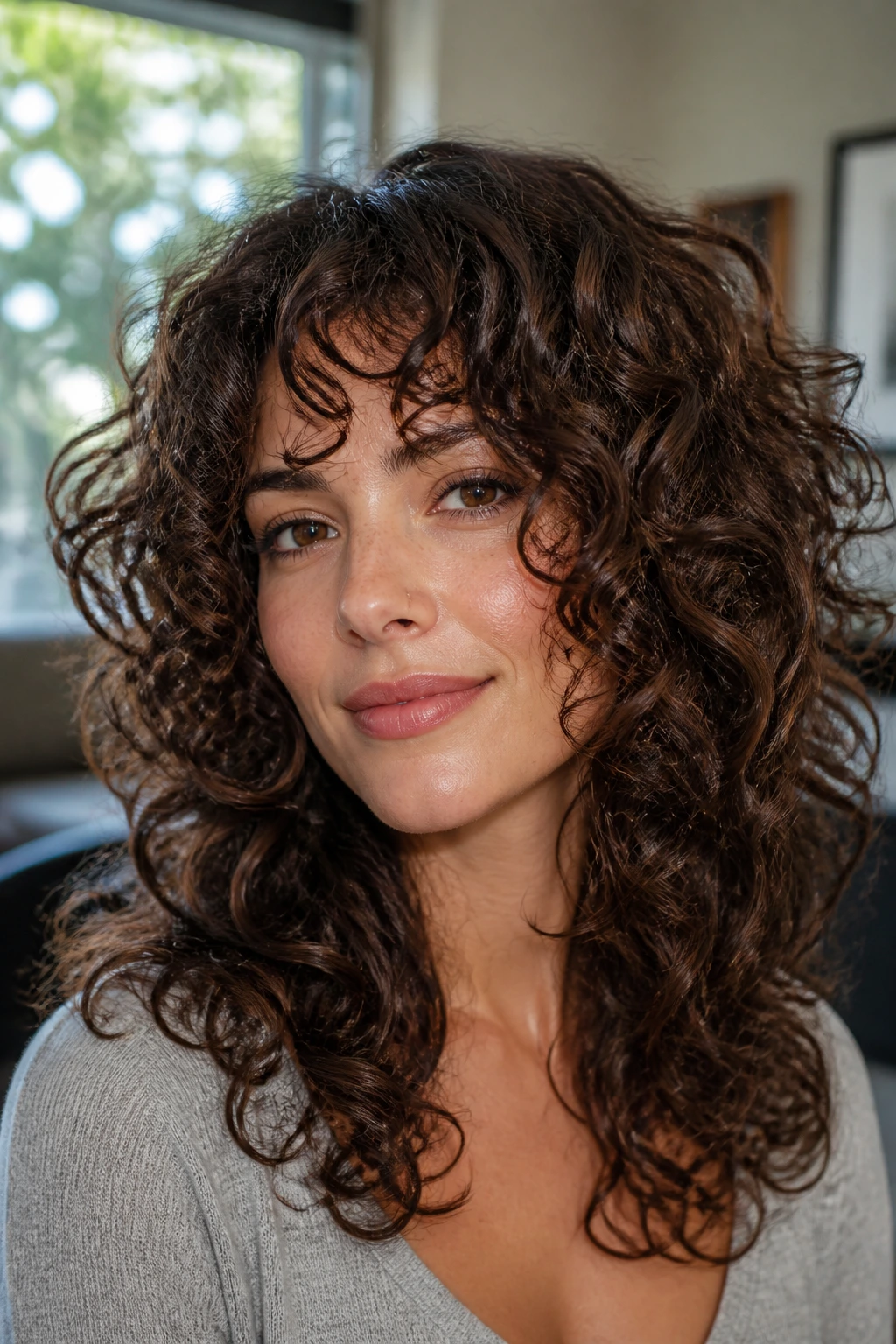
Curly hair and heart-shaped faces make a better pair than people expect, as long as the layers are placed with some thought. Curls bring width where straight hair sometimes needs help.
The biggest mistake is cutting too much height into the top of the head. That can make the forehead feel even broader. Better to let the curls stack a little lower and create fullness around the cheeks and jaw. Ask for layers that begin below the cheekbone if your curls are springy. If they’re loose, the layer can start a bit higher, but still not right at the crown.
Dry cutting helps because curls shrink and shift in ways wet hair simply won’t show. That matters. A curl that looks safe when wet can jump 2 inches after it dries, and suddenly the face shape changes in a way nobody planned for.
A curly layered cut is generous. It gives shape without forcing the hair into a straight-line idea that never fit curls in the first place.
16. Bixie Cut
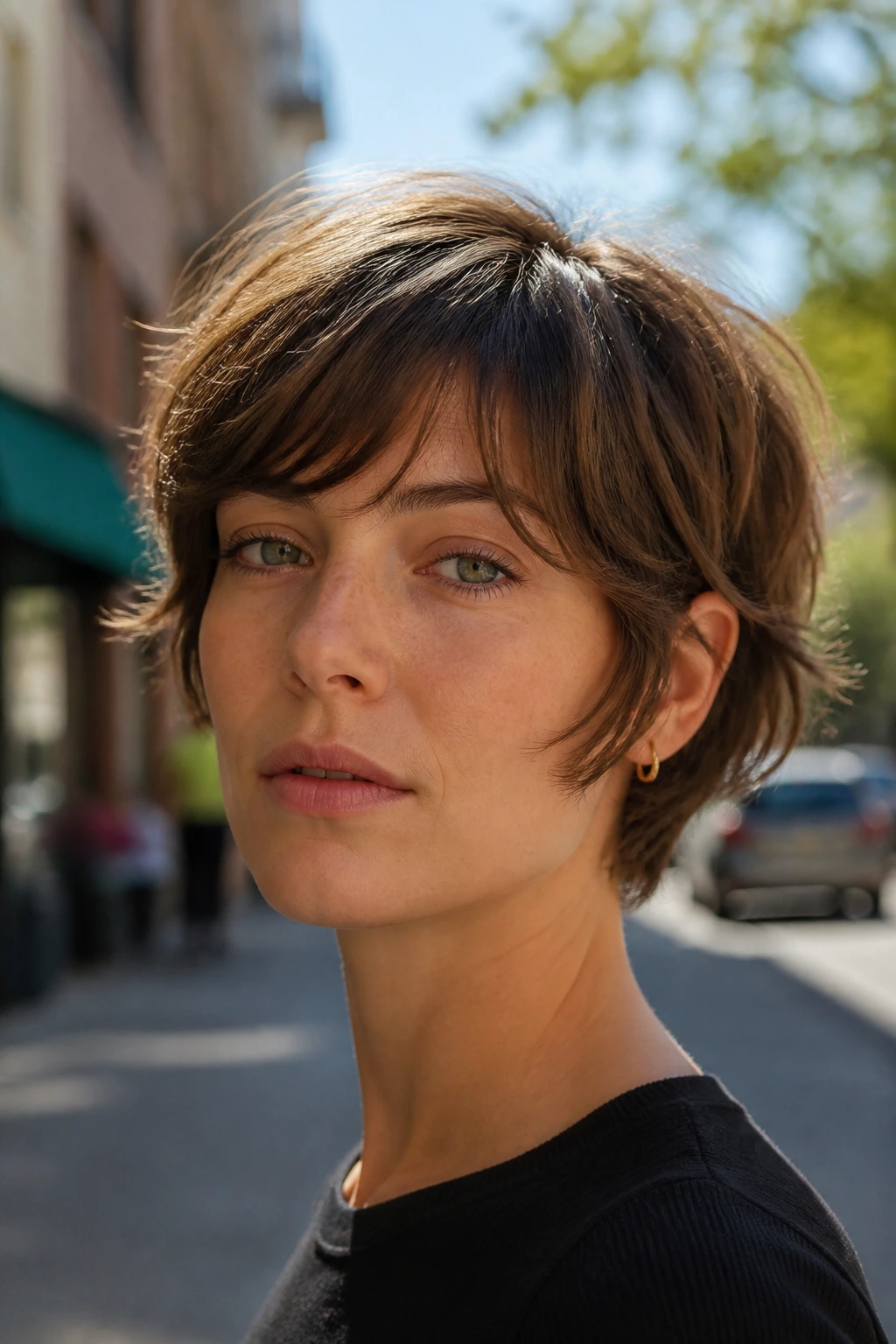
The bixie sits between a bob and a pixie, and that in-between quality is what makes it so useful for heart face shapes. It keeps the neck and jaw a little more exposed than a bob, but it leaves enough length to soften the upper face.
Unlike a classic pixie, the bixie usually has more fringe and more side length. That means it can skim the cheekbones instead of climbing straight up the forehead. Unlike a bob, it doesn’t box in the jawline. It lives in the middle, which can be a very good place to be when your features already have strong contrast.
This cut is especially good if you want something light but not too severe. It works on straight hair, wavy hair, and even some curl patterns if the texture is handled by a stylist who knows how hair dries. A little piecey styling cream goes a long way here. Too much product, though, and the cut loses its airy shape.
If you want short hair with a softer outline, the bixie is worth a hard look.
17. U-Cut With Subtle Layering
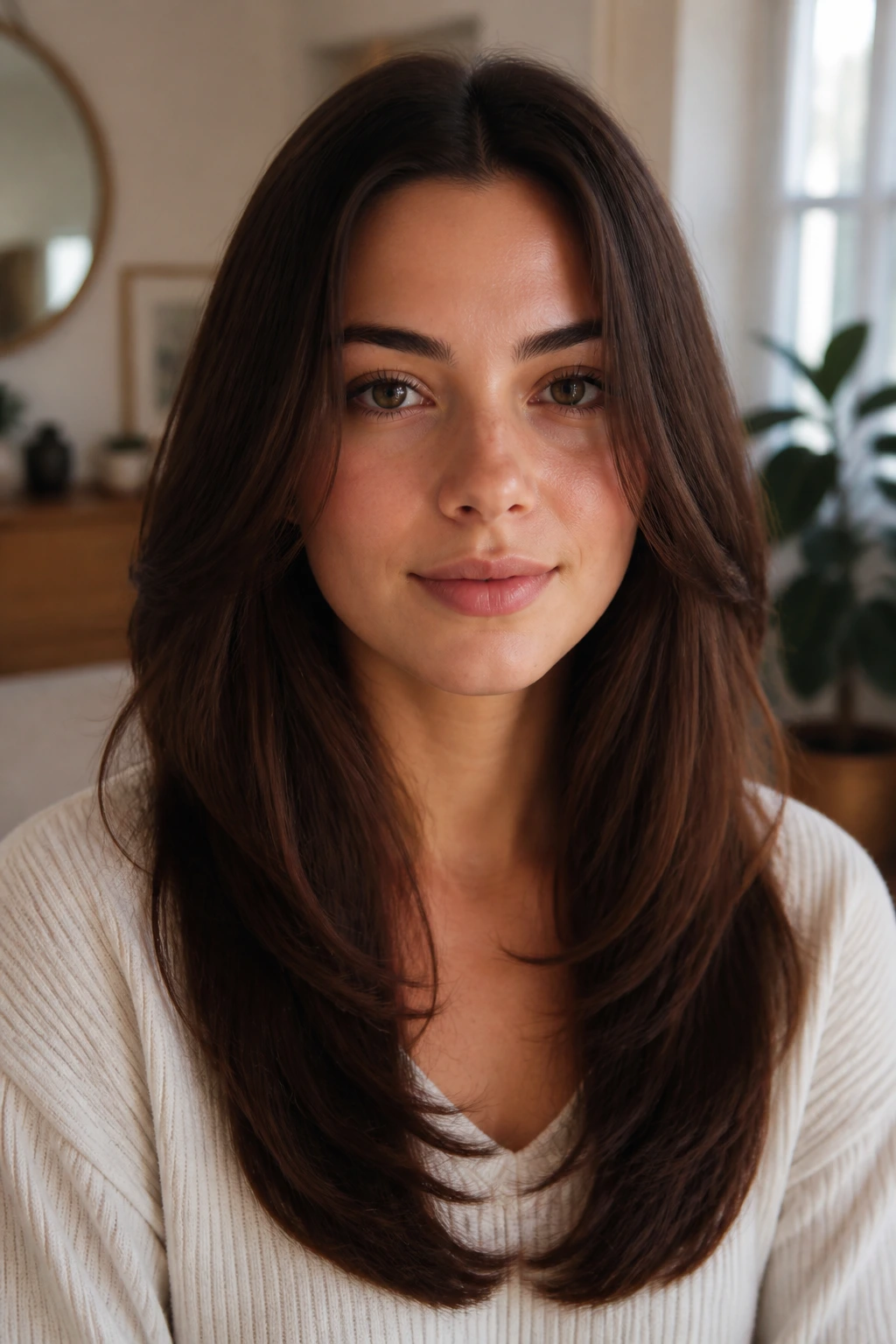
A U-cut gives long hair a rounded hem, which is kinder to a heart face shape than a straight, blunt line all the way across the back. The subtle curve helps the hair fall in a softer way around the shoulders and jaw.
The Shape It Creates
The beauty of a U-cut is that it keeps fullness through the lower half of the hair. That lower fullness helps balance a narrower chin, especially when the front is kept slightly shorter than the back. Subtle layering stops the ends from looking like one heavy curtain. You want movement, not a shelf of hair.
This cut is a good answer for people who love long hair but worry it makes the chin look too small. Keep the front pieces around the collarbone or a little longer, then let the back dip a few inches lower. That little curve matters more than you might expect.
- Best for: straight, wavy, or soft curly hair
- Ask for: a rounded perimeter with light interior layering
- Avoid: super-short front layers that stop above the chin
If you like long hair but want it to feel shaped, not dragged down, this is a clean choice.
18. Feathered Shoulder Cut

A feathered shoulder cut gives heart-shaped faces a softer frame without stealing too much length. The layers flick away from the face instead of sitting flat against it, which makes the cheekbones and jawline feel less sharp.
This style has a slightly retro feel, but not in a costume way. The feathering keeps the edges light, and that helps if your hair tends to feel heavy around the forehead. Shoulder length is useful here because it lands in the middle zone—long enough to create balance, short enough to feel fresh. If the hair ends right at the shoulders, a bit of internal layering keeps it from turning into a triangle.
I like this cut for people who want something easy to blow-dry. A medium round brush and a few quick flips at the ends are usually enough. You do not need a complicated routine. And honestly, that’s the appeal.
It’s a quiet haircut. Not plain. Just sensible in a good-looking way.
19. Jaw-Skimming Bob
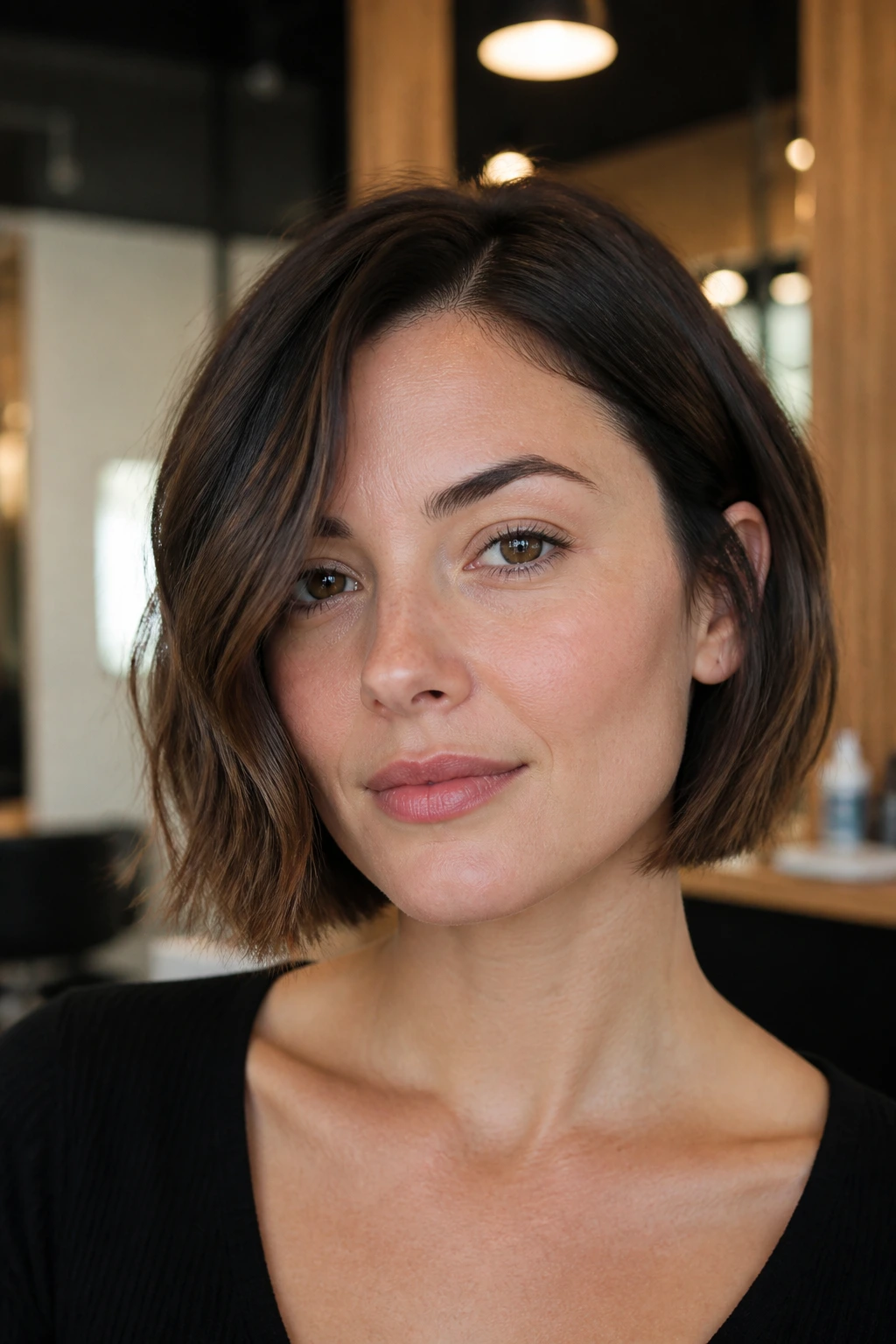
A jaw-skimming bob can be smarter for a heart face shape than a chin-length bob because it lands a touch lower. That tiny bit of extra length is enough to broaden the lower face without crowding the chin.
The line should skim the jaw, not cling to it. That difference matters. If the bob hugs too tightly, it can make the jaw look pointier. If it sits just below, the face gets a little more width and the proportions ease up. A side part usually helps, especially if the forehead is on the wider side.
This is a strong cut for straight hair and soft waves. Very curly textures can do it too, but the shape needs more maintenance to keep the line from bouncing too high. Tuck one side behind the ear and the whole thing gets softer around the forehead.
Some bobs try to look sleek by being severe. This one does better when it’s a little relaxed.
20. V-Cut Layers With Face-Framing Pieces

A V-cut is one of the best long-hair answers for heart-shaped faces because it keeps the length while building a point at the back that visually balances the point at the chin. That shape might sound like a small detail. It isn’t.
The face-framing pieces matter just as much as the point in back. They should fall around the cheekbones, then taper toward the jaw, giving the front of the haircut a softer outline. If the layers start too high, the top of the face can feel crowded. Keep them controlled and the shape opens up in a good way.
This cut works for people who love long hair but hate when it looks heavy all the way across the bottom. The V-shape keeps the line moving. It also gives braid styles, ponytails, and half-up looks more shape, which is a bonus if you wear your hair up often.
Long hair can make a heart face look elegant or top-heavy. The difference is usually in the layering.
Final Thoughts
Heart face shapes do well with cuts that move the eye down, soften the forehead, and give the jaw a little more presence. That does not mean every haircut has to be long, or that bangs are mandatory, or that short hair is off-limits. It means the proportions have to be handled with some care.
If you keep one thing in mind, make it this: the best heart-shaped face haircut is the one that creates balance without flattening your personality. Soft fringe, cheekbone layers, collarbone lengths, and jaw-friendly bobs all get there in different ways. The right choice is the one that suits your texture, your styling patience, and the version of yourself you actually wear every day.
