



Long faces can take a blunt haircut better than a lot of people think. The trick is keeping the eye moving sideways, not straight down, and the best short hairstyles for long faces do exactly that.
A fringe that skims the brows, a bob that lands at the chin, a side part that breaks up the center line — those details matter more than the label on the cut. Add too much height on top and you get extra length; add width at the cheeks and jaw and the face reads more balanced.
Texture changes the whole conversation. Straight hair needs clean edges or a controlled bend; wavy and curly hair can do some of the work for you, though they also need a little restraint so the shape doesn’t puff in the wrong place.
Some of the cuts below are neat and classic. Others are messier, sharper, or a little bossy. That’s the fun part.
1. Chin-Length Blunt Bob for Long Faces
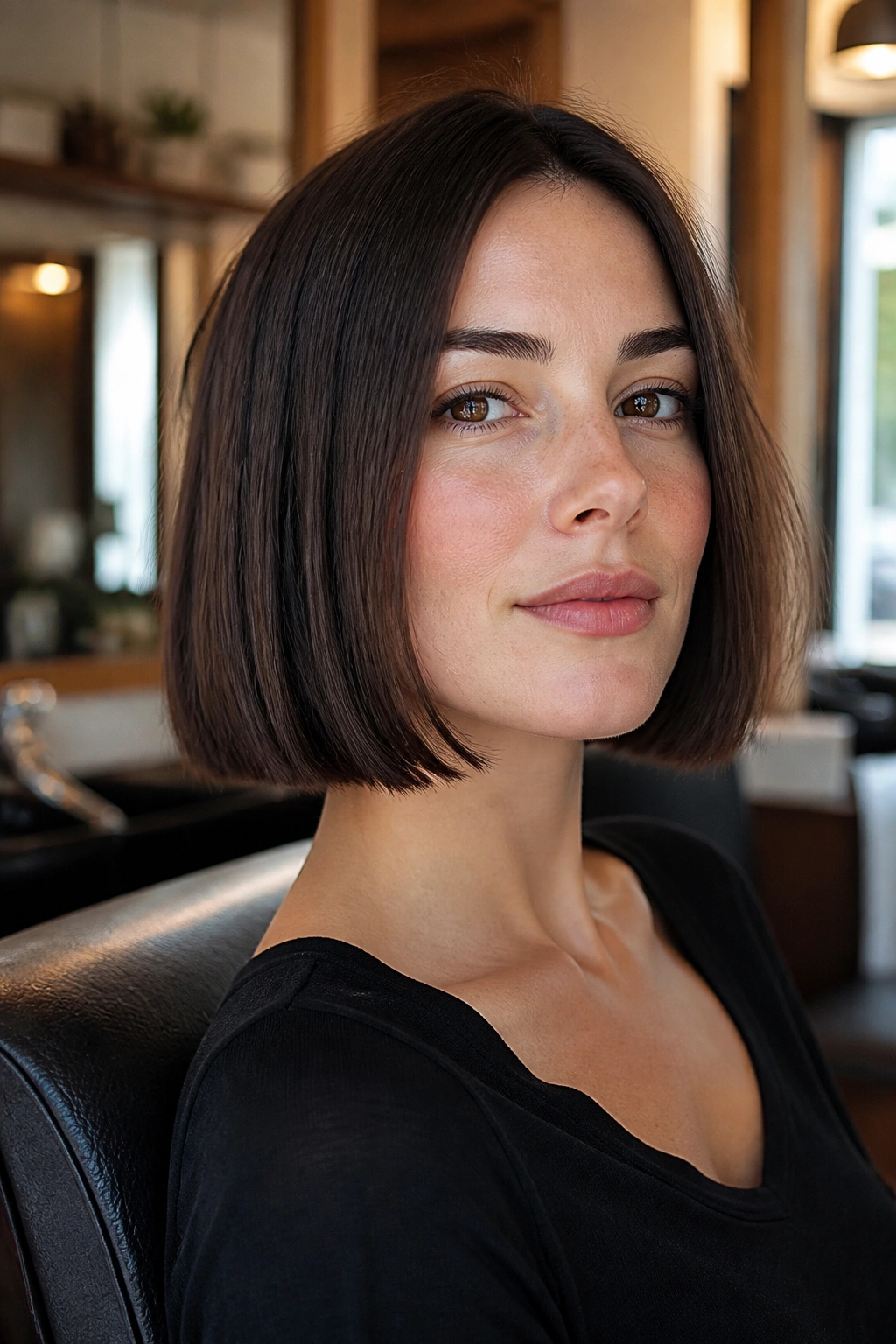
If you want a safe first move, this is the one I’d put on the table. A chin-length blunt bob gives a long face a hard stop at the jaw, which helps shorten the look of the face without making the style feel heavy.
Why It Works
The blunt edge matters more than people think. It creates a clear horizontal line, and that line pulls attention outward instead of downward.
Keep the length right at the chin or a hair below it. Too long and the effect softens; too short and it can start to feel boxy.
- Works well on straight to slightly wavy hair
- Looks neat with a middle part or a soft side part
- Needs clean ends, not choppy layers
Best move: ask for the perimeter to stay full and even, then style with a round brush just under the chin. That little bend at the ends makes the cut look intentional rather than severe.
2. Side-Swept Pixie
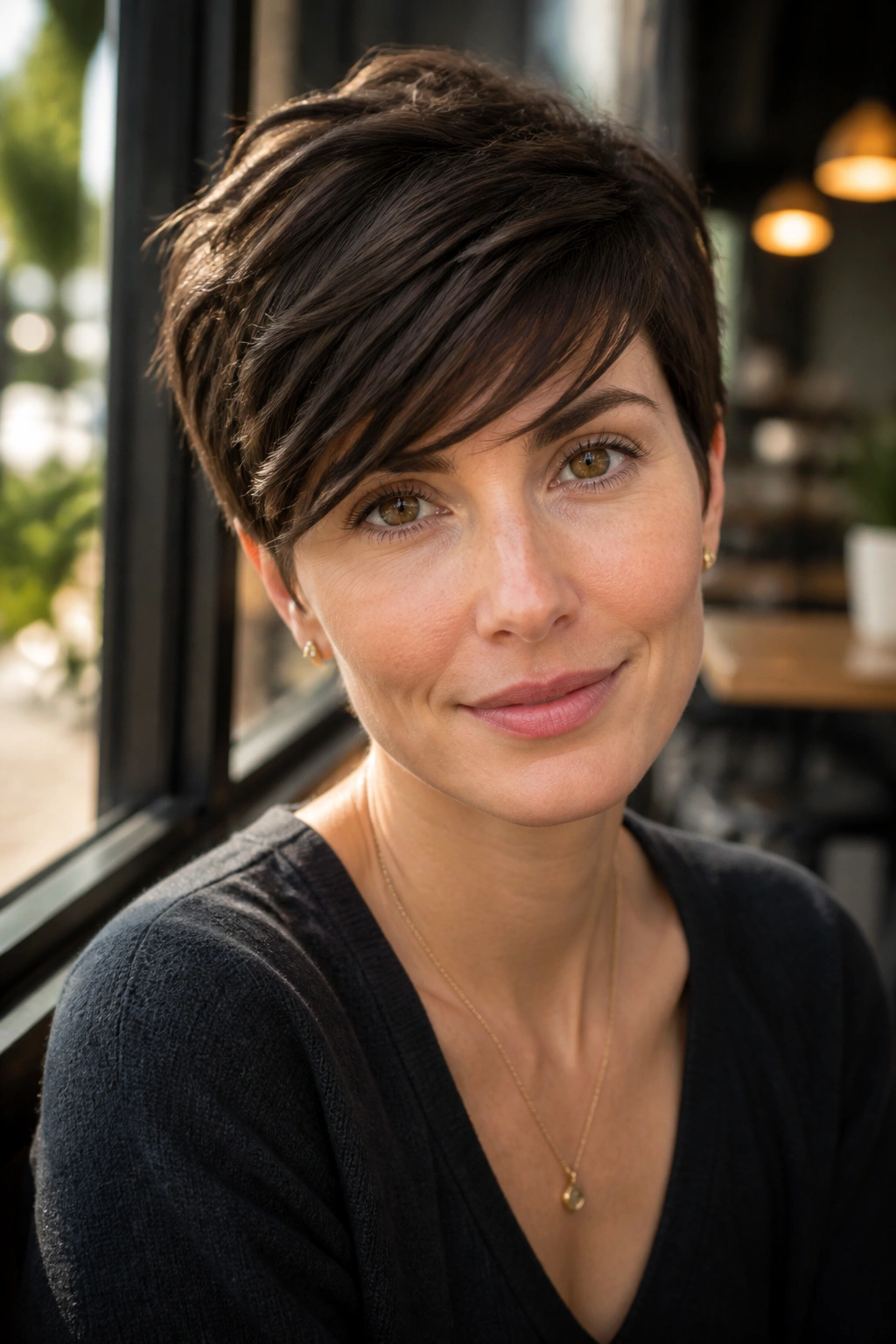
Can a pixie flatter a long face? Absolutely — if the fringe does the work. A side-swept pixie shifts attention to the forehead and the eyes, which helps break up all that vertical space.
The side fringe is the whole point here. Keep the top soft and piecey, not tall and spiky, or you’ll stretch the face instead of balancing it.
This cut feels polished when it’s close to the head at the sides and a little longer through the front. It’s one of those styles that looks easy, but only if the shape is right.
A little pomade or light styling cream is enough. Don’t drown it in product. That turns a sharp cut into a greasy one fast.
3. French Bob With Eyebrow-Grazing Bangs
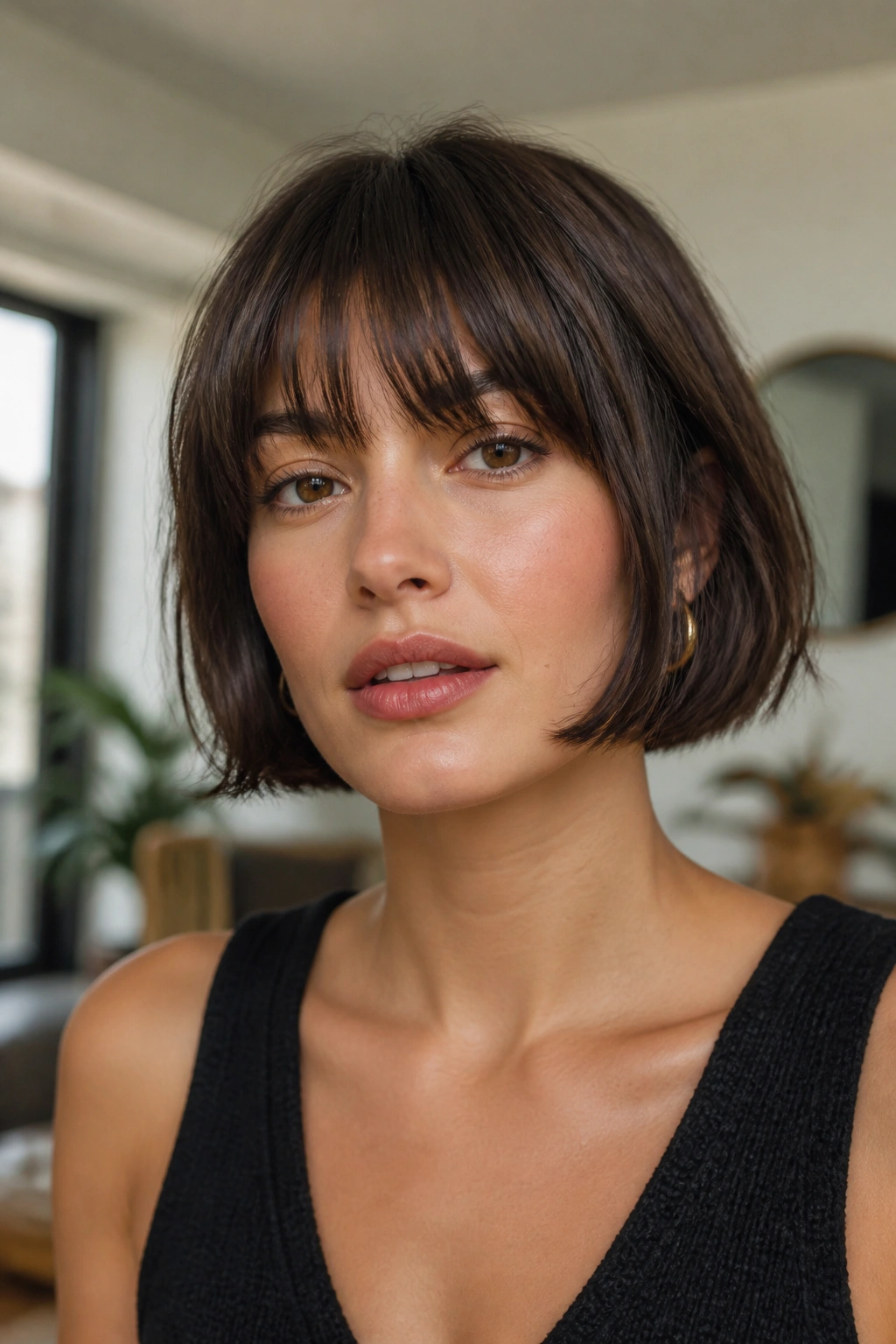
There’s a reason this cut keeps showing up on faces that need a little width. The French bob lands short, usually around the jaw, and the bangs create a strong line across the forehead.
The best version is never stiff. It should feel a little undone, a little lived-in, like it was cut by someone who trusts natural movement.
What Makes It Different
The bangs are the secret. Eyebrow-grazing fringe shortens the visible length of the face and gives the eyes a place to sit.
If your hair is fine, this cut can still work, but keep the texture airy. Heavy bangs plus blunt ends can go flat in a hurry.
For wavy hair, this is especially good. The bend through the body of the hair keeps the shape from looking too neat, which is exactly why it flatters a long face so well.
4. Textured Crop With Piecey Fringe
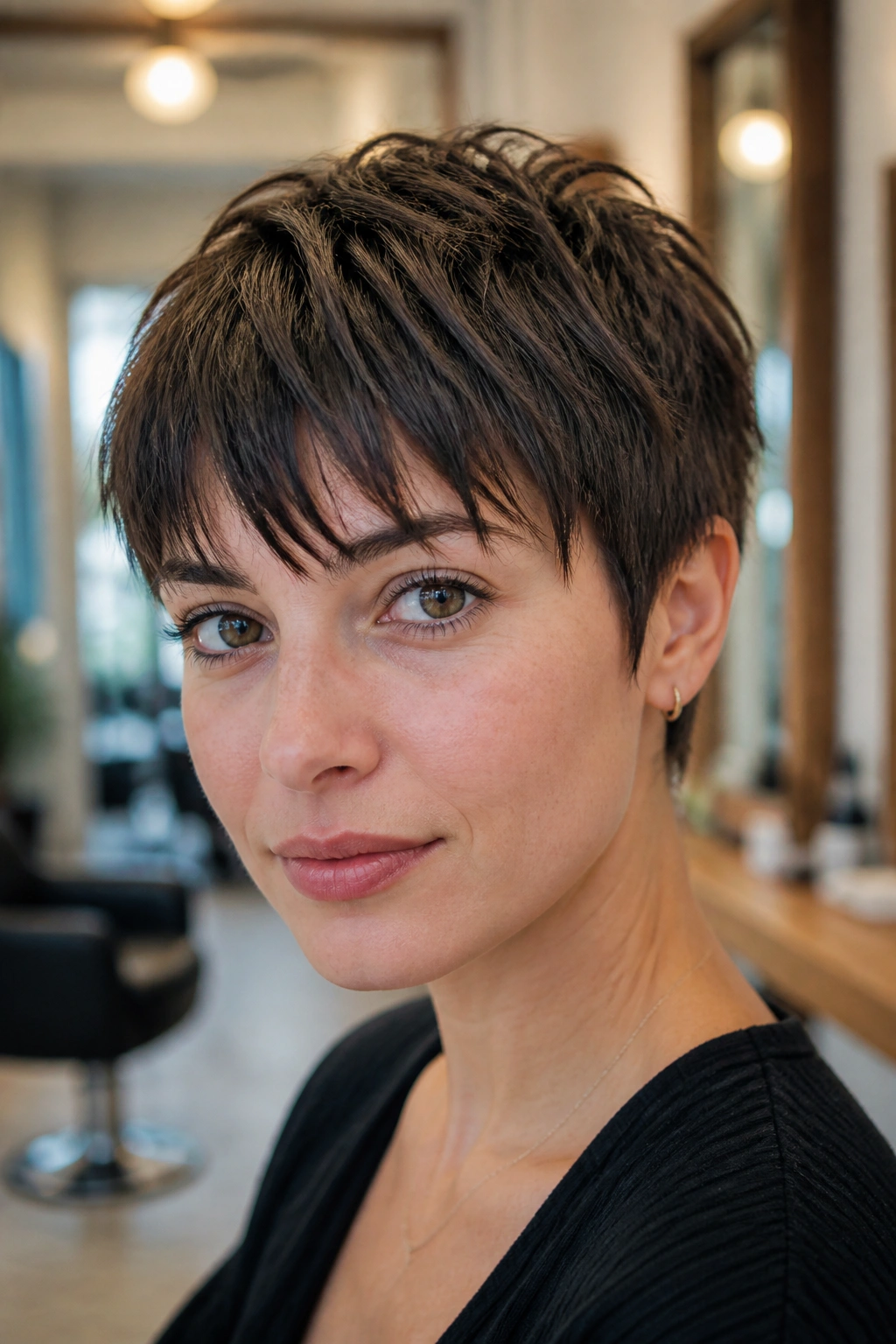
A textured crop is what you wear when you want short hair with some edge but no extra drama. The piecey fringe breaks up the forehead, and the choppy top keeps the style from looking helmet-like.
That little broken texture changes everything. Instead of one long vertical line, the hair moves in small sections, and the face looks a bit shorter and wider.
How to Wear It
- Keep the fringe light and separated
- Ask for softness around the temples
- Use a matte paste, not a shiny gel
- Rough-dry with your fingers for a less polished finish
This cut loves a bit of mess. Too much smoothness takes away the point.
5. Angled Bob
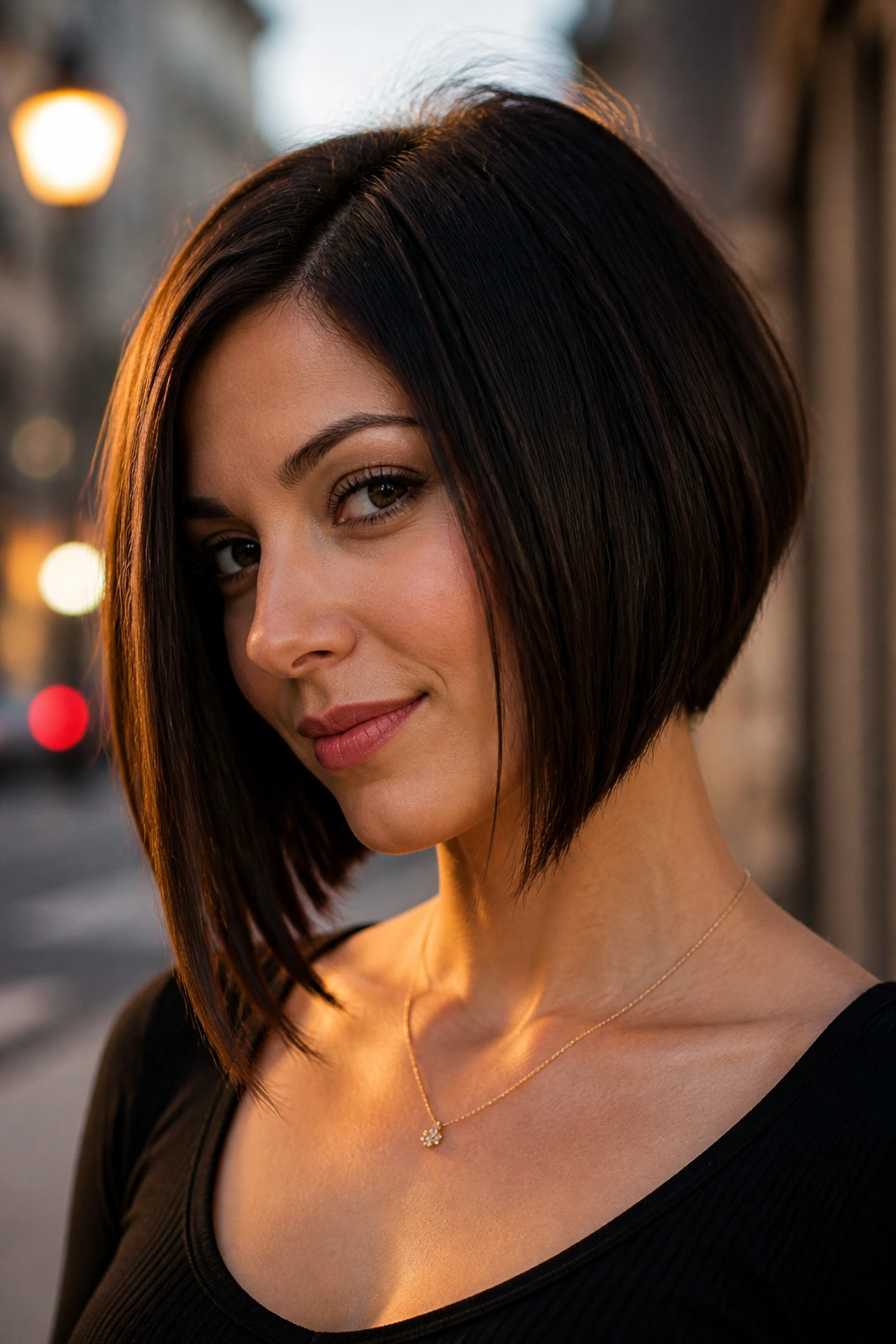
A sharp angled bob gives a long face a useful diagonal line. Unlike a blunt bob, it’s shorter in the back and longer toward the front, which pulls the eye forward and down toward the jaw.
That shape works best when the angle is noticeable but not extreme. A dramatic swoop can start to feel theatrical; a gentle angle looks modern and easier to live with.
The front pieces should brush the chin or sit just below it. That way, the cut adds width near the lower half of the face without dragging the eye too far down.
Straight hair shows this shape cleanly. Wavy hair can wear it too, but the angle needs a little help from a brush or flat iron so it doesn’t collapse into randomness.
6. Soft Curly Bob for Long Faces
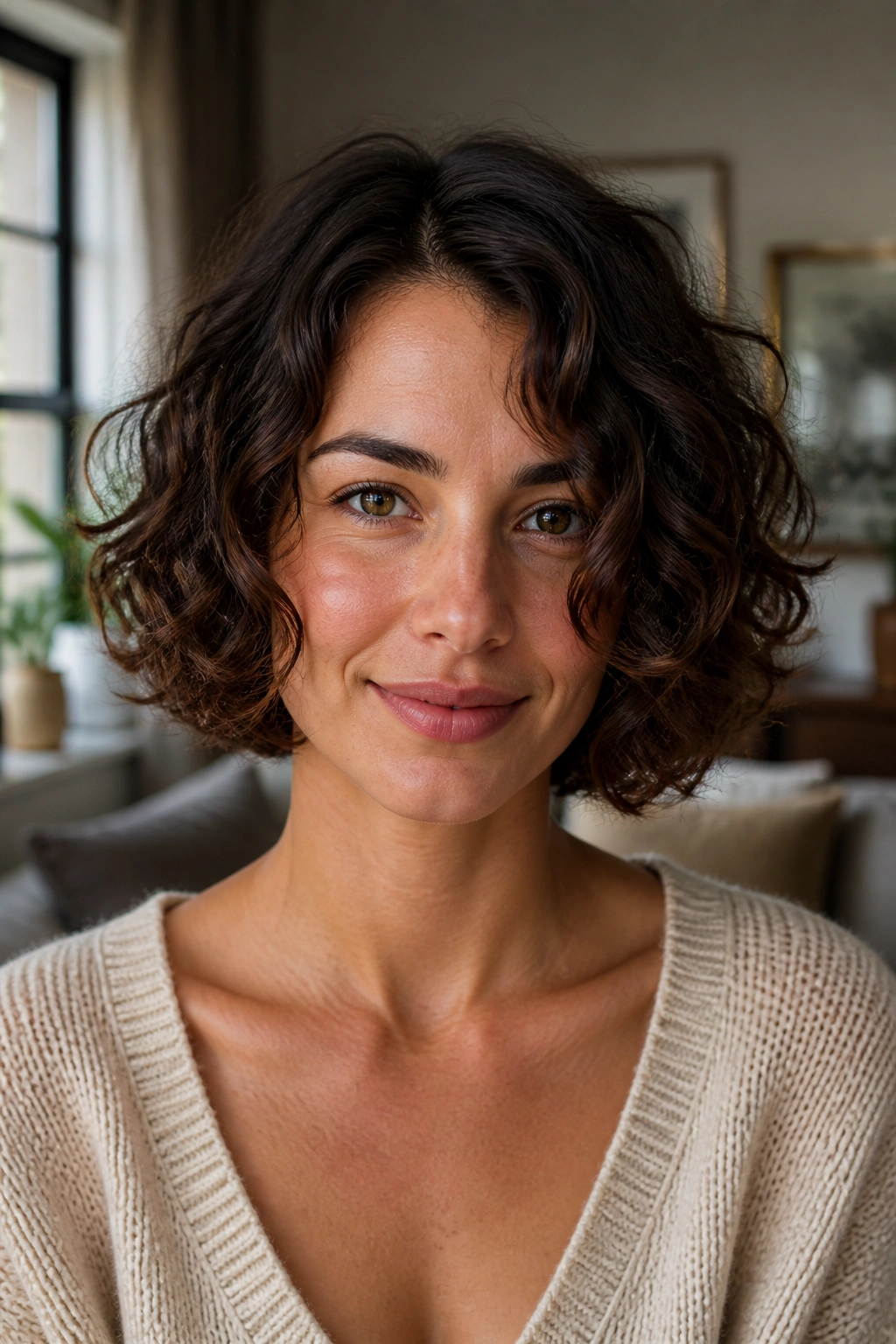
Curly hair and long faces are a better match than people assume. A soft curly bob adds width at the sides, which is exactly where a long face often needs it.
The key is length. Keep the curls around chin level or a touch above, so the volume lands where it helps instead of hanging too low.
When the curl pattern is loose, a diffuser can set the shape without flattening the top. When the curl pattern is tighter, ask for a dry cut if your stylist knows how to work with shrinkage.
A middle part can work, but a slight off-center part often gives the face a softer balance. That tiny shift matters more than people think.
7. Shaggy Bob
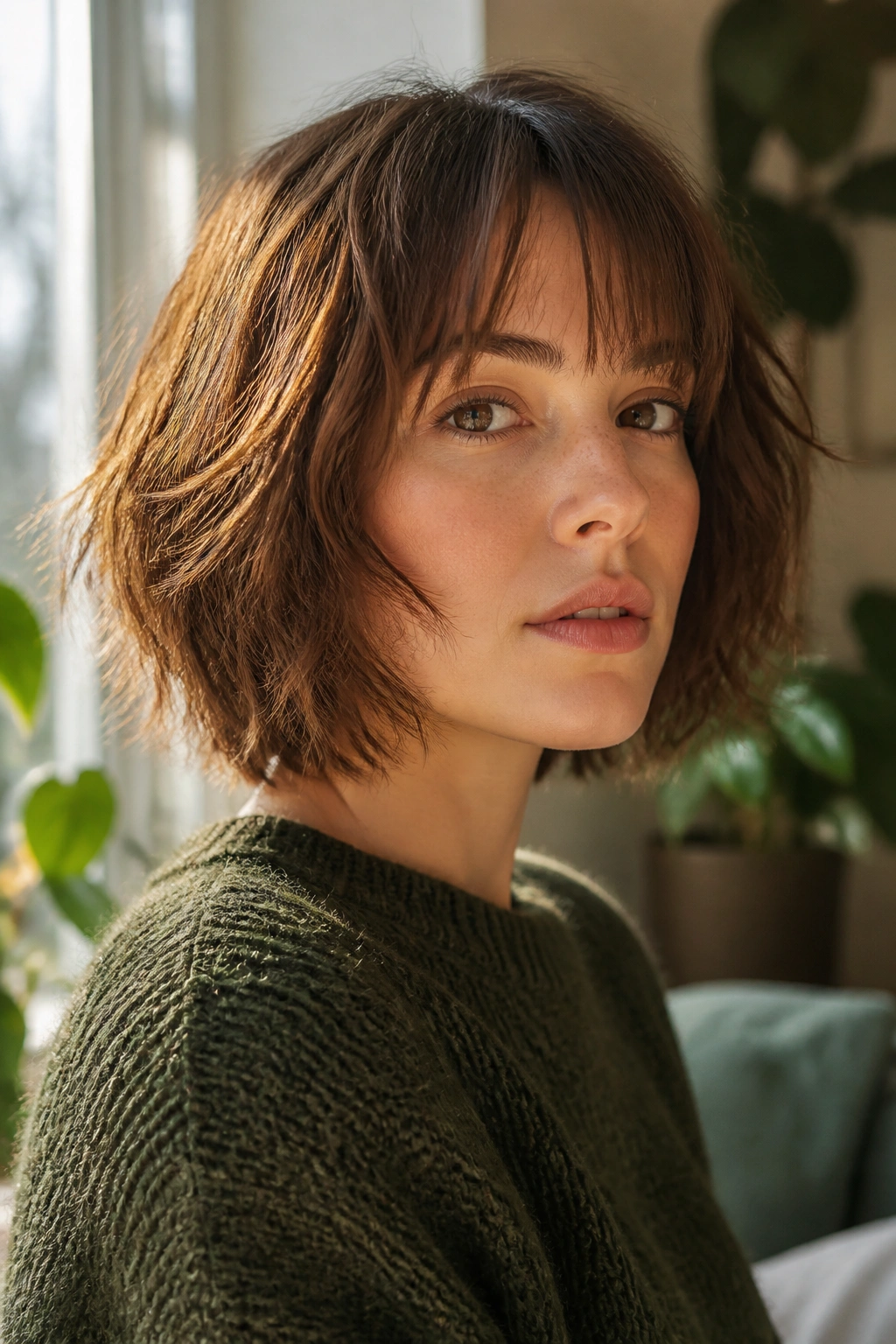
If your hair tends to fall flat by lunch, a shaggy bob can be a relief. The layers build movement through the sides, which keeps the style from drawing a straight line down the face.
This cut should feel broken up, not frizzy. The point is to create width with texture, especially around the cheekbones and jaw.
Why It Helps a Long Face
The layers interrupt length. They also keep the hair from hanging like curtains, which is where a lot of long-face cuts go wrong.
A shaggy bob works best when the ends are feathered just enough to move. If the layers are too high, the shape turns puffy; if they’re too low, the haircut loses all its energy.
It’s a strong choice for wavy hair, and it can work on straight hair too if you’re willing to rough it up a little.
8. Asymmetrical Bob
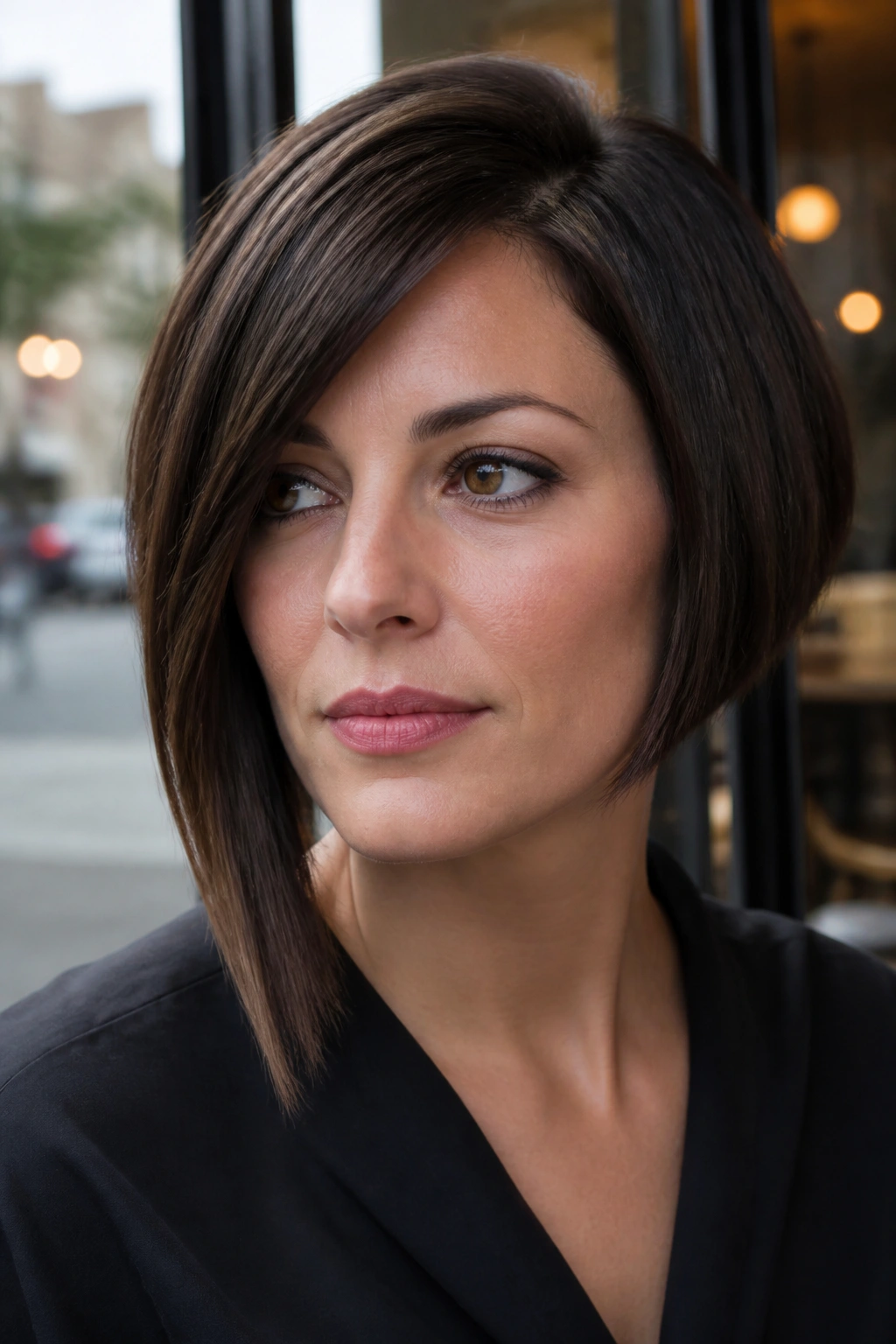
A long face can handle an asymmetrical bob better than a round, face-hugging style because the uneven line keeps the eye from reading the face as one long column. One side sits a little longer, and that small imbalance does a lot of visual work.
The trick is subtlety. You want difference, not a lopsided haircut that looks accidental.
This is one of those cuts that looks expensive when it’s precise. The shorter side should still feel connected to the longer side, and the line should be clean enough that you can tell it was planned.
Straight hair usually shows it best. If your hair has a lot of wave, the asymmetry can get blurry unless you style it with a brush or a quick pass of heat.
9. Curtain Fringe Bob
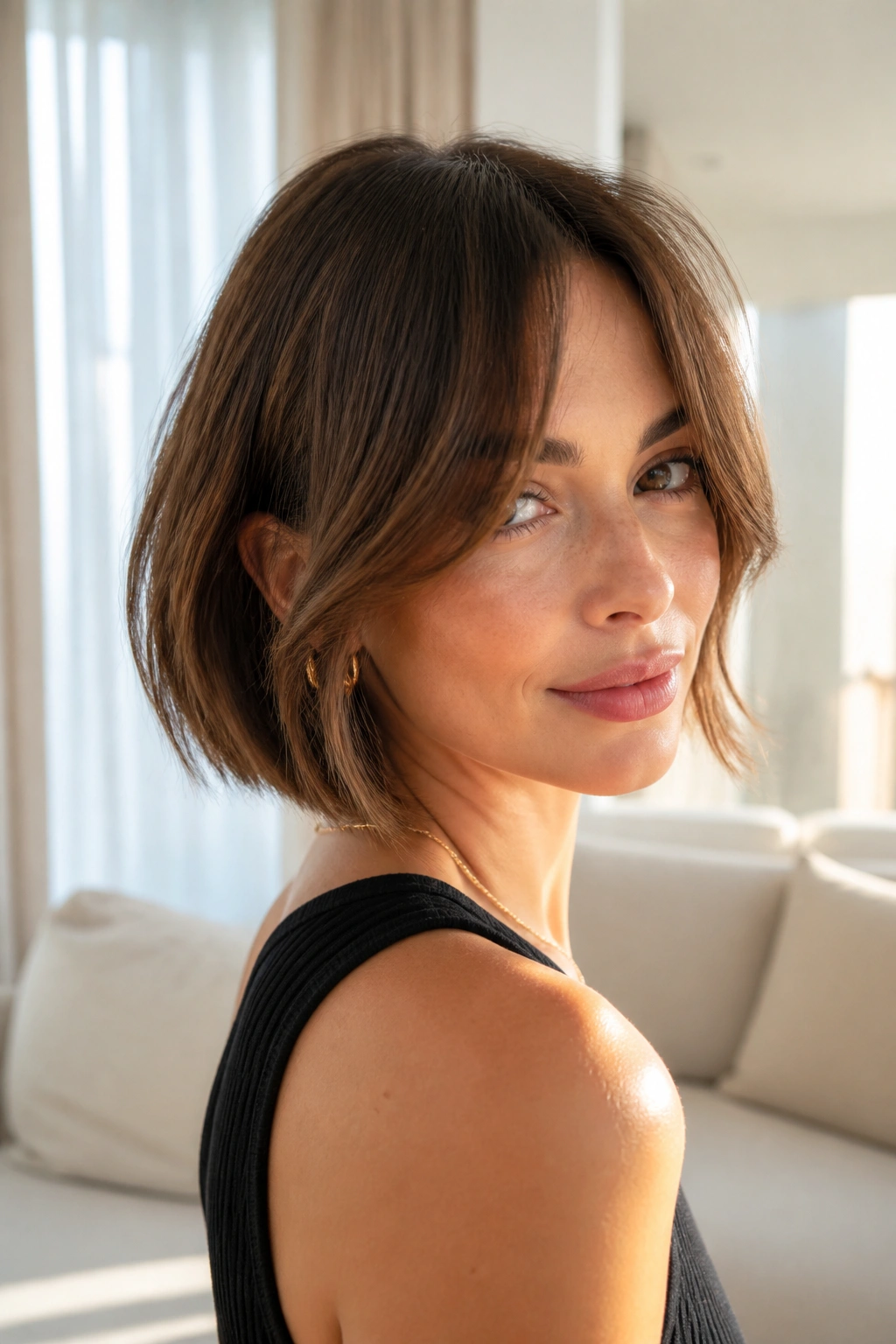
A curtain fringe bob is one of the easiest ways to soften a long face without losing the short length. The curtain bangs split at the center and drape toward the cheekbones, which helps break up both forehead and face length.
That cheekbone hit is the whole reason this cut works. The fringe creates a diagonal frame around the face, and diagonal lines are your friend here.
How to Style It
- Blow-dry the fringe away from the face with a round brush
- Keep the ends of the bob tucked under slightly
- Use light hold so the bangs still move
- Trim the fringe before it gets too long and disappears into the rest of the hair
This cut can turn lazy if the bangs grow out too far. Once that happens, the whole shape loses its balance.
10. Micro Bang Pixie for Long Faces

A micro bang pixie for long faces is bold, and I mean that in a good way. The short fringe visually shortens the forehead, which helps balance a face that already has more length than width.
This is not a shy haircut. It works best when the wearer likes a sharp look and is fine with a little maintenance.
The top should stay compact, not towering. If the crown gets too much height, the face stretches again and the point of the micro bangs gets lost.
This style suits strong brows, good bone structure, and people who don’t mind a haircut that gets noticed. It’s not the lowest-effort option on the list, but it can look fantastic when it’s cut with precision.
11. Tapered Crop

A tapered crop stays close at the nape and sides, then keeps a touch more shape through the top and temples. That side fullness is what helps a long face read a little wider.
This cut is especially kind to fine hair. The taper removes excess bulk where you don’t need it and leaves just enough body where the face needs balance.
It’s neat without feeling stiff. If you like hair that dries fast and doesn’t require a lot of fuss, this one makes a lot of sense.
Ask for the top to stay soft, not tall. Short styles can sneak extra height in if you’re not watching, and on a long face that can be a mistake.
12. Layered Ear-Length Cut

Ear-length hair can look sharp and modern when the shape is controlled. A layered ear-length cut adds width right where a long face benefits most — around the temples and upper cheeks.
It has a little more attitude than a bob, which is part of the appeal. The cut sits high enough to keep the face open, but the layers stop it from feeling flat or boxy.
Best Texture
Straight and slightly wavy hair usually wear this best. Curly hair can do it too, but the cut needs enough room to spring without mushrooming.
If your hair is dense, ask for internal weight removal rather than a lot of visible choppy layers. That keeps the silhouette clean.
A side part gives this cut a softer feel. A middle part can work, but it makes the symmetry more obvious.
13. Wavy Chin-Length Cut
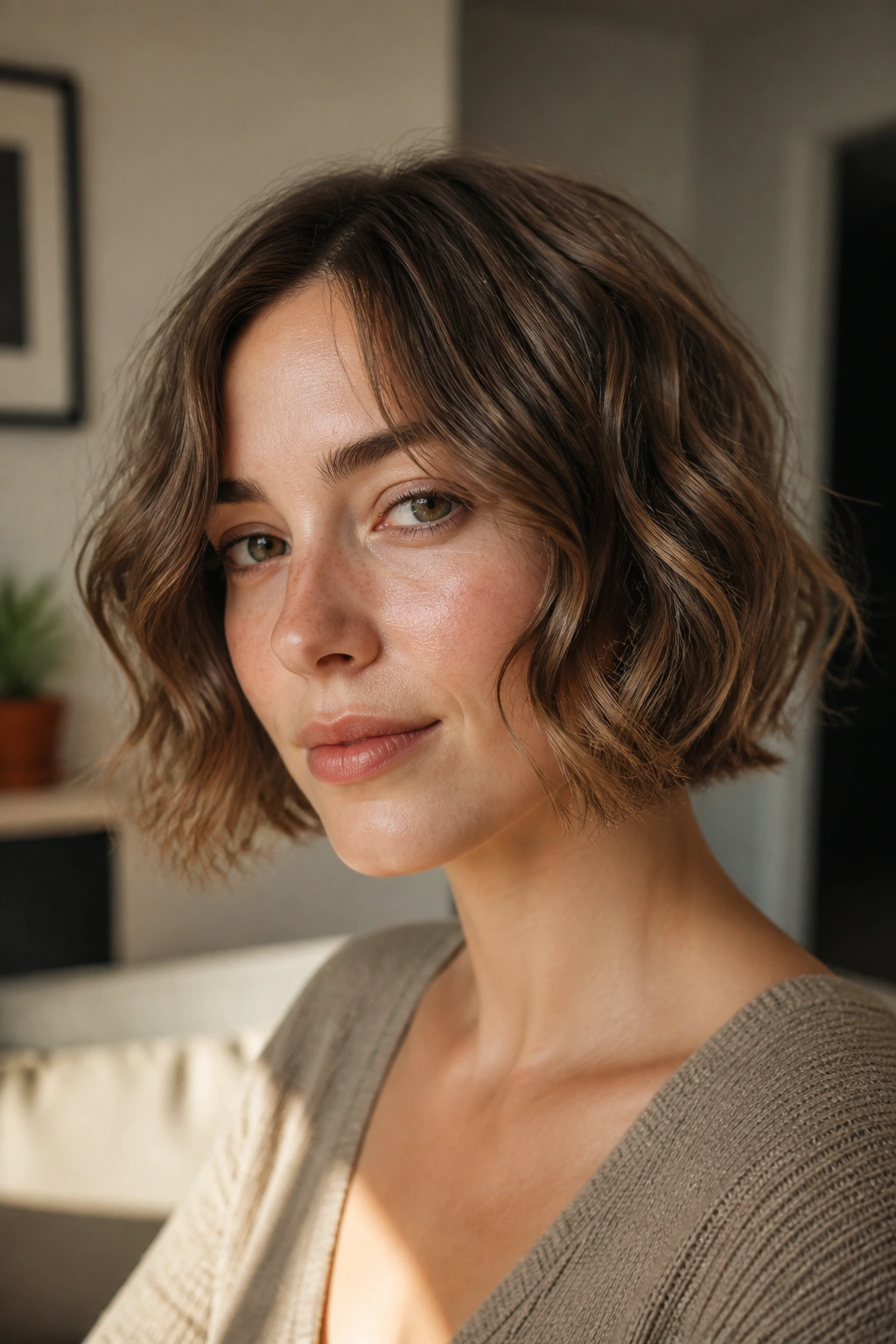
A wavy chin-length cut gives a long face the easiest kind of balance: softness around the sides without too much height. The waves break the line of the face and make the whole look feel a bit wider.
The best part is that this cut doesn’t need perfect styling. A few bends through the mid-lengths are enough.
If your hair naturally bends, use that. If it’s straighter, a curling iron with a 1-inch barrel can create loose movement that sits around the jaw.
Keep the ends textured, not wispy. Thin ends can make the cut look longer than it is, and that’s not the effect you want.
14. Bixie
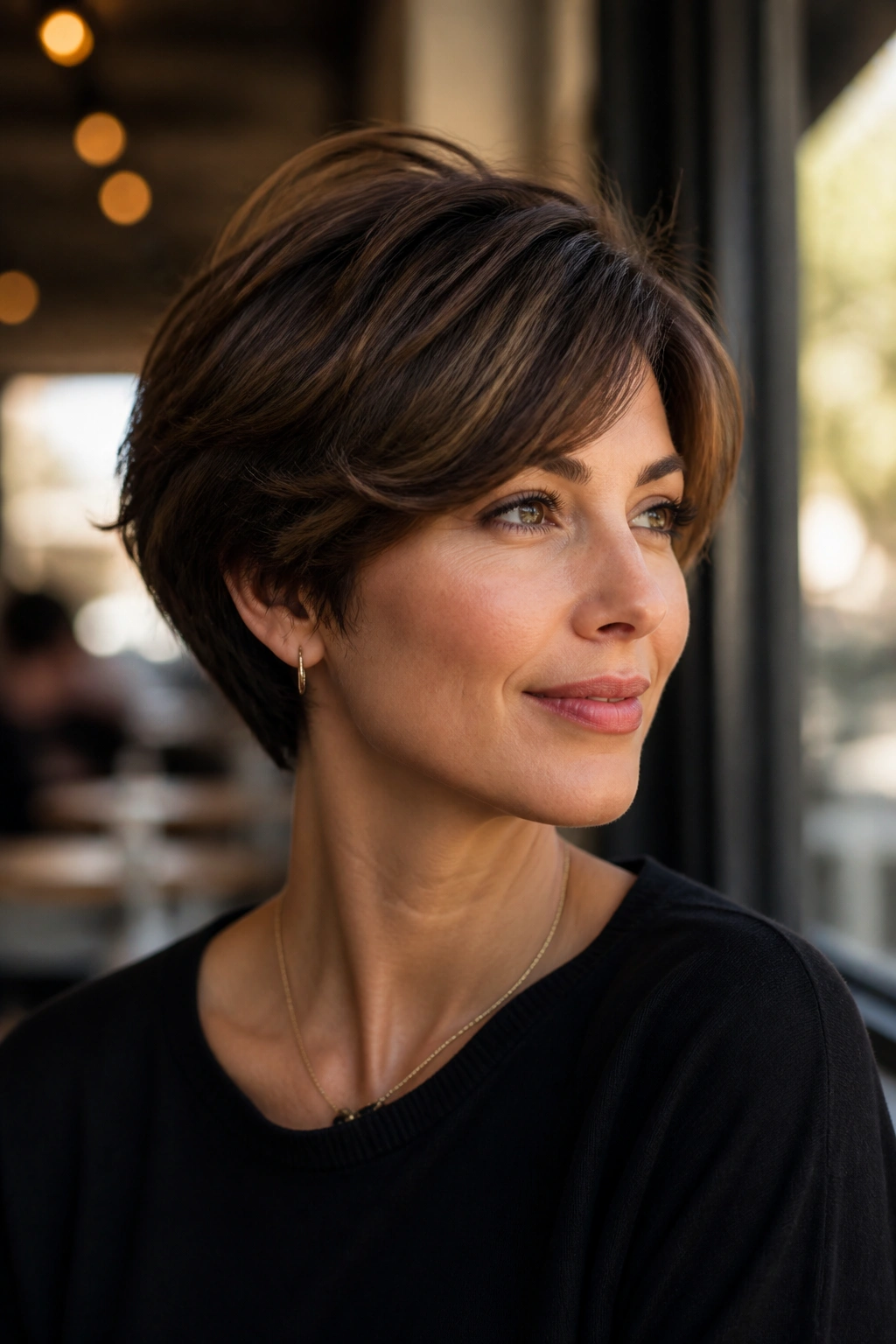
The bixie sits between a bob and a pixie, and that in-between shape is why it flatters long faces so well. You get some cheekbone-skimming length without committing to the full sharpness of a pixie.
It’s one of the most useful cuts if you want movement around the sides. The extra softness makes the face feel less stretched, while the short length keeps the style fresh.
A bixie can lean polished or edgy depending on how it’s styled. Smooth it down for a cleaner line, or rough it up for more volume around the temples.
This cut is especially good when you want short hair but don’t want to lose all the framing around your face. That’s a fair ask, by the way.
15. Long Pixie With Side Fringe
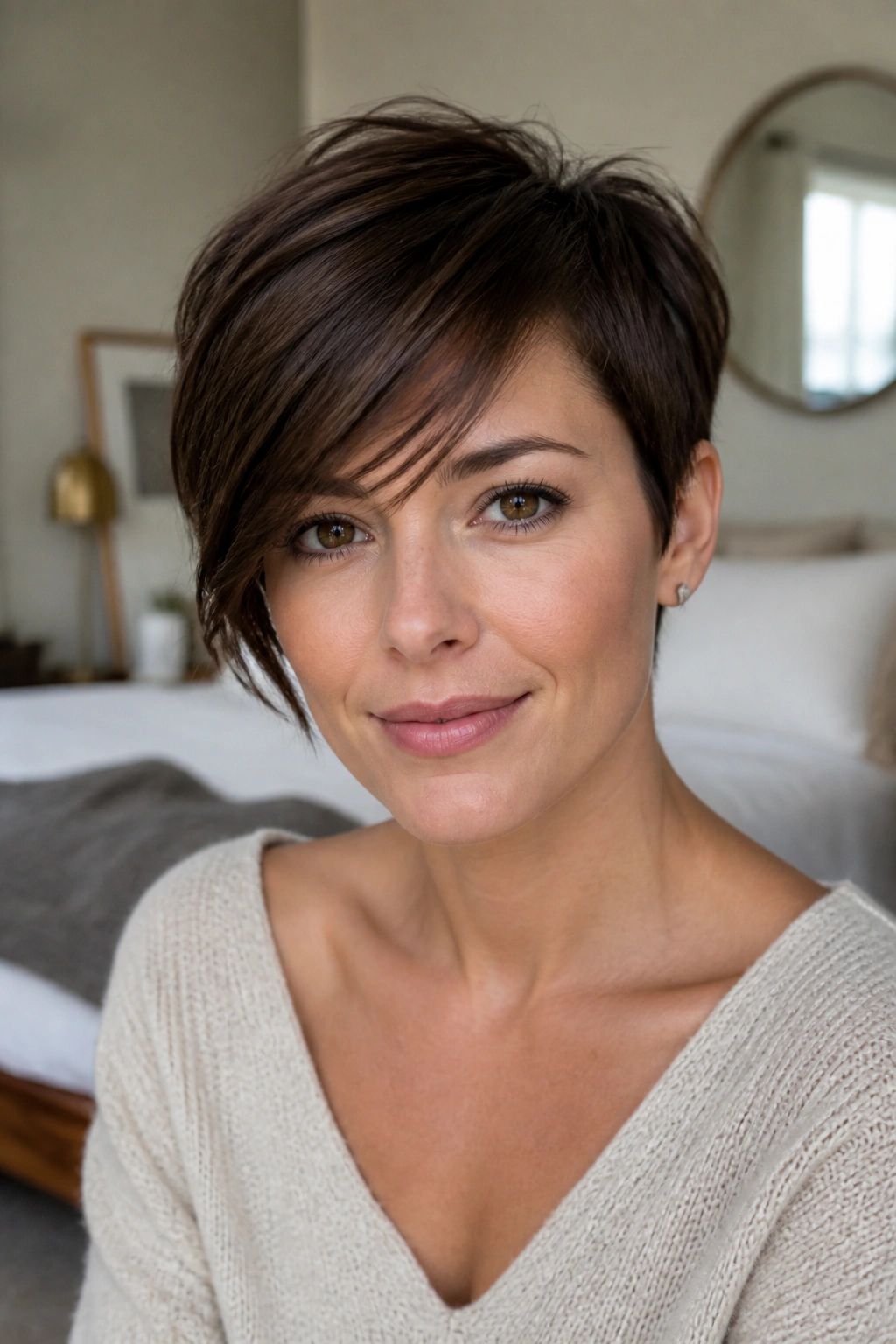
A long pixie with side fringe is a smart middle ground. You keep the short shape at the nape and sides, but the longer fringe gives the front of the face something to rest on.
That fringe matters because it breaks the length at the top half of the face. Without it, many pixies end up feeling too open for a long face.
The top can have a little lift, but not too much. Think soft texture, not a pointy crown.
This cut is good when you want something easy to style but still feminine, sharp, or both. The side fringe keeps it from looking too severe.
16. Rounded Bob for Long Faces

A rounded bob for long faces takes a different route from the blunt shapes above. Instead of a straight edge, the silhouette curves gently inward, which adds softness and width around the jaw.
The shape is especially nice if your face is long and narrow. It doesn’t fight your features; it sits beside them and evens things out.
What to Ask For at the Salon
- A soft curve at the ends, not a hard underbend
- Length at or just below the chin
- Enough fullness at the sides to widen the outline
- A fringe or side part if you want more balance
This cut can look dated if it’s too round, so keep the finish light. A little movement makes it feel current.
17. Sleek Pageboy

The pageboy has old-school roots, but when it’s cut cleanly it still works. The under-turned ends and straight fringe can shorten a long face fast, especially if the shape sits around the jawline.
This cut is all about control. It likes straight hair, a good blow-dry, and someone who enjoys a neat finish.
Unlike a shag, a pageboy doesn’t rely on messiness. The curve under the hair is the point, and that curve gives the face a horizontal stop.
If your hair is naturally wavy, you can still wear it, but expect a little styling time. The silhouette matters more here than with most short cuts.
18. Tousled Crop

A tousled crop works when you want short hair that doesn’t look overworked. The tousle creates side-to-side movement, which is helpful on a long face because it spreads attention across the head.
The cut should feel airy, not fluffy. Too much bulk at the crown ruins the balance fast.
This is a good pick if you like a little lived-in texture and don’t want to babysit your hair. A bit of matte paste or styling cream can define the layers without making them stiff.
The side pieces should stay visible. They’re the part that helps the face look a little broader and less vertically stretched.
19. Feathered Bob
A feathered bob lightens the hair around the face instead of building one solid block of length. Those soft layers are useful on long faces because they create motion at the sides without adding extra height on top.
The feathering should be subtle. Heavy feathering can turn the haircut thin and a bit dated, which nobody needs.
This cut works well when you want your hair to feel light but not flimsy. It’s particularly good if your hair tends to sit heavy at the bottom and needs a little lift through the middle.
A round brush gives the ends a gentle bend. That small curve keeps the cut from looking too strict.
20. Jaw-Length Inverted Bob for Long Faces
A jaw-length inverted bob gives you structure with a bit of drama. The back sits shorter and the front length sweeps toward the jaw, which makes the lower face feel broader and more grounded.
What I like about this shape is the precision. It looks intentional from every angle, and that makes it useful if you want a cut that reads clean even when you don’t style it much.
The Shape to Ask For
- Moderate stacking at the back
- Front pieces that graze the jaw
- No huge crown lift
- Smooth sides that don’t puff out
A very high stack can push the eye upward, so keep the back controlled. The goal is shape, not height.
21. Modern Bowl Cut
A modern bowl cut is a lot better than its school-photo reputation suggests. The updated version uses texture, a softer edge, and often a fringe that lands right around the brows or cheekbones.
For a long face, the straight horizontal line across the forehead can work in your favor. It shortens the visible length and makes the style feel graphic in a good way.
The shape has to be cut carefully. Too heavy and it can swallow the face; too thin and it loses the whole point.
This is a strong choice if you like crisp haircuts and don’t mind a style that makes a statement. It is not subtle.
22. Undercut Pixie
If your hair is thick, a undercut pixie can be a lifesaver. Taking weight out underneath stops the sides from puffing out, while the longer top or fringe can sit forward and soften a long face.
The undercut also keeps the silhouette from getting too wide in the wrong place. You get control where you need it and movement where it counts.
This cut usually needs a little product to separate the top. A paste, wax, or light clay works better than something slippery.
It’s especially useful if you hate sitting under a blow-dryer for ages. Less bulk means faster drying, and that matters more than people admit.
23. Soft Mullet
A soft mullet is not the retro horror story people remember. The modern version keeps the back a touch longer, but softens the sides with cheekbone pieces and layers that fall around the face.
That side framing is what helps a long face. It widens the outline without turning the haircut into a bob.
The best versions keep the top controlled. Too much height and the face stretches; too little movement and the cut loses its point.
This style suits people who like some edge but still want hair that can sit naturally. It’s not for everyone, and that’s fine.
24. Short Shag
A short shag packs a lot of movement into a small shape. The layers sit higher and break up the length of the face with texture, which is exactly why it works.
It’s messier than a bob and less fussy than a pageboy. That in-between feel is part of its charm.
This cut likes wave, but straight hair can wear it too if you add a bit of bend and separation. The trick is keeping the layers lively without turning them into a cloud.
If your hair falls flat when it gets shorter, this is one of the better fixes. The layers carry the shape.
25. Box Bob
A box bob makes a long face look a little fuller because the outline stays square instead of tapering in. That boxy edge creates width at the jaw, and that’s useful.
The cut should feel clean and deliberate. No soft collapse at the ends, no over-layering, no extra height sneaking in at the crown.
It’s a strong choice for straight hair and especially nice if you like a sharp silhouette. The sides do the balancing work; the rest of the cut can stay simple.
There’s a reason this shape photographs well in real life, not just in salon shots. It has a clear line, and clear lines are easy to wear.
26. Crop With Full Fringe
A crop with full fringe is one of the fastest ways to shorten the look of a long face. The fringe puts a horizontal band across the forehead, and that changes the face shape almost immediately.
The fringe should be full, but not heavy enough to hide your whole face. A little air between the bangs and the brows keeps it from feeling stiff.
This cut works especially well if you like bold structure and don’t mind regular trims. Fringe grows fast, and once it slips past the brow line, the balance starts to change.
Straight or slightly wavy hair handles this best. Very curly hair can do it too, but the shrinkage needs to be planned for.
27. Deep Side-Part Bob
A deep side-part bob is one of the easiest tricks in the book, and it still works because the shift is visual rather than fussy. Moving the part off-center breaks up the long line of the face right away.
The bob itself can be blunt, lightly layered, or slightly angled. The part is what changes the mood.
The Part Matters
A deep side part creates one side with a little lift and the other with a cleaner drop. That asymmetry pulls the eye across the face instead of down it.
This is especially helpful if your face feels too symmetrical and you want a little soft imbalance.
You do not need a complicated cut for this to work. Sometimes the part is doing half the job.
28. Razor-Cut Crop
A razor-cut crop uses lighter, softer edges to keep short hair from looking bulky. That matters on a long face because the cut can sit close without feeling heavy around the sides.
Razor cutting gives the ends a bit of movement. It’s a nice answer for thick hair that tends to sit like a block.
The downside is that very fine hair can look too wispy if the razor work is overdone. A good stylist will know where to stop.
This cut feels modern when it has texture and a touch of irregularity. It should move when you shake your head, not sit in one hard shape.
29. Wedge Cut
A wedge cut gives you a compact shape with enough curve to soften a long face. The back is stacked, the sides round in, and the silhouette stays tidy without getting boring.
It’s a cut with some backbone. That stacked shape lifts the hair, but the sides still need to stay present so the face doesn’t look even longer.
The best wedge cuts for long faces are not too tall at the crown. Keep the height moderate and let the curve happen around the head rather than above it.
This is a smart choice if you want something structured and easy to keep in place. It’s also one of the better cuts for hair that likes to spring outward on its own.
30. Curly Pixie Bob for Long Faces
A curly pixie bob for long faces gives curls enough room to move while keeping the overall shape short. The mix of close sides, soft fringe, and rounded curl volume works especially well when you want width without too much length.
The fringe can be slightly longer than a classic pixie fringe, which helps it sit across the forehead or cheek area instead of disappearing into the curl pattern.
What to Watch For
- Ask your stylist to account for shrinkage
- Keep some fullness at the temples
- Avoid too much height at the crown
- Use a diffuser or air-dry cream for shape
This cut is playful, but the shape still has to be controlled. Curly hair can get big fast, and on a long face that means the balance needs real attention.
The Bottom Line
Long faces usually look best with width, fringe, or a cut that stops at the jawline. That’s the basic rule, and it holds up across straight hair, waves, and curls.
The smartest choice is the haircut that gives you balance without making your hair harder to live with. Some people need a blunt edge. Others need a messy crop, a side fringe, or a short bob with a little curve.
Bring a photo, sure. Bring your texture too. A haircut that flatters a long face on pin-straight hair can look completely different on waves, and that difference is where the good salon decisions happen.
