



A good braid can save a whole morning. It can also save a bad hair day from turning into a whole bad week.
That’s why hair braid designs matter more than people admit. The difference between a style you love and a style you tug at all day usually comes down to the parting, the tension at the root, and whether the braid suits your hair’s thickness and texture. A braid can look sleek on one head and bulky on another. That is not a flaw. It’s geometry.
Some braids are all about clean lines and control. Others are softer, looser, and a little romantic. A few are proper protective styles that keep your ends tucked away and your hands out of your hair. And yes, some are just plain pretty in a way that makes you want to book an appointment before you’ve even finished scrolling.
Start with the simplest braid, then work your way up to the styles that ask for more patience, more skill, or a little more hair. The good ones earn their place fast.
1. The Classic Three-Strand Braid
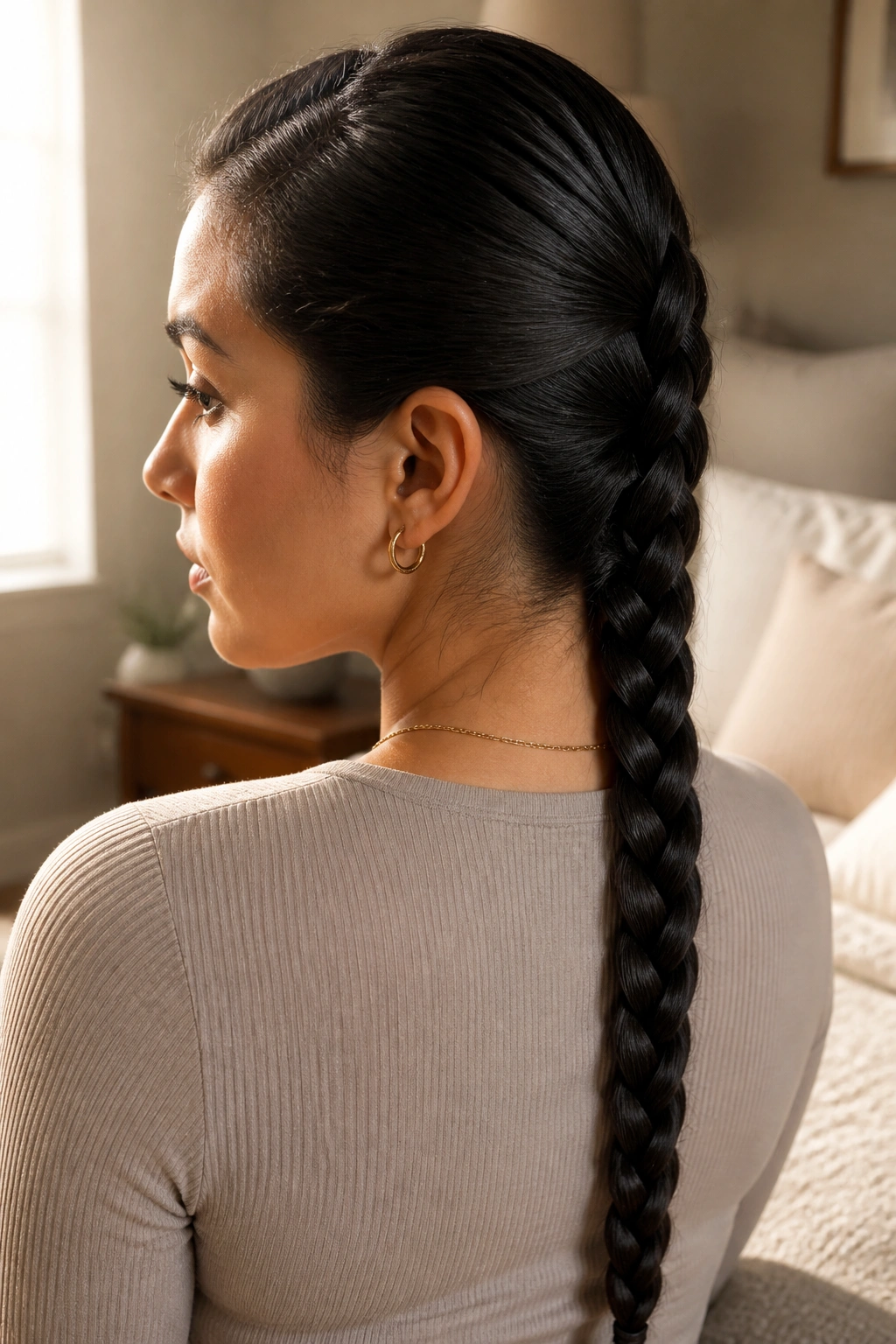
This is the braid everyone knows, and it still deserves respect. A clean three-strand braid has a kind of plain honesty to it that never looks forced, especially when the sections are even and the finish is tight enough to hold but not so tight that your scalp complains.
It works as a base for bigger styles, but it also stands on its own. Wear it low at the nape, over one shoulder, or split into two pigtail braids if you want something younger and more playful. On longer hair, a three-strand braid can look smooth and sleek. On layered hair, a touch of mousse or styling cream keeps shorter pieces from poking out like they’re trying to leave the conversation.
What makes it worth trying is how forgiving it is. You do not need a perfect hand or a lot of product. You just need even tension and a steady rhythm.
One thing I’d never skip: detangle first. A braid on tangled hair turns into a lumpy fight, and nobody needs that before breakfast.
2. The French Braid That Stays Put

A French braid has a neat, tucked-in feel that makes it one of the most useful braid designs for long days. Hair gets gathered as you move downward, so the braid hugs the head and holds its shape instead of sliding loose by lunchtime.
Why It Works So Well
The braid starts at the crown and pulls more hair into the pattern as you go. That means less loose hair around your face and less time spent fixing flyaways. It’s a smart pick for school runs, gym sessions, travel days, or any time you want your hair under control without pinning it into submission.
- Works well on medium to long hair
- Looks especially tidy on stretched or blown-out natural hair
- Takes a rat-tail comb, a small elastic, and a little patience
- Can be worn centered, off to the side, or into a low bun
My favorite version is a slightly loosened French braid. Pull the outer edges apart a little after you finish, and it stops looking too stiff.
If your hands are new to braiding, keep the sections small. Big sections make the braid look chunky in the wrong way.
3. The Dutch Braid With Raised Texture
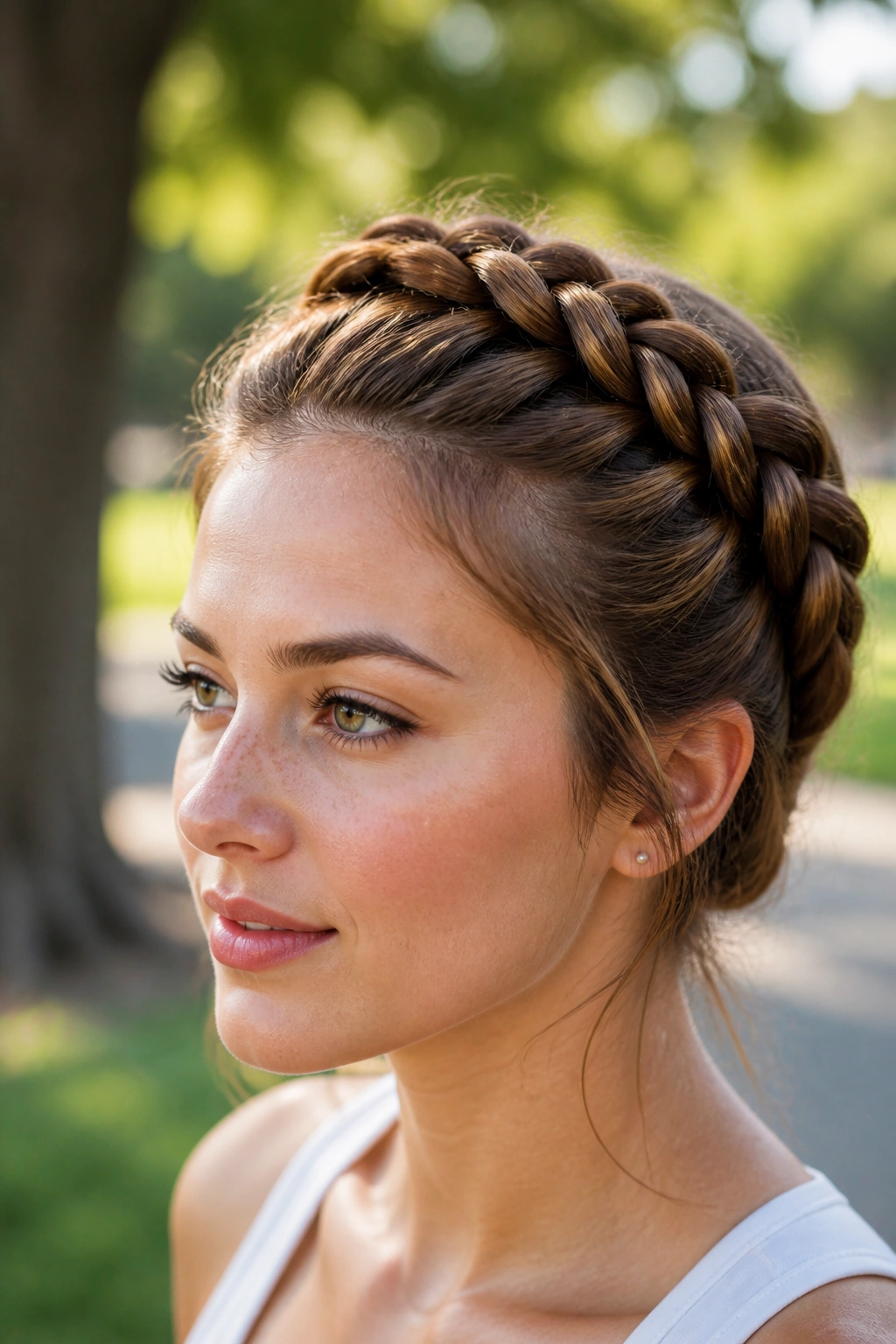
Want a braid that shows up from across the room? The Dutch braid is the one. It’s often called the reverse French braid because the sections cross under instead of over, which pushes the braid outward and gives it that raised, rope-like look.
That little change makes a big visual difference. The braid sits on top of the hair instead of disappearing into it, so it works beautifully on thick hair, coily textures, and even straight hair that needs a bit of structure. Two Dutch braids can feel sporty. One Dutch braid down the center can look sharp and intentional without being severe.
How to Wear It
A single Dutch braid down the back is classic. Twin braids feel more youthful and active. A Dutch braid that ends in a ponytail is a nice bridge between polished and casual.
The part matters here. A clean center part makes the braid look deliberate. If the part drifts, the whole style starts to wobble visually.
Use a light gel or edge control at the roots if your hair slips easily. That extra hold saves you from rebraiding the front half ten minutes later.
4. The Fishtail Braid With Tiny Sections
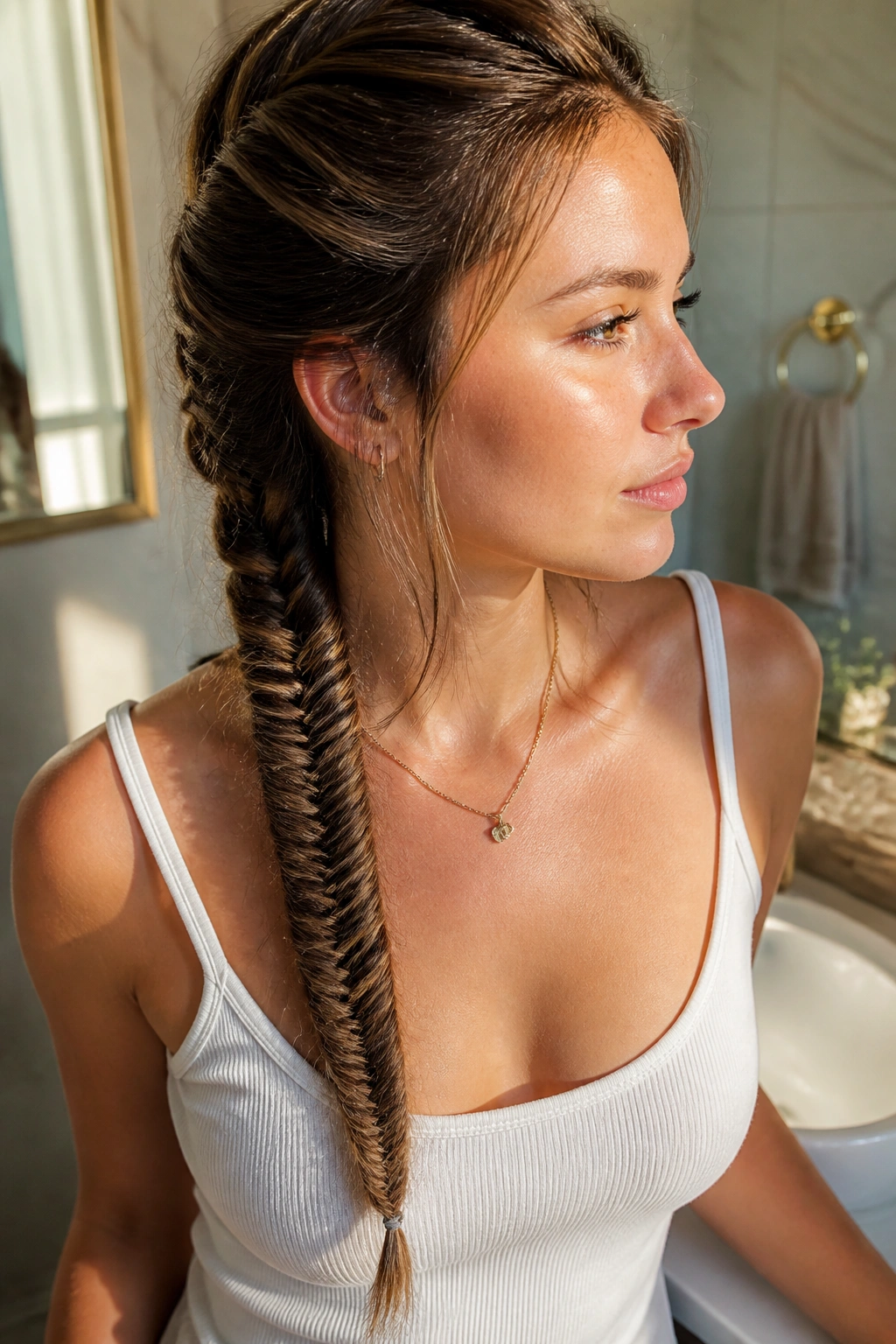
A fishtail braid looks more complicated than it is, which is probably why people keep coming back to it. The weave is made from two sections instead of three, and you keep pulling tiny pieces from the outside into the opposite side. The result has a fine, woven look that feels almost dressy without needing accessories.
The best fishtails are a little imperfect. Too neat, and they start looking stiff. Too loose, and the pattern disappears. The sweet spot sits in the middle, where you can still see the tiny crossing pieces and the braid has enough body to look full.
This one likes hair with some grip. Freshly washed, super-slippery hair can be a hassle. A bit of dry shampoo or texture spray usually helps.
If your hair is long, this braid shines. If it’s not, clip-in extensions or a braided ponytail base can help the shape read more clearly.
5. The Four-Strand Braid for a Fuller Look

A four-strand braid gives you more pattern and more texture than the standard version. It has a richer, woven finish that can feel almost ribbon-like, especially on longer hair or on a style with added extensions.
What I like about it is the way it changes the mood without changing the basic idea. It’s still a braid, still familiar, but the extra strand adds depth. On plain hair, that matters. A lot. It takes a little more hand coordination, so this is a good style for someone who already knows the three-strand version and wants a step up.
What Makes It Different
Unlike the usual braid, a four-strand braid can look flatter or more sculpted depending on how tightly you pull each pass. It also works well with satin ribbon woven through the strands, which can make it feel dressed up without much extra effort.
Best uses:
- Long hair with one length
- Half-up styles that need a little extra detail
- Ponytails that need more shape at the end
- Special-occasion hair that shouldn’t look overdone
My advice: practice it once on damp hair before trying it for a real outing. The muscle memory clicks faster than you’d think.
6. The Rope Twist Braid That Takes Five Minutes
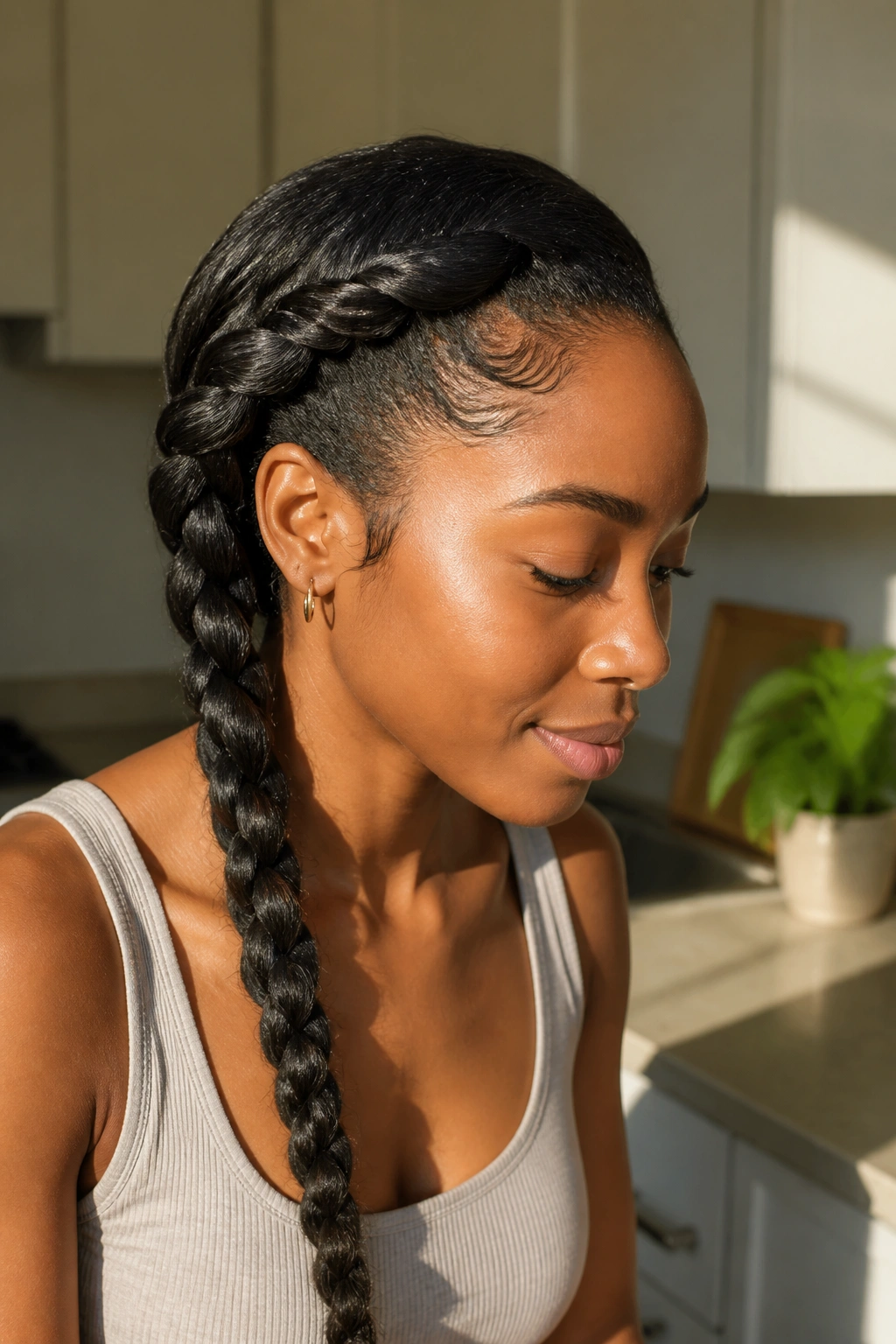
If you’ve got no patience for sectioning, the rope twist braid is your friend. It uses two sections twisted in opposite directions, then wrapped around each other. That sounds fussy on paper. In real life, it’s one of the fastest braid-adjacent styles you can do.
It works nicely on natural hair, stretched hair, and protective styling when you want something quick but still neat. I reach for it when I want my hair out of the way and I do not want to think too hard about it. That’s the honest appeal. No drama.
The trick is direction. Twist each section the same way every time, then wrap the two pieces the other way around each other. If you skip that part, the rope gets loose fast.
A little styling cream at the start helps the strands cling together, and a satin scarf overnight keeps the twist from puffing up into fuzz.
7. Box Braids That Hold Their Shape
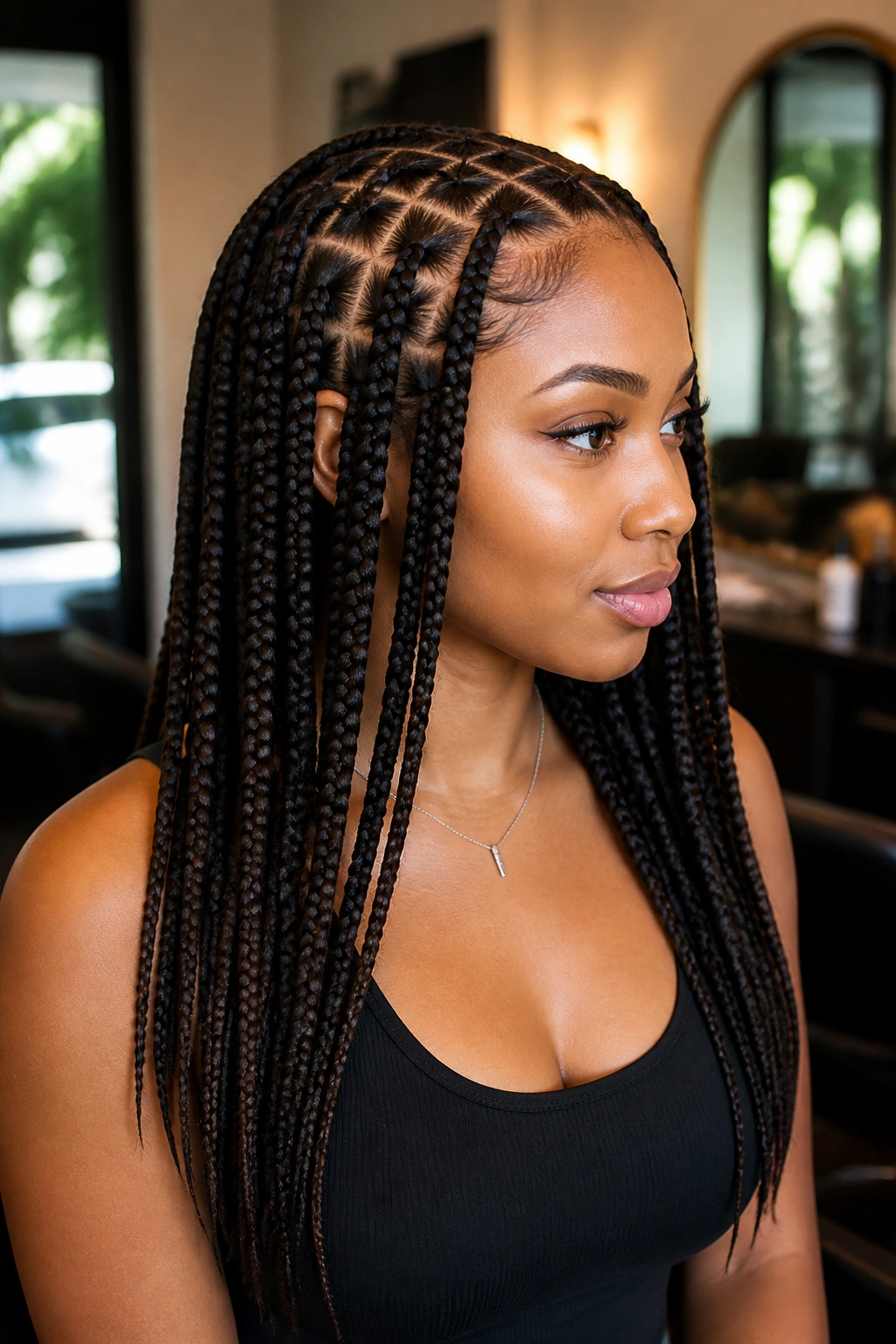
Box braids are a classic protective style for a reason. The sections are clean and square at the scalp, which gives the style its name and its neat look. They can be short, long, thick, thin, colorful, waist-length, shoulder-length, or anywhere between.
The main thing is balance. Heavy box braids are a mistake. If they pull at your scalp from day one, they’re too much weight. A good install should feel snug, not brutal. That sounds obvious, but people still sit through styles that hurt because the braids look good in the mirror. Bad trade.
What to Look For
- Clean parting with even section size
- Lightweight extension hair if you want a longer set
- Ends sealed neatly, not stiff from too much product
- A scalp that still feels like it can move underneath the braid
Box braids also age in a useful way. A little softness after the first week can make them look better, not worse. You want movement. You do not want your head to feel locked in place.
8. Knotless Braids With a Softer Root

Knotless braids look like box braids at a glance, but the root sits flatter and feels gentler because the extension hair gets fed in gradually instead of starting with a big knot. That makes a real difference if your scalp is tender or if you wear braids often and want less pull at the root.
The finish feels smoother too. The braid looks like it grows right out of the scalp instead of sitting on top of it. That cleaner start gives the style a softer drape, which is one reason people keep choosing it for longer lengths.
They do take more time to install. There’s no way around that. A rushed knotless braid job usually shows up in the parting or in uneven braid thickness, and both problems are hard to hide once the hair settles.
If you like the look of box braids but hate the heavy first-day feeling, this is the better bet.
9. Feed-In Cornrows for a Clean Scalp Design
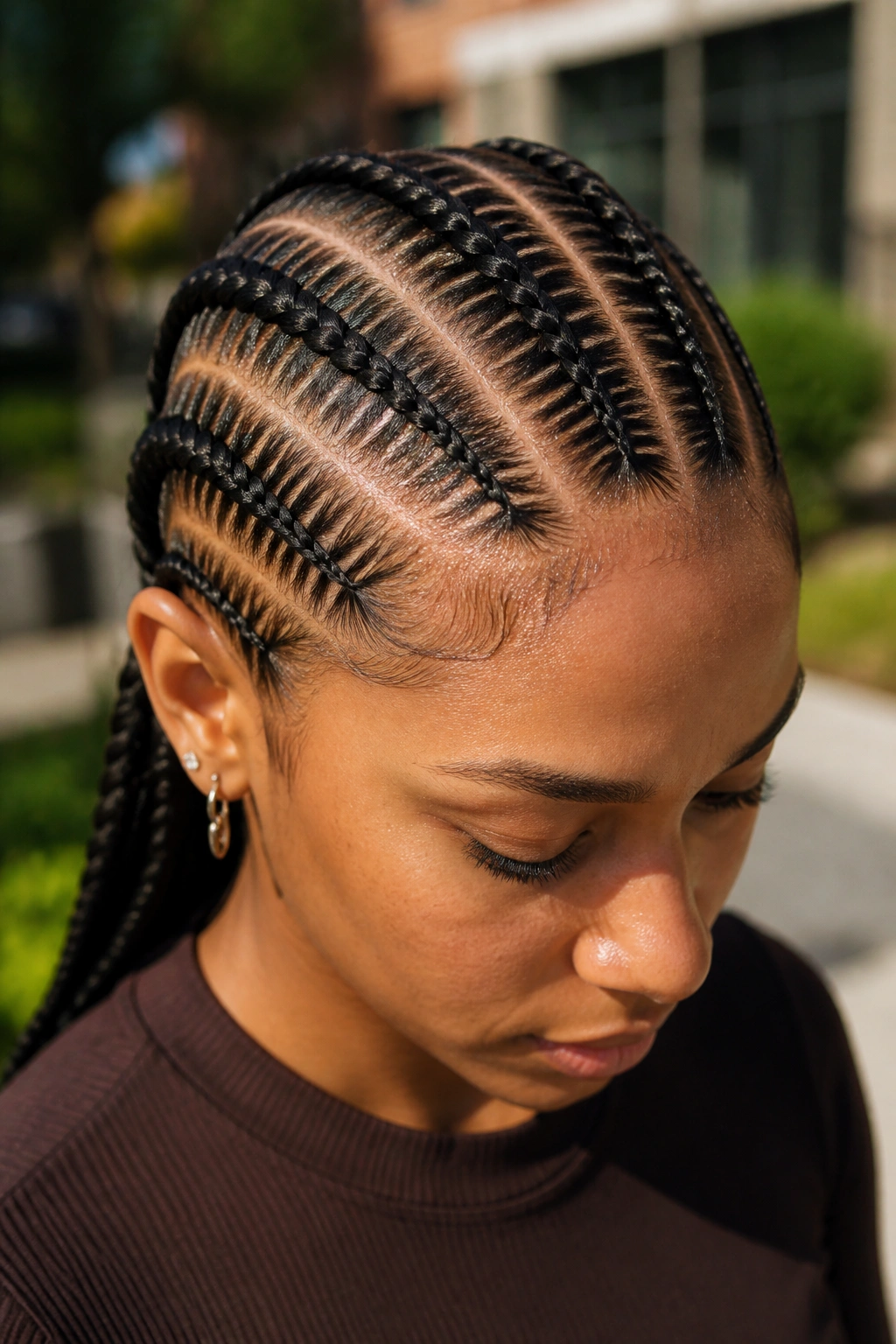
Feed-in cornrows are the style I’d choose if I wanted crisp lines without a bulky root. Hair gets added gradually as the braid moves back, which keeps the base flatter and the silhouette smoother. That’s why this style works so well for braided ponytails, side parts, geometric rows, and all those sharp scalp patterns people save on their phones.
How to Ask for Them
Bring a reference photo. Seriously.
Say how many rows you want, how thick you want each row, and whether you want them straight back, curved, or angled. A good braider can work with that much direction. If you leave it vague, you may end up with a style that technically counts but does not match the mood you wanted.
Feed-in cornrows are especially good if you want:
- A low-profile style under wigs or hats
- A polished base for ponytails or buns
- A pattern that sits close to the scalp
- Less tension than a very tight flat braid
The parting is the whole story here. If the lines are sloppy, the style looks off even when the braid work is solid.
10. Stitch Braids That Draw Sharp Lines

Stitch braids are for people who like precision. The parts are marked out in little clean segments, so the braid has a striped, almost architectural look at the scalp before it even starts moving down the hair.
They’re not the fastest style to get done, and they shouldn’t be. The whole point is control. A clean stitch braid depends on a skilled hand, a good rat-tail comb, and enough product to keep the sections visible without turning the hair into a helmet.
If you like bold shape, this one delivers. A center row of stitch braids can feel very sleek. Four or six rows, done evenly, can make a strong pattern without needing beads or cuffs.
A tiny warning: too much gel can blur the parts. You want enough slip to section the hair, not so much that every line melts into one shiny patch. That’s one of those details people notice in photos, even if they can’t name it.
11. Goddess Braids With Extra Body

Goddess braids are the softer, bigger cousin in the cornrow family. They’re usually thicker, more raised, and often styled with curly or wavy ends to give the look a little movement. If regular cornrows feel too close to the head and too plain, goddess braids give you more shape without becoming fussy.
Unlike tiny braided styles, these have presence. They frame the face in a way that feels bold but still wearable. Add cuffs, thread, or a few curls at the ends, and the whole style shifts from practical to dressed up without needing a full new installation.
This is a good braid design if you want something that reads clearly in person. Fine detailing is not the point. The outline is.
Best on medium to thick hair, or on hair with added extensions that can handle a bit of size. If the braids are too thick for the amount of hair you have, they start leaning instead of sitting up. That’s the part people forget.
12. Fulani Braids With Beads and Side Details
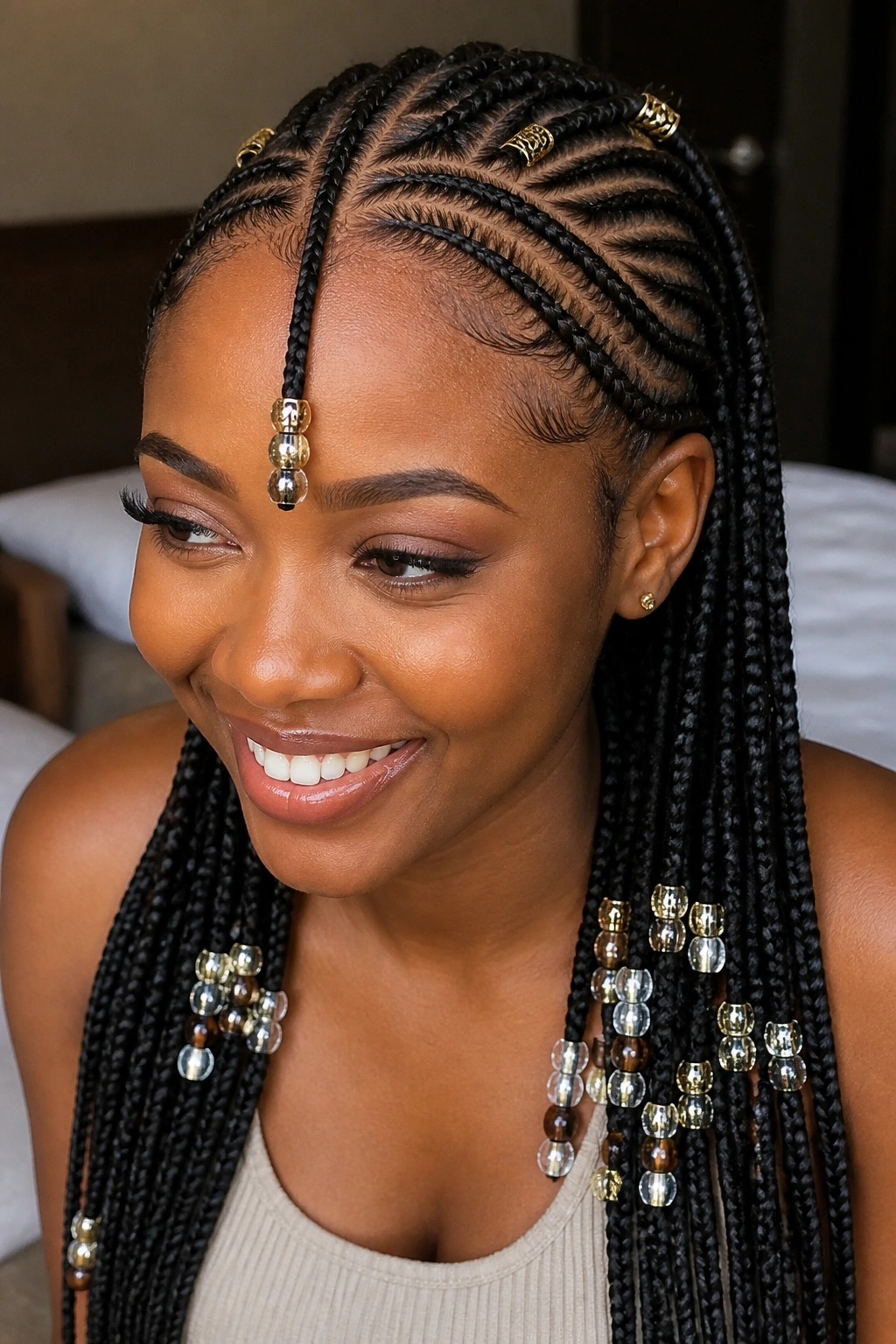
Fulani braids have a shape that people recognize instantly: usually a center braid, side cornrows, and decorative pieces like beads or shells. The look comes from the Fulani people, and it should be worn with respect, not treated like a costume.
The reason it works so well is the balance between structure and decoration. The braids keep the hair close and tidy, while the beads or accent pieces draw the eye to the face and the braid path. It’s a style with rhythm. You can feel that as much as see it.
What to Keep in Mind
- Keep the rows clean and even
- Don’t overload the style with heavy beads
- Let the center braid breathe instead of crowding it
- Use accents that feel intentional, not random
The style can be quiet or bold depending on the accessories you choose. A few wooden beads feel grounded. Metal cuffs feel sharper. Either way, the braid pattern should stay the main event.
13. Lemonade Braids That Sweep to One Side

Lemonade braids are side-swept cornrows with a strong diagonal energy. The hair flows in one direction, usually toward one side of the head, which gives the style a long, slanted shape that looks especially good with earrings, side parts, and a strong jawline.
This is a smart style when you want your face framed, not covered. The sweep leaves one side more open, so the whole look feels lighter than a center-heavy braid pattern. It also holds up well if you wear your hair back often and want the front to stay neat.
A deep side part is the key. Without it, the style loses its shape and starts to look like ordinary side braids. The lines should also be clean enough that you can see the direction from the front and the side.
Sleep on the opposite side of the sweep if you can. That little habit helps the braid pattern stay crisp instead of getting flattened where your head meets the pillow.
14. The Halo Braid That Wraps the Head
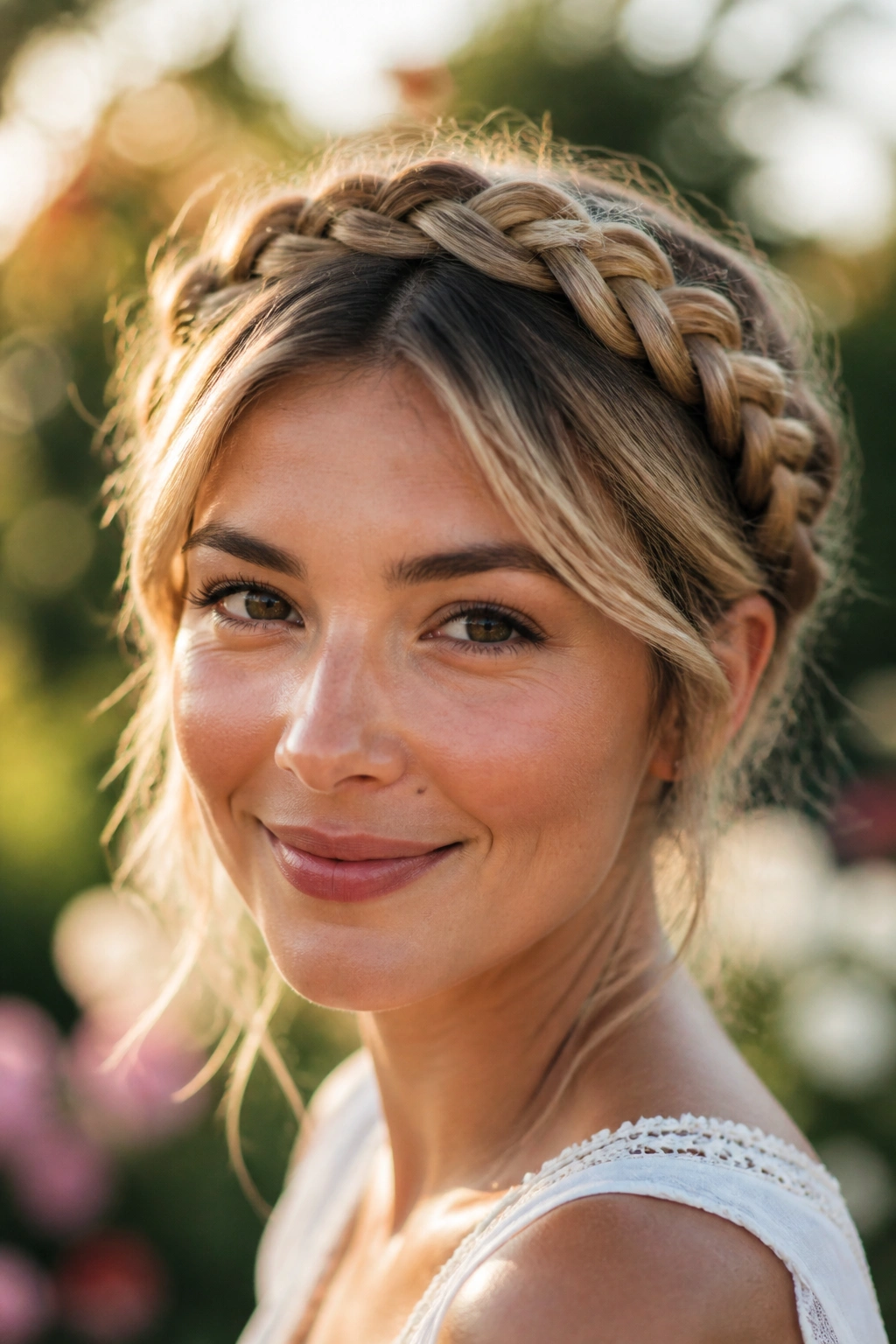
Want a braid that looks polished without needing a pile of pins? The halo braid wraps around the head like a band, which gives it a neat, finished shape that works for everything from weddings to lazy days when you still want your hair to behave.
It can be done with one long braid wrapped around the crown or with two braids pinned into a circle. Either way, the effect is the same: the braid frames the face and keeps the length tucked away. That makes it practical as well as pretty, which I always appreciate.
How to Wear It
The temples need a light touch. If the braid is yanked too tight around the front hairline, you’ll feel it immediately, and the style loses all grace. A few hidden pins usually do the job better than over-tightening.
This one works best when the hair is smooth enough to braid cleanly but not so slippery that it won’t stay in place. A little texture helps. A lot of fuzz does not.
15. Milkmaid Braids That Sit Across the Crown
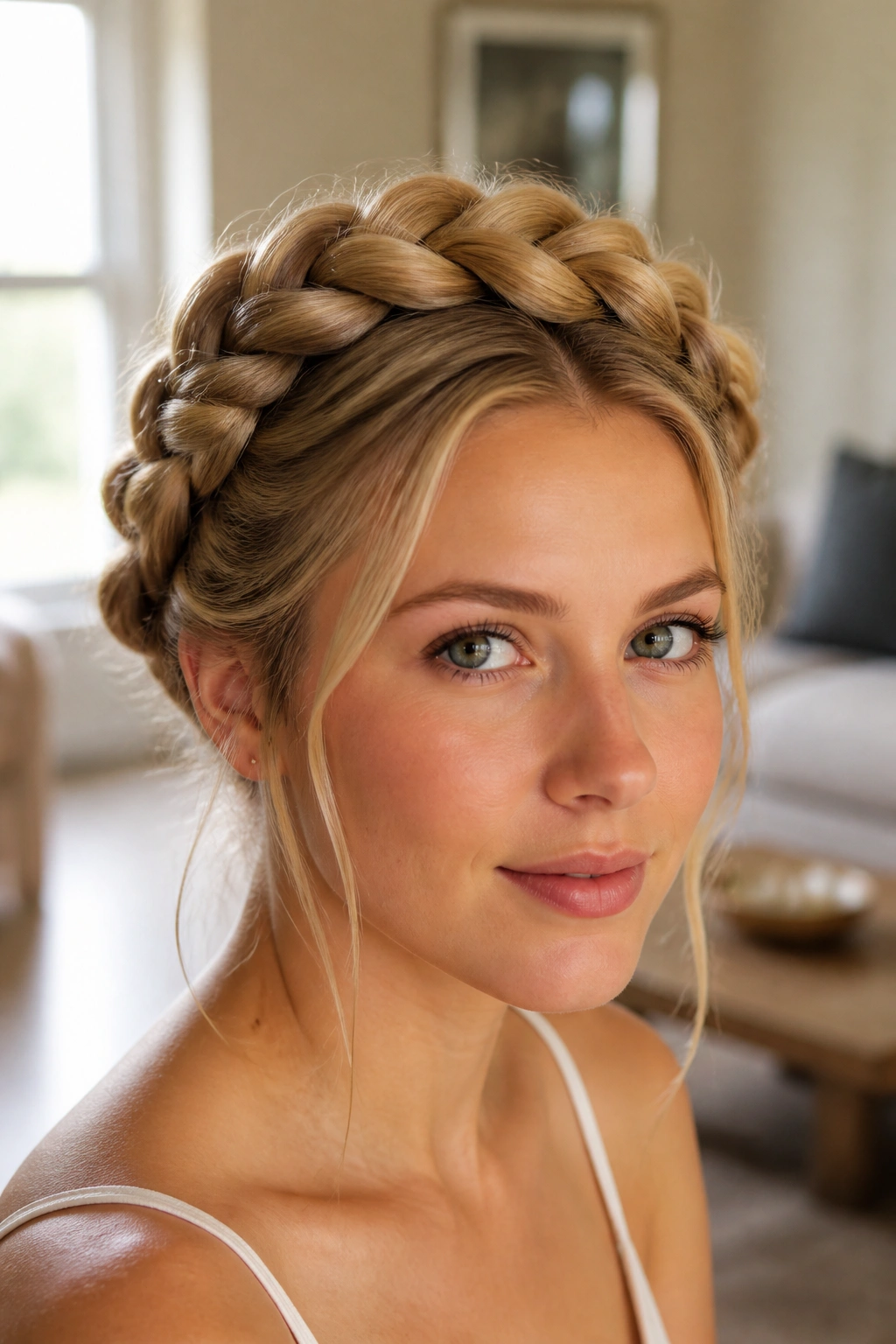
Milkmaid braids have that wrapped, pinned-over look that feels calm and a little old-fashioned in the best way. You make two braids, lift them up, and pin them across the top of the head so they meet or overlap. The shape is simple. The result looks more planned than it is.
It’s a good choice when your hair is long enough to cross over the crown without fighting you. If the braids are too short, they’ll poke out and make the style look unfinished. That’s the only real catch.
A few pins hidden under the braid base make a huge difference. Don’t just tuck the ends and hope. Secure the ends where the braid is thickest, then check the side mirrors before you leave the house. The back always lies a little.
This style can read soft and romantic, but it also works with a cleaner finish if you smooth the front and keep the braid sections neat. The braid does the talking. The rest should stay quiet.
16. The Waterfall Braid With Dropped Strands
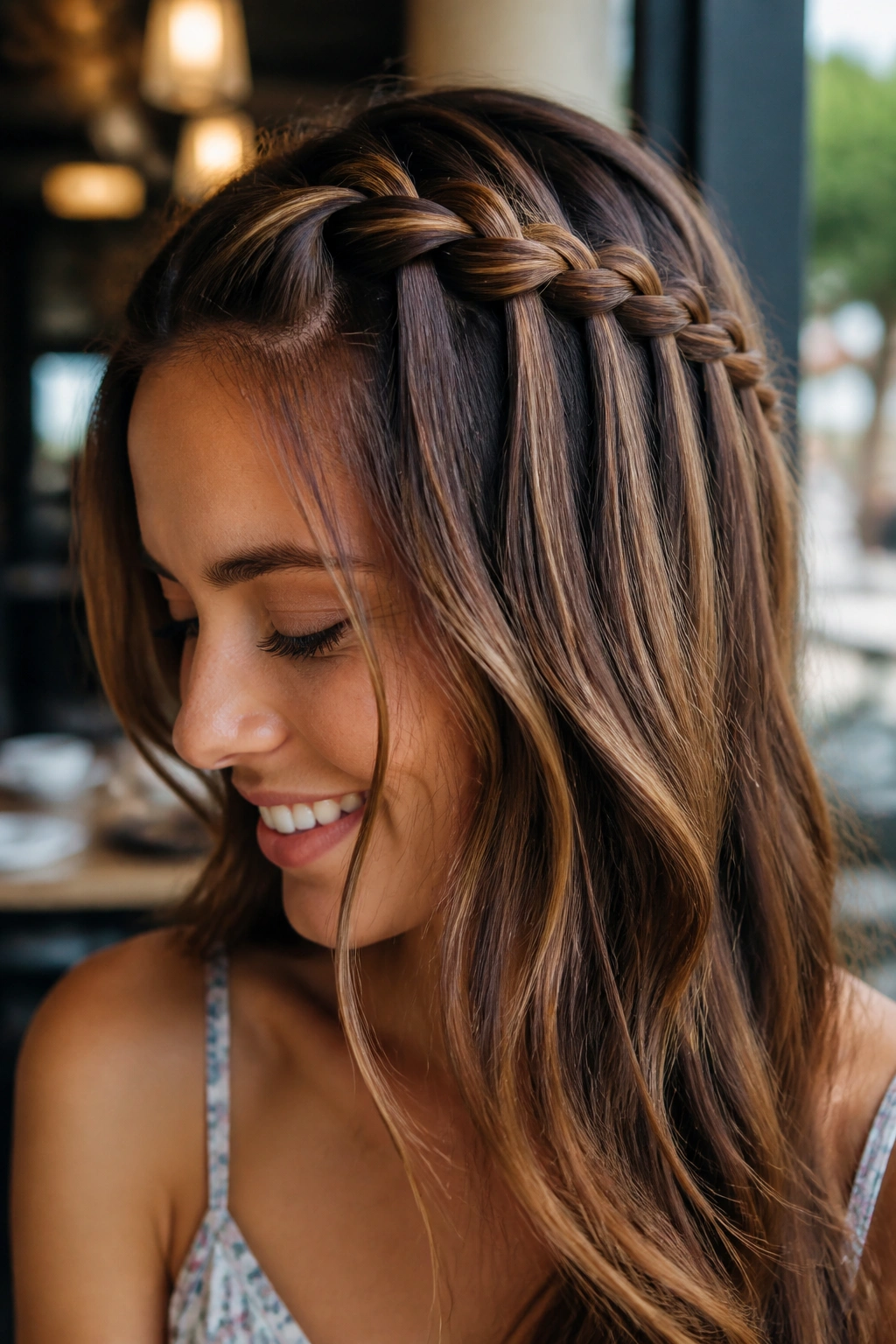
A waterfall braid is decorative in a way that most protective styles are not. Instead of gathering every strand into the braid, you let some pieces fall through, which creates that cascading effect along the side of the hair.
It’s the braid I’d reach for when I want the hair to stay down but still want some shape around the face. It’s especially nice for straightened or stretched hair, since the strands show the pattern more clearly. On very layered hair, a few shorter pieces may slip out. That’s not a disaster. It just means you may need a couple of pins to keep the front tidy.
The braid usually looks best when the hair has a little grip. Fresh, silky hair can be a bit slippery for this one, and if the sections keep sliding out of your fingers, the pattern becomes frustrating fast.
A waterfall braid is more styling than protection, so I’d treat it as a dressed-up option rather than an everyday hold-it-and-forget-it style.
17. The Pull-Through Braid With Big Shape
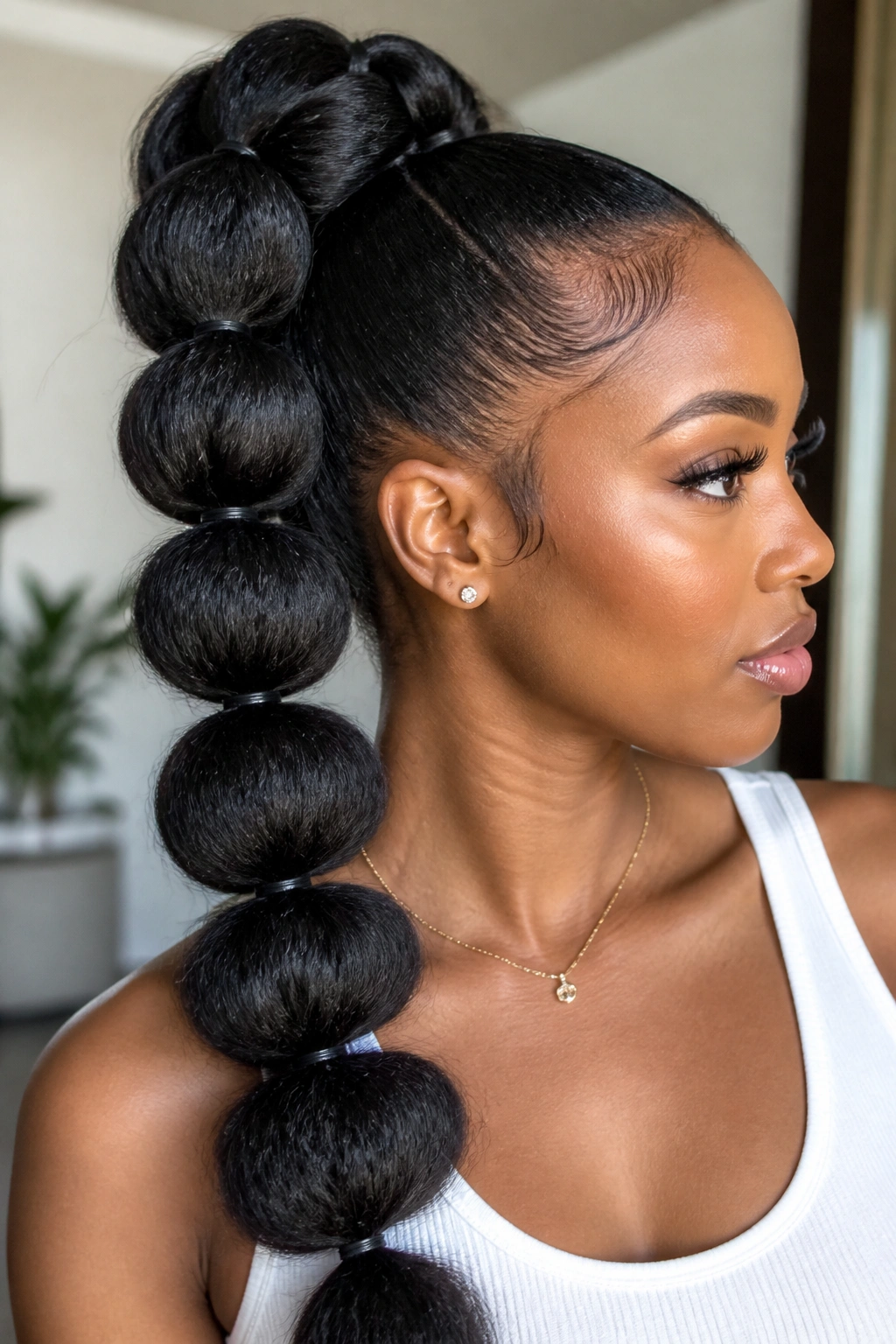
A pull-through braid gives you all the drama of a chunky braid without requiring actual plaiting. You build it from ponytail sections tied one over the other, so the final shape looks full and rounded even if your hair is fine.
That makes it a nice option when regular braids seem too thin or too flat. If your hair doesn’t hold shape well, this one often behaves better because the structure comes from the elastics, not from gripping individual strands all day.
What Makes It Different
- Uses clear elastics or small ties
- Creates a fuller look than a standard braid
- Works on medium to long hair
- Can be worn high, low, or to one side
You can make it neat or slightly messy, depending on how much you tug the sections apart. I prefer the version that’s a little loosened after it’s done. The shape reads better, and the braid doesn’t feel too stiff.
Just hide the elastics if you care about a polished finish. A wrapped strand or a well-placed accessory does the trick.
18. The Braided Ponytail That Holds All Day
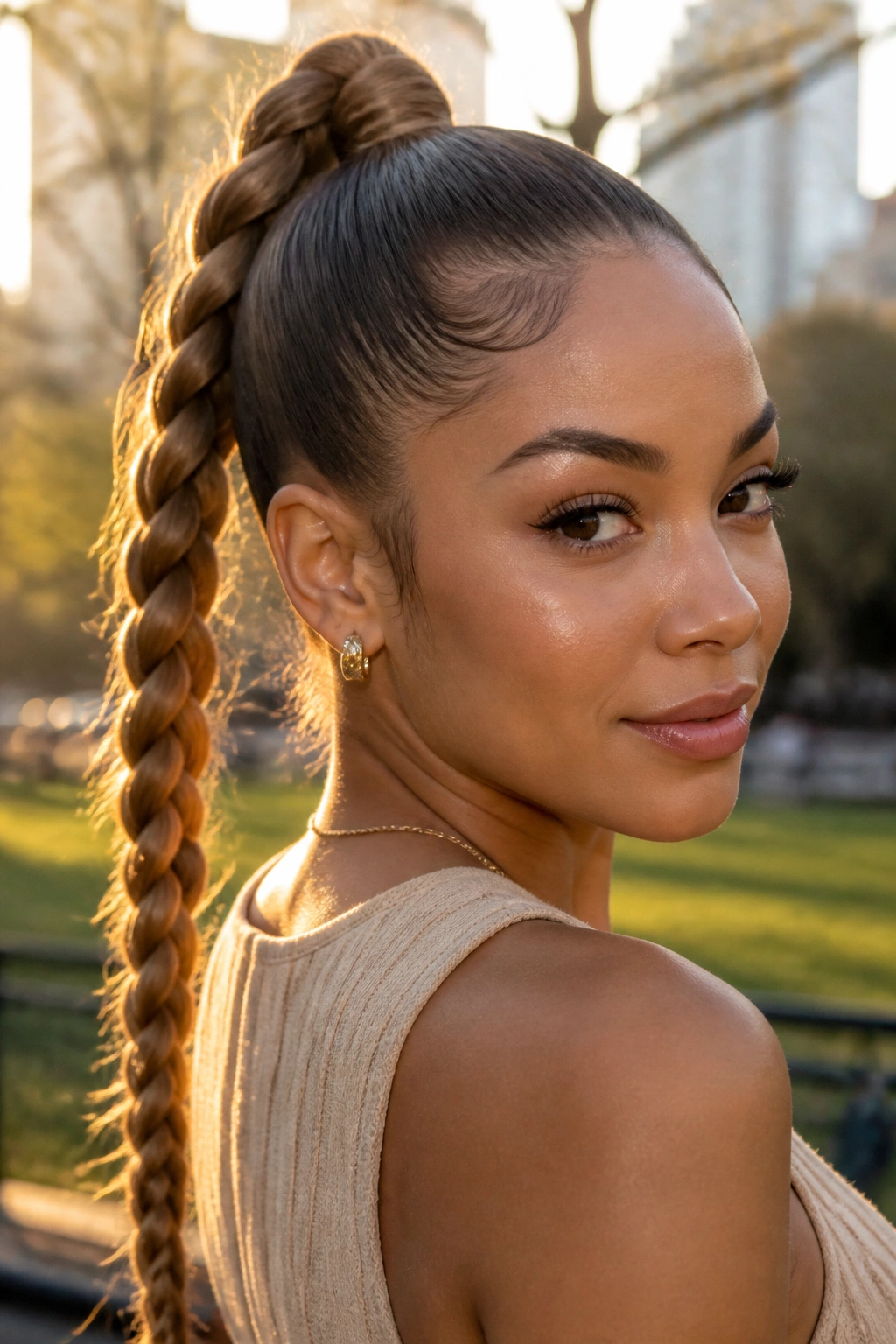
A braided ponytail is one of those styles that seems plain until you wear it and realize how useful it is. You get the clean base of a ponytail, the control of a braid, and less hair flying in your face when the wind decides to be annoying.
It can be high and sporty or low and sleek. The braid itself can be a three-strand version, a fishtail, or even several smaller braids gathered into one tail. That flexibility makes it a practical choice for days when you want your hair to work with you, not against you.
Why It Holds Up
The base does the heavy lifting. A smooth, secure ponytail gives the braid a stable start, which matters more than people think. If the ponytail slips, the whole style starts to tilt.
A wrapped section around the elastic cleans it up fast. A small braid or even a twisted piece of hair can cover the band and make the finish look deliberate. Tiny detail. Big payoff.
This is one of the easiest braid designs to dress up with cuffs, ribbons, or a satin scrunchie, and it still won’t feel fussy.
19. The Braided Bun for a Neat Finish
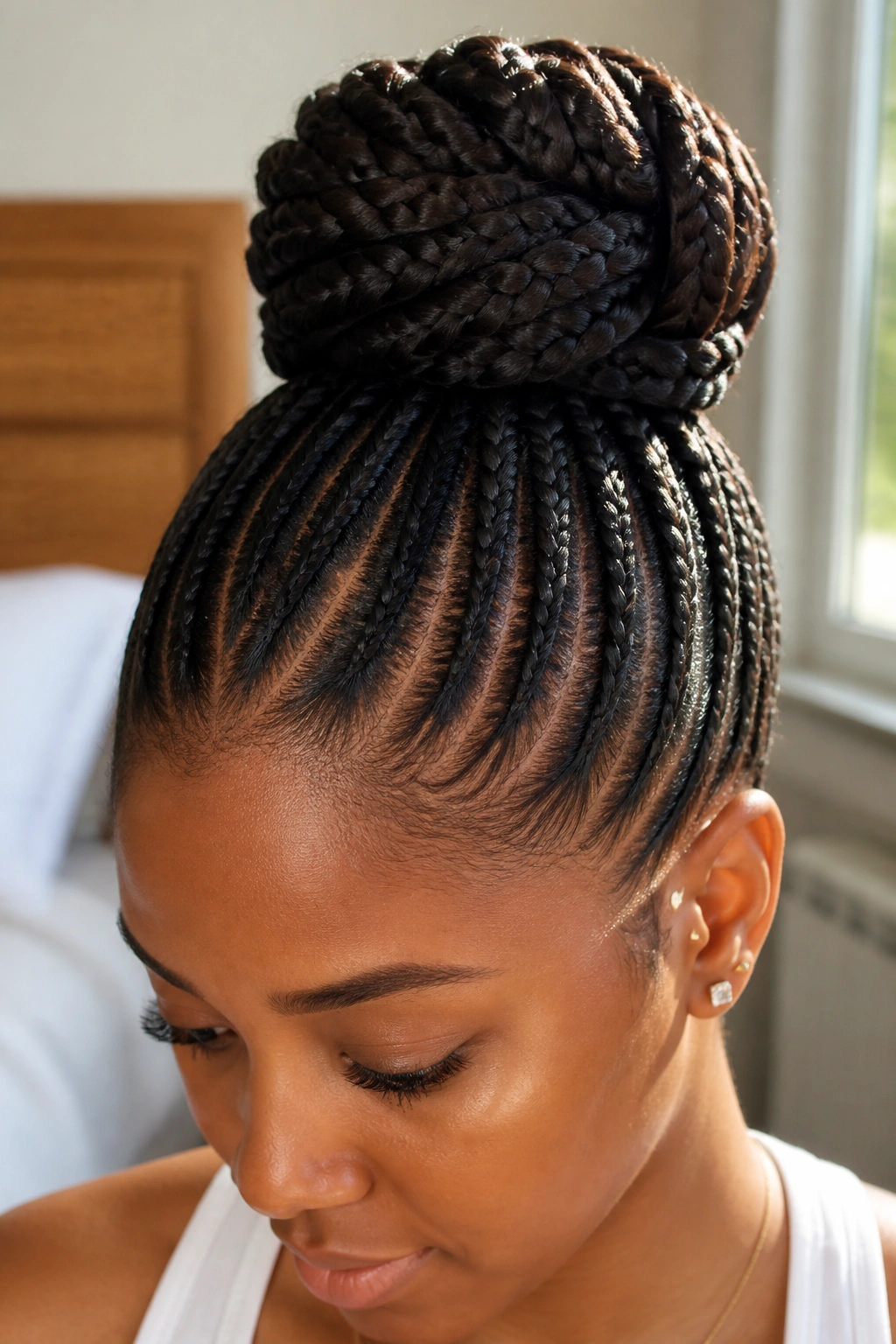
A braided bun takes the control of a braid and folds it into a compact shape that stays out of the way. It’s useful, sure, but it can also look elegant in a quiet, unfussy way when the braid is smooth and the bun sits at the right height.
I like it because it solves a real problem: long hair that needs to stay put. Heat, work, formal events, errands, travel — this style covers all of that without asking for much maintenance once it’s pinned.
The trick is pin placement. A bun that only has one pin feels unstable and starts leaning. Use several pins from different directions so the braid locks into the base instead of sitting on top like a loose coil.
Too much tension at the crown will make the style tiring fast. Keep the braid secure, not brutal. That distinction matters more than the finish people see in the mirror.
20. The Side-Swept Braid With Soft Asymmetry
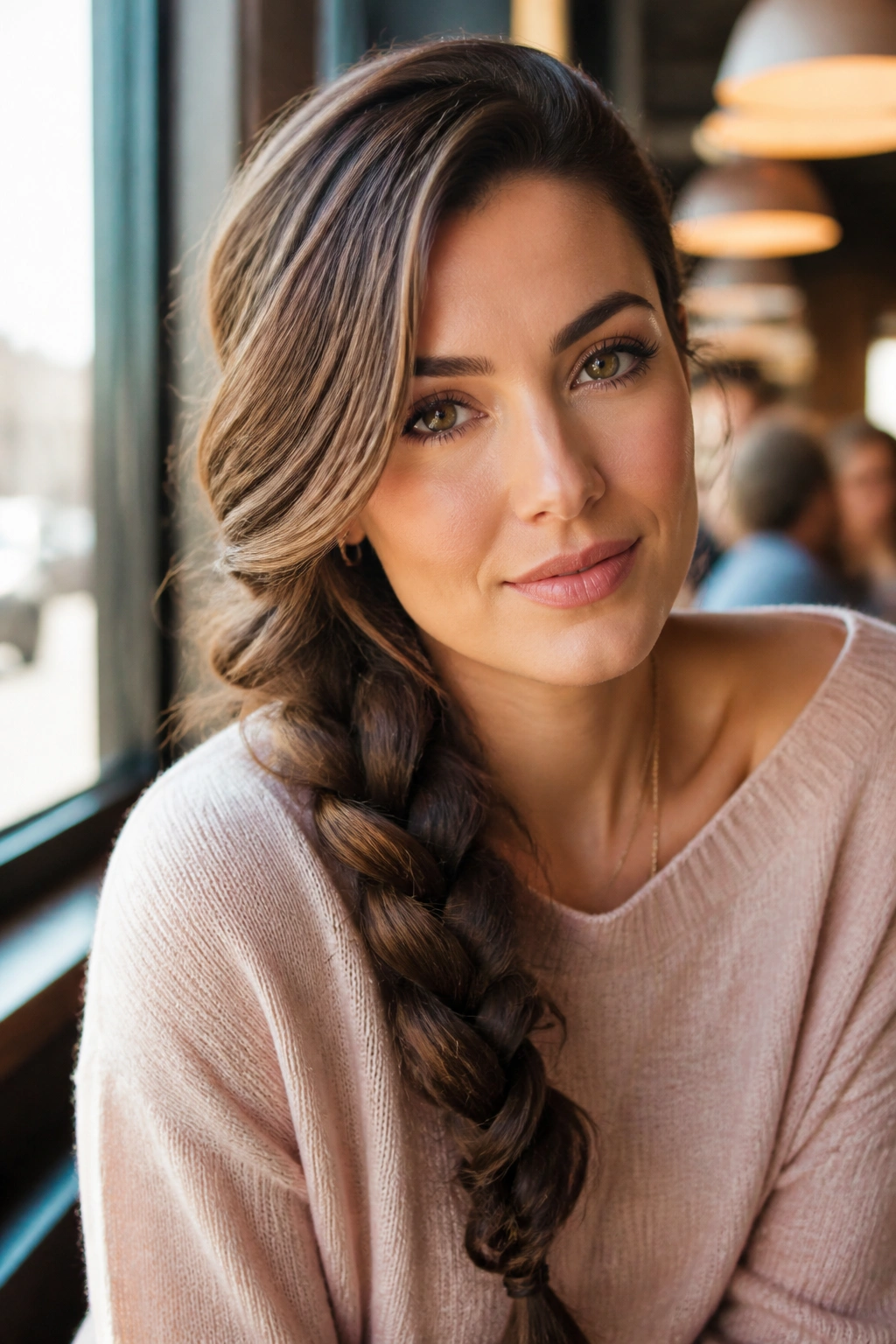
A side-swept braid gives you a little drama without going full formal. The braid starts with a deep side part or drifts across the head before resting over one shoulder, which makes it feel softer than a centered version.
It’s a good choice when you want movement. The asymmetry is the point. It frames the face from one side, leaves the other side more open, and gives the whole style a bit of motion even when the hair is still.
How to Wear It
- Start with a deep side part for more shape
- Keep the braid low enough to rest comfortably on the shoulder
- Pull the front pieces loose if you want a gentler frame
- Add a ribbon, cuff, or small pin if the style needs polish
This braid also hides uneven layers better than a center braid, which is handy if your cut is growing out or your ends are a little choppy. The angle does the camouflage for you.
It is not flashy. That’s the point. It’s the braid you wear when you want the style to look easy, even if it took some work.
21. Micro Braids That Move Like Thread
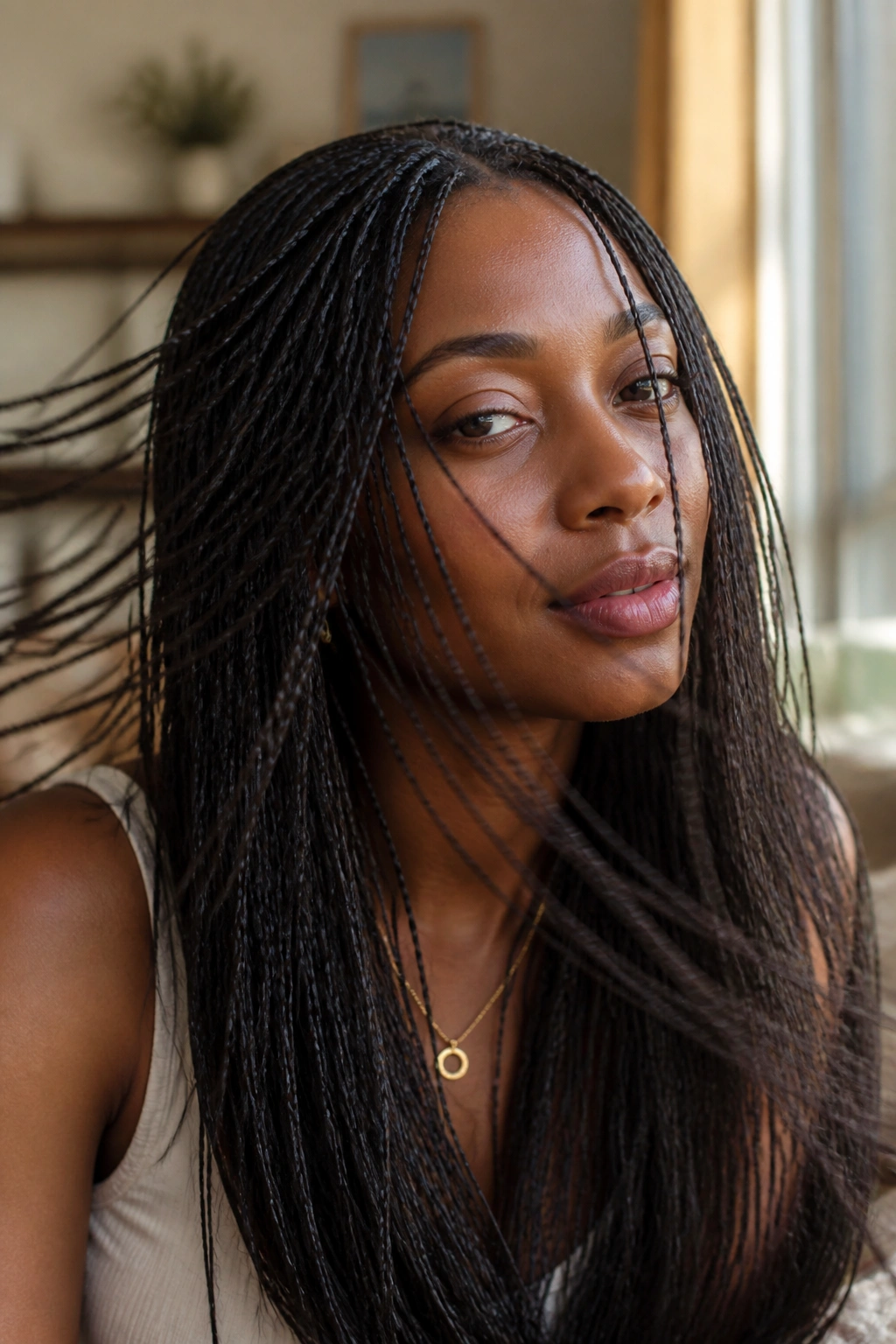
Micro braids are tiny, detailed, and time-consuming, and that’s exactly why they have such a distinctive feel. They’re made in very small sections, so the finished style moves with a lot of fluidity and can be worn for a long stretch when the install and upkeep are done properly.
That said, this is not a style to treat lightly. Weight matters. A full head of micro braids can look delicate but still pull harder than you expect, especially if the braids are too long or too tightly packed. Fine hair needs extra caution here. So does a tender scalp.
The beauty of micro braids is in the movement. They shift softly, fall in slender lines, and take accessories well. The downside is maintenance. The smaller the braid, the more care the roots and ends need to stay tidy.
If you choose this style, pick a braider who respects tension and section size. A rushed micro-braid install can do more harm than the style is worth.
22. Braided Space Buns With Playful Shape

Braided space buns bring a little fun back into braid designs. You can build them from two Dutch braids, two French braids, or braided pigtails that get wrapped into buns on each side of the head. The shape is youthful, yes, but not childish if the parting is clean and the buns are balanced.
They work especially well when you want your hair up, off the neck, and still visibly styled. That’s a useful combination. Add a few cuffs, a ribbon, or leave the buns a touch loose if you want them softer around the edges.
The sectioning matters more than the bun itself. If the parts are crooked, the style feels off no matter how neat the buns are. Take the extra minute to line them up.
A good space bun style should feel secure without making your head ache. If it starts pulling, loosen the base before you call it finished. That little adjustment can turn a cute idea into something you’ll actually keep on all day.
Final Thoughts
The best braid is the one you can wear without fidgeting with it every ten minutes. That sounds obvious, but people ignore it all the time and end up choosing styles that look great for one photo and feel miserable by lunch.
Tension, part size, and hair density matter more than hype ever will. A braid that matches your head shape and your hair’s behavior will always look better than a copied style that fights you from the first twist.
If you’re trying a new braid design, bring a photo, speak up about tightness, and ask for a quick mirror check before the style is finished. A few honest words in the chair can save a lot of regret later.
