



Short box braid styles hit a sweet spot that longer braids sometimes miss: the shape is there, the weight is lower, and the whole look feels easier to live in. A bob-length braid can look polished enough for work and still read playful when you throw on hoops and lip gloss.
They’re kinder to your shoulders, too. Less swing. Less snagging. Less of that dragging pull you feel after a full day of long braids catching on a coat collar or a crossbody strap.
Pain is not part of the look.
The American Academy of Dermatology has long warned that tight braids can stress the hairline and lead to traction alopecia, which is why a good install matters more than a dramatic one. A style should sit flat, move with you, and let your scalp feel calm after the chair session is over. If your temples throb, something is off.
1. Chin-Length Box Braid Bob
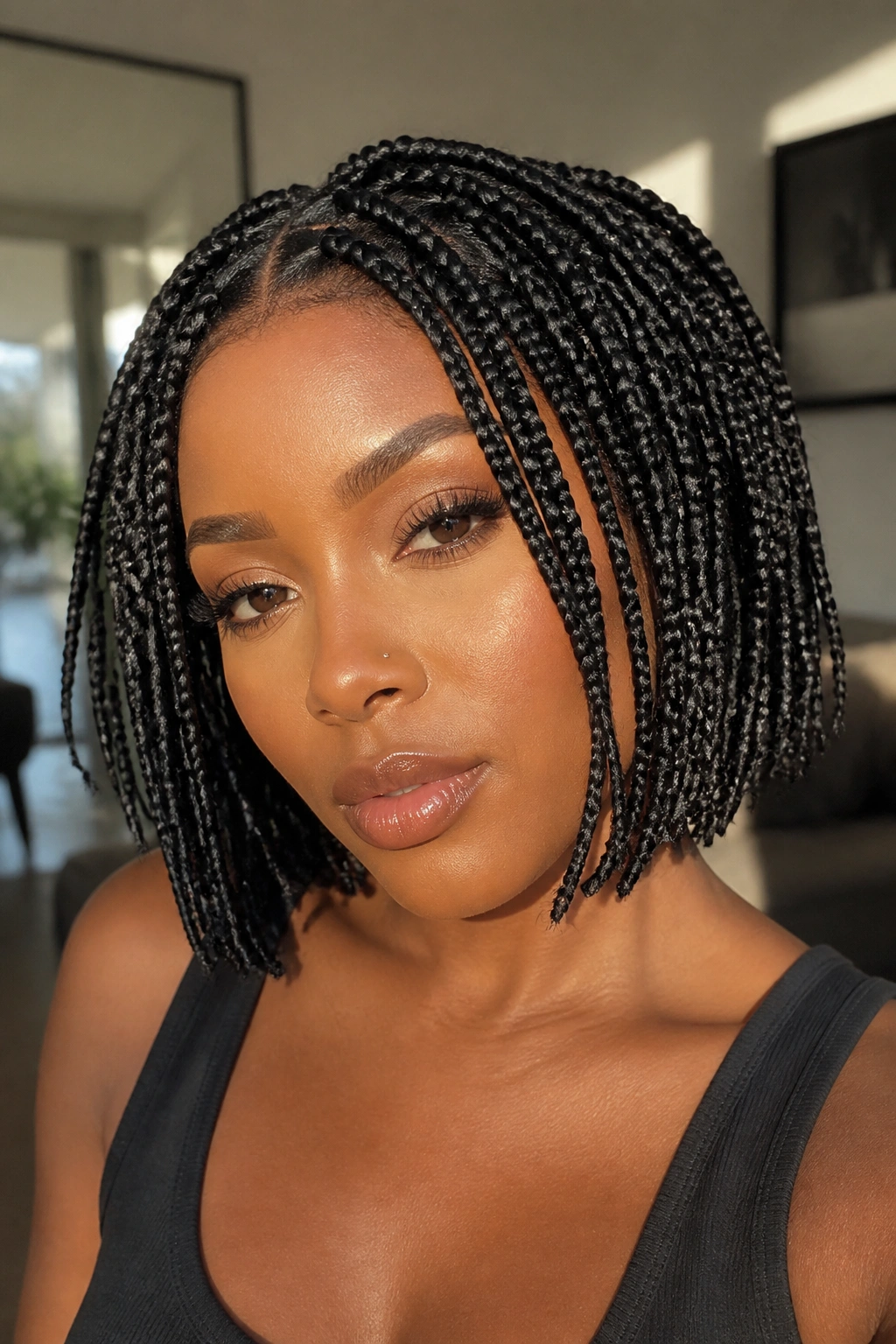
If you want short box braid styles that never look fussy, start with the chin-length bob. It has a clean line, it frames the face fast, and it works whether your braids are thick and chunky or neat and medium-sized. I’ve always liked this one because it does a lot without needing extra tricks.
Why the bob works
The chin line gives the whole style a shape you can spot from across the room. It also keeps the ends from landing in awkward places, which is a real problem with slightly longer braids that keep brushing your shoulders and flipping under scarves.
- Ask for even braid lengths before the ends are sealed or trimmed.
- Keep part sizes consistent from the front to the back.
- Use pre-stretched braiding hair if you want the bob to sit lighter.
- Seal synthetic ends with hot water, then let them dry fully before touching the style.
Pro tip: a chin-length bob looks sharper when the ends are cut on purpose, not left to chance.
2. Deep Side Part With Short Box Braids

Why does a side part change the whole mood? Because it shifts the weight of the style, and that small shift makes the face look softer, longer, or a little more dramatic without changing the braid pattern at all. If a center part feels too plain, this is the fastest fix.
How to wear it
A deep side part works best when the braids are short enough to fall cleanly and not fight the direction you set. I like it with jaw-length or collarbone-grazing braids because the sweep across the forehead feels deliberate, not messy. Pin the smaller side behind the ear if you want the cheekbone to show.
- Move the part just off-center, not all the way into the temple unless you want a bold look.
- Tuck one side with a flat pin or a small braid cuff near the ear.
- Keep the front braid on the heavier side slightly shorter so it drapes well.
This style is easy, but not lazy. That’s the charm.
3. Triangle-Part Short Box Braids
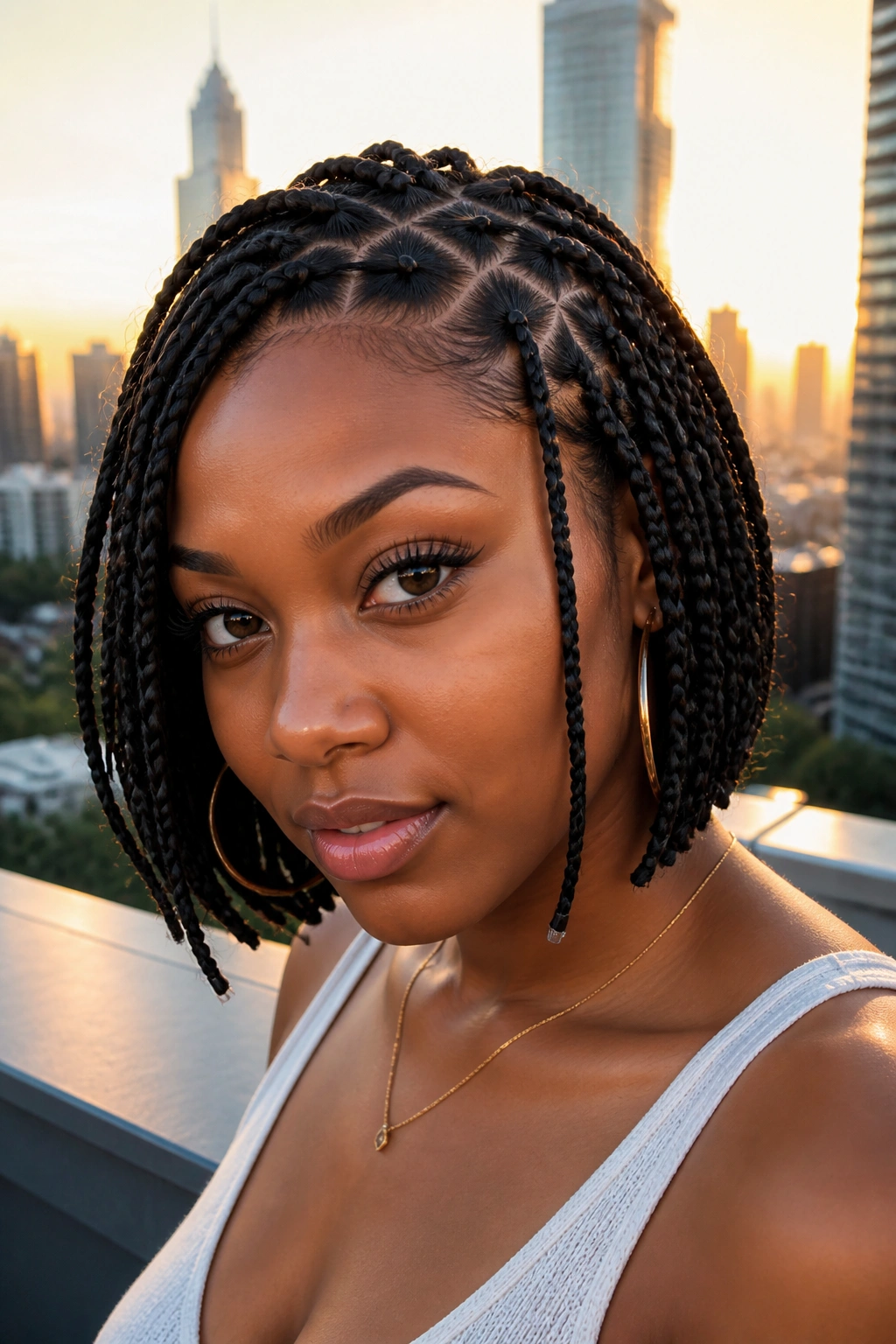
Triangle parts make short box braids feel graphic before you even touch the ends. The scalp pattern does half the styling, which is handy when you want the braids themselves to stay simple and clean. On short hair, those little triangles show more clearly than they do on waist-length installs.
What makes it different
A square part gives you order. A triangle part gives you movement. The visual angle changes the whole braid line, and on a bob, that matters because the parting is visible every time you turn your head. It’s a nice choice if you want your braids to look intentional without loading them up with accessories.
How to get the most from it
- Keep the triangle size consistent so the pattern doesn’t wobble.
- Ask for medium braid thickness; tiny triangle parts and tiny braids can look overworked.
- Let the front triangles stay a little larger if you want the style to settle more softly at the hairline.
This is one of those styles that looks more expensive than it is. Not because it costs more, but because the geometry does the heavy lifting.
4. Knotless Short Box Braids

Knotless does not mean plain. It means the root starts lighter, flatter, and usually easier on a tender scalp. For short box braids, that softer base matters a lot because there’s less hair length to hide a bulky knot, so the install has to be clean from the jump.
The real win here is comfort. If you have edges that complain, or if your scalp stays sore after tight installs, knotless short braids can feel like a relief. They also fall a little more naturally at the root, which gives short styles a nicer swing when you move.
Who should ask for knotless
- Anyone who wants less tension at the front and sides.
- Anyone who wears braids for several weeks and hates that stiff, helmet-like feeling.
- Anyone who likes a softer look around the face.
The tradeoff is time. Knotless takes longer in the chair, and the braids can look slightly slimmer near the root. I think that’s worth it.
5. Boho Short Box Braids With Curly Ends

The first thing you notice is movement. Boho short box braids with curly ends don’t sit still the way blunt braids do, and that softness can make even a simple bob feel less строг… scratch that, less stiff. The curls bring a little bounce around the neckline, which is exactly what short hair needs when you want a looser finish.
Use a bit of water wave or curly human-hair blend at the ends if you want the texture to hold. If the curls are too long, the style starts looking busy. Short braids need restraint here. A little curl goes a long way.
How to keep the curl from turning fuzzy
- Mist the ends lightly, then scrunch in mousse.
- Set a few pieces on flexi rods overnight if you want a neater curl pattern.
- Trim extra curly length only after the braids are installed and shaped.
Best move: keep the braid body simple so the ends stay the star.
6. Gold Cuff Short Box Braids
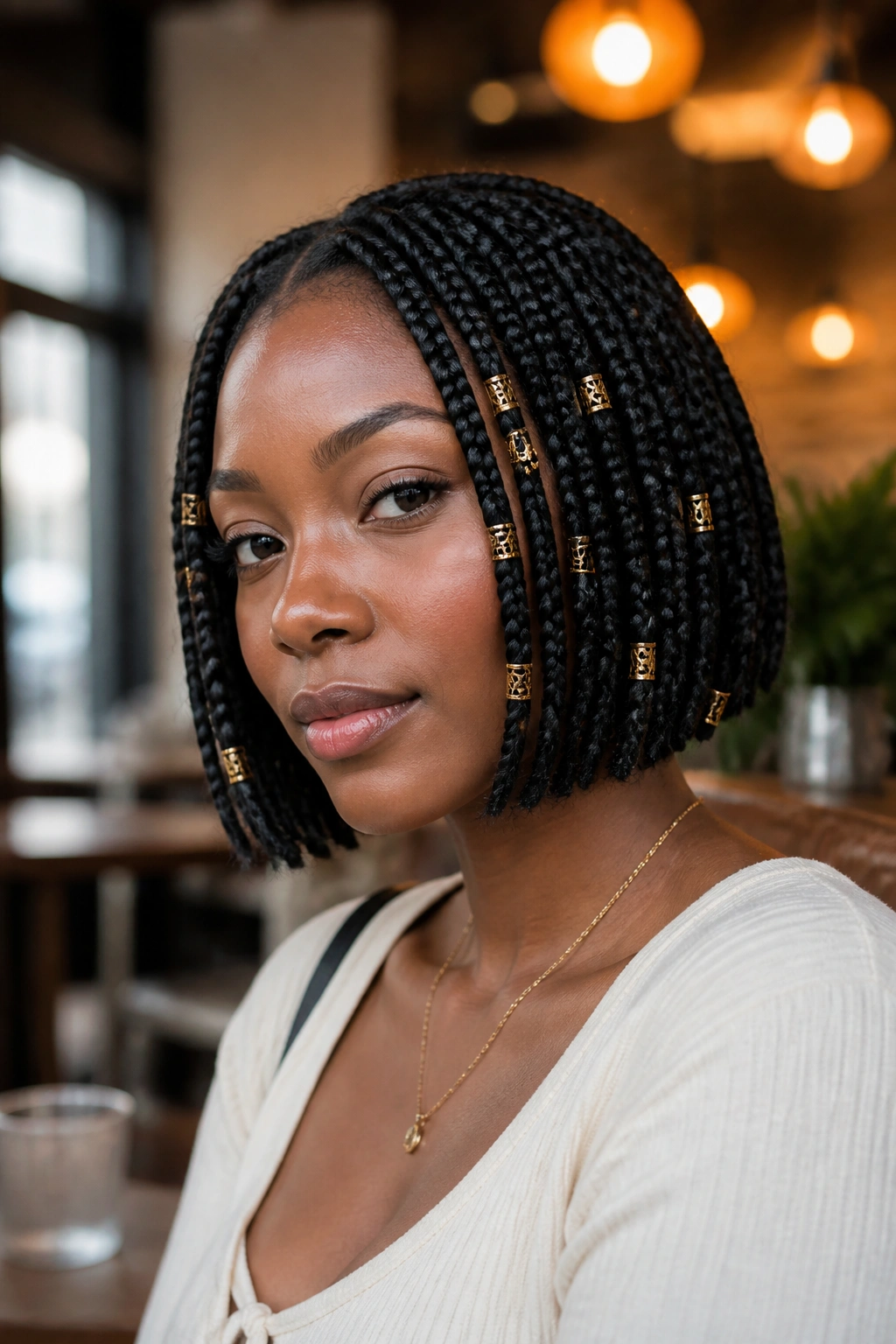
Unlike big accessories that change the whole head, gold cuffs work like punctuation. They give short braids a little shine without making the style feel crowded, and that’s useful because a bob already has a strong shape. Too much decoration can start to fight the haircut.
I like cuffs on short braids when they’re placed with restraint. One or two near the front, a couple scattered at the ends, and that’s enough. If you put them everywhere, the style starts to look noisy. Short hair doesn’t need help being noticed.
A simple way to place them
- Put cuffs near the mid-lengths, not all at the front edge.
- Mix one smooth cuff size with one slightly wider size.
- Keep the temple area light so the hairline doesn’t feel overloaded.
- Pair cuffs with plain parting if you want the shine to stand out.
This is the style for someone who wants a little polish and a little sparkle, but not a full accessory parade.
7. Rich Color Short Box Braids
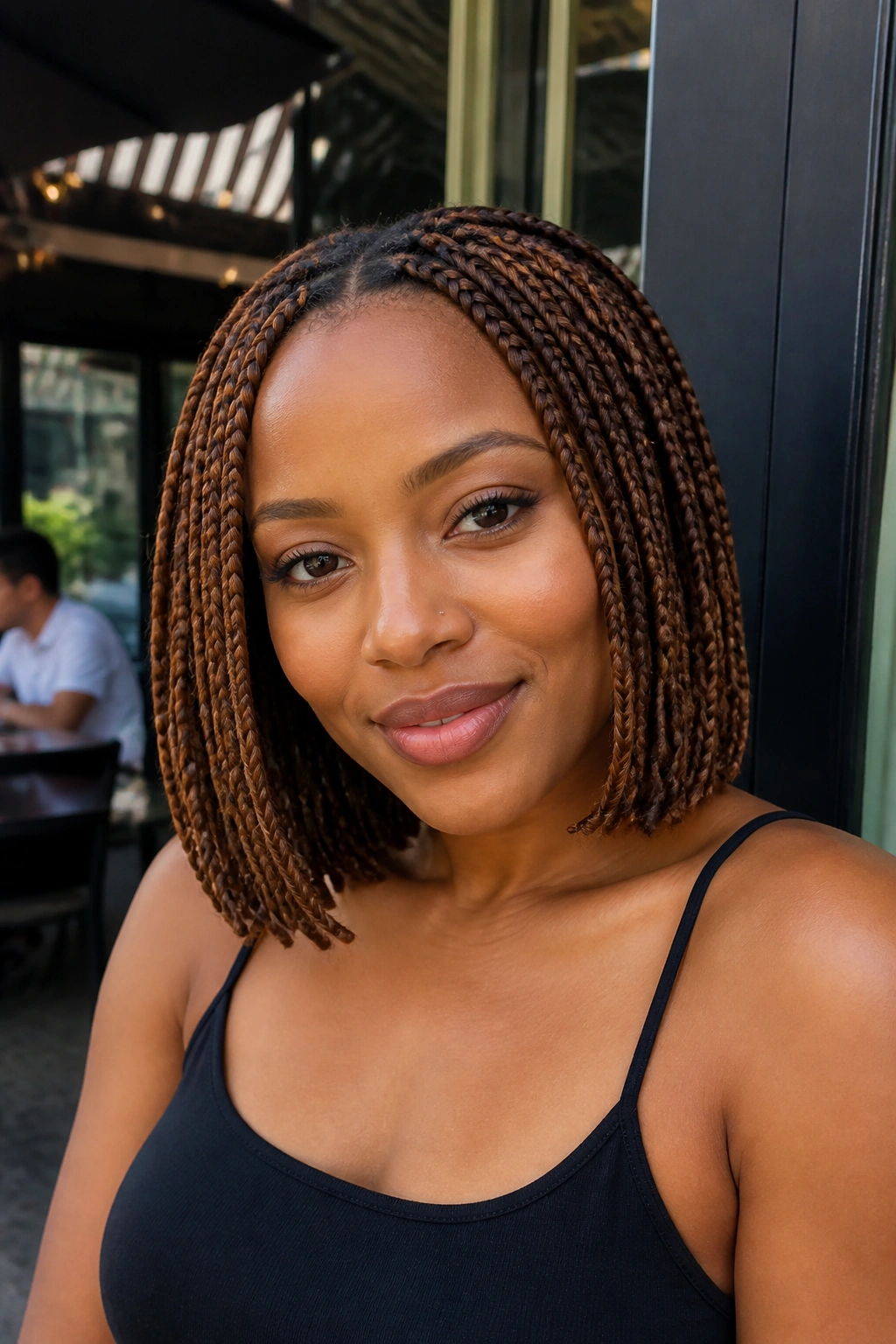
Color does more work on short braids than on long ones. A chestnut brown bob, a honey-blonde set, or a deep burgundy install reads right away because there’s less length to spread the shade across. That makes the color feel bolder and cleaner, even when the braid pattern stays simple.
If you want the safest route, choose one rich shade and keep the parts tidy. If you want the braids to look fuller, darker roots with lighter mid-lengths can add depth without making the style look stripey. Bright shades can be fun, but they need a confident parting pattern or they start to look scattered.
Good color choices for short braids
- Deep brown for a natural finish.
- Auburn or copper for warmth.
- Burgundy when you want the braids to pop against neutral clothes.
- Honey blonde if you like a brighter, lighter frame around the face.
The best color is the one you won’t get tired of after a week. That matters more than the photo.
8. Half-Up, Half-Down Short Box Braids
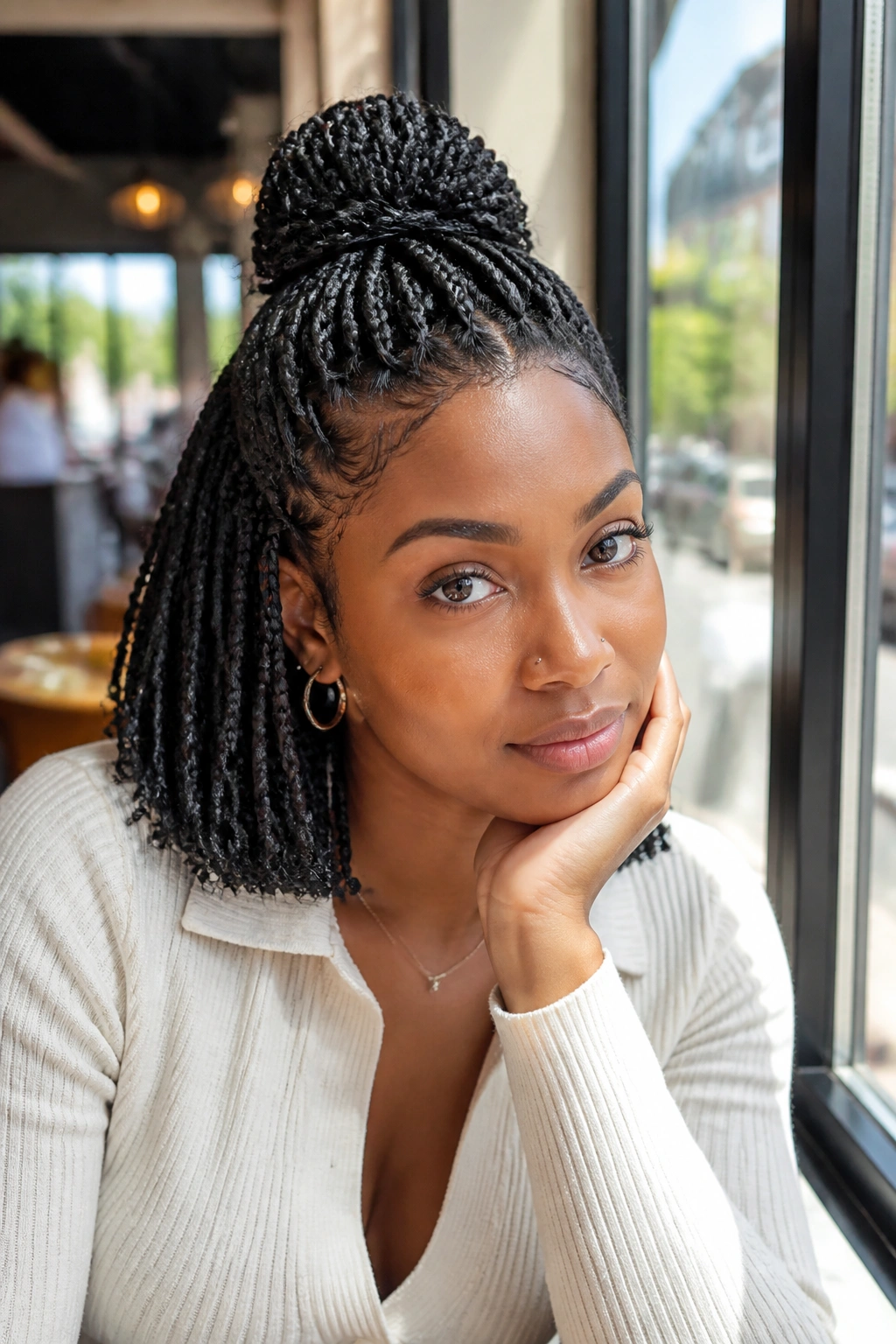
Need a style that stays off your face by noon? Half-up, half-down short box braids do that job without making the hair disappear. The top section lifts the face, while the lower section keeps the bob shape visible. It’s one of the easiest ways to make a short install feel styled on purpose.
The trick is to keep the gathered section small enough that it doesn’t pull the front too tightly. A snag-free elastic or a soft braid tie works better than a hard band. You want lift, not a headache. If the braids are jaw-length, even a tiny half-up section changes the whole vibe.
How to keep it neat
- Gather only the top third or half of the braids.
- Leave a few face-framing braids loose if you want softness.
- Twist the tie into place instead of yanking it down hard.
- Add one cuff or small wrap at the base if you want a finished look.
This one lives in that nice space between practical and pretty. Easy to wear. Easy to redo.
9. Mini Top Knot Short Box Braids

A tiny knot at the crown can make short braids look more finished than leaving everything loose. It’s a simple move, but it changes the silhouette fast. The top knot gives height, and the loose ends keep the style from feeling too formal.
I like this on second-day braids, when the roots are settled and the ends have stopped being too perfect. It also helps if your braids sit around the chin or the top of the shoulders, because the knot adds shape without requiring a full updo.
Best way to do it
- Pull up the center section only, not the sides.
- Use 4 to 6 braids for the knot, depending on thickness.
- Secure it with a soft elastic, then wrap one braid around the base.
- Leave the bottom layer loose so the style still reads as a bob.
Watch this: if you grab too much hair, the knot gets bulky fast and the front starts pulling. Keep it small.
10. Side-Swept Short Box Braids

This is not the same thing as a side part. A side part changes where the hair begins; side-swept braids change where the hair lives. The whole style is dragged to one shoulder, and that gives the bob a stronger profile line. It also plays well with earrings, which is never a bad thing.
Side-swept short box braids look especially good when the cut is blunt. The straight ends and the diagonal fall create a nice contrast. If the braids are a little layered, even better. You get motion without chaos.
How to keep it from sliding back
- Pin the underlayer behind the opposite ear.
- Set the part slightly off-center so the sweep has a base.
- Choose one shoulder and commit to it.
- Use a few small bobby pins that match the braid color.
This style has a little attitude. Not loud, just sure of itself.
11. Asymmetrical Short Box Braids
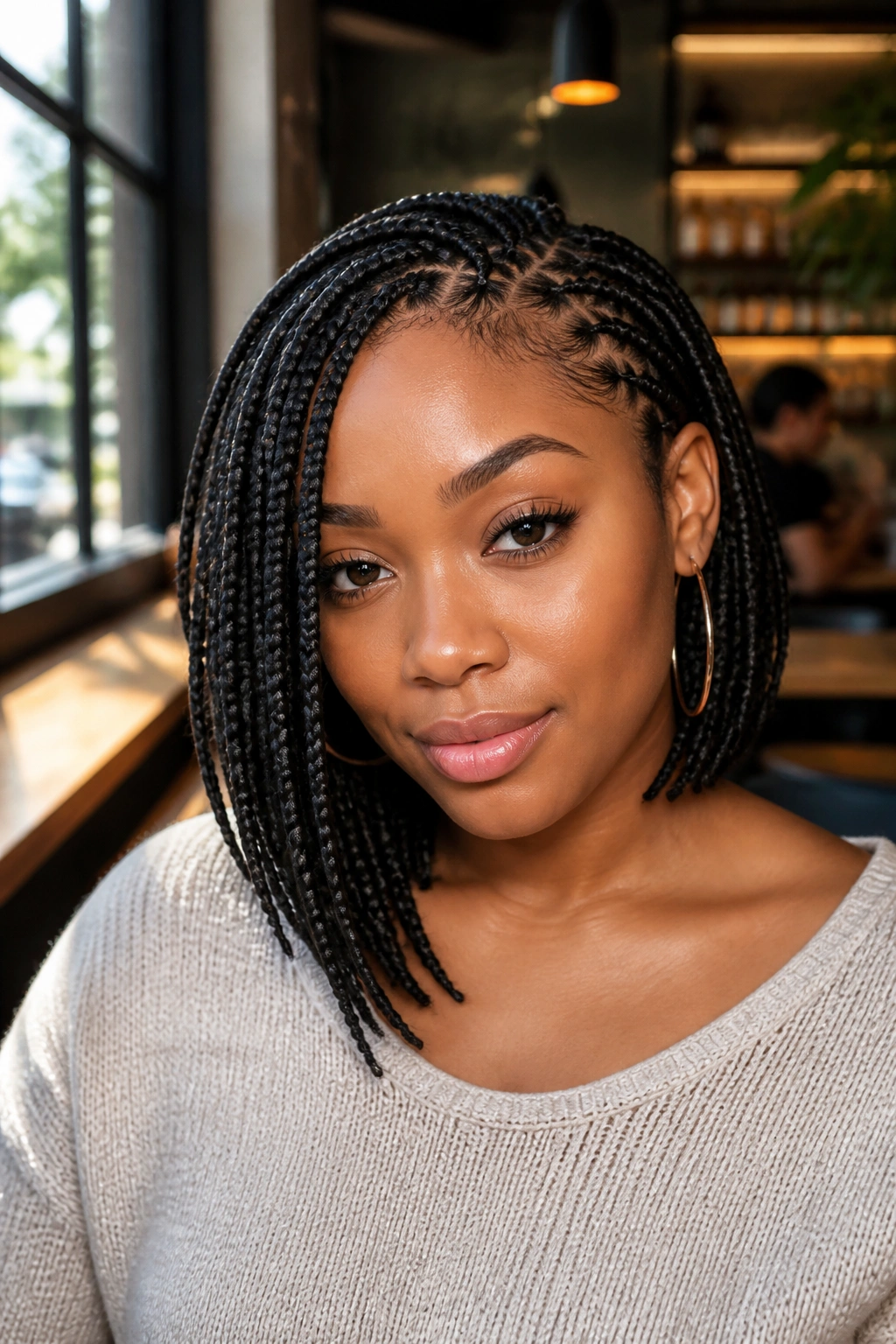
One side at chin length, the other brushing the collarbone. That’s the energy here. Asymmetrical short box braids feel deliberate in a way that a standard bob sometimes doesn’t, because the uneven shape becomes the whole point. If you like sharp lines and a little edge, this is the one.
The best version is built from the start, not improvised at the end. Tell the braider which side should sit shorter and where you want the longer side to land. If the difference is too tiny, nobody notices. If it’s too huge, the style can look like a mistake. The sweet spot sits in the middle.
What to ask for
- A clear length difference of at least 1.5 to 3 inches.
- Braids that follow the shape of the cut instead of fighting it.
- A longer front piece that brushes the cheek or jaw.
This is a cut-and-style combination, not just a braid pattern. That’s why it works.
12. Beaded-End Short Box Braids

Beads read louder on short braids than on long ones. There’s less hair to distract the eye, so the sound, weight, and movement of the beads become part of the style. I like that. It gives the bob a little personality without needing full-on color or a complicated part.
The key is balance. Too many beads turn short braids into a clunky headpiece, and nobody wants that. A few beads placed near the ends can make the style feel playful without putting stress on the roots. Wood, clear acrylic, and small metallic beads all work differently, so the feel changes depending on the mood you want.
Keep the weight sensible
- Use 2 to 4 beads per braid, not a stack of eight.
- Keep the front braids lighter than the back.
- Choose small holes if your braids are medium thickness.
- Make sure the beads are secure so they don’t slide when you sleep.
A bead should decorate the braid, not drag it down.
13. Braided Mohawk
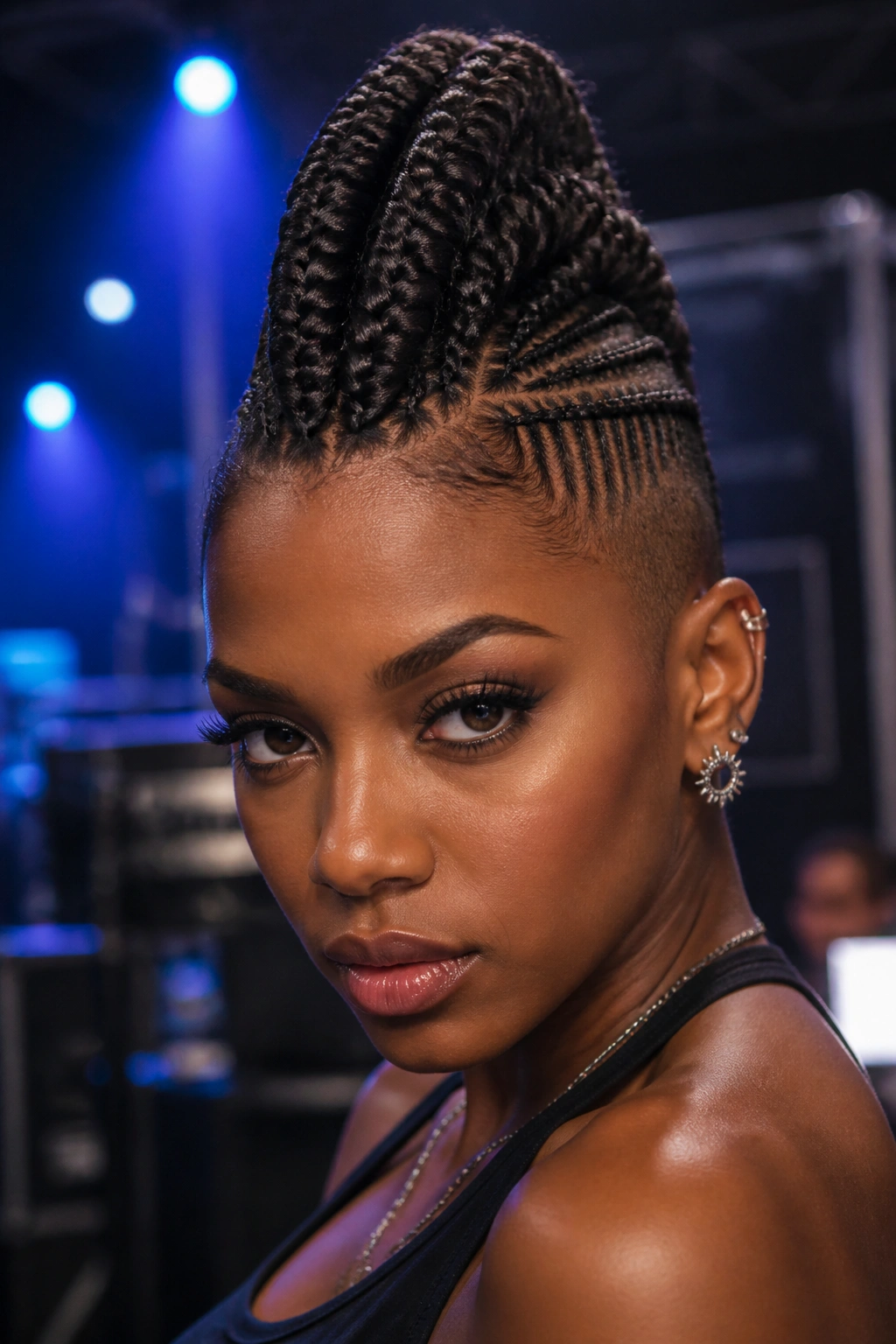
If you want drama, this is the loudest option on the list. A braided mohawk takes the short box braid idea and pushes it straight down the center, leaving the sides tighter, flatter, or neatly pinned away. The result feels strong and clean at the same time.
This style is especially good if you already wear a faded cut or an undercut, but you do not need shaved sides to pull it off. Even on natural hair, the shape can work if the side sections are kept controlled. The center gets to be the star.
Where it works best
- Concerts and parties.
- Sharp outfits with collars or structured shoulders.
- Anyone who likes a face-lifted silhouette without a full updo.
A mohawk braid look can be polished or edgy depending on the finish. Use cuffs for sparkle, or keep the center plain and let the shape do the talking. Either way, the style has presence.
14. Braided Fringe Across the Forehead
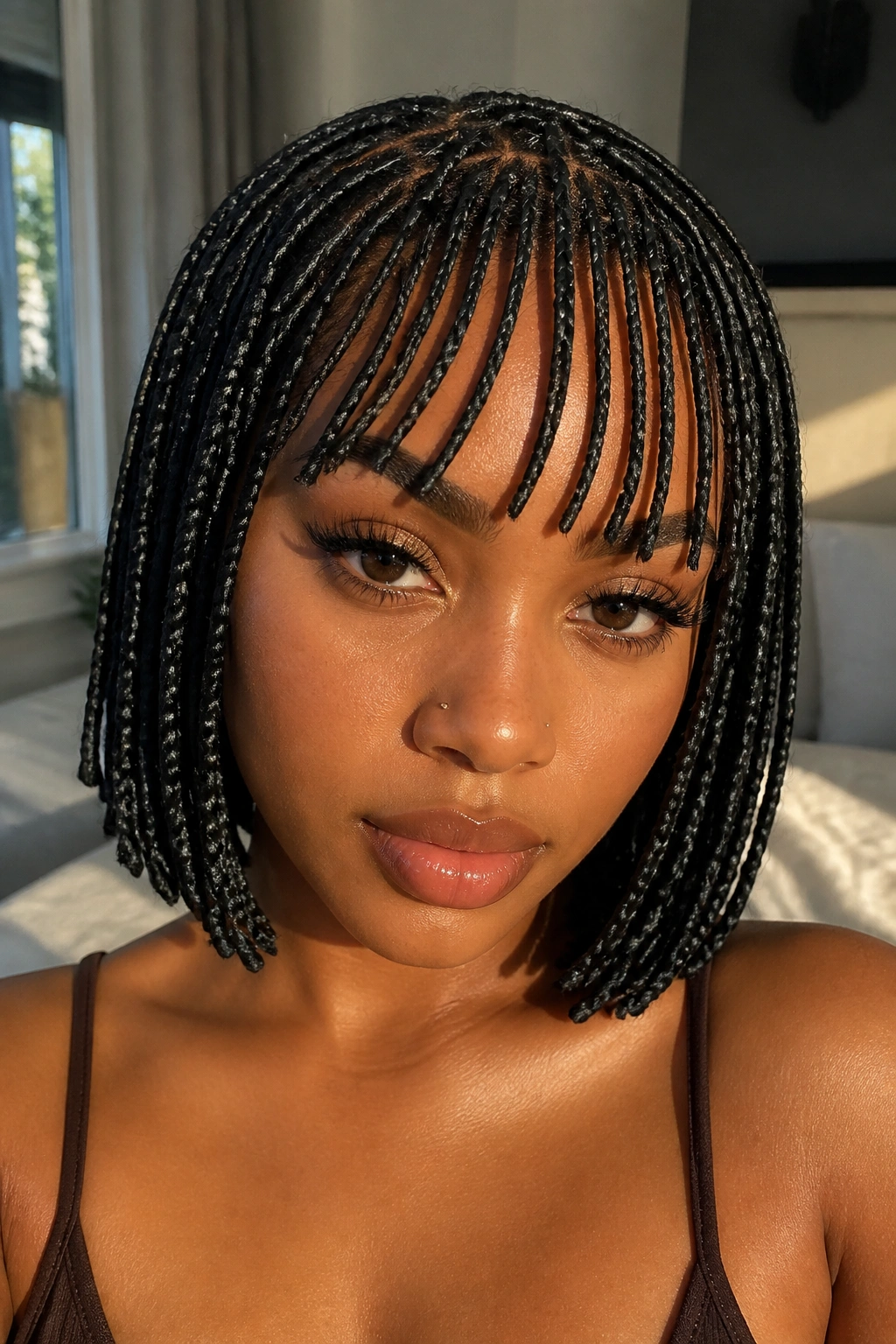
Can braids soften a strong brow line? Absolutely. A braided fringe across the forehead gives short box braids a softer front edge, and that changes the whole face. It also works well when you want a little movement without committing to bangs that stay in your eyes all day.
The trick is to keep the fringe light. A thick braid bang can sit heavy and feel awkward after an hour. A few slimmer braids sweeping across the front make more sense, especially on short styles where the forehead space is already limited. If you want versatility, pin the fringe aside when you’re done with it.
Small details that help
- Keep the front braids a touch thinner than the rest.
- Angle them so they skim the forehead instead of pinning straight down.
- Add a small clip near the temple if you want the fringe to stay in place.
- Leave the edges free enough that the style does not feel boxed in.
This is a nice choice when you want softness without giving up the braid structure.
15. Crisscross-Part Short Box Braids
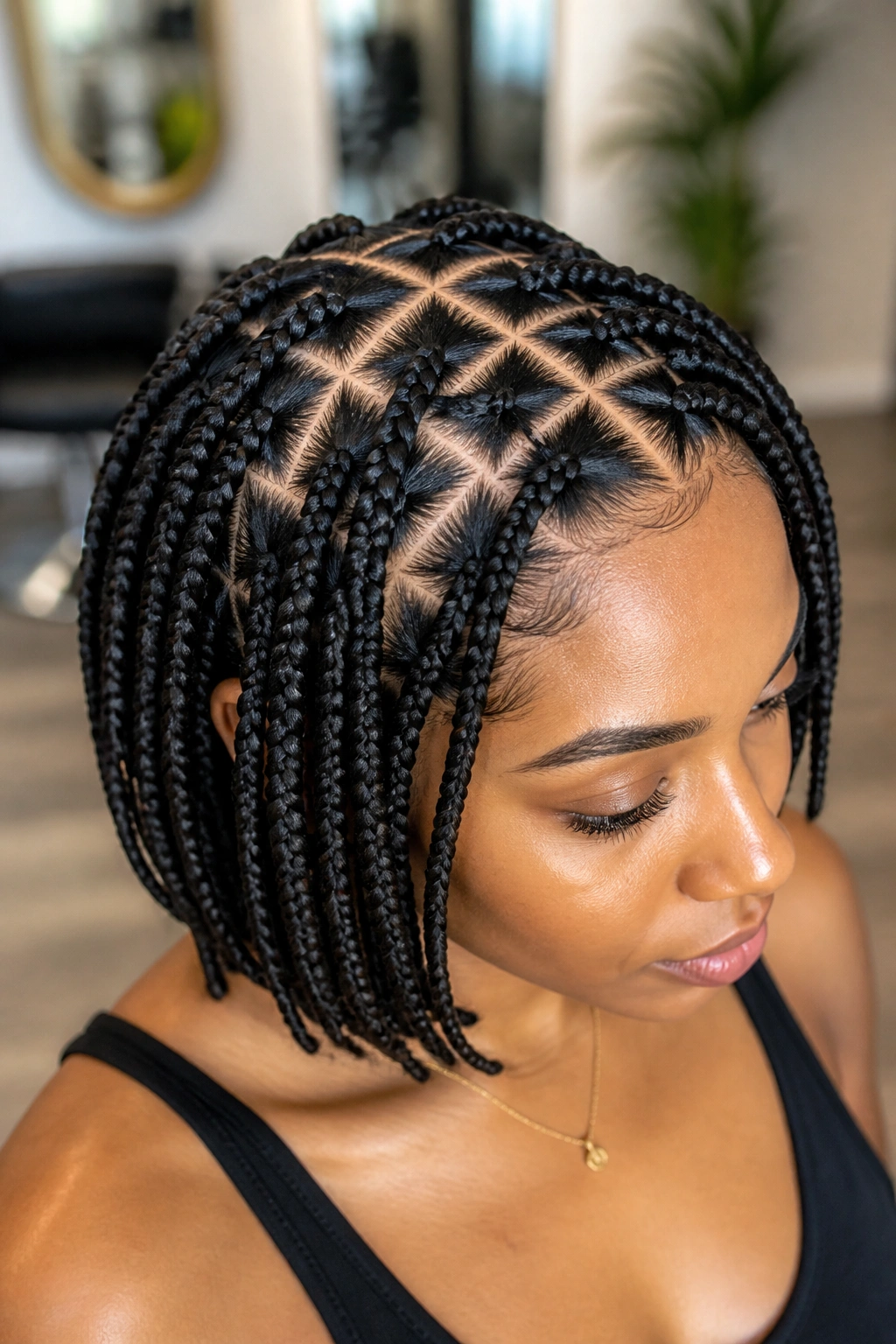
The scalp pattern looks like a grid with X-shaped turns, and that is the whole point. Crisscross-part short box braids turn the parting into the design, which means the braids themselves can stay simple and still feel interesting. On short hair, the pattern shows right away because there’s less length to hide it.
This style needs planning. You can’t wing the part lines halfway through and expect the grid to stay neat. The sections should be mapped before the first braid goes in, and the braider has to keep the tension even or the pattern will start to buckle. It’s not the fastest style on the list, but it looks like someone thought about it.
A few things that matter
- Use clean sectioning with a rattail comb.
- Keep the cross lines visible by avoiding oversized braids.
- Skip heavy accessories if you want the pattern to stay clear.
- Ask for a mirror check before the back gets locked in.
The fun here is in the scalp art. The braids are the frame.
16. Low Ponytail Wrap Style

A low ponytail can be more polished than letting the braids hang. That sounds backward, but it’s true, especially with short box braids that sit around the neck and shoulders. Pulling them low gives the whole style a neat line and keeps the hair out of the way without flattening it into nothing.
The wrap is the detail that sells it. Take one braid and wind it around the base of the ponytail so the tie disappears. It takes ten seconds, maybe less, and it looks finished in a way a plain elastic never will. This one is excellent for workdays, errands, or any time you want the braids contained.
Best tools for the job
- A medium snag-free elastic.
- A few bobby pins for the wrap.
- A satin scrunchie if you want less tension.
- A light mist of braid spray, not a heavy oil.
Skip tiny rubber bands. They snag, they break, and they’re annoying to remove. There’s no reason to fight your own hair.
17. Blunt-Ended Braided Bob
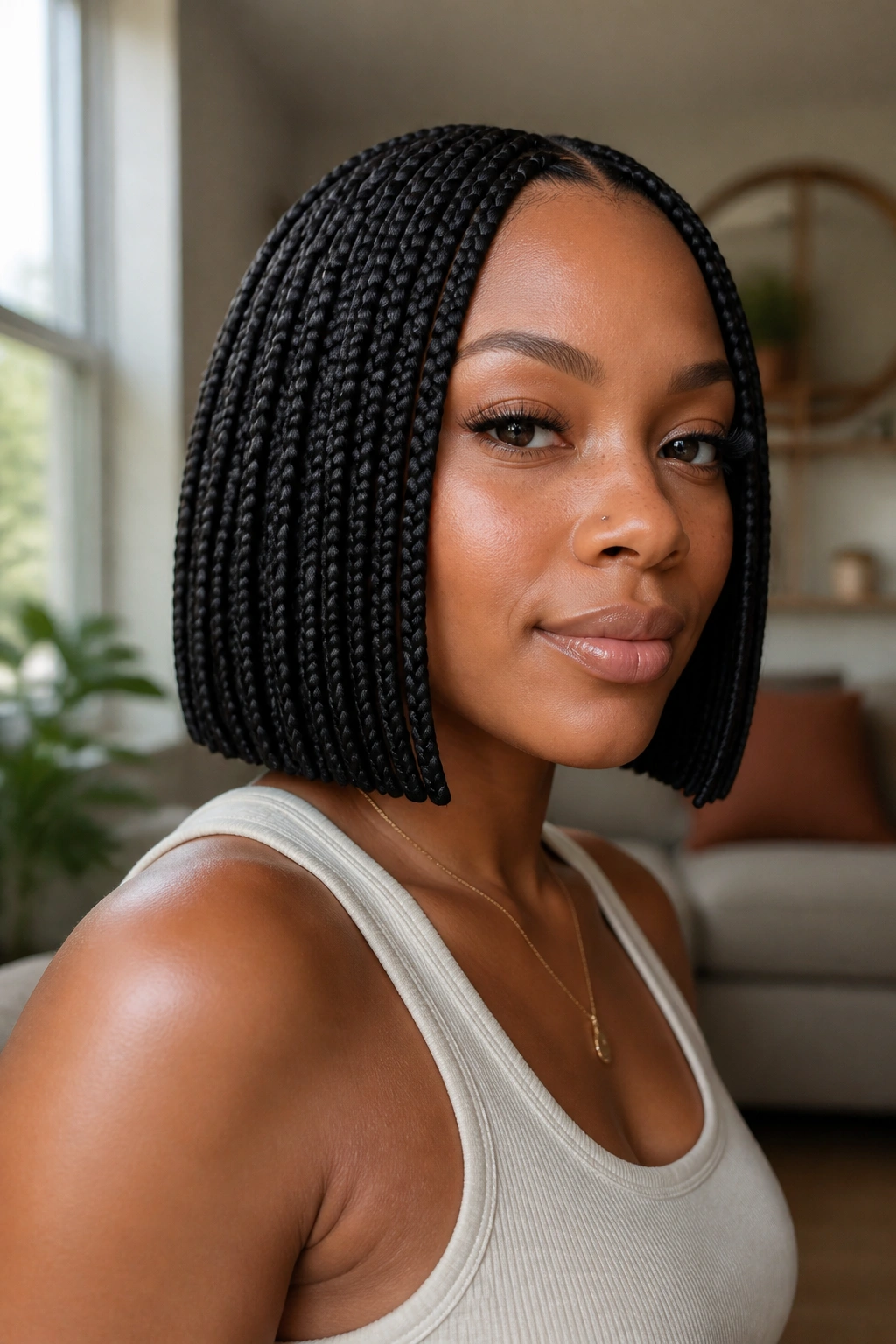
Everything about this style says neat. The ends land on the same line, the outline is crisp, and the whole look feels tailored. A blunt-ended braided bob is the short box braid version of a sharp haircut, which is why it suits people who like clean lines and low fuss.
It works especially well when the braids are uniform in thickness. If the pieces vary too much, the line at the bottom starts looking uneven instead of bold. The cut at the ends matters too. If you’re using synthetic hair, let the braids cool and dry fully before trimming, because wet hair shifts and can fool your eye.
How to keep the line clean
- Ask the braider to shape the bottom carefully instead of guessing.
- Trim one braid at a time.
- Stand still while checking the mirror, because a tiny tilt changes the line.
- Seal the ends before you mess with the shape.
This style has a neat, finished feel that works with hoops, strong brows, and simple makeup.
18. Layered Tapered Short Box Braids
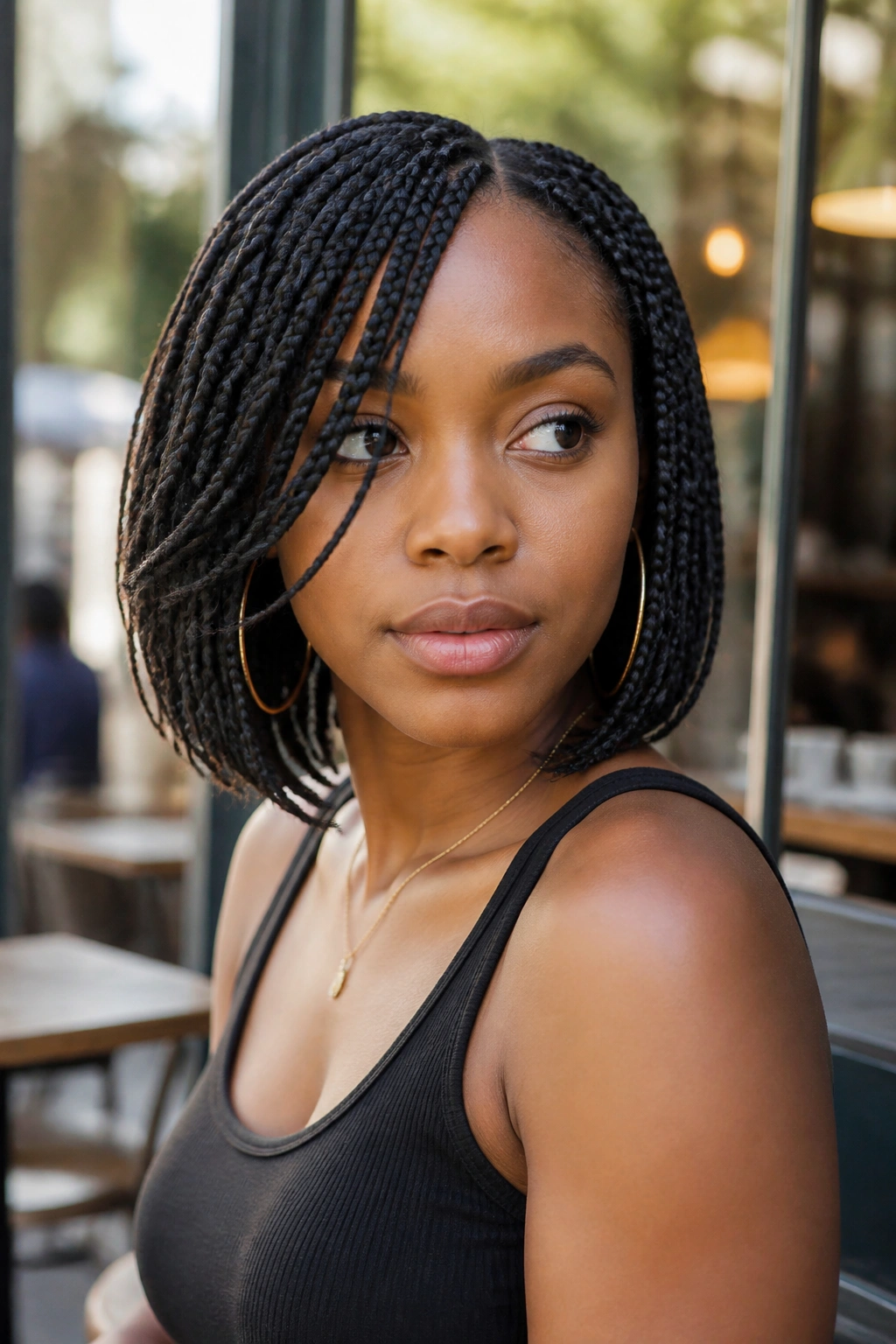
Unlike a blunt bob, this one has movement built in. Layered tapered short box braids sit a little longer in some spots and shorter in others, which keeps the shape from feeling boxy or heavy. If your hair is thick and a flat line feels too stiff, layering helps.
The most flattering version usually has a touch more length around the face and less bulk at the nape. That way the front frames you, while the back stays easy to manage. It also makes the style easier to tuck, sweep, or pin without losing the shape.
Why layering helps
- It softens dense hair.
- It keeps the neckline from looking stacked.
- It gives the braids more swing when you walk.
- It can make a round face look a little longer without changing the part.
I like this style when the braids need to move a bit. Static hair is boring. Hair that shifts a little when you turn your head feels alive.
19. Crown Halo Accent Braids

A single braid around the hairline can make short box braids feel dressy fast. The halo accent sits across the front or circles the crown, and it gives the bob a finished edge that works for dinners, church, or photos where you want something a little more special than plain hanging braids.
The nice thing is that the accent braid does not need to dominate the whole head. You can keep the rest of the short box braids simple and let the crown piece act like a frame. A few pins and maybe one small cuff are enough. If you use too much decoration, the braid loses that clean, elegant line.
When to wear it
- Family events.
- Weddings and formal gatherings.
- Any day when a plain braid bob feels too casual.
A halo braid also gives you a fast switch-up without reinstalling the entire style, and that is a win in my book. Quick, neat, done.
20. Split-Dye Short Box Braids

What happens when you split the color down the middle? You get one of the boldest short box braid looks around. Split-dye braids use two tones side by side or a sharp dip-dye finish, and short length makes the contrast even more obvious because there’s no extra length to blur the color line.
This style works best when the parting stays simple. The color is the main event, so the braid pattern should back it up instead of competing with it. Black and blonde is the loudest version, but burgundy with copper or brown with caramel can feel just as striking without being as high contrast.
A few rules that keep it clean
- Choose one dark anchor shade so the style has weight.
- Keep the braid thickness even across both colors.
- Avoid stacking too many cuffs or beads on top of the split.
- Let the roots stay neat so the color line looks deliberate.
This is the one for someone who wants people to notice the hair first. No apologies.
Final Thoughts
Short box braids work because they give you shape without making your head feel overloaded. That is the real luxury here. Not length for length’s sake, but a style that sits well, looks finished, and still leaves room for accessories, color, or a sharp part.
If you’re choosing between two styles, pick the one that matches your daily life before you chase the one that photographs hardest. A braid bob that stays comfortable for three weeks will always beat a look that feels good for one hour and then starts pulling at your scalp.
Bring reference photos to your braider, but point out the exact things that matter: length, parting, accessories, and where you want the braid ends to land. That tiny bit of clarity saves everyone a headache. And if the install feels tight on day one, speak up right away.
