



Goddess braids do not whisper. They walk into a room with shape, shine, and a little attitude, and that’s the whole point. The best goddess braid hairstyles frame the face, stretch the silhouette, and give you that polished, pulled-together look without asking you to fuss with your hair every morning.
What makes them so wearable is the mix of structure and softness. You get the clean lines of braids, then the loose curls, tendrils, or layered pieces keep the style from feeling stiff. That contrast matters. Without it, the look can slide into plain cornrows. With it, you get movement, dimension, and a style that still feels bold when you turn your head.
The other thing people miss is tension. A great goddess braid style should feel secure, not punishing. The hairline should look neat, but not scraped bare. The parts should be tidy, but not so tight that your scalp starts complaining before you’ve even left the chair. That balance is where the best styles live.
Size, length, color, and placement all change the mood. A side sweep reads dramatic. A ponytail feels sharp. A crown braid has a little royalty to it, even if you wear it with a T-shirt and sneakers. And once you start mixing in curls, beads, or bold parts, the whole look gets louder in the best way.
1. Classic Waist-Length Goddess Braids
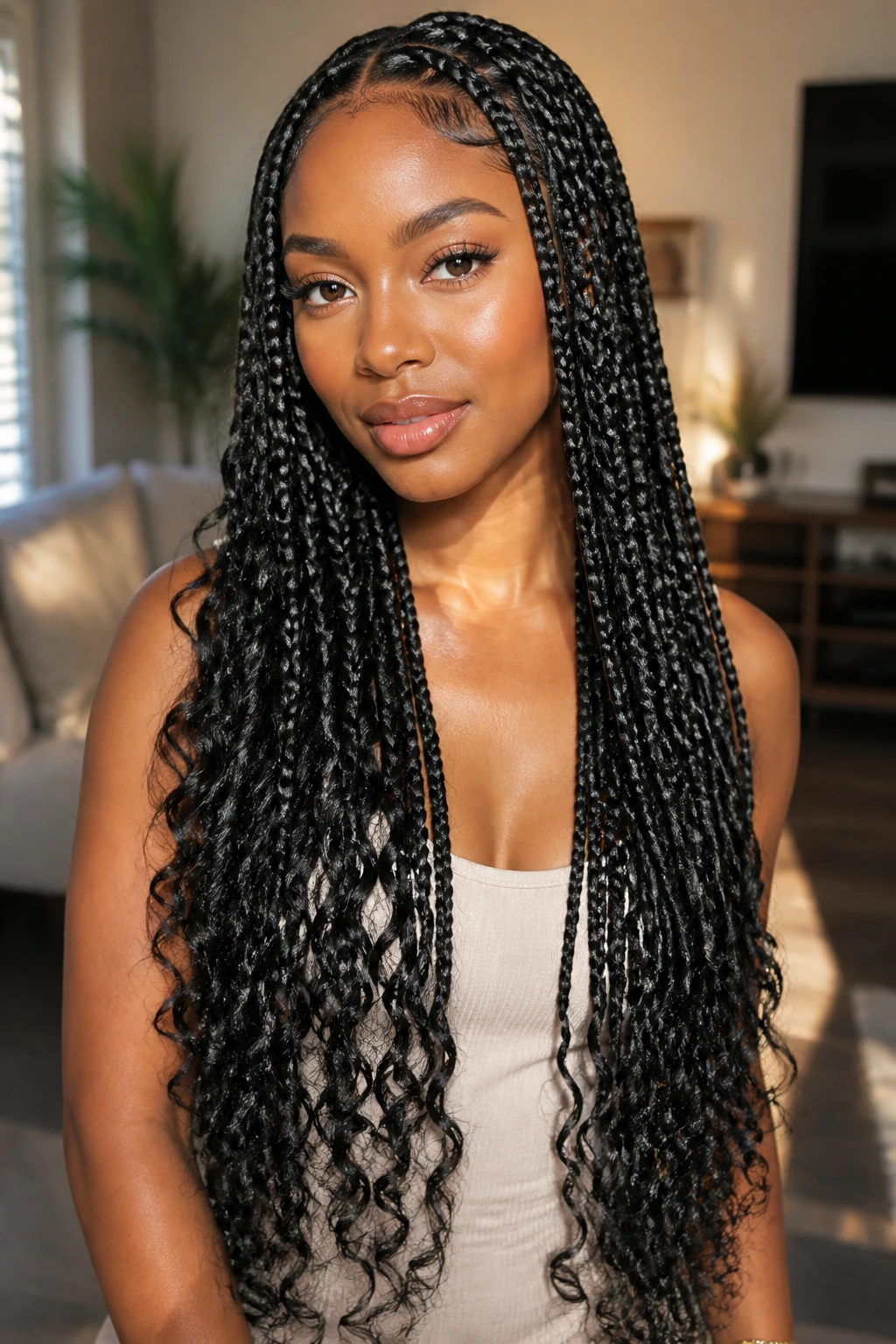
There’s a reason this version stays in heavy rotation. Waist-length goddess braids give you that long, clean line that feels strong from every angle, and the loose curly pieces keep the style from looking heavy or flat.
Why it lands so well
The length does a lot of the work here. Braids that fall past the shoulders naturally create movement, especially when the ends are finished with soft curls instead of blunt tips. That little bit of texture near the bottom keeps the style from feeling severe.
This is also one of the easiest bold looks to wear with everyday clothes. A plain tee, a blazer, a tank dress, even a hoodie — the braids do the styling for you. If you want a look that feels put together without needing extra accessories, this is the one I would point to first.
- Best with medium to long hair or added braiding hair for length
- Works well with 3 to 6 braids, depending on how full you want the finish
- Ask for soft curly ends so the style moves instead of hanging stiff
- Great if you want a look that can last without constant restyling
Tip: leave the first half-inch at the hairline gentle. A neat base is good. A painful base is not.
2. Side-Swept Goddess Braids
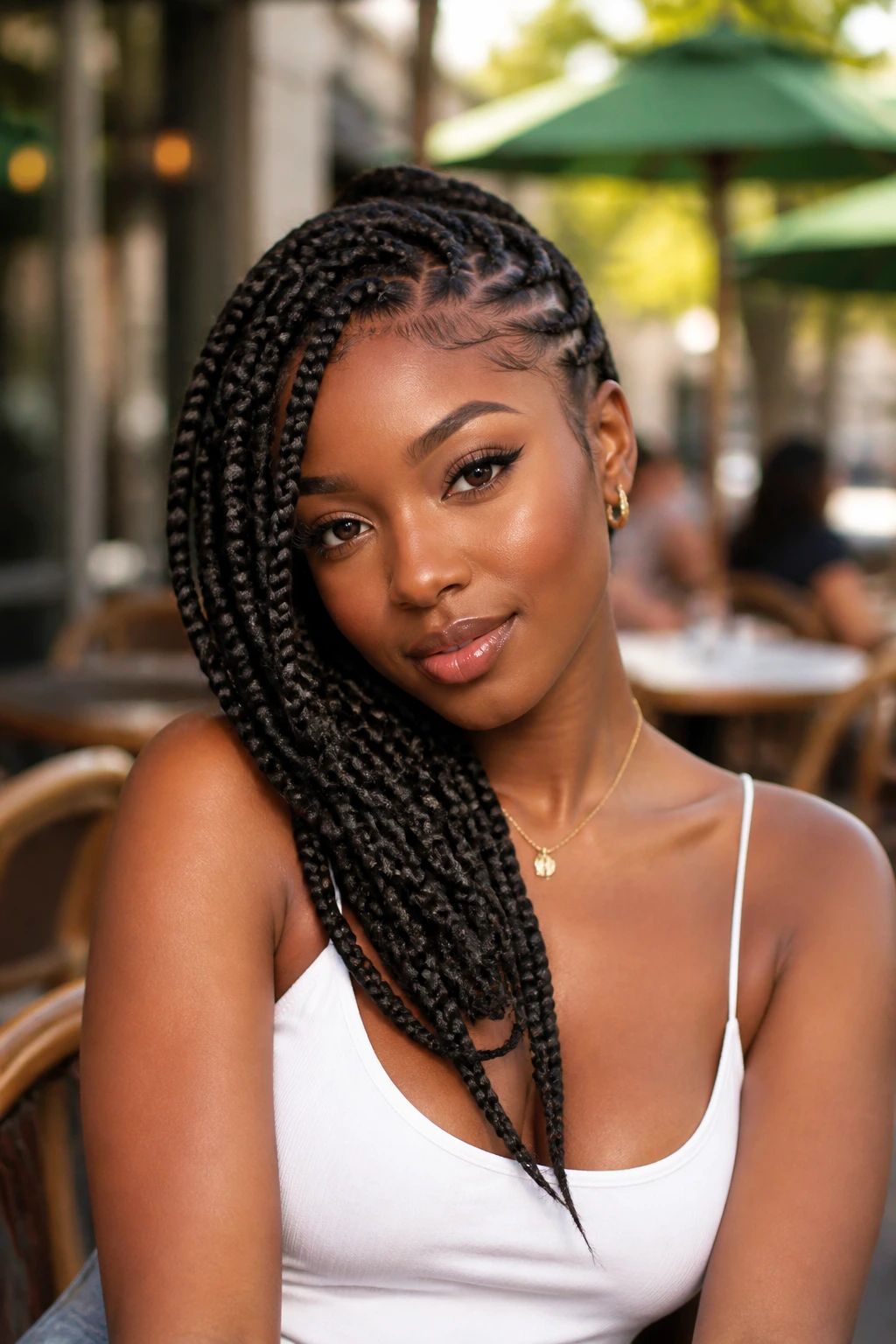
Side-swept goddess braids are pure drama, and I mean that in the best way. They shift the whole shape of the face by pulling the visual weight to one side, which makes the style feel more fashion-forward than centered braids.
The best part is how easy they are to wear once installed. One shoulder gets the full show, the other side stays cleaner, and the curls or loose ends drape across the collarbone in a way that looks intentional even when the rest of your outfit is simple. That asymmetry is doing a lot of quiet work.
I like this style for anyone who wants a bold look without leaning into extra height or a complicated updo. It feels softer than a mohawk, less formal than a crown braid, and more striking than braids that fall straight down the back. If your face tends to feel wider, the diagonal line can be especially flattering because it draws the eye across instead of straight down.
3. Goddess Braid Ponytail
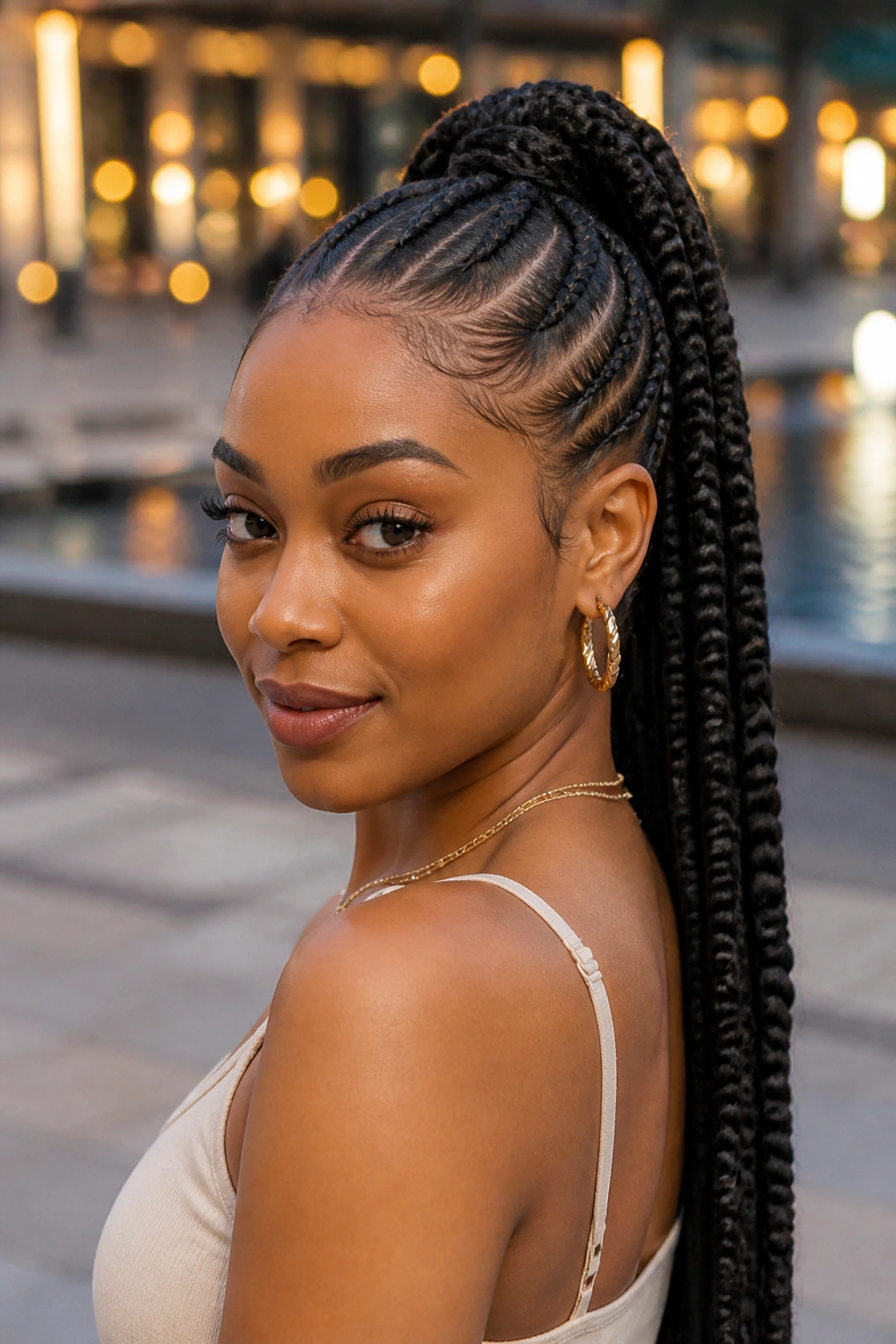
Why does a goddess braid ponytail hit so hard? Because it gives you lift, motion, and a clean shape all at once. The crown stays neat, the ponytail sits high or mid-back, and the braided lengths cascade in a way that feels sharp rather than fussy.
How to wear it
The base matters here. Keep the front smooth enough to read polished, but don’t flatten every inch of life out of it. A high ponytail works when you want energy and height. A mid ponytail feels a little calmer and sits better if you wear earrings or a collared top.
If you want the style to look expensive, make the ponytail base clean and the ends full. That means wrapping the hair tie with a braid or a small strand of extension hair, then letting the curly ends fall loose instead of tucking them too neatly. Too perfect can look stiff. A little movement saves it.
This is the style I’d pick for a night out, a photo-heavy event, or any day you want your hair out of your face but still want people to notice it. It looks strong from the front and even better in profile.
4. Half-Up, Half-Down Goddess Braids

There’s something smart about a half-up, half-down braid style. It gives you the best part of a ponytail — lifted shape near the crown — while keeping the rest of the braids flowing down the back and shoulders.
That split creates a nice balance. The top section can be twisted into a bun, tied into a small puff, or gathered into a sleek knot, while the lower section stays loose and full. It works especially well when you want to show off length without letting all that hair sit on your neck.
Best when you want structure without stiffness
A half-up style suits people who like some movement around the face. The front stays open, which helps if you like hoop earrings, necklaces, or a defined makeup look. It also keeps the mood less formal than a full updo.
- Use 2 to 4 braids in the top section for a clean lift
- Keep the lower braids loose so the contrast feels obvious
- Add curly tendrils near the temples if you want more softness
- A satin scarf at night helps the top section stay smooth
This look walks a nice line. Not too plain. Not too loud. Just enough shape to feel done.
5. Feed-In Goddess Braids With Curly Ends

Feed-in braids are one of those techniques that look more complicated than they are. The braid starts slim at the scalp, then hair is added gradually so the base stays smooth and less bulky. When you pair that with curly ends, the result feels clean at the roots and soft at the bottom.
That contrast is the whole charm. The roots sit close to the head, which gives you a neat, controlled start, and the loose ends bring in movement so the style doesn’t look like a row of ropes. It’s a smart choice if you want a polished hairline without the heavy look some bigger braids can give.
These braids are especially good when you want the style to look fresh from every angle, not just head-on. The gradual feed-in technique creates a smoother line through the scalp, and the curls at the ends keep the finish from feeling rigid. If you want a style that can handle both a blazer and a weekend dress, this is one of the easiest wins.
A little mousse on the curls goes a long way. Too much product, and they get sticky. Too little, and they frizz up faster than you want.
6. Jumbo Goddess Braids
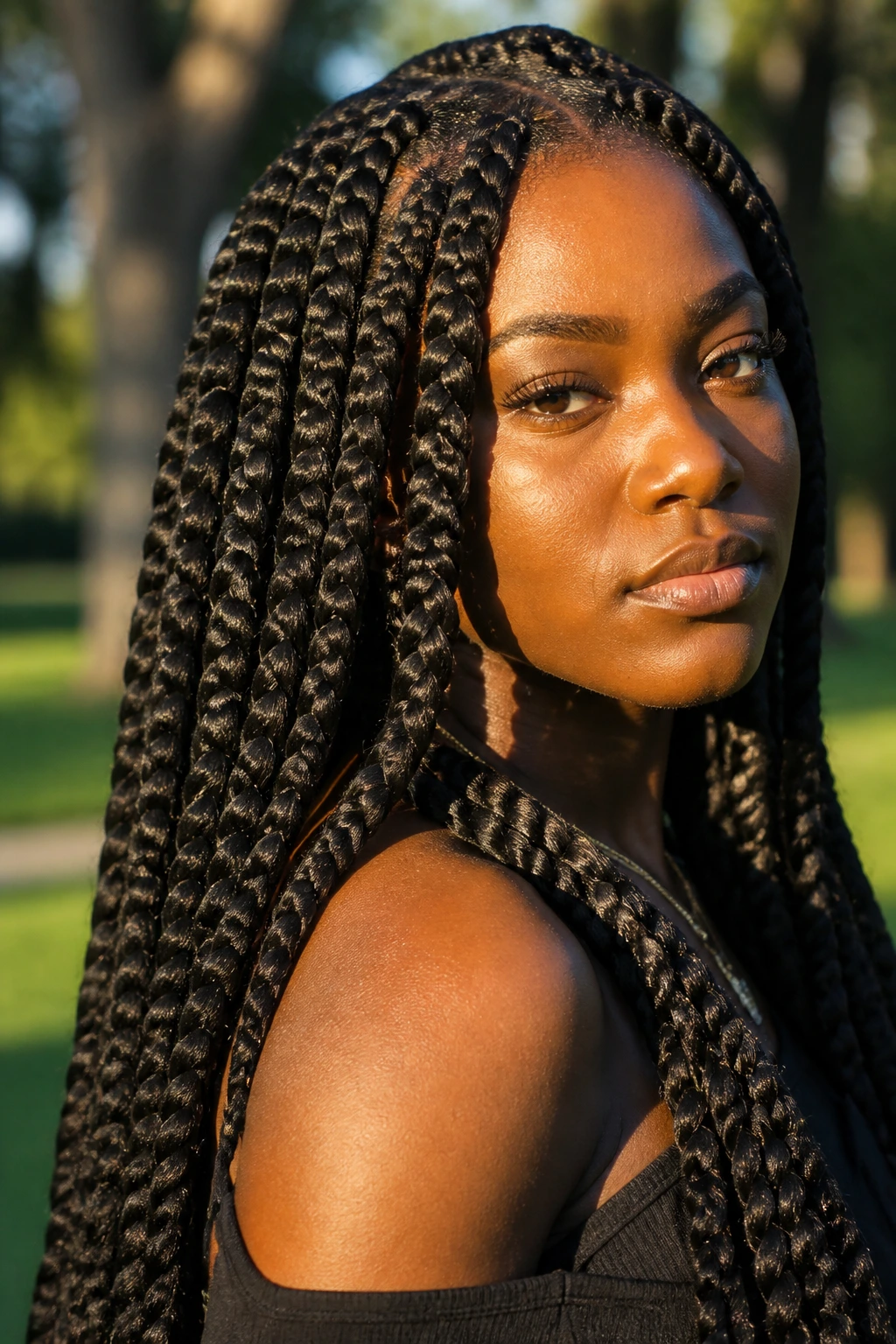
Jumbo goddess braids do not pretend to be subtle. They are big, bold, and fast to read across a room, which is exactly why people keep going back to them. Unlike smaller braids, they lean into shape more than detail.
That makes them a good pick when you want impact without sitting in the chair forever. Fewer parts usually mean less installation time, though the individual braids can put more pressure on the scalp if the base is pulled too tight. Big braid, big presence. The weight is part of the deal.
I also like jumbo braids for anyone who wears earrings a lot. The broad braid pattern leaves room around the face, so hoops, cuffs, and statement necklaces don’t get swallowed by the hair. You still get the protective style benefits, but the visual payoff is immediate.
If you want this look to feel modern instead of bulky, keep the parts crisp and the ends finished with either soft curls or a blunt braid tail that has been lightly sealed and smoothed. Messy roots kill the effect here.
7. Crown Goddess Braid

A crown braid always has a little theater in it, and that’s why it works. The braid circles the head like a halo or wraps just along the hairline, which gives the style a finished, almost regal shape without needing extra accessories.
Where to place the crown
You can wear the crown low and close to the ears, or slightly higher so it sits like a full halo. Low placement feels softer and easier for everyday wear. Higher placement makes the style more visible and a bit more formal. Either way, the line should be clean enough that the braid looks deliberate from the front and the side.
This style loves a few loose curls near the temples or nape. Without them, the shape can feel too tidy. With them, it gets the softness people expect from goddess braids.
- Best for medium to thick hair density
- Works nicely with a center part or a soft side part
- Keeps the neck free, which is handy in warm, busy settings
- A few pins hidden under the braid help it stay put all day
I’d call this one elegant with backbone. It is not shy.
8. Goddess Braid Bun
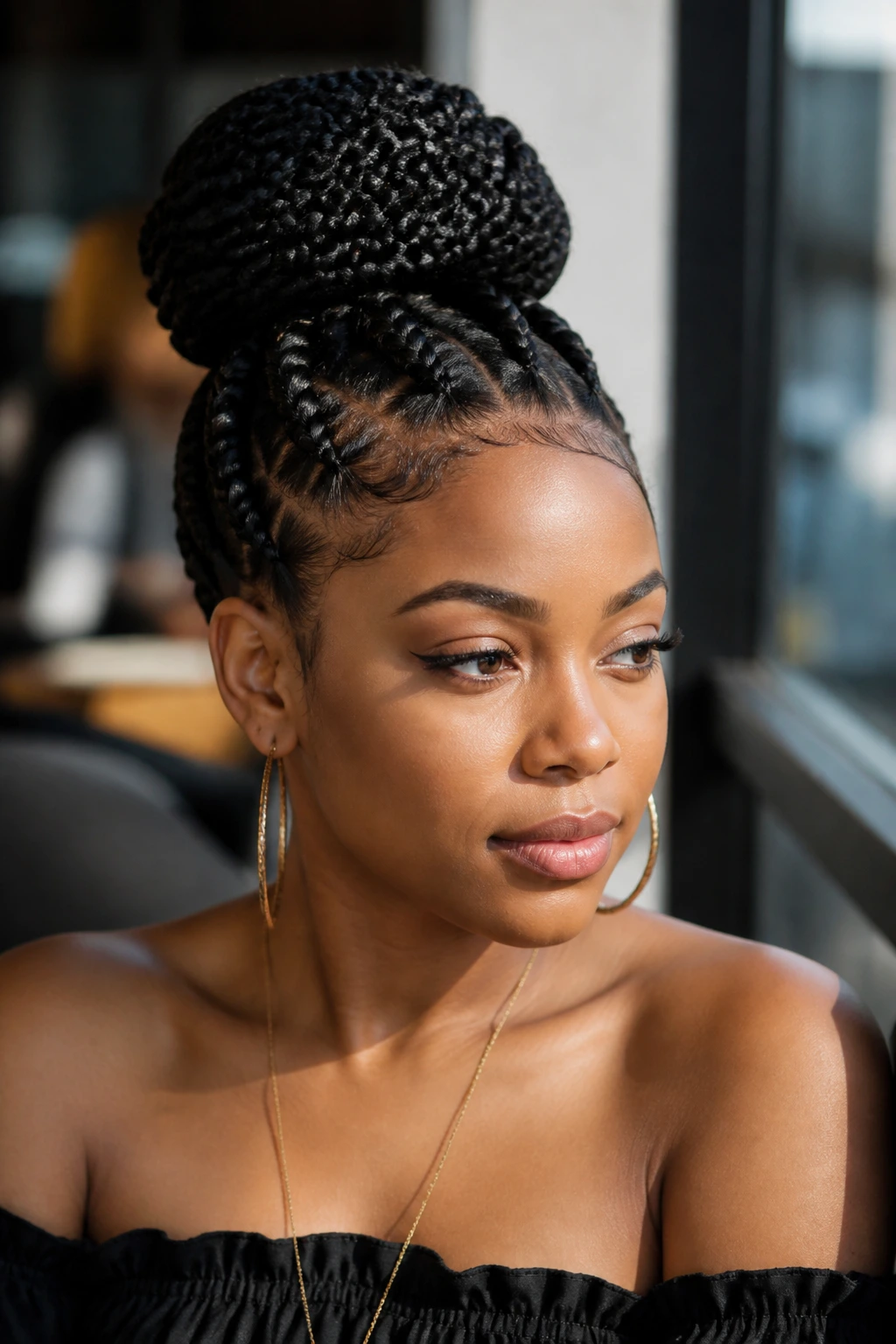
A goddess braid bun is the style I reach for when I want the hair off my shoulders but still want the look to feel styled, not lazy. The bun gives you structure, and the braided lengths wrapped into it give you texture that a plain bun can’t match.
The beauty of this one is how adaptable it is. A low bun feels calm and polished. A higher bun has more attitude and gives the face a little lift. Either version works best when the braid sections are smooth at the base and the bun itself has enough fullness to look intentional, not pinched.
This style is also kind to people who do not love hair brushing their neck all day. It keeps the weight centralized, which can be a relief when you’re wearing braids for a while. If you add a few curled pieces around the hairline, the whole thing softens up fast.
The one thing I would avoid is overstuffing the bun. Too much volume on top of too much braid can get clumsy. Keep the shape compact and let the texture speak.
9. Mohawk-Inspired Goddess Braids

Why choose a mohawk-inspired braid style? Because it gives you edge without shaving anything, and that alone is reason enough for a lot of people. The sides stay sleek or closely braided, while the center section rises in a thicker row of braids or a sculpted braid ridge.
That shape changes the whole vibe of the head. It reads taller, sharper, and a little rebellious, even when the braids themselves are neat and clean. The style is especially strong if you like high cheekbones, strong brows, or statement makeup, because it frames the face in a direct, almost architectural way.
When to choose it
This is a good pick if you want your hair to feel like part of the outfit instead of the background. It pairs well with leather jackets, satin tops, or anything with a strong shoulder line. You can also keep it softer by leaving a few curly pieces near the temples.
Just don’t crowd the center row too much. The best mohawk-inspired styles have room to breathe on the sides. The contrast is what makes it work.
10. Small-to-Medium Layered Goddess Braids
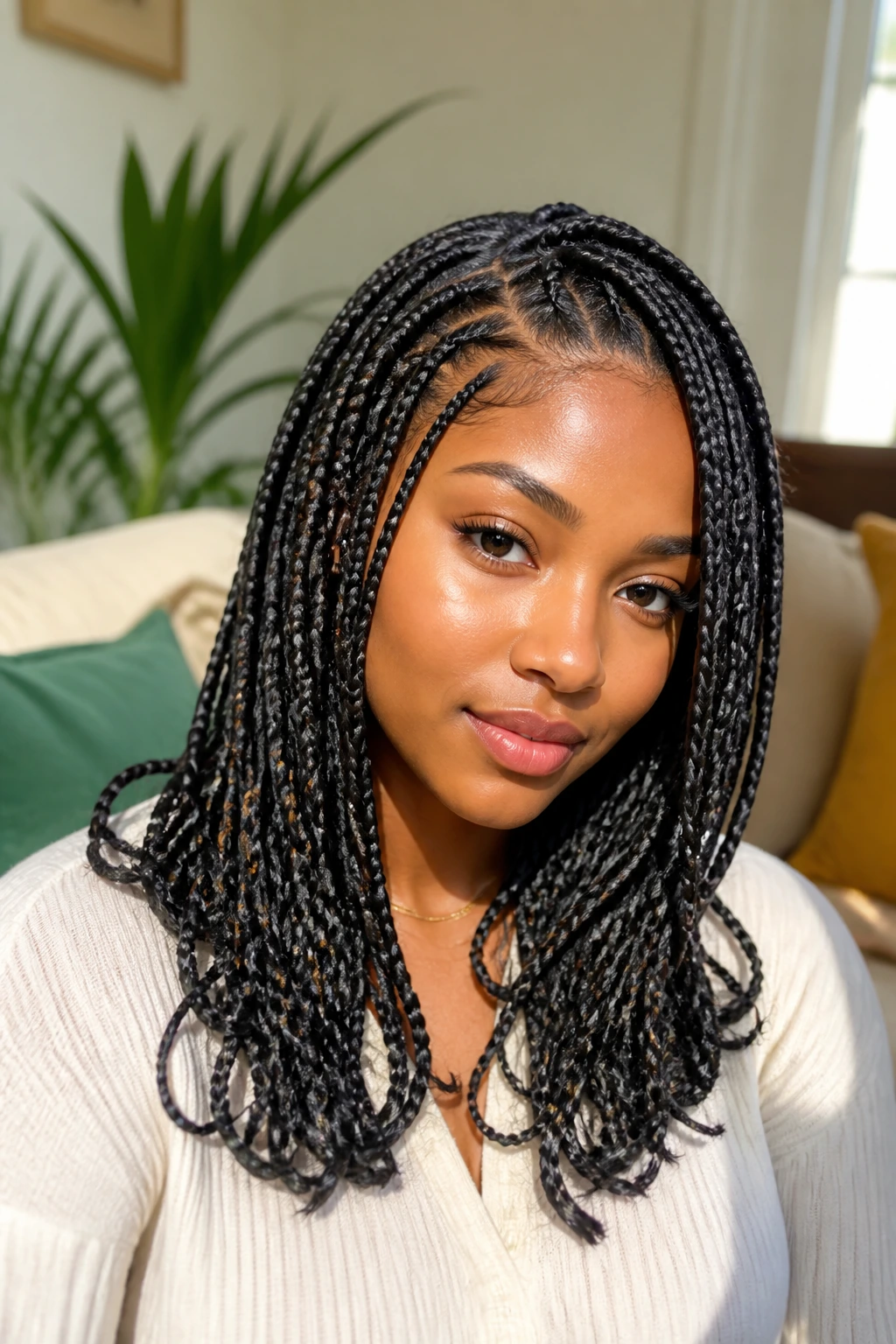
Layering changes everything here. When the braids vary slightly in size or length, the style stops looking like a single block and starts looking textured, which is a better fit if you like movement and shape.
Small-to-medium braids also tend to sit flatter at the scalp than oversized ones, which can make the whole style easier to wear for longer stretches. They do take more time to install, though, because clean parting and consistent braid size matter more when the sections are smaller. No shortcuts. The eye catches everything.
What I like about layered braids is the flexibility. You can wear them loose, pin one side back, sweep them into a low ponytail, or tuck some behind the ear and let the rest fall. The style shifts without falling apart. That is a real advantage.
- Better if you want more styling options
- Usually lighter than jumbo braids
- Takes longer to install than thick braids
- Works well with subtle curls at the ends or face-framing pieces
If you’re after a braid style that gives movement without looking busy, this is a very solid place to start.
11. Triangle-Part Goddess Braids

Straight parts are fine. Triangle parts have more bite.
That is the whole reason people love this look. The braids may be classic, but the sectioning turns the scalp into part of the design. Triangle parts create a geometric pattern that feels sharper than square sections, and they’re especially good if you want the base of the style to look intentional even when the braids themselves are simple.
The trick is clean separation. Triangle parts need crisp corners, not fuzzy blobs, or the pattern disappears once the braids start laying over one another. A good rat-tail comb and a steady hand make a bigger difference here than fancy hair products ever will.
This style works with short, medium, or long braids, which is handy. You can keep the overall look minimal and let the parts do the talking, or add curls and beads if you want more personality. Either way, the triangle sections give the style a harder edge.
12. Burgundy or Honey-Colored Goddess Braids
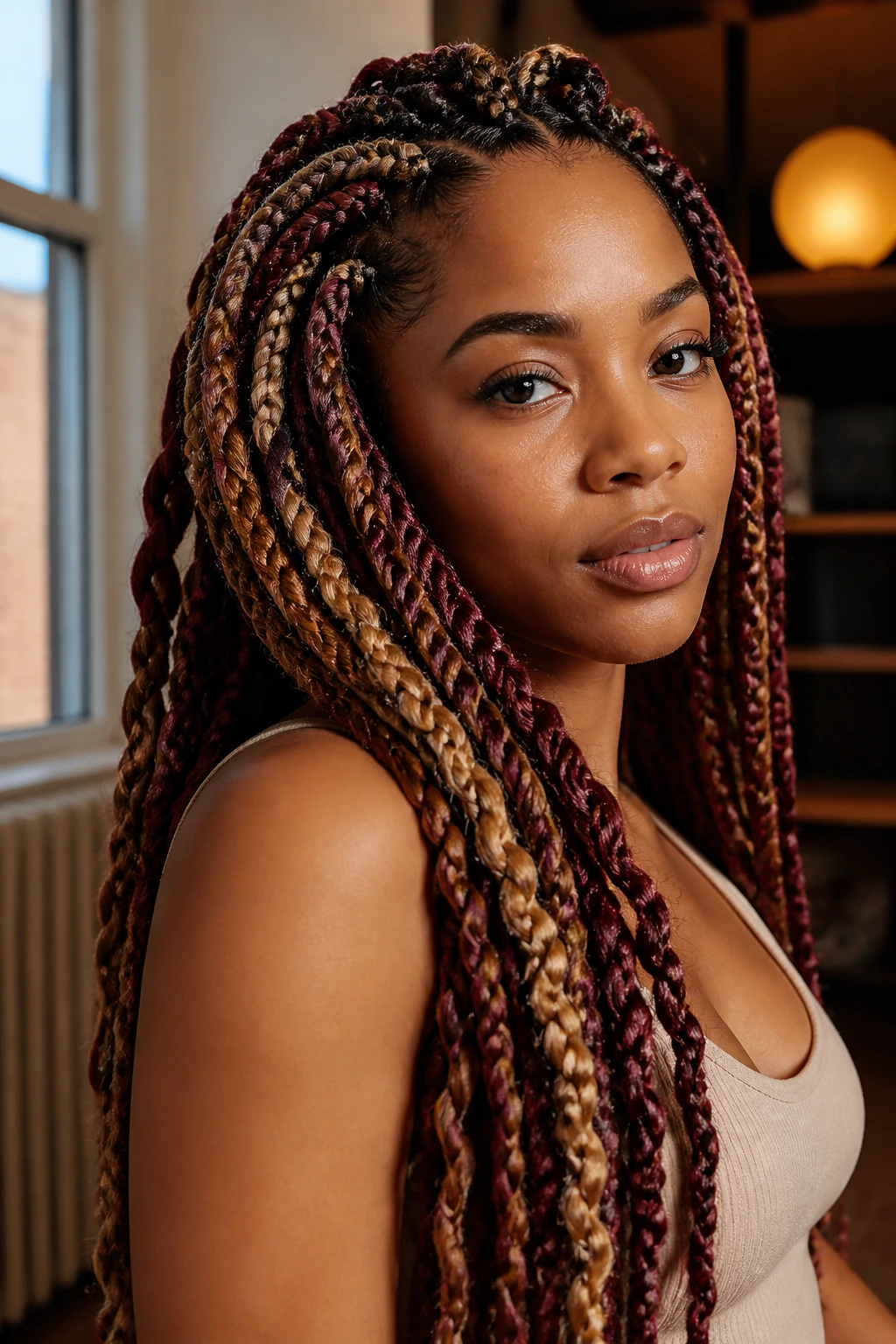
Color changes the mood in a way people sometimes underestimate. Burgundy, copper, honey blonde, and deep auburn all make goddess braids read bolder without changing the braid pattern at all.
I like color on goddess braids because the curls and braided ridges catch light differently. You get little shifts in tone every time the hair moves, which adds depth that plain black braids can’t always give. If you want something eye-catching but not neon-bright, this is the lane.
The smartest move is to choose a shade that works with your skin tone and your wardrobe. Warm browns and honey tones tend to feel softer. Burgundy and copper feel richer and more dramatic. If you’re unsure, mixed-tone extension hair is safer than one flat color because it looks more natural and less wiggy under indoor light.
One practical note: color can make braid texture easier to see, which is great if your parts are clean and less great if your install is messy. The camera does not lie. Neither does daylight.
13. Shoulder-Length Goddess Braids

Shoulder-length goddess braids are underrated because they do not announce themselves from across the street the way longer styles do. But that shorter length gives them a clean, punchy look that feels bold in a different way — lighter, sharper, easier to wear.
They are also easier on the neck. That matters more than people admit. Long braids can pull when you’re moving around a lot or when you’re tired of hair touching your back. Shoulder-length braids stay out of the way but still keep the softness and curl detail that make goddess braids look finished.
This length is a strong choice if you want less daily fuss. Washing and drying are simpler, and the braids tend to swing less when you’re working, driving, or running errands. They still photograph well, but the real benefit is how practical they feel.
If you’re unsure whether to go long or short, I’d ask one question: do you want drama or ease? Shoulder-length gives you more of the second without giving up all the first.
14. Zigzag-Part Goddess Braids

Why settle for straight lines when a zigzag part can wake the whole look up? The parting alone turns a standard braid style into something sharper and more playful, and you do not need a lot of extra accessories to make it work.
The parting is the point
The zigzag should be visible enough to matter, but not so tiny that it disappears under the braids. Large, clean zigzags read better than tiny ones in most real life settings. That kind of pattern takes patience, so I would not rush it. A rushed zigzag part looks accidental, and that kills the mood.
This style works especially well when the braids themselves are simple. Let the sectioning carry the personality. Add curly ends if you want softness, but don’t pile on too many extras or the parting gets lost.
- Best with a sharp rat-tail comb and a clean mirror setup
- Works on medium or long braids
- Looks strongest when the zigzags are even and deliberate
- A little shine spray helps the parting lines stand out
There’s a slightly edgy feel to this one. Not loud. Just pointed.
15. Double-Bun Goddess Braids
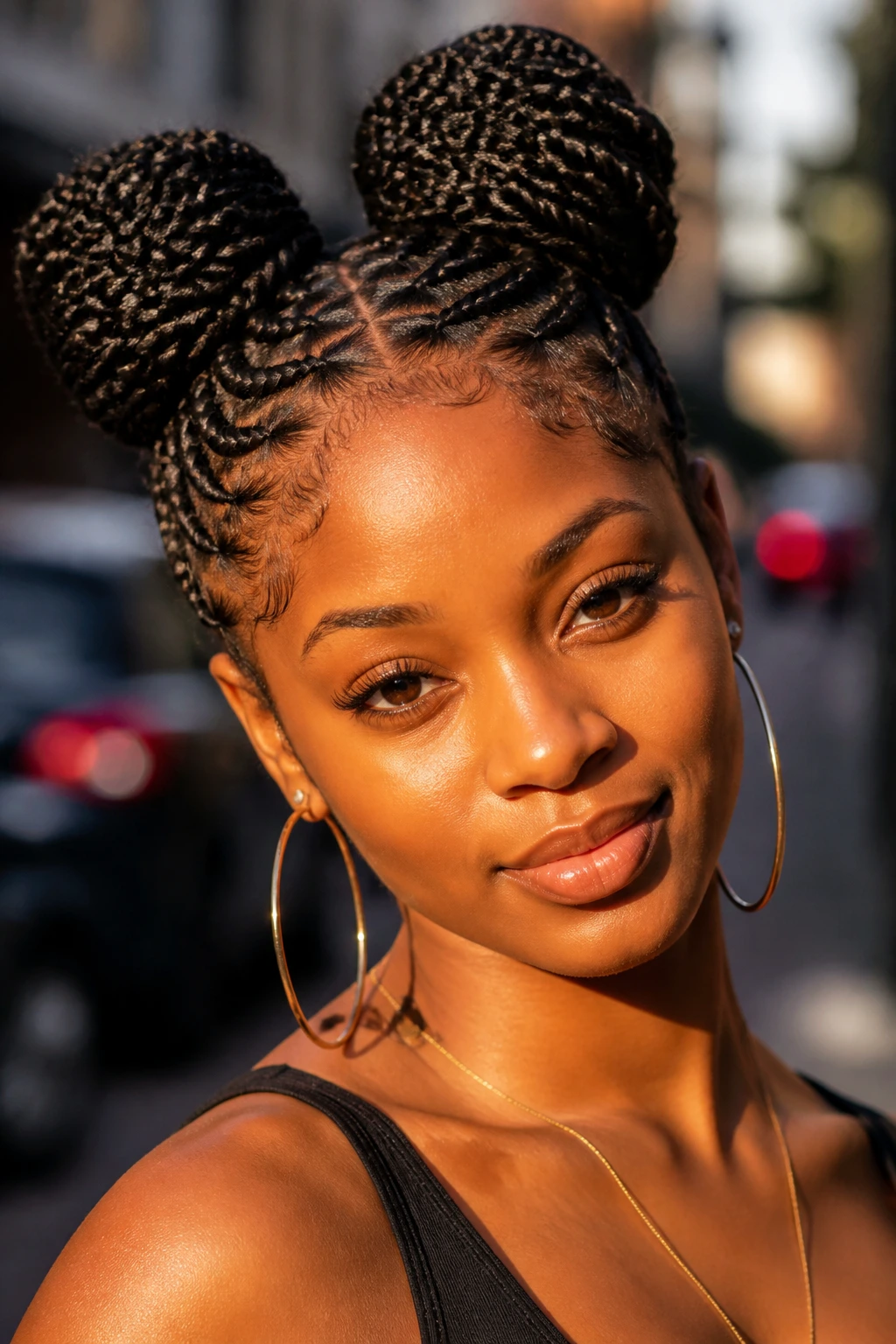
Double buns have a playful side, but they can still look bold and grown if the braid base is clean. The hair gets split into two buns — usually high on the head — and the texture gives each bun more body than a standard knot.
This style works because it changes the silhouette. Instead of a long fall of braids, you get height and shape on top, which can make the face look more open. It’s also a good way to keep hair off the neck and shoulders while still wearing something that feels styled.
I would call this a smart choice for days when you want the hair to feel lighter but you do not want to give up drama. It leans a little youthful, sure, but with neat parts and polished edges it reads more fashion than cute. That difference matters.
If your braids are very long, keep the buns compact so they do not sag or slide. Two smaller buns usually hold better than one oversized knot trying to do too much.
16. Goddess Braids With Beads
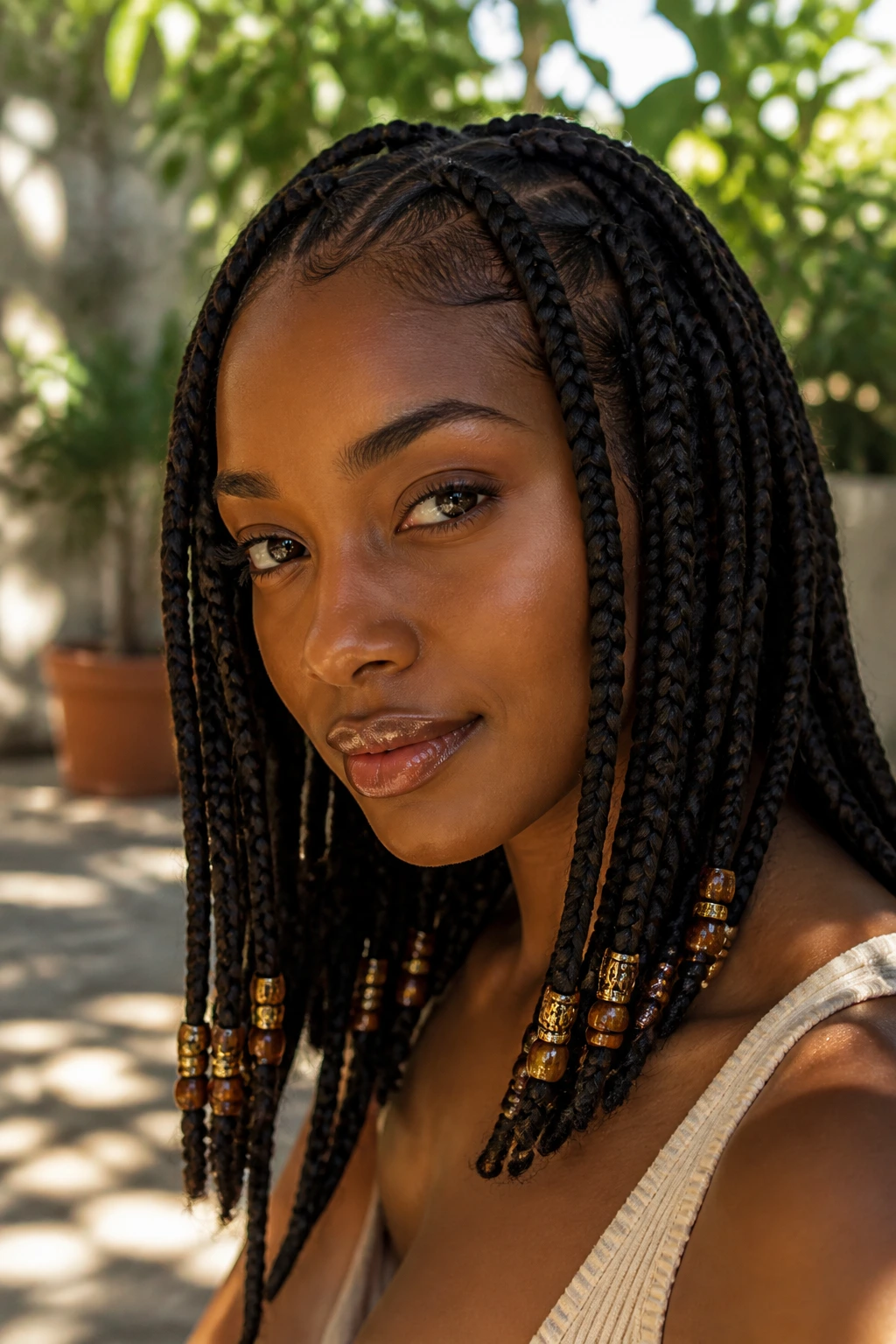
Beads can make goddess braids feel personal in a way that plain braids sometimes don’t. A few wooden beads, clear beads, or gold cuffs at the ends can turn a good braid style into something that feels finished and deliberate.
The key is restraint. You do not need to cover every braid in hardware. A few placed pieces create rhythm, and that rhythm is what your eye notices first. Too many heavy beads, though, and the braids start to pull at the scalp. Nobody wants that by day two.
I especially like beads on longer braids because they add sound, weight, and a bit of movement when you walk. That tiny clink can be charming or annoying, depending on how many you use. Keep it controlled and the style stays elegant enough for everyday wear.
- Choose lightweight beads if your braids are fine or medium
- Place beads mostly on the ends, not the root
- Use 1 to 3 beads per braid for a cleaner look
- Gold cuffs work well if you want shine without extra weight
This is one of those styles where the details carry more personality than the braid pattern itself.
17. Asymmetrical Goddess Braids

Asymmetry gives a braid style instant attitude. One side sits heavier, longer, or more decorated than the other, and the imbalance makes the whole look feel deliberate instead of perfectly symmetrical and a little stiff.
What I like here is the movement. A braid swept over one shoulder with more length on one side can frame the jaw beautifully, while the lighter side keeps the face open. It feels less predictable than evenly spaced braids, and that alone makes it more interesting.
This style works especially well if you like one side of your face better for styling — most people do, even if they won’t admit it. You can also mix braid sizes, then let the thicker section dominate one side while the thinner pieces stay close to the head.
The trick is making the asymmetry look planned. A random lopsided install looks like a mistake. A clean, clearly one-sided design looks like taste.
18. Fulani-Inspired Goddess Braids

Fulani-inspired braids bring a specific shape to the table: a center braid or central line, side braids, and decorative touches that often sit near the temples or ends. The style has strong roots, and that matters. Wear it with care, not as a costume.
Details that matter
Keep the pattern clean and respectful. The parts should feel crisp, and the added pieces should support the style rather than clutter it. A central braid down the middle of the head creates a strong anchor, while slimmer side braids and a few beads or cuffs add character without overwhelming the shape.
This is one of the more visually striking goddess braid looks because the structure is so clear. Your eye knows where to go. The middle line leads, the sides follow, and the decorative bits finish the picture.
- Works well with a center part and even spacing
- Beads or cuffs should be used sparingly
- Looks best when the braids sit flat near the scalp
- A few loose curls can soften the front without erasing the structure
If you want bold, heritage-rich, and unmistakable, this style has real presence.
19. Low Braided Bun With Face-Framing Curls

A low braided bun with face-framing curls is one of the smartest ways to wear goddess braids when you want polish but not stiffness. The bun sits near the nape, which keeps the shape grounded, and the curls near the front soften the whole look fast.
That front softness matters. Without it, a low bun can feel severe, especially if the braids are thick. With two curly pieces near the cheeks or jawline, the face gets some movement and the style feels warmer. It is still neat. It just breathes.
This is a strong option for events, dinners, interviews, or any day you want your hair to behave but still look styled. It also works well with earrings because the bun doesn’t compete with the face. The curls do enough visual work on their own.
I prefer this look when the base is smooth and the bun itself is compact. A messy low bun can be fine. A messy braided bun with curls usually just looks unplanned. There is a difference.
20. Twisted Goddess Braid Updo

A twisted updo gives goddess braids a more sculpted shape than a standard bun. Instead of simply wrapping the hair into a knot, you twist the braids into loops, rolls, or pinned shapes that sit higher or tighter against the head.
That extra structure makes the style feel dressed up. It can look a little more formal, sure, but it also works well when you want the braids out of the way and still want the style to read as intentional. The silhouette is the main attraction here, not length.
Why it holds shape
Twists and pins give the updo more control than a loose wrap. Shorter or medium-length braids often work best because they are easier to tuck. If the braids are very long, the style can get bulky fast, so you need a steadier hand and a few extra pins.
A fine-tooth comb, bobby pins, and a firm but not crunchy holding spray are usually enough. Don’t overdo the spray. If the hair feels helmet-hard, the style loses its softness.
This one is for people who like braid styles that look a little architectural. Clean lines. Good height. A shape that stays put.
21. Box-Braid-and-Goddess Hybrid

This hybrid style mixes the neatness of box braids with the softness of goddess elements, usually by leaving out curly pieces or alternating braids with loose textured strands. It is a nice middle ground if you want structure but do not want every inch of the style to look identical.
Unlike a full set of goddess braids, this version gives you more texture variation. The box braid sections keep things orderly, while the loose curls break the grid and add movement. That mix is what makes the style feel rich instead of repetitive.
It’s especially good when you want a little more visual interest but don’t want to commit to an all-curly finish. The pattern can be as subtle or bold as you like. Some people keep the curly pieces near the front only. Others spread them through the whole style. Both work, though the front-heavy version usually feels cleaner.
If you like braid styles that read a little layered and a little offbeat, this is a strong pick. It gives shape without looking too formal.
22. Extra-Long Statement Goddess Braids

Extra-long goddess braids are for the person who wants the hair to arrive before they do. Hip-length, thigh-length, even floor-grazing versions can look incredible when the braids are clean and the curls at the ends are controlled, not frizzy.
The appeal is obvious, but the weight is real. Long braids pull more, swing more, and need better upkeep than shorter versions. If you go this route, the base should be secure without being tight, and the length should be manageable enough that you can actually live in it. Gorgeous is good. Wearable is better.
What makes this style worth the effort is the line it creates. Long braids elongate the body, sharpen the profile, and make simple outfits look deliberate. A plain black dress, a denim jacket, even a tank top suddenly looks more styled when that much length moves behind it.
I would keep the ends soft and layered rather than blunt. A little curl or wave at the bottom keeps the finish from looking like a curtain. If you want one goddess braid look that turns the volume all the way up, this is the one.
