



Cornrow styles with beads can change a look in minutes. A clean part, the right braid size, and a smart bead choice can make the same hair read sweet, polished, bold, or grown.
Beads are not an afterthought. They change weight, swing, sound, and where the eye goes first. Clear beads feel crisp. Wooden ones sit warmer. Chunky acrylic beads make a louder statement, while tiny ones can disappear unless the braids themselves are thin and neat.
The scalp matters too. If the roots sting, the braid is too tight. That’s not a small thing. A style can look perfect in a mirror and still be a bad wear if the tension is wrong at the hairline or behind the ears.
The strongest bead looks are the ones that feel planned from the parting all the way to the ends. Straight rows, side-swept rows, crown shapes, bob lengths, pigtails — they each ask for a different bead size and a different finish. The good versions are the ones that move well when you turn your head and still sit clean when you’re still.
1. Classic Straight-Back Cornrows With Clear Beads
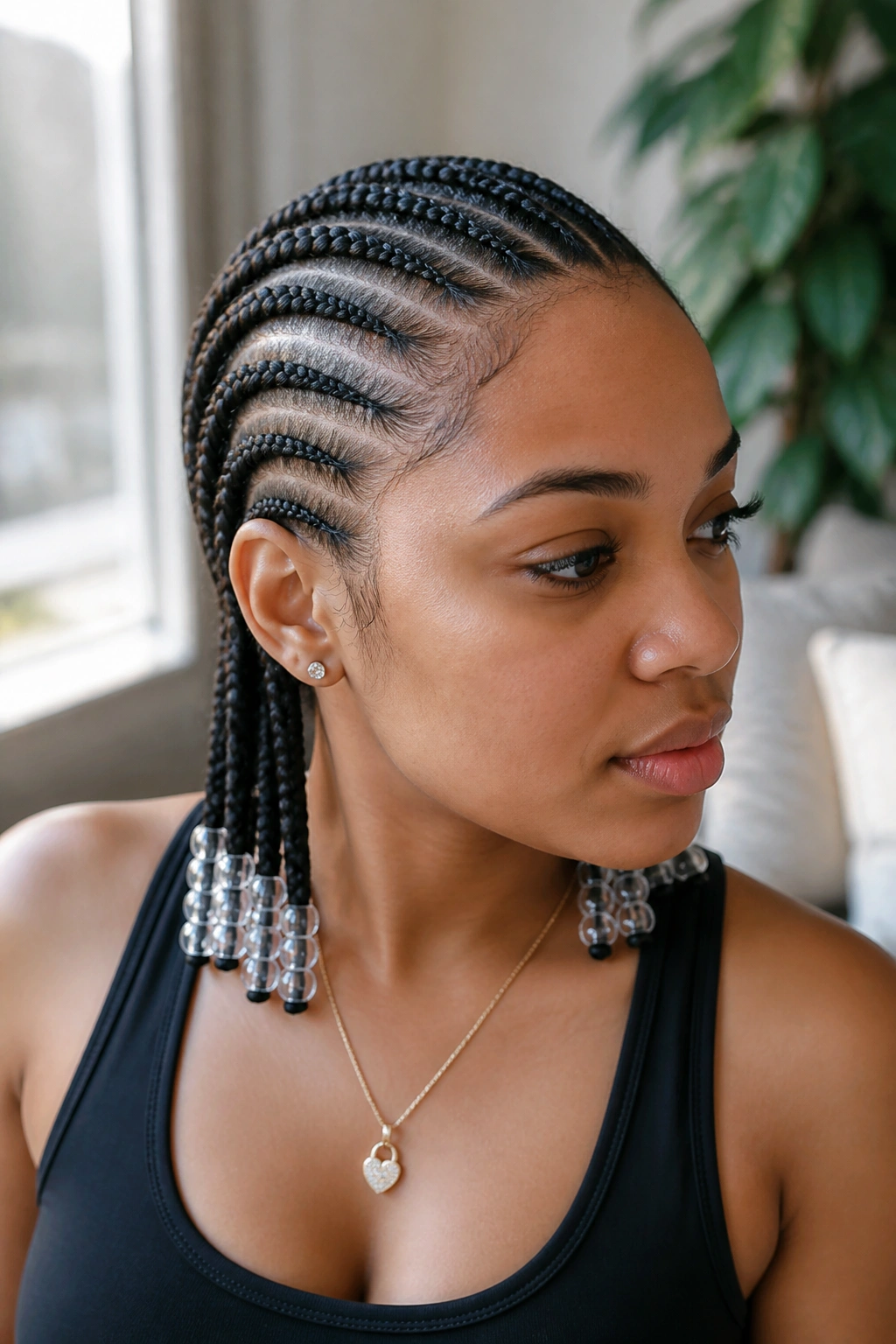
Straight-back rows are the style people keep returning to when they want the braid work to speak first. There’s a reason for that. The lines are easy to read, the shape feels tidy, and clear beads keep the ends from fighting the braid pattern.
Why It Still Holds Up
Clear beads do not try too hard. That’s the whole appeal. They let the parting show, they let the row spacing show, and they give the ends a little movement without turning the whole style into a costume.
For most heads, 6 to 10 rows is the sweet spot. Fewer rows can look bold and simple. More rows can look more detailed, but only if the parts are even. If the sections drift, you’ll see it right away because straight-back cornrows leave nowhere to hide.
- Use medium clear beads if you want the ends to swing softly.
- Keep the last half inch of each braid neat before threading the beads.
- A small elastic bead stopper helps if the bead holes are wide.
- Space beads so they rest in a small cluster, not a heavy lump.
Best tip: leave a little room at the end of each braid so the beads don’t sit directly on the last knot. That tiny gap keeps the ends from bunching up and makes the whole style move better.
2. Center-Part Cornrows That Frame the Face
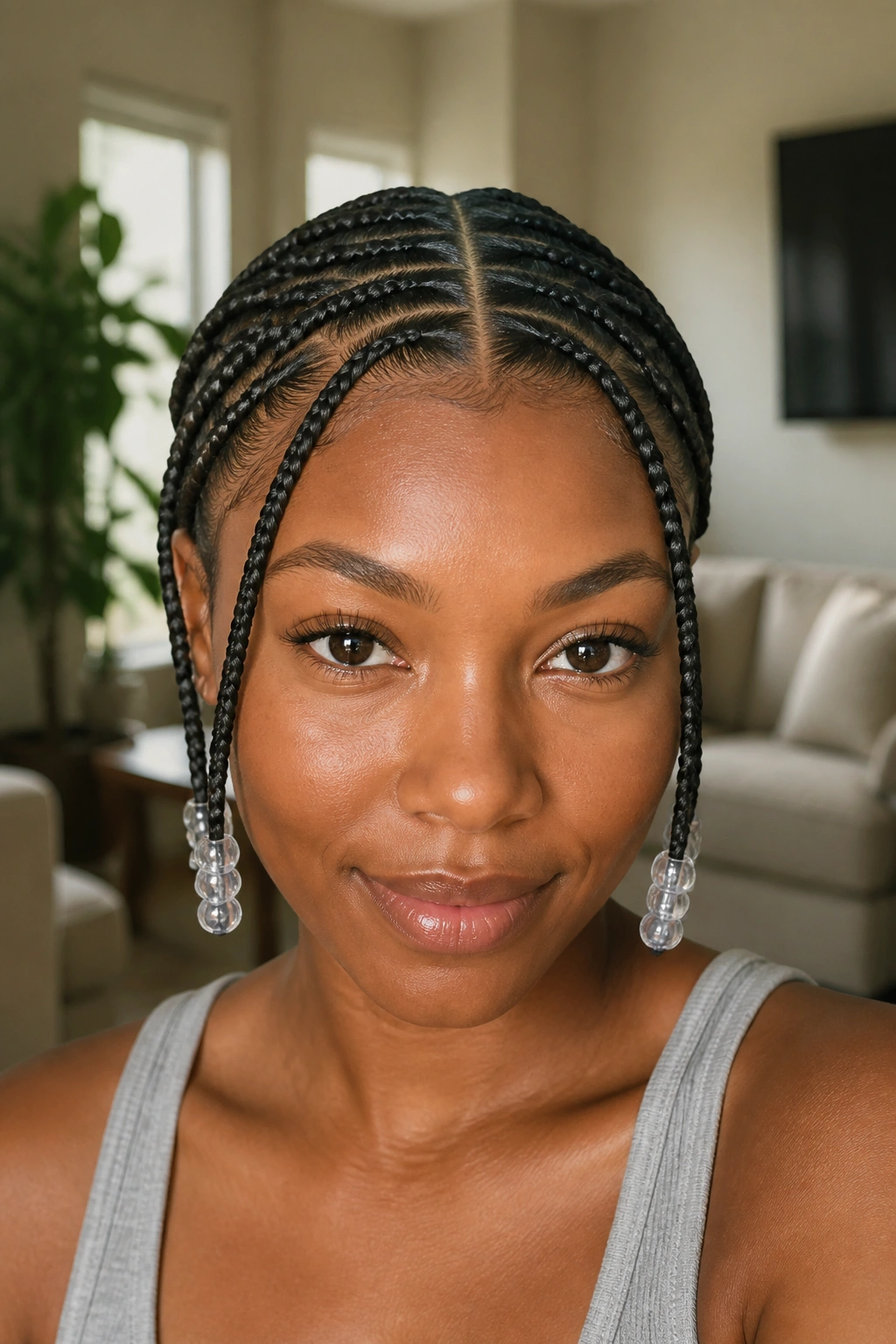
A center part changes the whole read of a face. Sharp, even rows on both sides can make the style feel balanced and calm, which is exactly why this version works so well with beads.
The middle line does a lot of work before the beads even appear. It draws the eye straight down the face, then the rows guide it outward. If you keep the front rows a touch narrower than the back rows, the shape feels lighter near the temples and cleaner around the cheeks.
This style is a good pick when you want something that looks neat without feeling stiff. Use small clear or pearl beads near the jawline if you want a softer finish, or swap in two gold spacer beads per braid if you want the ends to read a little richer. I like this version when the outfit is plain and the hair needs to carry more of the look.
The trick is keeping both sides honest. If one side starts wider or drops lower, the center part stops looking precise, and the whole thing loses its point. Clean parting matters here more than in almost any other cornrow style with beads.
3. Side-Swept Lemonade Cornrows With Wooden Beads
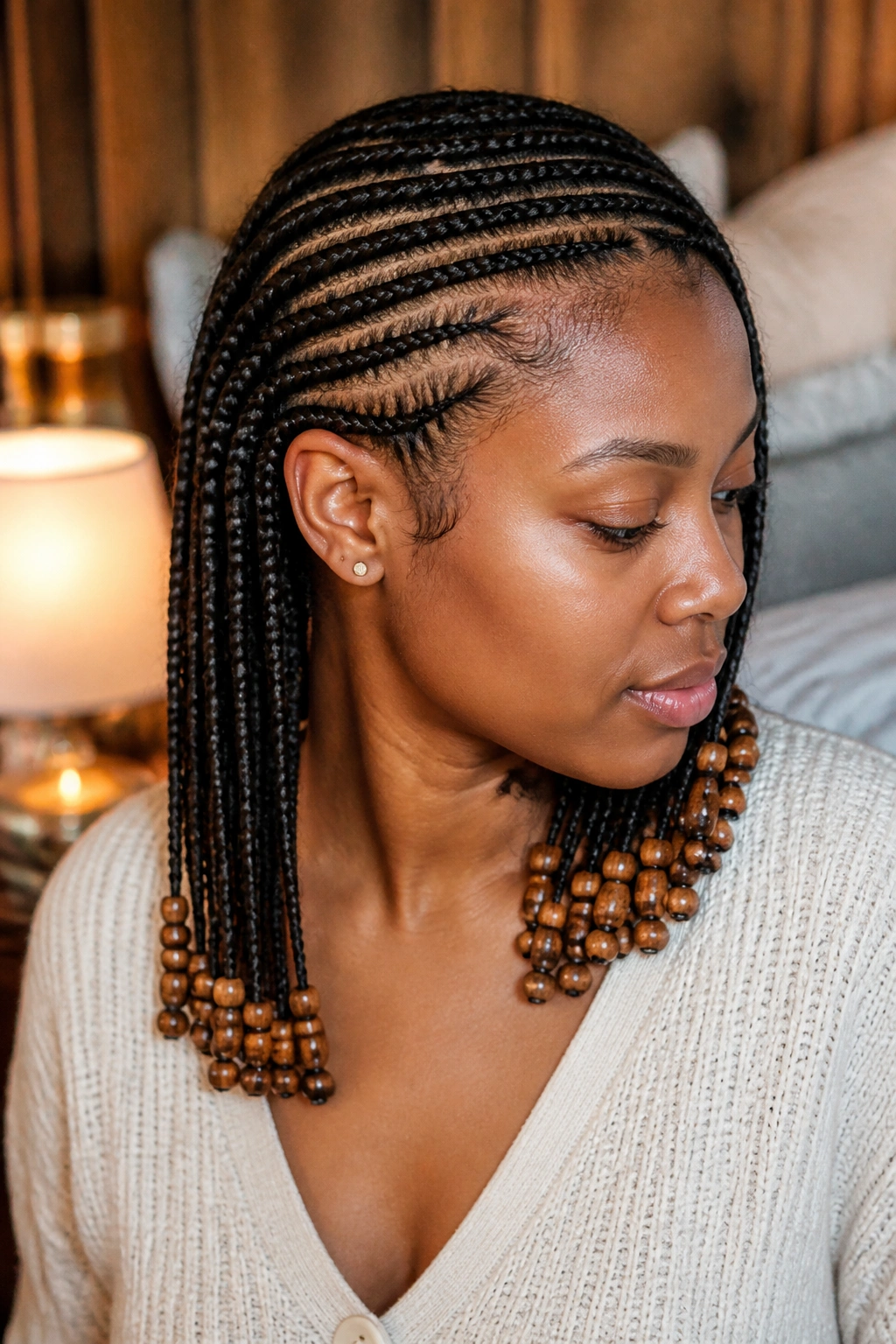
Why do side-swept cornrows feel easier to wear? Because the direction does half the styling for you. The braid line moves from temple to nape, and the beads fall in a diagonal instead of hanging straight down.
How to Wear It
Wooden beads work well here because they sit quietly. They do not clatter as much as hard plastic, and the matte finish keeps the braid ends from looking too glossy. If you want the style to feel a little softer, use medium wood beads in one shade rather than mixing five colors.
- Ask for 4 to 7 rows depending on hair density.
- Keep the first part deep and clean so the sweep is obvious.
- Use two to four beads per braid near the end, not a long chain of them.
- Let the braids angle over one shoulder instead of falling flat.
This style looks especially good when the ends land around collarbone length. Shorter braids can still work, but the side sweep needs enough length to show itself. When the angle is strong and the bead choice is calm, the whole look feels easy without being plain.
4. Zigzag-Part Cornrows With Mixed Bead Sizes
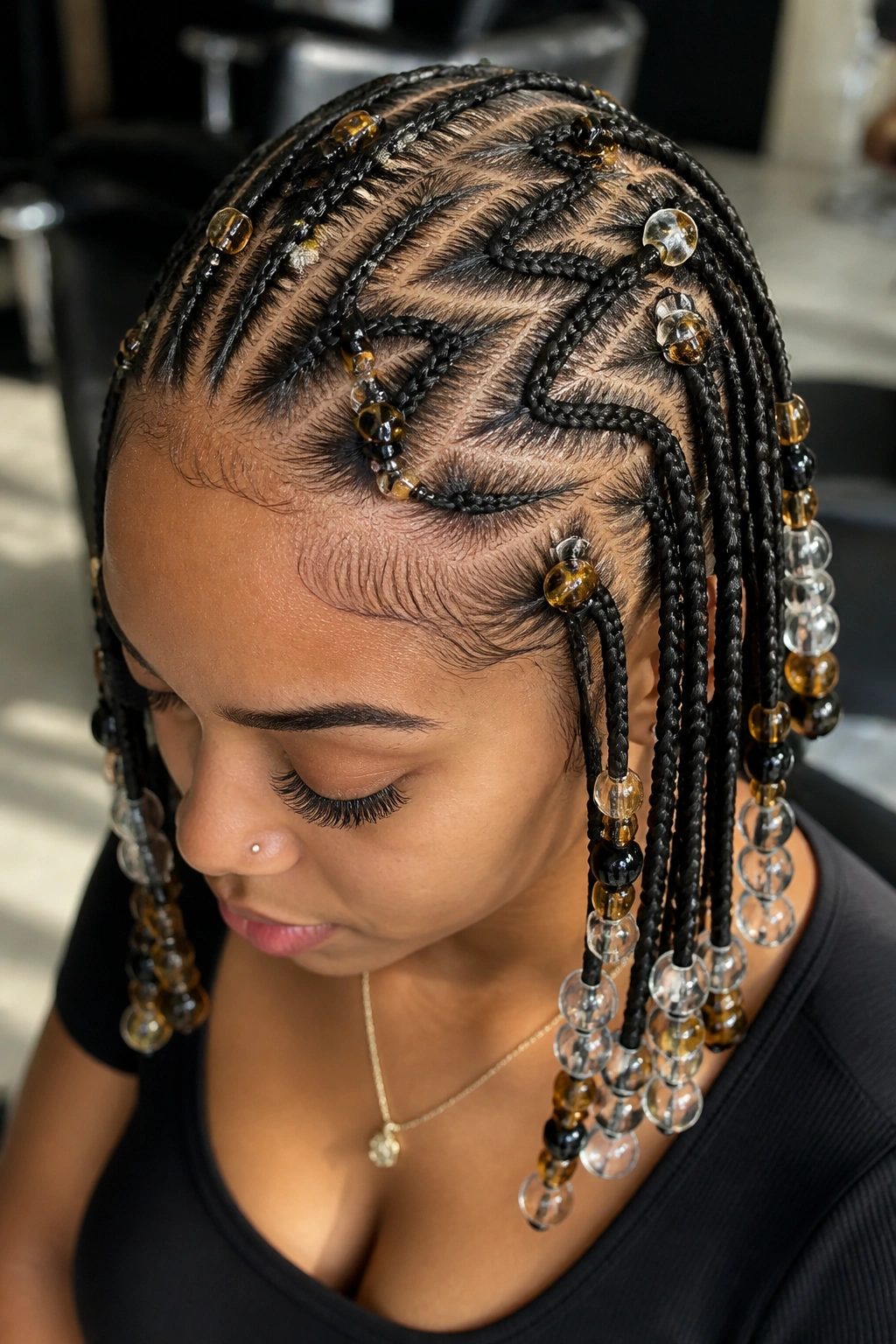
If straight parts feel too tidy, a zigzag part wakes the whole style up fast. The braid rows still do the basic job, but the scalp pattern adds movement before the beads even show.
The best zigzag cornrows are crisp, not messy. You want sharp corners, not soft waves. A good braider will keep the lines even all the way back so the pattern stays readable once the beads are added. Mixed bead sizes help here because they echo the broken line in the parting.
- Try 6 mm beads on the front rows and 10 mm beads on the back rows.
- Keep the color palette tight: clear, black, amber, or one accent tone.
- Put the boldest bead size on the longest braids, not the shortest ones.
- Avoid overcrowding every tail with a different pattern.
This style has a little edge to it. Not in a loud way. In a clean, graphic way. The zigzag parts and mixed bead sizes can look playful on a young girl and still feel grown on an adult when the colors stay controlled and the rows are neat.
5. Heart-Part Cornrows With Soft Dangling Beads
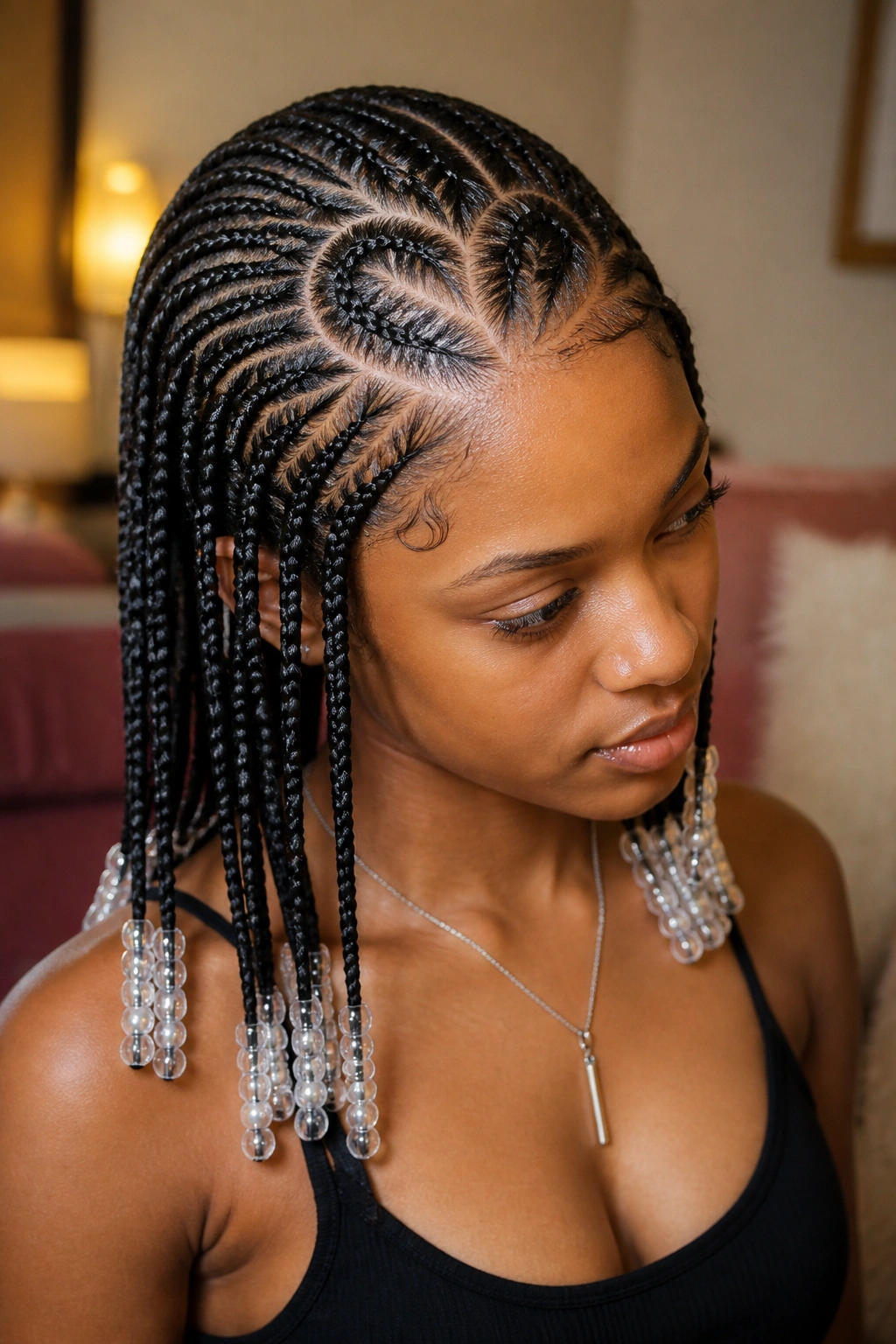
A heart part sounds cute until you see it done cleanly; then it looks deliberate. The shape sits right at the top of the head, so it catches the eye before the rows even start moving backward.
This style needs patience. The heart must be even on both sides, and the point has to land where the braid rows can flow out naturally. If the curves are sloppy, the shape disappears fast. If the curves are tight and balanced, the whole style feels special without becoming fussy.
Pearl beads work well here because they soften the shape a little. Clear beads do the same thing, but with less shine. I’d skip neon colors unless the rest of the outfit is also loud, because the heart part already does enough. The bead ends should support the design, not fight it.
This is one of those styles that looks good from above and from the front, which is not always easy to get with cornrows. A good heart part with beads can carry a birthday, a photo shoot, or a regular weekend if you want your hair to feel a bit more intentional.
6. Feed-In Cornrow Ponytail With Gold and Clear Beads
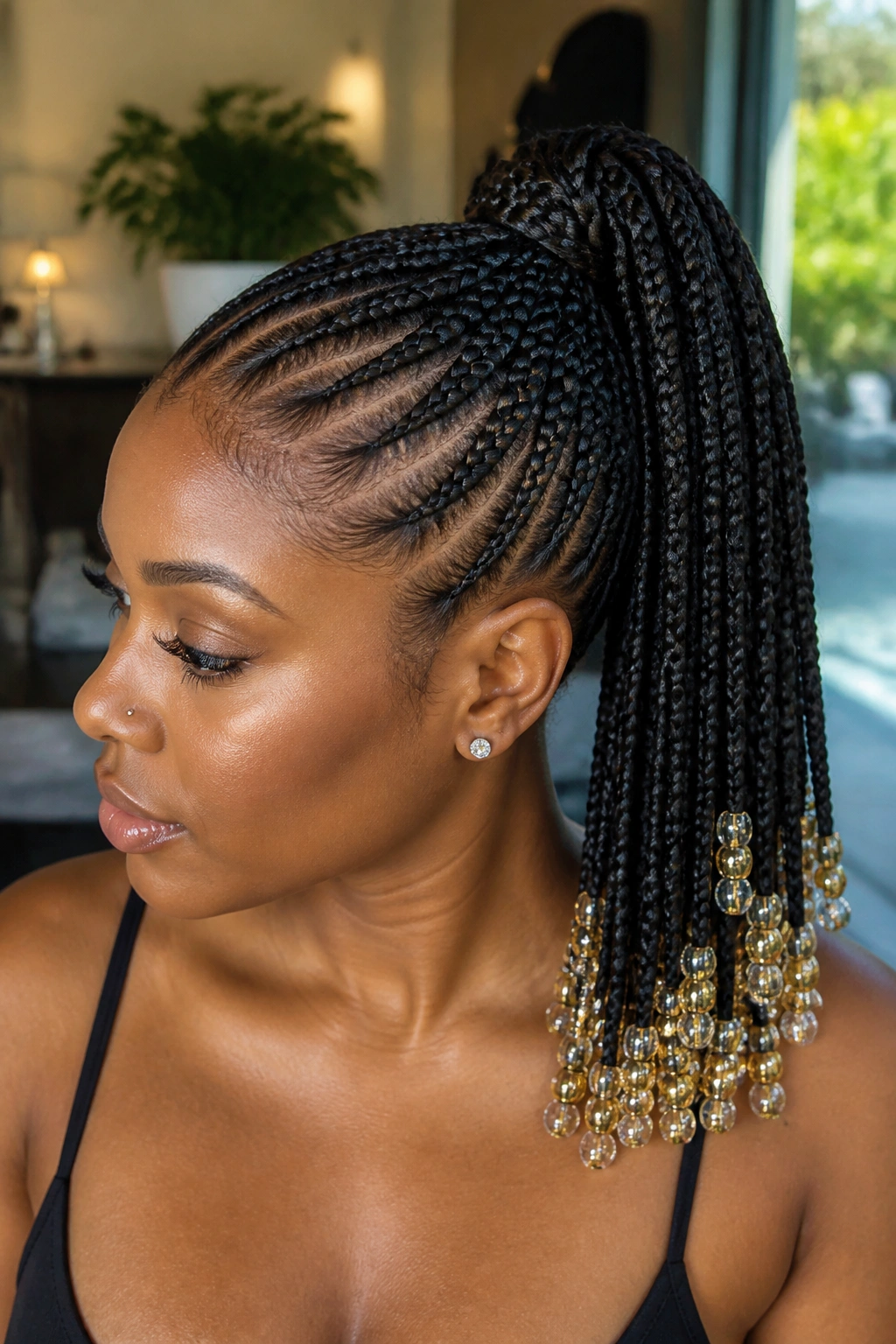
Unlike a simple ponytail, a feed-in cornrow ponytail starts light at the hairline and gets fuller toward the crown. That taper is what makes the front feel clean instead of bulky, and it gives the bead finish a better base to sit on.
The ponytail base also gives you height without putting all the braid weight around your face. If you like your hair pulled away from the cheeks, this is the one. Use gold spacer beads mixed with clear ones at the ponytail end if you want the finish to feel a little dressed up, but keep the ponytail itself sleek.
This style is best for anyone who wants a strong shape with less fuss at the sides. It works especially well when the top rows are tight enough to stay flat but not so tight that they dig in. That balance matters. A feed-in style should look smooth, not strained.
My recommendation: ask for 6 to 8 feed-in rows that gather into one ponytail base, then finish each tail with a small bead cluster instead of a long chain. It looks cleaner, and the ponytail moves better when you walk.
7. Low Cornrow Bun With Beaded Ends
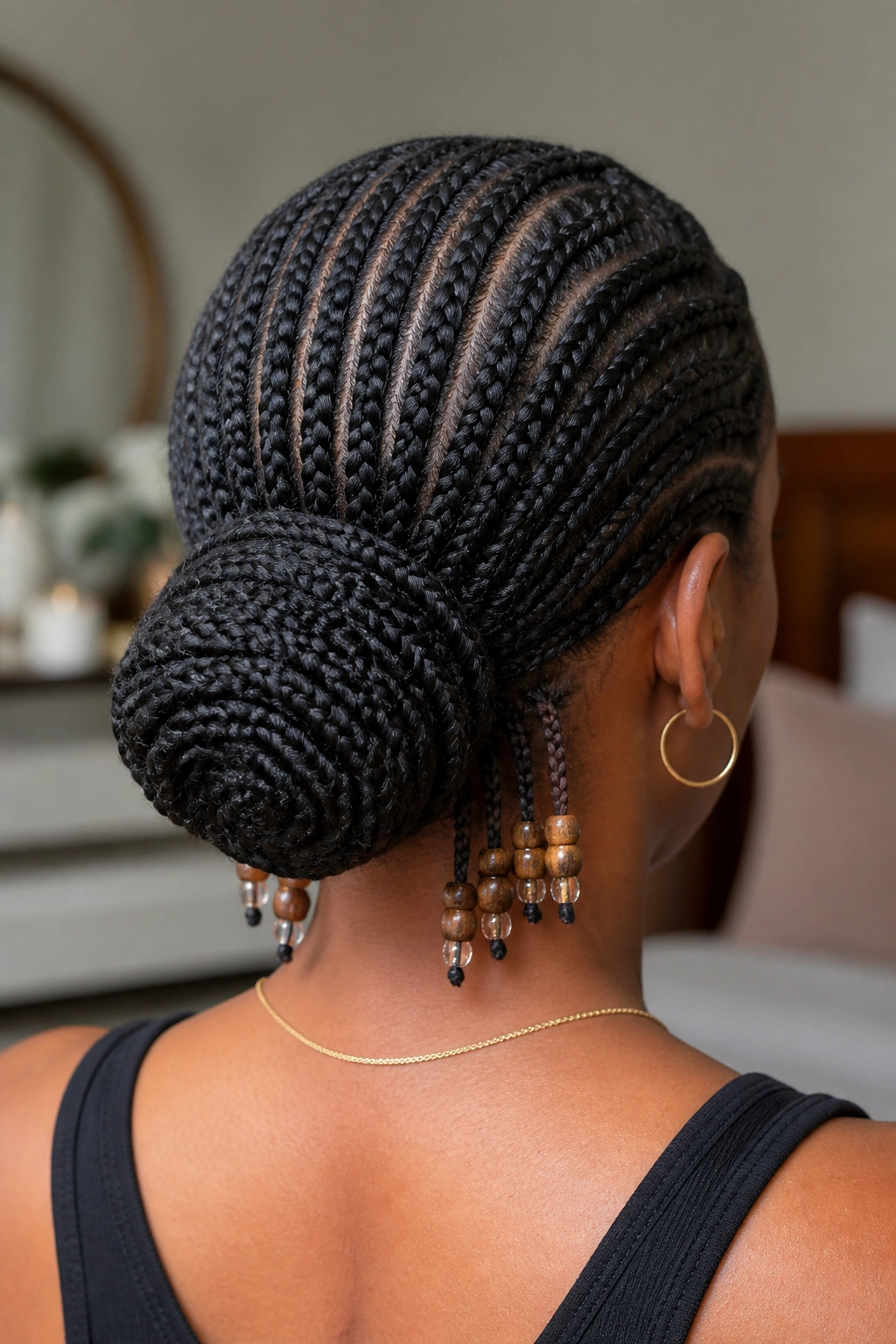
A low bun is the most polite way to wear beads. That sounds odd, maybe, but it’s true. The beads stay near the nape, away from your shoulders, and the bun keeps the whole style from bouncing around too much.
Why It Works at the Nape
The lower placement makes the style feel calm. You still get the sound and movement of beads, but not the weight of them swinging from every angle. For work settings, formal events, or any day you want your neck clear, this is a smart choice.
- Use 8 to 12 slim cornrows depending on head size.
- Thread beads only on the last 2 to 3 inches of each braid.
- Pin the bun with U-pins or small hair pins hidden under the wrap.
- Choose light acrylic or wood beads so the bun does not sag.
The bun itself should sit flat enough that the beads fan out from below, not sideways. If the bun is too high, the style loses that low, tucked feeling. Keep it low. Clean. Controlled. That’s the whole point.
8. Half-Up, Half-Down Cornrows With Beads at the Tips
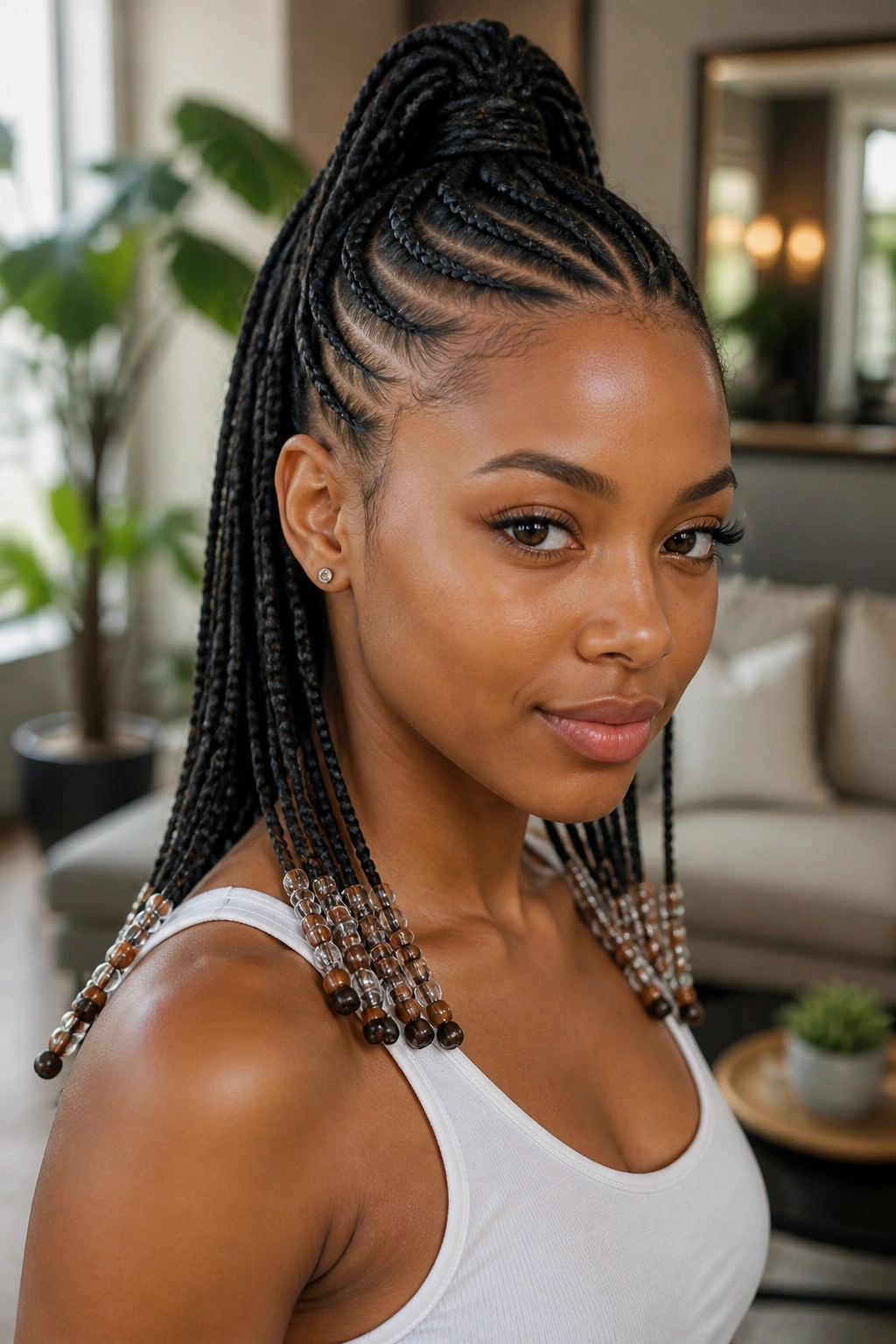
Half-up, half-down is the easy compromise nobody should be embarrassed to love. The top section gets pulled away from the face, but the lower rows still move, which means you get both neatness and swing in one style.
That split makes the beads feel more visible, too. The ends in the back can carry the larger bead clusters, while the top can stay lighter with smaller clear beads or even no beads at all. If you wear glasses, this style is a gift. The front stays out of the way, and the braid ends do the decorative part at the back.
It works best when the sectioning is deliberate. Pull too much hair into the top half and the back loses its shape. Pull too little and the style starts to feel accidental. Somewhere around the crown is usually the cleanest spot for the split, though a lower half-up section can look softer.
The top knot or top ponytail does the cleanup. The back still gets to move. That simple contrast is why this style stays useful.
9. Stitch Cornrows With Tiny Beads for a Sleek Finish
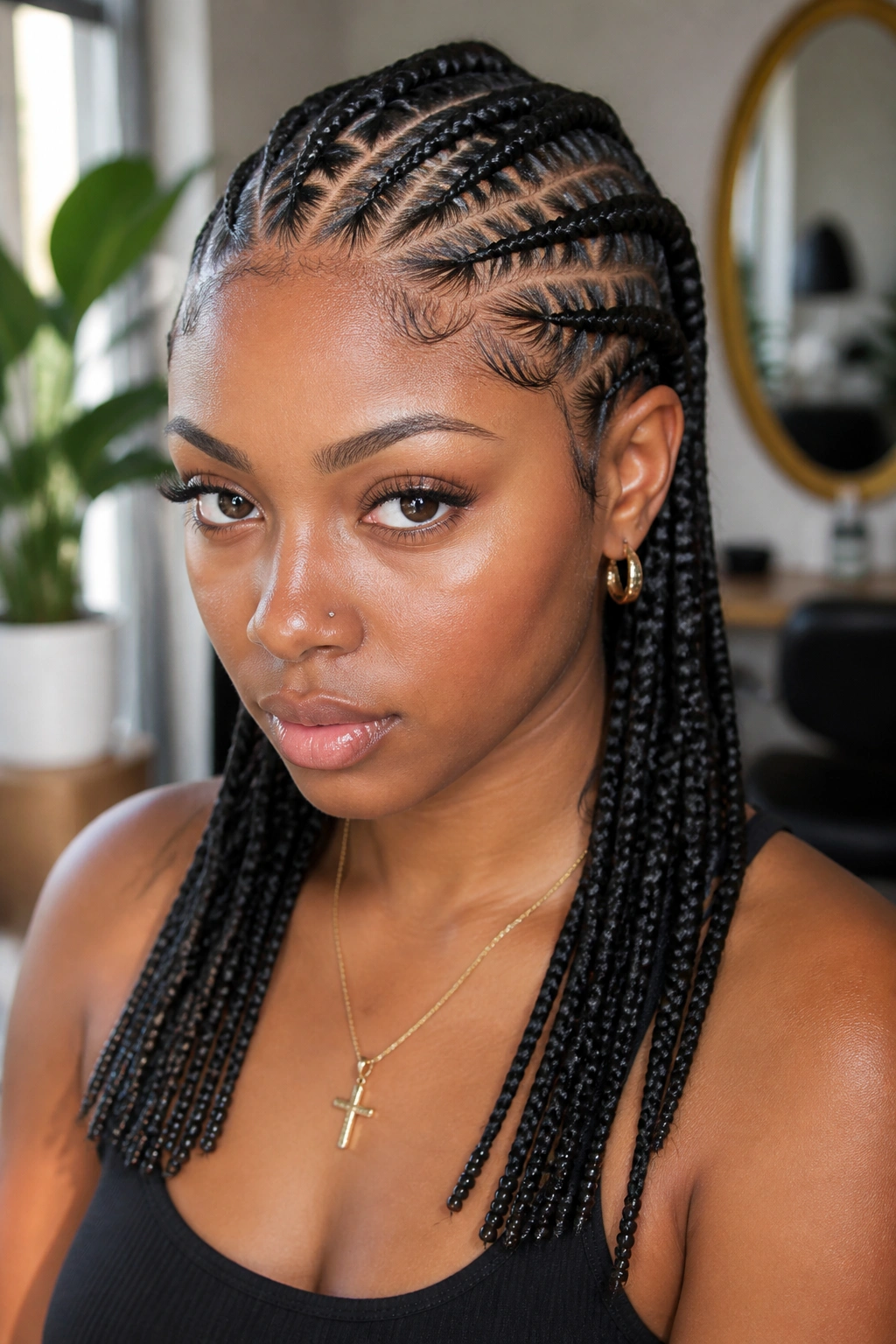
Why do stitch braids look so neat with tiny beads? Because the braid itself already has a built-in line, and the small bead finish lets that line stay visible instead of getting buried under hardware.
Stitch cornrows use very defined sections, often with little stacked ridges that make the braid look sharp. Tiny beads fit that same mood. A few 4 mm to 6 mm beads near the ends are enough. You do not need a heavy chain of them. Too much weight at the tip drags the eye away from the stitch work.
How to Keep the Part Lines Sharp
A little edge gel helps. A helmet of buildup does not. The parts should look clean and flat before the braid starts, and the braids should lie close to the scalp without being yanked tight. That shape is what makes stitch cornrows feel crisp.
I’d keep the bead color close to the braid color here: clear on dark braids, black on dark braids, soft smoke or pearl on lighter extensions. When the beads disappear a bit, the stitch pattern gets to stay the star.
10. Ghana Braids With Chunky Beads
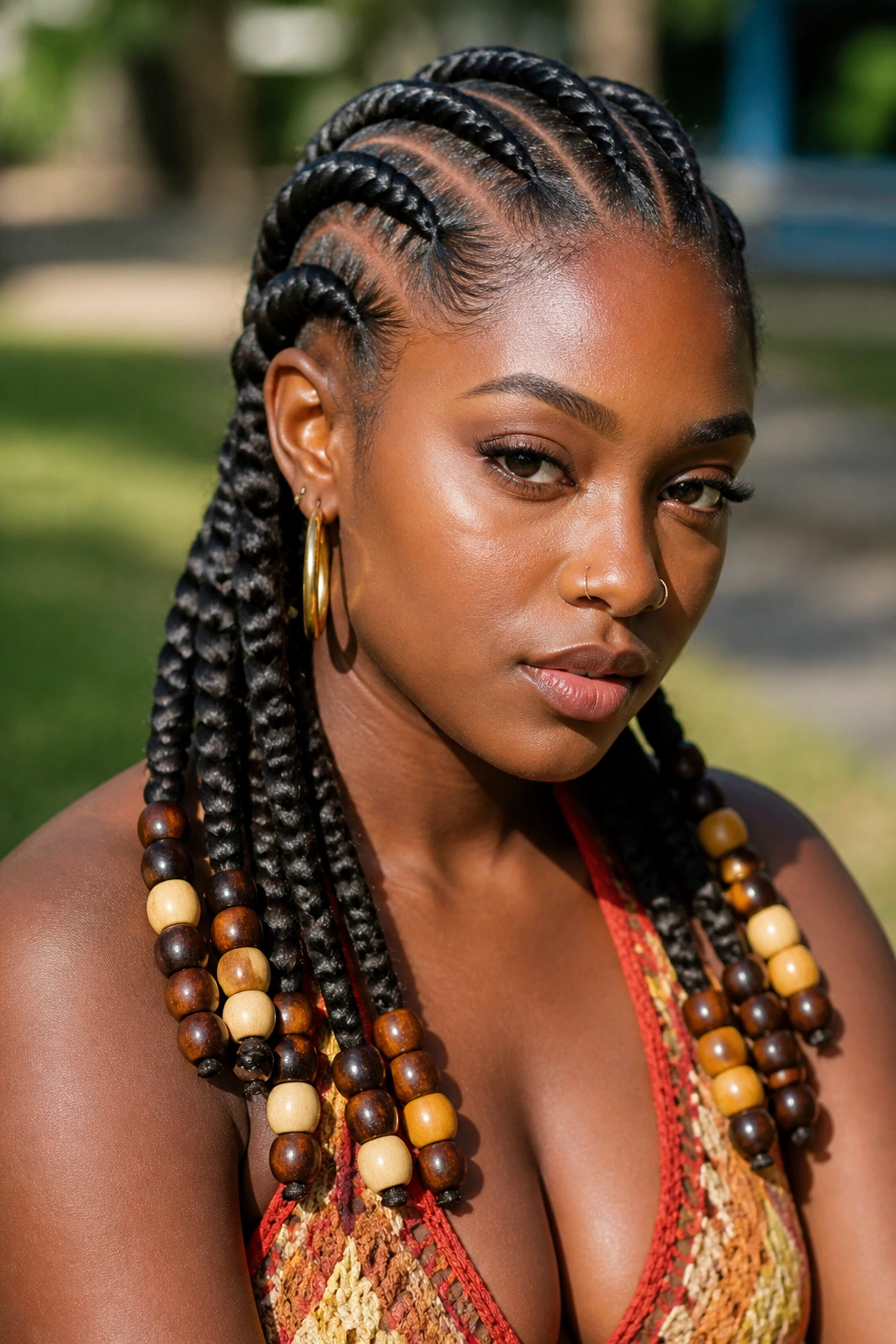
Big braids and chunky beads have a nice honesty to them. There’s no pretending the style is delicate. It has weight, shape, and a lot of presence, which is exactly why it works on thicker hair or longer extensions.
A braided base like this can hold larger bead openings better than fine, narrow cornrows. That matters. If the braid is too slim, oversized beads look like they’re swallowing the ends. If the braid has enough width, the beads feel balanced instead of clumsy.
- Use 3 to 5 thick braids if you want the style to read bold and simple.
- Choose bead openings around 8 mm to 10 mm so they slide on without forcing the braid flat.
- Keep the bead count lower — 1 to 3 large beads per end is usually enough.
- Match the bead size on both sides so the style stays even.
This is the version I’d point to when someone wants low styling time but still wants a strong finish. It’s not fragile. It does not need a lot of extra decoration. The braid thickness and the bead size already do most of the work.
11. Short Bob-Length Cornrows With Lightweight Beads
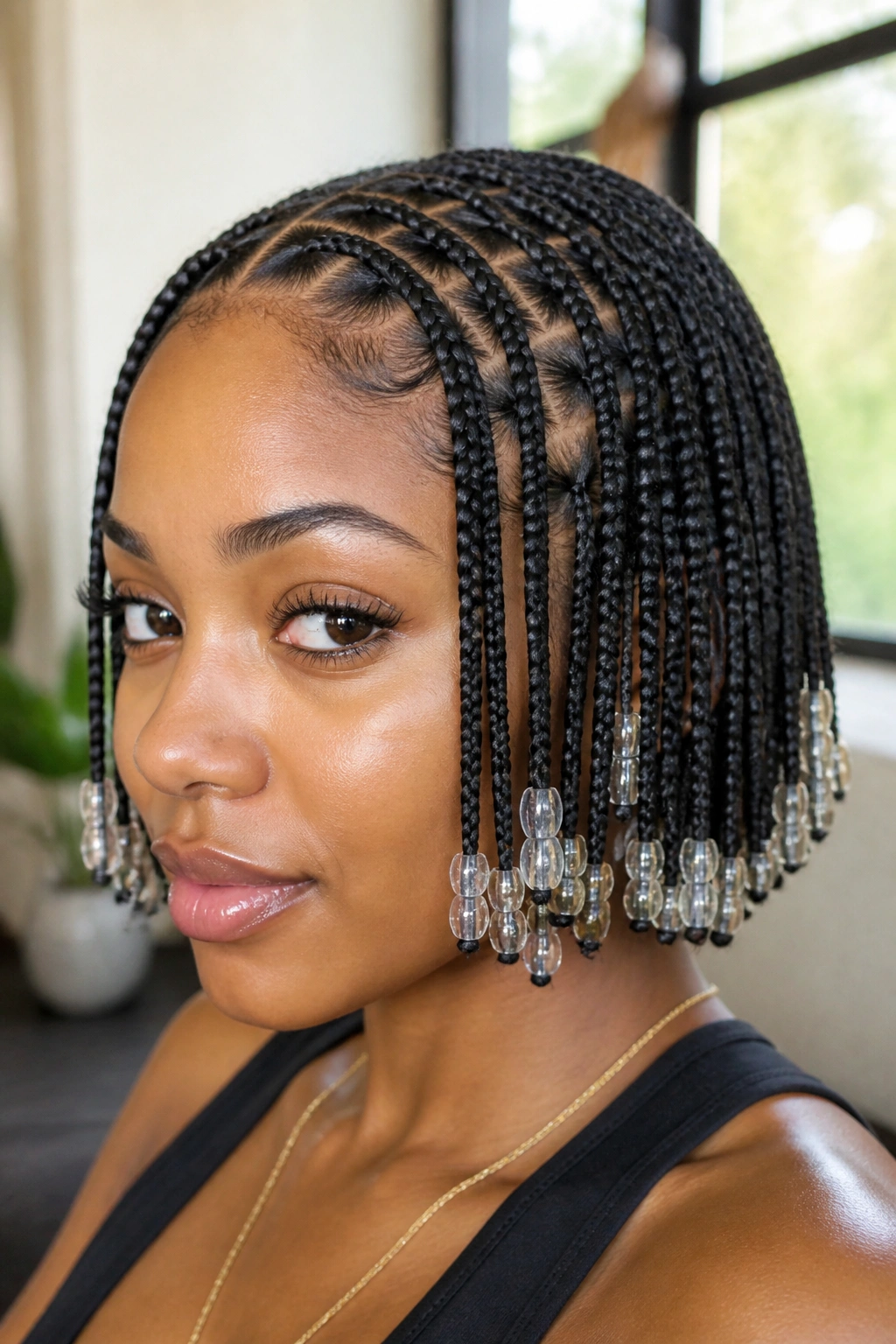
Bob-length cornrows sit closer to the face, which changes everything. The style feels sharper, the neck stays clear, and the beads become part of the shape instead of just hanging off the ends.
Short styles need lighter beads. That’s not negotiable. Heavy beads on a bob can tug the ends down and make the whole look tilt. Tiny clear beads, matte white beads, or even small wooden beads work better because they keep the finish neat without adding much drag.
The other thing about a bob length is that the parting shows more. There isn’t a lot of length to distract the eye, so the scalp work has to be clean. If the rows are even and the edges are smooth, the short length feels polished. If the parting is rough, there’s nowhere to hide it.
I like this look when someone wants movement without a lot of hair in the way. It’s practical. It’s tidy. And with the right bead choice, it still has personality.
12. Triangle-Part Cornrows With Color-Picked Beads
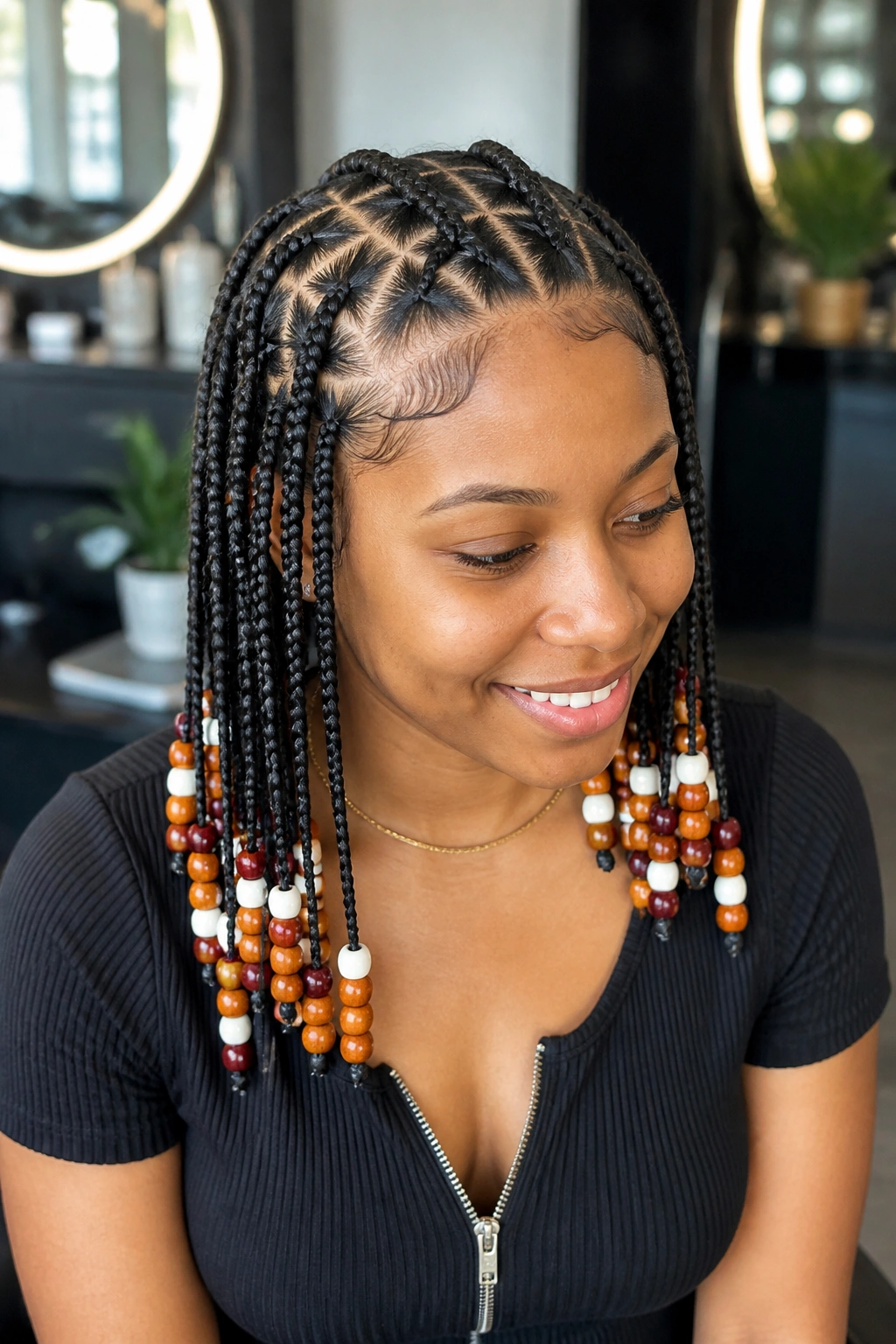
Triangle parts change the whole mood of the braid. Instead of the usual square grid, you get sharp angles that make the scalp pattern feel a little more lively before the beads even show up.
Why Triangle Parts Stand Out
Square parts are classic. Triangle parts are a little sharper. They give the style a built-in graphic edge, which makes them a good match for beads that are chosen on purpose rather than thrown on randomly.
The best version keeps the bead colors controlled. Pick two or three colors max. Clear and gold works. Black and amber works. Clear, white, and one accent color works too. Once you start mixing too many colors, the triangle shapes lose their impact.
- Great for people who like neat geometry.
- Works well with small to medium beads.
- Use repeating colors to keep the design readable.
- Ask for slightly larger triangles near the back if the front needs extra detail.
This is a style for someone who likes a little design in the parting itself. The beads are still there, of course, but the real charm starts at the scalp.
13. Four Large Cornrows With Jumbo Beads
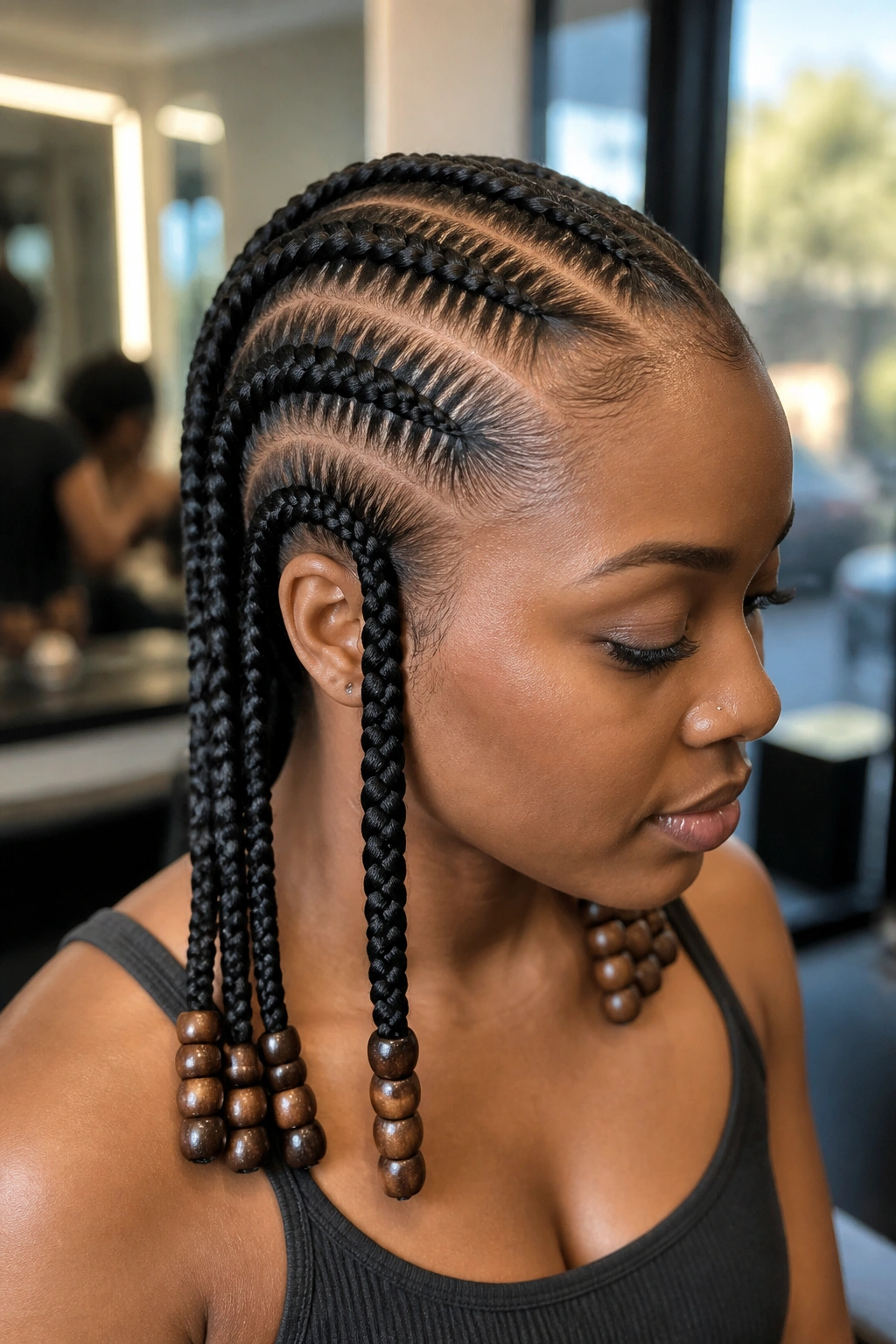
Four large cornrows are blunt in the best way. They go in with confidence, they lay flat, and they leave you with a style that looks intentional without taking all day in the chair.
Where the Style Works Hardest
Because there are only four rows, every section has to be even. There’s no room to hide uneven spacing the way there is in a busy row pattern. That is the tradeoff. You get speed and bold shape, but you need a careful hand on the parting.
- Ask for jumbo beads around 18 mm to 24 mm if you want the ends to match the braid size.
- Keep the braids medium to thick so the beads do not dominate.
- Use one bead color on each side if you want the style to stay clean.
- Make the front parts deep enough to frame the face, not crowd it.
Best tip: don’t stack too many jumbo beads on a short braid. Two or three is enough. More than that starts to pull the ends down and makes the style look heavier than it needs to be.
This is a strong look for someone who likes clean lines and low chaos. No fuss. No clutter.
14. Braided Crown Cornrows With Beads Around the Hairline
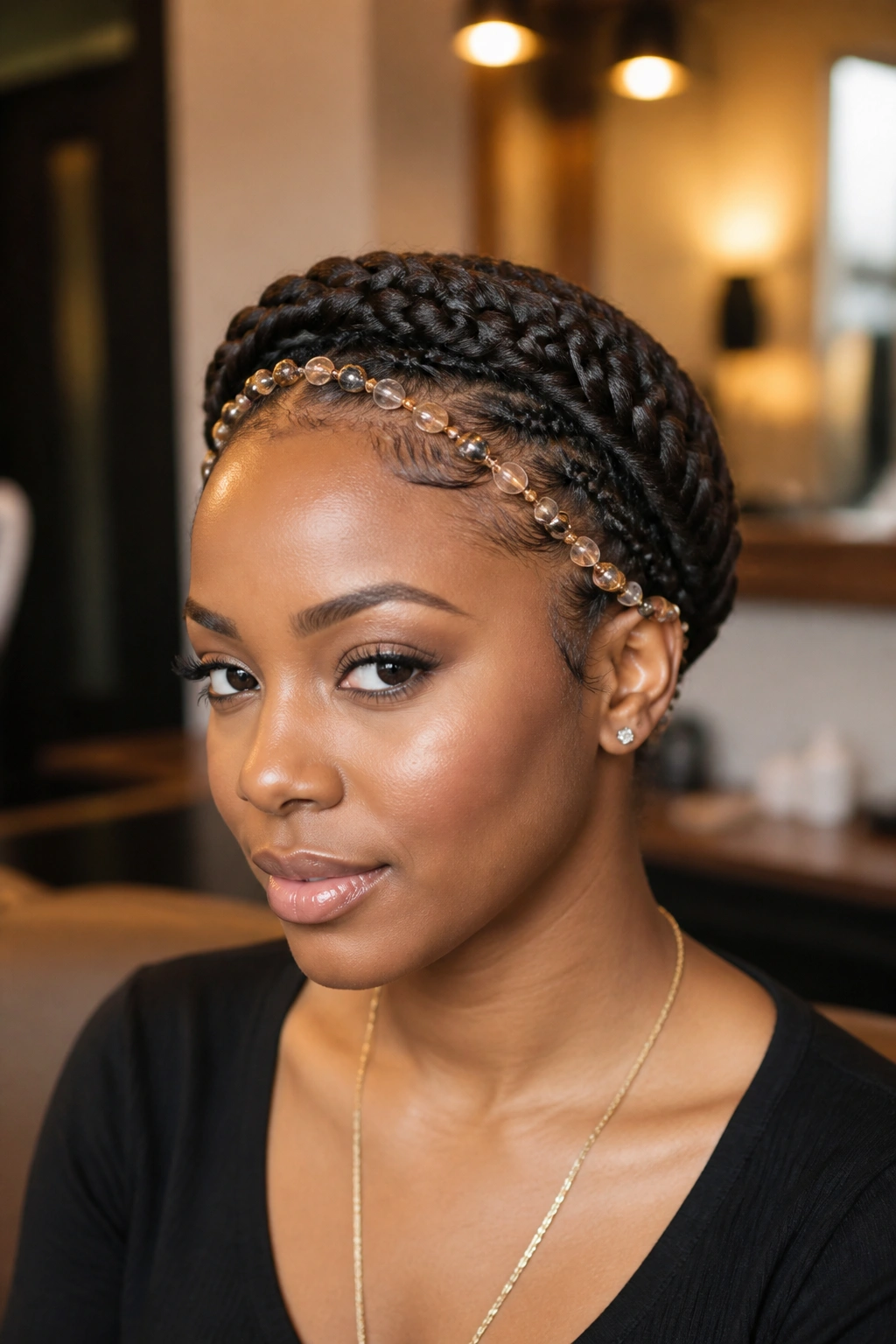
A braided crown with beads around the hairline turns your parts into the accessory. The braid pattern curves around the head, and the beads sit where a headband might sit, which is part of why the style feels so dressed up.
It works best when the front rows are neat and the bead placement is careful. A few small beads near the temples can make the crown feel framed. Too many beads near the hairline, though, and the style starts to rub or feel crowded. I’d keep the front delicate and let the back carry the heavier bead clusters.
This one is good for events, sure, but it does not need a special occasion to make sense. A crown braid can be worn on a regular day if you want your hair pulled away from the face with a little more shape than a plain ponytail gives you.
It looks delicate. It is not delicate to install. The crown shape asks for steady hands, and the bead spacing should be balanced so the whole halo sits evenly around the head.
15. Tribal Cornrows With Beads and Shell Accents
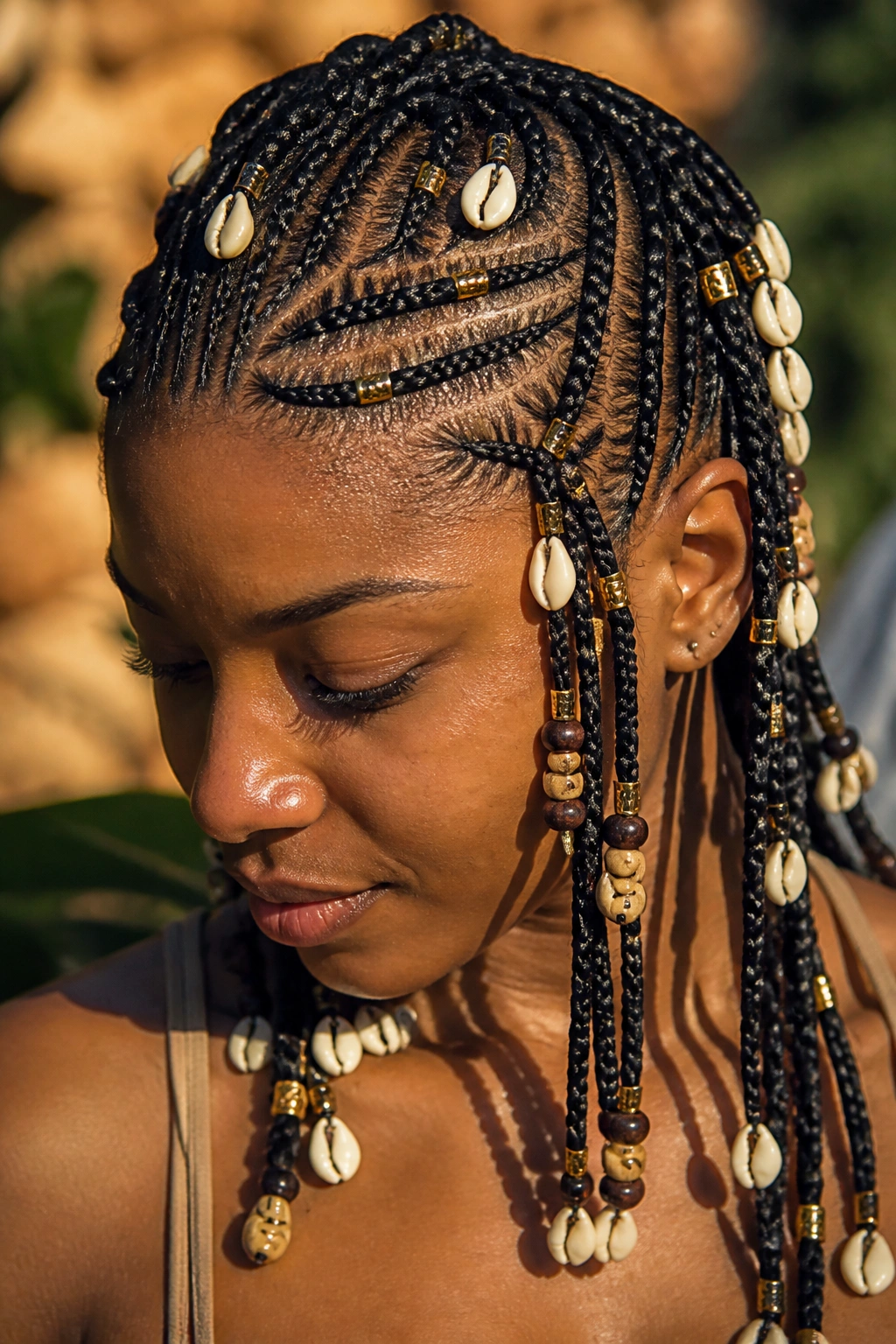
What makes tribal cornrows feel different from standard rows? The mix of braid sizes, curved parting, and decorative ends. There’s more movement in the shape itself, so the beads become part of the pattern instead of a final add-on.
When to Choose It
Choose this style when you want a look that feels expressive but still grounded in braid structure. The best versions usually combine a few thinner cornrows with one or two larger ones, then finish the longer pieces with beads or shells. That mix keeps the style from looking flat.
Cowrie shells work best when they’re used sparingly. One or two shells on each side is usually enough. Add more, and the style starts to fight itself. Beads can be clearer here — clear, brown, gold, or black — because the shell already brings texture.
The braid shape matters more than the jewelry. If the parts are uneven, the whole style falls apart. If the parts are clean and the bead-and-shell choices are restrained, the result has a real sense of style without slipping into clutter.
16. Long Feed-In Cornrows With Ombre Bead Patterns
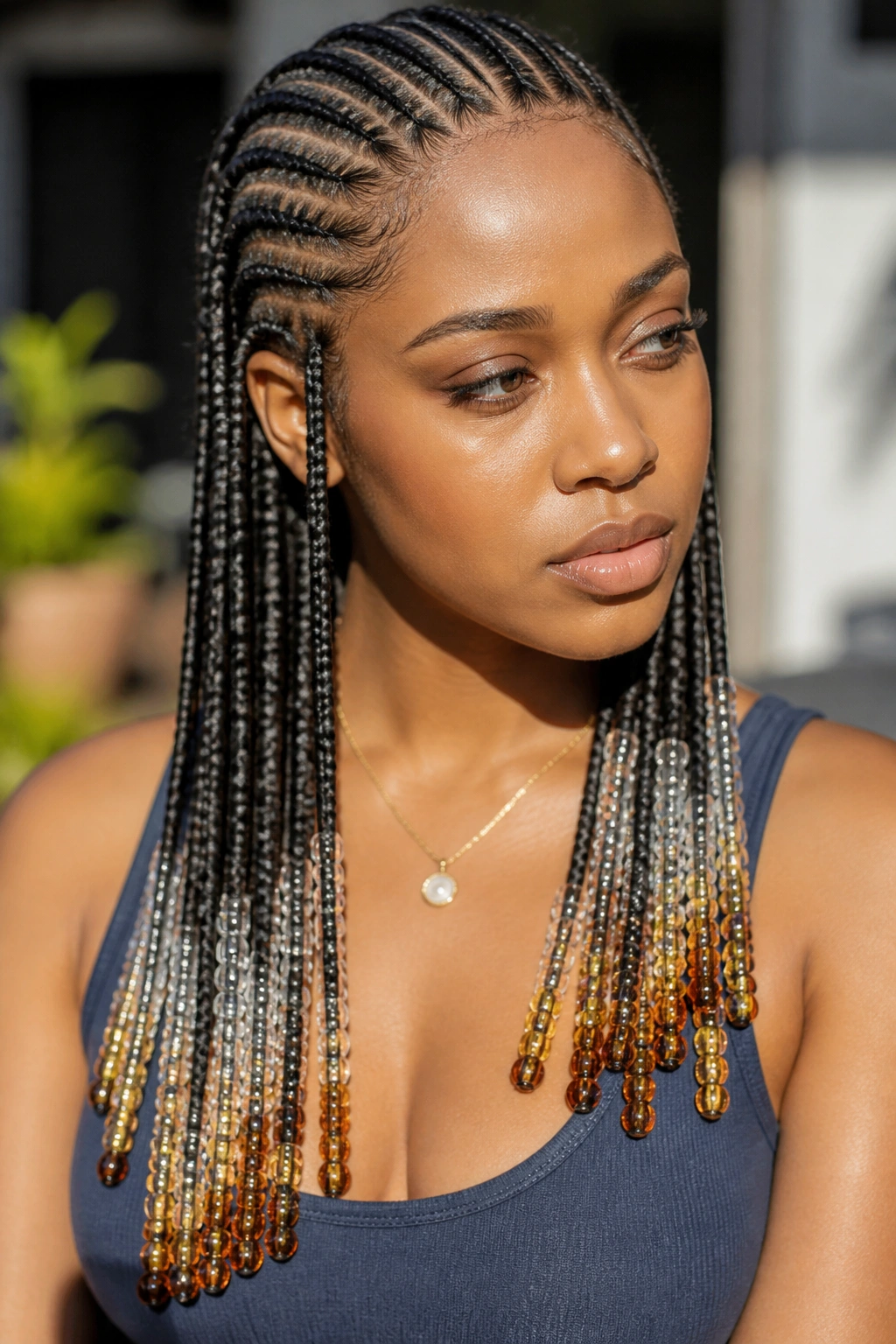
Long feed-ins need a bead plan before the braider starts. If the ends are going to live past the shoulders, the bead choice should lead the eye down the length instead of stopping it dead at the first bead.
An ombre bead pattern does that well. Start with clear or smoke beads near the top, then shift toward amber, gold, honey, or cocoa tones as the braid gets longer. The change does not have to be dramatic. It just needs to feel deliberate.
- Best on hair that falls below the shoulders or on extensions that give that length.
- Keep the last 4 inches of each braid slimmer so the beads don’t bunch.
- Use 3 to 5 bead shades at most.
- Repeat the same color order on both sides for balance.
This style gives movement a little storyline. The top stays calm, then the color deepens as the braid drops. It’s a small thing, but it changes how the whole look reads when you turn your head.
17. Crisscross Cornrows With Beads for a Graphic Look
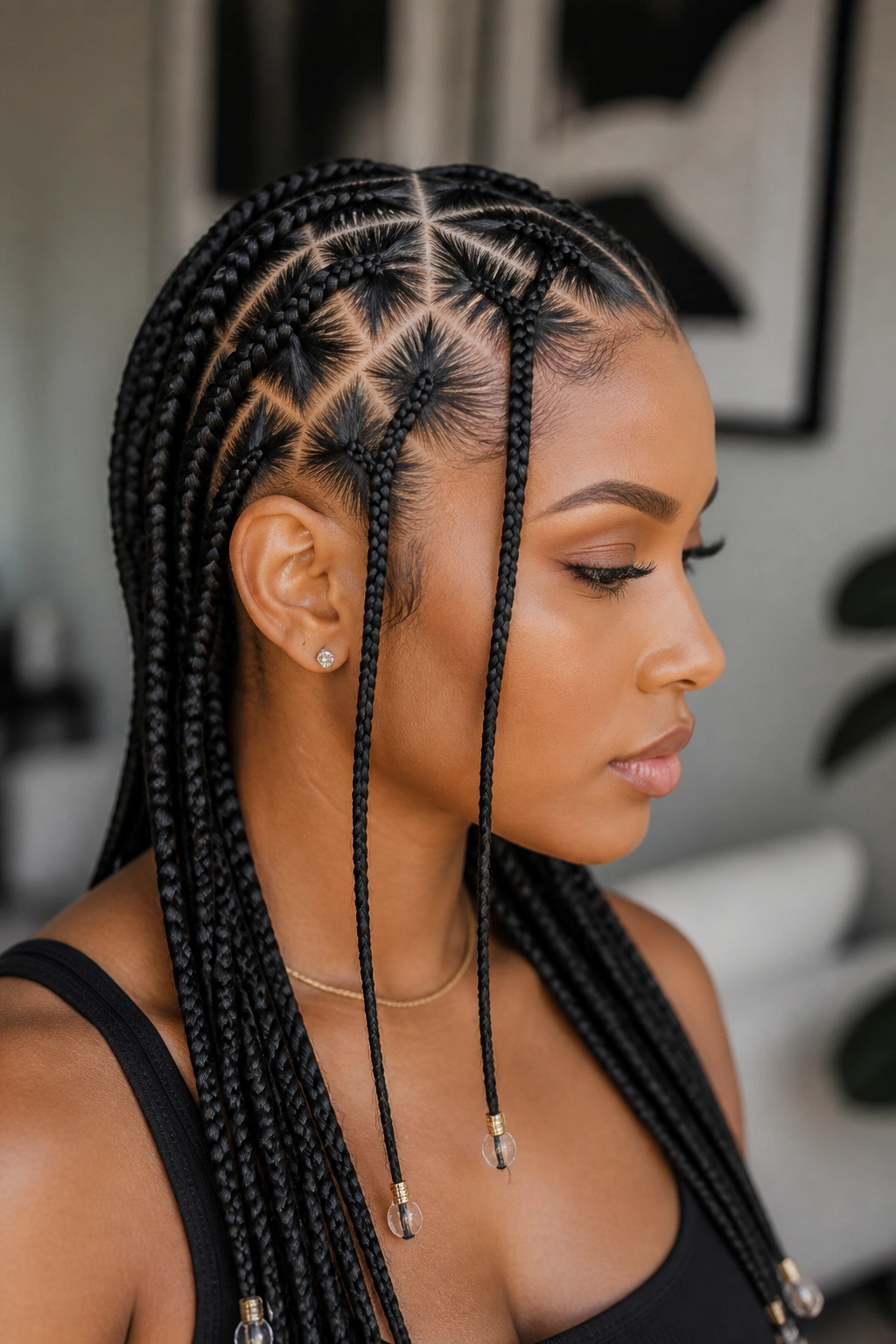
Crisscross cornrows are not shy. The braid lines intersect, angle away from each other, and make the scalp part of the design. Beads can work here, but only if they stay modest.
Less is better here. The crossing pattern already gives the eye enough to follow, so a long bead chain can make the style feel crowded. A few clear or black beads at the ends, maybe a small gold accent on one or two rows, is usually enough. The braid pattern should stay visible first.
The best crisscross styles use the beads almost like punctuation. They finish the sentence without shouting over it. If the sections are even and the crossing points are clean, the style feels graphic in a way that photographs well in person, not just in a mirror.
This is a good choice for someone who likes structure. It has angles, order, and a little edge. Not loud. Just sharp enough to hold attention.
18. Beaded Cornrow Pigtails That Feel Playful and Easy
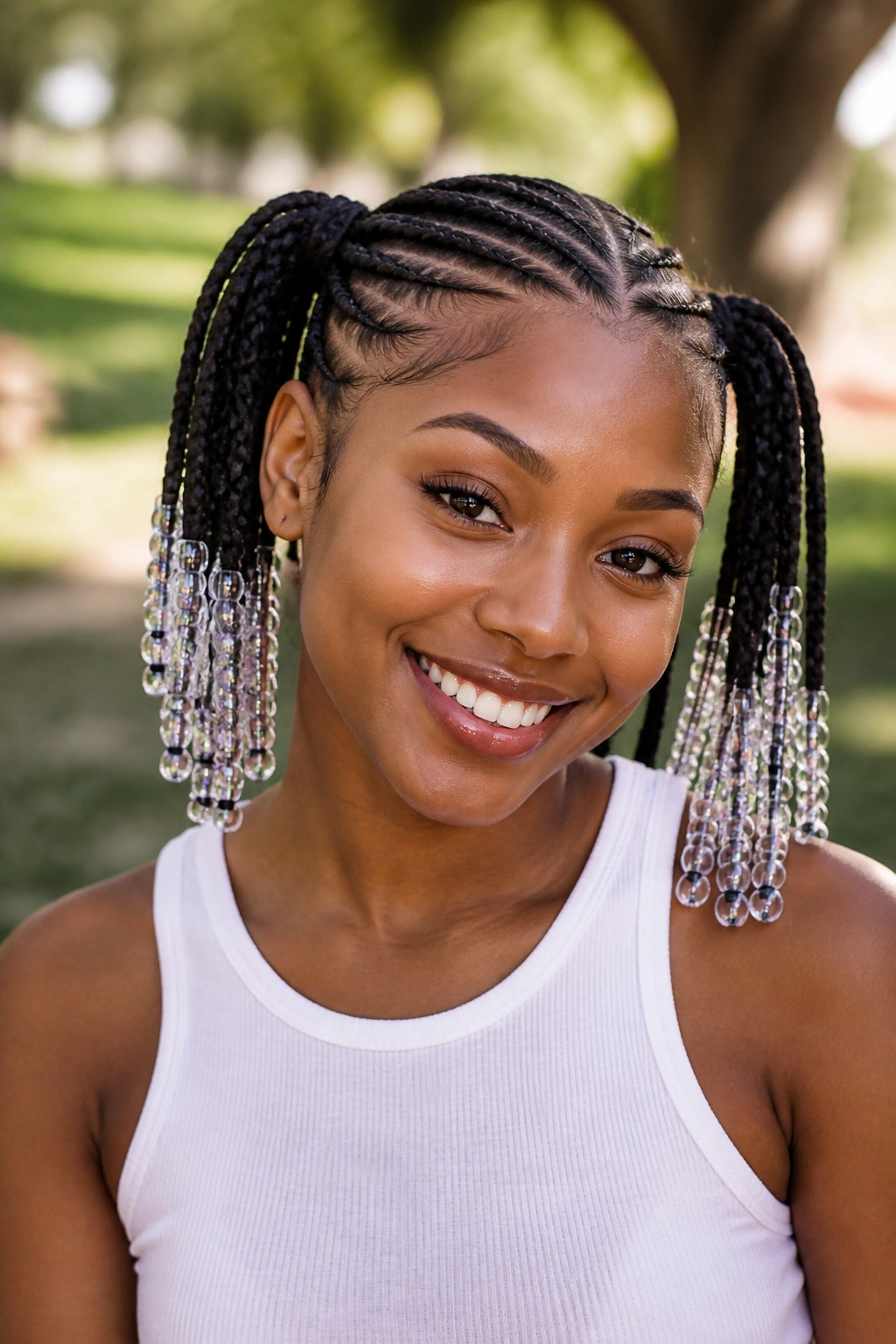
Pigtails can look grown when the parts are crisp and the beads are chosen on purpose. The old childhood feeling is still there, but it gets cleaned up fast once the rows are straight and the beads are matched instead of random.
This style works especially well when you want motion without a lot of styling work. Two side sections, each with a few neat cornrows feeding into beaded tails, keep the hair off the face and let the ends move freely. Clear beads make it feel light. Tinted beads make it feel a little more playful. Wood beads give it a softer finish.
I’d keep the row count modest here — 2 to 4 cornrows per side is plenty for most heads. If you add too many, the pigtail shape gets crowded and starts to lose that easy, open look. The bead count matters too. 6 to 8 beads per tail is usually enough to give movement without turning the ends heavy.
If you like your hair to move when you laugh, this is hard to beat. It’s simple, but not plain, and it has enough charm to carry a whole outfit without asking for much else.
