



A French braid ponytail for sport has one job: keep hair where it belongs while you move. No more blinking through flyaways during burpees. No more tugging a sweaty strand off your cheek halfway through a sprint.
The reason this style works so well is simple. The braid anchors the front and side sections against the scalp, and the ponytail takes the weight off your face and neck. That combination matters more than people think, especially when your hair is slippery, layered, thick, or one good head shake away from escaping its tie.
Placement changes everything. A high version feels light and fast. A low version feels calm and secure. A side-swept version can soften a strong face shape or keep a stubborn part line from collapsing into your eyes. And yes, a French braid ponytail can look polished enough for errands after practice without turning into a helmet of product.
Some styles hold up better under sweat, some sit flatter under gear, and some just make your hair feel less annoying for the next two hours. Small differences. Big payoff.
1. High French Braid Ponytail
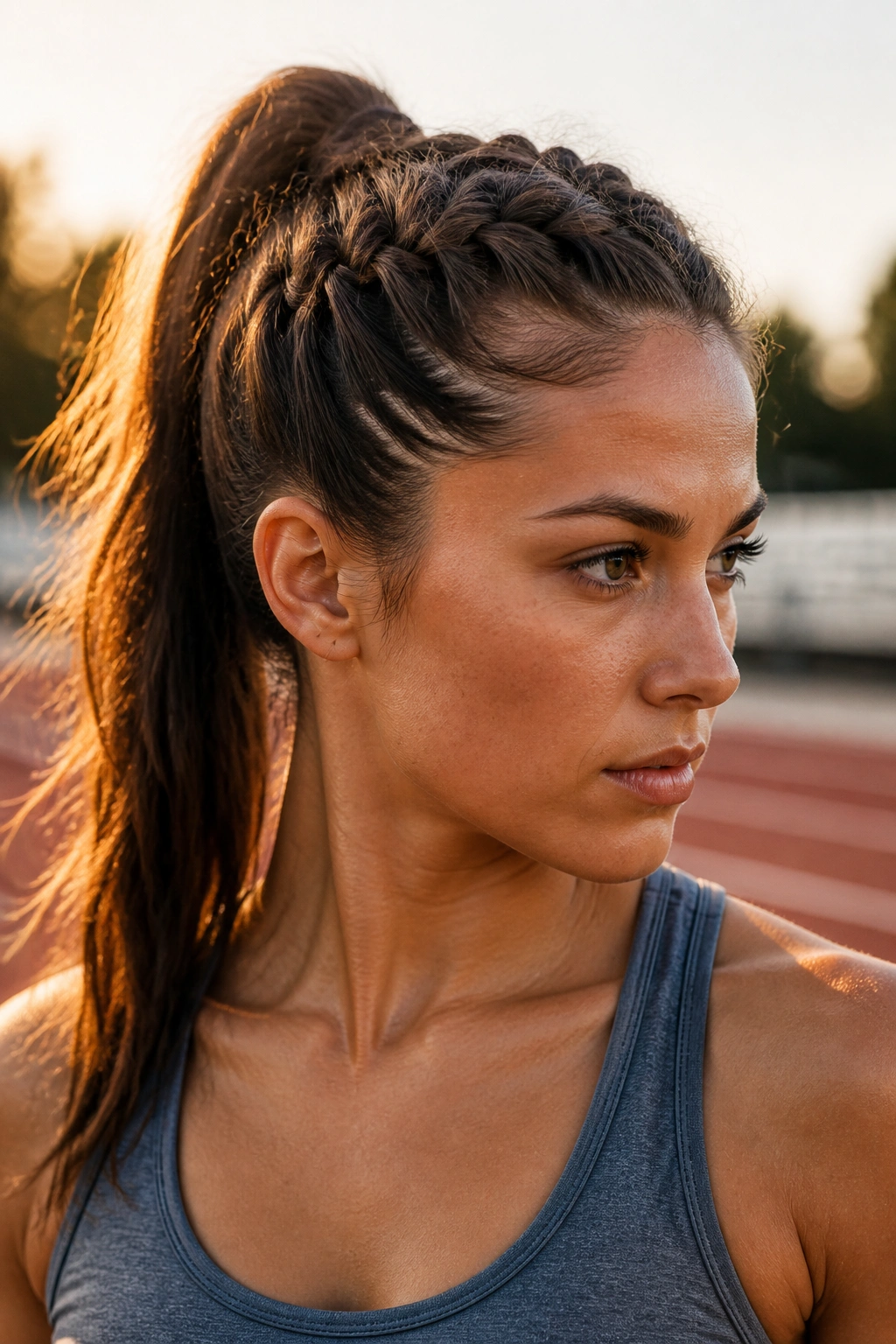
A high French braid ponytail is the obvious pick when you want your hair completely out of the way. It starts near the hairline, rides up the crown, and finishes at the top back of the head, which keeps the length from dragging on your shoulders while you run, jump, or do fast footwork.
Why It Works on Fast-Moving Days
The higher anchor point helps the braid stay centered when your head keeps changing direction. That matters in sports like running, cardio boxing, volleyball, and dance drills, where a lower ponytail tends to slap your neck and swing around. A high finish also gives the face a cleaner frame, which is useful if you wear a sweatband or cap.
Quick things to get right:
- Use medium-sized sections at the start so the braid does not feel too tight at the temples.
- Keep the ponytail elastic snug, but not so tight that it leaves a dent after 20 minutes.
- If your hair is very silky, mist the roots with a light texturizing spray before you start.
- Wrap a thin strand of hair around the base if you want a cleaner finish and a little extra hold.
One good rule: if the braid feels like it is pulling your forehead upward, loosen it and start again. That headache is not worth it.
2. Low French Braid Ponytail
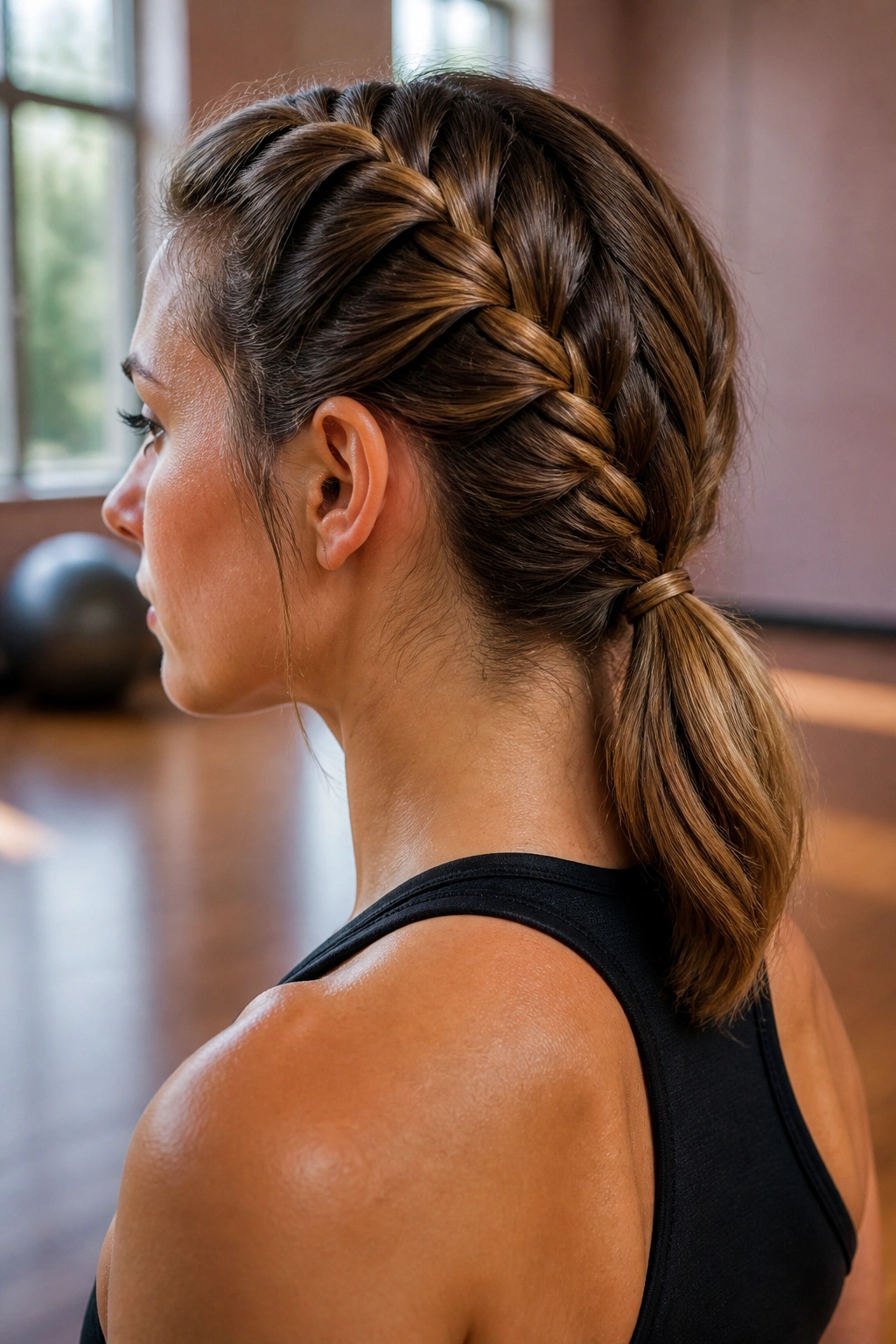
A low French braid ponytail is the calmest option for long workouts. It sits closer to the nape, which means less bouncing, less tugging, and fewer little shocks of hair hitting your neck when you move.
That lower placement makes a real difference during lifting sessions, Pilates, rowing machines, or long walks where you want your hair controlled without feeling “styled.” The braid still locks the front sections in place, but the ponytail itself stays quieter. Less movement. Less fuss.
I also like this one for days when your hair is freshly washed and a little slippery. A low braid gives you more control because the gravity pull is smaller, and the style does not need to fight your scalp the whole time. If your hair is thick, a low finish can save your neck from feeling like it is carrying a rope.
Use a soft, snag-free elastic at the base. That part matters more than people admit.
3. Side-Swept French Braid Ponytail
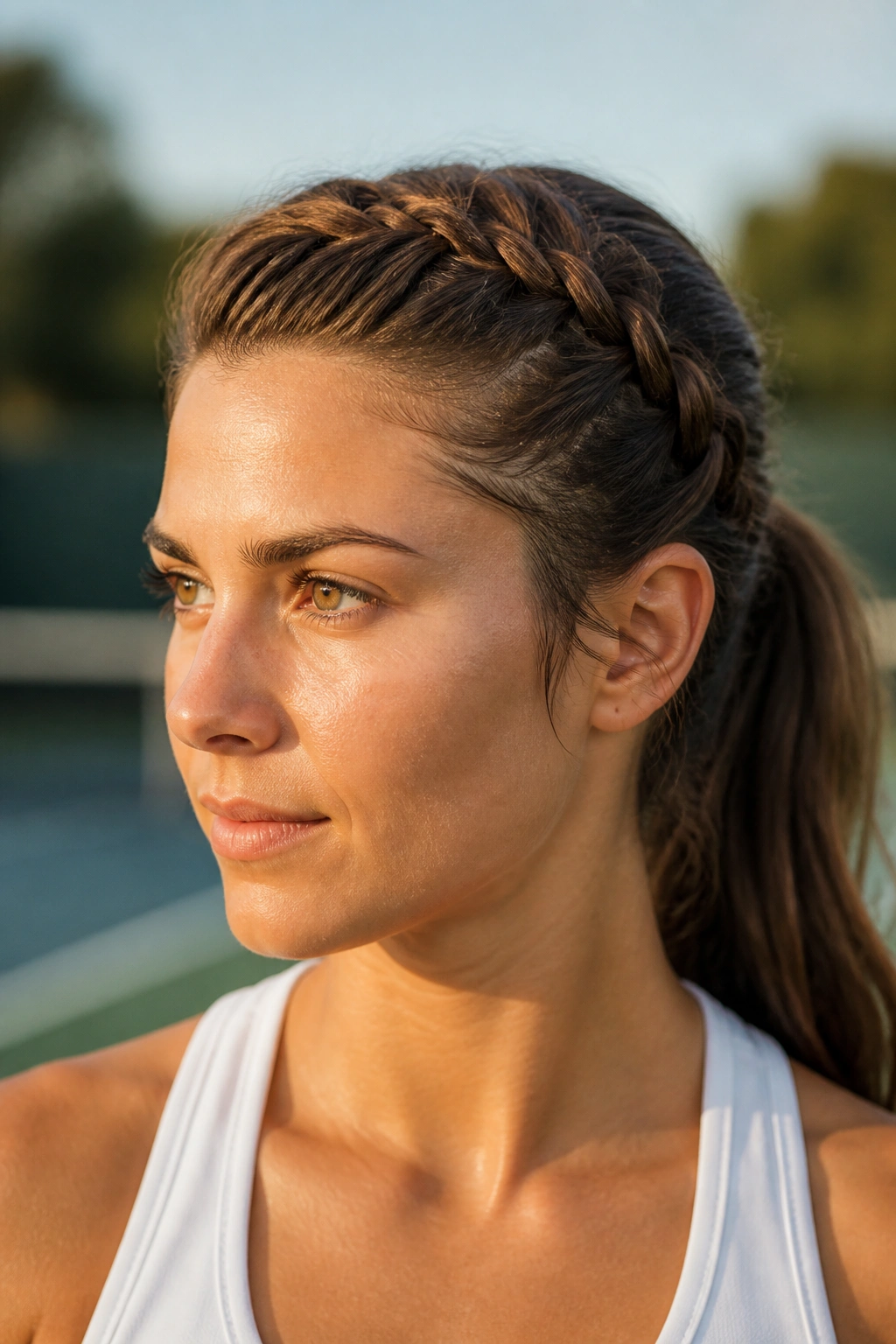
Why does a side-swept French braid ponytail feel easier on the face? Because it clears one side first, then guides the rest of the hair across the crown in a way that feels less rigid than a straight-back braid.
How to Wear It Without Losing the Shape
Start the braid on the heavier side of your part, then angle it toward the opposite ear before you gather the ponytail. That little diagonal line helps when you have side bangs, a deep part, or layers that always escape on one side. It is a good choice for racquet sports and skating, where one temple seems to sweat more than the other. Odd, but true.
The shape also softens a sporty look that might otherwise feel too severe. Not every workout hairstyle needs to look stern. Sometimes you want useful and a little flattering, and this one does both without asking for much extra time.
Keep the braid close to the scalp on the first few passes. If you start too loose, the side sweep can sag before warmup ends.
4. Double French Braid Ponytail
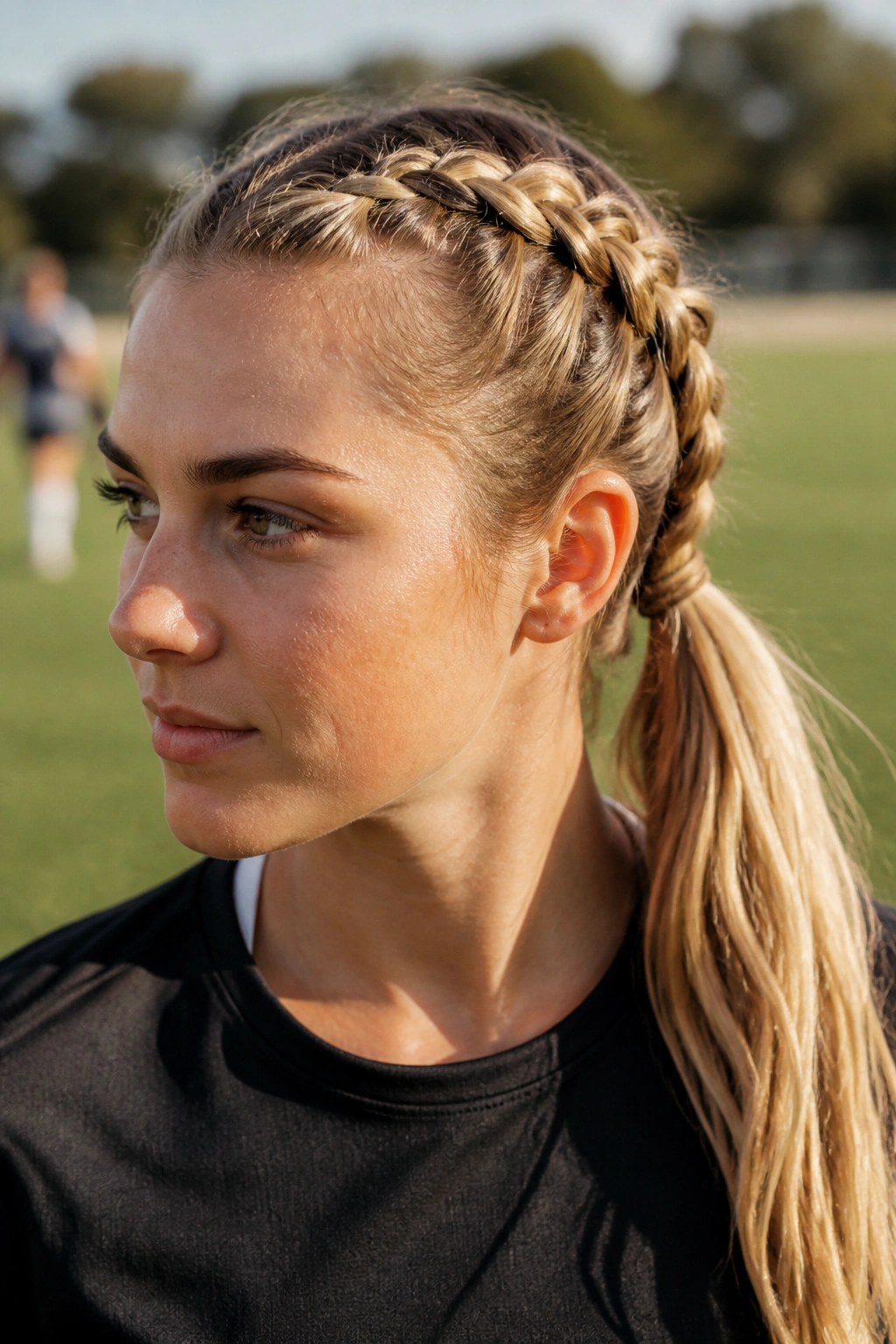
Picture a soccer practice where you need every strand contained before the whistle blows. Double French braids feeding into one ponytail solve that problem better than a single wide braid, especially if your hair is thick or layered.
The style splits the load into two smaller braids, one on each side, then joins them at the back. That means less pressure on any one part of the scalp, and a more balanced feel when you turn your head fast. It also keeps the crown tidy, which is useful if you wear a headband or mouthguard and do not want extra bulk in the front.
- Part the hair down the middle before you begin.
- Braid each side from the front hairline toward the back.
- Secure both braids with small elastics before joining them into one ponytail.
- Use one extra bobby pin at the join if your hair is slippery.
The style looks athletic without looking plain, which is a nice bonus. But the real win is the way it spreads tension out instead of dumping everything on one section.
5. French Braid Bubble Ponytail

A French braid bubble ponytail gives you control at the top and movement at the bottom, which is a useful trade when you want your hair secured but not stiff. The braid starts at the scalp, then the ponytail is split into soft “bubbles” with elastics every few inches.
That spacing matters. Three-inch sections work well for medium-length hair, while longer hair usually looks better with 2½ to 3-inch gaps. If you make the bubbles too far apart, the tail loses shape and swings around. Too close together, and the style starts to feel cramped. The sweet spot is usually the place where the bubbles puff out slightly after you tug each section gently with your fingers.
This one is especially handy for long hair that tangles easily during cardio. The bubbles stop the length from knotting into one heavy mass, which makes the style easier to brush out later. It also has a little bounce, which keeps it from looking too severe for practice or team events.
It feels playful, not fussy.
6. French Braid Ponytail with a Wrapped Base
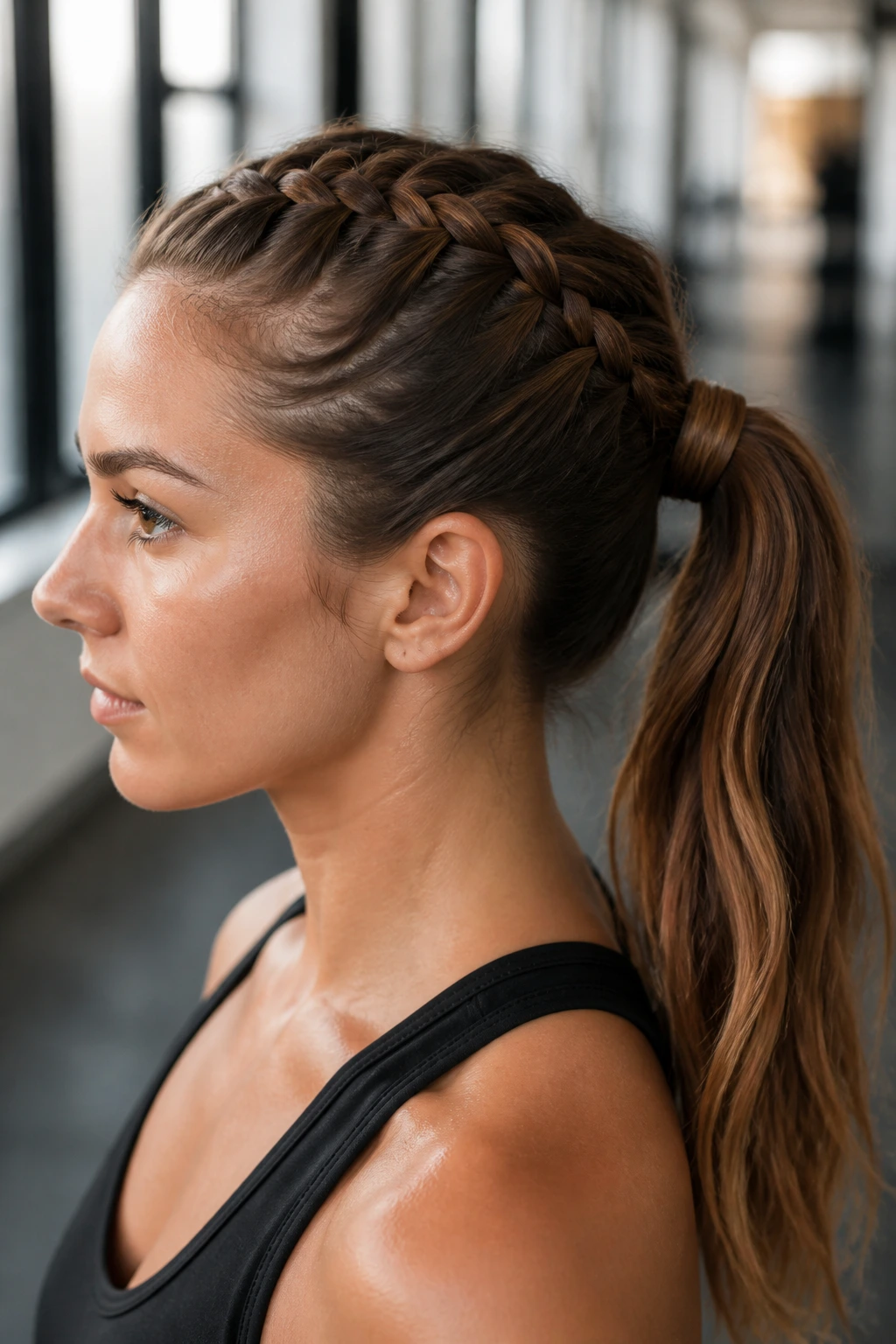
Unlike a plain elastic, a wrapped base hides the knot and stops shorter pieces from snagging on the tie. That makes this version feel cleaner, and honestly, a little more finished after class.
The braid itself can be as simple as a straight French braid running into a mid-height ponytail. What changes is the last inch or two: take a thin strand from the ponytail, wind it around the elastic, and pin the end underneath with one or two bobby pins. If your hair is heavy, cross the pins in an X so the wrap does not slide when you sweat.
Who is this best for? People who go from the gym to the rest of their day and do not want the style to scream “I rushed this.” It also works well if your ends are layered, because the wrap keeps the shorter bits from poking out around the base.
If you only change one thing, change the base. That tiny detail does more than a shiny clip ever will.
7. French Braid Ponytail with Curly Ends
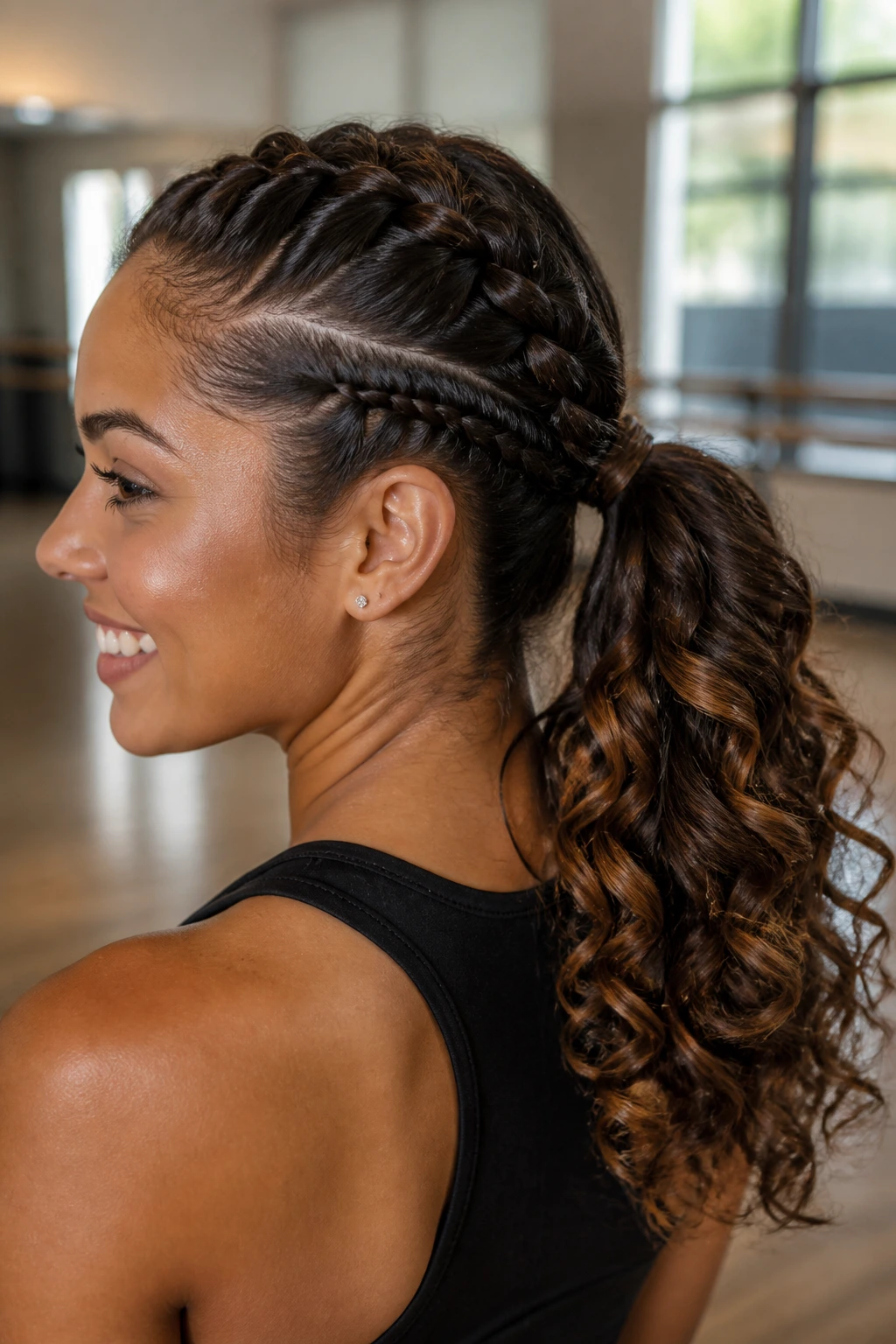
A braid at the scalp and curls at the ends is a smart compromise. French braid ponytail with curly ends keeps the roots controlled while letting the tail keep its own texture, which is a nice choice if you do not want every inch of hair flattened.
Why the Ends Matter
Curly or wavy ends move less like a loose curtain and more like a contained shape. That helps during sports because the tail does not tangle into a knot as fast, especially if you have long layers. It also means your hair can still look lively after practice instead of pin-straight and stiff.
If your hair is naturally curly, leave the tail free and let the texture do the work. If it is wavy, a small amount of curl cream or leave-in on the ends can keep the shape from puffing up into a frizzy cloud. Do not overload it. A dime-size amount is often enough, and too much product makes sweat collect faster.
Best use: workouts where you want your hair off your face, but you still want the tail to look soft once you cool down.
8. French Braid Ponytail for Thick Hair
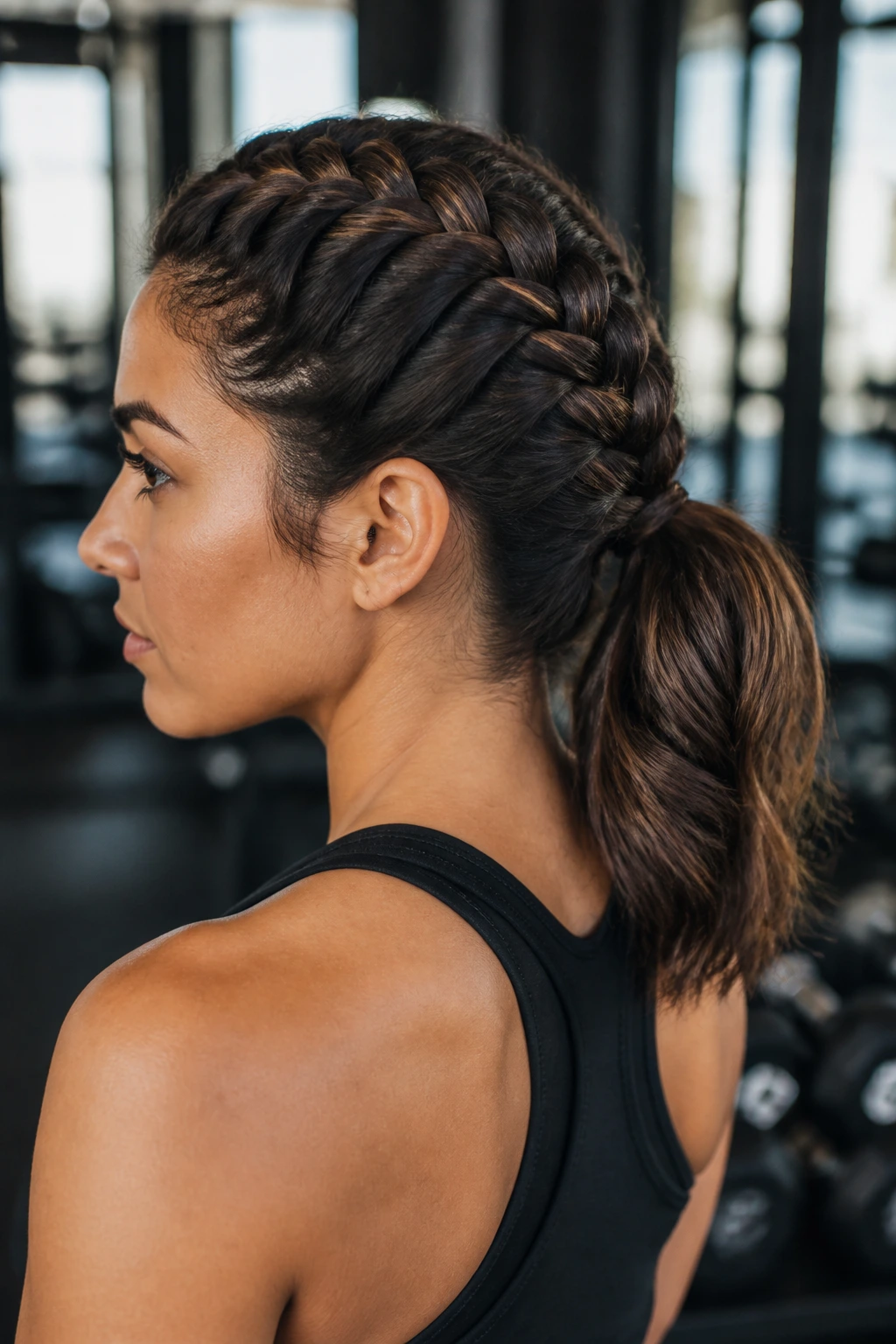
If your hair is dense, this is the version that behaves. A French braid ponytail for thick hair needs a slightly wider braid path and a more thoughtful finish, because thick hair can turn a simple ponytail into a heavy swing that pulls on the scalp.
Start with larger sections at the crown so the braid does not feel like it is squeezing the front of your head. Then keep the ponytail a little lower than you might expect, around mid-height or just above the nape, so the weight does not sit like a brick at the top of your head. If the tail feels too bulky, split the ponytail into two smaller ties stacked one above the other. It looks neat and it spreads the weight better.
This style is especially useful for dance, tennis, and lifting sessions where hair movement gets irritating fast. It keeps thick lengths contained without forcing them into a tiny elastic that pops halfway through class.
Simple. Stable. Much less annoying.
9. French Braid Ponytail for Fine Hair
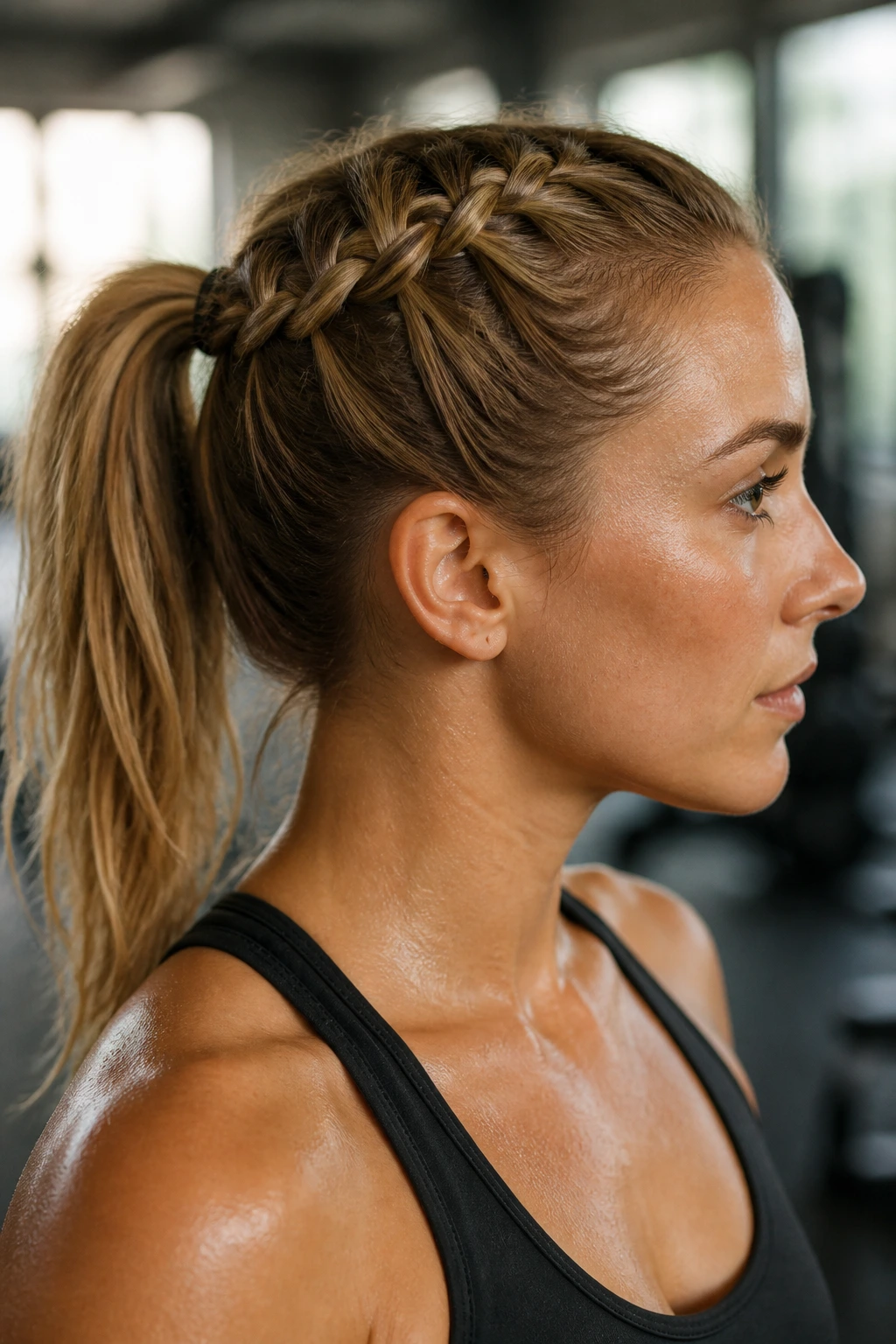
How do you keep a French braid ponytail for fine hair from collapsing before you even finish warmup? The answer is texture, not more product.
How to Get Lift Without Teasing It Too Much
Fine hair usually slips because the strands are smooth and light. A little dry shampoo at the roots gives the braid something to grip, and smaller sections make the braid look fuller than huge pieces that slide apart. You can also tug the outer edges of the braid once it is secured, but only a little. Pulling too hard can make the braid look loose in a bad way, not an airy way.
A mid-height ponytail tends to work better than a very high one for fine hair because the weight of the tail can drag the braid down if it sits too far up the scalp. Keep the elastic snug and use a second tiny elastic underneath if the first one feels weak.
The trick: build shape first, then widen it after. Do not reverse that order.
10. French Braid Ponytail with a Center Part

If your hair falls into your eyes the second you bend over, a center-part French braid ponytail fixes the problem fast. The part gives the style a clean spine, and the braid runs straight back instead of drifting to one side.
That straight line is useful for sports where you want both sides of the face equally clear. Think gym class, indoor training, racquet sports, or any session where you keep touching your hair out of habit. A center part also works well with straight or slightly wavy hair because the symmetry reads clearly, even after movement.
- Use a rat-tail comb to draw a sharp part before you start.
- Clip one side away while you braid the other if your hair layers easily.
- Keep the first three braid passes close to the scalp for a tidy front.
- Gather the ponytail at mid-crown if you want the style to stay comfortable longer.
The result looks deliberate, even if you only spent five minutes on it. And that is a nice thing to have when you are already late.
11. French Braid Ponytail with a Deep Side Part

A deep side part French braid ponytail softens the whole look in a way people do not always expect. It keeps the hair pulled away from the face, sure, but it also gives the style a little bend and movement before the braid even begins.
That bend helps with layered cuts, grown-out bangs, and hair that refuses to sit still at the crown. Start the part with the heavier side of the hair, then braid from that section across the head and gather everything into a ponytail at the back or slightly off-center. The off-center finish keeps the style from looking too stiff, which can matter if you wear it outside the gym too.
There is also a practical side. A deep side part can keep one side of the forehead calmer when you sweat heavily, especially during cardio or hot studio classes. The trick is to avoid brushing the part too hard after it is set. Fingertips are enough. A brush can break the line and make the style puff.
It is a small change. It changes the whole mood.
12. French Braid Ponytail for Helmet Sports
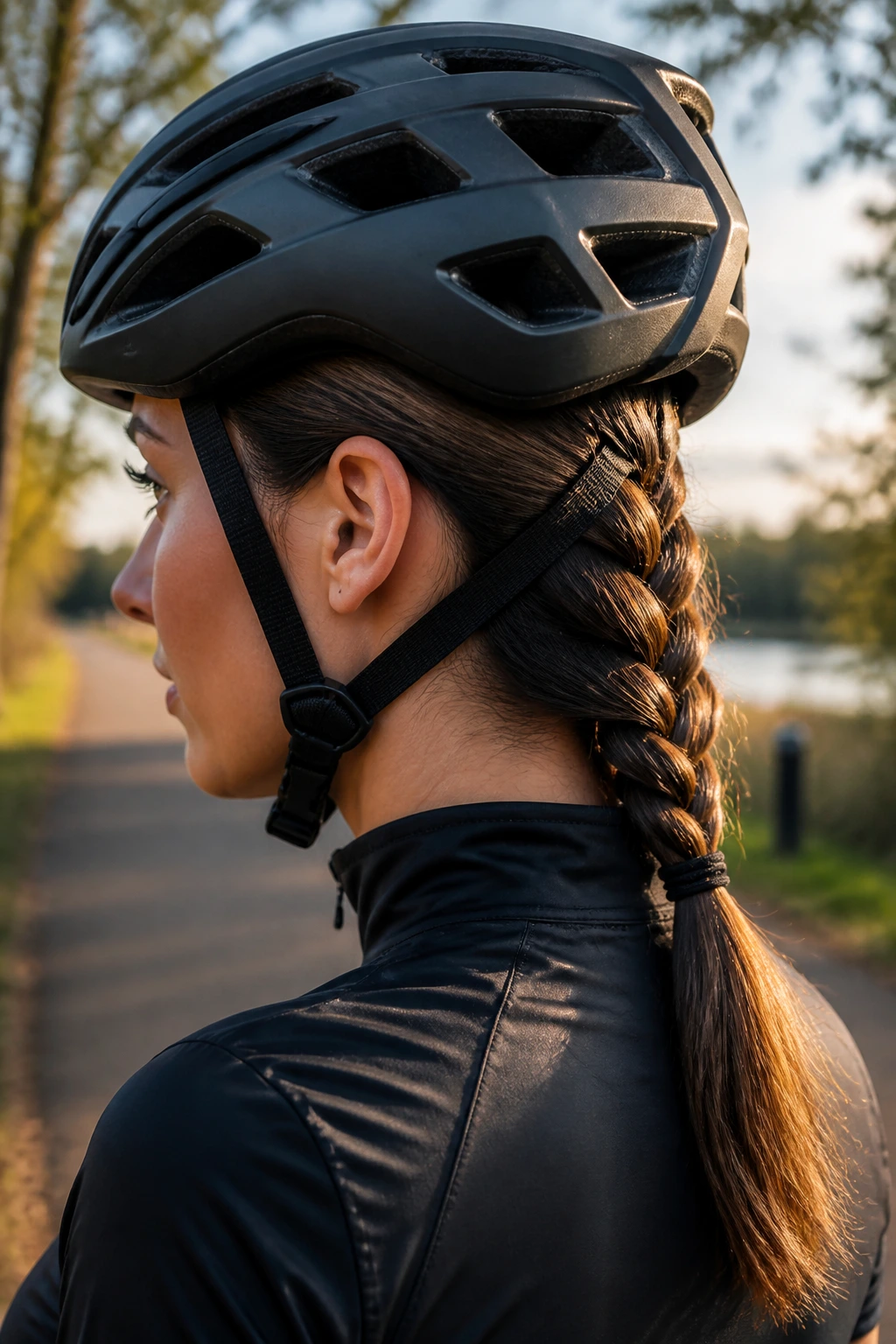
A helmet changes everything. French braid ponytail for helmet sports needs to sit flatter, lower, and with less bulk at the crown than the flashier versions you might wear for dance or running.
That means the braid should start close to the scalp and finish low enough that a helmet does not press on a hard knot. Cycling, horseback riding, skating, and some motor sports all ask for the same thing: a style that stays smooth under gear. If the braid sits too high, the helmet shifts. If the base is too bulky, the pressure spot shows up fast.
Unlike a high ponytail, this version is about reducing friction, not making the hair look big. Keep the ponytail section small, use a flat elastic, and test the fit with the helmet on before you leave. That sounds fussy. It is not. It saves you from spending the whole ride adjusting the strap.
For helmet days, comfort beats volume every time.
13. French Braid Ponytail with Mini Accent Braids
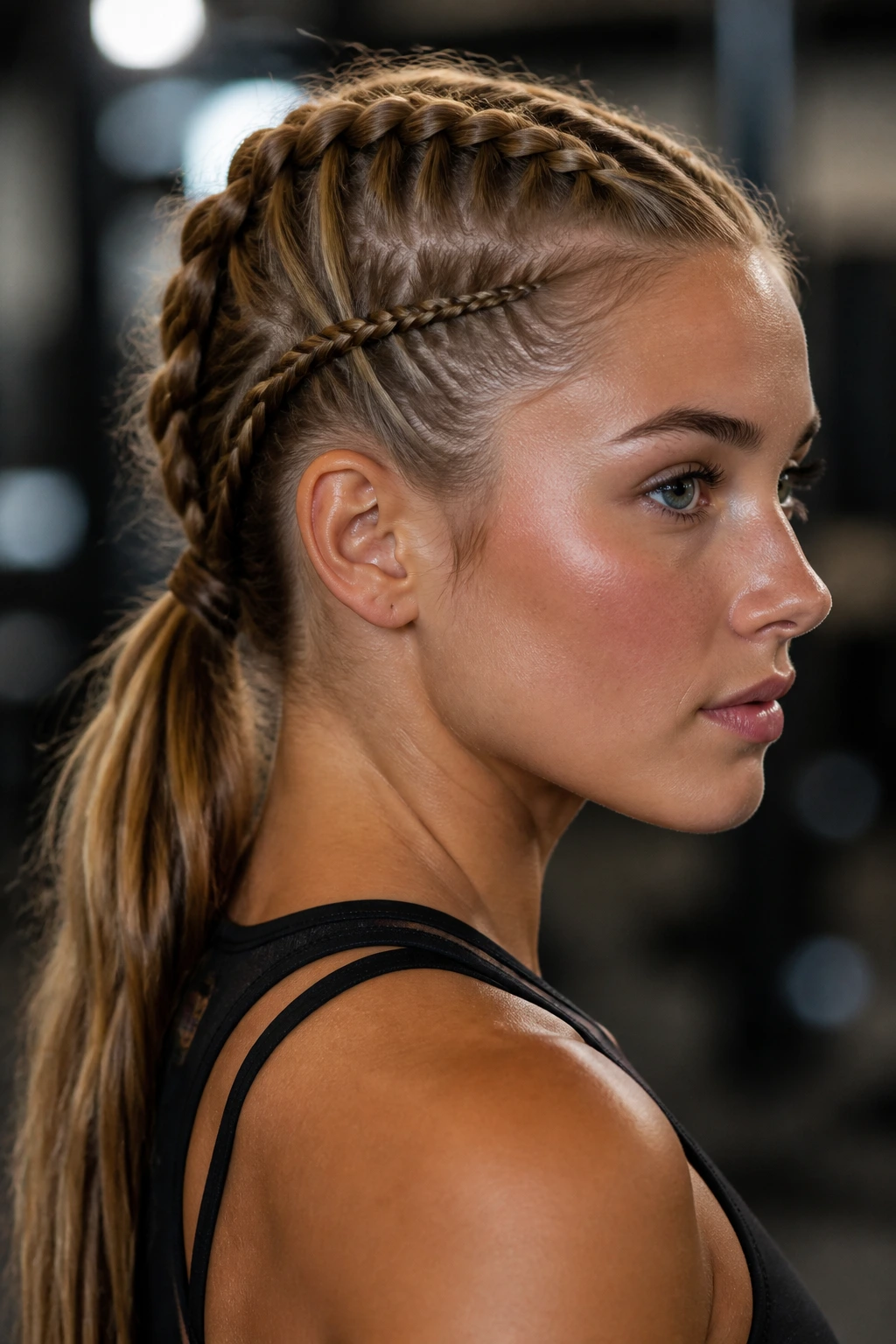
A few tiny accent braids can make a simple French braid ponytail feel sharper without getting in the way of sports movement. They work especially well near the temples or just above the ears, where little flyaway pieces like to break loose.
Why the Accent Braids Matter
Accent braids add control to the front sections before the main braid even starts. That means less side fluff during practice, and less frustration when your hair is in an awkward grow-out stage. They also give the style a little visual detail, which is nice if you are going straight from class to a team dinner or practice photos.
Keep these details in mind:
- Make the accent braids narrow, about ¼ to ½ inch wide.
- Braid them tightly enough to stay put, but not so tight that the scalp feels sore.
- Secure the ends before joining them to the main French braid.
- Keep product light near the temples so the small braids do not look greasy by the end of the day.
The accent braids should support the main style, not compete with it. That balance is what makes the look work.
14. French Braid Ponytail for Short to Medium Hair
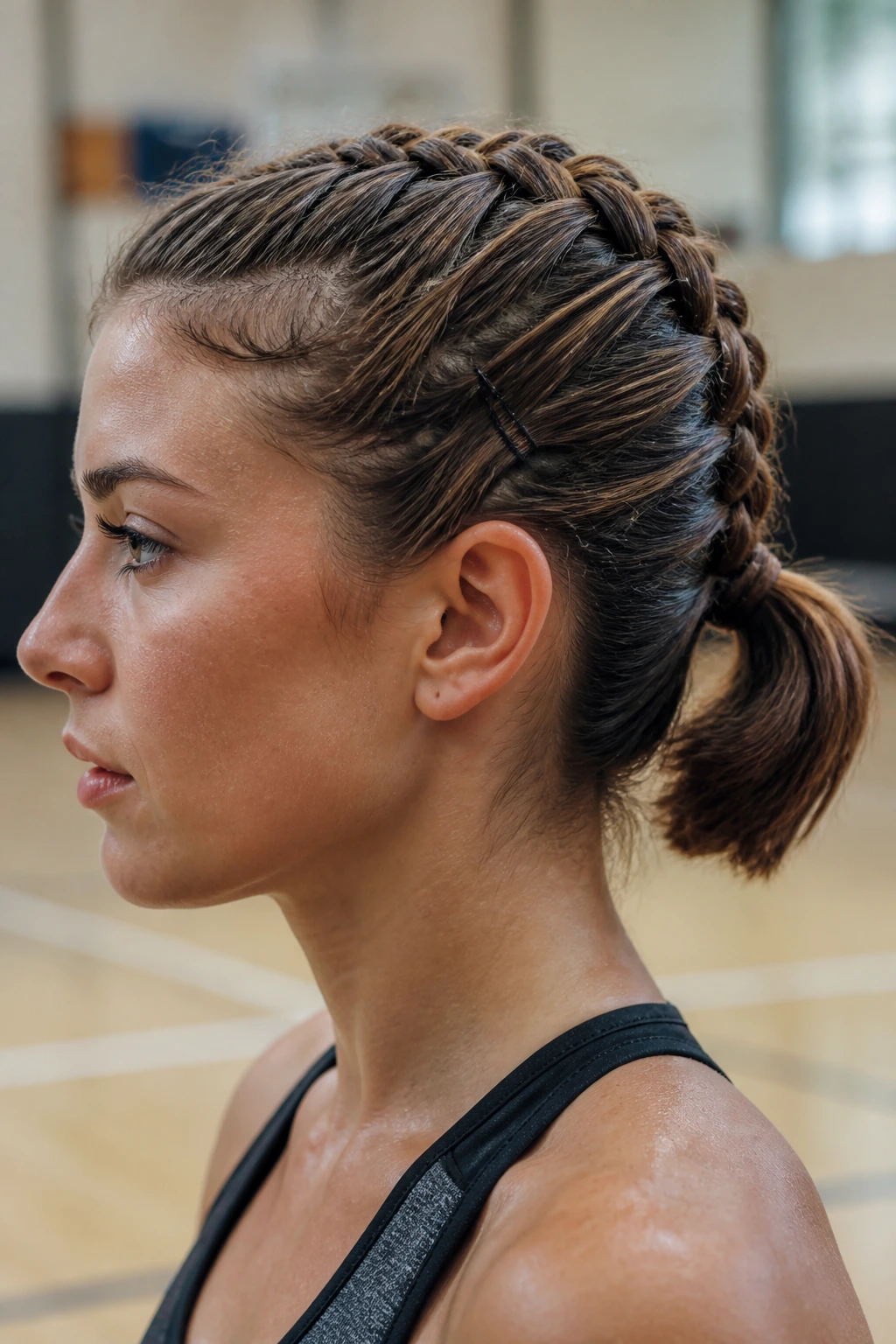
You do not need waist-length hair for this style. A French braid ponytail for short to medium hair can work beautifully if you start the braid high enough and stop before the shorter layers start fighting back.
The main move is to use smaller sections at the crown and a tighter, more controlled braid path. Once you reach the nape, you can gather the remaining length into a small ponytail or even loop it through itself for a neat finish. If your hair is a lob or a layered shoulder cut, two bobby pins at the sides can keep the shorter pieces from springing out during movement.
This version is useful for PE class, spin, tennis, and any workout where you need your hair secure but do not have much length to work with. The braid gives structure, and the ponytail gives you a bit of swing at the end without pretending the hair is longer than it is.
Short hair can do this. It just needs a different approach.
15. French Braid Ponytail with a Sweat-Proof Finish

What keeps a French braid ponytail looking clean after a hard session? The finish matters as much as the braid. A sweat-proof version is really about smart control at the hairline, the nape, and the base of the ponytail.
How to Keep the Finish Tight
Use a tiny amount of gel or edge control on the front hairline, then smooth it with a toothbrush or fingertip rather than your whole palm. A light mist of flexible-hold spray over the braid can help, but do not soak it. Too much spray makes the hair feel sticky once sweat hits. That is the kind of mistake you only make once.
The braid itself should be snug enough to stay anchored, but not so tight that your scalp throbs during cooldown. If your hair tends to puff up around the ears, tuck those pieces in with one bobby pin on each side. Small fixes. Big difference.
This is the version I reach for when I know the day is going to run long. It starts neat, stays decent through the sweaty part, and still looks like hair instead of a rescue mission afterward.
Final Thoughts
A French braid ponytail works for sport because it solves two problems at once: control and comfort. That is the whole appeal. You get hair off your face, off your neck, and out of your eyes without committing to a style that feels stiff or hard to redo later.
If you only remember one thing, make it this: placement beats decoration. A braid that sits in the right place will outlast a braid that looks fancy but pulls in the wrong spots.
The best version is the one you can wear through warmup, the main set, and the walk back to your bag without touching it every five minutes. That is the real test.
