



Face framing hairstyles can rescue a haircut faster than almost anything else. A few well-placed front pieces can make long hair feel lighter, turn a blunt bob into something softer, or stop a medium-length cut from hanging like one solid block. Not strips. Real shape.
The tricky part is that people often ask for “face framing” as if it’s one thing. It isn’t. A front piece that starts at the cheekbone gives a different effect than one that lands at the jaw. A soft bend near the collarbone does something else again. That little difference can change how wide your face looks, how much movement your hair has, and how much work you’ll need to do each morning.
That’s why the same cut can look expensive on one head and fussy on another. Texture matters. So does density. So does where the shortest front layer sits when your hair is dry, not when it’s still damp and pretending to be longer.
A good face frame should feel like it belongs to the haircut. Not pasted on. Not overworked. Just enough shape to pull the eye where you want it to go, and enough softness to keep the whole thing wearable. The 22 ideas below move from short to long, sleek to textured, and low-effort to more styled, so you can match the haircut to the hair you actually have.
1. Curtain Bangs That Start at the Cheekbones
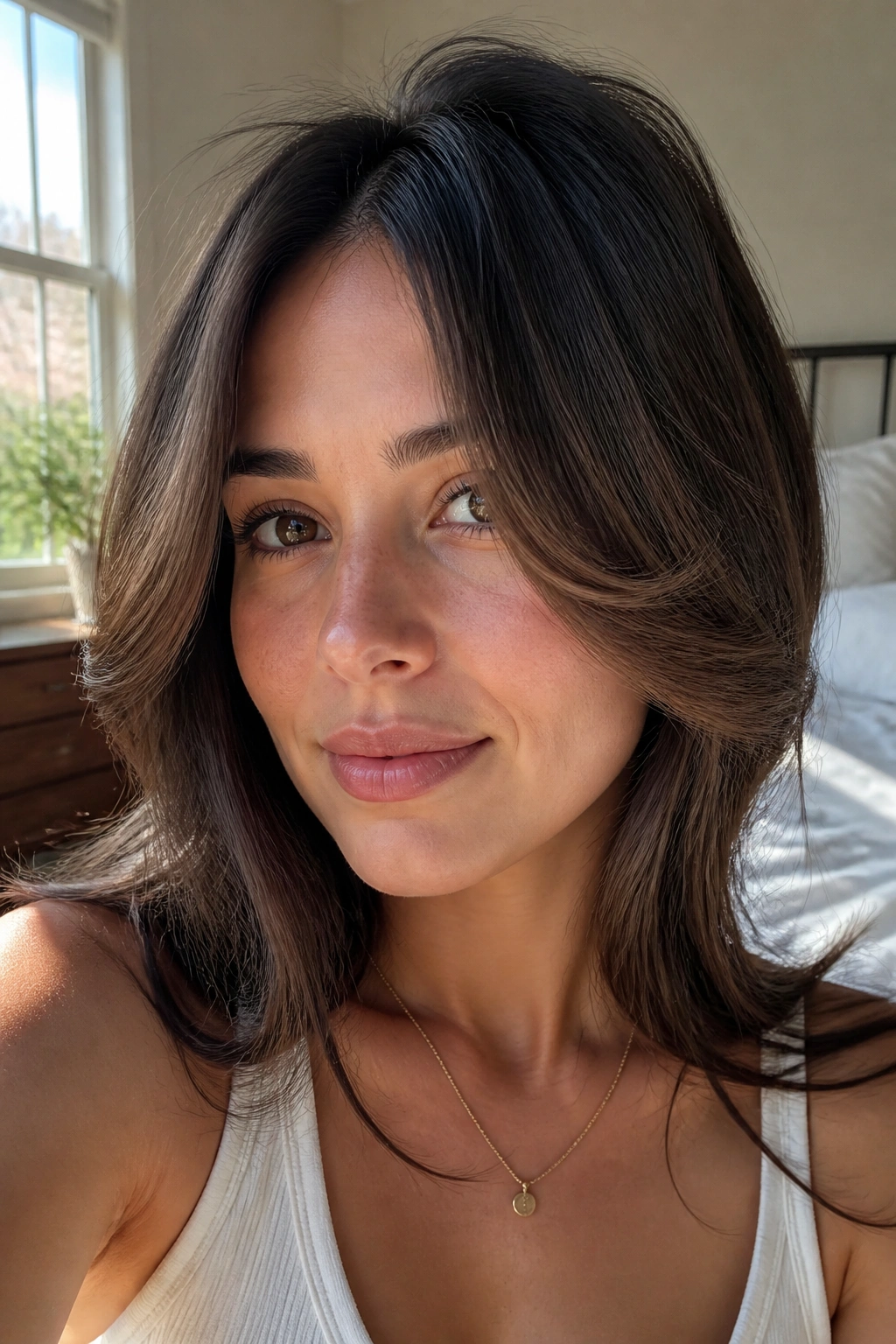
This is the easiest place to begin if you want face framing without a hard commitment. Curtain bangs split in the middle, brush away from the face, and usually start around the cheekbones so they can grow out without looking awkward.
Why they work
The middle part keeps them soft, while the longer sides pull the eye downward in a clean line. That helps long hair, medium hair, and even a lob feel less heavy near the front. If your forehead feels very open with straight-across bangs, this gives you a gentler shape.
Ask for the shortest point to hit around the cheekbone and the outer pieces to skim the jaw or mouth. That tiny detail matters. Too short and they can puff up. Too long and they turn into random front layers.
- Best on wavy, straight, or loose-curly hair
- Easy to style with a round brush or large Velcro roller
- Grows out with less drama than a blunt fringe
Pro tip: blow them forward first, then flip them out and away from the face at the very end.
2. Chin-Length Bob with Soft Forward Pieces
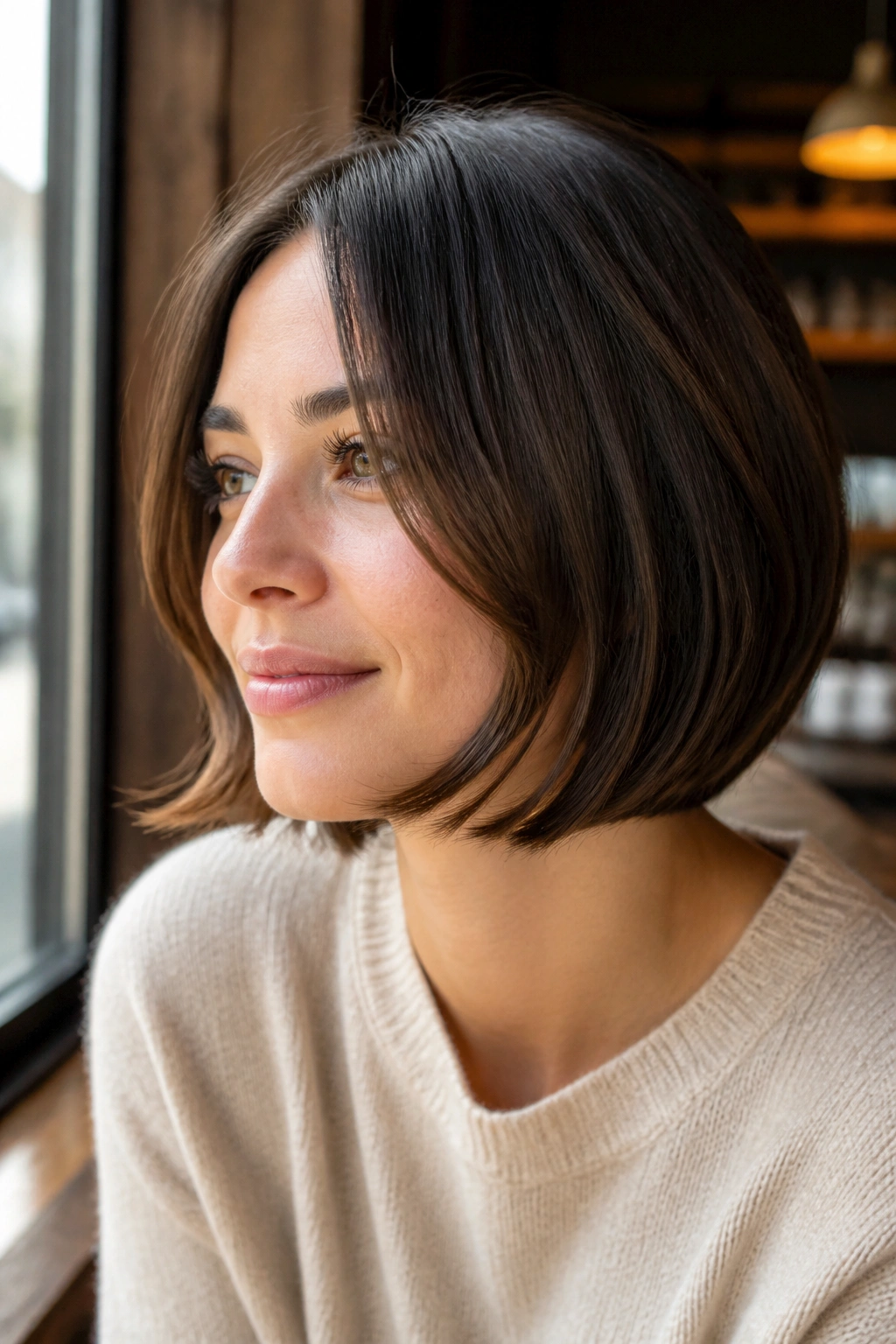
Can a bob frame the face without looking severe? Absolutely. A chin-length bob with soft forward pieces gives you the clean line of a short cut, but the front still curves around the jaw instead of stopping flat.
The trick is where the front ends land. Chin length can sharpen the jaw beautifully, but only if the ends are softened with point cutting or gentle razor work. If the bob is cut too blunt in front, it can box the face in.
I like this cut for people who wear glasses, because the short front pieces don’t fight the frames. It also works if you tuck one side behind the ear and let the other side fall forward. Small move. Big change.
A 1-inch round brush gives this bob a little bend. Dry the front away from the cheeks, then turn the brush under just at the ends so the shape stays neat.
3. Bottleneck Bangs on a Collarbone Lob

Bottleneck bangs are one of those cuts that look more complicated than they are. The center starts narrow, then the length opens out toward the temples, which makes the front feel lighter than a full fringe.
On a collarbone lob, they’re especially useful because they give the haircut a clear shape without stealing too much length. The lob keeps the style versatile, and the bangs keep it from feeling plain. That’s the sweet spot.
Ask for this
- A short center section that skims the brow
- Longer side pieces that hit around the cheekbone
- Soft blending into the front layers
- No heavy blunt line across the forehead
This cut suits someone who wants movement but does not want to spend twenty minutes fighting bangs into place. It looks good air-dried, but it looks better with a quick bend from a round brush or flat iron. A tiny curve near the ends is enough.
4. Side-Swept Fringe on Sleek Straight Hair
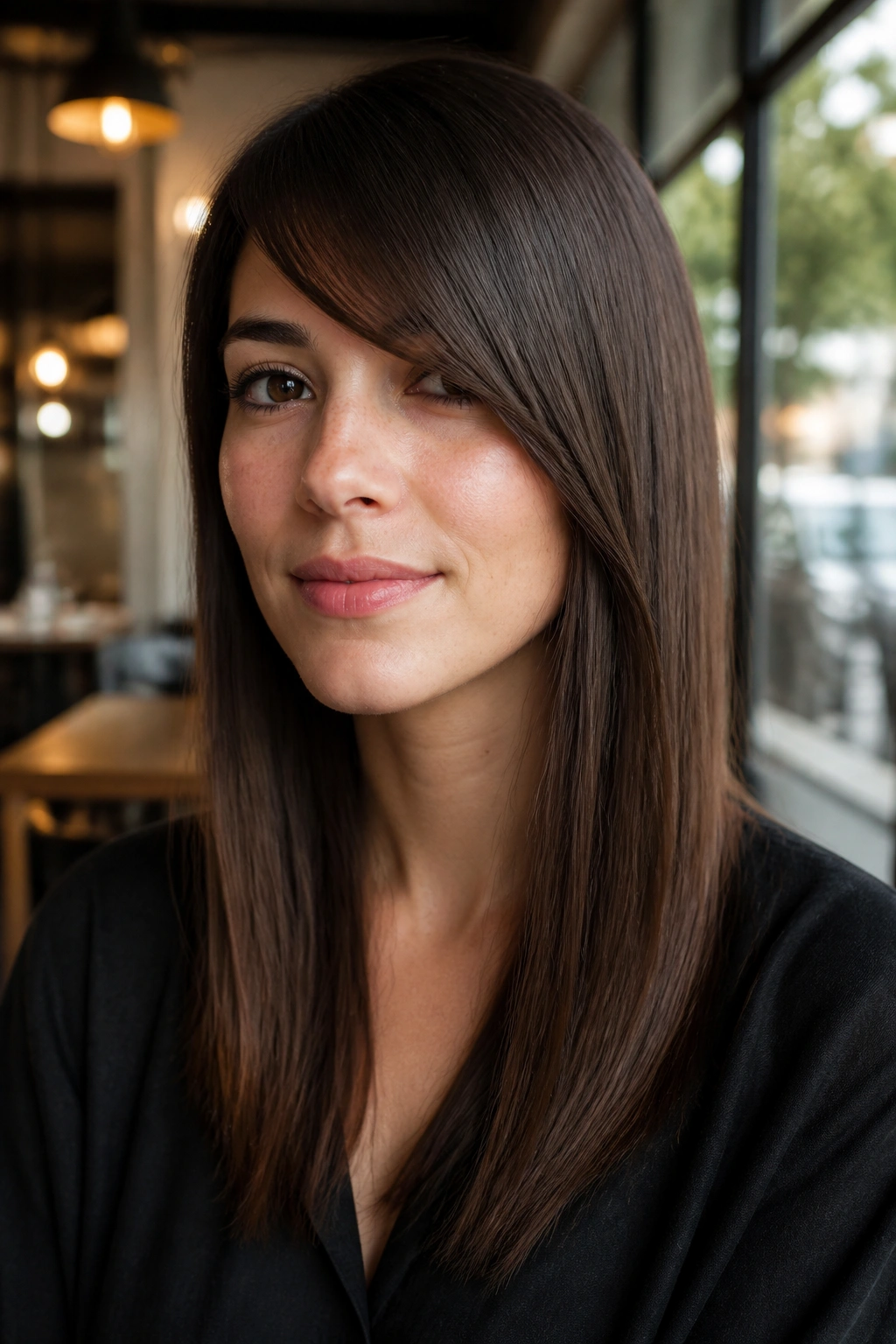
Straight hair can go flat fast. A side-swept fringe fixes that by giving the front a diagonal line, and diagonal lines are much kinder to a face than a heavy wall of hair.
This is a smart choice if your hair is naturally smooth and you like a neat finish. The fringe doesn’t need to be dramatic. It just needs to start near the arch of the brow and slide into the rest of the cut. When it’s done right, the face frame feels almost invisible until you notice how balanced everything looks.
The best version is usually cut with a little length in the front so you can sweep it either way. That gives you room to change the part without fighting the haircut. Straight hair shows every mistake, so keep the ends soft, not chopped.
A flat iron bend works here too. One quick pass at the ends, angled away from the face, is enough. Anything more starts to look stiff.
5. Butterfly Layers That Open Long Hair at the Center
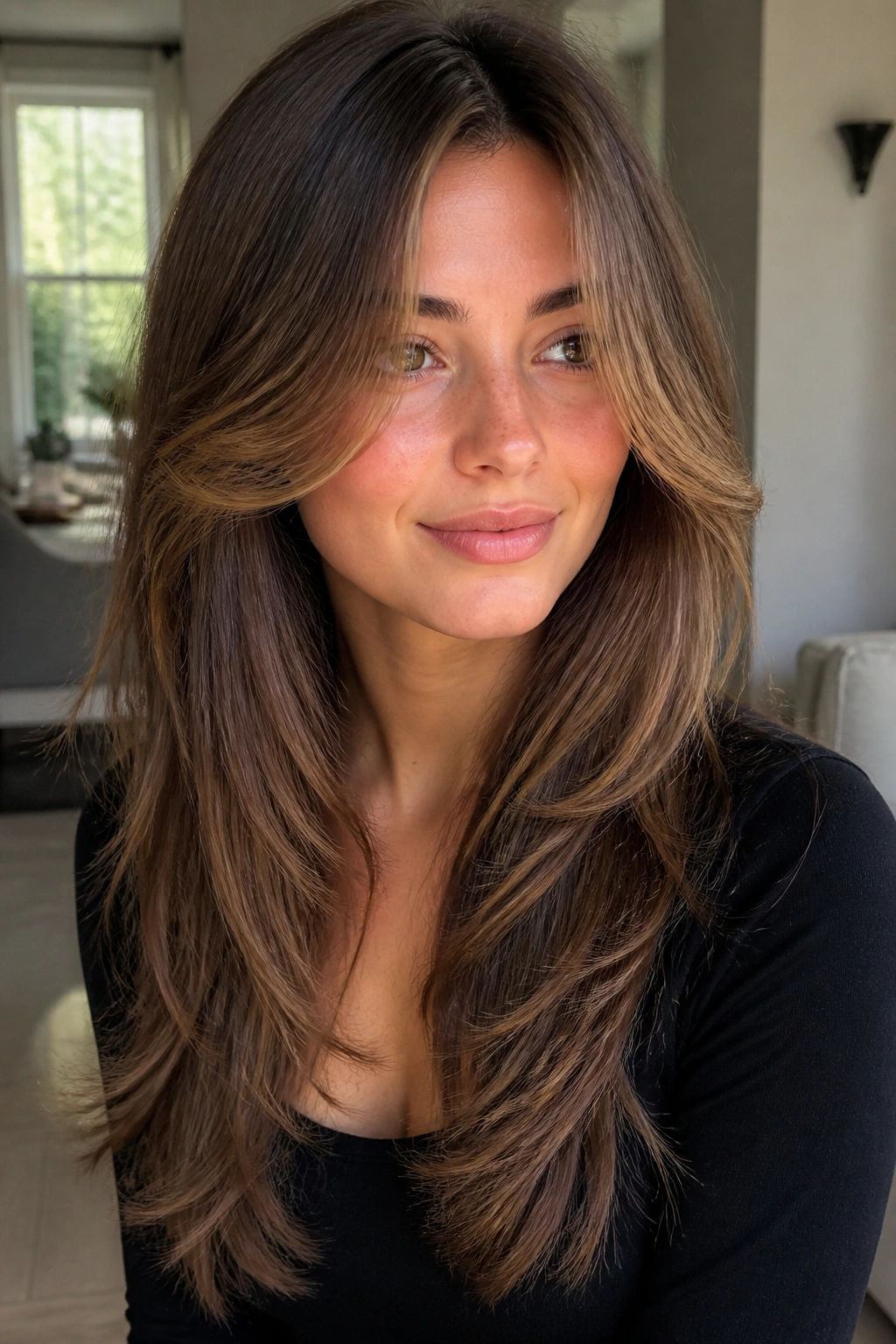
Butterfly layers are all about contrast. The shorter front pieces float around the cheekbones and mouth, while the long length stays intact in back, so you get movement without sacrificing the feel of long hair.
That’s why this cut has become such a workhorse for people who want shape but still like putting their hair up. The front layers fall around the face when the hair is down, then disappear into the rest of the length when it’s pulled back. Handy. Plain and simple.
What makes it different
It gives you the look of shorter layers without making the ends feel thin. If your hair gets heavy at the front, the shorter pieces lift it. If your hair is medium density, they add motion without taking away too much bulk.
Butterfly layers are at their prettiest with a round brush or a blowout brush. The shortest pieces should flip out slightly, almost like wings. Not too much. Just enough to show the shape.
6. Pixie Cut with Long Side-Swept Fringe
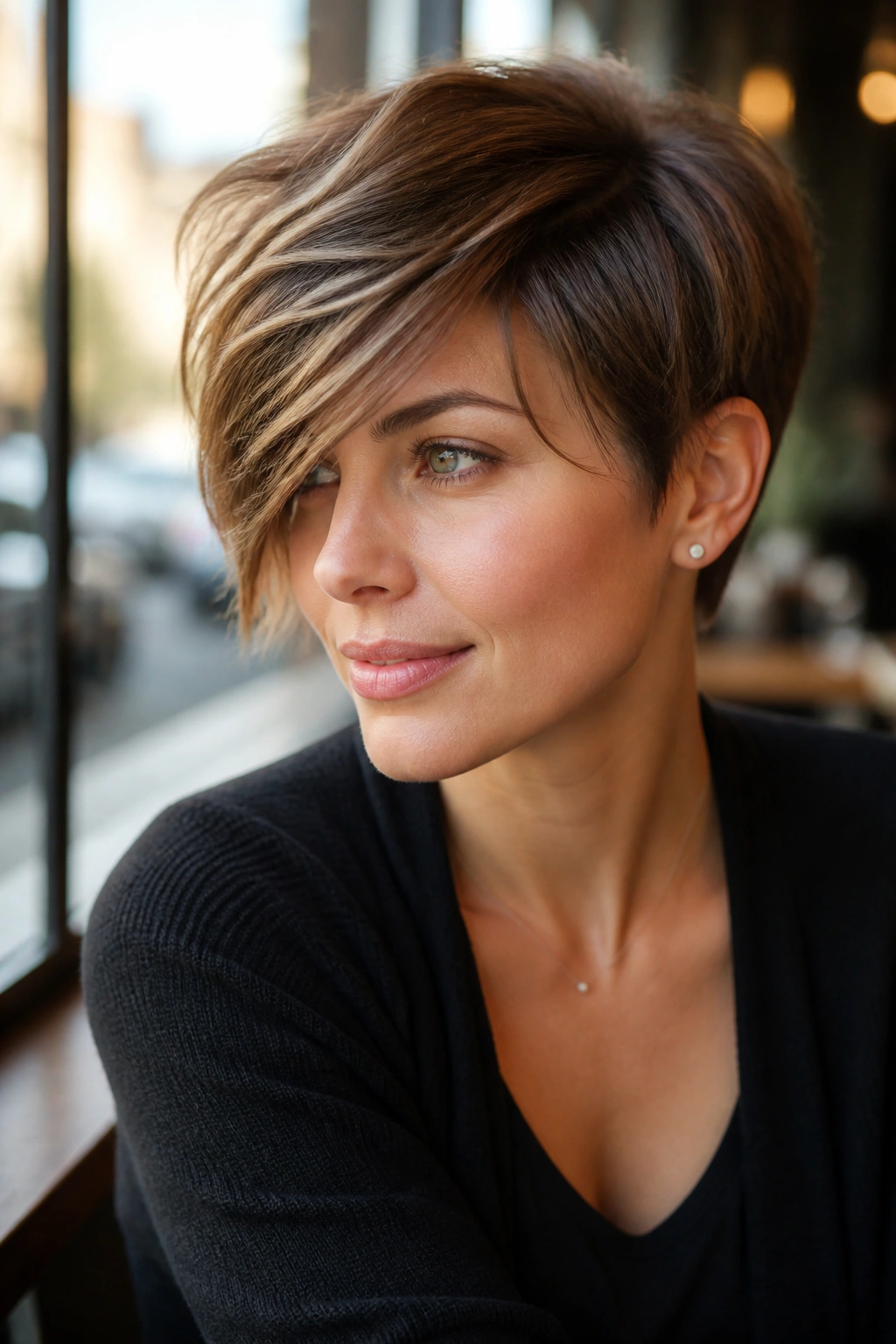
Who says short hair can’t frame the face? A pixie with a long side fringe can do more for cheekbones than some longer cuts, because there’s nowhere for the eye to hide. Every line shows.
This version keeps the sides tight and the top a little longer, usually with the fringe left long enough to sweep across the forehead and graze one brow. It softens the face fast. It also stops a pixie from looking too harsh, which is a real issue if your hair is very straight or very dark.
Style notes
- Keep the fringe at least 2 inches longer than the sides
- Use a pea-sized amount of paste or cream
- Push the front across with your fingers, not a brush
- Trim often enough that the fringe does not fall into your eyes every day
A pixie like this works best when the front has a little bend. Too much stiffness makes it look helmet-like. Too much texture and it turns messy. Right in the middle is where it behaves.
7. Wavy Lob with Jawline-Grazing Front Pieces

A wavy lob is one of those cuts that looks relaxed without being careless. The front pieces do the face framing, but the wave keeps everything soft, so the whole haircut feels lived-in instead of overdone.
If your hair sits somewhere between shoulder length and collarbone length, this is a very good place to play. The shortest front pieces can kiss the jawline, which gives a little contour without cutting the face in half. That matters more than people think. A jawline hit can make the whole cut feel sharper.
This style likes a bend rather than a curl. Wrap the front around a 1.25-inch iron for five to eight seconds, then leave the ends a touch straighter. That mixed finish keeps it from looking too polished.
A middle part makes the waves fall around the face naturally, but a deep side part can give you more lift at the roots. Try both before deciding. The shape changes more than you’d expect.
8. Curly Cut with Front Layers That Follow the Curl
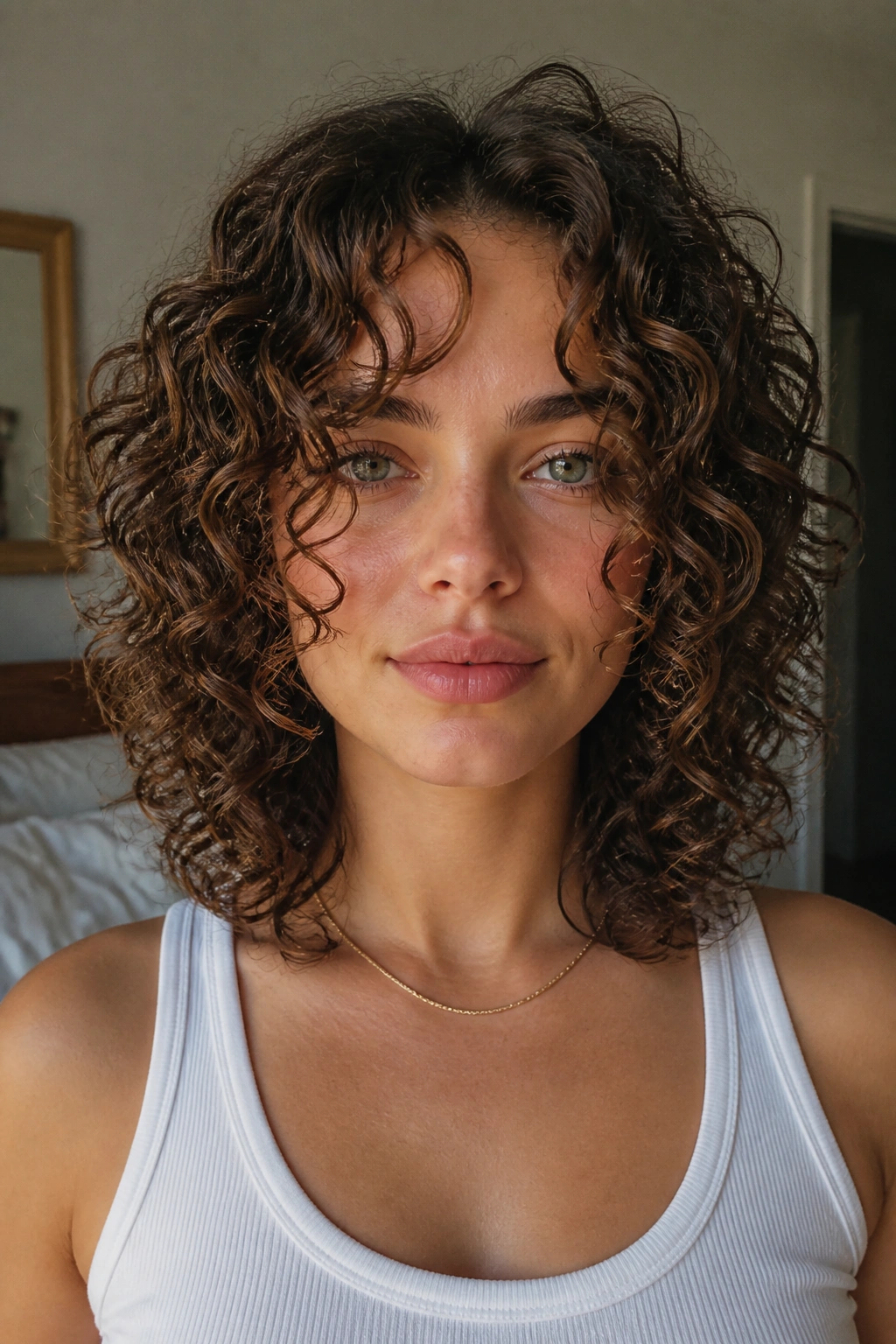
Curls need room. If the front pieces are cut the same way straight hair would be, they can spring up too much and sit in the wrong place. That’s why a curly face frame should follow the curl pattern, not fight it.
The best versions are usually cut dry, curl by curl, so the stylist can see where each curl actually lands. A piece that looks like jaw length when wet may bounce to the cheekbone once it dries. That is normal. It is also the reason curly cuts go sideways when someone cuts them flat and wet without checking the shrinkage.
Cutting rule
Ask for the front layers to be left a little longer than you think you need. Then let the curls do the job. A good curly face frame often lands at the lip, chin, or just below, depending on the spring in your hair.
Use a diffuser on low heat, cup the front pieces gently, and stop touching them once they start setting. The less you poke, the better the shape stays.
9. Razor-Cut Shag for Thick Hair

If your hair feels heavy in the front, a shag can fix that fast. A razor-cut shag removes some of the bulk and breaks up the front line, so thick hair stops sitting like one solid wall.
That soft face frame is what keeps the shag from looking too aggressive. You want the shorter pieces to fall around the cheek and jaw, not stick out in sharp corners. When the front is blended well, thick hair suddenly has movement where it needs it most.
A razor works especially well if the ends are coarse and the front tends to puff out. But this cut does not love damaged, fragile hair. On ends that already split easily, too much razoring can make the front fray faster than you’d like.
Best styling move? A texturizing cream on damp hair, then a rough blow-dry with your fingers. Don’t over-smooth it. A shag wants some grit. That’s the point.
10. Invisible Layers for Fine Hair
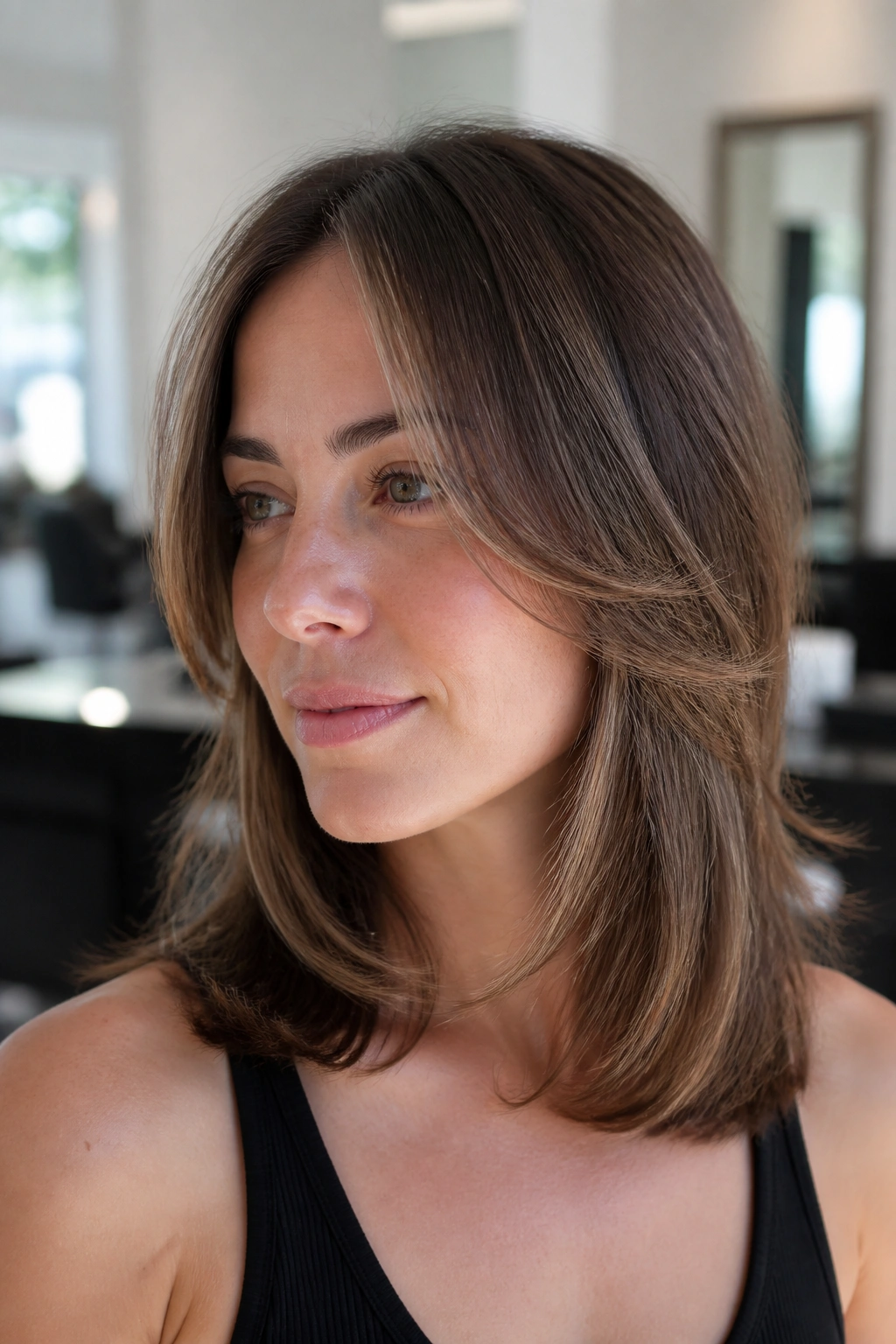
How do you get face framing without losing body? Use invisible layers. They sit so quietly inside the cut that you still keep fullness, but the front moves just enough to stop the hair from hanging flat around the cheeks.
This is the route I’d choose for fine hair that gets wispy fast. Heavy face-framing layers can make fine strands look sparse at the front, especially if the shortest piece lands too high. A softer version starts lower, often near the jaw or just below it, and blends into the rest of the haircut with barely-there graduation.
The trick is restraint. A stylist should remove weight where the hair collapses, not slice out chunks from the front. Point cutting helps. So does keeping the ends blunt enough to preserve a clean edge.
If you like volume, dry the roots first and keep the front pieces slightly curved under with a round brush. That small inward bend makes the hair look denser without making it stiff.
11. French Bob with Brow-Skimming Fringe

A French bob gives you attitude in a very small package. It usually sits between the cheekbone and chin, with a fringe that skims the brows and soft edges that keep the shape from looking boxy.
What makes it work as a face-framing haircut is the balance. The fringe brings attention up, while the curved bob line stops at just the right spot around the jaw. It’s short, yes, but not severe. That distinction matters.
Compared with a blunt bob, the French version feels a little more airy. The ends are often softly beveled, and the fringe isn’t cut as a hard line. That makes it easier to wear without daily perfection.
This cut suits people who like to air-dry and live with a bit of natural bend. It does need regular trims, though. A brow-skimming fringe grows into your eyes fast, and the charm depends on keeping the line clean.
12. Shoulder-Length Cut with a Face-Opening Bend

Shoulder-length hair can be sneaky. It’s long enough to feel flexible, but if the front is cut flat, it can still drag the whole look downward. A face-opening bend fixes that without changing the length much.
The shape comes from the front pieces turning away from the face at about cheekbone height. A round brush or a 1.25-inch curling iron gives the right curve. You do not need full curls. You need a bend that opens the line near the front and lets the rest fall naturally.
The bend that matters
Start the bend a little lower than you think. If it begins too high, the front can look puffy near the eyes. If it starts around the cheek or upper jaw, the effect is cleaner.
This is one of my favorite cuts for people who want movement but hate obvious layers. It gives the same softening effect with less visual noise. A little polish. No drama.
13. U-Shape Cut with Long Draped Front Layers
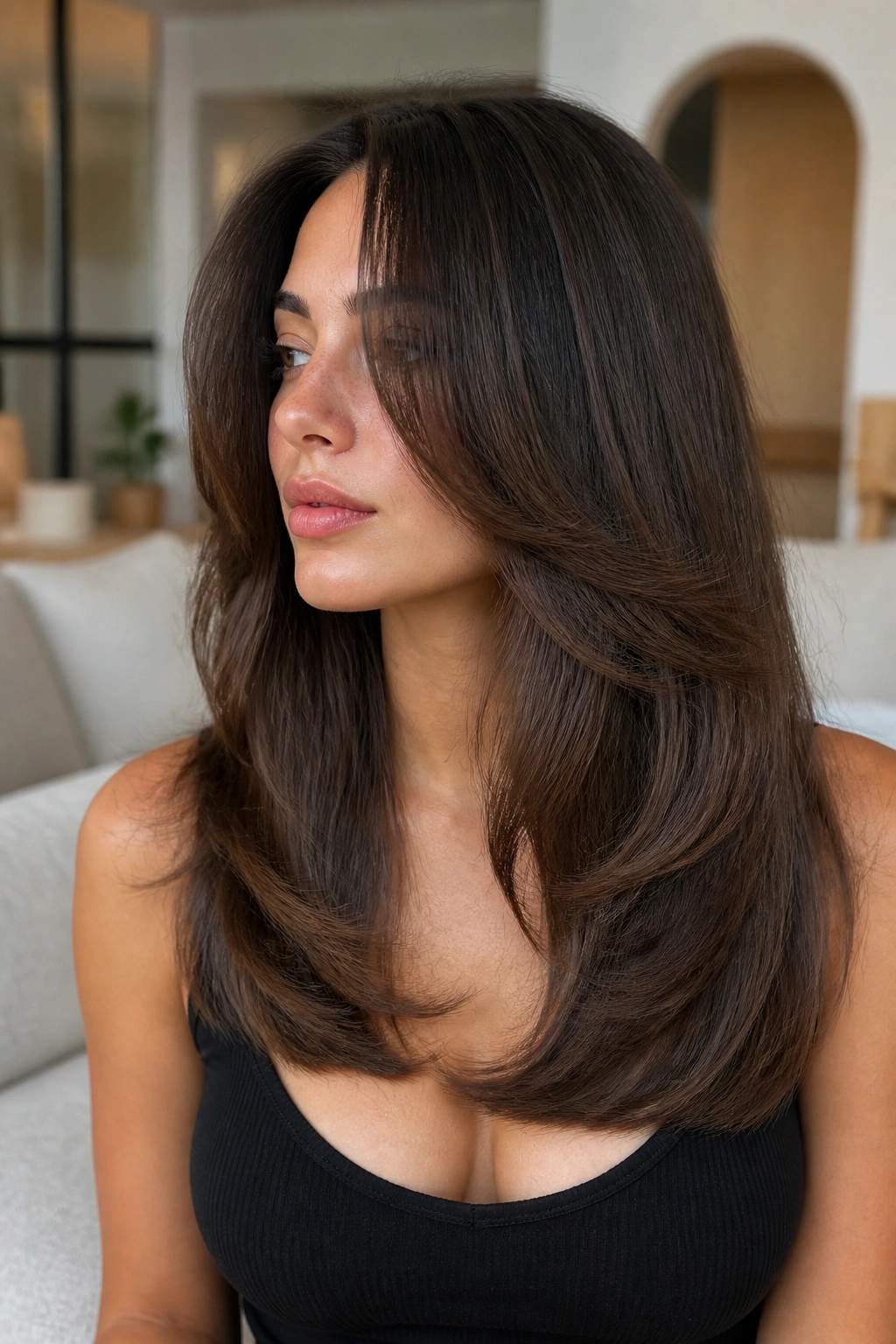
The U-shape is underrated. The back keeps a gentle curve, and the front pieces drape longer around the face, which makes long hair feel lighter without losing its length story.
That curve matters because it avoids the straight-across heaviness that can make long hair feel like a curtain. With a U-shape, the front naturally opens the face while the back keeps weight and swing. It’s clean, but not rigid.
Where to ask for the shortest point
- Around the chin for a stronger frame
- Around the mouth or collarbone for a softer one
- Blended into the front instead of chopped separately
- Finished with point cutting so the ends don’t look too blunt
This cut is a good choice if you wear your hair straight most of the time. It keeps the line elegant without needing a lot of styling. A quick blowout or even a loose air-dry will show the shape.
14. Wolf Cut with Softened Front Pieces

A wolf cut can go too hard if the front pieces are cut with no restraint. All that texture can start to look choppy in a way that overwhelms the face. So the softer version matters.
The front should still feel shaggy, but the shortest pieces need to melt into the rest of the cut. That keeps the wild shape while giving the cheekbones a cleaner line. It’s a better look for people who want a little edge, not a costume.
This works especially well on medium to thick hair because the layers can hold their own. On fine hair, too many short pieces can collapse unless the cut is handled carefully. I’d keep the front a touch longer and avoid over-thinning the ends.
A matte texture spray gives the cut some grit without making it crunchy. Scrunch the front with your fingers, then leave it alone. That’s usually enough.
15. Grown-Out Bangs with a Medium-Length Cut

Need face framing that does not scream, “I just got bangs”? Grown-out bangs are the move. They blend into medium-length layers, so the haircut looks intentional even when the fringe has passed its original shape.
This is one of the easiest cuts to live with because it gives you options. Wear the pieces parted in the middle, sweep them to one side, or tuck them back when you’re tired of the fringe. The blend around the face stays soft either way.
The sweet spot is usually a bang that has grown past the brow and a layer that begins around the cheek. That overlap is what makes the cut feel effortless. Well, not effortless in the magical sense. Just easy to manage.
Trim every 6 to 8 weeks if you want the shape to stay open. If you wait too long, the front gets heavy and starts hanging in your eyes instead of framing the face.
16. Center-Part Blowout Layers
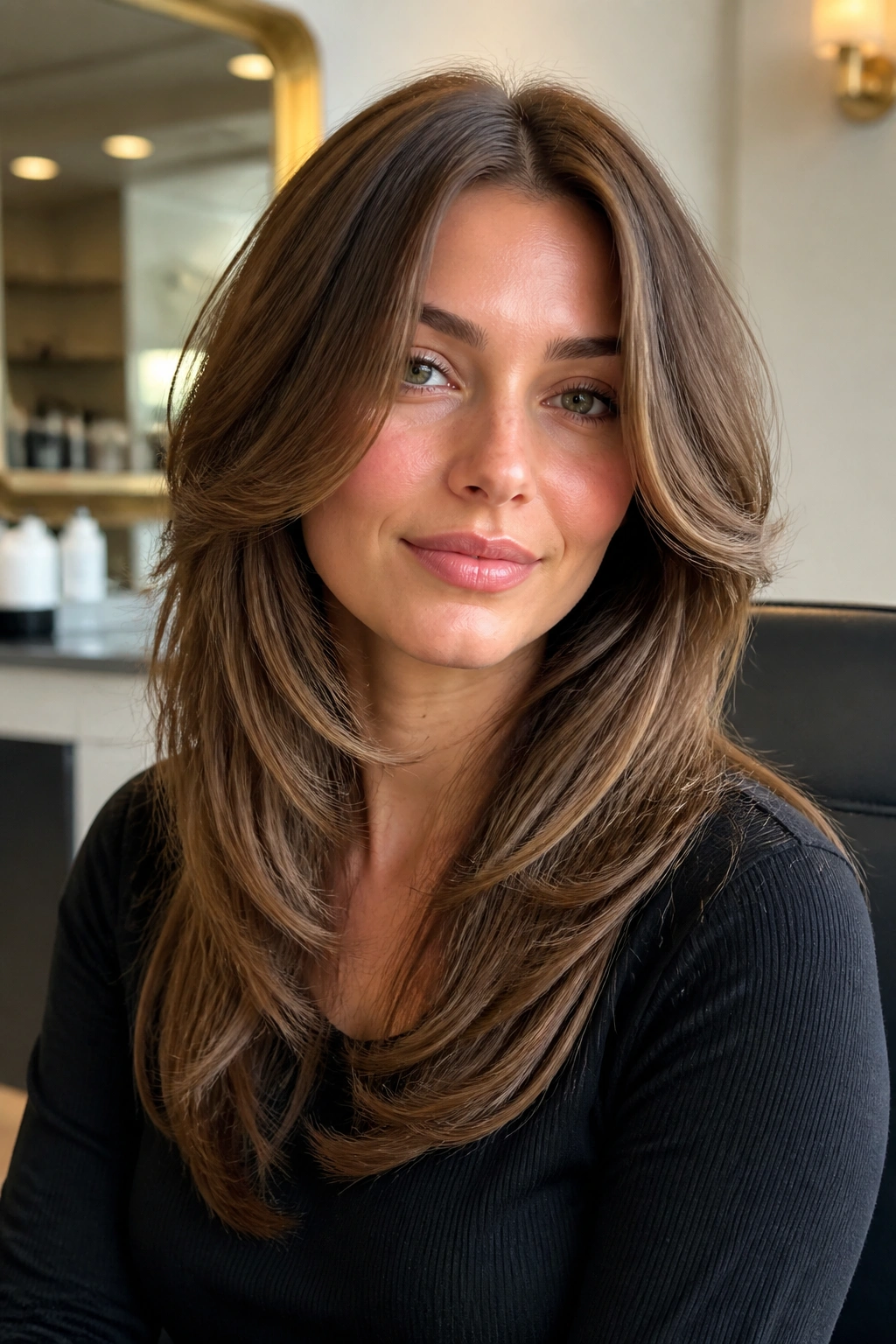
A center part changes the whole mood of a haircut. Add blowout layers, and the front pieces arc away from the face in a smooth, balanced way that feels neat without being flat.
This cut is especially good if you like volume at the crown and softness at the cheeks. The front layers should start around the chin or mouth, then curve back with the brush so the line opens in the center and wraps around the sides. It’s a very clean look when it’s done right.
How to style it
Use a round brush with a dryer nozzle, aiming the airflow downward first to smooth the roots. Then switch the brush outward at the front so the ends bend away from the face. A cool shot at the end keeps the curve from falling apart.
This cut can look too sleek if every strand is forced into place. Leave a little movement. Hair looks more alive that way.
17. Blunt Bob with a Tucked-In Face Frame

A blunt bob can look stern if nothing breaks the line. A tucked-in face frame solves that by adding a small amount of softness around the cheeks while keeping the main shape sharp.
That contrast is what makes it interesting. The outline stays clean, almost graphic, but the front pieces are eased in with a slight angle or a gentle bend. The result feels more wearable than a pure one-length bob, especially if your hair is very straight.
If you tuck one side behind the ear, the face frame becomes even more visible. Tiny move. Big payoff. It’s the sort of haircut that looks simple until you notice how carefully it’s been built.
- Keep the front layers only slightly longer than the back line
- Use a smoothing cream, not a heavy oil
- Bend the ends under with a flat brush or paddle brush
- Avoid over-layering, which can kill the blunt shape
18. Long Layers That Slip from Jaw to Collarbone

Long hair needs a face frame that does more than poke a few short pieces around the front. The shape should move in steps: one point near the jaw, another around the collarbone, and a longer connection into the rest of the length.
That spacing keeps the hair from looking like two separate sections. Short front bits on their own can feel disconnected. A layered slip from jaw to collarbone gives the face shape and the rest of the hair a clean path downward.
Ask your stylist to connect the front with point cutting instead of a harsh blunt angle. That makes the layers melt into the length instead of sitting on top of it. If your hair is thick, this is a good way to remove bulk without losing the weight that makes long hair swing.
This is one of those cuts that looks plain on the hanger and much better on a moving head. Hair in motion tells the truth.
19. Micro Fringe with Longer Sides

Micro fringe is not for the timid. It puts the shortest hair right on display, which means the rest of the cut has to do the balancing act. Longer side pieces help a lot there.
The sides soften the high, short fringe and keep the front from feeling boxed in. Without them, micro bangs can make the forehead line too hard. With them, the cut gets a little breathing room. That’s the difference between sharp and awkward.
This style works best when the fringe is cut to sit well above the brows and the side pieces reach the cheekbones or chin. It also tends to look strongest on hair with enough density to hold a clean edge. Very wispy hair can make it look uneven fast.
Micro fringe likes confidence and regular trims. If you hate maintenance, skip it. If you enjoy a small, obvious haircut that does the talking for you, it has real personality.
20. Rounded Layers for Wavy Hair

Wavy hair loves a rounded shape. Straight layers can make waves kick out at the wrong points, but rounded layers follow the bend of the hair and keep the front pieces flowing into the cheeks.
What to ask for
- Shortest front pieces around the cheekbone
- Soft graduation through the temple area
- Longer layers that curve into the shoulder line
- No harsh shelf at the jaw
The rounded shape keeps the hair from turning triangular, which is a common problem on thicker waves. It also gives you a nicer grow-out because the layers remain connected even when they start to soften.
A diffuser helps, but so does knowing when to stop. Over-drying wavy hair can make the face frame collapse into frizz. Dry until the roots are set and the front has a gentle bend, then let the rest air-finish.
21. Layered Crop with Piecey Temples
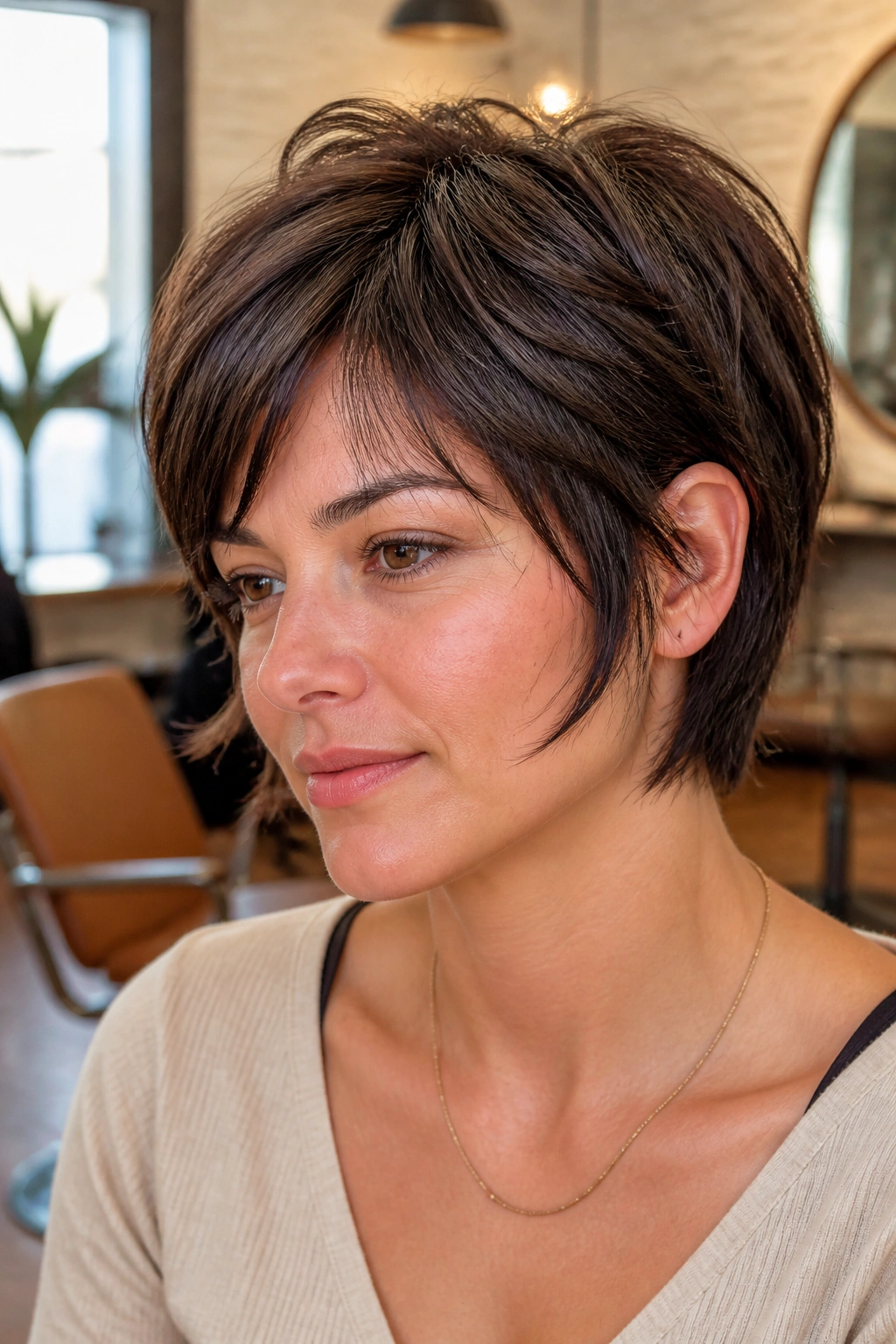
Short hair needs detail near the temples. That’s where the eye lands first, and it’s where a layered crop can shift from plain to shaped in about two seconds.
The piecey temple area gives the haircut a little swing without making it fluffy. The rest of the crop can stay compact, but those longer side bits soften the line around the face. If the cut sits close to the head, this small move keeps it from feeling too severe.
I like this for people who want short hair but still want some softness around the jaw and cheekbones. It’s especially useful if your hair grows straight out at the sides and tends to look boxy. A tiny bit of length at the temples breaks that up.
Use a dab of light cream or wax. Pinch the front pieces with your fingers while they dry. That piecey finish is part of the look; fighting it only makes the crop look stiff.
22. Long Curly Layers with a Soft Halo

Long curls need a face frame that shapes the silhouette without stealing all the length. A soft halo of layers does that by keeping the shortest pieces around the cheek and mouth, then letting the curl pattern stack around the face in a loose curve.
This is a better move than cutting the front too short and hoping the curls will behave. They won’t. They spring. They shrink. They move. So the haircut has to leave room for that motion. A good curly face frame usually ends up looking a little longer when wet and a little shorter once it dries, which is exactly why dry cutting or careful curl-by-curl trimming helps so much.
Keep the front connected to the rest of the layers, not chopped off as a separate section. That gives you the halo effect instead of a triangle. And if you want to keep the shape soft, stop diffusing when the curl clumps are set and touch the front pieces as little as possible.
Long curls are at their prettiest when the face frame behaves like part of the curl pattern, not a correction sitting on top of it.
Some face-framing cuts want attention. These don’t. They just do the job, which is usually the better result anyway. If you pick the shortest point well, match it to your texture, and keep the front connected to the rest of the haircut, the shape will do more for you than any styling trick ever could.
