



Medium hair can look plain in the wrong cut. It can also look expensive, light, and easy to style when the layers are placed with a little thought instead of a lot of scissors.
Soft layered haircuts for medium hair solve that problem fast. They keep enough length to tie back, twist, clip, or tuck behind the ears, while taking away the heavy blocky look that makes some medium cuts feel stuck in place. The trick is in the shape. A good layered cut should move when you turn your head, not look like it was attacked by a thinning shear.
What matters most is where the layers start. Too high, and the hair can go wispy or uneven. Too low, and nothing much changes. The sweet spot usually lives somewhere between the cheekbones and the collarbone, depending on density, texture, and how much styling you want to do on a normal morning.
1. Soft Layered Haircuts for Medium Hair That Hit the Collarbone
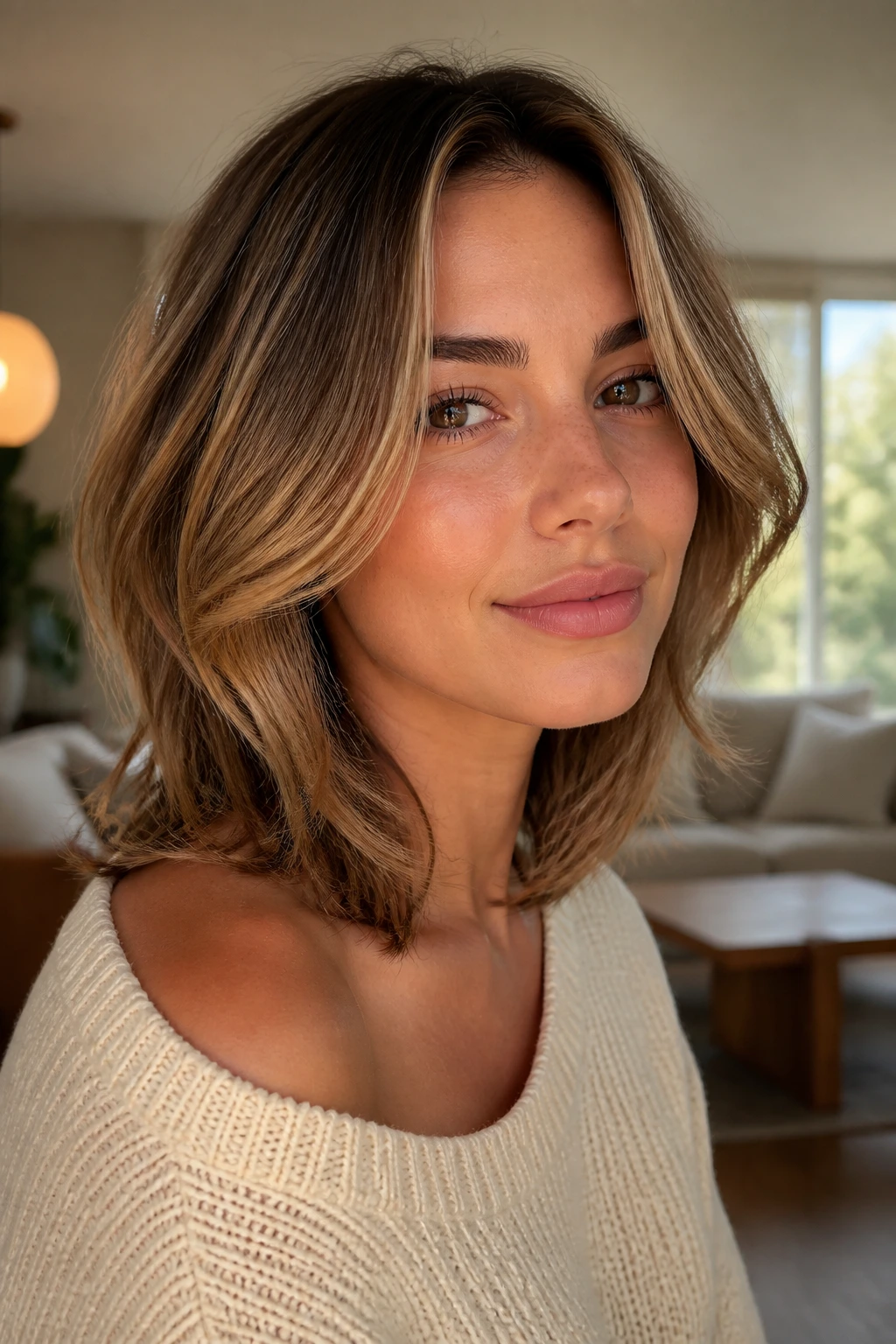
This is the cut I point people toward when they want movement without drama. The collarbone gives the hair a natural resting point, so the ends flip, bend, and tuck in a way that looks intentional even on a plain blow-dry.
Why this shape behaves so well
A collarbone-length perimeter keeps the outline clean, while the soft layers take weight out of the middle. That means the haircut still feels full, but it does not sit there like a helmet. If your hair tends to puff at the sides, this shape usually calms that down.
Ask for the first internal layer to begin around 2 to 3 inches below the chin. That keeps the frame soft and stops the front from getting too choppy. If your hair is thick, the stylist can carve a little more space near the ends. If your hair is fine, the safest move is a light touch and longer layers.
- Best for: medium-density hair, soft waves, and straight hair that needs bend
- Styling note: a 1.25-inch round brush or curling iron gives the ends that easy curve
- Maintenance: trim every 8 to 10 weeks if you want the collarbone line to stay clean
- Avoid: too many short layers near the crown, which can make the top look thin
My take: this is the easiest soft layered haircut to live with, and it grows out nicely instead of turning awkward.
2. Face-Framing Layers That Start at the Cheekbones
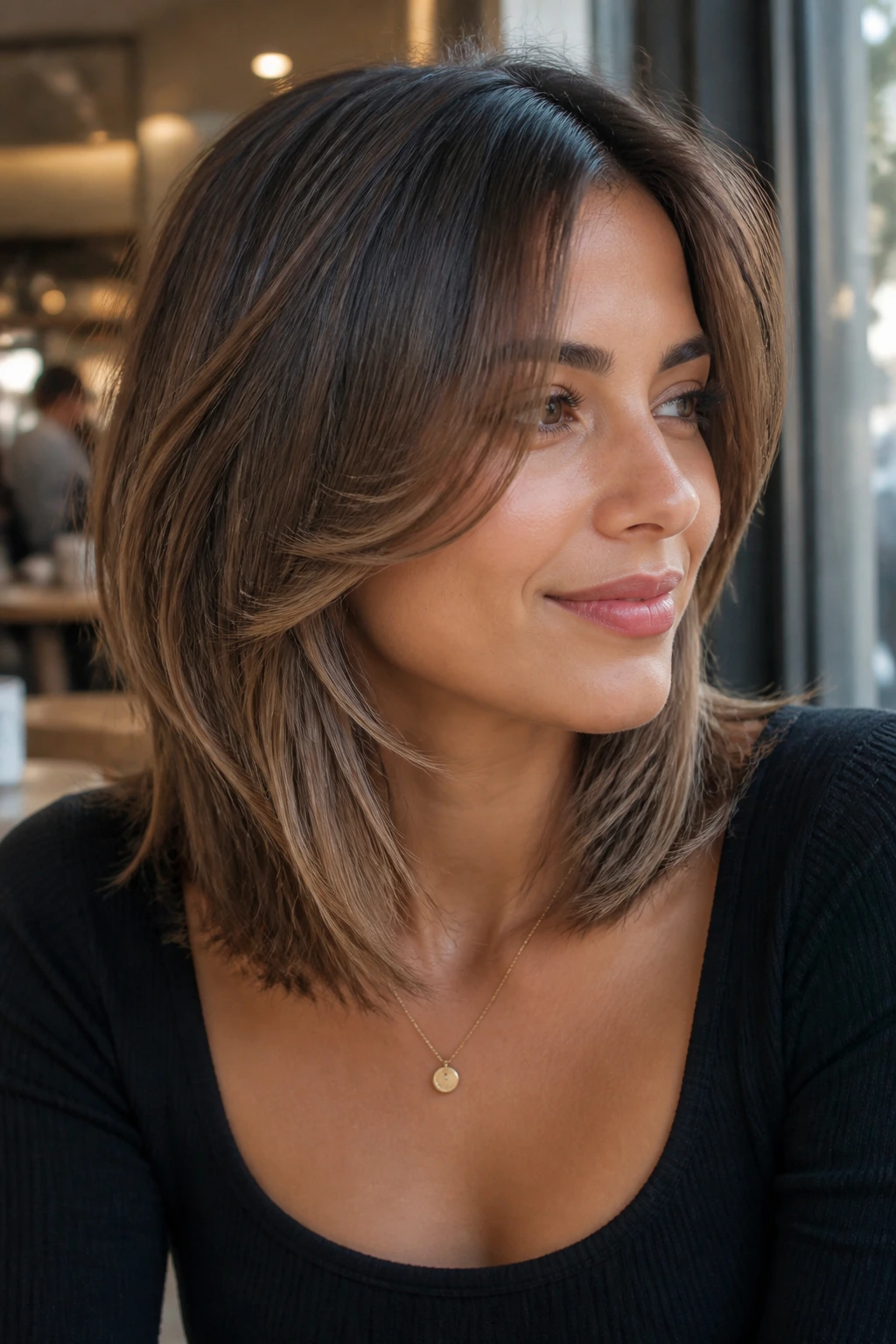
Why do some medium cuts make the face look open while others just hang there? Cheekbone layers are the answer most people are looking for, even if they do not know the phrase.
The shape works because it puts the first swing of the hair right where the face needs movement. That little angle changes everything. It can soften a square jaw, pull attention upward on a round face, and make the whole cut look lighter without losing length.
A good version of this cut does not start with a sharp stair-step. It starts with a soft diagonal that grazes the cheekbone, then melts into the rest of the hair. If you wear your hair tucked behind one ear a lot, this is one of the nicest ways to keep that habit from looking flat.
Styling is straightforward. Blow-dry the front section away from the face with a medium round brush, then bend the ends slightly inward or outward depending on your face shape. That small choice matters more than most people think. Inward bend feels softer. Outward bend looks a little freer.
3. Soft Layered Haircuts for Medium Hair with Curtain Bangs
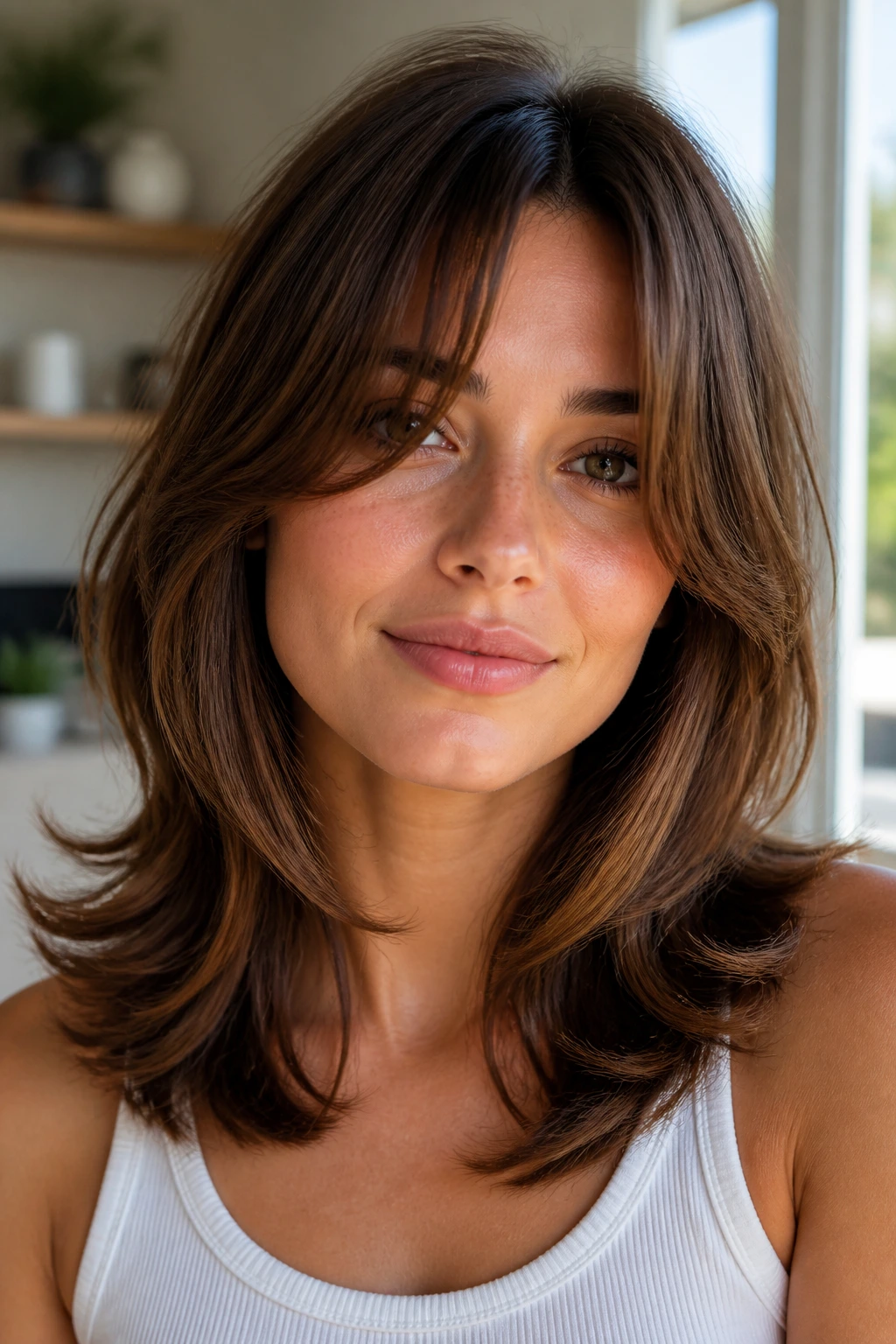
Curtain bangs can make medium hair look finished even when the rest of the style is loose. They also hide a lot of sins on busy mornings.
What the fringe should do
The bangs should open from the center, then fall into the face-framing layers without a hard line. If they end too short, the look turns fussy. If they land around the lip to cheekbone zone, they usually blend well with medium-length layers and give the haircut that easy swing people keep asking for.
Curtain bangs are especially handy if you want the cut to look styled without doing much. A quick blow-dry with a round brush on the front pieces is often enough. The rest can air-dry with a little cream or be loosely waved with a 1-inch iron.
A few things are worth asking for at the salon:
- a soft center part through the fringe
- longer sides that blend into the cheek area
- light texturizing at the ends, not at the roots
- enough length to pin the bangs back on greasy days
The only catch is cowlicks. If your front hair grows in a stubborn direction, curtain bangs need a little more day-to-day coaxing. Still, when they work, they make medium hair look fuller around the eyes and less heavy at the forehead.
4. The U-Shaped Cut with Soft Movement
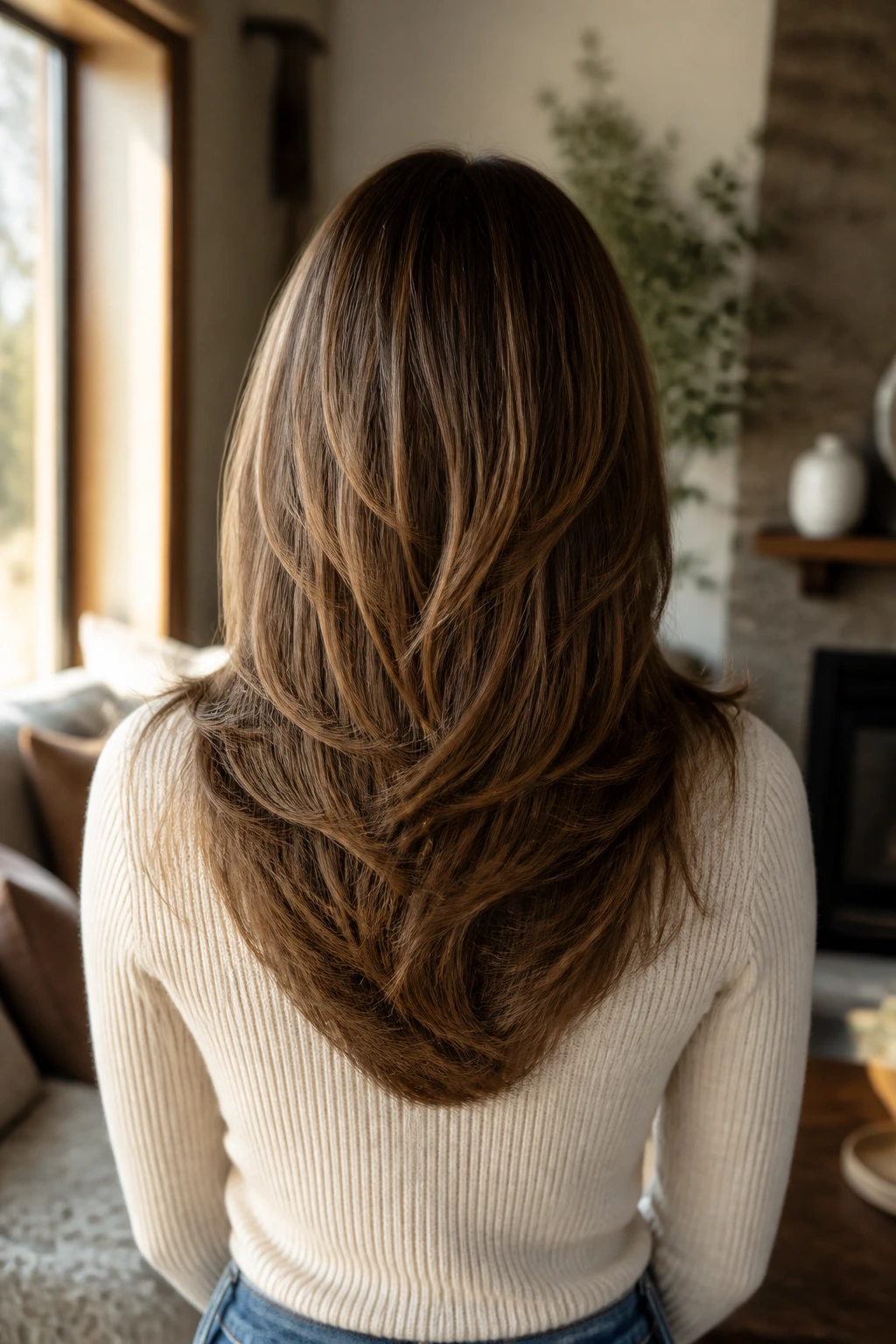
A U-shaped outline sounds subtle, and that’s exactly why it works. The back stays a little longer, the sides lift slightly, and the whole haircut feels smoother than a blunt horizontal line.
The shape is especially kind to medium hair that gets bulky at the bottom. A straight line can make that bulk sit in one heavy shelf. The U shape breaks that up without chopping the length away. It’s a neat solution, honestly, and people overlook it because it does not scream “new haircut” in the mirror.
There’s another reason I like it. A U-shape lets soft layers show up without making the perimeter look thin. If you have thick hair, that matters a lot. You want the ends to move, not disappear.
The cut also grows out in a gentle way. The back keeps some weight, so you do not get that sudden triangle effect that shows up when a medium cut starts losing shape. That makes it a smart choice if you only trim your hair a few times a year and want the style to hold together between visits.
5. Invisible Layers Inside a Textured Lob
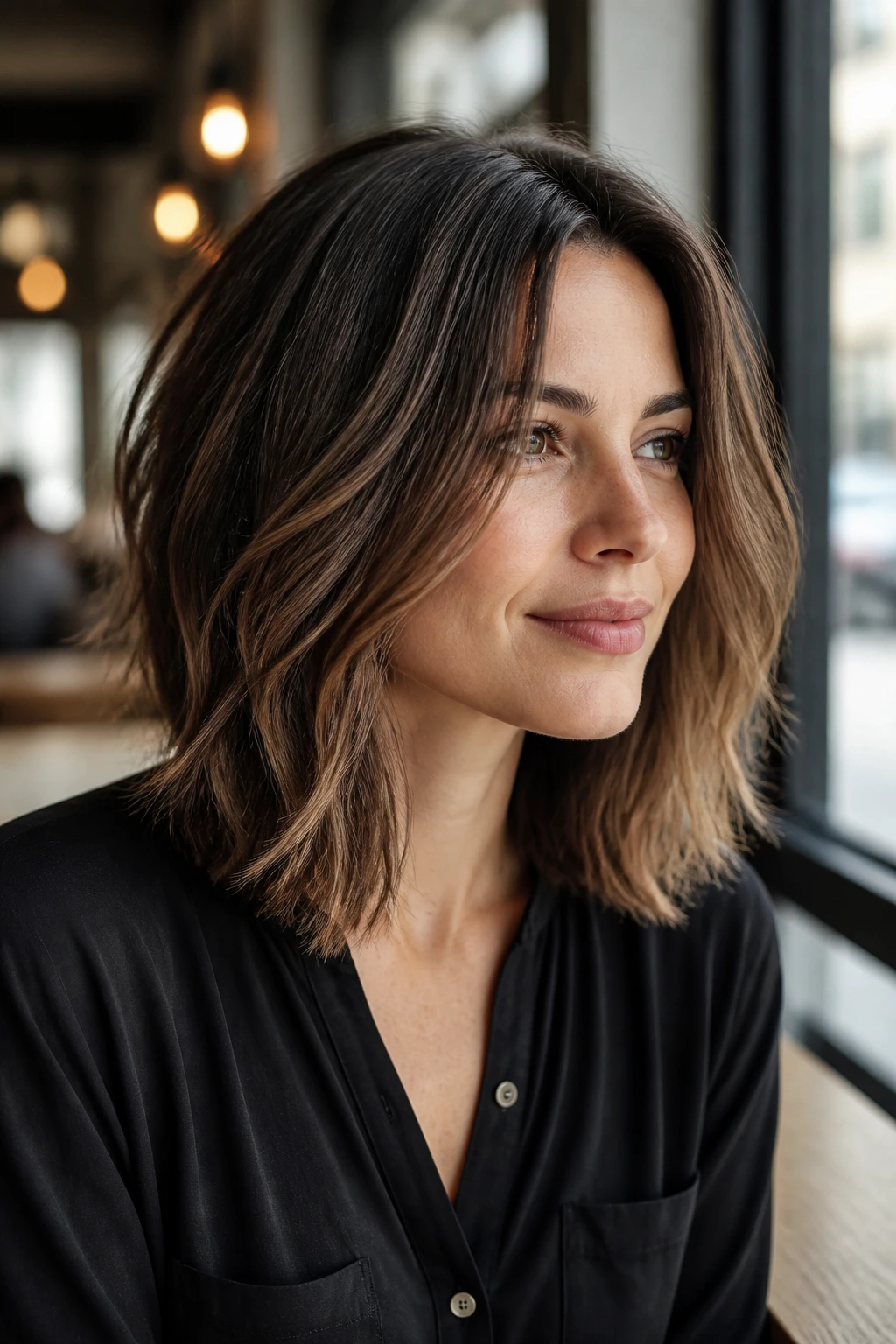
Can a haircut feel lighter without looking obviously layered? Yes. That is the whole point of invisible layers, and they are one of the most underrated choices for medium hair.
The trick is that the movement lives inside the shape. The outside line stays fairly clean, so from a distance the haircut reads as polished and simple. Up close, though, the hidden layers stop the hair from sitting like one flat sheet. That makes this cut especially good for straight hair that lies down hard and refuses to bend.
Where the weight comes out
A stylist usually removes a little bulk from the middle and lower sections, then keeps the ends blunt enough to hold a shape. That balance is what keeps the lob from looking stringy. If the layers are too high, the haircut loses its edge. If they are too low, nothing changes.
This is one of those cuts that rewards a round brush and a small amount of styling cream. You do not need a full blowout. A simple bend at the ends and a little lift at the crown are usually enough.
It also suits people who want a tidy look during the workweek but hate spending time on hair. Clean outline. Soft interior. That combination is hard to beat.
6. The Butterfly Cut, Softened for Medium Hair
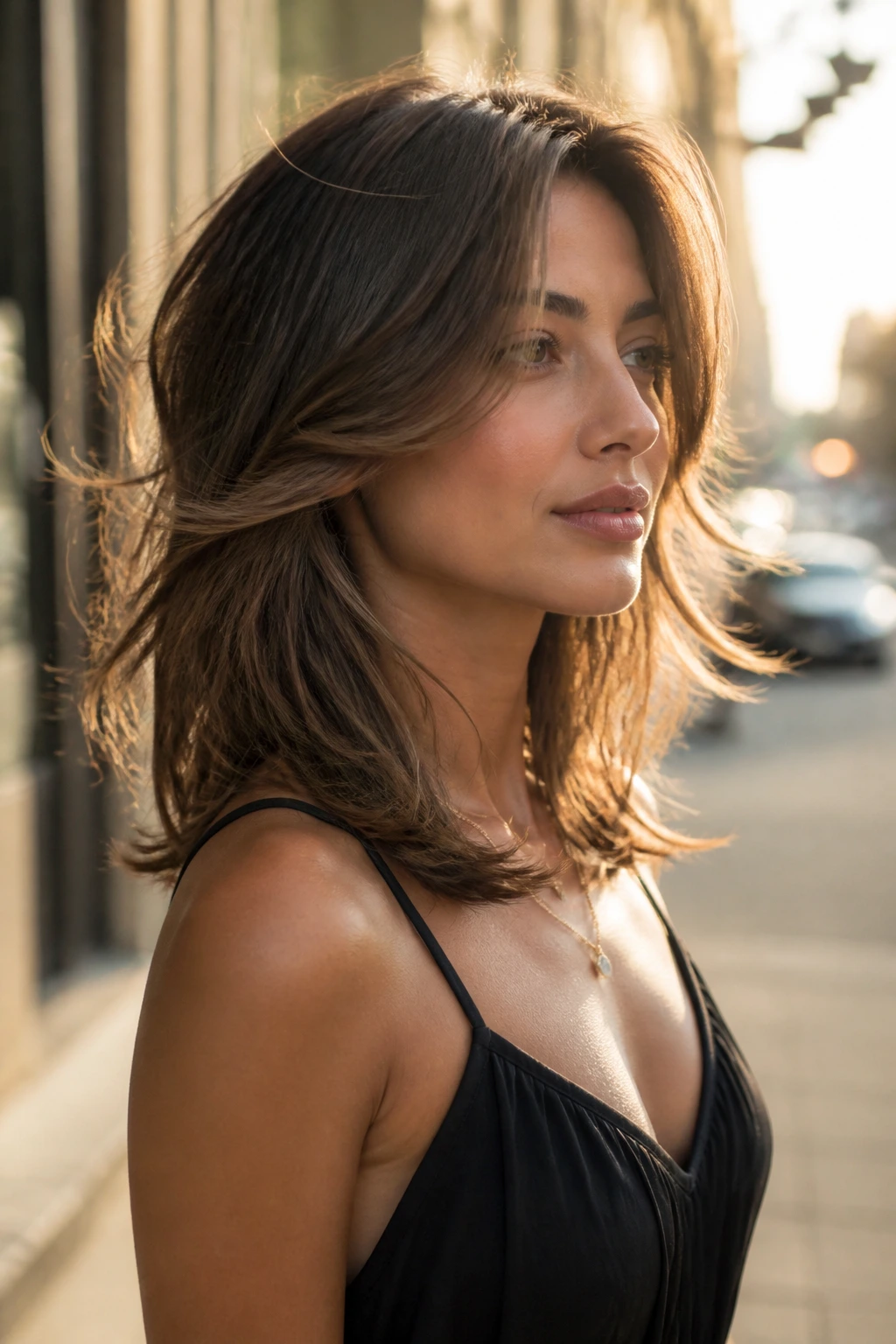
The butterfly cut works because it gives you two moods at once: lift through the crown and length through the ends. On medium hair, that makes a lot of sense.
Shorter face layers create the airy top section, while the longer lengths keep the haircut from going too short or too feathered. The result is a style that looks like it has movement even when you wear it down straight. If you clip the front sections back, the shape changes again, which is part of the appeal.
This version should be softened, though. A harsh butterfly cut can look too staged on medium hair. Ask for longer crown layers and face pieces that blend into the rest of the cut instead of breaking off sharply. The goal is flow, not two separate haircuts in one.
It’s a good fit if you like volume near the cheeks and crown but still want to wear your hair in a low ponytail or a half-up clip. That flexibility is why so many people keep coming back to it. The cut does a lot of work before you even touch a styling tool.
7. A Soft Shag That Doesn’t Go Too Far
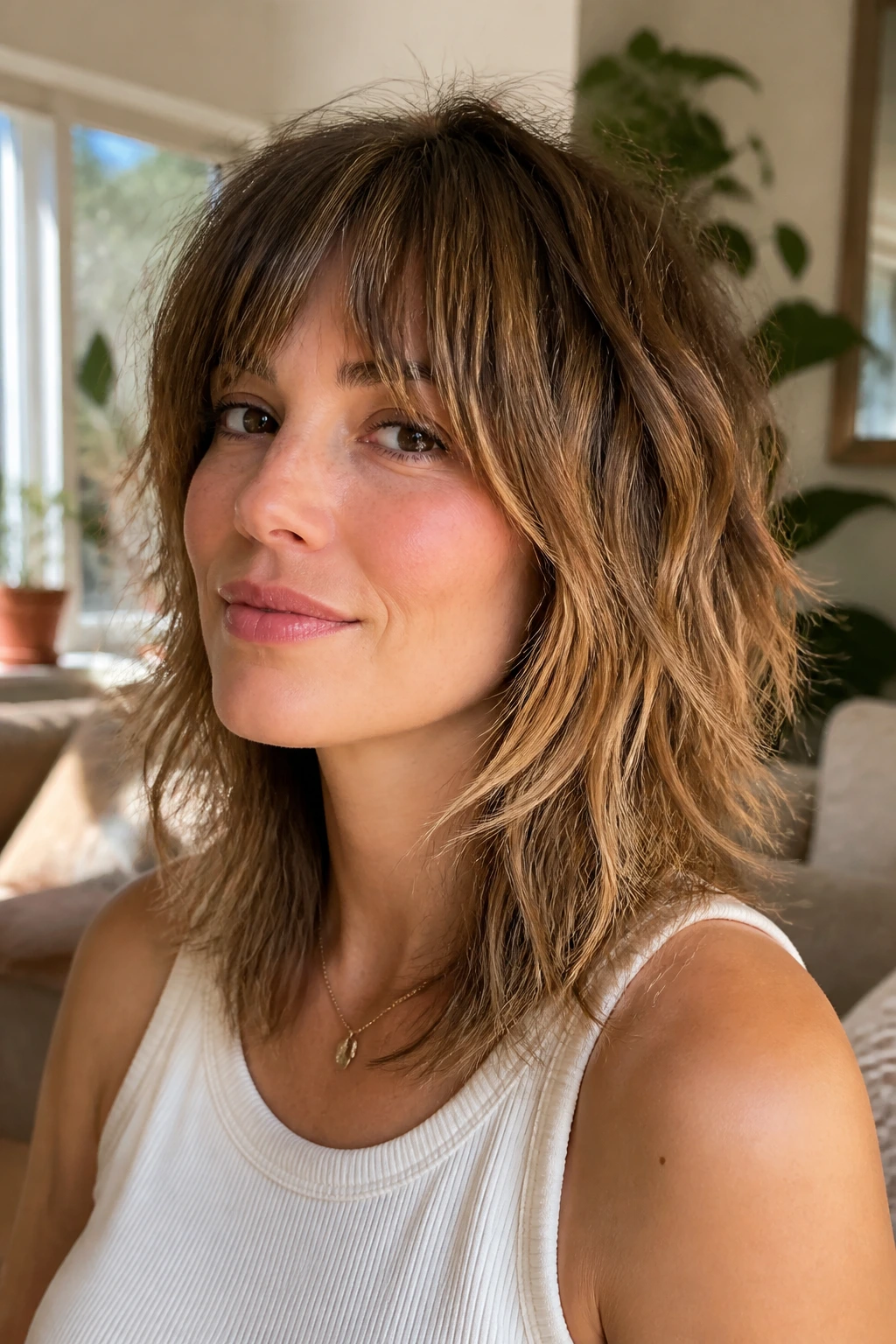
If your hair already has a little bend, a soft shag can feel like a cheat code. It leans into the texture instead of arguing with it.
What makes it softer
- the crown is layered, but not chopped short
- the ends are point-cut so they fall in pieces rather than in a blunt wall
- the face frame stays long enough to tuck behind the ears
- the interior layers keep the bulk from sitting at the bottom
That mix keeps the style relaxed instead of crunchy or overdone. A classic shag can feel very piecey. A soft shag keeps the same spirit but leaves more length around the perimeter, which matters a lot on medium hair.
This cut likes a diffuser, a little mousse, and a hands-off approach. Scrunch the hair while it’s damp, then leave it alone until it’s about 80 percent dry. Touch it too much and the wave pattern can puff. Leave it alone and the texture settles into that easy, lived-in shape people usually try to fake.
I think this is one of the best options for wavy hair that gets bulky at the ends but flat on top. It solves both problems at once.
8. Rounded Layers for Thick Hair
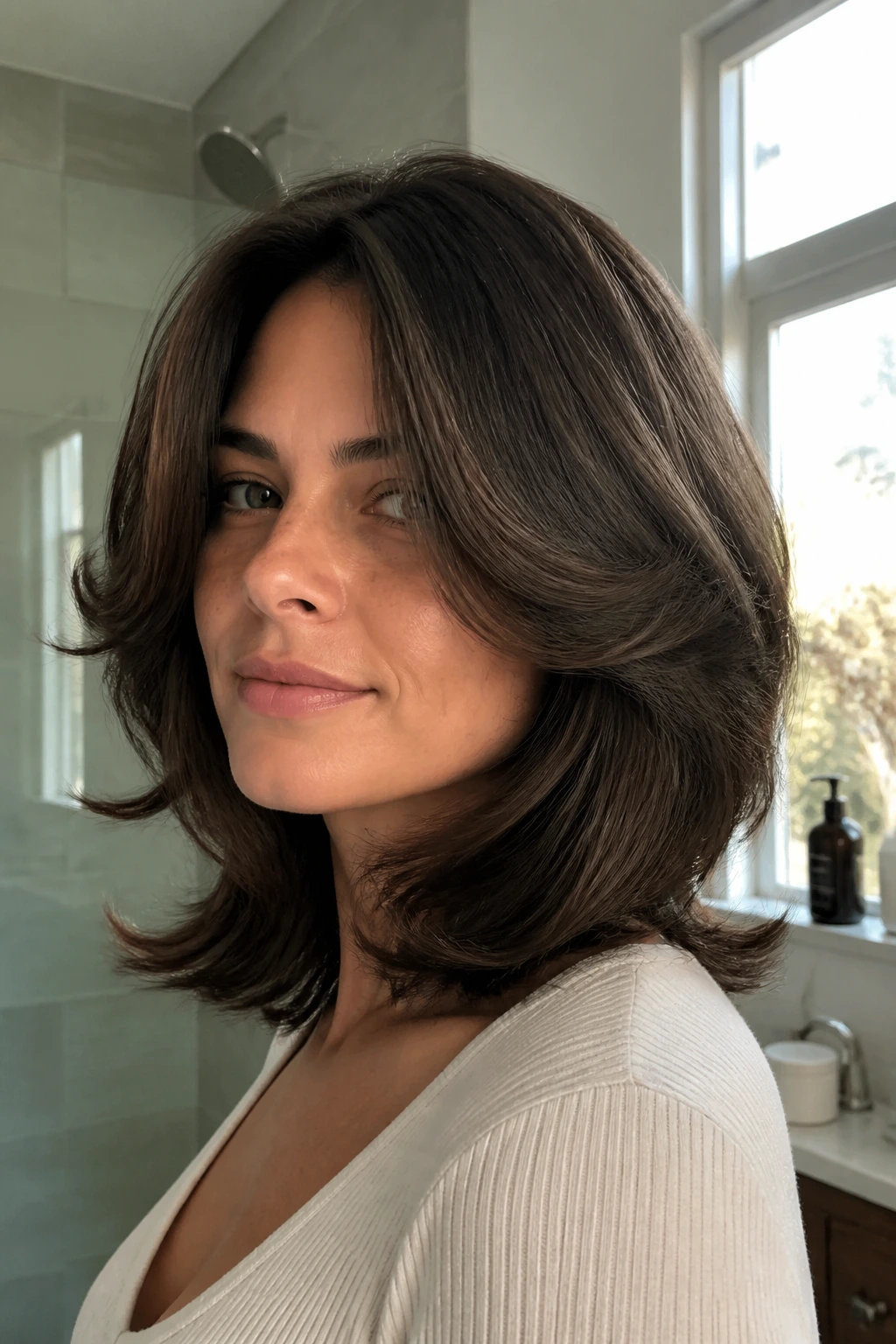
Thick hair can look heavy in a medium cut. Not bad. Just heavy. Rounded layers fix that without making the silhouette thin at the tips.
The rounded shape matters because it removes bulk from the middle of the haircut, not just the bottom. That gives the hair room to move around the head instead of sticking out at the sides. If you’ve ever had a medium cut that suddenly turned into a triangle, you know why this matters.
A rounded layered cut also keeps the ends softer. Instead of a hard shelf, the hair curves gently under or away from the face. That makes blow-drying easier, too. You spend less time fighting the width at the jawline and more time shaping the top where you actually want lift.
This is not the cut for someone who loves razor-sharp edges. It is for someone who wants thickness to look controlled and swingy. A little internal debulking, a little face frame, and the right perimeter length can make thick medium hair feel lighter without losing the fullness that makes it look healthy in the first place.
9. Wispy Layers for Fine Hair
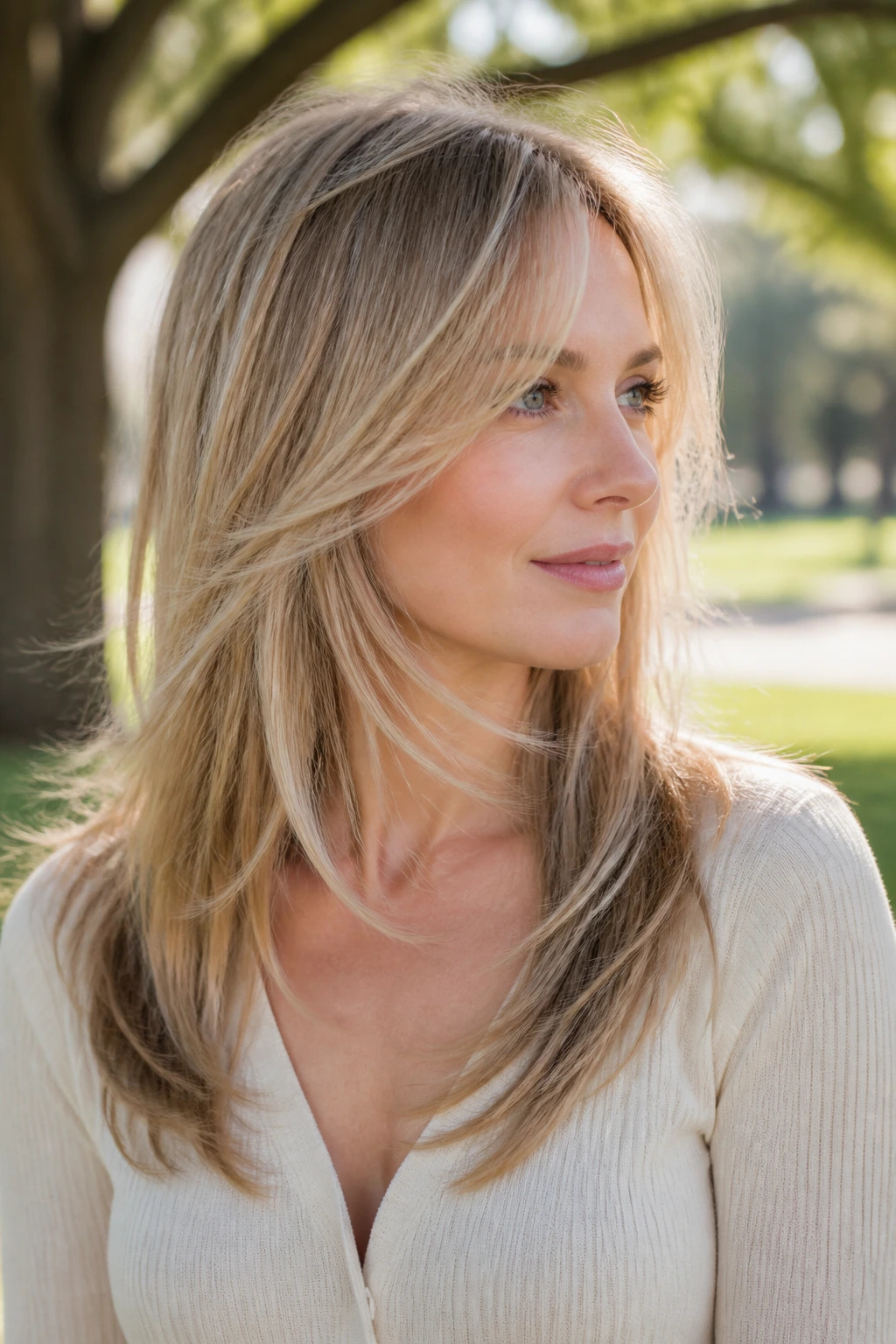
Fine hair needs a careful hand. Too many layers, and it starts to look see-through at the ends. Too few, and it falls flat in one straight line. Wispy layers sit in the middle.
The best version keeps the longest length intact and adds just enough movement to prevent the haircut from looking heavy. You want the layers to whisper, not shout. That usually means longer pieces around the front, very soft graduation through the sides, and almost no short chopping at the crown.
Short layers are the trap.
They can make fine medium hair rise up at the top while the ends look thin and stringy. A better cut keeps the shape soft and pushes volume where it helps most: around the cheekbones, through the mid-lengths, and just at the ends where the hair catches light and movement.
A light mousse at the roots and a few bends with a small iron can help, but the haircut itself should do most of the work. If you have fine hair, you want a shape that behaves even on day two, not one that needs a full styling session every morning.
10. C-Shaped Layers Around the Face

The C-shape is the quietest way to make medium hair look styled. No sharp corners. No obvious breaks. Just a smooth curve that wraps the face and slides into the length.
That curve is flattering because it echoes the natural bend most hair wants to make around the cheek and jaw. When done well, it gives the front of the haircut a soft frame and keeps the back from feeling bulky. It works especially well if you wear your hair down a lot and want the front to do a little more visual work.
What to ask for
- a curved layer that starts around the cheekbone or just below it
- longer ends that graze the collarbone
- a face frame that tapers instead of stopping abruptly
- soft blending through the lower half so the curve feels natural
This cut can look especially nice on medium hair with a side part, but it doesn’t depend on one. The shape is the point. A C-shape gives the haircut a polite sort of movement — not flashy, not flat.
If you want hair that looks neat after a quick brush-through, this is a strong choice.
11. A Side-Part Layered Cut with Lift at the Crown
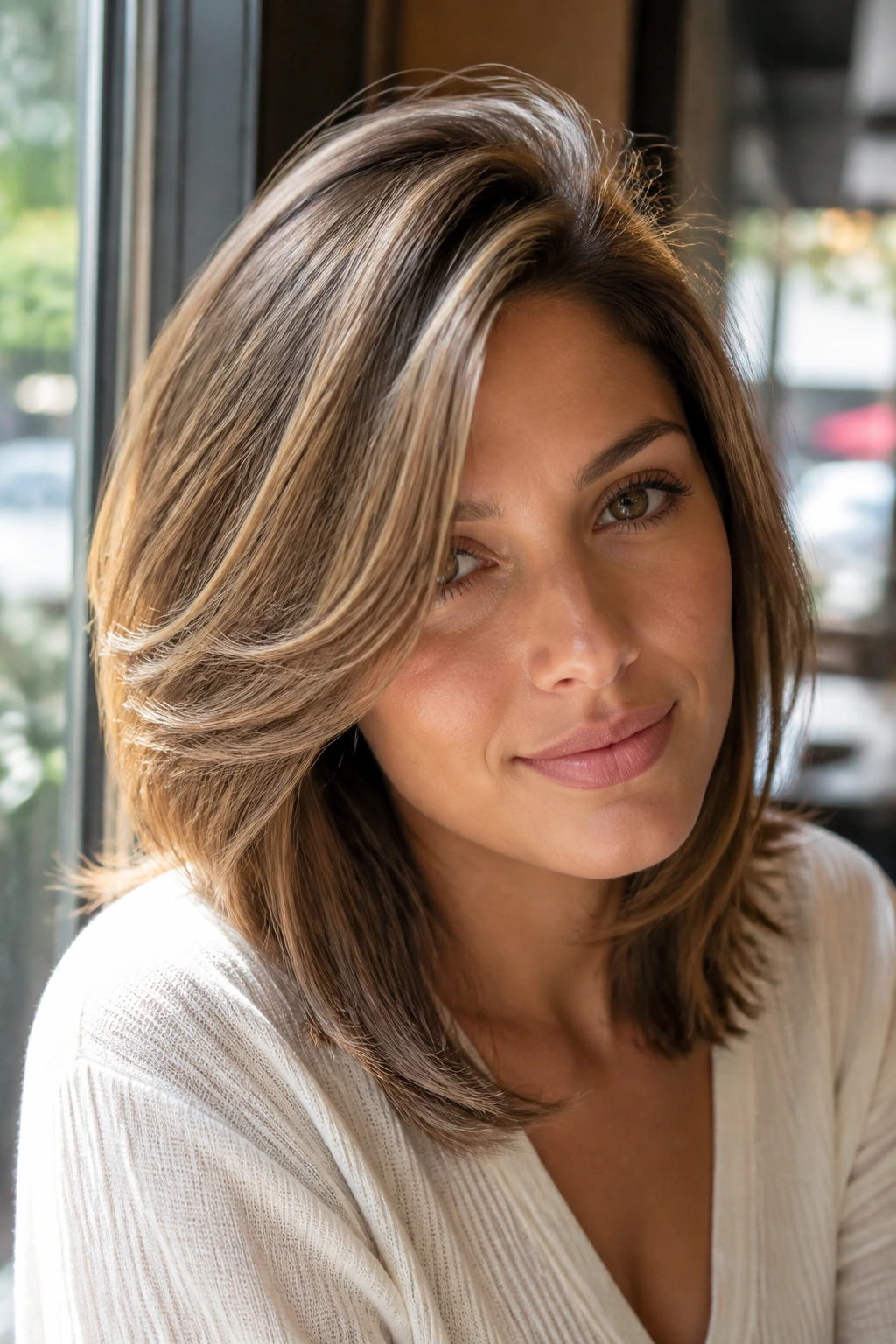
Can a side part change the whole haircut? Absolutely. It shifts the weight, opens one side of the face, and gives the crown a little lift without extra teasing or product.
The nice part is how low-effort it feels. A medium cut with soft layers already has movement built in. Add a side part, and the top section no longer collapses in the middle. Hair naturally falls away from the heavier side, which gives the style a little height at the roots and a more relaxed shape overall.
This is a strong pick if your hair goes flat at the top by midday. The side part creates an instant lift at the root, especially if you direct the front section away from the face while blow-drying. A medium round brush and a quick cool shot at the end can help lock that bend in.
It also changes how the layers read. On a center part, the layers can look symmetric and soft. On a side part, they feel a little fuller and more dramatic. Same haircut. Different attitude.
12. Bottleneck Bangs with Blended Medium Layers
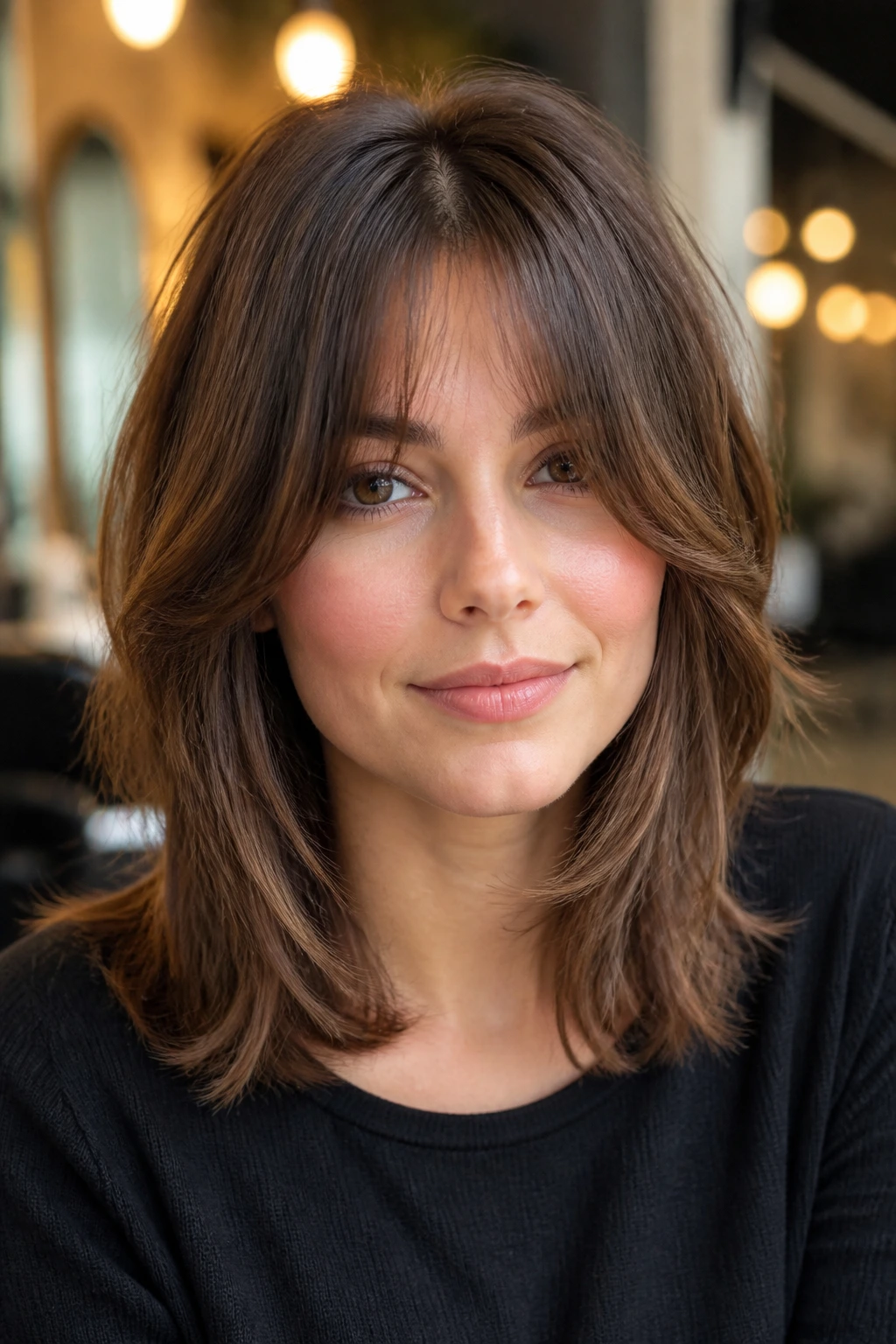
Bottleneck bangs sit somewhere between curtain bangs and a full fringe, and that middle ground is why they work so well on medium hair. They start narrow at the center, then open wider near the cheekbones.
Why this fringe matters
The narrower center keeps the forehead open, while the longer sides blend into soft layers. That means you get the feel of a bang without the heavy block that can overwhelm medium hair. It’s also kinder to growing-out fringe, since the edges are already longer and softer.
I like this cut for people who want face framing but do not want to commit to a strict bang schedule. You can wear it swept apart, tucked slightly to the side, or pushed forward with a little texture cream. It behaves better than a blunt fringe on humid days, which is part of the appeal.
A few details make the difference:
- the middle should be short enough to show shape, but not so short that it sticks up
- the sides should reach toward the cheekbones
- the rest of the layers should stay soft and blended
- a small round brush or blow-dry brush helps the bang settle without kinks
The whole look feels casual, but it still frames the face in a thoughtful way.
13. Razor-Cut Soft Layers for Straight Hair
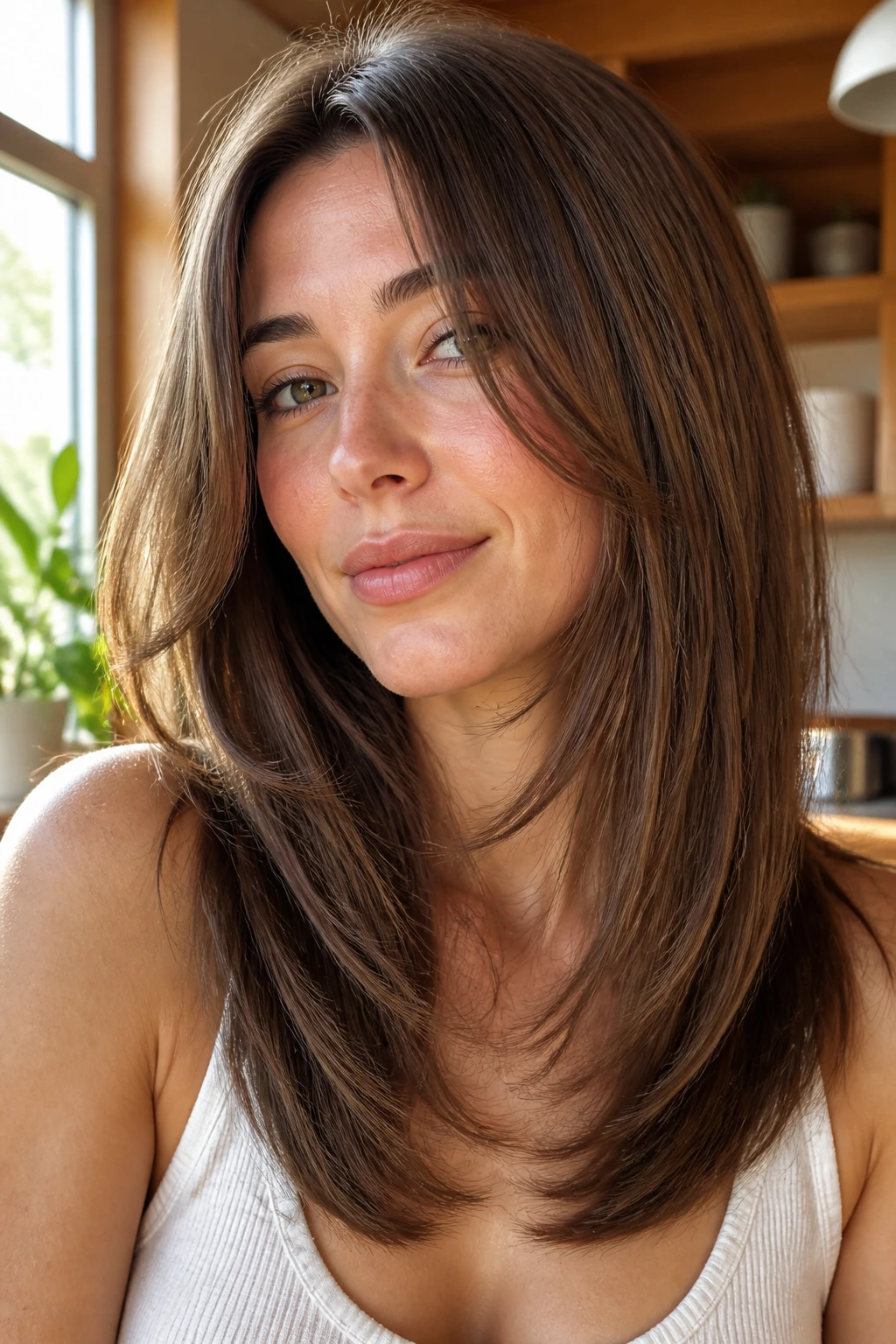
Razor cutting can be risky. It can also be lovely. On the right hair, it gives soft layers a lighter, more floated edge than scissors sometimes do.
Straight hair is the best match. The razor makes the ends look feathered instead of blunt, which adds motion to medium hair that tends to sit flat. If your hair is thick and smooth, the effect can be especially nice because the layers show without looking chopped.
What to watch for
Hair that is dry, porous, or frizzy can react badly to a razor. The cut can open up the ends too much and make them look rough after a few washes. That is why this is one of those styles that really depends on the person sitting in the chair. It is not a universal fix.
Used well, though, it gives the haircut a soft edge that air-dries into a loose bend. The shape feels lighter near the bottom and a bit more modern without becoming edgy for the sake of it. A little smoothing cream or a light oil on the ends helps keep the feathered pieces from separating too much.
This is a haircut that likes precision. If the stylist knows how your hair falls dry, not just wet, the result can be excellent.
14. Blended Layers for Wavy Hair
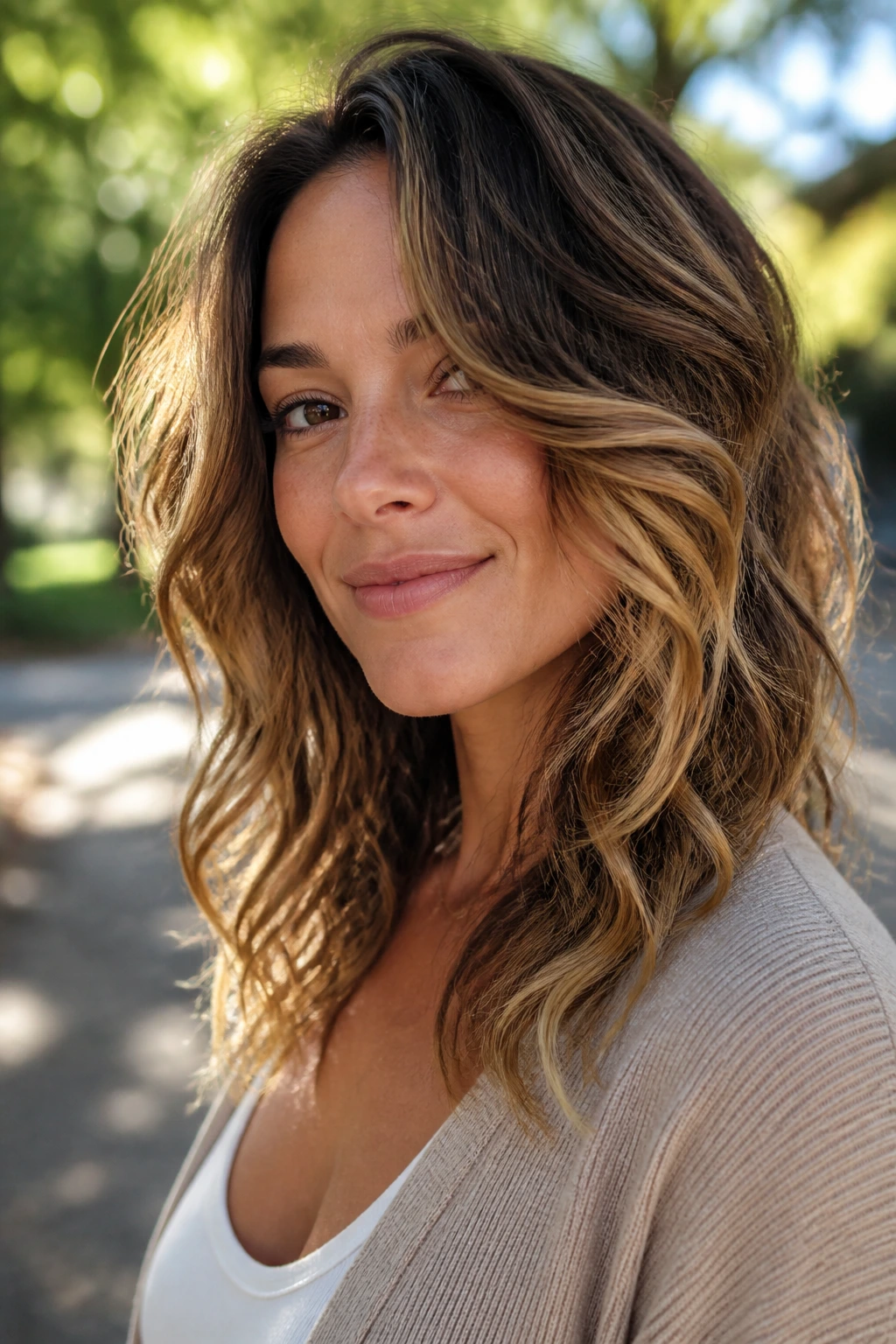
On wavy hair, the best cut often looks boring in the chair and good three days later. That is because the waves need room to form.
Blended layers let the wave pattern stay intact. They remove bulk in the right places, but they do not break the hair into a stack of disconnected sections. If you’ve ever had a layered cut that made your waves pop in odd spots and collapse in others, you know how annoying that can be.
A good blended cut on medium hair usually keeps the perimeter long enough for waves to form cleanly, then eases in short face pieces that frame the cheeks. The stylist should work with the hair’s natural bend, not against it. Wet hair tells half the story. Dry hair tells the truth.
The styling part is mercifully simple. A curl cream, a little scrunching, and air-drying or diffusing at low heat are usually enough. You are not trying to force every piece into a curl. You are trying to let the waves stack into a shape that looks relaxed instead of fuzzy.
15. Soft Layered Haircuts for Medium Hair That Air-Dries Well
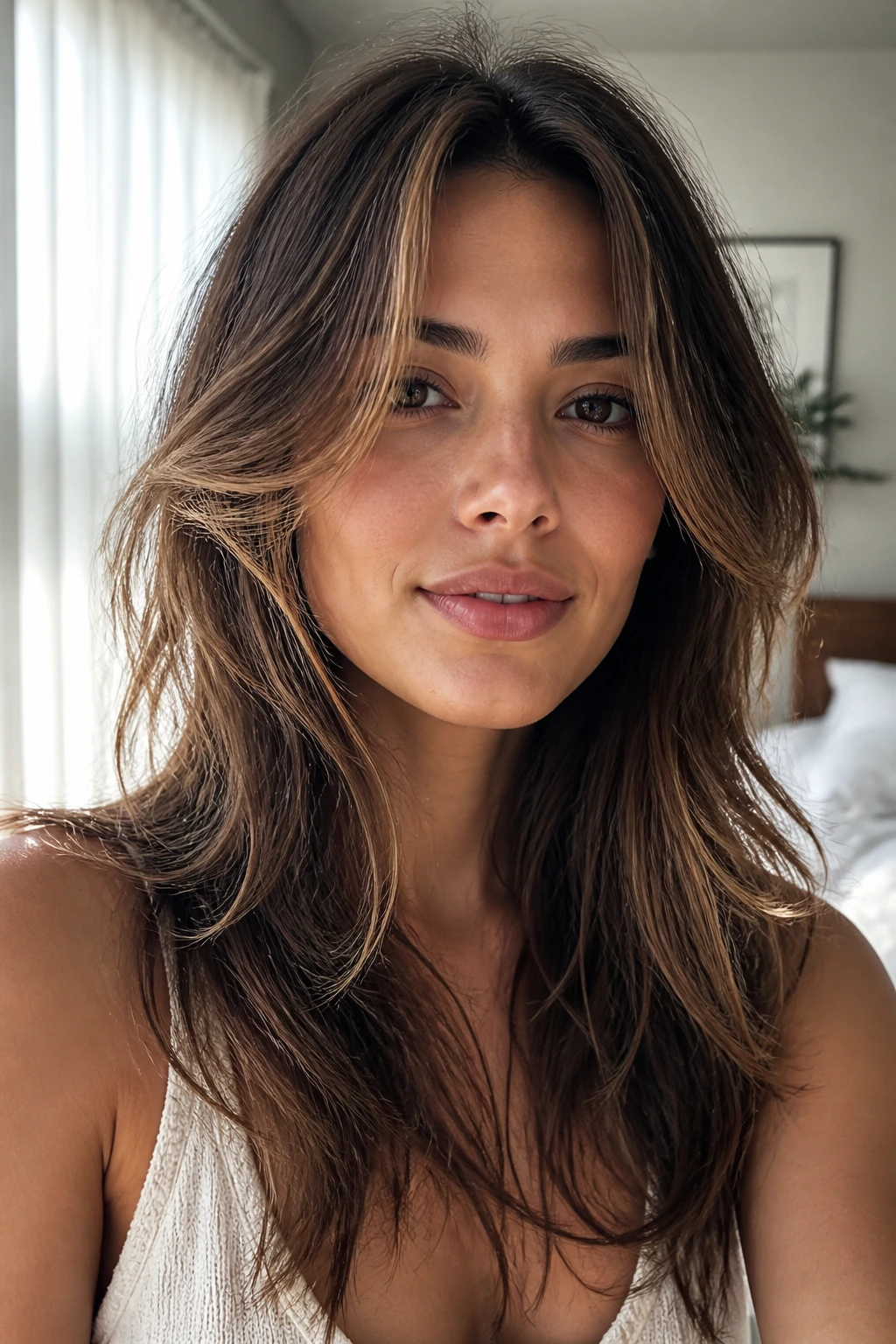
Some haircuts look good only after twenty minutes of styling. This is not one of them. A cut built to air-dry well should keep the shape loose, the layers long, and the ends soft enough to settle on their own.
That means no severe texturizing and no tiny broken-up pieces near the crown. Medium hair that air-dries well usually needs a strong perimeter and very gentle layering through the interior. The aim is to keep the hair from puffing up in odd places while still giving it room to bend. If your hair has any wave at all, this kind of cut can save a lot of time.
A small amount of product helps. A pea-sized dab of leave-in cream on each side, or a light gel smoothed through damp hair, can keep the ends from frizzing while the shape sets. After that, hands off. The more you keep touching it, the rougher the finish gets.
This cut is ideal for people who want soft layers but do not want to build their mornings around a round brush. It should look decent when tucked behind the ears, clipped up, or left alone. That is the whole charm.
16. Deep Side-Sweep Layers for a Little Drama
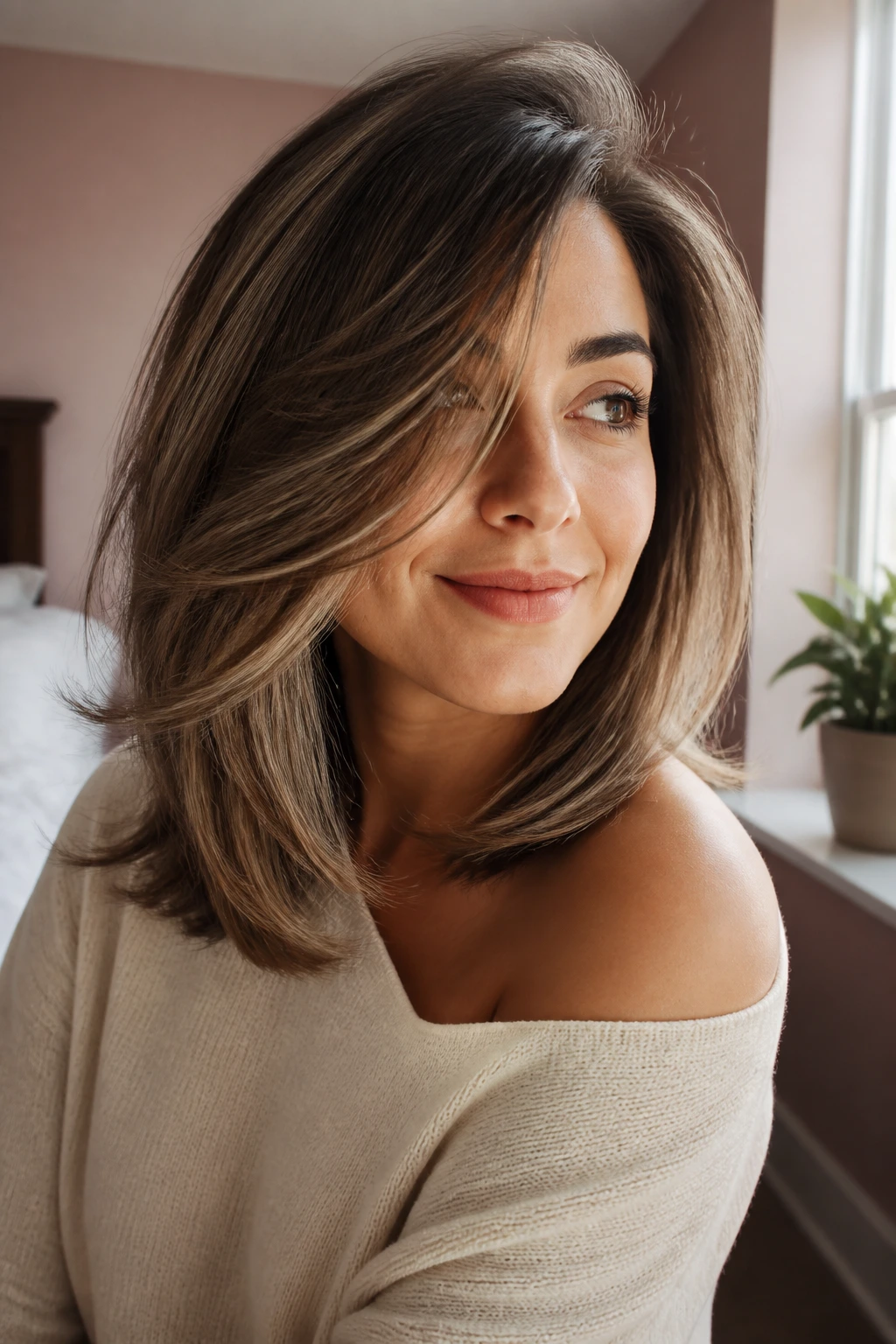
A deep side part can make medium hair look fuller than adding more layers ever will. That’s the part people miss.
When the hair is swept over to one side, the layers stack in a way that creates instant lift on the heavier side and a softer fall on the other. The shape reads as polished, but it does not need much work. A medium cut with a deep side sweep can go from plain to noticeably shaped with one comb line and a little root spray.
This look is nice if you want a soft layered cut that still has some presence. The front pieces should start long enough to curve across the cheek and jaw, not stop halfway up the face. If they’re too short, the sweep loses that easy drape and turns fussy. If they’re long, they blend into the rest of the haircut and hold the style together.
I also like this option for hair that tends to flatten on one side. The deep part gives the roots a little lift, and the layers keep the ends from collapsing. Small change. Big payoff.
17. Growing Out a Bob Without the Awkward Triangle
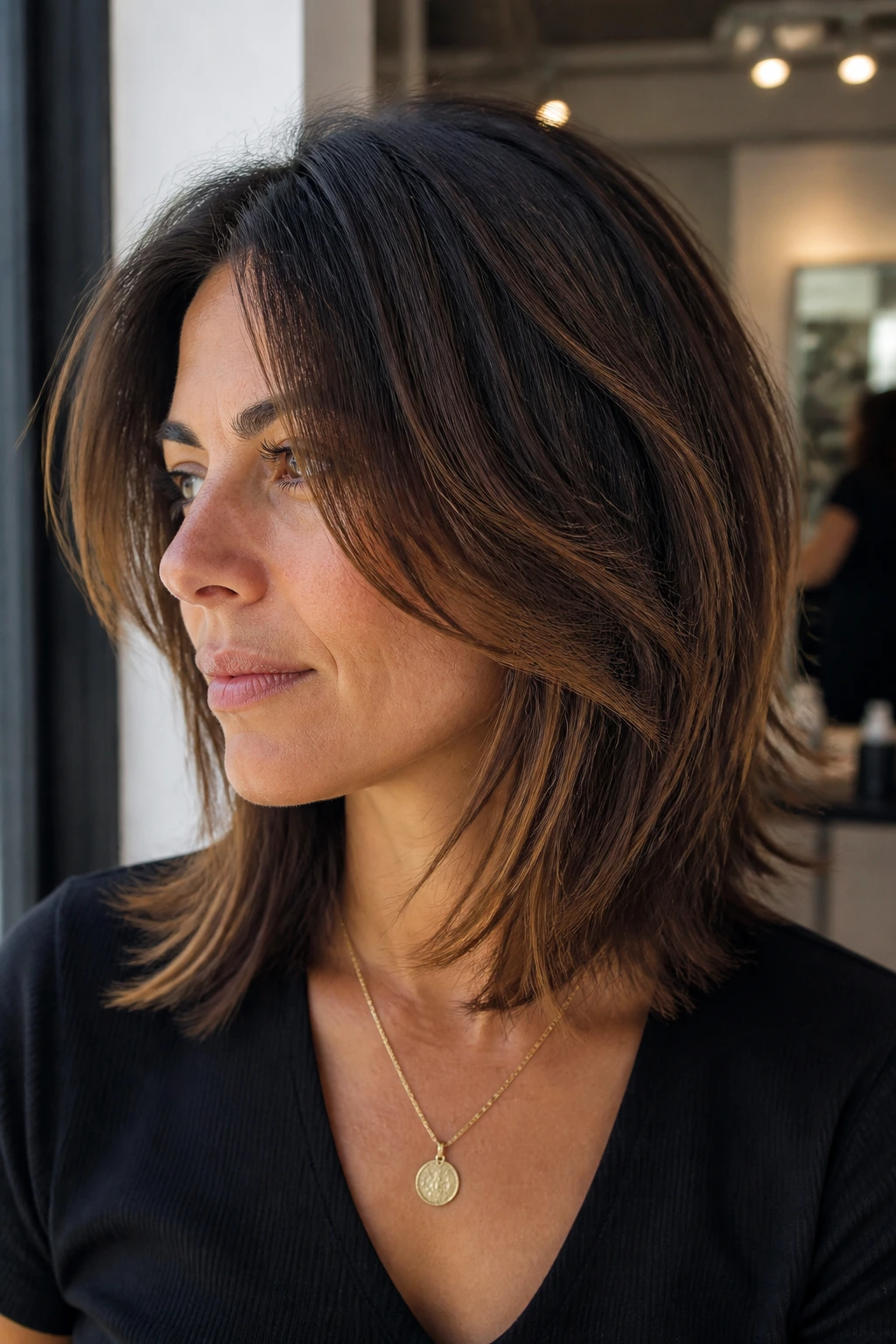
A bob grow-out can go sideways fast. The bottom gets wide, the top goes flat, and suddenly the shape feels like it belongs to somebody else. Soft layers are the fix.
The right transition cut keeps the perimeter long enough to preserve the bob’s outline, then softens the inside so the hair stops kicking out at the ends. That gives you a medium cut that still feels neat, even as it gets longer. It is one of the few situations where a little layering saves the day instead of stealing the shape.
How to ask for the transition cut
- keep the front long enough to skim the jaw or collarbone
- add internal layers, not lots of short surface pieces
- remove width at the sides if the bob is puffing out
- leave the ends soft so the haircut can keep growing
This is the sort of cut that buys you time between salon visits. It smooths the line, cuts down on the triangle effect, and lets you live in that in-between stage without feeling stuck there.
If you’re growing out a blunt bob, this is the safest path I know.
18. A Soft Wolf Cut for Medium Hair

A soft wolf cut has a little edge, but it does not need to look wild. On medium hair, the toned-down version can be surprisingly wearable.
The crown is shorter than the perimeter, which gives height at the top and movement through the middle. The difference here is restraint. A softer wolf cut keeps the transitions gentle, so you get shape without the choppy, over-layered feel that can make some versions look too extreme for everyday wear.
This cut works best if you already like texture. Wavy and slightly coarse hair usually takes to it well. Straight hair can wear it too, but it often needs a bit more styling to show the layers properly. A light mousse, a rough dry, and a few bends near the ends usually do enough.
The nice thing about the soft wolf cut is that it does not ask for perfection. It can look a little undone and still feel finished. That is a rare thing. If you want a medium haircut with personality but not too much fuss, this is the one I’d put near the top of the stack.
Final Thoughts
Medium hair does not need to be boring, and it does not need to be heavily layered to move well. The smartest soft layered haircuts keep some weight at the ends, then open up the shape where the hair tends to fall flat or feel bulky.
Texture matters. So does where the first layer starts. A cut that looks good on one person can feel wrong on another if the density, wave pattern, or face shape changes the way the layers sit.
Bring a few clear references to the salon, but look for the shape, not the exact styling. A good stylist can usually read the difference. And if you find the right one, medium hair becomes much easier to live with — and a lot more fun to wear down.
