



Straight hair can be brutally honest. A one-length long haircut for straight hair shows every line, every gap, every uneven snip — which is exactly why it can look so expensive when it’s done well.
When the perimeter is clean, straight hair has a kind of clarity that layers can muddy fast. The ends look denser. The shape reads faster. And if your hair tends to go flat or split at the bottom, a blunt one-length cut can make the whole thing look fuller without adding a single extra inch of bulk.
The catch is precision. Straight hair does not hide mistakes, and a soft, wispy finish that works on wavy hair can look thin or ragged here. That’s why the best versions of this cut are usually a little sharper, a little more deliberate, and a lot less fussy than people expect. A good stylist will check the line from the back, cross-check both sides, and often tidy the very end of the perimeter in tiny passes so the hem sits even when the hair dries.
Some of these cuts are classic. Some are a little editorial. A few are the kind of thing you can wear to work and to dinner without changing a thing. The common thread is simple: straight hair loves a strong outline, and a one-length shape gives it one.
1. The Classic Blunt Waist-Length Cut
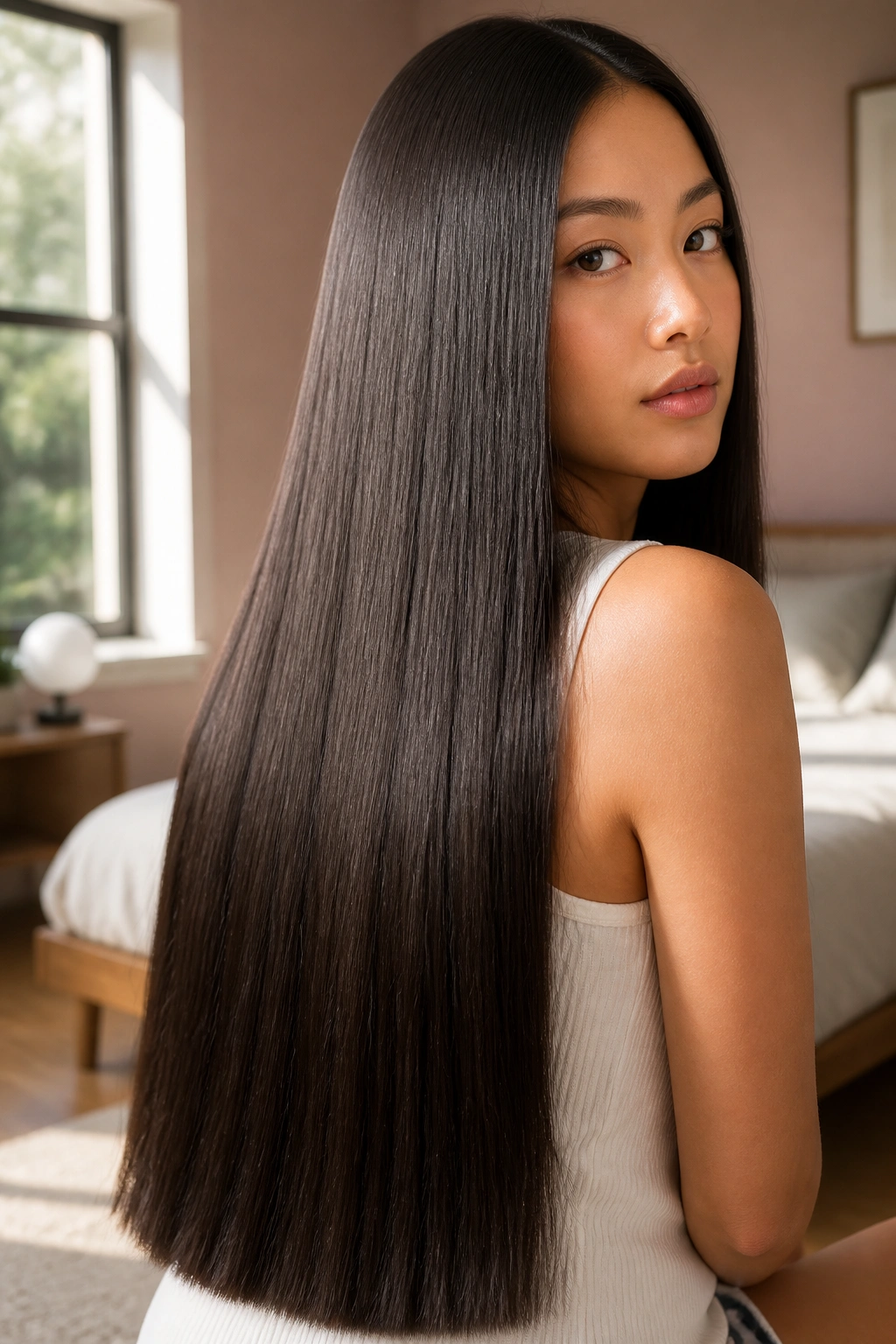
This is the first haircut that comes to mind for a reason. A blunt waist-length cut is the purest version of the one-length look, and on straight hair it can look startlingly clean. No layers. No soft taper. Just a straight, heavy line that makes the ends look thick and intentional.
Why it works so well
Straight hair shows the perimeter in a way textured hair never quite does. That’s a gift if you like order and a pain if you don’t. A blunt waist-length cut turns that honesty into a strength, because the hair reads as full from top to bottom, especially when the ends are freshly trimmed.
I like this cut on medium to thick hair most, but fine hair can wear it too if the density is there. What matters more than anything is keeping the line crisp. If you let it grow too long between trims, the bottom starts to look see-through, and that heavy curtain effect disappears fast.
Quick details to ask for
- Keep the perimeter one length from nape to ends.
- Ask for minimal texturizing at the bottom.
- Check both sides while the hair is dry if your hair lies pin-straight.
- Plan on a trim every 8 to 10 weeks if you want the edge to stay sharp.
Best for: people who want their long hair to look thick, clean, and low-drama.
2. The Center-Part Glass Hair Cut
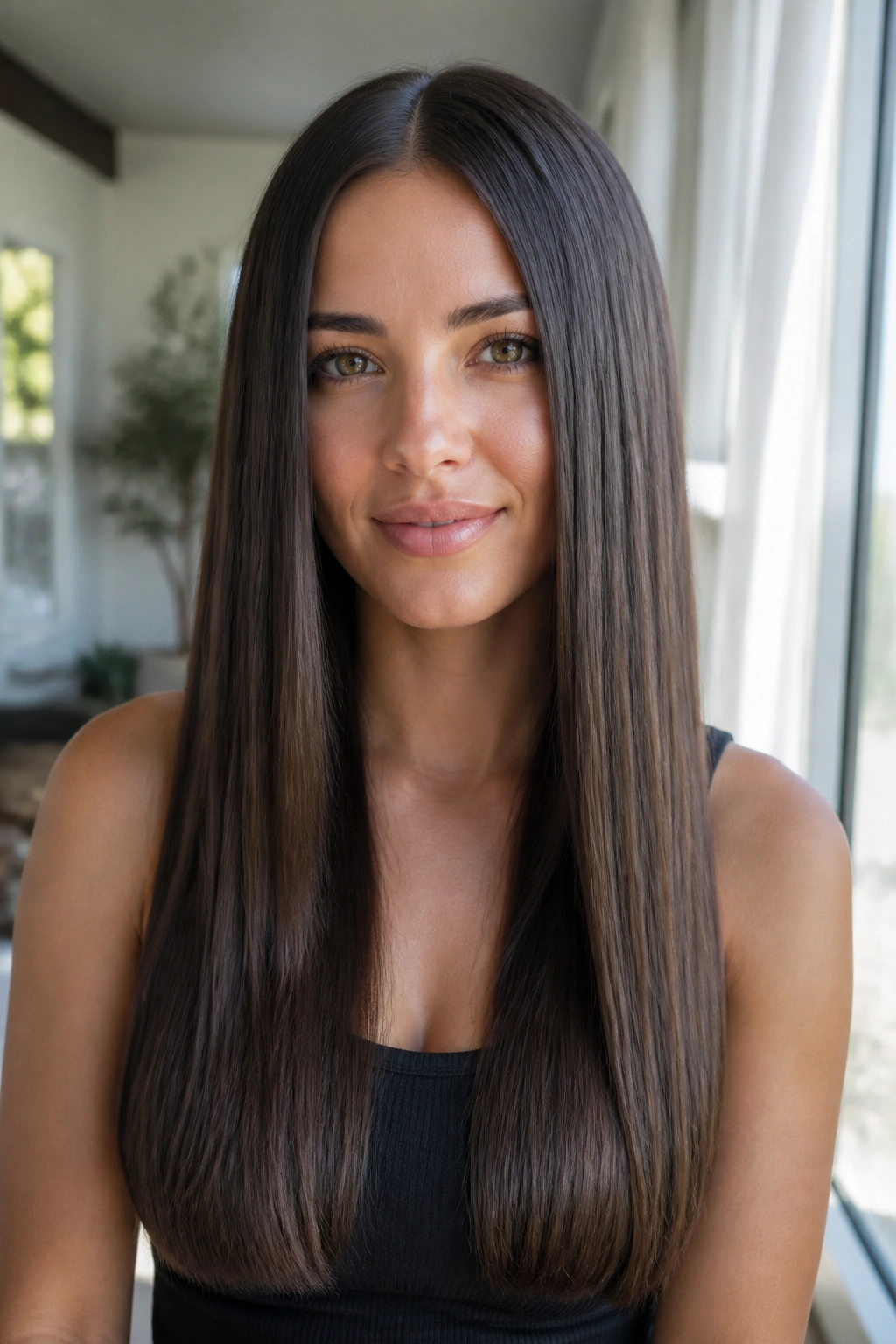
Why does a middle part make this haircut feel so polished? Because it puts the cut line front and center. A center-part glass hair cut takes the same one-length base and gives it a mirror-like finish that works especially well when the hair is naturally straight or easily smoothed straight.
The middle part creates balance. It also makes the perimeter look longer, which is useful if you want the hair to feel sleek rather than heavy. There’s a reason this version shows up so often in sharp editorial looks: the eye goes straight down the part and then catches the clean edge at the ends.
What makes it different
A center part is not just a styling choice here. It changes how the haircut reads around the face. If your features are symmetrical, this version can look almost architectural. If your face is a little longer, it can still work, but you may want slightly more volume at the crown so it does not drag the face down.
How to wear it well
- Blow-dry with a flat brush so the roots lie smooth.
- Finish with a 1-inch flat iron if your hair has a bend at the ends.
- Use a pea-sized amount of serum, not a blob. Too much makes the line look greasy, not glossy.
- Keep the part precise. A wobbly part ruins the effect fast.
This cut is for the person who likes things neat. Not stiff. Neat.
3. The Deep Side-Part Sweep

A deep side part can save a one-length long haircut from feeling too severe. It gives straight hair a little motion at the top while leaving the ends clean and even, which is the whole appeal of the shape in the first place.
The nice thing about this version is that it adds personality without changing the haircut itself. The weight shifts to one side, the root area looks a touch softer, and the long line still does the heavy lifting. If you’ve ever thought blunt cuts look too strict, this is the easiest way around that problem.
It also helps if you want to soften a high forehead or draw attention to one side of the face. You do not need bangs for that. A deep part and a good blow-dry can do a surprising amount of work.
The only catch? The part has to be committed. Half-measures look accidental. Push it far enough over that the front actually falls into place, then tuck one side back if you want a little movement near the cheekbone. Simple. Clean. Done.
4. The Long Cut With Full Straight Bangs

A blunt fringe changes the whole mood of a one-length haircut. Full straight bangs make the hair feel more graphic, more deliberate, and a little more old-school in the best way. On straight hair, the combination can look striking because the fringe and the length share the same sharp logic.
What the fringe changes
The bangs pull attention upward, which means the long length can stay very plain and still feel interesting. That’s useful if you do not want layers or lots of styling. The whole cut ends up relying on shape, not decoration.
Who should think twice
- People with strong cowlicks at the forehead may fight the fringe every morning.
- Very fine hair can wear bangs well, but they need enough density to avoid gaps.
- If you hate salon upkeep, this may annoy you. Bangs want a trim more often than the rest of the haircut.
Why I still like it
Because it makes straight hair look intentional without asking for much else. Put the bangs in place, smooth the lengths, and you’re done. The rest of the haircut can stay whisper-simple.
If you want a cut that feels finished even when the rest of your styling is bare minimum, this is one of the better bets.
5. The Long Cut With Micro Bangs

Micro bangs are not subtle. That’s the point. When you put a tiny fringe on a one-length long haircut, the whole shape turns sharper and more fashion-forward, almost like the haircut is wearing a piece of jewelry.
Straight hair is one of the best canvases for this because the contrast is so clear. The fringe sits blunt and neat, and the length behind it falls in a single uninterrupted sheet. You get two strong shapes at once.
This is the cut for someone who likes a little edge without giving up length. It’s also a smart choice if you want to make a long haircut feel less expected. The micro fringe does the talking. The rest stays quiet.
But I would not call it low-maintenance. It can look fantastic on the right person and slightly awkward on the wrong one, especially if your forehead is very short or your hairline grows in different directions. If you’re curious, ask your stylist to keep the fringe soft at first — a tiny tweak matters more here than people think.
6. The Mid-Back Precision Cut

There’s a sweet spot between dramatic length and everyday practicality, and mid-back precision cuts live there. The hair is still long enough to feel elegant, but it is not so long that you spend half the morning detangling it or dragging it over chair backs and coat collars.
For straight hair, mid-back length is often easier to keep looking healthy. The ends do not get as battered, and the blunt line tends to hold better because there is less weight pulling everything flat. It’s the kind of cut that looks expensive when the perimeter is tidy and slightly dull when the edge gets chipped. That makes maintenance matter.
What to ask for
- Keep the line one length with no internal layers.
- Ask for a clean check from the back so both sides sit even.
- If your hair flips at the ends, ask for a slight bevel only at the very bottom.
- Plan trims every 10 to 12 weeks if your hair grows slowly and stays strong.
A mid-back cut is also easier to style in a hurry. You can wear it straight, tuck it, braid part of it, or throw it into a low knot without wrestling with too much length. That sounds boring until you realize boring hair is often the hair people keep wearing.
7. The Hip-Length Drama Cut
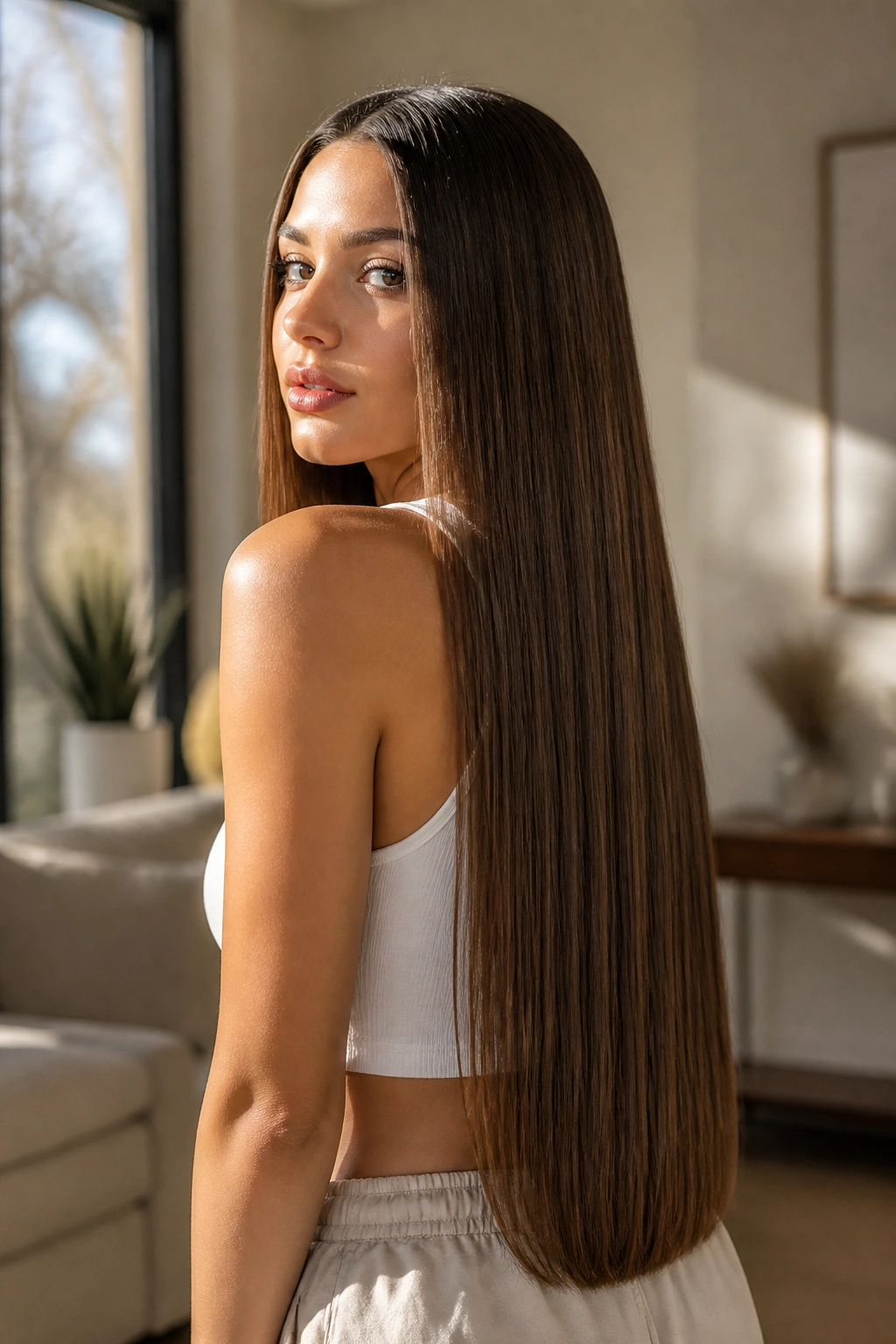
This is not the haircut for someone who hates commitment. Hip-length straight hair is a statement, full stop. On a one-length base, it reads as a sheet of color and shine that keeps going farther than most people expect, and straight hair is one of the few textures that can carry it without looking frizzy or bulky.
The line matters a lot here. If the ends are uneven or feathered, the whole style loses its drama and starts to look thin instead. When it’s cut cleanly, though, the shape has a kind of gravity that shorter hair cannot fake.
You do need patience. Longer hair takes longer to dry, more time to detangle, and more discipline around breakage. A wide-tooth comb, a soft towel, and a satin pillowcase are not glamorous, but they help. So does being honest about how much time you’ll actually spend caring for it.
I love this look on people who like a little theater in their hair. It is not shy. It should not be shy.
8. The Heavy Hemline for Thick Straight Hair

Thick hair can look gorgeous in a one-length cut, but only if the bottom is handled correctly. A heavy hemline keeps the density at the ends instead of letting the hair puff out or split into a triangular shape. On straight hair, that can be the difference between “full” and “boxy.”
Why the weight matters
When hair is dense, the ends carry a lot of visual weight. If a stylist removes too much from the perimeter, the haircut can lose its strong shape and start to look airy in a bad way. A heavy hemline keeps the body concentrated where you want it.
What to request in the chair
- Ask for a blunt perimeter with minimal thinning shears.
- Let the stylist point out any bulky spots, but do not let them over-thin the whole head.
- If the hair puffs at the bottom, a small amount of internal debulking near the base can help without changing the outline.
- Blow-dry downward so the cut sits heavy rather than flipping outward.
Thick straight hair does not need rescuing. It needs control. This haircut gives it that.
9. The Fine-Hair Blunt Cut That Keeps the Ends Full
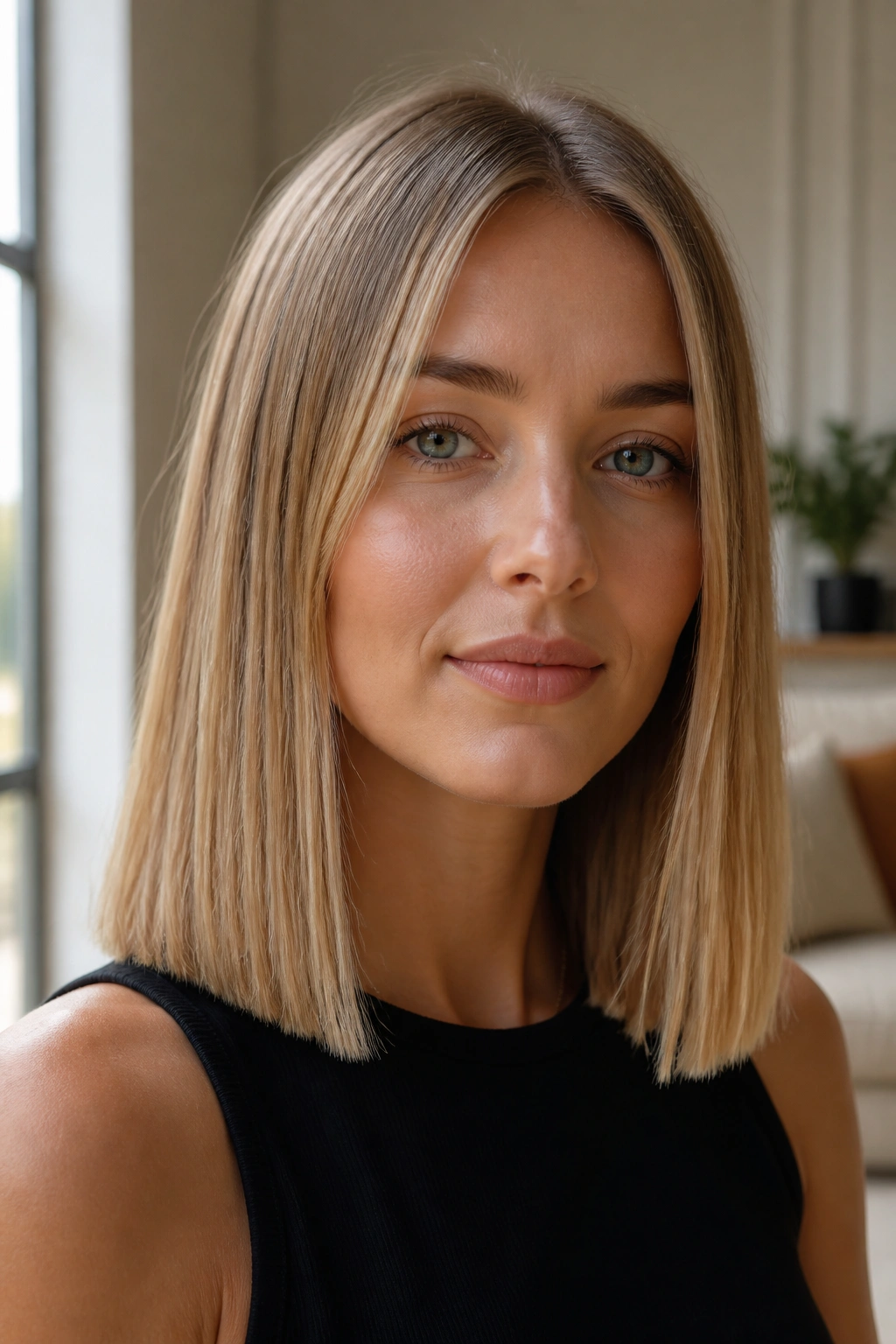
Can fine straight hair wear a long one-length cut? Absolutely. It can look excellent, too, as long as the ends are left full and the stylist avoids slicing into the perimeter too much.
The trick is density. Fine hair does not need more movement at the bottom; it needs the illusion of more hair. A blunt line does that better than almost anything else because it puts every strand in service of the shape. Even a quarter inch of wispy damage can make the ends look thinner than they are, which is why this cut needs careful upkeep.
What usually goes wrong
A little too much texturizing. A little too much feathering. Sometimes even a stylist who loves movement will instinctively soften the ends on fine hair, and that’s exactly what you do not want here. Keep the line honest.
Best way to wear it
- Use lightweight conditioner only on mid-lengths and ends.
- Avoid heavy oils near the perimeter.
- Ask for a straight, crisp finish with no razor work on the bottom edge.
- Trim before the ends start to look transparent, not after.
If your hair is fine but naturally straight, this is one of the strongest options in the whole bunch. Clean beats clever every time.
10. The Subtle C-Bend Finish

A C-bend finish is what happens when a blunt long haircut gets just enough shape at the bottom to soften the line without turning into layers. It looks especially good on straight hair that needs a little curve to keep the ends from hanging dead straight.
This is not a big curl. It’s a gentle bend, almost like the hair decided to sit politely instead of stiffly. The haircut stays one length, but the styling gives it a friendlier outline.
How to get it without overcomplicating your morning
- Blow-dry with a medium round brush.
- Keep the brush under the last 2 to 3 inches of hair.
- Roll the ends under for a second or two, then release.
- If needed, touch the edge with a flat iron and a soft inward flick.
That’s it. No circus act.
This version is nice if you like a blunt haircut but find a dead-straight edge a little too sharp for daily wear. It softens the visual line while keeping the haircut itself clean. And it plays nicely with both center and side parts, which makes it one of the easier one-length long haircuts for straight hair to live with.
11. The Tucked-Behind-the-Ears Cut
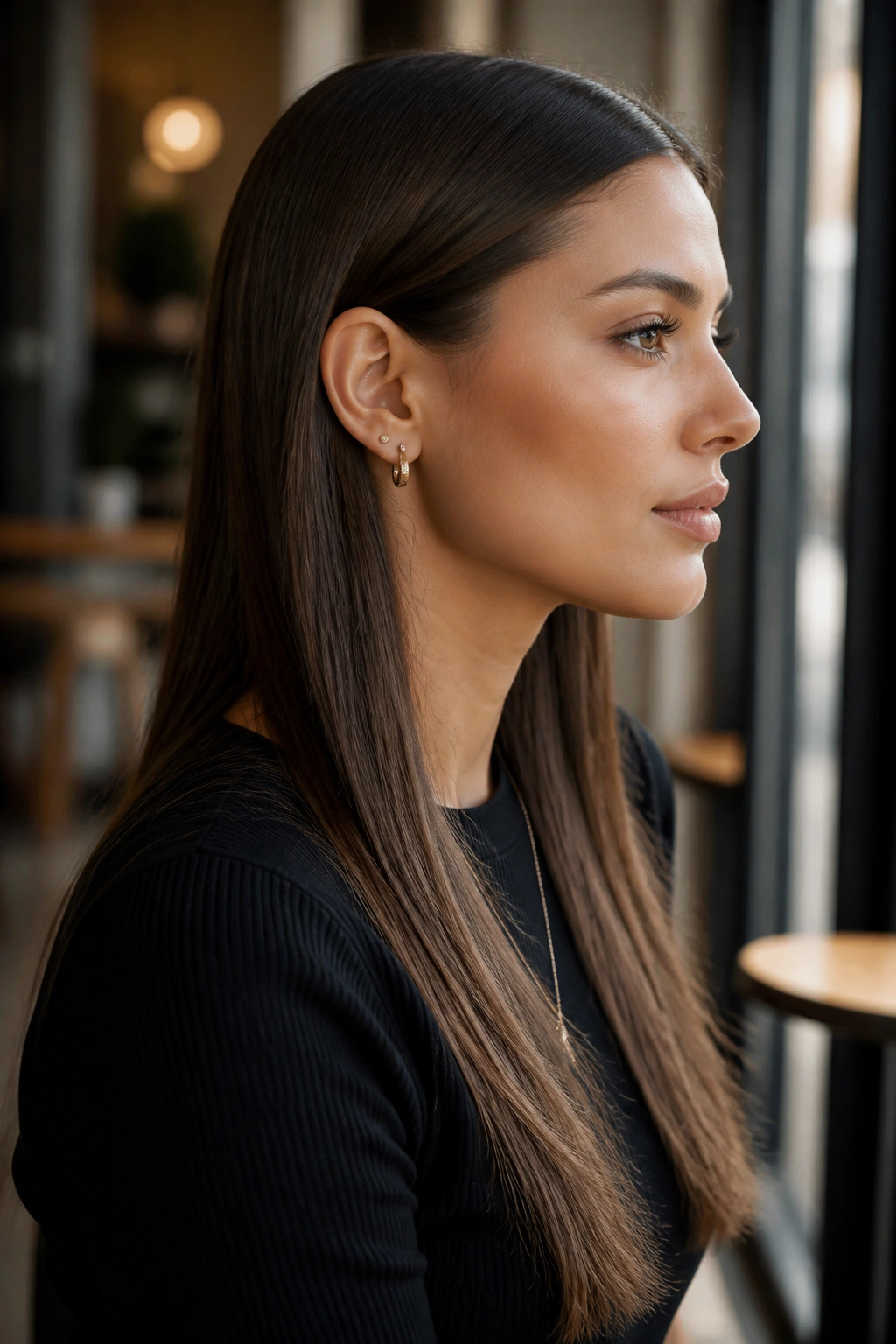
A haircut that looks good tucked behind the ears has to be honest about where the length falls. That’s why this version works best when the front pieces skim the jaw or just brush the shoulders, while the rest stays one length and long enough to keep the shape dramatic.
It’s a small styling trick, but it changes the whole mood. You expose the cheekbones, the ears, and whatever earrings you’ve bothered to wear, and the long line becomes a frame instead of a curtain.
I’ve always liked this on straight hair because it gives you two looks from one cut. Loose, it’s sleek. Tucked, it feels sharper and a little more polished. You do not need layers to get that shift.
A few things help:
- Keep the hair clean at the root so it lies flat when tucked.
- Use a light mist of hairspray near the temples if the strands slip out.
- Choose earrings with enough shape to hold attention once the hair is tucked.
- If your hair is very fine, a tiny bit of dry texture spray at the root can stop the tuck from collapsing.
It’s a simple idea. Sometimes that’s the best one.
12. The Grow-Out-Friendly Long Cut

Not everyone wants to live on a salon schedule. A grow-out-friendly one-length cut is the answer for that kind of life, and straight hair is one of the easiest textures to make it work on because the line stays readable even after a little growth.
The key is choosing a length that can absorb another inch or two without turning awkward. Chest length is often the sweet spot. It still feels long, but it does not cross into the territory where every dusting trim feels expensive.
Why it stays wearable longer
A layered cut can shift shape fast as it grows. A one-length cut mostly just gets longer. That sounds obvious, but it matters. The silhouette stays cleaner, and you can stretch trims farther without the hair losing its basic identity.
Best if you’re the type who:
- Hates booking trims every month.
- Wears your hair up at least part of the week.
- Wants one haircut that looks fine straight, tucked, or braided.
- Prefers a neat outline over lots of styling.
This is not the fanciest choice in the list. It may be the smartest one. There’s a difference.
13. The Sharp Architectural Hemline
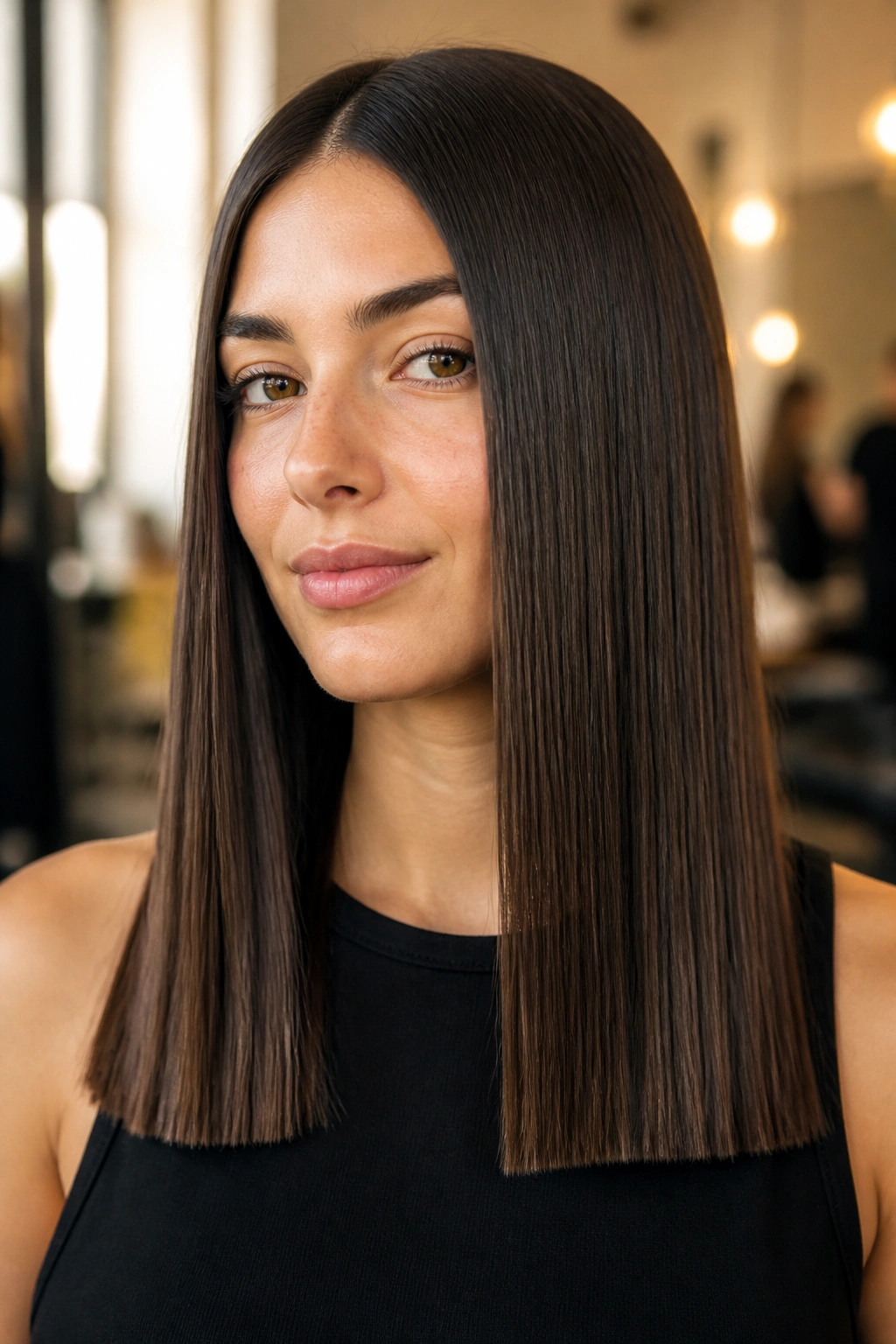
Some haircuts whisper. This one draws a line with a ruler. A sharp architectural hemline is all about precision, and on straight hair the effect can be almost dramatic in a quiet way. The ends sit flat, clean, and exact, which makes the whole cut look more deliberate than casual.
What separates this from a basic blunt cut is the finish. The line has to be checked carefully from side to side, and the stylist usually needs to take time refining the very edge so the perimeter reads as one solid shape. Tiny uneven bits show fast on straight hair, so this is not the place to rush.
This is the cut I’d choose if you like crisp clothes, neat collars, and clean lines in general. It has the same energy. Nothing fussy. Nothing slouchy.
A small warning: if your hair grows in with a strong cowlick or a bend at the nape, the geometric line may need more upkeep. Straight hair can still have personality, and that personality sometimes resists perfect symmetry. Fine. Just check it dry before you leave.
14. The Blowout-Friendly Long Cut

A good one-length long cut can be made or broken by the way it falls after a round brush. Some shapes fight a blowout. This one welcomes it. The blowout-friendly long cut is built to sit smooth, flip under a little at the ends, and hold a polished curve without needing layers.
Why this shape behaves well
Because the perimeter is even, the brush can guide the hair into one clean line instead of trying to manage different lengths at once. Straight hair loves that. It settles into place with less effort and usually keeps the finish longer, especially if you let it cool before touching it.
What helps it look its best
- Use a heat protectant every time.
- Dry the roots first so the shape has lift.
- Wrap the ends around the brush for 2 to 3 seconds, not 20.
- Let the hair cool before running your fingers through it.
This cut works best for people who like their hair to look done, even when the styling is simple. It is not the most air-dried version of the list. It is the version you wear when you want the ends to sit neatly around a sweater or blazer collar and not fight you all day.
15. The Minimal-Styling Straight Cut
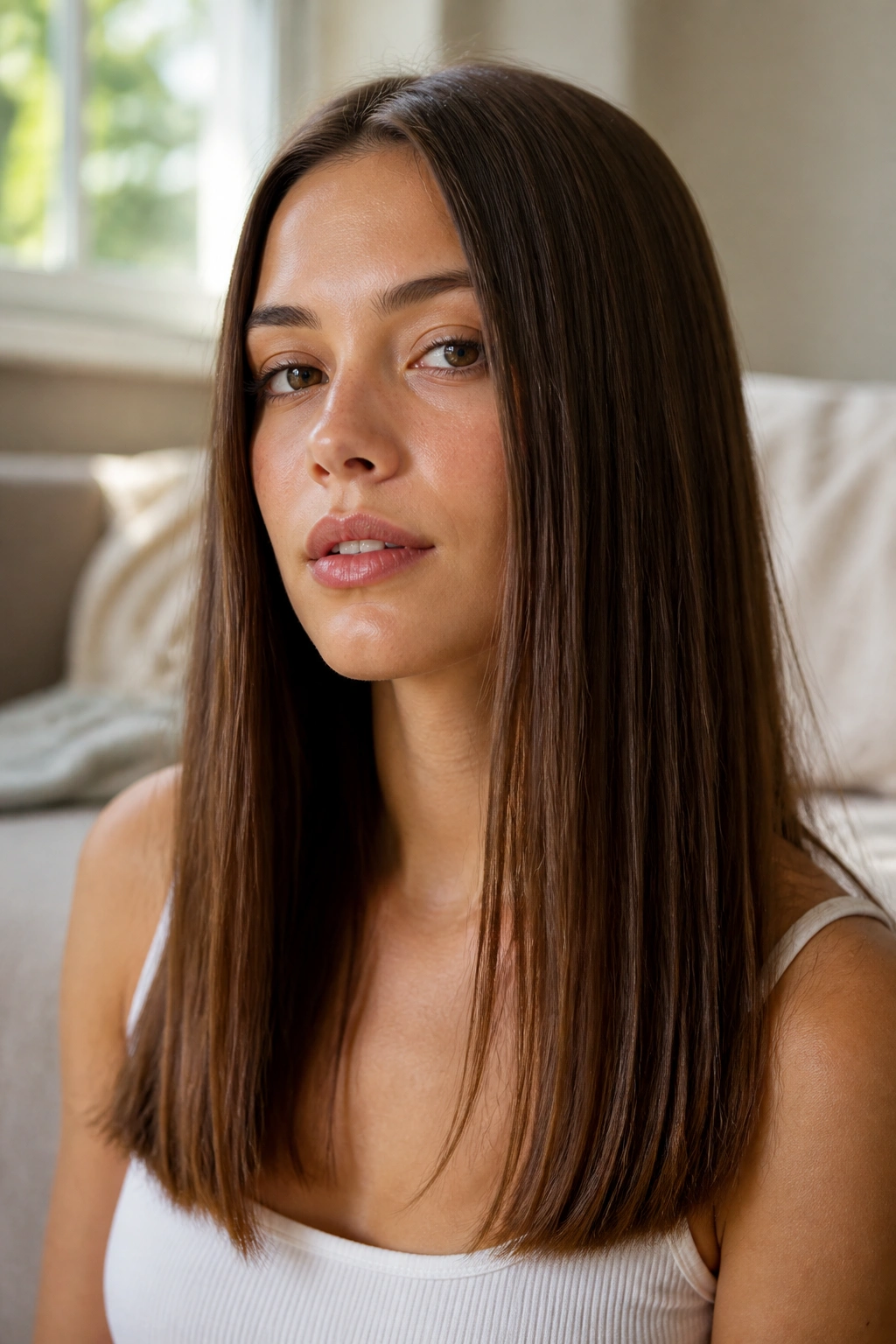
Some cuts ask for more. This one asks for less. A minimal-styling straight cut is the kind of one-length long haircut that makes sense if you want to wash, rough-dry, and move on with your life.
The trick is to cut it at a length where your hair naturally falls well on its own. For some people that means mid-back. For others it means somewhere closer to the chest. The point is not the exact measurement. The point is that the perimeter should look good without a full round brush and twenty minutes of fuss.
What makes it low-maintenance
- No layers to flip out.
- No fringe to trim every few weeks.
- No fussy shape that collapses when air-dried.
- Enough length to tie up, but not so much that it becomes a daily project.
I like this version for straight hair that already behaves decently. If your hair is cooperative, don’t overdesign it. A clean, one-length finish can look sharper than any complicated shape, and it tends to age well between salon visits.
Bring a photo to your stylist, yes, but also describe your routine honestly. If you air-dry 80 percent of the time, say that. If you own a flat iron and use it twice a month, say that too. The best straight-hair haircut is the one that matches your actual morning, not your fantasy one.
Final Thoughts
Straight hair is unforgiving, but it can also be generous. Give it a clean perimeter, and it pays you back with shine, density, and a shape that reads from across the room.
The best one-length long haircut for you depends less on trends and more on how much drama you want to carry. A blunt waist-length line feels different from a hip-length sheet of hair. A fringe changes the whole mood. A center part can make the same haircut feel spare and sleek, while a side part softens the edges without touching the cut itself.
If you’re taking one thing to the salon, make it this: be specific about the perimeter. Say whether you want it blunt, heavy, slightly beveled, or razor-straight. That tiny bit of language saves a lot of regret later.
