



Thick hair looks expensive when it’s shaped well, and like a helmet when it isn’t. That’s the real reason choppy layered haircuts for thick hair get so much attention: they can turn heavy, boxy density into movement you can actually feel when you toss your head.
Heavy hair rarely needs more volume. It needs better structure. The right cut takes weight out where it stacks up, keeps length where you want swing, and stops the ends from turning into one blunt, triangular slab.
I’ve seen thick-hair cuts go wrong in two familiar ways. They’re either too timid, which leaves the shape puffy and square, or too aggressive, which makes the ends fray and the whole thing look over-thinned. The sweet spot sits between those extremes, and the right answer changes depending on whether your hair is straight, wavy, or curly.
That’s why the best cuts here are not one-note. Some keep the length and add motion around the face. Some go shorter and sharper. A few borrow from shag and wolf-cut territory, while others stay cleaner and more polished. The trick is choosing a shape that works with your density instead of fighting it.
1. Long Choppy Layers with Face-Framing Pieces
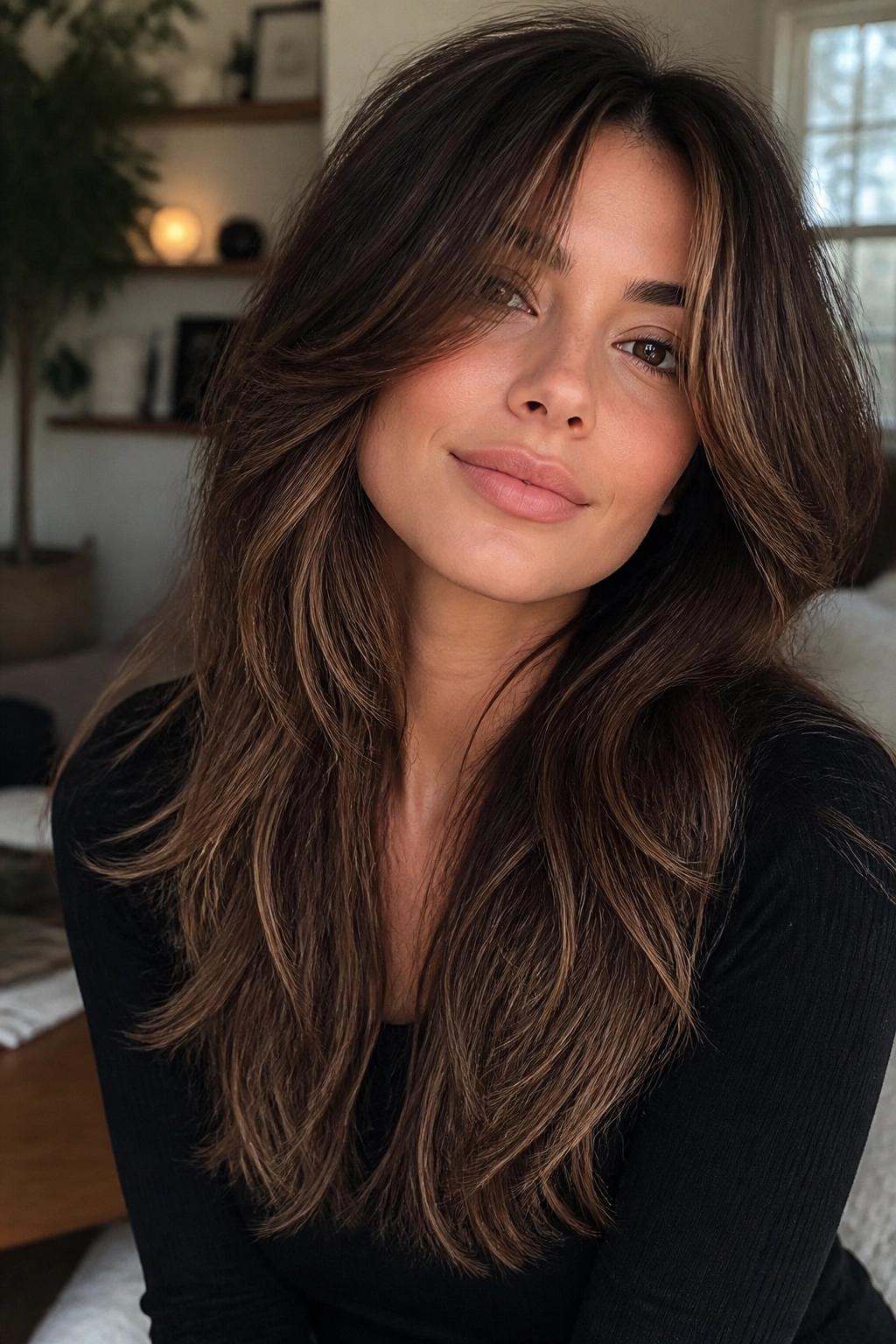
Long hair can hide a lot of bulk, but it can also sit there like a heavy curtain if it’s cut too bluntly. Long choppy layers with face-framing pieces fix that fast. The length stays, which matters if you like braids, buns, or that heavy swing when you walk, but the front gets enough shape to stop everything from collapsing into one big mass.
This is one of my favorite options for thick hair because it gives movement without making you lose the part you actually enjoy — the length. The face pieces do a lot of work here. They soften the jawline, break up width at the cheeks, and keep the cut from feeling flat around the front.
What to ask for at the salon
- Keep the longest layer below the collarbone, so the ends still feel full.
- Start the face-framing pieces around the chin or lip, depending on how much cheek softness you want.
- Use point cutting or deep vertical snips instead of one blunt horizontal line.
- Leave the back fuller than the sides if your hair grows out wide.
Skip heavy texturizing at the ends if your hair already puffs up in humidity. A little shape goes a long way.
2. Shoulder-Grazing Choppy Lob

A shoulder-grazing lob is one of the easiest fixes for thick hair that feels like too much. It sits in that useful middle zone where the hair is long enough to tuck behind the ears but short enough to lose some of the weight that builds up past the shoulders.
The choppy part matters. Without it, a thick lob can still feel square and bulky. With soft, broken-up ends, the cut moves when you move, and that stops the whole shape from looking like a solid block. I like this one for people who want less daily styling time but do not want to go short-short.
Shorter is not always lighter.
If your hair is coarse or dense, ask for the front to stay a little longer than the back so the cut doesn’t kick out at the shoulders. A flat iron bend through the ends or a quick blowout with a round brush is usually enough. On most people, this cut looks best when the perimeter still feels thick, just less heavy than before.
3. Butterfly Layers with a Lifted Crown
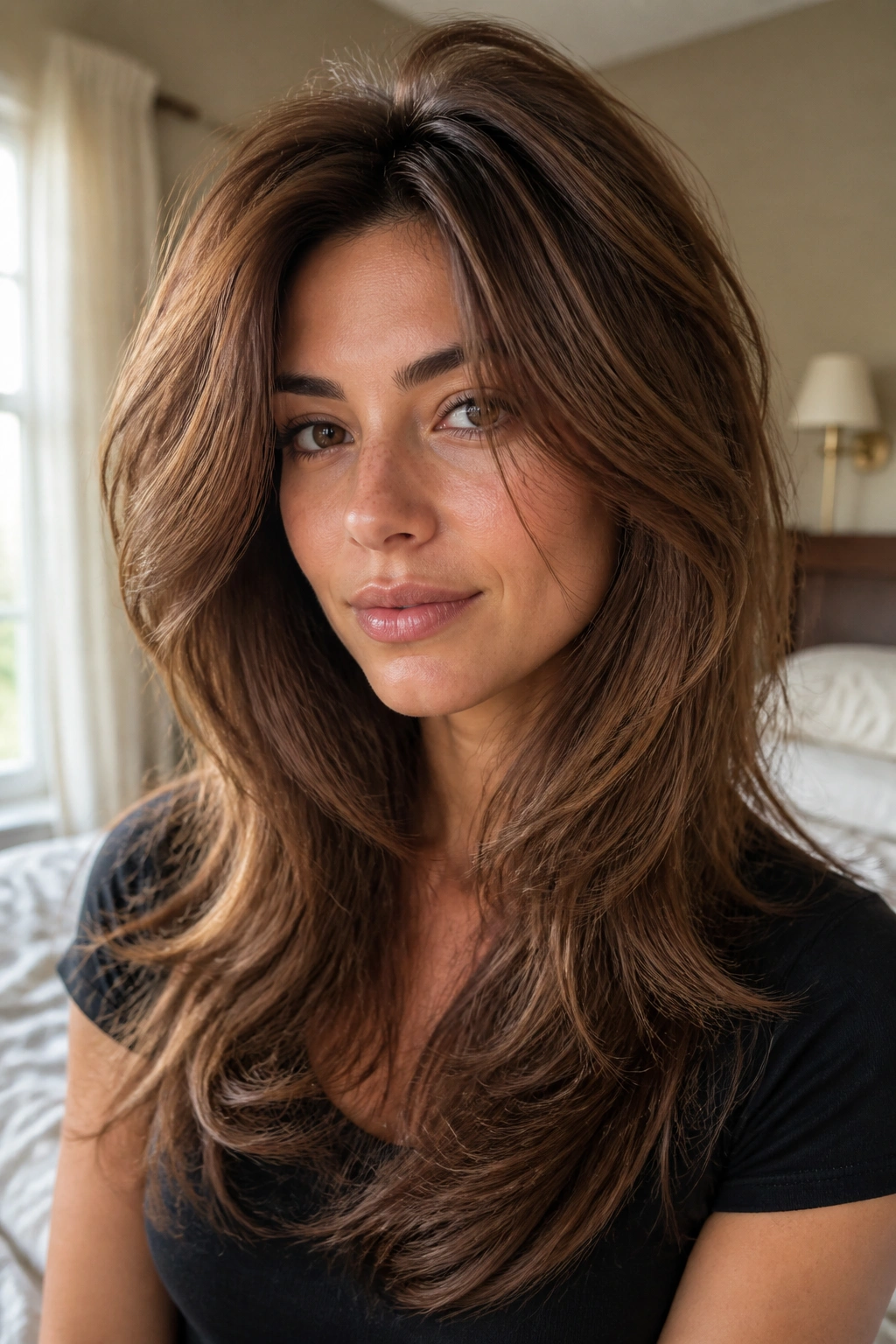
Why does the butterfly cut keep showing up for thick hair? Because it does two useful things at once. It lifts the crown and keeps the lower lengths long, which means you get shape near the top without giving away all your hair to layers.
Thick hair often looks full everywhere, which sounds nice until the roots collapse and the ends get too dense. Butterfly layers break that pattern. The shorter top pieces create motion around the face and crown, while the longer bottom layer keeps the cut grounded. If your hair feels heavy at the top of your head, this shape can make it feel a lot easier to wear.
How to style it
- Blow-dry the crown upward with a round brush or large rollers.
- Keep the lower lengths smooth with a light cream or a drop of serum.
- Curl the face pieces away from the face for a softer edge.
A 2-inch round brush is usually enough. You do not need a huge setup. You just need enough lift to separate the top layer from the rest of the hair so the shape reads as intentional instead of puffy.
4. Wolf Cut with Tapered Ends
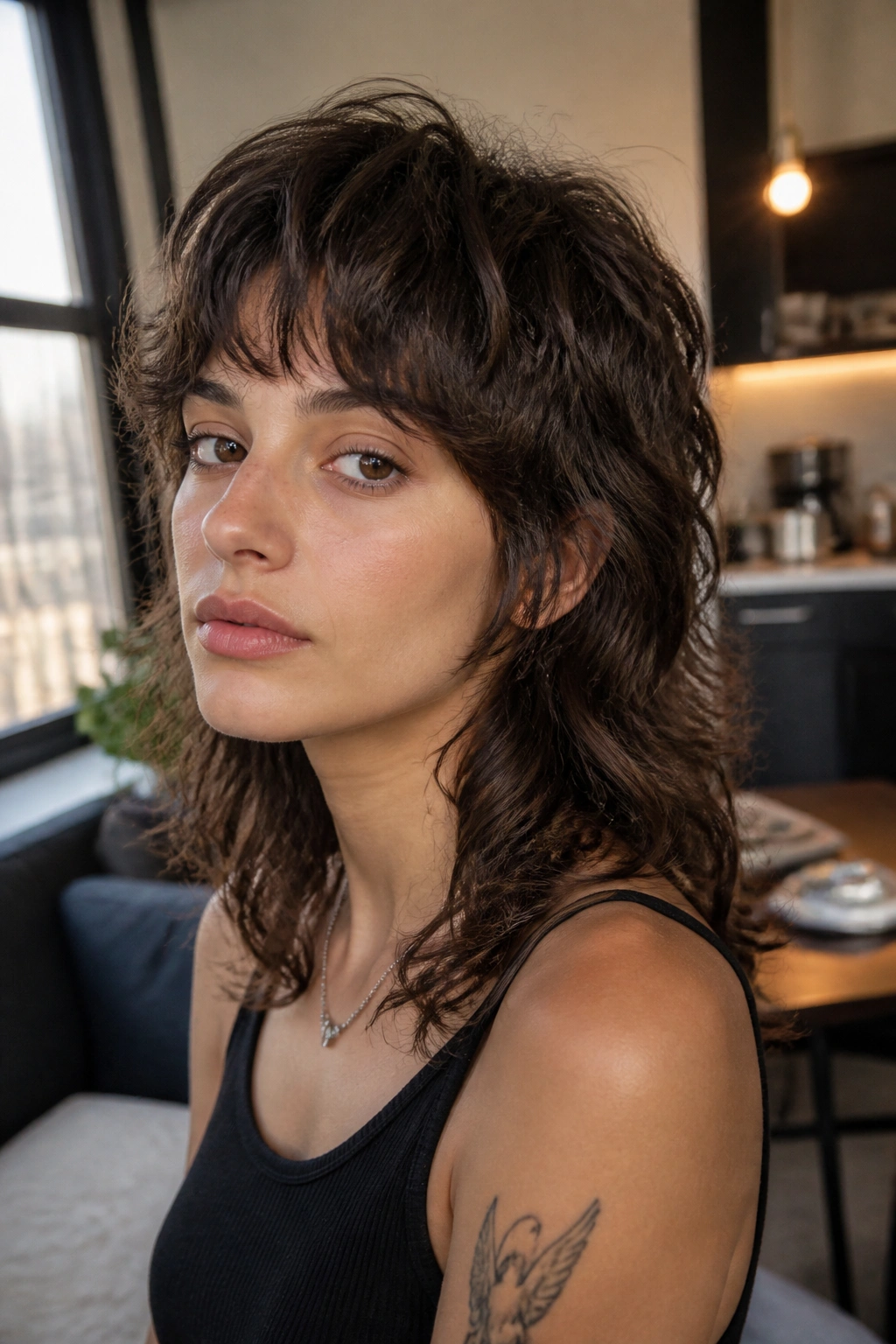
A client with thick, wavy hair once told me her old cut made her head feel “like a triangle with a bad attitude.” That’s exactly the kind of hair the wolf cut handles well. It takes that heavy top-and-bottom bulk and breaks it into something lighter, messier, and far less rigid.
The wolf cut leans into contrast. Shorter layers up top create lift and a little edge. Longer pieces in the back keep the haircut from feeling chopped off. The tapering at the ends is what keeps the whole thing from turning into a shaggy puffball, which happens when the weight is removed in the wrong places.
- Shorter crown layers give you movement at the roots.
- Face pieces can start high, around cheek level, if you want more drama.
- The bottom should stay soft, not shredded to bits.
This cut works best when the stylist pays attention to your density instead of copying a photo blindly. A thick wolf cut should look lived-in, not hacked at.
5. Choppy Layers with Curtain Bangs
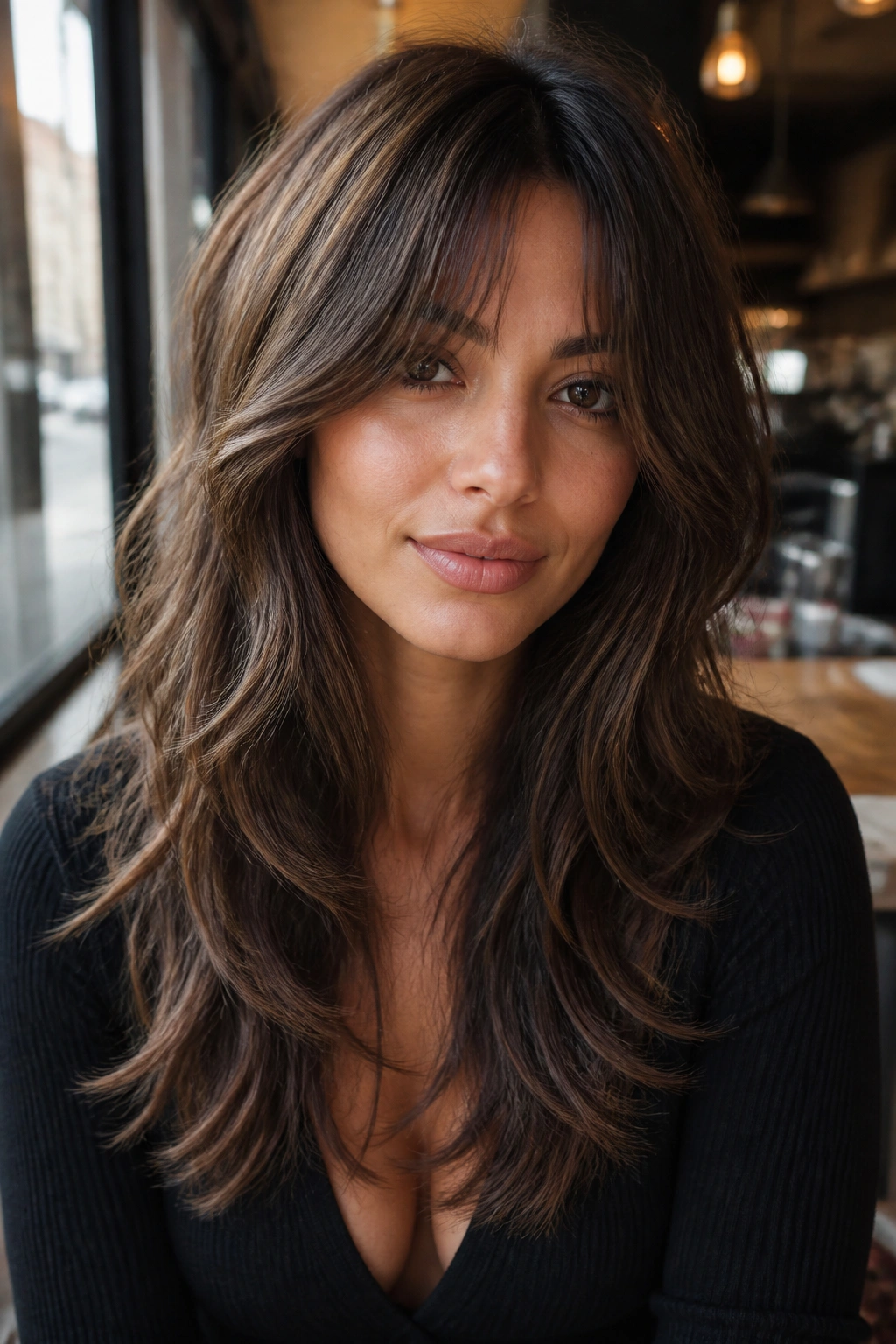
Curtain bangs can rescue thick hair when the front feels too dense. They split the weight at the center, open the face, and blend into the rest of the layers without making the whole haircut look severe. I like them especially on hair that grows wide at the cheeks or sits heavy around the temples.
The key is keeping the bangs long enough to blend. Too short, and they puff up. Too narrow, and they sit like a little curtain rod on top of all that thick hair. The best versions fall somewhere around the eyebrow or cheekbone area and then taper into longer side layers.
Start longer than you think you need. That advice saves a lot of bad bangs.
Curtain bangs also give you flexibility. You can part them wider on days when you want more openness around the face, or blow them down a touch for a softer, slightly 70s shape. Thick hair usually holds this style well, which is half the appeal. You’re not babysitting it every morning.
6. Rounded Mid-Length Layers
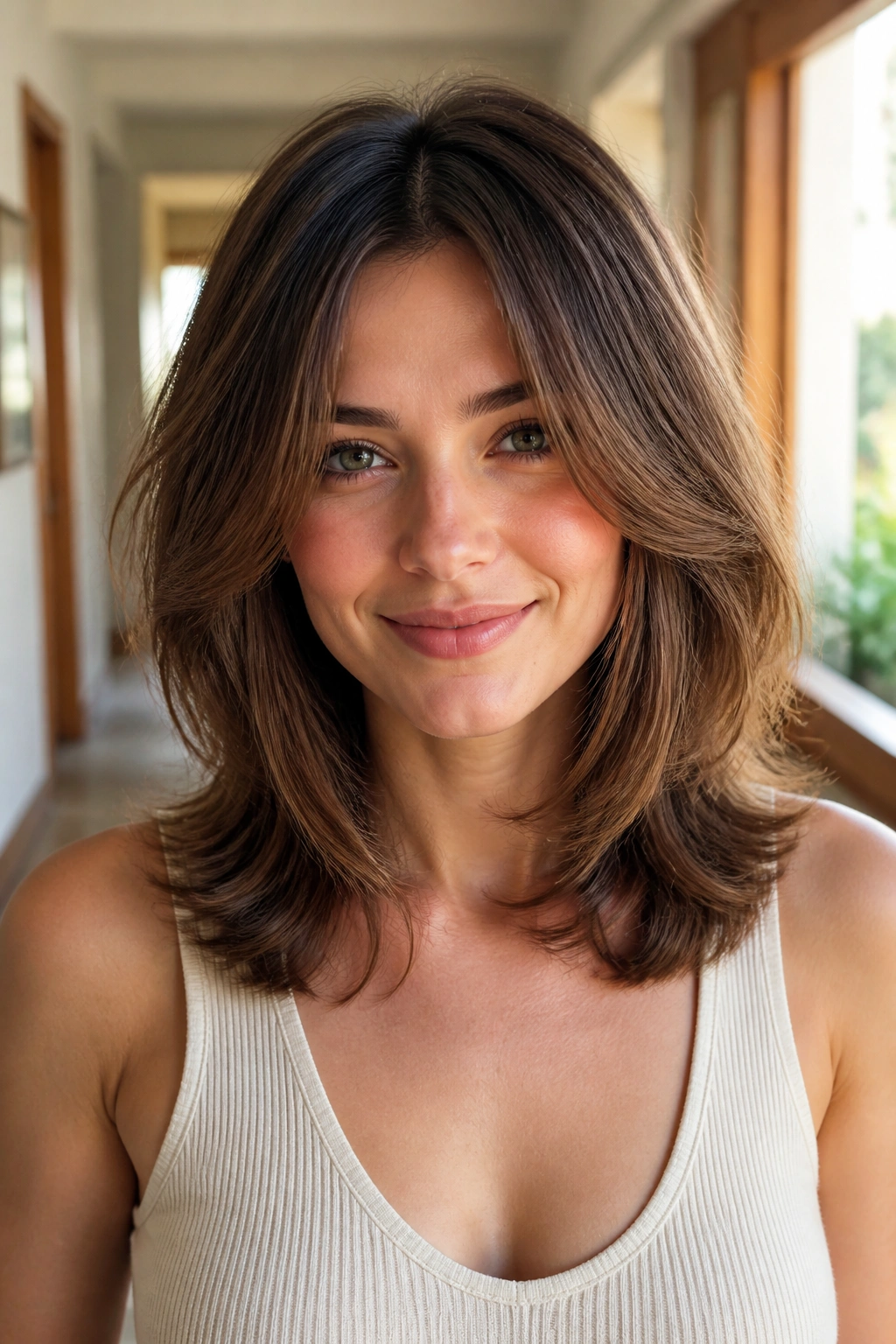
Compared with a blunt mid-length cut, rounded layers keep thick hair from kicking out at the sides. That’s the biggest difference. A one-length cut at the shoulders can look boxy fast, especially if your hair has any wave at all. Rounded layers curve the outline in a gentler way, so the shape feels full but not square.
This is a smart cut if you like your hair around the collarbone or upper chest and want it to sit close to the body. The stylist should keep the overall perimeter soft and then carve a rounder silhouette through the mid-lengths. The result is a shape that feels tidy without being stiff.
One sentence says it all: round is kinder than square on dense hair.
It also grows out well. A lot of choppy cuts go odd after a few weeks because the layers lose their balance. Rounded mid-length layers tend to blur out more naturally, which makes them friendlier if you don’t want to run back to the salon all the time.
7. Razored Collarbone Layers

Razored layers can look sharp on thick hair, but the razor has to be used with restraint. Too much of it, and the ends can go fuzzy, especially if your hair is coarse, dry, or prone to frizz. Used carefully, though, the razor can make collarbone-length hair feel much lighter and more fluid.
This cut suits thick hair that is already fairly healthy and not splitting at the ends. The point is to remove some of the visual bulk while keeping the shape open. If the stylist uses the razor only through the mid-lengths and leaves the bottom line solid, you get movement without that shredded look that can happen when someone gets overexcited with thinning tools.
Nope.
A razor through the wrong kind of thick hair can backfire fast. If your ends already puff out in humid air, ask for point cutting or slide cutting instead. And if you do go with the razor, keep your styling simple: a smoothing cream, a heat protectant, and a blow-dry that directs the hair downward rather than blasting it in every direction.
8. Internal Layers That Remove Bulk
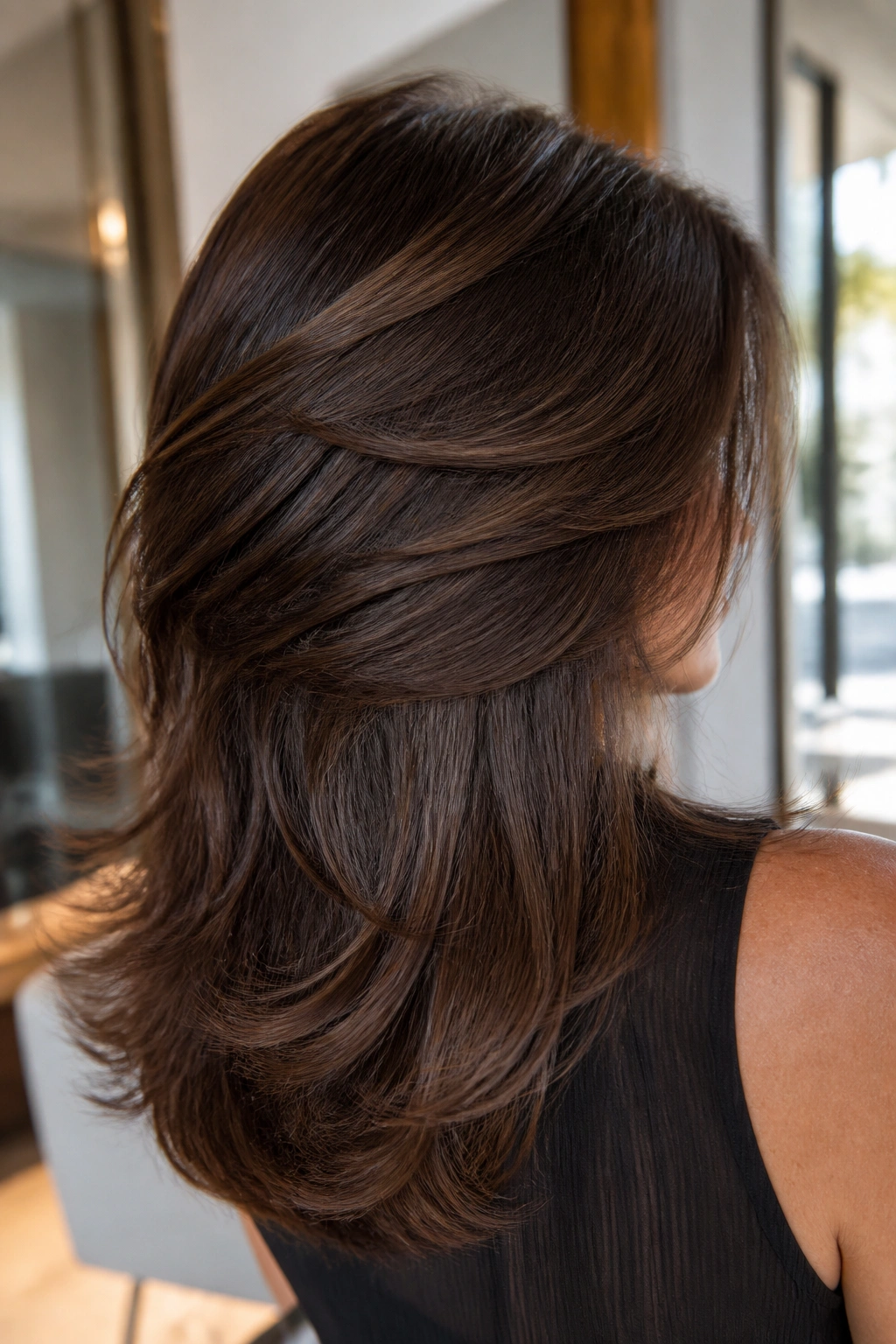
How do you take weight out of thick hair without making the ends look thin? Internal layers are the answer. They’re hidden inside the haircut, so the outside still looks full, but the inside is lighter and easier to move.
This is the cut I point people toward when they hate that “solid block” feeling but don’t want to lose length. A stylist can remove bulk around the nape, through the crown, and behind the ears while keeping the perimeter mostly intact. That means the haircut feels better when you put it up, wash it, or wear it down on a humid day.
Where stylists take the weight out
- Under the crown, where thick hair often stacks up.
- Around the occipital bone, which can create that heavy shelf effect.
- Behind the ears, if the sides balloon outward.
- At the nape, where dense hair can feel stiff and hot.
Tell your stylist you want the shape to stay solid on the outside. That part matters. Internal layers should be felt more than seen.
9. Textured Bob with Piecey Ends

A textured bob is a relief if your thick hair feels too hot or too long around the neck. It brings the weight up and away from the shoulders, which makes a surprising difference in how the cut behaves during the day. The piecey ends keep it from turning into a box.
This is not the same thing as a blunt bob. A thick blunt bob can look almost too strong, especially if the hair has a lot of natural body. Texture in the ends softens the line and gives the haircut enough air to move. If your hair is straight, this shape can look polished. If it’s wavy, it gets a little cheekier.
- Keep the perimeter between the chin and jaw for most face shapes.
- Leave some softness around the ends so the cut doesn’t sit like a shelf.
- Ask for texture inside the bob, not just on the surface.
I like this one for people who want a clean shape but don’t want to feel wrapped in hair all day. It has edge, and it behaves better than people expect.
10. V-Cut Layers on Long Hair

A V-cut is one of the cleanest ways to keep length and still move some of the bulk around. Instead of ending in a straight line or a soft U, the hair narrows toward the center back. On thick hair, that can be a huge help because it stops the length from looking like one heavy curtain.
What makes this different from a standard long layer cut is the silhouette. The sides stay long, but the center drops lower, which gives the haircut a sharper outline. It’s especially nice if you wear your hair down a lot and want the back to look intentional from every angle — not like you forgot to shape it.
Best for:
- Hair that reaches past the chest.
- Thick hair that feels too wide at the hem.
- People who like long styles but want a little more movement.
If your ends are fragile or your hair is fine at the bottom, don’t push the V too deep. You want shape, not a skinny tail.
11. Feathered Layers with Side-Swept Fringe
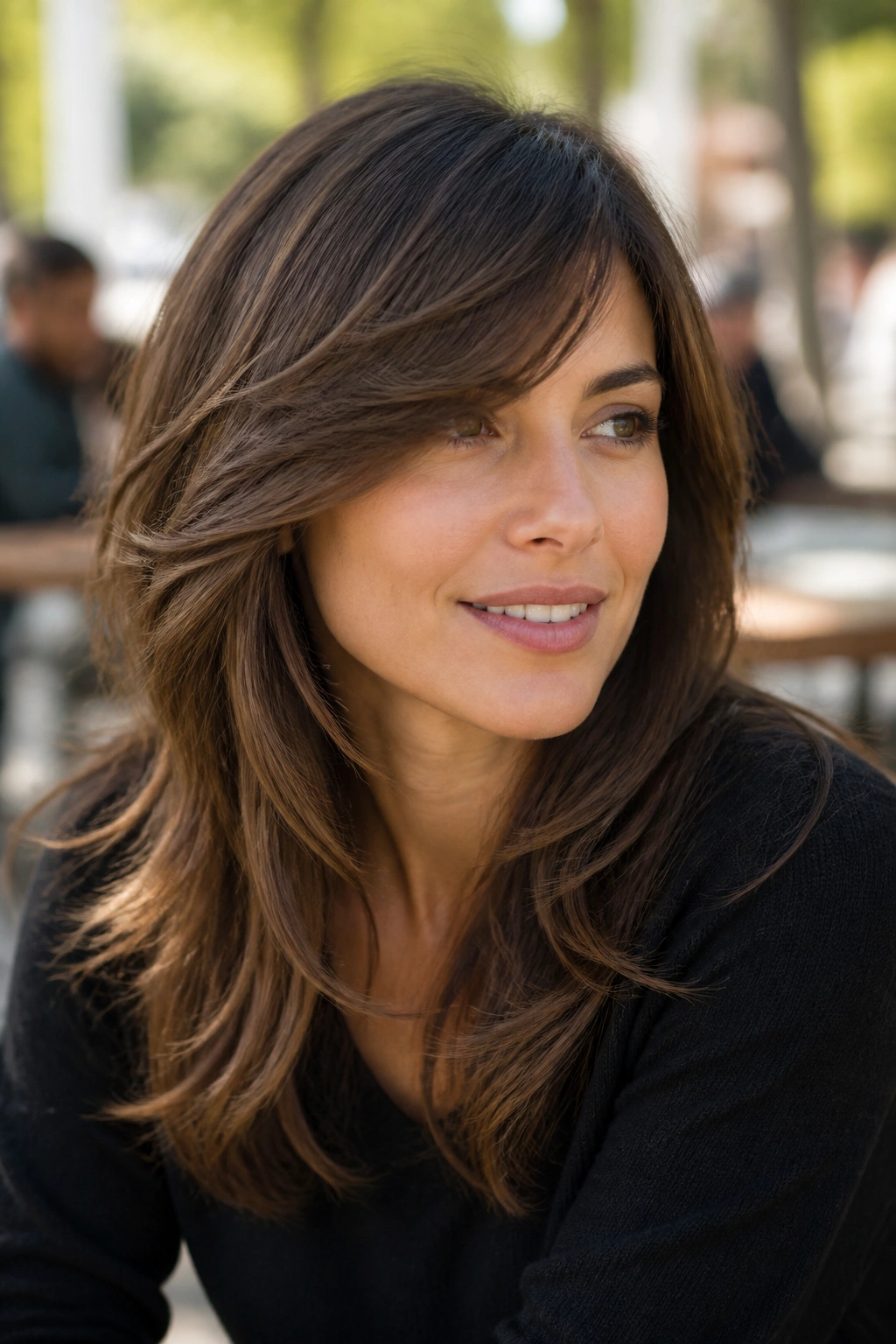
Feathered layers still work because they solve a real problem: thick hair can look bulky around the face even when the length is perfect. Feathering breaks up that density in a softer way than blunt cuts or hard, choppy slices. The ends look lighter, and the whole cut moves with a little more air.
A side-swept fringe adds another layer of relief. It takes weight off the forehead area and gives the haircut a diagonal line, which is helpful if your hair tends to fall straight down and widen the face. I like this shape on thick hair that needs softness more than drama.
What to ask for
- Feather the front sections so they blend into the sides.
- Keep the fringe long enough to sweep rather than sit flat.
- Use a medium round brush when blow-drying the bangs.
A little mousse at the roots helps, too. Not a mountain of it — just enough to keep the fringe from collapsing under the weight of the hair behind it.
12. Blunt Base with Soft Surface Layers
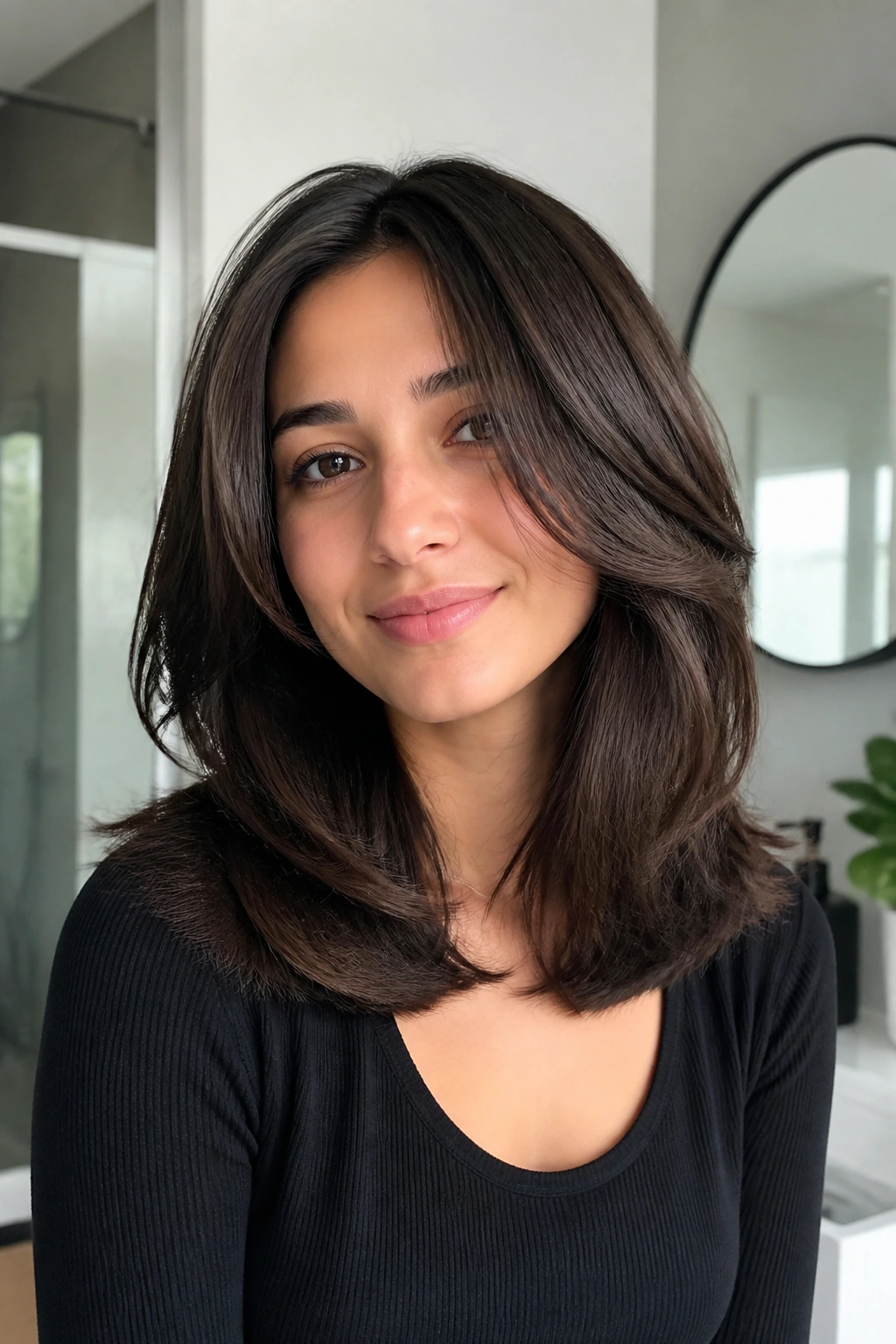
A blunt base is not the enemy. On thick hair, it can be the thing that keeps the haircut looking clean while the soft surface layers add the movement. The perimeter acts like a solid frame, and the lighter top layers keep the shape from feeling too stiff.
This works especially well if your hair is dense but the ends are a little dry or prone to splitting. A blunt edge makes the bottom look fuller and healthier, while the layered top stops the entire cut from turning into a slab. The result feels polished, not fussy.
I prefer this on people who want hair that can be worn sleek without looking heavy. It gives you options. You can air-dry it and let the surface layers do their thing, or you can smooth it straight and still have some bend at the top.
The one thing to avoid is over-layering the bottom. Leave the ends thick. That’s the whole point.
13. Choppy Layers for Curly Thick Hair
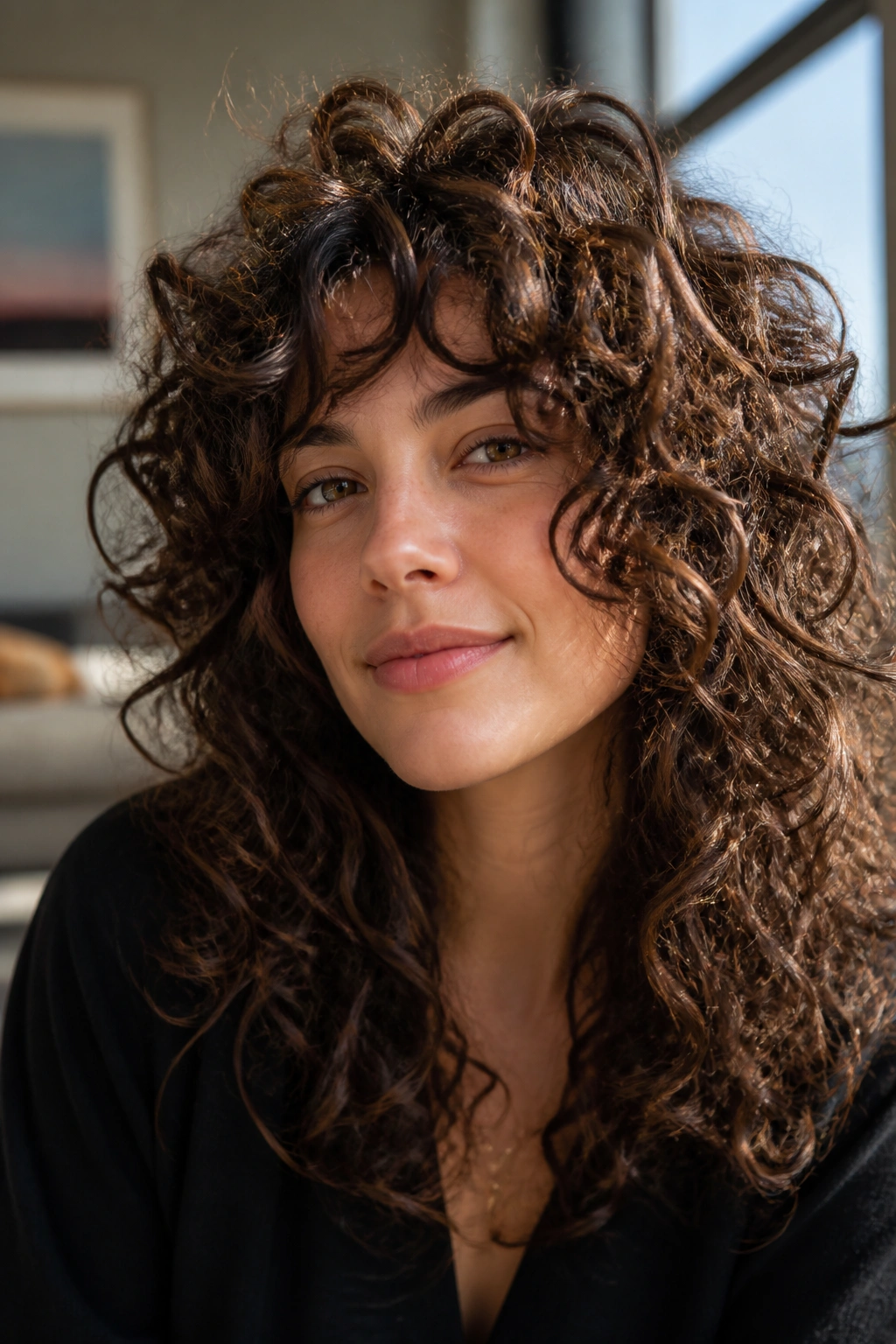
What if your hair is curly and thick, not straight and thick? Then the haircut has to respect shrinkage. Curly hair does not sit where it’s cut. It bounces up, bends, and sometimes hides half the layers you thought you were getting.
That’s why choppy layers for curls work best when the stylist cuts with the curl pattern in mind. Dry cutting or curl-by-curl shaping usually makes more sense than chopping everything wet and hoping for the best. You want room for the curls to spring, but not so much that the top becomes a halo and the bottom looks empty.
How to map the layers
- Keep the shortest layers long enough to avoid a triangle shape.
- Let the curls fall in their natural pattern before cutting more.
- Leave enough weight at the ends so the ringlets don’t pop out too high.
A good curly cut should move, not explode. That difference matters a lot when the hair is thick. Diffuse on low heat, use a leave-in cream, and don’t rake through the curls once they’ve started to set.
14. Soft Mullet-Inspired Layers
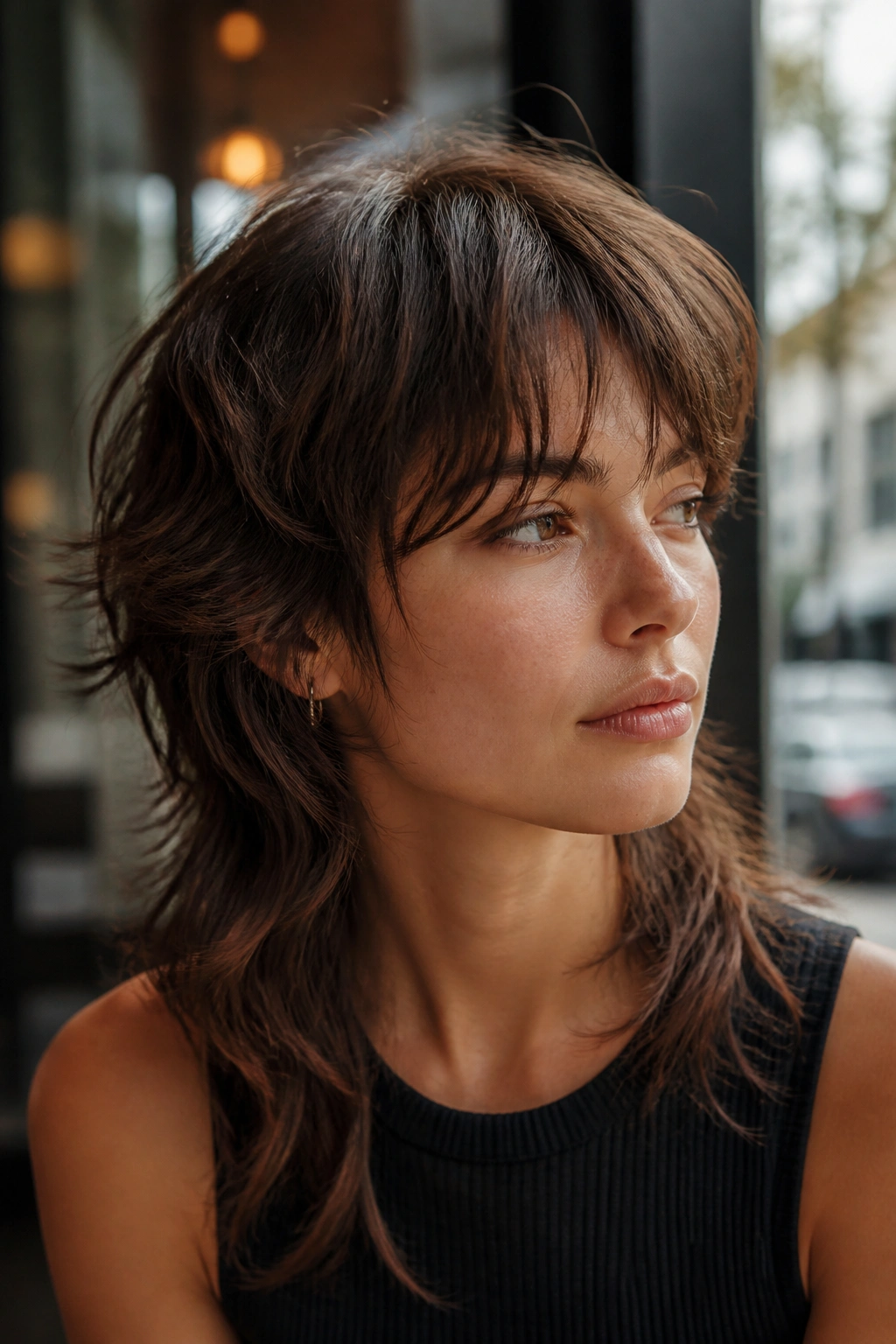
Soft mullet-inspired layers are not for the shy, but they can be a relief when thick hair feels too boxed in. The shape keeps length in the back, breaks up density at the crown, and opens the face in a way that feels a little tougher than a classic layered cut.
The good version of this cut is controlled. The top gets shorter, yes, but the ends are not shredded to bits. The back remains long enough to keep the haircut wearable, while the front pieces create movement around the eyes and cheeks. If the word “mullet” makes you flinch, think of this as a cleaner, softer version with better manners.
It works best on thick hair that already has some natural wave. Straight hair can handle it too, but it usually needs more styling. A bit of texture cream, finger drying, and a rough bend through the top pieces can make the whole thing look deliberate instead of accidental.
You either want edge or you don’t. There isn’t much middle ground here.
15. Long Layers with Hidden Underlayers

A woman who wants long braids, a ponytail that feels lighter, and a cut that doesn’t sit like a lump at the back of the head is the person this shape was made for. Long layers with hidden underlayers keep the outside length intact while quietly removing some of the bulk on the inside.
That hidden part is the whole point. From the outside, the hair still looks long and full. Underneath, the stylist has taken out enough weight to make the head feel less packed. It’s one of those cuts that doesn’t look dramatic in a mirror but feels dramatic when you wash and dry your hair.
- Keep the surface layers long.
- Take weight out from the interior, especially near the crown.
- Avoid too much face framing if you want the length to stay the star.
This cut is a quiet fix. It doesn’t shout. It just makes thick hair easier to live with, and honestly, that matters more than a flashy shape most of the time.
16. Choppy Layers for Wavy Thick Hair
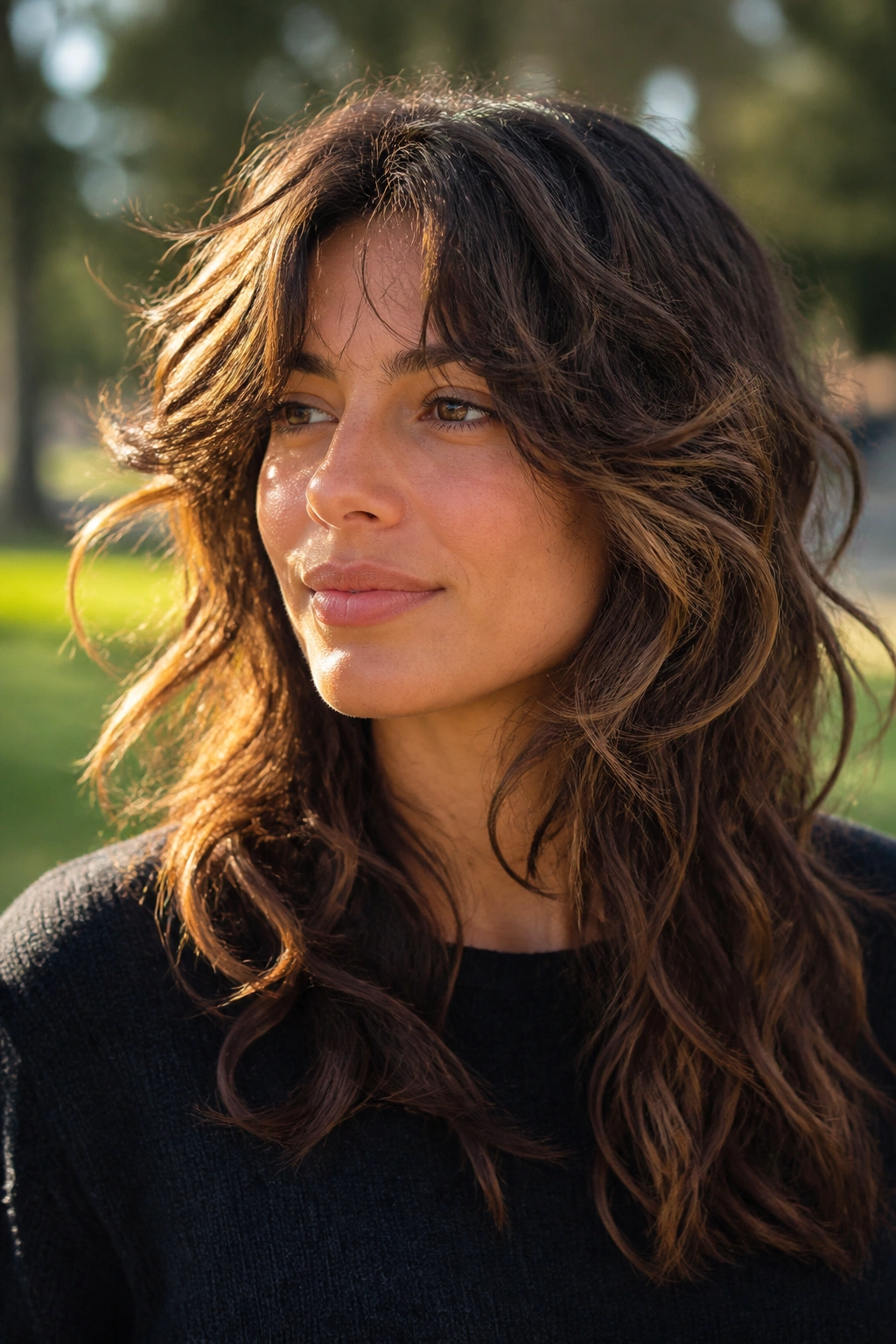
Wavy thick hair can be a blessing and a nuisance in the same afternoon. It has body, movement, and texture, but if the layers are wrong, it puffs up at the sides and loses its shape by lunch. Choppy layers help the waves separate instead of bunching together in one heavy curtain.
The key is spacing. Too many short layers, and the waves kick out all over the place. Too few, and the hair sits in one dense sheet. The right choppy cut lets the waves bend and fall on their own, which cuts down on the daily fight with the brush.
Mid-shaft layers usually do more good than short ones here. They keep the top from going flat and the ends from going too wide. A light mousse or wave cream, scrunched in while the hair is damp, helps the cut show its shape without turning crunchy.
Air-drying can work, but a diffuser gives you more control. Stop drying when the hair is about 80 percent dry and let the rest finish on its own. That keeps the wave pattern soft instead of frizzy.
17. Short Choppy Crop with Tousled Finish

A short choppy crop is for the person who wants thick hair off the neck and out of the way. It’s not a timid cut. It shows the shape of the head, puts texture on top, and makes the hair feel lighter in a way that a longer style can’t always manage.
Compared with a pixie, this version keeps a little more softness. Compared with a bob, it feels more open around the ears and nape. That makes it a good middle ground if you want your hair short but not severe. The tousled finish is part of the deal, because thick hair without texture at this length can look too neat and too stiff.
- Keep the top slightly longer so it can be pushed forward or back.
- Leave the sides neat but not shaved down to nothing.
- Use point cutting around the crown to avoid a hard helmet shape.
It does need maintenance. Short thick hair grows out with a mind of its own, and once the shape starts to collapse, it stops looking sharp fast. Small trims keep this cut honest.
18. Modern Midi Shag with Broken-Up Ends
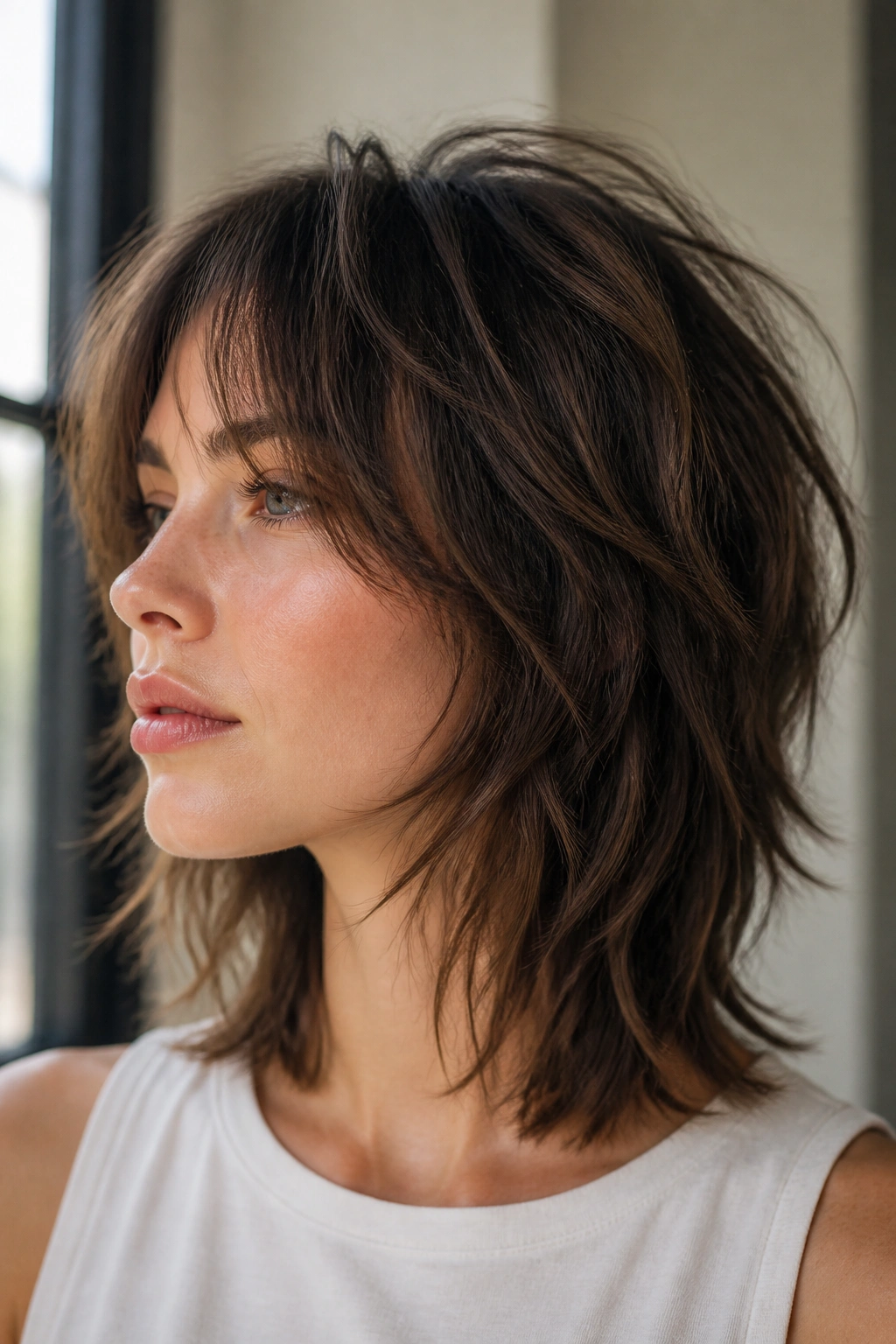
If I had to pick one shape that flatters thick hair without trying too hard, it would be the modern midi shag. It sits in that sweet middle length — not long enough to feel heavy in the hem, not short enough to lose the easy movement thick hair can give you when it’s cut well.
The broken-up ends are what make it work. They stop the lower half from turning into one dense sheet, while the shorter layers around the crown and face keep the haircut alive. It’s a little undone, but not sloppy. That matters. A good midi shag should look like the stylist respected the density, not like they attacked it with scissors and hoped for the best.
This is a solid pick if you want a cut that works with air-drying, diffusing, or a quick bend with a curling iron. It also grows out in a fairly forgiving way, which is useful if you don’t enjoy rigid maintenance schedules. Ask for softness near the perimeter and movement through the interior. Ask for softness, not shred.
