



Face framing layers for long hair can rescue a haircut that feels heavy around the cheeks. One small shift near the cheekbone, jaw, or collarbone changes how the whole length sits, which is why these cuts can look softer, lighter, and more alive without chopping off inches you actually want to keep.
The trick is placement. A front piece that starts too high can make the ends look thin; one that starts too low may disappear into the rest of the hair after the first blow-dry. Texture matters too. Thick hair can carry a stronger front sweep, while fine hair usually does better with cleaner lines and less thinning near the ends.
And then there’s the part people miss: face-framing layers are not one haircut. They can be curtain-like, feathered, blunt, razored, curly, or barely there. That range is exactly why the front of a long haircut deserves its own plan.
The shapes tell the story.
1. Curtain Layers That Start at the Cheekbone

Cheekbone-start curtain layers are the cleanest place to begin if you want softness without a big haircut shift. They split the difference between bangs and full face framing, so the hair opens around the face instead of sitting like one heavy sheet.
Why Cheekbone Placement Works
When the shortest front piece lands around the cheekbone, it gives the eye somewhere to go. That little bend can make long hair feel lighter right away, especially if your hair tends to fall straight down with no movement near the front.
- Ask for the shortest piece to hit the top of the cheekbone, then let it blend down toward the jaw.
- Keep the side pieces long enough to tuck behind the ear on busy days.
- Use a round brush or large Velcro roller to flip the front away from the face.
- Skip heavy thinning if your hair is fine; you want shape, not see-through ends.
Pro tip: Curtain layers look best when the front bends back slightly, not when they hang straight forward.
2. Soft Jawline Pieces That Narrow a Wide Cut
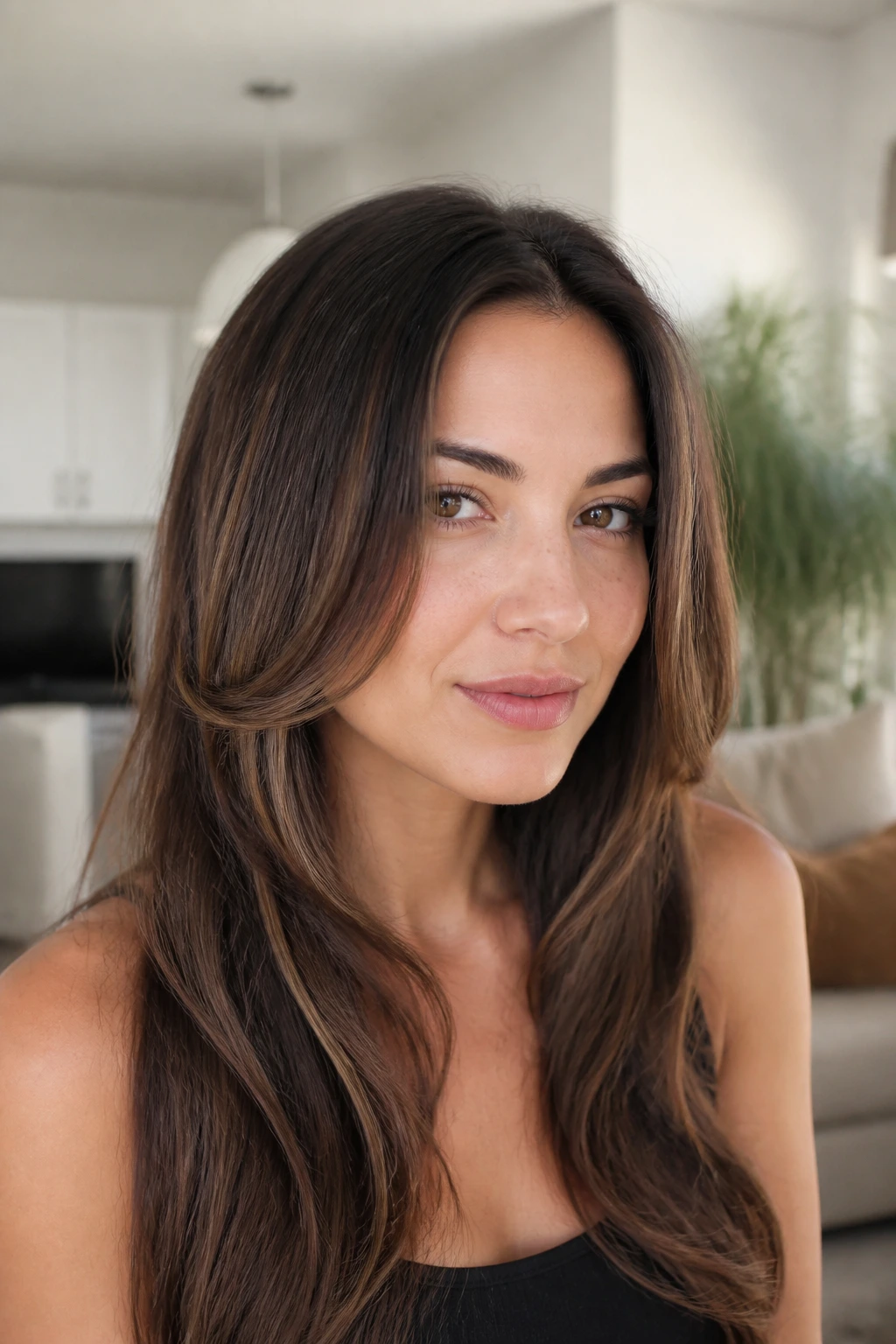
What if your long hair feels too square around the lower face? Soft jawline pieces can fix that fast. They draw a gentle line in from the sides, which helps the whole cut feel less boxy without making the front look chopped up.
The key is softness at the ends. You want a taper, not a hard edge. If the shortest front piece lands right at the jaw and then melts into longer lengths, the shape feels calmer and more polished in real life, not just in a salon photo.
This is one of my favorite options for anyone with a broad jaw or a square chin, but it also works if your hair is heavy and keeps falling in one flat block. The cut does not need to be dramatic to do its job. It just needs enough angle to break up the weight.
One-sentence truth: a little curve at the jaw goes a long way.
3. Butterfly Layers With a Floating Front Shape
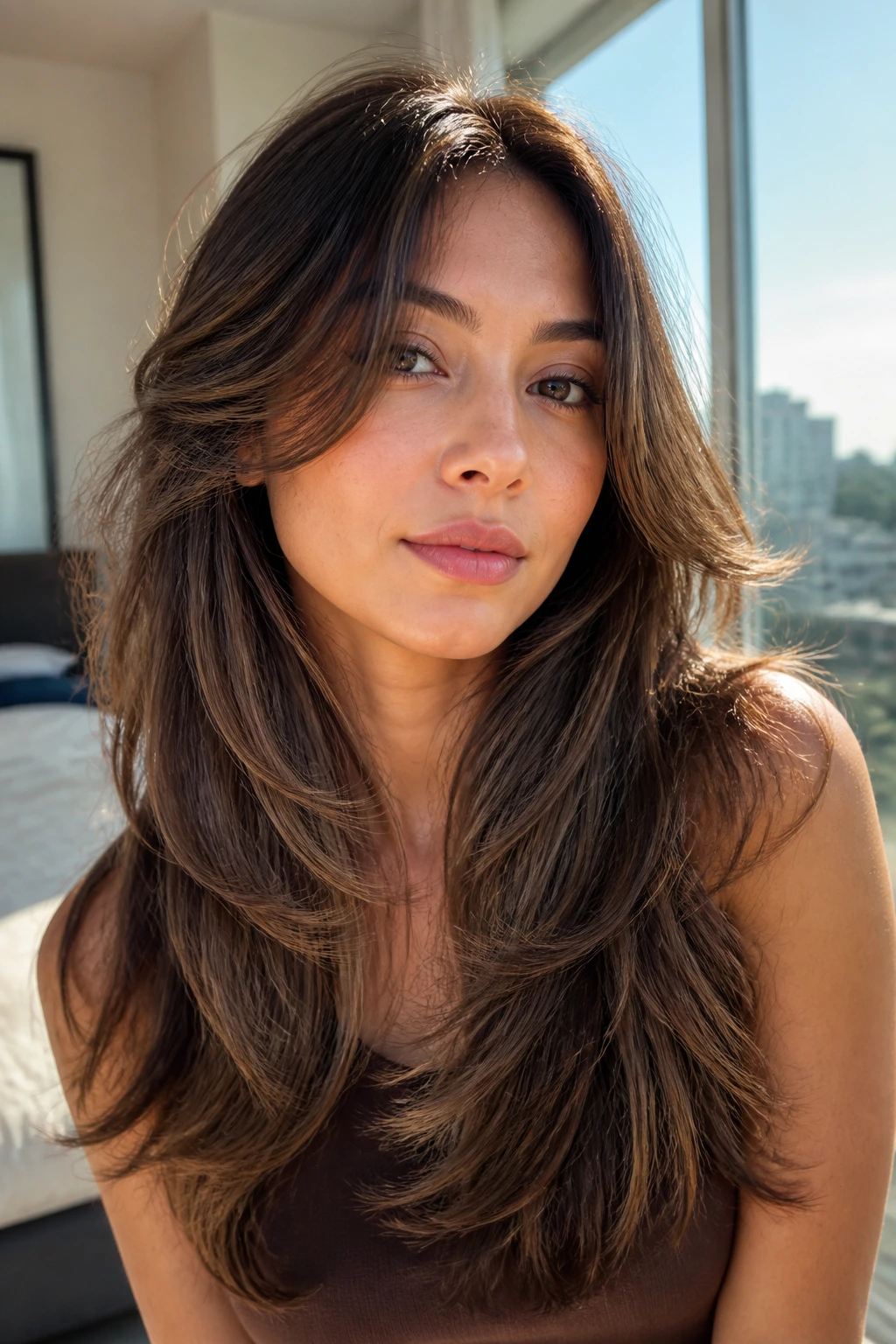
Butterfly layers are basically face-framing layers with a lift built into the crown. The front gets shorter pieces that sweep out, while the rest of the length stays long, which is why the haircut can feel airy without losing the long-hair drama.
The magic is in the contrast. Shorter top layers create movement near the face and crown, but the bottom section still hangs heavy enough to keep the haircut looking full. That matters if you like a blowout look and hate when long hair goes limp two hours after styling.
I think this cut works best when the front pieces are cut to move away from the face rather than fall straight down. That small detail changes everything. It makes the front feel lifted, not stringy.
It’s a clever cut. Not flashy. Clever.
4. Chin-Skimming Pieces for Straight Hair
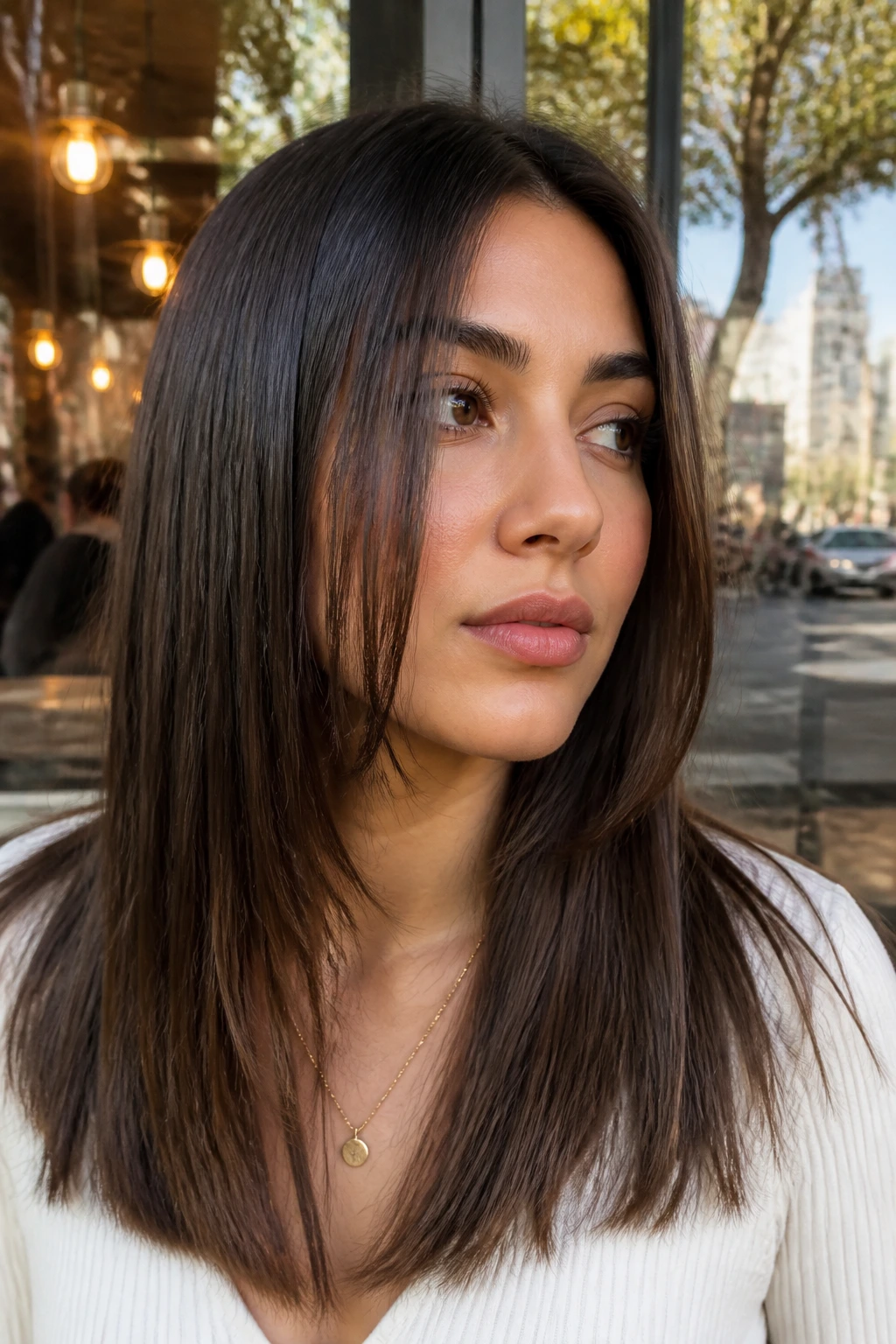
Straight hair can be stubborn. It loves to fall flat, and long lengths often drag the face down unless the front has a clean shape.
Chin-skimming layers solve that by giving the eye a stop point right where the jaw starts to narrow. The result is a haircut that still looks long and smooth, but the front doesn’t sit there like a curtain with no break in it.
What to Ask For at the Salon
- Ask for the first face frame to land at the chin or a touch below it.
- Keep the front section blunt enough to hold shape after a blow-dry.
- Ask for a soft connection into the rest of the length, not a hard step.
- Style with a flat brush or paddle brush if you want the pieces to stay sleek.
A small bend at the end keeps this from looking too severe. That bend matters. It gives the layer a little motion instead of a strict line.
5. Feathered Front Layers That Flip Back
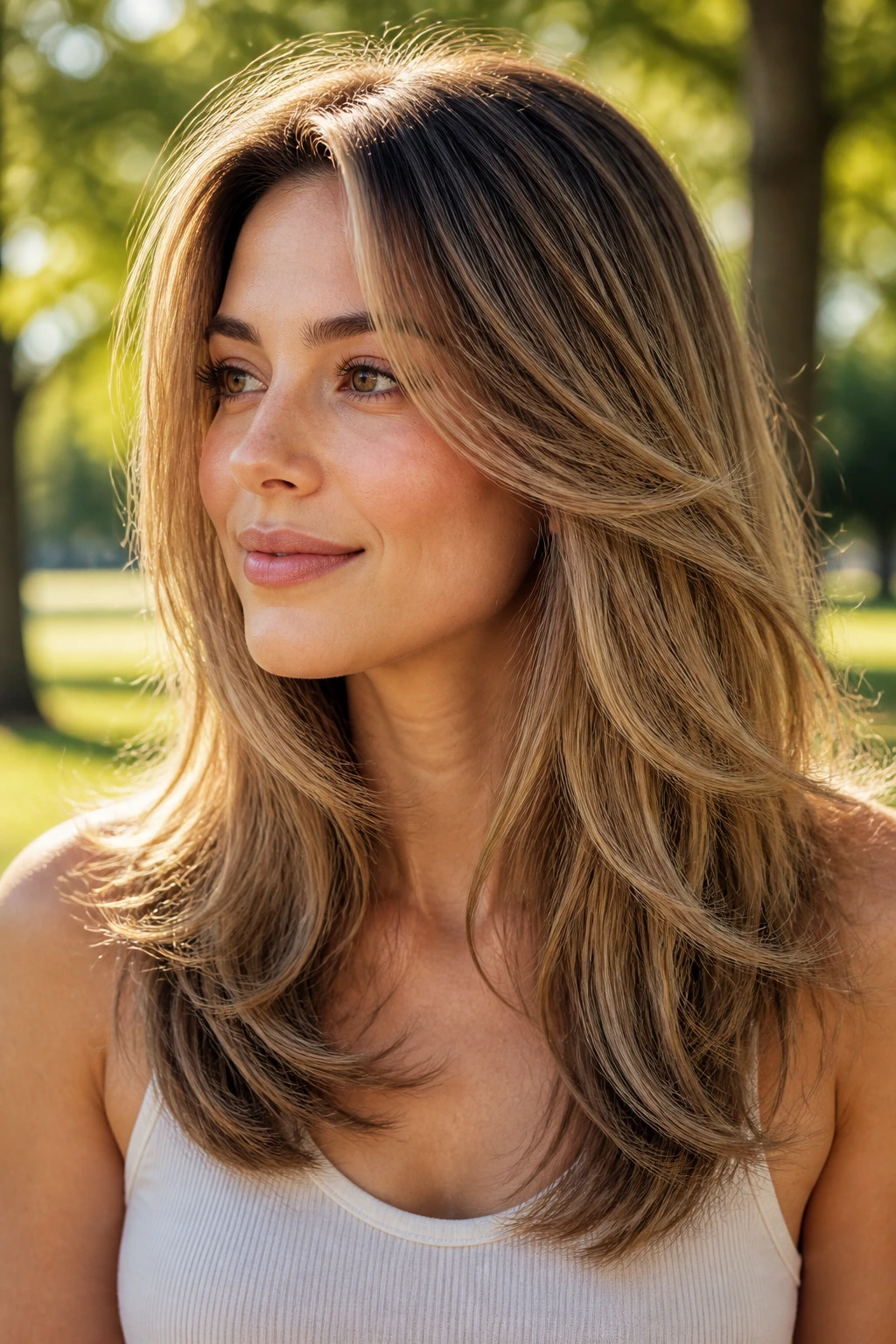
Want movement that looks polished on a regular Tuesday? Feathered front layers do that better than a lot of flashier cuts.
They work by taking weight out of the front in a way that lets the hair slide back from the face. Instead of a chunkier layer that sits in one place, the ends taper and soften, which makes the haircut feel light when you walk and when you turn your head.
How to Ask for It
Tell your stylist you want the front pieces feathered and directed away from the face, with the shortest bit around cheekbone level. That wording helps avoid a heavy step that looks dated after the first wash.
This cut is especially nice if you wear a side part or if your hair has a little natural bend. Blow-dry the front with tension, then wrap the ends back over a round brush for a soft sweep. If you let the hair dry straight down, you lose the effect.
It’s a small detail, but it changes the whole mood.
6. Bottleneck Bangs Blended Into the Length
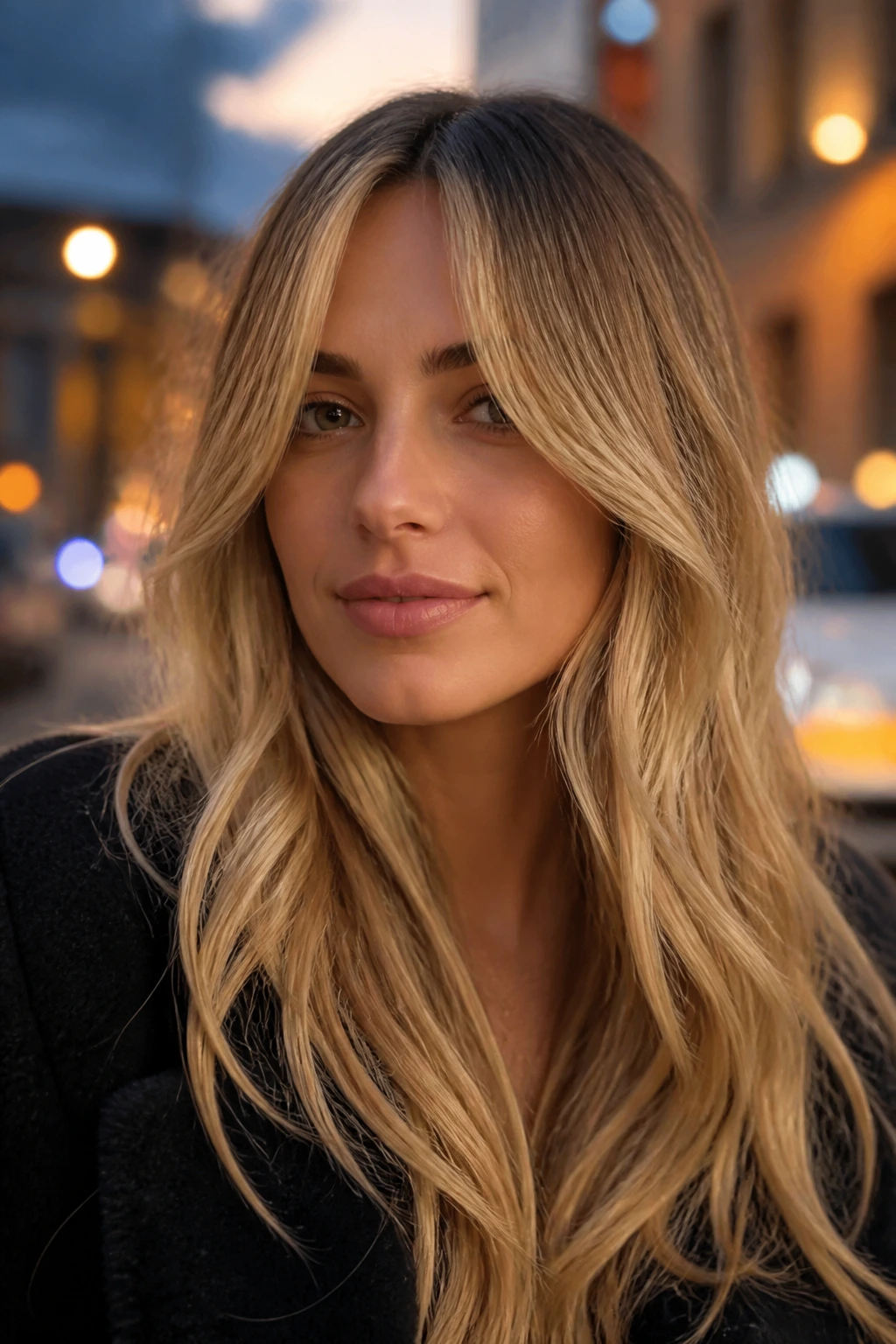
Bottleneck bangs are one of the smartest ways to get face framing without locking yourself into a full fringe. The middle stays shorter, then the sides drop longer and blend into the long layers, so the haircut opens at the eyes and cheekbones instead of stopping in a hard line.
The shape is named well. Narrow in the center, wider at the sides. That gives you room to style it in different ways—middle part, soft off-center part, tucked behind one ear, or blown out with a bit of curve.
This is a good choice if you want something with personality but not something that fights your daily routine. The bangs grow out into the front layers more gently than a blunt fringe, which saves you from that awkward in-between stage that can drag on forever.
A small warning: if your hair is very fine, keep the center piece light. Too much bulk there makes the whole thing look heavy at the forehead.
7. U-Shaped Layers With a Soft Front Sweep

A U-shaped cut keeps more weight at the ends than a V-shaped cut, and that matters more than people think. If you like long hair that still looks thick at the bottom, the U gives you movement up front while holding onto density through the rest of the length.
The front sweep is the part that sells it. You can take the front pieces up just enough to open the face, then let the back stay fuller and rounded. It’s a quieter shape, but it reads clean and expensive in the plain old sense of the word: tidy, healthy, and easy to wear.
Compare that with a sharp V-cut, which pulls the eye down to a point. The U feels softer. The V feels more directional. Neither is wrong, but they do different jobs.
If your hair already feels thin at the ends, the U usually wins. If your hair is thick and you want more swing, the front sweep gives you that motion without overcutting the perimeter.
8. Razored Face Framing for Wavy Hair
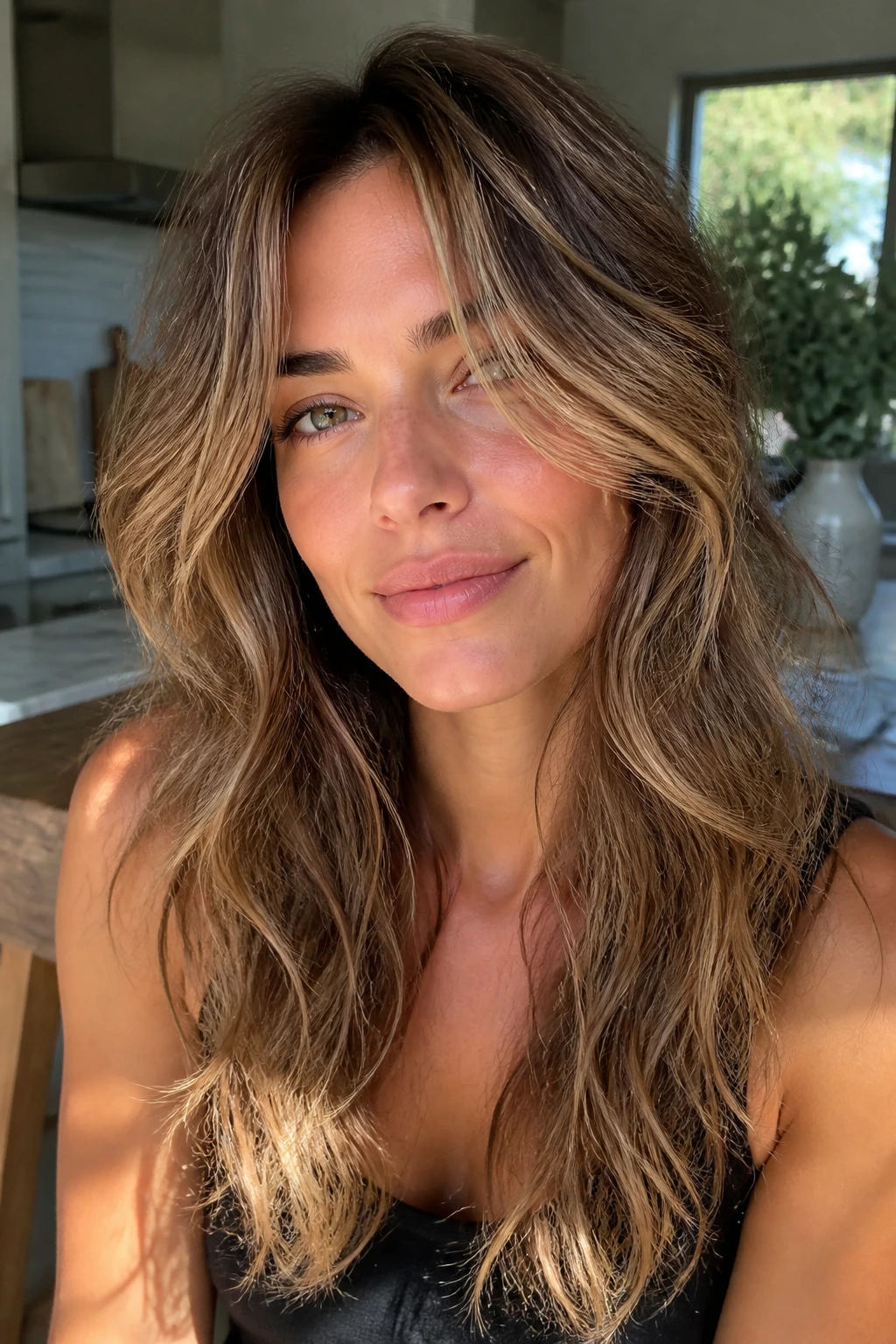
Wavy hair likes a little freedom near the front. A razor can give it that airy, broken-up finish that scissors sometimes miss.
The texture at the ends changes the whole feel of the cut. Instead of a blunt front piece that fights the wave, the razor lets the hair move and separate a bit, which helps the face frame sit with that loose, lived-in shape wavy hair does so well. It can look soft even when you only spend five minutes on it.
A caveat, though: this is not the cut I’d reach for on fragile, very fine hair that already frays at the ends. Razoring can make those pieces look wispy in a bad way if the stylist goes too far. On the right wave pattern, though, it’s excellent.
Use a diffuser or a quick air-dry with curl cream. The front should land in loose bends, not in a puffy triangle. That’s the whole game.
9. Invisible Layers With Barely-There Framing
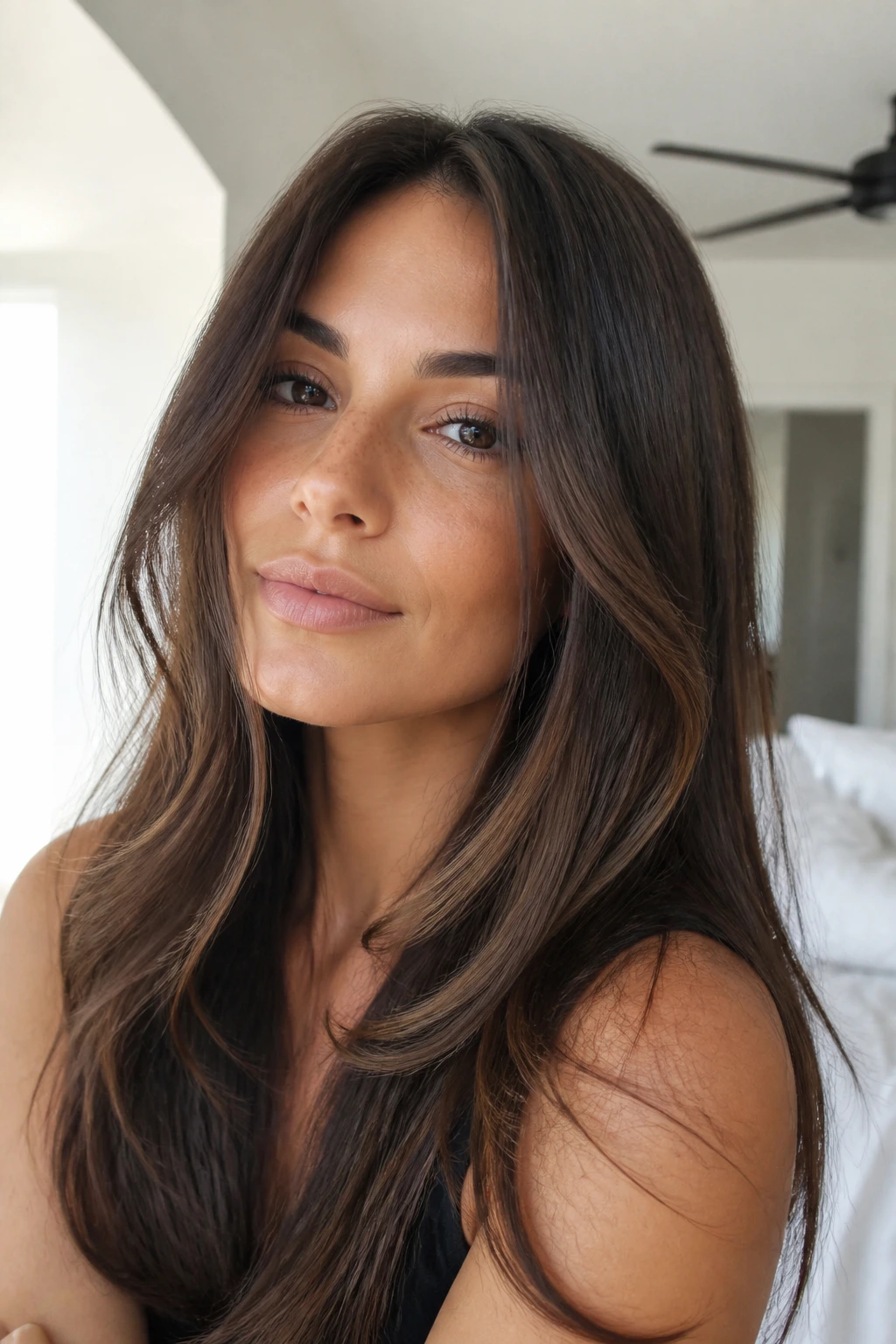
Do you want your long hair to still look like long hair? Then invisible layers may be the answer.
These are the quietest face framing layers on the list. They remove a little weight inside the shape and leave only a soft front cue, so the haircut moves more than it looks layered. That can be a smart move if you love length, hate a choppy finish, and still want the front to stop dragging your face downward.
This style is especially useful for fine hair, because it keeps the perimeter intact. A lot of layered cuts eat into density fast, and once that bulk is gone, there is no magic trick that brings it back. Invisible layers avoid that problem by doing the job with less visible cutting.
They are subtle, yes. But subtle is often the point.
10. Collarbone Layers That Keep the Ends Heavy

I like collarbone layers for people who say, “I want shape, but I do not want my hair to look sliced up.” That sentence comes up all the time, and for good reason.
Collarbone placement keeps the front long enough to feel soft, while the rest of the hair stays heavy and full. The result is a cut that frames the face without stealing the density from the bottom. If your lengths are naturally thick, this is a nice way to lighten the front without turning the ends into strings.
It also grows out well. The front pieces blend into the rest of the haircut as they get longer, so you do not end up with a sharp line that demands constant fixing. That makes it a sane choice for anyone who does not love salon maintenance.
The front should hit around the collarbone, then bend back in a gentle curve. Straight down is fine for some cuts. Here, though, the curve is the whole point.
11. Short Front Layers for Ponytails and Clips
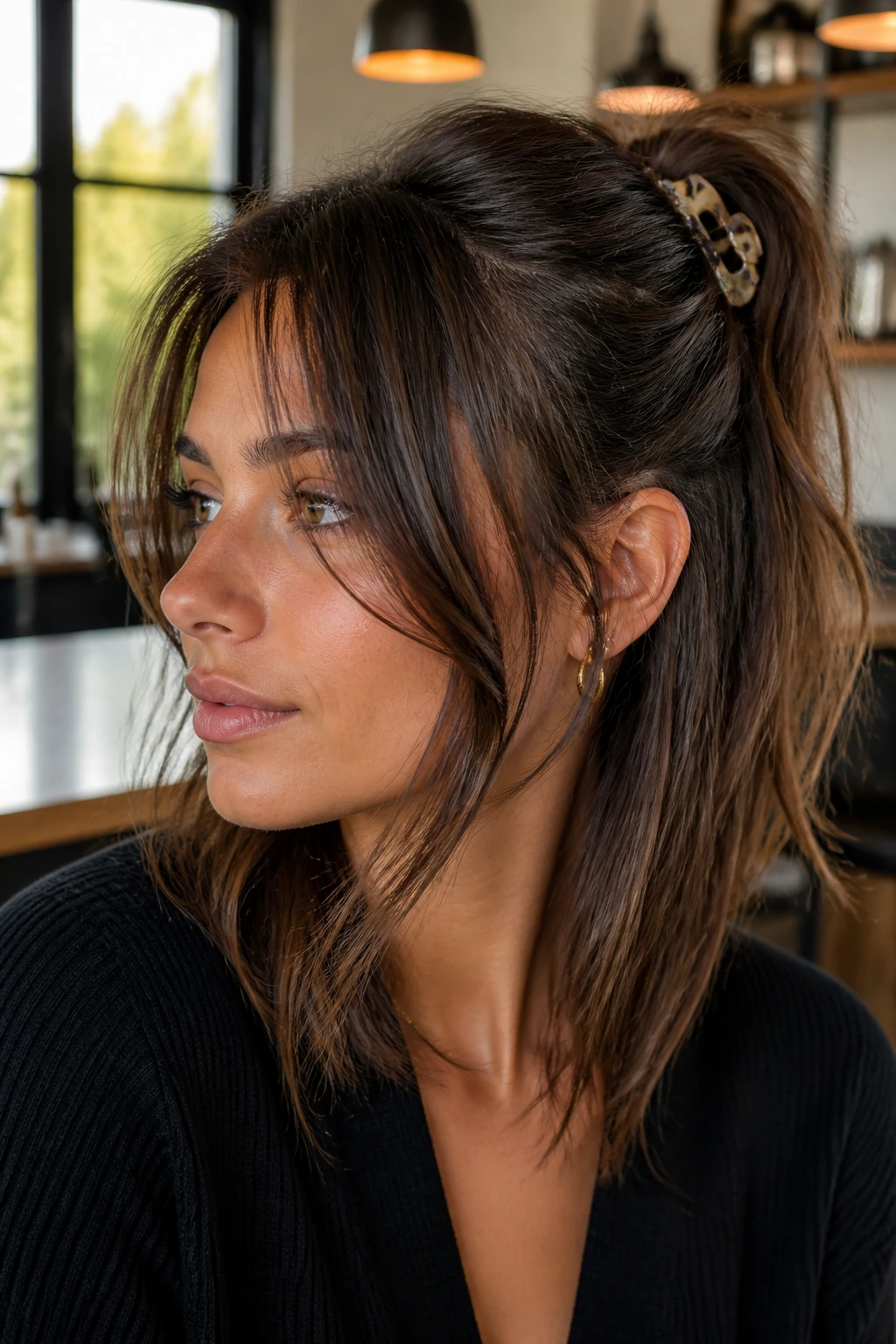
Short front layers are for the person who lives in claw clips, half-up styles, and quick low ponies. The haircut has to look good down, but it also has to do something once the hair goes up.
The pieces near the front get shortened enough to frame the face when the rest of the hair is pulled back. That means you get movement around the temples and cheekbones instead of one flat line that disappears the second you twist your hair into a clip.
What to Ask Your Stylist
- Keep the shortest pieces around cheekbone to jaw length, not much higher.
- Make sure the layers are soft enough to tuck into a ponytail.
- Ask for a blend that works when the hair is worn half up.
- Avoid overtexturizing if your hair is fine; those short pieces can stick out fast.
This is the practical haircut. Not the fanciest one. But on busy days, it might be the one you appreciate most.
12. Cheekbone-Opening Layers for Round Faces

Can face-framing layers make a round face look longer? Yes, if the cut puts the attention where it belongs.
The goal is to create a vertical line that starts near the cheekbone and travels down. That helps draw the eye away from width at the sides. You do not need harsh angles to do it, either. A soft front piece with a little bend is usually enough.
Keep the sides from ballooning out too much. That’s the part that often goes wrong. If the front is cut well but the rest of the shape is too round, you end up adding width back in, which cancels the whole idea.
A center part can help here, but so can a soft off-center part. The right one depends on where your hair naturally falls. Don’t force a part line that fights your growth pattern every single morning. That just gets old.
13. Grown-Out Fringe Blended Into Long Hair

There’s a point where bangs stop looking like bangs and start looking like a problem. Blending them into long face-framing layers is the cleanest way out.
This cut takes that heavier fringe area and turns it into movement around the face. The shortest section may still sit at eyebrow or eye level, but the sides slide into the longer layers so the front feels intentional instead of awkward. It’s one of the better ways to salvage a grown-out fringe without starting over.
The nice part is that you can keep trimming it gently every 6 to 10 weeks and avoid that blunt shelf that bangs can create as they grow. The hair around the face gets softer each time, which helps the whole cut look lived-in rather than overmanaged.
If you’re in that in-between stage, this is the smartest path. It buys time and still looks like a haircut.
14. V-Cut Hair With Soft Front Framing

A V-cut is the sharper sibling of the U-shape. It pulls the hair down to a point in the back, which can make long hair feel more dramatic and less bulky.
The front framing softens that point. Without it, the V can look severe from the front, especially if the hair is very straight. A soft sweep around the face keeps the cut from feeling too rigid and gives your eyes somewhere to land before the hair drops into the point at the back.
This shape suits thicker hair best. Dense lengths can handle the stronger outline, and the front pieces stop the haircut from looking like one blunt curtain. Fine hair can wear a V too, but the point can get stringy fast if the stylist overcuts it.
If you like long hair with a bit of edge, this one has a cleaner silhouette than most layered cuts. It is not shy. It knows what it is doing.
15. Airy Shag Layers With a Long Perimeter

A shag does not have to look wild. On long hair, it can be soft, loose, and very wearable if the perimeter stays long enough to anchor the shape.
The face framing in a long shag tends to be choppier and more broken up, which gives the haircut a bit of movement near the eyes and cheekbones. That can be a gift for anyone whose hair feels too heavy around the front, especially if the texture already has some bend or wave.
Who Usually Likes This Shape
- People who air-dry and want the front to fall into place with little fuss.
- Anyone whose hair looks flat at the roots but puffy at the ends.
- Wavy textures that hold separation well.
- Longer hair that needs attitude without losing the length line.
A shag can go wrong if every layer is too short. Keep the perimeter long. That’s what keeps the cut from turning into a frizzy cloud.
16. Long Swoop Layers for Thick Hair
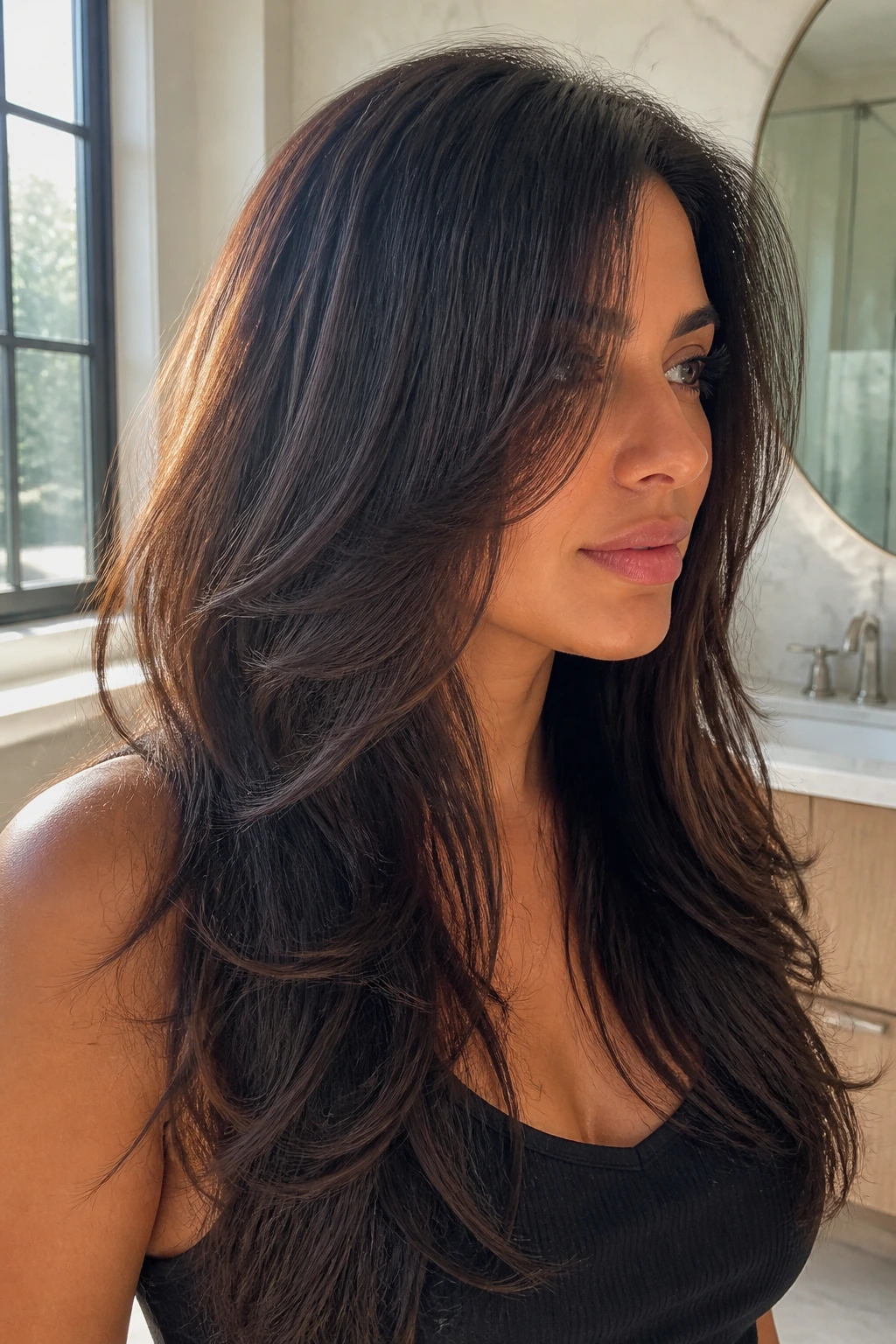
Thick hair needs a place to go. If the front sits too blunt and too dense, it can feel like a heavy blanket around the face.
Long swoop layers solve that by taking weight out in a directional way. The pieces are cut to move from the cheekbone toward the jaw or collarbone, which helps the hair sweep instead of just pile up. On a blowout, this shape can look especially clean because the front lifts and folds back with a little bend.
I’d reach for this cut when the hair has serious body and you want the front to behave. Not shorter. Behave. There’s a difference. The long swoop gives structure without taking away the richness that thick hair naturally has.
A large round brush or a 1.5-inch styling brush helps here. Dry the front away from the face, then let it cool in that lifted shape for a minute before touching it. That pause matters.
17. Face-Framing Layers for Natural Curls

Curly hair needs a different rulebook. If you cut it the same way you cut straight hair, the front can shrink up and sit much shorter than expected.
Cut the Front on Dry Hair
That one step changes everything. Curly hair should be shaped with the curl pattern in mind, because each coil has its own spring and its own mood. A face frame that looks long when wet may jump up three inches once it dries.
The best curly face framing usually starts around the cheekbone or just below the chin, depending on the curl type and density. The goal is to let the front pieces spring without turning into a halo that sits too high on the face.
- Cut or shape curls when they’re dry, or at least mostly dry.
- Keep the front soft so the curl pattern can stack naturally.
- Avoid over-thinning the sides, especially if your hair frizzes easily.
- Diffuse with the front directed where you want it to land.
Curly hair tells you the truth quickly. You just have to listen to it.
18. Blunt Ends With a Small Front Bend
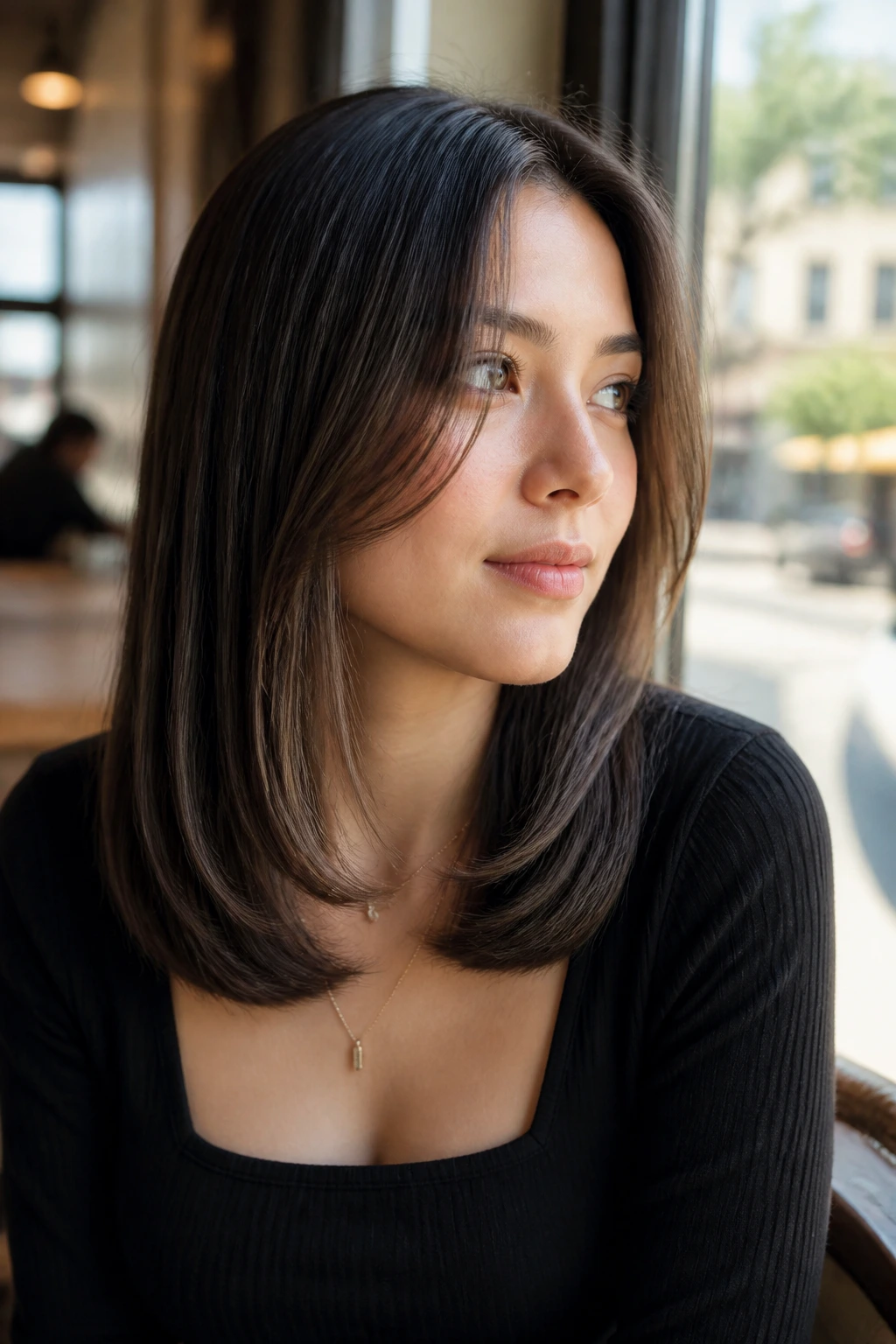
Not every long haircut needs layers everywhere. Sometimes the smartest move is to keep the ends blunt and add only a small bend around the face.
That tiny shift gives you softness without breaking up the whole length. It’s a good choice if you like your hair to look thick, tidy, and well kept from the back, but still want a little shape near the eyes and cheekbones. A lot of people ask for more layers than they need, then wonder why the ends look wispy two months later.
This option is also useful if your hair is fine but dense at the roots. You can keep the bottom strong and still stop the front from hanging flat. The bend does the work. The rest stays calm.
I’m partial to this one for people who wear their hair straight most of the time. It’s clean. It’s simple. And it holds up.
19. Layers That Start Below the Chin
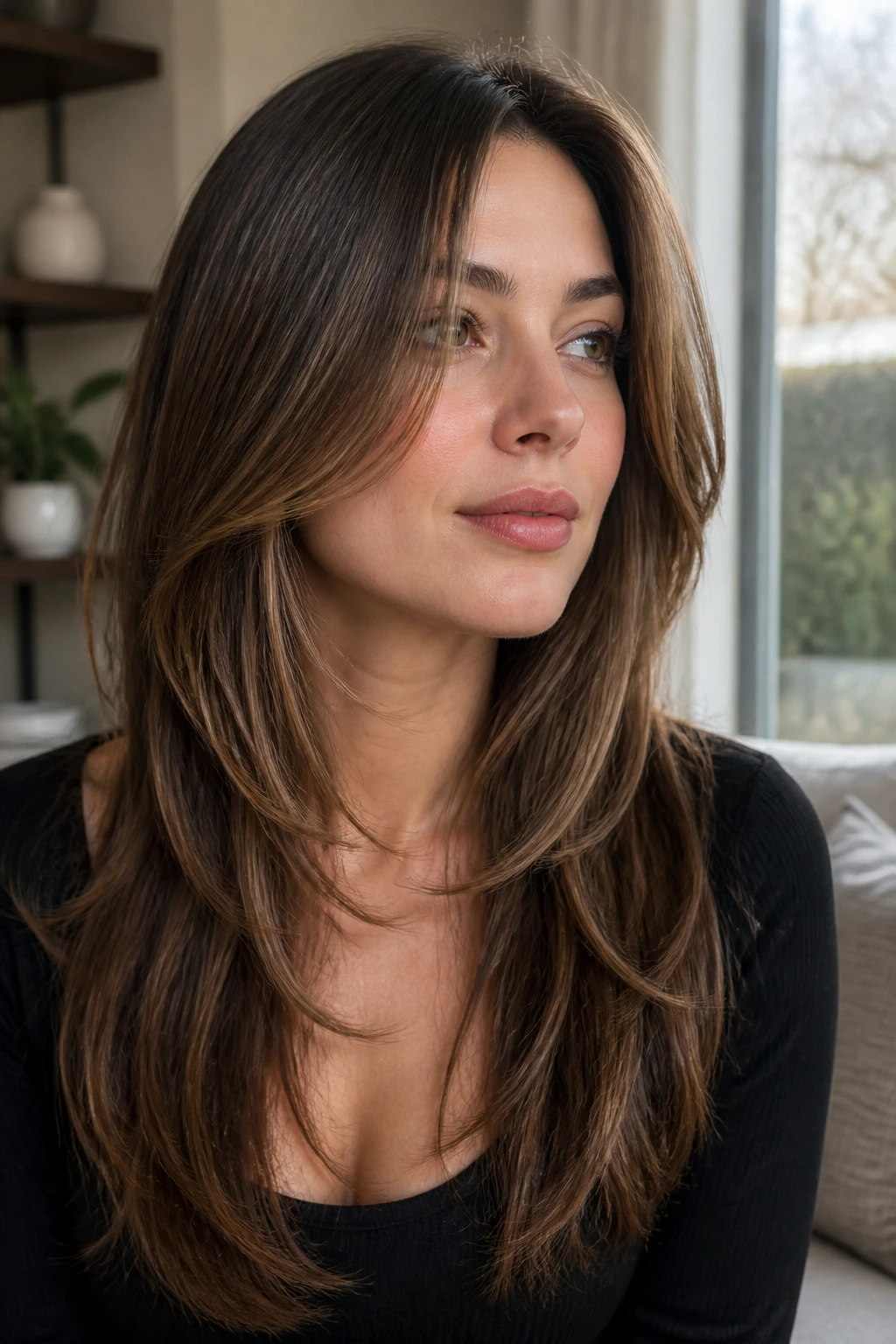
What if you want face framing, but you hate high-maintenance haircuts? Start below the chin.
That placement keeps the front pieces long enough to survive grow-out without looking awkward. It also avoids the choppy, overcut feeling some people get when the shortest layer sits too high and starts fighting the rest of the haircut after a few washes.
Why This Is Low-Maintenance
- The layers blend back into the length slowly.
- The hair still feels full around the face.
- You can wear it straight, bent, or tucked behind the ears.
- It usually looks decent even when you skip a styling day.
This cut suits people who want shape but not a lot of salon touch-ups. It’s the haircut version of being sensible without being boring. There’s a reason so many long-haired people settle here after trying something more dramatic first.
20. Soft Long Face Framing That Keeps the Length
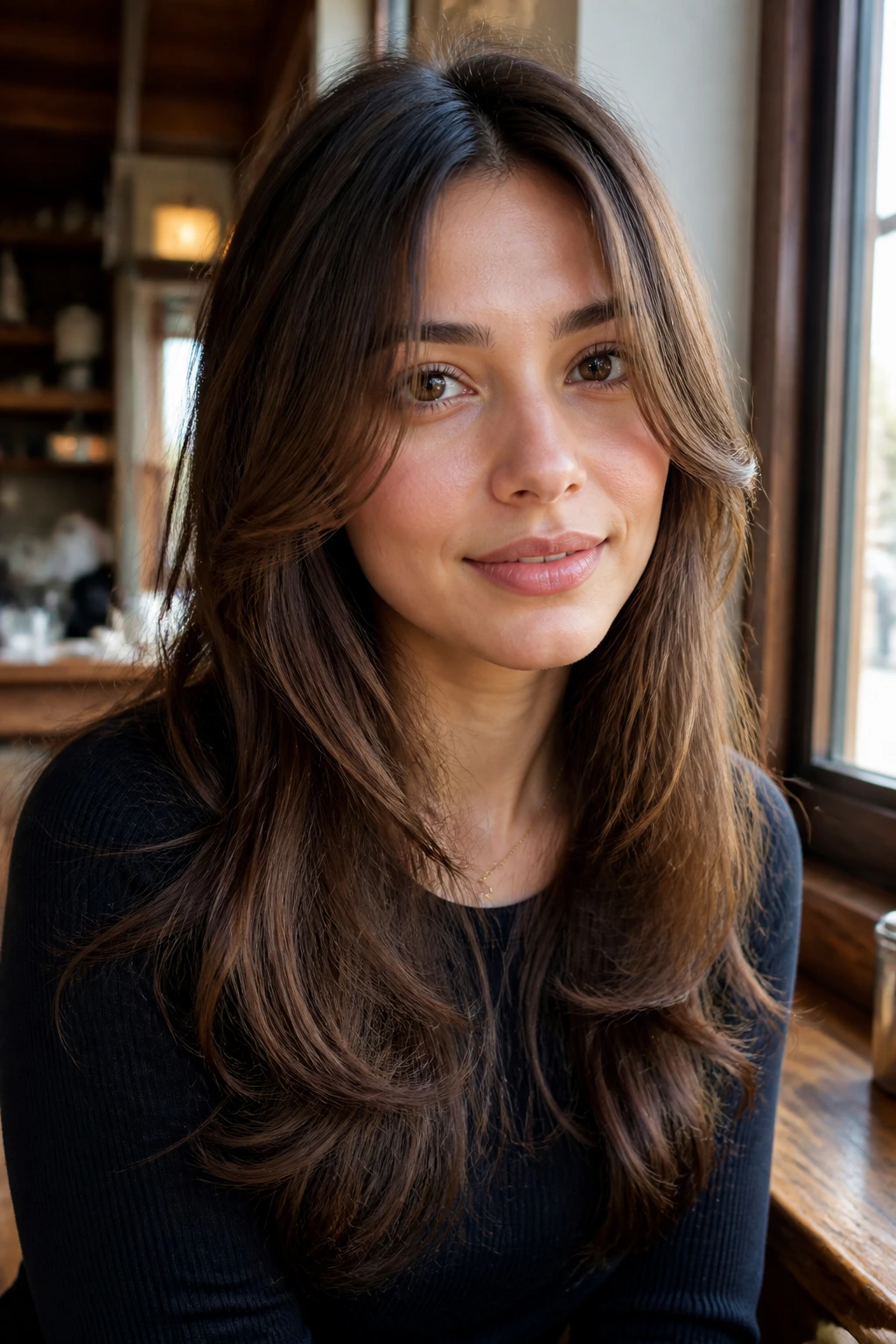
If you are not sure where to start, this is the safest shape to ask for: soft long face framing that keeps the length intact. It gives you movement near the front, but it does not commit you to a big layer pattern you may regret later.
The shortest pieces can land around the collarbone or just above it, then taper back into the rest of the hair. That lets the haircut soften around the face while keeping the back full and heavy. On long hair, that balance matters more than any trendier cut name.
A good stylist will ask where you wear your part, how often you heat-style, and whether you tuck your hair behind your ears. Those details affect the front line more than people expect. Bring a photo if you can, but bring a clear point of reference too: cheekbone, jaw, or collarbone.
That part is worth saying plainly. Pointing to the landing spot beats vague words every time.
