



Short hair does not have to play nice. The best alternative short haircuts for women are the ones that bend the shape a little — a longer fringe here, a broken-up nape there, a blunt line that feels almost severe in the best way. That small shift can take a cut from ordinary to sharp, from safe to memorable, and from “I needed a trim” to “yes, I meant this.”
A short cut lives or dies by its silhouette. A half-inch at the crown, a slimmer side, or a stronger weight line around the jaw can change how the whole face reads, which is why two women can wear the same length and look nothing alike. Texture matters too. Fine hair needs lift without too much thinning; thick hair needs removal in the right spots or the shape turns bulky fast.
The smartest way to think about short hair is not “How much length do I want to lose?” It’s “What do I want the outline to do?” Sharp. Soft. Uneven. Shaved. Feathered. Round. A good stylist can work with all of that, but it helps if you already know the mood.
These 22 cuts cover the edgier side of short hair: cropped, messy, asymmetric, shaggy, and a little stubborn. Some are polished. Some are deliberately rough. All of them have a point.
1. Choppy Pixie Cut

A choppy pixie has that lived-in look that makes people think you spent less time fussing, not more. The cut is short around the ears and nape, then broken up on top with little jagged layers that keep the shape from going flat.
Why It Works
The magic is in the texture, not the length. A choppy pixie gives straight hair some grit and keeps wavy hair from puffing into a triangle. It also makes fine hair look fuller, especially when the crown is left around 2 to 3 inches and the ends are point-cut instead of blunt.
- Keep the sides tight, but not shaved to the skin.
- Leave enough length on top to pinch and separate.
- Use a matte paste, not a glossy cream.
- Ask for soft thinning only if your hair is dense.
Best tip: dry the top forward first, then push it back with your fingers. That tiny change gives the cut more lift than scrubbing product through wet hair ever will.
2. Bixie Cut

A bixie is what happens when a bob and a pixie stop arguing and make something better together. It keeps more length than a classic pixie, but it does not sit as neatly as a bob, which is exactly why it looks so good on hair that needs movement.
The bixie works because it leaves room for shape. The top can graze 4 inches, the sides can skim the cheekbone, and the back can stay tapered enough to show the neck. That mix gives you softness without losing edge.
Stylistically, it’s easier to wear than it sounds. If your hair has a slight bend, it falls into place fast; if your hair is straight, a quick round-brush blow-dry at the front adds enough curve to keep it from looking flat. I like this one for anyone who wants a short cut but hates the feeling of being locked into one look.
A little product goes a long way. A pea-size styling cream or light mousse is enough, and too much turns the whole cut soggy. Keep the fringe loose, and the shape stays modern.
3. Asymmetrical Bob

Want a short haircut that looks edited from every angle? An asymmetrical bob does that without shouting. One side sits longer than the other, and that uneven line creates instant interest, even when the rest of the cut stays clean.
How to Wear It
The smartest version keeps the shorter side around jaw level and lets the longer side fall 1 to 2 inches lower. That difference is enough to make the cut feel intentional without tipping into costume territory. If the back is slightly stacked or tucked in, the whole thing looks sharper.
An asymmetrical bob is especially good when you want to draw attention to one side of the face. The longer panel can soften a strong jaw, while the shorter side opens up the neck and cheek. It also works well with a side part, because the asymmetry has somewhere to land.
Ask For This
- One side 1 to 2 inches longer
- Tapered back, not bulky
- Clean perimeter at the ends
- Soft texturizing through the interior only
It’s a strong cut. No question. If you like structure and a bit of attitude, this is one of the easiest ways to get both.
4. Micro Bob

A micro bob is the haircut version of a crisp white shirt: plain at first glance, then suddenly very intentional. It usually sits at the jaw or just below it, and the short length makes your neck, earrings, and jawline part of the look.
The trick is keeping the outline clean without making it hard. A micro bob can go helmet-like if it’s cut too blunt at the bottom and left with no internal removal. The better version has a little softening through the inside so it bends instead of sitting like a block.
This cut is made for people who tuck their hair behind their ears constantly. Instead of fighting that habit, the shape works with it. If your hair is fine, a micro bob gives the ends enough density to look fuller. If your hair is thick, it needs careful weight removal at the bottom so it does not balloon out.
Shorter than a classic bob. Sharper than a chin-length cut. That’s the appeal.
5. Shaggy Wolf Bob
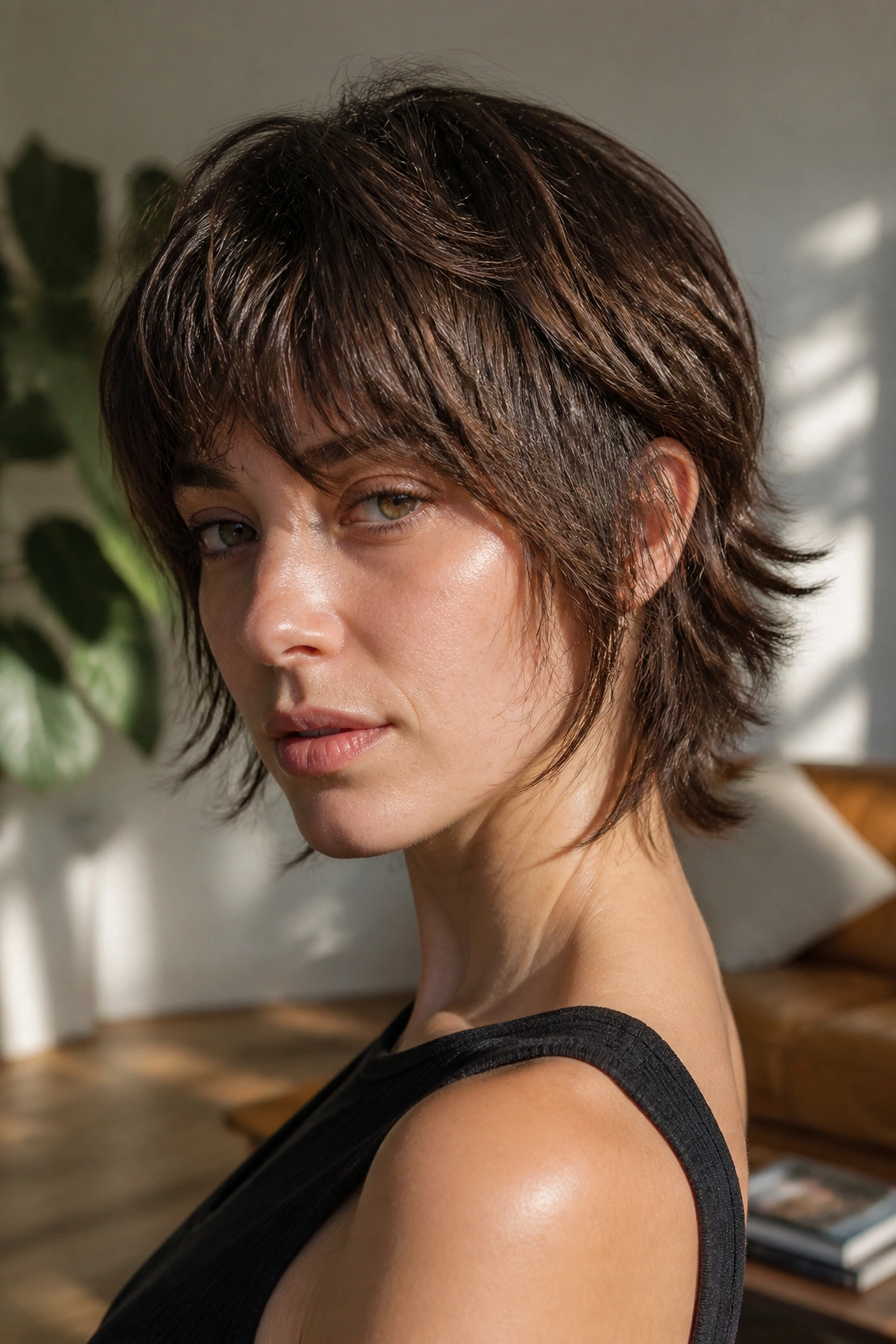
A shaggy wolf bob is a little messy in a way that feels deliberate, which is the whole reason people keep coming back to it. Think short crown layers, broken ends, and a shape that looks like it moved before you even touched it.
The best version keeps the shortest layers around the cheekbone or just above it, then lets the lower sections fall unevenly. That contrast builds lift at the top and softness at the perimeter. On wavy hair, it practically styles itself. On straighter hair, a salt spray or texture mist helps the layers separate instead of sitting in one heavy sheet.
The wolf-bob shape also forgives imperfect styling days. Air-dried, it looks relaxed. Diffused for 5 to 7 minutes, it gets more body. Scrunched with a little mousse, it gains a grittier finish. The cut is not fussy, but it does need a stylist who knows how to keep the layers controlled. Too much slicing, and it turns frizzy. Too little, and you lose the point.
This one has edge without looking overworked. I like that.
6. Soft Mullet

A soft mullet is the answer for anyone who likes contrast but does not want a harsh, punk look. The front stays shorter and face-framing, while the back hangs a little longer in a gentle tail rather than a dramatic drop.
What Makes It Different
The shape gives you attitude without the drama of a full retro mullet. Around the face, the layers can sit near brow length or cheek length, while the nape extends a few inches lower. That extra length at the back keeps the cut from feeling too severe.
It works best when the layers are feathered, not chopped into obvious steps. Heavy texture in the top keeps the crown from collapsing, and a soft fringe stops the face from feeling exposed. If you have thick hair, this cut can remove a surprising amount of bulk without losing personality.
Who Should Try It
- People who want a short cut with movement
- Wavy and slightly curly hair
- Anyone who likes a little retro shape
- Hair that gets too wide at the sides
Ask for a softer nape and a broken fringe, not a sharp mullet line. That one detail keeps the whole thing wearable.
7. Curly Tapered Crop
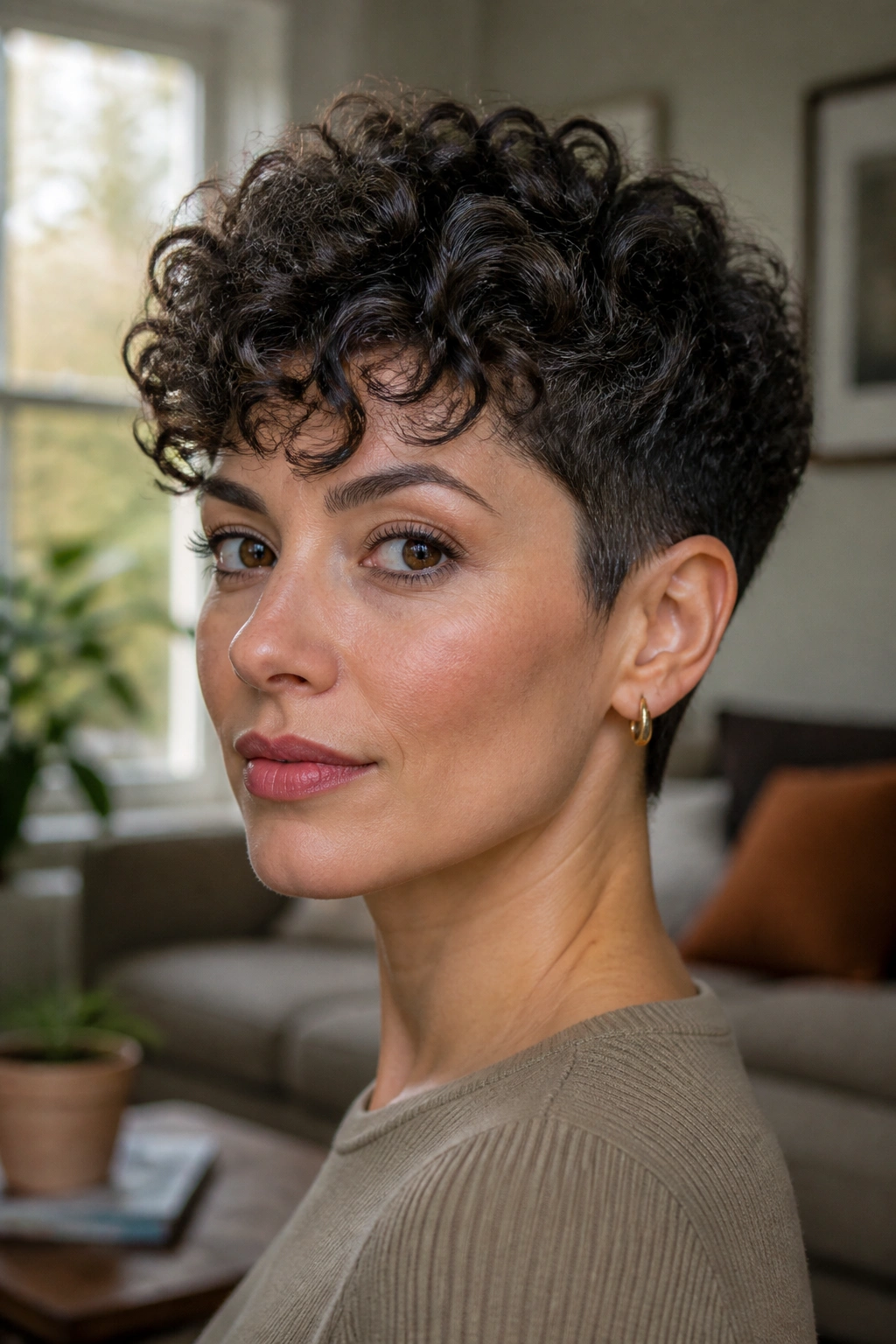
Curly hair needs a different game plan. If the cut is too square, the shape can puff out at the sides and lose all definition. A tapered crop keeps the edges neat while letting the curls do the heavy lifting on top.
How the Shape Should Sit
The sides and back are cut closer, often with a taper that removes bulk near the ears and neckline. The top stays longer, usually around 2 to 4 inches depending on curl shrinkage, so the curls have room to spring up. That balance keeps the haircut looking sculpted instead of mushroomy.
What to Ask Your Stylist
- Cut for curl shrinkage, not wet length
- Leave the crown longer than the sides
- Use point cutting, not a blunt chop
- Keep the neckline clean but soft
A dry or mostly dry cut helps here because curls lie. Wet hair makes them look longer and flatter than they really are. If your curl pattern is loose, a little cream is enough. If it’s tighter, a leave-in plus gel can define the top without turning it stiff.
A curly crop should frame the face, not hide it.
8. Buzz Cut

A buzz cut is not “doing nothing” with your hair. It is choosing the cleanest possible line and letting your face take center stage. That is a bold move, and it works better than people expect when the cut is even and the edges are neat.
A little length changes everything here. A #1 guard reads close to the scalp; a #2 or #3 leaves just enough hair to show texture and soften the outline. If you are nervous, start one guard longer than you think you need. Hair grows fast. Regret grows slower.
The buzz cut is especially strong if you like strong brows, earrings, or sharp makeup. It also exposes the shape of your head, so a good neckline matters. Clean sideburns and a tidy nape make it look intentional instead of rushed.
This is not a low-effort style, despite what people assume. It needs regular upkeep, scalp care, and a little confidence. But it does one thing other cuts cannot: it clears out all the noise.
9. Undercut Pixie with Long Fringe
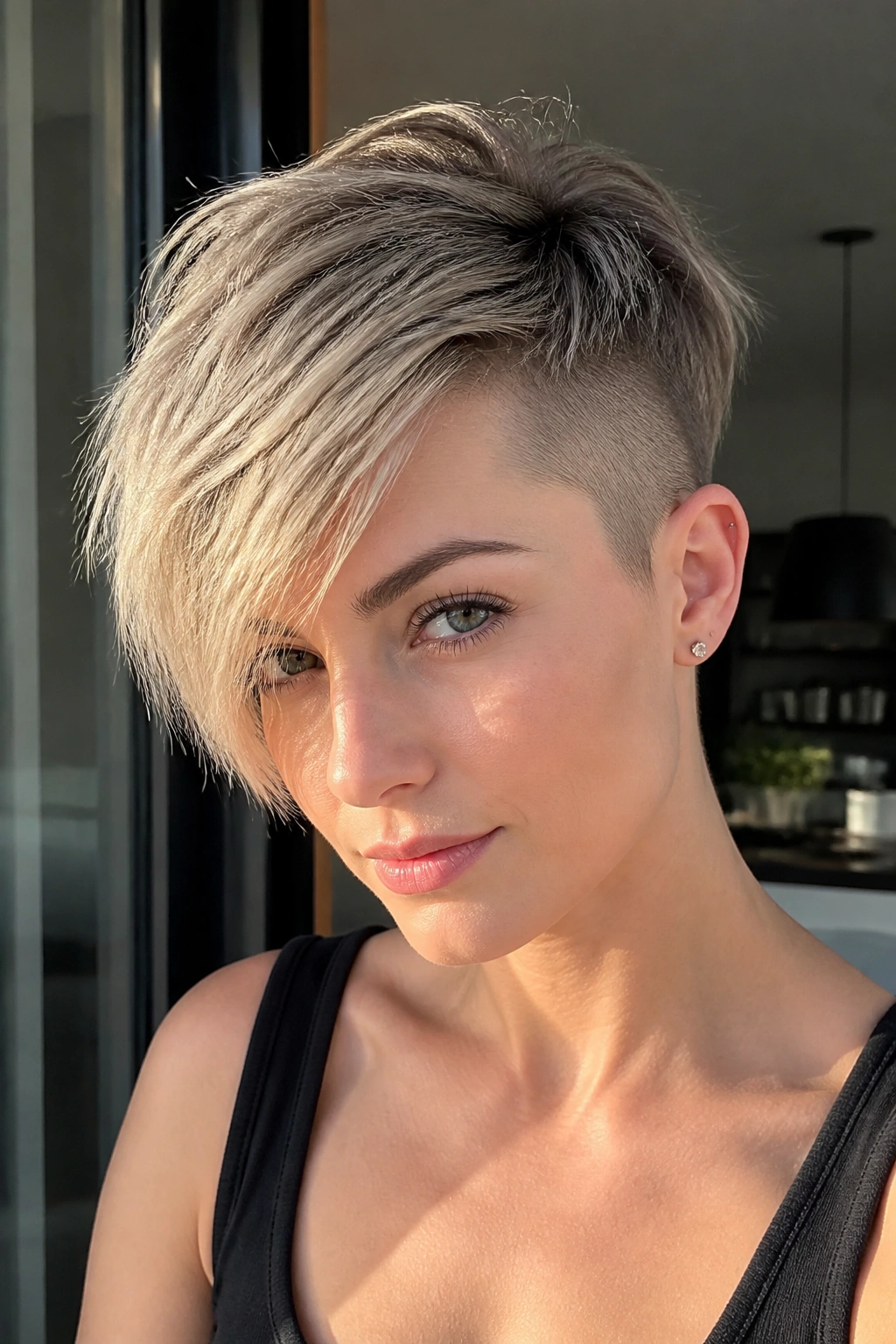
Can a pixie feel soft and sharp at the same time? Absolutely. The undercut pixie with a long fringe is proof, because it keeps the sides tight while leaving enough length on top to sweep, flip, or tuck behind the ear.
The undercut removes bulk where it tends to build up near the temple and nape. That makes the top layers sit higher and move more freely. A fringe that falls 4 to 5 inches long can be side-swept over one eye, brushed straight down, or bent away from the face with a small round brush.
How to Wear It
You can keep the top piecey with a wax, or smooth it with a light cream if you want something sleeker. The fringe is the star, so don’t drown it in product. It needs to fall with a little swing.
A cut like this also grows out in a flattering way, which matters more than people admit. The undercut stays hidden for a while, and the fringe simply gets softer as it gets longer.
10. French Bob with Micro Bangs

There’s a reason this cut keeps showing up on people with strong eyeliner and very little patience for fuss. A French bob with micro bangs looks chic because the shape is compact, the fringe is short, and the whole thing sits right on the jawline like it was meant to be there.
The bang length matters more than most people think. Micro bangs usually land about half an inch to 1 inch above the brows, and that tiny gap changes the whole expression of the face. Too long, and you lose the point. Too short, and the cut can get cartoonish fast.
The bob itself should be blunt enough to hold a line, but not so blunt that it turns stiff. A slight bend under the ends gives it life. If your hair has a natural wave, even better. If it doesn’t, a quick pass with a flat iron at the very bottom is enough to tuck the ends inward.
Wear this when you want a haircut that does the talking for you.
11. Pageboy with Heavy Texture
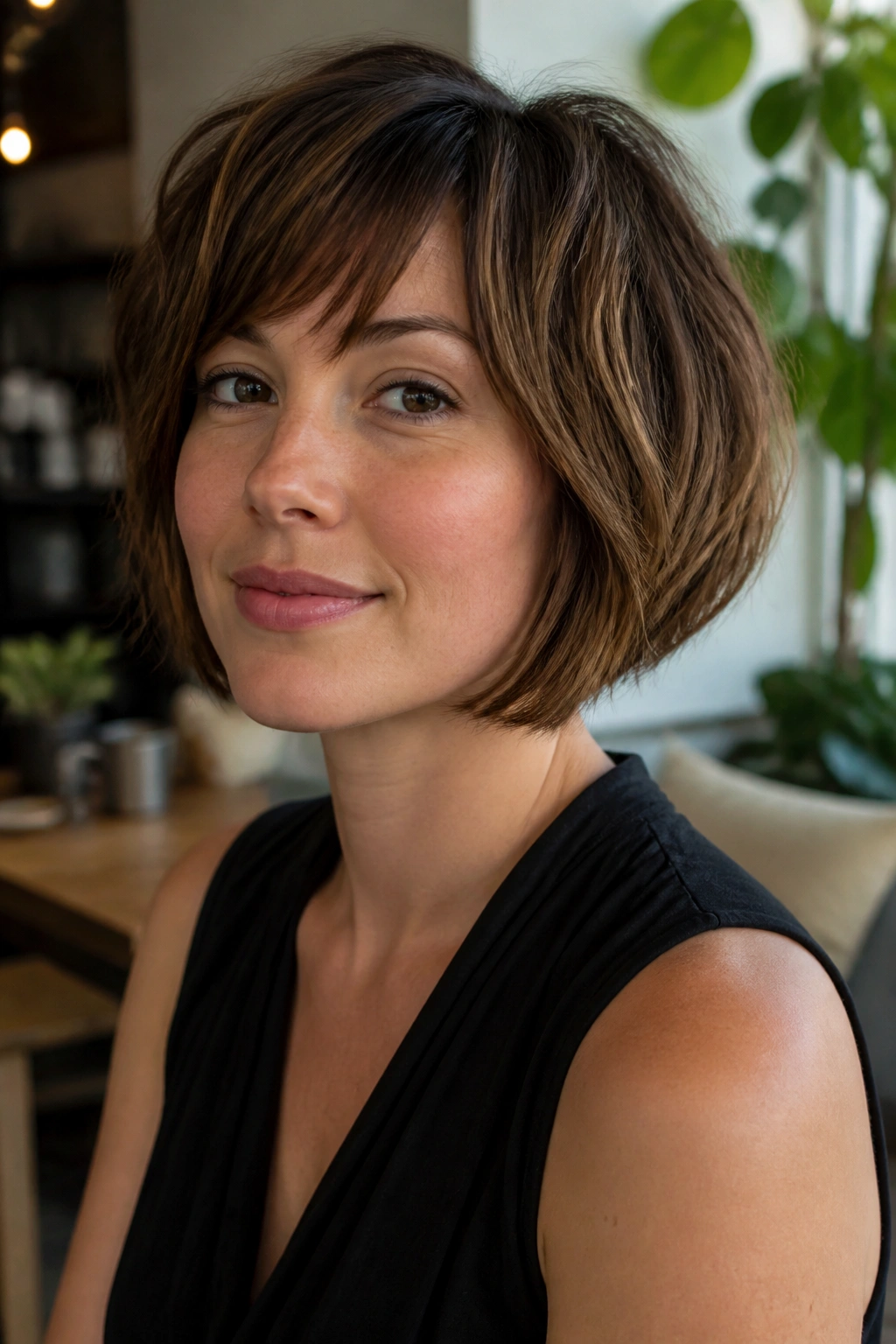
A pageboy can feel dated if it’s cut too neatly, and that’s exactly why the textured version works so well. The rounded outline stays, but the ends are softened, the interior is roughed up, and the whole thing has a little more air in it.
What I like about this shape is the way it sits around the head. It curves in a controlled arc, usually around chin level or slightly above, then tucks under in a way that makes the neck look longer. On straight hair, that curve is easy to show. On wavy hair, it needs a bit of blow-drying and a brush to keep it from flipping in random directions.
The texture keeps it from looking precious. A pageboy with a solid perimeter and broken layers underneath gives you the silhouette without the stiffness. It is especially good for people who want a shorter cut but do not want spiky or shaggy hair.
A little smoothing serum at the ends goes a long way. Too much, though, and the shape collapses into a flat sheet. Keep it light.
12. Two-Block Cut for Women

The two-block cut is all about separation. Unlike a standard crop, it keeps the sides and back shorter while leaving the top noticeably longer, so the haircut reads as two distinct shapes stacked together.
That contrast is why it feels so fresh on women who want something more androgynous or editorial. The shorter sections can sit close to the head, while the top stays long enough to sweep forward, part to the side, or fall into a soft curtain. It’s especially strong on straight and slightly wavy hair, where the lines show up cleanly.
If you want one, be specific. Ask for a low taper on the sides and back, then leave 3 to 5 inches on top depending on your texture. A two-block cut can get bulky if the crown is too dense, so internal removal matters. Not too much. Just enough.
This is a shape cut, not a “let’s see what happens” cut.
13. Bowl Cut with Internal Layers

A good bowl cut is harder to make than people think. The outline looks simple, but the modern version depends on internal layers that keep the shape from feeling heavy or childish.
Why It Looks Better Than the Old Version
The outer line can stay rounded and compact, often just above or at the ear, while the inside gets thinned and shaped so the hair falls with some bend. That hidden work is what makes it wearable. Without it, you get a solid cap. With it, you get a clean curve and a little movement underneath.
What to Request
- Rounded perimeter, not a rigid helmet line
- Layer removal through the crown
- Soft fringe or cheekbone-length front pieces
- A neckline that stays tidy and tapered
This cut looks especially good with straight hair that has a bit of body. Very fine hair can go flat if the interior is over-thinned, so restraint matters. Thick hair, on the other hand, can carry the shape beautifully when the weight is handled well.
The bowl cut has a reputation. The updated version earns its own.
14. Side-Parted Crop

A side part can change a short haircut more than another inch of length ever will. That is why a side-parted crop feels so strong: the cut itself stays short and tidy, but the part shifts the weight and gives the face a new angle.
The longer side can skim the cheek or temple, while the shorter side opens up the brow and lifts the whole shape. If your face is round, this can add a little vertical line. If your face is long, it can break up the length and soften the forehead. It’s a very simple trick. Also one that people forget because it seems too easy.
A side-parted crop works well when you want short hair without a super-edgy finish. The part gives structure, the top gets a little lift, and the overall result reads polished without feeling stiff. A blow-dryer and a small brush are enough to set it. No big ritual required.
Sometimes the least dramatic change is the one people notice first.
15. Layered Hush Bob

A hush bob is what happens when you want softness instead of a hard line. The layers are so light they almost disappear, but they make the ends move in a quiet, airy way that feels easier than a blunt bob.
How It Feels on the Head
The cut usually sits around jaw level or slightly below, with internal layering that removes just enough weight to keep the ends from hanging like one solid block. The result is feather-light, which is why it suits hair that gets puffy when it’s cut too blunt.
It’s also a good choice if you dislike obvious styling marks. A hush bob can air-dry into a loose curve, or it can be smoothed with a paddle brush for a cleaner finish. Either way, the haircut itself does most of the work.
How to Use It
- Ask for hidden layers, not choppy pieces
- Keep the outline soft at the jaw
- Use a lightweight cream on the ends
- Trim every 6 to 8 weeks to keep the shape from sagging
I would pick this for someone who wants a short cut that feels calm, not loud. That’s the point.
16. Disconnected Pixie Bob
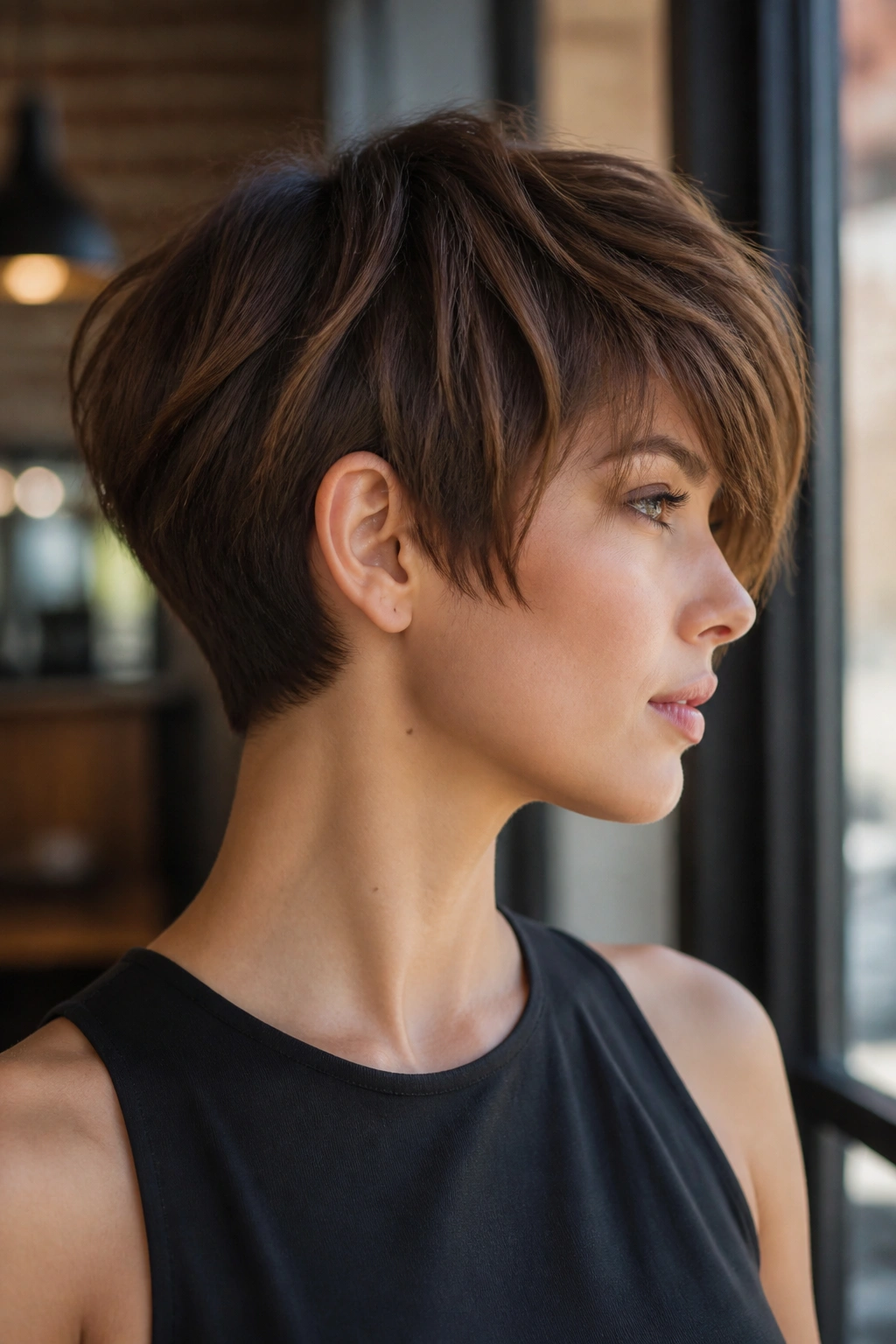
A disconnected pixie bob has one of those shapes that looks almost architectural. The top stays longer and fuller, while the nape and sides are cut much shorter, so the contrast is obvious rather than blended away.
The disconnect is what gives it attitude. Instead of trying to hide the difference between top and bottom, the cut leans into it. That makes it a strong option if you want a short style with a little drama but still need enough length on top to play with. A side sweep, a pushed-back quiff, or a messy forward fringe all work here.
This cut is not the best choice for someone who wants a soft grow-out. It needs clear trimming around the back and sides, usually every 4 to 5 weeks, or the contrast starts to blur. Still, the payoff is worth it if you like strong shape and a bit of edge.
If you wear a lot of simple clothes, this haircut does a lot of the styling for you. That is a useful trait.
17. Cropped Shag
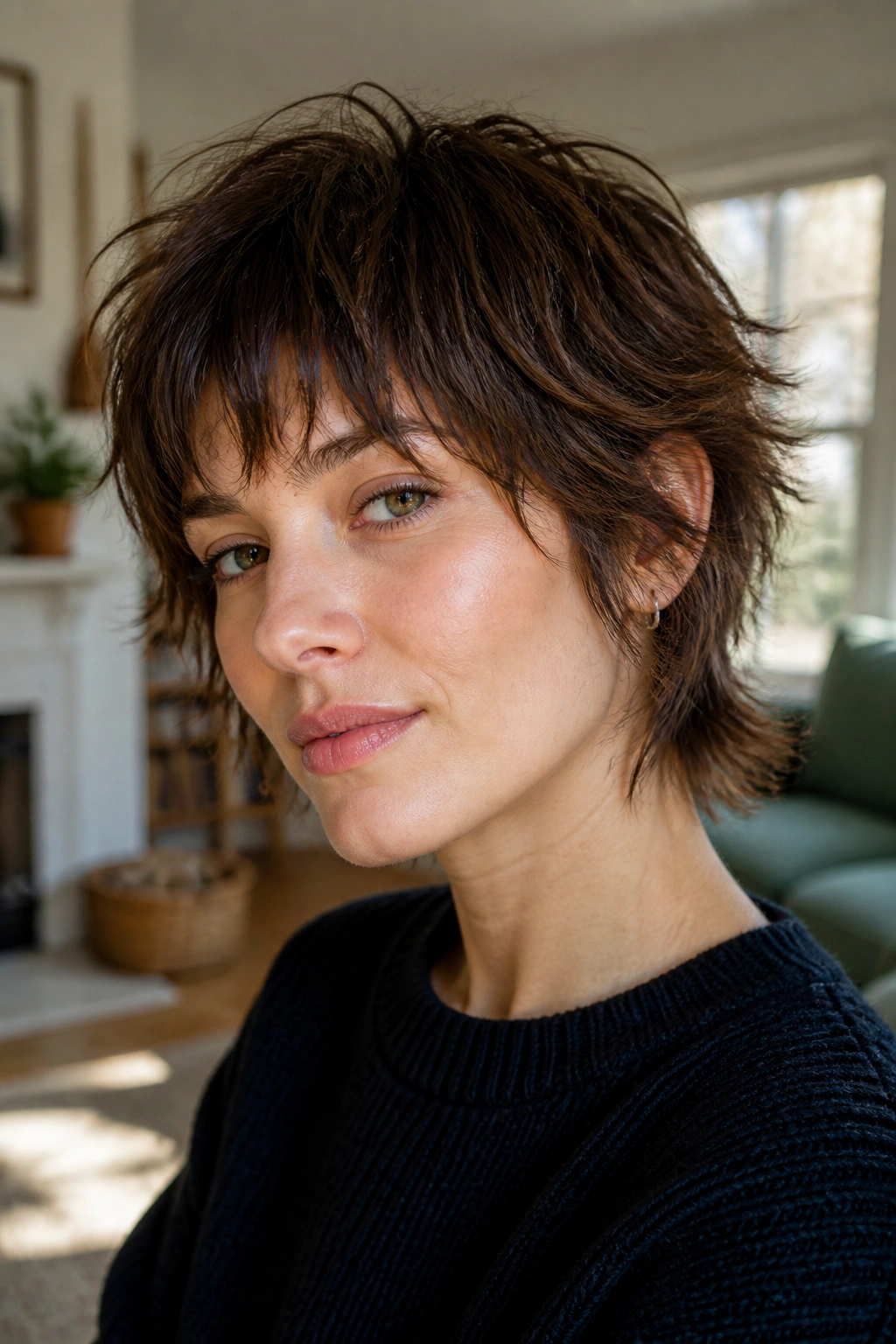
A cropped shag is the easier, shorter cousin of the classic shag. It keeps the layers high, the edges loose, and the fringe broken up, but it stops before the shape gets too floppy or too long.
What makes it work is the uneven movement around the face and crown. The top is cut to lift, the sides are softened, and the ends stay a little ragged so the whole thing feels casual rather than exact. It is especially good on hair with some natural wave, because the layers catch each bend and turn it into shape.
You do not need much styling here. A diffuser, a little sea salt spray, or even air-drying with a dab of mousse can be enough. Straight hair can wear it too, but it needs more help from a round brush or a bend from a flat iron. The cut will not do the curling for you.
This is one of those haircuts that looks better when it is not overthought. Rare, and welcome.
18. Ear-Length Flipped Bob

An ear-length flipped bob has a strong retro line, but the flipped ends keep it from feeling stiff. The length usually lands right at or just below the ear, and the ends turn out instead of tucking under.
Unlike an inward-bent bob, this one has more attitude in the perimeter. It catches a bit of movement when you walk, and that tiny outward flick gives the cut a lighter feel. Straight hair takes to it quickly, especially if the ends are beveled with scissors or nudged out with a flat iron.
This cut suits people who like a clean shape but do not want the bob to sit too close to the neck. It also works well with a dramatic side part or a tucked-behind-the-ear look. If your hair is thick, the ends need enough softening to avoid a boxy result. If it is fine, the flip adds enough life that the hair does not disappear.
I’d call this one sharp, but not severe. There’s a difference.
19. Spiky Crop

A spiky crop can look edgy, but the best version is more controlled than people expect. The top is short enough to stand up in little pieces, while the sides stay close so the whole shape reads as clean rather than messy.
What Makes the Texture
The spikes come from small sections lifted with wax or pomade, usually on hair that is already short and a little coarse. If the hair is too long on top, the spikes flop. Too much product, and the texture turns greasy. A tiny amount of matte paste, warmed between the fingers, is enough to shape the tips without flattening the base.
Where It Works Best
- Short, dense hair with natural grit
- Strong brows or sharp features
- People who like fast styling
- Cuts with a tapered nape
Pinch, don’t smear. That is the whole trick. Shape the ends in little clusters, then leave some pieces standing taller than others so the finish looks deliberate, not helmet-like.
20. Tapered Afro Crop
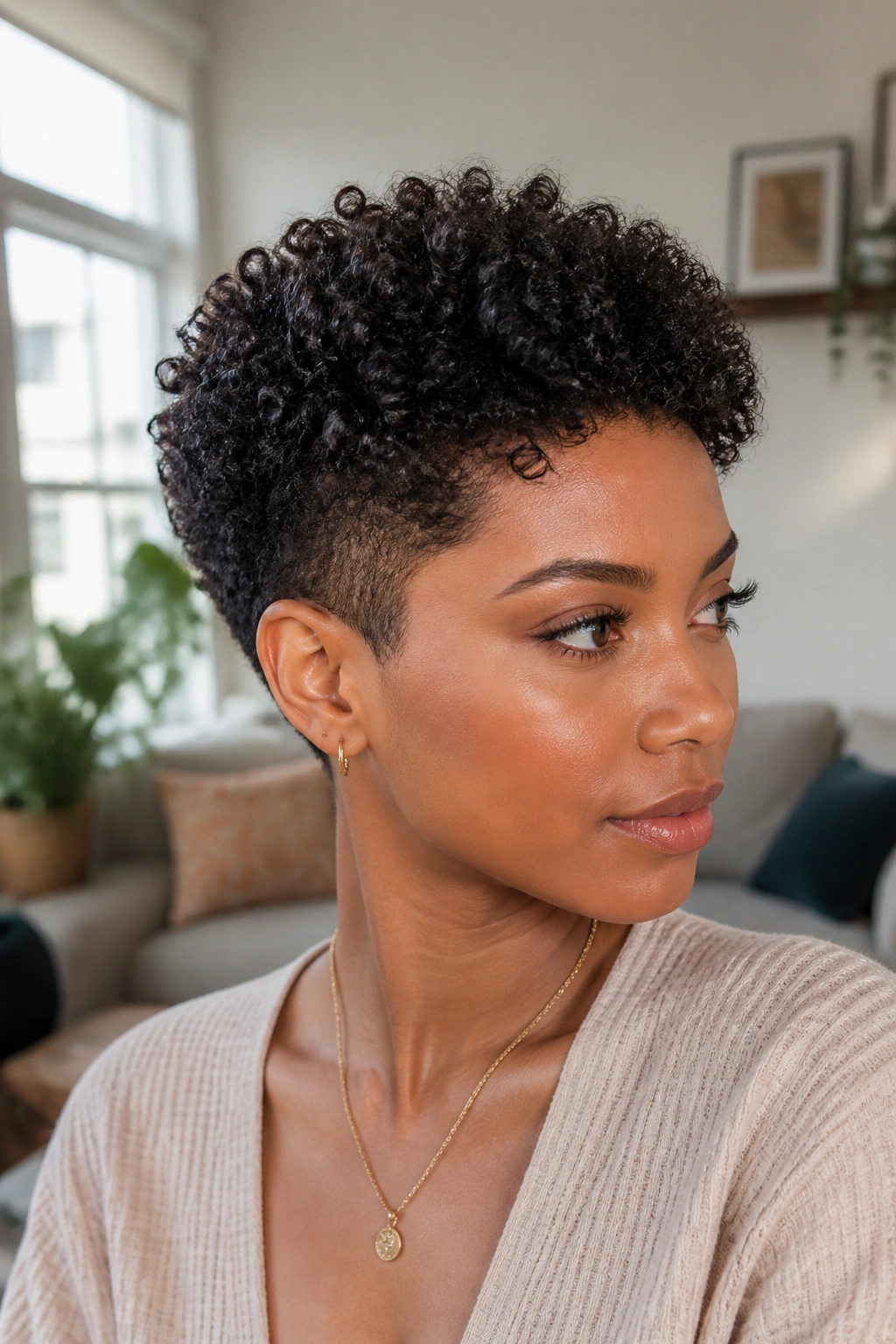
A tapered afro crop is one of the cleanest short shapes you can wear on coily hair. The sides and back taper down close to the head, while the top keeps enough length to show the curl pattern and hold its round shape.
The cut works because it respects the way coils expand. If the sides are left too wide, the silhouette can balloon. A proper taper keeps the outline neat while letting the crown stay full and expressive. That balance matters. It also makes the neckline look clean, which gives the whole cut a finished feel.
A little moisture goes a long way here. A leave-in conditioner, curl cream, or light oil on damp hair helps the curls clump instead of frizzing apart. If you want definition, use a pick at the roots once the hair is dry. If you want a softer halo, leave it alone and let the shape breathe.
This cut has presence without needing length. That’s a good deal.
21. Razor-Cut Crop
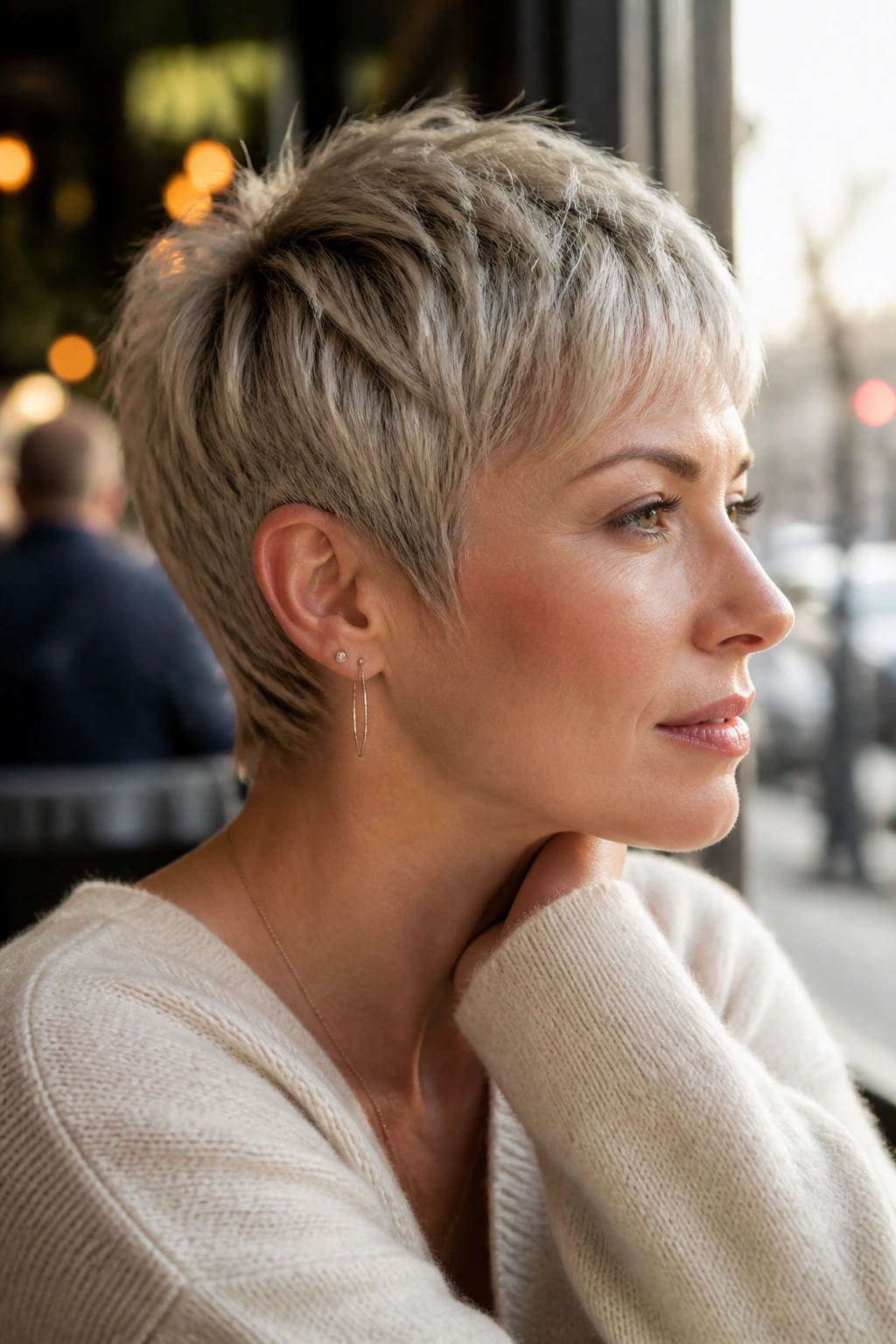
A razor-cut crop is all about softness at the edges. The razor takes some of the bluntness out of thick hair and leaves the ends feathered, almost wispy, which keeps the style from feeling heavy.
Why It Works on Thick Hair
Thick straight hair can look blocky when it’s cut with a scissor line only. A razor helps break that density apart, especially around the crown and ends, so the shape sits closer to the head. The result is lighter movement and less of that “triangle” problem that short thick hair loves to create.
How to Style It
- Blow-dry with a small vent brush
- Add a light serum only on the ends
- Avoid heavy creams that weigh the layers down
- Refresh the crown with dry shampoo if it collapses
A razor cut is not a great match for fragile or very damaged hair, because the softened ends can fray faster than a blunt line. On healthy dense hair, though, it can be the difference between bulky and sleek.
The finish is airy. Almost sneaky.
22. Short Wolf Pixie
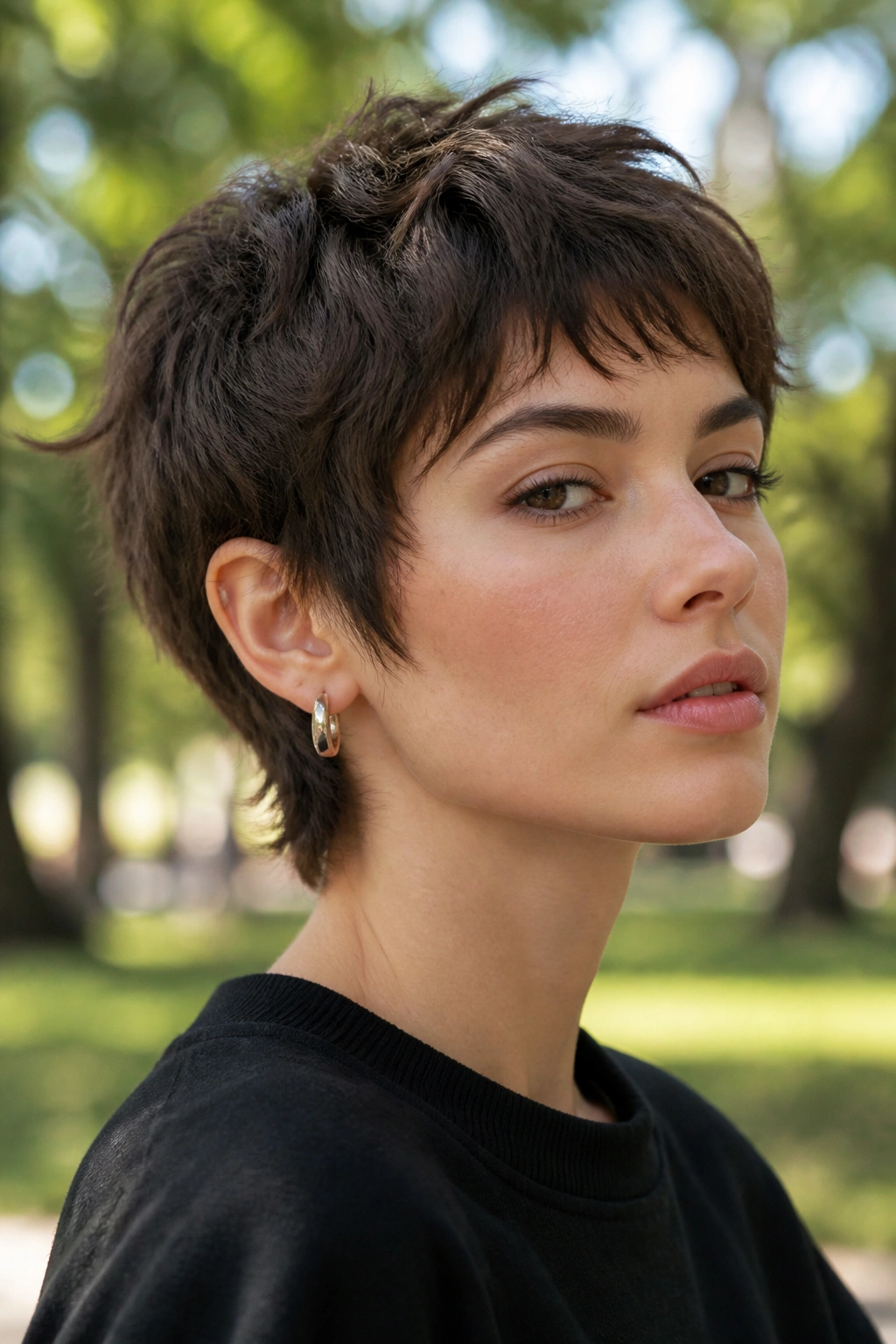
A short wolf pixie is the wild one in the group. It keeps the close, cropped energy of a pixie, then throws in the shaggy layers and tapered edges that give a wolf cut its rough charm.
The top tends to stay longer and a little messy, while the nape is cut shorter so the silhouette has some bite. That contrast makes the cut feel less precious than a classic pixie and less predictable than a shag. It is a good fit if you like hair that looks slightly undone on purpose.
Good Details to Watch For
- Keep the crown long enough to pinch and separate
- Let the fringe fall unevenly
- Ask for soft texture around the ears
- Avoid over-thinning the back
The best styling is usually minimal. A matte cream, a bit of finger scrunching, and maybe a quick blast with a diffuser if your hair is wavy. If the shape starts to swell at the sides, the layers need better balance.
This one has a little chaos in it. That’s the charm.
Final Thoughts
Short hair gets interesting when it stops pretending to be one thing. A clean bob, a tight crop, and a shaggy fringe all send a different message, and the right cut depends on which one feels closest to you.
The strongest short styles usually do one of three things: sharpen the jaw, loosen the texture, or shift the balance with an uneven line. Pick the one that solves the problem you actually have, not the one that looks easiest on a mood board.
Bring photos to your stylist, sure, but bring a sentence too. Say what you want the hair to do when it dries, when it’s tucked behind the ear, and when you do not feel like styling it. That part matters more than the name of the cut.
