



Short hair can look soft. It does not need to look severe to feel deliberate.
That’s the part people miss when they search for femme short hairstyles: softness is usually built into the shape, not added as an afterthought. A little bend at the ends, a fringe that breaks cleanly instead of cutting straight across, a nape that tapers instead of stopping like a shelf — those small choices change the whole mood.
The phrase soft edge sounds vague until you see it on real hair. It usually means movement around the face, a perimeter that isn’t too hard, and enough texture that the cut shifts when you turn your head. I keep coming back to point-cutting and feathering because blunt lines can be chic, sure, but they can also make short hair feel boxed in.
A good short cut doesn’t have to shout. It just needs the right outline.
1. Rounded Pixie With a Long Top
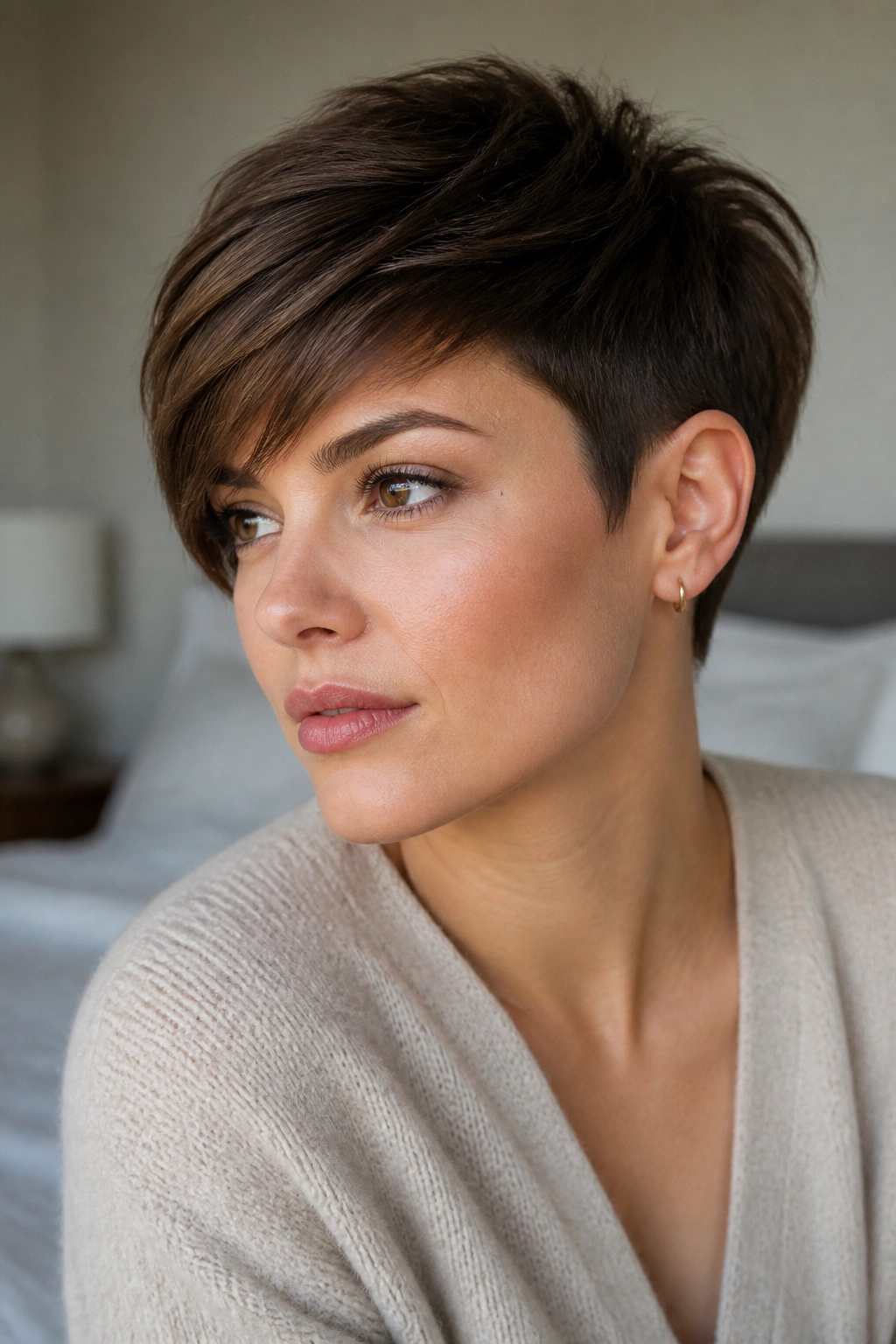
The softest pixie is rarely the shortest one. Leave the top long enough to sweep forward or to one side, and the whole cut stops reading as severe. That extra bit of length changes everything, especially if you want the haircut to feel feminine without getting fussy.
Why it feels softer
The key is contrast. Keep the sides and nape neat, but not shaved to the scalp, and let the top stay loose enough to move. When the top has 2 to 3 inches to play with, you can push it flat, lift it at the roots, or separate it into little pieces with a pea-size bit of matte cream.
- Ask for soft scissor tapering at the temples instead of a hard clipper line.
- Keep the fringe long enough to fall diagonally across the forehead.
- Leave the crown with enough weight to avoid a spiky shape.
- Use a matte paste or light cream, not a sticky gel that makes the cut look stiff.
This is the pixie for people who want polish without looking overdone. It frames the eyes well, shows the neck, and still has a little swing when the wind hits it. Good short hair should move. This one does.
2. French Bob With Wispy Bangs
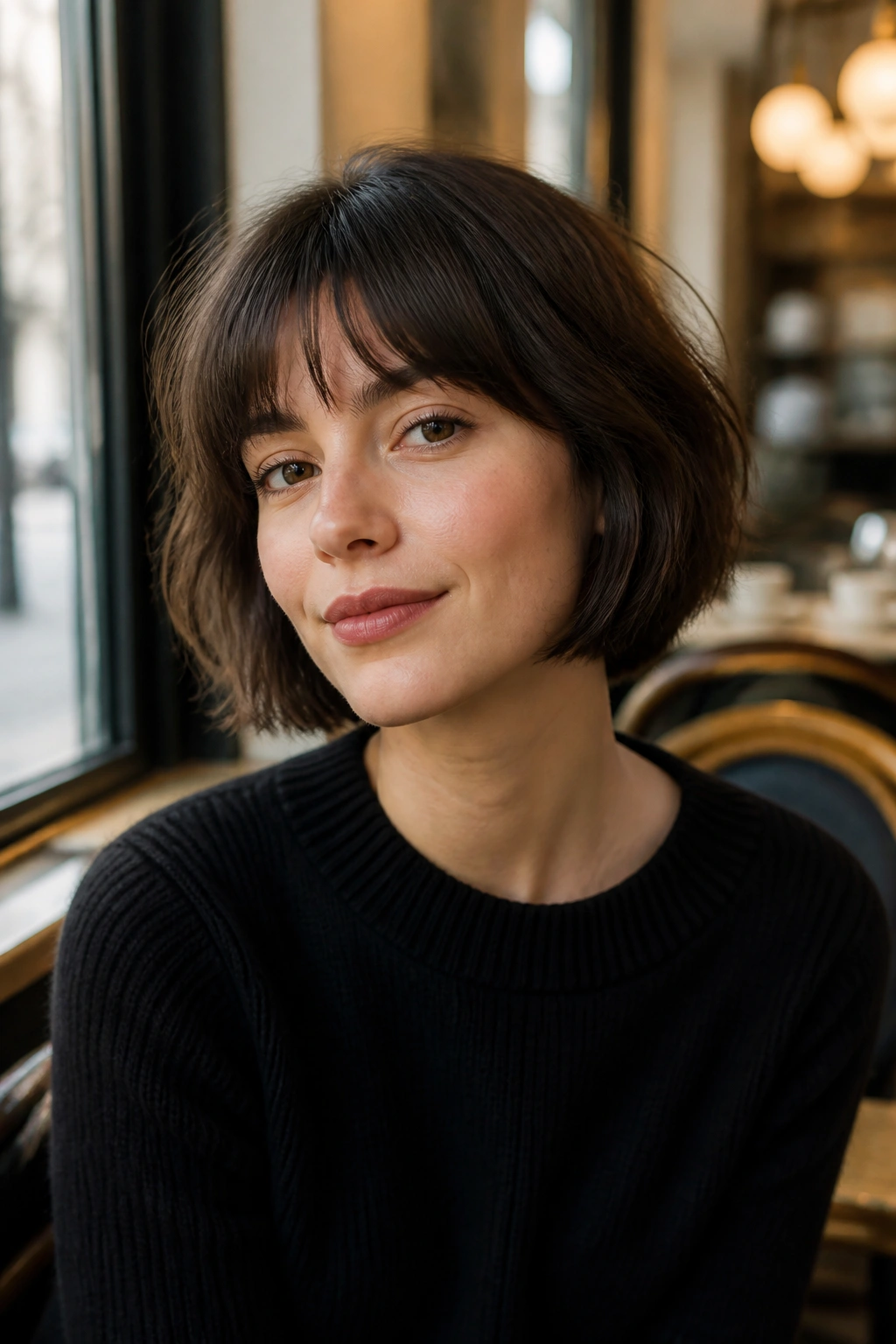
A French bob looks strict on paper and almost coy in real life. The difference is in the ends. If the line is too blunt, it can feel heavy; if the ends are point-cut and the bangs are broken up, the whole cut gets that airy, lived-in feel people love.
The sweet spot sits around lip to chin length, with the perimeter kissing the jaw instead of sitting far below it. Wispy bangs help because they soften the forehead without building a heavy curtain. I like this cut on hair that has some natural bend, but it works on straight hair too if you dry it with a round brush or a bendy blowout brush.
A clean part helps, but it does not have to be centered. Side parts make this cut look less precious. Center parts give it that classic Paris-y shape, though they can make a long face look longer if the bangs are too thin.
The best version looks a little imperfect. That’s the point.
3. Jaw-Grazing Bob With Soft Ends
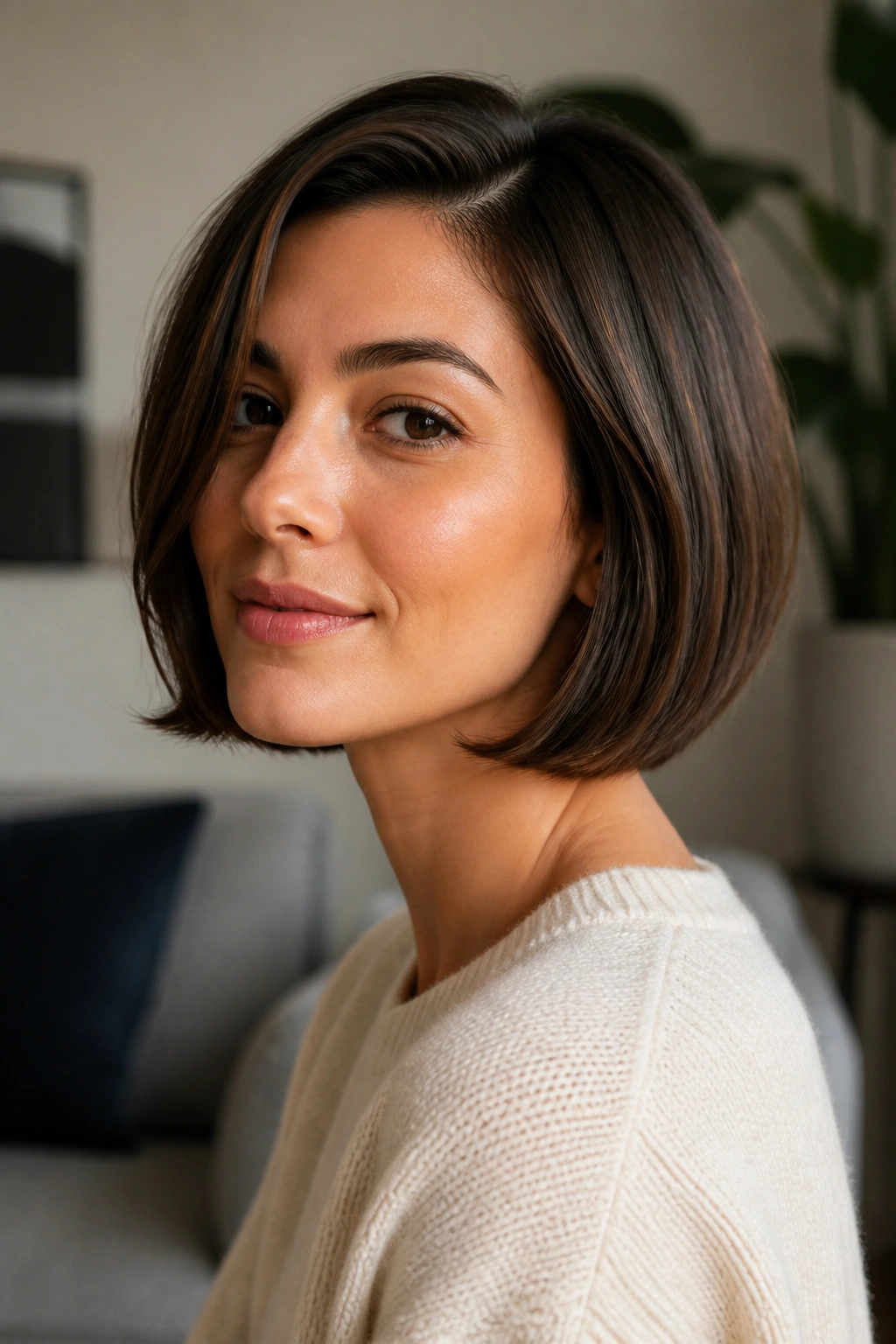
Why does jaw length feel so flattering? Because it lands right where the face changes shape, and it can either sharpen that line or soften it. If you want a gentler effect, ask for a bob that touches the jaw with beveled ends instead of a hard, flat bottom.
How to style it
Use a 1-inch round brush or a flat iron to put a tiny inward bend through the last inch of hair. You do not need curls. You want the edges to curve, almost like they were tucked under by hand. That little movement keeps the cut from feeling boxy, especially if your hair is thick.
A soft jaw-length bob also works well with a side part that starts slightly off-center. That shift keeps the shape from reading too symmetrical, which can make short hair feel rigid. If your hair flips out at the ends, keep the layers minimal and let the bevel do the work.
This cut is tidy enough for the office and loose enough for a T-shirt and jeans. It’s one of those shapes that looks expensive even when the styling takes eight minutes.
4. Bixie Cut With Feathered Sides

If a pixie feels a little too exposed and a bob feels a little too safe, the bixie sits right in the middle. It gives you the shortness of a crop with the swing of a bob, and feathered sides keep the silhouette from turning blocky.
What to ask for
- Length that grazes the ears or just clears them.
- Soft layering through the top so it doesn’t sit flat.
- Feathered side pieces that skim the cheekbone.
- A nape that tapers close without looking clipped to death.
The bixie works because it never commits to one single shape. It can look tousled, smooth, or tucked behind one ear, and each version has a different feel. If you have fine hair, this cut can give the illusion of more body without adding bulk. If your hair is dense, the feathering helps it collapse into a softer outline.
I like this cut for people who change their styling mood a lot. One day it’s sleek. The next day it’s piecey and a little messy. Both look right.
5. Curly Crop With a Side Fringe
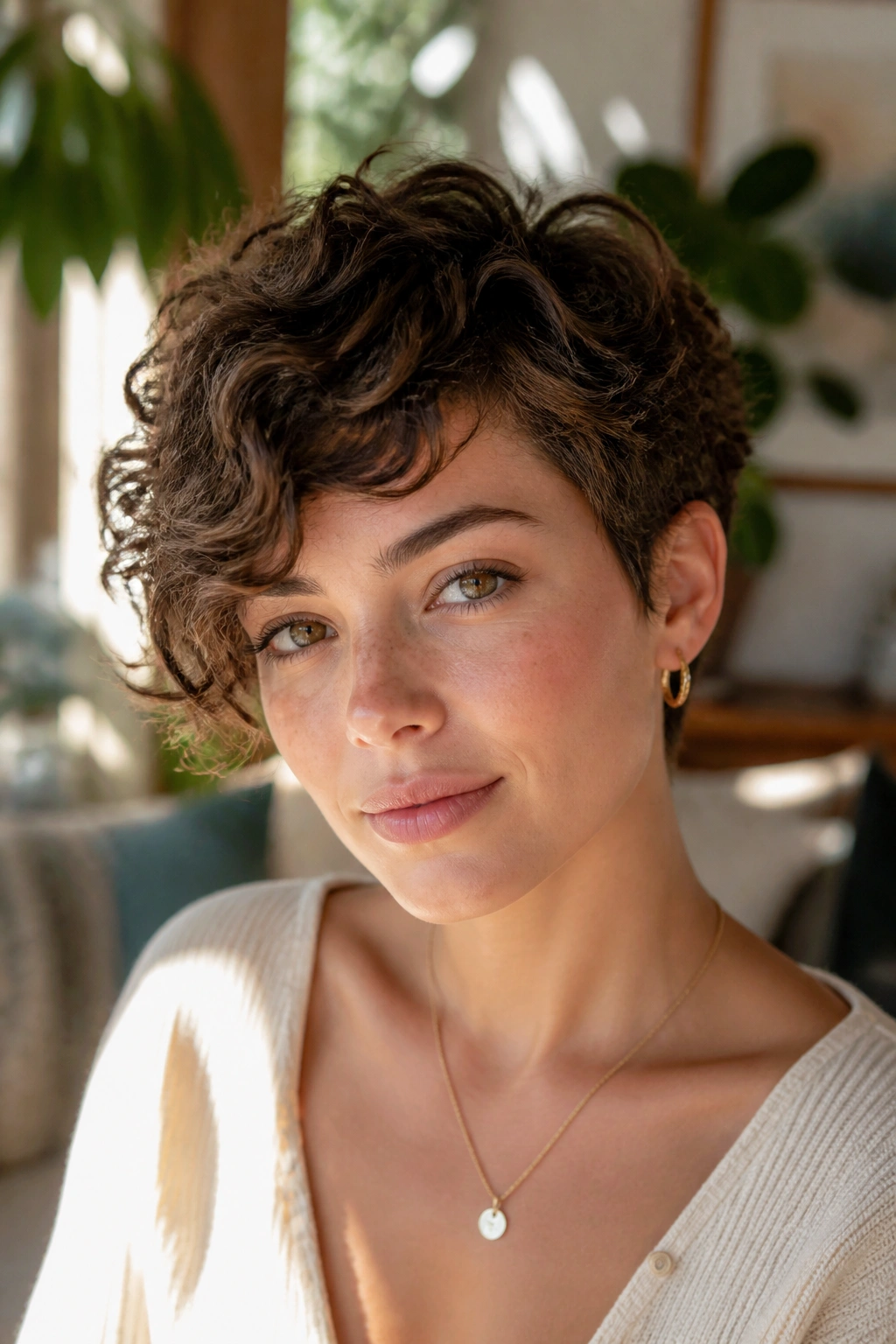
Curly short hair gets soft edge almost for free, but only when the shape respects the curl pattern. Too much layering can make it puff out in odd places. Too little can leave the bottom heavy and triangular. The sweet spot is a crop that follows the curl and lets the fringe fall a bit longer on one side.
Dry cutting helps here. Curls shrink, and they shrink in different ways depending on the pattern and the porosity of the hair. A good stylist will trim it where it lives, not where it looks stretched out on the cape. That alone can save you from a fringe that jumps up too high.
The side fringe is the part that makes the cut feel femme. It breaks the line across the forehead and gives the face a softer diagonal. I’d also keep the outline around the ears and nape rounded, because a sharp bottom edge can fight the natural movement of curls.
A little curl cream, a touch of gel, and a diffuser are enough. Scrunch, dry, leave it alone. That last part matters more than people think.
6. Choppy Bob With Curtain Bangs
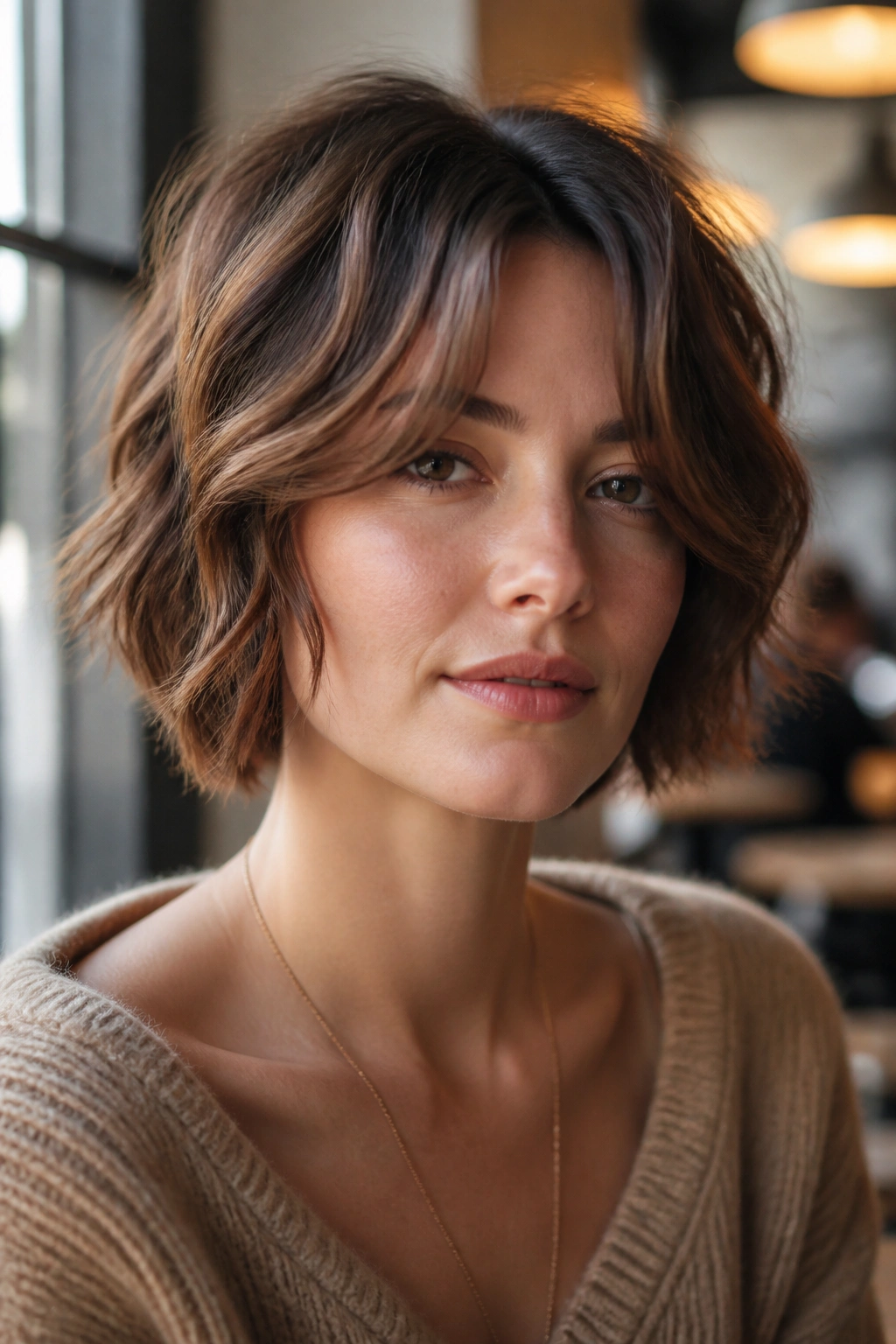
A blunt bob can look polished. A choppy bob with curtain bangs looks lived in, and that difference is huge if you want soft edge instead of a hard line. The uneven pieces keep the haircut from settling into one flat sheet, which is exactly what makes it feel lighter.
Curtain bangs help because they open the face without chopping it in half. Keep them long enough to hit the cheekbones, then let the shortest pieces sit near the bridge of the nose or upper cheek. That gives the front of the cut some air. It also makes the bob more forgiving if your hair grows fast or if you do not want to visit the salon every few weeks.
This shape works well on straight or slightly wavy hair. Blow-dry the bangs away from the face first, then wrap the ends of the bob around a brush or your fingers so they don’t sit like a ruler. A tiny bit of texture spray at the mid-lengths helps.
It is a clean cut, but not a hard one. That’s why it keeps working.
7. Swept-Crown Crop With a Tapered Nape
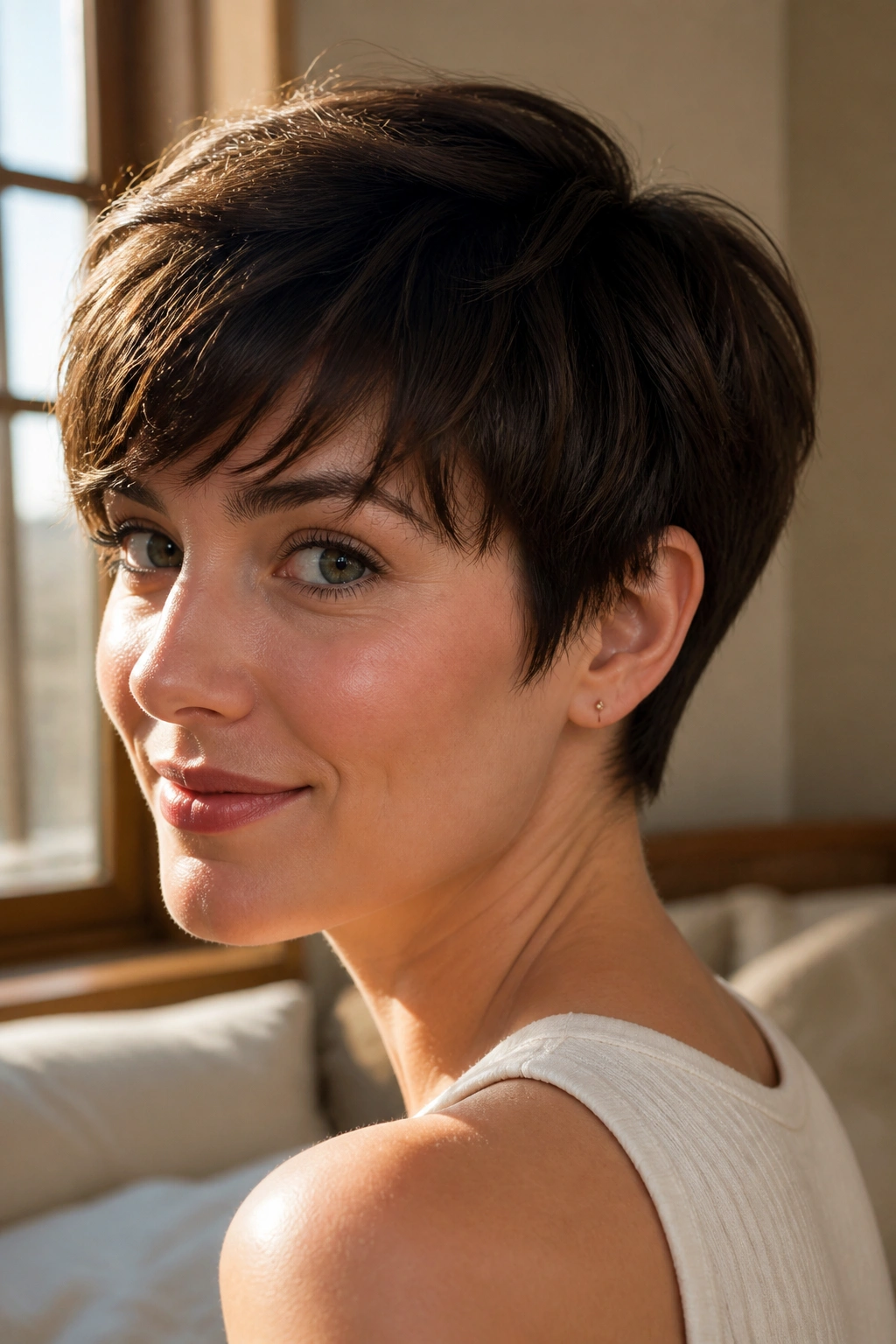
A short crop can look surprisingly gentle when the weight sits at the crown instead of the fringe. The top gets a little lift, the sides stay close, and the nape tapers into the neck so the back of the head feels neat without turning severe.
What makes the silhouette soft
The crown does the work. When it’s cut with enough length to sweep instead of stand up, the whole style has a rounded, almost cloudlike shape. A soft side sweep at the front also helps because it avoids the hard break you get with a straight-across fringe.
- Ask for longer crown layers that can be brushed forward or to the side.
- Keep the nape tapered in a rounded line, not square.
- Use a light root mousse if your hair collapses at the top.
- Finish with a soft hold spray, not a shellac-like product.
This cut is especially good if you like a neat neckline but do not want the haircut to feel stern. It looks clean from the back and relaxed from the front. That balance is harder to get than it sounds.
8. Ear-Length Crop That Tucks Cleanly
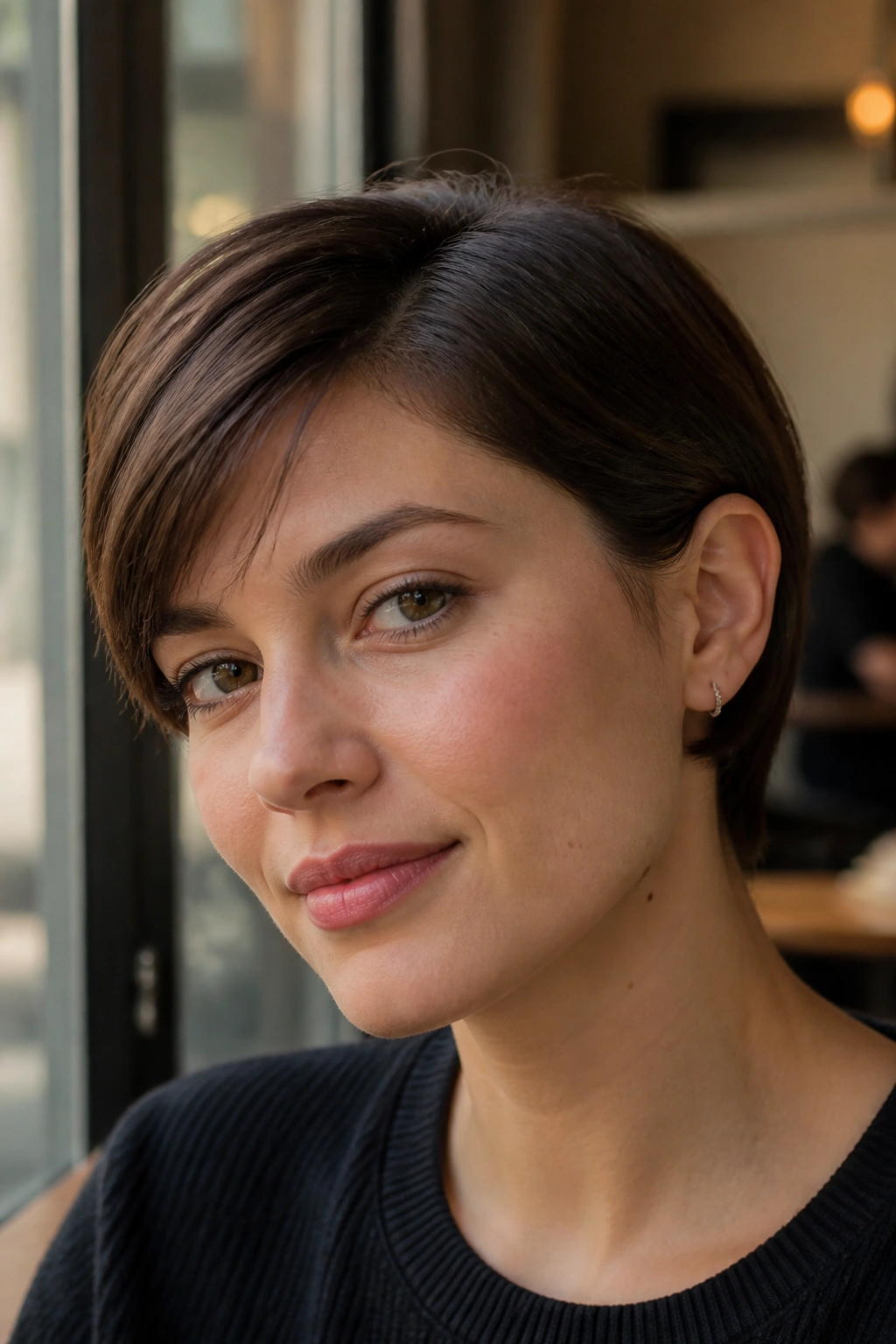
This is the sleeper cut. Ear-length hair gets overlooked because people assume short means dramatic, but a crop that just clears the ears can be one of the softest shapes around. It shows the face, keeps the neck open, and still leaves enough length to tuck, sweep, or pin if you need a change.
The trick is the perimeter. If the ends are blunt and the shape sits too evenly, the cut can feel boxy. If the sides are softened with a slight curve and the top is left a little longer, it reads as gentle instead. Tucking one side behind the ear creates a natural asymmetry that does a lot of work for you.
This is a good cut when you want to look pulled together without spending long in front of the mirror. A bit of smoothing cream and a comb are enough. If your hair has a slight wave, even better — the movement keeps the shape from feeling flat.
Small cut. Big payoff.
9. Soft Mullet With Flipped Layers
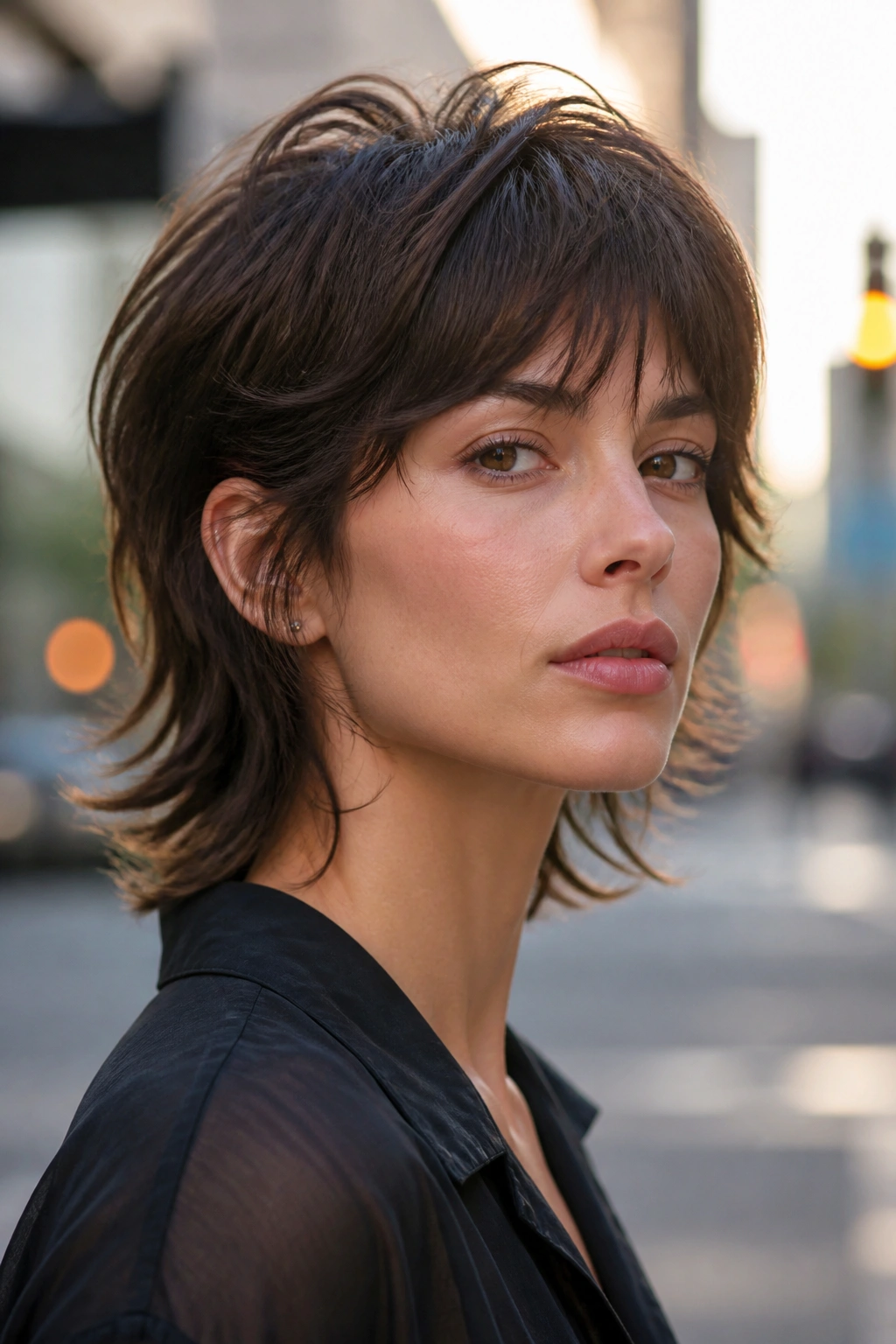
Can a mullet look soft? Yes, if the layers are blended and the back is kept wispy instead of chunky. The modern version is less about attitude and more about movement, which is why it has become such a smart short-hair option for people who want edge without harshness.
How to ask for it
Tell your stylist you want shorter face-framing layers, a gentle lift at the crown, and a neck area that stays narrow but not ragged. The front should connect smoothly into the back. If the disconnect is too sharp, the cut can get sporty fast.
This shape shines on wavy hair, because the flipped ends naturally soften the outline. Straight hair can wear it too, but you’ll want a round brush or a quick bend from a flat iron to keep the layers from lying too flat. A tiny bit of texture cream rubbed through the ends helps separate the pieces.
I prefer this version over the older, heavier mullet shapes because it doesn’t fight the face. It frames it. That matters.
10. Shaggy Pixie With Piecey Texture
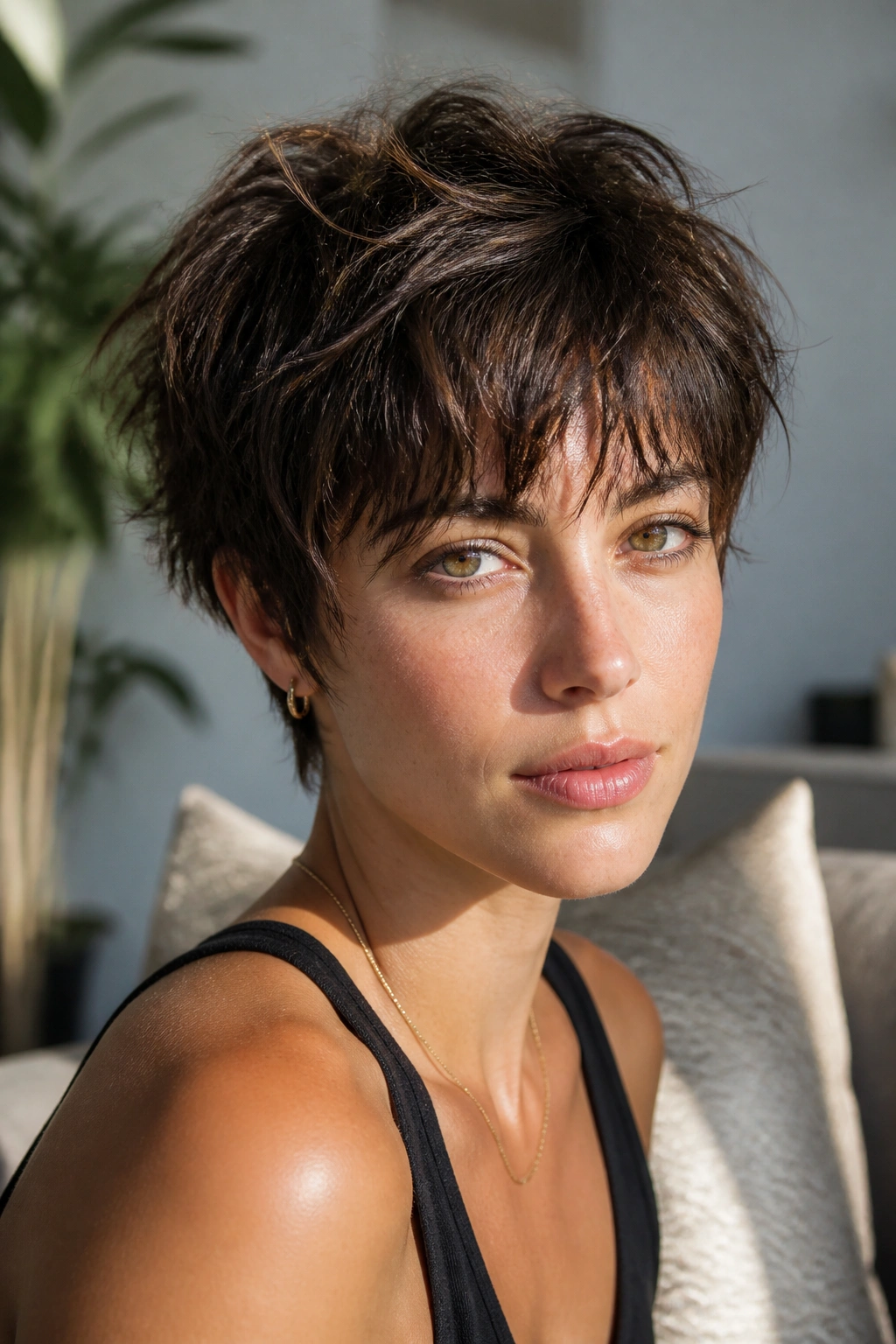
If you like hair that looks touched but not overworked, the shaggy pixie is a very good place to live. It keeps the short length, but the layers are broken up enough to feel airy instead of helmet-like. That piecey texture is what keeps it from tipping into severity.
The shape usually has a little lift at the crown, short layers through the top, and longer pieces around the fringe and temples. Nothing sits in one solid block. That means you can rough-dry it, scrunch it, or pinch the ends with a small amount of wax. It still looks intentional.
Styling the texture
Use a pea-size amount of product, warmed between your palms first. Work it mostly through the top and fringe, not the roots. If you put too much at the roots, the shape can go flat and greasy fast.
A shaggy pixie is especially good if your hair has some natural bend. Straight hair needs a bit more help, but the payoff is a cut that doesn’t require perfect styling to look alive. That’s the real appeal, honestly.
11. Micro Bob With a Beveled Edge
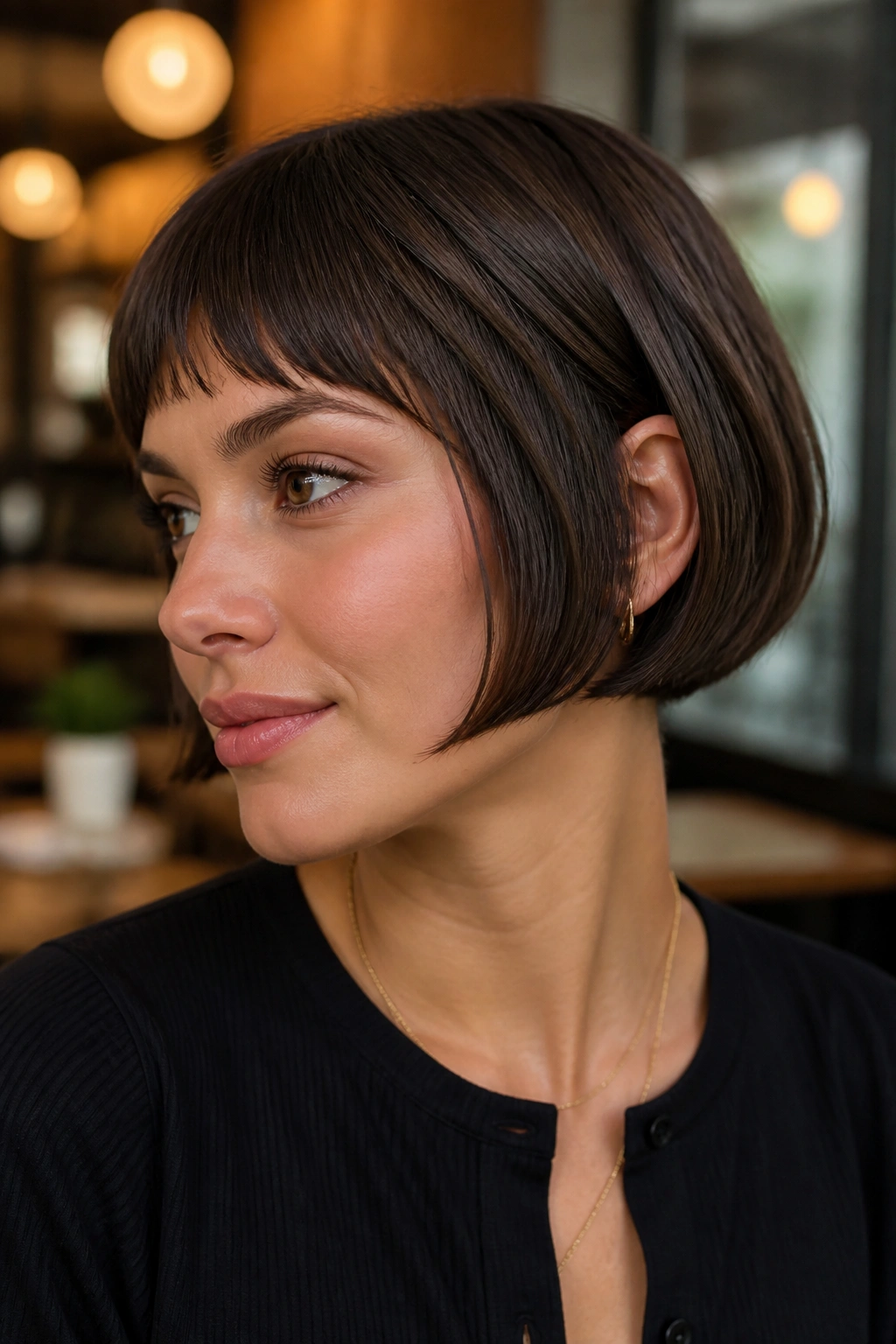
The micro bob sits shorter than most people expect, often somewhere between the ear and the chin, and that tiny bit of length makes the silhouette feel fresh rather than severe. A beveled edge is what saves it. Without that slight undercurve, the cut can look flat and stiff in a hurry.
I like this shape when the hair is dense enough to hold a line but not so dense that it balloons outward. The bevel lets the ends turn under just a little, which softens the mouth and jaw area. It also makes the neck look longer, which is why this cut can feel elegant without trying very hard.
The styling is simple. Blow-dry with a brush that gives the ends a gentle bend, or use a flat iron only on the final inch of hair. Do not flip the edges too much. You want a quiet curve, not a retro curl.
This is one of those cuts that looks even better after a day or two, once it stops being so freshly perfect. That lived-in state is the whole charm.
12. Feathered Crop for Fine Hair
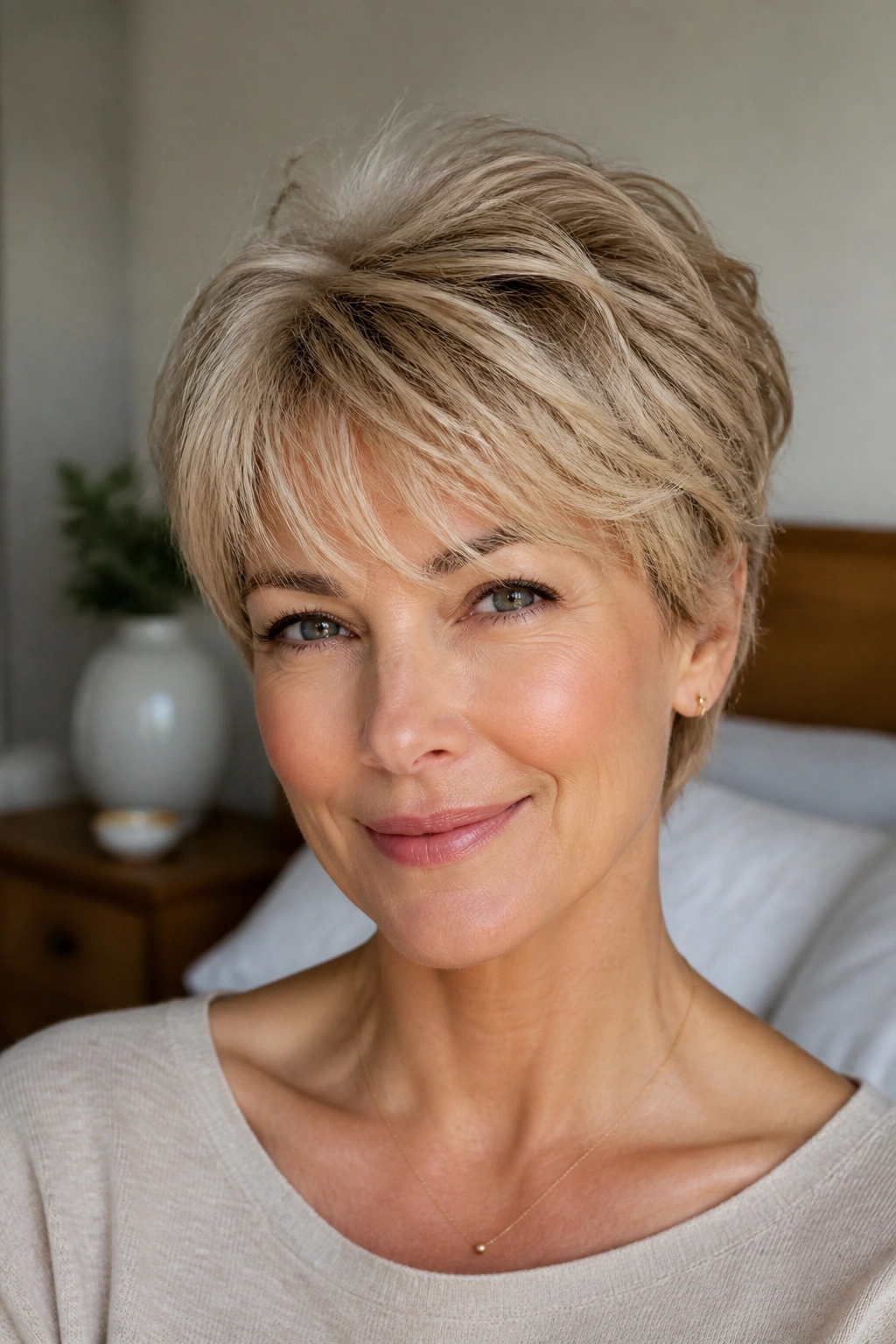
Fine hair can go flat fast, and blunt cuts sometimes make that worse by exposing the ends too clearly. Feathering changes the story. It removes some weight without leaving the hair wispy in a sad way, which is why a feathered crop often looks fuller than a heavier shape.
Why it works
The layers are light, but they are not random. They’re placed to build movement at the top and around the face, while the lower edge stays soft enough to keep structure. That keeps the cut from looking stringy.
- Best on fine to medium-fine hair that needs lift without bulk.
- Works well with a side part or broken center part.
- Looks stronger with a root spray or airy mousse.
- Needs a trim every 5 to 7 weeks if you want the shape to stay crisp.
I’m a fan of this cut because it gives fine hair a little personality without asking it to do too much. If you want softness, yes. If you also want the illusion of more hair, even better. The feathered crop does both.
13. Side-Parted Crop for Thick Hair
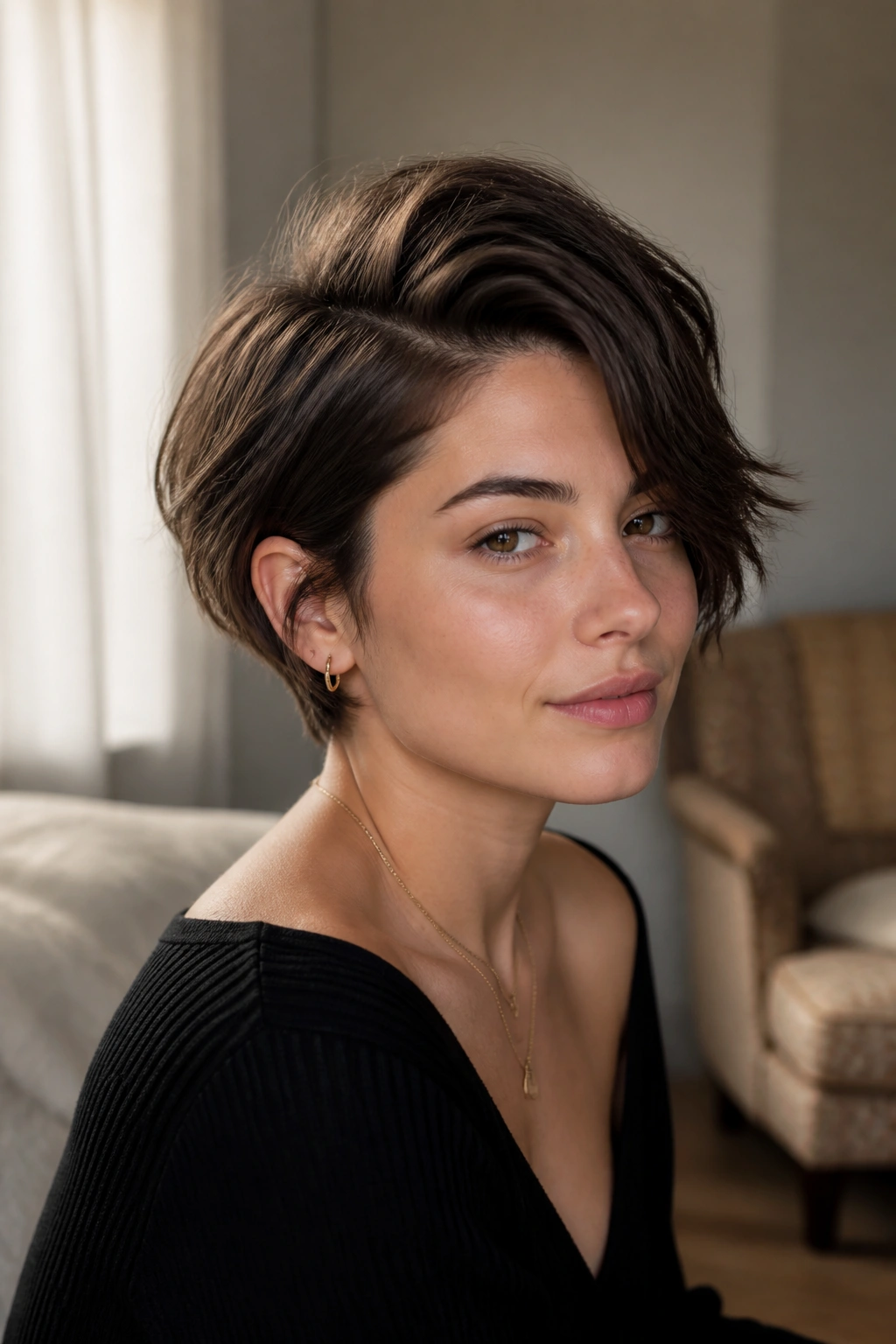
Thick hair loves a side part when the cut needs softness. The part breaks up weight, and the asymmetry keeps the silhouette from looking like a block sitting on the head. If you have a lot of hair and you want a short cut that still feels feminine, this is one of the easiest routes.
What to ask the stylist
Ask for internal debulking through the middle and top, but not so much thinning that the ends turn frayed. Thick hair needs room to move, not a bunch of holes cut into it. Keep the front long enough to sweep across the forehead or tuck behind one ear.
A side-parted crop can handle a little grow-out too. That matters, because thick hair often starts to puff or widen as it grows. With the part set off-center, the shape stays intentional longer.
A soft paste or cream is enough for styling. You want separation, not slickness. If the hair has a natural wave, let it do part of the work and just refine the front with your fingers.
14. Soft Undercut Pixie
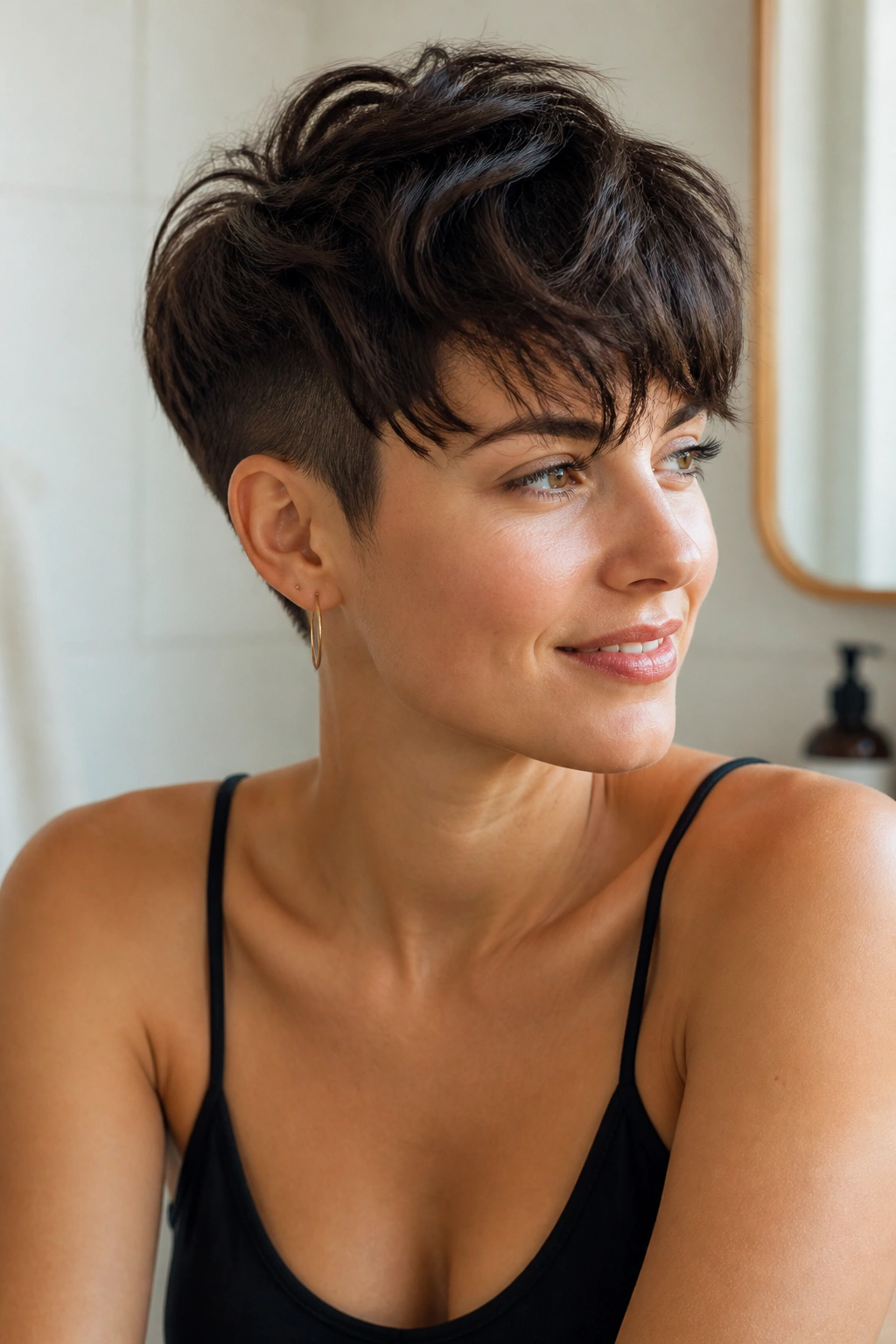
An undercut does not have to look hard. Hidden beneath a longer top, it can be the thing that takes bulk out of the back and sides while leaving the surface shape soft. That’s why a soft undercut pixie feels much lighter than it looks on paper.
The top stays long enough to fall forward or sweep to the side, while the underneath is clipped short to reduce puff and clean up the neckline. If your hair is dense, this can be a lifesaver. You get less mushrooming at the crown and less width around the ears, which makes the whole cut feel neater.
I like this version when someone wants short hair but hates the feeling of a heavy helmet. The undercut solves that without making the haircut look aggressive, as long as the top is left with enough length. Keep a bit of fringe in front and it stays femme rather than severe.
A touch of texture cream, then fingers. That is usually enough.
15. Rounded Afro Crop
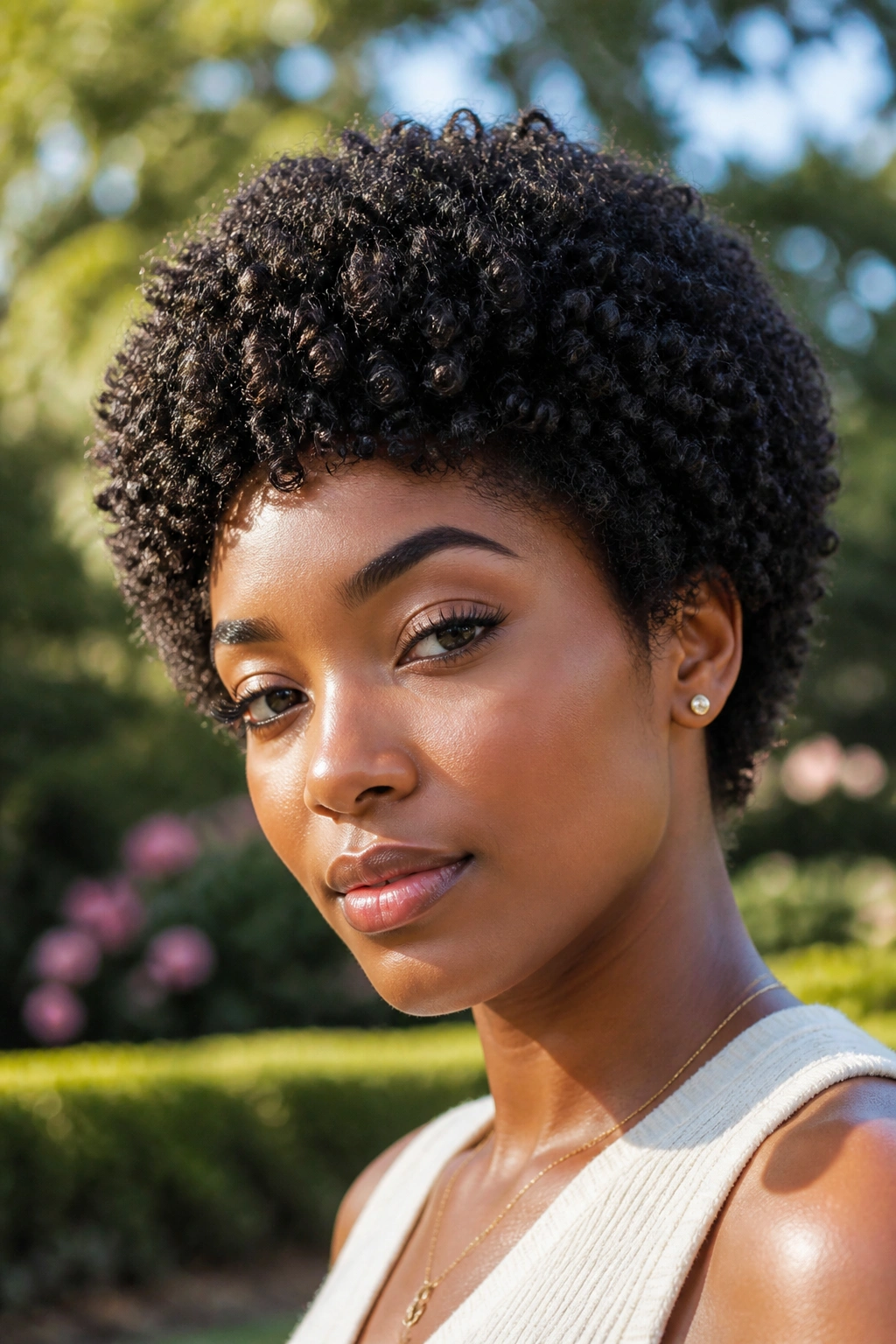
Why does a round shape make coily hair feel softer? Because it follows the curl instead of flattening it into a box. A rounded afro crop keeps the outline balanced, which lets the texture do the talking while the shape stays gentle around the face.
How to keep the shape
Moisture matters here, but so does the cut. Coily hair should be trimmed in a way that respects shrinkage and the natural spring of the curl. A shape that looks perfect wet can dry unevenly and lose its line, so a stylist who knows how the hair behaves dry or partially dry is worth seeking out.
A rounded crop also looks better when the edges around the ears and neckline are cleaned up without being over-trimmed. You want the silhouette to feel rounded, not puffy. A little pick at the roots can lift the top if the shape starts to sit too flat, and a curl cream can keep the surface from looking dry.
This cut has presence. It also has grace, which is the part I love most. It can look polished in a T-shirt and just as good with a sharp collar or a hoop earring.
16. Grown-Out Gamine Cut
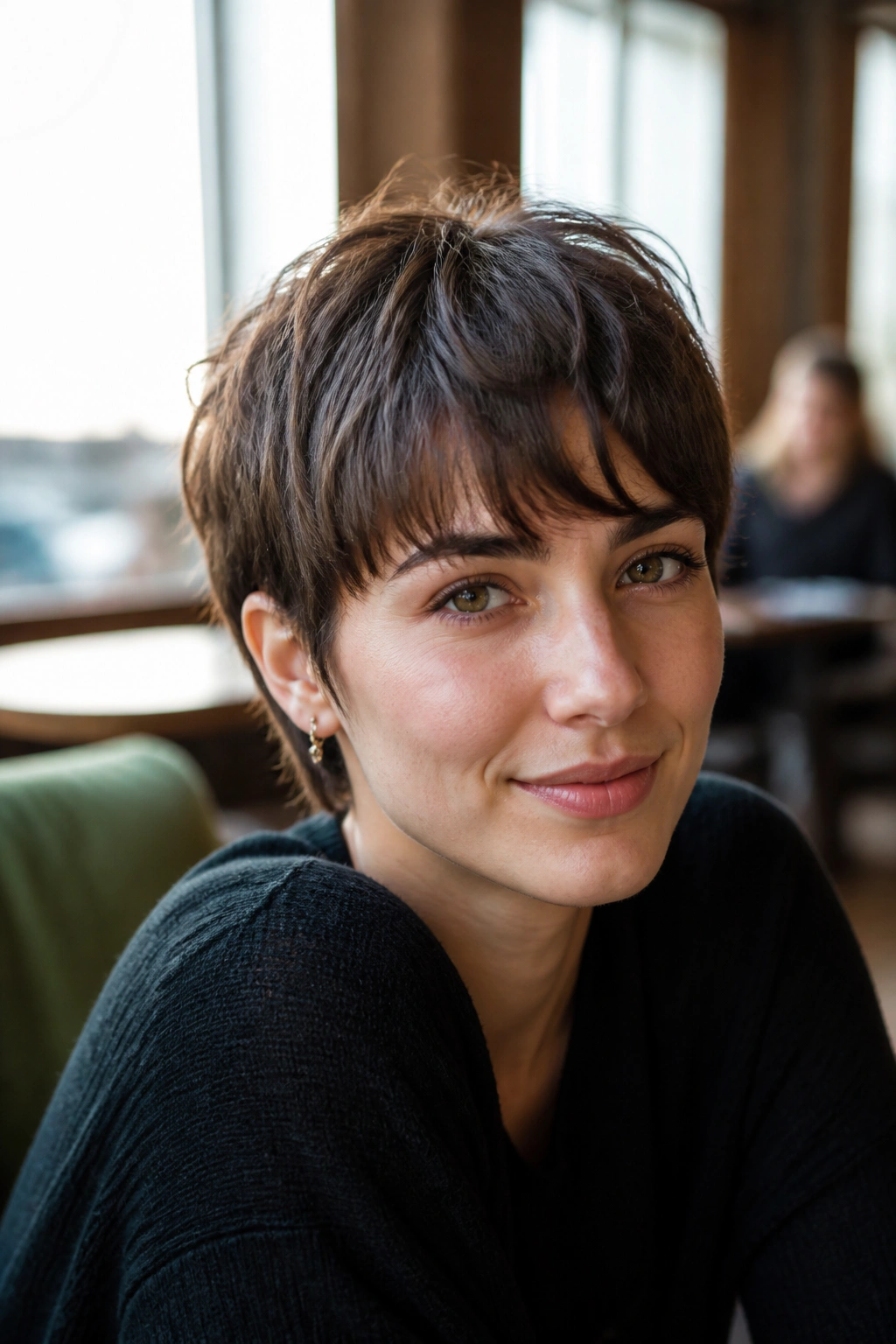
There’s a reason grown-out gamine cuts keep showing up in salon chairs: they age well between trims. The shape starts close to the head, then lets the fringe and top drift a little longer so the cut stays soft as it grows. No awkward helmet stage. That’s the appeal.
This is the version to choose if you want something low-maintenance but not plain. The edges are neat, yet the fringe has room to move, and the nape can stay slightly longer than a classic pixie so the whole style feels less abrupt. It’s especially nice if your hair grows in different directions at the hairline, because the extra length helps the cut settle.
- Keep the fringe slightly longer than you think.
- Ask for a soft taper at the ears.
- Let the crown have enough length to lie forward.
- Skip heavy wax unless you want a more choppy finish.
The cut gets better the more it relaxes. That’s not true of every short style, and it matters.
17. Soft Tucked Lob With Face-Framing Ends
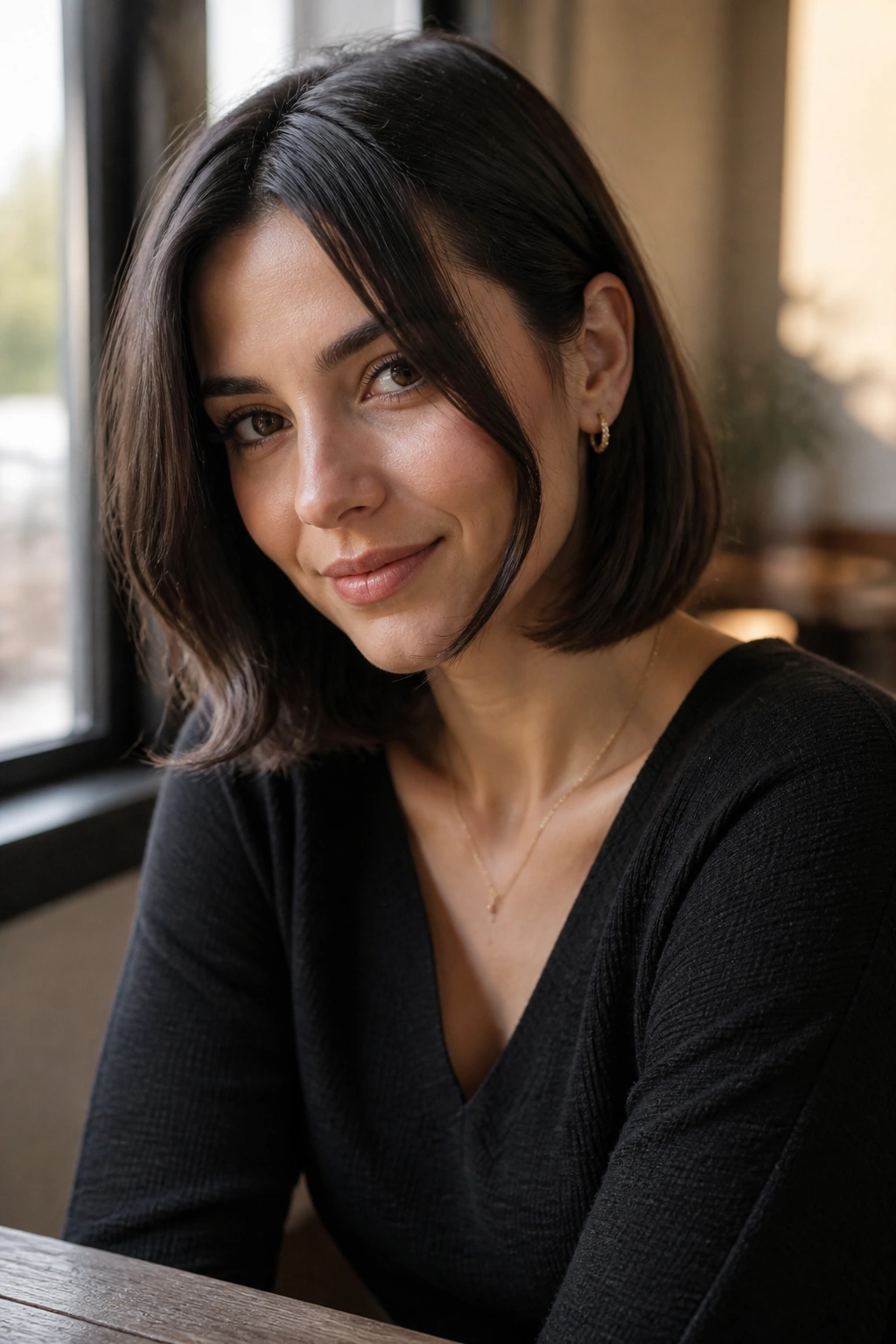
A tucked lob can be read as short even when it brushes the collarbone, mostly because the styling keeps it close to the neck and ears. The beauty of this shape is the little things: one side tucked, the ends lightly bent, and the face-framing pieces left a touch shorter so they don’t hang heavy.
This is a good fit if you’re not ready for a true crop but still want that softer short-hair feel. The ends should be point-cut or softly beveled, not razor-flat. If the line is too exact, the whole look can feel formal in a way that works against the easy vibe most people want here.
A tucked lob also gives you room to play. You can wear it loose, tuck both sides, pin one side back, or add a bend through the front pieces with a flat iron. It changes quickly, which is handy if you want one haircut to do weekday clean-up and weekend looseness without a fight.
I like this one for people who want short hair that still feels flexible. It’s a calm cut. No drama.
18. Rounded Bowl Crop With Wispy Fringe

A bowl crop only looks old-fashioned when the line is too rigid. Soften the edge, break up the fringe, and round the shape slightly through the sides, and suddenly the whole cut feels modern and playful instead of blunt. That is the difference between a hard shell and a soft frame.
The wispy fringe matters more than people think. It stops the front from feeling heavy and gives the face a little breathing room. Keep the fringe textured enough that it falls in small pieces rather than one flat strip, and ask for the perimeter to follow the curve of the head instead of sitting like a shelf.
This cut works especially well on straight to slightly wavy hair, where the shape can stay clean without puffing out. It also looks good when tucked behind the ears for a minute and then left alone, which sounds tiny but changes the mood a lot. The shape should feel rounded, touchable, and a little unexpected.
That’s what soft edge is, really — a strong shape with a gentler finish. Not weak. Just easier to live with.
