



A bold cut does not need much length to make a point. Very short hairstyles can look sharper, cleaner, and more intentional than cuts that try to do too much. They show the shape of the head, the line of the neck, the angle of the jaw. They also leave nowhere for bad layers to hide, which is exactly why the good ones feel so confident.
The trick is shape. When hair gets short, every detail matters — the nape, the temple, the fringe, the way a cowlick lifts near the crown after a shower. A cut that looks effortless on one person can fall flat on another if the density, texture, or hairline is ignored. That is why the best very short hairstyles are built, not guessed.
Some of these cuts are crisp and stripped down. Some are soft and piecey. A few lean into edge so hard they almost dare you to keep your posture straight. All of them work because they keep the silhouette strong, and once you start noticing that, you stop thinking of short hair as a compromise.
If you’ve been circling the idea of going shorter, the sweet spot is usually not about bravery for its own sake. It’s about finding the right kind of bold — the one that fits your face, your texture, and how much time you want to spend in front of a mirror on a regular morning.
1. Buzz Cut
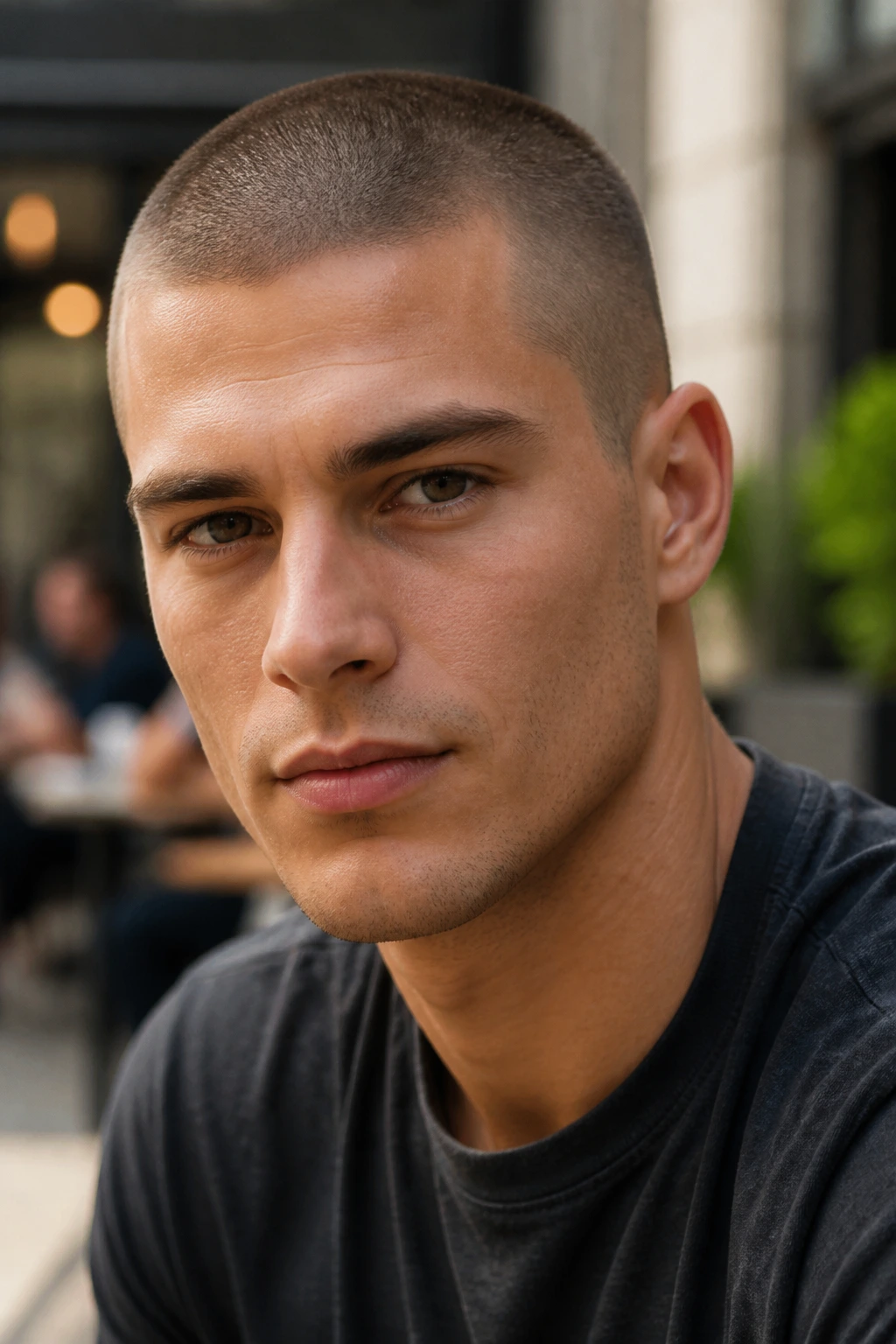
A buzz cut is the cleanest way to make a statement without a single extra flourish. It strips the hair down to the same short length all over, and that uniformity is what gives it its punch. There’s nowhere to hide, which sounds severe until you see how good it can look with strong brows, a neat jawline, or a little color contrast from a jacket, lip tint, or earrings.
Why It Works
The shape is doing all the heavy lifting here. A #1, #2, or #3 guard gives you different levels of closeness, and even half a guard change can shift the whole mood from near-shaved to softly cropped.
- #1 guard: very close to the scalp, blunt and minimal.
- #2 guard: a little more softness, still crisp.
- #3 guard: enough length to feel less bare, especially on dense hair.
- Upkeep: every 2 to 4 weeks keeps the edges tidy.
Best move: ask for a soft line-up around the hairline if you want a cleaner finish without looking overly boxed in.
2. Bleached Buzz Cut
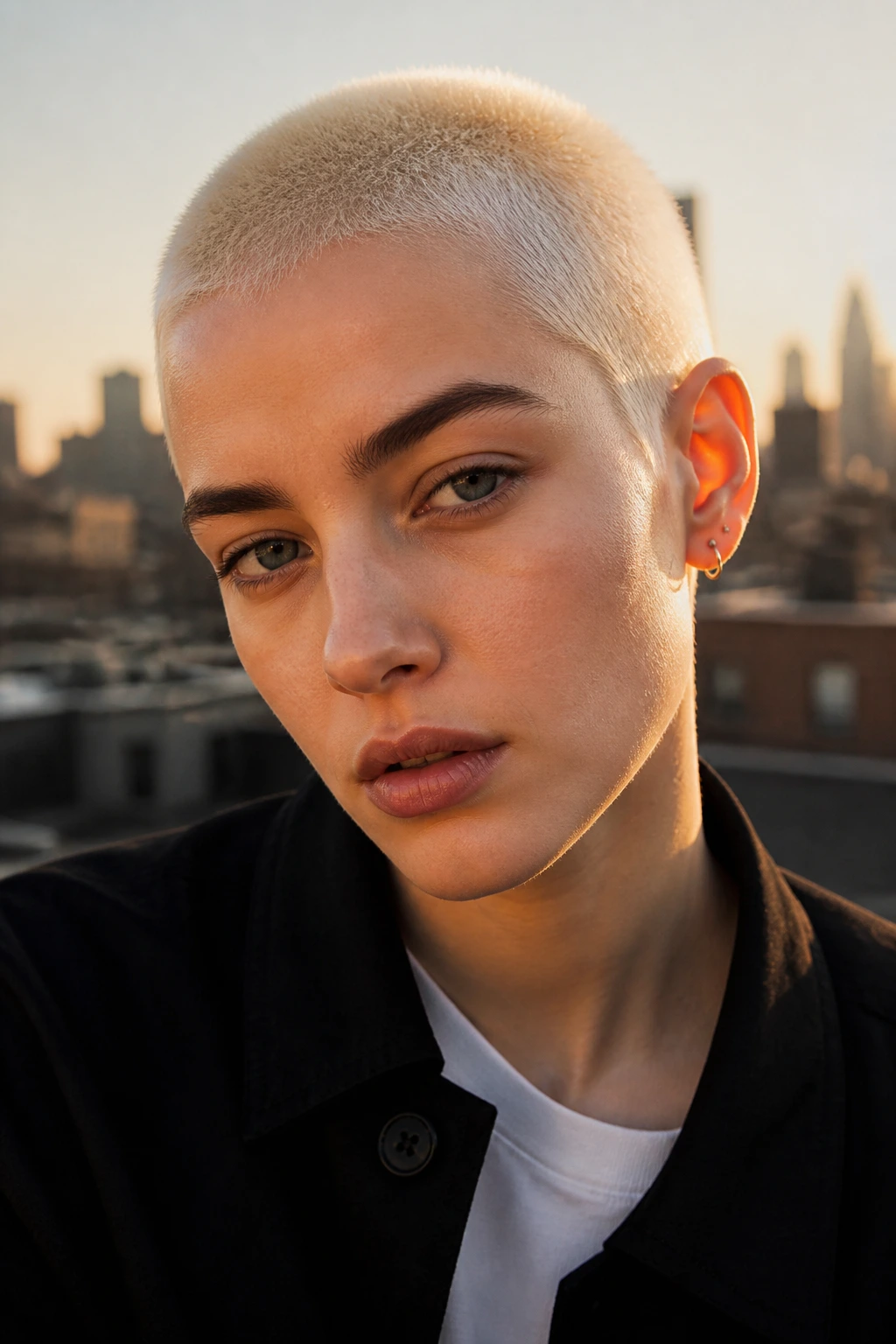
Bleaching a buzz cut changes the whole story. The shape stays spare, but the color adds drama, and that contrast is what makes it feel fashion-forward instead of plain. On short hair, bleach reads in a sharper way because there is less length to soften the effect, so even a pale blond, icy tone, or warm cream shade becomes a real part of the cut.
The catch is maintenance. Roots show fast, and the scalp becomes part of the visual, so the condition of the skin matters more than people expect. Dry scalp, flaking, or patchy color will show right away. If you go this route, keep the scalp calm with gentle shampoo, and avoid piling on heavy products that make the hair look greasy by noon.
A bleached buzz cut is not subtle. Good. That is the point. It suits people who like a hard line and do not mind the cut getting a little louder as the roots come in.
3. Close-Cropped Caesar
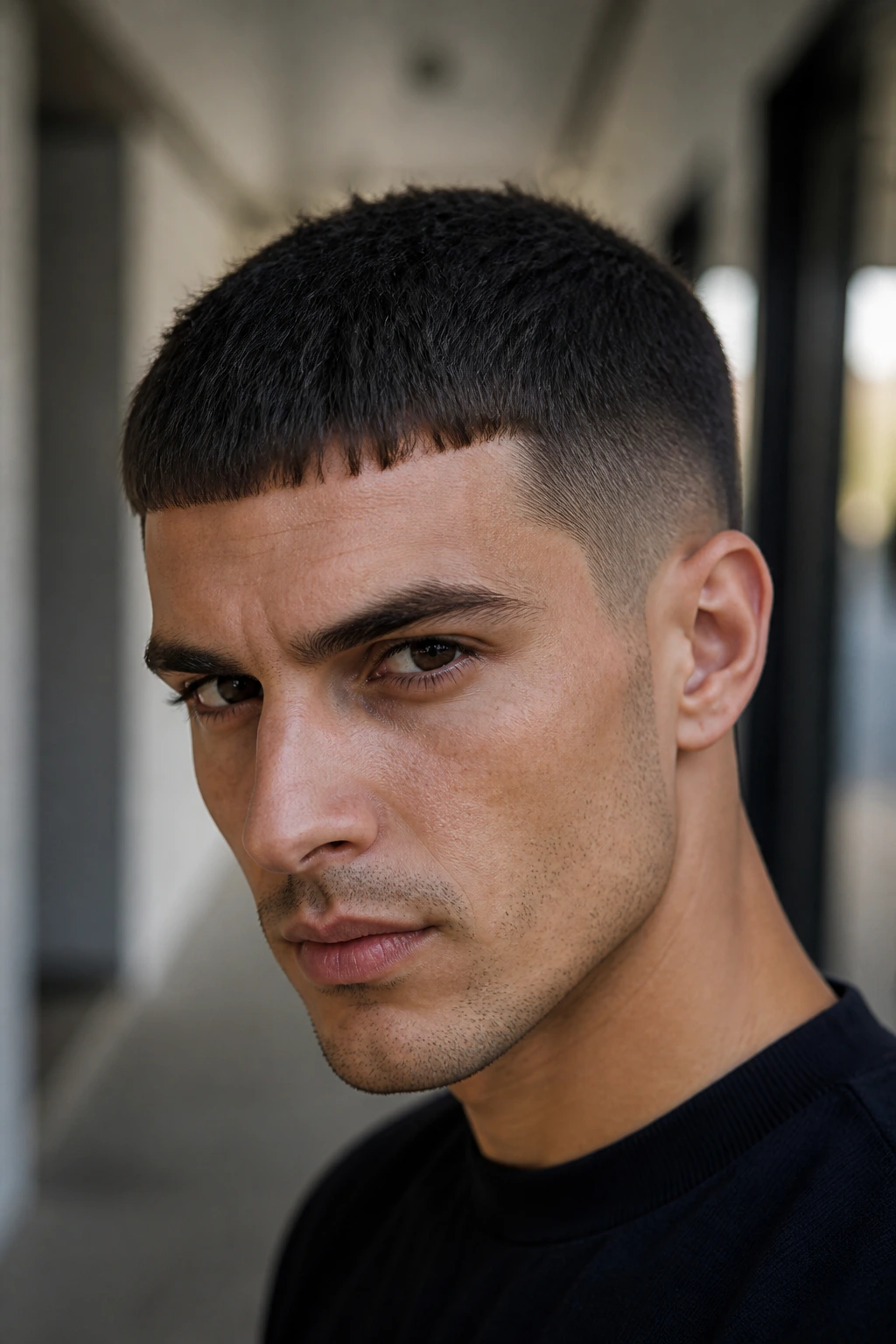
Want something short but not severe? The close-cropped Caesar sits in that sweet spot. The hair is kept short on the sides and top, then brushed forward into a small fringe that skims the forehead. It has a Roman, almost carved look, but on a real head it feels practical and easy to wear.
What Makes It Different
The front matters most. Keep the fringe straight, short, and slightly textured rather than heavy and helmet-like. A Caesar looks best when the top has about 1 to 2 inches of length, enough to create direction but not enough to flop over in sections.
How To Ask For It
- Short, faded, or tapered sides
- About 1 to 2 inches on top
- A forward fringe that sits close to the forehead
- Light texture at the front, not a flat blunt line
This cut works especially well if you want to soften a higher forehead or give a strong face shape a little balance. It is neat without being stiff. That matters.
4. Textured Crop
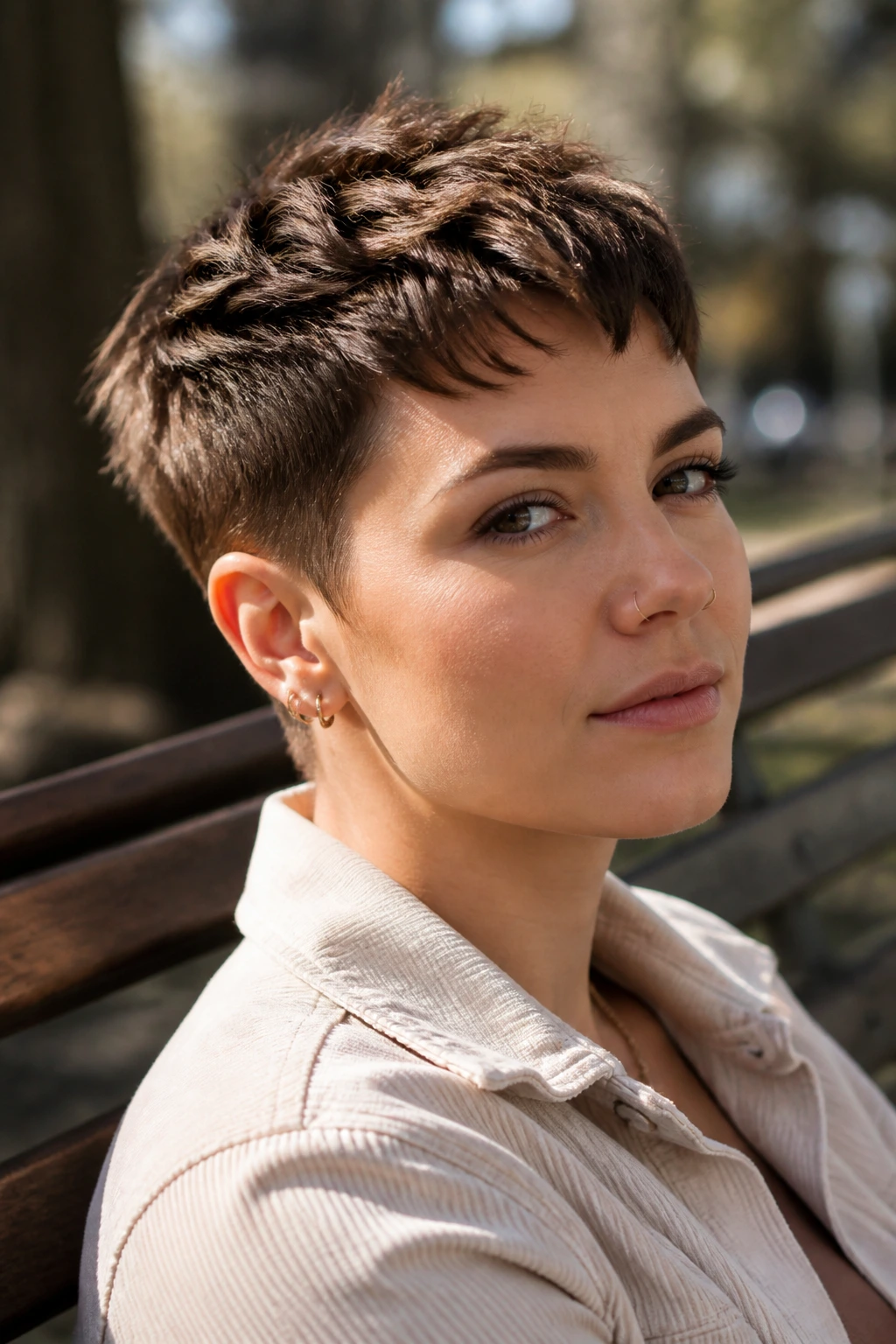
A textured crop is what you get when short hair is allowed to look a little alive. Instead of one smooth block of hair, the top is cut in choppy pieces that move forward or slightly up, while the sides stay tight. Thick hair loves this cut because it removes bulk without making the head look wide.
The styling part is mercifully simple. A pea-sized amount of matte paste or clay, rubbed through damp hair, gives the crop that rough, slightly broken-up finish. Blow-dry it for a minute or two if your hair tends to lie flat. If it starts to look shiny, you used too much product. That happens fast with short cuts.
This is one of those styles that looks best when it is not too perfect. A little separation at the ends keeps it modern. Too much neatness and it starts to feel school-photo serious.
5. French Crop With Fringe
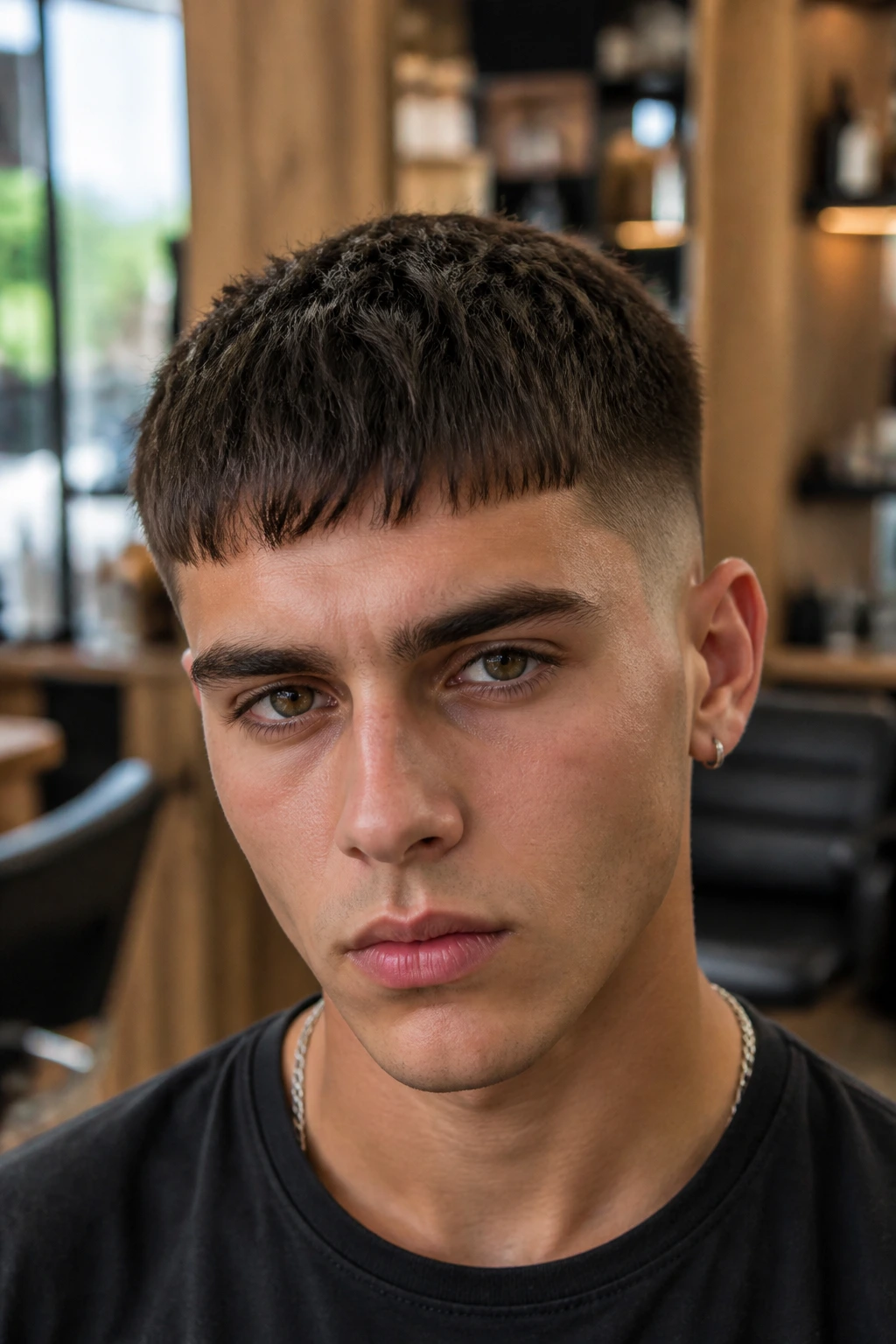
The French crop has a blunt little fringe in front and short, tidy sides that keep the whole thing compact. It’s a close relative of the Caesar, but the mood is different. The Caesar often feels more straight across and severe. The French crop can be messier, softer, and a touch more European in the way it falls.
That fringe is the whole game. If it’s cut too thick, the style gets heavy. If it’s too wispy, the shape loses its edge. The sweet spot is a short, blunt front with a little texture at the ends so the line doesn’t look pasted on.
This cut is a smart choice for straight or slightly wavy hair that wants structure without a lot of styling time. It also handles growth well. Even when it starts to get longer, the shape can stay flattering for a while instead of collapsing immediately.
6. Pixie Cut
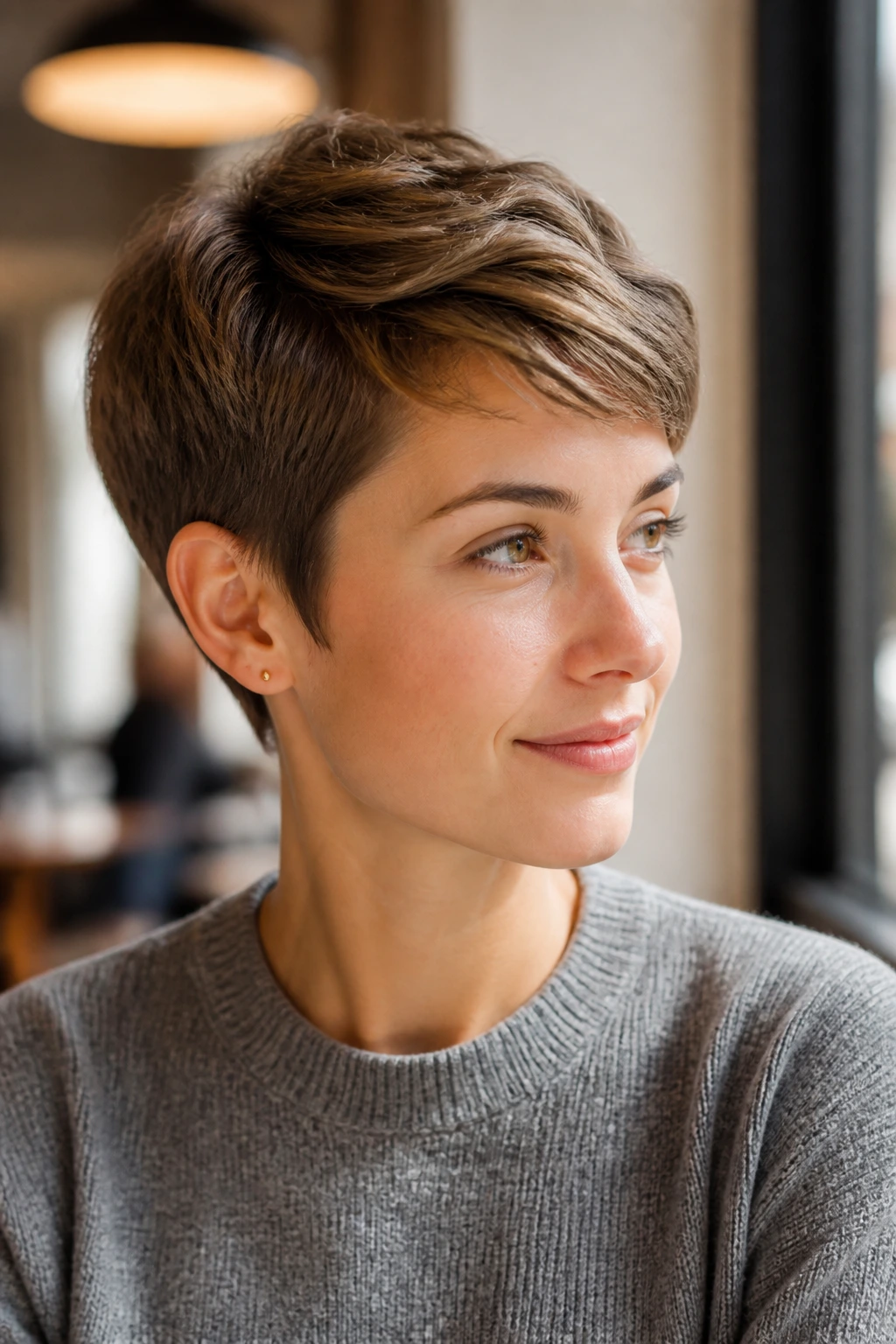
A pixie cut gives you short hair with more shape than a buzz and more softness than a blunt crop. It usually keeps the sides and back short, with a little more length at the crown or fringe, so the cut can be pushed, lifted, or swept depending on the day. That flexibility is why people keep coming back to it.
Compared with a buzz cut, a pixie gives you room for texture. Compared with a bob, it feels lighter around the ears and neck. The difference is small on paper, but in the mirror it changes everything. A pixie can look polished with a side part, playful when finger-tousled, and sharp when tucked behind one ear.
Short styling cream, light pomade, or a dab of styling wax is usually enough. You do not want the hair glued down. You want movement at the top and clean edges below.
7. Choppy Pixie

A choppy pixie is for anyone who wants short hair with a little bite in it. Instead of a smooth, rounded finish, this cut uses piecey layers to create movement and a slightly undone look. The result feels lighter, airier, and a bit tougher around the edges — in a good way.
What To Ask For
Ask your stylist to keep the top irregular, not flat. You want soft separation, almost like the ends were broken up by hand. Too much symmetry kills the effect.
Styling Notes
- Use a matte cream or light wax.
- Work it into damp hair, not soaking wet hair.
- Scrunch or twist small sections with your fingers.
- Skip heavy oils; they flatten the texture fast.
The best part is how forgiving this cut can be. Fine hair gets the illusion of more body. Thick hair loses bulk without losing personality. And if a few pieces stick up in the morning, honestly, that can look better than perfect alignment.
8. Undercut Pixie
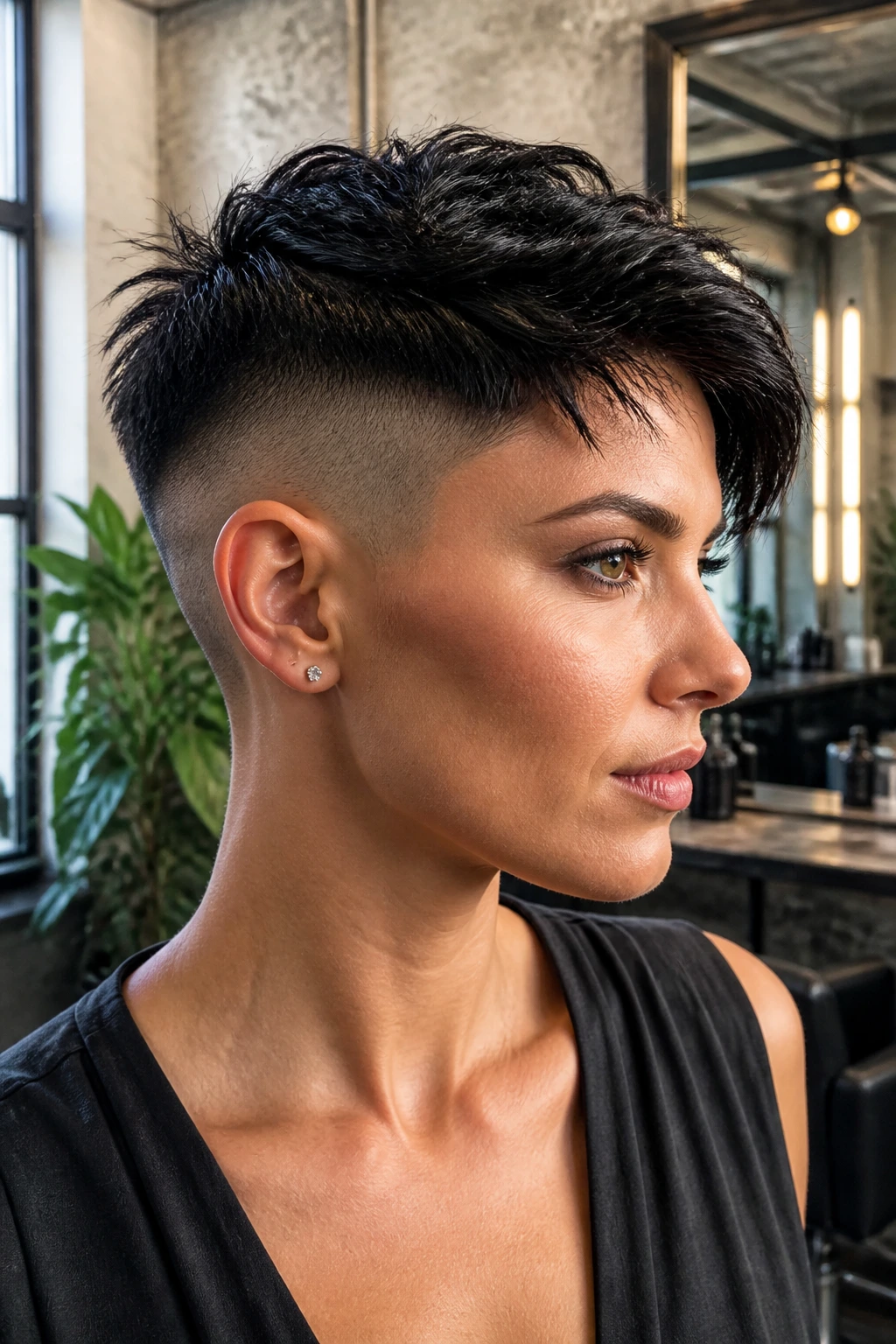
An undercut pixie takes the pixie and gives it an edge. The sides and back are cut much shorter than the top, sometimes with a clipped nape or even a shaved section underneath, while the crown and fringe stay longer. That contrast creates instant drama, even when the top is only a few inches long.
The reason this cut hits so hard is the imbalance. The eye goes straight to the longer top, then drops to the tight sides, and the whole style feels deliberate. It is one of the best very short hairstyles for people who want shape without softness. There is a little rebellion in it.
You do need to keep up with the undercut part. If the sides grow out too far, the contrast weakens and the cut starts looking fuzzy rather than bold. A trim every 3 to 5 weeks keeps the shape honest.
Best for: strong cheekbones, dense hair, and anyone who wants a short cut that still has attitude.
9. Tapered Pixie
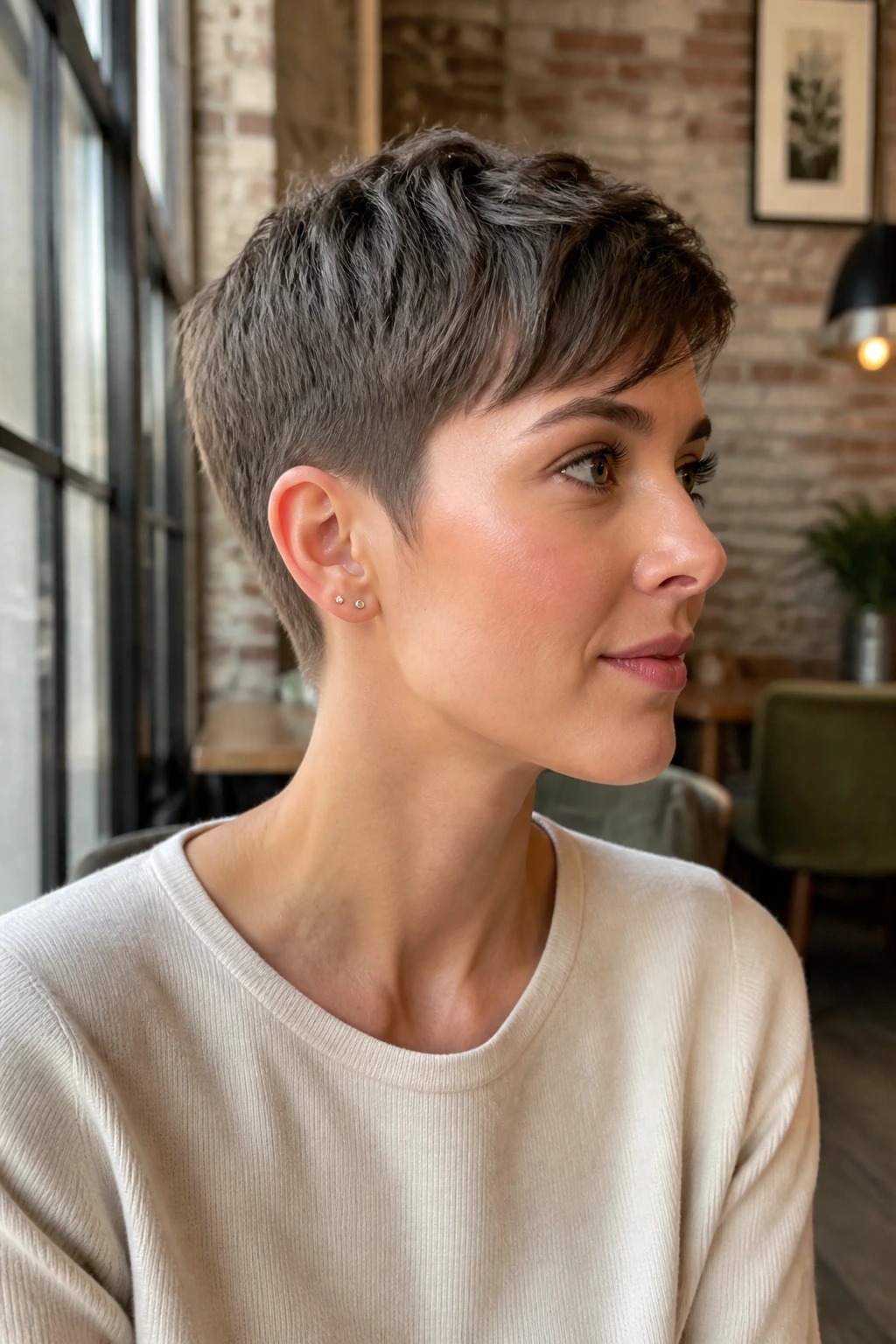
A tapered pixie is the calmer cousin of the undercut. Instead of a dramatic jump from long to short, the hair gradually gets shorter as it moves down the sides and back. That softer change makes the whole cut look neat and tailored, which is why it works so well for people who want short hair without a hard edge.
There is a quiet elegance to a good taper. The nape sits close, the temples stay clean, and the top has enough length to be brushed forward, parted, or finger-styled. It’s especially good if you like structure but hate anything that feels severe at the hairline.
The cut also grows out more gracefully than an undercut. That alone is worth something. Fewer awkward weeks, fewer “I need a trim this weekend” moments, and less panic when you miss an appointment.
10. Side-Swept Pixie
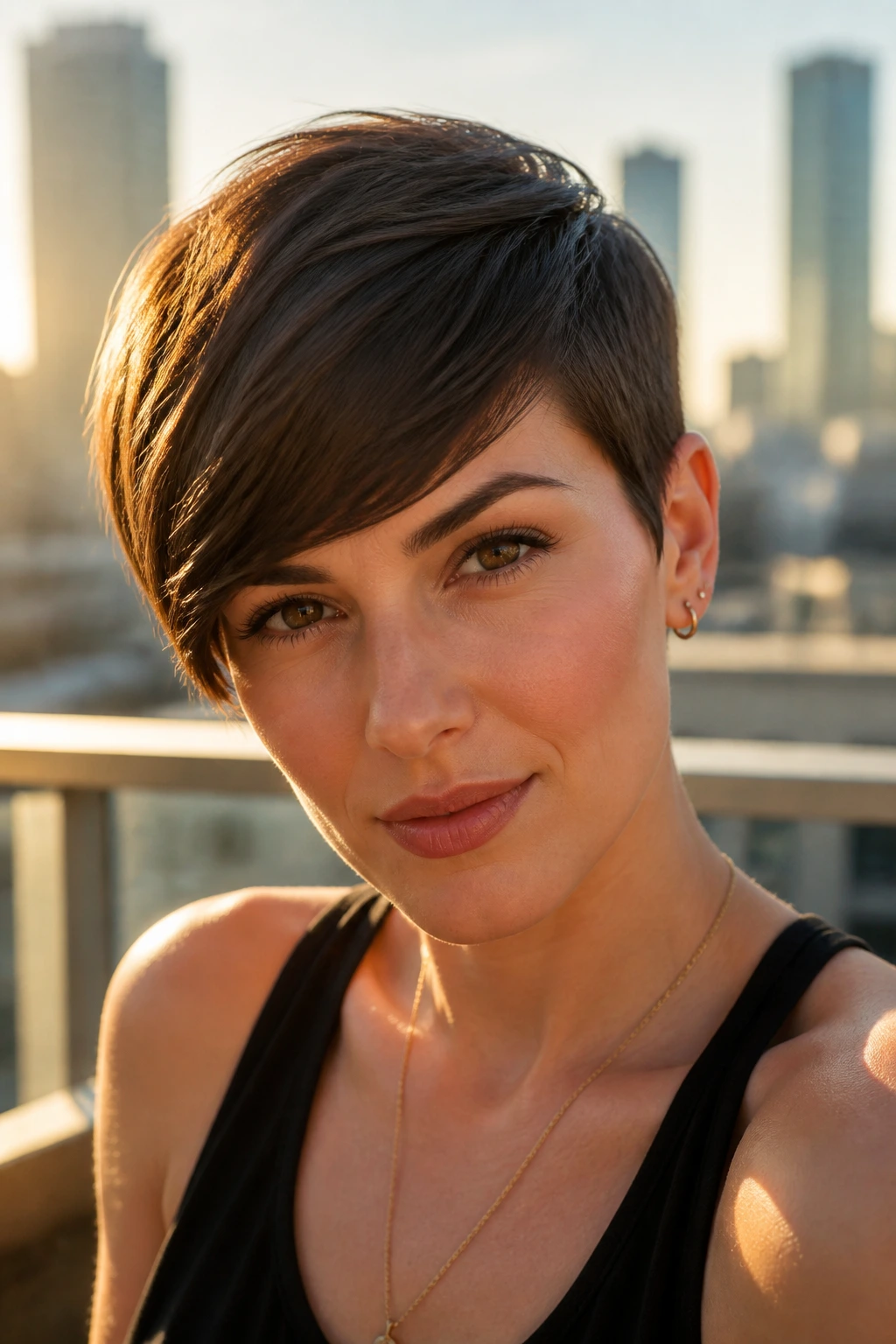
A side-swept pixie softens the whole face by pulling the top across to one side. The front length usually stays a little longer than the rest, which gives the cut a swooping line that can make cheekbones look stronger and a forehead feel less exposed. It is a very small move, but the effect is big.
I like this cut for people who want a short style that still looks a bit romantic. Not soft in a flimsy way. Soft in the sense that the shape has a curve instead of a blunt wall. A quick blow-dry with a small round brush, or even a flat brush and fingers, is usually enough to send the hair where you want it.
The trick is not to overbuild volume. A little lift at the roots is nice. A helmet is not.
11. Micro Bob

The micro bob sits right on the edge between a pixie and a classic bob. It’s short enough to feel sharp, but there’s still enough length to tuck behind the ears or curve under the jaw. That tiny bit of extra hair gives the style its polish.
This cut loves clean lines. On straight hair, it can look crisp and almost architectural. On wavy hair, it can turn a little softer and more relaxed, which is useful if you want edge without rigidity. The length usually lands somewhere between the cheekbone and just below the jaw, and that positioning matters more than people think.
A micro bob works best when the ends are kept blunt or only lightly textured. Too much layering can make it lose its shape fast. If you want it to read bold, not fluffy, keep the outline sharp.
12. Blunt Jaw-Length Bob
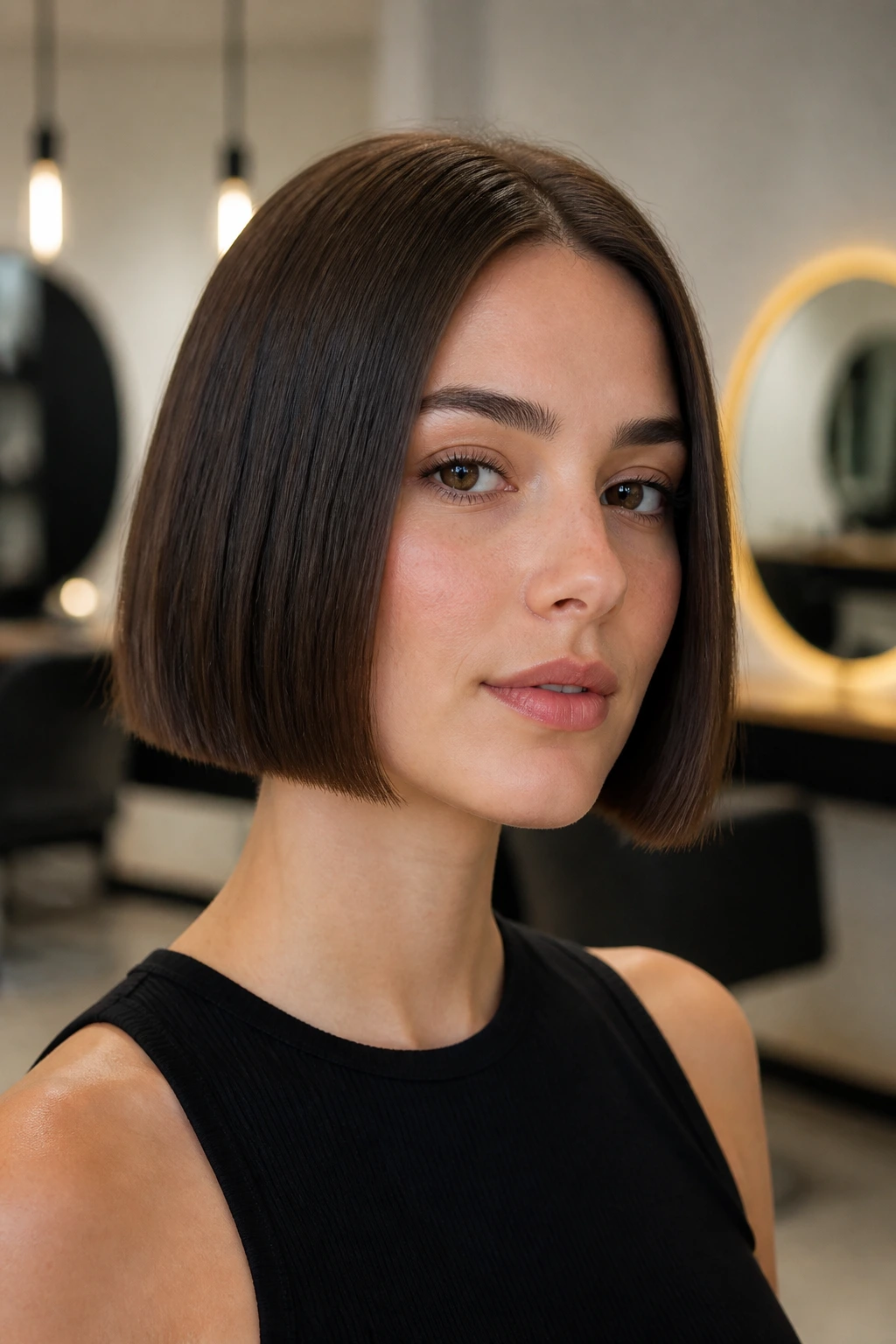
A blunt jaw-length bob is a short haircut with real presence. The length sits right at the jaw or just a touch below it, and the ends are cut in a straight line so the silhouette feels solid. That blunt edge is the whole point. It creates a neat frame around the face and gives the haircut a kind of cool certainty.
Compared with a layered bob, this version feels firmer and more graphic. It works especially well on thicker hair because the line stays visible and the shape does not disappear into softness. On fine hair, the blunt edge can create a fuller look, especially if the ends are kept even and the styling is smooth.
How it wears best: center part for a sharp, modern effect; side part for a little more movement. Either way, the cut wants clean ends and regular dusting to keep the line from fraying.
13. Ear-Length Bob With Tucked Sides
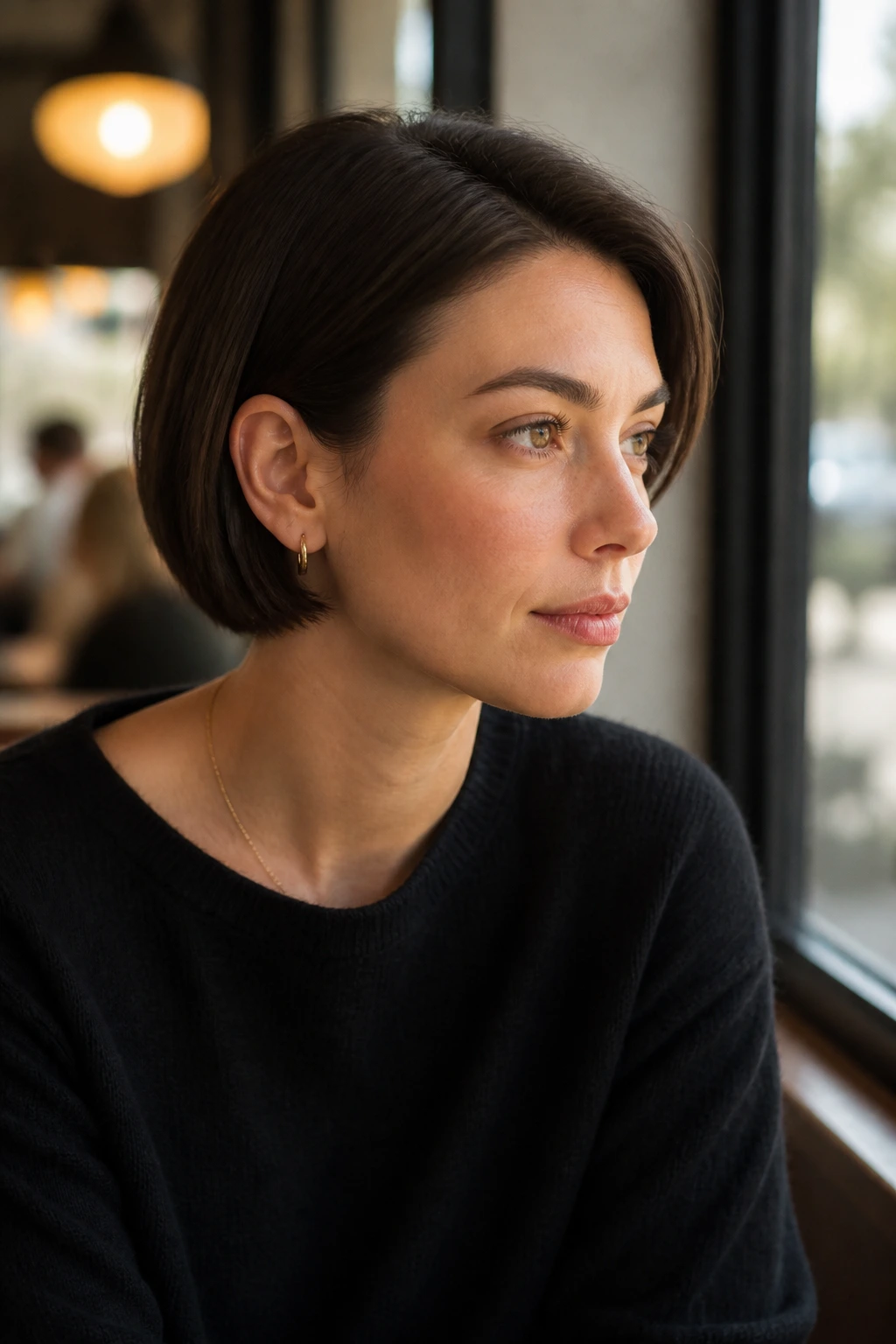
This is the bob that looks small from the front and surprisingly chic from the side. The length grazes the ear or sits just below it, and the sides are often tucked or curved inward so the whole cut sits close to the head. It has a neat, almost tailored quality that makes it feel dressy even on an ordinary shirt-and-jeans day.
The charm is in the profile. From certain angles, it gives you a clean frame around the face without much bulk near the neck. That makes it useful if you want a short cut that still leaves a little hair to play with — behind the ear, under a clip, or with one side slightly pinned back.
It can look delicate, but it is not fussy. A quick pass with a smoothing cream is often enough. If you have a cowlick near the ear, though, expect to work with it rather than fight it. Hair likes to show off its opinions at this length.
14. Shullet
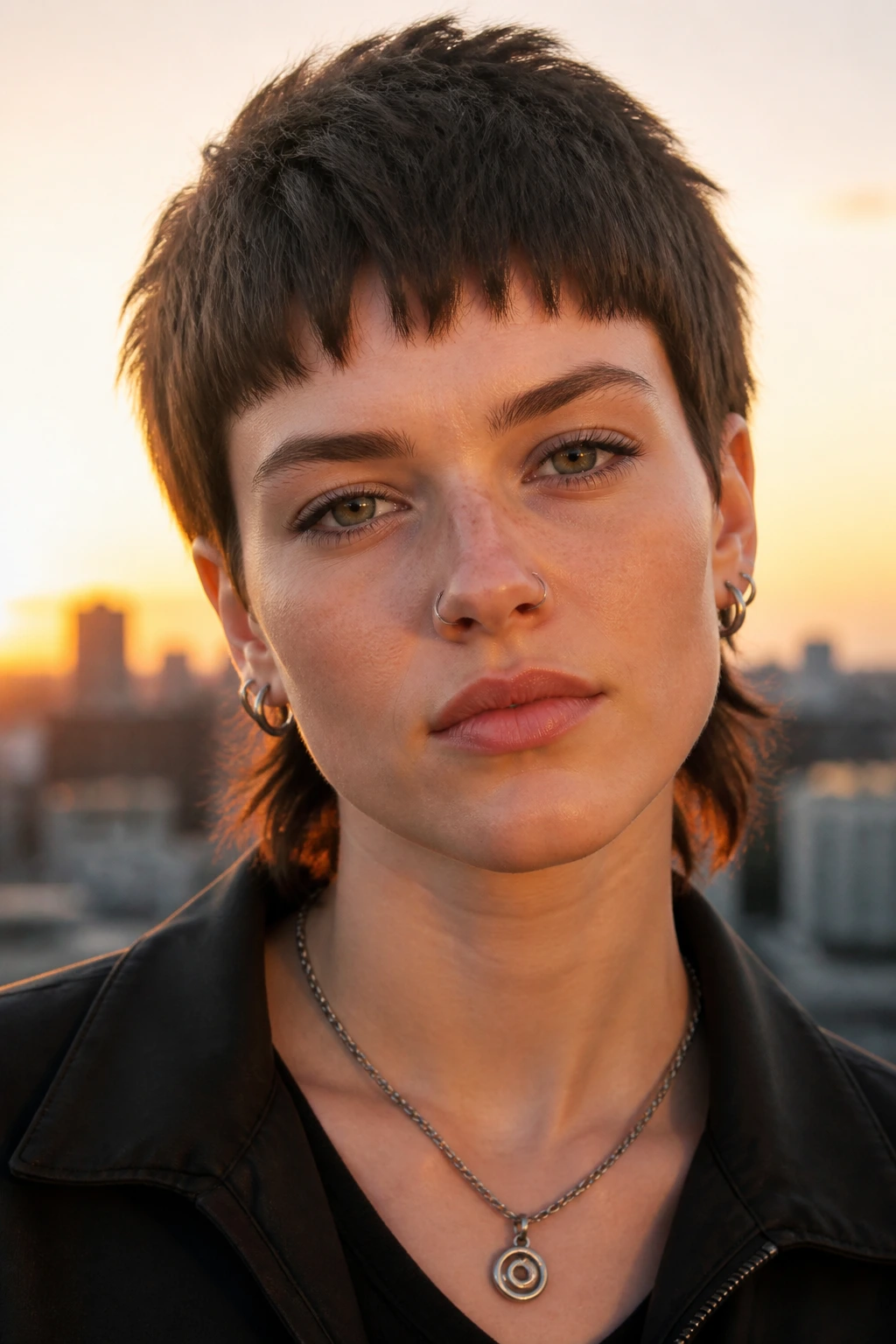
A shullet is a softer, shorter take on the mullet, and yes, it is as bold as it sounds. The top and sides stay short, the back keeps a little extra length, and the result feels edgy without becoming costume hair. The trick is keeping the transition gentle so it reads modern, not retro for the wrong reasons.
What Makes It Different
The shullet is less about shock and more about shape. The crown can be choppy, the nape a bit longer, and the side sections kept narrow so the silhouette stays lean. That gives you movement around the head without too much bulk.
Who It Suits
- Straight hair that needs texture
- Wavy hair that wants a little freedom
- Dense hair that can handle layering
- People who want something short but not neat
A shullet works best when the layers are deliberate. Too much random chopping and it starts looking unfinished. A clean shullet feels cool. A sloppy one just looks like a haircut that missed the memo.
15. Soft Bowl Cut

A soft bowl cut is the version that made the old bowl cut finally grow up. The outline still curves around the head, but the edges are softened with texture, subtle tapering, or a little length at the fringe and nape. The result can be oddly flattering because it creates a strong shape without the hard, abrupt line that used to define the style.
This cut works best when the bowl shape is suggested, not stamped on. A little irregularity around the ends keeps it from looking stiff. On straight hair, it reads clean and graphic. On slightly wavy hair, it can turn playful and a bit artsy, which is probably why it keeps showing up in fashion-heavy circles.
If you want this cut to feel bold instead of cartoonish, ask for softness around the perimeter and keep the top from getting too round. That one change makes a big difference.
16. Asymmetrical Crop

An asymmetrical crop gives you short hair with a built-in angle. One side stays shorter, the other holds a little more length, and the uneven line creates immediate tension. It is the kind of cut that looks intentional from across the room, which is useful if you want your hair to do some of the talking for you.
The beauty of this style is that the imbalance can be subtle or blunt. A tiny difference in length can make the face look longer. A bigger difference feels sharper and more editorial. Either way, the crop works because the eye keeps moving instead of settling into a predictable shape.
Maintenance matters here. The asymmetry only looks good when the lines stay clear, so trims need to be regular. If one side grows out too much, the cut can lose its shape fast and start looking accidental.
17. Slicked-Back Short Cut
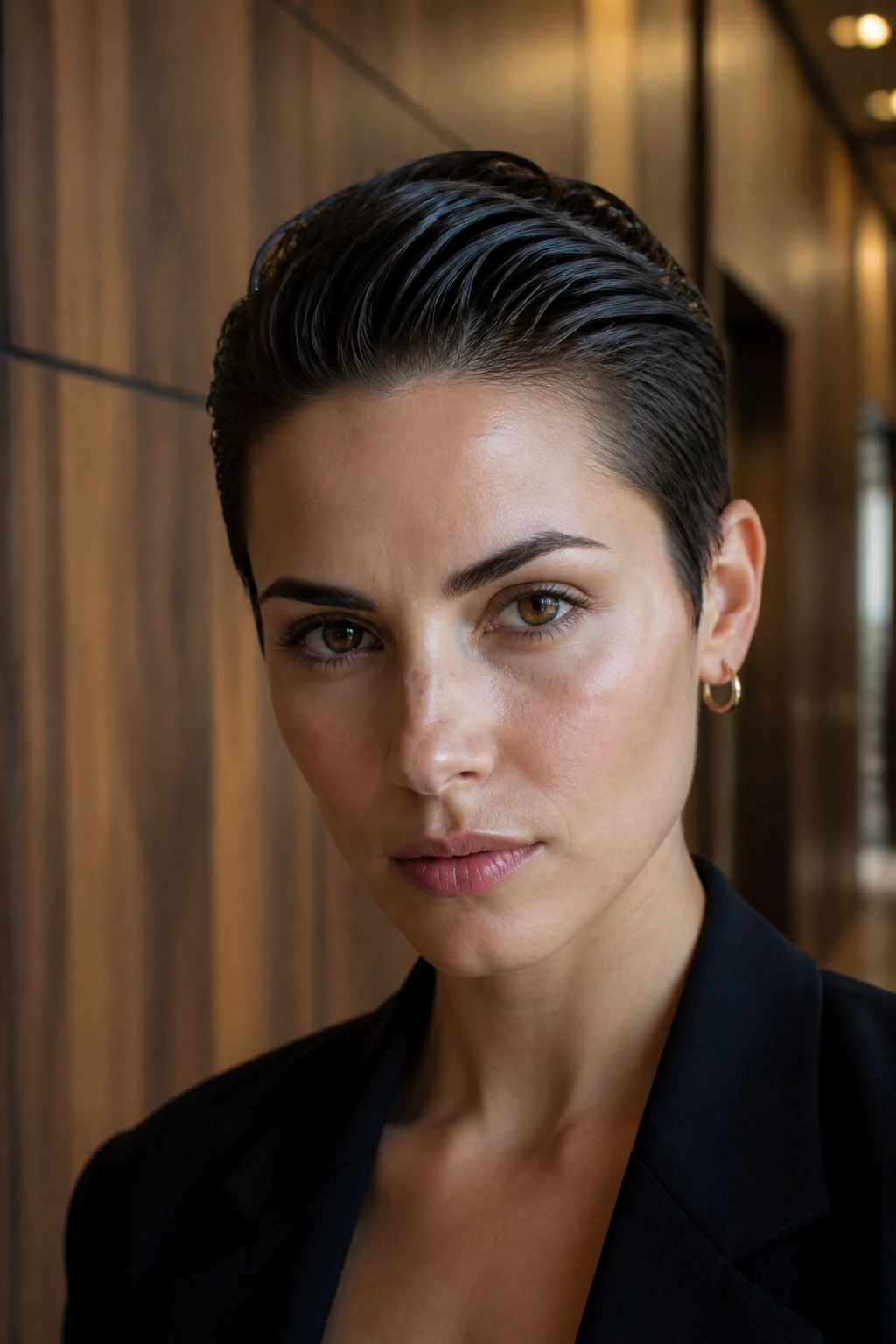
A slicked-back short cut is all about the forehead line. Hair is combed or brushed away from the face, held with gel, pomade, or a shine cream, and left to dry in that swept-back position. The effect is clean, a little severe, and very confident. No fringe. No distraction.
This style is not meant to hide features. It shows them off. The brows, eyes, and cheekbones get more attention because the hair is moving out of the way instead of framing everything softly. That can look polished for evening, but it also works when you want a short cut that feels crisp on a bare face.
Product choice makes a difference. Gel gives a harder finish. Pomade gives movement with some shine. A light gloss cream sits somewhere in between. If the hair starts to look greasy rather than smooth, you’ve gone a touch too far.
18. Curly Crop
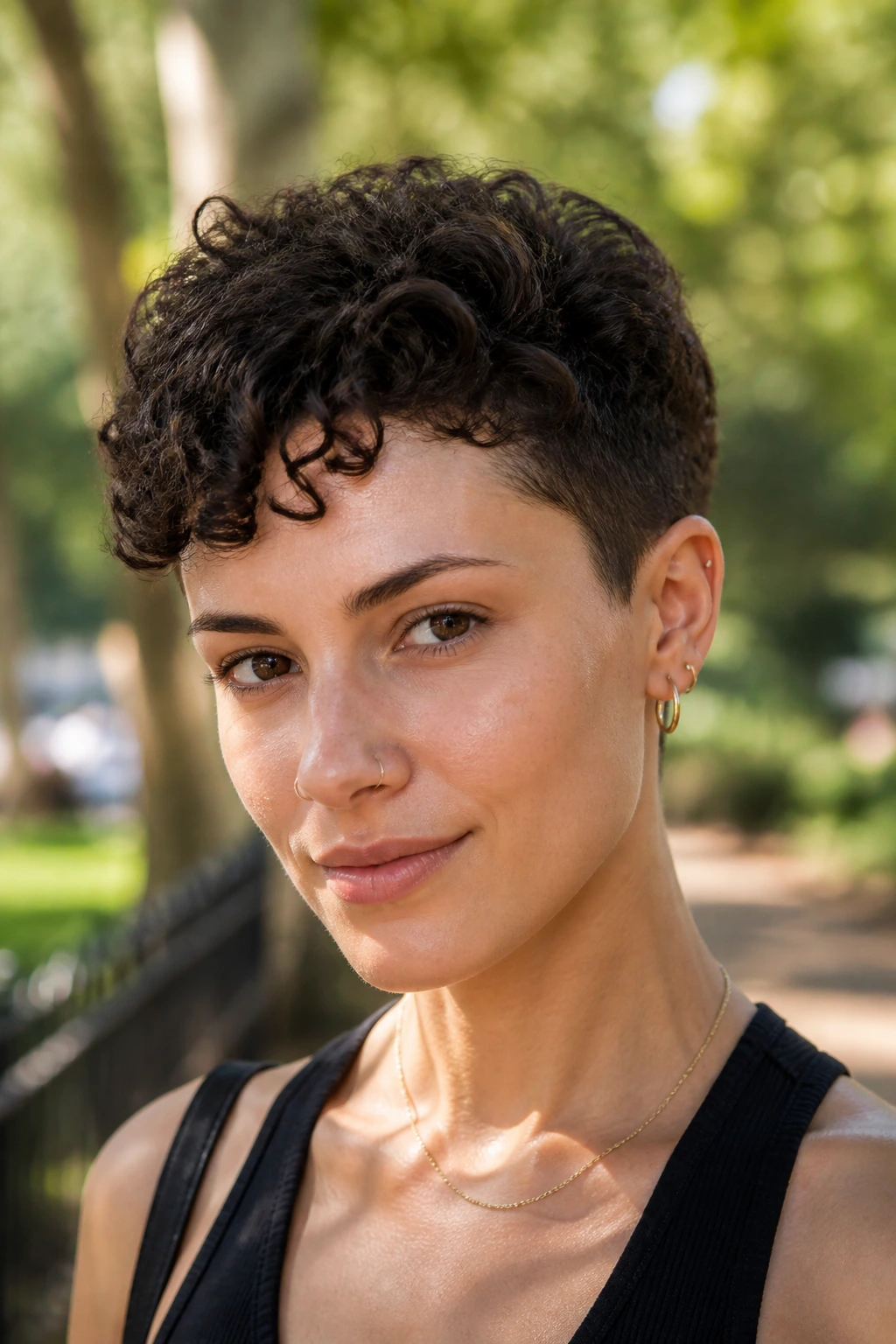
A curly crop respects the curl pattern instead of flattening it down. The sides and back are kept short, while the top stays long enough for curls to spring up in their own shape, usually around 1 to 3 inches depending on tightness. That little bit of length is what lets the texture stay alive.
How To Keep It Looking Good
Curls need moisture and a clean shape. Short curls can dry out faster than longer ones because there is less weight pulling them down, so leave-in conditioner or a light curl cream helps. A diffuser can be useful, but low heat is the safe bet; too much heat can puff the curl into a halo you did not ask for.
What To Watch For
- Keep the sides tidy so the top stands out.
- Avoid heavy waxes that clump curls.
- Trim the shape before it gets triangular.
- Let the curl pattern lead the cut, not the other way around.
A curly crop looks best when it is a little imperfect. That is the charm. Tight coils, loose waves, or anything in between can all work here if the outline stays controlled.
19. Wet-Look Short Cut

The wet-look short cut is glossy, sleek, and just a little theatrical. Hair is shaped close to the head with gel or shine cream so it looks intentionally damp, even when it is dry. On very short hair, that shine catches the shape of the cut itself, which is why the style can feel so strong.
It is a good option when you want your hair to read polished instead of soft. A side part or forward sweep can make the look more wearable, while a slicked-back version pushes it toward high drama. Either way, the cut depends on precision. Uneven ends, awkward layers, or frizz around the hairline will show right away.
I’d keep this style for moments when you want the finish to matter. It’s not the lowest-maintenance choice on this list, and that is fine. Some cuts are for errands. Some are for making people look twice.
20. Fully Shaved Head

A fully shaved head is the bluntest bold cut of all. No texture tricks. No fringe. No layers to explain away. The shape of the skull, the line of the hairline, and the expression on your face become the whole look, which is exactly why it can feel so strong.
The practical side is simpler than people expect, but not lazy. The scalp needs sunscreen or a hat when exposed for long stretches, and razor bumps need care if you shave at home. A clean shave also means accepting the growth stage, which can be sharp, patchy, or stubbly depending on the hair pattern.
What I like about this look is how honest it is. It does not pretend to be anything else. If you want a cut that feels stripped down and fearless, this is the one that removes every extra decision and leaves you with pure shape.
A very short haircut changes the whole balance of your face, and that is why it can feel so freeing. There is less styling, yes, but also less hiding. That is the appeal for a lot of people, and it never really gets old.
The smartest choice is the one that fits your texture and your tolerance for upkeep. Sharp lines need trims. Soft crops need a little product. Shaved styles need scalp care. Short hair is easy only when the shape is doing its job.
