



Long hair can do a lot of talking before you say a word.
That is especially true with long queer hairstyles for women. The cut, the part, the fringe, the texture, the way the ends move when you turn your head — all of it sends a message, even if the message is subtle. Some styles read soft and femme, some lean sharp and androgynous, and some sit in that lovely in-between space where the whole point is that you don’t have to choose one lane.
The thing I keep noticing about queer hair is that it rarely chases one polished “ideal.” It usually wants shape. It wants movement. It wants a little attitude, even when the finish is glossy and pretty. A waist-length blunt cut can look powerful. A shag can look slightly messy in the best way. A braid, a loc set, an undercut, a side sweep — each one changes the outline of the face before it changes anything else.
And that outline matters. If you’ve ever left a salon with hair that was technically fine but felt wrong, you already know why. The right long hairstyle doesn’t just flatter your features. It fits how you want to be read.
1. Curtain Bang Shag

The curtain bang shag is one of those cuts that can look soft, edgy, or flirtatious depending on how you dry it. That range is a big reason queer women keep coming back to it. It gives long hair movement without turning it into a wall of identical layers, and the bangs break up the face in a way that feels relaxed rather than fussy.
Why It Works So Well
A good shag has visible shape around the crown and cheekbones, not just random choppiness at the ends. Ask for long interior layers, a bit of texture through the mid-lengths, and curtain bangs that graze the cheekbone or lip. If the bangs are too short, the whole cut can tip into retro cosplay. Too long, and you lose the point.
- Best on straight, wavy, and loose-curly hair
- Easy to air-dry with a little texture cream
- Looks even better when the bangs split naturally instead of being forced
Pro tip: keep a small round brush handy for the bangs only. The rest of the hair can stay a little messy. That contrast is the charm.
2. Long Wolf Cut

The long wolf cut is the haircut version of refusing to look too precious about anything. It keeps the length, but it roughs up the silhouette enough to feel cool without trying too hard. On queer women, that balance lands well because it can read playful, punky, or soft-masc all at once.
The best wolf cuts don’t look heavily styled. They look like the hair already knew what it wanted to do. The crown gets lift, the sides get movement, and the ends stay shaggy enough that the cut never feels stiff. If your hair is fine, the trick is to keep the layers from getting too thin at the bottom. If your hair is thick, the wolf cut can take out bulk fast and make long hair feel lighter on your neck.
I like this cut most on hair that can handle a bit of volume. Wavy hair is the easy win, but straight hair can work too if you’re willing to rough-dry it with mousse and a diffuser attachment or bend it with a curling wand in random sections. The whole point is that it should not look symmetrical in a boring way.
It’s also a good cut for people who want their hair to feel expressive on a day-to-day basis without spending half an hour shaping it. The cut does some of that work on its own. Honest opinion: that’s worth a lot.
3. Center-Part Layers With Soft Face Framing

Why does this style show up so often on queer women with long hair? Because it has range. A center part with long, soft layers can look clean and polished, but it also leaves room for a little awkwardness, which is often where the charm lives. It is less severe than a blunt cut and less shaggy than a wolf cut, and that middle ground is useful.
The face-framing pieces should start around the chin or collarbone, then fall gradually into the rest of the length. That shape gives the hair a curtain effect without locking you into full curtain bangs. If you like switching between femme and more androgynous styling, this cut makes that easy. Wear it tucked behind the ears one day, let it fall forward the next.
How to Wear It
- Blow-dry with a paddle brush for a smooth, straight finish
- Add a loose bend with a 1-inch iron through the front pieces
- Pull one side behind the ear to open the face
- Use a tiny bit of serum on the ends, not the roots
The smartest thing about this cut is that it gives you options without looking indecisive. That matters more than people admit.
4. Soft Glam Waves With a Side Sweep

Soft glam waves can look very polished, yes, but they don’t have to read formal or bridal. On long hair, a deep side sweep and brushed-out wave pattern can feel lush, a little old-school, and still queer as hell when styled with the right clothes and attitude. It’s the kind of hair that looks good with a leather jacket, a vintage blazer, or a white tank and heavy earrings.
The trick is to keep the wave pattern broad. Tiny curls make the style look dated fast. Bigger bends look expensive in the best sense of the word, which is to say they look deliberate and touchable. I’d use a 1.25-inch curling iron, wrap each section away from the face, and leave the last inch of the ends out if you want a softer finish.
Once the curls cool, brush them out with a boar-bristle brush or a wide paddle brush. That step matters. It turns the style from “prom hair” into hair with movement. A touch of light-hold hairspray at the ends helps, but don’t freeze it into place. You want the waves to shift when you walk.
This one is for the days when you want your hair to carry some of the mood for you.
5. Blunt Lengths With a Deep Side Part

Blunt lengths do something layered cuts never quite do: they make the whole head of hair feel heavier, cleaner, and more decisive. Put a deep side part on top of that and the style changes again. Suddenly the look has a little drama, a little asymmetry, and a much sharper line through the face.
Unlike layered hair, this cut is about weight and edge. It is a strong choice if your hair is naturally dense or straight, or if you like a silky blowout that falls in one long sheet. On finer hair, blunt ends can still work, but the cut needs to stay precise or it can look thin at the bottom. That’s the catch. Blunt is powerful only when the ends are clean.
This style suits queer women who like structure. Not rigid structure. Just enough. You can tuck one side behind the ear, pin back one temple section with a metal clip, or let the side part do the talking on its own. It reads intentional without being overly dressed.
If you want long hair that feels minimal, sharp, and a little bit imposing in a good way, this is a strong bet. It has presence even before styling.
6. Braided Crown Over Loose Hair
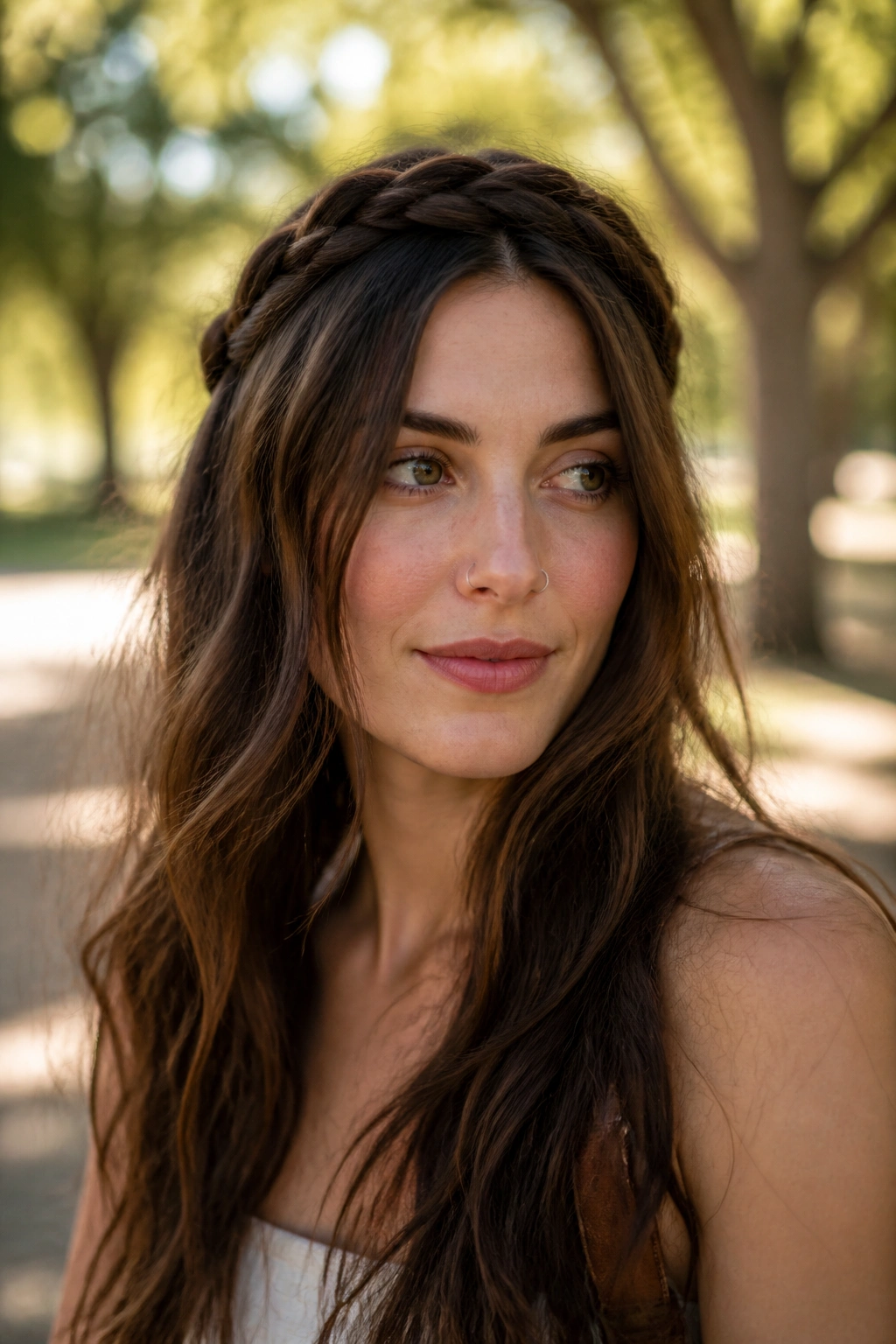
A braided crown over loose lengths has a very specific energy: feminine, yes, but not delicate in a flimsy way. It feels like hair that can go to a wedding, then go to a concert, then somehow still look good after midnight. That versatility is a big reason it stays around.
What Makes It Different
The braid doesn’t need to be huge. In fact, a thinner braid often looks better because it sits like a frame instead of a costume piece. Start it low near one ear, wrap it across the top or back of the head, and let the rest of the hair fall loose underneath. If the hair is waved or curled, even better; the contrast between the braid and the loose length gives the whole style more shape.
- Keep the braid loose enough to tug gently at the edges
- Pin it in two places instead of one
- Leave a few face-framing pieces out
- Finish with a light mist of hairspray, not a heavy helmet
Best for: long hair that needs a little structure without losing softness.
The thing I like most here is the mix. It says “I made an effort” without shouting. That’s a nice line to walk.
7. Boxer Braids Into a Low Ponytail
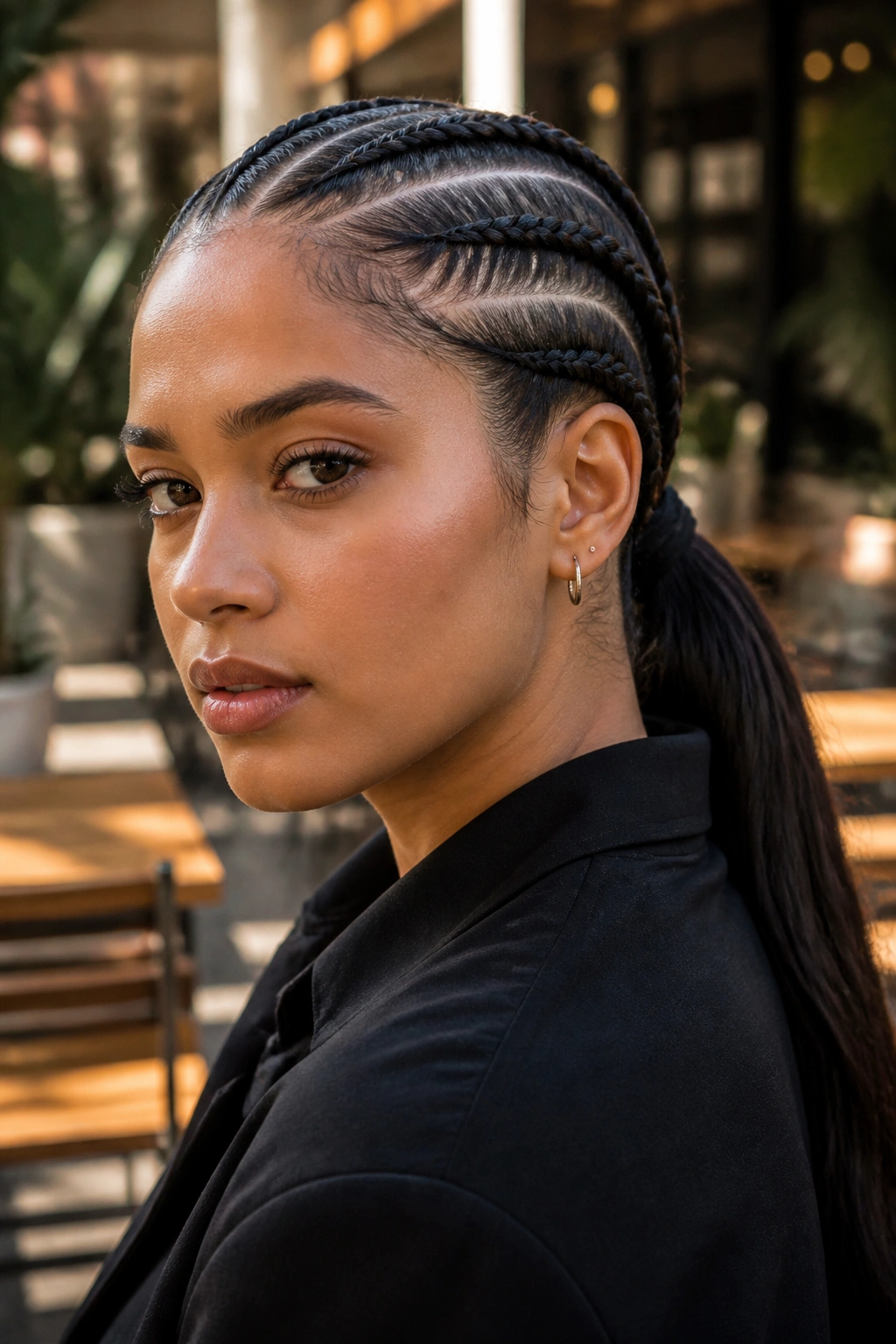
For days when you want the hair off your face and still want the style to feel sharp, boxer braids feeding into a low ponytail are hard to beat. It’s practical, sure, but it also has a clean, sporty edge that queer women often lean into because it reads confident rather than decorative.
The braids should start tight at the scalp so the center part stays crisp. Then feed them into one low ponytail at the nape, where the length can swing freely. The ponytail is what keeps this from looking too severe. It softens the whole thing a little. If you want a cleaner line, wrap a small section of hair around the elastic. If you want more attitude, leave the elastic visible and call it done.
This is a smart style for travel, long shifts, dance nights, or anything where your hair needs to stay put. It also works well if you’re growing out layers, because the braids keep shorter pieces under control. Add a little styling gel at the hairline and use a toothbrush or edge brush to smooth flyaways, but don’t overdo it unless you like that ultra-sleek finish.
It’s one of those looks that says competence without losing personality. Very useful. Very wearable.
8. Long Locs With a Clean Middle Part

Long locs carry a kind of visual weight that plain loose hair can’t always match. The line of the part, the rope-like texture, the way the length hangs as a single shape — all of that gives the style presence. For queer women, that presence can feel especially good because it doesn’t rely on softness or sharpness alone. It has its own language.
The middle part keeps the look balanced and symmetrical, which is why it works so well with long locs. A clean part creates structure at the scalp, then the locs themselves do the rest. You can wear them loose, pull them into a low bun, stack them into a half-up style, or let a few locs frame the face. Each option changes the mood without changing the cut.
Maintenance matters here, obviously. Scalp care is the real work. A light scalp spray, regular cleansing between retwists, and wrapping the locs at night will keep them from getting dry or fuzzy too fast. That said, a little fuzz is not the enemy. It often gives locs some life.
I also like locs because they can look formal or casual without changing the actual shape much. That makes them one of the most adaptable long styles on this list.
9. Waist-Length Knotless Braids

Why do knotless braids look so smooth at the hairline? Because the braid starts with your natural hair and gradually builds in the extensions, instead of beginning with a bulky knot. That smaller start is a big part of why they feel softer and lighter than older braid styles, especially when you wear them long.
Waist-length knotless braids give you drama without needing a lot of daily styling. The length is the statement. The parting pattern matters, too. A straight center part feels clean and sleek. A side part can soften the whole look. And if you leave the ends loose with a little curl, the braids stop feeling too severe.
How to Wear It
- Ask for medium or small parts if you want movement
- Keep the braid tension gentle at the front hairline
- Sleep in a silk scarf or bonnet so the ends don’t frizz up fast
- Refresh the scalp with a light oil, not a heavy grease
The good part about knotless braids is that they can sit anywhere on the femme-to-masc spectrum depending on how you dress them. Add hoops and a sharp brow, and the energy changes fast. This is a style with range, and range is underrated.
10. Half-Up Top Knot With Face-Framing Strands

The half-up top knot is one of those styles that looks casual until you notice how much shape it actually gives the face. Pulling the top section up lifts the eyes and cheekbones, while the loose length keeps the hair feminine, soft, or a little messy — depending on how neat you make the knot.
Unlike a full bun, this style keeps the length visible, which matters if you love your hair and do not want to hide it. That’s the appeal. You get some of the practicality of an updo without losing the drama of long hair hanging down the back. It also works well on second-day texture, which means it’s a good rescue style when wash day is not happening.
The face-framing pieces make a huge difference. Leave out a few thinner strands near the temples and curl them slightly away from the face. If you want a more masc-leaning version, keep the front pieces straighter and tighter. If you want softer energy, let them bend. A single scrunchie can keep the knot loose; two pins can keep the shape from sagging.
This one is everywhere for a reason. It’s quick, and it rarely looks boring.
11. Long Undercut With Sweeping Layers
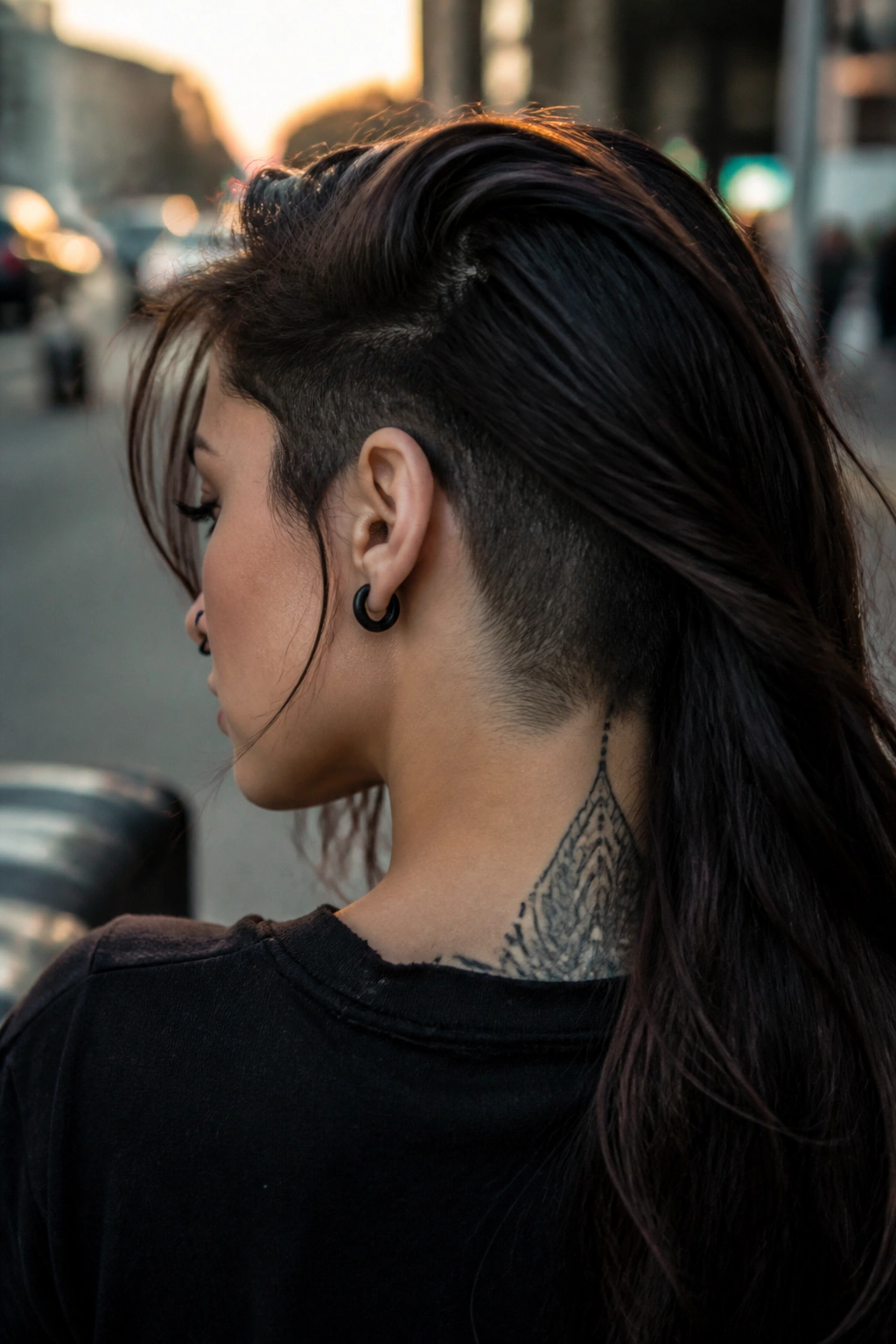
A long undercut is one of the sharpest ways to keep long hair from feeling heavy or flat. You cut or clip the underside short, leave the top layers long, and let the contrast do the visual work. That hidden reveal is part of the fun. Hair down, it can look almost conventional. Hair up, and the undercut shows itself off immediately.
What Makes It Work
The top layers need enough weight to drape over the shaved or clipped section. If the top is too thin, the whole thing can look patchy. If it’s too dense, you lose the point because the undercut disappears. That balance is why this style deserves a good stylist, not a rushed one.
- Great for thick hair that needs bulk removed
- Easy to wear sleek or tousled
- Lets you keep length without the triangle shape
- Can be softened with waves or worn straight for a cleaner line
Best part: you can change the mood fast. One ponytail and the whole cut reads bolder.
This style has always felt especially queer to me because it plays with reveal and conceal. That tiny bit of control goes a long way.
12. Silk Press With Flipped Ends

A silk press is not just “straight hair.” It’s a particular kind of straightness — soft, glossy, airy, and smooth without looking pinched flat. On long hair, especially textured hair, the result can be gorgeous when it’s done with care. The flipped ends keep it from feeling too severe, which is part of why the style still feels warm instead of icy.
The process matters. A heat protectant should go on before anything hot touches the hair. The blow-dry should stretch the hair enough that the flat iron does not have to fight every strand. And the flat iron itself should move in one or two slow passes, not ten frantic ones. Too much heat is where the shine turns into damage.
Flipped ends make the style feel softer. You can do that with a round brush during blow-drying or with a slight turn of the flat iron at the ends. Keep the flip subtle. Big cartoon curls at the bottom tend to fight the whole point of the look. What you want is a gentle curve, like the hair decided to behave but not submit.
This is a beautiful choice for women who like long, neat hair with a touch of movement. It feels polished, but not stiff. That’s the sweet spot.
13. Mermaid Waves With Big, Soft Bends

What if you want texture without the crunchy, over-sprayed beach look? Mermaid waves are the answer. They use big, soft bends that travel down the length of the hair, so the whole style feels fluid instead of curled. On long hair, that movement is the entire show.
You can make this with a large-barrel curling iron, a waving iron, or even overnight braids if your hair holds pattern well. The key is keeping the bends loose and slightly irregular. If every section is identical, the hair starts looking manufactured. A better version has a little change from one wave to the next. That randomness is what gives it life.
After styling, brush the waves out gently and add a drop or two of lightweight oil to the ends. Not the roots. The ends. Heavy product near the scalp will flatten the lift and make the style feel dull. If your hair is fine, use a texturizing spray instead of oil. If it’s coarse, a tiny bit of cream can help keep the waves from puffing out.
This style works especially well when you want softness with a hint of fantasy. Not costume fantasy. Just enough glow.
14. Micro Braids Mixed With Loose Curls
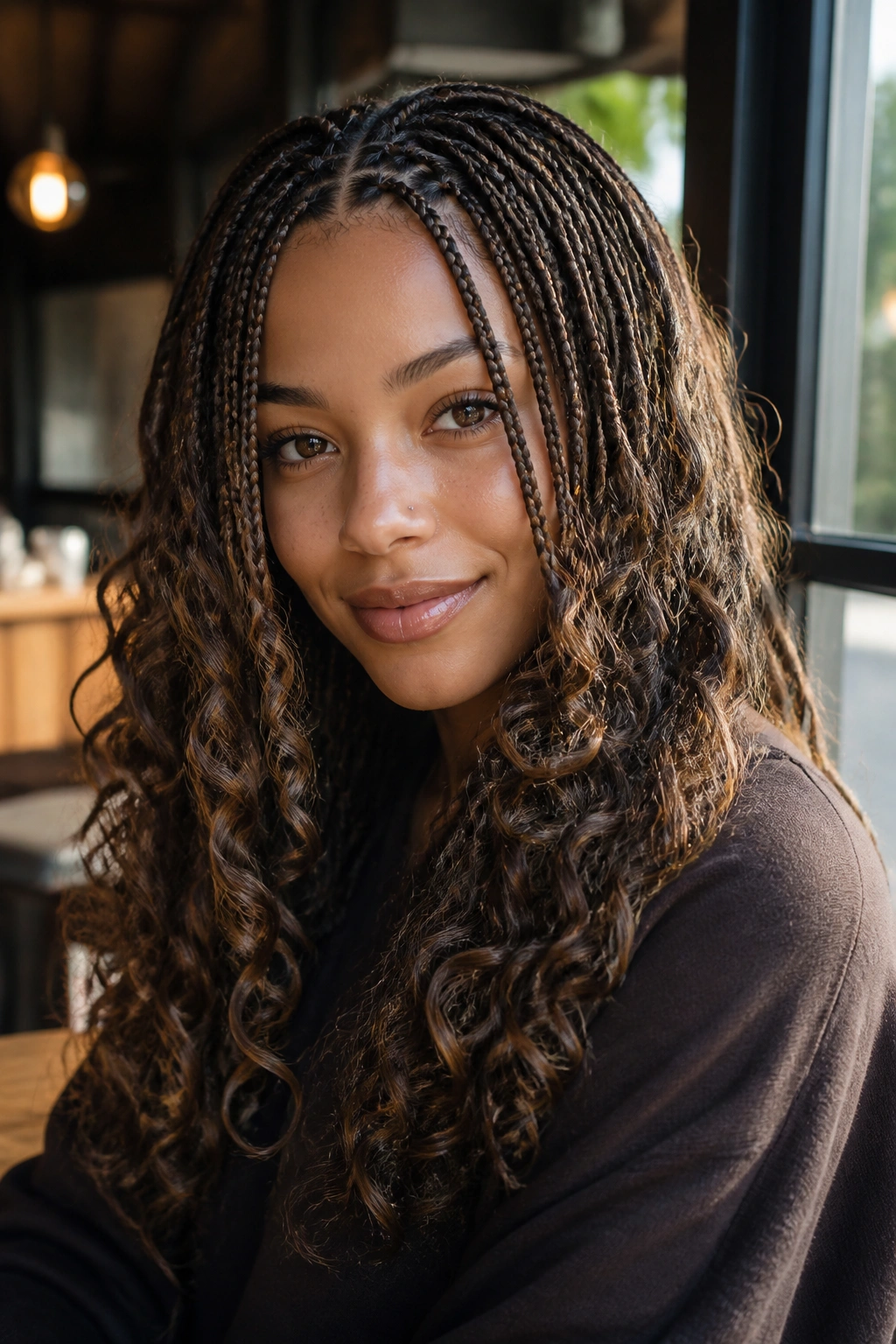
Micro braids mixed with loose curls have a built-in contrast that looks even better close up than it does from across the room. Tiny braids give the style detail and edge; loose curls keep it from feeling too tight or severe. That mix is part of the charm. It feels lived-in, not staged.
The placement matters more than people think. Braids concentrated near the part or temples can frame the face without taking over the whole head. Loose curls through the mid-lengths and ends keep the style from becoming too heavy. If you want more drama, braid only the top layer and leave the underlayer curly. If you want a softer finish, braid less and let the curls take over.
This style takes time, so it helps to know what you’re paying for before you sit down. The payoff is texture that lasts longer than loose waves and looks more detailed than simple braids. It also wears well over several days if you protect it at night with a scarf or bonnet.
I like this look for people who enjoy a little intricacy in their hair without going full formal. It has personality. It also has patience baked into it, which is its own kind of style statement.
15. Long Mullet With Tapered Fringe

The long mullet is one of those cuts that looks wrong on a flat description and right on the right face. Shorter in front, longer in back, often a little shaggy through the crown — it has movement, edge, and enough shape to make long hair feel more alive. Queer women have kept this cut around because it doesn’t ask permission.
A tapered fringe softens the front and stops the cut from feeling too abrupt. That fringe can fall over the brows, split a little in the middle, or sit jagged and airy depending on how punk you want it to look. The back should keep enough length to swing when you move. That swing is part of the appeal. Without it, the cut can turn flat fast.
What to Ask For
- Shorter crown layers for lift
- A longer back section that keeps the shape readable
- Fringe that is chipped or feathered, not blunt and heavy
- Texture through the sides so the cut does not box out
The mullet is not a timid choice, and that is the point. It reads like a person with opinions. Which, honestly, is sometimes the nicest kind of hair.
16. Space Buns With Long Hanging Length

Space buns can go from playful to pointed depending on how you place them. Keep them high and neat, and they feel sharp. Keep them a little lower and looser, and they feel softer, more relaxed, almost mischievous. The long hanging lengths are what keep the style from turning into a costume.
Unlike a full updo, space buns leave a lot of the hair visible. That makes them a good fit for long-haired women who want their length part-up, part-down. You get face lift from the buns and movement from the loose section underneath. If your hair is thick, split the top section carefully so the buns do not get too bulky. If it’s fine, tease each bun lightly before pinning so they hold their shape.
This style also works well with texture. Waves, curls, and even slightly messy straight hair can all pull it off. Use two small elastics per bun if the hair is slippery, and pin the buns from underneath so they do not sag. A few face-framing tendrils can soften the look, but they are not required.
It’s a good style for when you want a little fun without giving up length. There’s nothing timid about it.
17. Glass-Straight Hair With Blunt Ends

Glass-straight hair is unforgiving in the best and worst ways. If the cut is good, it looks crisp, glossy, and expensive without needing much decoration. If the cut is uneven, you see every flaw. That honesty is part of the appeal for a lot of queer women who like their hair to feel exact.
The blunt ends matter more than people think. They anchor the whole shape. Pair that with a center part or a slight side part, and the hair falls in a clean line down the body. The style can read sleek and feminine, but it can also look sharp enough to lean more androgynous if you keep the styling spare. Bare ears, a strong brow, or a black jacket can shift the mood fast.
Heat protection is non-negotiable here. A flat iron should glide, not scrape. One or two passes is enough on healthy hair; endless passes are how shine gets traded for dryness. A smoothing serum on the ends only can help the finish look polished, but too much product turns the style limp.
This is the style for someone who likes clean lines and does not mind the upkeep. It is simple in theory, demanding in practice, and very good when it’s done well.
The Bottom Line
Long queer hair is never only about length. It’s about the shape that length makes when it falls, lifts, braids, flips, or gets cut into pieces that move differently from one another.
Some of these styles lean soft. Some feel sharp. Some are practical enough for an ordinary Tuesday and still look good under bright lights later. The real win is that none of them have to be worn one way forever. Hair changes. Moods change. So does the way you want to be seen.
If you’re heading to a stylist, bring a photo and one plain sentence about the feeling you want: more movement, less bulk, sharper edges, softer face framing, or a little of all four. That sentence matters more than a dozen vague compliments.
