



A good short haircut should make your morning smaller, not busier. If it needs a round brush, five clips, and ten minutes of coaxing before coffee, it has missed the point.
That’s why easy short haircuts for low effort days matter so much. The right cut can air-dry into shape, survive a rushed blow-dry, and still look intentional when you’ve only run a comb through it once.
The catch is that short hair is not automatically easy. A sharp bob on the wrong texture can flip out at the ends. A pixie with too many thin layers can go fluffy by lunchtime. Even a style that looks relaxed in photos can become annoying if it needs daily flat-ironing to behave.
So the real job is finding a cut that works with your hair’s habits instead of arguing with them. Some of these are blunt and tidy. Some lean soft and piecey. A few are almost brutally low-maintenance. All of them are built for those mornings when you want your hair to cooperate and get out of the way.
1. The Blunt Bob for Low Effort Days
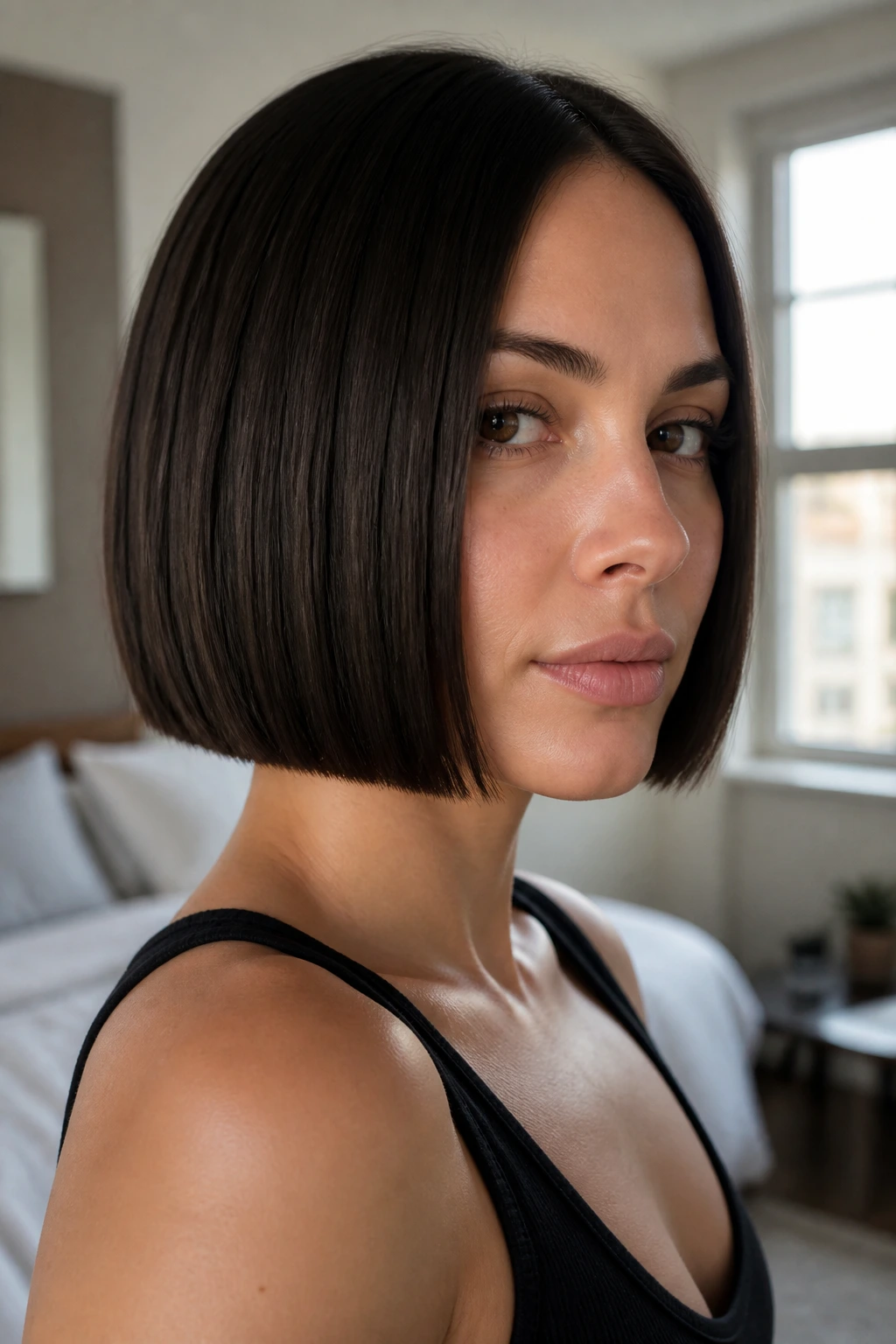
This is the haircut I recommend when someone wants hair that behaves. A blunt bob has a clean edge, usually landing at the jaw or just below it, and that straight line does a lot of the work for you.
Because the ends sit in one even shape, the bob often dries smoother than layered cuts. Fine to medium hair tends to like this shape, especially if it gets a little frizzy when overhandled. A quick towel squeeze, a dab of leave-in cream, and you’re halfway there.
Why It Stays Easy
- Ask for a one-length perimeter with minimal internal layering.
- Keep the length at the jaw or 1 inch below it.
- Use a pea-size cream on damp hair if your ends puff up.
- Tuck one side behind the ear when you want instant shape.
Best fit: straight or slightly wavy hair that looks better when the ends stay full and simple. No fuss. That’s the whole appeal.
2. The Soft French Bob With a Tiny Bend
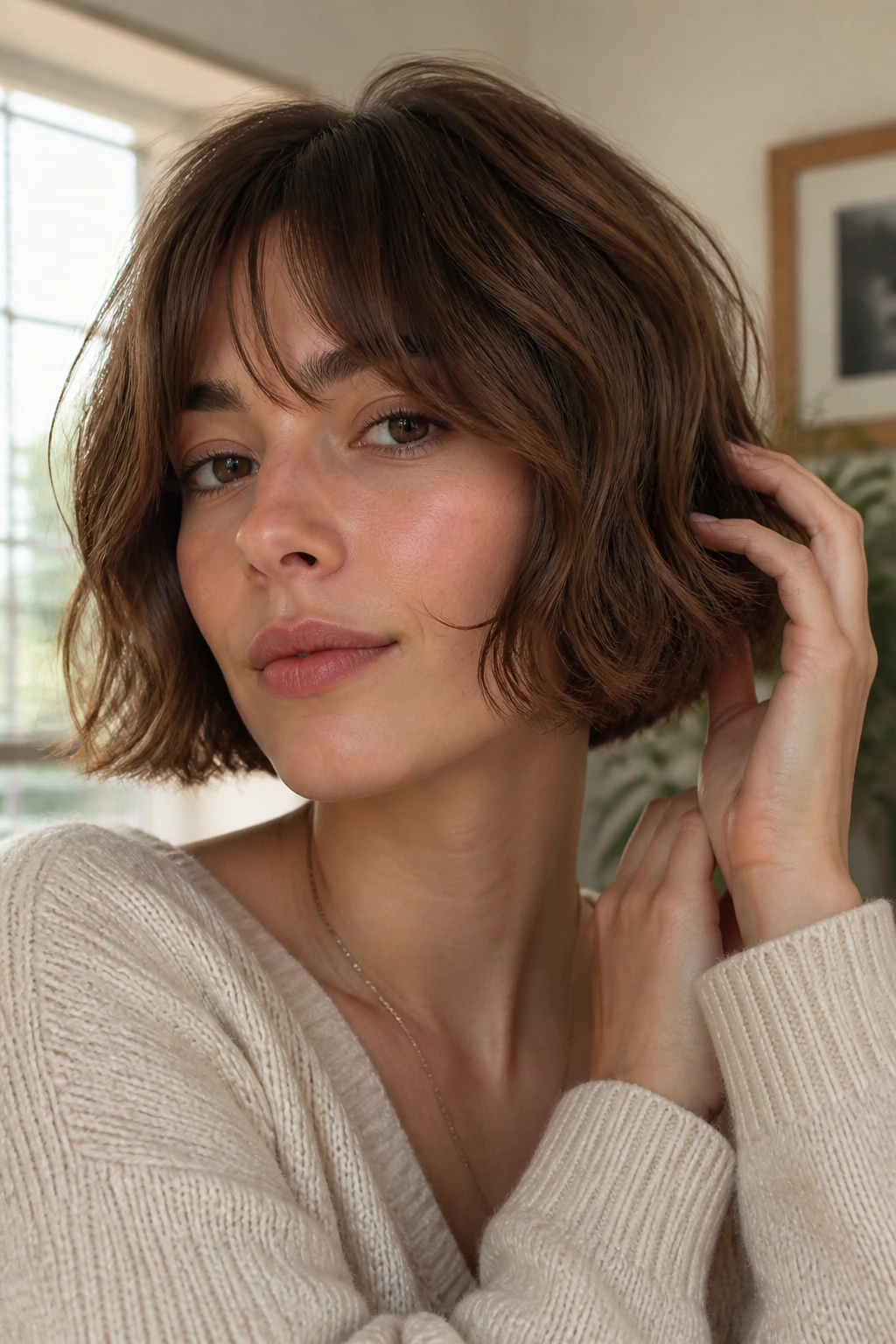
What if you like a bob, but not the stiff kind? The soft French bob gives you the same short length with a little swing around the mouth and cheekbones.
The magic is in the looseness. It usually sits a touch shorter than a classic bob, and the ends are softened so the hair can bend instead of sitting like a helmet. A bit of mousse at the roots and a quick scrunch is often enough.
How to Style It in Three Minutes
- Mist damp hair with a light mousse.
- Scrunch the ends with your hands.
- Let it dry with a small bend, or rough-dry the roots for a little lift.
If your hair already has wave, this cut can look like you meant to do almost nothing. Straight hair can wear it too, but it does like a small amount of movement. Not much. Just enough to keep it from feeling too neat.
3. The Textured Pixie That Barely Needs Styling
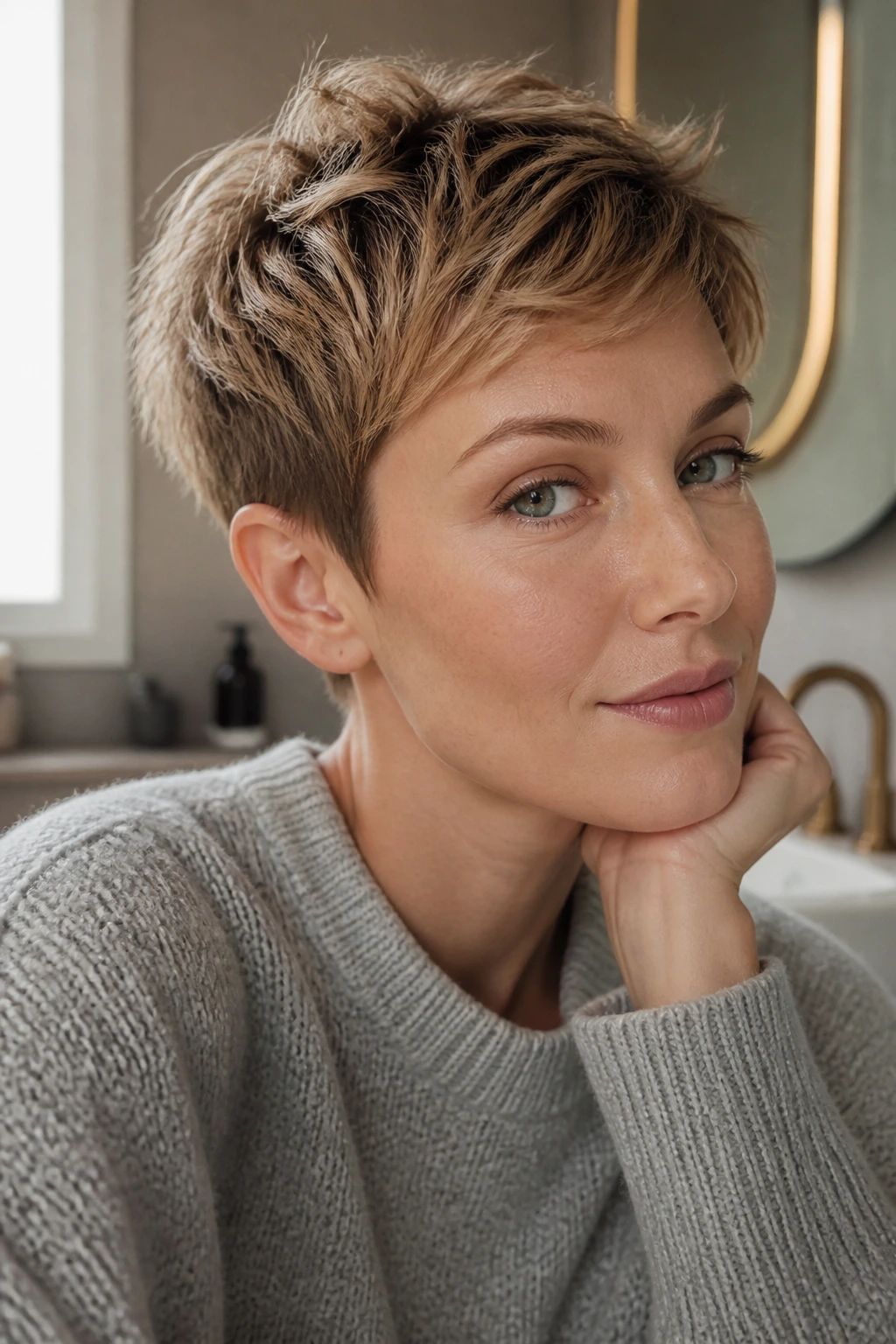
Picture this: you wash your hair, shake it out, and leave the house.
That’s the promise of a textured pixie. The top stays long enough to move, usually around 2 to 3 inches, while the sides and back stay shorter so the shape doesn’t collapse. It’s one of the easiest short cuts if you hate heat styling.
What to Ask Your Stylist
- Leave the top long enough to pinch with fingers.
- Keep the fringe soft, not chopped into tiny pieces.
- Avoid too much thinning near the crown.
- Show ears if you want a cleaner, lighter feel.
A tiny amount of styling paste is enough. Warm it between your palms, press it into the top, and stop before the hair starts looking crunchy. Less product beats more product here, every time. If you wear glasses, this cut is a gift because it keeps the face open without getting in the way.
4. The Bixie Cut That Splits the Difference
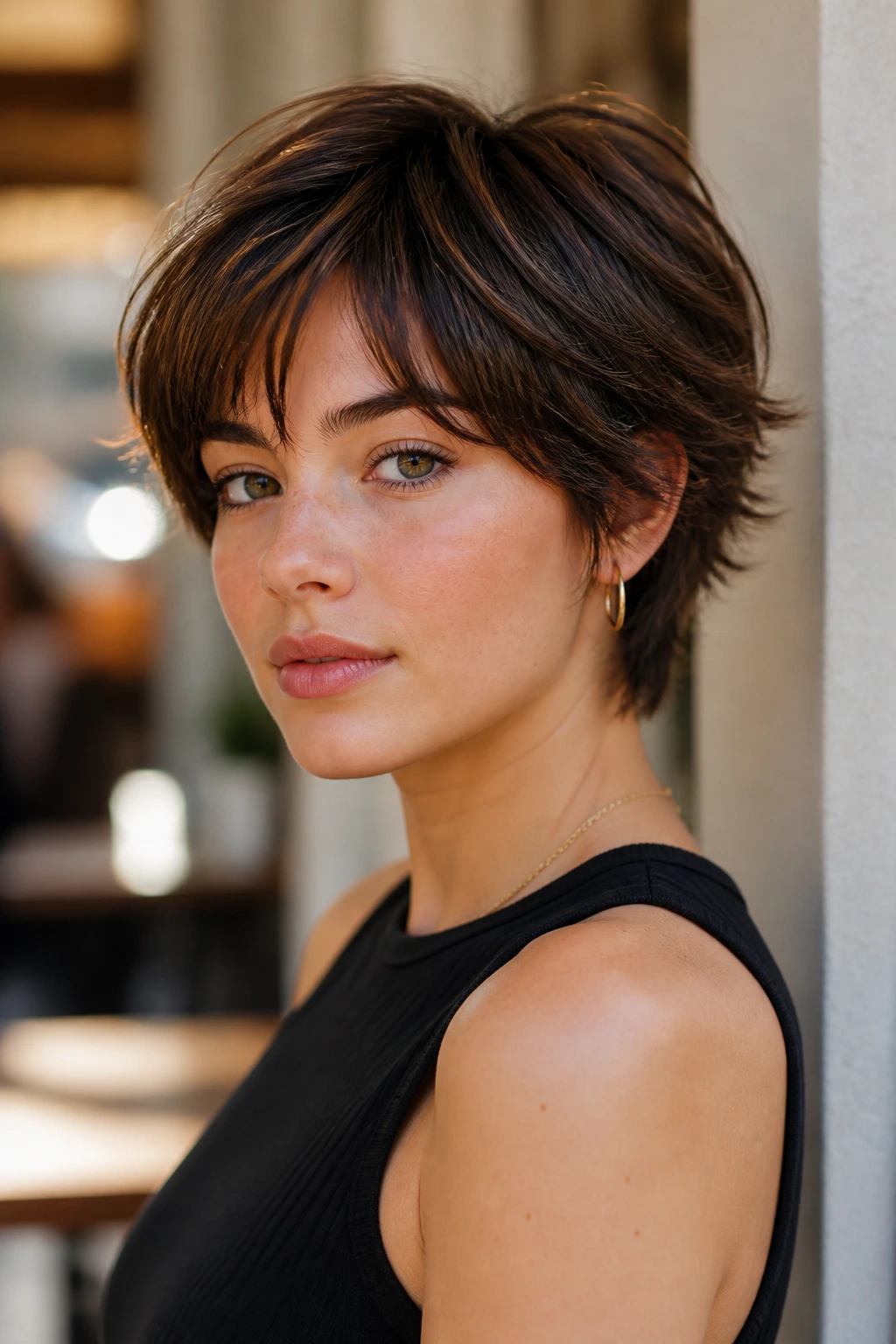
A bixie is not indecision. It’s strategy.
It sits between a bob and a pixie, which means you get the softness of a bob around the face with the easy dryness of a pixie at the back and sides. That extra little length around the ears makes it less demanding than a shorter crop, and it grows out better too.
For people who like the idea of a pixie but do not want to commit to full short-short hair, this is a smart place to land. You can tuck pieces behind the ear, wear it with a side part, or scrunch it with a light cream and call it done.
Why It Works
The bixie has enough shape to look styled without needing a full blowout. That matters on days when you do not want to fight your hair. A bob can feel too boxy and a pixie can feel too exposed; this one sits in the middle and stays forgiving.
If you want a haircut that still looks good when you skip the mirror, this is one of the better bets.
5. The Chin-Length Bob With a Deep Side Part
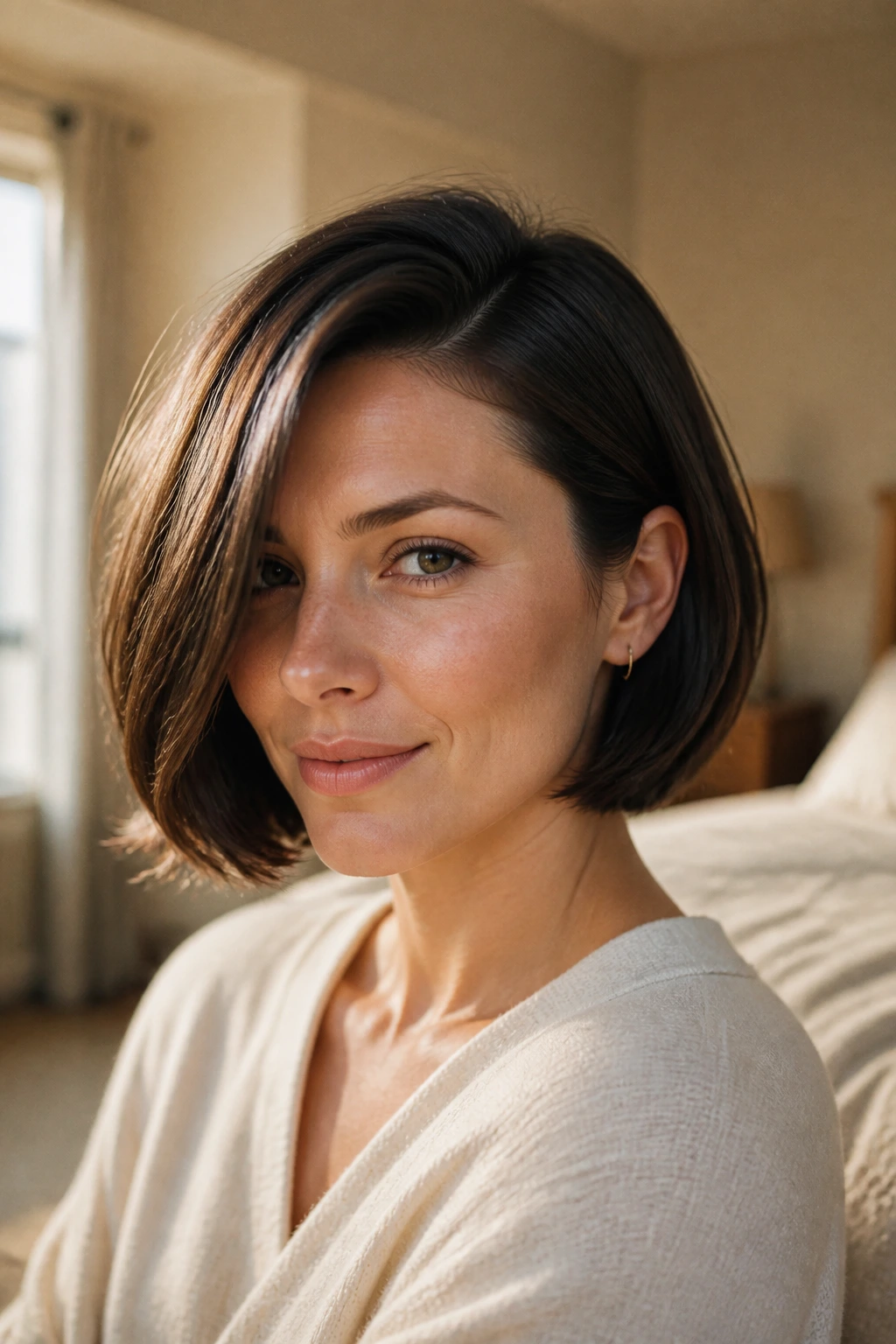
A deep side part does more than people give it credit for. It shifts volume fast, which is why a chin-length bob can feel awake even when you’ve done almost nothing to it.
I like this cut on hair that lies flat at the crown and flares a bit at the ends. The side part breaks up that heavy center shape and gives the whole cut a little lift without needing hot tools. You can change the part, mist the roots, and be out the door.
A chin-length bob is also useful because it’s quick to reset. If one side bends weird after sleep, a wet hand and a quick comb-through usually fix it. No drama. No round brush.
The parting matters here. Keep it deep enough to show a clean sweep across the forehead, but not so extreme that the hair starts fighting to fall back. A soft side part should look casual, not forced. That’s the sweet spot.
6. The Italian Bob That Looks Styled Fast
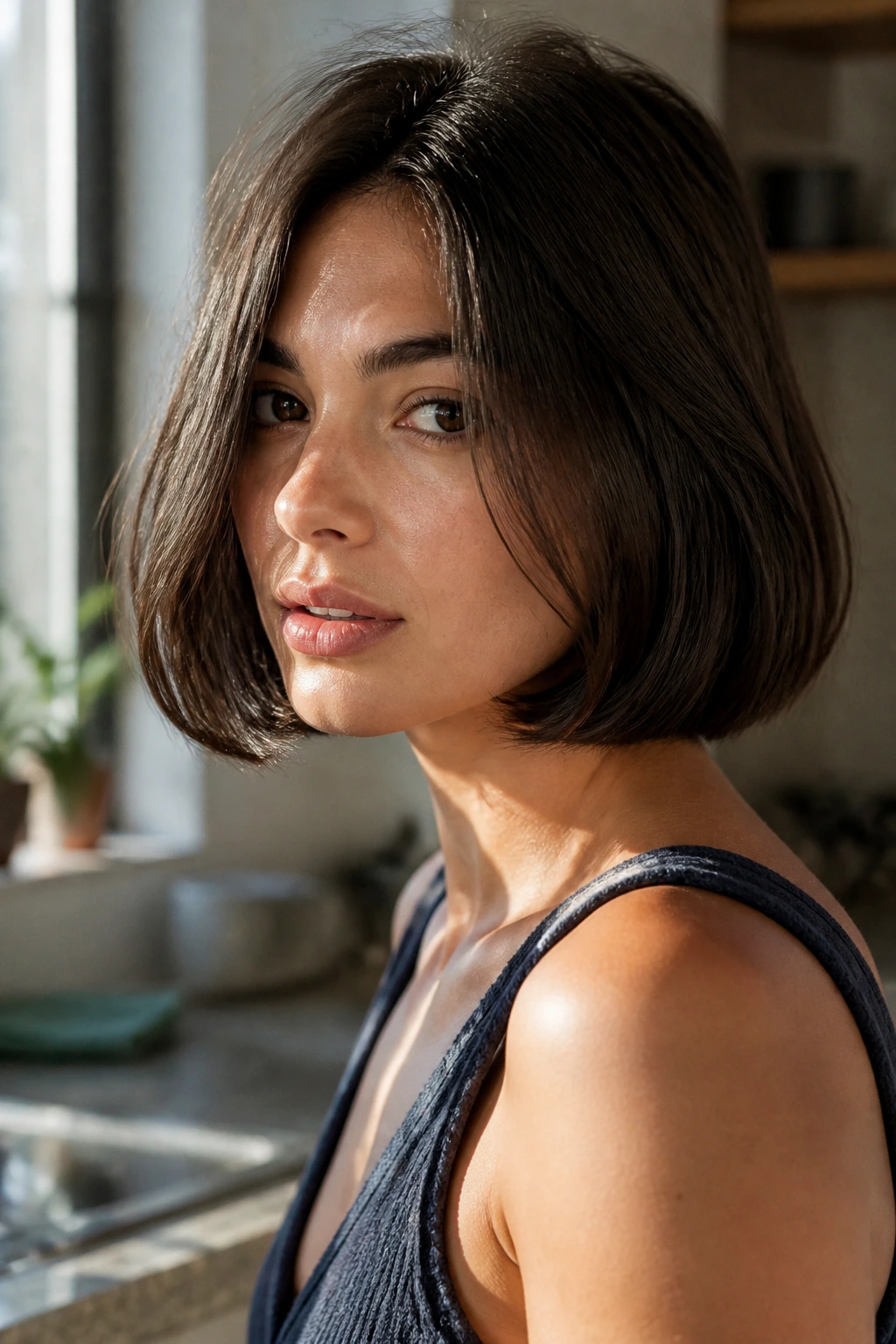
This is the haircut that looks like you meant to do something, even on a five-minute morning. The Italian bob usually keeps a bit more weight through the ends, which gives it that fuller, swingier shape people love.
Unlike a razor-thinned bob, this one keeps the line chunky and deliberate. The ends don’t feather away into nothing. They sit there with confidence. That makes the haircut feel rich without making it fussy.
What Makes It Different
- The length usually lands around the jaw or just below.
- The ends stay heavier, not wispy.
- It likes a little bend, not a perfect curl.
- It can be tucked, flipped, or worn loose.
The styling is mercifully simple. A rough blow-dry with fingers, or even a quick air-dry with a touch of cream, usually gives enough shape. If you want hair that reads “done” without asking for a lot of work, this is a strong one.
7. The Layered Crop for Fine Hair
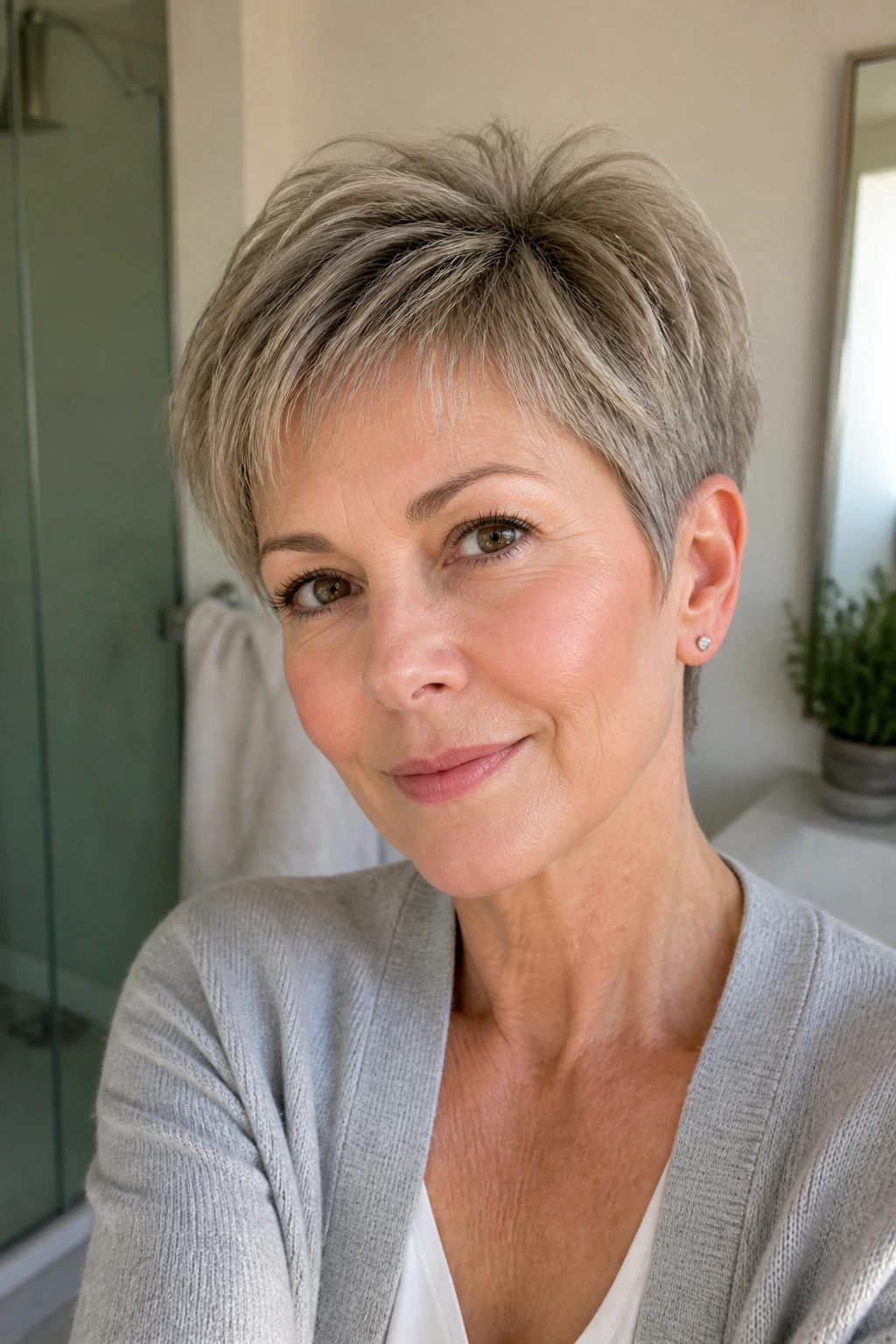
Fine hair often goes limp by noon. The right crop fixes that better than extra product ever will.
What you want is short layering that creates lift without stripping away the hair’s body. Too many people ask for texture and end up with ends that look thin and see-through. That is not the goal. The goal is to make fine hair look fuller, not frayed.
What to Ask For at the Salon
- Short, controlled layers at the crown.
- A blunt or slightly rounded perimeter.
- Soft texture around the temples.
- No aggressive thinning shears through the ends.
A layered crop works well when the top has enough length to move, but not so much that it collapses. A small root-lift spray can help, sure, but the cut should do most of the work. That’s the part people miss. Good short hair for fine texture starts with shape, not product.
8. The Curly Shag Bob for Natural Texture
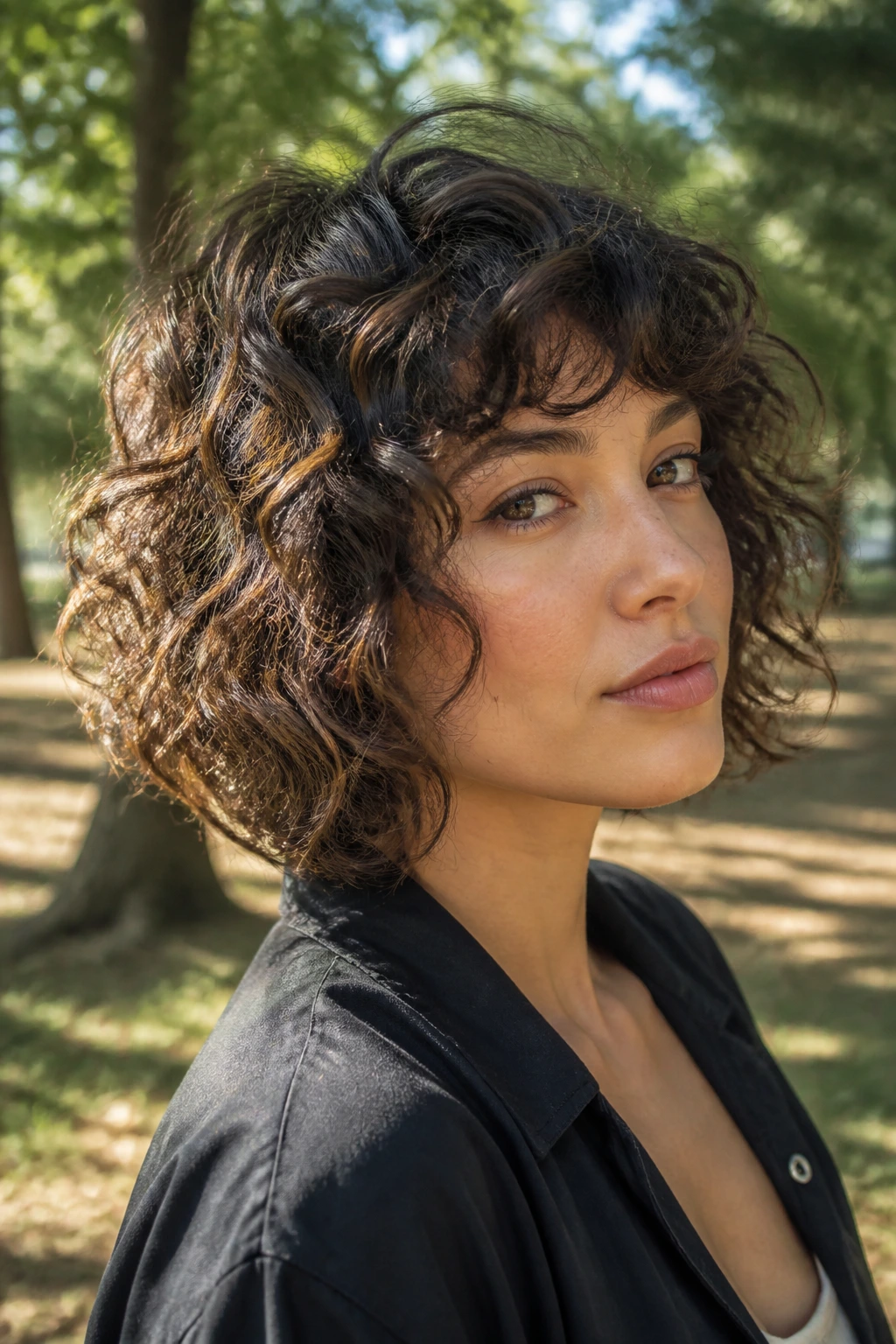
If your curls make a triangle when they grow out, this cut is the antidote.
A curly shag bob uses layers to remove bulk and let the curl pattern stack more evenly. Instead of a wide, boxy silhouette, you get a shape that follows the head a little better. That saves time because you spend less energy forcing the curls into place.
The best version of this cut usually starts around the chin and gets a little longer as it moves back. It can be cut dry or shaped very carefully on damp hair, depending on the curl pattern. The point is to respect the spring in the hair, not flatten it.
What Helps Most
- Use leave-in conditioner on soaking-wet curls.
- Follow with gel or cream, depending on how much hold you like.
- Scrunch with a microfiber towel or T-shirt.
- Leave the brush alone once the curls start setting.
If your curls are dense, this is one of the easiest short cuts to live with. The shape does not need to be perfect every day. It just needs to be roughly in place.
9. The Tapered Cut That Stays Clean at the Nape
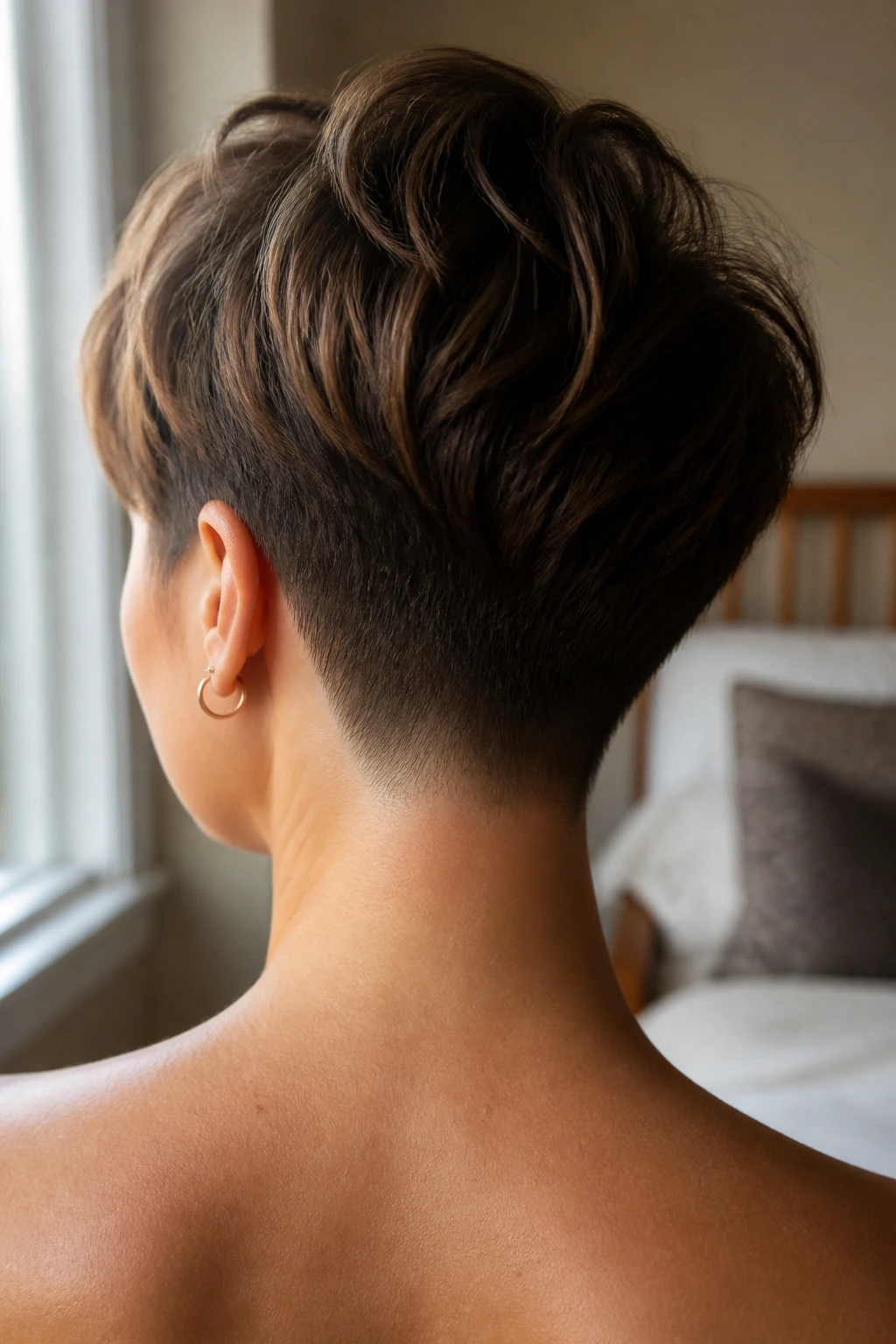
The back of this cut feels cool and neat against the neck. That sounds small, but on a busy day it matters more than you’d think.
A tapered cut keeps the nape shorter and gradually leaves more length toward the top. The result is tidy without looking severe. It also grows out in a fairly soft way, which keeps you from feeling like you need a cleanup the second it gets past a certain point.
This cut is especially nice for thick or coarse hair because it removes that heavy shelf at the back. If you’ve ever had hair stick to your neck and feel too warm after a long day, you already understand why this matters.
Do not ask for too much removal near the hairline if your growth pattern swirls there. A good taper should follow the head, not fight the cowlicks. When it’s cut well, the shape stays close and neat with almost no styling. A little cream. Maybe a comb. That’s enough.
10. The Asymmetrical Bob That Adds Shape Without Much Work
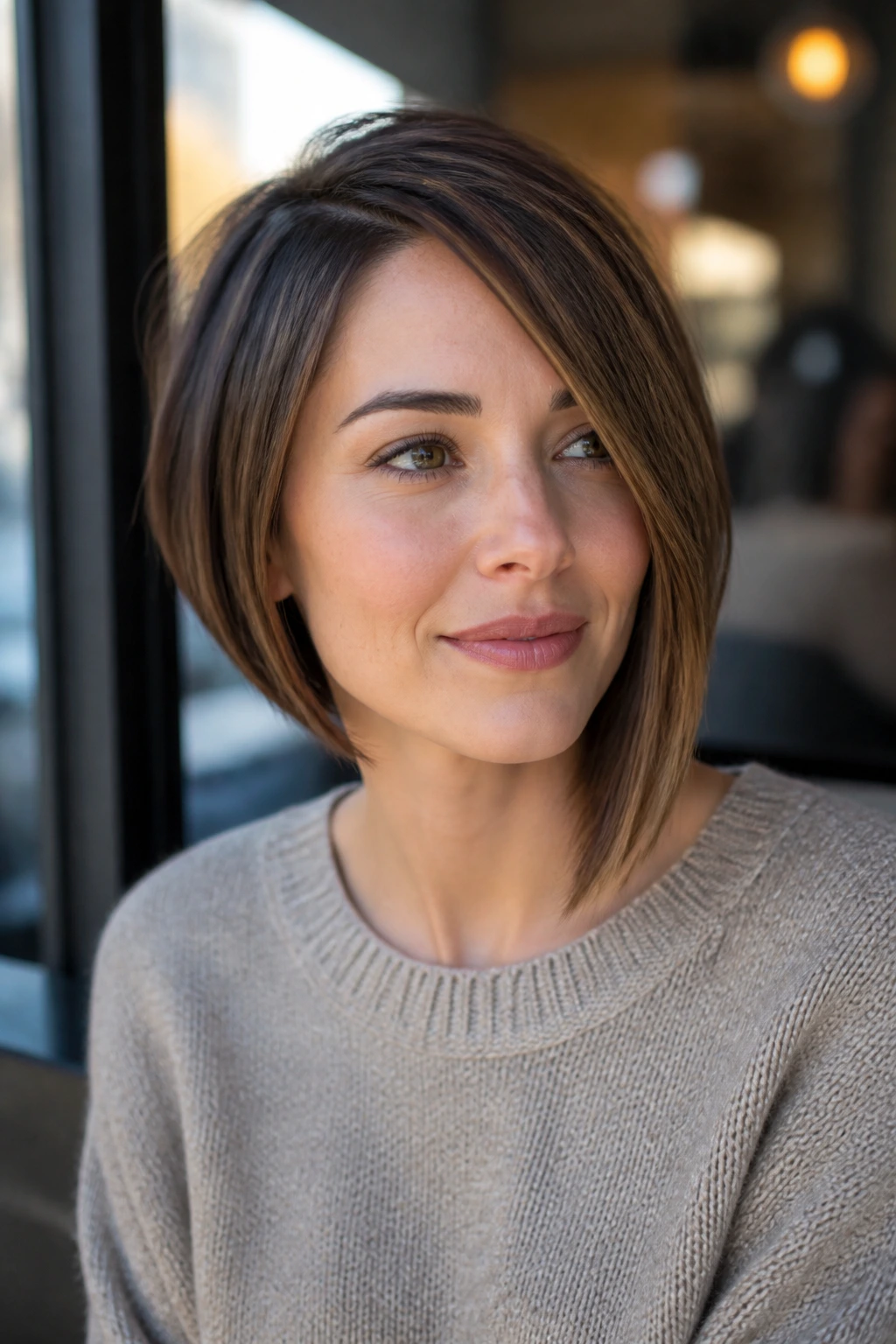
One side half an inch to an inch longer changes the whole feel of the cut. That tiny shift gives the hair built-in movement, even if you never touch a flat iron.
An asymmetrical bob can be subtle or sharp, but for low-effort days, subtle wins. A small difference in length keeps the shape interesting without tipping into “I need to style this carefully” territory. The eye reads it as intentional, which means you can get away with a rougher finish.
I like this cut on people who always tuck hair behind one ear or part it the same way every morning. The asymmetry works with that habit instead of trying to erase it.
What to Watch For
If the angle gets too dramatic, the haircut starts asking for attention. That’s where it turns into a statement cut, and statement cuts are not always lazy-morning friendly. Keep the gap modest, keep the ends clean, and let the shape do the talking.
11. The Buzz Cut for the Lowest Possible Maintenance
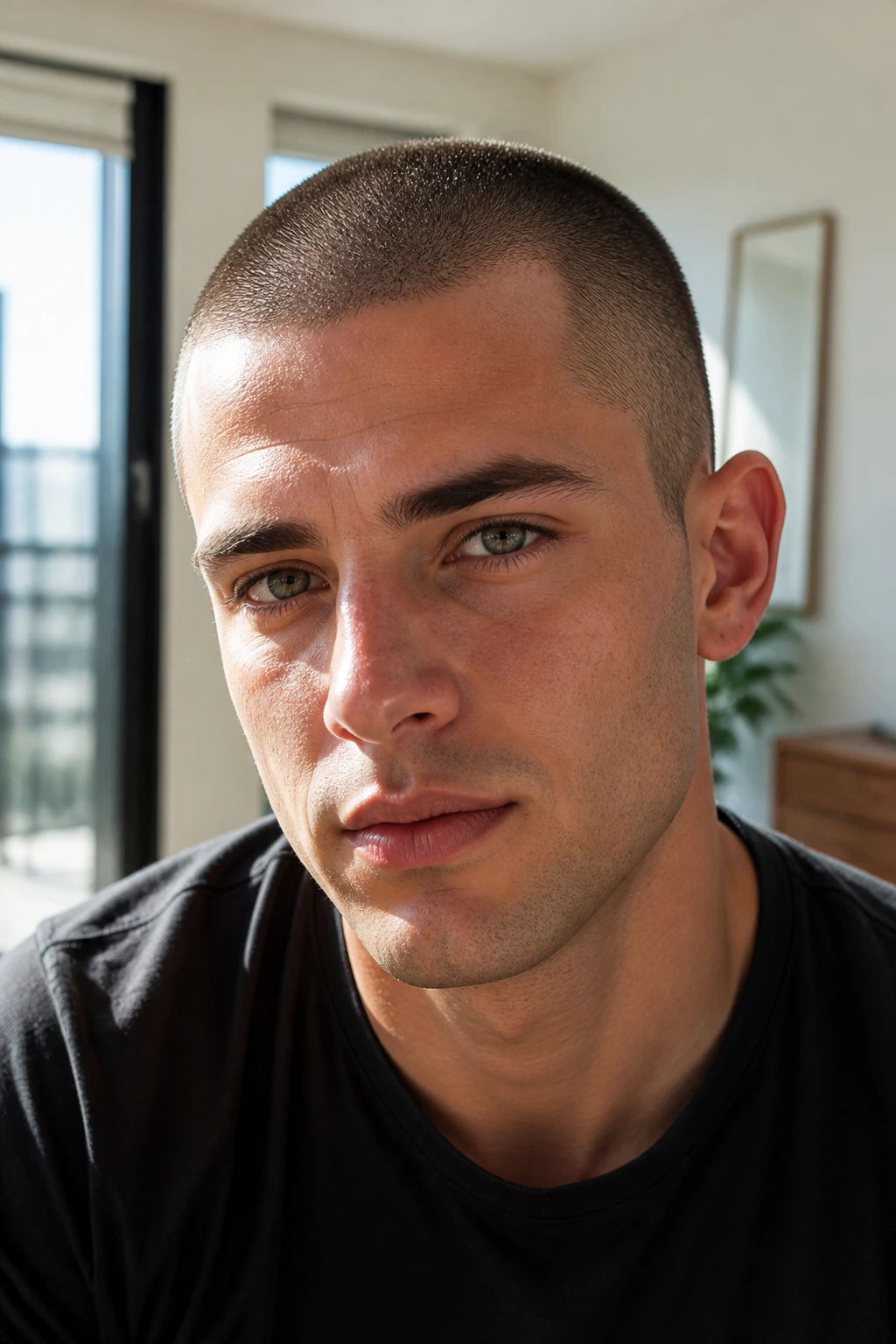
The buzz cut is the honest answer no one wants to hear.
If you want the least styling, the least drying time, and the least morning negotiation with your hair, this is it. A short guard — often somewhere around 3 to 6 mm — gives you a clean, close shape that needs almost nothing beyond basic scalp care.
What It Gives You
- No blow-dry time.
- No curling, flat-ironing, or brushing drama.
- Very quick trims, usually every 2 to 4 weeks if you want the same length.
- A strong shape that shows off your face, ears, and brows.
What It Doesn’t Give You
- Much softness around the face.
- Easy changes in parting or volume.
- Lots of styling options, because there’s not much hair to style.
That’s the tradeoff. Clean, simple, minimal. If you like a low-effort routine and do not mind a cut that asks for confidence, the buzz cut is hard to beat. It’s not the softest choice, but it is the most direct.
12. The Side-Part Crop for Low Effort Mornings
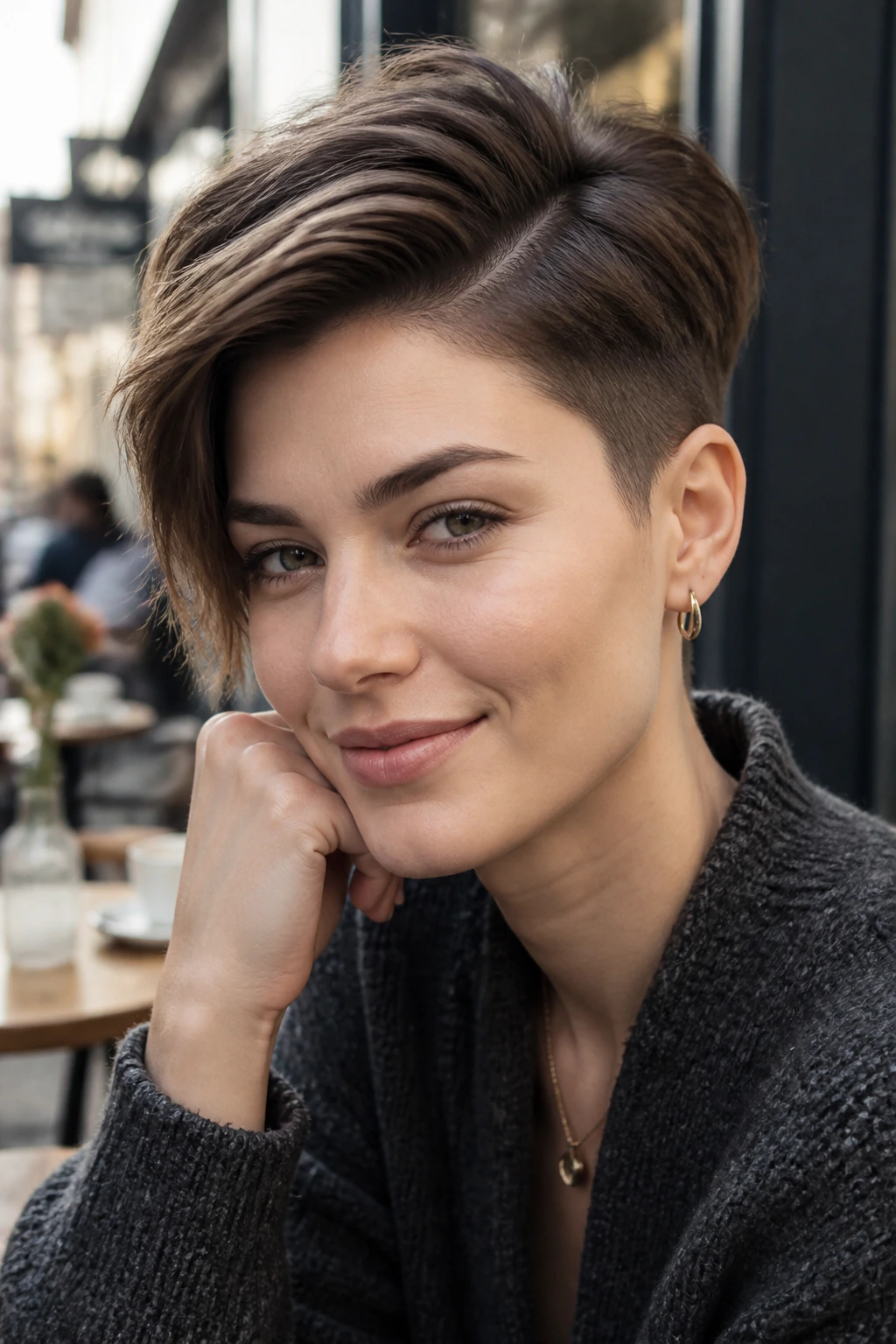
A side part is still the fastest volume trick I know.
A short crop with a little length on top and tighter sides can change character just by moving the part a few inches. Hair that lies flat in the middle often wakes up when it’s swept to one side, because the roots lift and the front gets some direction.
The One Detail People Miss
Keep the top long enough to move — usually around 2.5 to 4 inches — and keep the sides neat enough that the shape doesn’t puff out. If the crown is cut too short, the whole style loses its swing and starts sticking up in odd places.
That balance is why this cut works so well for people who want a quick fix. Finger-comb it with a little cream, flip the part, and you’re basically done. If your hair has a stubborn cowlick, a side part can often calm it down better than a center part can. Small move. Big payoff.
13. The Bob With Curtain Bangs

Can bangs count as low effort? Sometimes, yes.
Curtain bangs are the rare fringe that can be forgiving if they’re kept long enough to split and blend into the rest of the haircut. On a bob, they soften the front without locking you into a heavy fringe that needs constant trimming.
The trick is length. If the shortest piece sits too high on the forehead, the bangs will need more heat and more morning attention. Keep them a little longer, and they can be brushed apart, tucked back, or left to fall open on their own.
How to Keep Them From Eating Your Morning
- Ask for a soft, face-framing start point, not a blunt chop.
- Blow-dry the bangs first while they’re still damp.
- Use a small round brush only on the front section.
- Keep dry shampoo near the root if your bangs get oily fast.
A bob with curtain bangs works well if you want softness around the face without giving up the ease of a short cut. It’s not zero work. But it’s not high-maintenance either.
14. The Jaw-Length Angled Bob That Moves Away From the Face

A slight angle can be a gift if your hair hangs heavy at the sides. The front pieces sit a little longer, the back stays shorter, and the whole cut moves away from the neck in a way that feels lighter.
This is one of the better low-effort short haircuts for thick hair, because the shape does part of the slimming work. You do not need aggressive layers to get lift. A clean angle is enough when the cut is precise.
I would keep the difference modest — maybe 1 to 2 inches from back to front. Anything more starts looking sharp in a way that asks for more styling care than most people want on ordinary days.
The nice thing about this shape is that it still looks good when it’s slightly messy. The angle stays visible even if the hair bends imperfectly. That is the whole point, really. The cut should hold itself together.
15. The Ear-Length Crop That Skims the Cheeks
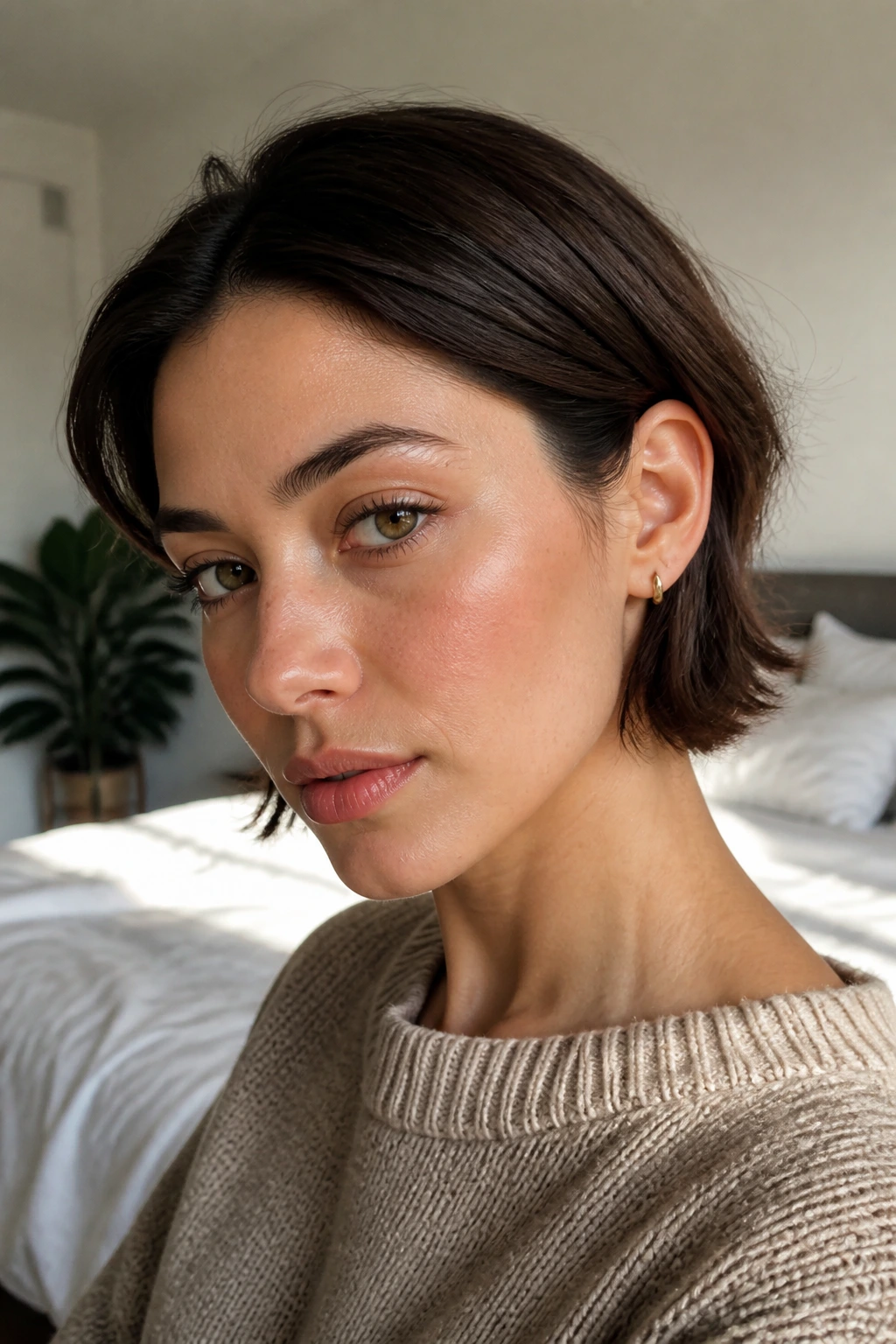
This cut feels light the second it leaves the chair.
An ear-length crop sits high enough to clear the neck and cheekbones, which makes it a smart option if you like the feeling of hair off your face. The edges can be soft, blunt, or slightly rounded, but the length is what gives it that quick, easy feel.
It’s also a nice choice if you want earrings, glasses, or a strong brow to stay visible. The haircut doesn’t fight those things. It frames them. That sounds cosmetic, and it is, but it also matters on days when you do not want your hair to become the main event.
A tiny bit of texture cream is usually all it needs. If your hair bends oddly at the sides, use your fingers to tuck it behind the ears while it dries. That small habit can keep the shape calm without heat.
16. The Rounded Bob That Keeps Thick Hair in Check
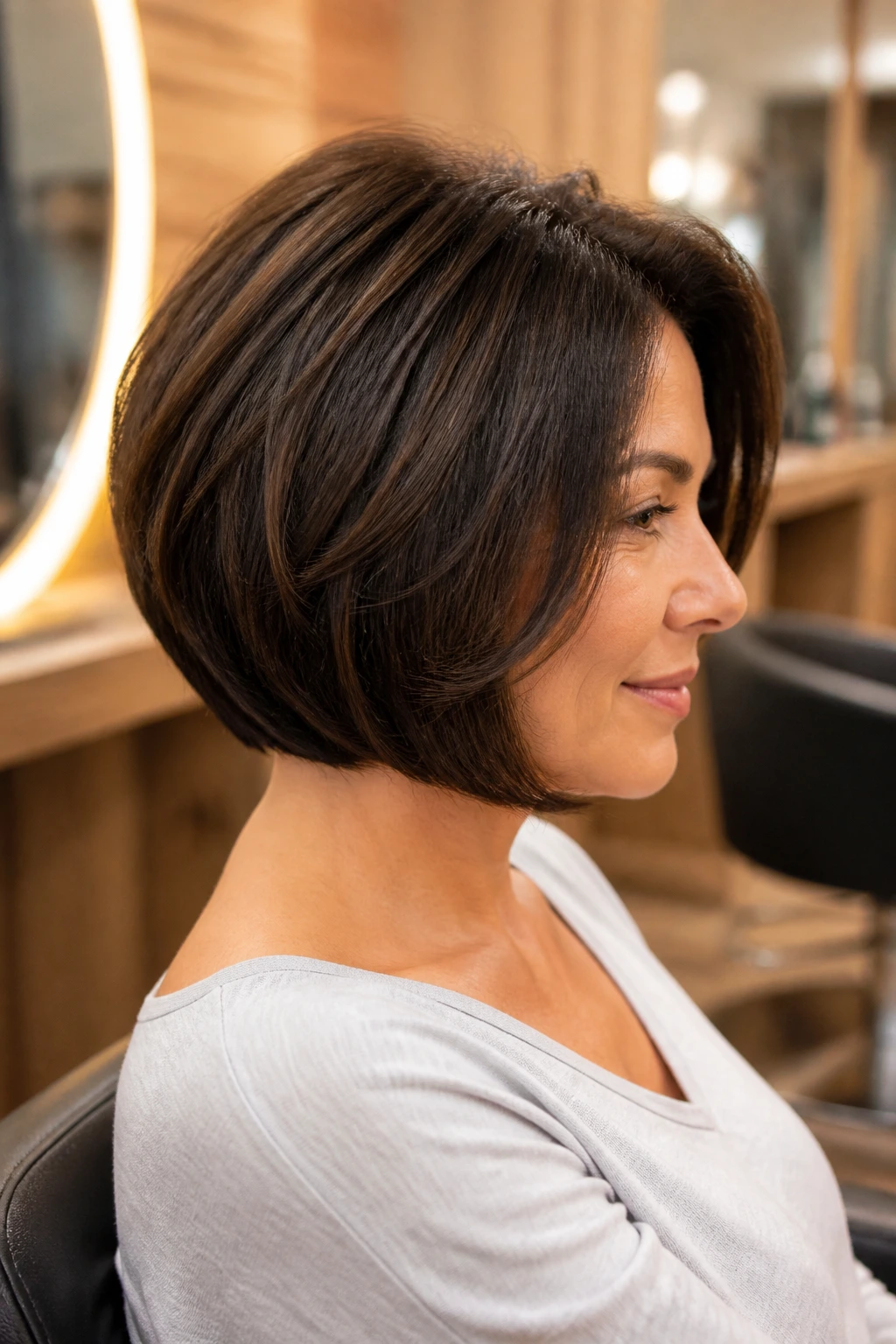
A rounded bob is different from a blunt one because it follows the head instead of standing off it. That matters when your hair has a lot of density and wants to puff outward at the sides.
The shape is usually a little fuller at the crown and smoother around the edges, so it feels controlled without looking flat. This is a good cut if your hair takes forever to dry when it’s left too heavy. Removing some bulk in the right places can save time every single morning.
What to Avoid
- Too much razor texturing through the ends.
- Layers that start too high at the crown.
- A line that is so blunt it sticks out sideways.
- Over-thinning near the temples, which can make thick hair frizzier.
Ask for a soft arc that hugs the head and lets the ends curve inward a little. If your hair is thick, this can be one of the most satisfying short cuts because it feels lighter without looking chopped up.
17. The Long-Top Pixie That Still Looks Soft
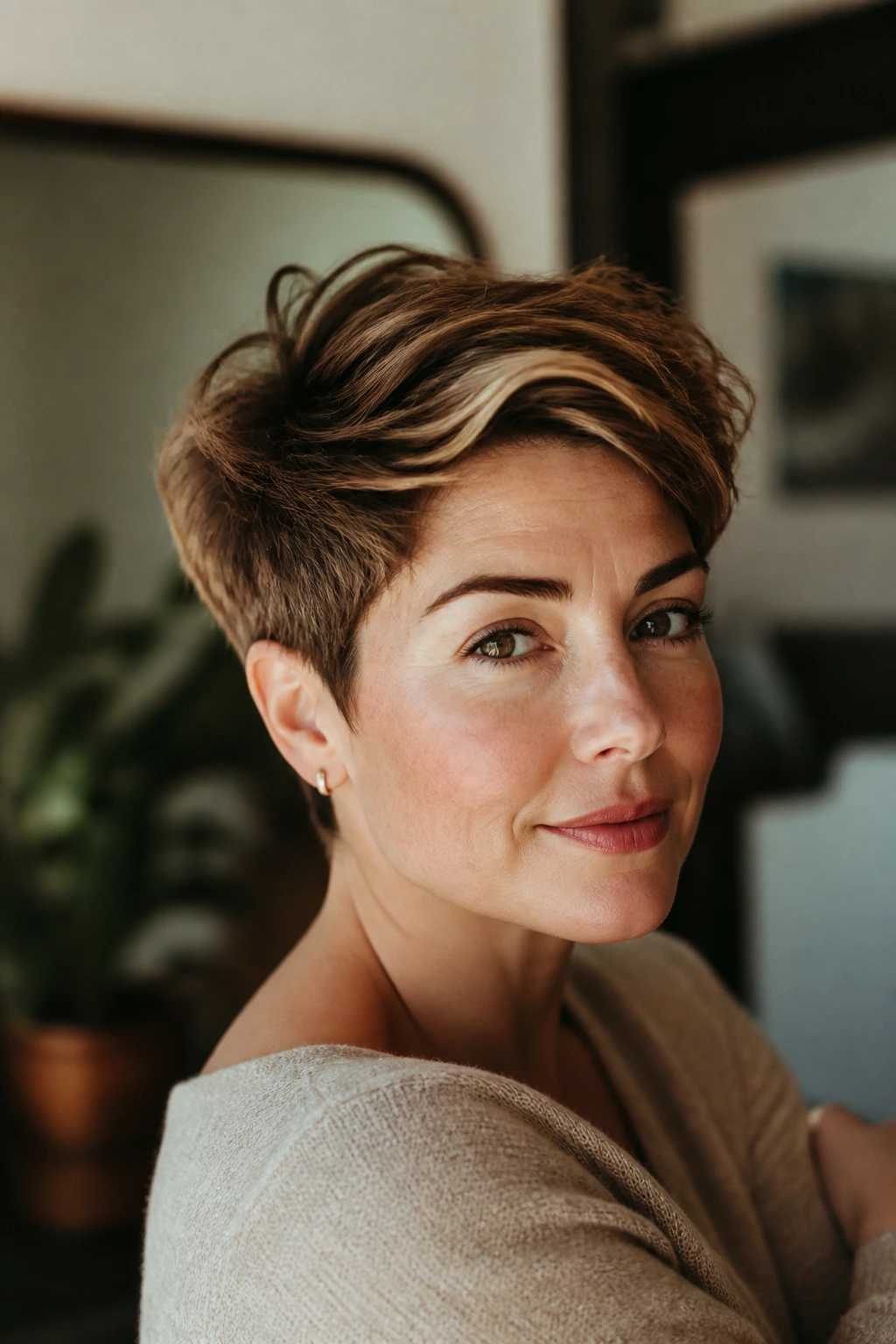
I keep coming back to this cut because it grows out without looking sloppy.
The long-top pixie keeps enough length on top — usually around 3 to 5 inches — to sweep, part, or pinch with fingers. The sides and nape stay shorter, which keeps the shape tidy and quick to dry. It has enough softness to avoid looking harsh, but not so much length that it becomes a styling project.
You can wear it pushed forward, brushed to the side, or slightly messy. One small dab of cream or pomade is often enough. That’s the beauty of it: the haircut gives you options, but none of them are demanding.
If you want a pixie that can survive a rushed morning and still look decent by afternoon, this is a strong choice. It does ask for trims every 4 to 6 weeks if you want to keep the shape clean. Still, the daily effort stays low, and that is the part people usually care about most.
18. The Undercut Pixie That Cuts Down Bulk
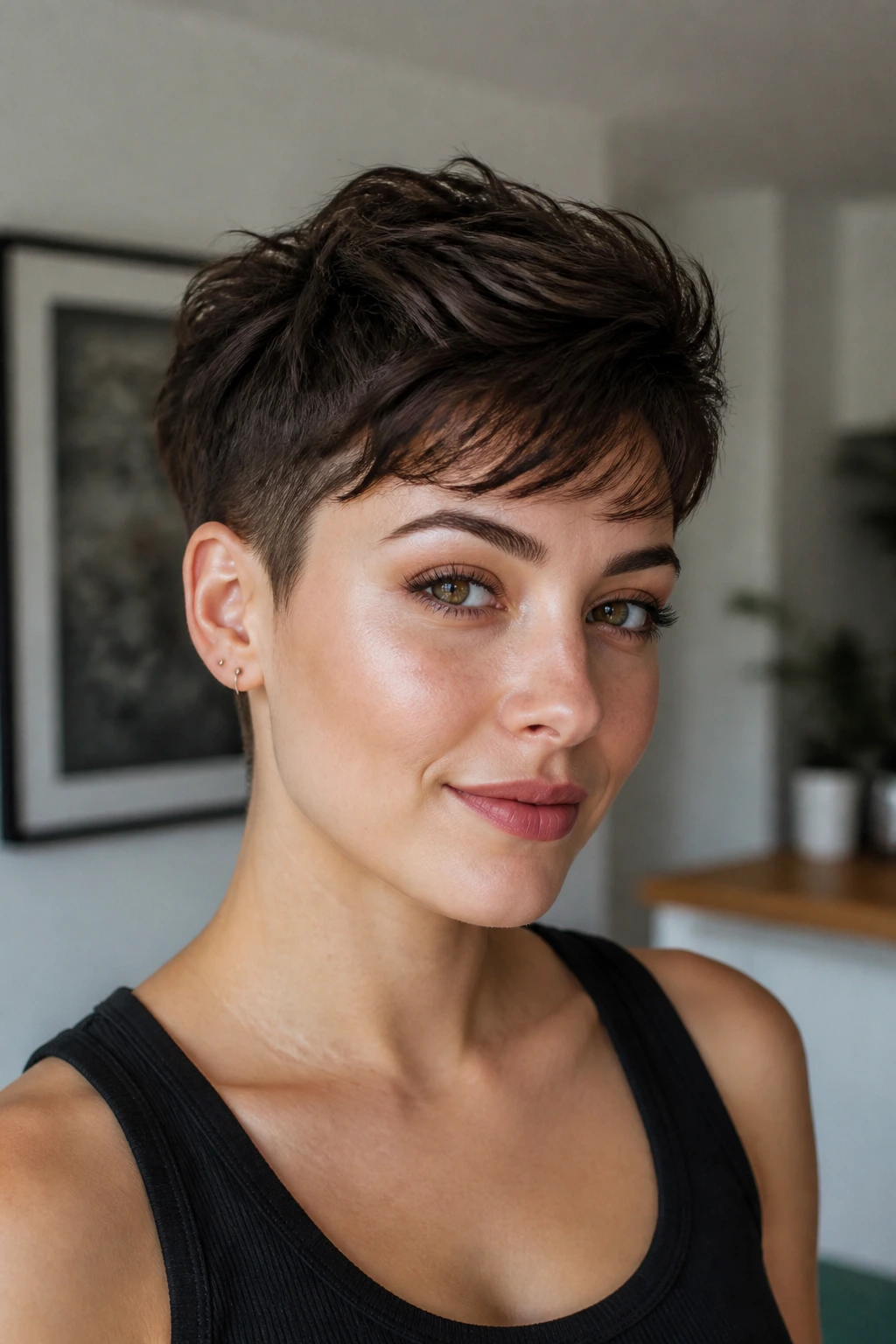
If your hair is thick, heavy, or stubborn, this is the first cut worth considering.
An undercut pixie removes bulk from underneath — usually at the nape and sometimes around the sides — while leaving a softer layer on top. That means less drying time, less puffing, and less of that heavy triangle shape thick hair can get when it starts to grow out.
The best thing about this cut is the way it clears weight without looking dramatic from the front. You can still wear the top piecey or smooth it back with a little cream. From the outside, it can look polished. Underneath, it’s doing a lot of quiet work.
The tradeoff is upkeep. The undercut usually needs reshaping more often than a classic bob or layered crop, because the shaved or closely clipped sections grow back fast. If you hate regular trims, this one may annoy you. If you want a hair cut that feels lighter every day, it earns its place.
19. The Wash-and-Go Curly Bob
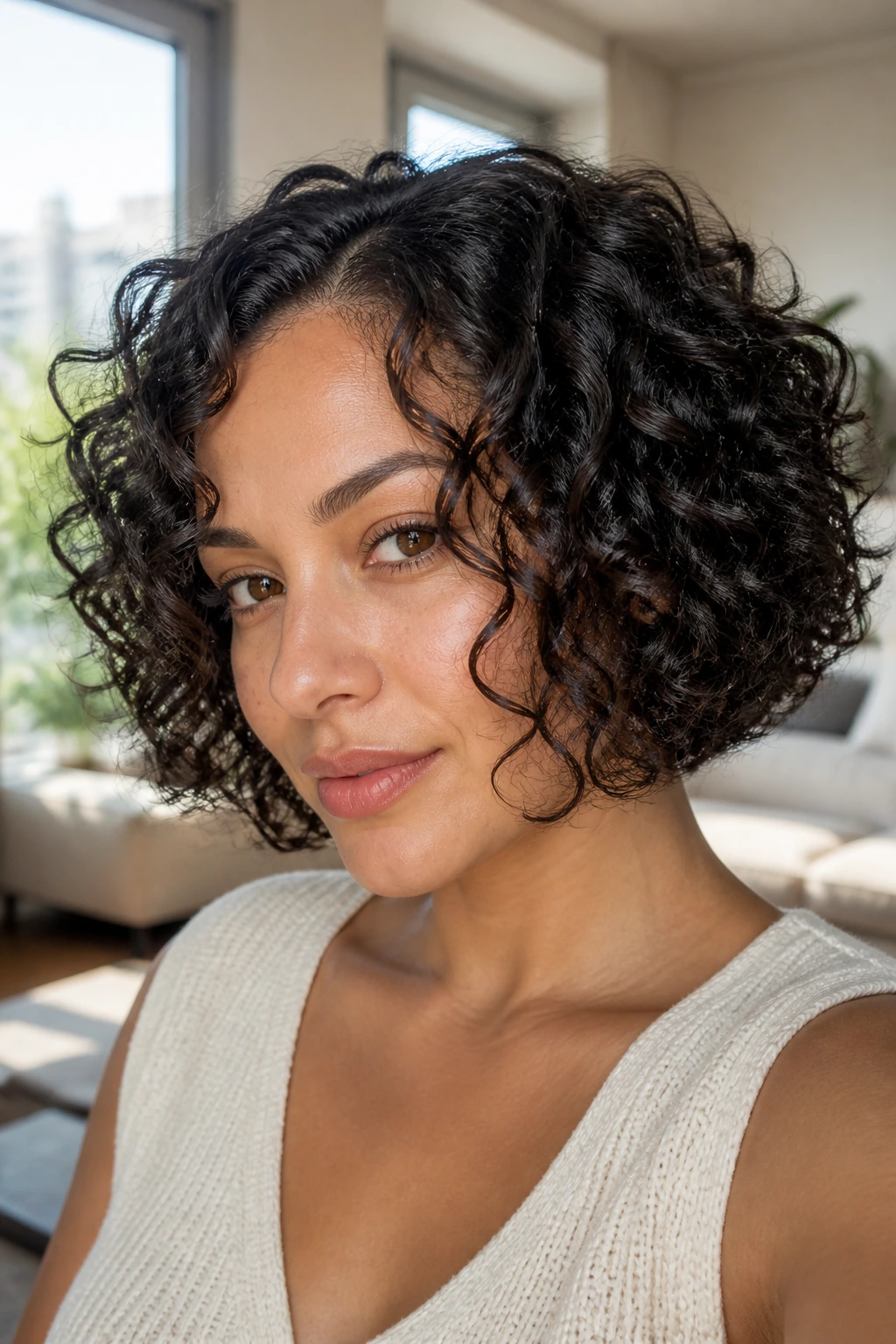
Can a curly bob really be low effort? Yes — if it’s cut for your curl pattern, not against it.
The mistake many people make is keeping curls too long or too square, then wondering why the shape balloons out. A good curly bob usually sits around the chin or just below it, with the curl shape trimmed in a way that lets it stack instead of spread.
The styling routine is simple when the cut is right. Start with leave-in on soaking-wet hair, add gel or curl cream, scrunch, and leave the curls alone until they set. If you like a diffuser, use low heat and stop before the hair gets puffy. That last part matters. Too much touching makes curly hair frizzier than it needs to be.
What to Ask Your Stylist
- Shape the cut in dry or carefully damp curl form.
- Keep layers gentle so the curls do not separate too much.
- Leave enough length to support the pattern.
- Avoid over-thinning, which can wreck the curl clumps.
A wash-and-go bob is one of the easiest short haircuts for low effort days if you live in your curl pattern and stop trying to force it into a smoother shape.
20. The Short Crop That Grows Out Gracefully

The haircut that saves time is the one you still like six weeks later.
That is why a short crop with soft edges, a little length around the fringe, and no harsh lines can be more useful than a more dramatic cut. It does not demand perfect styling. It does not fall apart the second it grows an inch. It just keeps looking like itself.
I like this one for people who know they will miss a trim now and then. The shape should stay open around the face, with enough length to tuck behind the ear and enough weight at the top to keep from sticking straight up. If your hair grows fast, this matters even more.
A good stylist can build in a quiet kind of flexibility here. Not too much layering. Not too much shape. Just enough structure to hold the line while the cut grows out. That is what low-effort hair really looks like: not bare minimum, not high maintenance, just a shape that keeps working when you stop thinking about it.
