



Shaggy hair looks for thick hair work best when the cut removes weight without stealing the shape. That sounds simple, but thick hair makes simple things stubborn. Leave too much bulk in the wrong place and the hair balloons out. Remove too much, and you get stringy ends, awkward gaps, and a cut that grows out like a bad compromise.
The good shag is a balancing act. It needs movement at the crown, softness around the face, and enough length through the perimeter to keep dense hair from turning into a triangle. That’s why some shags look airy on one person and bulky on another. Same haircut. Very different result.
Thick hair also gives you more room to play. You can wear choppy layers, feathered bangs, a wolfier silhouette, or a softer shaggy bob and still have enough body left over to make the shape look rich rather than flimsy. The trick is choosing the version that matches your density and texture instead of copying a photo from finer hair.
Some of these cuts are low-effort. A few need a round brush, a diffuser, or a quick blast of texture spray. A few are worth the extra minute because they make thick hair feel lighter for the first time in ages.
1. The Classic Curtain-Bang Shag
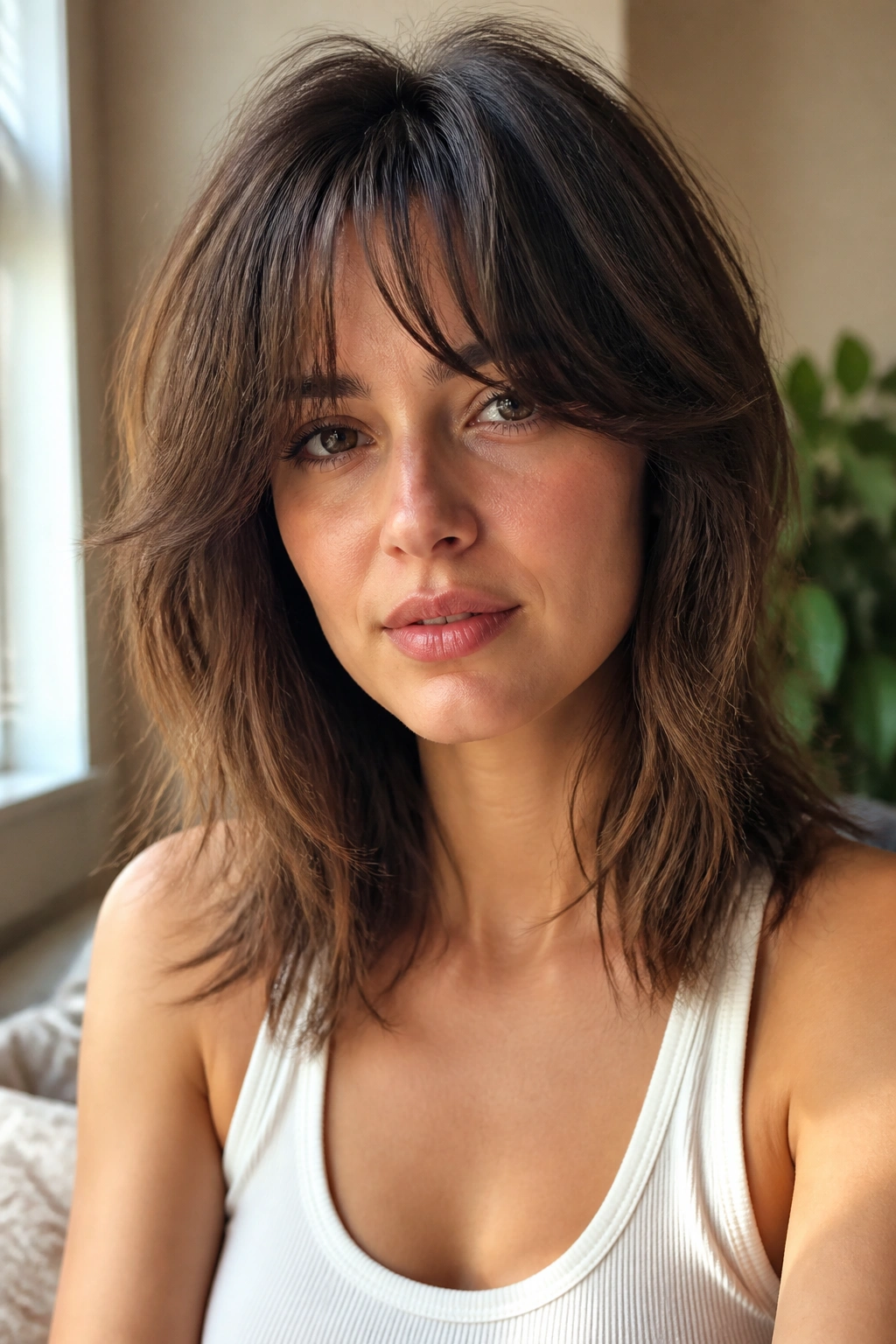
This is the shag I recommend first when someone has thick hair and wants movement without drama. The shape is familiar: shorter layers through the crown, face-framing pieces that split at the center, and enough length around the shoulders to keep the whole thing from puffing up.
Why it works on dense hair is pretty straightforward. Curtain bangs break up a heavy front line, and the layered top lets the hair sit with lift instead of forming one solid block. On thick hair, that matters. A blunt edge can look great for about five minutes; then it starts behaving like a shelf.
What to ask for
- Curtain bangs that start around the cheekbone or just below it
- Crown layers that are short enough to move, but not so short they stand up on their own
- Soft internal layering through the mid-lengths
- A perimeter that stays full, not wispy
Best for: straight, wavy, or slightly curly thick hair that needs shape but not a huge style shift.
My honest take: if you want a shag that still looks polished when you air-dry it, this is the safest place to start. It’s forgiving. That counts.
2. The Wolf Cut Shag With Extra Crown Lift
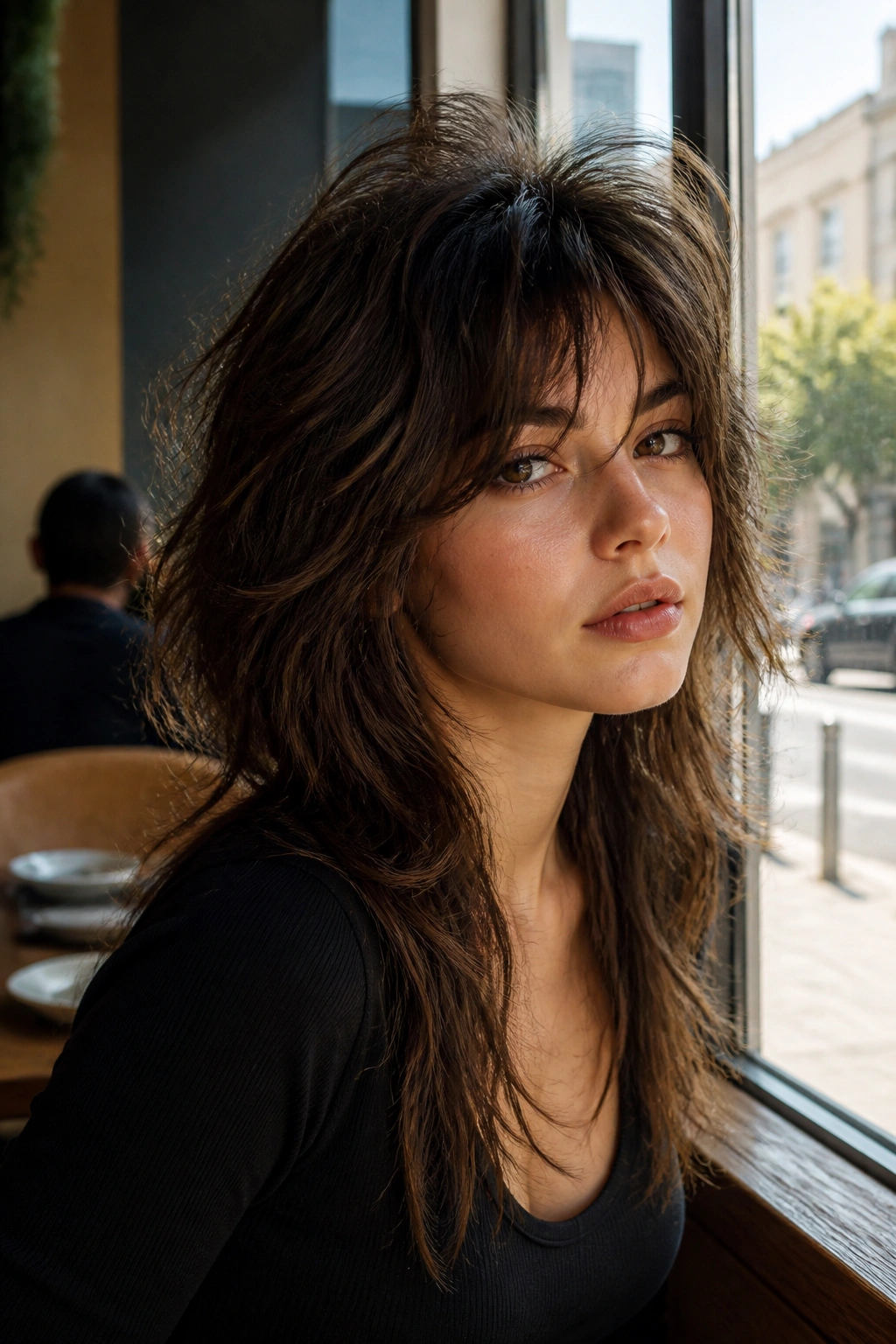
A wolf cut on thick hair can go two ways. It can look wild in a good way, or it can look like you let the top half of your head escape from the bottom half. The difference is usually in the weight removal.
This version keeps the wolf cut spirit — big texture, a little edge, longer back layers — but it reins in the crown so it doesn’t explode outward. Thick hair needs that restraint. A few strong layers around the top create lift, then longer outer layers keep the silhouette from turning into a mushroom.
The styling part is easy enough. Rough-dry at the roots, then use your fingers or a diffuser to push the layers where you want them. A pea-sized amount of matte paste near the ends is usually enough. More than that and the texture starts to look greasy instead of piecey.
This cut suits people who like a little attitude in their hair. Not costume-y. Just a little sharper than a standard shag. If you want movement and don’t mind a shape with opinions, this one delivers.
3. The Shoulder-Length Shaggy Lob
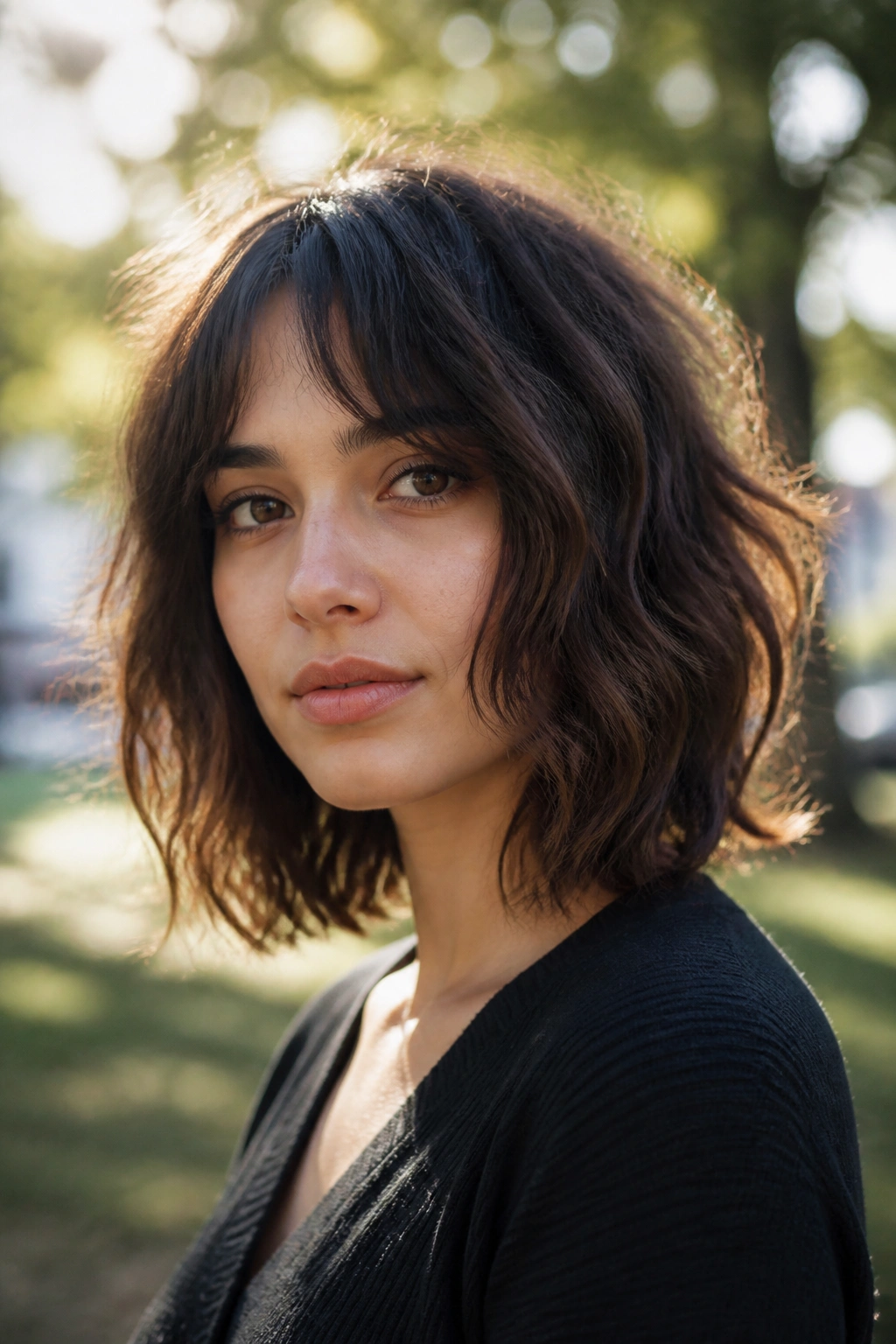
Why is this one so reliable for thick hair? Because it keeps the weight where you need it while trimming the parts that usually make hair feel too bulky. A shoulder-length shaggy lob sits in that sweet spot between a long bob and a loose shag, which means it has enough length to feel controlled and enough layering to avoid the dreaded block shape.
The best thing about it is the grow-out. Thick hair can hold this shape for a while before it starts to feel overgrown. That buys you time. And time is nice.
How to style it
If your hair is straight, a quick blow-dry with a large round brush will bend the layers just enough. If it’s wavy, scrunch in a light mousse and let the ends dry with a bit of natural texture. You do not need a perfect finish here. Slight mess is part of the appeal.
For thick hair that tends to flip outward at the bottom, ask for the layers to start around the chin and step down gently. That keeps the ends from looking blunt and heavy. It also stops the cut from widening at the jaw.
This is the shag I’d hand to someone who wants low maintenance, not no maintenance.
4. The Curly Shag That Keeps Length
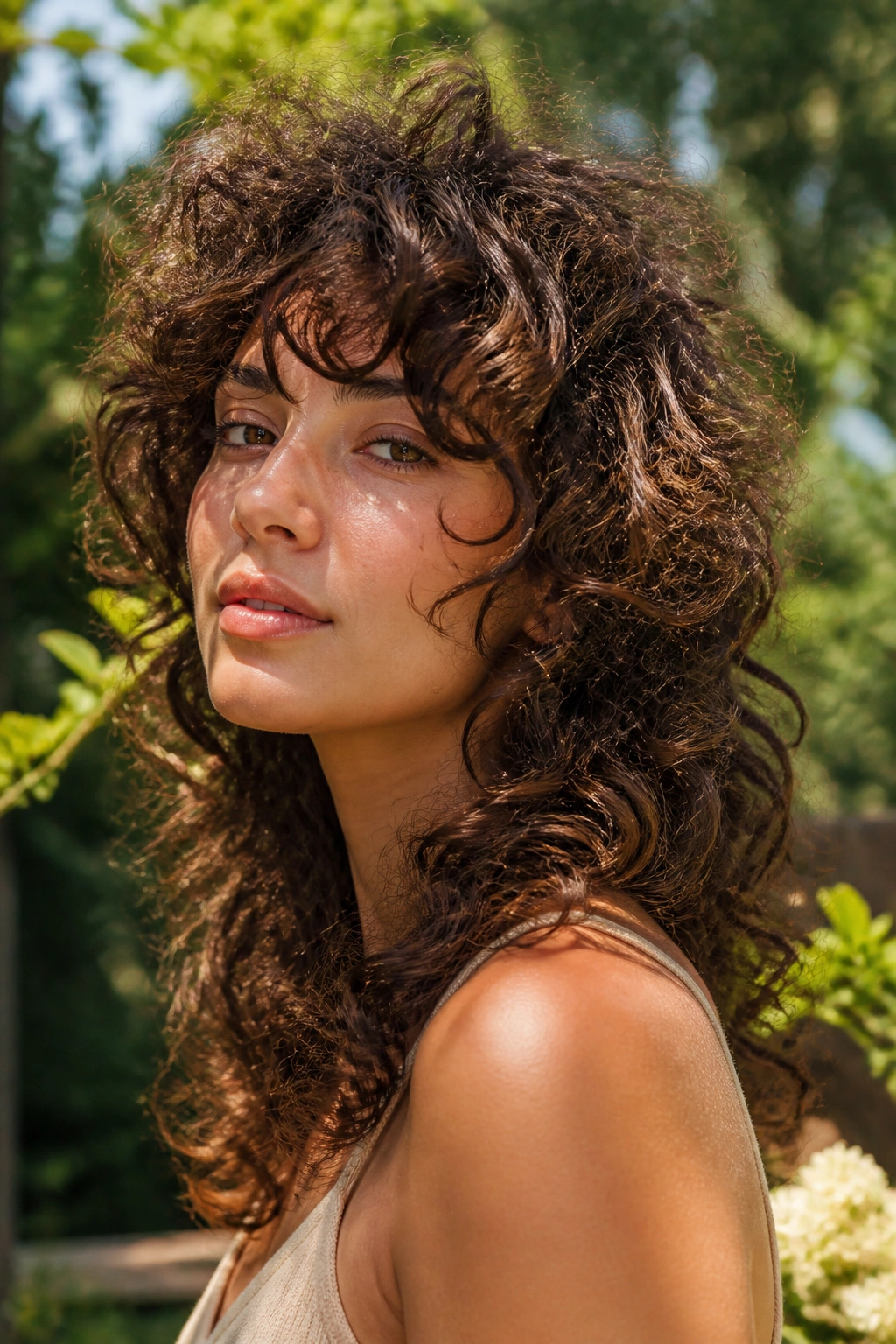
A curly shag on thick hair is one of those cuts that makes you wonder why more people don’t try it. When curls are dense, they can stack up into a triangle fast. A good shag breaks that shape apart and lets the curls fall in layers instead of one giant puff.
The best versions are cut with the curl pattern in mind. Dry cutting or curl-by-curl shaping usually gives the cleanest result, because wet curls lie to you. They always do. They shrink, they bounce, they act innocent, and then they spring up once the hair is dry.
What makes this cut different is the way it preserves length while removing bulk from the sides and back. You still get volume — plenty of it — but the silhouette feels lighter and more intentional. That’s the goal. Not smaller hair. Better-shaped hair.
- Shorter crown layers help curls stack upward, not outward
- Face-framing pieces soften the front and stop the cut from feeling square
- A longer perimeter keeps the style from shrinking too much
- Diffusing upside down can give the top more lift if the roots tend to lie flat
If your curls are thick and wide-set, this is one of the smartest cuts you can pick. It gives you motion without asking you to fight your own texture every morning.
5. The Razor-Cut Rock Shag

A razor-cut shag has a different feel from a scissor-cut shag. The ends look softer, more shredded, and a little more undone. On thick hair, that can be a gift — if the hair is healthy enough to take it.
I like this cut when the goal is movement with edge. The razor takes off weight fast, and thick hair can usually handle that better than finer hair. You get a laid-back shape that falls with a bit of swing instead of sitting in blunt sections. It’s especially good if your hair has a natural bend or a loose wave, because the ends don’t need to be forced into anything.
There’s a catch. If your hair is already dry, porous, or frizzy at the ends, a razor can make it look frayed. Not always. But enough to be careful. In that case, a sharp scissor cut with point-cut detailing might be the safer choice.
This is the shag for someone who likes the hair to look touched, not overworked. A little texture spray. A little finger-combing. Done.
6. The Bixie Shag for Dense Hair
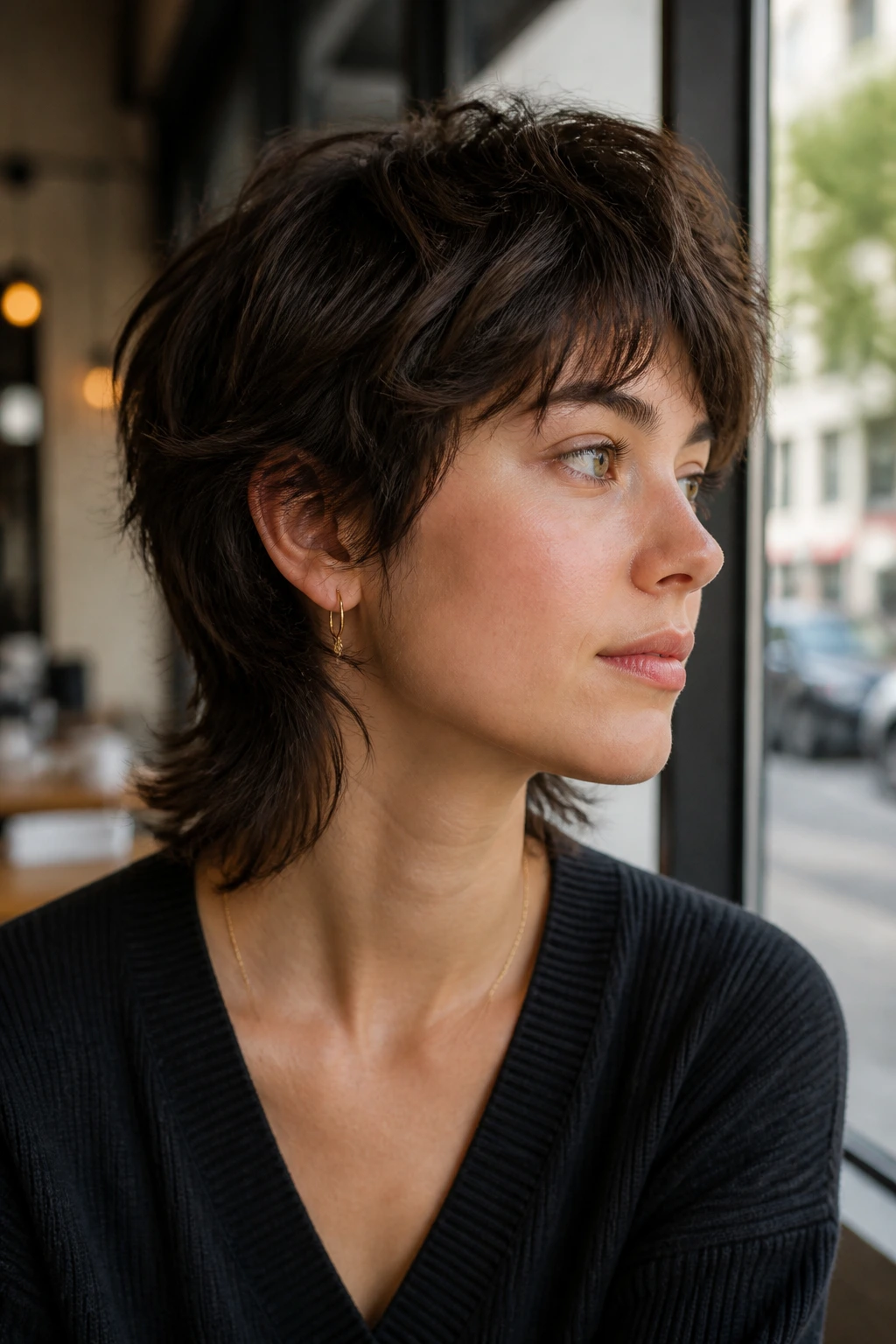
The bixie is a pixie-bob hybrid, and the shag version is where it gets interesting for thick hair. Short hair can feel bulky fast when the hair underneath is dense, so the shaggy bixie uses texture to keep the shape from sitting like a cap.
Unlike a classic pixie, this cut leaves more length around the ears and nape, which helps thick hair behave. That extra bit of length matters more than people expect. It gives the haircut enough softness to move, instead of sticking straight out or puffing at the sides.
This is a smart pick if you want a short style but don’t want to commit to constant clipper upkeep. The top can be left a little longer and choppier, while the sides taper in gently. A side-swept fringe or broken baby bangs can keep it from feeling severe.
Best of all, it dries fast. Thick hair in a bixie shag still has body, but the shape is easier to handle because there’s less weight pulling it down. If you’re tired of tying your hair into a knot and calling it a style, this is worth a serious look.
7. The Long Boho Shag With Wispy Ends
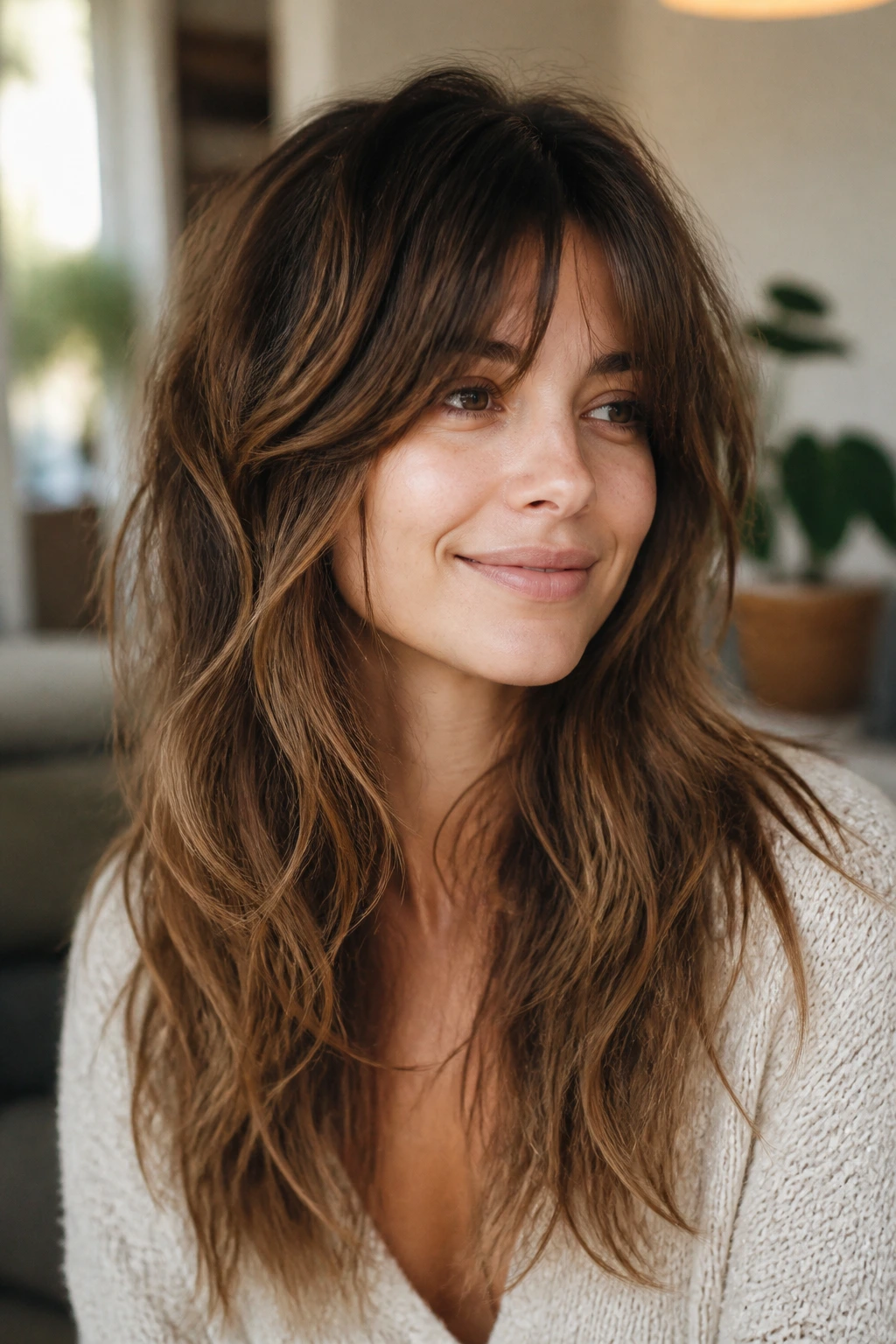
If you love your length and don’t want to give it up, the long boho shag is the most forgiving option in the bunch. It keeps the hair past the shoulders, often well below the collarbone, and softens the whole thing with airy layers that start lower than you might expect.
Why it works
Thick hair tends to look heavy when all the action happens near the top. By leaving the crown more controlled and moving the layering down through the mids and ends, this cut keeps the hair from exploding outward near the face. The result is loose, soft, and a little romantic without becoming fussy.
The styling is not hard, but it does reward a light hand. A 1.25-inch curling iron on the mid-lengths only — not the ends — gives the layers a bend without making the look too polished. Air-drying with a cream for waves is another good route.
- Layers should begin below the chin
- Ends stay soft, not razor-thin
- A center part gives the cut a relaxed feel
- A little serum on the bottom half keeps the ends from fluffing out
This is one of those cuts that looks casual but still feels considered. Thick hair gets to keep its presence. It just stops shouting.
8. The Shaggy Mullet That Doesn’t Feel Extreme
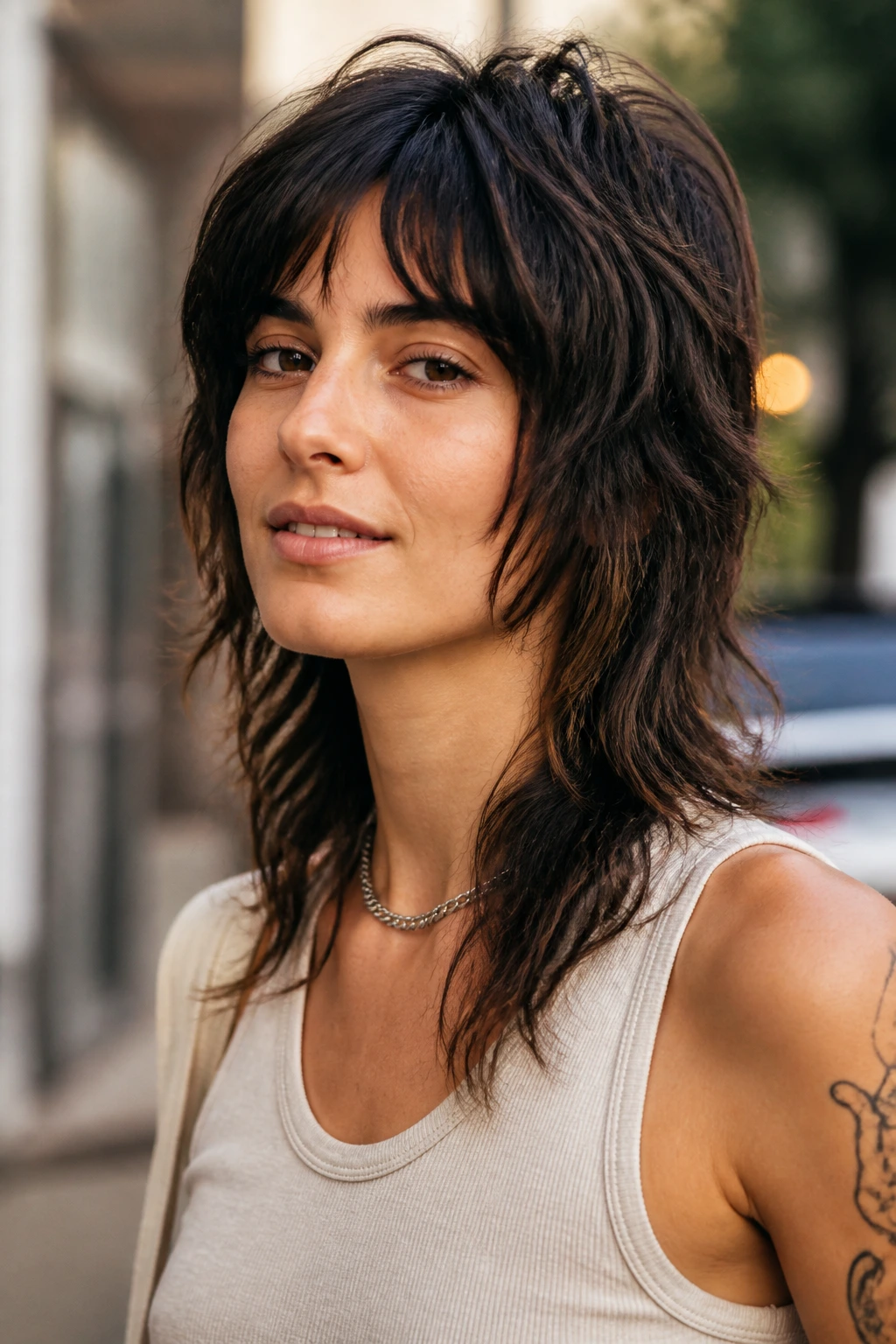
A shaggy mullet sounds bold on paper. In real life, when it’s done well, it’s often softer than people expect. The front stays layered and face-framing, the top gets some lift, and the back carries more length so the shape doesn’t collapse into a box.
The key is balance. Too much difference between the front and back and the cut starts reading as costume. Keep the transition gradual, and thick hair gives you a shape with personality instead of chaos. A little extra length at the nape helps anchor the style, especially if the hair is very full.
I like this cut for people who want something a little rebellious but still wearable. It works with natural texture better than most clean, rounded cuts do. That’s because thick hair already has enough body; the mullet shape lets that body move in different directions instead of forcing it into one neat outline.
Dry texture spray, a quick scrunch, and a rough blow-dry are usually enough. If you spend forever styling your hair, this probably is not the one. If you want a shape that looks better with a little mess, it’s a strong pick.
9. The Side-Bang Shag for Rounder Faces
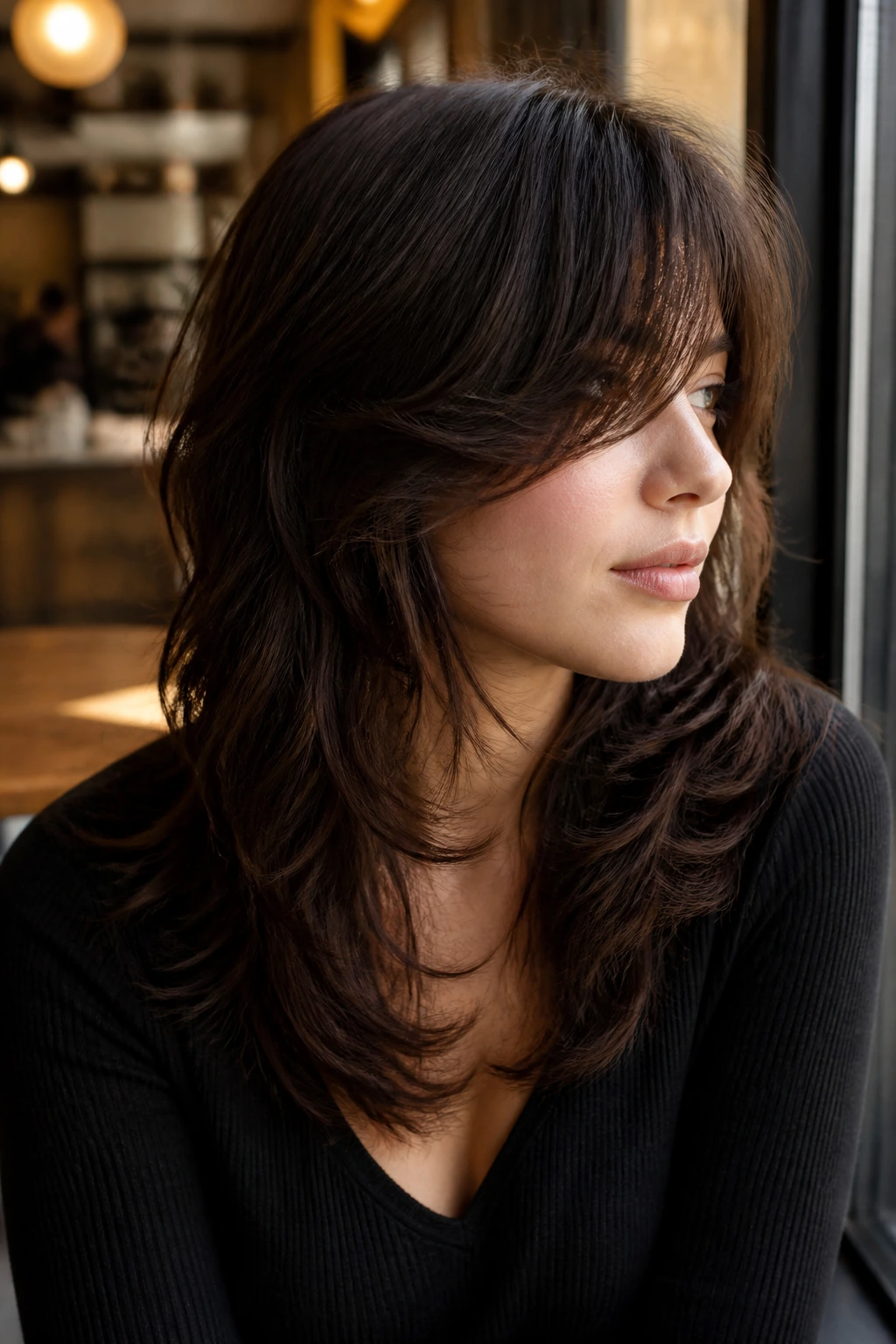
Why does a side-bang shag work so well on thick hair? Because it breaks the front line without making the whole cut depend on center-part symmetry. That matters if you want your face framed but don’t love curtain bangs or a straight-across fringe.
The side bang adds movement at the cheek and eye area, which helps soften rounder faces and wider foreheads. On thick hair, it also keeps the fringe from splitting too thinly. You get enough weight for the bang to sit where it should, even when the hair has a mind of its own.
How to cut the fringe
Ask for a longer side sweep that begins somewhere between the brow and the cheekbone. It should blend into the front layers, not sit on top of them. If the bang is cut too short, thick hair can make it puff up and kick away from the face. Nobody wants that.
This style is good if you want shape near the front but hate constant bang maintenance. It’s a softer choice than a blunt fringe, and it grows out with less drama. That alone makes it practical.
10. The Air-Dried Textured Shag
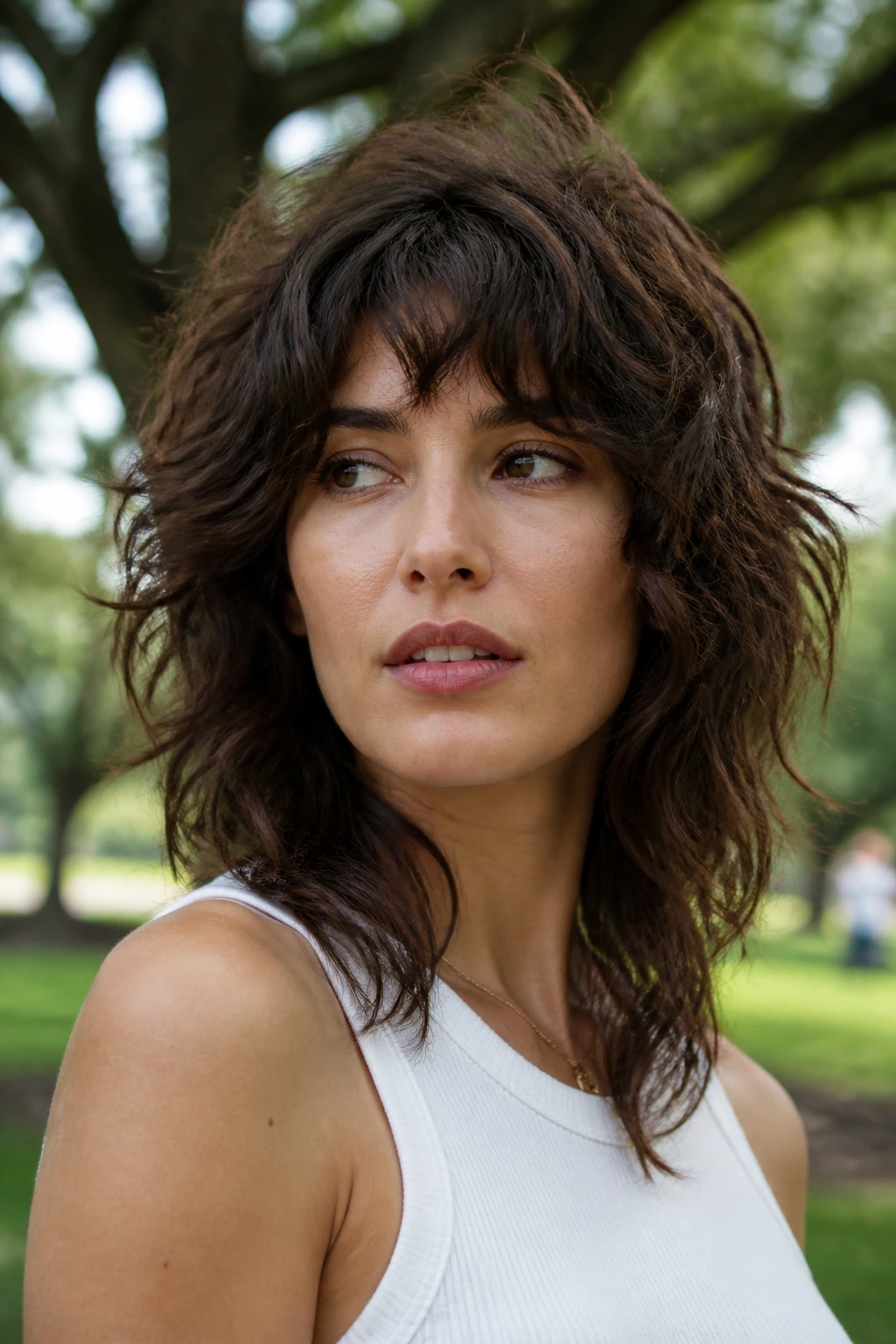
If your styling routine ends with scrunching and walking away, this is the shag to pay attention to. Thick hair often holds air-dried texture well, but only if the cut is built to support it. Otherwise it just dries into a block with bends in random places.
The best air-dried shag uses layers that are short enough to spring, but not so short that they separate awkwardly. That sweet spot gives the hair a loose, pieced-out finish without making the top look sparse. It’s especially good for natural waves.
What to look for
- Layering through the crown so the roots can lift on their own
- Face-framing pieces that encourage the wave pattern
- A perimeter that’s slightly soft, not blunt
- Lightweight mousse or curl cream instead of heavy oils
The routine is simple. Work product through damp hair, scrunch once or twice, and leave it alone. Really. Touching it while it dries usually creates frizz in thick hair faster than almost anything else.
The nice thing about this cut is that it doesn’t ask for much. The hair does the work. You just stop interfering with it.
11. The Choppy Pixie Shag
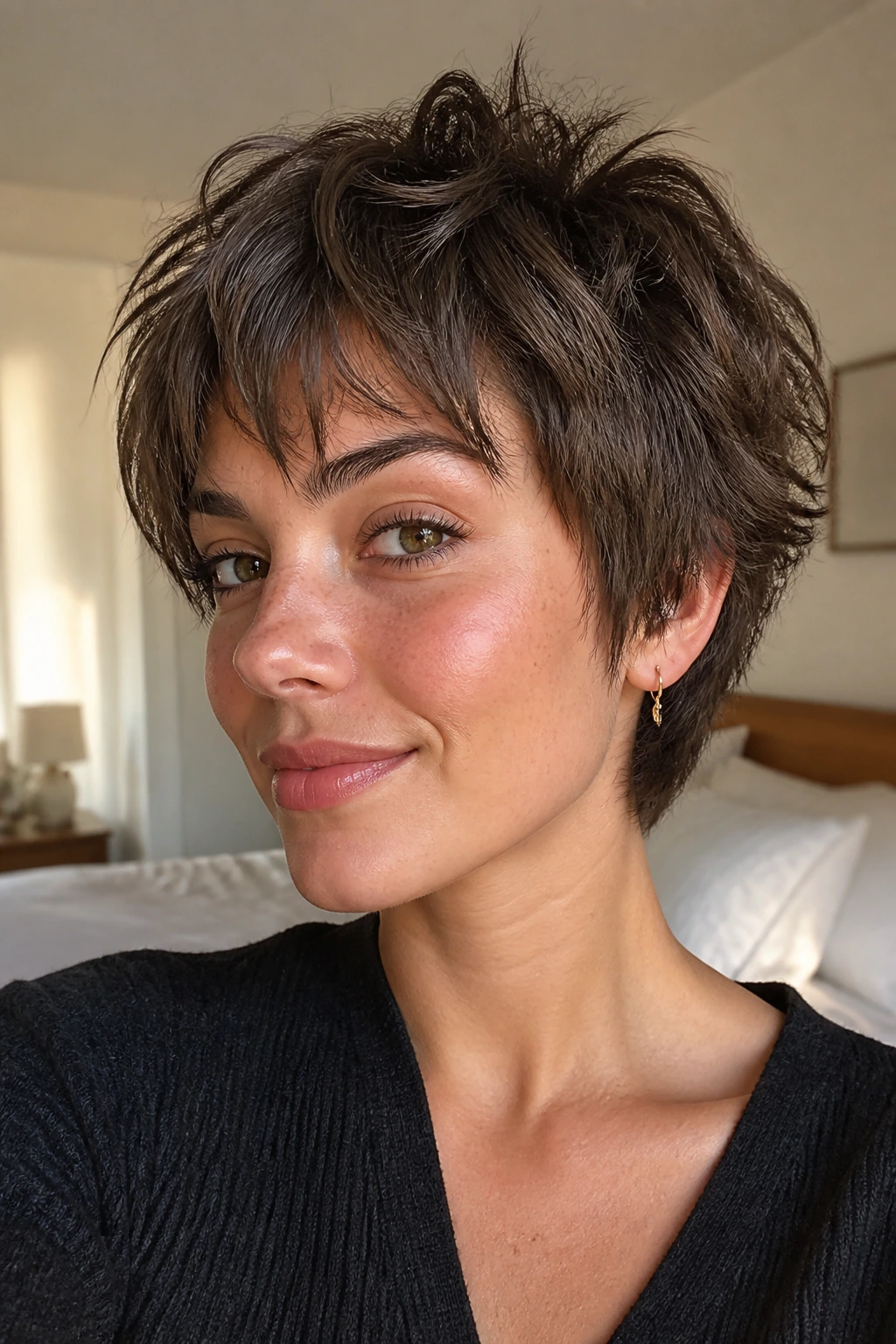
The choppy pixie shag is tiny in length but big in attitude. Thick hair makes this style easier than most people think, because all that density gives the cut structure. It does not need to rely on bluntness to look full.
What I like here is the movement around the crown and sides. Instead of one uniform short shape, the layers break up the volume so the hair can sit close to the head without looking stiff. That matters on thick hair, which can go from chic to helmeted in a heartbeat.
This cut feels best when the texture is a little rough. A touch of styling cream, a bit of matte paste through the top, and a quick finger-tousle is enough. You do not need a salon finish every day. In fact, it often looks worse when it’s too neat.
Short hair can be unforgiving, though. If your thick hair grows fast or you hate trims every 4 to 6 weeks, the pixie shag may get annoying. If you enjoy a cut that feels crisp and a little rebellious, it’s a good one.
12. The Face-Framing Mid-Length Shag
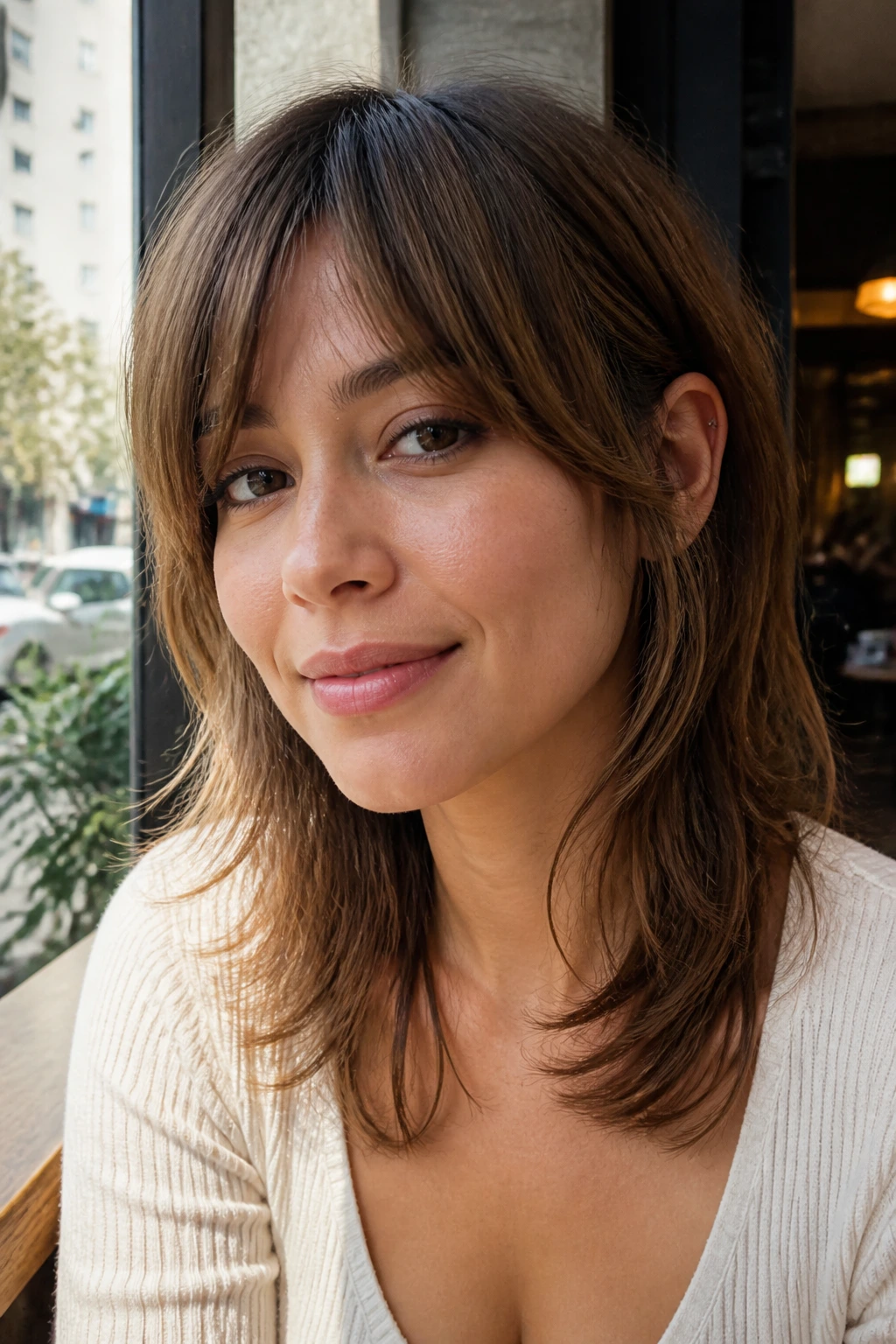
This is the cut for someone who wants movement but still wants to tuck hair behind the ears, throw it in a clip, or let it fall over a sweater without fuss. The length usually sits between the collarbone and upper chest, which gives thick hair enough room to move without piling up at the shoulders.
What makes it different from a heavier wolf cut is the cleaner outline. The layers are still there, but they’re blended in a calmer way. You get softness around the face and some lift through the crown, yet the overall shape stays smoother and less jagged.
That makes this cut a good fit for professional settings, easier grow-out, and people who like to keep some polish. It can still be rough-dried and textured, but it won’t scream for attention if you brush it straight.
I’d ask for face-framing layers that begin near the chin and taper toward the chest. That gives thick hair enough movement without carving away too much mass. The result is wearable, not fussy. And honestly, that’s a win.
13. The Heavy Fringe Shag
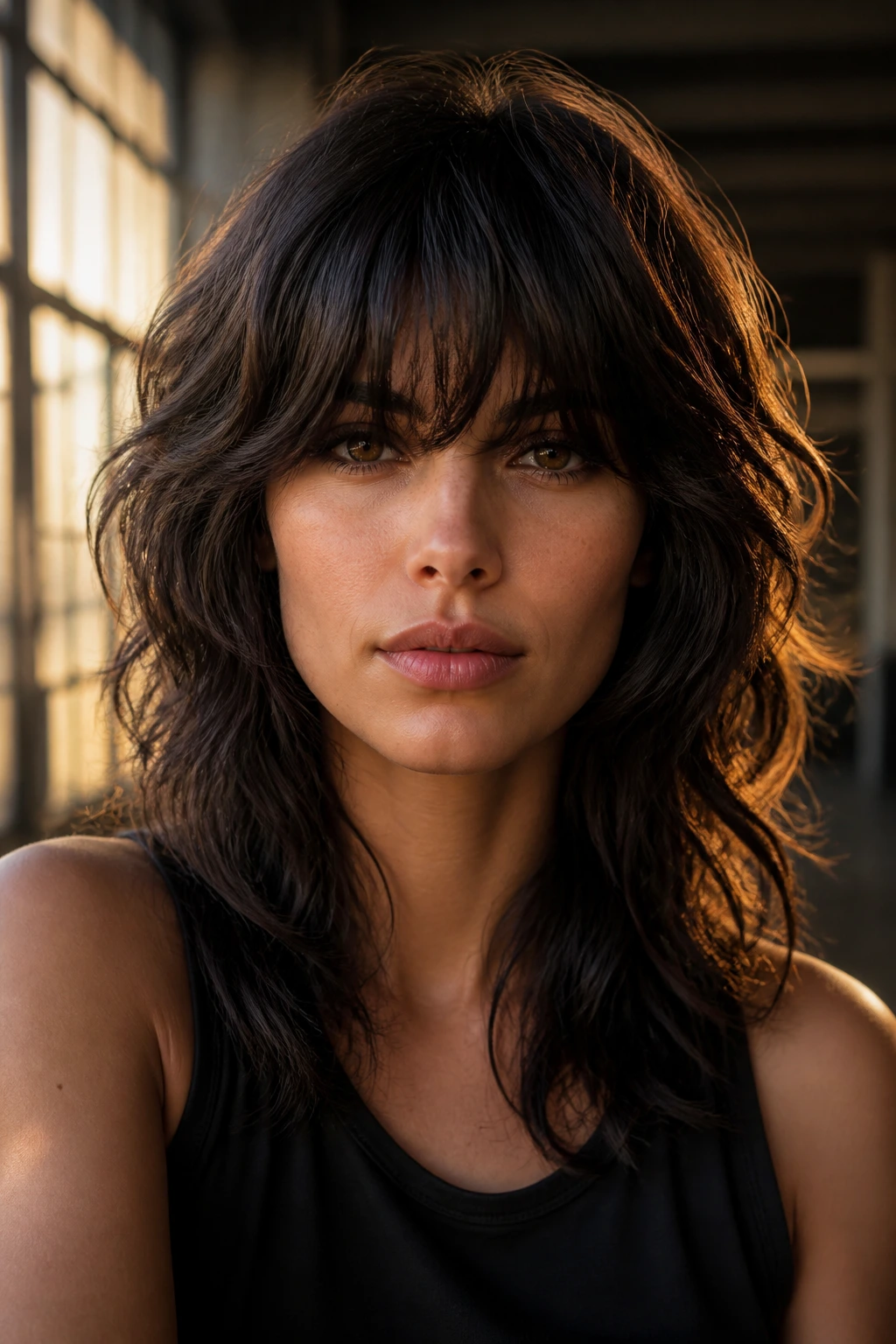
A heavy fringe changes everything. On thick hair, it can look dramatic and expensive in the best sense, because the hair has enough density to hold a real fringe without breaking into little see-through pieces.
The fringe is the whole point
The fringe should be thick enough to read as a proper shape, but textured enough to move. That’s the hard part. A blunt fringe with shaggy layers can look too severe if the rest of the cut is equally heavy, so the balance usually comes from softening the sides and keeping the top layered.
A good heavy-fringe shag works especially well if you like a little mystery around the eyes. It can sharpen a soft face, narrow a wide forehead, and make the whole haircut feel intentional. The fringe should be blow-dried from side to side so it doesn’t split.
- Fringe length can sit just above the lashes or brush the brows
- Side layers should connect into the bang, not disconnect from it
- Thick hair needs internal texture so the fringe doesn’t feel like a curtain
- Dry shampoo at the roots helps keep the front from collapsing
This style has a mood. Strong, a little arty, and not nearly as high-maintenance as people fear if the cut is done right.
14. The Internal-Layer Shag for Big Volume
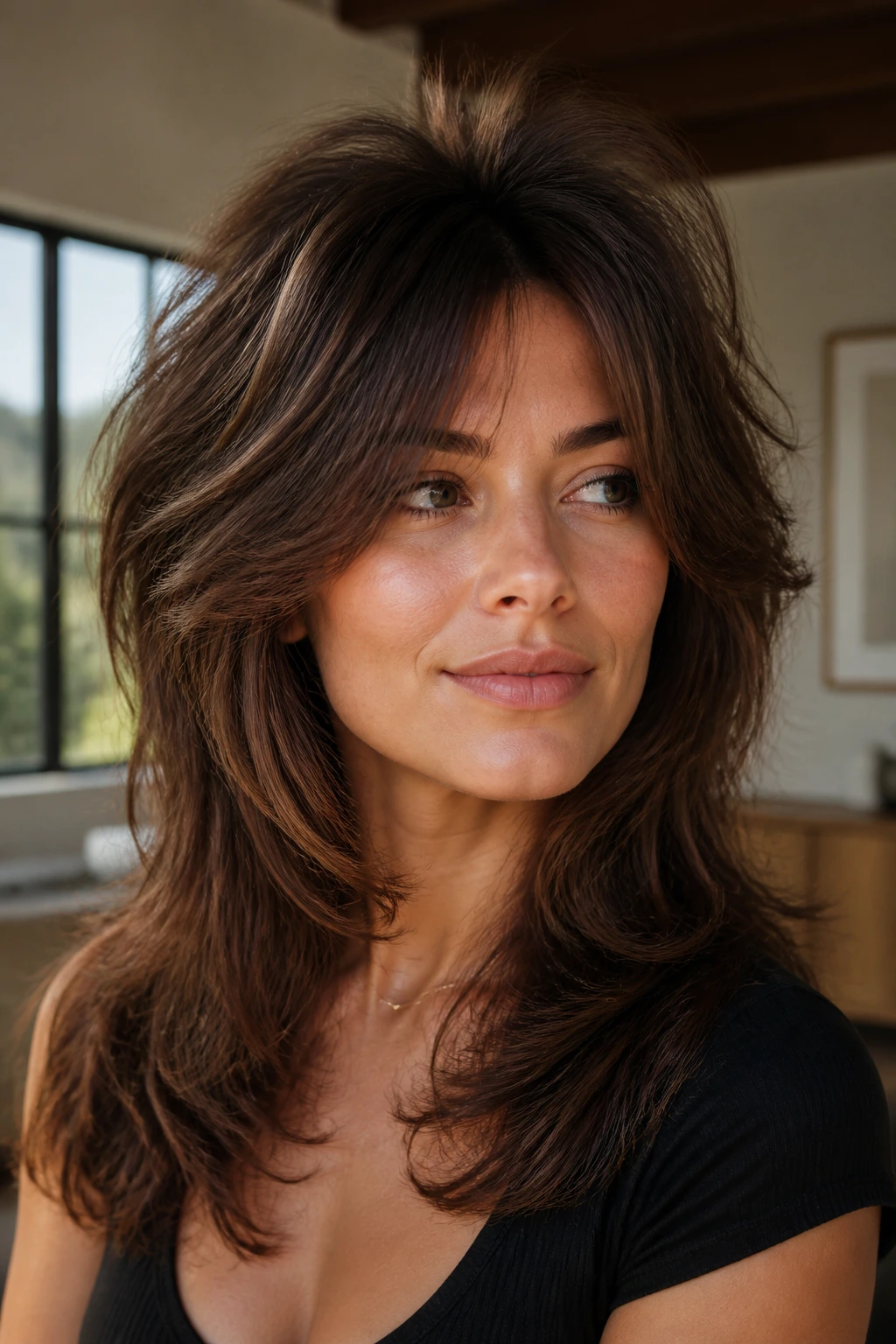
Some thick hair does not need more obvious layers. It needs invisible ones. That’s where an internal-layer shag comes in, and I’m a fan of this approach because it fixes the bulk without screaming “layered hair” from across the room.
The layers are tucked inside the shape, which reduces the weight where the hair tends to stack up. The outside line stays fairly smooth, so you get movement without a chopped-up finish. On very dense hair, that can be a relief. You still keep a full outline, but the cut stops feeling like it’s wearing you instead of the other way around.
This is the style I’d choose for coarse hair that looks thick but also refuses to bend easily. A blunt perimeter with hidden weight removal often behaves better than a very feathered cut on that texture. Too many visible layers can make coarse strands stick out in odd places.
If your main complaint is that your hair feels heavy at the ends and bulky at the sides, ask for internal debulking and soft face-framing, not aggressive thinning. That distinction matters. A lot.
15. The Shaggy Bob with Broken Ends
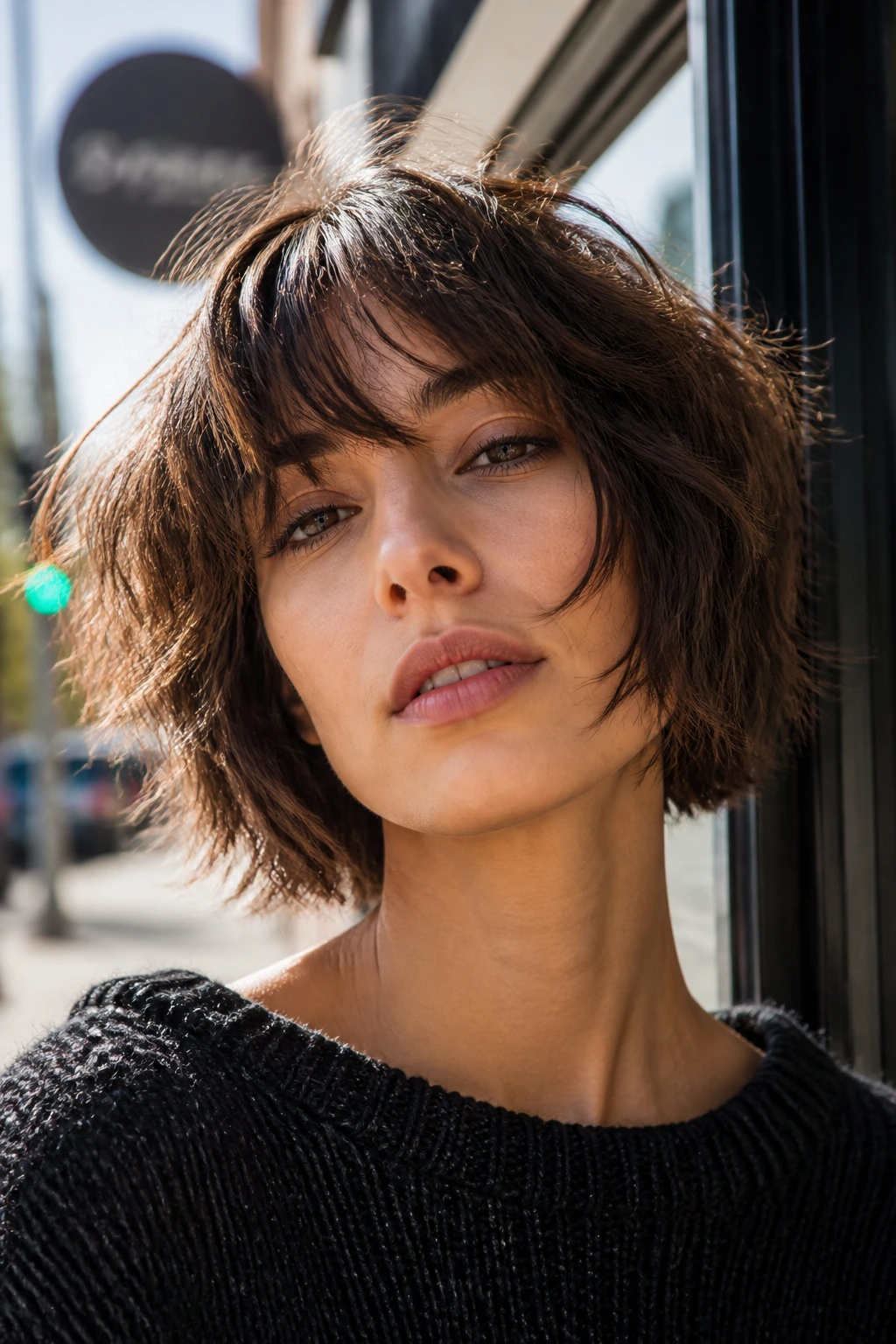
The shaggy bob is shorter than a lob, usually around the jaw or just below it, and the broken ends are what keep thick hair from looking too solid. This cut has a lot of energy. It moves fast, and it can make dense hair feel almost light.
Does it suit everyone? No. If you like to hide behind long hair, this will feel exposed. But if you want your face visible and your hair less heavy, it’s a strong answer.
What to ask your stylist
Ask for a bob that sits around the chin to jawline, then request shattered ends rather than one blunt edge. That gives the shape a little give, especially when the hair hits the neck and shoulders. A tiny bit of bevel at the bottom helps the bob fall instead of kicking outward.
This cut plays well with a side part, a center part, or a loose tuck behind one ear. Thick hair gives it body. The shag element keeps it from becoming boxy. That combination is the whole point.
It’s one of the fastest styles to dry too. If mornings are a blur, that matters more than people admit.
16. The Low-Maintenance Wash-and-Go Shag

Some shag cuts are built for styling. This one is built for getting out the door. Thick hair can look fantastic in a wash-and-go shag as long as the layers are placed where the texture wants to sit naturally.
Anecdotally, this is the cut people keep when they say they want to “do less” with their hair. It works because the shape has enough structure to survive without a blowout. The crown lifts on its own, the ends don’t sit in one heavy line, and the face-framing pieces do enough visual work that the hair still looks shaped when it air-dries.
What helps it work
- Use a light mousse or foam on damp hair
- Scrunch with a microfiber towel, not a rough bath towel
- Avoid heavy cream near the roots
- Let the hair dry fully before deciding it needs more product
There’s a catch, of course. If the cut is too layered or the ends are too thin, thick hair can turn frizzy instead of soft. The shape should be controlled, not over-deconstructed. That difference shows up fast when the hair dries.
This is the version for people who want decent hair on ordinary days, not salon hair every day.
17. The 70s Feathered Shag
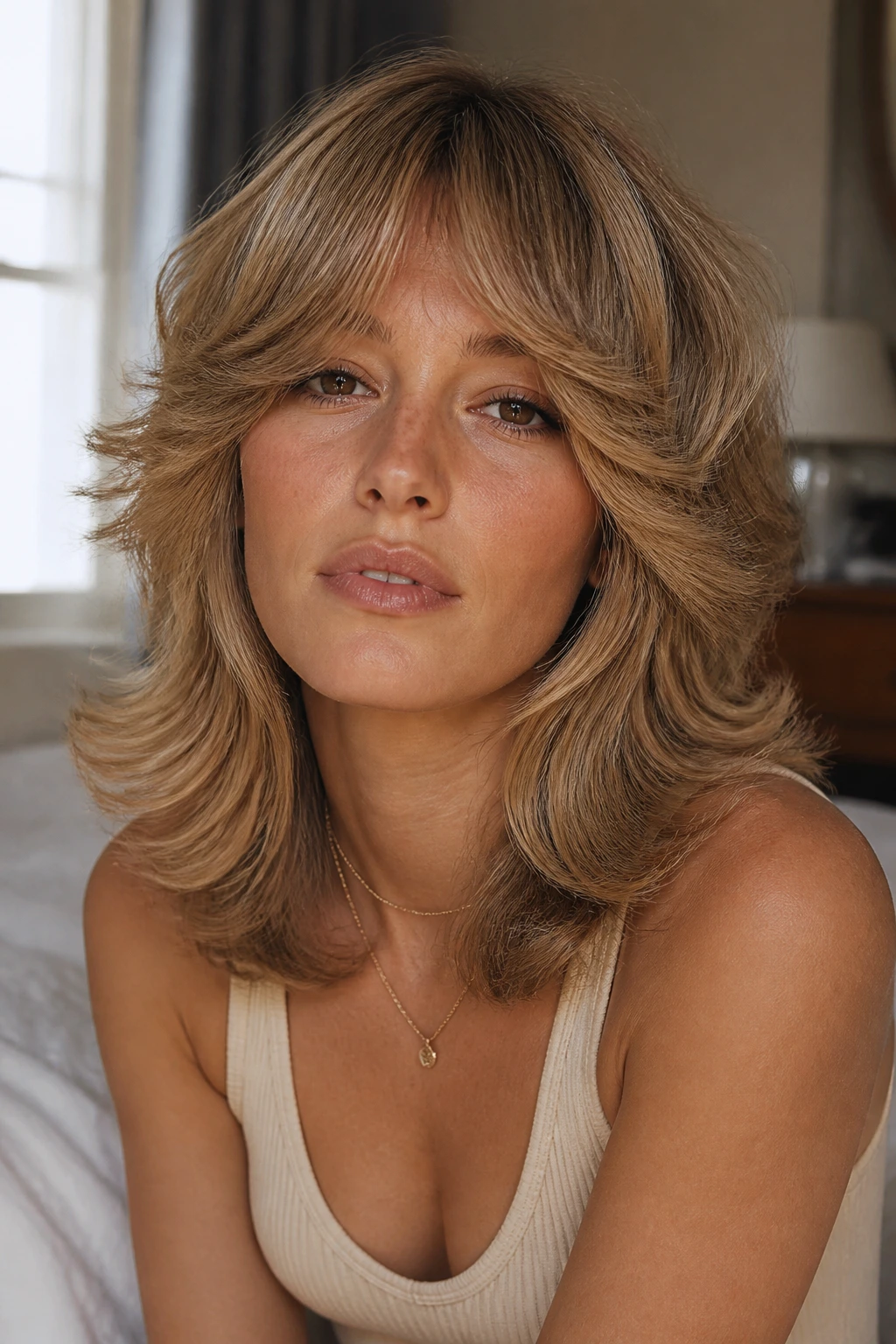
The feathered shag has a softer, smoother personality than the choppier versions. Think airy sides, face-framing sweep, and ends that flip away from the neck instead of sitting heavy. Thick hair loves this when it’s cut with enough finesse.
There’s something satisfying about the way feathering lightens the front without making the whole haircut feel shredded. The layers are often longer and more blended, which means the style holds shape while still moving. If your hair is straight to wavy and naturally full, this is a lovely place to land.
I especially like it with a round brush or a large blow-dry brush. Lift the roots a little, turn the ends under or away from the face, and let the fringe fall loosely. That one extra step changes the whole vibe. It becomes softer, not bigger.
This is also a good option if you work with thick hair that tends to feel dense around the cheeks. Feathering opens that area up. The cut feels less weighty, and the hair stops crowding the face.
18. The Soft Wolf Shag for Wavy Hair
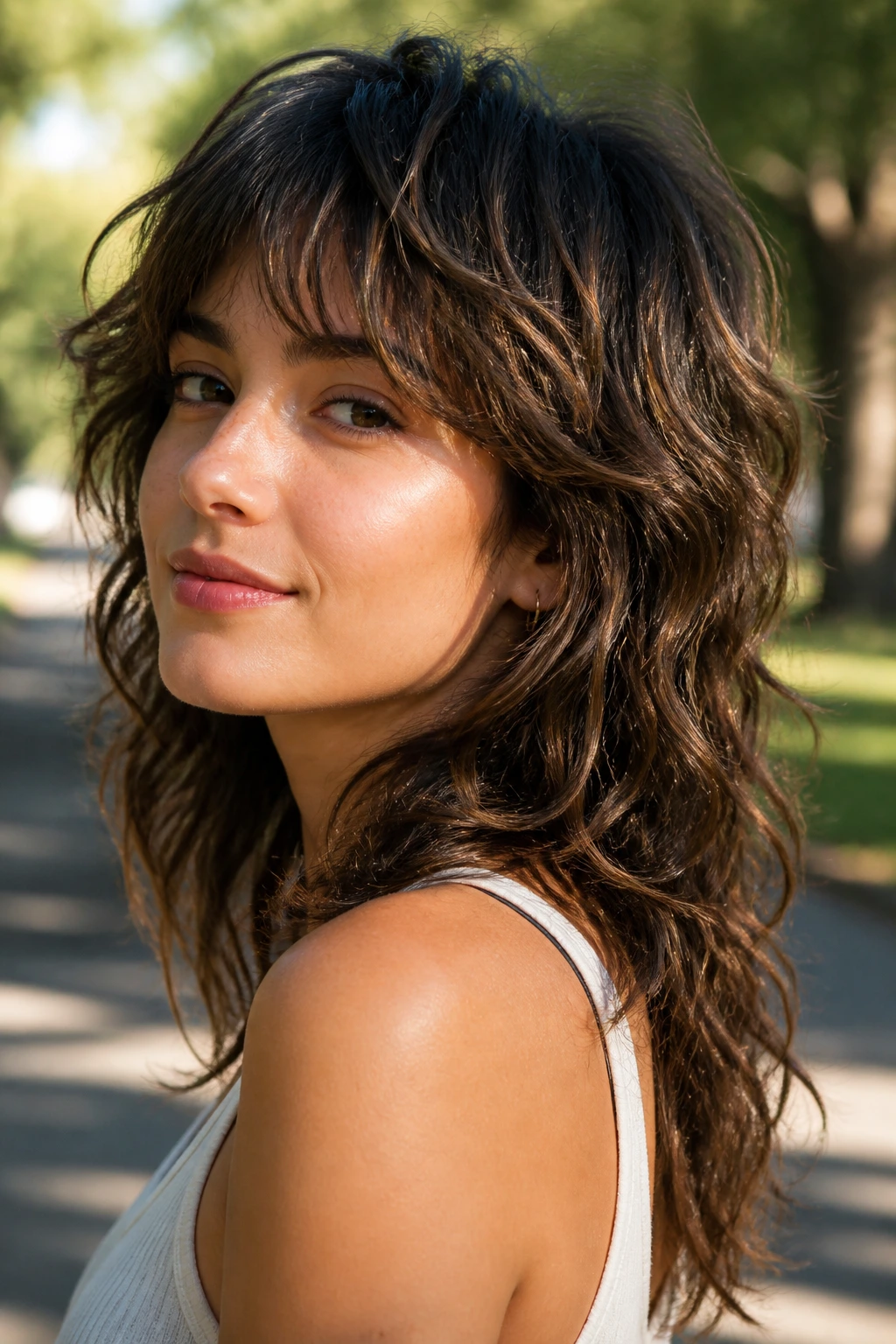
A soft wolf shag is what happens when you like the shape of a wolf cut but don’t want the harsh contrast. It keeps the layered crown and the longer back, but the transitions are smoother and less jagged. For thick wavy hair, that is usually the smarter move.
Unlike a high-contrast wolf cut, this version lets the hair breathe without looking severed into sections. The waves blend the layers together, and the cut gains movement without too much edge. That matters if your texture already has a bit of bounce and you don’t want the haircut to fight it.
This version is ideal if you want the coolness of a shaggy silhouette but still need the hair to be easy to wear at work, dinner, or anywhere else you don’t want to explain your haircut to strangers. There’s still personality here. Just less of the snarling kind.
I’d ask for longer top layers, softer side framing, and a subtle taper through the back. That keeps the cut wearable while still giving thick hair the looseness it needs. It’s one of the easiest shag-adjacent styles to live with long term.
19. The Undercut Shag for Serious Bulk Removal
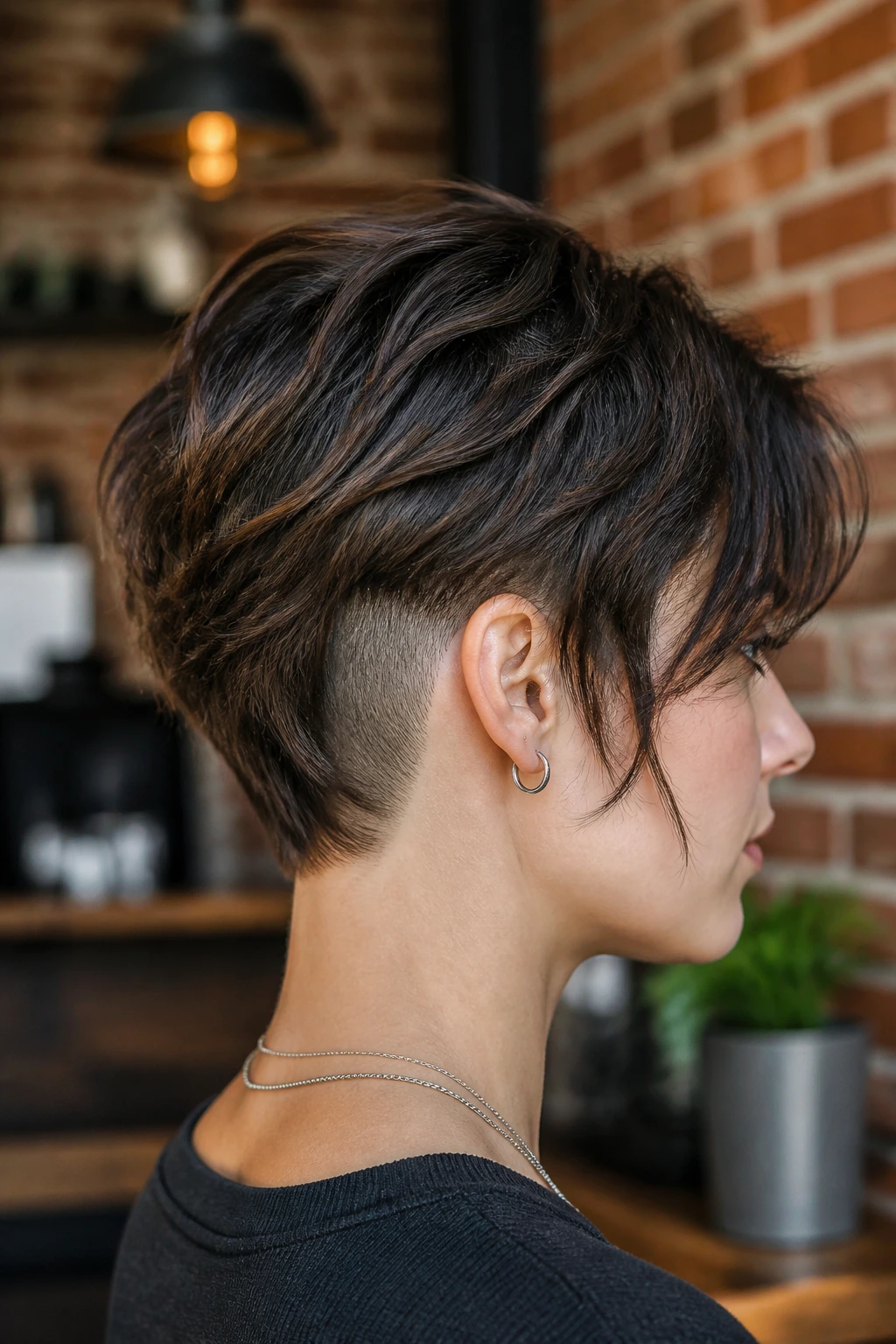
If you have a lot of thick hair — and I mean a lot — the undercut shag can feel like a miracle the first time you wear it. A hidden or partial undercut removes weight from underneath, while the shag layers on top keep the haircut looking soft and full from the outside.
Where the undercut helps most
- At the nape, where dense hair piles up against the collar
- Behind the ears, where hair can feel bulky and hot
- Under the crown, where hidden thickness makes the top lift awkwardly
The best part is that the haircut still looks like hair, not an undercut statement, unless you want it to show. That makes it easier to wear in professional settings. You get the relief without giving up the shag shape.
There is a downside. Grow-out takes some patience, and if the undercut line is too high, the hair can look uneven as it fills in. So the placement matters. A lot. This is not the place for guesswork.
If your thick hair makes your head feel heavy by the end of the day, this style can change that feeling fast. It is one of the few cuts that addresses bulk at the source instead of merely decorating it.
20. The Long, Layered Shag That Grows Out Well
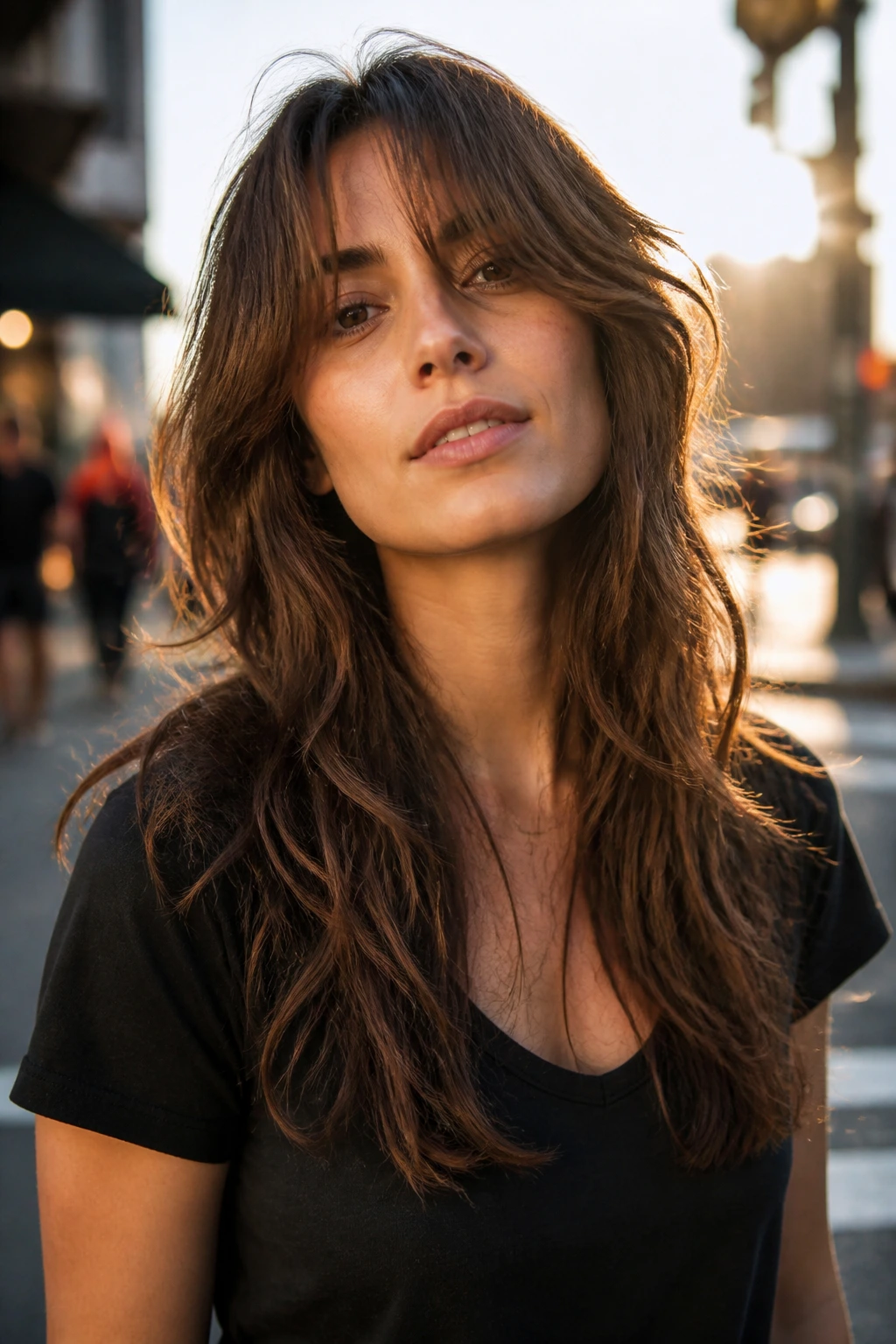
This is the shag I’d pick for someone who wants movement but hates high-maintenance haircuts. The long, layered version keeps plenty of length, softens the front, and spreads the layers out enough that the shape still looks decent after the first big grow-out phase.
The real strength here is how forgiving it is. Thick hair can hold this style without collapsing, and the length gives the layers room to settle instead of puffing straight out. If you miss a trim, it does not fall apart immediately. That matters more than people think. Haircuts that only look good for two weeks are annoying, no matter how cute the appointment photo was.
I also like this option for people who want to test a shag without going full chop. You can keep the ends past the shoulders, add movement around the face, and still pull it back when life gets messy. Which, frankly, is often.
If I had to leave you with one practical thought, it would be this: ask for softness at the front and control at the perimeter. That’s the combo that keeps thick hair looking lived-in instead of overworked. And if a shag grows out gracefully, you’ll wear it more often. That part’s hard to argue with.
