



A good butterfly wolf cut for long hair keeps the length you love and gives it movement where most long styles go limp. That is the whole trick. Not more layers for the sake of layers — just enough shape at the crown, cheekbones, and mid-lengths to make the hair look alive when it moves.
The blend works because the butterfly cut and the wolf cut solve different problems. Butterfly layers create those softer, wing-like pieces that fall away from the face; the wolf cut brings the shaggy, choppy energy that stops long hair from looking too neat and heavy. Put them together and you get something with lift, swing, and a little attitude. Done badly, it turns into a triangle. Done well, it gives long hair shape without making it feel chopped to pieces.
Long hair is a sneaky thing. It looks easy, but it can get flat at the roots, bulky through the ends, and oddly lifeless if the layers are placed in the wrong spot. That is why the details matter: where the shortest layer starts, how much weight stays at the bottom, whether the fringe sits center or swept, and how the cut behaves when you wear it straight versus wavy. Those little decisions change everything.
Some of these cuts lean soft and polished. Others are a little feral. A few work best if you live in a round brush and blow dryer; a few look better when you shake them out with your fingers and walk away. Start with the one that matches your hair texture, your styling habits, and how much maintenance you can stand. The first one is the cleanest place to start.
1. Soft Curtain-Bang Butterfly Wolf Cut
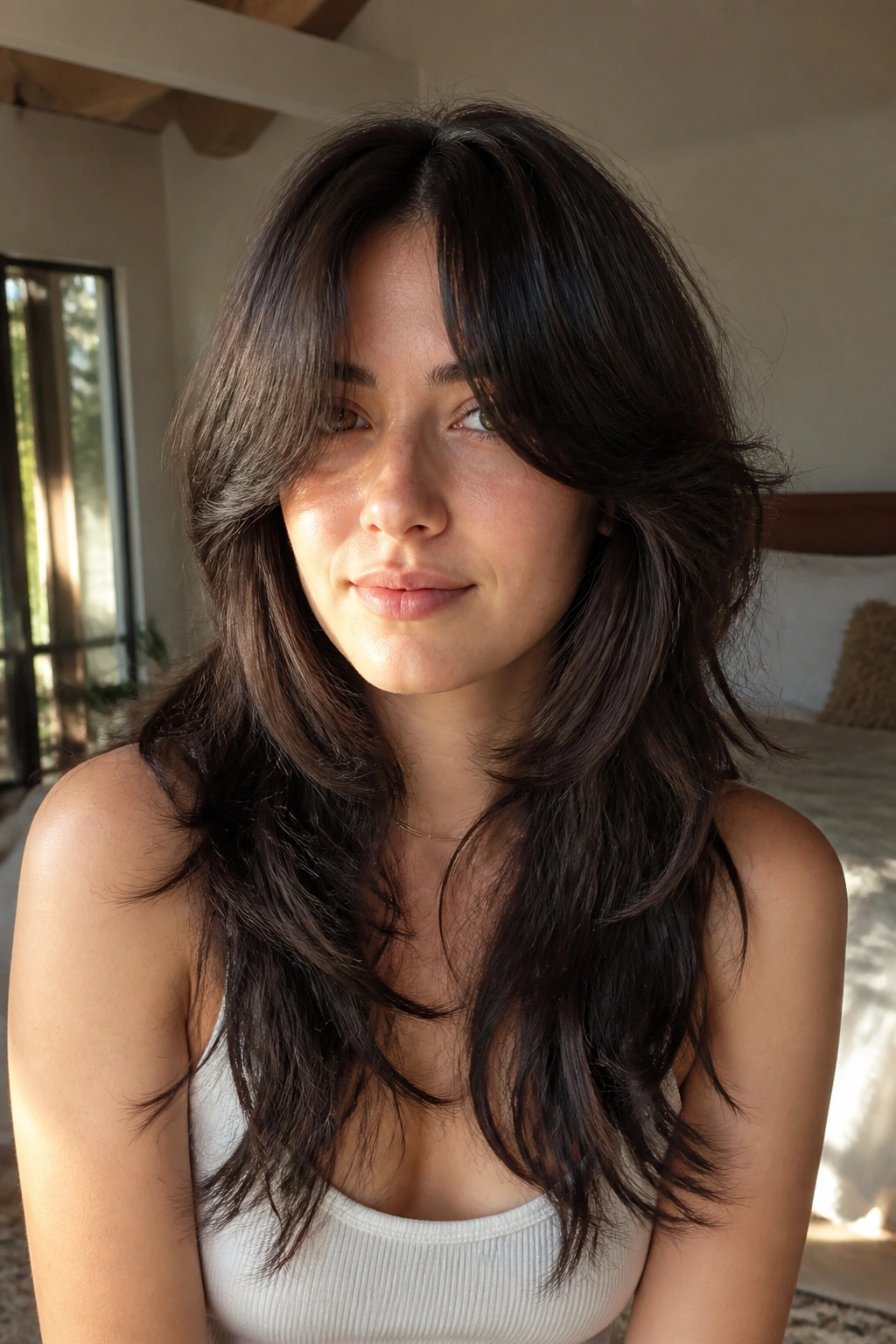
This is the easiest entry point if you want butterfly wolf cuts for long hair without going full shag. The curtain bangs open the face, and the longer butterfly layers fall into place like they were meant to be there. It feels airy, not chopped. That matters.
Why it works
The soft fringe gives the cut a front-loaded shape, which means the eye goes to the cheekbones and jaw instead of straight down the length. Long hair can swallow the face. This version fixes that without sacrificing inches.
- Ask for curtain bangs that start around the bridge of the nose.
- Keep the shortest face-framing layers near the cheekbone.
- Let the back stay long and tapered.
- Style with a round brush or a large roller for a gentle bend.
Best for: medium to thick hair that wants softness more than drama.
2. Crown-Heavy Butterfly Wolf Cut with Long, Tapered Ends
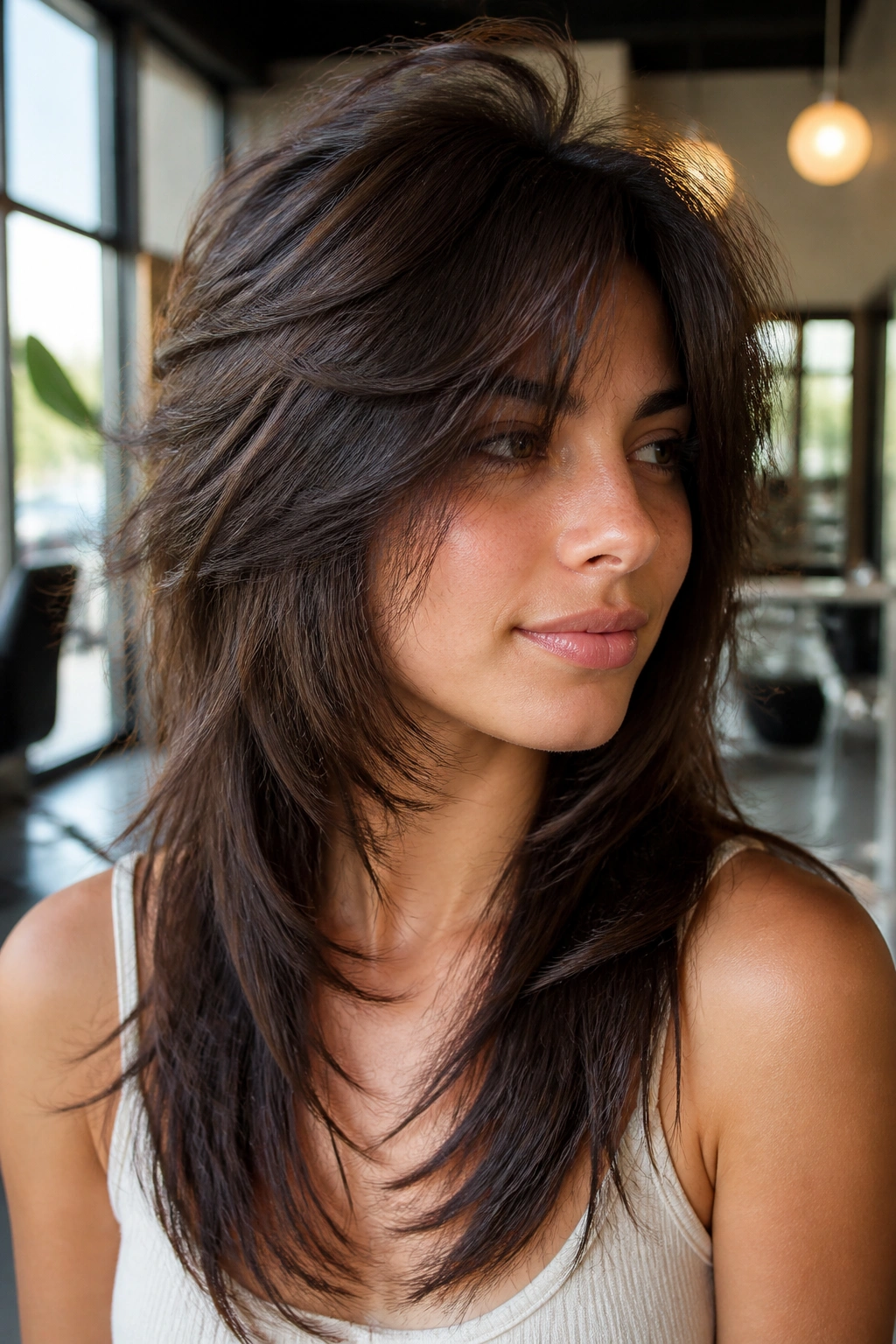
If your hair falls flat at the top, this is the one that wakes it up. The crown gets more internal layering, while the ends stay long and tapered so the whole cut doesn’t feel skinny. It has a bit of lift without looking like you lost half your hair in the salon chair.
The magic is in the balance. Too much layer up top and the cut turns frizzy. Too little and the crown stays glued to your scalp. A good stylist will keep the shortest pieces high enough to build volume, then leave the perimeter long enough to hold weight.
Wear this one with a blowout, or just rough-dry it and add a little root spray. It reads polished either way. That is why people keep coming back to it.
3. Razor-Soft Butterfly Wolf Cut for Loose Waves
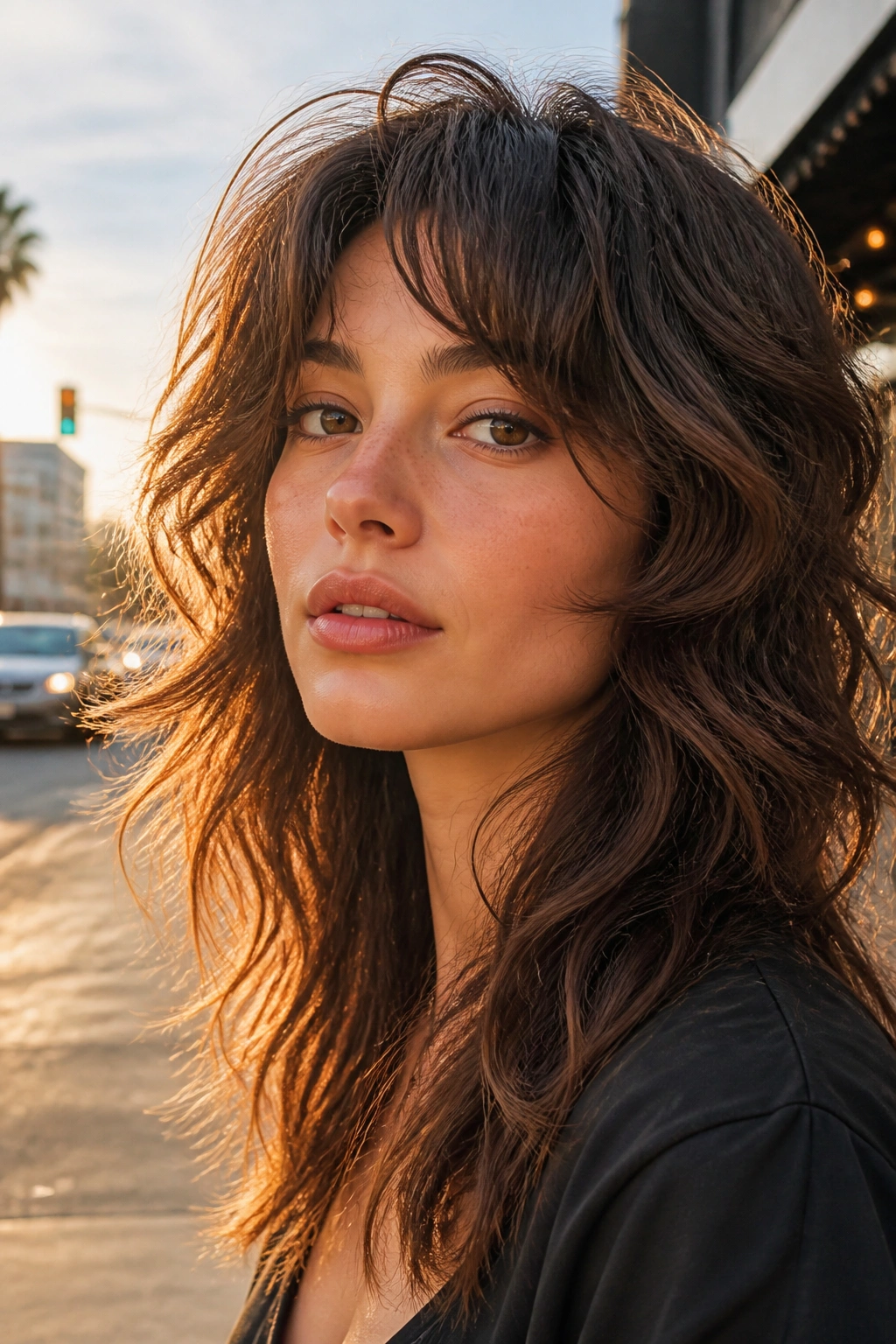
Why do some layered cuts look broken instead of soft? Usually because the texture was cut too bluntly for the hair pattern. A razor-soft butterfly wolf cut fixes that by removing weight in a way that lets loose waves bend, not puff.
How to style it
Let the hair dry about 80 percent of the way, then twist 2-inch sections around your fingers and leave the ends loose. A cream or light mousse is enough. You do not want crunchy waves here.
The result is not perfectly styled, and that is the point. This cut shines when it looks a little undone. If your hair already wants to wave, this version makes the movement show up faster and with less effort.
4. Curly Butterfly Wolf Cut That Keeps the Curl Pattern Open
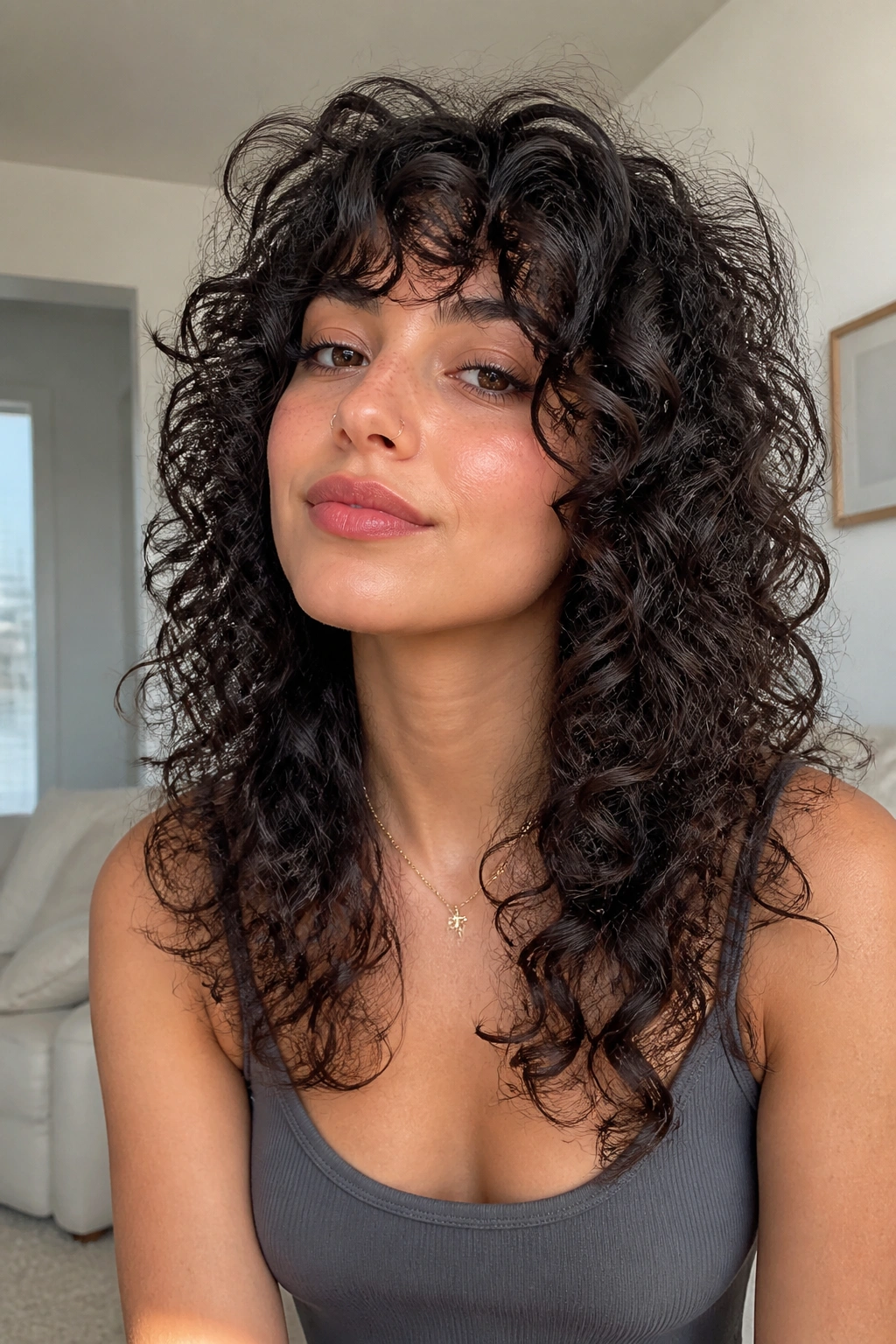
Curly hair needs a different kind of layer math. If the sections are cut too short or too high, the curls can spring up and create a halo that feels more mushroom than butterfly. This version keeps the curl pattern open by building shape around the face and through the mid-lengths without stealing too much weight.
Picture curls that can breathe. That is the goal.
- Ask for dry cutting if your curl pattern changes a lot when wet.
- Keep the face-framing layers long enough to sit below the chin when stretched.
- Avoid over-thinning the ends.
- Use a diffuser on low heat to protect the curl clumps.
This cut is a strong pick for anyone who wants a wolf cut shape without the frizz jackpot.
5. Straight-Hair Butterfly Wolf Cut with Feathered Movement
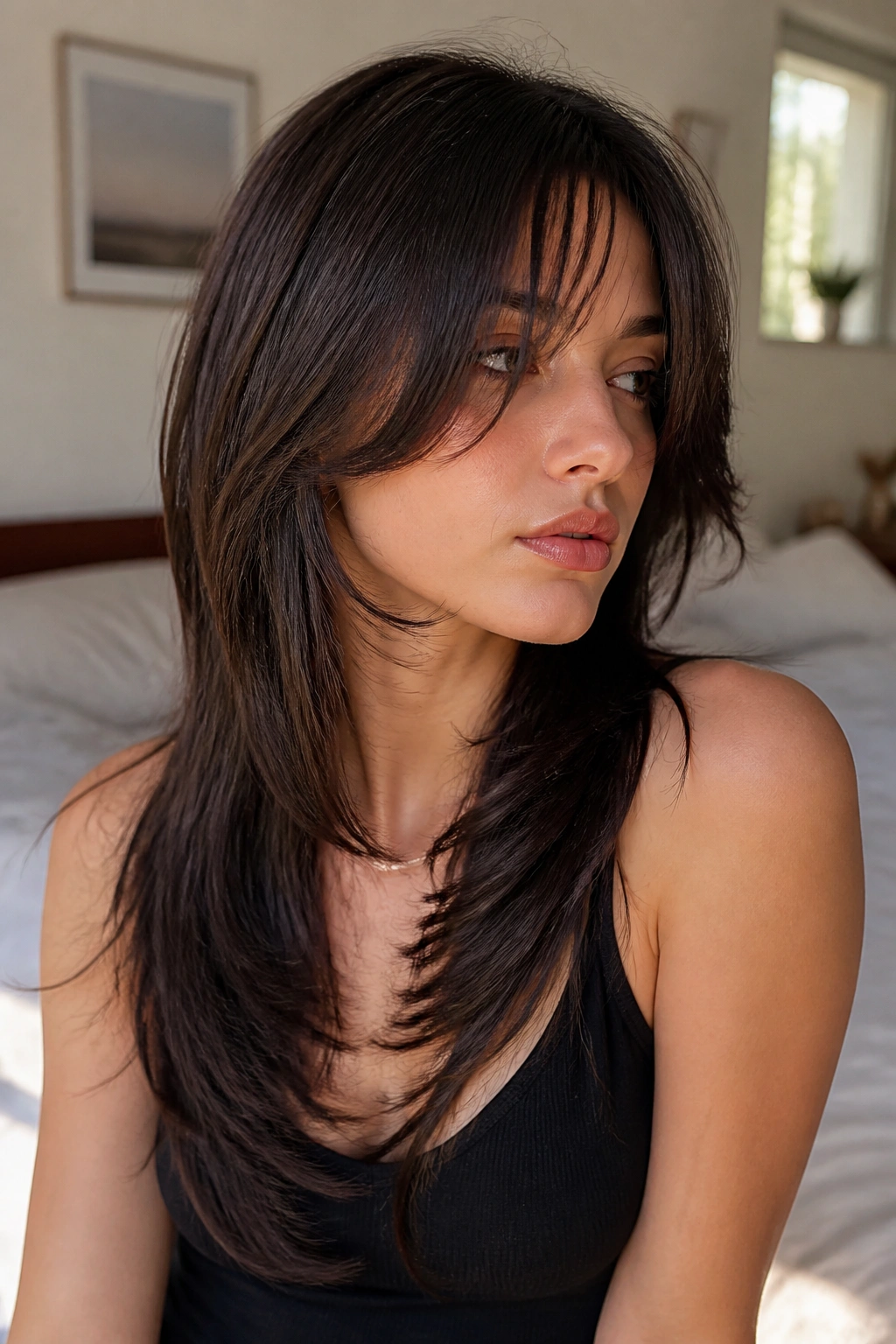
Straight hair can be brutally honest. Every layer shows. Every bad line shows too. That is why feathering matters so much here; the cut needs movement that reads as deliberate, not accidental.
The best version keeps the layering smooth and connected, then softens the ends so they move when you turn your head. A flat iron curl at the front pieces can help, but the haircut itself has to do most of the work. If the layers are too short, the style goes dated fast.
This one is for people who want a sleek outline with a little swing at the sides. Clean. Easy to wear. Not fussy.
6. Deep Side-Part Butterfly Wolf Cut for Extra Lift
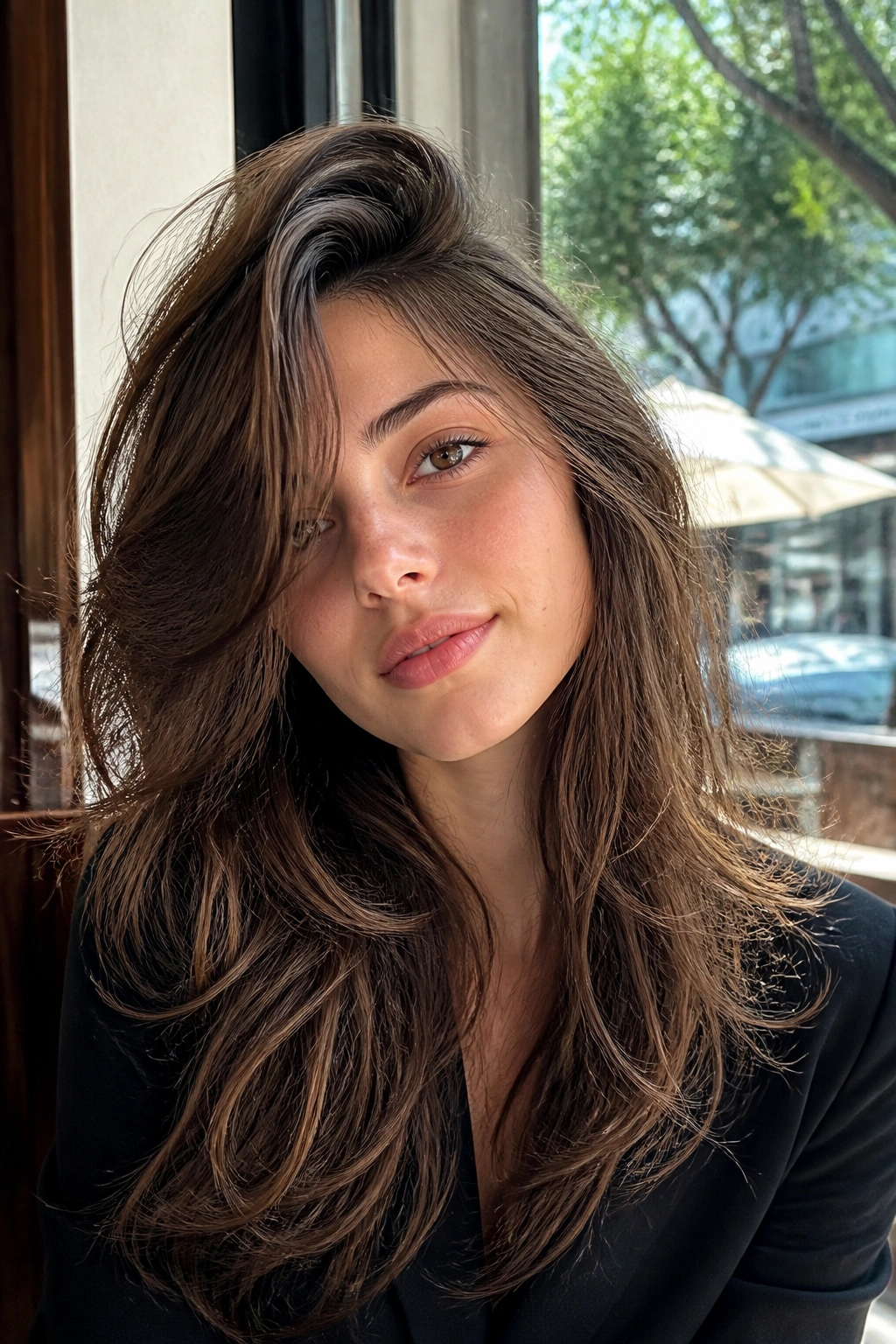
A deep side part changes the whole mood of long layers. It gives one side more root height, more sweep, and a sharper line across the forehead. The haircut itself can stay pretty simple; the part does half the heavy lifting.
The nice thing is that this version looks fuller without needing a ton of teasing. That is a small victory, but it is a real one. Long hair can get weighed down fast, and a side part breaks that straight vertical fall.
This cut works especially well if your hair tends to collapse at the crown. Flip the part, give the roots a quick blast with the dryer, and let the face-framing pieces fall where they want.
7. Invisible-Layer Butterfly Wolf Cut for Fine Hair
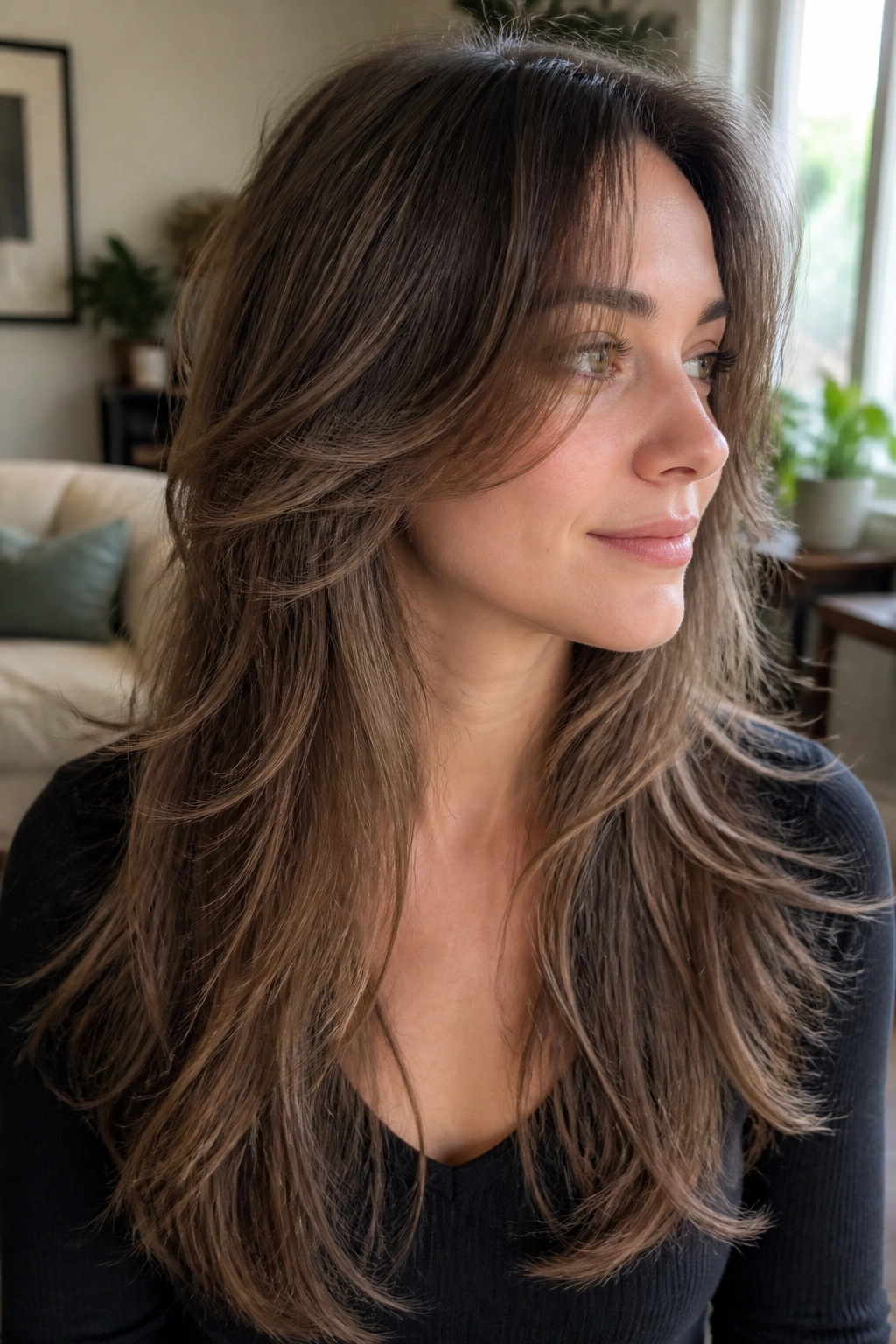
Fine hair needs layers that do their job quietly. Too much chopping and the ends look thin. Too little and the hair hangs like a curtain that forgot its own personality.
Invisible layers are the answer here. They sit inside the shape, not all over the surface, so the perimeter still looks full while the body gets movement. The result is subtle, but it changes the way the whole head sits.
What to ask for
A stylist should keep the bottom line intact, then place long internal layers that start well below the cheekbones. That lets the hair move without showing obvious gaps. If you wear your hair up a lot, this is also easier to grow out than a sharp shag.
8. Internal-Weight Butterfly Wolf Cut for Thick Hair
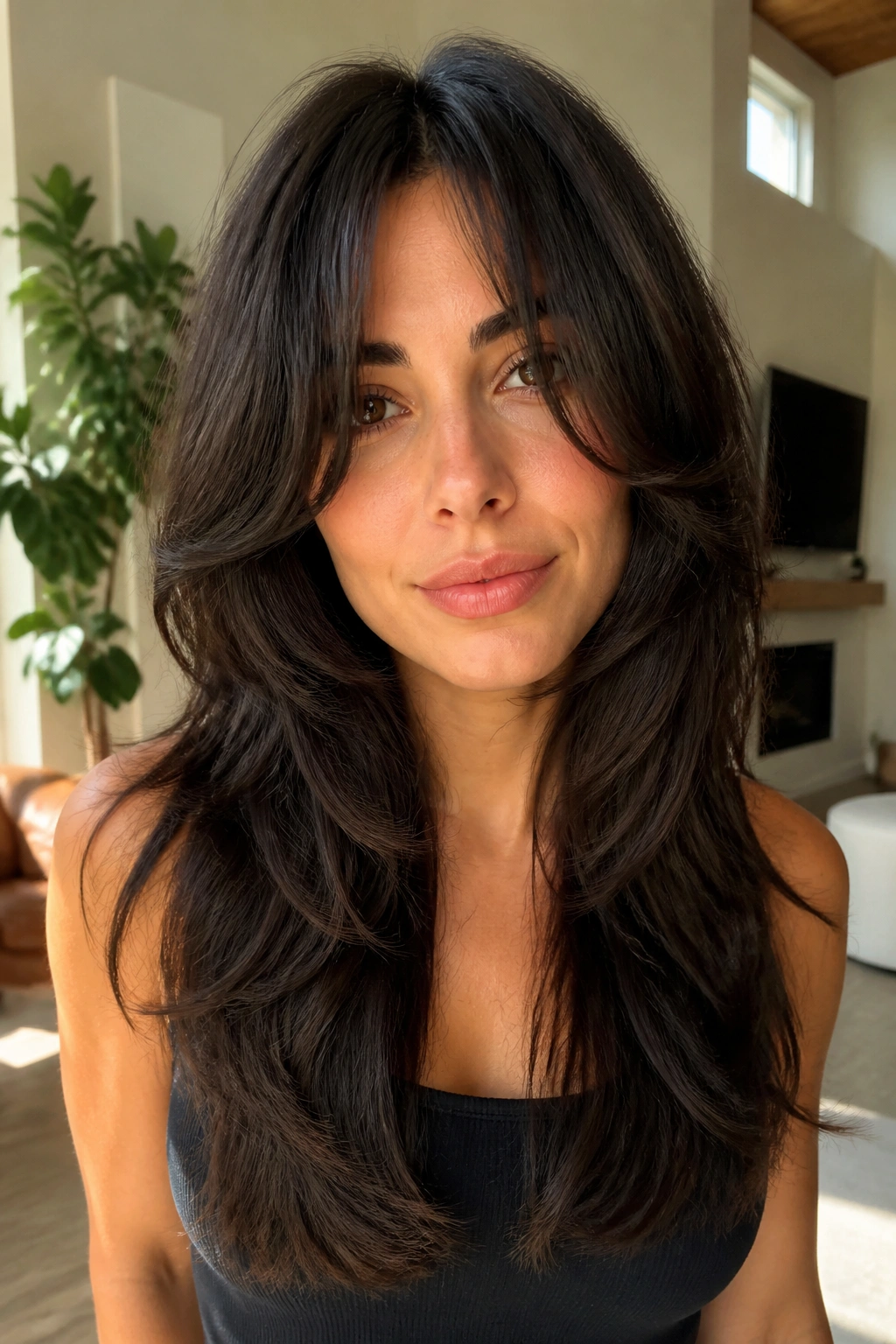
Thick hair does not need more volume. It usually needs less bulk in the right spots. This version removes weight from the inside so the hair stops standing out like a triangle at the bottom.
That is the part people miss. They ask for layers, but what they really need is shape control. If the stylist just chops the surface, the ends can still feel heavy and the top can still feel puffy. Internal weight removal keeps the outline cleaner.
It is a good fit if your hair takes forever to dry or feels hot on your neck. You will notice the difference the first time you rough-dry it. The air moves through faster. The shape settles better.
9. Face-Framing Butterfly Wolf Cut for Round Faces
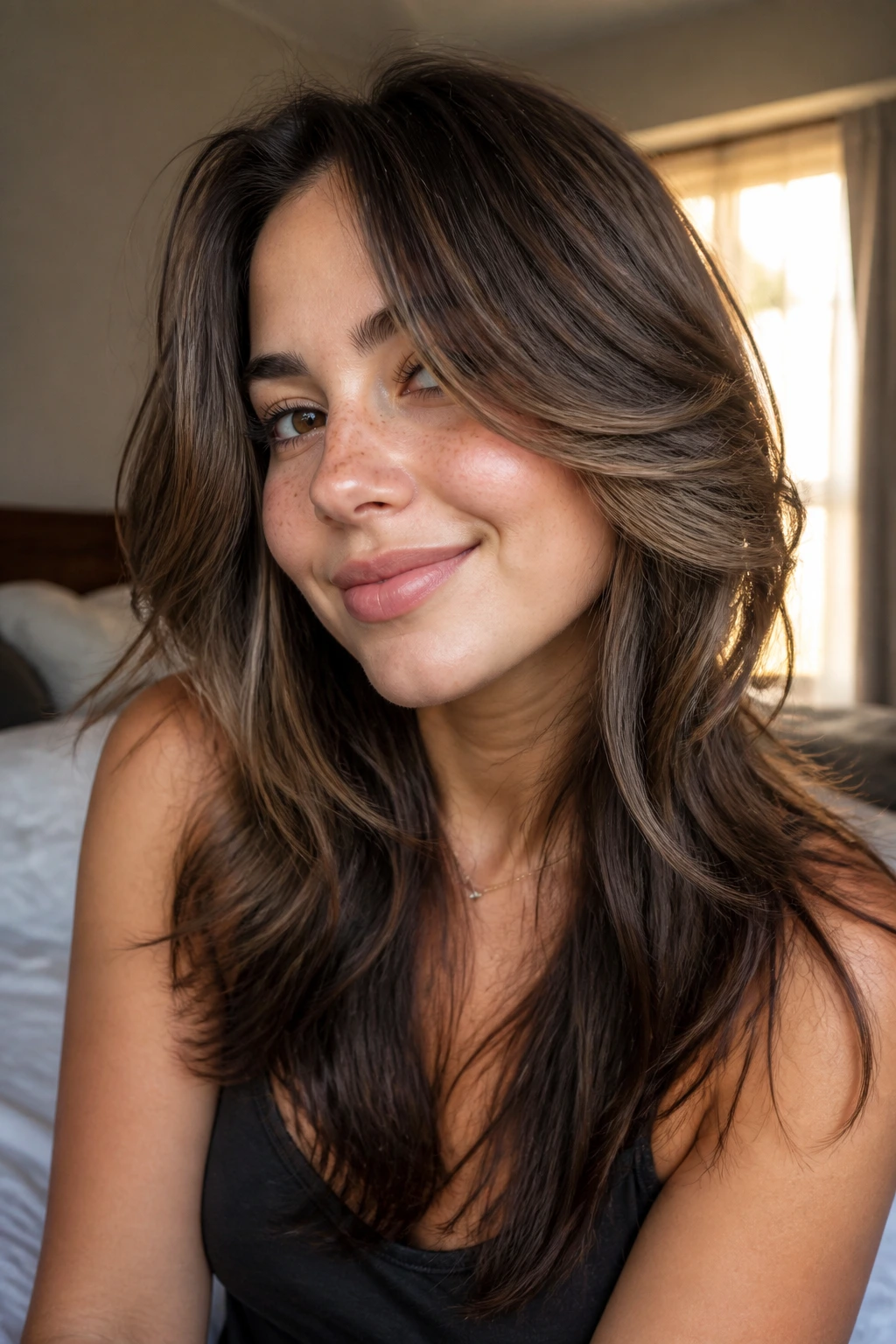
Round faces often look best when the front pieces start lower and move diagonally instead of stopping at the cheeks. That gives the eye a long line to follow, which is the whole game here. The face-framing wings should open the face, not cut it in half.
A lot of people ask for layers and end up with volume on the sides that makes the face look wider. This cut avoids that trap. Keep the wings below the chin, leave the crown lifted, and let the long layers fall past the shoulder.
It is flattering in a quiet way. Not flashy. Just smart.
10. Long Wolf Cut with Bottleneck Bangs
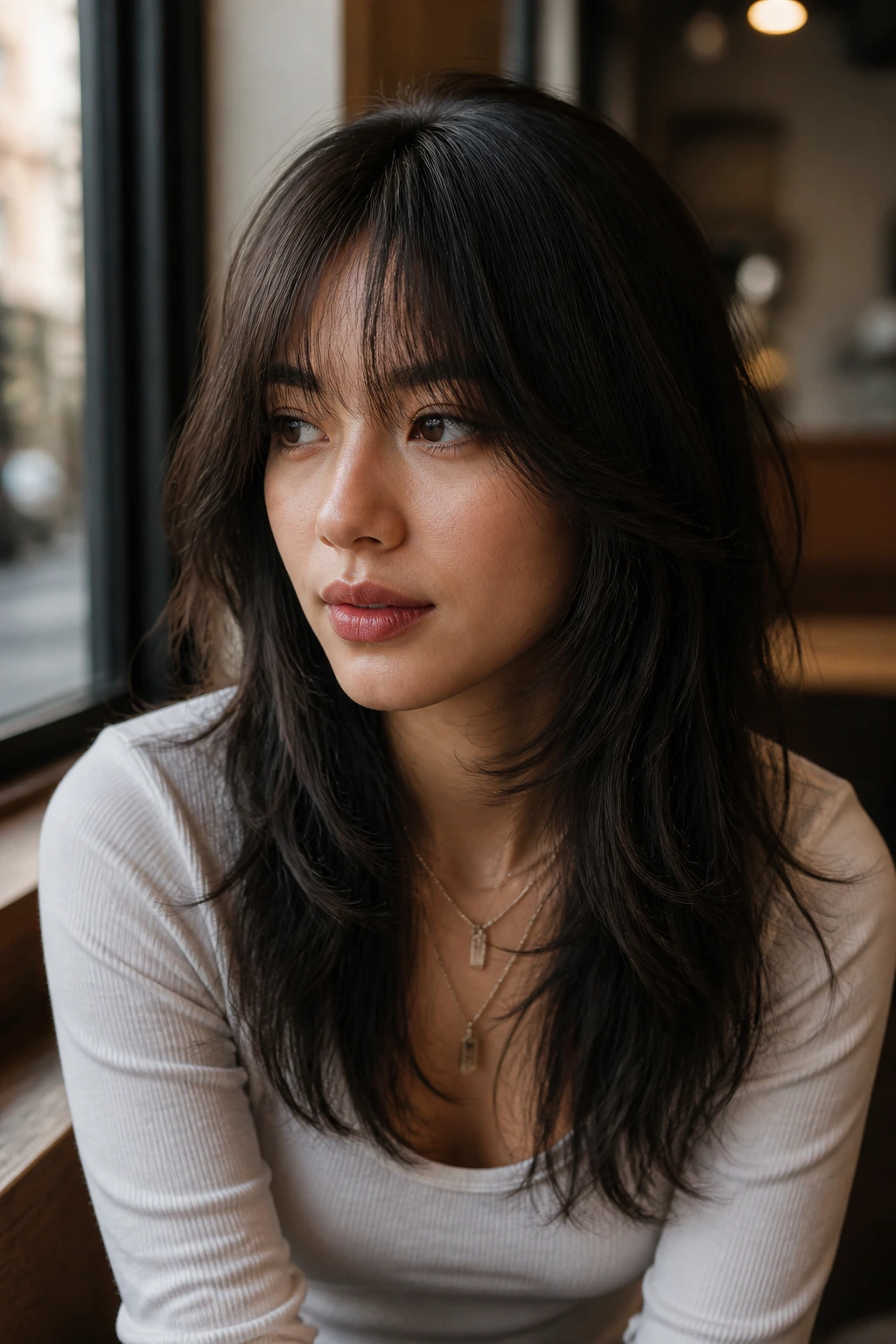
Bottleneck bangs give the wolf cut a sharper front edge. They start narrow at the center and get a little wider near the corners, so the fringe frames the eyes without dropping into a full heavy curtain. On long hair, that detail can be the difference between cool and costume-y.
This version works because it keeps the face interesting while the rest of the hair stays long and layered. You get a soft, broken line at the front and a more ragged texture through the lengths. There is some attitude here, but it is controlled.
If you like a cut that looks finished even when you haven’t styled the back, this is a solid pick.
11. Shag-Forward Butterfly Wolf Cut with Airy Texture
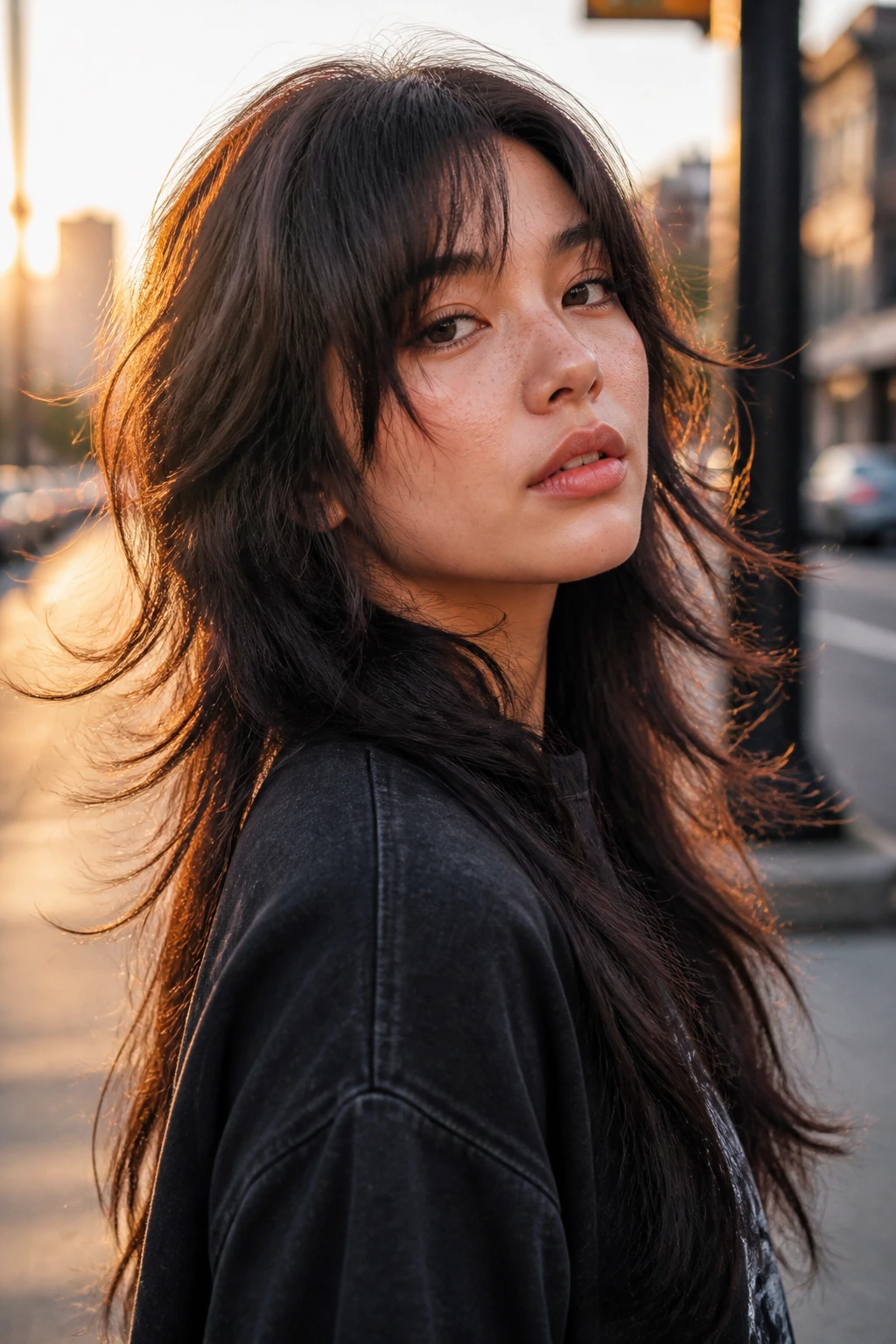
This one leans harder into the shag side of the family. The layers are more obvious, the texture is more broken up, and the ends look lightly razored instead of smooth. It is the version I’d point to if you want your long hair to feel a little less polite.
The shape has a lived-in quality, but not the sloppy kind. There’s still structure at the crown and around the face. The trick is to keep the layers long enough that the hair can move, then rough up the finish with a texturizing spray or a tiny bit of paste.
If your wardrobe already runs relaxed — denim, tees, boots, easy dresses — this cut fits right in.
12. V-Shape Butterfly Wolf Cut with a Clean Back Line
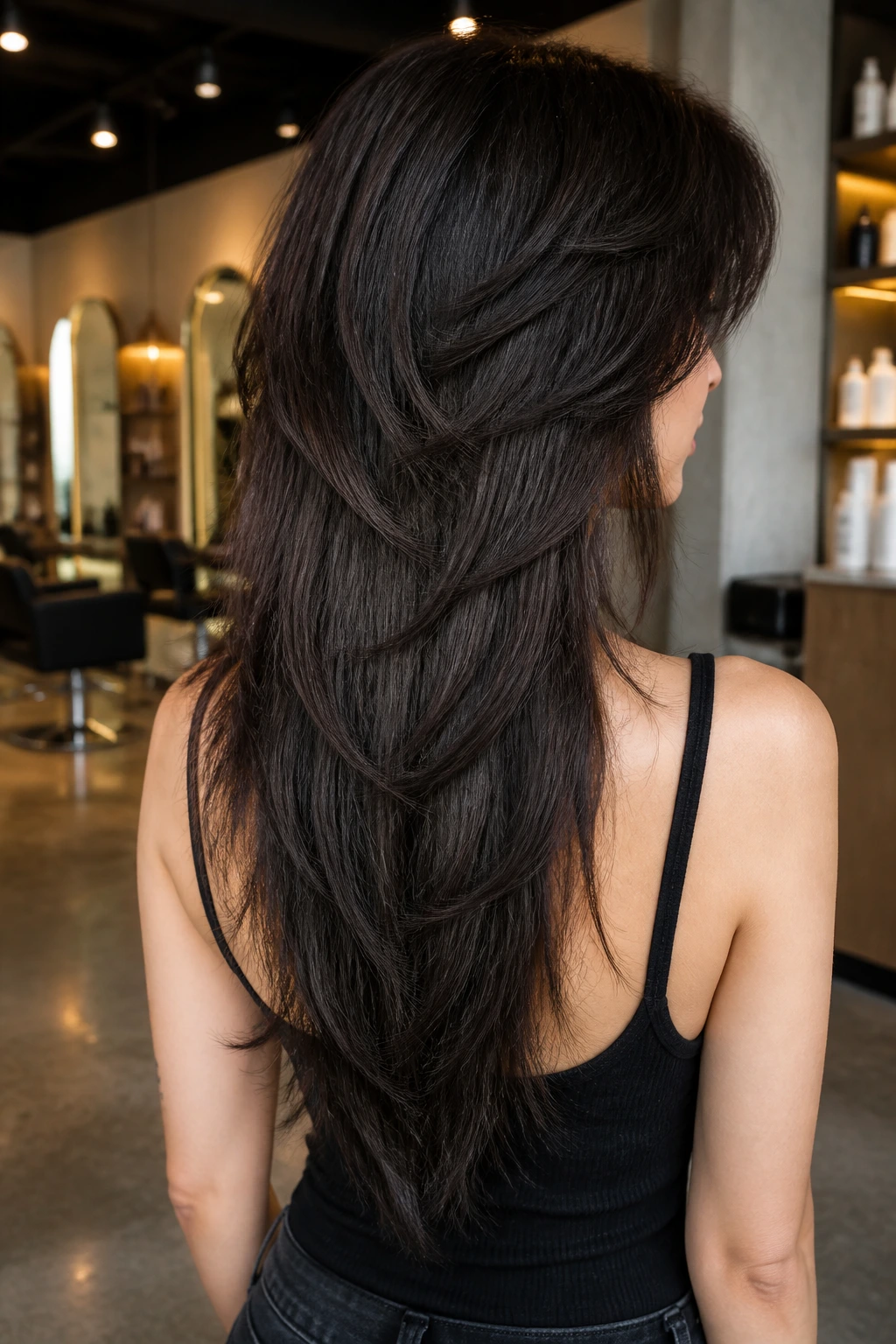
Unlike softer round-layer cuts, the V-shape keeps the back dramatic. The point of the V sits lower, so the length looks intentional and a little sharp, even while the top and face get that fluttery butterfly movement.
This is a strong option if you love long hair and do not want the outline to disappear. The front can still be shaggy and soft. The back just holds its line. That contrast is what makes it feel modern without trying too hard.
Ask for the perimeter to stay crisp. If the ends get over-texturized, the V loses its punch.
13. Air-Dry Butterfly Wolf Cut for Busy Mornings
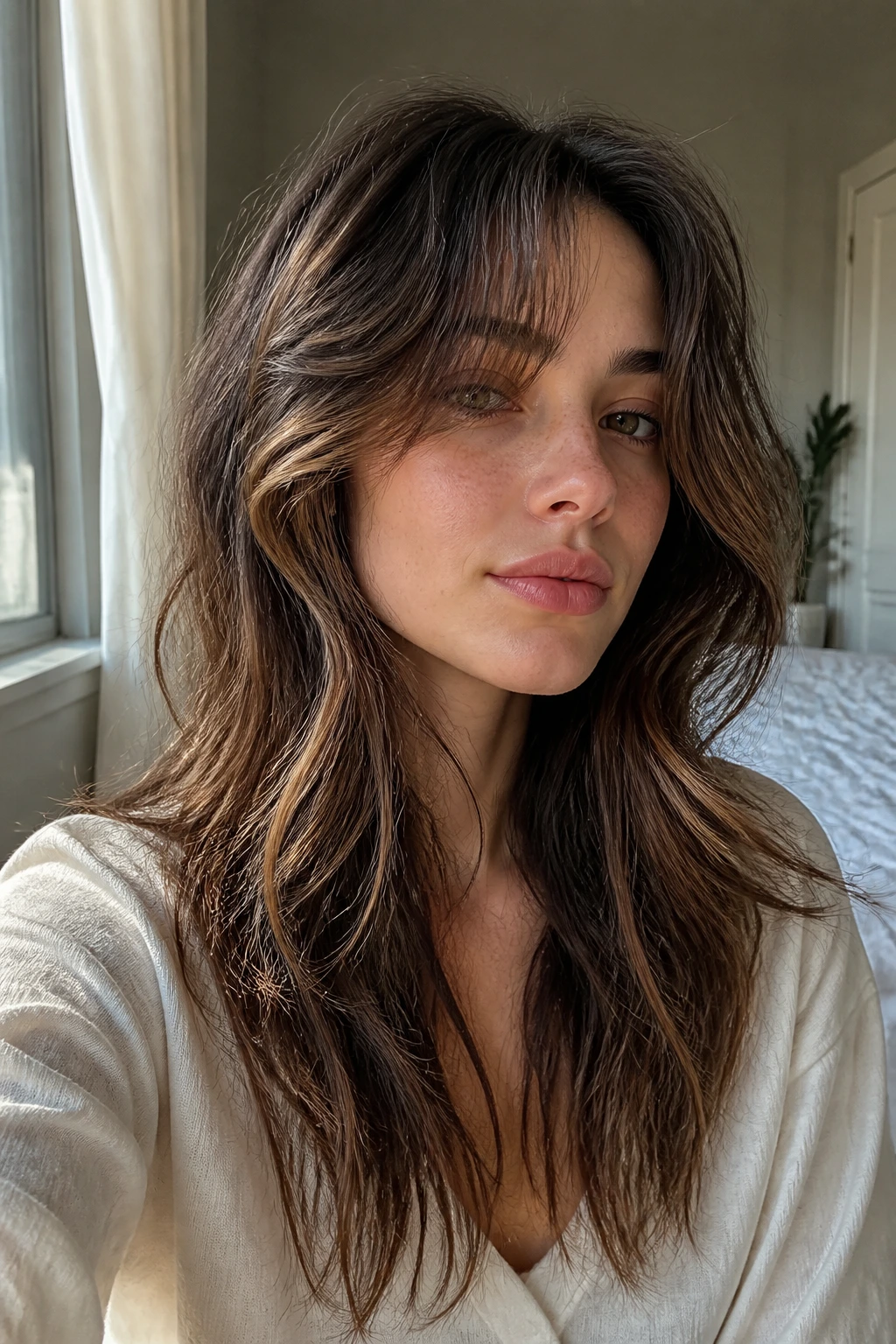
Some cuts live or die by hot tools. This is not one of them. The air-dry version is built so the layers fall into shape even when you do almost nothing to it, which is a relief if you hate standing over a brush for 20 minutes.
It usually works best with wavy or slightly textured hair. You scrunch in a light cream, twist a few face-framing pieces, and let the rest do its thing. The layers should dry with enough separation to show movement, but not so much that they frizz into a fuzz ball.
This is the low-maintenance cousin in the family. Not boring. Just practical.
14. 90s Blowout Butterfly Wolf Cut with Big Wings
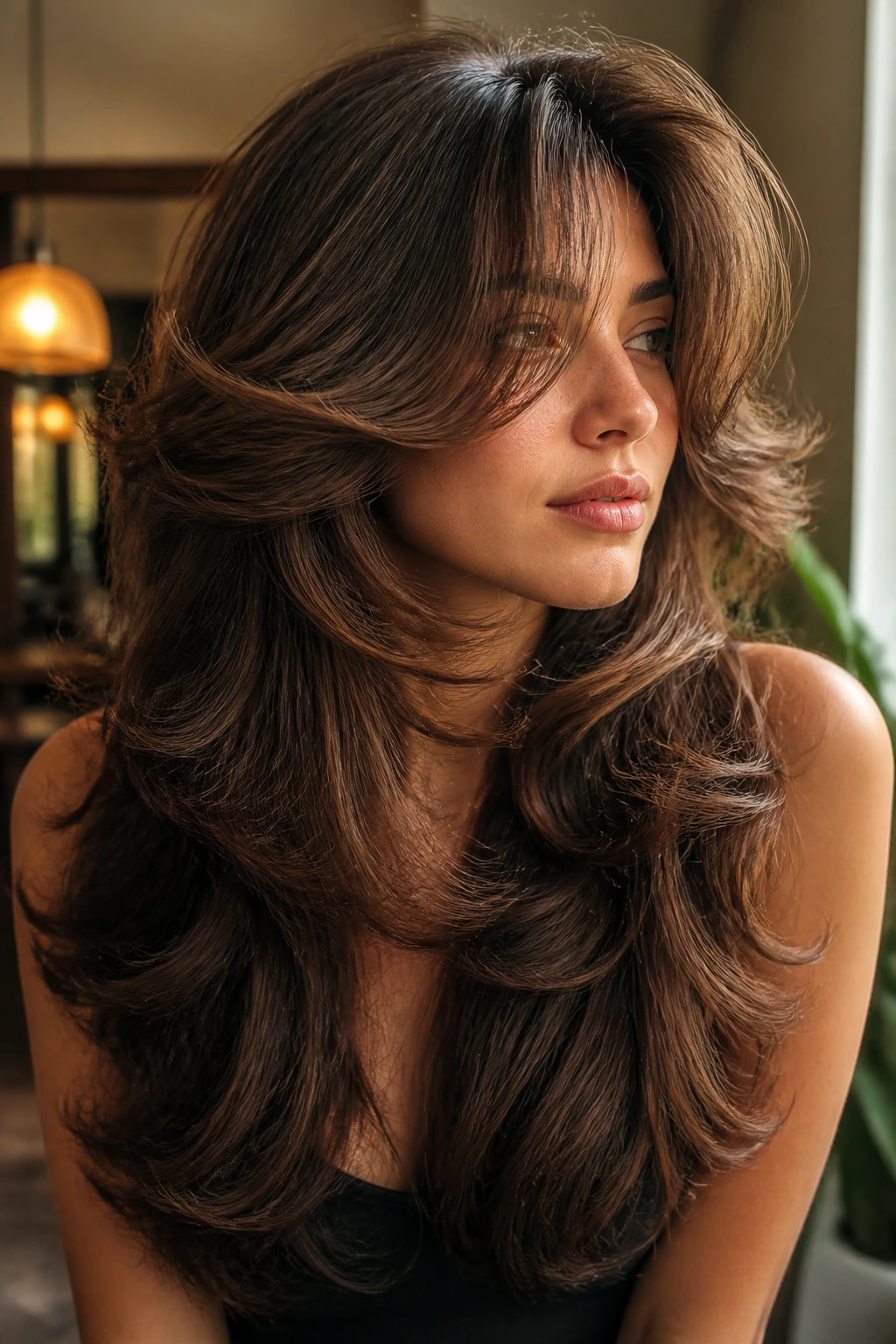
Big hair is back in a very specific way here. The blowout version uses the cut’s layers to create swing, then pushes the front pieces outward with a round brush or hot air brush. Think lifted roots, smooth mids, and ends that turn under or away from the face.
This is not the same as old-school pageant volume. The difference is the texture. A butterfly wolf cut still wants movement and a little edge, so the layers should feel feathered, not helmet-hard. A 2.5-inch round brush is a useful tool for this if your hair is long enough to wrap around it.
It suits people who like a done look. Glossy. Bouncy. A little dramatic.
15. Crown-Micro-Layer Butterfly Wolf Cut
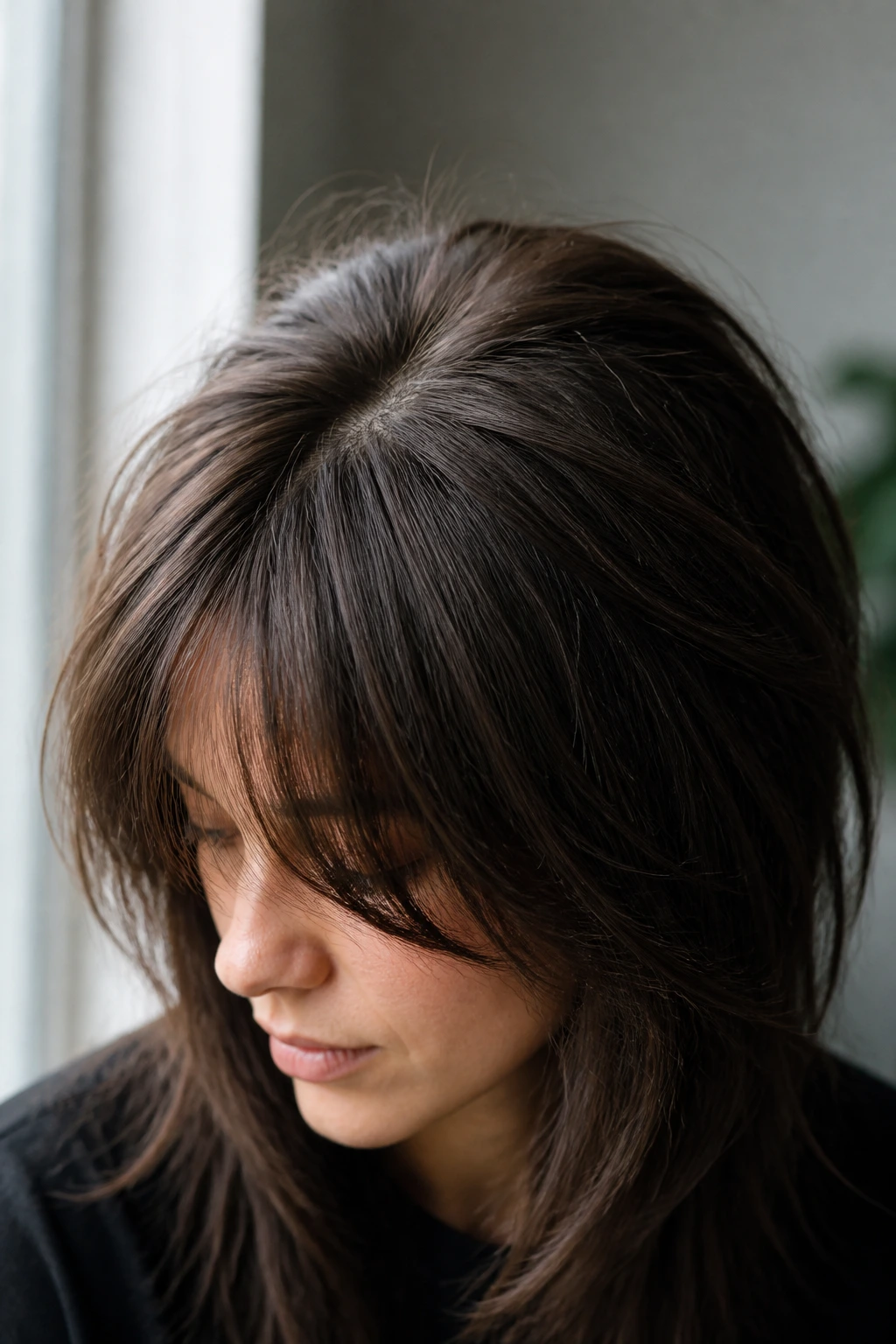
Can tiny layers make a big difference? Absolutely. Especially at the crown, where even a few short internal sections can change how full the top looks. This version is good if you want lift without a visible shag line running through the whole head.
What makes it different
The shortest pieces stay hidden underneath, so the outer shape still looks long and smooth. The top gets a softer rise, the sides keep their length, and the ends do not get too wispy. It is a sneaky cut, and I mean that in a good way.
If you’re nervous about layers, this is the safest way to test the waters. It gives shape without shouting about it.
16. Soft Mullet-Edge Butterfly Wolf Cut
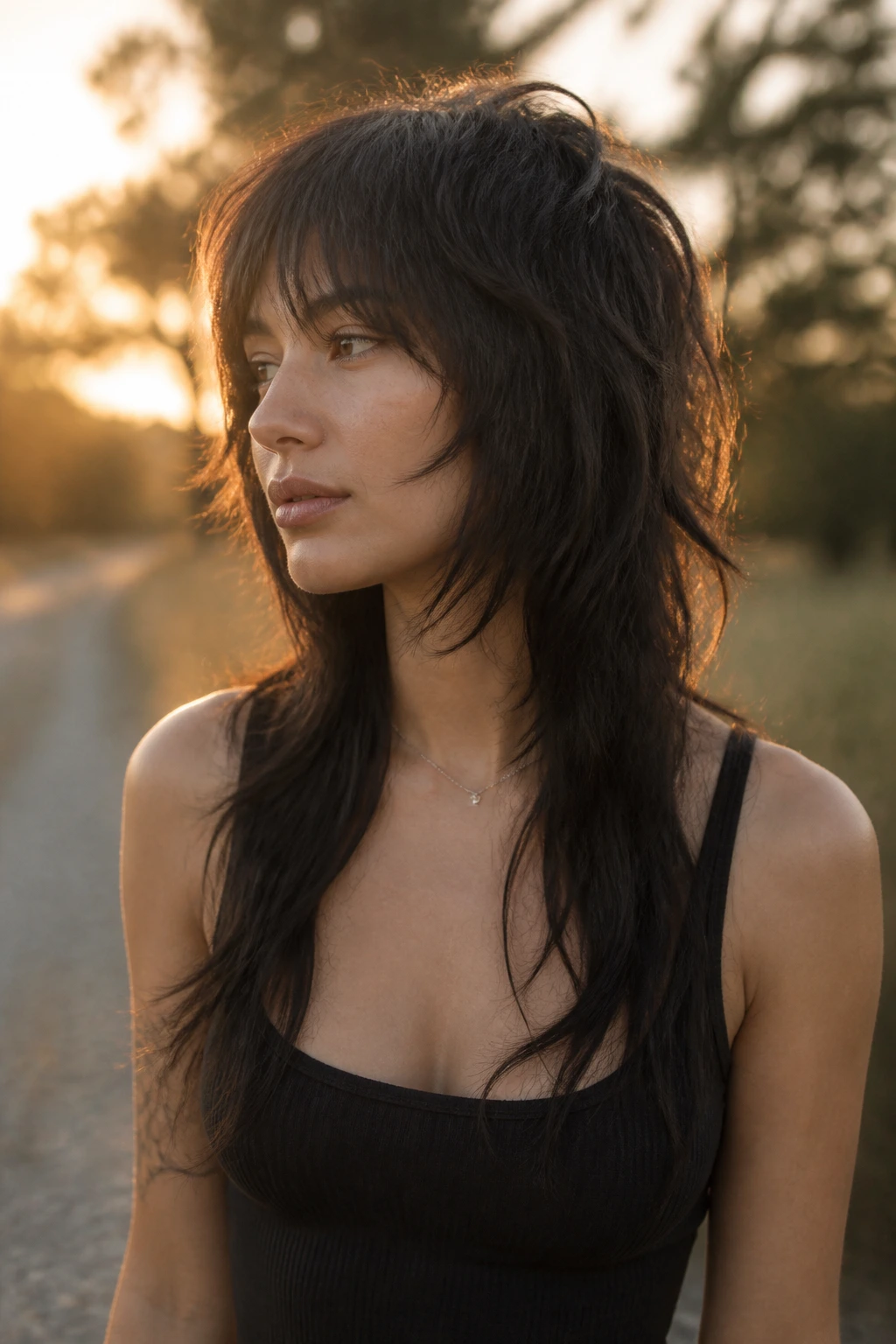
A little mullet energy can be a good thing. The soft mullet-edge version keeps the front and crown more textured while allowing a longer tail in back, but it stops well short of looking harsh or retro in a bad way.
The reason this works on long hair is that it keeps the silhouette interesting from every angle. You get face-framing layers, a bit of choppy lift near the top, and a longer back that keeps the length story alive. It feels a touch rebellious, but not costume-like.
This is the cut for someone who likes a wolf cut with teeth. Not a ton. Just enough.
17. Center-Part Butterfly Wolf Cut with Swinging Sides
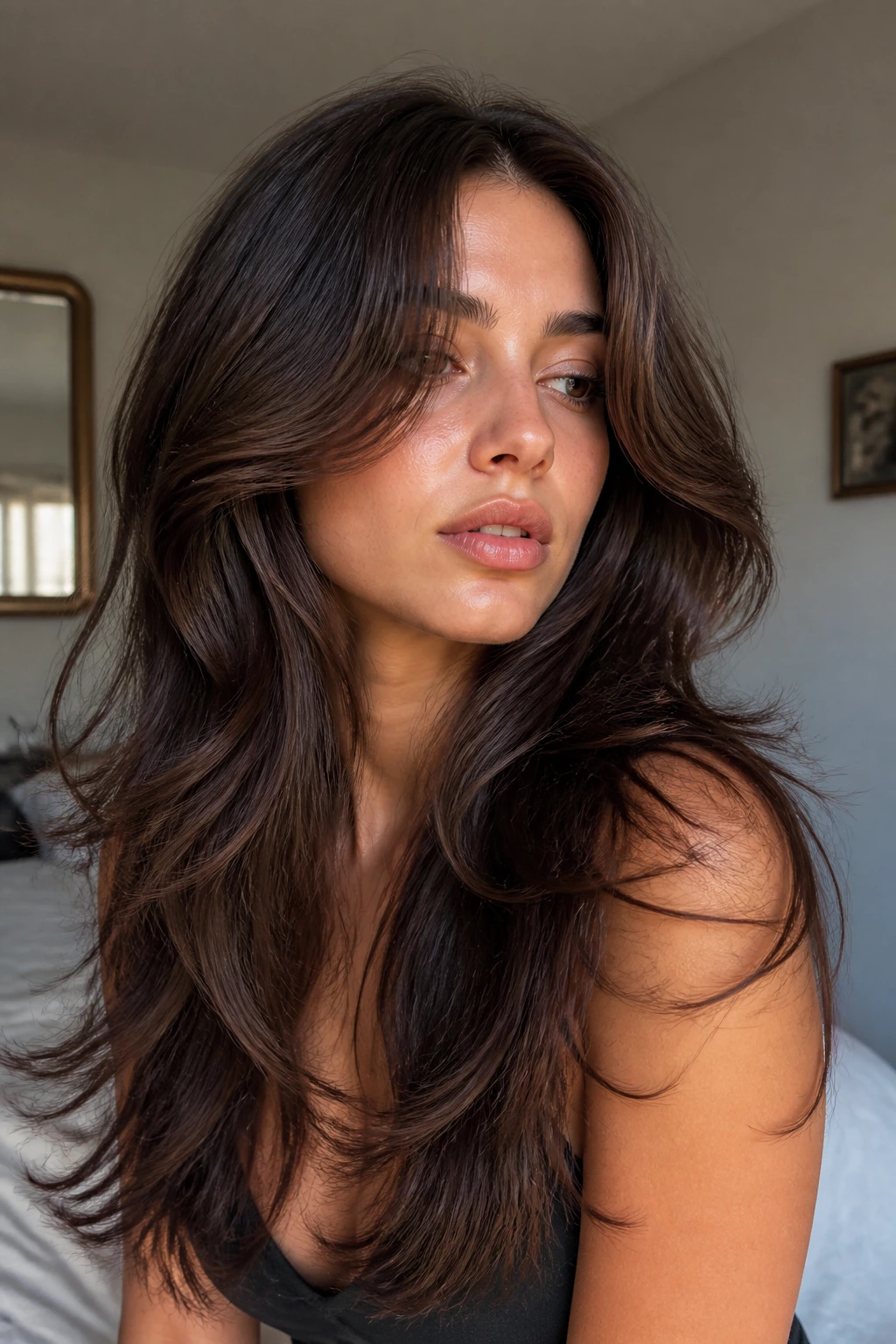
A center part sounds simple. It can be, if the layers are bad. But with the right long layers, a center part gives the haircut symmetry and lets the sides fall like soft wings around the face.
The charm here is in the swing. Each side should be long enough to move when you turn your head, while the crown stays light enough to avoid that heavy flat look that long hair often gets. If your features are balanced and you like a calm, clean line, this is one of the easiest versions to wear.
It also grows out well. That matters more than people admit.
18. Low-Commitment Butterfly Layer Refresh
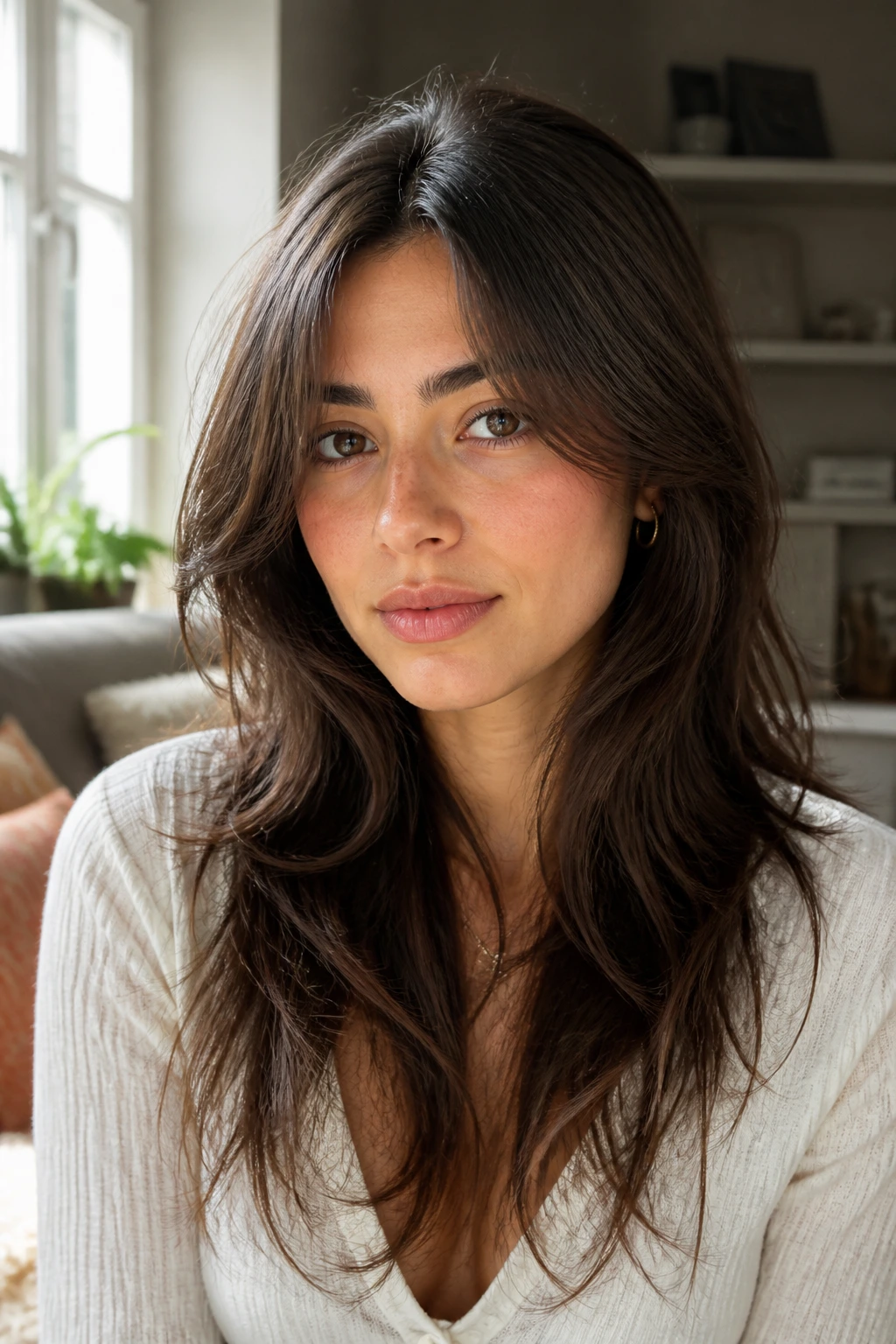
Not every long-hair client wants a whole new personality from a haircut. Sometimes you want a refresh, not a reinvention. This version keeps the layers subtle, trims the dead weight, and creates just enough face framing to make the hair feel new again.
That is the nice part: the change is visible, but not shocking. You can still pull your hair into a ponytail, braid it, or wear it straight without fighting a wild shape. For someone who is layer-curious but cautious, this is probably the smartest first step.
Ask for long, blended pieces around the front and only a modest reduction through the bulk. Quiet, but effective.
19. Wavy-Hair Butterfly Wolf Cut with Piecey Ends
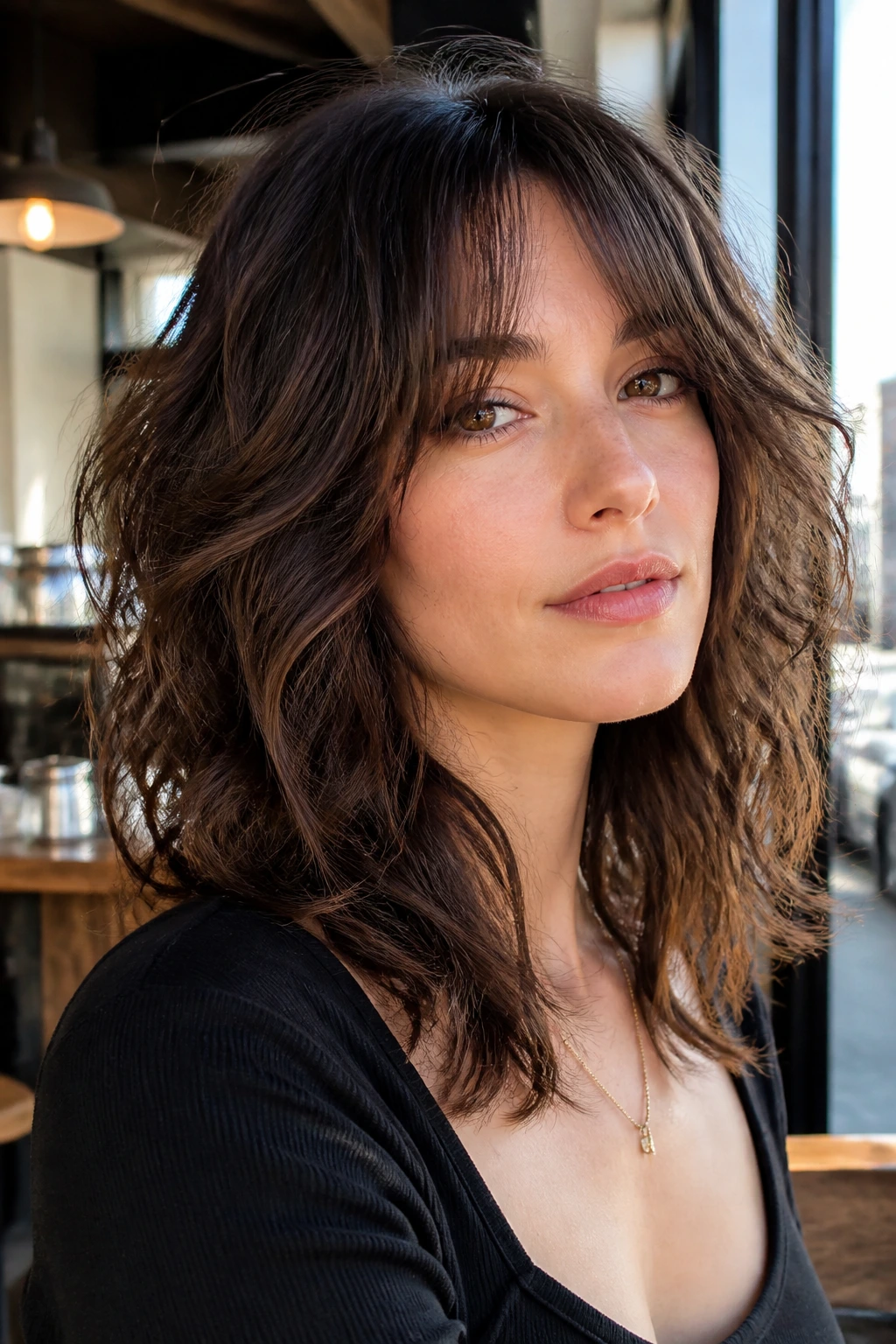
What makes wavy hair so good for this style is the middle ground it already lives in. It is not pin-straight, not curly, and the best butterfly wolf cuts lean right into that texture. Piecey ends keep the shape from turning mushy.
The haircut should give your waves room to separate. Too many short layers and the wave pattern gets messy. Too few and the hair just sits there. A little sea-salt spray can help, but the cut does most of the work.
This version looks strongest on shoulder-grazing layers that continue well past the chest. The movement is the point.
20. Blunt-Ends Butterfly Wolf Cut for a Sharper Look
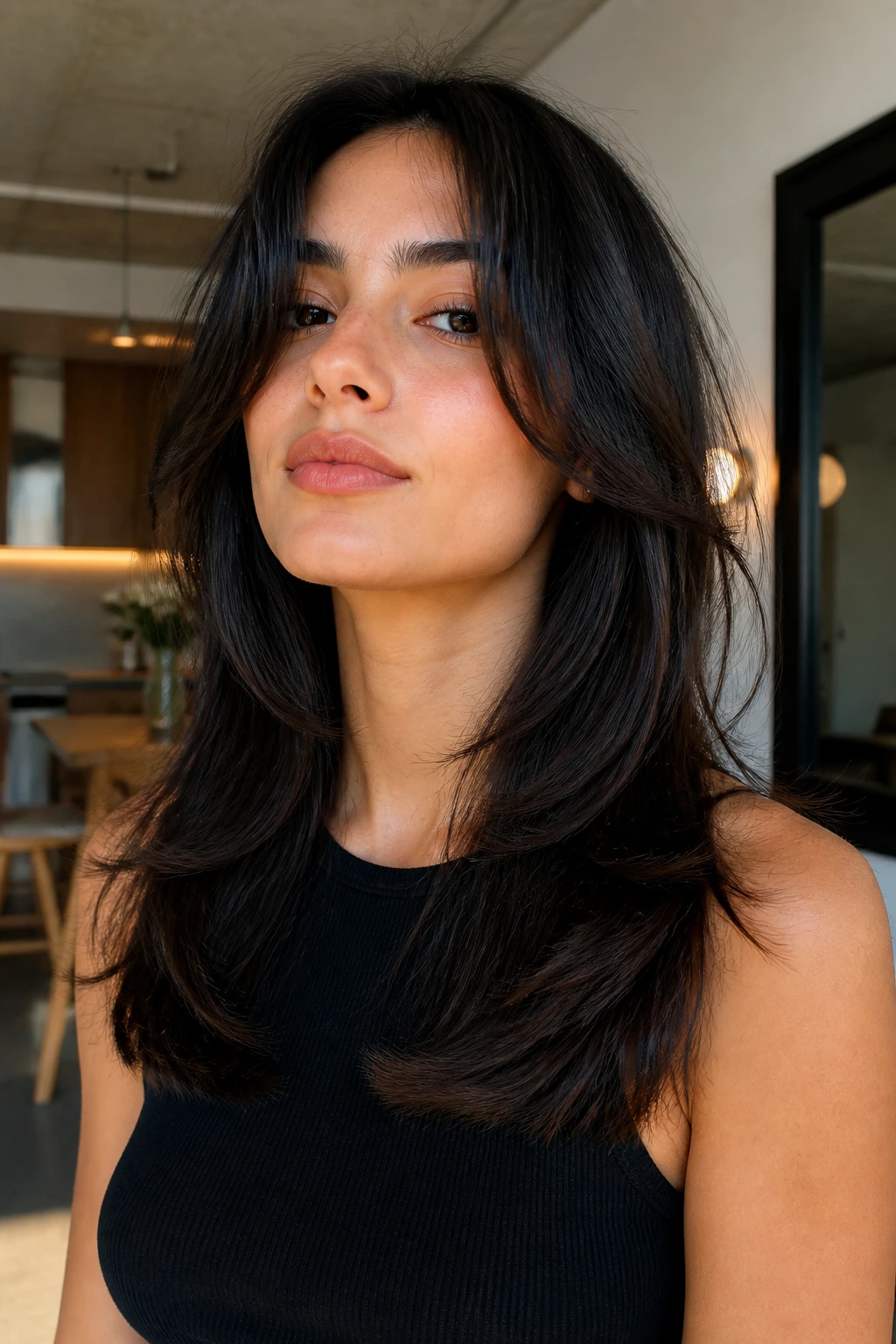
Soft does not have to mean wispy. A blunt-ends version keeps the bottom line stronger while the top and front still carry the butterfly-wolf movement. That contrast makes the cut feel modern and a little more expensive-looking, if we’re being honest.
It is a nice choice for people who want the layering effect without losing the sense of density at the ends. The blunt perimeter gives the hair a firmer finish, which helps long hair look thicker in photos and in real life. Add long internal layers above that line and you get shape without softness overload.
If your hair has a lot of shine, this one looks especially clean.
21. Fine-Hair Butterfly Wolf Cut with Choppy Texture
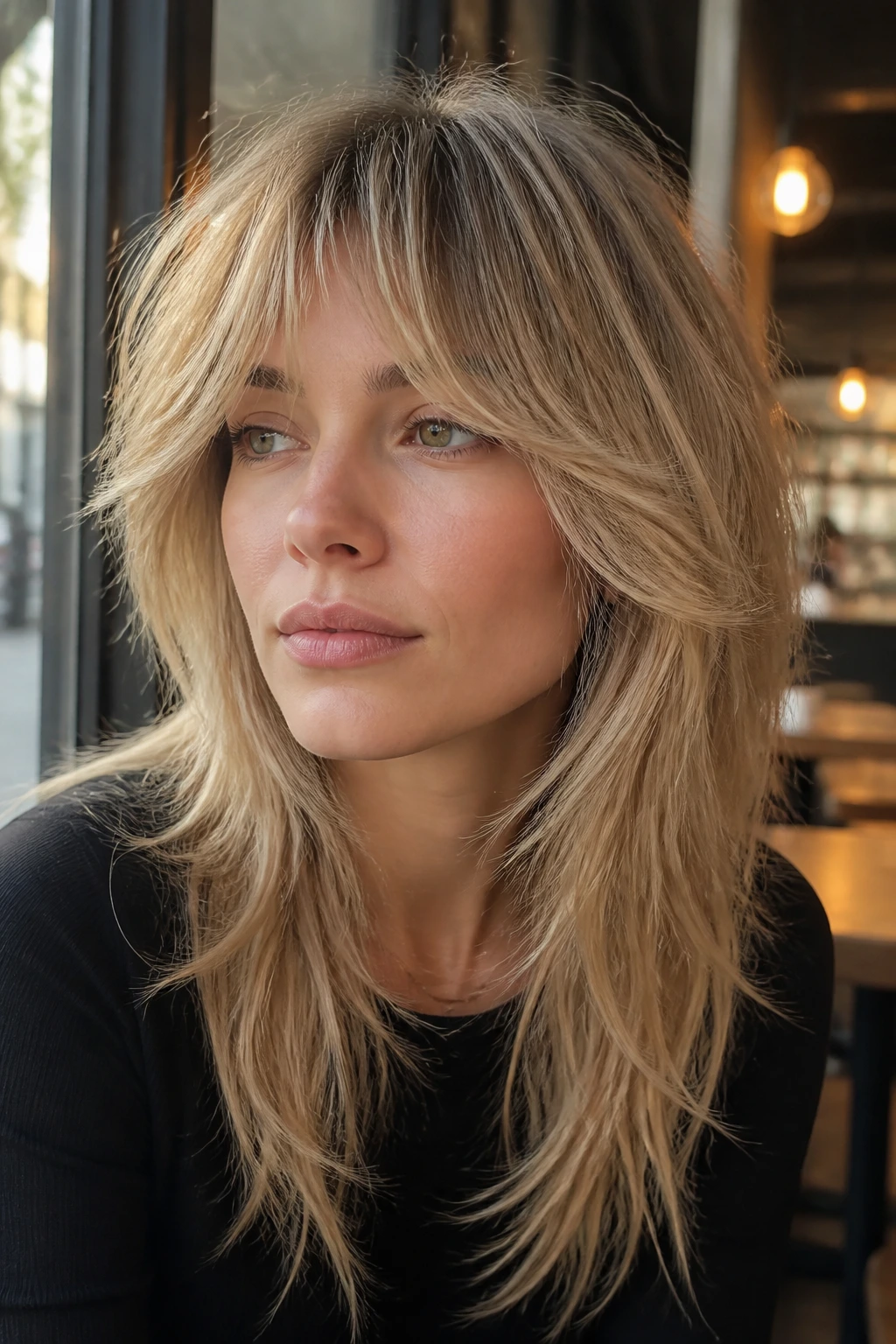
Does fine hair need more texture or less? That depends on where the texture sits. This cut puts the choppiness in the right places — mostly around the top and face — while leaving enough length in the ends to avoid that see-through look that happens when fine hair gets over-layered.
How to get it right
Keep the shortest pieces modest. Use a lightweight mousse at the roots. And if you style with heat, don’t overdo the teasing; it tends to collapse by lunchtime anyway.
This version is best when you want lift and movement more than fullness in the traditional sense. It makes fine hair feel more alive, not heavier.
22. Curtain-and-Side-Sweep Hybrid Butterfly Wolf Cut
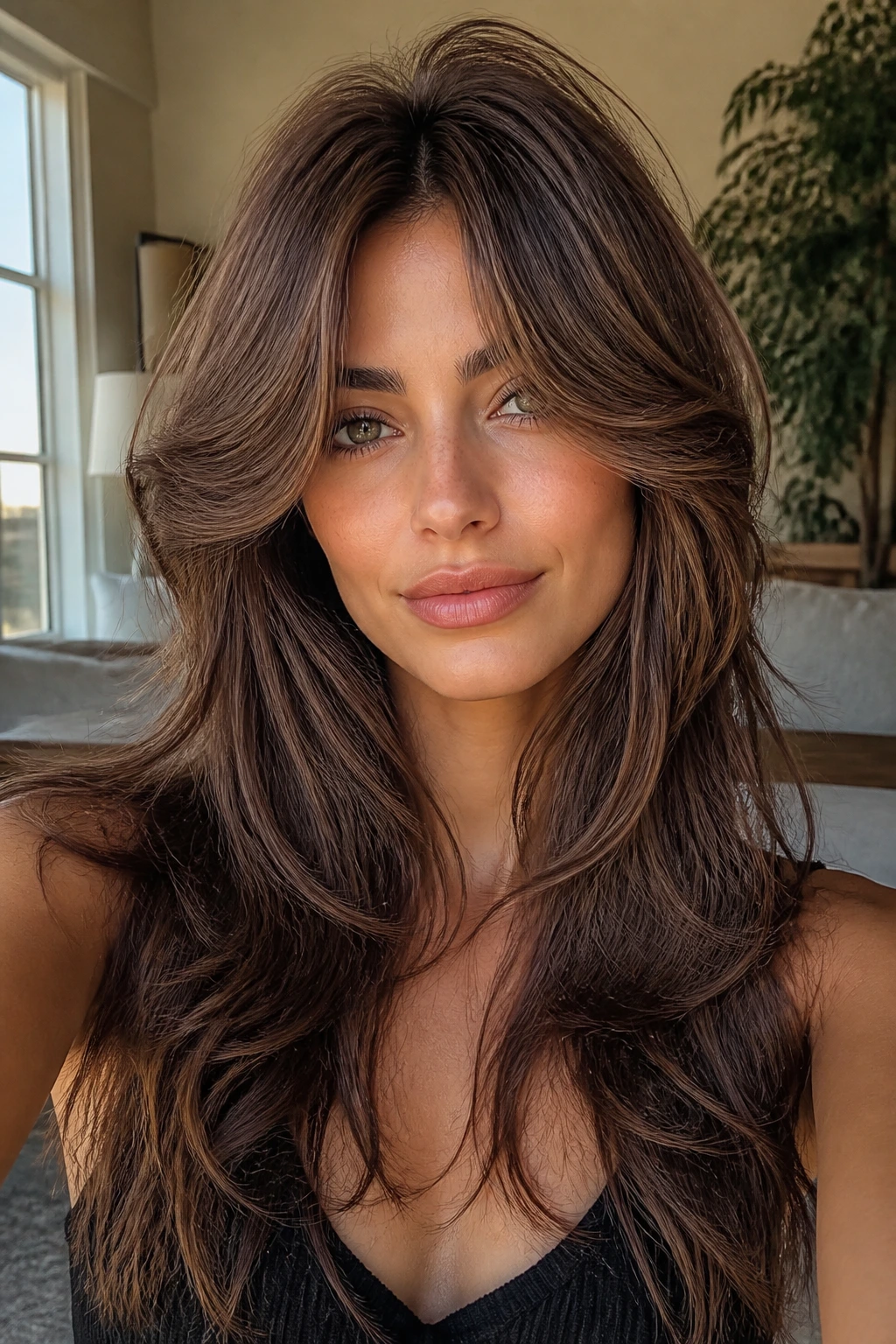
A hybrid fringe gives you options, which is handy if you never quite know how you want to wear your hair. Center-part it and the curtain shape opens up. Sweep it aside and the fringe turns softer and more face-skimming.
That flexibility makes this version surprisingly wearable. The layers around the face need to be long enough to blend both ways, and the crown should keep enough lift to stop the part from looking limp. You can push the fringe in one direction on damp hair, then flip it the other way after it dries.
It’s a smart cut for indecisive hair days. Which is most days, if we’re being real.
23. Butterfly Wolf Cut Designed for Braids and Updos
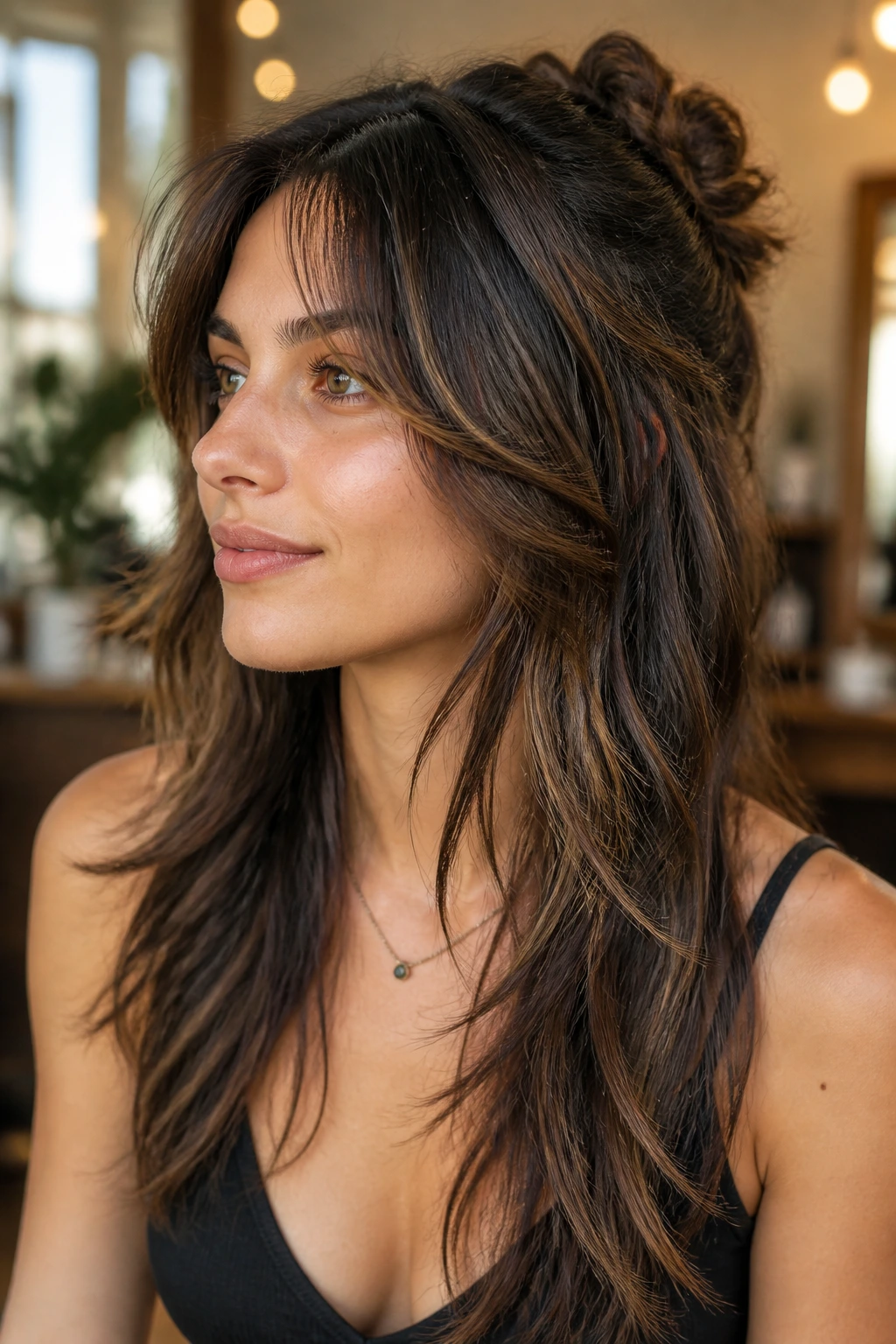
Long layered cuts can be annoying in braids if the shortest pieces pop out everywhere. This version keeps the face framing soft but leaves enough length through the lower sections so your braids and buns still hold together cleanly.
That matters if you actually wear your hair up. A lot of layered cuts look great down and then become a small disaster in a ponytail. This one is more cooperative. The layers create softness around the hairline and crown, while the longer lengths still give you something to gather.
It is a practical pick for gym days, work days, and any day you need your hair off your neck.
24. High-Volume Butterfly Wolf Cut for Thick, Heavy Hair
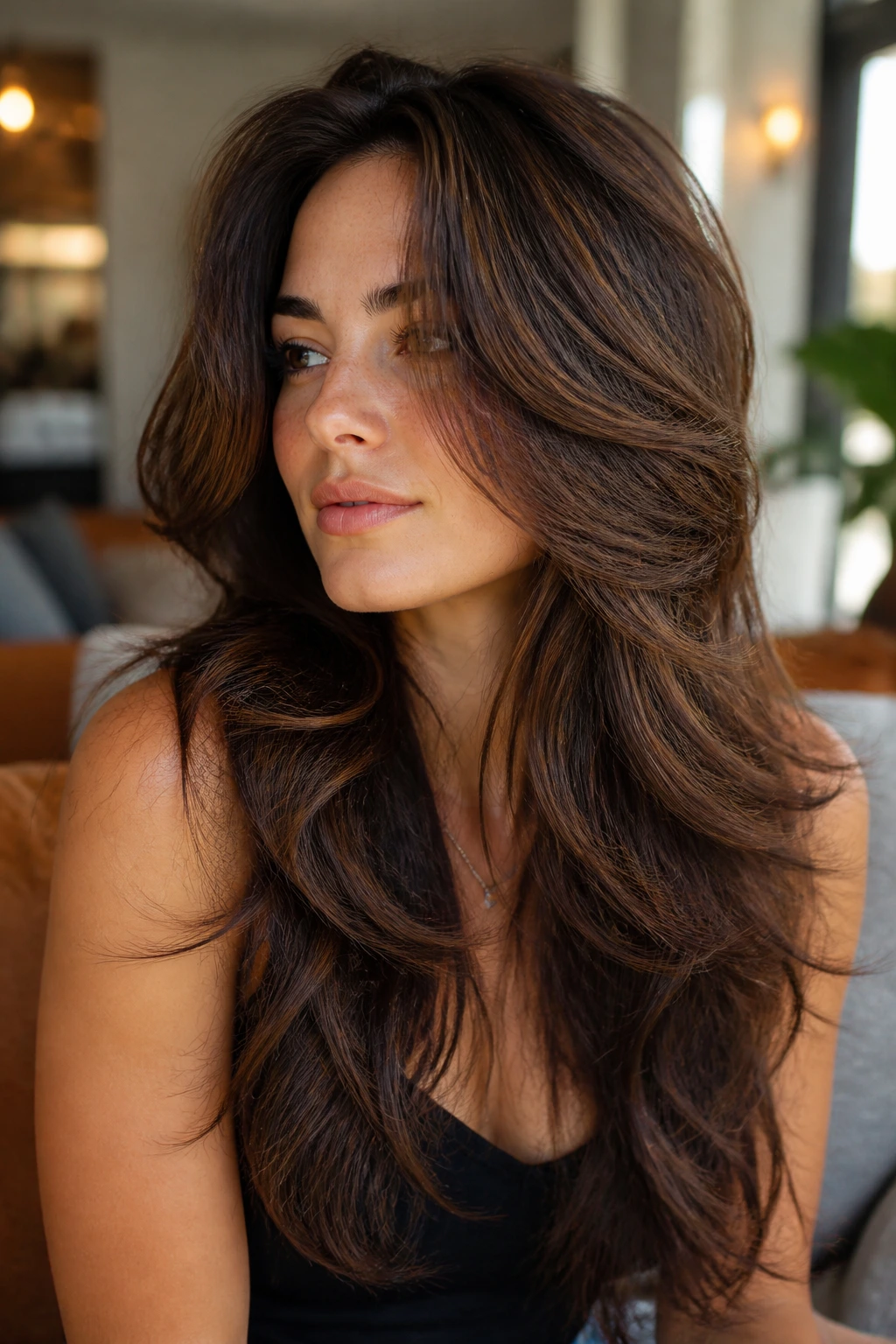
Heavy hair can wear a cut like armor if you let it. This version takes away enough weight near the crown and around the sides to let the shape lift, then keeps the ends controlled so the whole thing doesn’t explode outward.
The stylist detail that matters
Sectioning. If the hair is thick, the cut needs to be built in layers small enough that the weight removal is even. Big lazy sections tend to leave hidden shelves of bulk. Nobody wants that.
This is the version for people who say their hair has a mind of its own. It probably does. A good cut can still negotiate with it.
25. The Barely-There Butterfly Wolf Cut
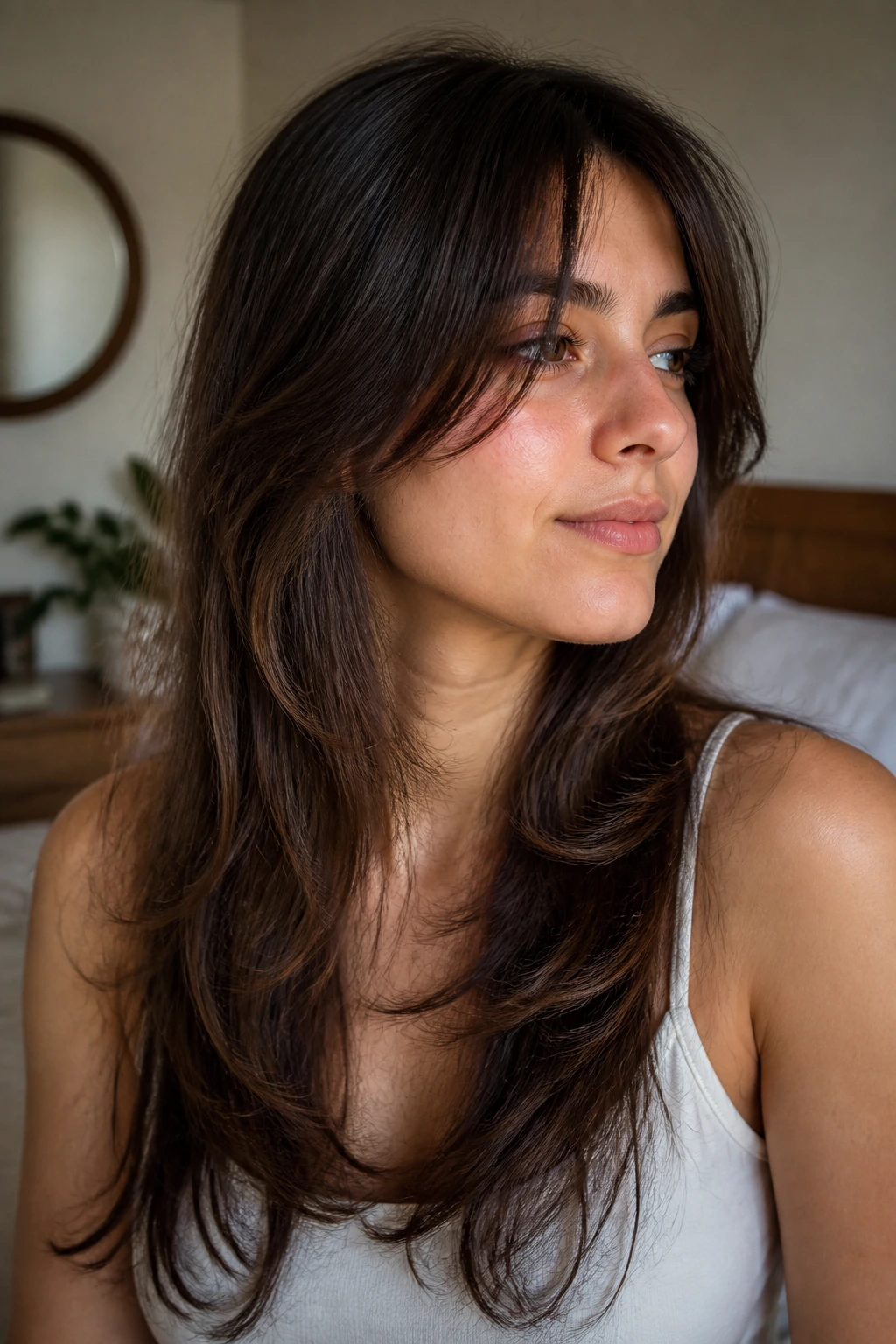
This is the softest landing spot. The layers are there, but they whisper instead of shout. You keep most of the length, add just enough movement around the face and crown, and stop before the cut gets edgy or shaggy.
It is a strong choice if you want to test the butterfly wolf shape without committing to a bold chop. The silhouette still changes. It just changes in a way that feels believable on long hair, which is harder to pull off than people think. Too many layered cuts try to be interesting from ten feet away and fall apart up close.
A barely-there version grows out nicely, plays well with straight or wavy styling, and doesn’t ask you to become a different person every morning. That alone has a lot going for it.
