



When you have a round face, the standard advice you hear from stylists is often surprisingly restrictive. People will tell you to avoid short styles or suggest you stick to long, one-length cuts to “hide” your face shape. That approach feels dated and ignores the fundamental goal of a great haircut: balancing your proportions rather than masking them.
The secret to a round face isn’t hiding it; it’s about creating verticality. You want to draw the eye up and down, lengthening the silhouette of your face rather than adding width at the cheekbones. This is exactly where the shag haircut becomes an absolute powerhouse. By utilizing choppy layers, strategic thinning, and elongated bangs, a shag haircut breaks up the circularity of a round face, adding angles where there were once only curves.
Choosing the right cut is about managing volume. If the volume sits too low, near your cheeks, it can widen your face. If you place that volume at the crown or through the ends, you achieve that coveted, elongated look. Long bangs are the final piece of the puzzle. They provide a curtain effect that narrows the face, bridging the gap between your hair and your jawline without the heavy, stifling feeling of a blunt, short fringe.
1. The Classic Mid-Length Feathered Shag
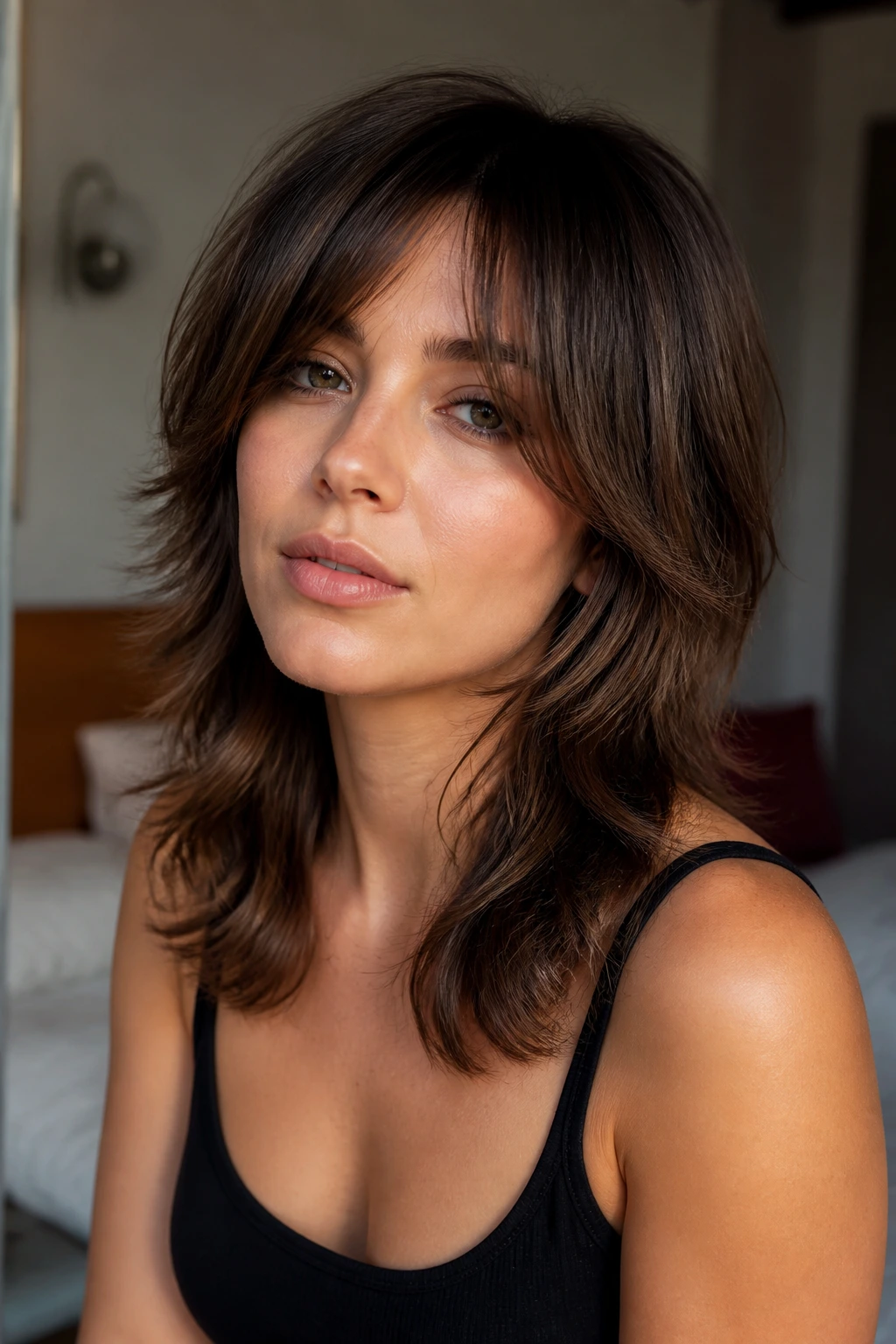
This cut is the baseline for a reason. It features layers that start around the cheekbone and descend into wispy, feathered ends. For a round face, the key here is the length of the bangs. They should hit right around the cheekbone or slightly lower, creating a diagonal line that guides the eye downward.
Why This Style Works
The feathering effect removes the heavy weight that usually sits at the perimeter of a haircut. When you take the bulk out of the ends, the hair doesn’t puff out at the jawline, which is the most common mistake for people with round faces. Instead, it tapers in, creating a subtle, slimming effect that feels intentional and airy.
Styling Tip
Use a round brush only at the crown to get a bit of lift. Let the rest of the hair air-dry with a texturizing mousse. You want those feathered ends to stay slightly undone—if you over-curl them, you risk adding unwanted width.
2. Shoulder-Grazing Shag with Curtain Bangs
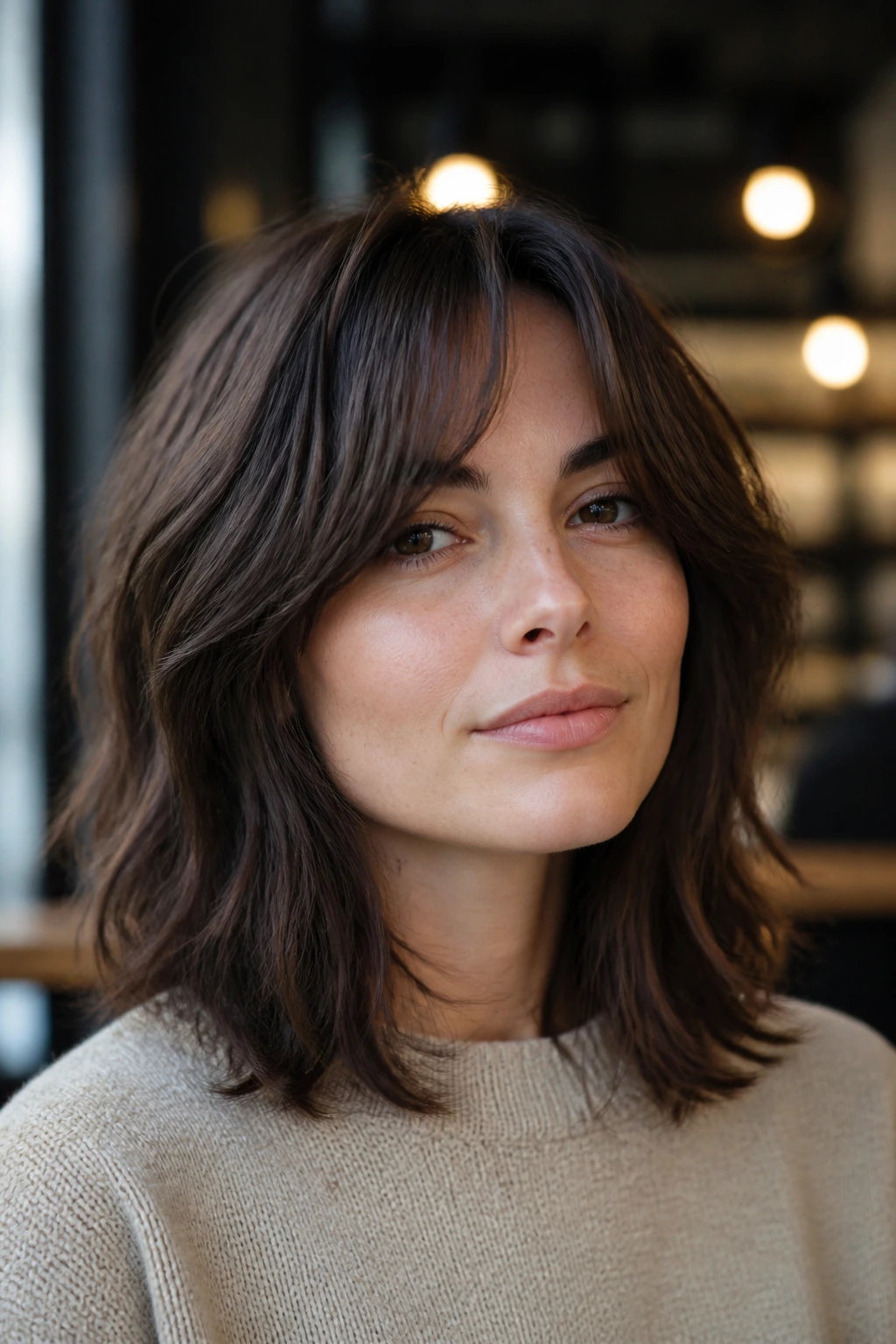
Think of this as the “everyday” shag. It hits just at or slightly below the collarbone, making it long enough to pull back if you need to, but short enough to keep the shag texture prominent. The curtain bangs are the star of this show, cut long enough to sweep away from the face.
The Anatomy of the Cut
The layers in this version are more concentrated toward the bottom two-thirds of the hair. By keeping the top relatively smooth and directing the texture to the ends, you effectively move the focal point away from the mid-face area.
Maintenance and Growth
This is one of the easiest cuts to grow out. Because the layers are long and flowing, you won’t experience that awkward “mullet” phase that tighter, shorter shags often go through after a few months. It remains soft and approachable.
3. The Modern Wolf Cut with Wispy Long Bangs

The wolf cut is essentially a hybrid between a classic shag and a modern mullet. While that might sound intimidating, the version meant for round faces is all about blending. You want the layers at the top to be shorter for volume, but the transition to the length needs to be seamless.
Balancing the Volume
If you have a round face, the “wolf” aspect should be dialed back. Ask your stylist for “soft-shaping” layers rather than harsh, disconnected ones. The bangs should be wispy and see-through, letting some forehead peek through. This creates a vertical gap that breaks up the roundness of the brow and forehead area.
A Note on Texture
This style thrives on natural wave. If your hair is poker-straight, you will need a curling wand to get the movement. The effort pays off, though; the messy, piecey texture is incredibly effective at hiding the symmetry of a round face, making your features pop.
4. Soft Beachy Waves and Face-Framing Layers
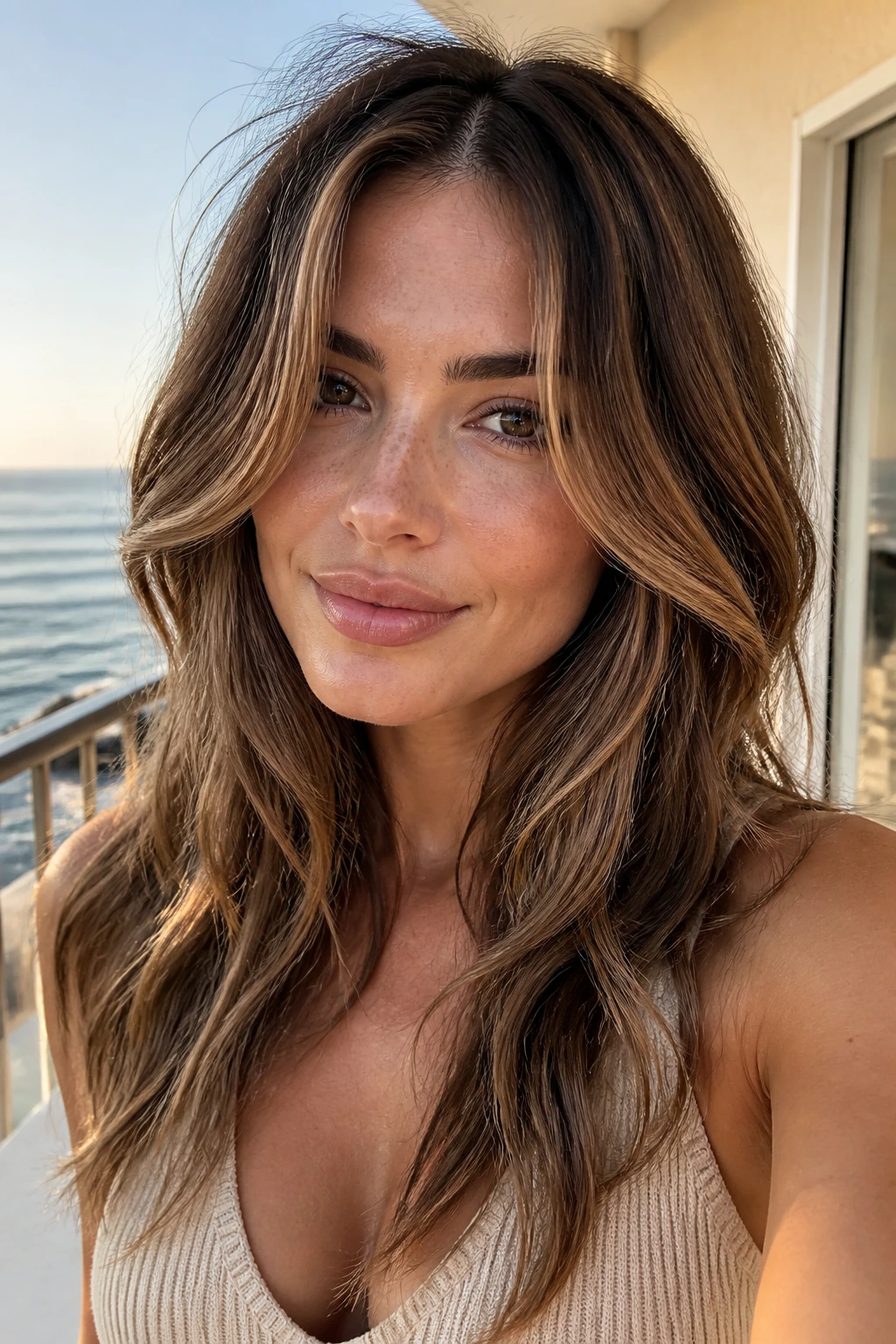
This is less about the “shag” look and more about the “shag” technique. It’s a softer take, focusing on long, internal layers that provide movement without the dramatic choppy look of a traditional shag. The bangs here are long, reaching the chin, acting as a frame for your cheeks.
Why It Flatters Round Faces
When you have layers that start low, you create long, sweeping lines. These lines run parallel to your face, which creates an optical illusion of narrowness. It’s a very flattering technique if you are hesitant to commit to a full, heavily-layered rock-and-roll shag.
The Product Secret
To keep these waves soft, avoid heavy gels. A lightweight sea salt spray or a volume-enhancing root lift spray is your best friend. You want movement, not hold.
5. The Sleek and Polished Straight-Hair Shag
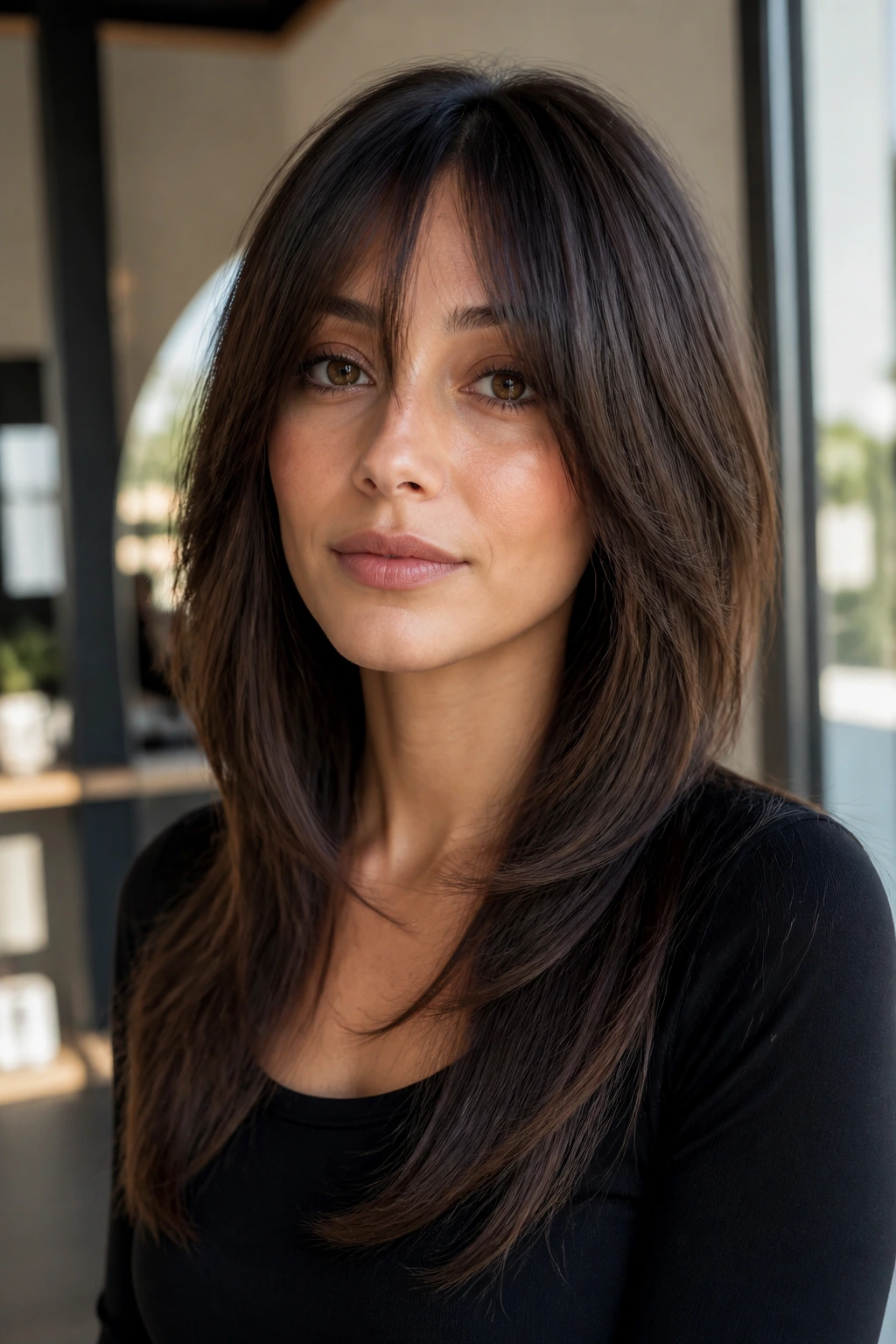
Can a round face rock a shag with straight hair? Absolutely. The trick is precision. This style uses very refined, razor-cut layers to create a slight “S” shape in the hair as it falls against your face. It’s polished, modern, and very wearable.
Executing the Look
The bangs should be cut with a slight arch, longer at the temples and slightly shorter in the center. This arch is critical for round faces because it mimics the curve of your hairline but adds a sharp geometric angle that contrasts with your jawline.
Why It’s Different
Most shags are messy. This one is purposeful. By smoothing the hair, you control exactly where the layers sit. You can ensure that no layers are hitting right at the widest part of your cheekbones, which is the most important rule for keeping a round face looking balanced.
6. Tight Curls with Elongated Fringe
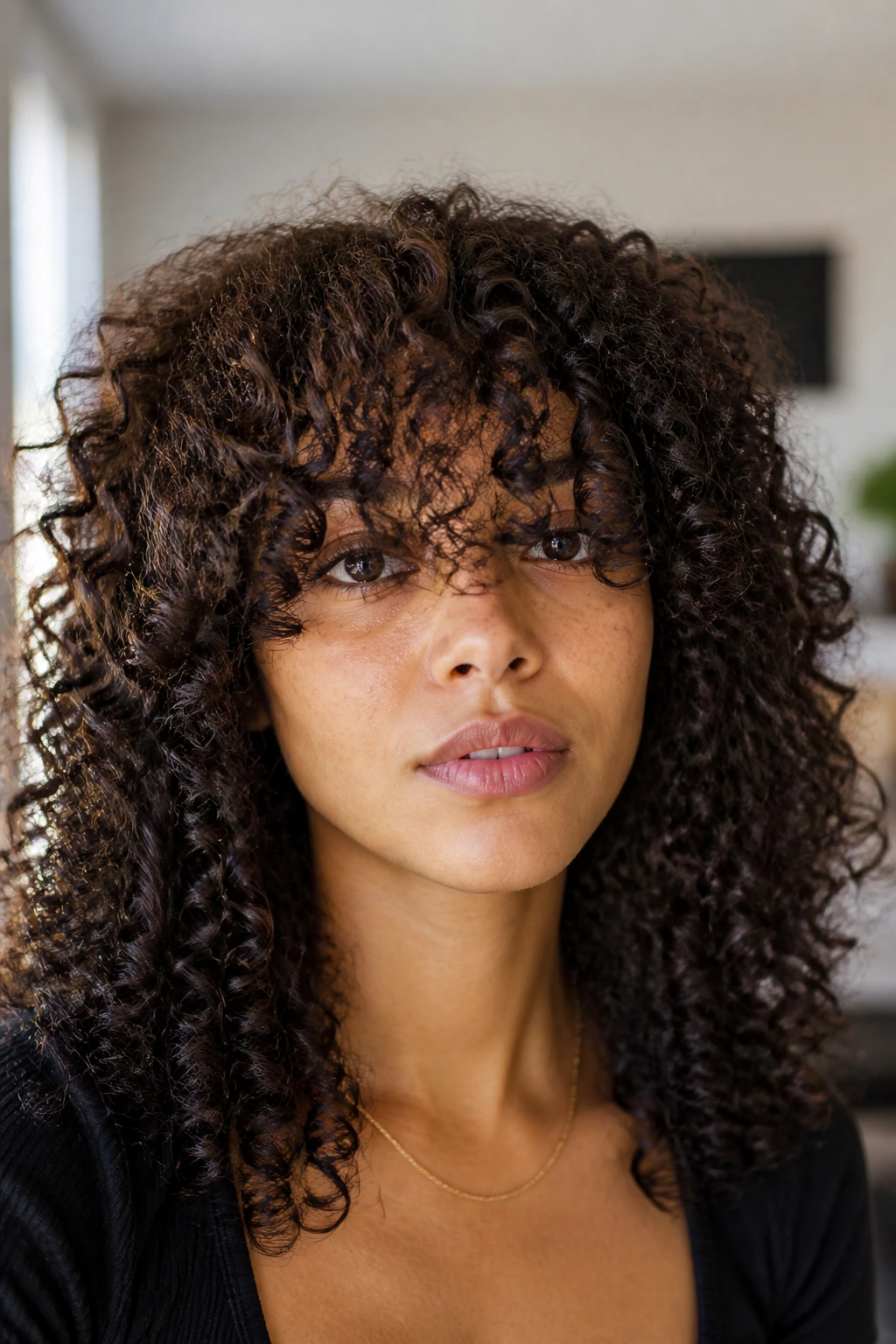
If you have naturally tight curls, a shag is actually one of the best ways to manage volume. A round face with tight curls can easily look “puffy.” A shag allows you to cut the weight out of the bottom while keeping the curls bouncy and defined at the top.
Managing the Width
For curly hair, the bangs need to be cut while dry. If you cut them wet, they will shrink up significantly. You want them to be long enough that, even when curled, they hang at least to the bridge of your nose. This avoids the “poof” effect right at your forehead.
Styling for Control
A diffuser is non-negotiable here. Use it to focus volume at the top of your head, creating a tall, elongated shape rather than a wide, round one. It’s all about defiance of gravity.
7. The Shaggy Bob with Side-Swept Bangs
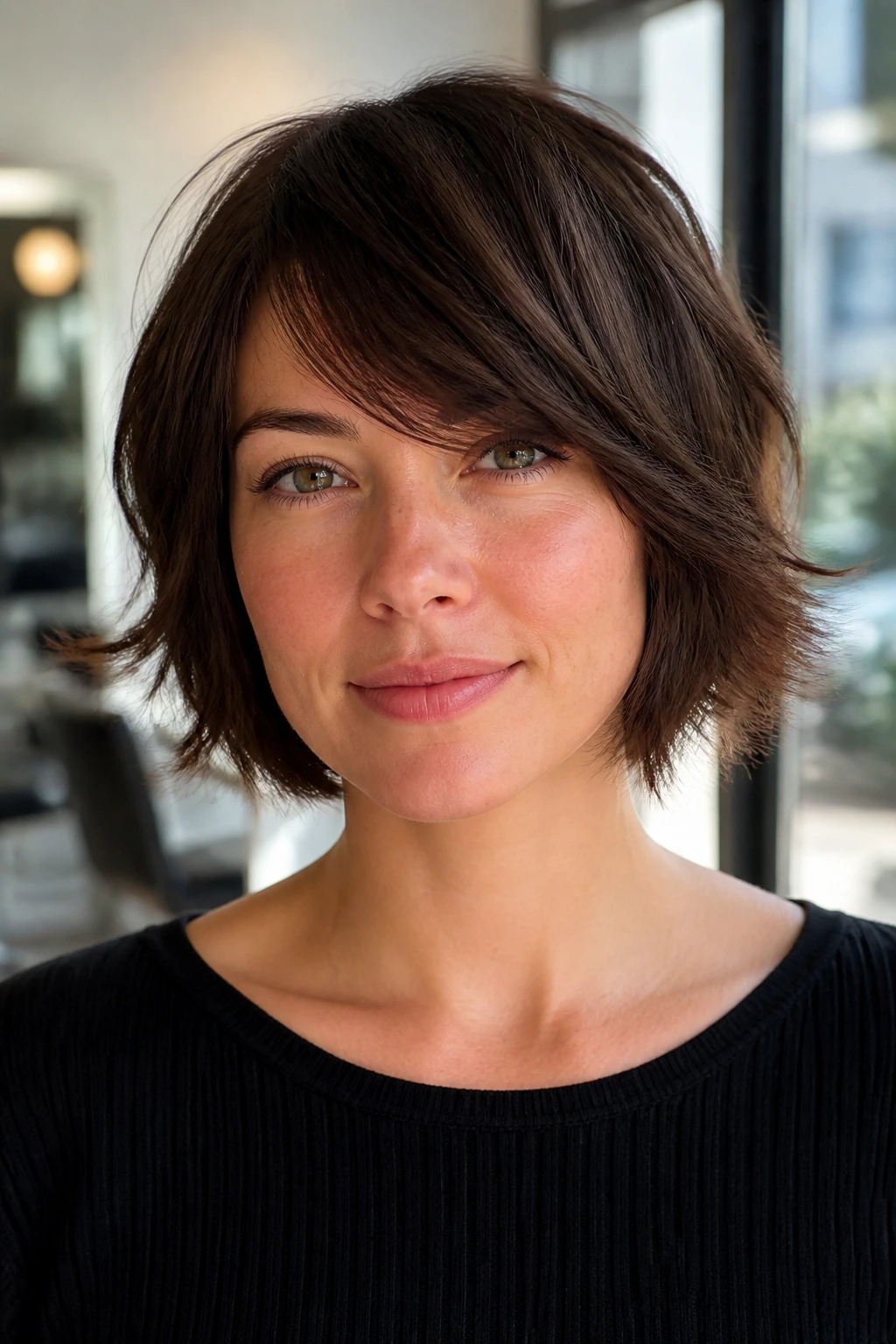
This is a bolder choice. A shaggy bob hits at the chin or just below. For round faces, the goal is to make sure the bottom of the bob doesn’t tuck under the chin, as that can accentuate a round jawline. Instead, you want the ends to flick out or hang straight.
The Power of Side-Swept Bangs
Side-swept bangs are the ultimate tool for round faces. They create a diagonal line across your forehead, which is the exact opposite of a round shape. That diagonal line forces the eye to scan across your face rather than around it.
Length Considerations
Ensure the front layers of the bob are slightly longer than the back. This “A-line” variation is essential. It provides a visual lengthening effect that balances out the shortness of the cut.
8. Razored Ends and Heavy Brow-Skimming Bangs
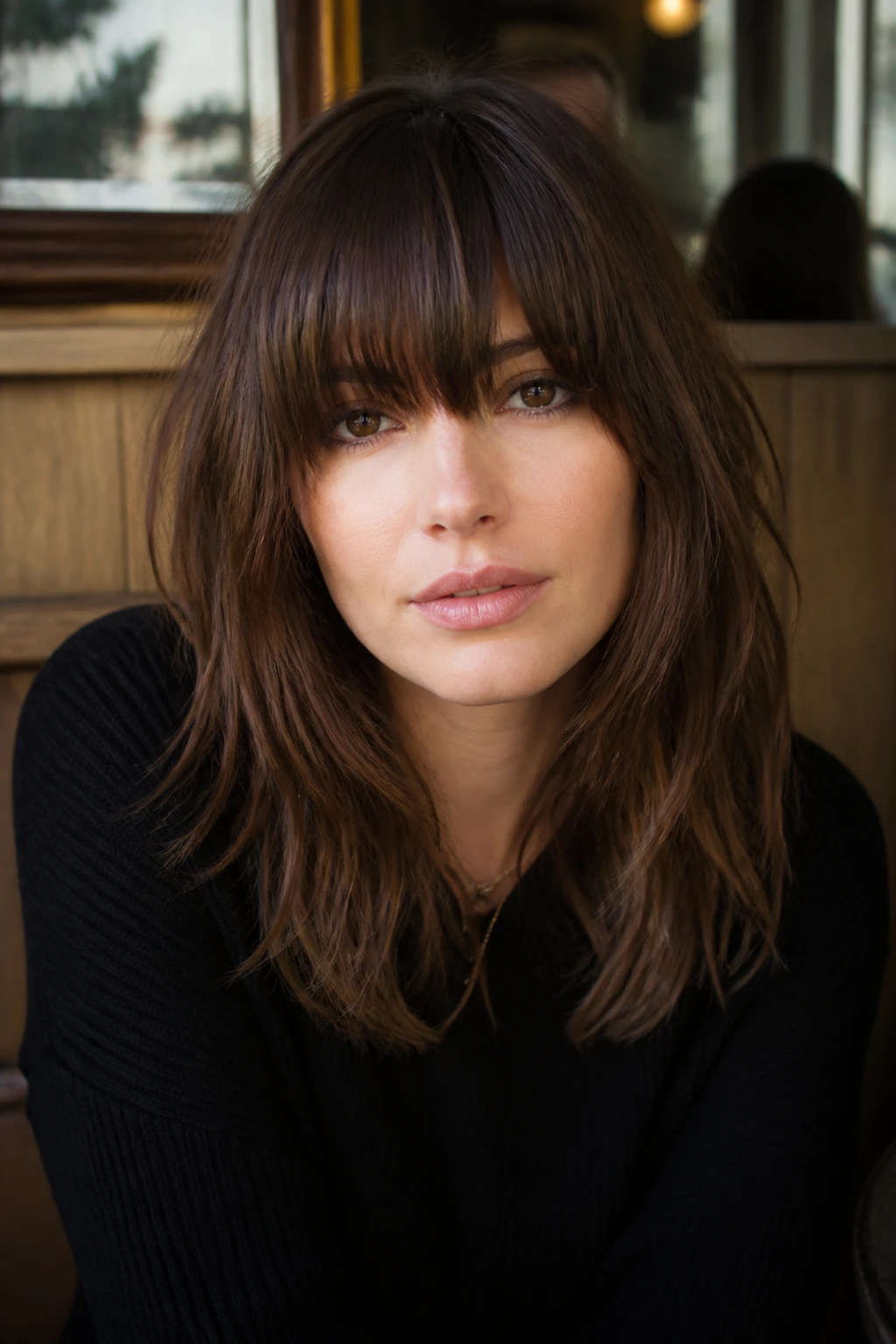
This is for those who want a bit of an edge. Using a razor to cut the ends gives them a frayed, broken-in look. Combined with heavy bangs that graze the eyebrows, this style is very Parisian-chic and effortless.
The Psychological Effect of Heavy Bangs
While some might argue against heavy bangs for round faces, they work if they are textured. A blunt, heavy bang can make a face look shorter, which isn’t what we want. But a textured heavy bang, where the stylist uses thinning shears to remove weight, provides the drama of full bangs without the shortening effect.
A Quick Styling Tip
When styling this, use a flat iron to give the hair just a slight bend at the mid-shaft. You don’t want ringlets. You want a “lived-in” bend that feels like you just woke up with perfect, messy hair.
9. Choppy Shag with Peek-a-Boo Bangs
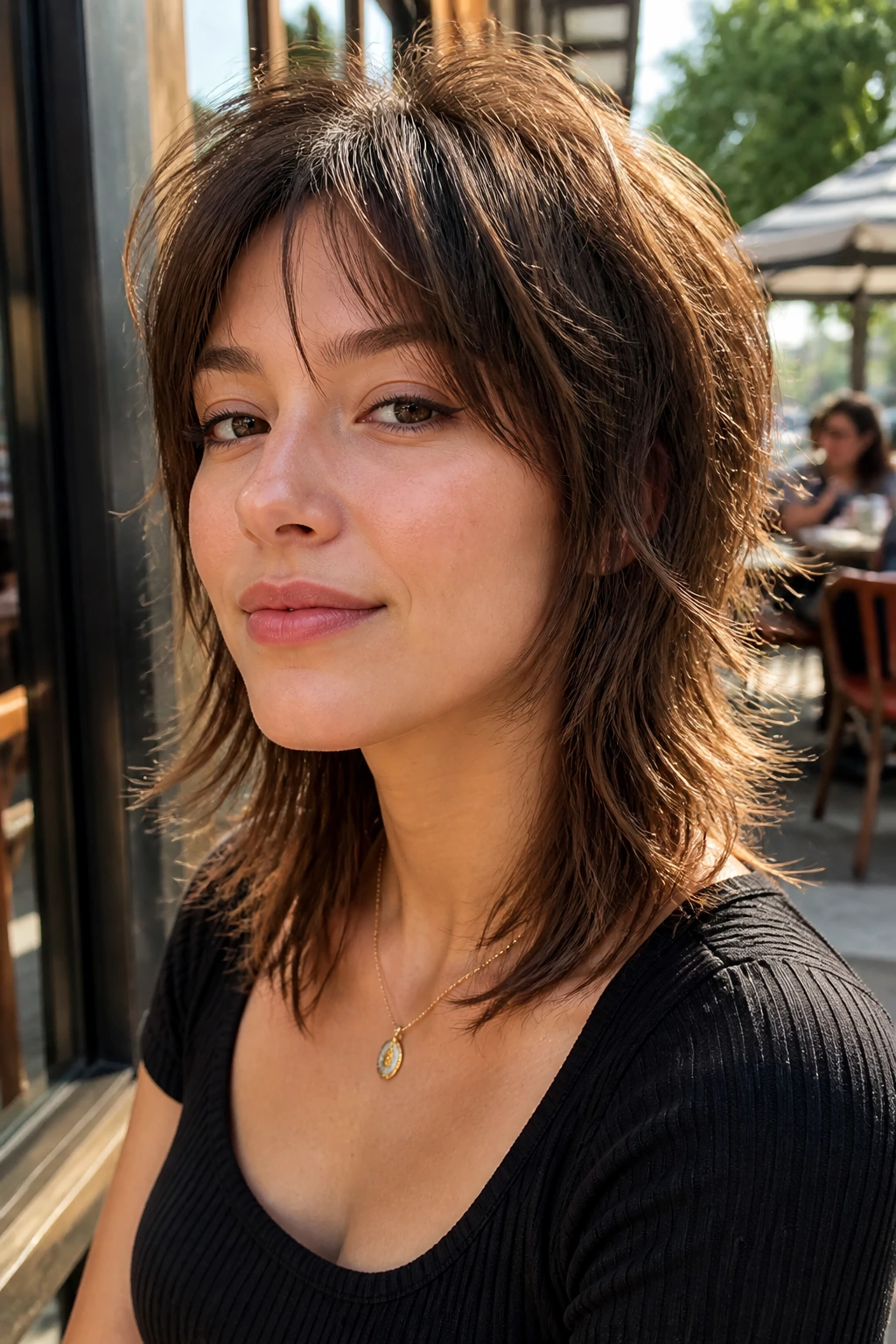
Peek-a-boo bangs, or “see-through” bangs, are incredibly light. They allow your forehead to show through, which adds height to your face. The choppy layers throughout the rest of the cut complement this by adding a sense of movement and energy.
Why It Works
This style is highly effective because it avoids “curtain” syndrome where the hair creates a curtain on the sides of your face. Instead, the hair is directed back and away from the face, opening up your features rather than closing them in.
Who Is This Best For?
This cut is perfect for fine to medium hair textures. Because the bangs are sparse, you won’t need to worry about them looking greasy or getting weighed down by product. It’s a low-maintenance, high-reward look.
10. The Textured Shag Mullet Hybrid
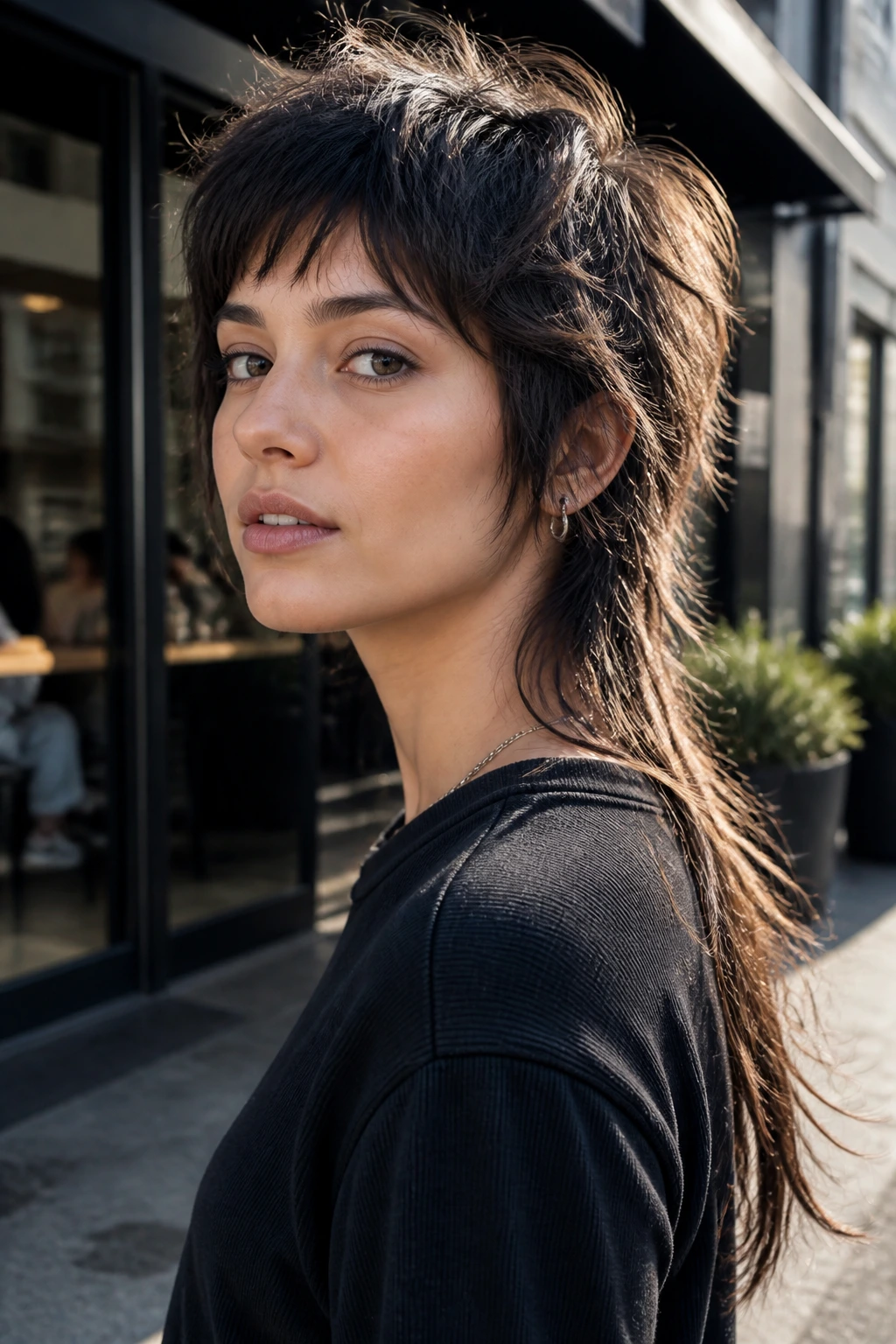
Yes, we are talking about a mullet-adjacent cut. Modern versions of this are significantly more refined than the 80s version. The top and sides are kept short and shaggy, while the back is allowed to grow longer. It creates an incredible silhouette that is anything but round.
The Silhouette
The visual lines of this cut are sharp. The short layers at the crown create height, and the length at the back creates a slim profile. From the front, it looks like a chic, short shag. From the side, it looks dynamic.
Managing the “Mullet” Aspect
Keep the transition between the top and the back gradual. If there is a harsh line where the short hair meets the long hair, it can look disconnected. You want a flowing, continuous line of hair.
11. Long Layers with Bardot-Inspired Bangs
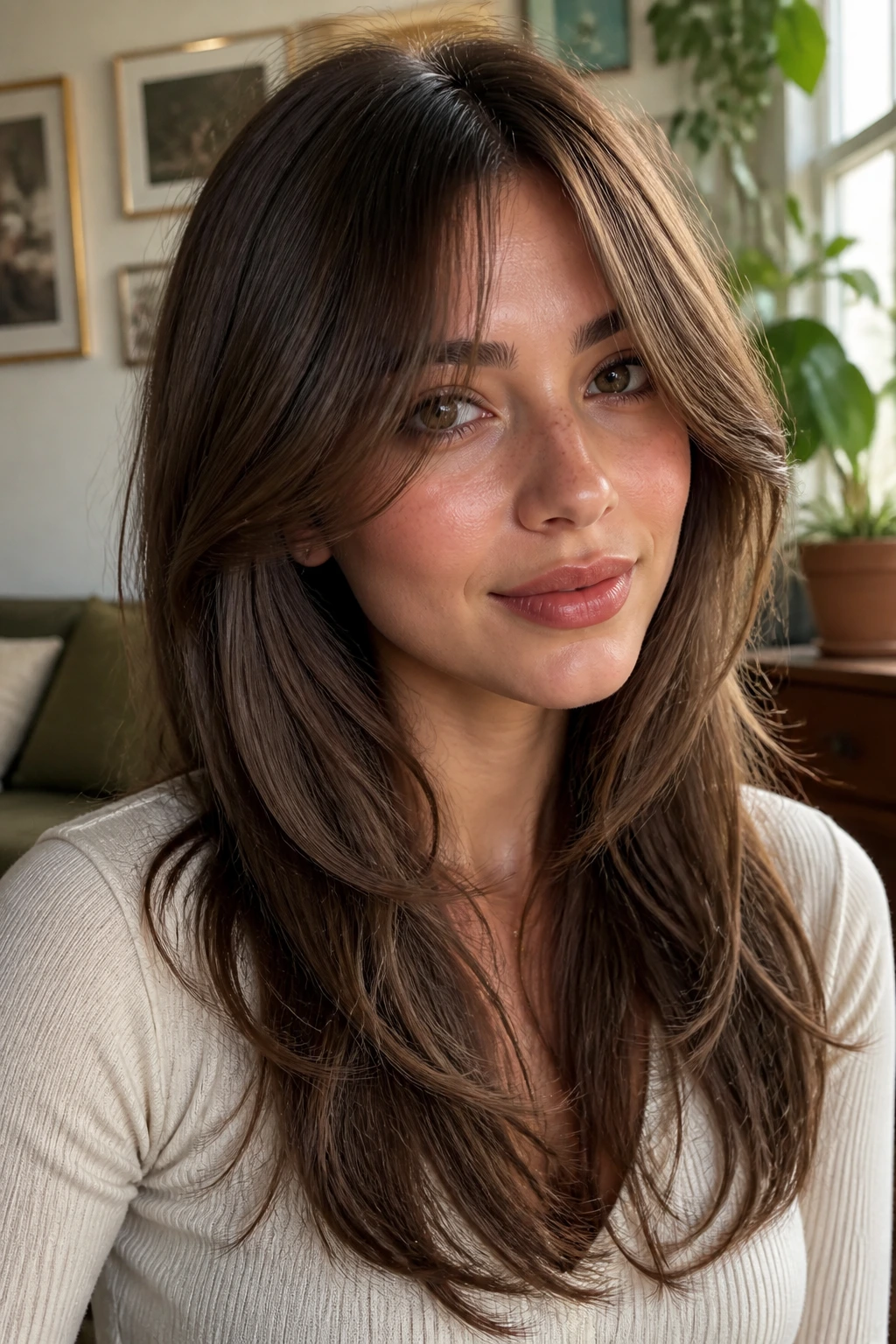
If you love your length but want the shag aesthetic, this is the way to go. You keep the overall length past the shoulders and add internal, invisible layers. The bangs are long, parted down the middle, and swept to the sides, hitting near the cheekbones.
The Brigitte Bardot Influence
These bangs are iconic for a reason. They are long enough to tuck behind your ears but short enough to frame your eyes. For a round face, these act as “curtains” that gently nudge the eye inward, slimming the face.
Layering Technique
Ask for “internal layering.” This means the exterior of your hair stays long and smooth, but the hair underneath is layered heavily. This gives you the volume and movement of a shag without the choppy, “shaved-up” look on the outer layer.
12. The Platinum Shag with Blunt Long Bangs
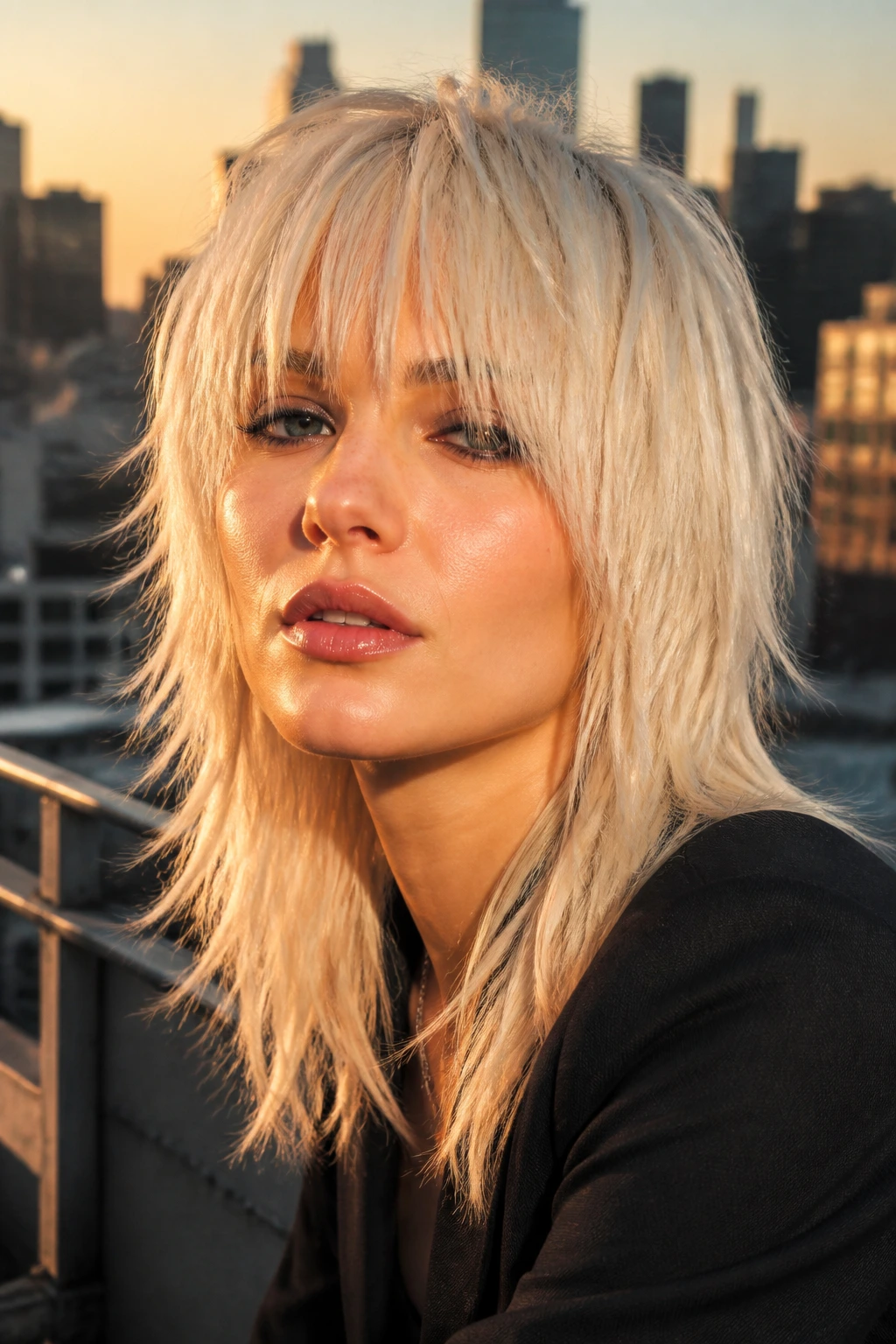
Color can change the shape of a haircut. A high-contrast color, like a cool-toned platinum on a shag, adds a level of visual complexity that makes the face shape secondary. When people look at you, they see the color and the texture first.
Why Blunt Bangs Work Here
Typically, we avoid blunt bangs for round faces. However, if the rest of the cut is heavily layered, piecey, and shaggy, a blunt bang provides a necessary anchor. It gives the style a “fashion” edge that makes the haircut feel deliberate rather than accidental.
The Contrast Factor
Ensure the blunt bangs are cut wide enough to connect with the rest of the layers at the temples. If they are cut too narrow, they can highlight the roundness of the cheeks. By widening the bangs, you extend the horizontal line, which surprisingly helps to balance a round face.
13. Shaggy Shag with Blunt Ends for Fine Hair
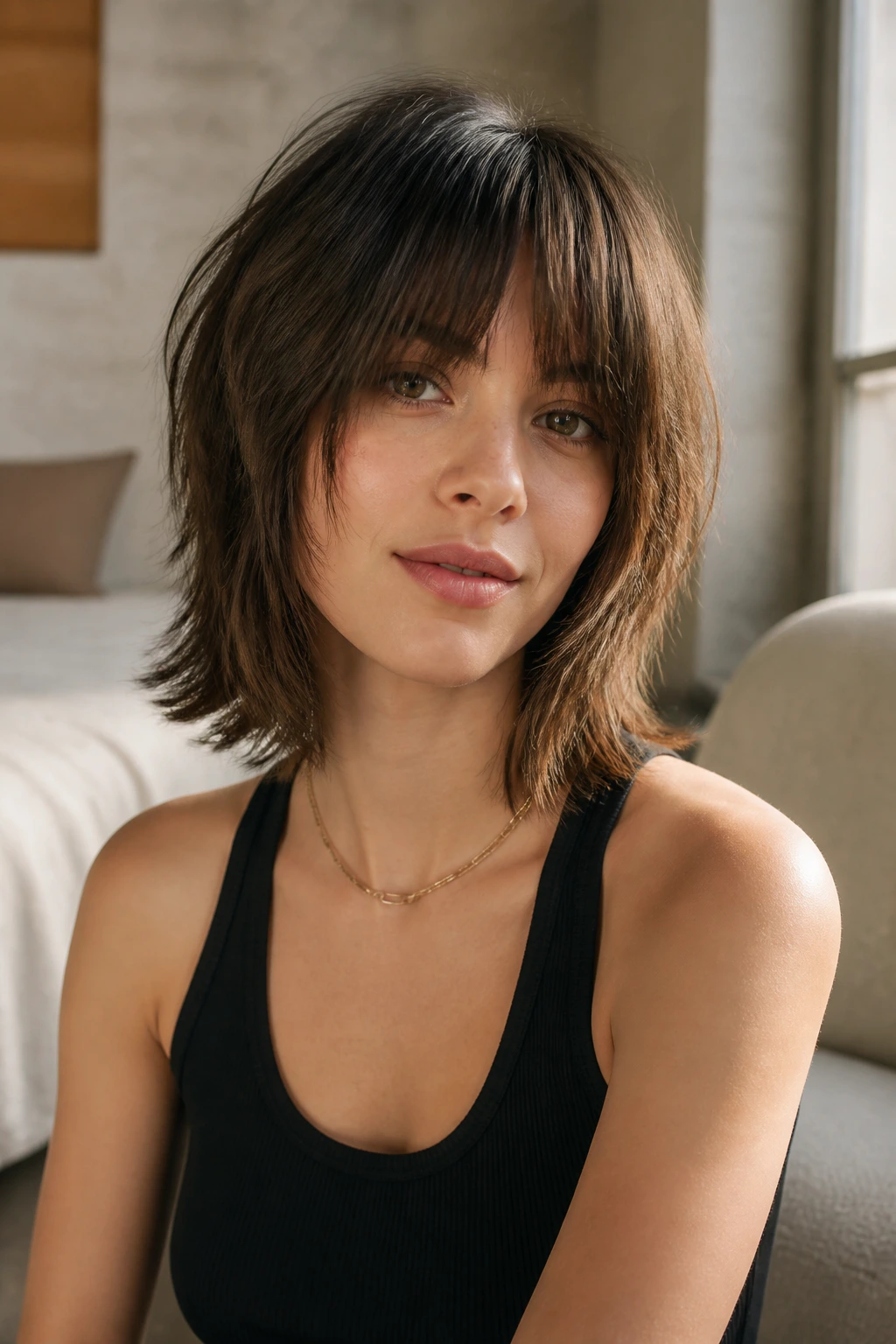
Fine hair often looks limp in long cuts. A shag is the perfect solution because it creates the illusion of density. By cutting blunt, horizontal lines into the ends of the layers, you make the hair look thicker and fuller.
Building Density
The “blunt ends” technique isn’t just for bobs. When you incorporate this into a shag, you give the ends of the layers more weight. This weight prevents the hair from looking wispy and provides a solid structure that defines the overall shape.
Product Strategy
Use a texturizing powder at the roots. It will provide the necessary grip for the layers to stand up and create that shaggy, full-bodied look that fine hair often lacks.
14. The Natural Volume Shag for Coily Textures
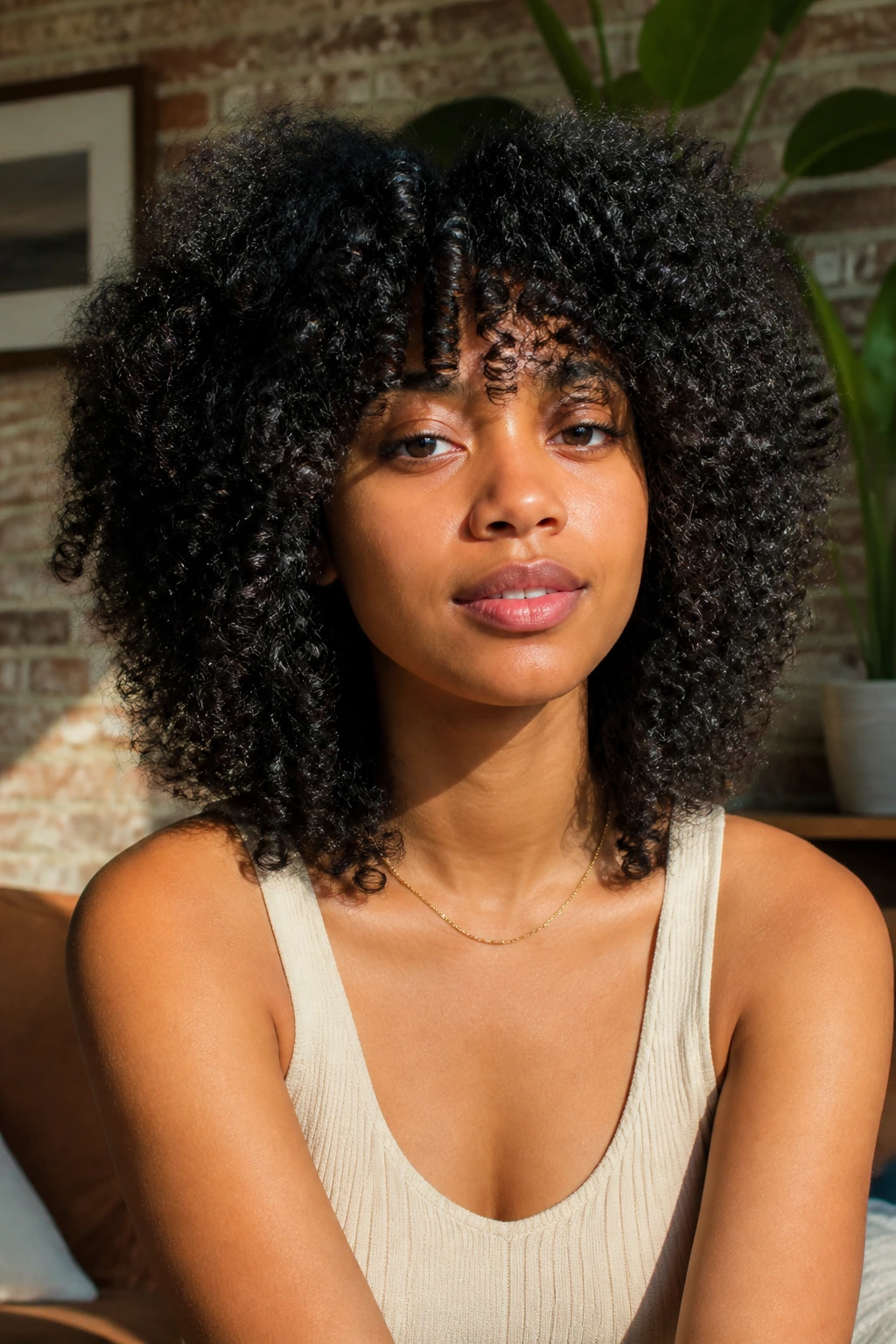
For those with 3C or 4A hair, a shag is a fantastic way to distribute weight. Coily hair has a tendency to grow out rather than down, which can create a very round shape. A shag cuts that outward growth by creating internal layers.
Controlling the Shape
The trick is to have the layers shaped like a trapezoid rather than a circle. You want the volume to be at the top and the sides to be relatively tapered. This creates a vertical, elongated, and very regal silhouette.
Bangs and Texture
Don’t fear bangs with coils. A “shag” fringe is meant to be messy. Let it shrink up. As long as you have enough length to prevent it from looking like a tight halo around your forehead, you will find it incredibly flattering.
15. Messy Bedhead Shag with Parted Bangs
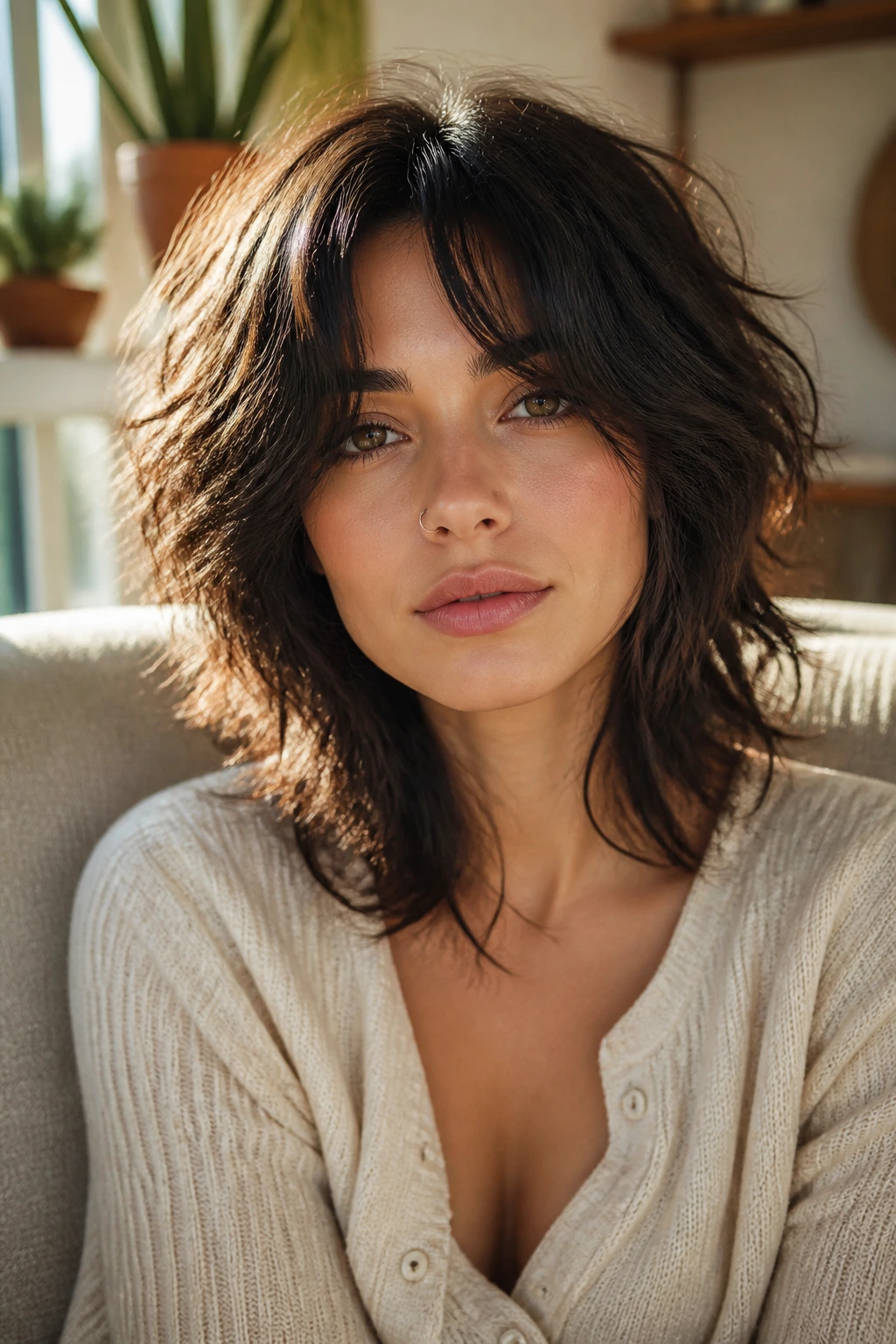
This is the ultimate “I woke up like this” haircut. It relies on a very messy, tousled texture. The key is in the product. You need a matte-finish styling cream or a dry texture spray.
The Parting Technique
A middle part is generally the enemy of a round face, unless you have a shag. With a middle part in a shag, the hair falls in two distinct panels. These panels cover the sides of the face, physically reducing the amount of cheek that is visible. It’s a very effective camouflage technique.
Embrace the Frizz
Unlike other styles where you fight the frizz, here you lean into it. A little bit of frizz adds to the “bedhead” aesthetic and makes the haircut look softer and more approachable.
16. The Pastel Shag with Asymmetrical Fringe
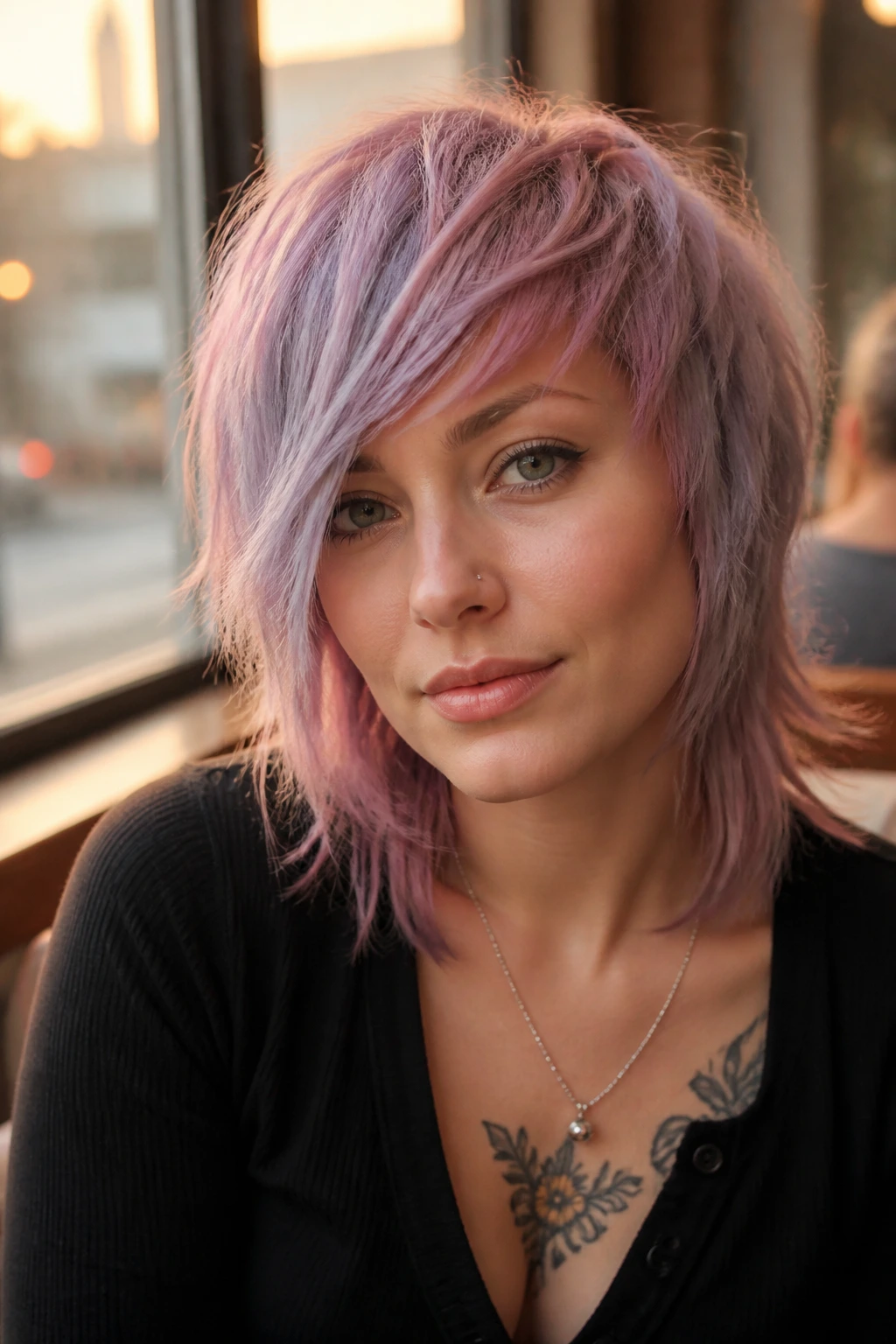
Asymmetry is a secret weapon for round faces. By cutting your bangs at an angle—shorter on one side and longer on the other—you create a focal point that is inherently un-round.
Why Pastel?
Pastel colors (think dusty rose, lavender, or icy blue) soften the features. If you feel like your round face gives you a “baby face” or a softer look, a edgy, asymmetrical cut in a pastel color adds a sense of maturity and style that feels sophisticated rather than cutesy.
Styling for Asymmetry
Part your hair on the side where the bangs are longer. This will force the hair to swoop across your forehead, creating that diagonal line that is so essential for slimming a round face.
17. Shag with Money-Piece Highlighted Bangs
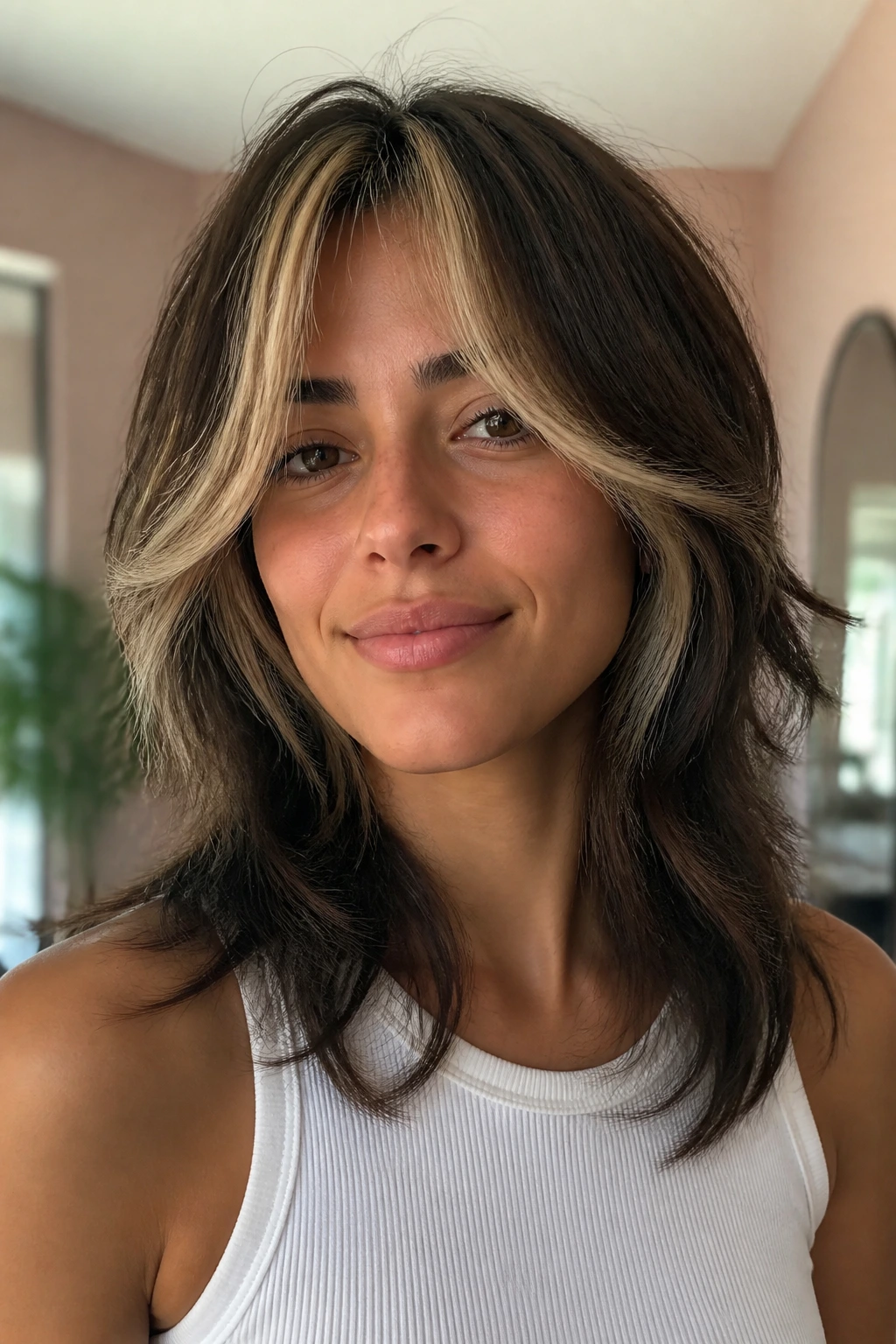
A “money piece” is a highlight at the very front of your face. When you combine this with a shaggy cut, you draw all the attention to the center of your face. This is a bold move, but it works brilliantly for round faces because it creates a vertical column of light in the middle of your hair.
The Strategic Placement
Make sure the highlight is only on the bangs and the very front face-framing pieces. If you highlight the hair at the sides, you draw attention to the width of your face, which is what we want to avoid. Focus the light in the middle.
The Effect
This style creates a “V” shape in the color, which directs the eye downward. It’s a simple trick of light and shadow that makes your face look more oval-shaped.
18. The Ultra-Long Shag with Heavy Texture
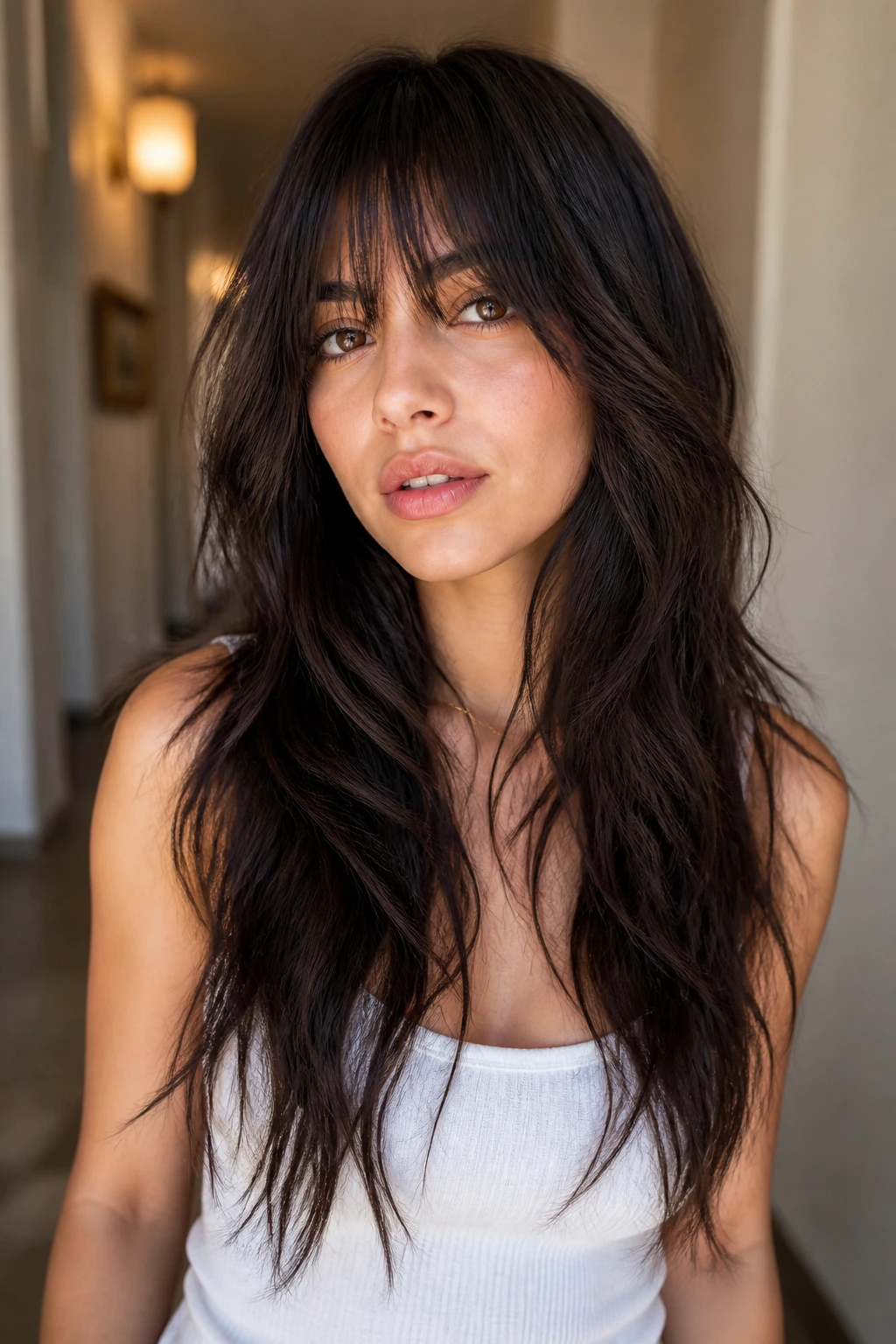
If you have great length and aren’t ready to let it go, you can still have a shag. This is about adding aggressive, heavy layers starting from the chin all the way down.
Balancing Length and Width
The danger with ultra-long hair and a round face is that the hair can “swallow” you. By adding heavy, piecey layers, you break up the length so it doesn’t look like a solid blanket of hair. The texture keeps it moving.
Long Bangs are Critical
With long hair, your bangs must be long as well. If you have a massive amount of length, a short bang will look disconnected and strange. Aim for bangs that hit at the jawline or collarbone. They will blend seamlessly into the long layers, creating a cohesive, flowing look.
Final Thoughts
The beauty of a shag haircut for a round face lies in its ability to be customized. There is no such thing as a “one-size-fits-all” shag, which is exactly why it remains a timeless choice for anyone looking to break away from standard, boring cuts. The goal with any of these styles should always be to create movement, height, and, most importantly, confidence.
If you are standing in front of a mirror feeling uncertain about your face shape, remember that your haircut is just one variable. Your attitude, the way you style your hair, and the way you carry yourself have just as much impact. Don’t be afraid to experiment with lengths or textures. If a layer feels too short, it will grow. If a bang feels too long, you can trim it.
At the end of the day, the best haircut is the one that makes you feel like yourself. Whether you opt for a dramatic, choppy wolf cut or a soft, beachy long layer, focus on what makes you feel powerful. That feeling is the real secret to any great look.
