



A shaggy bob looks best when it seems slightly unfinished. That is the whole appeal of shaggy bob hairstyles: movement, broken-up ends, and a little bite before you even touch a styling tool.
Flat is the enemy.
If the lines get too crisp, you end up with a normal bob that lost its personality somewhere between the salon chair and your bathroom mirror. If the layers go too far, the shape starts to puff in the wrong places and the haircut turns messy for all the wrong reasons. The sweet spot is controlled roughness — feathered pieces, soft separation, and enough weight left in the outline to keep the shape grounded.
The version you choose matters more than people think. A shaggy bob on fine straight hair needs different shaping than one on thick curls, and the styling routine changes again if you want curtain bangs, a side part, or that wolfish edge that sits somewhere between polished and unruly. A good cut can give you movement without making your hair look thin or frizzy. A bad one can do both.
That is why the details below matter. Length, fringe, razor work, and the way the ends are broken up all change the final look, sometimes by a lot. Start with the shape that matches your texture and how much maintenance you’ll actually tolerate, then the rest falls into place.
1. Chin-Grazing Shaggy Bob With Choppy Ends

If you want the easiest entry point, this is the one I’d hand to most people. A chin-grazing shaggy bob gives you that sharp little hit of texture without going so short that the whole cut becomes fussy. The ends sit right around the jaw, which means the shape has enough weight to swing but enough lift to look lived-in.
The trick is in the perimeter. Ask for point-cut ends or a soft razor finish instead of a hard, blunt line. That broken edge is what keeps the bob from looking stiff. It also helps if the face-framing pieces start around the cheekbone rather than the jaw, because that tiny shift changes the whole mood of the cut.
I like this version on hair that has a slight bend already. Straight hair can wear it, sure, but it needs a quick pass with a flat iron or a round brush to keep the pieces from falling too neatly. A little wave gives the cut something to work with. A little mess helps.
- Best on straight to wavy hair
- Ask for light internal layers, not a stacked back
- Style with a pea-sized amount of texture cream through the mid-lengths
- Finish by pinching the ends with your fingers, not brushing them smooth
The visual goal: soft around the crown, choppy at the edge, and a touch uneven in the best way. If the bob looks too polished, it has lost the point.
2. Curtain Bang Shaggy Bob

Why do curtain bangs keep showing up with shaggy bobs? Because the two shapes solve each other’s problems. Curtain bangs soften the forehead and break up the front of the haircut, while the shaggy bob keeps the rest of the look from feeling too sweet.
The bang length matters here. I’d aim for pieces that start around the cheekbone and taper down toward the jaw, not a heavy fringe that sits like a shelf. The whole cut should feel like it opens and closes around the face as you move, almost like the hair is doing a little bit of the work for you.
How to wear it
Dry the fringe away from the face first, then split it down the middle and bend each side with a round brush or a large roller. That gives the curtain shape its lift. If you let the bangs dry flat and hope for magic later, they usually stick to the wrong places. Hair has opinions.
This version works especially well if you want a shaggy bob that feels a little softer and more wearable day to day. It does not need perfect styling, but it does need a bit of attention at the front. That’s the tradeoff. Small effort, big payoff.
3. Razor-Cut Shaggy Bob
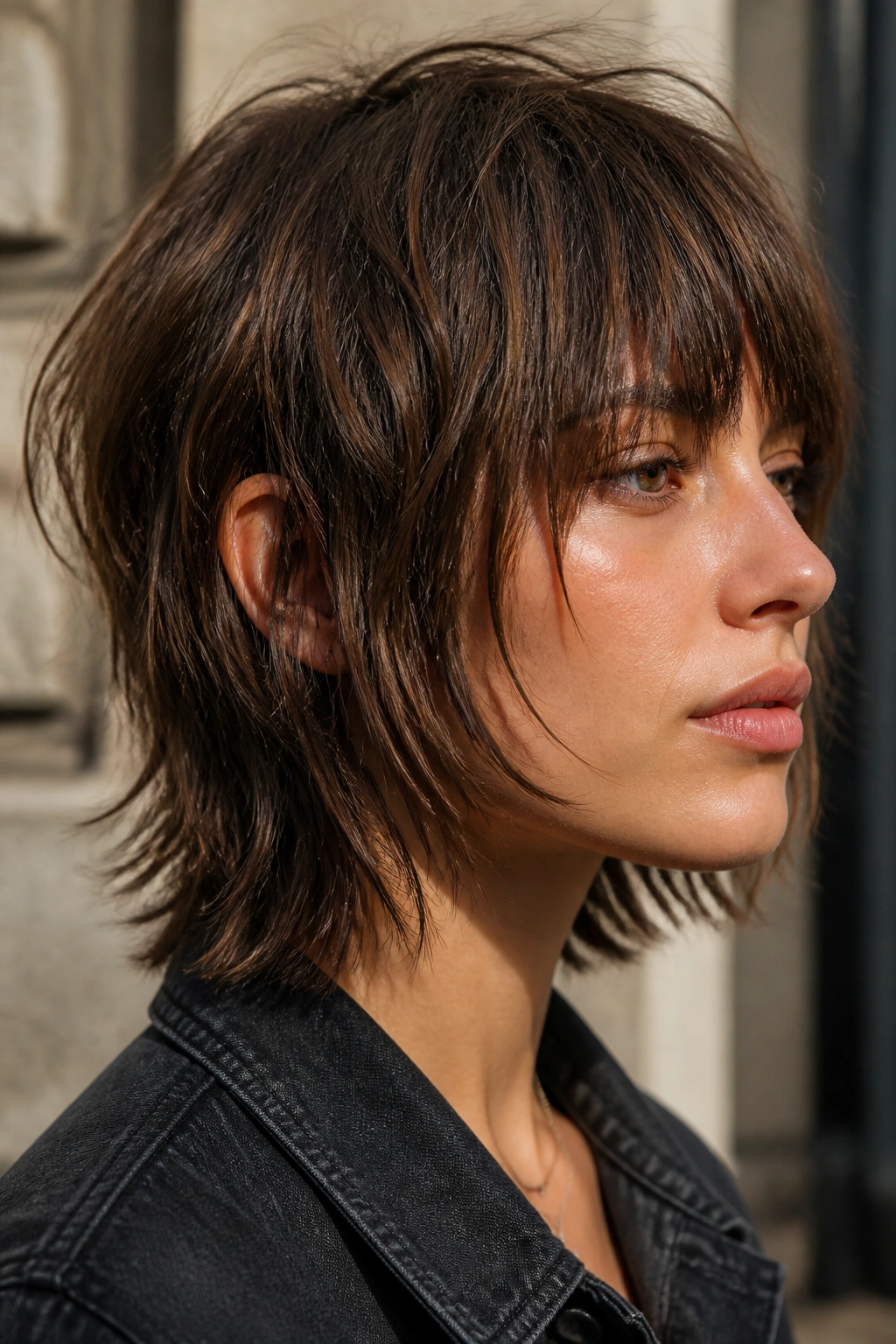
Razor cutting gives a shaggy bob its bite. Not the only way to get texture, but one of the fastest. The blade slices the ends at an angle, which leaves that wispy, frayed finish people usually mean when they say they want an edgy bob. It looks airy, not heavy.
There’s a catch, though. Razor work is not the move for every head of hair. If your ends are already dry, porous, or split, a razor can make the texture look frizzier instead of softer. I’d skip it on brittle hair and lean toward scissor point-cutting instead. That sounds like hair-nerd talk, and fine, it is, but the difference shows.
What to ask for
- A soft razor finish, not a heavy slice through the whole head
- A perimeter that keeps some bluntness near the neck
- Shorter face-framing pieces with longer, feathered sides
- Minimal thinning near the ends if your hair is fine
What makes this cut work is contrast. The shape still needs a bob’s outline, or it just turns into an unstructured mess. You want the ends to look broken up, not chewed up. That tiny distinction is the one that saves the cut.
4. Curly Shaggy Bob
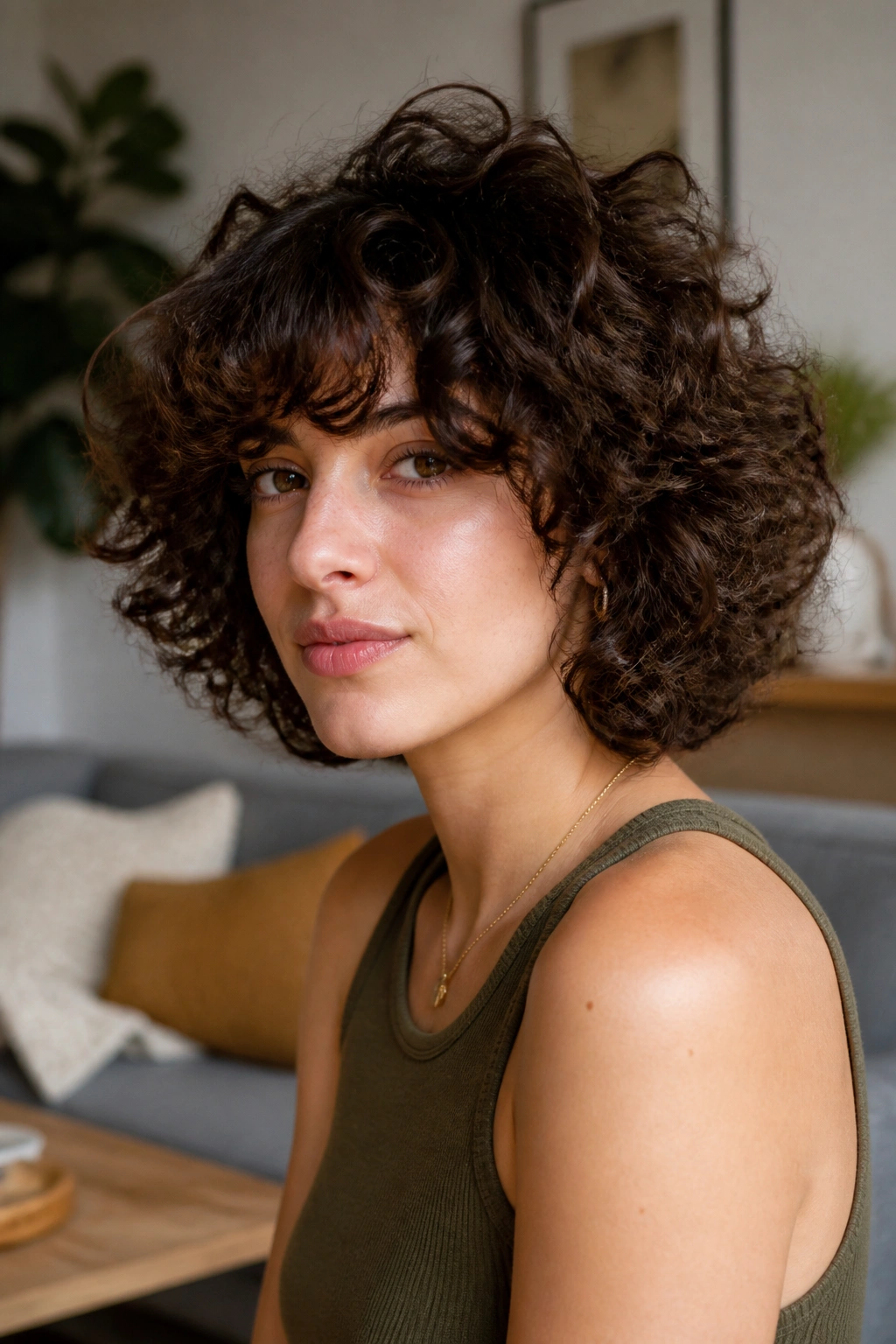
What if your curls already have their own agenda? Then a shaggy bob can be a gift, because the layers help keep the shape from turning into a triangle. Curly hair has volume all on its own. Add the wrong layers and it balloons. Add the right ones and it moves.
The length should stay a little longer than you think. Shrinkage changes everything once the hair dries, and a curl that looks chin-length wet may sit closer to the mouth or cheekbone after it springs up. A stylist who cuts curly hair dry or in its natural state usually has a better read on where the finished line will land. That matters.
How to keep it from puffing out
Use a lightweight leave-in, then a gel with enough hold to keep the curl clumps together. Diffuse on low heat or let it air-dry until about 80 percent dry before touching it. Touching too early breaks up the curl and makes the texture frizz faster. Annoying. True.
This version looks especially good when the layers are long and round rather than chopped into tiny bits. The result is fuller at the bottom and softer through the crown. Not neat. Better than neat.
5. Long Shaggy Bob That Hits the Collarbone
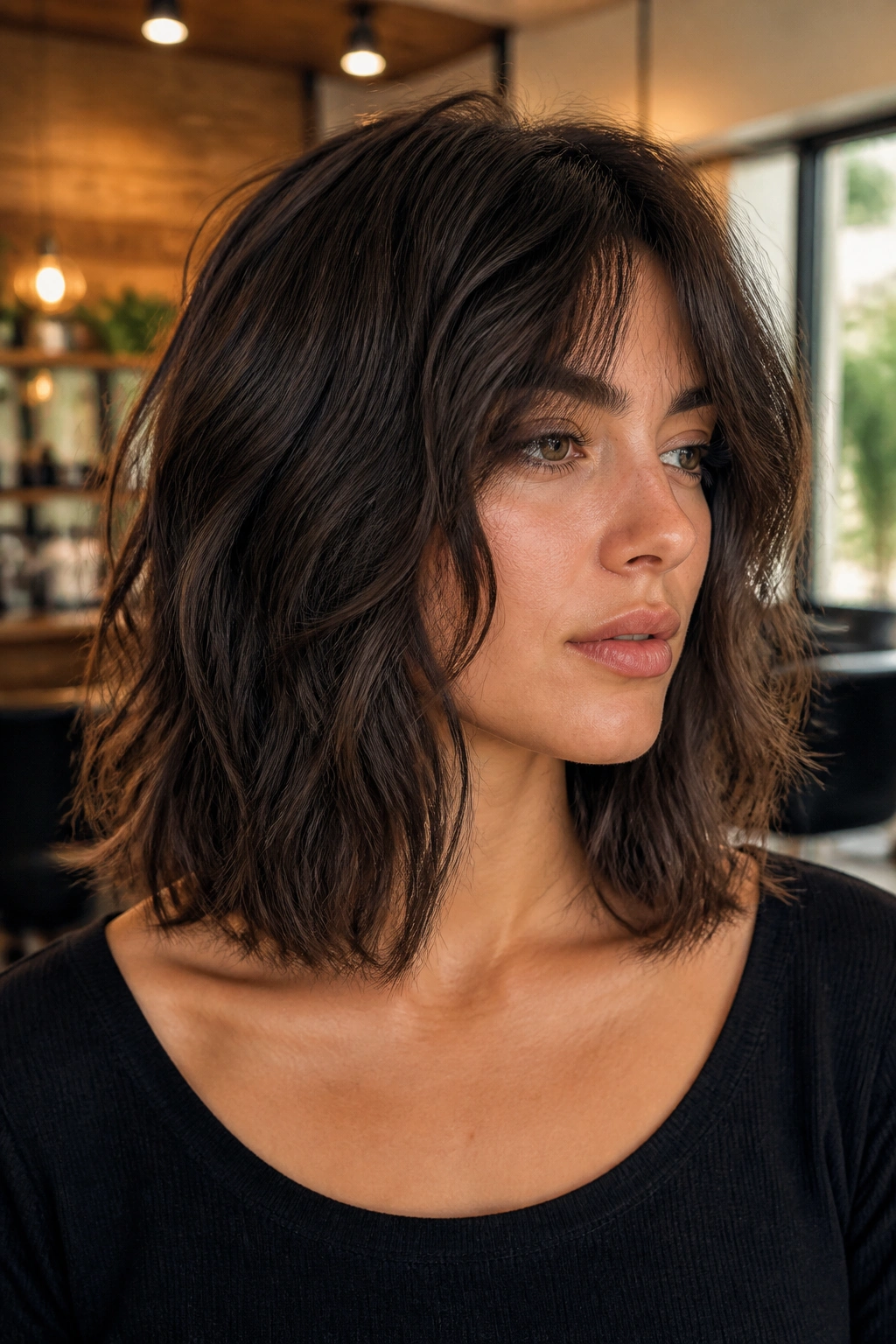
Unlike a blunt lob, this version keeps swing. A long shaggy bob, often called a lob, gives you the texture of a shorter cut without the shock of a dramatic chop. It usually lands at the collarbone or just above it, which means you can still tuck it behind your ears, pull it into a half-up twist, or let it fall in loose sections without much drama.
The longer length does one useful thing: it keeps the ends from flipping out too hard. That makes the style easier to grow out and easier to live with if your hair tends to get bigger in humidity. The texture shows up in the layers, not in a jagged outline.
This is the version I point people to when they want movement but hate haircuts that need daily babysitting. A little wave spray and a rough blow-dry are enough for most days. If you want more polish, use a 1-inch curling iron and leave the last inch straight. That tiny detail keeps the lob from looking overly styled.
It’s the most forgiving shaggy bob in the bunch. Not the flashiest. Just the one that keeps working after the salon glow has worn off.
6. Inverted Shaggy Bob
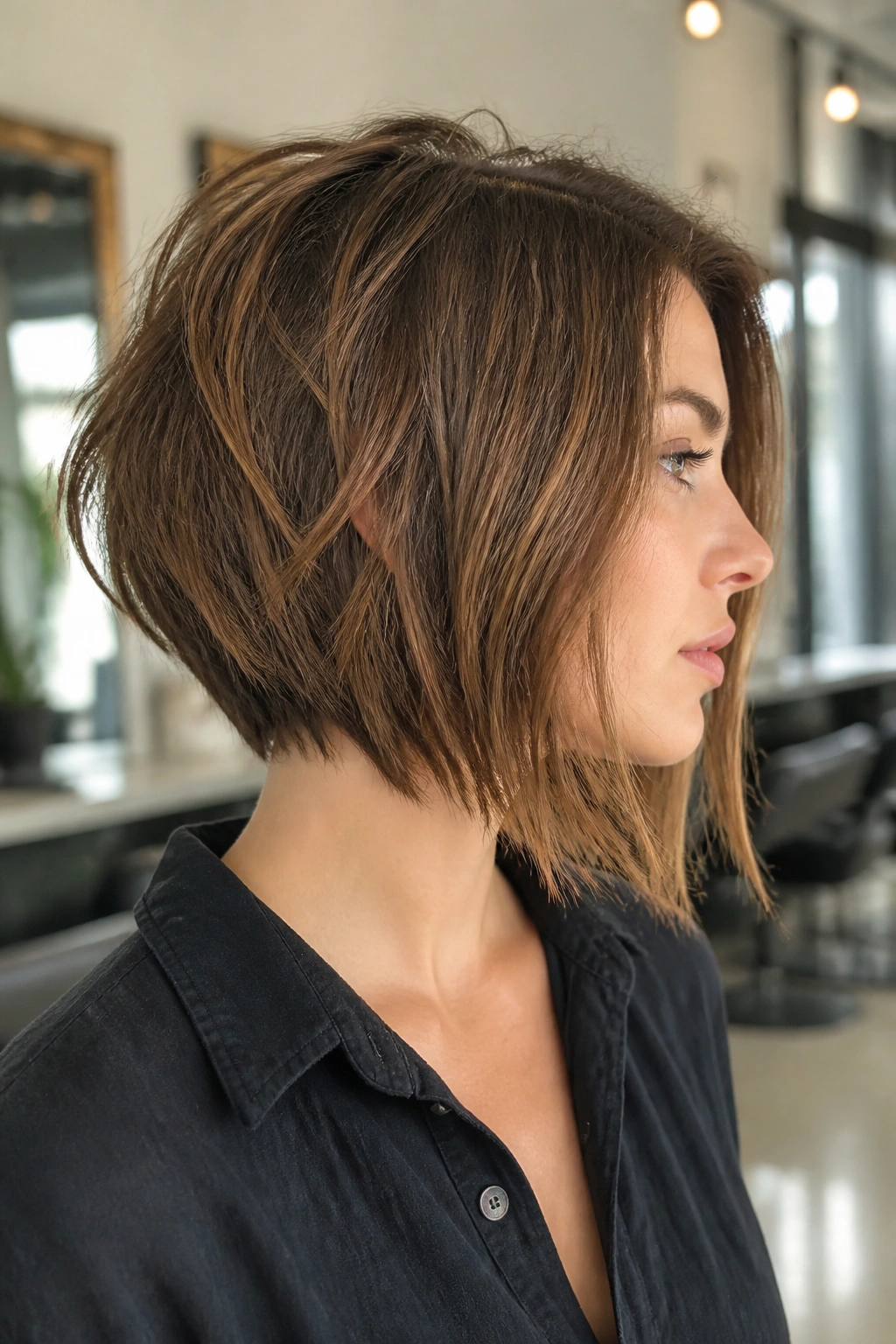
A lot of people think an inverted bob has to look sharp and severe. It doesn’t. With shaggy texture, the angle can feel much softer. The back sits shorter, the front falls longer, and the whole cut gets a little lift through the crown without turning into a helmet.
The real job here is balance. If the back is stacked too high, the haircut starts to look dated. If the front is too long, the shape loses its bob feel and starts wandering toward a lob. The sweet spot is a gentle angle — enough to show the shape from the side, not enough to shout about it.
Keep the angle soft
Ask for a graduated back with internal texture, not heavy layering on the surface. That keeps the nape clean and stops the bulk from building up under the crown. A light bend with a flat iron or brush gives the front pieces movement without making them curl under too hard.
This cut is good if you want the neck area to feel lighter and the front to have a little drama. It frames the jaw well. It also looks sharper when tucked on one side, which is a nice bonus on days when you want the hair to do the work for you.
7. Micro Fringe Shaggy Bob

Micro fringe changes the mood fast. Put it on a shaggy bob and the whole cut goes from casual to unapologetic. The fringe usually sits well above the brows, sometimes close to halfway between the brow and the hairline, so it draws attention straight to the eyes.
This is not a low-maintenance choice. It looks cool, yes, but it also needs trims more often than a longer fringe because even a quarter inch changes the effect. If you hate regular upkeep, skip it. No shame in that. The cut already has enough personality for two people.
It works best on people who like strong brows, high cheekbones, or a face shape that can handle a short front without feeling cramped. The shaggy bob underneath keeps it from looking too severe, which is why the pairing works. One piece is strict. The other is loose. Together they feel balanced.
If you want the look without full commitment, ask for a wispy micro fringe that can be pushed to either side. That gives you the edge without locking you into a very specific mood every morning. Small difference. Big relief.
8. Deep Side-Part Shaggy Bob
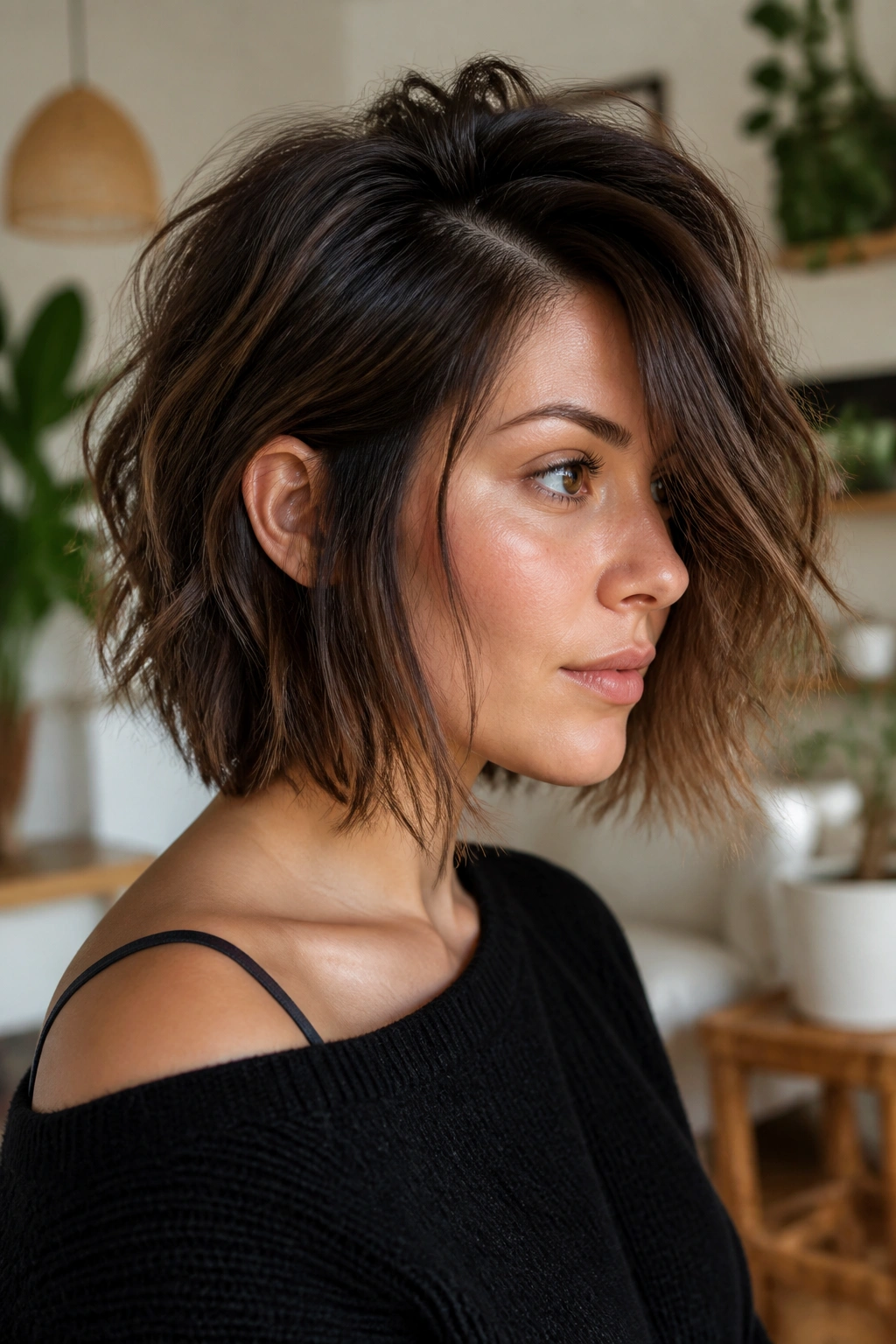
A deep side part can make a shaggy bob look less precious in one move. It pushes more hair to one side, builds lift at the roots, and gives the cut a little asymmetry without changing the actual length. If your center part feels flat or too tidy, this is the easiest fix.
The parting line matters more than people think. Move it about 2 to 3 inches off center, then blow-dry the roots in the opposite direction first so the hair gets some bend and memory. If you part it after everything is already dry, the lift tends to collapse by lunchtime. Hair is annoyingly honest that way.
This version suits round and square faces especially well because the side sweep softens the width at the temples. It also plays nicely with thicker hair, where a center part can sometimes feel too heavy. The silhouette gets a little more movement, a little more drama, and it still reads as a bob.
A root spray at the crown helps, but don’t overdo it. The point is lift, not stiffness. You want the hair to move when you turn your head.
9. Fine-Hair Shaggy Bob

Fine hair does not need a dozen short layers. That is where people go wrong. They think more slicing automatically means more body, then wonder why the ends look thin and wispy. A good shaggy bob for fine hair keeps the perimeter fairly solid and puts the texture where it can help.
What to ask the stylist
- Internal layers that remove weight without exposing the scalp
- A length that sits below the chin or near the collarbone
- Face-framing pieces that start low, not high
- Soft texturizing at the ends instead of aggressive thinning
A fine-hair shaggy bob looks better when the cut has enough substance to hold shape. If the layers are too short, the haircut can fall flat at the roots and stringy at the sides. Less can be more here, which is not the most exciting answer, but it’s the right one.
For styling, a mousse at the roots and a quick rough blow-dry usually do more than a pile of products. I’d rather see a clean, airy shape than a sticky one. Use a round brush only at the top if you want lift. Leave the bottom pieces alone so the texture stays broken up.
10. Thick-Hair Shaggy Bob
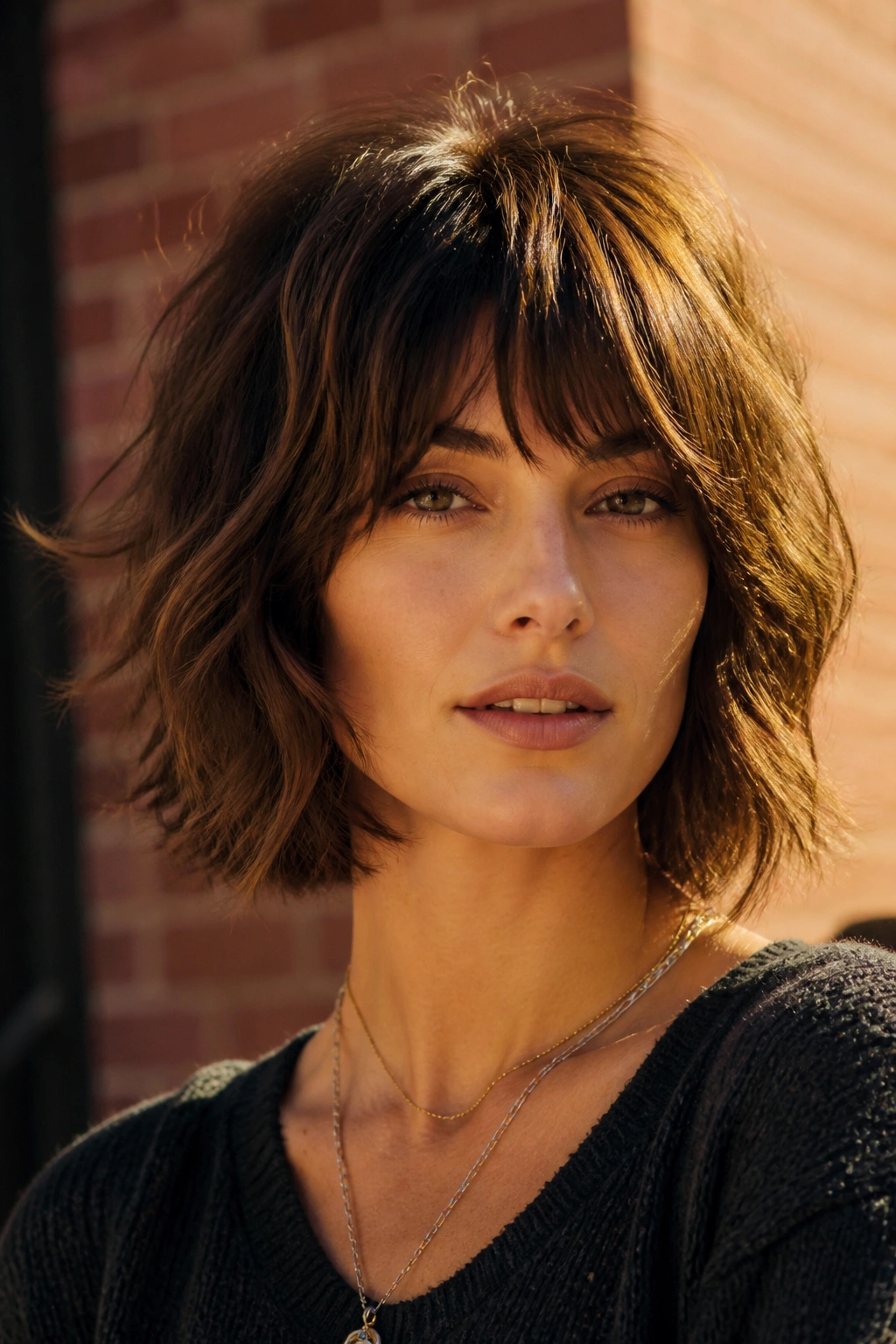
What if the problem is too much hair, not too little? Then the shaggy bob has to do a different job. Thick hair can look heavy fast, and if the layers are cut badly, the ends take on a blunt, boxy shape that sits out from the head. No one wants that.
The answer is controlled debulking, not over-thinning. That means removing weight from the middle and upper sections while keeping the ends strong enough to hold the shape. If the stylist cuts too much into the bottom, the bob loses its line and starts to spread out. It’s a common mistake. A frustrating one.
The mistake to avoid
Do not ask for extreme thinning shears all over the head unless you enjoy fuzzy ends by week two. A better move is long internal layers, plus some piecey face framing. That keeps the silhouette from turning into a triangle while still letting the bob move.
Thick hair does well with a shaggy bob because the texture gives the haircut room to breathe. It can take a little dryness at the ends, a little separation, a little mess. In fact, it often looks better when it isn’t too glossy or too perfect. The cut likes a bit of air between the strands.
11. Asymmetrical Shaggy Bob
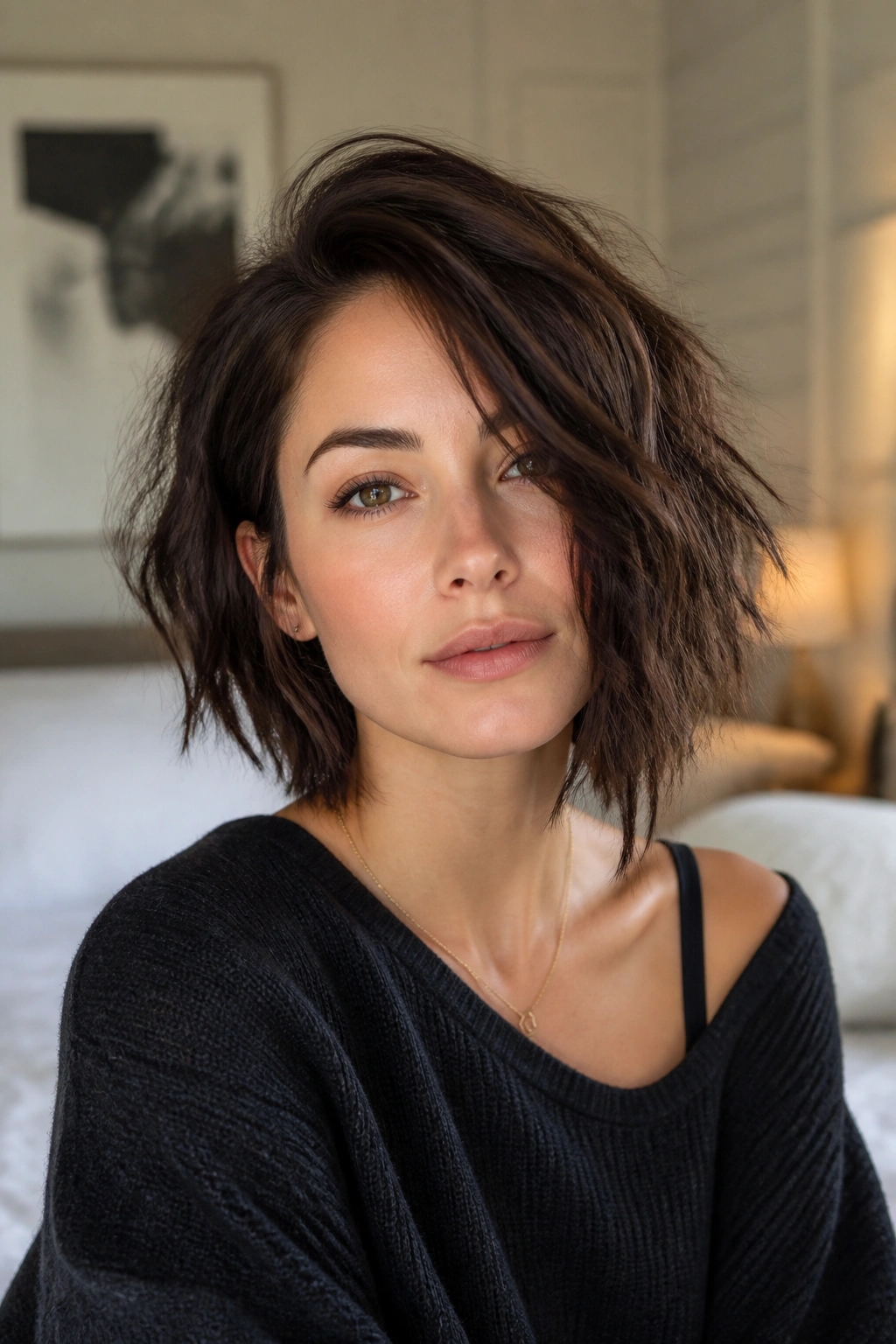
Asymmetry gives the shaggy bob a sharper edge without making it harsh. One side sits a little longer than the other, usually by 1 to 2 inches, and that small shift changes how the whole cut moves around the face. It feels a bit more deliberate than a standard shaggy bob, which is useful if you want texture with attitude.
This shape works especially well with a side part, because the longer side can sweep across the cheekbone while the shorter side opens up the jaw. If the difference is too dramatic, the cut starts to feel costume-like. Keep it subtle and the shape does the talking for you.
A lot of people tuck the shorter side behind the ear and let the longer side fall loose. That creates a little tension in the outline, which is part of the appeal. You get movement, but you also get a clear shape. Not random. Not stiff either.
This is a good choice if you like haircuts that look a touch different from every angle. The symmetry is broken, but the balance is still there. That’s the whole trick.
12. Wolf-Bob Hybrid
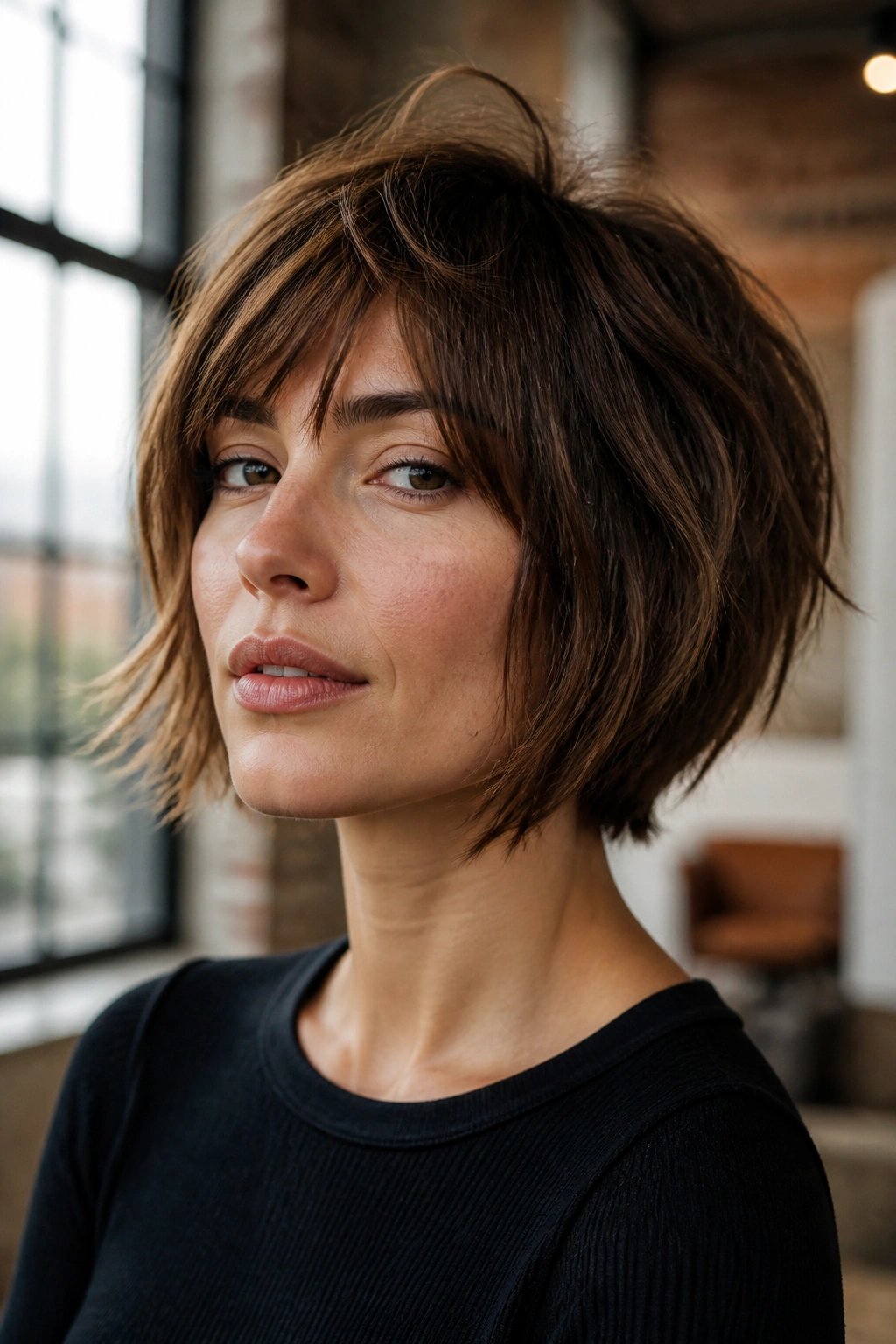
A wolf-bob hybrid is for the person who wants more edge than a standard shaggy bob can give. It borrows the longer crown layers and taper from a wolf cut, then keeps the overall length closer to a bob. The result is messier, cooler, and a little less polite.
The key is restraint. If the top layers are too short, the cut turns into a full shag or a mini mullet too fast. If the nape is too long, it stops reading as a bob. You want the top to feel feathery and a little wild while the bottom still lands in bob territory. Easy to say. Harder to cut well.
How far to push it
Keep the front pieces around the jaw or just below it, and let the crown layers sit higher so the hair lifts away from the head. That creates the wolf-cut energy without losing the bob shape. This version is especially good on wavy hair, because the natural bend makes the layers separate on their own.
A touch of dry texturizer at the roots and mid-lengths helps. So does scrunching the hair while it’s still warm from the dryer. If you like a haircut that looks a little rebellious without becoming high-maintenance, this is probably the strongest option in the list.
13. Wet-Look Piecey Shaggy Bob
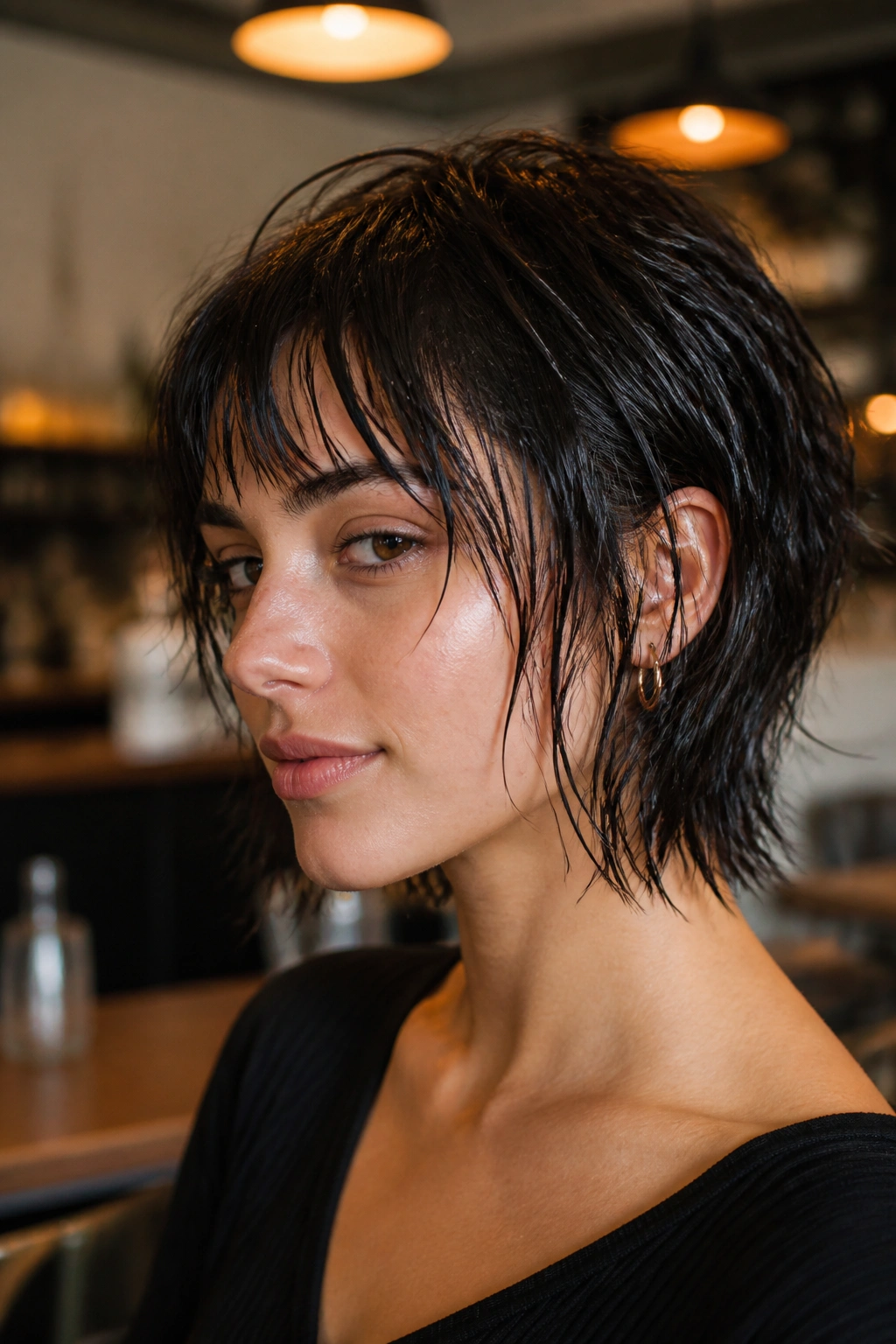
Gel, a comb, and a little shine cream can turn a shaggy bob into something sharp. The wet-look version is still textured, but the separation is more deliberate. It feels sleeker, almost editorial, while keeping enough movement around the face to stop it from looking frozen.
This is the style I’d wear when I want the bob to feel cleaner at the roots and more defined through the ends. Use a light-hold gel on damp hair, rake it through with your fingers, then comb the top flat if you want that slicker finish. Leave the ends slightly separated. If everything dries into one shiny mass, the texture is gone.
The trick is moderation. Too much product and the hair looks greasy. Too little and the strands fall apart before the shape sets. Fine hair in particular needs a very light hand here, because heavy gel can collapse the cut by the neck.
This version works well for evenings, sharp outfits, and anyone who likes the contrast of a rough cut with a cleaner finish. It has edge, but it also has control. That combination never gets old.
14. Air-Dried Wavy Shaggy Bob

Can a shaggy bob work with almost no heat? Yes, if the cut is right. In fact, some of the best-looking versions lean into natural bend rather than fighting it. The texture ends up softer, less forced, and more believable.
The setup is simple. Use a lightweight leave-in on damp hair, scrunch in a mousse or wave cream, and wrap the hair in a microfiber towel for 10 to 15 minutes before letting it air-dry. Don’t keep touching it. That’s the part people always mess up. The more you fuss, the more the texture frizzes.
How to dry it without puffing
- Apply product from mid-lengths to ends, not just the top
- Scrunch upward with your hands for 20 to 30 seconds
- Let the roots dry with a little space around the head
- Break up the ends only once the hair is fully dry
This version is especially good if your waves are loose and your hair tends to fall flat under a blow-dryer. It gives you a shaggy bob that looks easy, not lazy. There’s a difference.
15. Soft Blunt Shaggy Bob

If you like the idea of texture but not a lot of choppiness, this is the gentlest version. A soft blunt shaggy bob keeps a clean perimeter, then hides the movement inside the cut with subtle internal layers. From the outside, it reads tidy. Up close, there’s more happening.
That makes it a smart choice for people who need their hair to look neat at work but still want some edge after hours. The ends stay strong, which helps the haircut keep its shape as it grows. The texture shows up more when you move, less when you stand still. That’s a good thing here.
It also solves a common problem: too much layering on the outside can make a bob look frayed before it looks cool. This version avoids that. You get a little break-up near the face and through the crown, but the outline stays clean enough to feel intentional.
I’d call it the quiet troublemaker of the group. It doesn’t shout. It just has better bones than a plain blunt bob, and that’s usually enough.
Final Thoughts
The strongest shaggy bob hairstyles all have one thing in common: the edge is controlled. The ends look broken up, yes, but the shape still has a backbone. That’s what keeps the cut from sliding into chaos.
Bring photos that show both the silhouette and the texture you want. A picture of a fringe alone is not enough. A shot of a jawline-length bob with choppy ends tells your stylist much more, and so does one clear note about how much styling you’re willing to do on a normal Tuesday.
A good shaggy bob should move when you shake your head. It should also survive a day without constant fixing, which is the real test. If it does both, you’ve got the right cut.
