



Thick hair and a wolf cut can be a gorgeous match, but only when the cut respects the weight sitting in your head. When the layers are placed badly, the shape turns boxy fast. When they’re placed well, the whole cut moves, breathes, and falls with a messy kind of intention that thick hair rarely gets to enjoy.
That’s why wolf cuts for thick hair are such a smart search in the first place. Dense hair needs more than a trendy silhouette; it needs internal weight removal, smart layering, and a perimeter that does not puff out like a triangle by lunch. The wolf cut gives you room to keep fullness while still carving in texture around the crown, cheekbones, and ends.
There’s also a very practical reason this cut works. Thick hair usually has enough body to hold shape, so the shag-meets-mullet structure of a wolf cut doesn’t collapse the way finer hair sometimes does. You can lean into choppy layers, curtain bangs, softer fringes, or a longer tail, and the style still has something to work with. That’s half the appeal.
Some versions are edgy. Some are soft. A few are surprisingly polished. The trick is picking the one that fits how your hair behaves on its worst day, not how it looks in a salon mirror under flattering lights. That’s where the real range starts.
1. The Classic Wolf Cut for Thick Hair
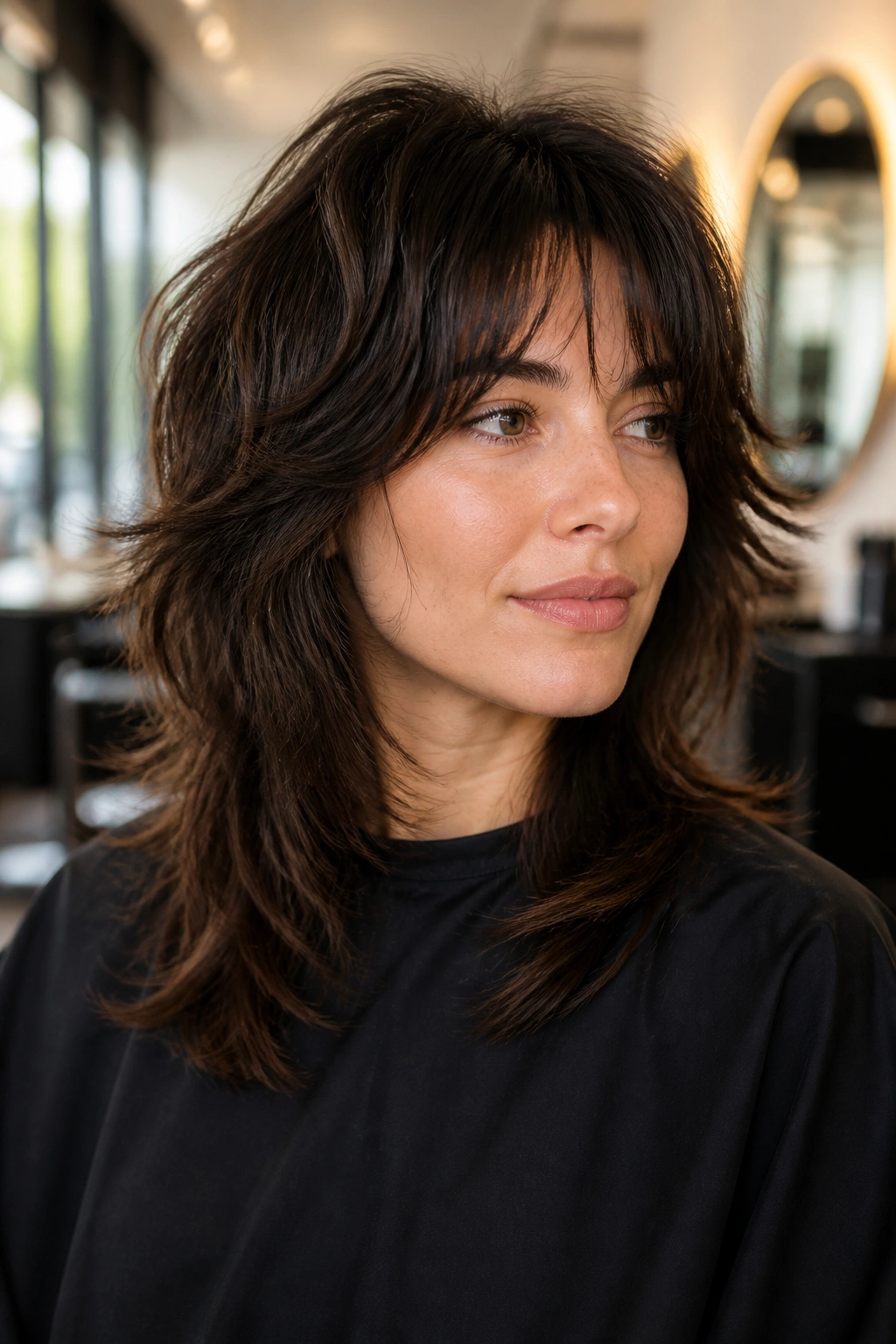
The classic wolf cut is still the one I’d hand to someone with dense hair who wants movement without losing the feeling of having hair. It keeps the crown shorter, lets the mid-lengths collapse into airy layers, and leaves enough length at the bottom so the whole shape doesn’t get puffy. Done right, it looks a little wild in a good way.
Why It Works on Dense Hair
Thick hair can take a lot of layering before it starts looking thin. That’s the sweet spot here. The classic wolf cut uses internal layers and a soft, broken outline to take weight out of the middle without turning the ends into scraps.
A stylist who knows thick hair will often avoid over-thinning the perimeter. That matters. Overdoing it makes the shape frizzier, not lighter.
- Crown layers create lift where thick hair usually sits flat.
- Longer outer pieces keep the cut from blooming outward.
- Soft fringe or curtain bangs stop the front from feeling too heavy.
- A quick rough-dry with a diffuser brings out the texture fast.
Best tip: ask for movement first, not aggressive thinning. Those are not the same thing.
2. Long Wolf Cut With Curtain Bangs

If you want the wolf cut look but you are attached to length, this is the version to ask for. The long wolf cut with curtain bangs keeps the back and sides below the shoulders, then adds face-framing pieces that split at the center and fall along the cheekbones. It feels softer than the shorter versions, which is probably why so many thick-haired women end up loving it.
The thing I like about this cut is that it doesn’t fight density. Long layers allow heavy hair to keep its shape, while the bangs do the visual work up front. You get the lifted, lived-in look without sacrificing the swing of longer hair.
It also styles faster than people expect. A round brush and a quick bend at the front are often enough. If your hair is coarse, the fringe may need a little extra heat and a smoothing cream, but the payoff is worth it.
Keep the shortest face-framing layer around cheekbone height. Any shorter and the front can balloon. Any longer and the curtain effect starts to disappear.
3. Shoulder-Length Wolf Cut With Razor-Soft Ends

Why does this length work so well on thick hair? Because shoulder-grazing hair gives the wolf cut enough room to show texture without hanging so long that the layers disappear into the bulk. It hits that middle point where the shape is visible, but the cut still feels easy to wear.
Shoulder-length hair is also where thick hair can start to feel heavy in the wrong places. The wolf cut fixes that by moving the weight upward and carving the bottom into a softer, more broken edge. If the ends are cut bluntly, the whole thing can look like a triangle by the second day. Razor-soft ends help avoid that.
How to Ask for It
Tell your stylist you want the perimeter to stay around shoulder length, with shorter pieces starting near the cheekbones and crown. If your hair is coarse, ask for the razor only on the interior or the very ends. A heavy-handed razor job can make thick hair fray.
This version is especially good if you air-dry a lot. The shape reads even when the hair is imperfect.
4. Curly Wolf Cut That Keeps Length
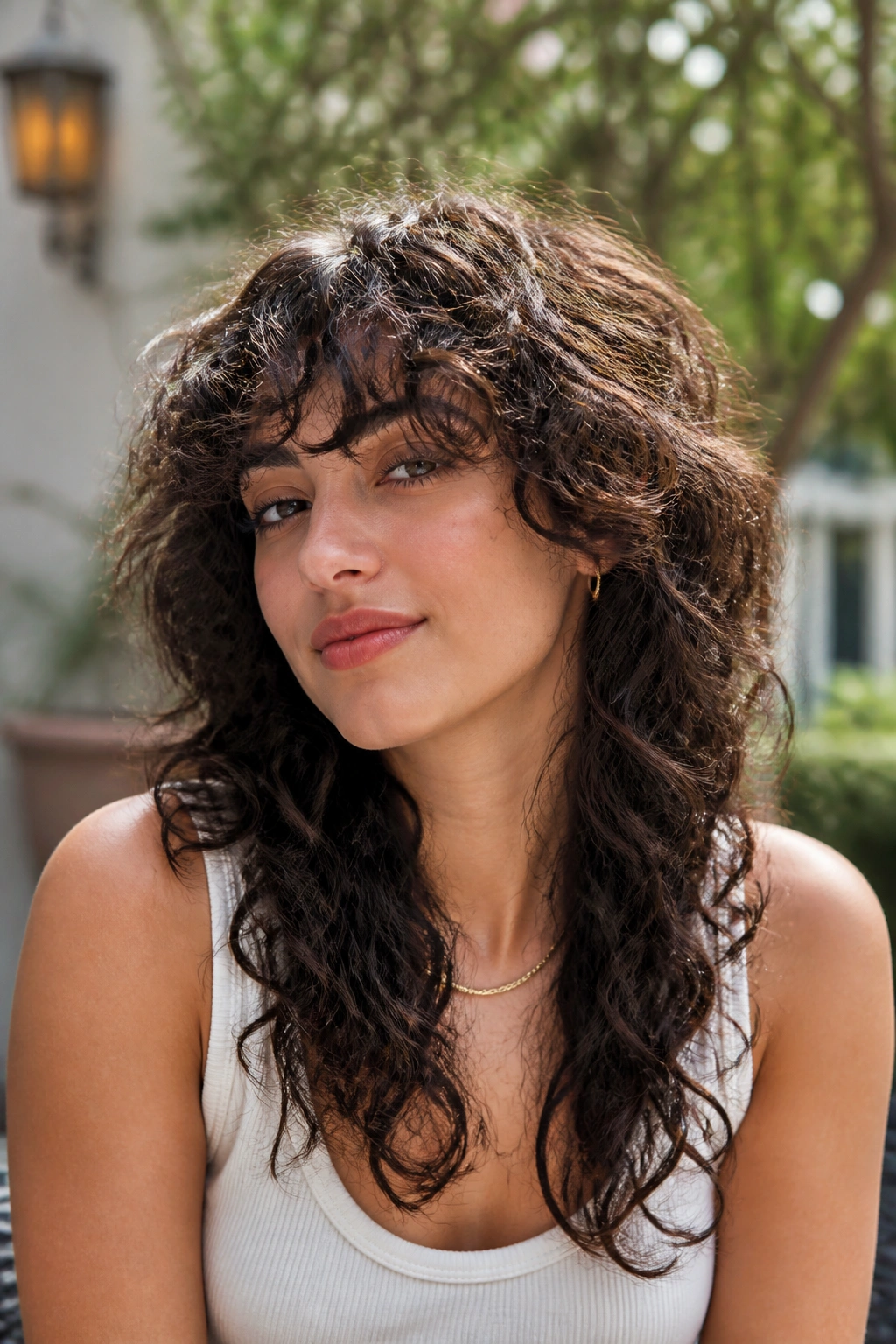
A curly wolf cut is not just a regular wolf cut on curls. It needs more respect than that. Thick curly hair already has built-in volume, so the whole point is to remove bulk where it piles up and preserve the curl pattern where it matters.
I’ve seen too many dense curly cuts go wrong because someone treated them like straight hair. Bad move. Curls spring up, shrink differently in every section, and need to be cut with the final shape in mind. Dry cutting, or at least cutting in a curl-aware way, usually gives the best result.
What to Watch For
- Keep the shortest layers high enough to give the crown some lift.
- Leave enough length at the sides so the head doesn’t look too wide.
- Ask for curl-by-curl shaping if your texture is uneven.
- Use a diffuser on low heat to keep the layers from puffing out.
The finished look should feel soft, round, and slightly untamed. Not puffy. There’s a difference, and it matters.
5. Soft Wolf Cut With Bottleneck Bangs
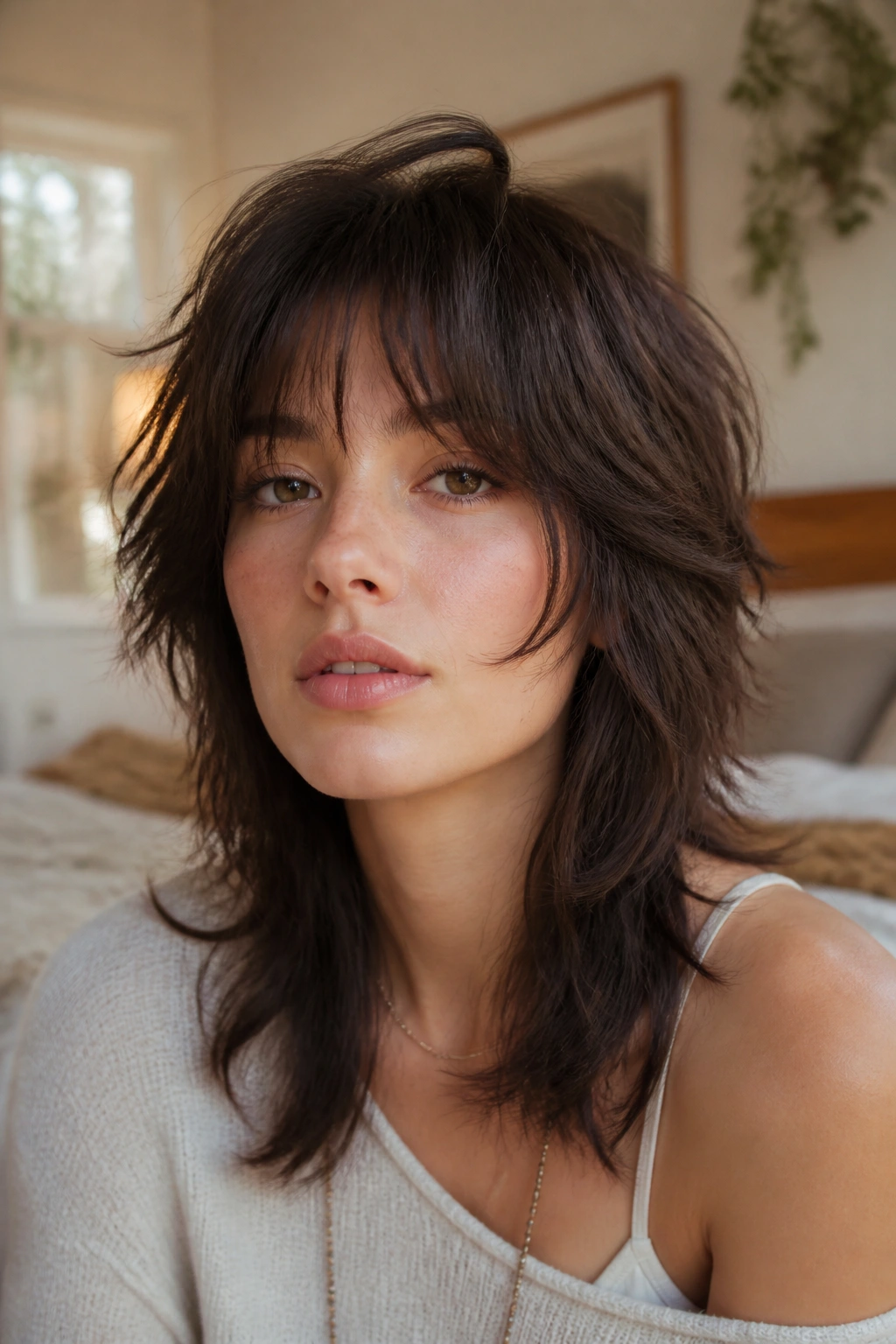
This is the version for someone who likes the wolf cut idea but does not want to look like she borrowed the haircut from a rock show backstage. The soft wolf cut keeps the shaggy structure, then eases the edges with bottleneck bangs and longer layers around the jaw. It’s gentler. More wearable. Still cool.
The bangs are the smart part here. Bottleneck bangs start narrower in the center and widen as they move outward, so they blend into the rest of the haircut instead of sitting on top of it like a hard line. On thick hair, that softness helps the front avoid looking bulky.
This cut is also one of the easiest to grow out. The fringe blends into curtain pieces without making an awkward shelf at the forehead. That makes a difference when your hair grows fast or when you hate getting trims every few weeks.
If your hair has a lot of body but you want something a little more refined, this is where I’d start. It has shape, but it does not shout.
6. Short Wolf Cut With a Choppy Crown
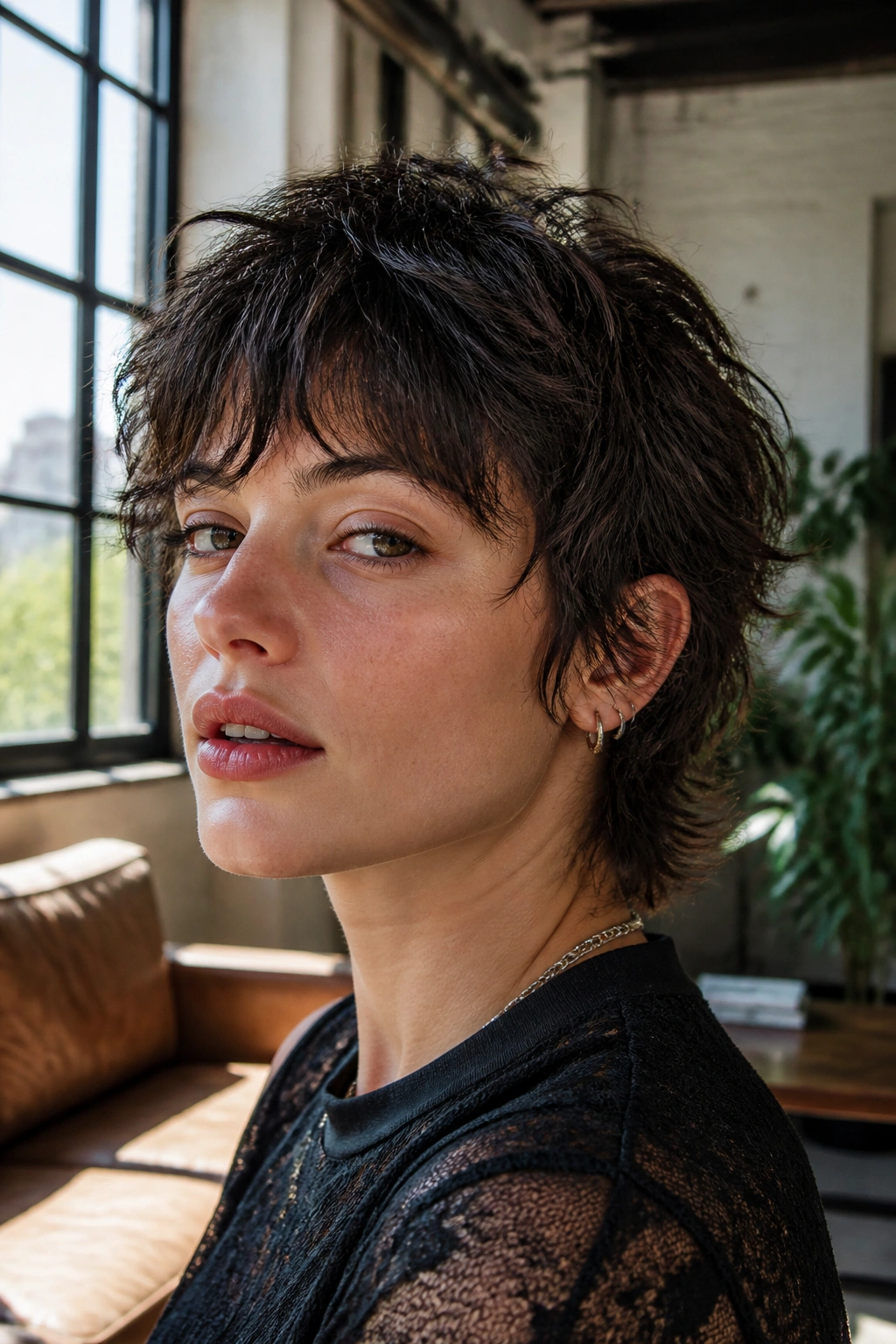
Short wolf cuts are bluntly good on thick hair because they make the density look intentional. Instead of fighting volume, the cut leans into it and uses a short crown with choppy layers to keep the top from sitting too flat. The result feels edgy without needing much styling.
Compared with a pixie or a classic bob, this version keeps more texture on top and a little more softness around the ears and nape. That makes it less severe. It also means thick hair has a place to expand without turning into a mushroom shape.
This cut suits people who want a faster drying time and a more obvious shape. It is not shy. The ends should look piecey, not overworked, and the crown needs enough lift to keep the silhouette from looking bottom-heavy.
A tiny dab of matte paste is often enough. Seriously. Too much product only weighs the whole thing down and ruins the choppy finish.
7. Hidden-Layer Wolf Cut for a Polished Look

The best wolf cuts for thick hair do not always look extreme. Sometimes the smartest version is the one nobody can read at a glance. Hidden layers remove bulk inside the cut, while the outside line stays smooth enough for office life, school runs, and days when you do not feel like being the most textured person in the room.
That balance matters more than people admit. Thick hair can look messy fast if the layers are exposed in the wrong way, but it can also look heavy if nothing is removed. Hidden layering solves both problems by creating movement under the surface.
I like this version for people who want softness around the face and back, but still need the outer edge to look tidy. It works especially well if you wear hair down most days and only add a loose wave once in a while. The cut does the work even when the styling is minimal.
Ask for the perimeter to stay clean. The inside should carry the movement, not the other way around.
8. Heavy Fringe Wolf Cut
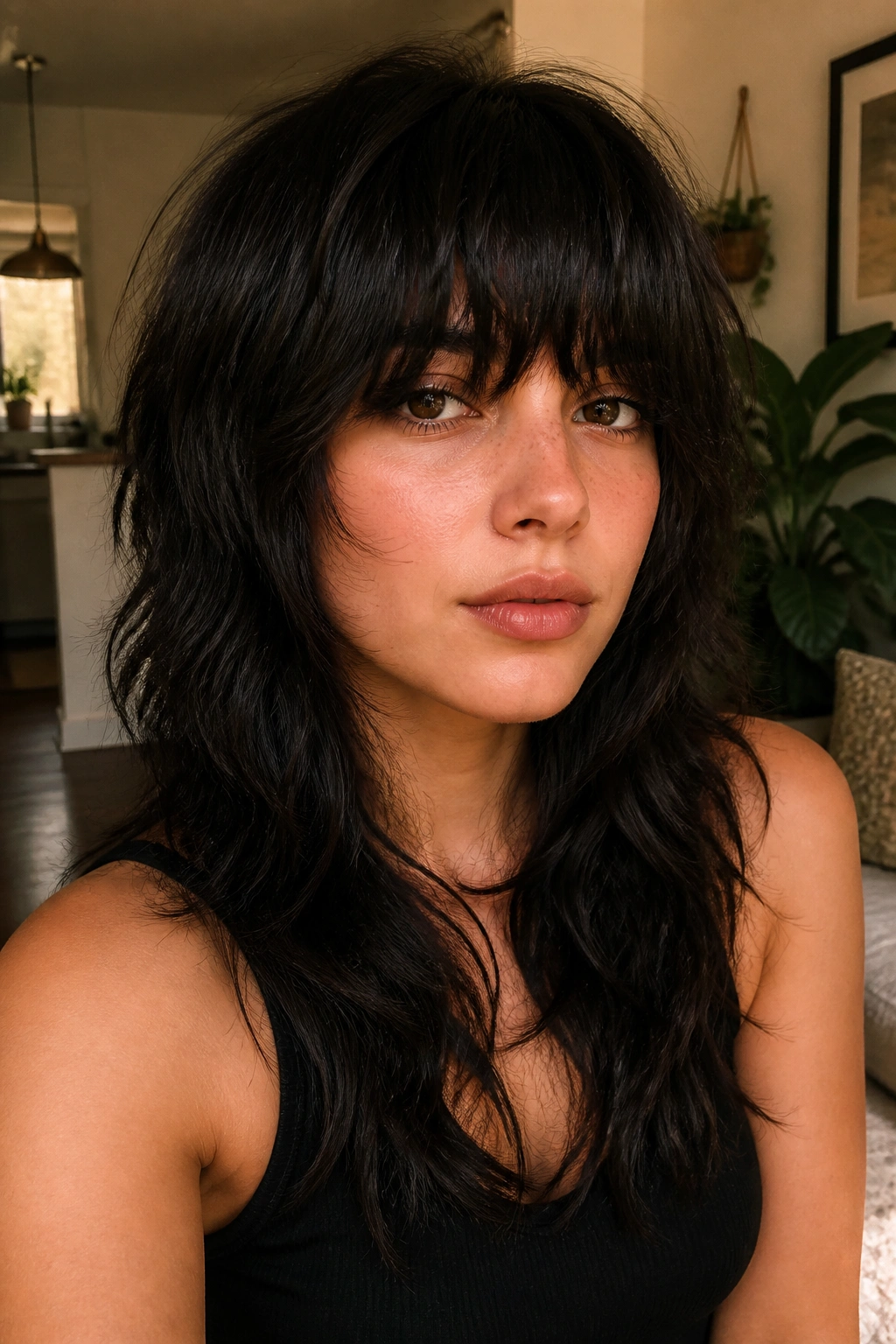
Does a thick fringe make a wolf cut feel heavier? Sure. That is also why it works. A heavier fringe can anchor a big cut and stop the crown from floating away visually. On dense hair, that kind of balance is useful. The front gets weight, the rest gets texture, and the whole haircut feels deliberate.
This version is good if your forehead is a feature you like to soften, or if you prefer a stronger frame around the eyes. It’s also one of the better picks for women whose hair tends to expand around the crown but stay flatter at the front. The fringe gives the eye somewhere to land.
How to Wear It
Blow-dry the fringe first. Not later. First.
Use a small round brush or a flat brush to direct the bang forward, then bend the ends slightly inward so the line doesn’t feel boxy. A light mist of flexible hairspray helps, but keep it soft. If the fringe gets crisp, it starts to fight the rest of the cut.
The rest of the layers can stay rough and airy. That contrast is the whole point.
9. Wolf Cut Bob for Thick Hair
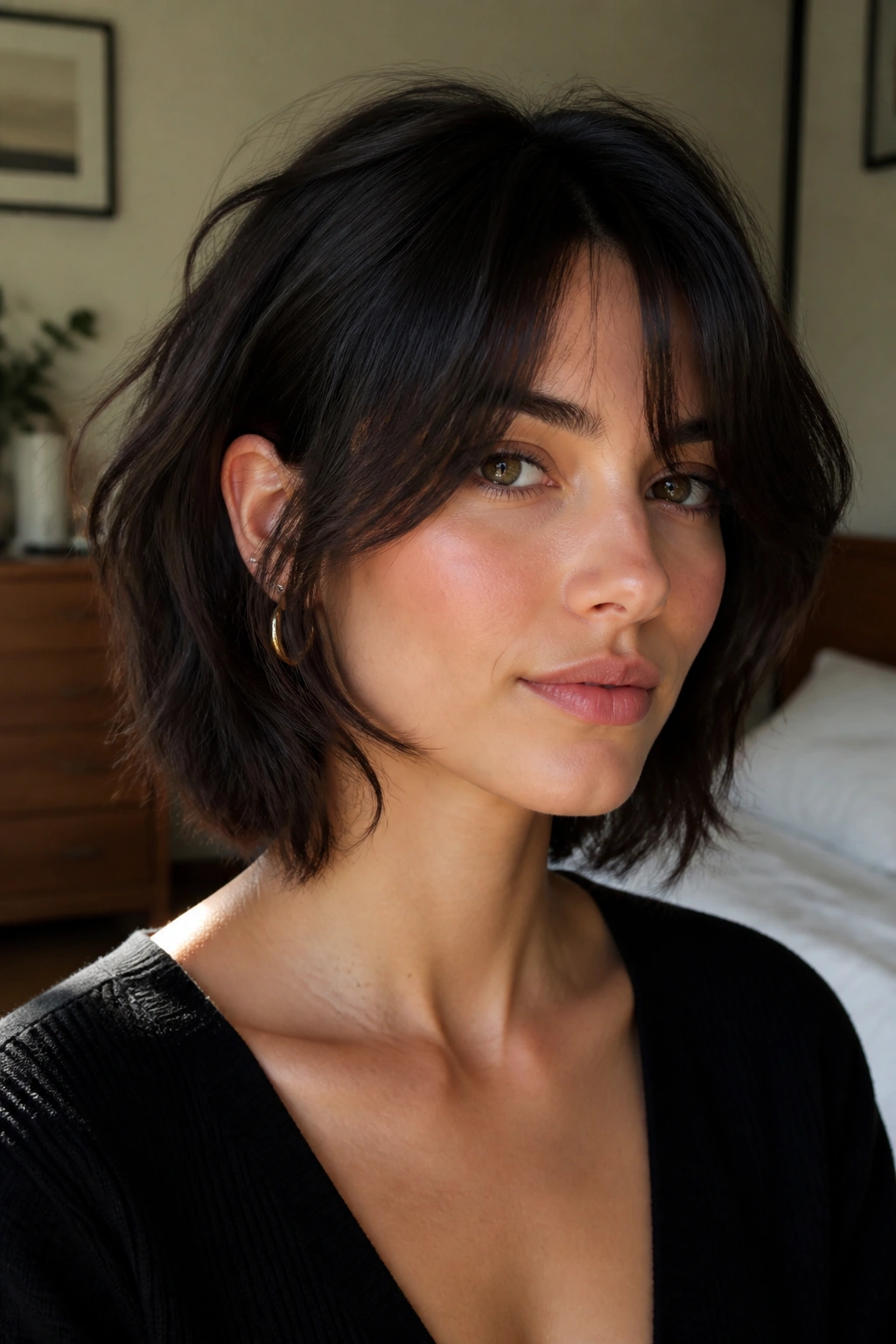
Picture thick hair cut into a bob that still has attitude instead of sitting like a helmet. That’s the wolf cut bob when it’s done well. It usually lands somewhere between the chin and collarbone, with shorter interior layers and enough texture at the edges to keep the shape from feeling stiff.
The bob length is useful because thick hair often looks sharpest when the ends are controlled. Too long, and the weight can drag the style down. Too short, and the volume can puff up in odd spots. This middle ground gives the cut somewhere to live.
- Keep the nape a touch tighter than the front.
- Ask for visible movement around the cheekbones.
- Leave enough length to tuck behind the ears.
- Style with a one-inch curling iron for a loose bend, not polished curls.
What I like most is the balance. It’s neat enough for people who don’t want chaos, but it still has that shaggy wolf cut energy underneath.
10. Shaggy Wolf Cut With Flipped Ends
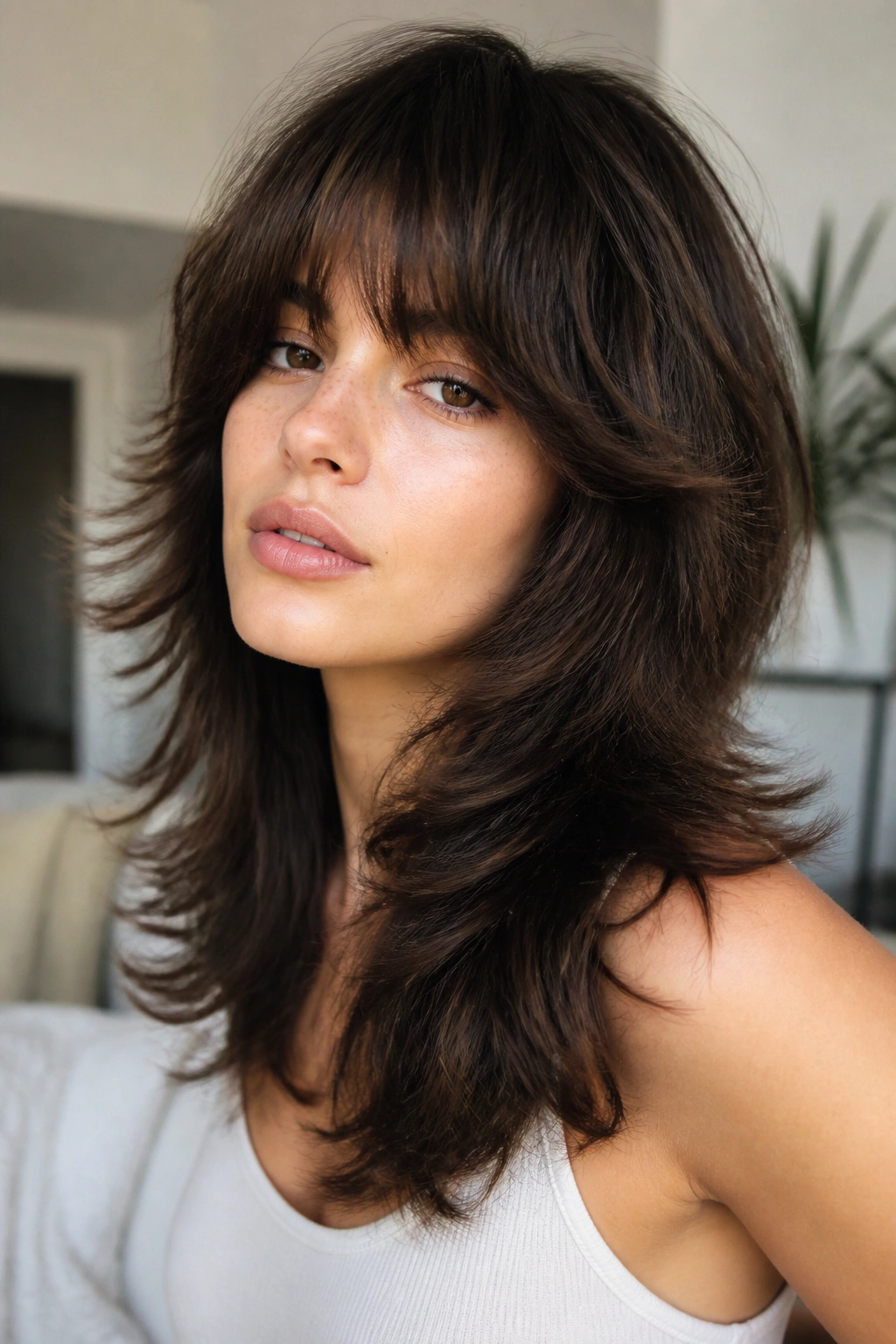
A flipped-end wolf cut has a little swagger to it. The layers are cut to encourage outward movement at the ends, so the silhouette feels playful instead of heavy. On thick hair, that outward bend keeps the shape from collapsing into a block.
This style works especially well if your hair naturally flips out a bit already. Instead of forcing it flat, you lean into the bend and let the movement show. A quick pass with a round brush or a flat iron at the last inch of the hair can create that loose flick without making the style stiff.
The best part is how forgiving it is. If one section goes a little crooked, it still looks like part of the design. That’s the gift of a wolf cut. It rewards texture. It does not demand perfection.
If you like hair that looks a little unfinished on purpose, this one has a lot going for it. Very little effort. A lot of shape.
11. Face-Framing Wolf Cut With Cheekbone Pieces

What makes this cut different? The shortest pieces are placed to highlight the face, not compete with it. On thick hair, that matters because the wrong front layers can swallow your features. Cheekbone pieces open the face, break up the density, and make the haircut feel lighter without stripping away body.
Where the Pieces Should Sit
The shortest layers usually work best around the cheekbone or just below it. That gives the cut a lift near the eyes and keeps the front from becoming too wide. If the layers start too high, the front can look choppy in a way that feels unfinished. Too low, and you lose the framing effect.
How to Style It
A quick bend away from the face keeps the pieces visible. Use a medium barrel brush or a curling iron around 1 to 1.25 inches wide, then brush the wave out with your fingers. That gives the front some shape without making it look overly styled.
The rest of the cut can stay looser. That contrast is what makes the face-framing version so flattering on thick hair.
12. Razor-Cut Wolf Cut for Coarse Hair

Unlike a scissor-heavy cut, a razor-cut wolf cut softens the ends and can take some of the bluntness out of coarse thick hair. The effect is airy, slightly broken, and a little more lived-in. If your hair has a stubborn, wiry feel, this can make a huge difference.
But there’s a catch. A razor is only your friend if the stylist knows exactly where to use it. Coarse hair can fray when it is over-razored, and the ends can start to look fuzzy instead of soft. I’d trust this technique most when it’s used lightly through the interior and around the face, with cleaner scissor work at the perimeter.
This cut tends to look especially good on naturally bulky hair that resists movement. It takes the edge off without flattening the shape. That’s a nice line to walk, and not every cut manages it.
If your hair feels too blunt even after a trim, this version is worth considering. Just make sure the finish stays controlled.
13. Feathered Wolf Cut With Long Layers
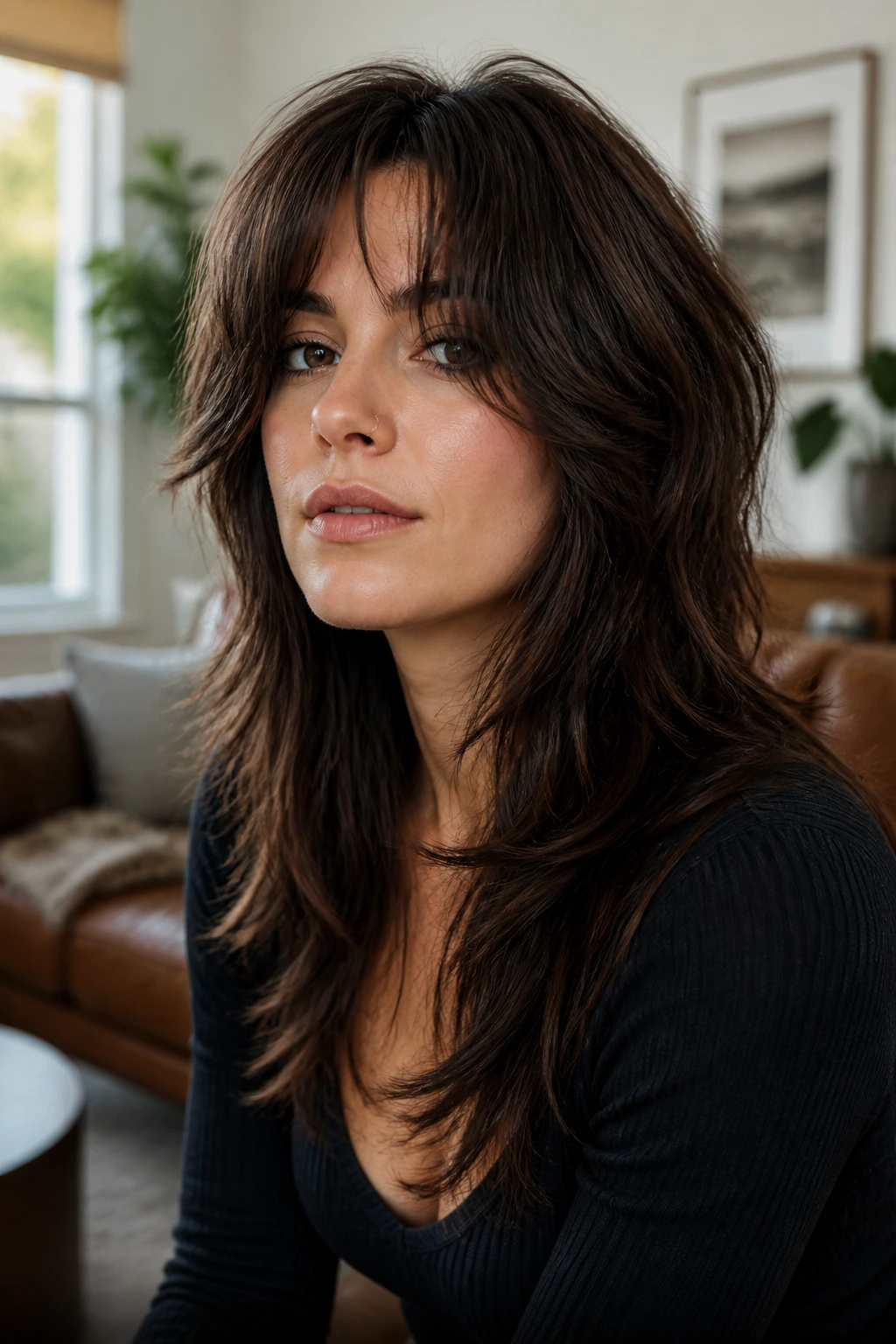
Feathered layers make thick hair feel lighter in a way that reads as soft, not skinny. That distinction matters. A feathered wolf cut keeps the long shape intact while carving in movement through the mid-lengths and ends, so you still get swing when you turn your head.
This is one of the most flattering versions for women who want the wolf cut shape but hate the idea of looking too edgy. The layers are visible, sure, but they taper instead of slicing harshly across the hair. That gives the whole cut a more polished edge.
Why It Looks Good on Dense Hair
Dense hair needs places to break up the mass. Feathering does that without making the cut feel sparse. The trick is keeping the longest layers long enough to hold weight while the shorter ones create lift near the top.
- Use a round brush if you want a smooth finish.
- Air-dry if you want the feathering to show more.
- Avoid heavy creams near the roots.
- Ask for the front pieces to connect gently into the sides.
It’s a softer take, and honestly, one of the easiest to wear day after day.
14. Mullet-Leaning Wolf Cut With a Sharper Nape
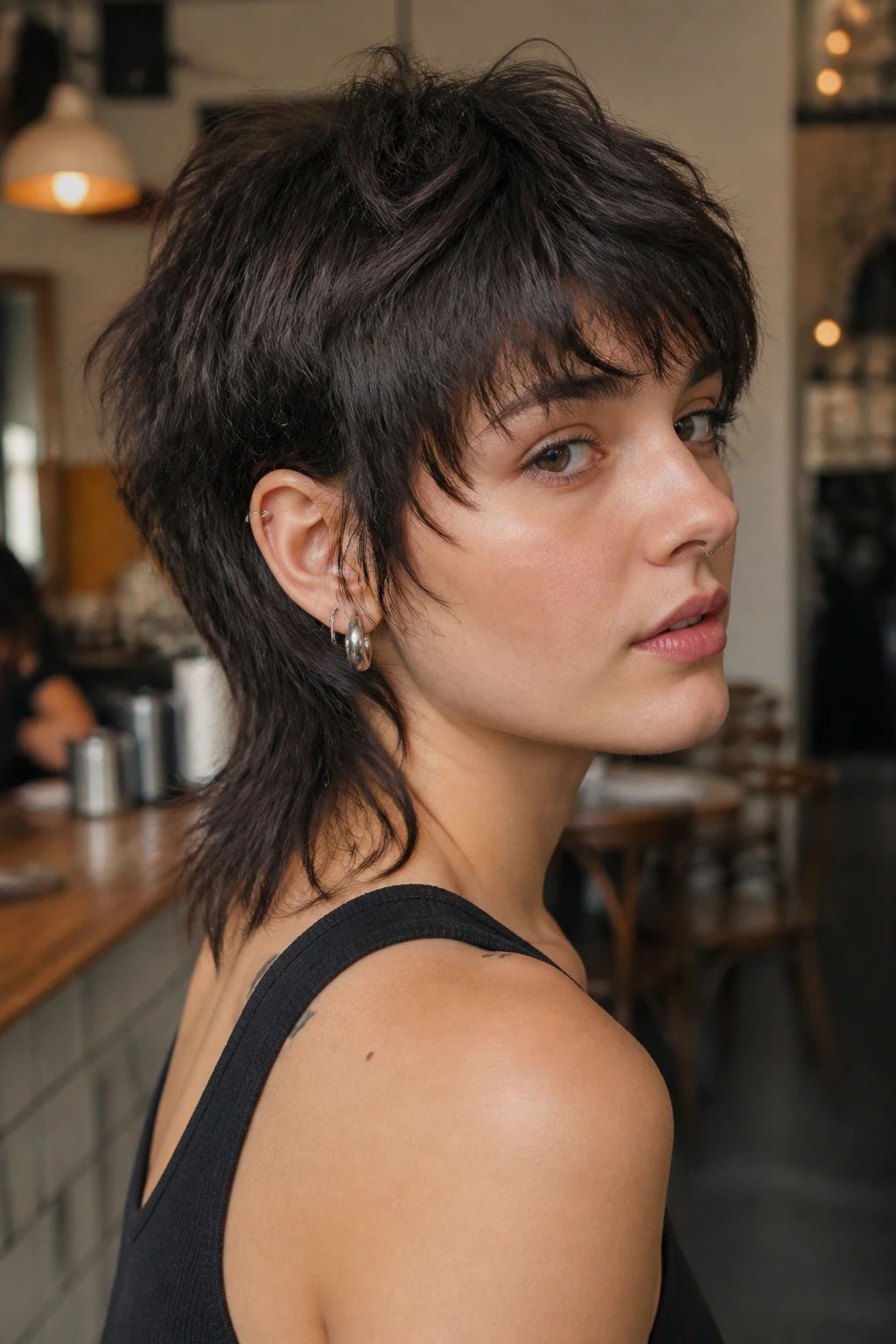
Some wolf cuts whisper. This one smirks. The mullet-leaning version keeps the crown and sides choppy, then leaves a sharper, more obvious tail at the nape. On thick hair, that contrast can look fantastic because the density supports the shape instead of collapsing it.
Not everyone wants that much attitude, which is fair. This is the cut for someone who wants the wolf cut to look unmistakable from the side and back. It has more edge than the soft versions, and it usually needs a stylist who understands how to keep the back narrow without making the top too round.
The nape area should stay tidy so the style doesn’t drift into mullet parody. That’s the line. Too soft, and you lose the point. Too sharp, and it stops feeling wearable.
If you already like bold earrings, strong brows, or a little eyeliner with your hair, this cut makes sense. It carries a look.
15. Mid-Length Wolf Cut With Invisible Weight Removal
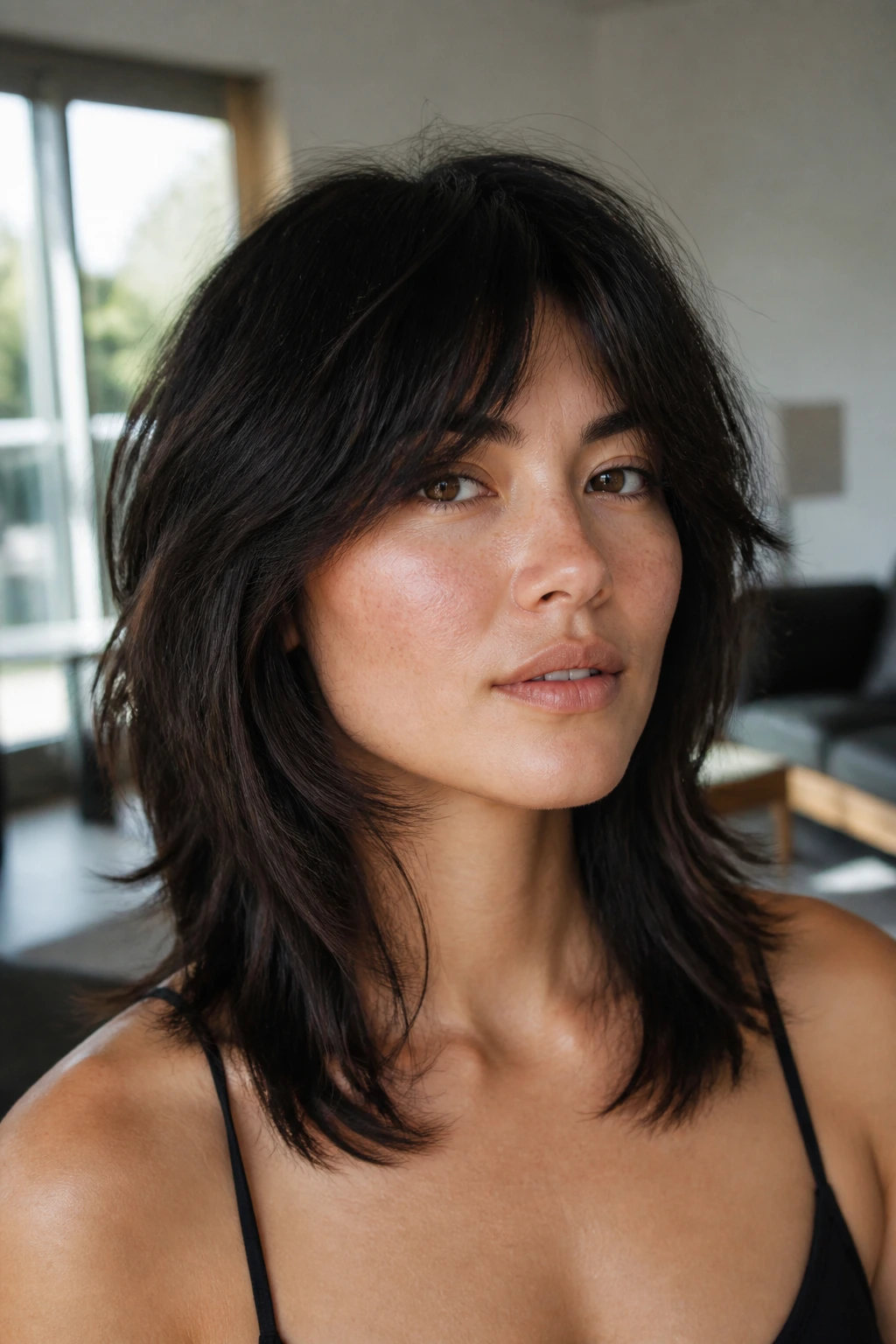
Why do mid-length wolf cuts work so well on thick hair? Because they leave enough length for the hair to settle, then hide the weight removal where it matters most. The layers live inside the shape, not all over the outside, so the haircut looks controlled even when it’s textured.
This version usually lands around the collarbone to upper chest. That length gives thick hair room to move without sprawling out. It also dries faster than waist-length hair, which is a quiet blessing no one talks about enough.
What to Ask Your Stylist
Ask for internal layers that start around the upper cheek or jaw, then connect them into a softer bottom edge. If you want bangs, keep them light and splitable. The haircut should bend when you move, not explode when you step into humidity.
It’s the kind of wolf cut that looks expensive because it has restraint. Not boring. Just measured.
16. Round-Face Wolf Cut With a Lifted Crown
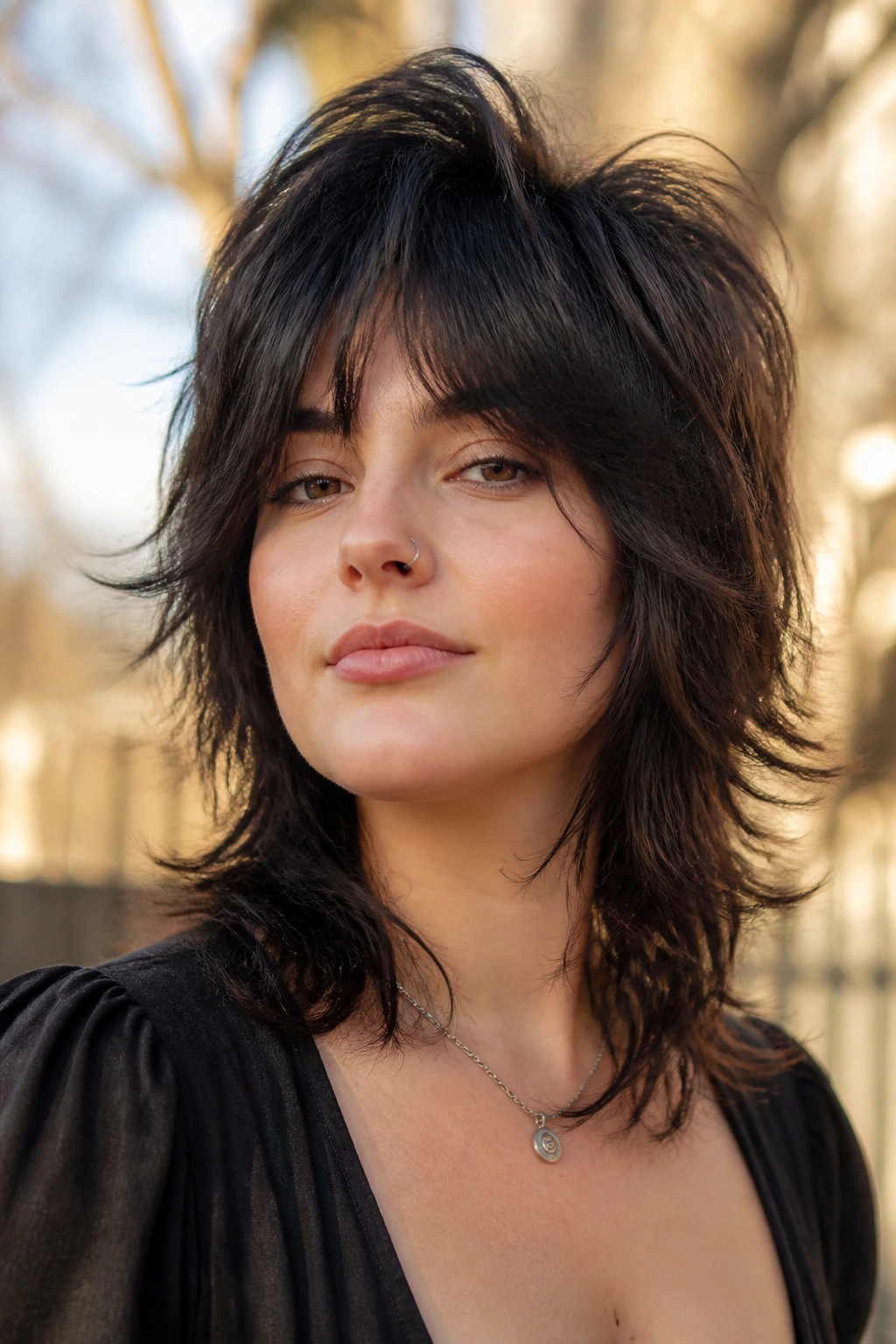
A round face and thick hair can be a tricky pair if the haircut is too full at the sides. The lifted-crown wolf cut fixes that by drawing the volume upward, not outward. The silhouette feels taller, which makes the face look more elongated without hard lines.
This is one of those cuts that can shift the whole balance of your features. The crown layers create height, the side pieces stay a little longer, and the front keeps soft movement around the cheeks. That balance keeps the face from feeling boxed in.
- Ask for volume at the top, not the widest point of the cheek.
- Keep the side layers a touch longer than the crown pieces.
- Use a root spray at the top for lift.
- Blow-dry the crown forward first, then back for separation.
If your face tends to read fuller when hair gets big, this version is a smart move. It uses shape, not just length, to do the flattering work.
17. Square-Face Wolf Cut With Soft Cheek Layers

Square faces often look best when the haircut softens the jaw without hiding it. That’s exactly where this wolf cut lands. The cheek layers break up the straight lines around the sides of the face, while the longer ends keep the overall look grounded.
I like this version because it avoids the hard, blocky feeling that can happen when thick hair is cut too bluntly around a strong jaw. The layers should sweep past the face, not stop right on it. That small detail changes the whole mood.
A little bend through the front pieces helps a lot. So does a side part if you want the shape to feel even softer. The cut should make the jaw look intentional, not masked.
This is also a nice choice if you want a wolf cut that still feels feminine and easy to grow into. It keeps the edge, but trims the sharpness.
18. Curly-Coily Wolf Cut Cut Dry
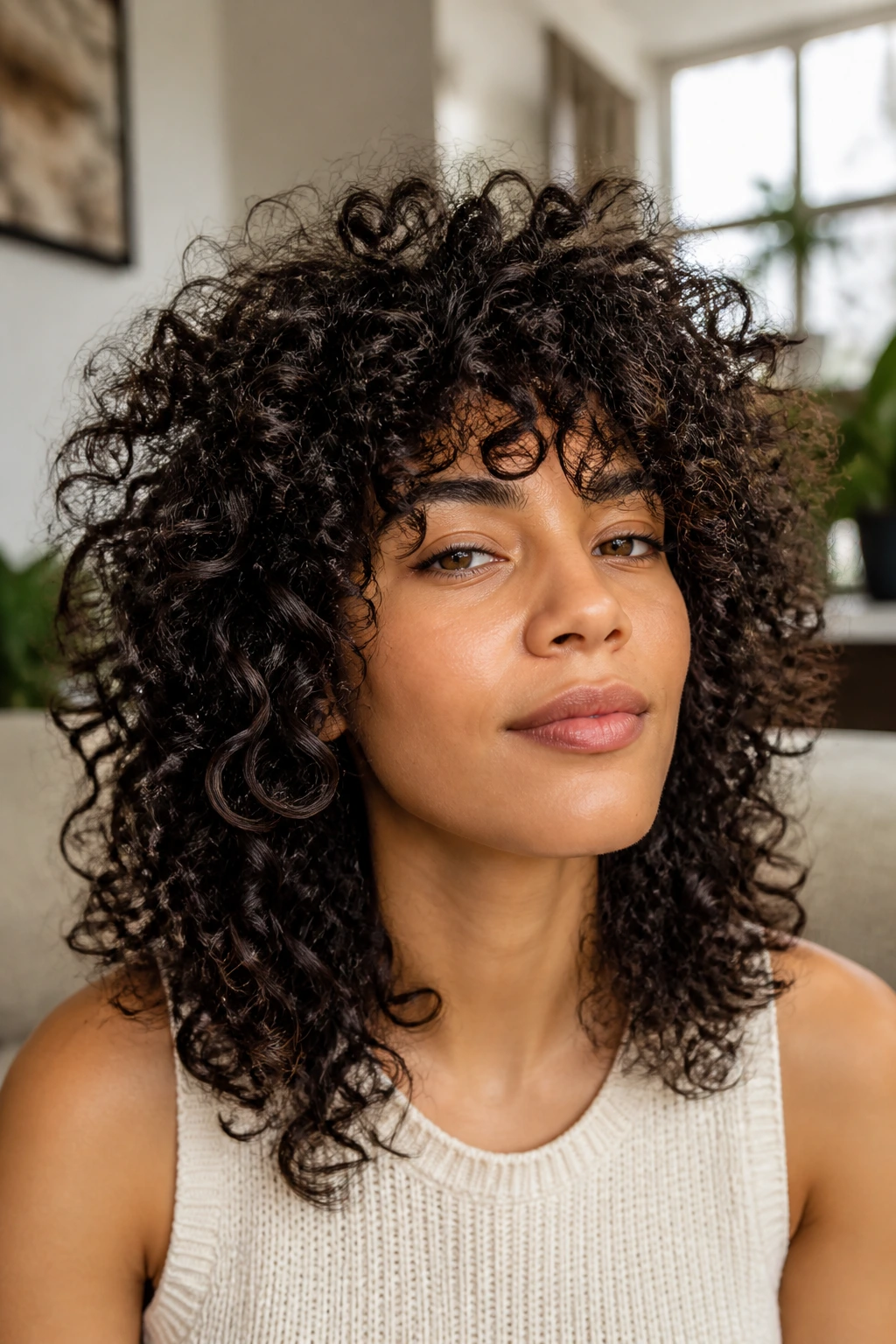
Curly-coily thick hair needs the wolf cut to be treated as a shape, not a pattern. If the hair is cut wet and stretched too hard, the layers can land in the wrong place once the curls shrink back. That’s how you end up with uneven volume and a top that looks too short for the rest of the head.
Dry cutting is often the safer bet here because it lets the stylist see where the hair actually lives. The crown can be shaped to rise without sitting flat, and the lower layers can keep enough length to avoid that boxy triangle effect. The goal is movement with control. Not chaos.
This version works especially well when the coils are dense and springy, since the wolf cut can remove bulk while keeping the silhouette lively. A curl cream or gel with a light cast helps hold the layers in place. Too much oil, though, and the whole thing can droop.
If shrinkage is part of your daily life, this is not a haircut to improvise.
19. Low-Maintenance Air-Dry Wolf Cut
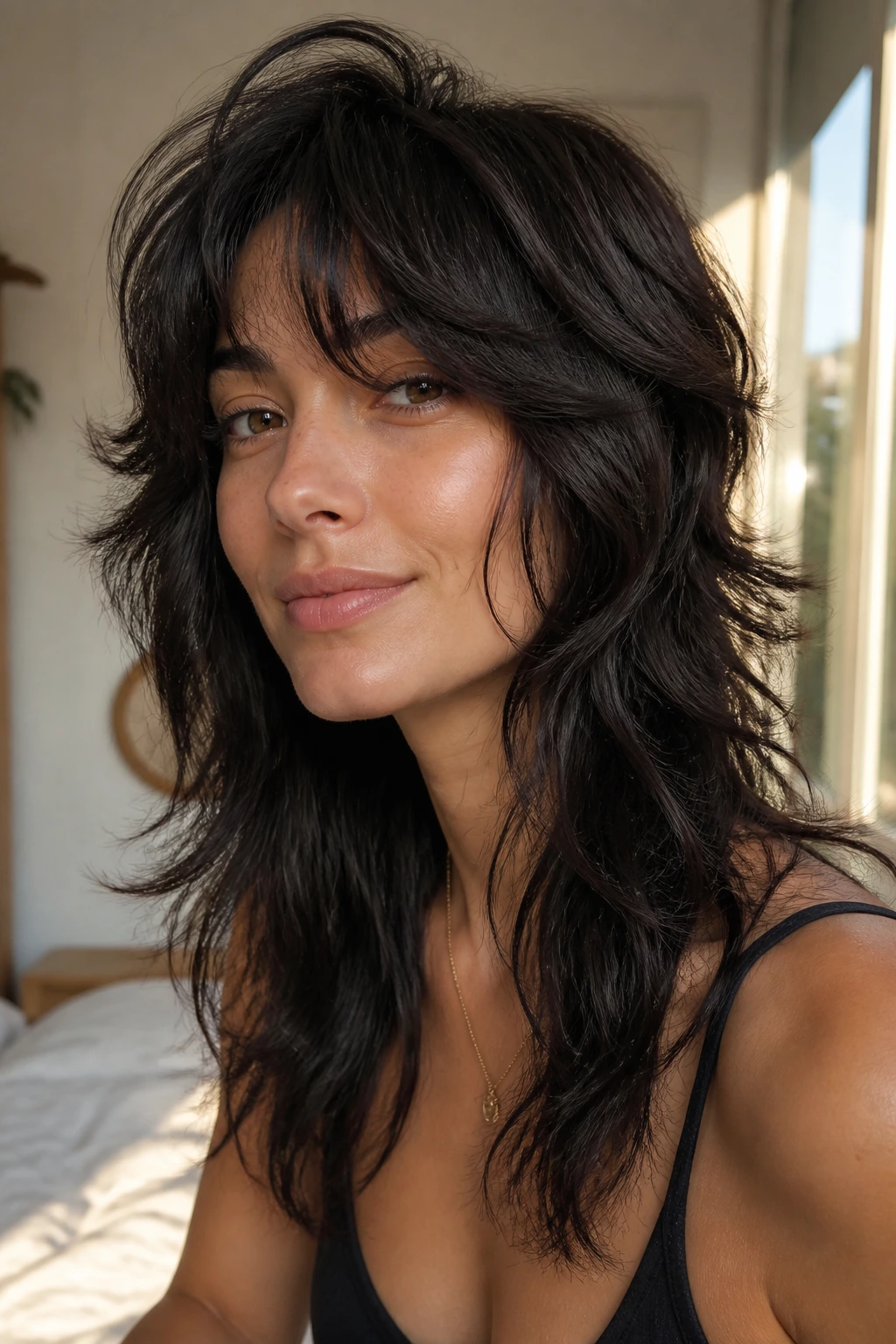
If you want a wolf cut that looks good without a long styling session, build the shape around air-drying from the start. Thick hair can hold a lot of texture on its own, so the right cut should give you movement even when you do almost nothing to it. That’s the entire appeal here.
This version usually keeps the top layers soft, the face-framing pieces light, and the bottom a little broken so the hair doesn’t dry into one big mass. A leave-in conditioner and a small amount of mousse can be enough. Scrunch, leave it alone, and let the shape appear.
What Makes It Easy
- The layers should not be too short at the crown.
- The ends need enough softness to dry without a hard line.
- Product should be light enough to avoid flattening the lift.
- A side part can help the hair fall into place faster.
The best air-dry wolf cuts look like the hair has personality before you even touch it. That’s the real win.
20. The Grow-Out-Friendly Wolf Cut

A good wolf cut should not fall apart after six weeks. This version is built to grow gracefully, which matters a lot for thick hair because dense layers can start to feel bulky as they lengthen. The trick is keeping the shortest pieces soft enough that they blend into the longer ones instead of creating a shelf.
I think this is the smartest place to land if you’re unsure how dramatic you want to go. The crown gets movement, the face gets framing, and the lower layers stay long enough that the shape can survive between trims. It still looks like a wolf cut, but it won’t punish you the second your salon appointment gets pushed back.
This is also the cut I’d suggest to anyone who loves texture but hates high-maintenance hair. You can wear it messy, bend it with a brush, or let it air-dry and still have a shape worth keeping. Thick hair likes that kind of flexibility.
The best versions of this haircut do not chase a perfect finish. They leave room for your hair to move, settle, and look better the second day than it did on the first. That’s the part people remember.
