



A modern mullet haircut for women is not the joke version people remember. The shape has changed. What used to read as a dare now shows up with soft fringe, better layering, cleaner necklines, and enough movement to make flat hair look alive.
That’s the real appeal. A good mullet gives you crown lift, face-framing pieces, and a longer back section without forcing you into a helmet of one-length hair. It can look polished, messy, punky, airy, curly, or sharp—sometimes all at once if the cut is done well. The wrong version looks hacked at. The right one looks intentional, even when it’s barely styled.
Most modern mullet haircuts for women depend on three things: where the shortest layers land around the temple or cheekbone, how much weight is removed through the crown, and how long the perimeter stays at the nape. Get those wrong and the whole thing collapses into a weird shag. Get them right and the haircut does a lot of the work for you.
1. Soft Shag Mullet
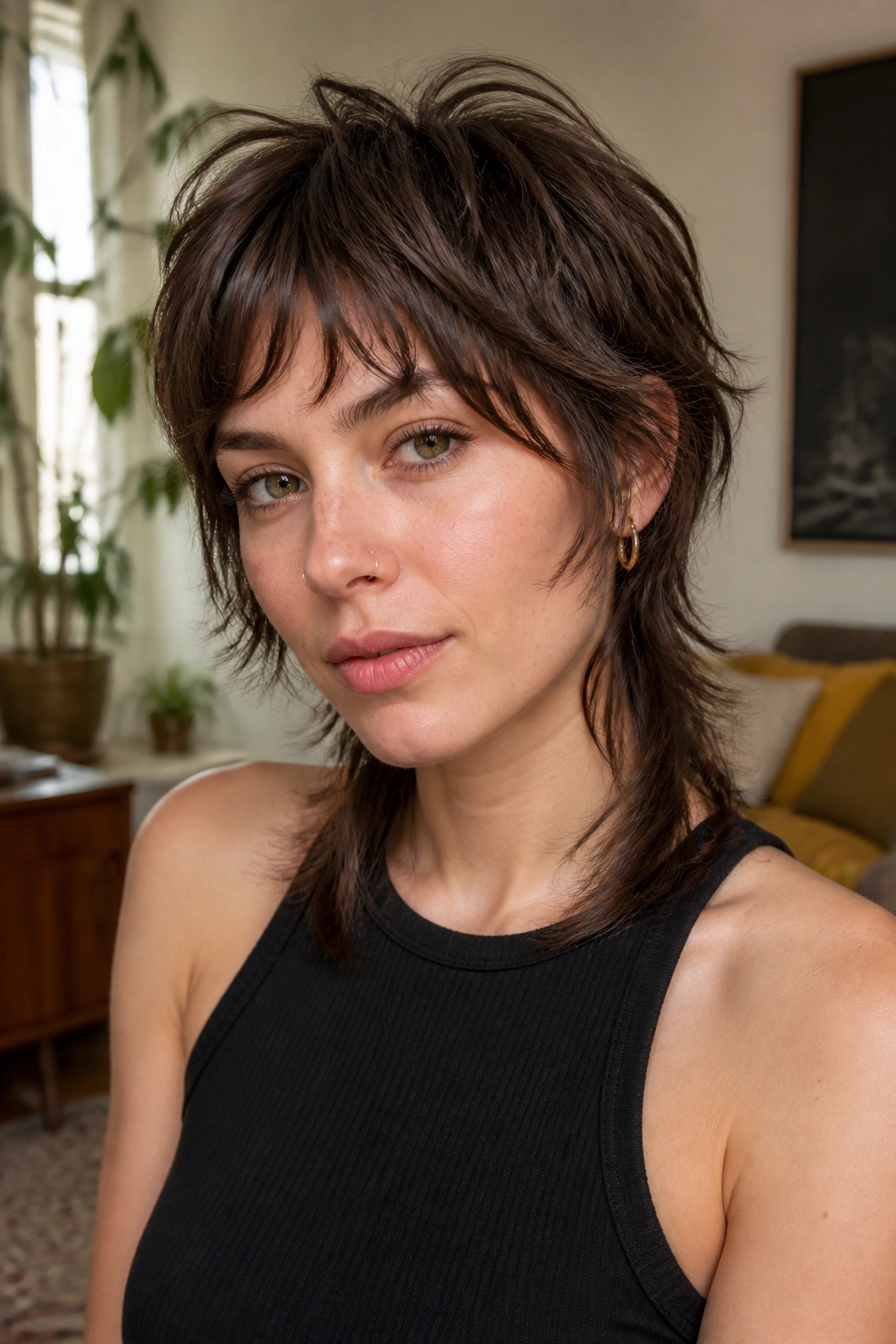
This is the easiest place to start if you want the mullet shape without jumping straight into something dramatic. The soft shag mullet keeps the crown light, adds movement around the face, and leaves enough length in the back to read as a mullet instead of a shag that lost its way. It has attitude, but not too much. That matters if you want something wearable with a T-shirt, a blazer, or a silk dress.
Why It Works
The magic is in the blend. Ask for internal layers through the crown, cheekbone-length pieces in front, and a nape that sits a few inches longer than the sides. The cut should feel broken up, not choppy for the sake of being choppy. A good stylist will leave enough weight at the perimeter so the shape doesn’t puff out like a mushroom.
This version is kind to most hair types, especially medium-density hair that needs a little lift. Air-drying works. So does a quick blowout with a round brush and a dab of mousse at the roots. If your hair goes flat fast, this cut helps more than most layered styles because the shortest pieces are doing the heavy lifting up top.
Best detail to ask for: a soft transition from the crown to the nape, not a blunt disconnect.
2. Curly Mullet with Rounded Fringe
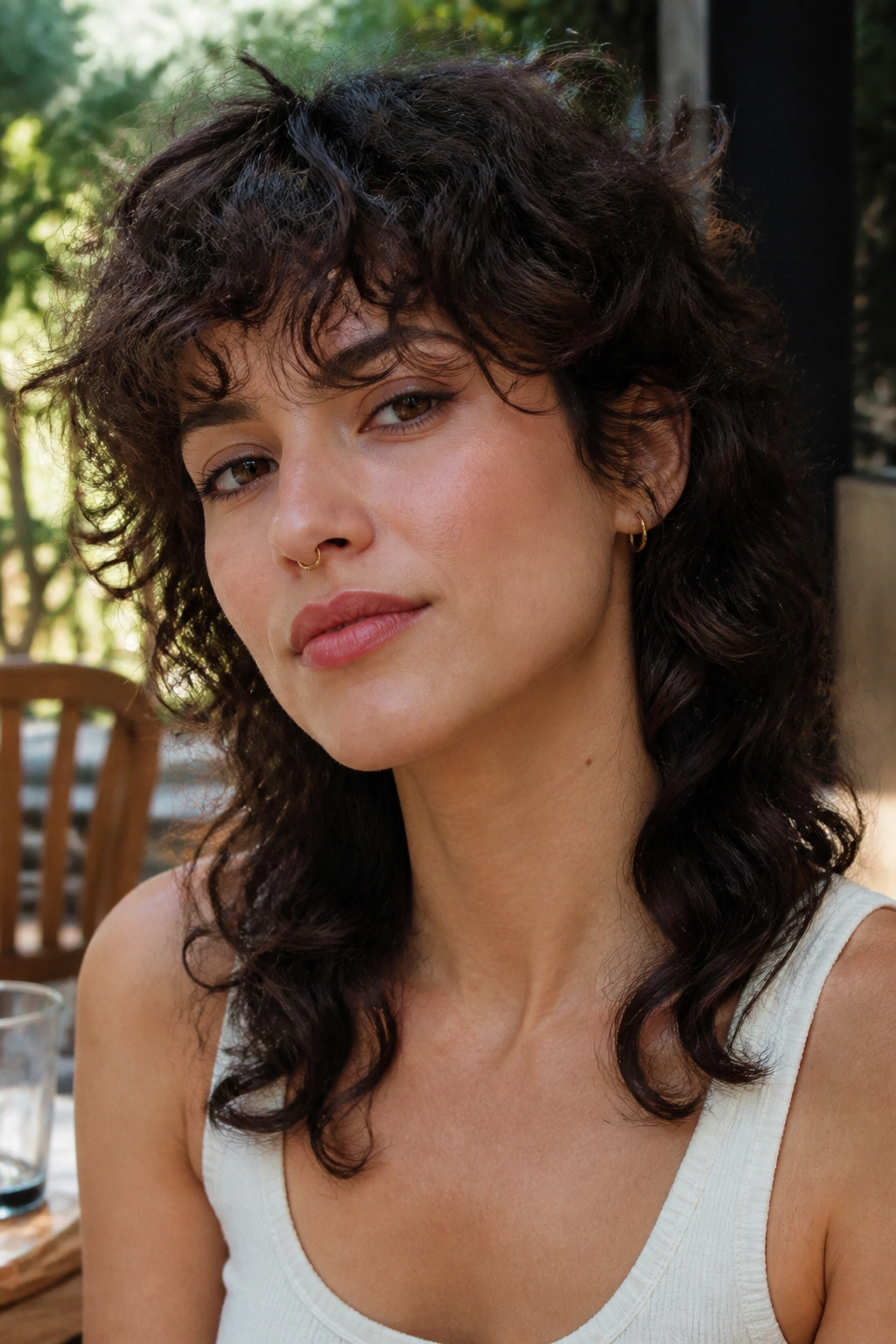
Curly hair and mullets are a natural match when the cut respects shrinkage. A curly mullet with a rounded fringe keeps the front soft and the back full, so the whole shape follows the curl pattern instead of fighting it. That’s the difference between “cute shape” and “why is my hair doing that?”
Cutting curls dry or at least mostly dry helps a lot here. Curls spring up after they’re cut, and the fringe can jump an inch or two faster than people expect. If your stylist cuts the bang area too short, you’ll spend weeks waiting for it to settle. Nobody needs that kind of regret.
The best version keeps the fringe rounded, not straight across. It should graze the eyebrows or sit just above them, then blend into cheekbone layers that widen the face softly. The back can stay layered enough to show the curl pattern, but not so thinned out that the ends turn stringy.
One good rule: if your curls are tight, leave the fringe longer than you think.
3. Bixie Mullet
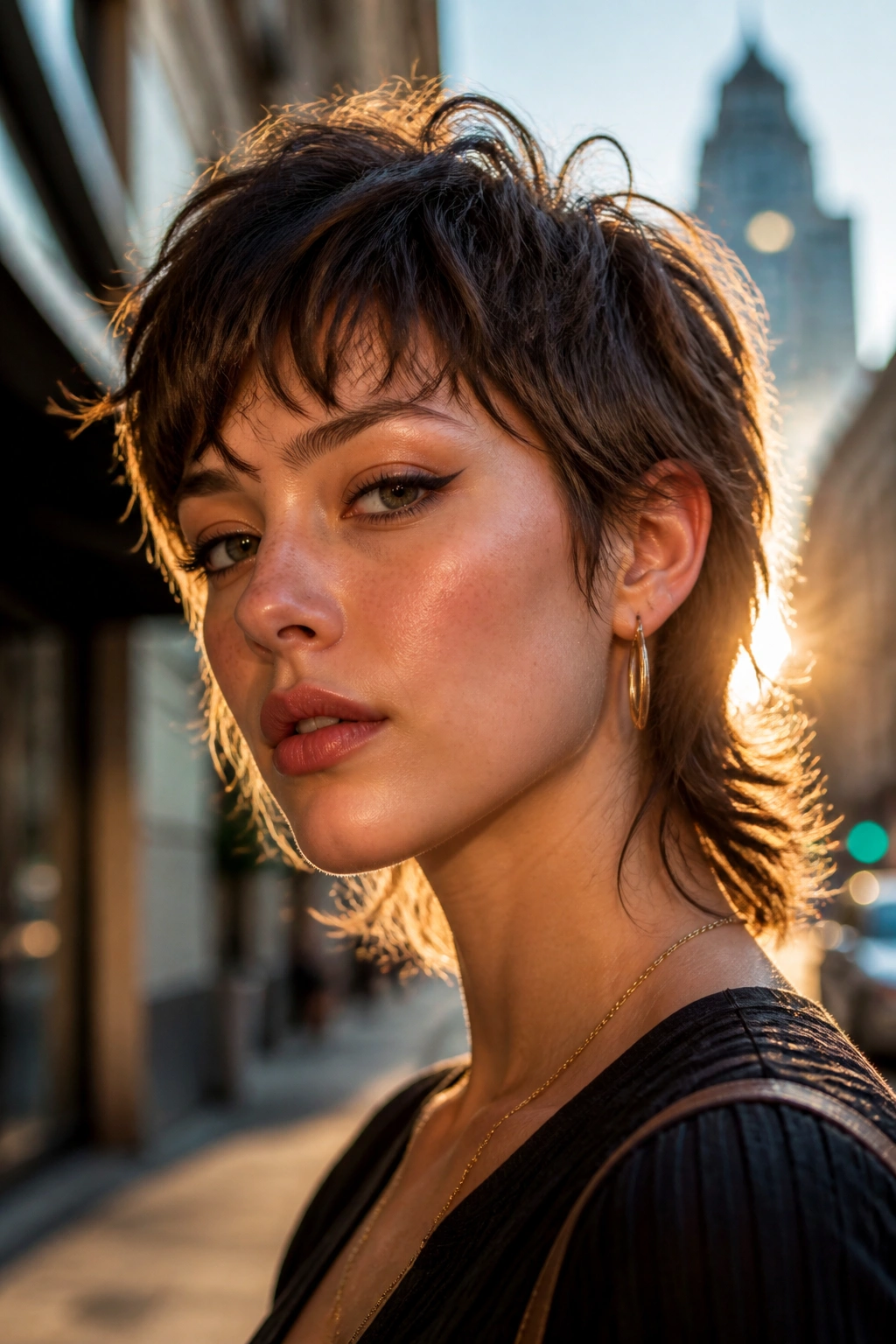
Can a pixie and a mullet share the same haircut? Absolutely. The bixie mullet is the short, cheeky cousin of the classic shape, with cropped sides, a bit more length in the back, and enough softness on top to keep it from looking severe. It’s a good choice if you want something light around the ears but still want a little tail in the back.
Best for Fine Hair
Fine hair often looks fuller when it’s short, and this cut takes advantage of that. The crown gets a little lift, the perimeter stays narrow, and the nape length creates a line that makes the whole head look more intentional. No heavy layers. No over-thinning. Just enough texture to keep the haircut moving.
Ask for piecey top layers, ears that are softly exposed rather than shaved clean, and a back that lands around the top of the neck or just below. A little styling cream goes a long way. Too much product, and the whole shape flattens out fast.
This is the kind of cut that looks sharp with glasses, bold earrings, and short collars. It also grows out in a useful way, which is rare for shorter hair. A trim every 5 to 7 weeks keeps it neat.
4. Wolf Cut Mullet
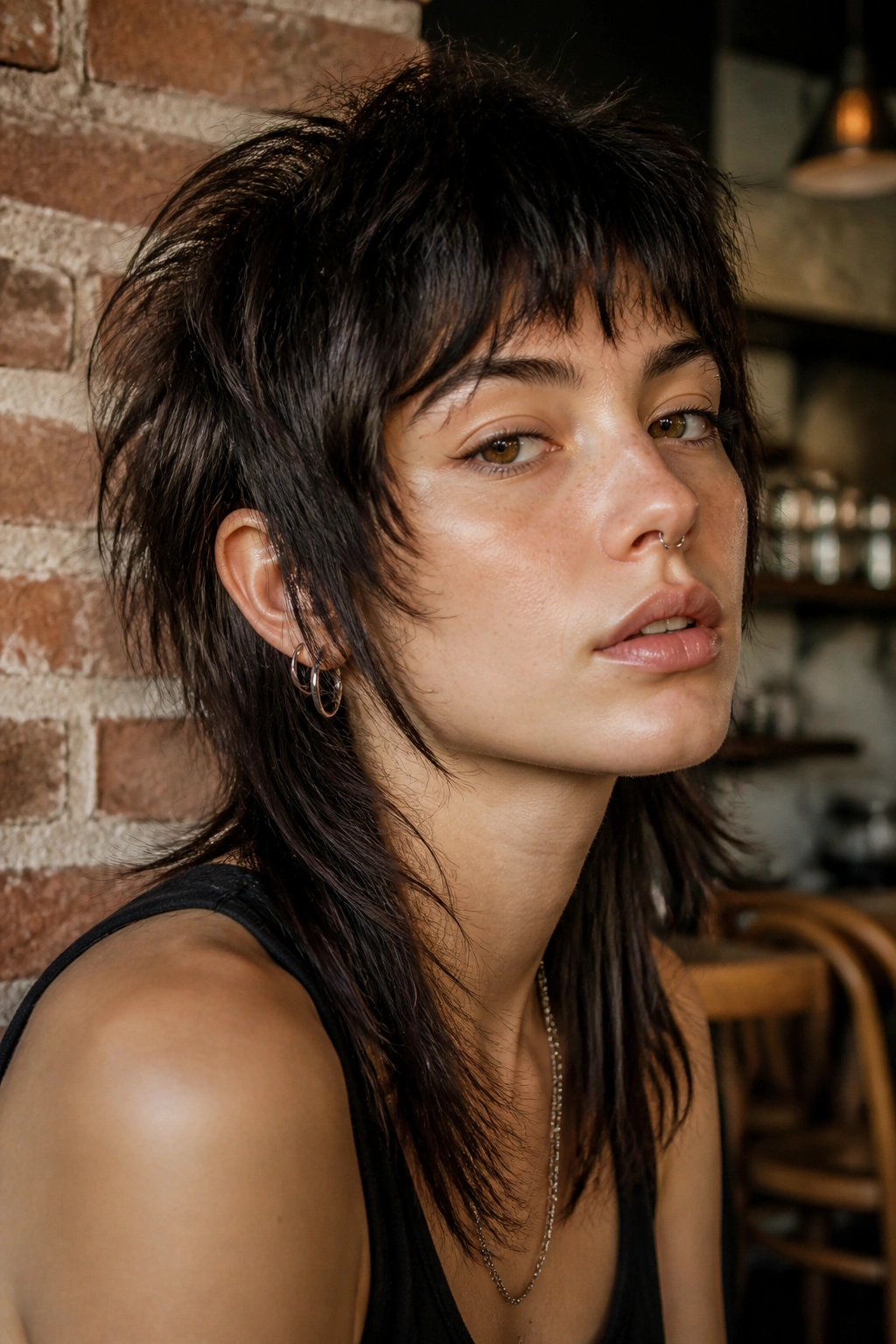
You know that haircut that looks like you didn’t try too hard, but somehow still has shape? That’s the wolf cut mullet. It sits between a shag and a mullet, with a rougher crown, sliced-up layers, and a longer back that keeps the silhouette from turning into a standard layered bob.
The reason people keep coming back to this one is simple. It does messy on purpose. The top has lift, the face frame has movement, and the ends are broken up enough to feel lived-in without looking scruffy. On wavy hair, it almost styles itself. On straight hair, you get more of that edgy, jagged line that reads modern right away.
Key details to ask for:
- Shorter, choppy layers at the crown
- Pieces that fall around the cheekbones
- A longer nape that still moves
- Light texturizing, not a thinning shears frenzy
A wolf cut mullet works best when the stylist keeps some weight in the ends. Too much removal and the shape starts to fray. Too little and you lose the bite. That narrow middle ground is the whole haircut.
5. Sleek Razor Mullet
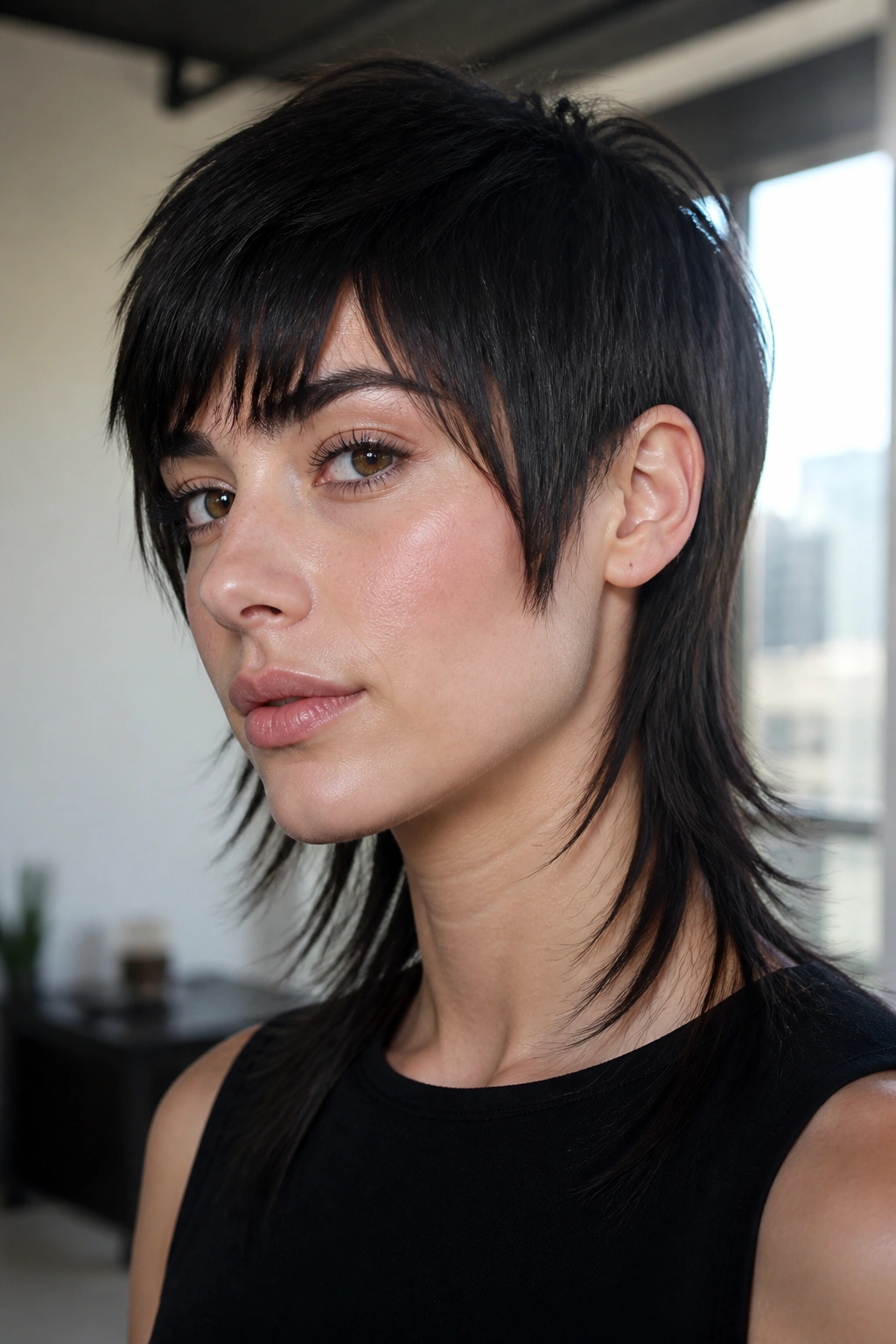
A sleek razor mullet is for the person who likes the mullet idea but wants cleaner edges and less chaos. Unlike shaggy versions, this one feels sharper, with smoother top layers and a back that hangs in a controlled line. It looks especially good on straight hair or hair that can be blown out with a little bend at the ends.
Razor cutting changes the mood. The layers feel lighter, and the finish has a bit of swing instead of a blunt block. That can be flattering if you want the haircut to skim the jaw and neck rather than sit heavy around them. It also makes the fringe easier to wear if you prefer a curtain bang or a side sweep.
This cut pairs well with a round brush, a light heat protectant, and a smoothing serum used only on the mid-lengths and ends. Not the roots. Never the roots. A pea-size amount is enough for most hair lengths, and more than that starts to separate the layers.
If you like a mullet that can pass for polished at work and a little rebellious after dark, this is the one.
6. Long-Length Mullet

Some people want the shape without giving up length. Fair enough. A long-length mullet keeps the back well past the shoulders, sometimes all the way to the mid-back, while the face-framing sections and crown stay shorter enough to create that classic uneven silhouette. It is one of the easiest ways to test drive the mullet idea without chopping everything off.
The trick is balance. If the front is too short and the back too long, the haircut can feel disconnected in a bad way. If the layers are too subtle, you just get long hair with a few face pieces and no real shape. The sweet spot usually lands at collarbone layers in front and a longer back that moves when you walk.
It’s a nice option for wavy hair that tends to grow heavy around the ends. The shorter crown pieces keep the top from lying flat, and the long back gives you ponytail length when you need it. That practical side matters more than people admit.
Then it swings. That’s the part that sells it.
7. Micro Mullet
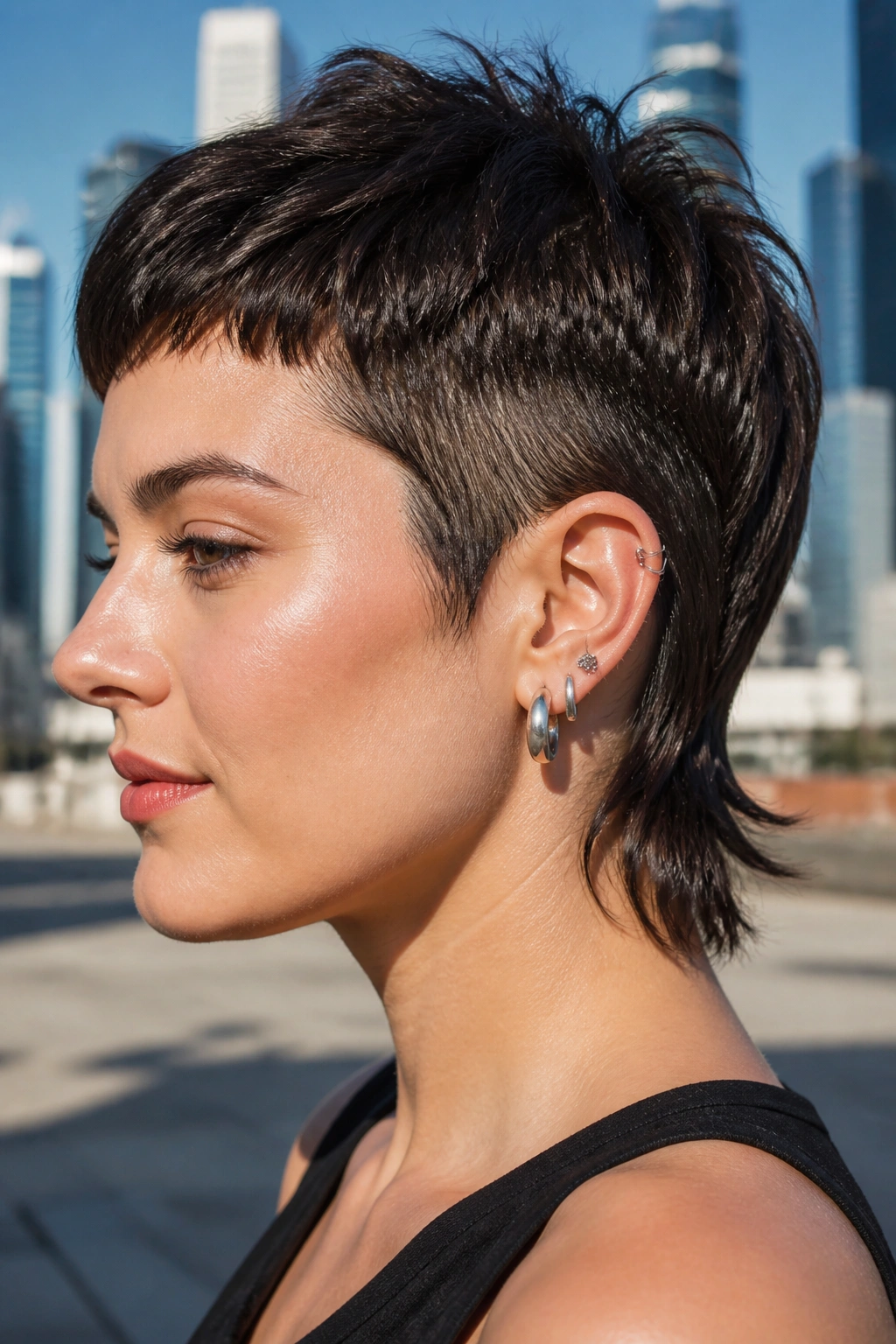
Short hair does not rule out a mullet. The micro mullet is cropped, sharp, and a little mischievous, with the back left just long enough to create a tail while the sides stay tight and neat. It can look almost like a grown-out pixie from the front, which is part of the appeal.
Where the Shape Lives
The shape sits mostly in the crown and nape. You want some lift on top, a narrow side profile, and a small but real length difference at the back. If the gap between the shortest and longest pieces is too big, the cut stops feeling modern and starts feeling costume-y. Tiny changes matter here.
What to Ask For
- A soft taper around the ears
- Short, feathered crown layers
- A nape that lands below the natural hairline
- Minimal bulk so the top doesn’t collapse
This is not a lazy haircut. It needs trims every 4 to 6 weeks, and it looks best with a little texture paste or matte cream. The reward is a cut that frames the face fast and never feels heavy.
8. Choppy Blonde Mullet
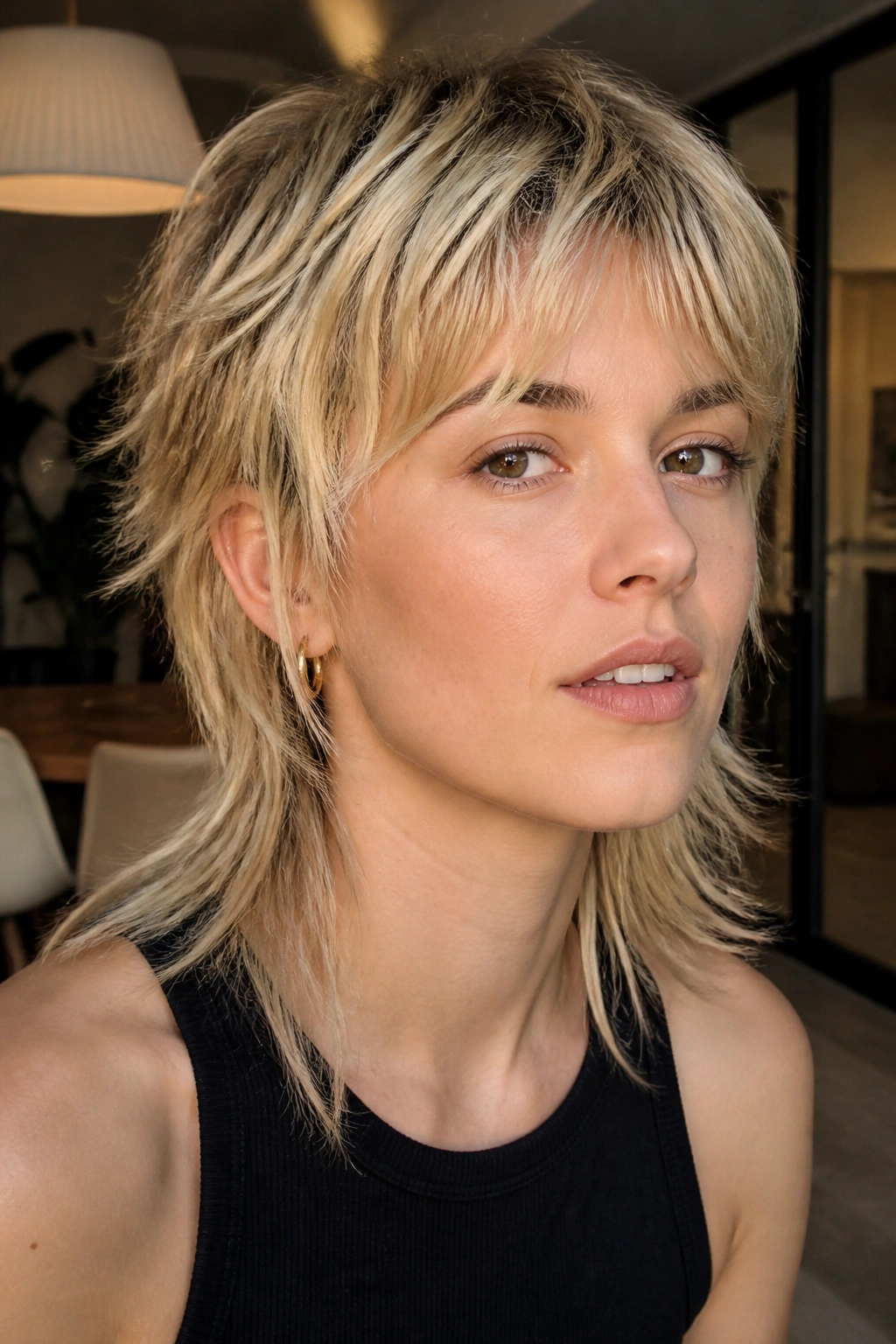
Color can change a mullet more than people expect. A choppy blonde mullet throws the layers into sharper relief, especially if the blonde has dimension instead of one flat tone. Highlighted pieces catch the layering around the crown and fringe, so the haircut reads as intentional from across the room.
That said, bleach and bluntness are a bad mix if the hair is already fragile. The cut should support the color, not make the ends look fried. Ask for a shape that keeps some density at the perimeter, then let the blonde do the visual work. A soft root shadow helps, too, because it gives the crown a little depth and stops the style from looking overprocessed.
This version is good when you want the haircut to feel loud without needing a lot of styling. A messy wave, a sea-salt mist, and a few bends with a flat iron are enough. The layers do the rest. Straight hair will show the choppiness more clearly, while wavy hair will make the whole thing feel more relaxed.
My honest take: if the blonde is too even, the haircut can look flat. Dimension saves it.
9. Curtain Bang Mullet
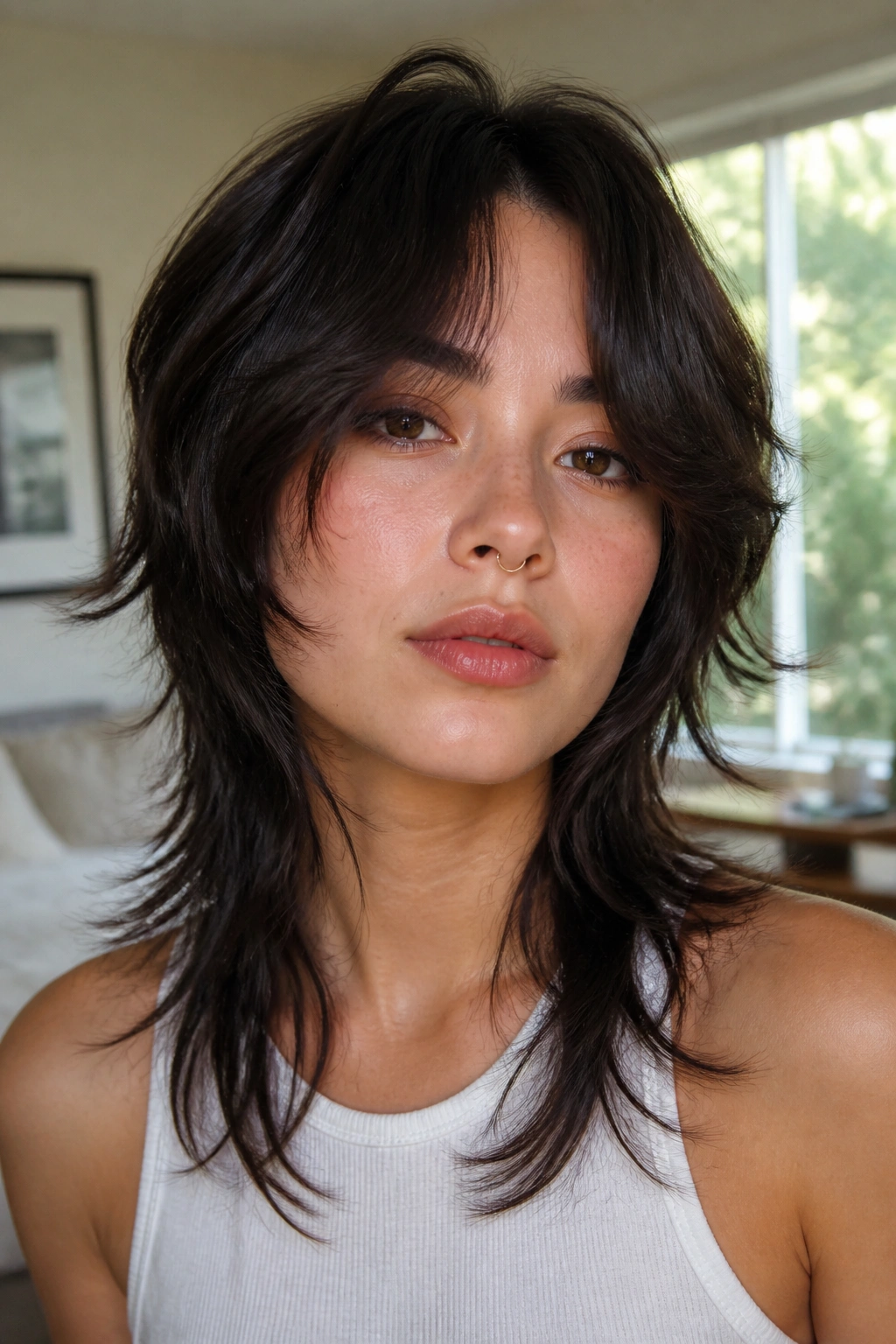
Want the face-framing of curtain bangs without losing the mullet edge? The curtain bang mullet does exactly that. The fringe splits at the center, sweeps away from the face, and flows into the side layers so the front never feels boxed in. It’s a smart choice if you like movement around the eyes and cheekbones.
How the Fringe Should Fall
A good curtain bang should open around the bridge of the nose or just below it, then widen as it reaches the jaw. If the shortest point is cut too high, the whole thing can spike up awkwardly. If it’s too long, you lose the lift that makes curtain bangs worth having in the first place.
This cut works especially well with blow-drying because the direction matters. Dry the fringe away from the face first, then let it settle. That small twist creates the soft bend people want but rarely get on the first try. Keep the back layered enough to move, but not so shaggy that the bangs and the nape fight each other.
It’s a flattering option for rounder faces and anyone who wants a little softness near the forehead.
10. Natural Curl Mullet
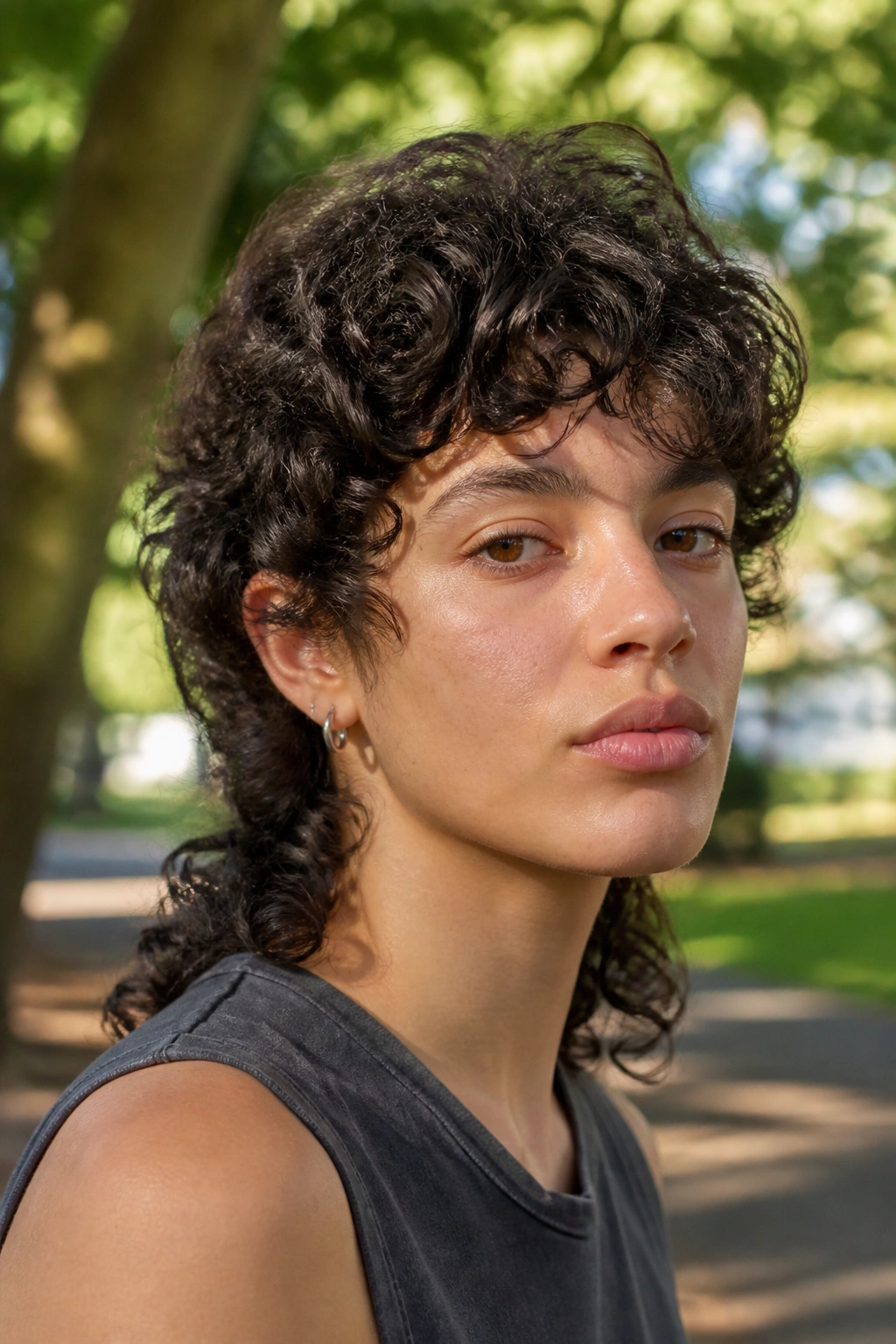
Picture coils that are full at the crown and shaped at the sides instead of swollen everywhere. That’s the point of a natural curl mullet. The cut respects curl pattern first, then adds the mullet shape second, which is the only order that makes sense if you want it to look good outside a salon chair.
With curls, the crown often needs careful lifting so the head doesn’t look triangular. The nape, meanwhile, can keep more length and weight so the shape stays grounded. That contrast is what gives the style its edge. Dry cutting can help a lot because each curl shows where it actually lands, not where it pretends to land while wet.
A diffuser is useful, but you do not need to hover over the hair forever. Scrunch in a curl cream, diffuse until the roots are dry and the curls are set, then leave the ends alone. The less you disturb them, the better the shape holds.
This version is especially nice if your curls already have personality. The cut should listen to that, not overpower it.
11. Feathered Mullet

Feathering used to have a certain old-school vibe, and honestly, that’s why the modern version works so well. A feathered mullet softens the edges, lifts the crown, and gives the layers a lighter fall than a heavy shag. It is the mullet for people who want motion more than drama.
Unlike a blunt or heavily texturized cut, feathering uses softer graduation. The ends don’t look hacked apart; they look sliced into shape. That makes the haircut easier to wear with brushed-out waves, a loose blowout, or even tucked behind one ear. It also suits medium-density hair that needs movement but not too much removal.
What to Watch For
If the stylist over-feathers the hair, the ends can get wispy in a thin, tired way. You want air, not fray. A light round-brush finish at the front and a gentle bend through the back keeps the shape from collapsing. A little mousse at the root helps hold that lifted feel.
This is one of those cuts that looks quieter in photos than it does in motion. That’s a good thing.
12. Fine-Hair Mullet
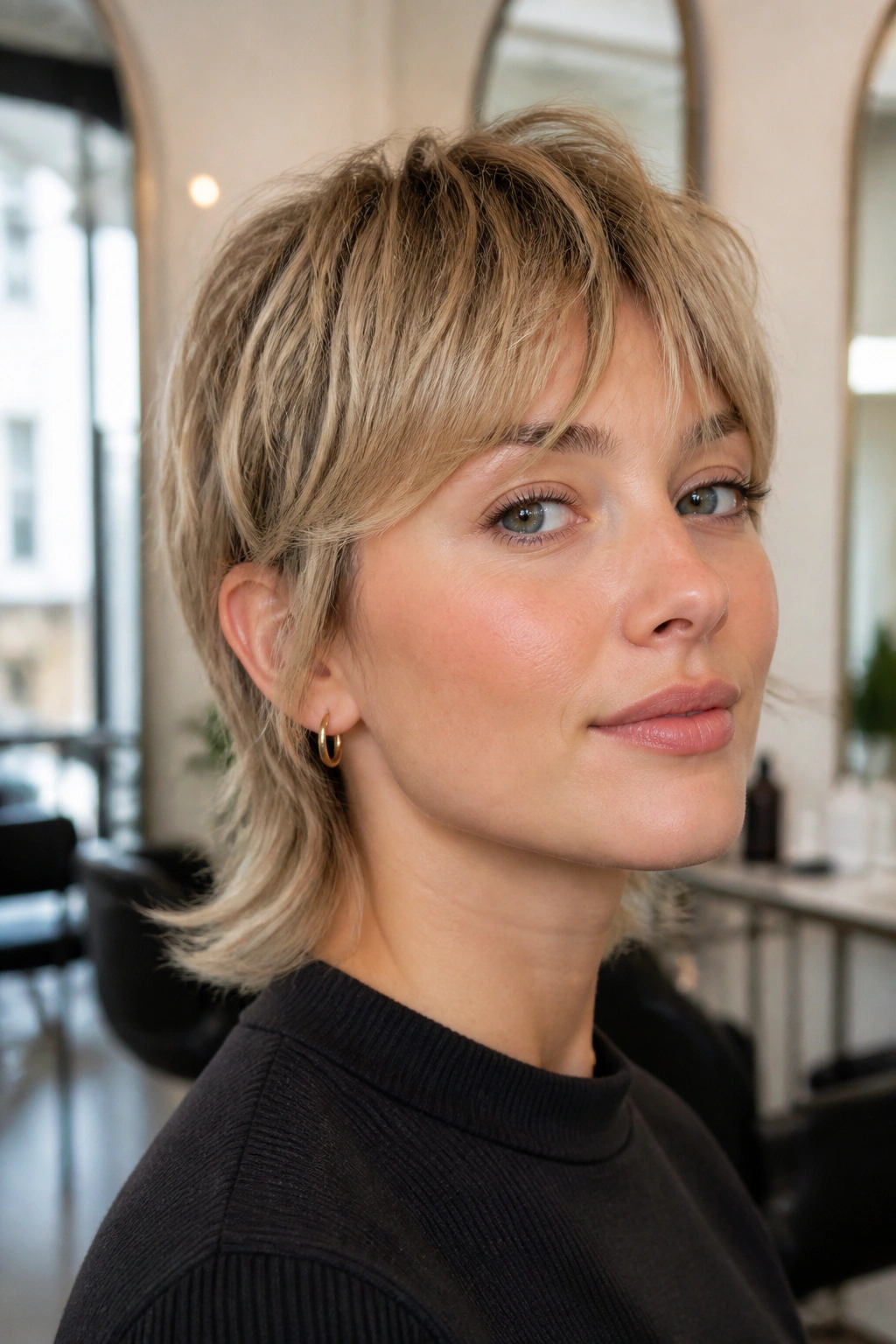
Fine hair can wear a mullet beautifully if the cut respects density. The mistake people make is asking for too much texturizing, which strips away the little bit of body fine hair already has. A fine-hair mullet should keep the layers controlled, the perimeter a touch blunt, and the crown lifted just enough to make the shape visible.
The best approach is often a shorter overall length with a soft nape. That gives the hair a chance to sit with some weight instead of drooping into strings by noon. A slightly stronger fringe can also help because it creates the illusion of fullness at the front. The back should still move, but it should not be thinned to death.
Root spray, mousse, or a light volumizing foam can make a real difference here. Put the product at the roots, not the ends, and rough-dry with your fingers before finishing with a brush if you want a smoother result. A one-inch curling iron used only on the top layers can fake a lot of body in a hurry.
Avoid this: aggressive razor cutting on hair that already feels soft or slippery.
13. Thick-Hair Mullet
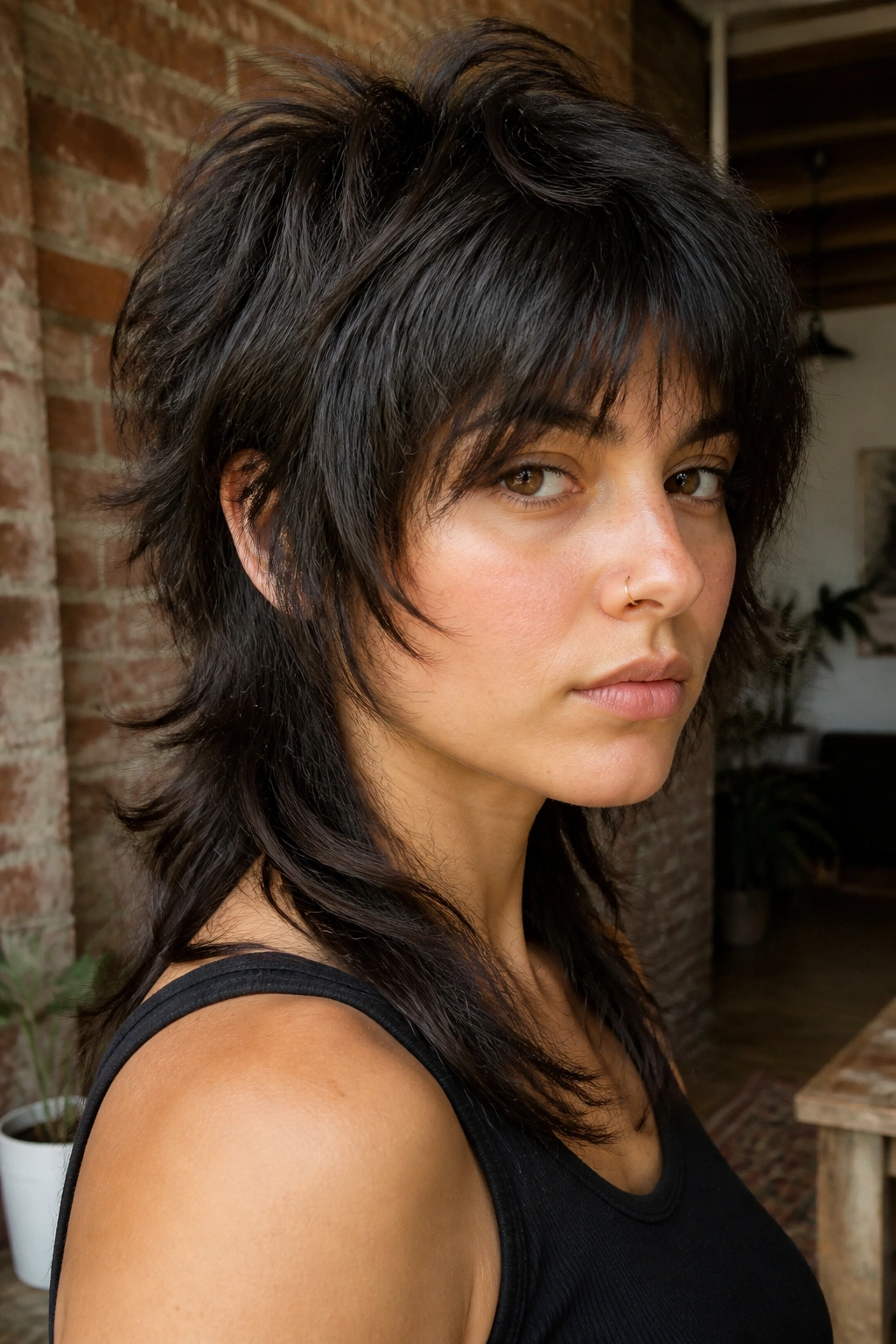
Thick hair brings its own problems. Too much weight and the silhouette turns boxy. Too much thinning and the shape goes puffy in the wrong places. A thick-hair mullet works when the stylist removes bulk in the right spots and keeps enough structure around the perimeter to hold the line.
What to Ask For
- Internal layers through the crown and upper back
- Soft debulking near the occipital area
- A face frame that drops cleanly around the cheekbones
- A nape that stays full, not shredded
That balance matters because thick hair can swallow detail. You want the movement to show, not disappear under its own weight. A dry cut can be useful here since it shows where the hair naturally bulks up, especially if your texture is wavy or coarse.
What Helps at Home
A blow dryer with a nozzle, a round brush, and a heat protectant are enough for most days. Keep the brush moving. If you overwork thick hair with too many passes, the layers can flip out in weird places. A touch of styling cream through the mids can keep the ends together without flattening the crown.
This version should feel light, not airy in a weak way. There’s a difference.
14. Punk Undercut Mullet
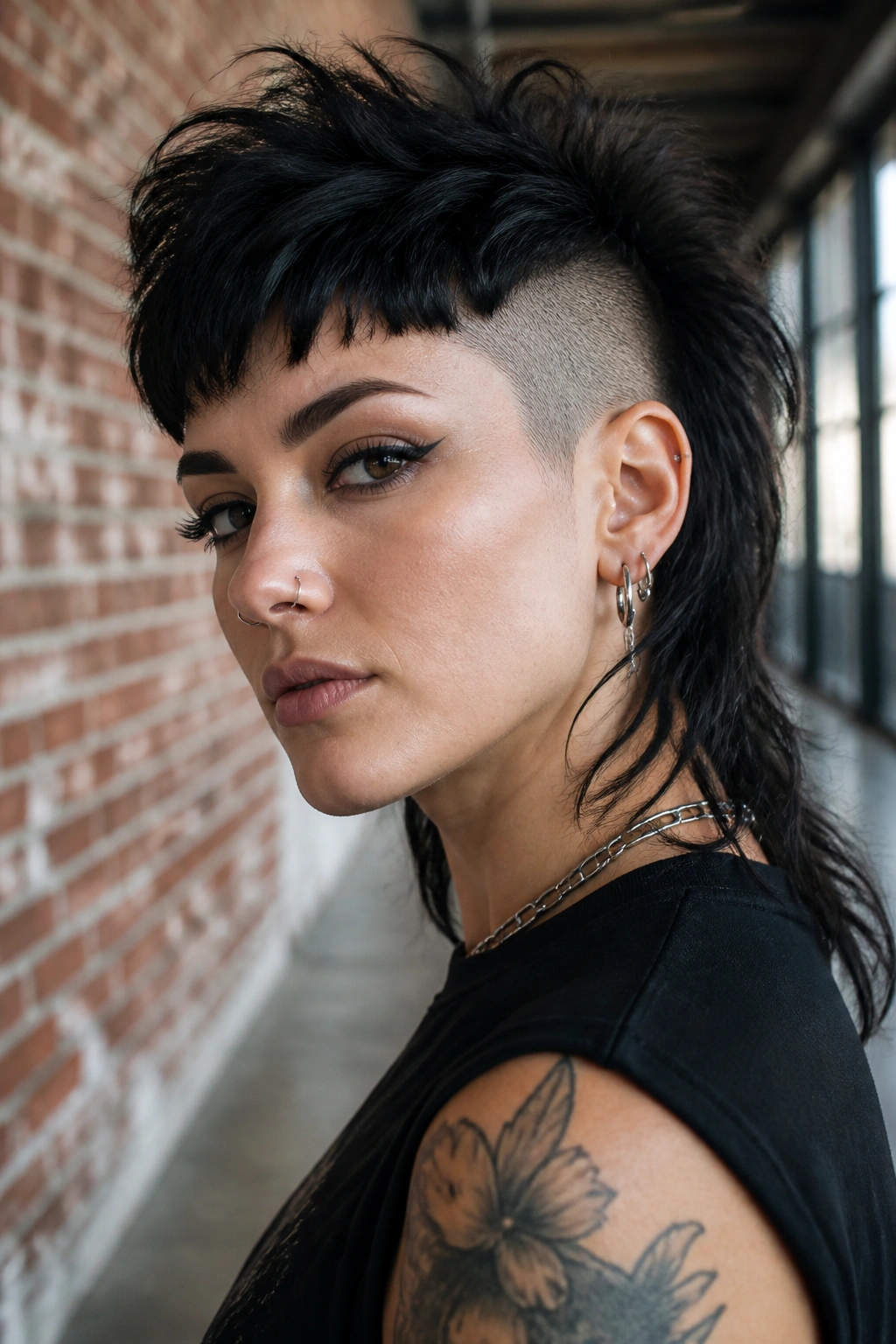
This one is not shy. A punk undercut mullet brings in shaved sides, a tight nape, or both, then leaves the top and back long enough to create a hard contrast. It’s the closest thing on this list to a statement haircut, and it knows it.
The undercut changes everything because it strips away bulk and makes the remaining length look even more deliberate. Pair that with a sharp fringe, color blocking, or a vivid dye job, and the whole style turns graphic fast. If you like a haircut that reads with a leather jacket and still holds up with a white tee, this is your lane.
There’s a catch. Maintenance is real. Shaved sections grow in fast, and the outline starts to blur after a couple of weeks. If you hate regular touch-ups, skip this one. If you like a little edge and don’t mind a salon visit now and then, it can be a blast.
A strong neckline and clear contrast are what make it work. Without those, it just looks unfinished.
15. Soft Wolf Mullet

You want the drama, but not the hard lines. That’s where the soft wolf mullet earns its place. It keeps the lived-in crown and long back of a wolf cut, then softens the perimeter so the style feels more wearable and less like it escaped a music video.
The haircut usually has blended layers around the face, a little extra movement through the crown, and a back section that still shows length when you turn around. The difference is in the finish. Instead of jagged edges everywhere, the cut feels more melted together. That makes it a nice choice if you like shape but don’t want your hair to scream on day one.
A light wave cream or a few passes of a diffuser can bring out the texture. You do not need a heavy routine here. The haircut already contains the attitude. People often think softness means boring. It doesn’t. It just means the haircut can move between settings.
If your style leans casual, this one fits without trying too hard.
16. Asymmetrical Mullet
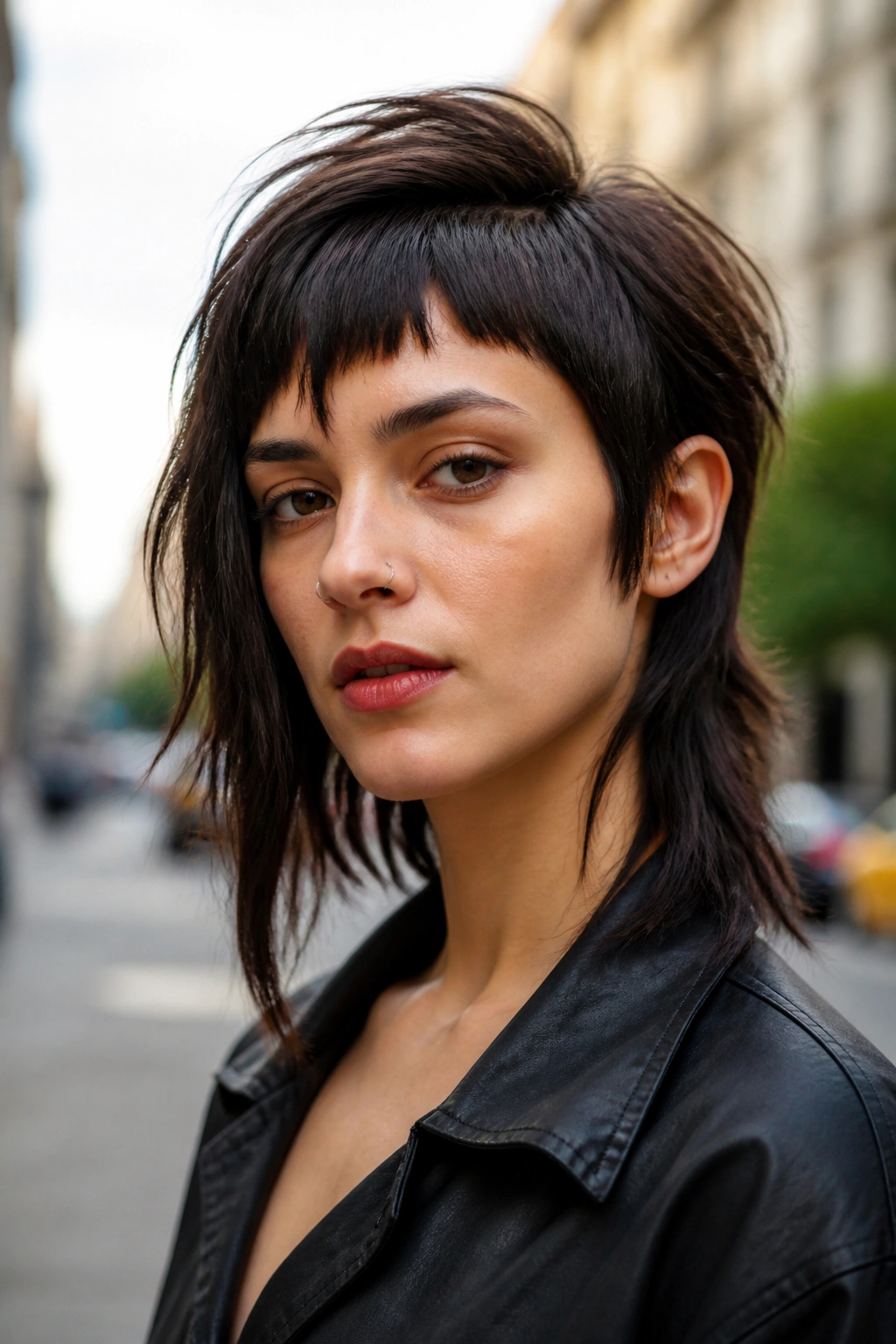
Can a mullet be uneven on purpose? Yes, and that’s the whole point of the asymmetrical mullet. One side might fall a bit longer, the fringe may sweep harder in one direction, or the back may angle slightly instead of sitting straight across. The result feels more editorial than classic.
This works best when the asymmetry is controlled. A tiny difference in length can change the face shape in a good way, drawing the eye across a strong jaw or softening a longer face. Go too far and the haircut starts to look accidental. Subtle is smarter here.
I like this version for people who already wear their hair with a side part or an off-center fringe. The cut follows the natural habit instead of fighting it. That means less styling and fewer weird cowlick battles in the mirror. A light pomade or styling cream can keep the longer side tucked where it should sit.
Small asymmetry is enough. You do not need a dramatic lopsided shape to make this haircut interesting.
17. Air-Dried Wavy Mullet
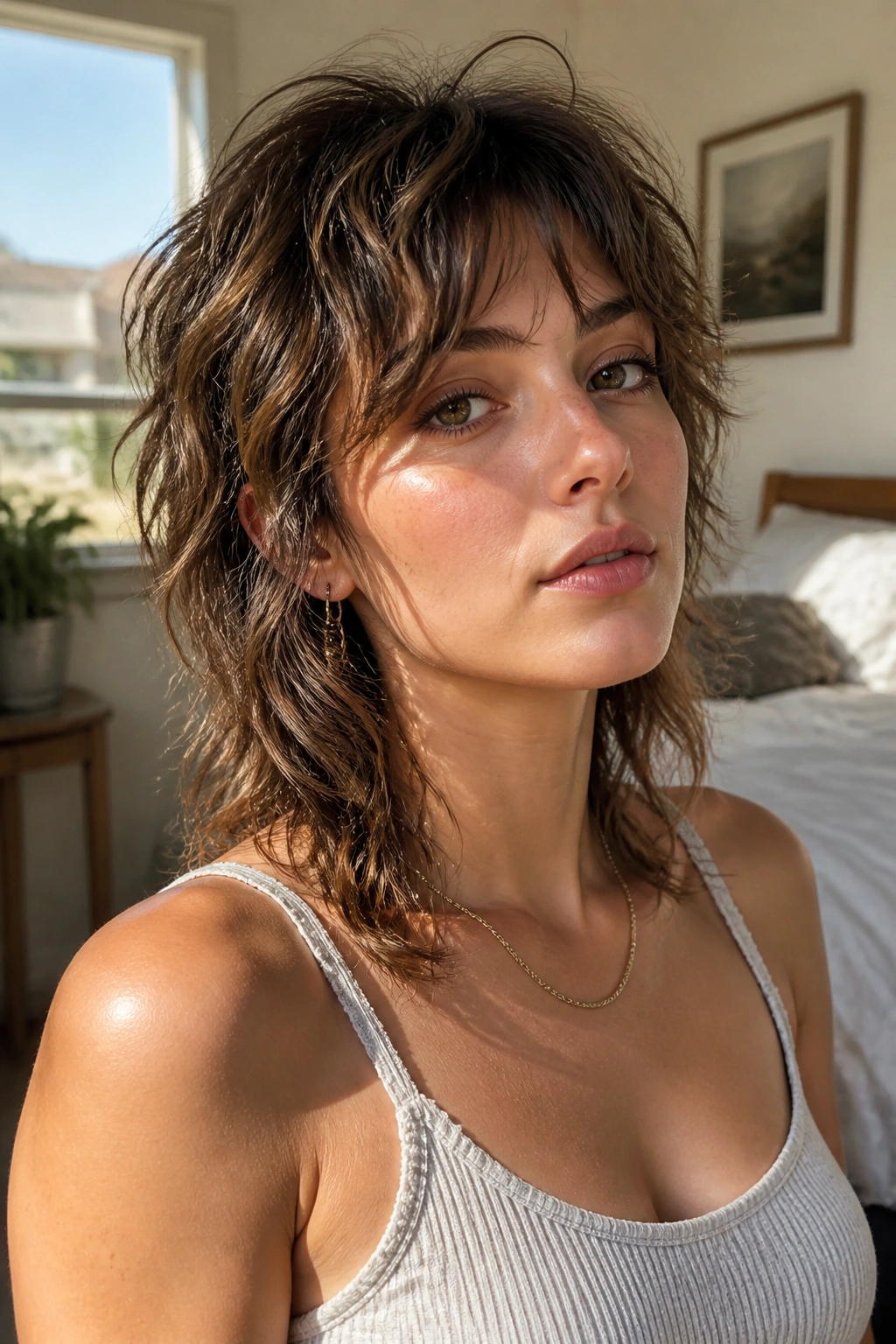
A air-dried wavy mullet is the lazy-girl haircut that actually takes planning. The cut has to be right, because the styling is minimal. If the layers are placed well, waves fall into shape on their own and the haircut gets that lived-in movement people keep chasing with a curling wand.
The best versions usually keep the crown slightly shorter, then let the face frame and back wander longer. That gives the wave pattern room to bend instead of bunch up. A sea-salt spray or lightweight cream can help, but the real work happens in the cut. If your stylist leaves too much weight at the bottom, the hair dries into a triangle. Nobody wants that.
This style suits loose waves especially well, but it can work on stronger bends too. Scrunch, twist a few front pieces with your fingers, then leave it alone. Touching it a dozen times usually makes it look frizzy rather than soft.
It’s one of the easiest modern mullet haircuts for women to live with day to day, which is why people stick with it.
18. Bottleneck Bang Mullet

Bottleneck bangs sit somewhere between curtain bangs and a straight fringe, and they bring a nice shape to a mullet. The bottleneck bang mullet is shorter at the center, longer at the sides, and soft enough to blend into the rest of the cut without stealing the whole show.
Why It Suits the Shape
The narrowed center opens the face, while the wider side pieces connect to the mullet layers. That means the fringe doesn’t sit there as a separate event. It becomes part of the haircut. On oval, heart, and longer face shapes, the effect can be especially good because it keeps the forehead from feeling too exposed.
What to Ask For
- A shorter middle section that falls around the brow
- Longer side pieces that graze the cheekbones
- Soft graduation into the crown layers
- A blow-dry finish with a little bend, not a stiff curve
This style looks best when it’s not over-styled. Brush it too much and it turns formal. Leave some natural fall in it and the haircut feels modern. The bang shape also grows out gracefully, which is a nice bonus if you prefer fewer trim appointments.
19. Tapered Nape Mullet
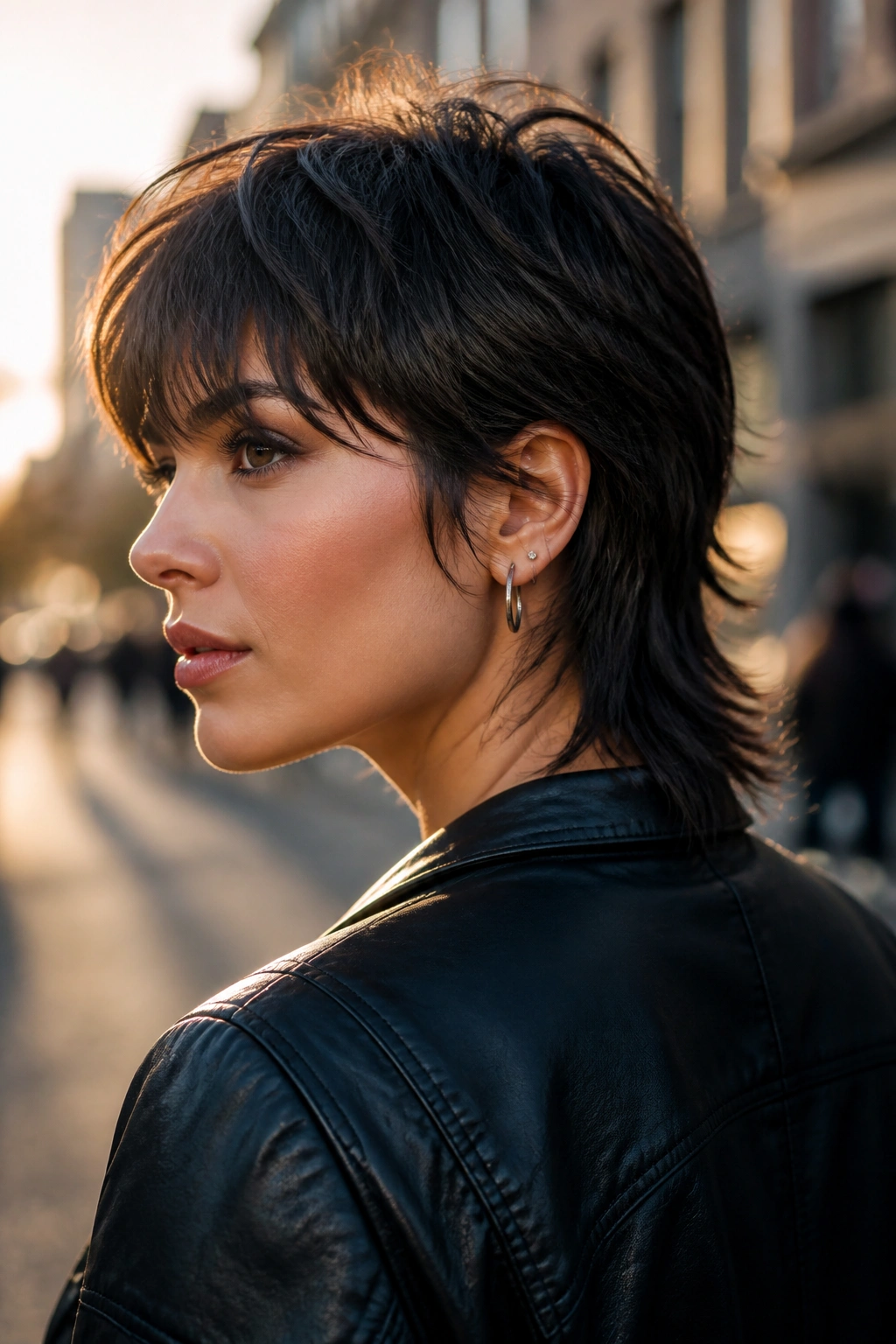
A tapered nape mullet is for people who want a cleaner neckline and a more polished finish. The back is still longer than the sides, but the nape tapers down neatly instead of ending in a blunt shelf. That small detail changes the whole mood of the haircut.
This version can be a smart move if you work in a place where a wild mullet would feel like too much. The taper keeps the shape tidy, especially around collars and coats. It also helps finer hair at the back sit flatter, while thicker hair gets a neat outline instead of a bulky one.
A stylist usually has to be careful here. If the taper is too severe, the haircut starts to lose its mullet identity. If it is too soft, you lose the crisp finish that makes this version useful in the first place. A trim every 6 to 8 weeks keeps the neckline from puffing out.
It’s a subtle haircut, but not a timid one. There’s a difference.
20. Grown-Out Wispy Mullet
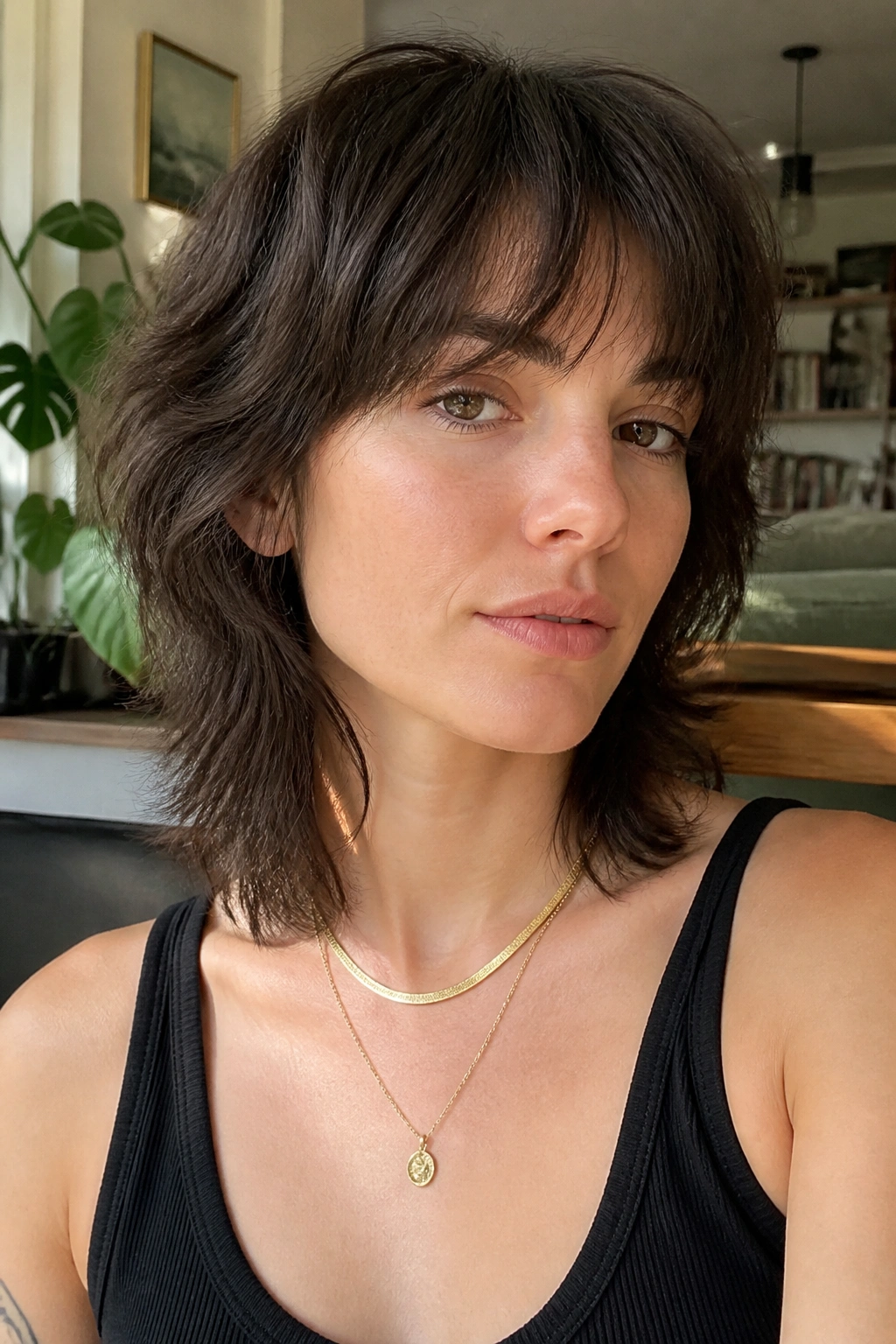
Not every good haircut needs to look freshly cut. The grown-out wispy mullet is built to soften over time, with feathered layers, a light fringe, and a back section that keeps its line even after the shape loosens a bit. That makes it one of the most forgiving modern mullet haircuts for women.
The trick is asking for layers that will still sit well when they grow. Too much precision can turn awkward fast once the hair moves past the first two weeks. Wispy fringe pieces, soft crown layers, and a perimeter that isn’t cut too blunt all help the haircut age in a useful way. It should look a little better after a few washes, not worse.
This is a good choice if you like low-maintenance styling and do not want a cut that demands a perfect blowout every time. A few bends with a flat iron or a quick scrunch with cream is usually enough. The whole point is ease. Not laziness. Ease.
If you want a mullet that can live with you instead of fighting you, this is the one I’d send people to first.
