



A good curly wolf cut doesn’t need bangs to feel bold. Pull the fringe out of the equation, and the shape often gets cleaner, lighter, and easier to wear because the curls can rise at the crown and swing around the face without a heavy front section dragging everything down.
Curly hair likes room. It also likes structure that respects shrinkage, because a cut that looks shoulder-grazing when it’s damp can land somewhere much shorter once it dries. That’s why the best curly wolf cut without bangs usually gets built around layers, not blunt lines, and why dry cutting can make such a difference.
Some versions are soft and rounded. Others lean shaggy and a little wild. A few look almost polished, which surprises people who think the wolf cut has to be messy to work. The styles below cover loose waves, springy curls, thick coils, and every texture in between.
1. Shoulder-Length Wolf Cut With Soft Layers
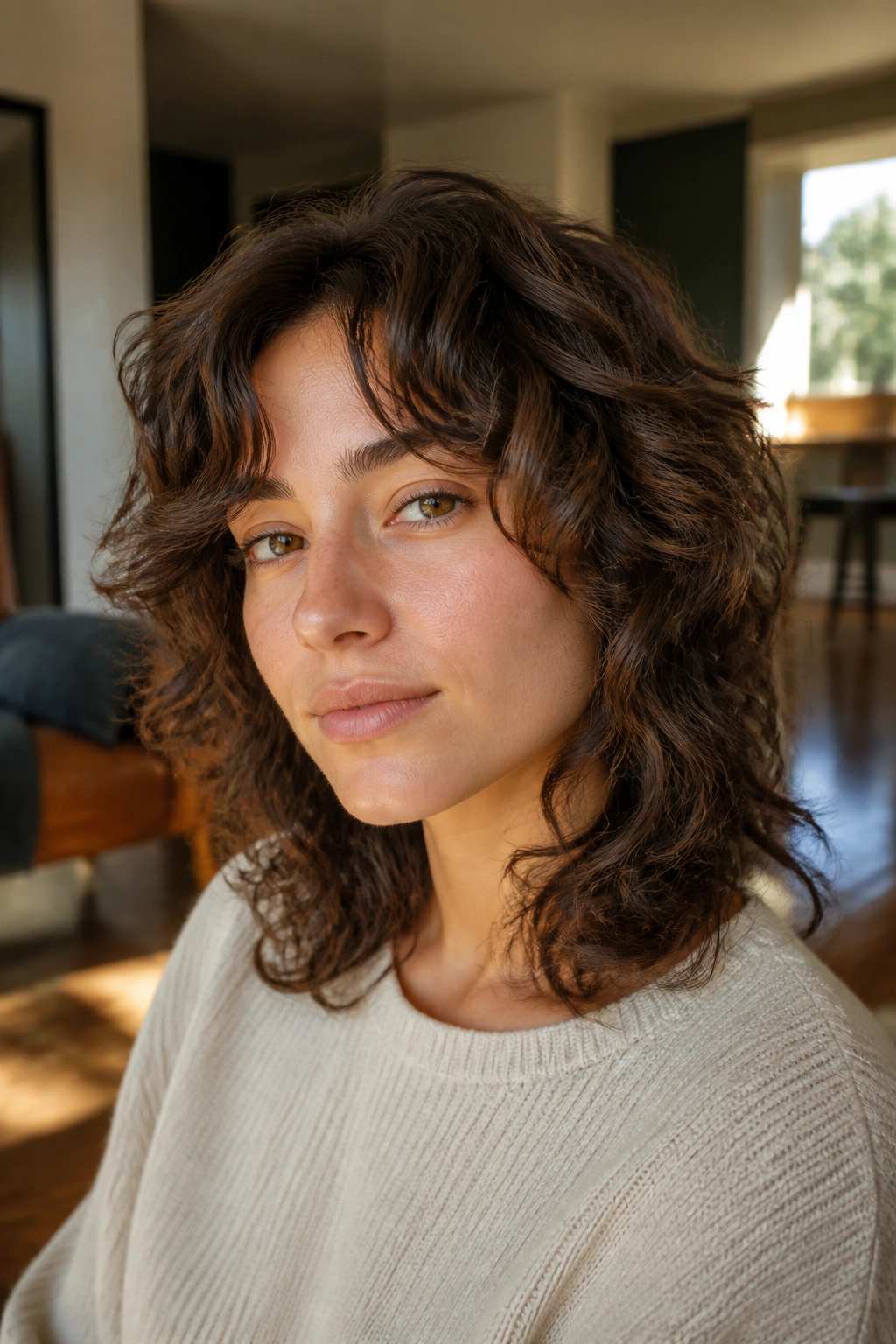
This is the easiest place to start if you want movement without committing to a dramatic chop. Shoulder-length curls have enough weight to hang nicely, but they still get that lifted wolf-cut shape when the layers are carved in around the crown and mid-lengths.
Why It Works on Loose Curls
Loose curls and soft waves can go flat fast if the cut is too blunt. A shoulder-length wolf cut keeps the body up top and lets the ends taper instead of stacking into one heavy block. That matters a lot when your hair has a little bend but not enough spring to hide a bad cut.
The best version keeps the front pieces around the cheekbones and jaw, then lets the back fall a little longer. It feels casual, not sloppy. And if you air-dry a lot, this length usually gives you enough shape that you don’t have to spend twenty minutes coaxing it into place.
- Best for 2A to 3A curls
- Works well on medium-density hair
- Looks especially good with a side part
- Easier to refresh with a curl cream and a diffuser
Pro tip: ask for layers that start below the chin so the top keeps some weight. Too many short layers can make shoulder-length curls puff out in a way that feels more triangle than wolf cut.
2. Long Curly Wolf Cut With Tapered Ends
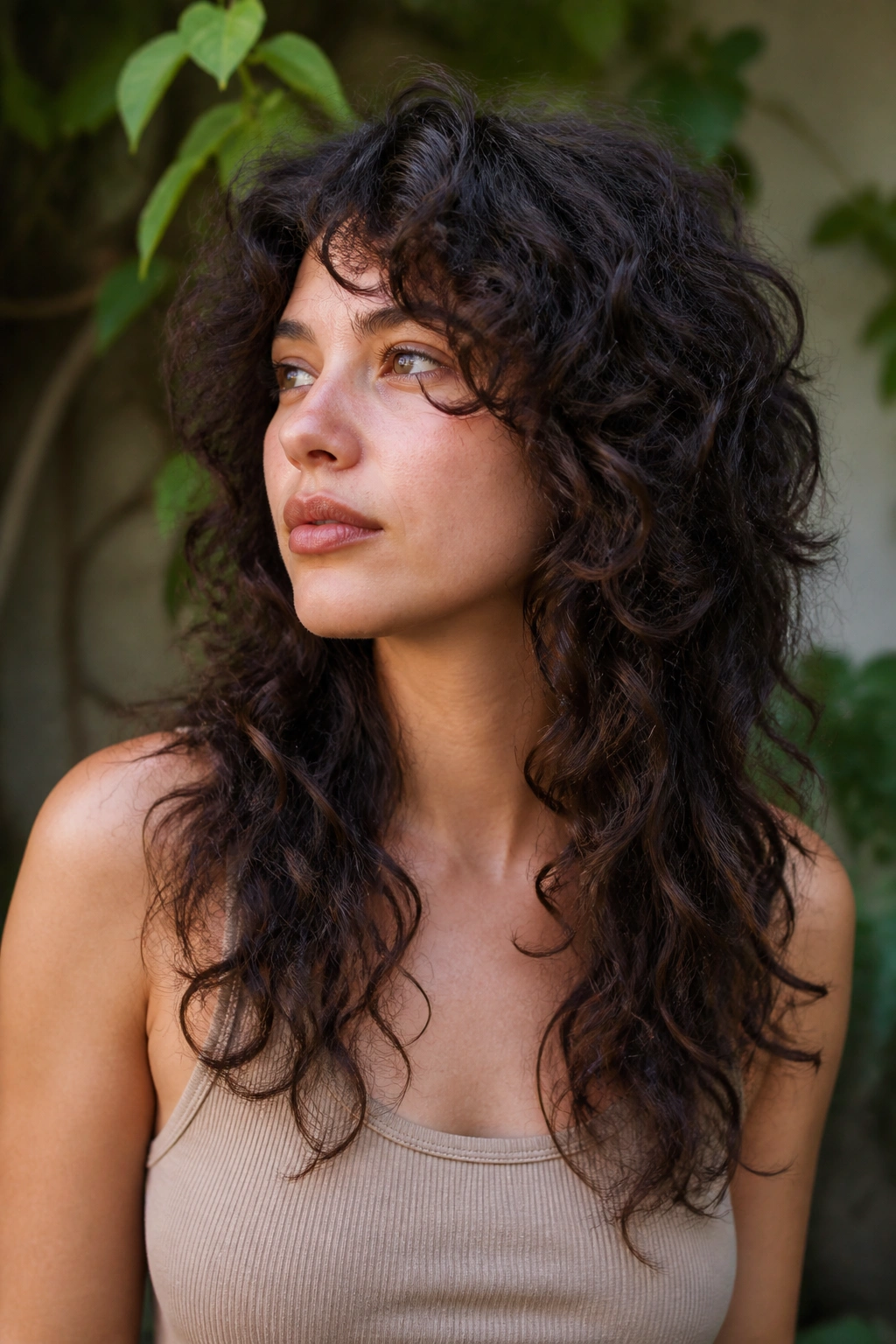
Long curls and wolf cuts should not be enemies. A lot of people assume you need to go short to get the shaggy shape, but that’s not true. Long lengths can carry the style beautifully when the layers are feathered through the midsection and the ends are thinned just enough to move.
What makes this version work is contrast. The crown gets lift, the middle loses bulk, and the bottom doesn’t sit there like a curtain. You still keep the length you paid for, which matters if your curls take a long time to grow or you simply prefer hair that brushes the back or shoulders.
I like this cut on people who want texture but not a dramatic mullet vibe. It grows out politely, too. The shape softens over time rather than collapsing into a weird pyramid, which is more than I can say for some layered cuts.
Use a lightweight mousse at the roots and a cream on the ends. Too much product will weigh the taper down, and then the whole point of the cut starts to disappear.
3. Chin-Length Curly Wolf Cut
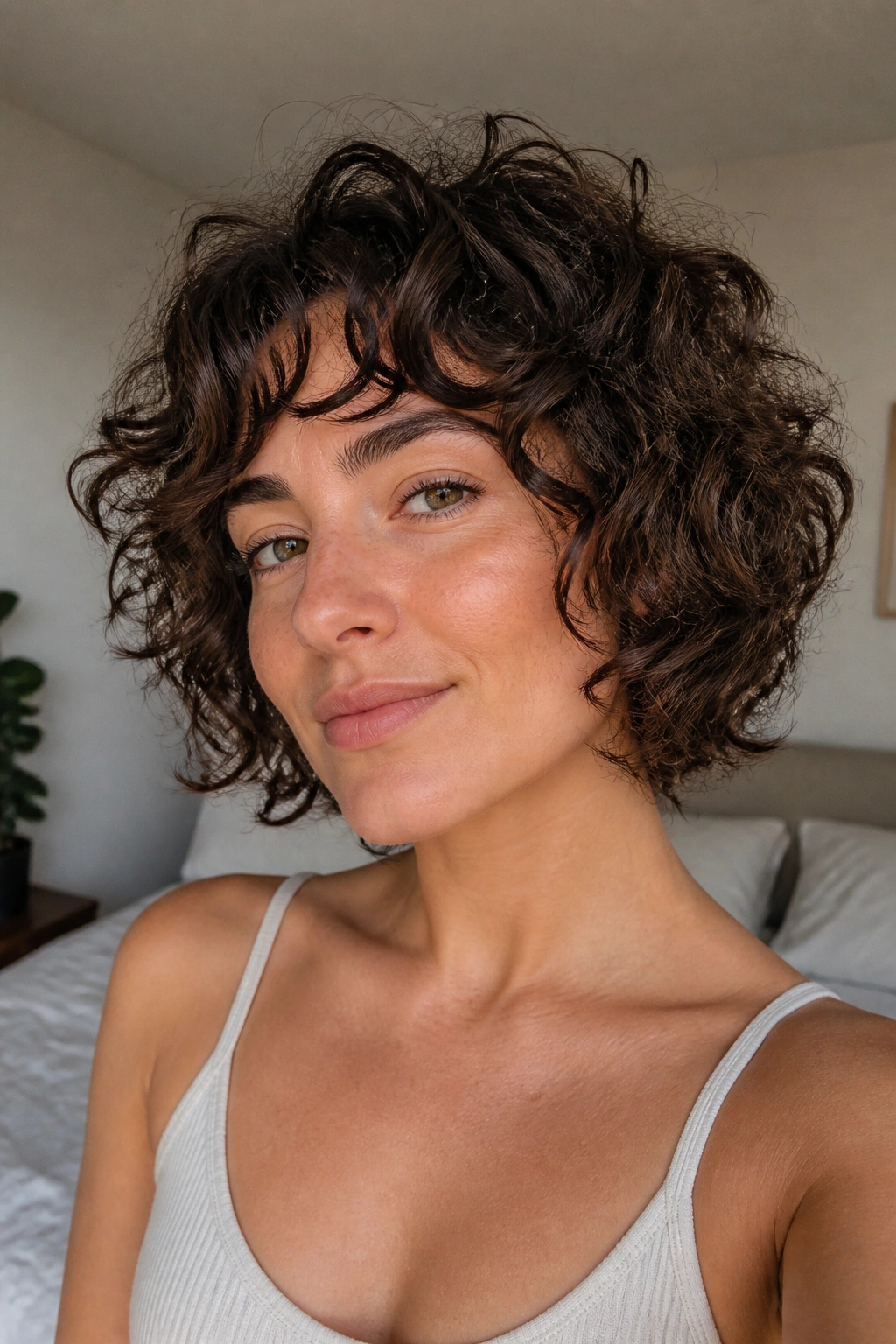
Why does a shorter wolf cut feel so striking? Because the curl pattern gets to do the talking.
A chin-length version is a little cheeky, a little sharp, and much less fussy than people expect. The trick is keeping the layers soft enough that the cut still looks airy when the curls shrink. If the interior gets too aggressively thinned, the shape can start to stick out instead of falling.
This length is especially good if your curls are springy and your hair has a decent amount of density. It gives the sides room to curve in, and the back can stay just long enough to keep that wolf-cut outline. No bangs needed. The face pieces can start near the cheekbones and curve down toward the jaw, which keeps the front open without turning it into a fringe.
How to Style It
Diffuse on low heat and stop when the hair is about 80% dry. Then let the rest air-dry so the curl pattern stays crisp instead of frizzy. If you finger-coil a few pieces at the front, the haircut looks more intentional in five minutes than in twenty.
A chin-length wolf cut can feel tiny in the mirror while it’s wet. Don’t panic. Curls bounce up, and they usually bounce up more than you remember.
4. Rounded Wolf Cut With No Fringe
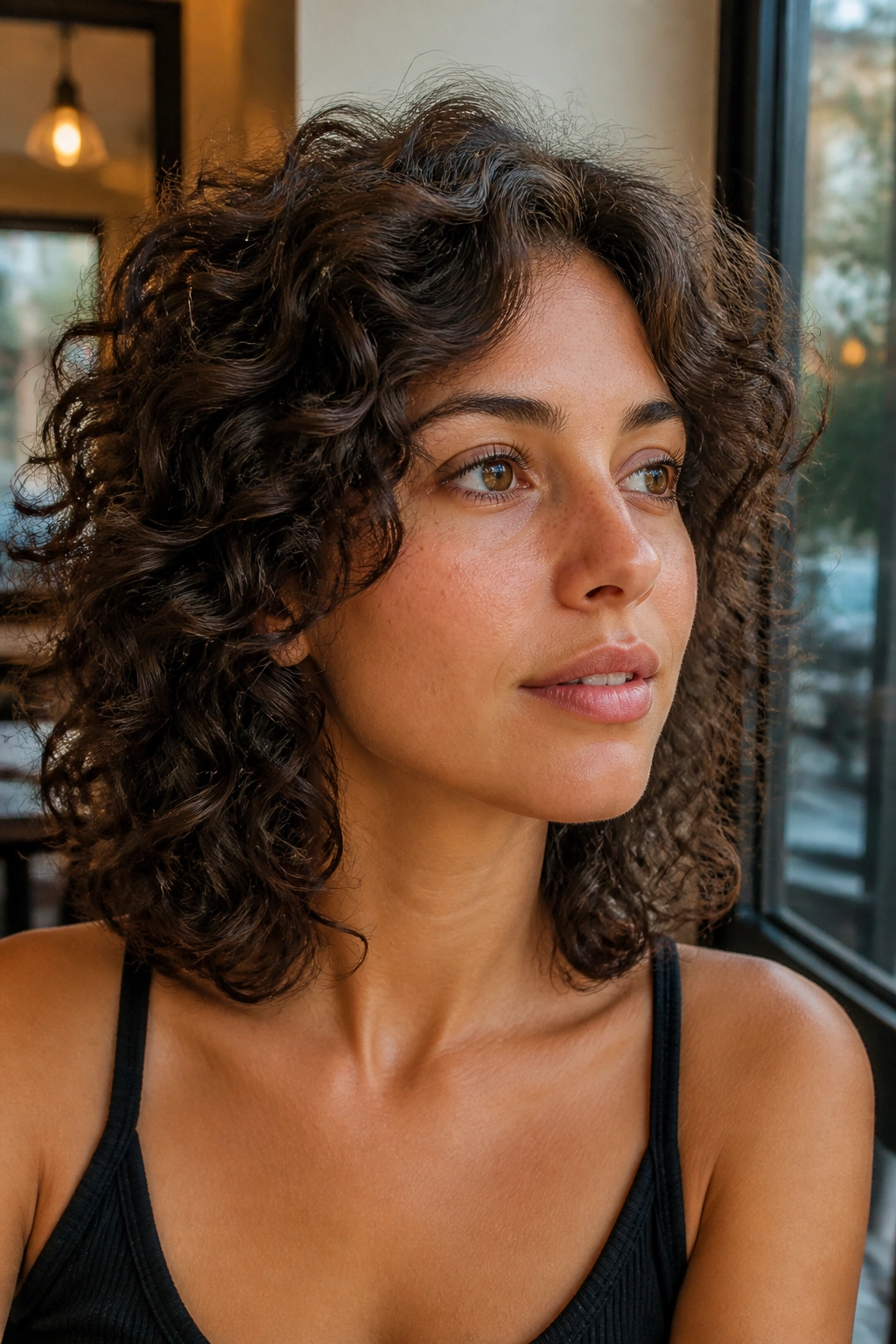
Picture hair that falls around the head like a soft halo, but with enough bite to keep it from looking sweet or precious. That’s the rounded wolf cut, and it is a lovely answer for anyone who wants fullness without bangs.
The shape comes from curved layering rather than sharp disconnect. The crown gets a little lift, the sides sweep around the face, and the ends stay wispy. On curly hair, that roundness helps prevent the triangle effect, which is one of the main reasons people get nervous about layered cuts in the first place.
- Ask for a rounded outline, not a boxy one
- Keep the front shortest point below the cheekbones
- Leave enough weight in the perimeter to avoid frizz
- Use a diffuser with medium airflow, not a blast
One thing to watch: if your curls are very tight, too much rounding can make the cut seem short in the wrong places. A good stylist will leave a little extra length at the nape so the shape still has movement when it dries.
This is the cut I recommend when someone wants the wolf-cut feel but hates anything too chopped up.
5. Grown-Out Curly Mullet
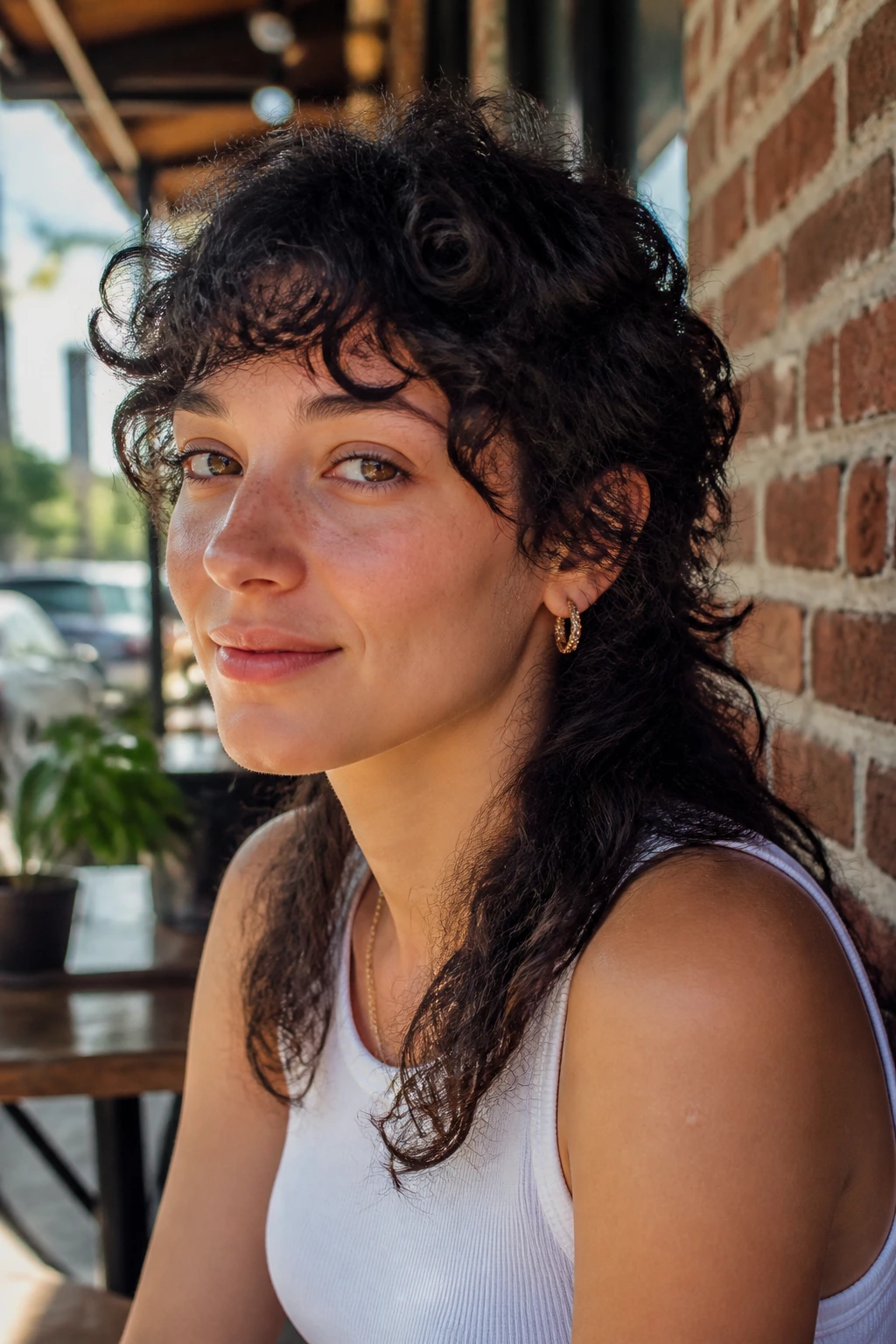
A grown-out curly mullet has a charm that a polished salon blowout will never quite touch. It feels lived-in, a little rebellious, and very good at making curls look like they’re having a better day than everyone else’s hair.
The key is keeping the transition soft. The top should be shorter and airy, but not so short that it stands away from the head. The back can stay longer, yet it should be layered enough that it doesn’t hang like a tail. On curls, that movement matters. Without it, the whole thing slips into costume territory.
This version is also forgiving if you hate frequent trims. The shape can get a little bigger as it grows, which is part of the appeal. You get that messy, rock-and-roll outline without having to babysit it every morning.
I’d call this one best for people who like texture and don’t mind a haircut that announces itself. It’s not quiet. It does not try to be.
And that’s the fun of it. A curly mullet feels better when it has a little attitude.
6. Thick-Hair Wolf Cut With Debulked Layers
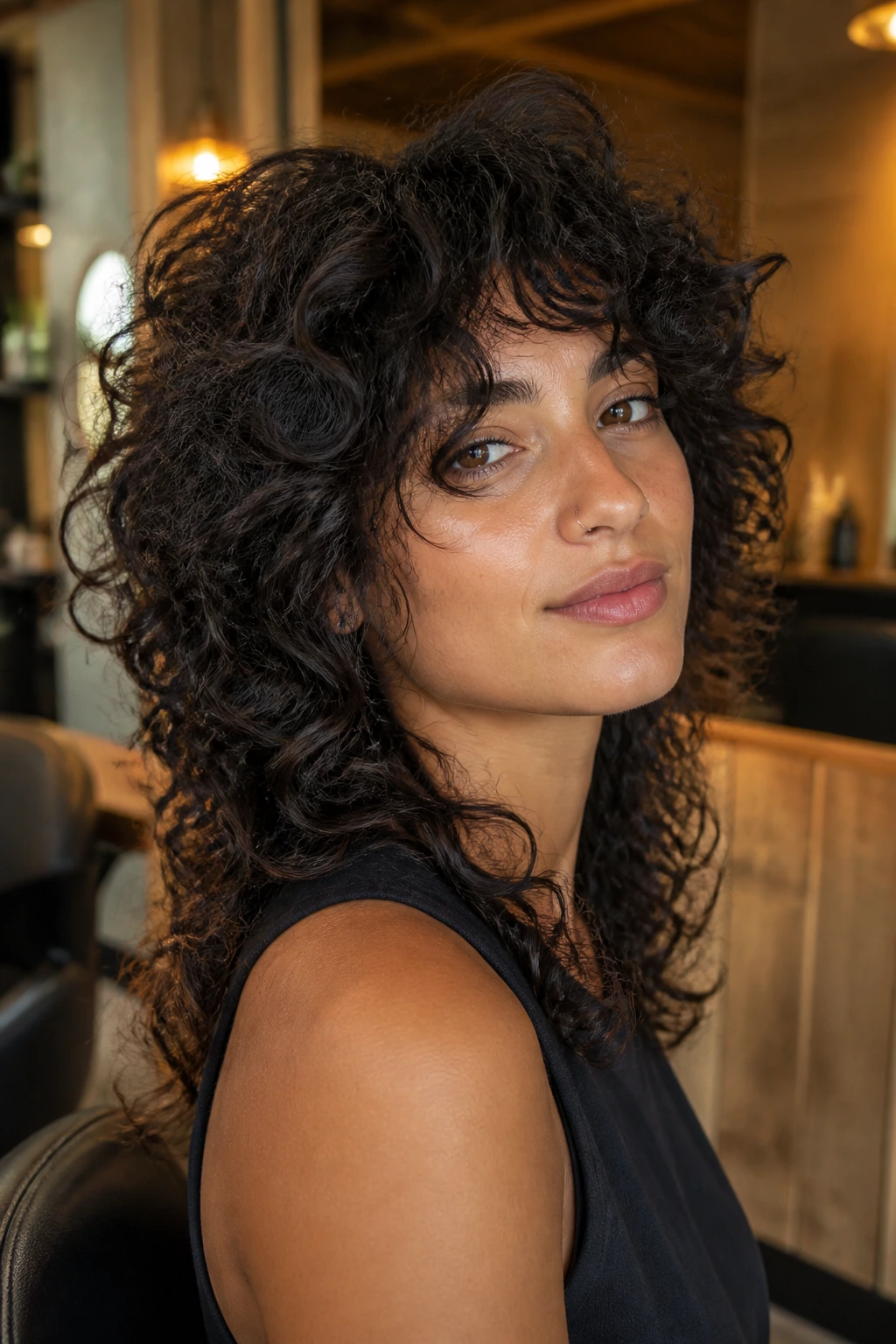
Thick curls need a different kind of editing. Leave them blunt, and they can turn into a heavy wall. Cut them too short, and they can spring out like a mushroom cap. The sweet spot is a wolf cut with debulked layers that remove weight without shredding the curl pattern.
Compared with a standard layered cut, this version is more about internal release than dramatic shape changes. A stylist might use point cutting, slide cutting, or curl-by-curl shaping to take out the dense spots around the crown and sides. The result is a cut that moves when you shake your head, which sounds silly until you’ve lived with thick hair that barely moves at all.
This is one of the few places where the wolf cut can actually make thick curls easier to live with day to day. You get less helmet, less puff at the roots, and more air between the curls. The shape still looks full. It just breathes.
Best for: dense 3A to 3C curls, heavy hair, and anyone whose ends dry way faster than their crown.
Recommend this if your biggest complaint is bulk, not length.
7. Fine Curly Wolf Cut With Invisible Layers
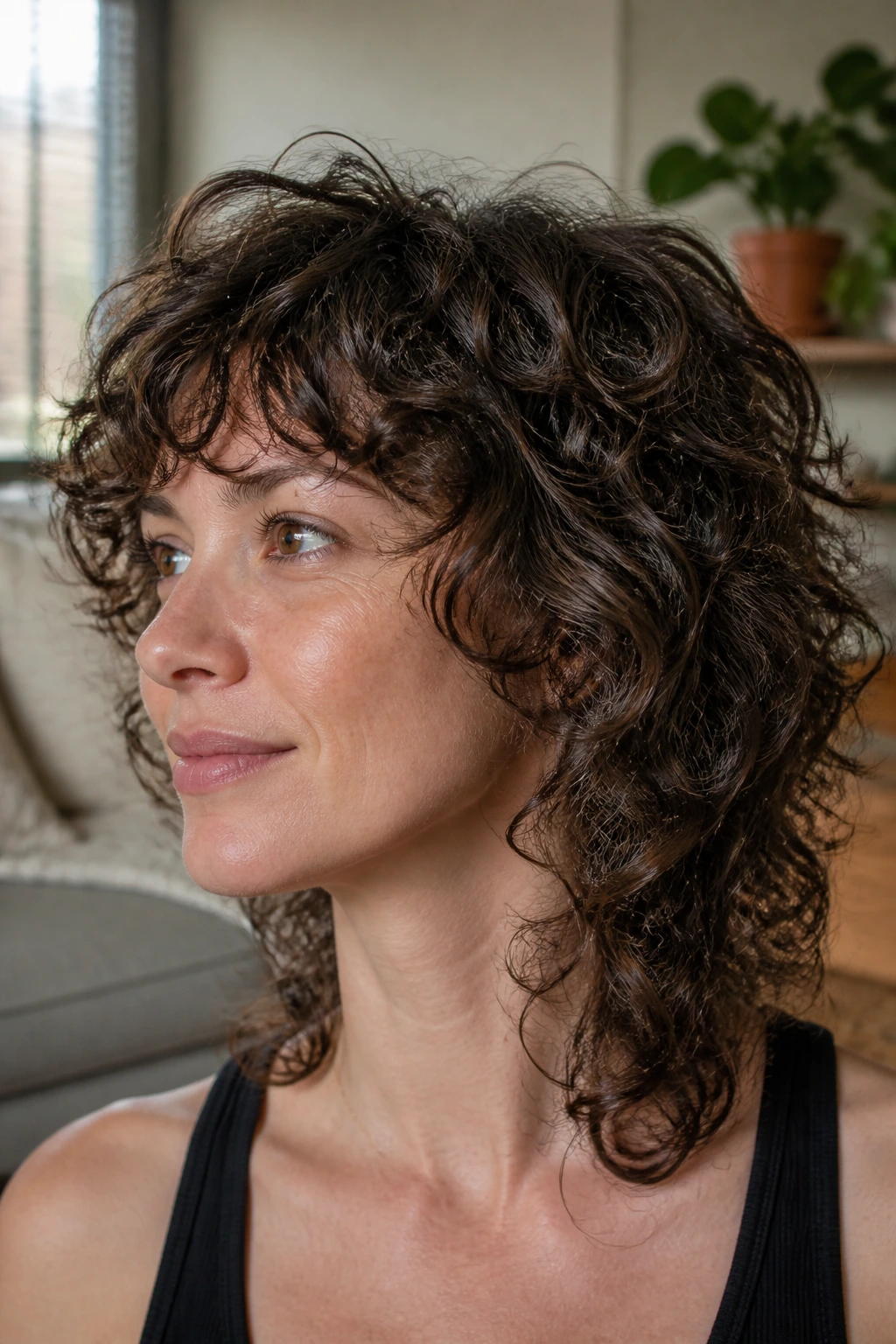
Fine curls need restraint. That’s the whole game.
A lot of people with finer texture get scared off by layers because they imagine instant thinness, but invisible layers are different. The interior is lightly broken up so the cut has lift, yet the outside line stays soft and full. On a fine-curly wolf cut, that keeps the hair from looking see-through at the ends.
What Makes It Different
The layer placement matters more than the number of layers. Short pieces around the crown create the wolf-cut lift, while longer pieces around the perimeter keep the outline from collapsing. If the stylist cuts too much into the lower half, the curl groups separate and the hair can look stringy.
A light mousse or foam works better here than a heavy cream. Fine curls usually need help holding shape, not more softness. That’s a small difference, but it changes everything.
How to Get the Most From It
- Dry with a diffuser until the roots are set
- Scrunch with a tiny amount of gel only at the ends
- Refresh with water and a pea-sized amount of styler
- Trim before the ends start to fray, not after
This cut is for anyone who wants texture without sacrificing body. It’s subtle. That’s the point.
8. Curly Wolf Cut With a Deep Side Part
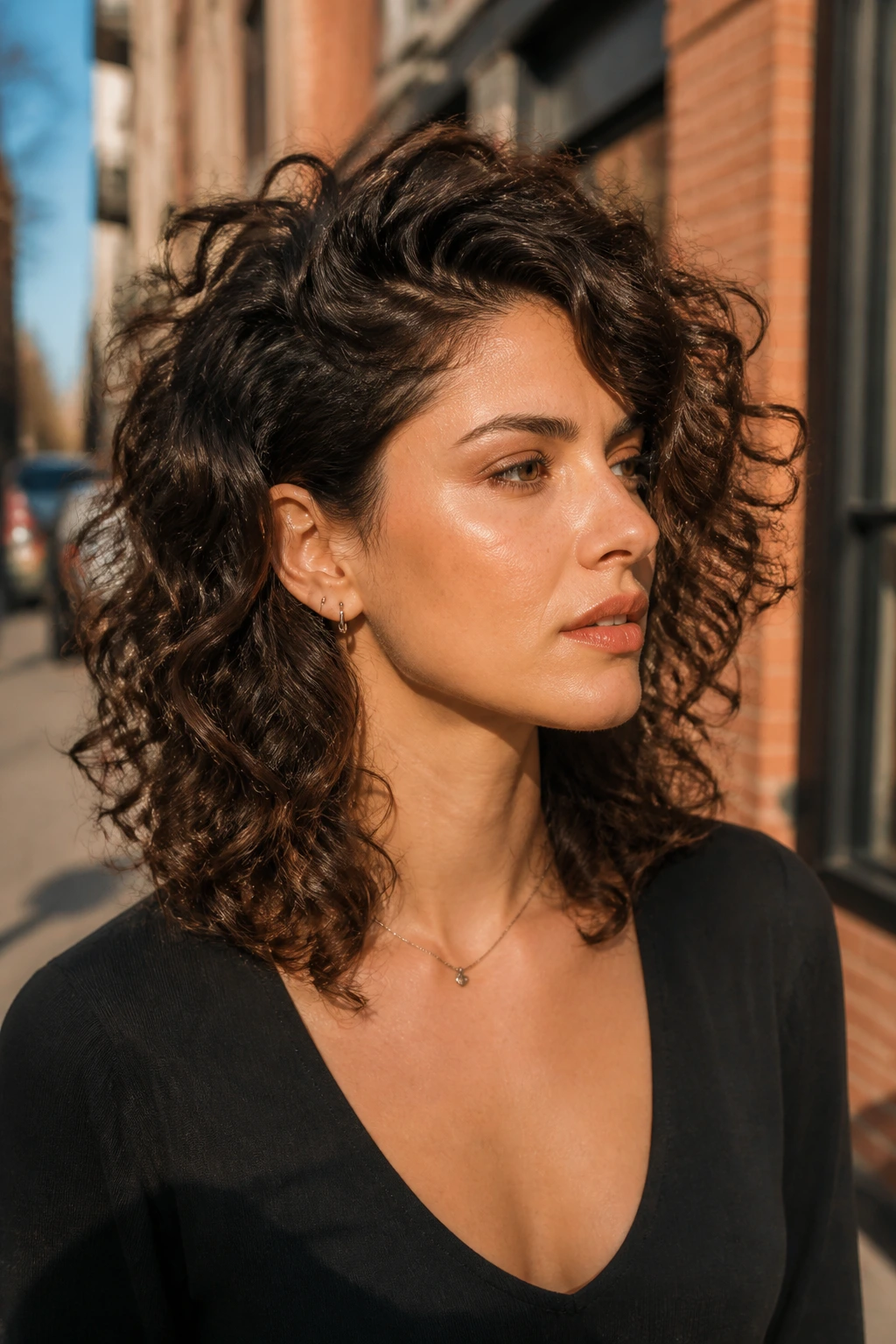
A side part can save a wolf cut. That sounds dramatic, but it’s true for curls that need a little direction at the front. When you move the part over, the cut suddenly has more lift at the crown and more sweep through the lengths, which gives the whole shape a looser, more flattering line.
This version works especially well if your curls flatten at the roots on one side. The deeper part creates asymmetry, which keeps the style from looking too round or too predictable. The face pieces can fall diagonally instead of straight down, and that usually looks softer around the cheek and jaw.
The best part is how little effort it takes. You don’t need to restyle the whole head. Just flip the part, add a little root mousse at the new lift point, and scrunch the ends back into shape.
If you’ve been wearing a center part for years, this can feel like a bigger change than it is. It’s still the same haircut. It just wakes the shape up.
9. Collarbone Wolf Cut With Face-Framing Pieces
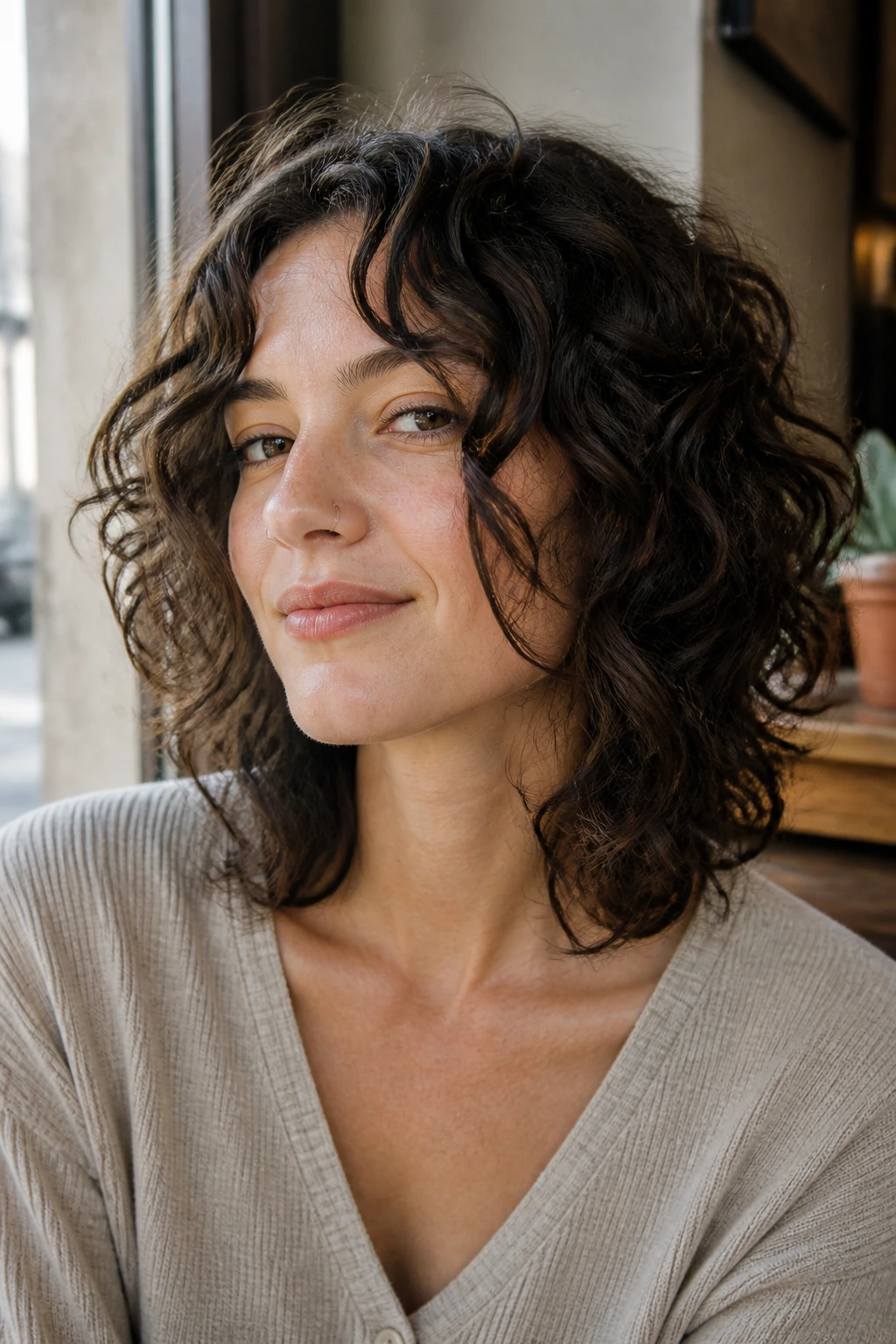
Think of this as the useful middle ground. Not too short, not too long, and long enough to tuck behind one ear when you are done dealing with it.
A collarbone-length wolf cut gives curly hair a graceful swing, especially when the front pieces are cut to fall around the cheekbones and jaw rather than chopped into bangs. That framing matters because it opens the face without forcing the eye to land on a fringe line. The back stays a touch longer, which helps the whole cut feel soft instead of abrupt.
This version is a favorite if you want something that looks good both styled and slightly messy. It can air-dry into a relaxed shape, then perk up again with a mist of water and a little gel. No drama. No hard styling routine. Just decent bones.
- Keeps enough length for buns and clips
- Looks good on loose curls and springy spirals
- Works with center, off-center, or side parts
- Grows out into a flattering medium cut
The face-framing pieces are the secret sauce here. They give the wolf cut its attitude without forcing you into bangs you do not want.
10. Soft Shag-Wolf Hybrid
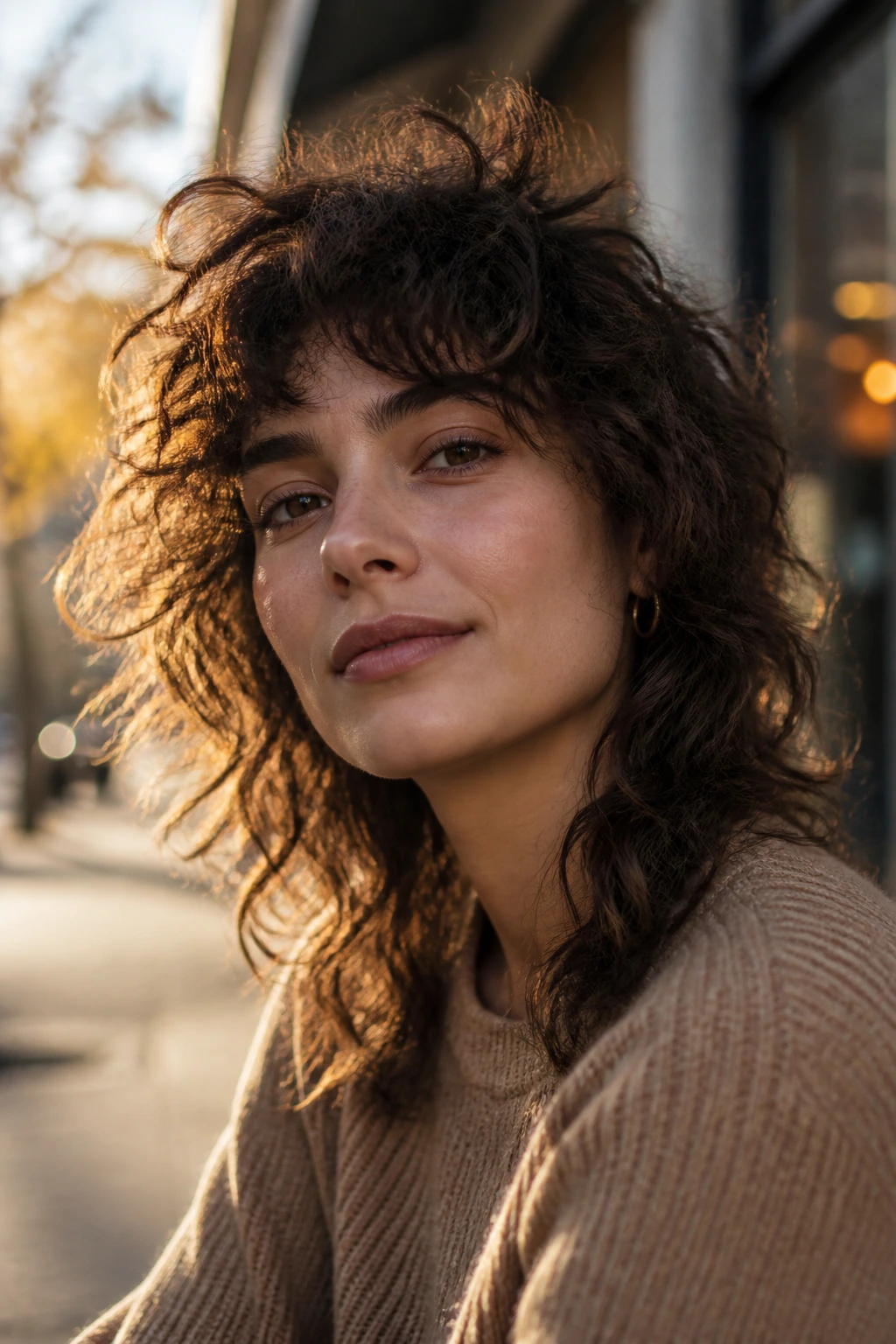
Some haircuts are all edge. This one has manners.
The soft shag-wolf hybrid blends the movement of a shag with the slightly longer back and broken texture of a wolf cut. On curls, that mix can be gorgeous because it avoids the hard disconnect that makes some mullets feel too sharp. Instead, the layers step down gently, which lets the curl pattern stay bouncy from root to tip.
I like this on women who want texture but still need their hair to play nicely with coats, scarves, and shoulder bags. The cut doesn’t snag as much, and it rarely gets that over-layered, wispy look that can happen when the blade gets a little too enthusiastic.
There’s a sweet spot here. Too soft, and you lose the wolf-cute shape. Too shaggy, and the lower half can get a bit fluffy. The best version leaves enough weight around the ends so the curls clump in clean sections.
This is one of those cuts that looks casual in the best way. Not messy. Not precious. Just easy to wear.
11. Coily Wolf Cut With Lifted Crown
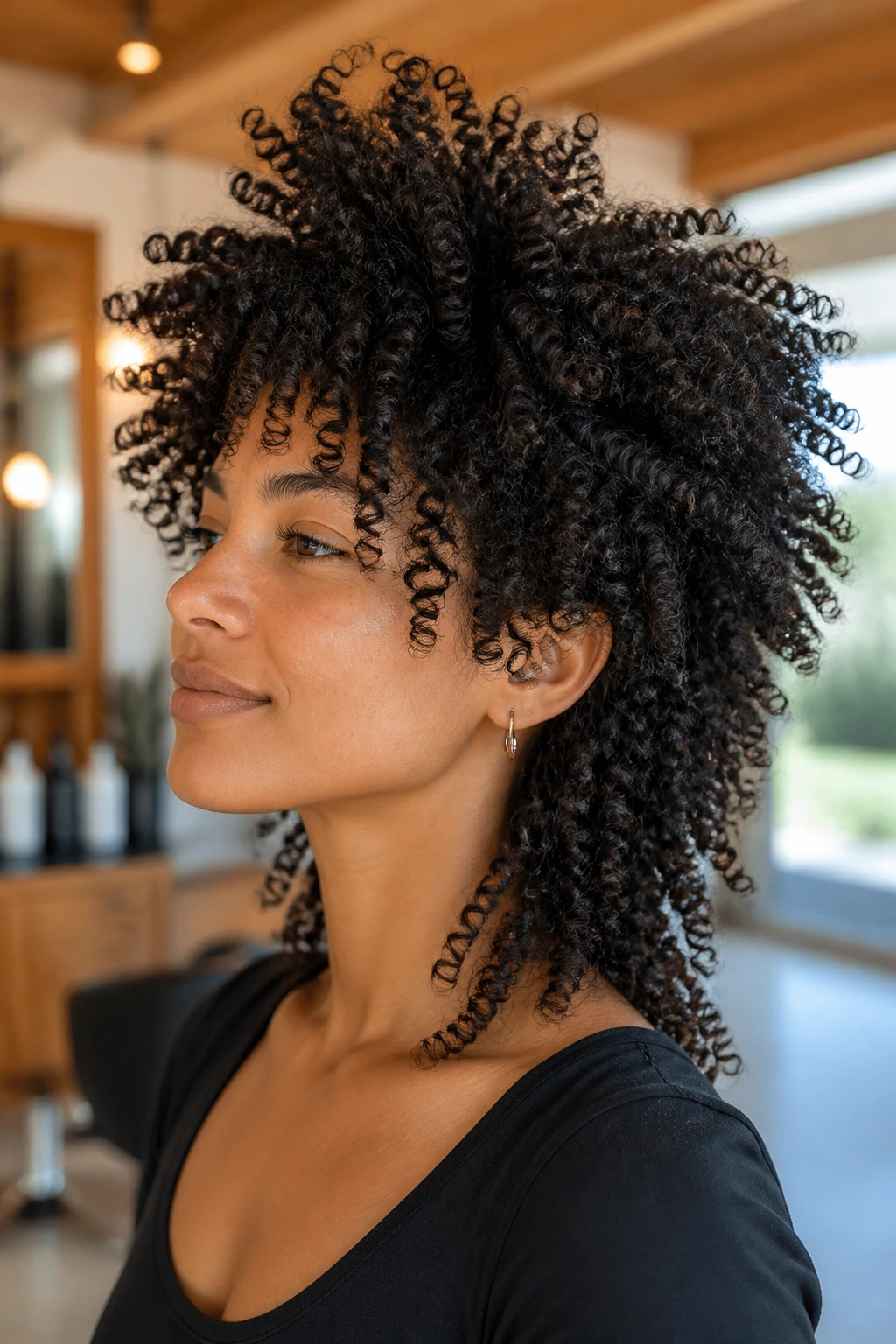
Coily hair can wear a wolf cut beautifully when the crown is lifted and the perimeter stays full enough to keep the silhouette strong. The mistake people make is over-thinning the coils, which can leave the cut uneven once the shrinkage kicks in.
Unlike a loose-curly version, this one benefits from clear shape definition. The top should have controlled layers that create height, while the lower sections stay long enough to show the coil pattern. The result feels more sculpted than shaggy, which is exactly why it works so well on tighter textures.
The crown lift is what gives it that wolf-cut edge. Without it, the haircut can read more like a standard rounded shape. With it, the hair looks alive from every angle, especially when the coils spring upward after washing.
Best for:
- Type 3C through 4A coils
- Dense hair that shrinks a lot
- People who like volume at the top
- Anyone who wants movement without bangs
If you wear twist-outs or wash-and-gos, this shape can hold up well between styling sessions because the layers help the curl clumps fall in a more natural pattern.
12. Mid-Length Wolf Cut for 2A to 2C Waves
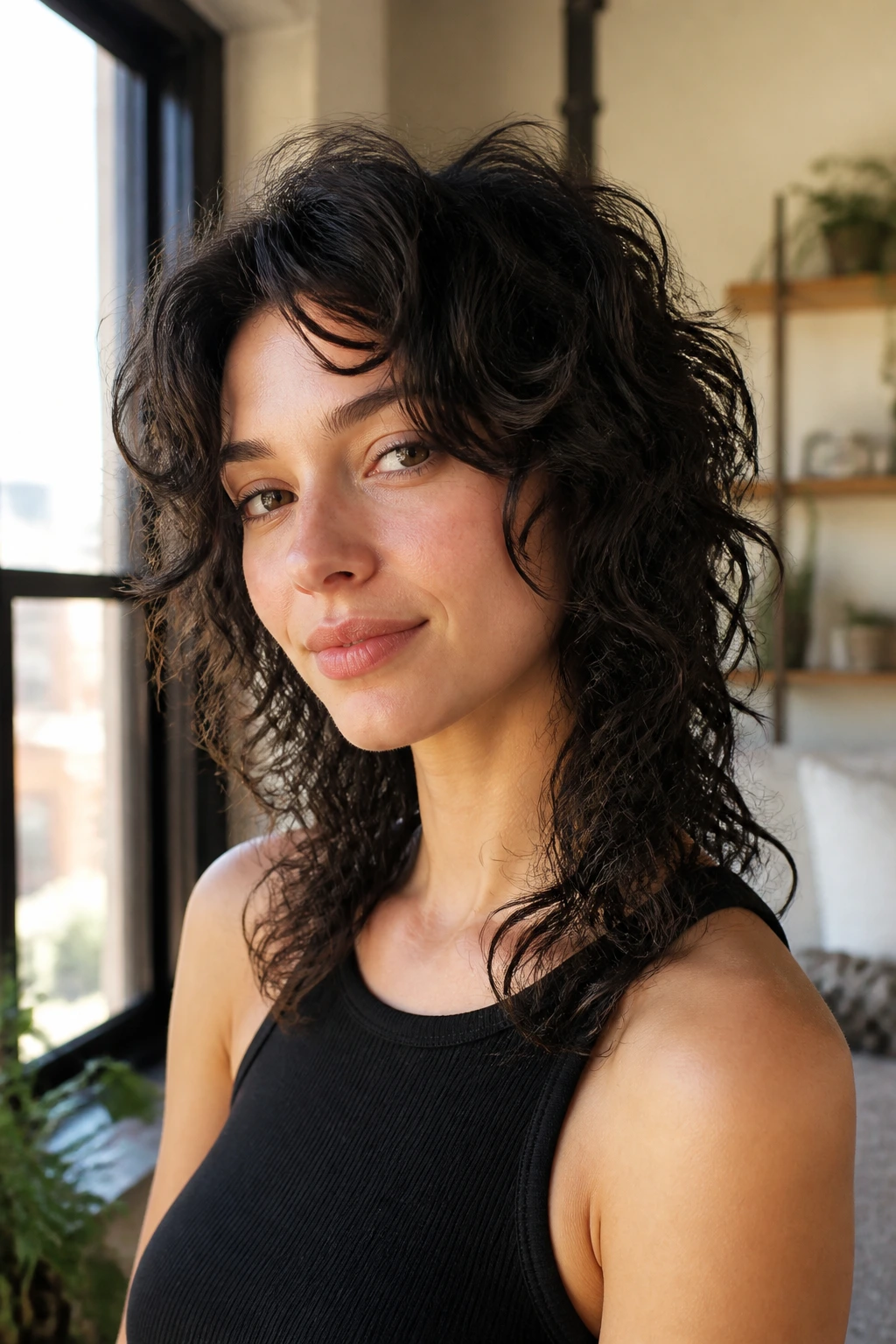
Waves and curls don’t need the same handling, and this cut knows it.
A mid-length wolf cut works especially well for 2A to 2C texture because waves usually need shape more than they need aggressive layering. The goal is to stop the hair from hanging flat at the sides while still keeping enough weight for the wave pattern to form. If the layers are too short, the whole thing can puff out like cotton.
The Shape You Want
Ask for softness around the face, a little lift at the crown, and a longer back that doesn’t look chopped to bits. That combination lets the waves bend naturally instead of fighting for direction. You can also add a subtle U-shaped hemline if your hair tends to go wide.
Styling That Actually Helps
A salt spray can work, but only if your hair likes texture and doesn’t dry crispy. For many waves, a light cream followed by a diffuser gives a better finish. Scrunch gently, then leave the top alone while it dries. Touching it too much is how the wave pattern gets fuzzy.
This is a sleeper cut. It doesn’t scream for attention, but it makes a basic wave pattern look expensive in the way only good structure can.
13. Short Curly Wolf Cut With Choppy Ends
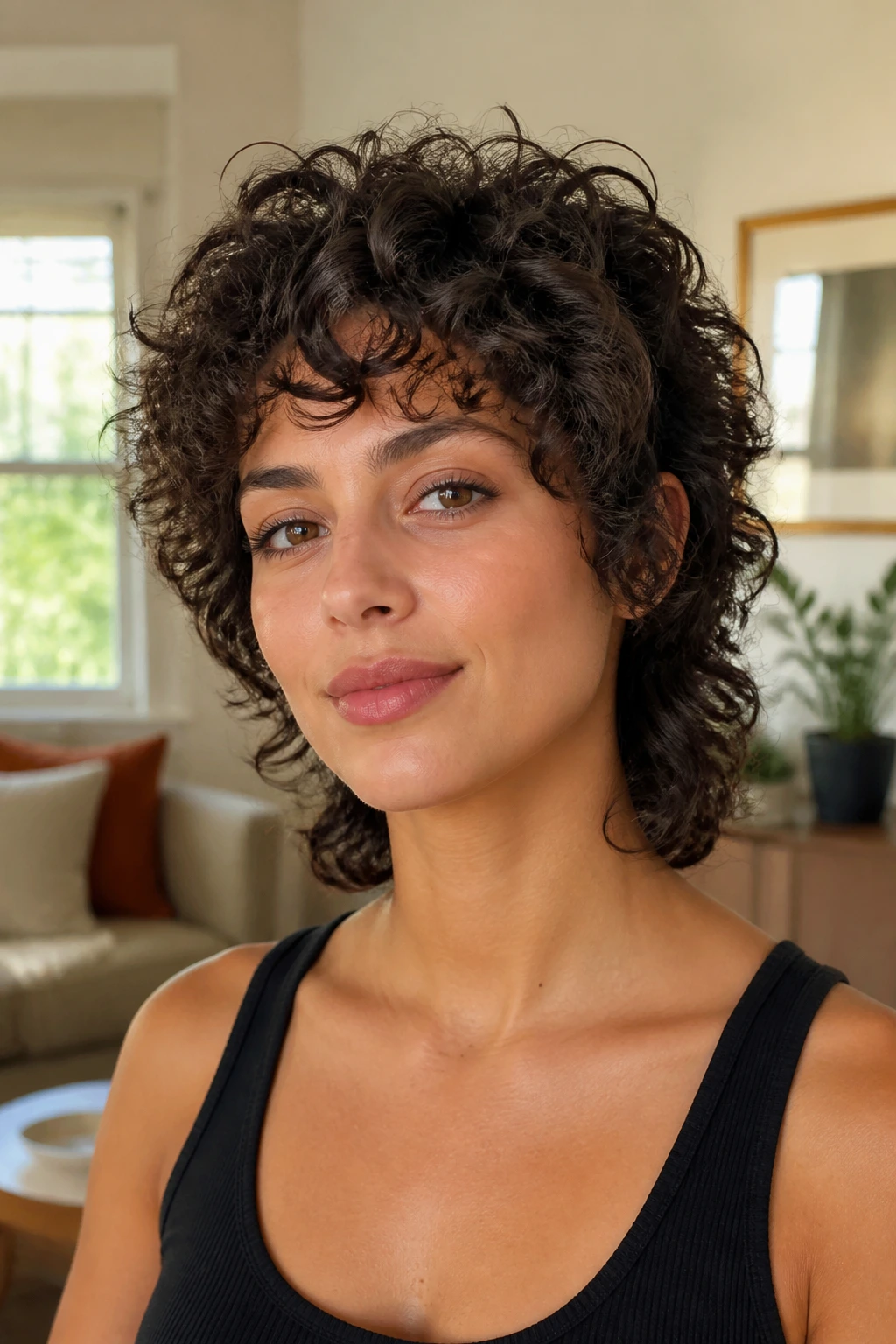
Short hair can still look wild. In fact, a short curly wolf cut often has more personality than a longer one because every layer shows. The ends look choppy on purpose, the crown gets a quick lift, and the face stays open since there are no bangs to block it.
This cut works best when the stylist leaves enough length at the top for the curls to bend, not spike. If the top gets too short, the style can turn boxy. The choppy ends should feel airy, not ragged. That distinction matters, and it is the difference between a stylish crop and a bad home haircut.
The beauty of this version is how fast it dries. If you hate waiting around with a towel on your shoulders, you’ll notice that immediately. Short curls also hold a little more shape overnight, which makes the morning refresh simpler.
You can keep it smooth with a cream-gel combo or rough it up with a light mousse. Either way, the haircut does the heavy lifting. That’s the whole point.
14. Wolf Cut With Extra Height at the Crown
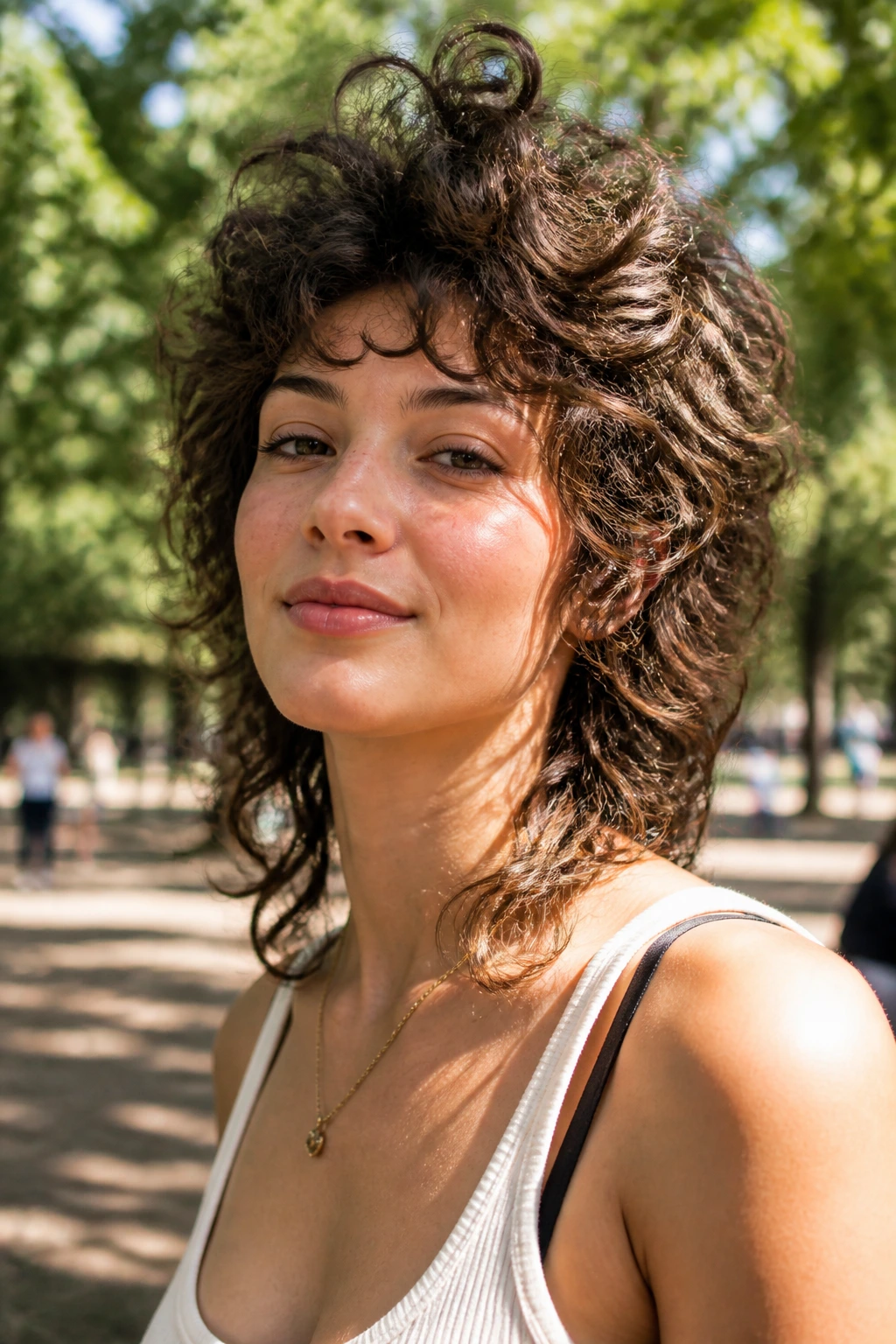
Some curly wolf cuts are about spread. This one is about lift.
A crown-heavy shape works when you want the top to look lively and the ends to sit lighter. Stylists usually build this by shortening the internal layers near the crown and leaving the outer layers longer, so the hair rises at the roots but doesn’t collapse at the bottom. On curls, that can make the whole head look taller and more balanced.
The effect is especially good if your face feels a little wide at the cheeks or if your curls tend to flatten on top. Extra height gives the cut personality. It also helps the hair breathe, which means less of that heavy, rounded helmet feeling.
- Start styling at the roots, not the ends
- Use clips at the crown while drying if your hair is stubborn
- Diffuse upside down for 30 to 60 seconds, then upright
- Don’t overload the top with heavy oils
The trick is keeping the crown airy. Too much product at the roots kills the lift fast. And once it falls, it can be hard to bring back.
15. Air-Dried Wolf Cut With Minimal Styling
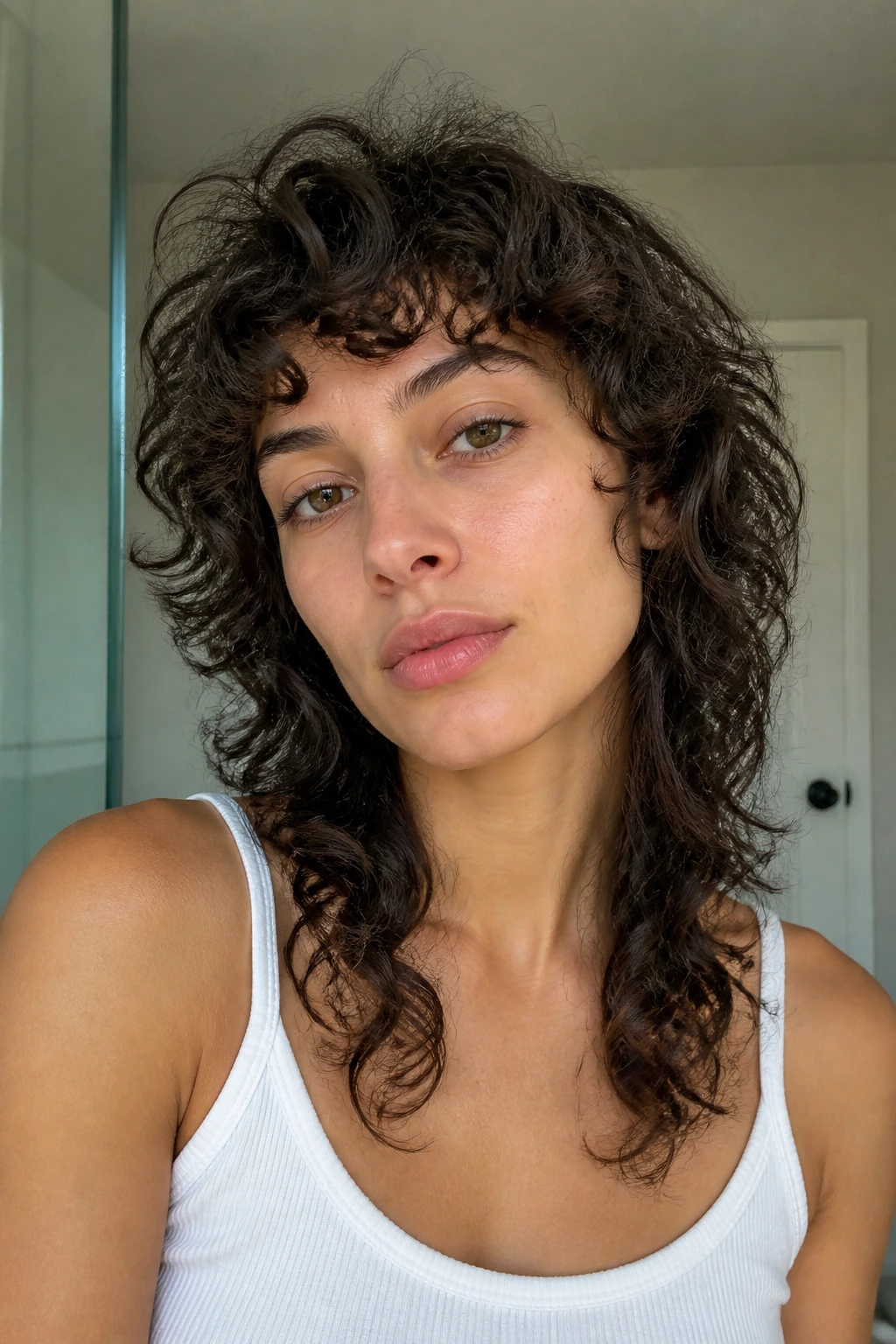
Some cuts are built for hot tools. This one is built for people who would rather not.
An air-dried wolf cut leans on shape and curl pattern instead of styling tricks. The layers are placed so the hair dries into movement on its own, with the shortest pieces helping the top rise and the longer ones keeping the outline soft. It’s not lazy. It’s practical.
This version is ideal if your curls already know what they want to do and usually settle into decent clumps after washing. You can scrunch in a little leave-in and move on. A microfiber towel helps, but you don’t need a full arsenal of products to make it work.
What I like most is the way it ages through the day. A good air-dried wolf cut often looks better at hour six than it did at hour one, because the curl groups loosen just enough to create texture without losing shape.
If your styling routine is shorter than your commute, this is the cut to look at.
16. Curly Wolf Cut for Oval Faces
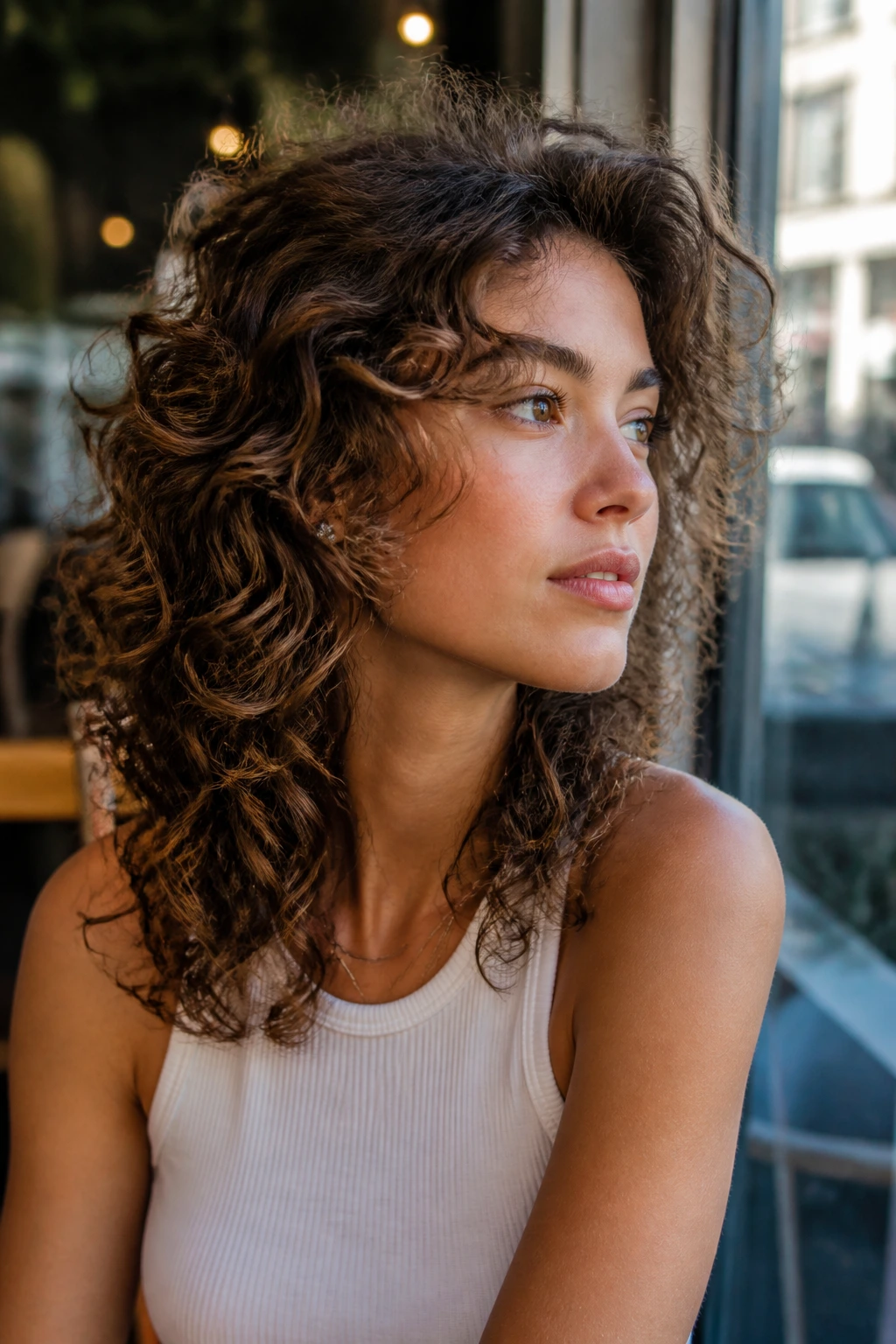
Oval faces are easy to frame, but that does not mean every cut flatters them in the same way. A wolf cut without bangs can use the cheek and jaw area to add interest without covering the forehead or crowding the face.
This version usually works best when the front layers land somewhere between cheekbone and chin. That keeps the eye moving downward, which suits the natural length of an oval face. The back can stay a little longer for balance, but the crown should still get lift so the cut doesn’t look flat on top.
Unlike a more angular bob, this shape is not trying to sharpen your features. It softens them. That can be a nice change if you usually wear hair that sits too close to the face and makes everything feel narrow.
Best match:
- Medium to thick curls
- Hair that holds shape after drying
- People who like their forehead visible
- Anyone who wants the wolf cut without a hard edge
It’s a simple idea, but it works. Sometimes the best styling move is leaving the face open and letting the curls do the framing.
17. Curly Wolf Cut for Round Faces
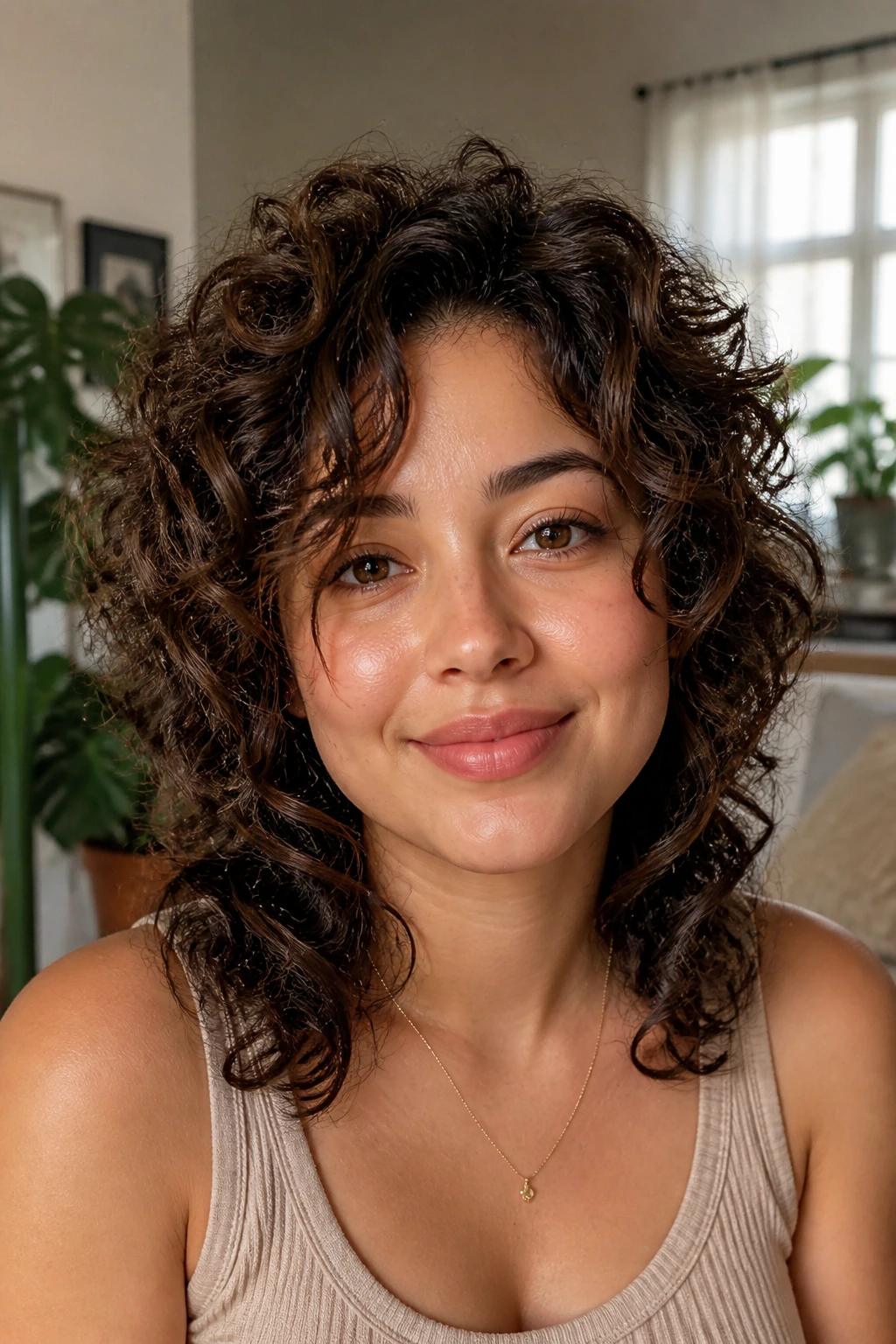
Round faces need a little vertical stretch, and the wolf cut can do that without making the hair feel severe.
The main goal here is to keep volume from sitting too low and too wide. That means more lift at the crown, longer side pieces, and layers that angle down instead of stopping at the cheeks. A bang-free version helps because the forehead stays open, which adds a bit of length to the face visually.
If you’ve ever had a curly cut that made your face look fuller in the middle, you know why this matters. The wrong layer placement can make a round face feel wider than it is. The right one creates movement that pulls the eye downward.
Ask for soft vertical lines around the front. That phrase matters. It is the difference between a face-framing cut and a puff ball.
This shape is one of my favorites for people who want curl volume but don’t want their hair to spread outward like a fan. It can be flattering without feeling fussy, and it grows out in a pretty forgiving way.
18. Curly Wolf Cut for Heart-Shaped Faces
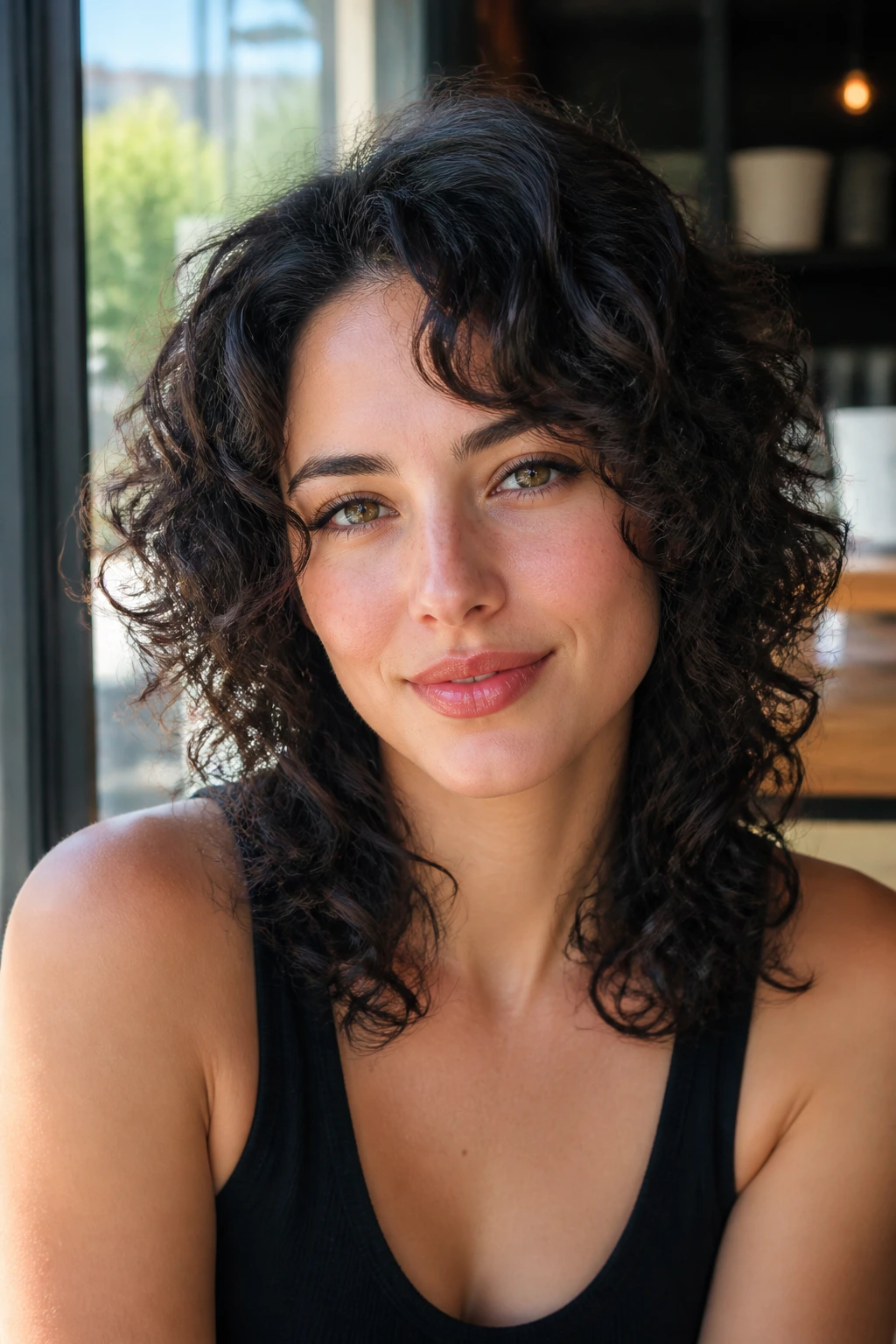
A heart-shaped face usually has a wider forehead and a narrower chin, so the wolf cut needs to balance those two zones without burying the face in hair. No bangs helps a lot here, because the forehead can stay visible while the layers soften the cheek and jaw area.
The smartest version keeps the shortest layers away from the forehead and concentrates more shape around the cheekbones. That way, the cut does not pull extra attention upward. Instead, it gently widens the lower half of the face, which makes the overall outline feel more even.
This can be a really pretty cut on curls that have a soft bend or a loose spiral. The front pieces should arc around the jaw rather than stop at it. That small detail changes the whole mood of the haircut.
A middle part can work, but a slightly off-center part often looks easier. It breaks up the width at the top and lets the curls fall with more softness.
If your face tends to look top-heavy in photos, this is one of the kinder wolf-cut shapes to try.
19. Color-Dyed Curly Wolf Cut
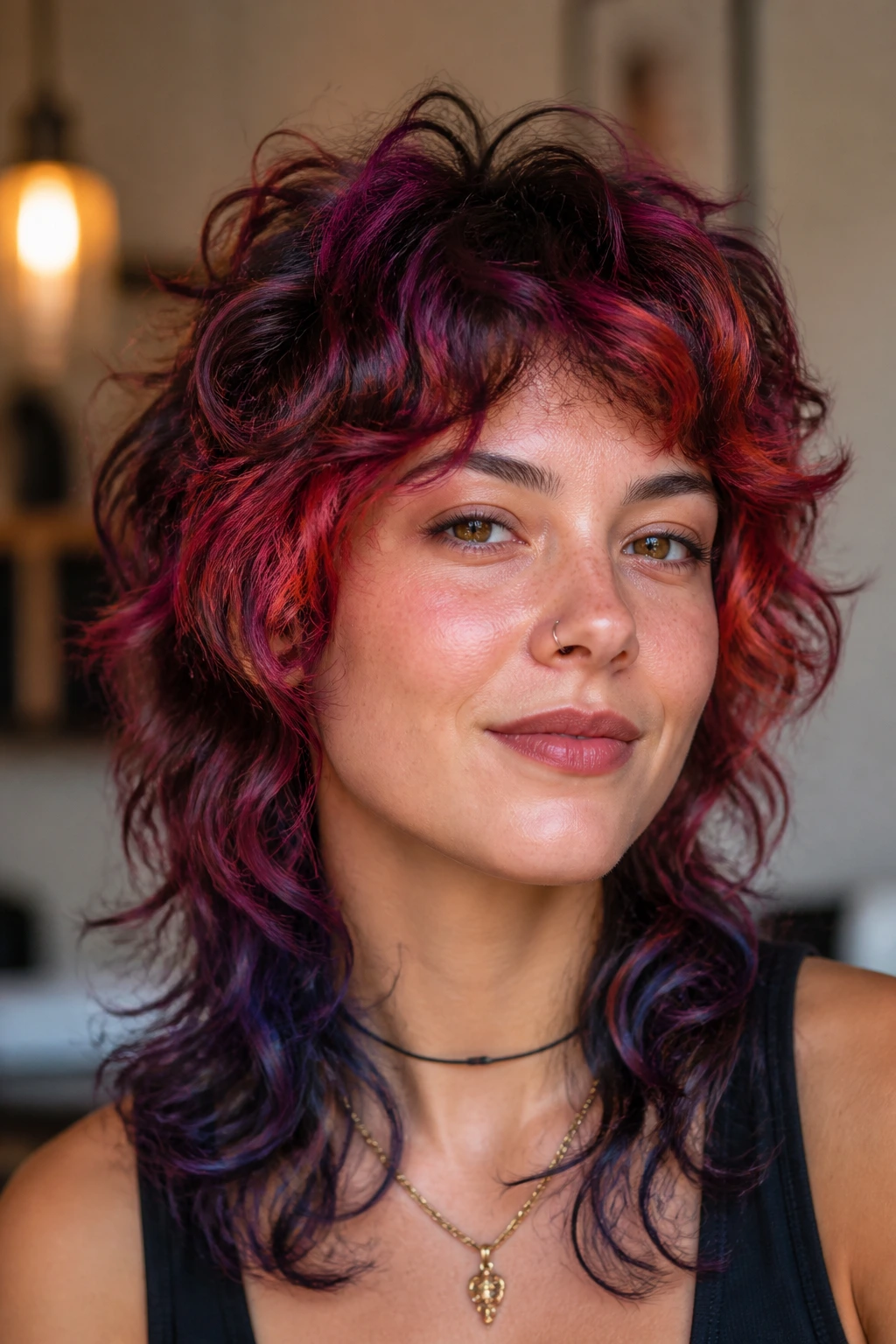
Color changes everything. Texture pops more when the curls catch light at different points, and a wolf cut gives dyed curls more movement than a single-length cut ever could.
This version is about using the haircut to show off dimension. Highlights, lowlights, copper tones, deep brunettes, and even vivid color all look more alive when the layers move separately. The face-framing pieces become part of the color story, even without bangs. That helps the cut feel deliberate, not accidental.
The thing to watch is dryness. Dyed curls can lose softness fast, so the cut should be shaped with enough weight left in the ends to keep the curl clumps from fraying. A good mask once a week helps, but the haircut itself should be doing some of the work.
- Best on curls that already have clear definition
- Looks strong with ribbon highlights or chunkier panels
- Needs regular hydration to stay bouncy
- Benefits from a satin pillowcase and gentle detangling
This is the style for someone who likes a little drama. Hair color and wolf-cut layers are a strong pair.
20. Wash-and-Go Curly Wolf Cut That Grows Out Gracefully
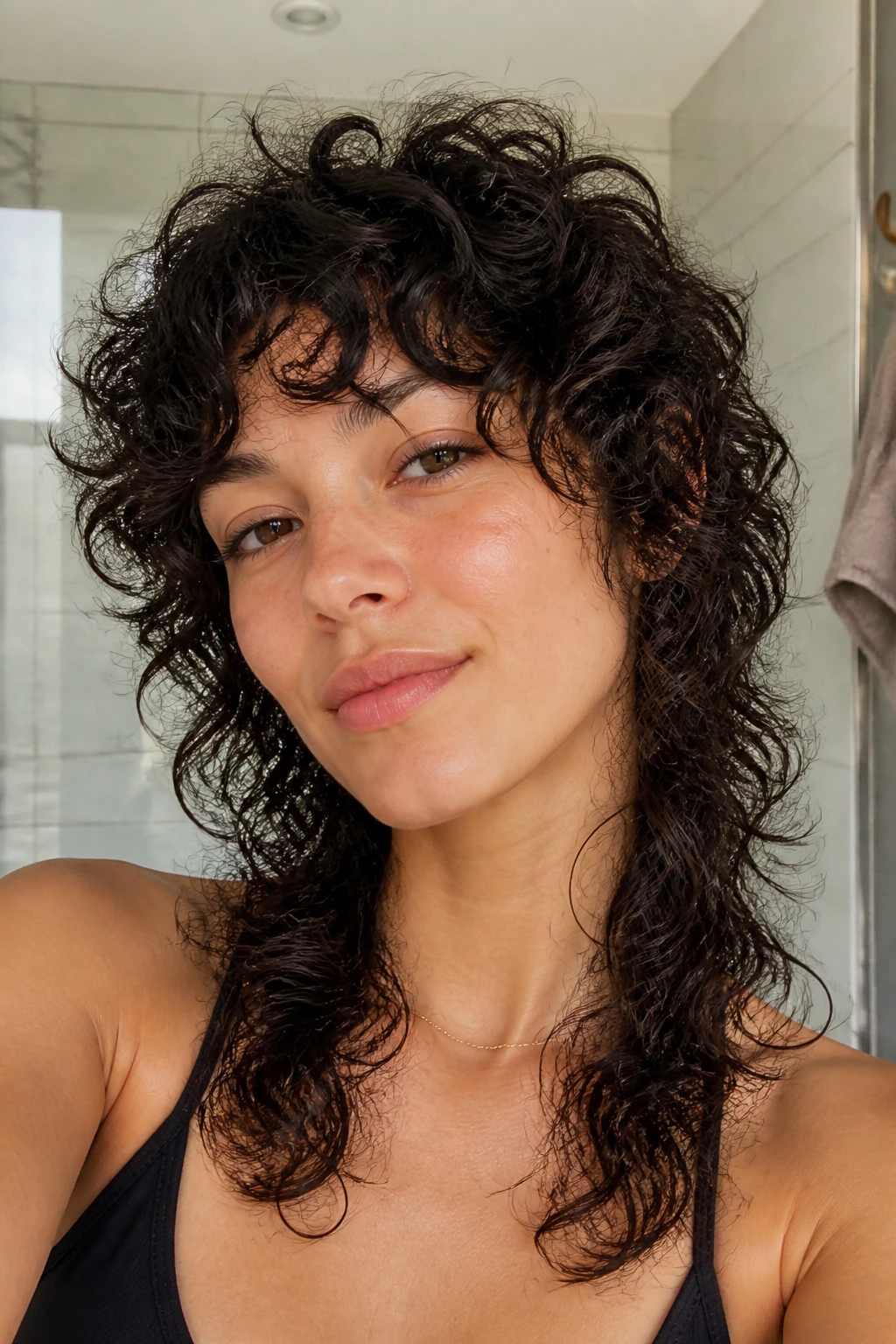
The best curly wolf cut, honestly, is the one you can ignore for a few days and still like when you catch yourself in a mirror. That usually means the layers were cut with growth in mind, not just for the first week after the salon.
A graceful grow-out depends on balance. The crown needs enough lift to keep the silhouette from flattening, the mid-lengths need movement so they don’t bulk up, and the perimeter needs enough length that the cut doesn’t look chopped to pieces once it starts settling in. No bangs helps here too, because the front keeps its shape longer and doesn’t demand constant trimming.
This is the version I’d point to for anyone who wants texture without scheduling their life around the haircut. It can be air-dried, refreshed with water, pinned up for a day, or worn loose when you have time. It forgives a late trim. It forgives a skipped wash. That is rare, and worth paying attention to.
A good wolf cut on curls should make your hair feel more like itself, not less. If the shape still looks fun after three days and a little dry shampoo, you found the right one.
