



Short wolf cuts for thick hair work because they lean into the hair’s body instead of fighting it.
That sounds simple, but it’s where a lot of bad cuts go sideways. Thick hair does not sit still for long, and if the weight is removed in the wrong places, the shape can balloon at the sides or sit like a heavy block at the bottom.
A good short wolf cut trims bulk where it’s crowding the outline, keeps enough length to swing, and uses broken layers to stop the silhouette from turning boxy. I like to see the interior shaped first, then the fringe and nape softened with the kind of detail that lets the haircut move when it dries.
The best versions are not the loudest ones. They’re the ones that still look intentional when you air-dry them, then get a little messy when you run your hands through them on the way out the door.
1. Chin-Grazing Short Wolf Cut with Airy Fringe

This is the version I point thick-haired people toward when they want edge without living in full shag territory. The chin-grazing length keeps the cut from feeling too fluffy, while the airy fringe opens the face and stops all that density from piling up around the cheeks.
Why it works on thick hair
Thick hair likes a clear line. It also likes room to move. This cut gives it both by keeping the perimeter around the chin and building short internal layers that stop the shape from becoming one heavy mass.
The fringe is the part that does the real work here. A soft, piecey bang breaks up the front of the haircut, which matters a lot if your hair tends to expand when it dries. You get shape at the crown, movement around the face, and a finish that feels lighter than a blunt bob.
- Ask for point-cut ends so the outline looks broken, not chopped straight across.
- Keep the nape soft, not razor-short, or the back can stick out.
- Best for straight, wavy, or loose-curly thick hair that needs less bulk.
- A small round brush or a quick bend with a flat iron is usually enough.
My rule here: if the fringe feels too heavy in the mirror, it probably needs more texture, not more length.
2. Short Wolf Bob with Chopped Ends
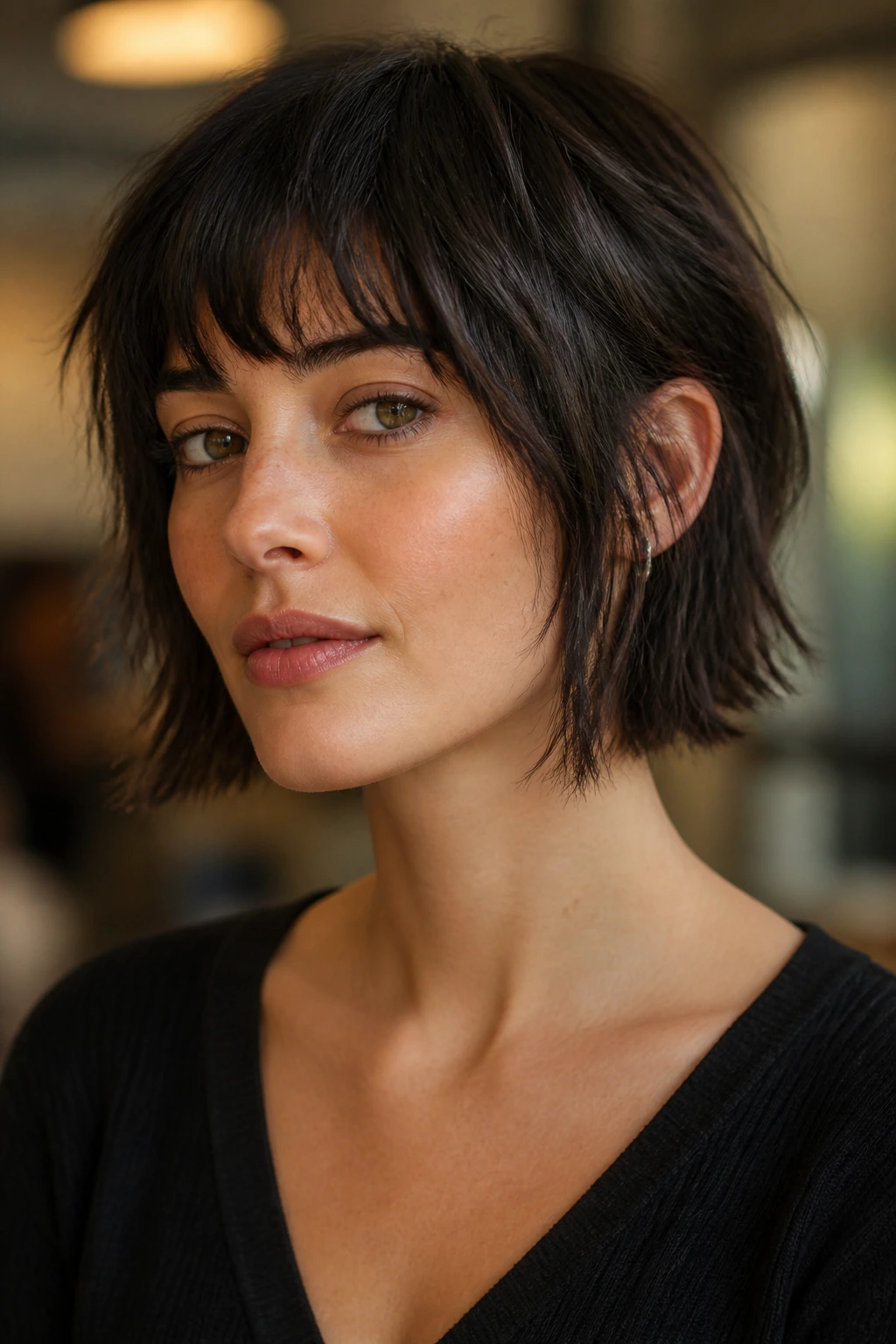
A wolf bob is the cleanest way to wear thick hair short without losing the slightly wild shape people want from a wolf cut. It sits closer to the head than a traditional shag, but the ends are chipped and broken instead of blunt, which keeps the haircut from turning into a helmet.
The trick is balance. You want a strong perimeter, usually somewhere between the jaw and just below it, then enough internal layering to keep the body from stacking up at the sides. On thick hair, that matters a lot. A bob with no interior movement can feel hard and boxy by lunchtime.
This is the one I like for people who want a haircut that still looks good after a long day, after a scarf, after humidity, after being tucked behind the ears a dozen times. It holds its shape. It also looks good messy, which is half the appeal. If you like easy styling, this is a smart place to start.
3. Piecey Wolf Pixie-Bob for Dense Hair
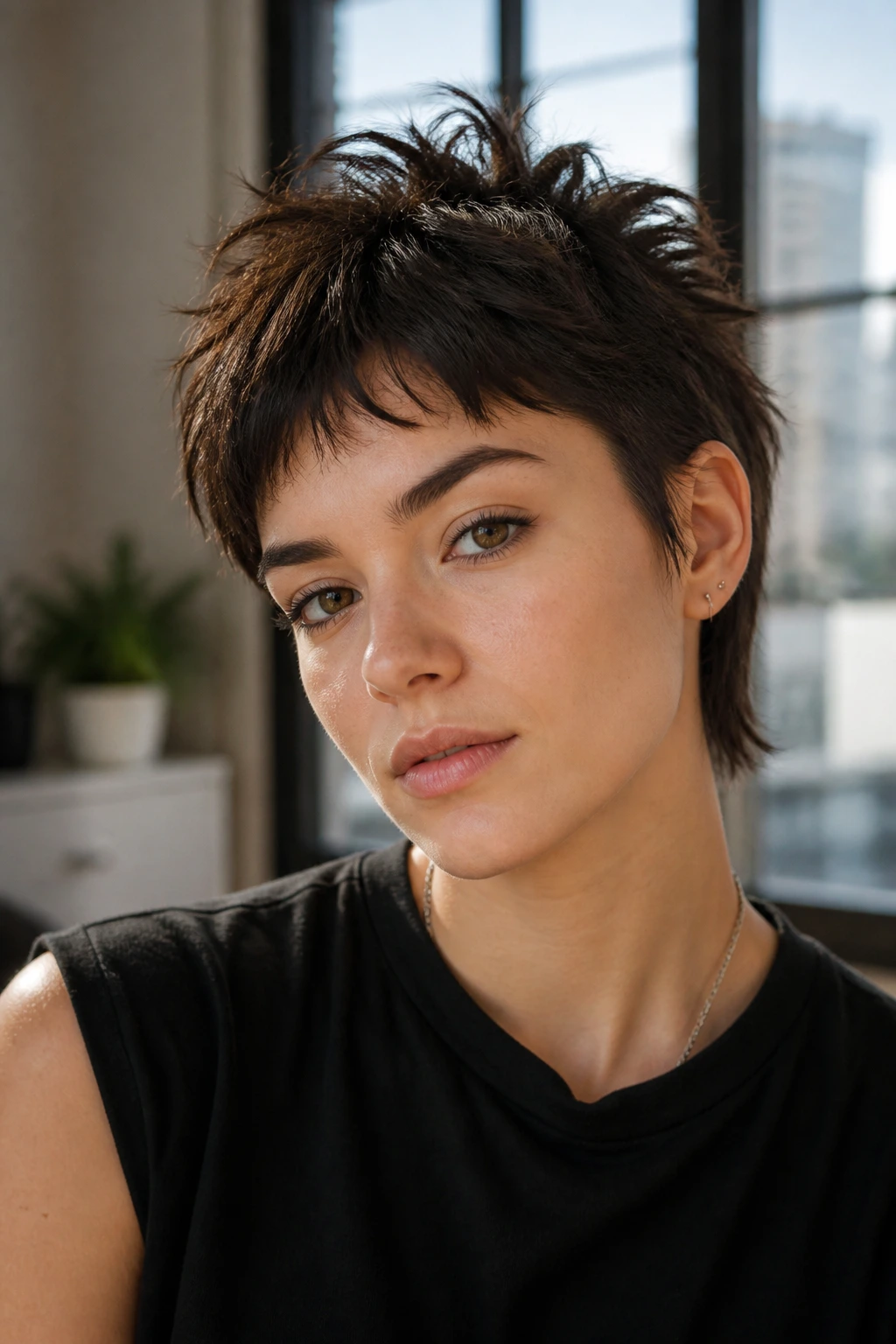
If your hair grows outward before it grows down, this cut makes a lot of sense. It takes the practicality of a pixie-bob and adds enough wolf-cut texture to stop the finish from feeling too tidy. The result is short, sharp, and surprisingly wearable on dense hair.
How to ask for it
Tell the stylist you want shorter layers on top, a tapered side, and enough length around the crown to create lift without exposing too much scalp. That last part matters. With thick hair, a pixie-bob can go from chic to puffy fast if the top is thinned too much.
A good version keeps the sides close, then lets the top break into little spikes and bends. It should look airy when it moves, not wispy in a fragile way. I’d call this the haircut for people who are happy to use a matte paste or a light wax in the morning and make the texture their own.
- Best for oval, heart, and long face shapes
- Works well if you want ear-length or just-below-ear length
- Ask for soft piece separation, not sharp disconnected chunks
- Trim every 6 to 8 weeks to keep the outline from puffing up
4. Rounded Crown Wolf Cut with Flipped Ends

Want volume that sits up instead of out? This is the shape to look at. The rounded crown gives thick hair a bit of lift at the top, then the flipped ends break the bottom edge so the cut doesn’t land like a block.
The crown is the quiet hero here. If it’s cut with thoughtful layering, the hair rises a little at the roots and then falls in a softer curve around the head. That helps a lot when your hair has serious body and refuses to lie flat. The ends can be turned under, flicked out, or left slightly bent for that lived-in, not-overdone finish.
This style is less about rebellion and more about control. You still get the wolf cut attitude, but the overall look is smoother and more rounded than jagged. It’s a good choice if you want the haircut to feel polished enough for work, then a little messier by evening.
5. Heavy Fringe Wolf Cut with a Soft Nape

I keep coming back to this shape for thick hair because it solves two problems at once: the forehead area feels softer, and the back doesn’t get too heavy. A fuller fringe gives the haircut some character, while the soft nape keeps the whole thing from looking stiff or blocky.
What to ask for
- A dense fringe that sits around eyebrow level or slightly below
- Blended temples so the front does not stop abruptly at the cheek
- A choppy, light nape with some length left in the neckline
- Texture through the top, but not over-thinned ends
The heavy fringe works well if you like the face-framing drama of a shag but don’t want long lengths. On thick hair, a strong bang can anchor the haircut and keep all the body from rushing outward. It also looks good when it grows out, which is a small blessing because bangs always grow faster than you want them to.
If your hair is straight, this version reads bold. If it’s wavy, it gets softer and more piecey. Either way, it has a bit of attitude.
6. Mini Wolf Cut with a Tapered Nape

Unlike a classic mullet, this version stays close enough to the head to feel neat around the collar. That makes it a good pick for thick hair that gets hot, bulky, or annoying at the neck by the end of the day.
The tapered nape matters more than people think. When the back is too full, thick hair can feel like it’s wearing a sweater. A mini wolf cut trims that area down while leaving enough length on top to keep the shape interesting. The result is short, sharp, and much easier to tuck behind the ears.
This is also one of the better short wolf cuts for thick hair if you want a haircut that doesn’t scream for daily styling. A little spray, a quick scrunch, maybe one bend with a brush near the front — that’s usually enough. If you like clean lines with some texture on top, this one is worth asking about.
7. Short Wolf Cut for Thick Curly Hair

Curly thick hair needs room. Not chaos. That distinction matters here, because a short wolf cut can look fantastic on curls when the layers follow the curl pattern instead of fighting it.
The biggest mistake is cutting curly thick hair too short in the wrong spots. Curls spring up, and if the layers are stacked too high, you can end up with a round halo that feels bigger than the head. I prefer to see a little more length left on the top and around the sides, with the interior debulked so the curls can stack without collapsing into one giant puff.
A good short wolf cut for thick hair with curls should feel springy and separated, not fuzzy. The ends need enough weight to hold a curl clump, while the fringe or front pieces should break up just enough to keep the face open. If you air-dry, a curl cream plus gel can help the layers settle into clean coils. If you diffuse, keep the heat low and stop before the hair gets brittle at the tips.
Curly wolf cuts look best when they move. Flat, forced, over-brushed curls? No thanks.
8. Feathered Wolf Cut with Long Temple Pieces
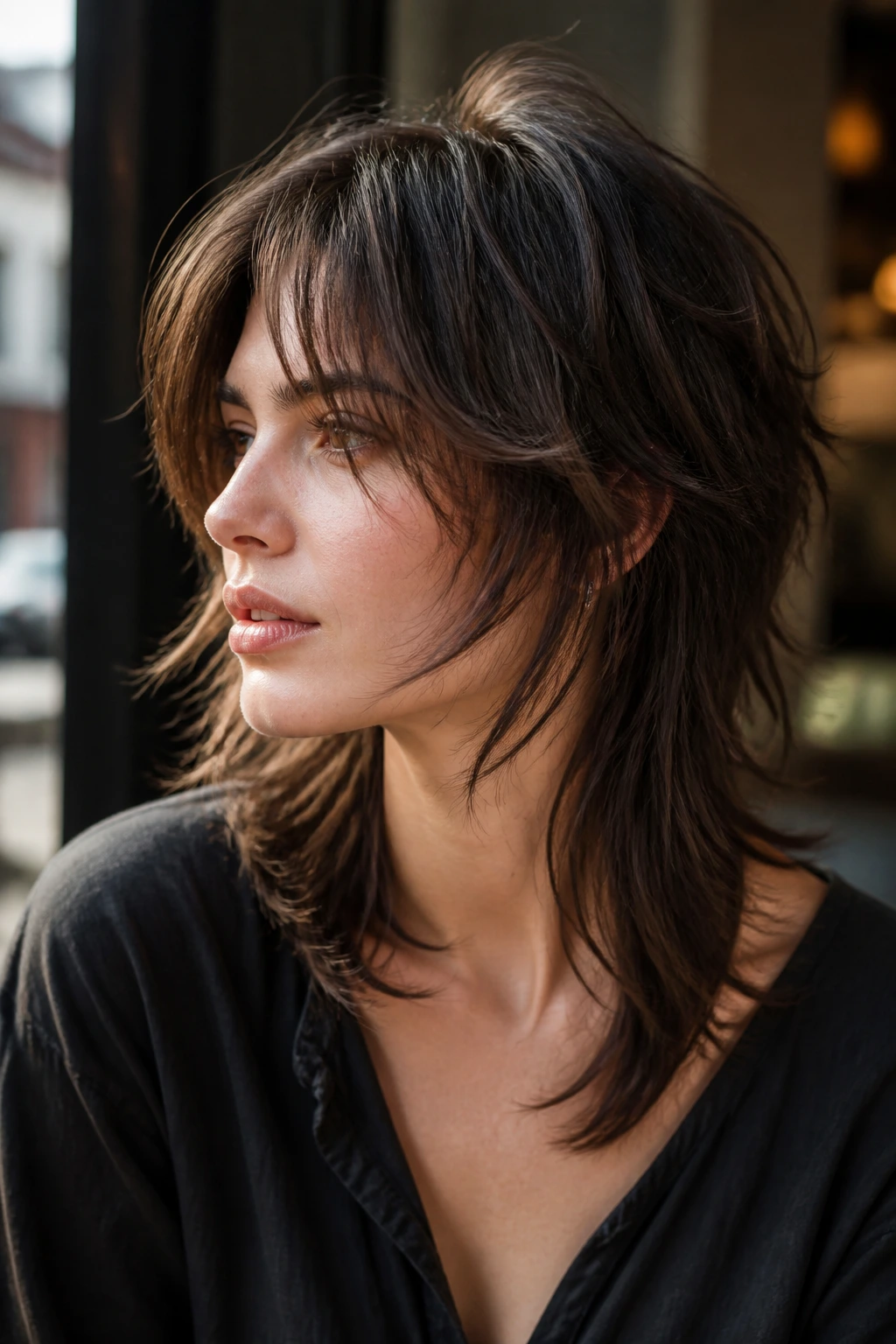
The long temple pieces are the part most people overlook, and that’s a shame. On thick hair, the area around the temples and upper cheeks can get bulky fast, so those longer face pieces help the cut feel lighter without stripping away all the length.
What makes it different
This version uses feathering, not blunt chopping, through the front and sides. The result is a softer line around the face and a little motion every time you turn your head. It’s the kind of cut that looks better after a few hours of wear because the pieces settle into place.
It’s especially good if your hair tends to go triangular when it grows out. The long temple pieces pull the eye down in a gentler line, which helps the cut feel less wide. If you wear glasses, tuck one side behind the ear, or like to let a few strands fall forward, this shape gives you something to play with.
- Best for square, round, and heart-shaped faces
- Nice if you want to keep some cheekbone coverage
- Ask for feathered face-framing layers, not a blunt side cut
- Works well with a light mousse and rough drying
9. Tousled Wolf Mullet-Bob with a Broken Outline
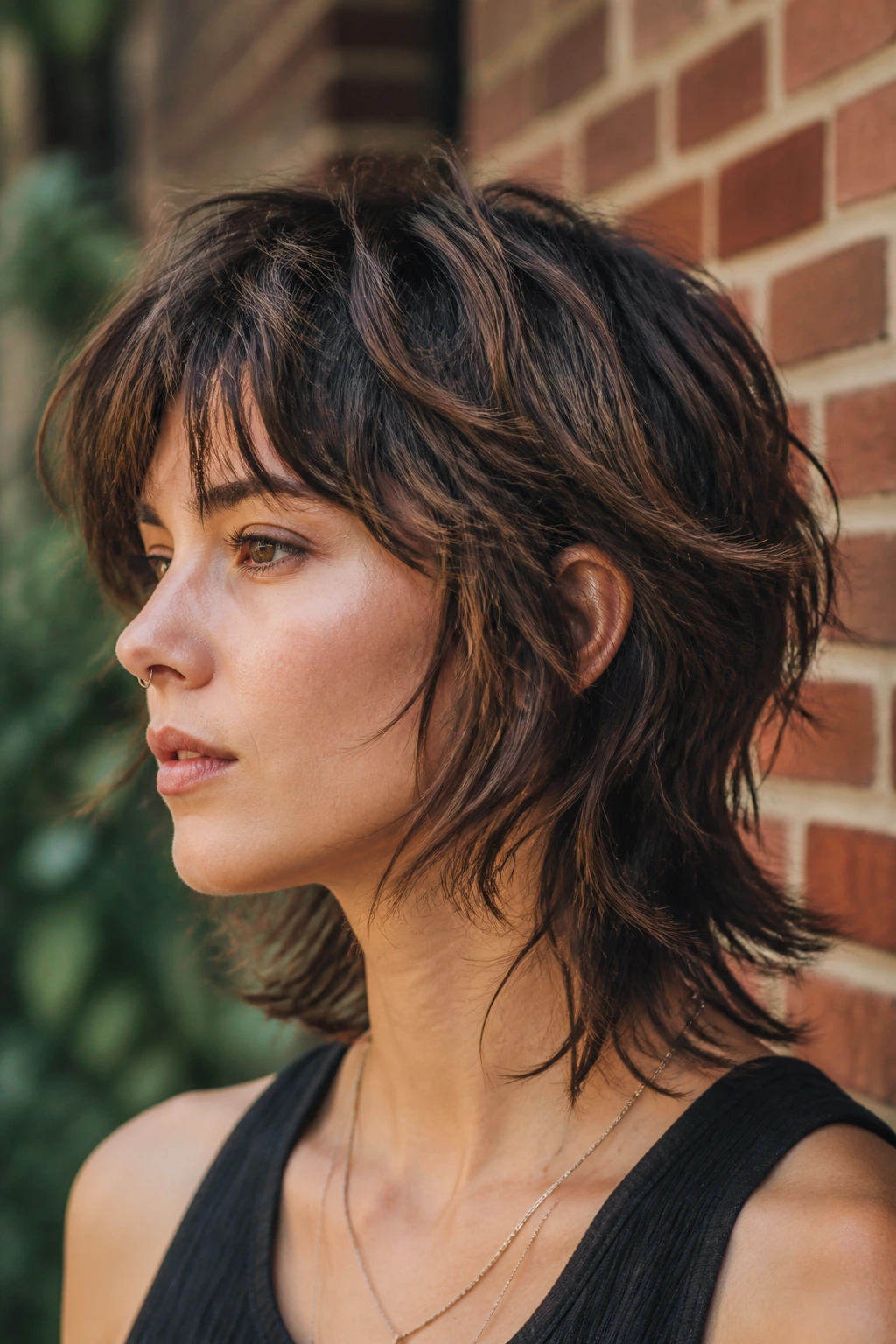
This is the cut for someone who wants wolf-cut attitude without a sharp disconnect between the front and back. It sits between a bob and a mullet, which sounds odd on paper and looks much better in real life when the outline is broken just enough to feel lived-in.
Thick hair helps this shape. A lot. The density gives the haircut body, so the slightly longer back doesn’t collapse flat, and the shorter top has enough support to stay lifted. The broken outline keeps the edges from looking too polished, which is exactly what makes it feel modern.
I like this one with a little texturizing spray on dry hair, then a quick scrunch or finger twist through the top. If the hair is straight, a few bends with a flat iron help. If it’s wavy, you may not need much at all. It’s one of those cuts that can look rebellious without requiring a full styling session.
10. Razor-Soft Wolf Cut with Sliced Layers

Can a razor cut work on thick hair? Yes, if the hair is coarse enough to take it and the stylist knows when to stop. The goal is to slice away some of the heavy, blocky feeling without making the ends look shredded or see-through.
This cut has a lighter, slippier finish than scissor-cut layers. The edges are soft, and the layers blend with a bit more movement. On very dense hair, that can be a lifesaver. It takes away that thick cardboard feeling at the ends, especially around the jaw and neck, where bulk tends to pile up first.
But there is a catch. If your hair is fine even though it’s thick in quantity, too much razor work can make the ends fray and puff. In that case, a scissor cut with point-cut detailing is safer. I’d call this one best for coarse, sturdy hair that can handle texture without getting ragged.
A good razor-soft wolf cut should still feel clean when you run your fingers through it. Soft, not shredded.
11. Side-Swept Wolf Crop with Long Fringe

A side sweep changes the whole mood of a wolf cut. It softens the top, shifts the volume off center, and gives thick hair a cleaner line through the front without losing the texture people want from the style.
The side fringe is especially useful if your hair always falls forward into your eyes or splits down the middle no matter what you do. A controlled side part can help the haircut sit better, especially when the top has been layered just enough to bend instead of float. It also makes the cut feel less symmetrical, which is a nice fit for a wolf style.
This is one of the easier versions to live with if you want something short but not too edgy. The front can be tucked, pushed back, or left loose. The nape stays close enough to feel light, and the long fringe gives you a bit of styling freedom on days when you cannot be bothered. Honestly, that alone makes it worth a look.
12. Collarbone Wolf Cut for Thick Hair with Internal Weight Removal
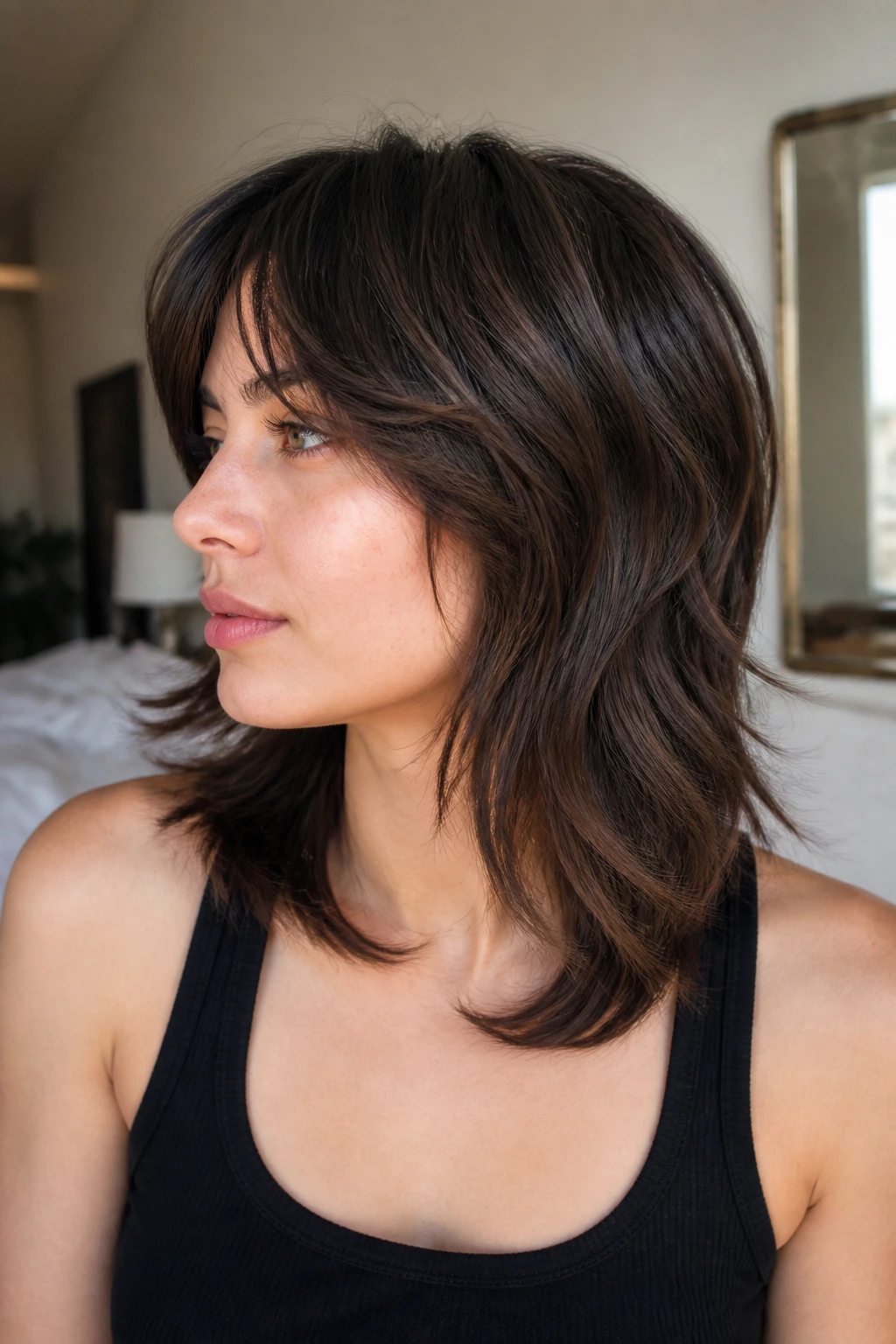
This one is not the shortest on the list, but it behaves like a short cut because the structure is compact and the internal layers do the heavy lifting. Thick hair that looks bulky in a blunt lob often behaves much better once the inside has been carved out properly.
The collarbone length gives you enough hair to tuck, clip, or pull back on busy days. The wolf-cut part comes from the shorter top layers, the broken face frame, and the way the interior is reduced without turning the ends thin. That balance matters. If the surface gets thinned too much, thick hair can go fuzzy. If the interior stays too full, the whole thing turns heavy.
I like this option for people who want a shape that grows out gracefully. It’s practical. You still get movement, and the length is forgiving if you skip a trim. It also photographs well in real life because the haircut keeps some swing instead of sitting in one hard line.
13. Curtain Bang Wolf Cut with Tapered Ends
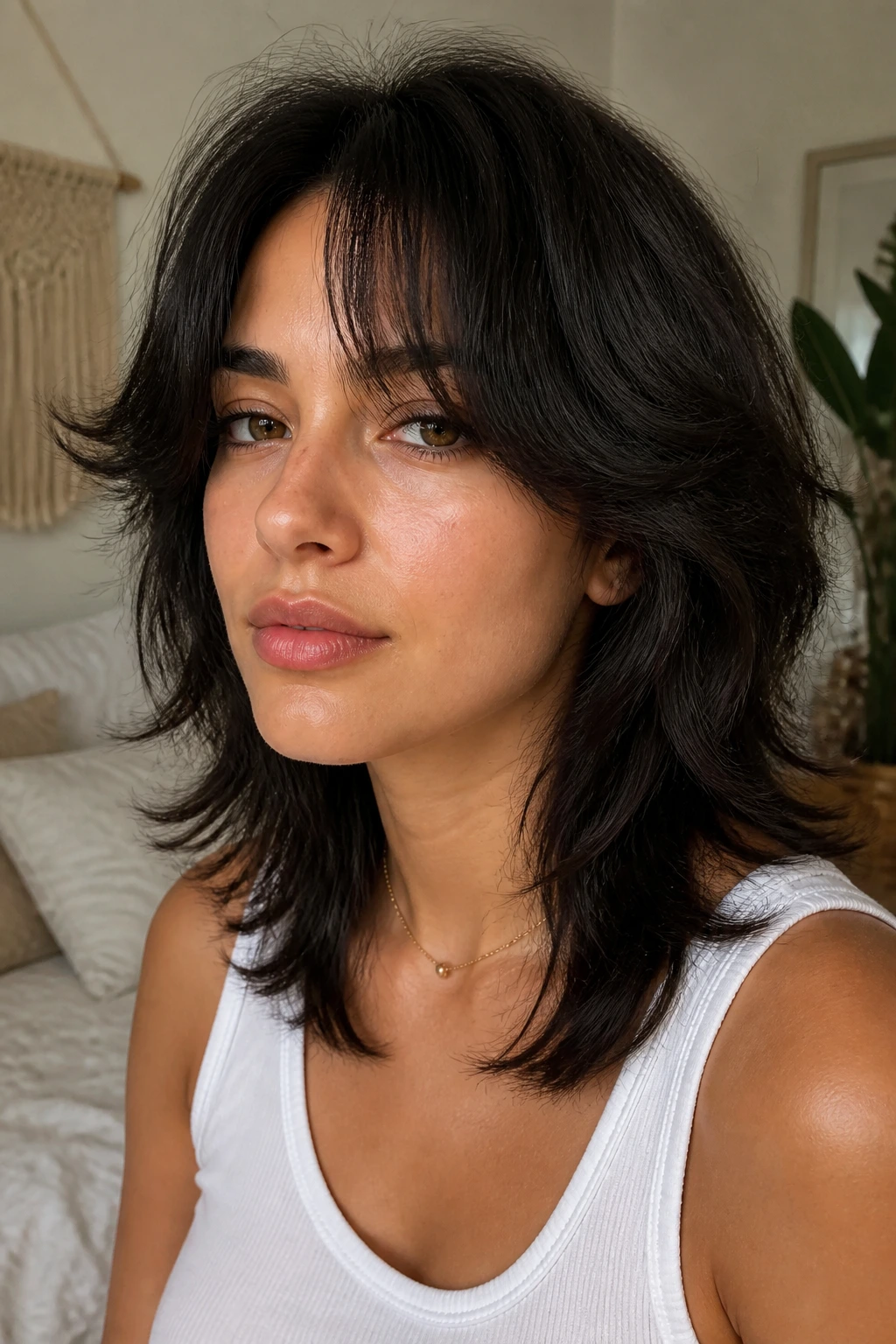
Curtain bangs and wolf cuts get along for a reason. The bang breaks up the forehead area, the layers around the face create movement, and the tapered ends keep thick hair from looking too bottom-heavy. It’s a useful combination when you want softness without losing attitude.
Bang placement matters
The curtain bang should start somewhere around brow length or a touch longer, then open out through the cheekbones. If it starts too short, thick hair can make it feel bulky. If it starts too long and heavy, it loses that airy split-down-the-middle effect people want.
The ends need to be tapered, not blunt. That gives the haircut a little swing when you push the bangs aside or tuck them back. It also keeps the front from fighting the rest of the cut. A round brush or even a quick bend with a blow-dryer nozzle can help those front pieces sit the right way.
This version is a favorite when someone wants the face-framing softness of a shag but still wants the slightly rebellious bite of a wolf cut. It’s friendly, but not boring.
14. Air-Dry Wolf Cut for Dense Hair

If you hate hot tools, this is the version to ask for. The haircut has to do more of the work on its own, which means the layers need to be placed with care and the overall shape has to stay soft enough to settle well while drying.
The mistake people make with air-dry cuts is asking for too many short, disconnected layers. On dense hair, that can create a weird split personality: puffy at the top, flat underneath, and frizzy around the sides. A better approach is to keep the layers blended and place the shortest pieces where they can support movement without sticking out.
A few small habits help here:
- Squeeze out water with a microfiber towel or T-shirt
- Use a light leave-in cream through the mids and ends
- Add a soft mousse near the roots if you want lift
- Leave the hair alone until it is at least 80% dry
This cut is one of my favorites for people who want texture without a big styling routine. It feels easy, and more importantly, it still looks like a haircut even when you do almost nothing to it.
15. Edgy Mini Wolf Cut with Lived-In Texture
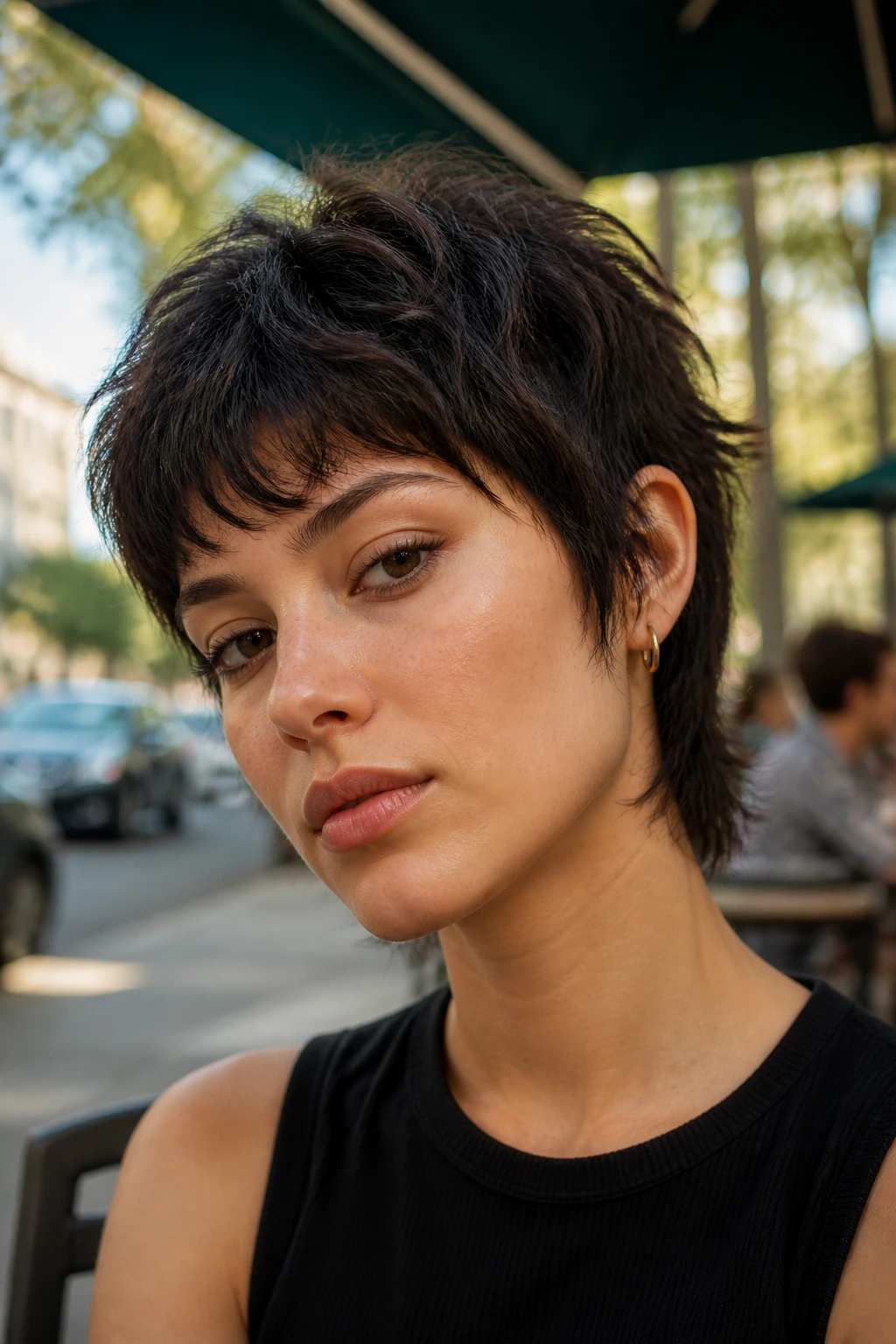
This is the one I reach for when thick hair needs a reset and the person in the chair wants something with a little bite. It sits between a pixie and a shag, but the texture is softer than a classic cropped cut, so it doesn’t feel severe.
The lived-in part is what makes it good. The ends are chipped enough to move, the top is short enough to feel fresh, and the nape is cleaned up so the back does not swell into a lump. That’s the whole game with thick hair: remove enough weight to let the shape breathe, but keep enough hair around the head that the cut still feels full.
If you like to tuck one side behind the ear, flip the fringe around, or rough up the crown with your fingers and go, this cut gives you that freedom. It is not for anyone who wants polished and perfect. It is for people who want short hair with texture, a little attitude, and less daily arguing with their own density.
Short, sharp, a little unruly. That is the charm.
