



Long hair can go flat fast. A good shag changes that without forcing you to give up the length you actually wanted to keep.
Flat hair hates a blunt line.
The best modern shag haircuts for long hair don’t look messy. They look alive — layers move, bangs soften the face, and the ends stop hanging there like they’re waiting for permission. The sweet spot is usually a shortest layer around the cheekbone or jaw, with the length still falling past the shoulders so you keep that long, swishy shape.
The part most people miss is balance. Too many short layers and the cut turns puffy, frizzy, or weirdly triangular. Too few and it’s basically just long hair with a fringe. What makes a shag feel current is the way the layers are placed, how the bangs are cut, and how much weight gets left in the ends.
1. Curtain-Bang Long Shag
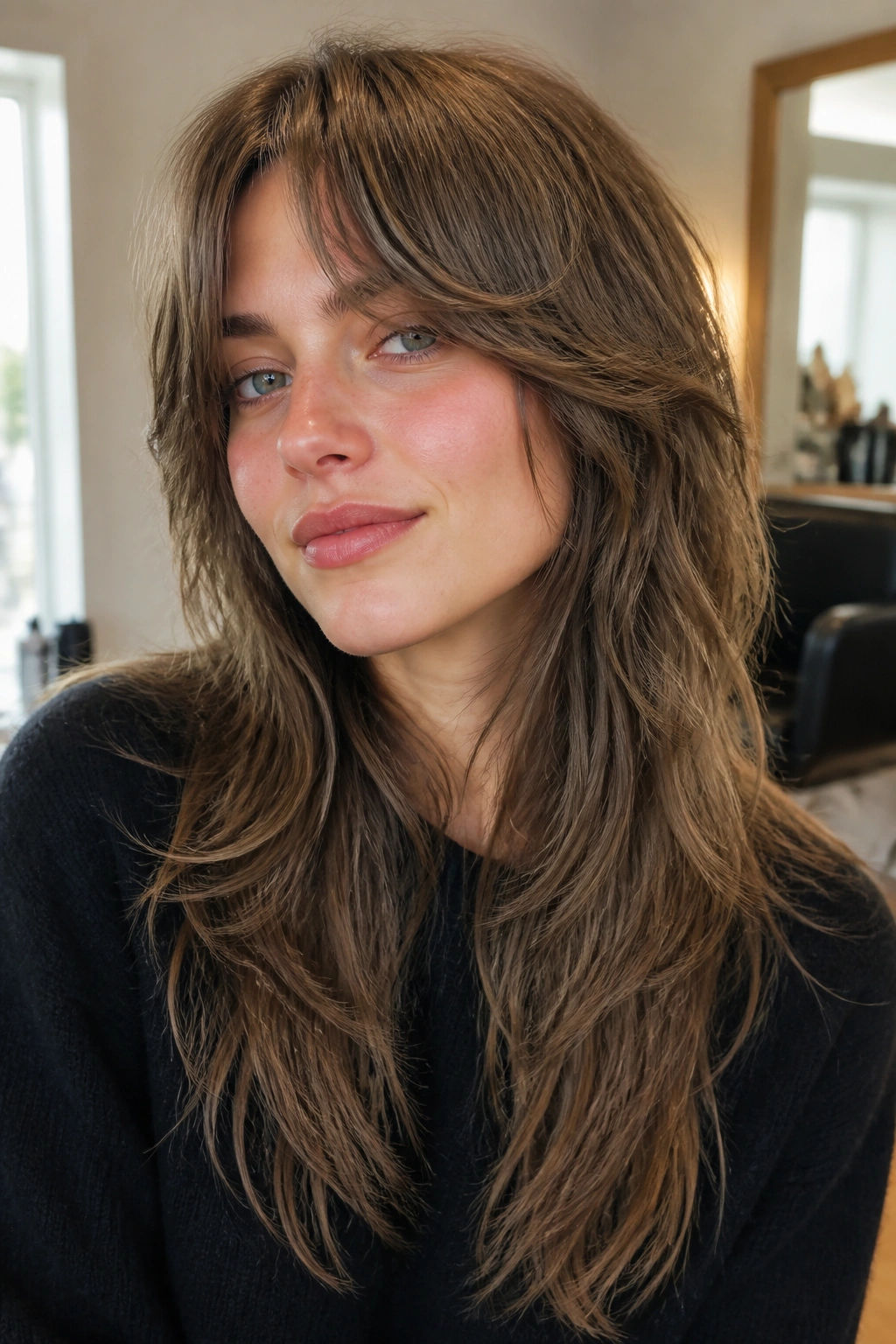
Curtain bangs are the safest starting point if you want a long shag haircut that still feels easy to wear. They split the difference between fringe and face-framing layers, and they do a lot of the work around the eyes and cheekbones without boxing the face in.
Why It Works
The shortest pieces usually sit around the cheekbone, then fall into longer layers through the front. That shape gives long hair movement right where people notice it most: around the face and along the sides. I like this version on straight, wavy, and slightly thick hair because it keeps the length looking full.
A good curtain-bang shag should feel soft, not chopped up. Ask for bangs that part in the middle and taper toward the jaw, then keep the rest of the layers fairly blended so the cut doesn’t jump from short to long too fast.
- Best for: Oval, heart, and round faces
- Styling time: About 5 to 10 minutes with a round brush or large Velcro rollers
- Upkeep: Trim the fringe every 6 to 8 weeks
- Watch for: Bangs that are cut too short; they lose the drape
Pro tip: Dry the bangs side to side first, then split them at the end. That little zigzag in the drying step helps them sit softer and less puffy.
2. Wolf-Cut Long Shag
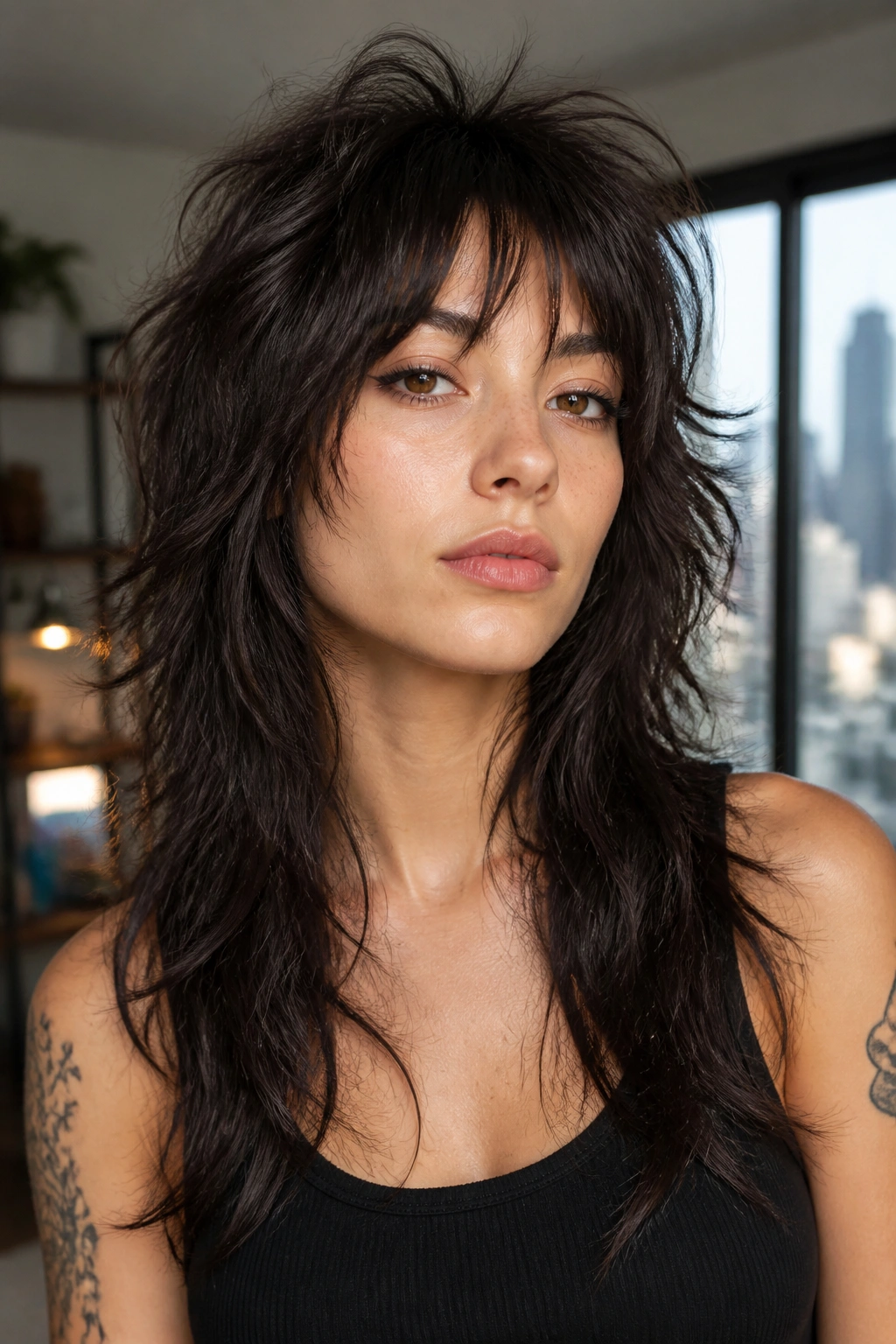
This is the sharper, more rebellious cousin in the shag family. If you want a cut that looks a little wild in a good way, the wolf-cut long shag gives you shorter crown layers, more texture through the top, and a longer tail through the back.
It has attitude built in. That’s the whole point. The crown gets more lift, the layers around the head are more obvious, and the perimeter keeps enough length to stop it from reading like a short crop. It works best when the hair has some natural body, because very fine hair can lose shape if the layers are pushed too high.
I’d ask for the top to stay soft near the crown, not buzzed up into a mullet. The modern version should feel uneven and airy, not costume-y. If you want edge without going full punk, this is the one I’d point to first.
3. Razor-Cut Shag for Thick Hair
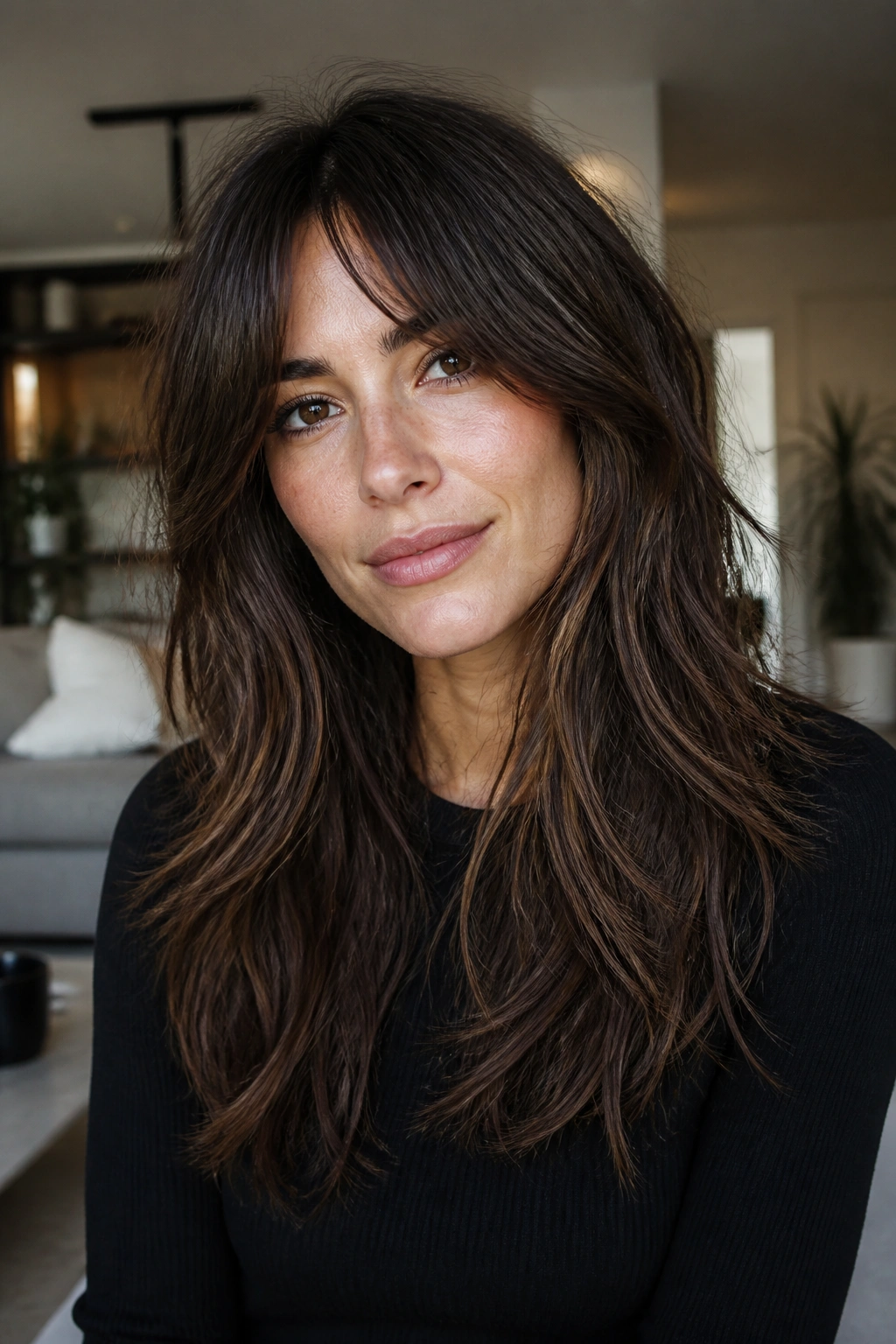
Can thick hair hold a shag without turning into a helmet? Yes, but only if the bulk gets handled properly. A razor-cut long shag removes weight in a way scissors sometimes can’t, especially if the ends are dense and the hair takes forever to move.
How to Ask for It
Tell the stylist you want weight removed through the mid-lengths and ends, not a bunch of short layers stacked at the crown. That keeps the haircut from puffing out at the top while still giving the lower half some swing. Razor cutting can make thick hair feel lighter, but it needs a steady hand.
The nice part is the texture. A razor leaves the ends a little softer and more broken up, which can be lovely on wavy hair. On coarse or very dry hair, though, too much razor work can make the ends look frayed, so I’d keep the cuts controlled and the perimeter a touch longer.
4. Fine-Hair Airy Shag
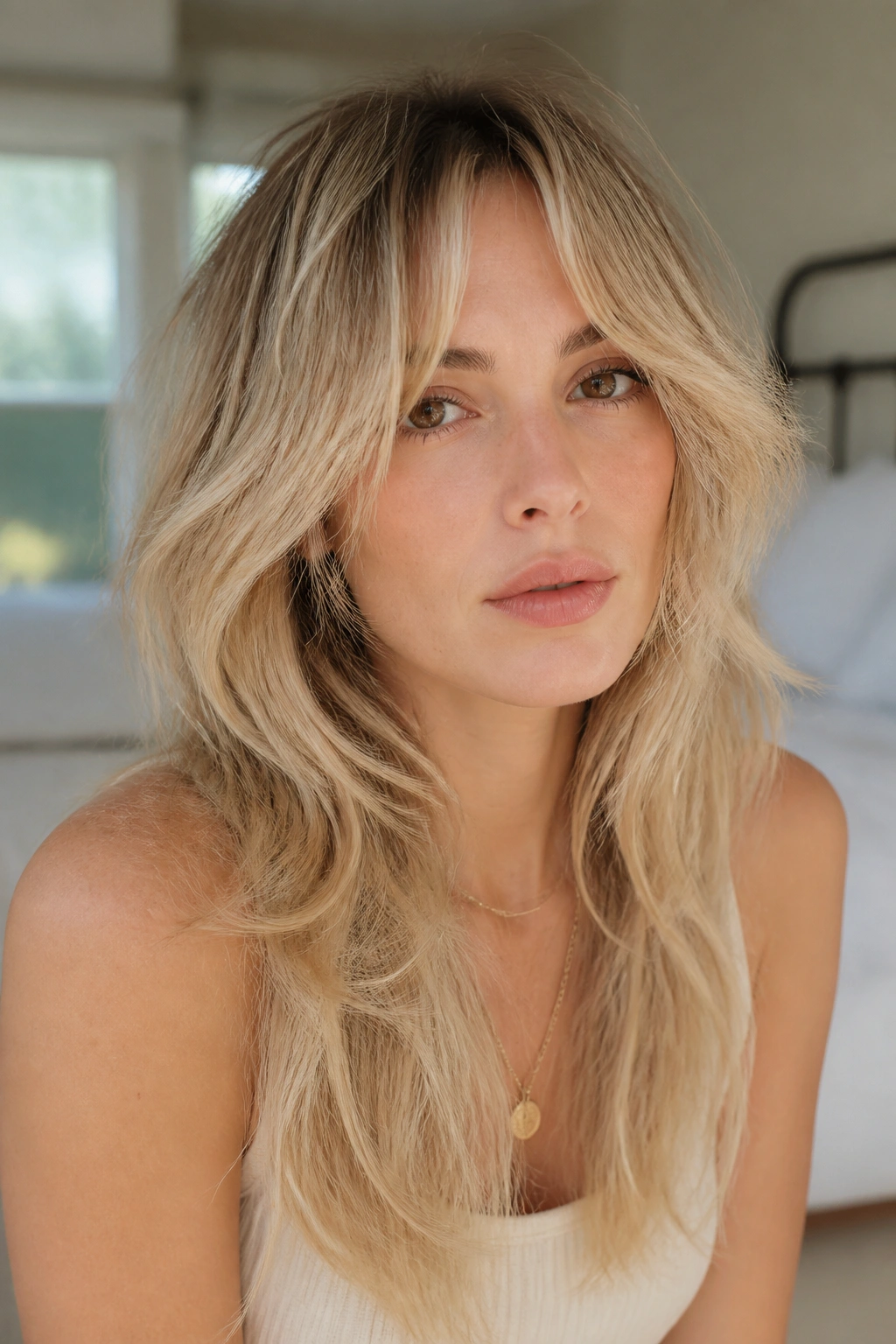
Fine hair and shag cuts can be a tricky couple. Too much layering, and the hair looks thinner at the ends than it really is. Too little layering, and the style falls flat by lunchtime. The sweet spot is a long shag with light internal layers and a perimeter that still looks solid.
A stylist who knows fine hair will usually keep the shortest pieces below the cheekbone and avoid taking out too much weight near the temples. That matters. If the crown gets stripped too short, the hair can separate and show your scalp more than you want.
- Best for: Fine, straight, or slightly wavy hair
- Ask for: Soft layers, not aggressive choppiness
- Skip: Heavy texturizing on the ends
- Style with: Root-lifting mousse and a small round brush
One thing I’d never do: load this cut up with oily creams. Fine hair needs lift, not slippage.
5. Curly Long Shag
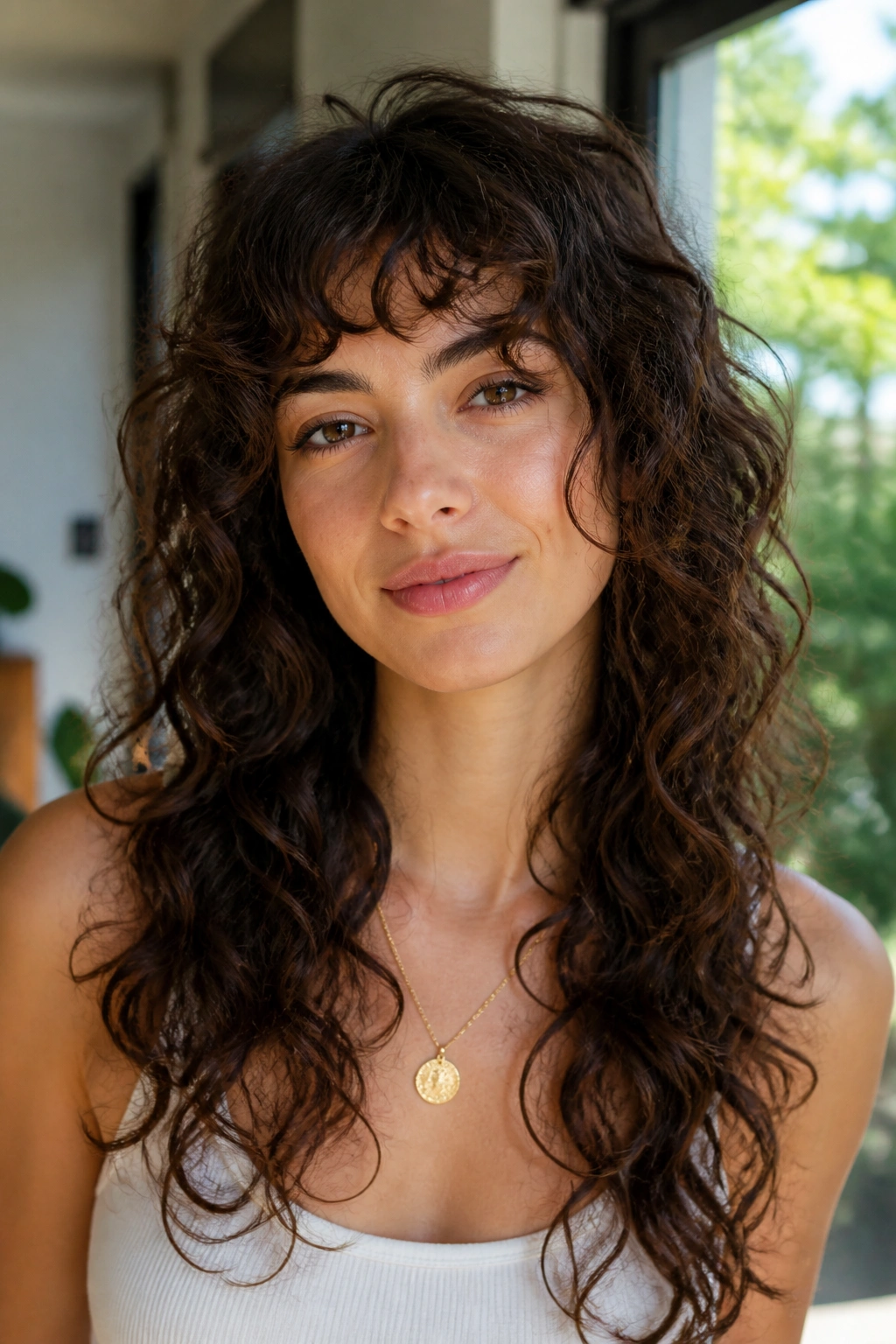
Curly hair loves a shag when the shape is cut with the curls in mind. The layers let the curls spring instead of building one giant triangle at the bottom, which is a common problem when long curls are left too blunt.
The trick is length. Curly shags work better when the shortest layer is not too short, because curls bounce up once they dry. A layer that looks chin-length when wet can end up much shorter after the hair shrinks. That’s why dry cutting or curl-by-curl shaping often gives a better result than guessing.
I like this cut for people who want shape without sacrificing density at the ends. The best version has face-framing curls that open near the cheekbones, then a softer fall through the back. It should look sculpted, not chopped. That’s a big difference.
6. Beachy Wavy Shag
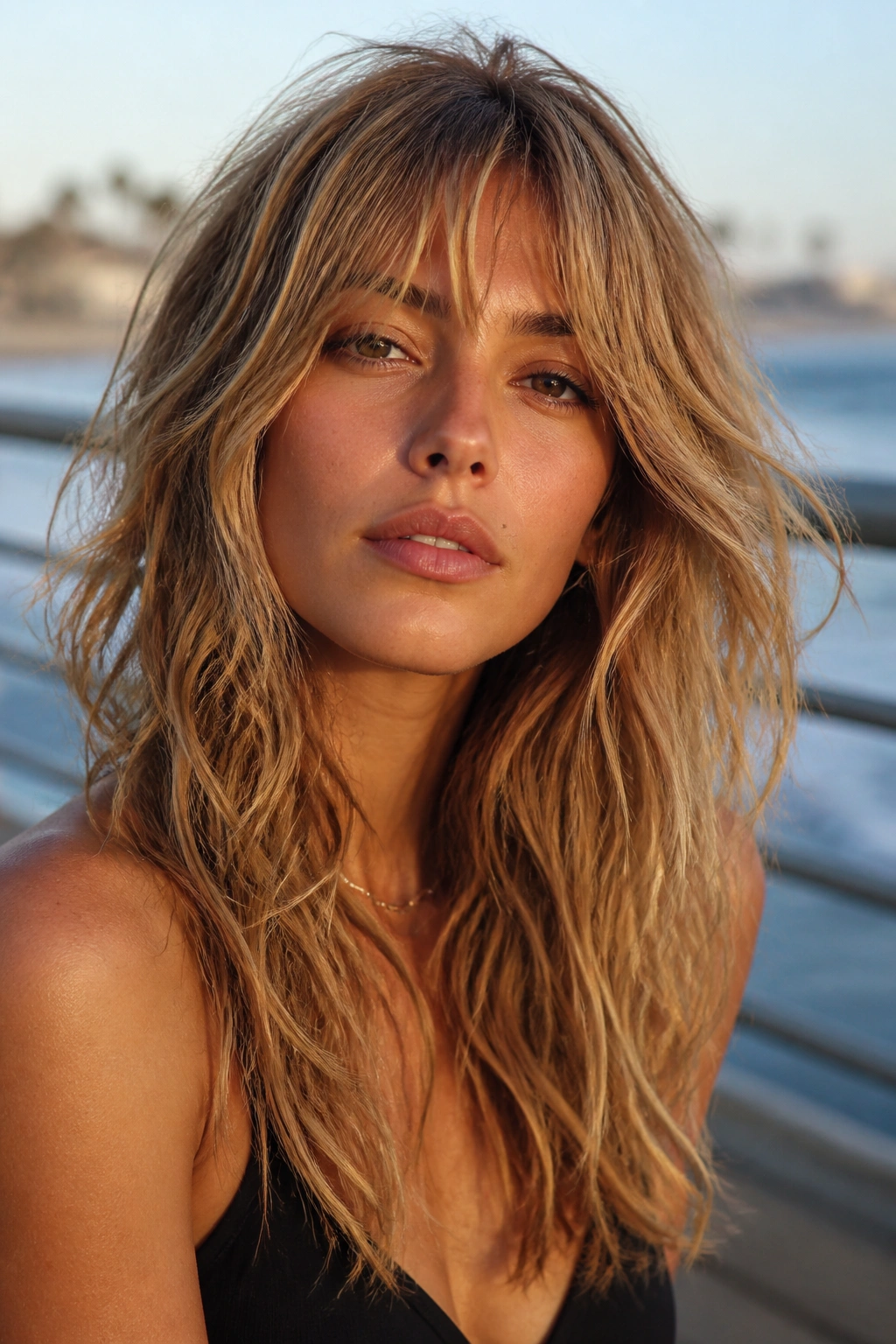
A wavy shag is less about precision and more about movement that looks easy. If your hair already bends into loose S-shapes, this cut helps those waves show up instead of collapsing into one long curtain.
Unlike a curly shag, this version usually keeps the layers a little flatter and the ends a little looser. The result is that undone, wind-tossed shape people try to fake with a curling wand. On natural waves, the haircut does half the work, which is a nice change for once.
I’d recommend this one if you want hair that dries well on its own. Scrunch in a light mousse, flip the head once or twice while drying, and leave the last inch or two alone so the ends don’t fray. The goal is soft texture, not crisp little bends everywhere.
7. Big Blowout Shag
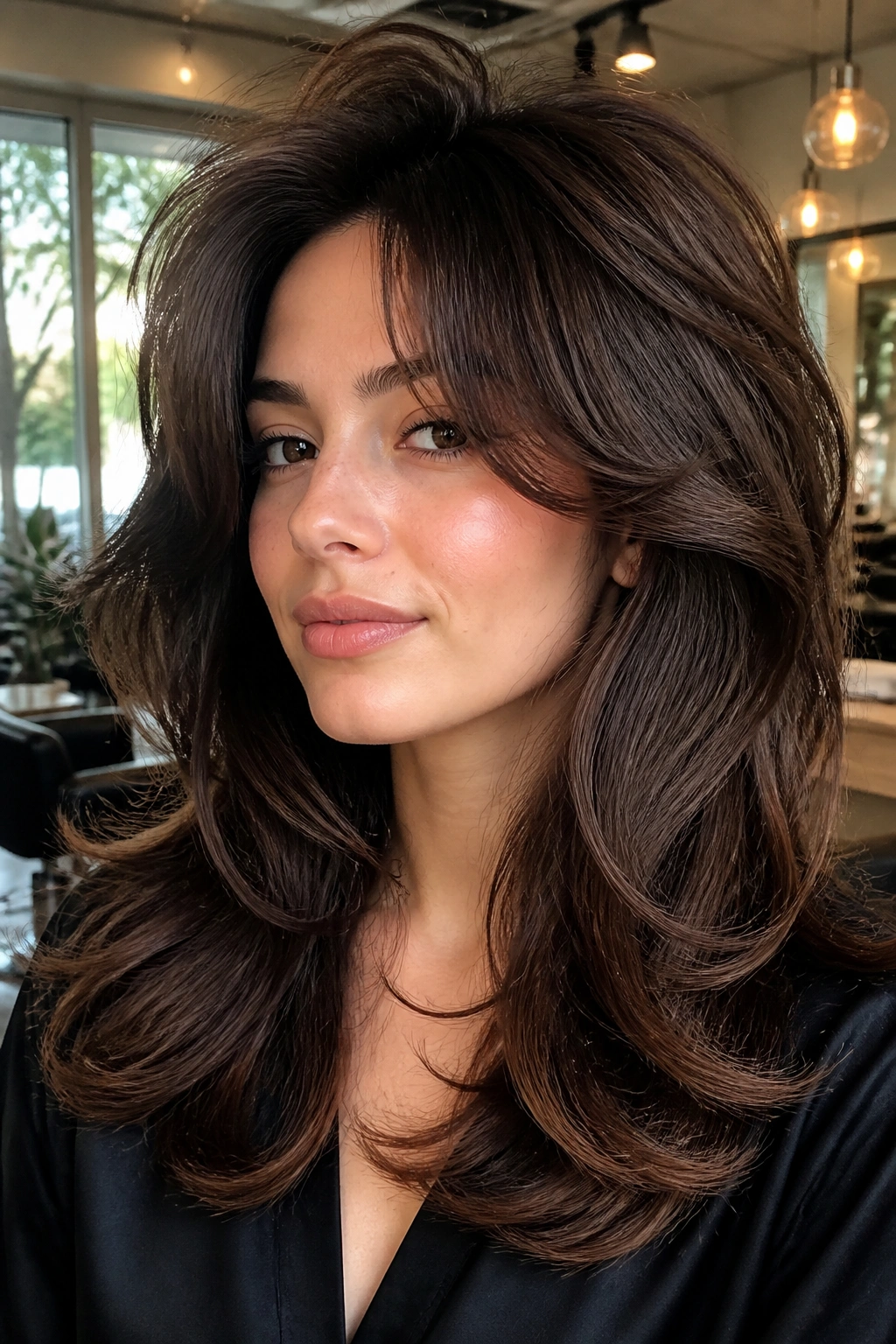
Some shags are built for air-drying. This one is not.
Why It Works
The big blowout shag leans into volume at the roots and curve through the ends, so the haircut looks polished even when it still has that shaggy shape underneath. Think round-brush lift at the crown, then soft flips at the cheekbone and collarbone.
I like this version on medium-thick hair because it can hold the shape after styling. The layers should be long enough to move, but not so short that they collapse into fuzz. If you love a salon blowout and want that shape to last past the first hour, this is a strong pick.
Quick Notes
- Best for: Thick, wavy, or straight hair with some natural bend
- Tools: 2-inch round brush, heat protectant, and a blow-dryer nozzle
- Finish: Light cream on the ends, not heavy oil
- Avoid: Too many short layers at the crown
My opinion: this is the shag for people who like hair that looks done, not accidental.
8. Bottleneck-Bang Shag
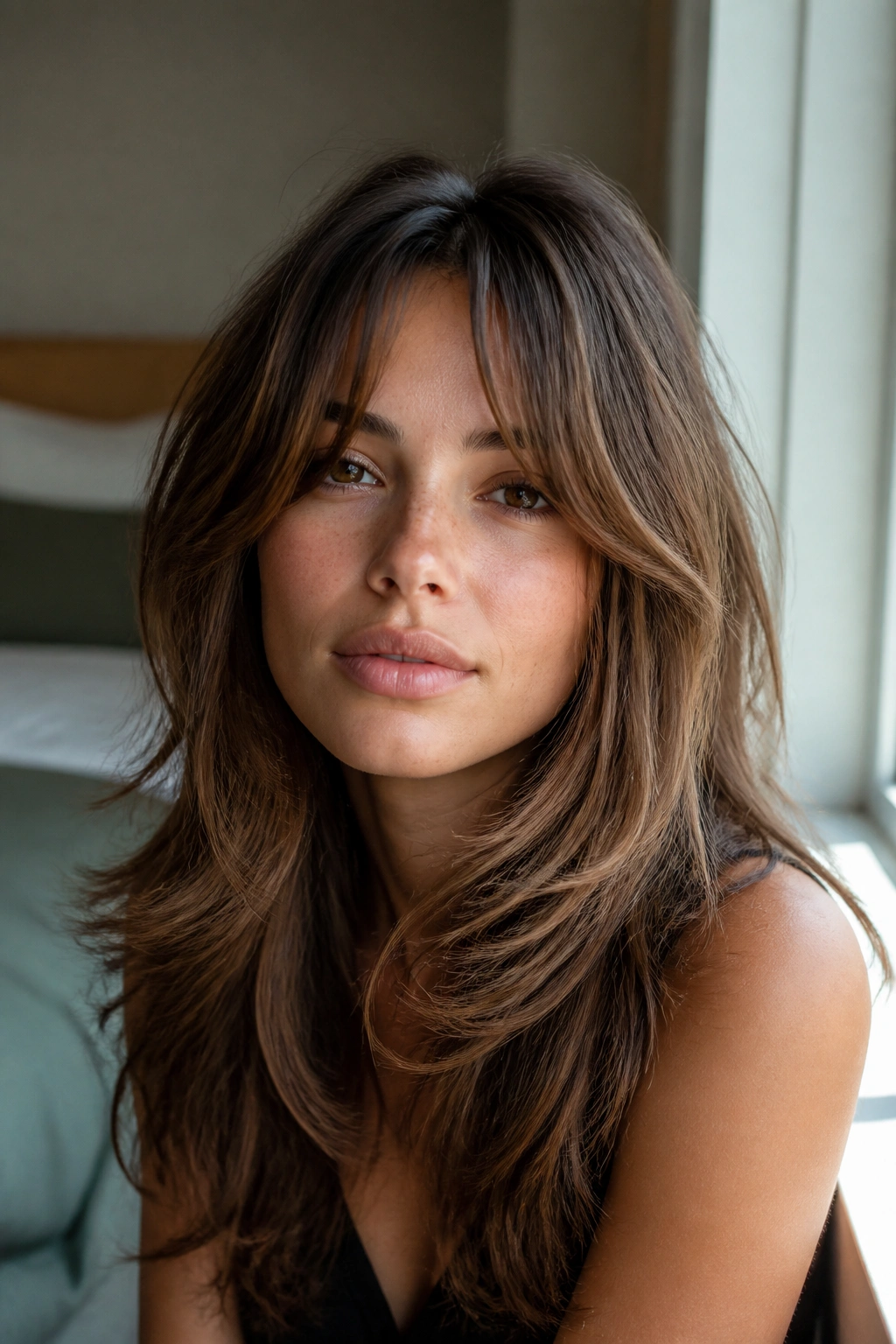
Bottleneck bangs are a smarter version of fringe when you want softness without the full curtain-bang spread. They start narrow near the center, then widen a little as they hit the cheekbones, which gives the face a neat frame without eating up too much forehead.
That shape makes a long shag feel more tailored. The bangs lead the eye inward, the side pieces glide into the rest of the layers, and the overall haircut feels a bit more refined than a very choppy version. It’s especially good if you want fringe but don’t want to commit to a thick, heavy line across the brow.
I’d suggest this on medium-density hair with some natural movement. It’s forgiving, but it still has shape. If the bangs are cut too short, the whole thing loses that narrow-to-wide effect, so ask for them to start longer than you think. Hair has a habit of springing up once it dries.
9. Side-Swept Fringe Shag
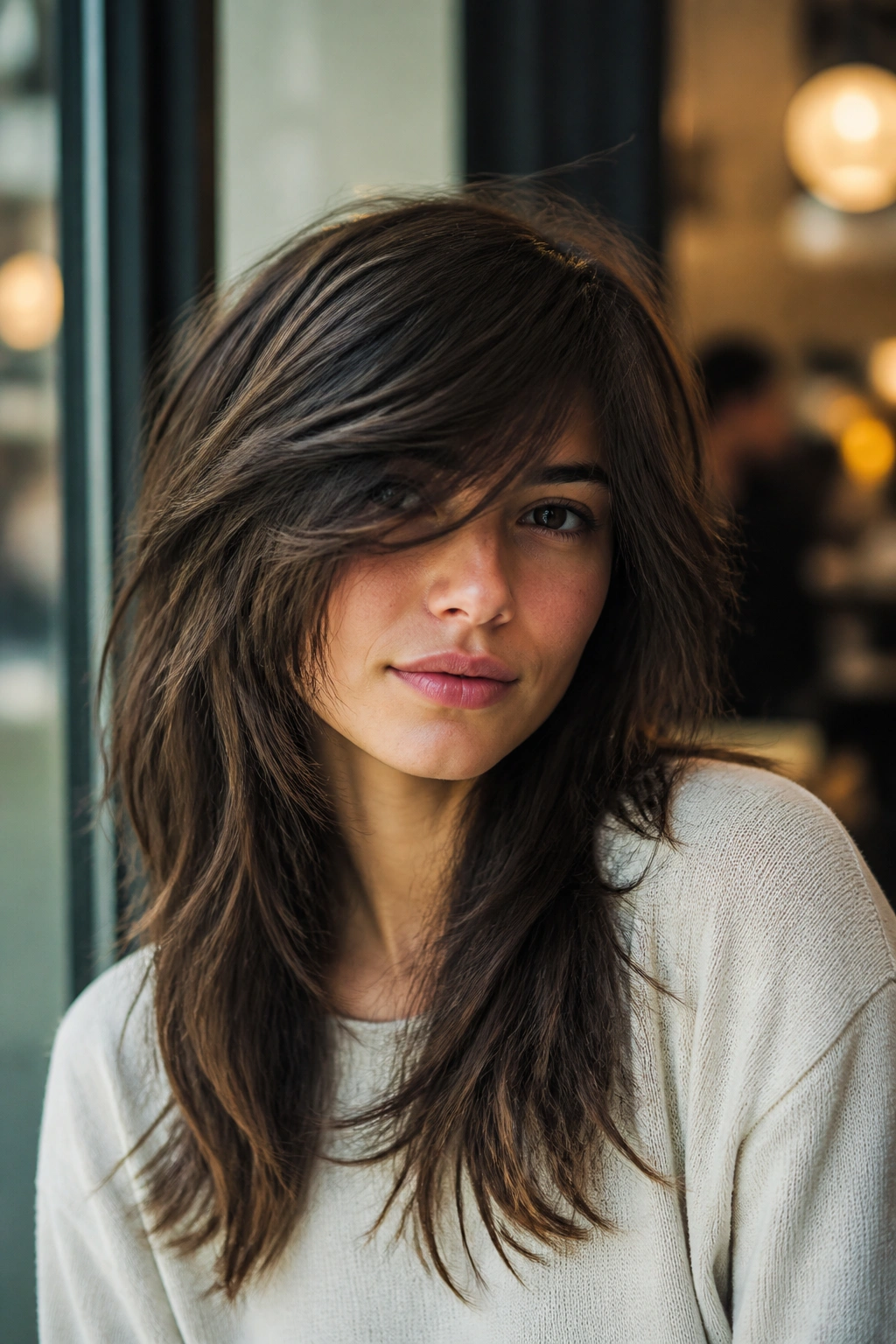
Why does a side-swept fringe still work? Because it softens the face without demanding perfect symmetry, and long hair often looks better when the front isn’t divided down the middle like a curtain.
How to Get the Most From It
Ask for the fringe to start deep on one side and blend into the cheekbone layers on the other. That gives you movement across the forehead without a hard edge. It also helps if your cowlick pushes your hair to one side already, because fighting that every morning gets old fast.
This version is nice for people who want a shag that feels a little less trendy and a little more timeless. It looks good tucked behind one ear, and it grows out without turning into a mess. The cut should still have texture through the ends, though. If the fringe is soft but the lengths are blunt, the whole thing feels half-finished.
10. Choppy Ends Shag
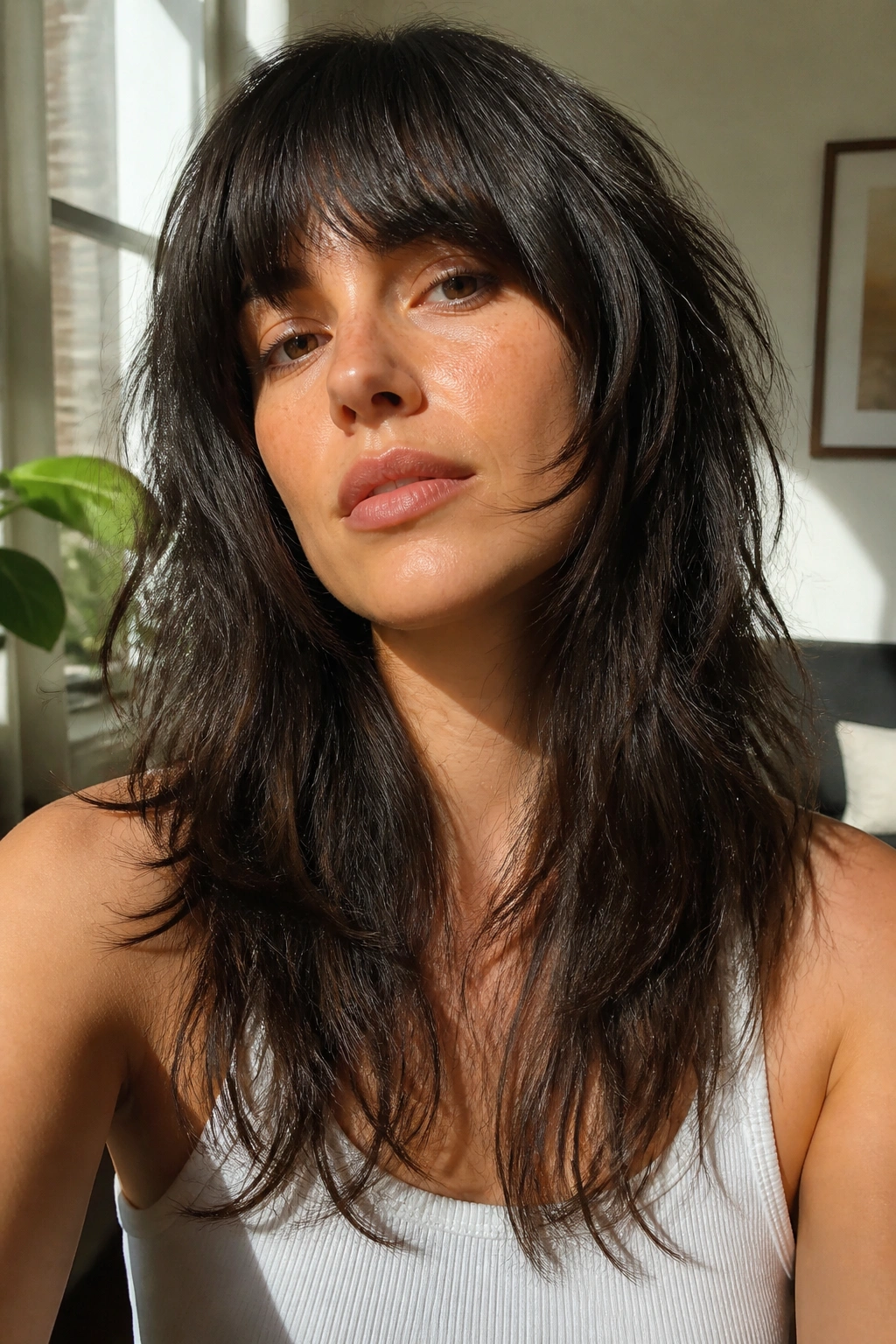
Choppy ends are where a shag stops behaving like ordinary long layers. The line at the bottom gets broken up, so the hair moves in pieces instead of dropping in one heavy sheet.
That can be a blessing on thick hair. It takes away some of the weight that hangs around the hemline and makes long hair look sleepy. On finer hair, though, too much chop can leave the ends looking thin and tired, so I’d keep the texture controlled and avoid over-point-cutting.
- Best for: Thick, straight, or wavy hair
- Ask for: A textured perimeter, not a razor-thin tail
- Works well with: Dry texture spray and a loose wave
- Watch out for: Ends that get frayed too high up the shaft
Short version: the cut should look broken up, not damaged. There’s a difference, and you can see it from across a room.
11. U-Shaped Long Shag
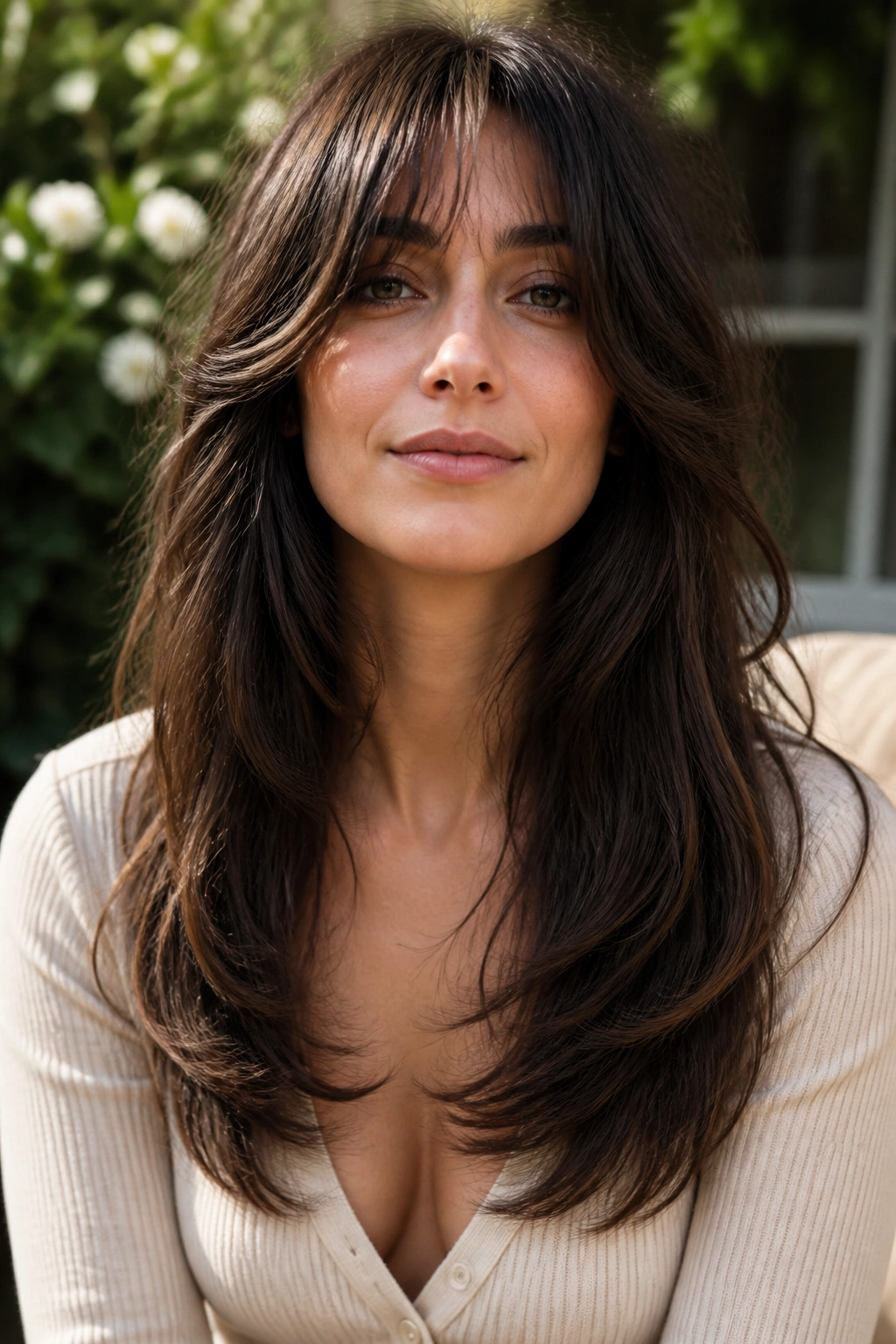
A U-shaped perimeter keeps the haircut looking long even while the layers do their work. That rounded hemline gives the eye a soft frame, which matters when you want movement but don’t want the ends to disappear into a jagged mess.
The shape is subtle, but it changes everything. Instead of a blunt bottom edge, the hair curves gently upward at the sides, then falls longer in the middle. That makes the back feel a little more romantic and the sides less heavy. I like this version for people who keep their length but want the cut to breathe a bit.
It’s also one of the easiest long shag variations to live with. Grow-out is kinder, ponytails still look good, and the shape doesn’t scream for attention every time you look in the mirror.
12. Low-Maintenance Grow-Out Shag
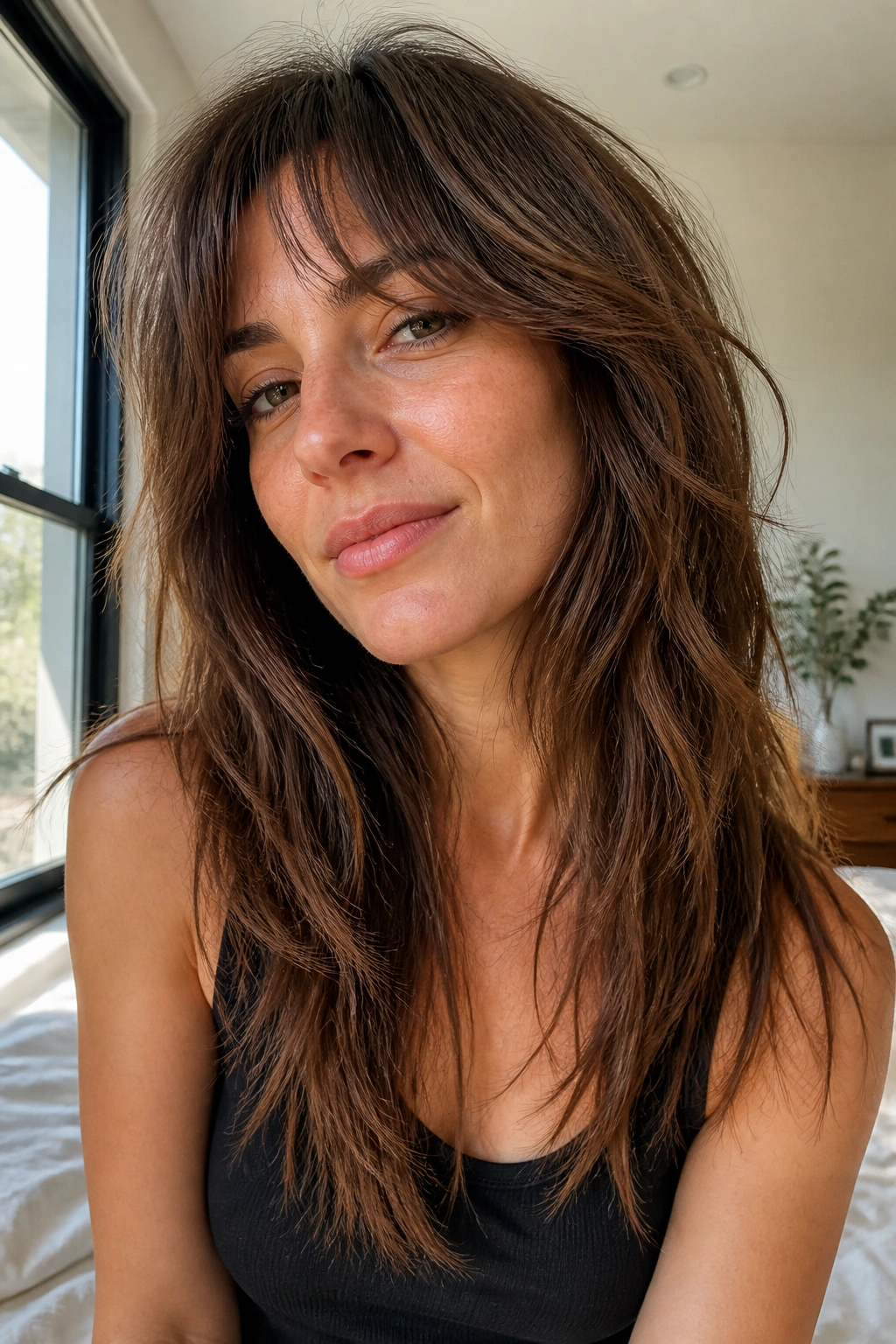
Some cuts start falling apart the second they grow half an inch. This is not one of them.
Unlike a precision layered cut, a low-maintenance shag is built with softer transitions and fewer hard lines, so it can sit for 8 to 10 weeks without looking defeated. The layers usually stay concentrated around the front and mid-lengths, which keeps the shape readable even when the hair is longer.
I’d recommend this for anyone who hates constant salon visits or just likes hair that gets better a little bit messier. The grow-out is part of the charm. Keep the fringe area trimmed if needed, but leave the rest alone and let the texture soften. That softness is what makes it work.
13. Office-Friendly Soft Shag
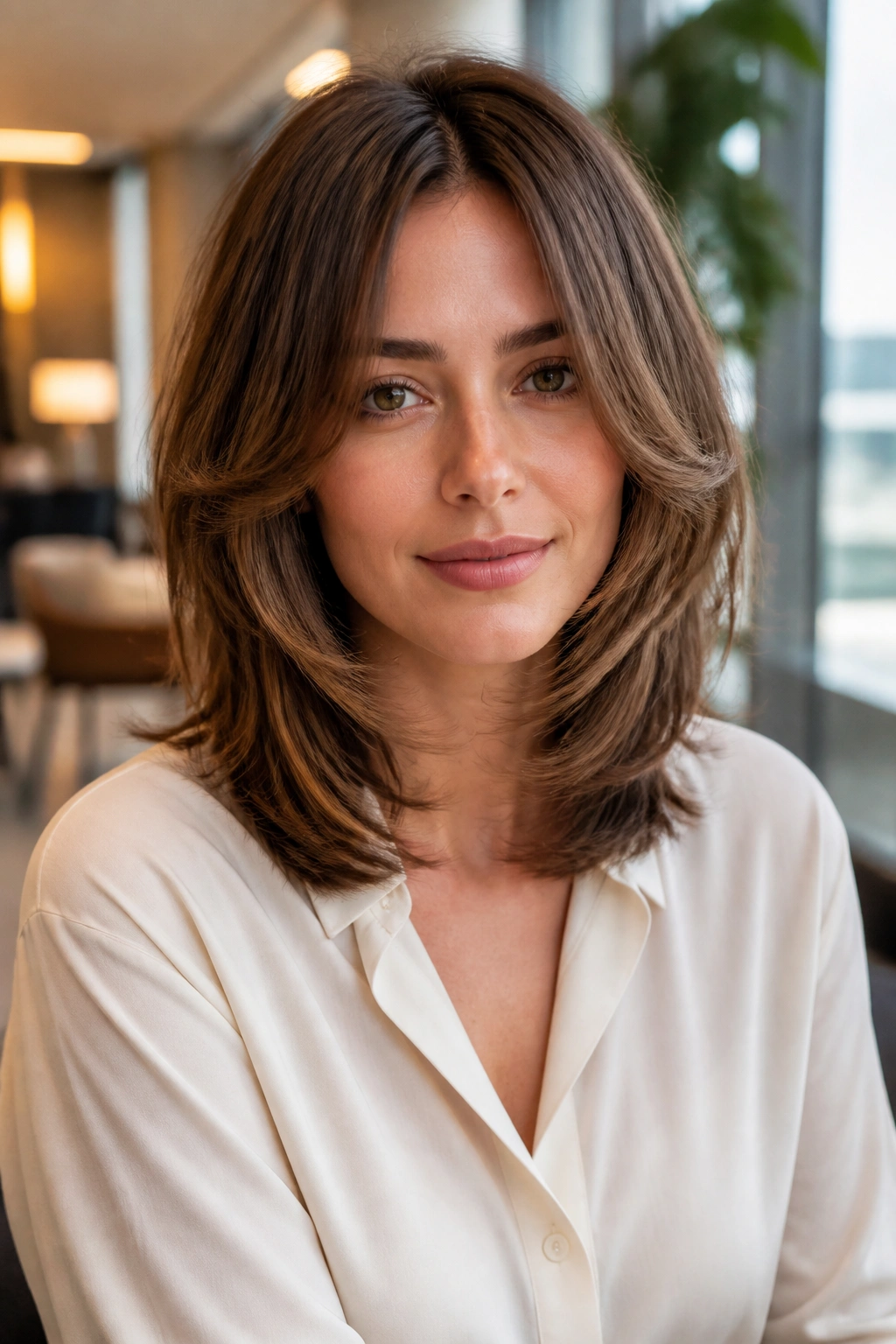
Not every shag has to look like it belongs at a concert. A softer, office-friendly version keeps the long layers gentle and the fringe polished, so the haircut feels modern without looking loud.
Why It Works
The shape is built from face-framing layers that begin around the chin or collarbone, with the rest of the hair staying fairly smooth. That keeps the silhouette clean enough for straight hair, blowouts, or a tucked-behind-the-ear day when you need things to behave.
The best part is that it still has movement. It just doesn’t broadcast itself. I’d call this the shy cousin of the shag family, and I mean that as a compliment.
Quick Notes
- Best for: Straight or lightly wavy hair
- Good ask: “Soft layers, not piecey ends”
- Style: Blow-dry the front away from the face, then bend the ends under
- Avoid: Heavy texturizing near the crown
My take: this is the cut for people who want texture, but not drama before coffee.
14. Retro 1970s-Inspired Shag
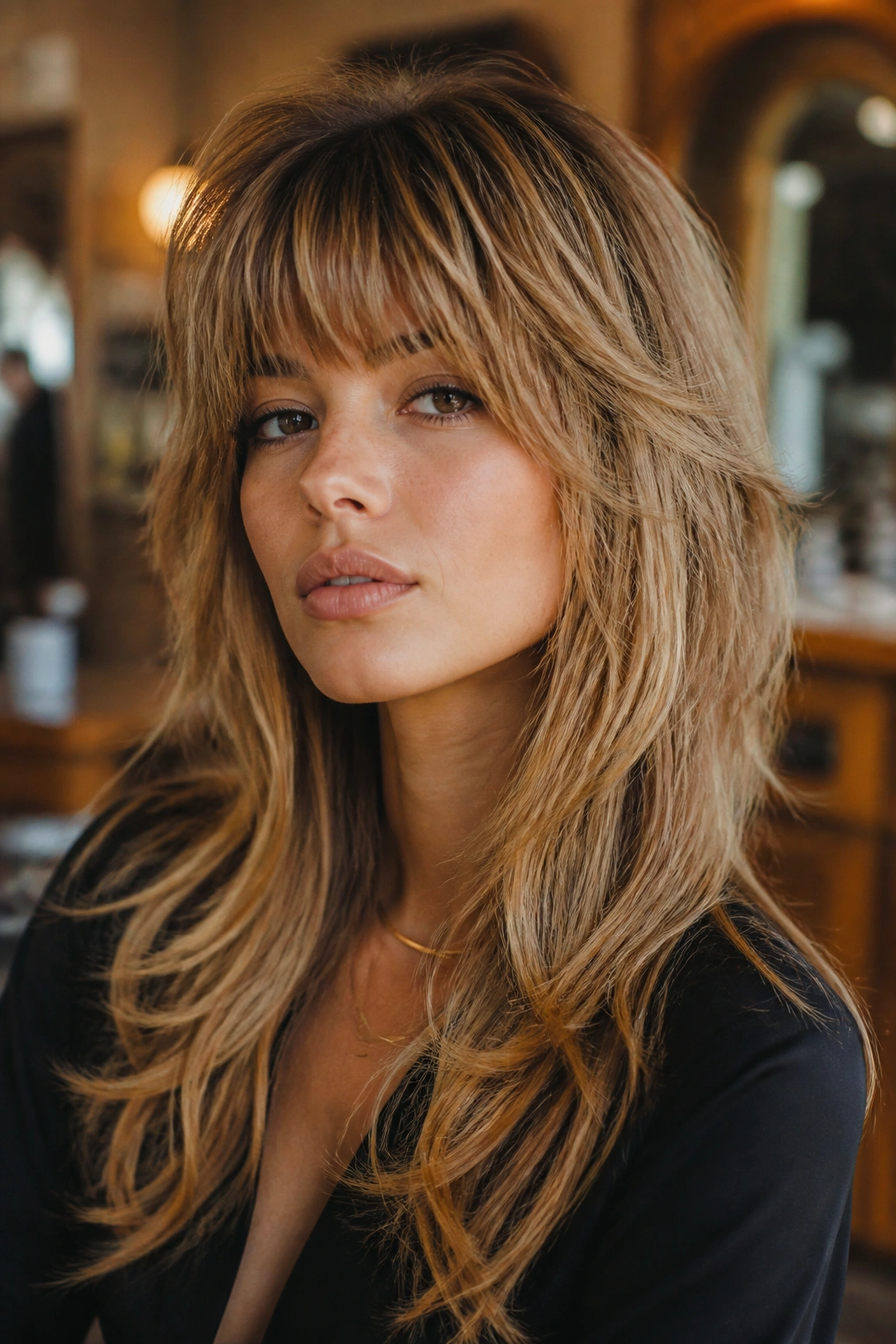
This one wears its inspiration on its sleeve, and that’s part of the fun. The retro shag leans into feathered layers, a lifted crown, and a fringe that has enough shape to feel deliberate instead of accidental.
What keeps it modern is restraint. You do not need the layers to start at the nose or the crown to be teased to the heavens. Keep the fringe softer, the top less spiky, and the ends airy rather than razor thin. That gives you the vintage nod without tipping into costume territory.
I like this version on hair that already has some body. It can handle the round-brush styling and keep the shape for a few hours. If your hair is pin-straight and slippery, you’ll need more product than you might expect. A little mousse at the roots makes a bigger difference here than people think.
15. Boho Long Shag
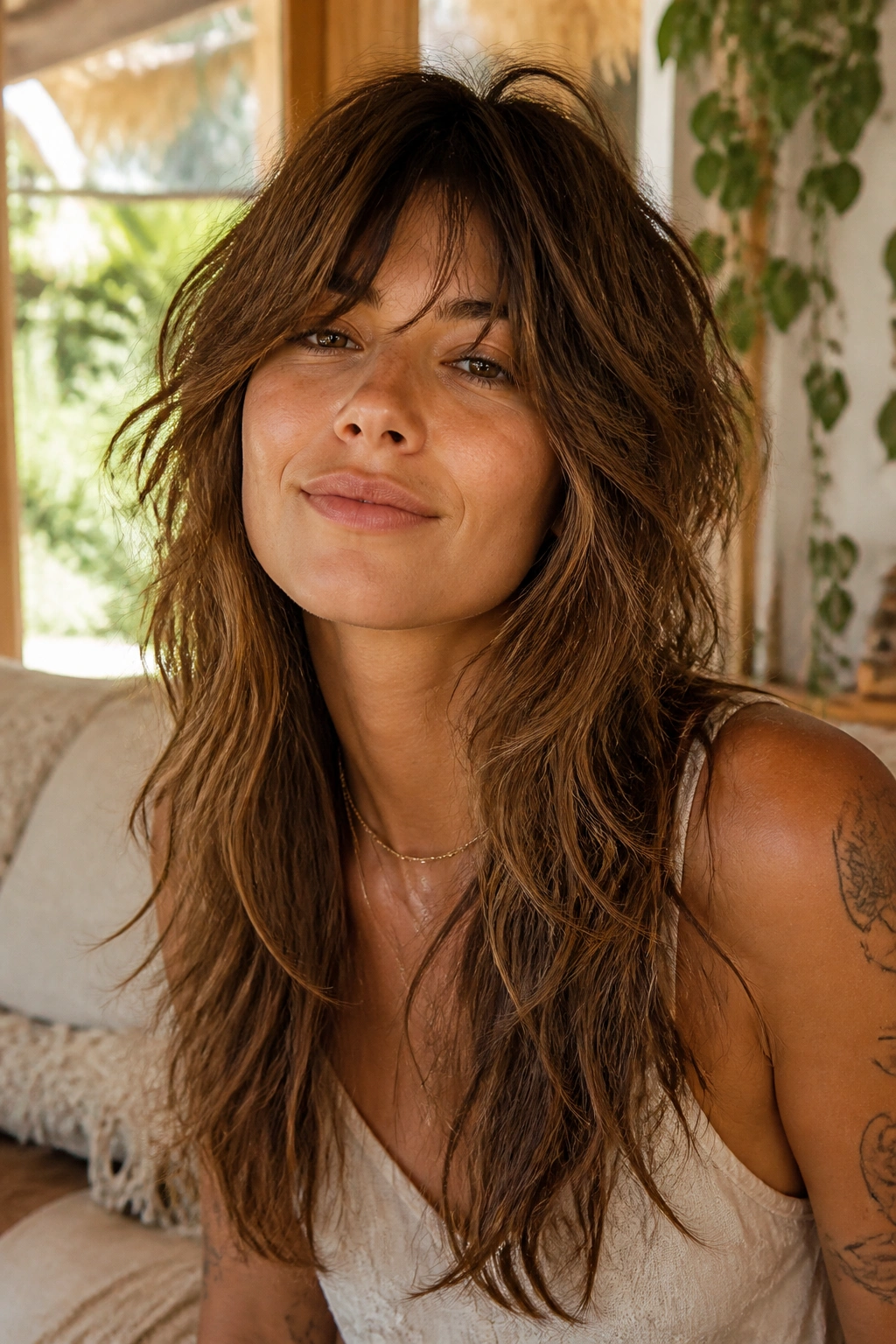
Can a shag look relaxed instead of edgy? Absolutely. A boho long shag is built from loose layers, soft ends, and fringe that feels feathered rather than blunt, so the whole cut lands in a gentler place.
How to Get the Most From It
The easiest way to ask for this is to talk about movement first and texture second. You want layers that help the hair fall in pieces, but not so much stripping that the ends start looking wispy. The face-framing pieces should start near the cheekbone and slide down in a soft diagonal.
This cut shines when it’s styled with very little fuss. Air-drying with a light cream or diffusing until only 80 percent dry keeps the texture from going frizzy. A tiny bit of wave through the front is enough.
- Best for: Wavy, thick, or naturally bendy hair
- Finish: Soft, touchable texture
- Good pairings: Middle part, loose clips, natural makeup
- Avoid: Tight curls made with a wand; they fight the point
One sentence truth: this is the shag for people who want their hair to look like it moved through the day, not like it sat under a curling iron.
16. Micro-Layer Long Shag
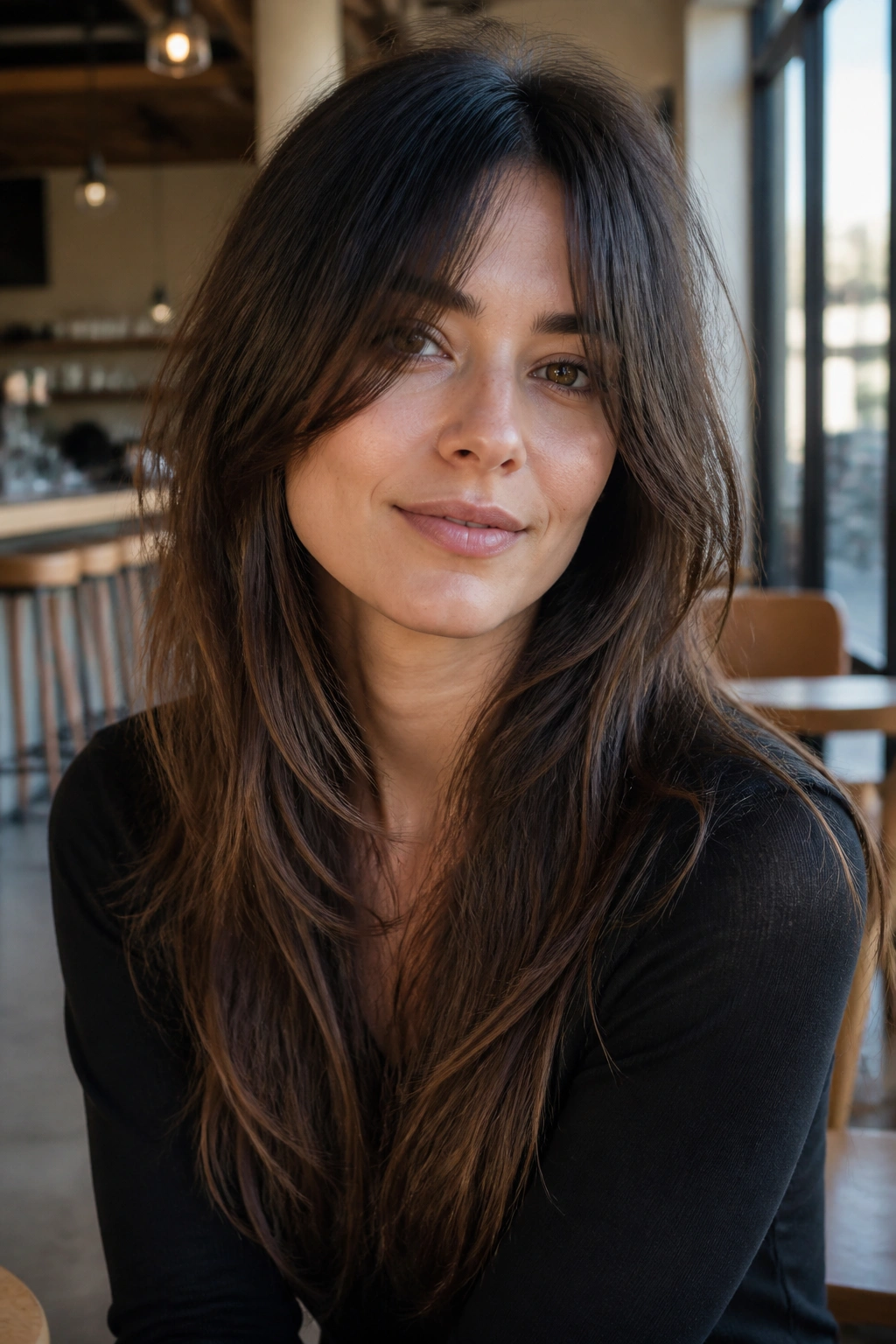
Micro-layers are for people who want movement but not the obvious chop that usually comes with a shag. The layers are shorter and finer in placement, so the haircut still reads as long and full from a distance.
That makes this version a smart choice for fine to medium hair. You get lift around the face and a little flick through the mids, but the shape stays smooth enough that the ends don’t look sparse. It’s also easier to wear straight, which matters if you don’t want to curl your hair every time you leave the house.
- Best for: Fine or medium-density hair
- Ask for: Small internal layers, not heavy debulking
- Style with: A flat brush and a quick bend at the ends
- Watch for: Over-texturizing, which can make hair look frayed
The appeal is simple: it gives long hair motion without making the cut shout.
17. Face-Framing Diamond Shag
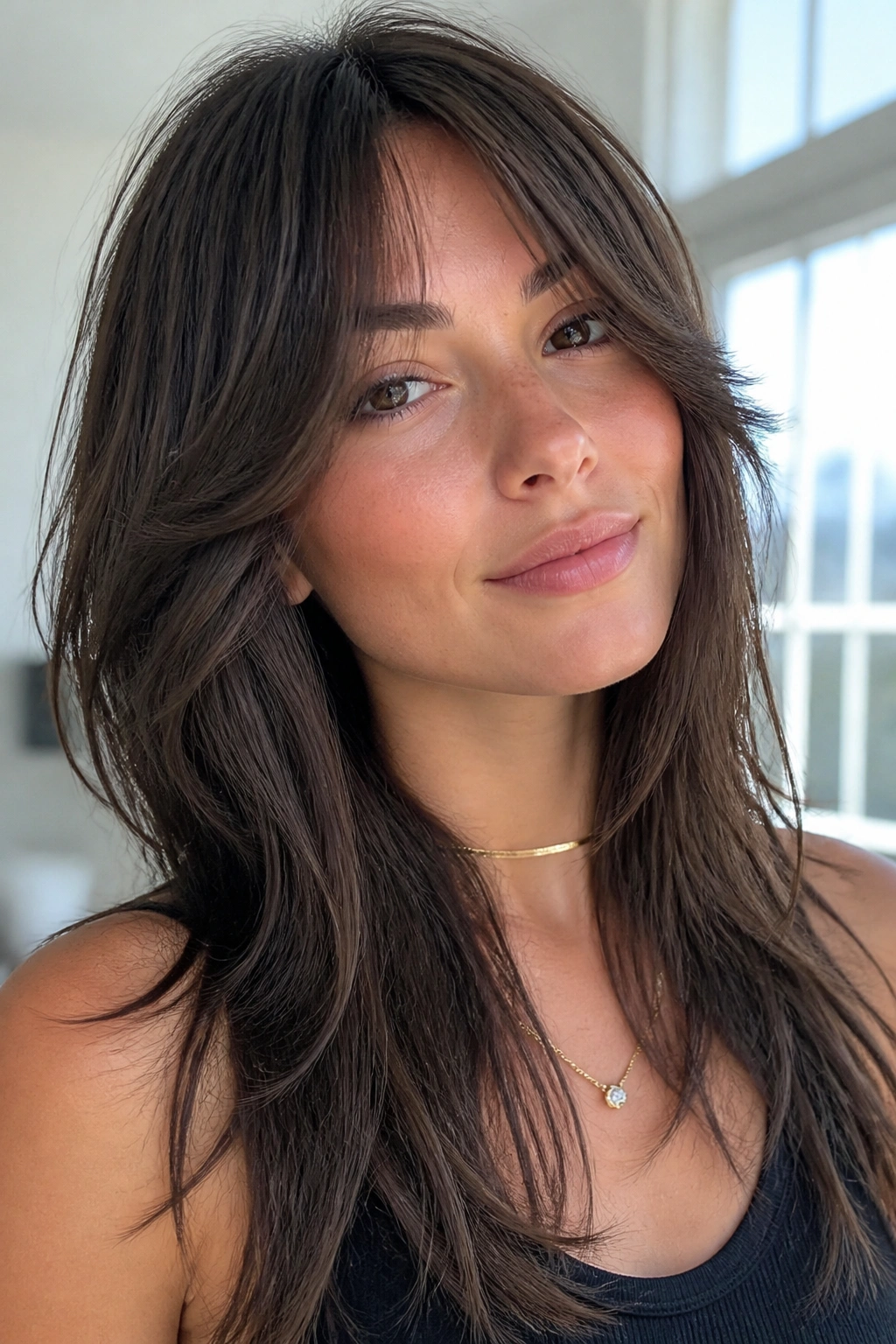
A diamond-shaped shag puts the eye where it should go: around the cheekbones and jaw. The front layers flare a little wider near the sides of the face, which can balance a narrow chin or a forehead that feels too strong on its own.
The shape is flattering because it does not swallow the face. Instead, it builds a kind of frame, with the shortest pieces around the cheeks and the longest layers dropping down through the chest. That gives you softness without losing structure. I prefer this on long hair that needs a little visual interest but can’t afford to lose much length.
It’s also a good answer if your hair falls flat near the temples. Those angled front pieces create lift where the hair usually gives up. A small change. Big payoff.
18. Heavy Fringe Shag
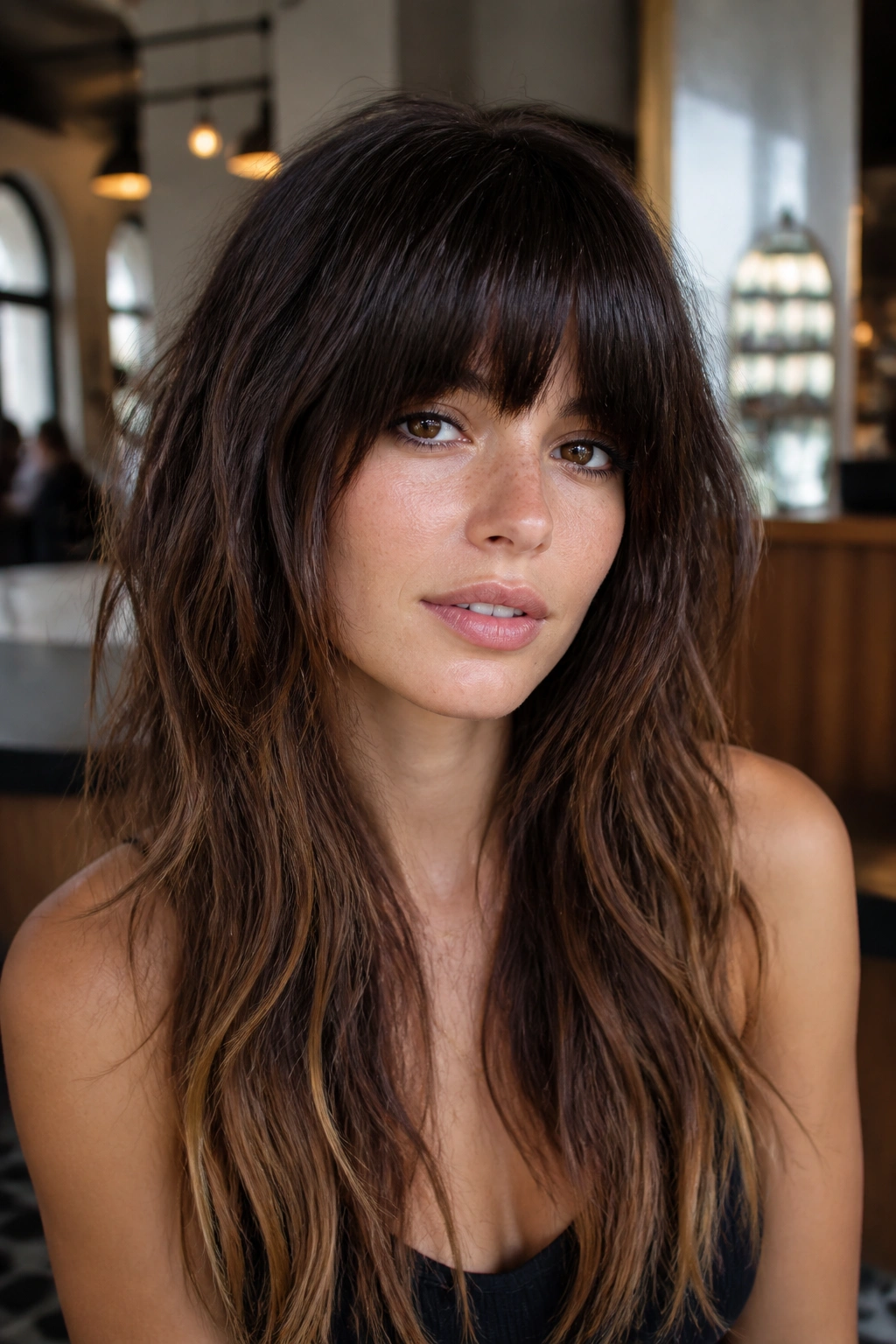
A heavy fringe shag is not for the faint of heart, and that’s exactly why some people love it. The bangs are fuller, denser, and more graphic than curtain bangs, which gives the whole haircut a stronger frame.
Unlike a soft fringe, this one makes the top half of the haircut feel more defined. It suits straight or slightly wavy hair best, because the fringe needs enough control to sit cleanly. If your hair is very curly or very fine, the bang section can get tricky fast. I’d keep the rest of the layers softer to stop the cut from feeling top-heavy.
The cool thing here is contrast. Full fringe up front, broken texture through the rest of the length. That difference keeps the haircut from looking flat. It’s a bold choice, sure, but it reads modern when the rest of the shag stays light.
19. Minimalist Long Shag
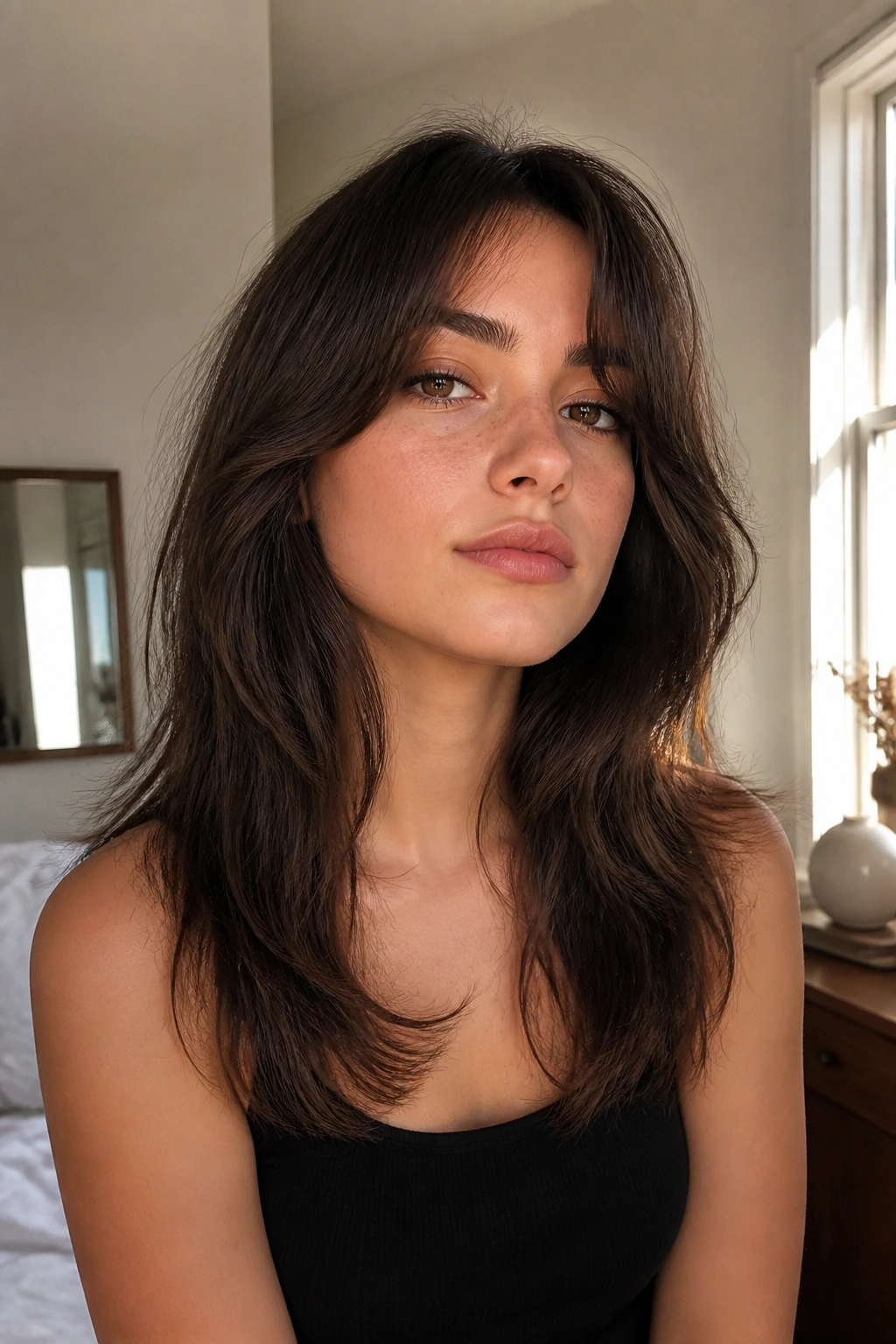
A minimalist shag is what happens when someone wants the movement of a shag without the obvious piecey styling. The layers are there, but they’re tucked in gently, so the haircut keeps a clean outline.
Why It Works
The shortest layers usually begin lower, around the collarbone or just above it, and the interior is only lightly stepped. That lets the hair swing a little without turning into a halo of short ends. It’s a good shape for people who like long hair to still look like long hair.
This version plays nicely with both air-drying and simple blow-drying. You do not need much product, and honestly that’s part of the appeal. A little smoothing cream through the ends, a quick bend with a brush, done.
Quick Notes
- Best for: Straight, fine, or medium hair
- Shape: Soft, clean, understated
- Maintenance: Easy; trims keep the lines neat
- Avoid: Heavy razoring or high crown layers
My opinion: this is the smartest shag if you want movement but hate looking overstyled.
20. Edgy Mullet-Shag Hybrid
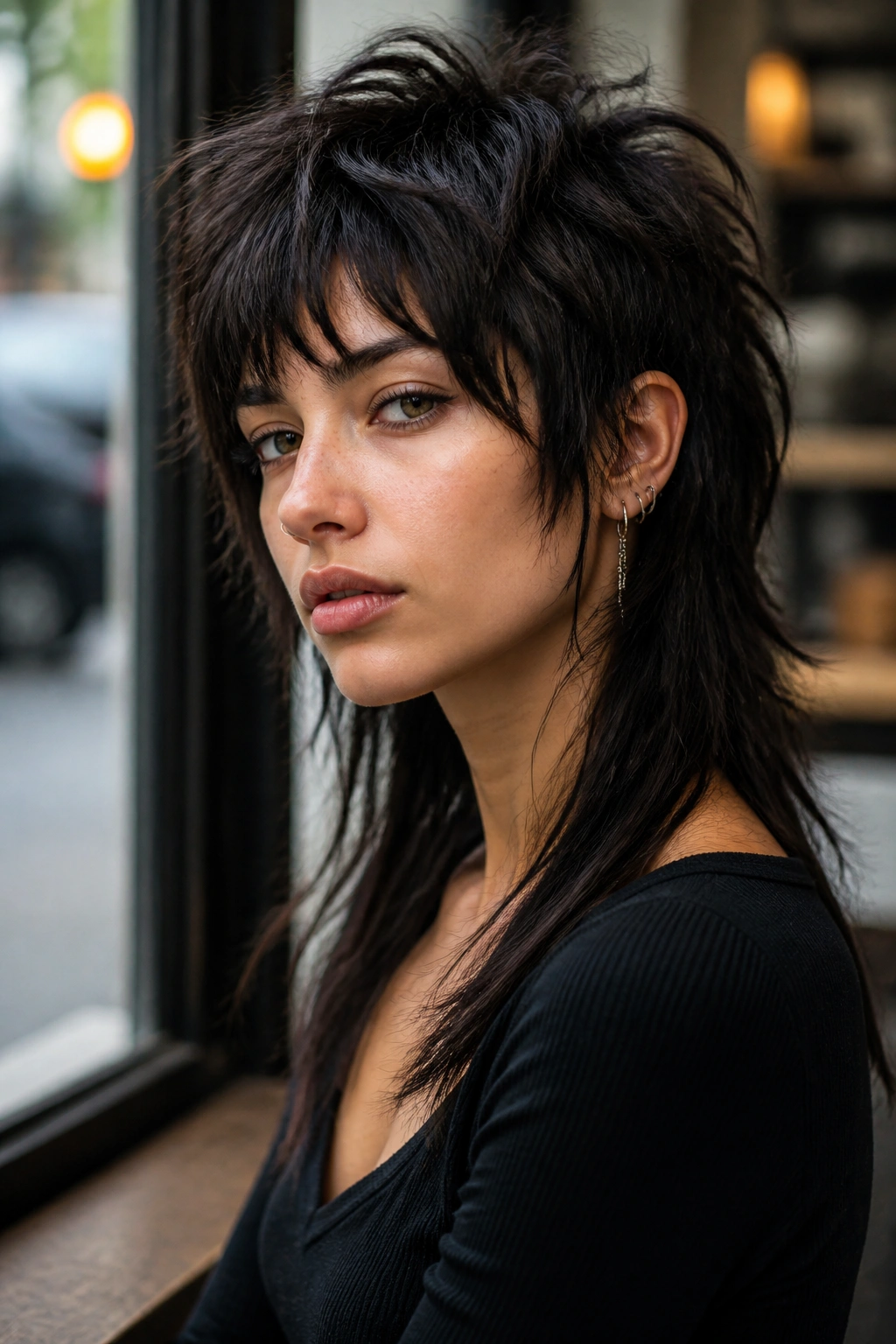
If you want the line between shag and mullet blurred a little, this is the cut. The crown sits shorter, the back keeps more length, and the whole shape has a sharper personality than a classic shag.
That said, it works best when the transition is controlled. You want the difference between top and back to be visible, not cartoonish. Keep the back long enough to preserve the long-hair feel, and leave the sides broken up so the haircut doesn’t turn into a hard wedge.
I like this on thick hair or hair that already has some natural texture. It can hold the structure and keep the shape from collapsing. If you like a haircut that people notice, this is the loudest option on the list.
21. Layered Shag for Round Faces
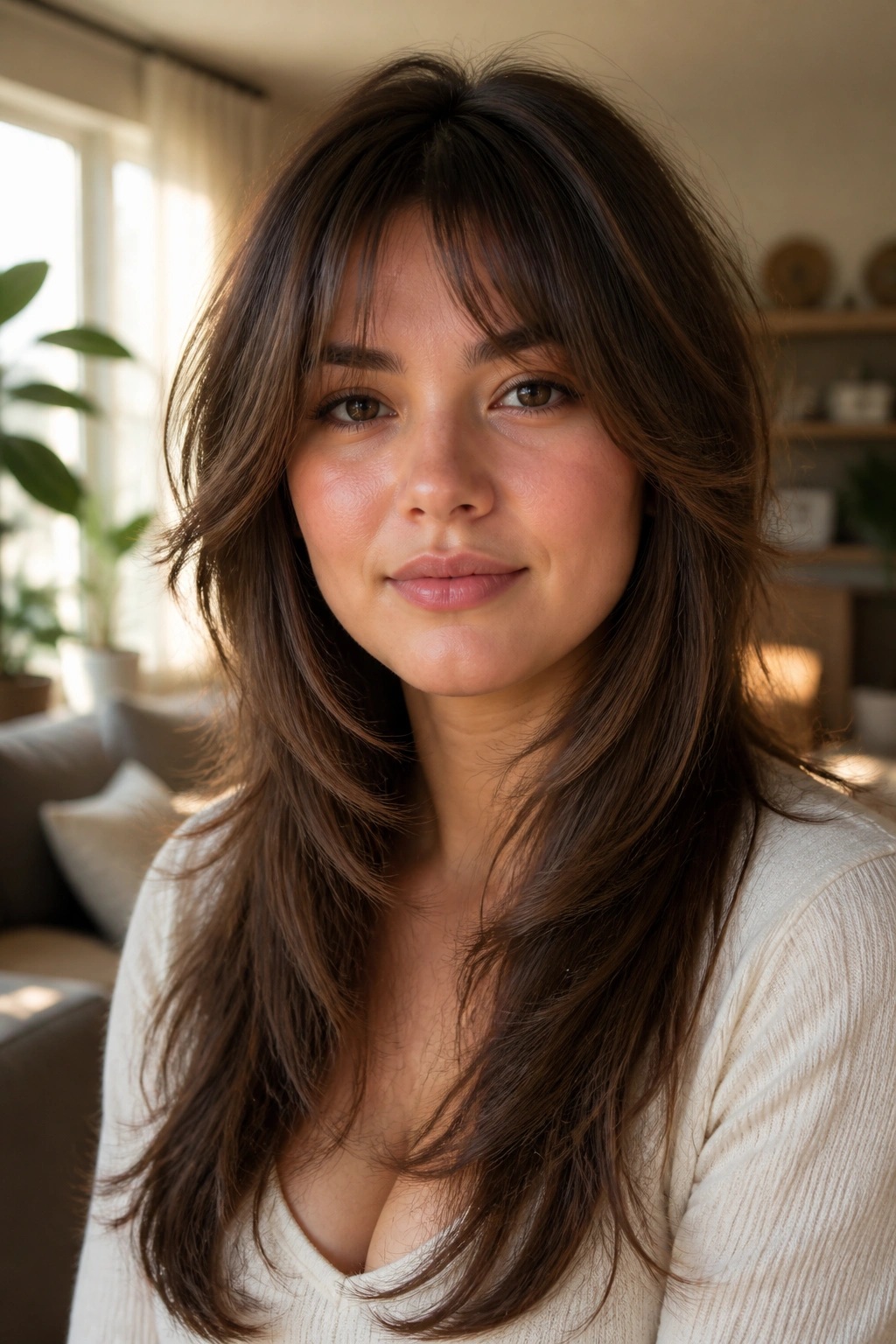
Will a shag make a round face look wider? Only if the layers are cut in the wrong place. When the shortest pieces sit too high and too close to the cheeks, the face can feel boxed in. The fix is simple: keep the front layers longer and let them fall past the widest part of the cheeks.
How to Ask for It
Ask for face-framing pieces that start around the cheekbone and taper below the jaw. That elongates the face instead of widening it. A middle part can work well here, but a soft off-center part is just as good if your hair naturally falls that way.
The length should stay long enough to keep vertical lines in the cut. That’s the whole game. A little crown lift helps too, because height at the top draws the eye up instead of out.
- Best for: Round and soft-square faces
- Best shape: Long front layers, gentle side movement
- Styling cue: Lift at the roots, not extra width at the cheeks
- Skip: Short, blunt bangs right at the brow
One blunt truth: placement matters more than trendiness here.
22. Soft, Romantic Long Shag
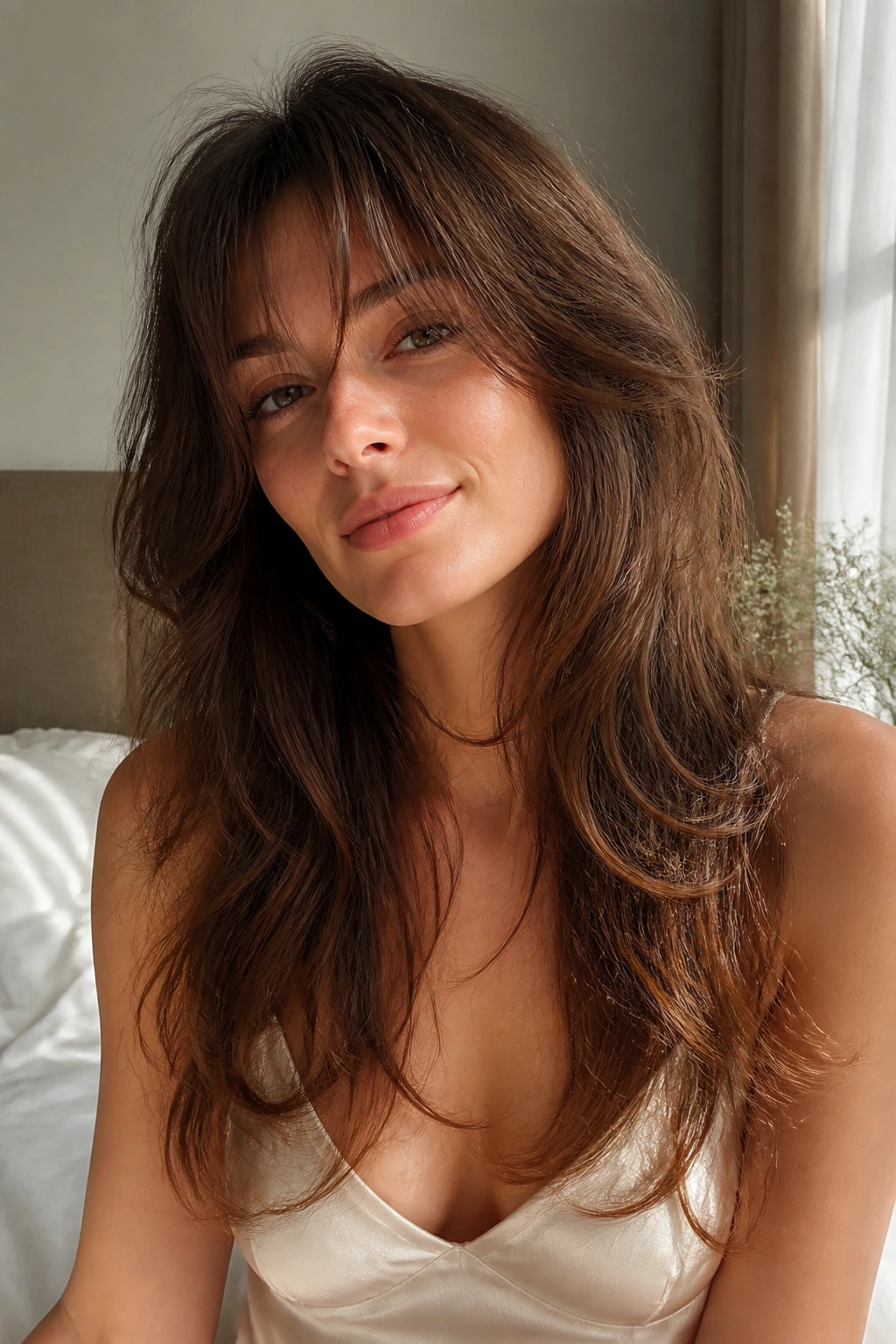
This is the version I reach for when someone wants movement but still wants the hair to feel pretty and loose, not punky. The layers are soft, the fringe stays airy, and the ends keep enough fullness that the shape still looks like long hair at a glance.
The trick is softness through the whole cut. The layers should melt into one another instead of stepping sharply, and the front pieces should bend around the face without announcing themselves. It’s the kind of long shag that looks good with a sweater, a silk dress, or a plain T-shirt. That matters more than people admit.
If you’re choosing between several shag haircuts for long hair, this is the safest finish when you want movement, low drama, and a grow-out that won’t punish you. The style can lean polished or undone depending on how you dry it, which is why it sticks around so well. Hair that gives you options. Hard to argue with that.
