



Wolf cuts for medium length hair women hit a sweet spot that a lot of layered cuts miss. The length is long enough to swing, short enough to keep the shape visible, and just heavy enough to stop the layers from floating off into cartoon territory.
That middle zone matters. Too short, and a wolf cut can turn into a puffed-up shag with nowhere to fall. Too long, and the whole thing starts acting like a plain layered lob with a cooler name.
A good medium-length wolf cut has a shape you can see from the side: a little lift at the crown, softer pieces around the face, and ends that still feel like hair, not wisps. The best versions leave enough weight at the bottom so the cut looks full even when you let it air-dry, which is exactly why medium lengths wear this style so well.
Some people want edge. Some want softness. A few want a haircut that does half the styling work for them on a Tuesday morning when the coffee is still hot and the mirror is being rude. The trick is choosing the version that matches your texture, your face, and how much time you’ll actually spend with a brush in your hand.
1. Collarbone Wolf Cut with Curtain Bangs
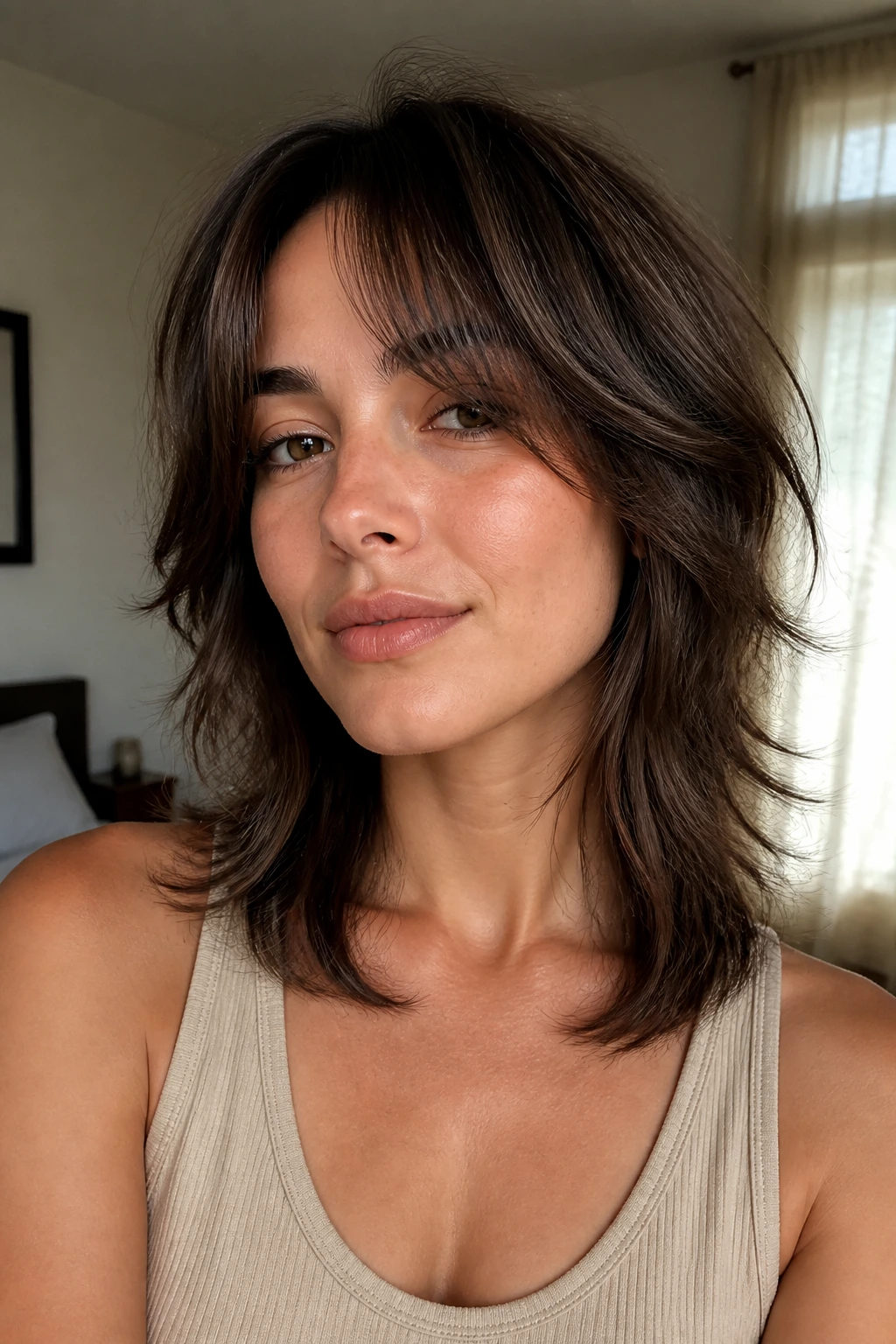
A collarbone wolf cut is the cleanest place to start. It gives you the wolf-cut shape without pushing the look so far that it starts feeling costume-y. The longest pieces graze the collarbone, while the top layers break up the bulk just enough to create movement.
Why It Works on Medium Hair
The balance is the whole point. Medium-length hair has enough weight to keep the ends from flying everywhere, but it still has room for layers to move. Curtain bangs help, too. They soften the front without locking you into a harsh fringe line.
Ask for layers that begin around the cheekbones and get shorter toward the crown. That keeps the top airy while the bottom still reads as hair, not feather dust. If you wear your hair tucked behind one ear a lot, this version looks even better because the face-framing pieces fall into that bend naturally.
What to Tell Your Stylist
- Keep the longest length at or just below the collarbone.
- Start the shortest crown layers about 2 to 3 inches below the part.
- Make the curtain bangs open at the cheekbone, not the temple.
- Leave the perimeter soft, but not so thinned out that the ends look stringy.
Best for: straight, wavy, and soft-curly hair that needs movement without losing fullness.
2. Soft Wolf Cut for Fine Hair

Can fine hair wear a wolf cut without looking thin? Yes — if the layers are spaced with restraint. Fine hair usually looks best when the cut creates lift near the top but keeps a firmer edge at the bottom.
The mistake I see all the time is too much internal cutting. That sounds clever in a salon chair, and then the hair dries into a see-through cloud. Not a good cloud. A soft wolf cut should keep the outline a little blunt, especially around the shoulders, so the hair still looks dense when it lies flat.
Use a mousse at the roots and a light blow-dry cream through the mids. Then flip your head, rough-dry the roots for 60 to 90 seconds, and finish with a small round brush on the top layers only. Fine hair does not need a heroic amount of product. It needs shape.
- Avoid heavy oils near the root.
- Skip aggressive razor cuts on the bottom.
- Keep the shortest layers above the ear if your hair is very delicate.
- Ask for texture, not thinning.
3. Choppy Wolf Cut with Blunt Micro Bangs

If you want the haircut to announce itself before you say a word, this is the one. A choppy wolf cut with micro bangs has a sharper attitude than the softer curtain-bang versions, and it looks especially good on medium hair because the length gives the front fringe room to stand out.
Micro bangs should sit well above the brows — about half an inch to an inch, depending on your forehead and how fast your hair grows. The rest of the cut stays collarbone length with short, broken-up layers at the top. That contrast is what makes the whole thing feel deliberate instead of messy.
This is not the cut I’d send to someone who hates trims. The bangs need regular shaping, and they lose the point if they get too long. Still, when they’re fresh, they look crisp and a little bit rebellious in the best way.
Best when you want: a sharper face frame, obvious texture, and a haircut that leans more punk than pretty.
4. Wavy Wolf Cut with Cheekbone Layers

Wavy hair loves a wolf cut when the layers land in the right spot. Cheekbone layers let the wave bend around the face instead of puffing out at the sides, which is the problem with a lot of badly planned shag cuts.
The magic is in the placement. If the shortest front pieces hit near the cheekbone, the wave gets a natural curve. If they start too high, you can end up with a fuzzy halo that needs a lot of styling to calm down. Not what anyone wants before work.
The Styling Sweet Spot
Use a lightweight curl cream on damp hair, then scrunch in a foam or soft-hold gel. Diffuse on low heat until the hair is about 80 percent dry, then let the rest air-dry. That last little bit of drying matters because it helps the wave set without getting crunchy.
If your waves are loose, keep the layers slightly longer. If your waves are tighter, ask for a bit more shape through the crown. That keeps the cut from feeling bottom-heavy. It also keeps the profile clean, which is the part most people forget to look at.
5. Side-Fringe Wolf Cut for a Softer Angle

Unlike curtain bangs, a side-fringe wolf cut gives you one clear diagonal line across the face. That sounds small, but it changes the whole mood. The haircut feels less symmetrical, a little more romantic, and easier to tuck behind one ear without losing the shape.
I like this version for women who wear glasses or have a habit of pushing their hair back a lot. Curtain bangs can fight with that habit. A side fringe bends around it instead. Keep the fringe long enough to skim the cheekbone when dry, and let the layers behind it taper gradually instead of stopping in a hard step.
It also works nicely if your face is long or narrow. The side sweep adds width without making the front heavy.
A lot of people think a wolf cut has to look loud. It doesn’t. This version proves it.
6. Curly Wolf Cut with a Rounded Crown
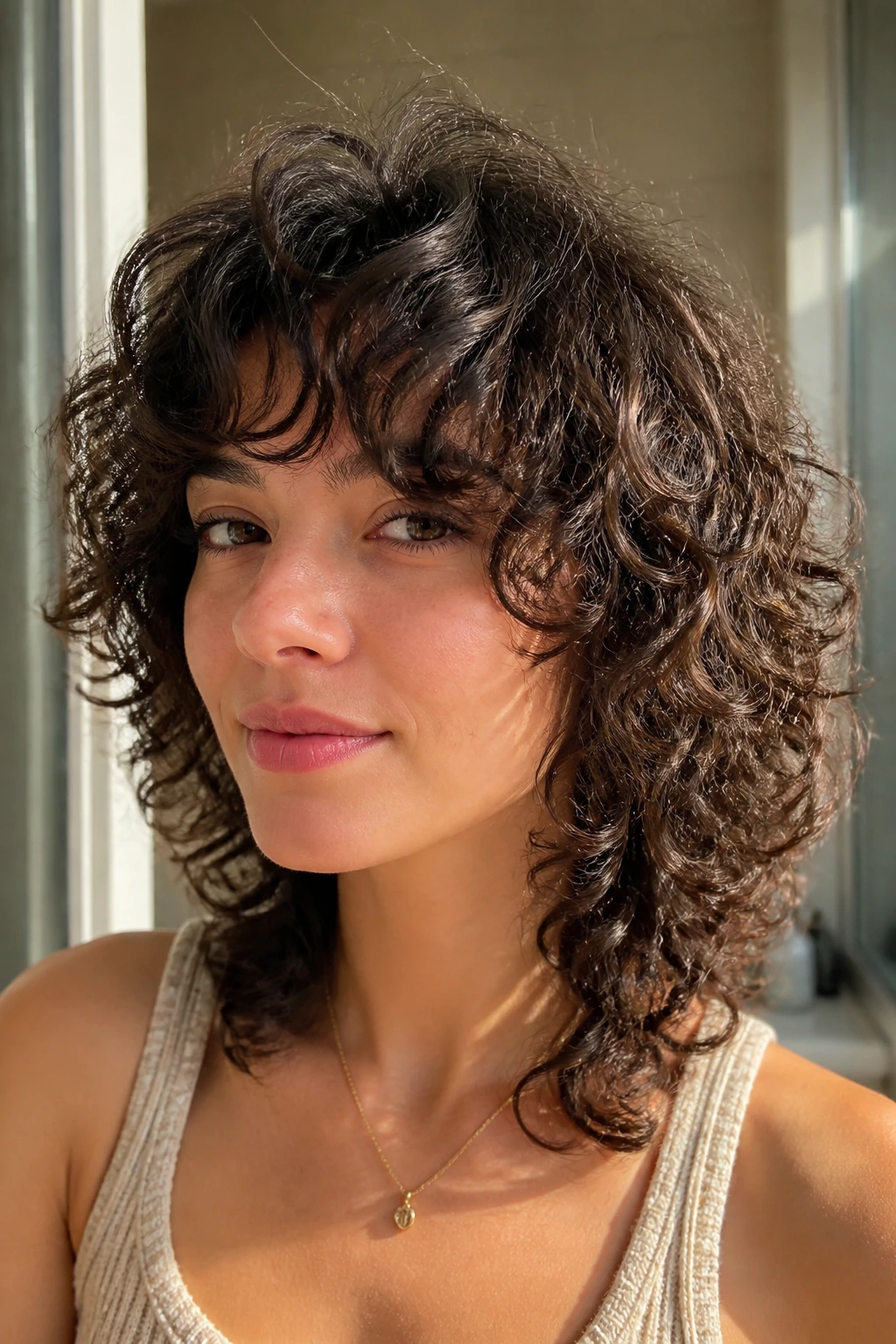
Does a wolf cut work on curls? Absolutely, but only if the shape respects the curl pattern. A curly wolf cut should build lift at the crown while keeping enough weight in the bottom half so the silhouette doesn’t balloon into a triangle.
Cutting curls wet can be tricky because the shrinkage can hide what’s really happening. Dry cutting or cutting on hair that is mostly dry gives a better read on where the curls sit. That matters a lot with medium length hair, where a quarter inch can change the whole outline.
How to Ask for It
- Keep the crown shorter for lift.
- Leave the perimeter long enough to show curl definition.
- Shape the face-framing pieces to the curl, not against it.
- Avoid over-thinning the ends, which can make curls frizz faster.
Use a leave-in conditioner, then a gel with a soft cast. Once the curls are dry, scrunch out the crunch with a tiny bit of oil on your palms. Tiny. Not a soak.
7. Tapered Nape Wolf Cut with a Mini Mullet Feel

This is the wolf cut for someone who wants more bite. The back shortens toward the nape, while the front stays longer and a little softer around the jaw. It has that mini mullet edge, but it still feels wearable on medium-length hair because the difference in length is controlled.
The trick is not to overdo the disconnect. You want the back to sit maybe 1 to 2 inches shorter than the front layers, not look like three different haircuts fighting each other. On straight or slightly wavy hair, that taper is easy to see. On very curly hair, it reads more subtle and less severe.
If you like jackets with sharp shoulders and boots with a little attitude, this haircut fits that energy. If you live for soft cardigans and barely-there makeup, maybe not. A haircut can have personality. This one has plenty.
8. Thick Hair Wolf Cut with Weight Removal in the Mid-Lengths

Thick hair can wear a wolf cut beautifully, but the weight has to be removed in the right places. Pull too much out of the crown and the hair puffs. Leave too much in the mids and the whole shape sits like a helmet. Neither is flattering.
A better approach is to remove bulk through the mid-lengths while keeping the perimeter strong. That gives the hair a cleaner fall and stops the layers from sticking out in odd places. Point cutting works better than heavy thinning shears here, especially if your hair frizzes when it’s cut too bluntly.
What Usually Goes Wrong
- Layers start too high and create a mushroom shape.
- The bottom is thinned too much, so ends look wispy.
- Texturizing shears are used everywhere, which can make thick hair frizzier.
- The finish is too short around the face, and the cut loses its weight.
Ask your stylist to preserve the outline while lightening only the dense spots. Thick hair does not need to be shredded. It needs direction.
9. Sleek Wolf Cut with Soft Internal Layers

Some wolf cuts look wild. This one looks controlled. The outer shape stays clean, but the inside has enough layering to keep the hair from lying flat like a board. It’s a smart option for straight hair or for anyone who likes a smoother finish but still wants movement.
The difference is subtle until you turn your head. Then the layers show up. That’s the point. A sleek wolf cut should move, not fray. Think polished edge, not broken edge.
If you blow-dry, use a paddle brush first to keep the roots neat. Then add a little bend at the ends with a 1.5-inch round brush. You do not need a dozen styling tools for this look. You need a tidy foundation and a decent cut.
This version is especially good if your job or personal style leans more minimal. It has shape, but it doesn’t shout.
10. Piecey Wolf Cut with Razored Ends

Piecey ends are where a wolf cut starts looking extra cool in motion. A razor can take the edge off medium-length hair and create those separated strands that move when you walk. Done well, it feels light and a little messy in the good sense.
Done badly, it looks ragged.
That’s why this version works best on healthy hair with some natural bend. If your ends are already dry or bleach-fragile, a razor can make them look frayed fast. I’d keep the perimeter a touch blunt and use a little styling paste on dry hair to separate the ends by hand. Start with a pea-sized amount. Add more only if the hair still looks too unified.
A piecey wolf cut pairs especially well with second-day hair. The texture settles in, the ends separate, and the whole cut gets better after a little lived-in time. Freshly washed, it can feel too neat. By day two, it gets the right amount of grit.
11. Bottleneck Bangs Wolf Cut

Bottleneck bangs are one of those small details that changes everything. The center is shorter, the sides are longer, and the whole fringe opens out around the face in a shape that feels softer than blunt bangs but more defined than curtain bangs.
Why does that matter on medium-length hair? Because it gives you a focal point without eating up too much forehead space. The center draws the eye in, then the longer sides blend into the wolf-cut layers. The cut looks intentional from the front and easy from the side.
How to Style the Bangs
A small round brush helps, but so does a flat wrap with your fingers and a quick blast of heat. Keep the center lifted, then bend the side pieces back away from the face. If the fringe is too full, it gets heavy fast. If it’s too sparse, it stops looking like a shape and starts looking like a mistake.
This cut grows out nicely, too. That matters more than people admit.
12. Wolf Cut with Money Piece Highlights

A wolf cut with money piece highlights is for anyone who likes a little contrast near the face. The haircut gives the lightened pieces space to show off, and the color gives the cut a brighter, more obvious shape. It’s a neat trick.
The front layers should be cut so the brightest pieces land near the cheekbone and jaw. That makes the light stand out without turning the whole head into a highlight billboard. If you’re keeping your color natural, you can still use this shape. The haircut alone does enough work.
I like this on medium-length hair because the length gives the highlights time to move. On shorter hair, they can feel abrupt. Here, they slide into the layers and look softer. If you wear your hair half up a lot, the money pieces also stay visible when the rest of the cut is pinned back.
A small detail, but a useful one.
13. Voluminous Crown Wolf Cut

The crown is where a wolf cut either comes alive or falls flat. Shorter crown layers create lift right where the head needs it most, and medium-length hair gives those layers enough support so they don’t vanish into the rest of the cut.
Ask for the first lift point to sit around the highest part of the head, then taper down slowly. If the top is cut too long, the haircut loses the wolf shape and starts looking like a normal layered cut. Too short, and the top can stick up in an odd way. There’s a narrow middle road, and it’s worth finding.
How to Keep the Top Up
- Use root clips while the hair cools after blow-drying.
- Aim the dryer at the roots first, not the ends.
- Flip the part slightly if the crown keeps collapsing.
- Avoid heavy leave-in products near the scalp.
This version is gold for flat hair. Not subtle. Gold.
14. Air-Dry Wolf Cut for Natural Texture

Some haircuts are made for blowouts. This one is happier when you leave it alone. An air-dry wolf cut works best on medium-length hair with a natural wave, bend, or loose curl. The layers do the shaping, and the drying process does the rest.
The routine is simple. Blot with a microfiber towel, work in a light mousse from ears down, and add a little cream to the ends if they get fuzzy. Scrunch, clip the roots for 10 minutes, and then stop touching it. Seriously. The more you poke at it, the more uneven the finish gets.
The key here is keeping the layers soft enough that the hair can dry into itself. If the cut is too aggressive, air-drying turns into a triangle or a puff. Soft wolf cuts, though, can dry into a very good shape with almost no effort.
That sounds lazy. It is. And that is exactly why people love it.
15. Hidden Underlayers Wolf Cut

This is my favorite version for anyone who wants a wolf cut without a big scene. The visible top layer stays smooth, while the shorter pieces live underneath and create movement when the hair shifts. From the front, it looks calm. From the side, it has a little secret.
It’s a smart option for office settings, conservative dress codes, or anyone who likes their hair to have personality without announcing it. The outline stays clean, which makes the cut easier to grow out. That’s a nice side effect, because some wolf cuts need a lot more maintenance than people expect.
The best way to ask for it is to say you want hidden internal layers with a soft perimeter. That tells your stylist you want motion, not a choppy outline. If you wear your hair behind your shoulders a lot, the underlayers will still show when the light hits from the side.
Quiet haircut. Not boring.
16. Retro ’70s Feathered Wolf Cut
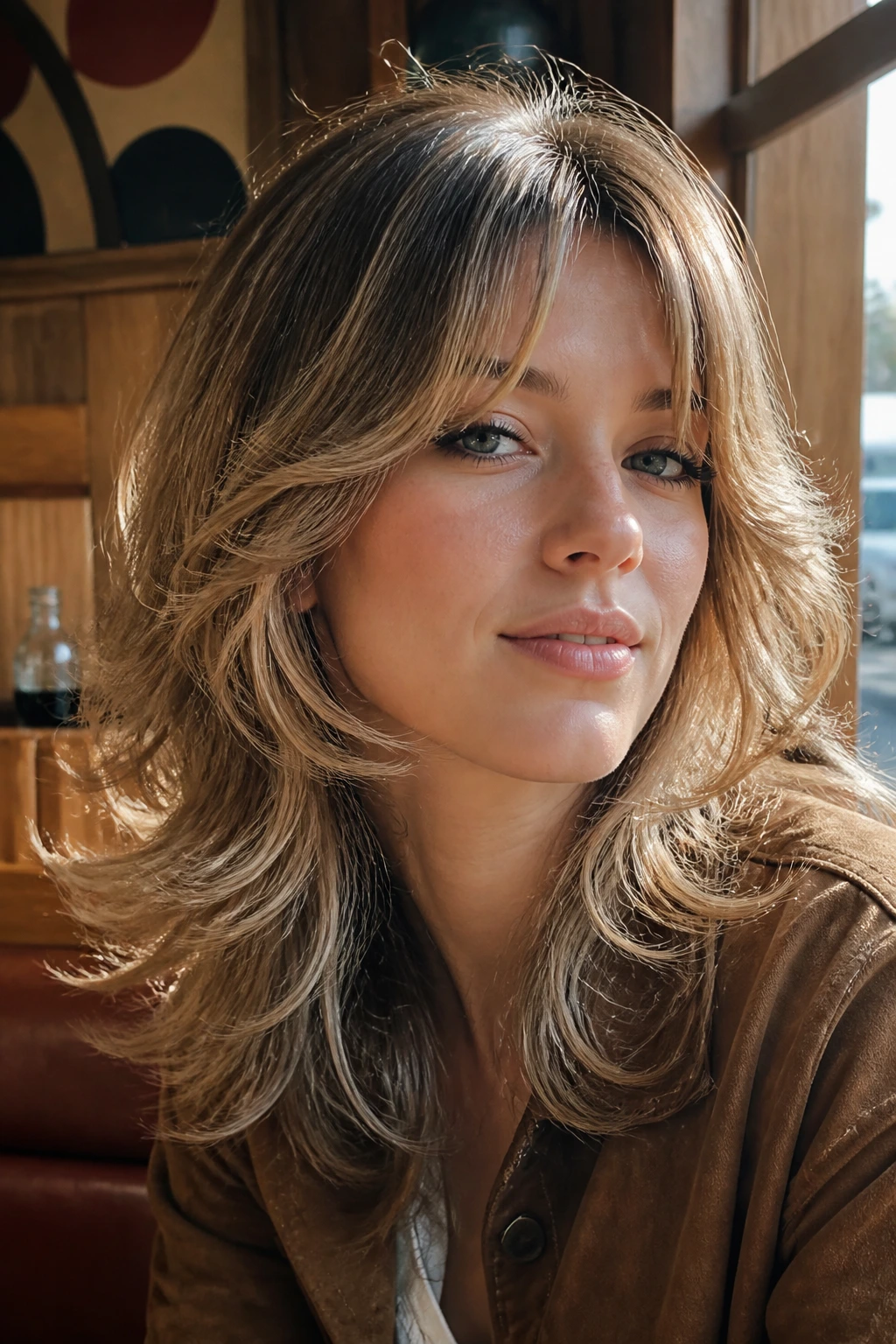
This one leans hard into the feathered blowout look. Think rounded volume at the crown, soft movement through the sides, and ends that flick away from the face instead of hanging straight down. It has a very specific mood, and I mean that in a good way.
A medium-length cut is perfect for this because there’s enough length for the feathering to show. Use a medium round brush, about 1.25 to 1.5 inches, and direct the front pieces away from the face. The ends should look airy, not fluffy. A little shine spray on the mids helps the shape read cleanly instead of dry.
I like this cut when the hair needs polish more than edge. It reads nostalgic, but not dated. That’s a fine line. This version walks it well.
17. Disconnected Edgy Wolf Cut

A disconnected wolf cut pushes the layers farther apart. The top section is clearly shorter, the bottom section keeps more length, and the cut has a sharper contrast than a soft shag. It’s not shy. Good.
This style looks strongest on straight or lightly wavy hair because the separation shows up cleanly. On super fine hair, the disconnect can make the ends feel too wispy. On very thick hair, it can get bulky unless the stylists control the weight carefully.
What to Ask For
- A visible difference between crown and hemline.
- Shorter, choppier top layers.
- A longer bottom line that still feels solid.
- Point cutting instead of heavy thinning through the ends.
If you want a haircut with a little drama from every angle, this is one of the better choices. It looks especially good with simple clothes — white T-shirt, dark jeans, done.
18. Grown-Out Wolf Cut That Still Looks Intentional
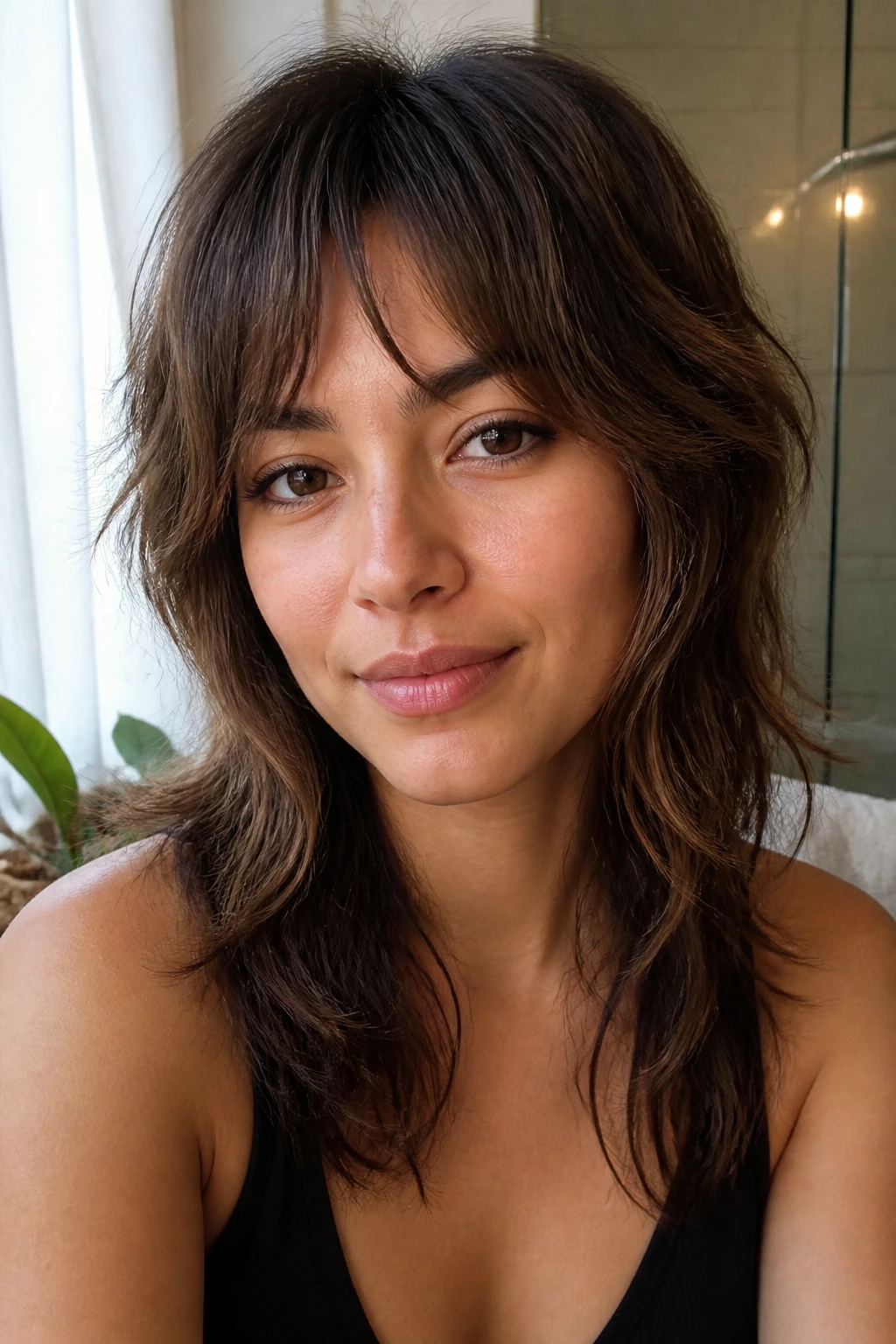
What happens when you miss your trim by a couple of weeks? If the cut is designed well, not much. A grown-out wolf cut can still look deliberate when the bangs are long enough to blend and the layers are soft enough to blur as they lengthen.
This is the version I’d pick for anyone who hates salon maintenance. The crown layers should not be so short that they collapse into awkward spikes as they grow. Keep the front pieces long enough to tuck, flip, or part differently, and the whole style survives longer between appointments.
How to Make It Last
- Keep the shortest face-framing pieces near cheekbone level.
- Ask for layers that blend at 6 to 8 weeks, not only on day one.
- Avoid razor-thin ends that disappear as soon as they grow.
- Let the perimeter stay full enough to hold shape.
A haircut that still works after it grows out is worth more than one that only looks good the day you leave the salon.
19. Soft Blunt Perimeter Wolf Cut

This one sounds contradictory, and that’s why it works. The outside edge stays soft-blunt, which keeps the hair looking full, while the internal layers create the wolf-cut lift. It’s a good compromise for medium-length hair that needs body but can’t afford to lose too much density.
Straight hair especially benefits from this. A sharp perimeter keeps the line strong, and the hidden layers prevent the whole cut from falling flat. If your ends tend to look thin even when the rest of your hair is healthy, this version gives you the most forgiveness. The eye sees fullness first. Then it notices the movement.
I’d choose this over a heavily razored wolf cut if your hair is fine-to-medium or if you like the idea of layers but hate wispy ends. The shape is more restrained. Less chaos. More structure.
And honestly, that restraint is what makes it look expensive.
20. The Most Wearable First Wolf Cut for Medium Hair

If you want one wolf cut to try first, make it this one: collarbone length, curtain bangs, soft crown layers, and a blunt-ish perimeter. It gives you the wolf-cut feel without pushing the haircut so far that it becomes high-maintenance on day one.
That mix flatters a lot of medium-length hair because it keeps the ends full, gives the top some lift, and leaves enough length for ponytails, clips, and lazy buns. Fine hair gets shape without losing too much density. Wavy hair gets a better outline. Thick hair gets movement without bulk. It is the safest entry point, and I mean that as a compliment.
If You’re Torn Between Versions
- Pick soft crown layers if your roots fall flat.
- Pick cheekbone bangs if you want more face frame.
- Pick a blunt perimeter if your ends look thin fast.
- Pick a more chopped version only if you already like messy texture.
That’s the version I’d hand to someone who wants the style but doesn’t want to spend 20 minutes negotiating with a round brush every morning. It looks good with air-drying, looks even better with a little styling cream, and still has enough shape to feel like a haircut instead of a compromise.
