



Very long shaggy haircuts for women solve a problem that one-length hair never quite fixes: weight. When hair reaches the chest, ribs, or lower back, it can start to hang there like a curtain that forgot how to move. A good shag takes some of that heaviness away without robbing you of length.
The part that gets missed most often is where the shortest layers land. Too high, and the cut looks choppy in a way that reads harsh rather than soft. Too low, and the hair still feels bulky around the shoulders. The sweet spot lives in the middle, and it shifts depending on whether your hair is fine, thick, curly, or straight.
Texture changes everything. Thick hair can handle more removal in the crown and around the face. Fine hair needs a gentler hand, longer layers, and a little restraint, or the whole shape starts to look thin at the ends. Curls need a dry-eye for balance, because what looks even when wet can spring into something else once the hair dries.
The 15 cuts below lean into different moods: soft curtain pieces, wolf-cut energy, feathered layers, blunt fringe, mullet edges, boho movement, and a few shapes that are especially kind to heavy hair. The difference is usually a matter of inches, not drama. Small changes. Big payoff.
1. Waist-Length Curtain Shag
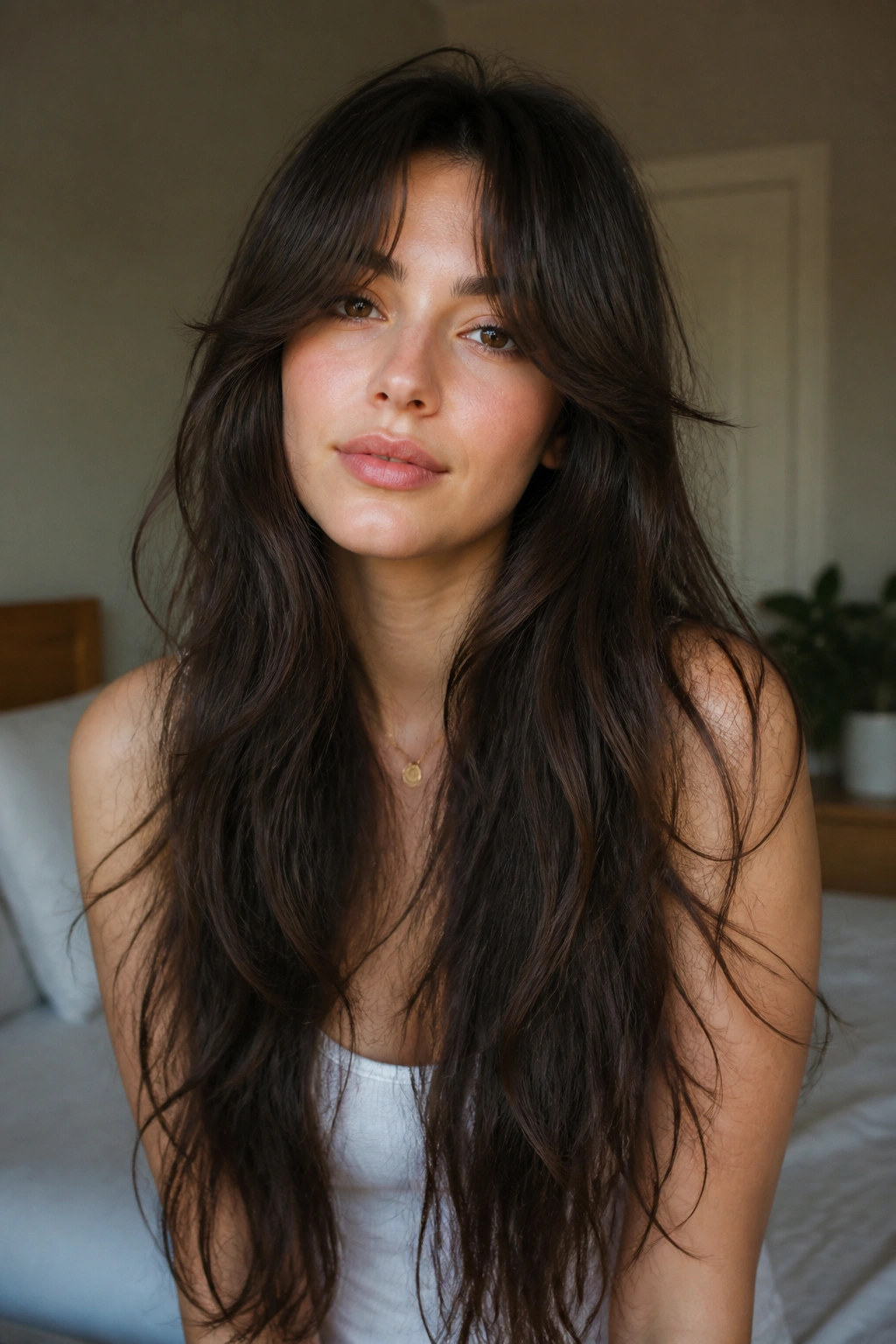
If you want long hair to stop behaving like one solid sheet, this is the safest place to begin.
A waist-length curtain shag keeps the length intact while opening the front of the cut so the hair moves instead of dragging. The curtain pieces sit around the cheekbones or jaw, then melt into longer layers through the body of the hair. That gives you softness near the face and a cleaner line through the back.
Why the shape works
The center part keeps it modern, but the layers keep it from feeling severe. You still get the clean fall of long hair, just with more bend and air around the face.
- Ask for the shortest face-framing pieces to land around the cheekbone or upper lip.
- Keep the longest perimeter below the shoulders so the length still reads long from the front.
- Use a round brush or large Velcro rollers if you want the front pieces to flip away from the face.
- This cut looks especially good when the ends are lightly textured, not razor-thin.
Best tip: tell your stylist you want the fringe to open in the middle, not sit as one blunt curtain across the forehead.
2. Long Wolf Cut with Soft Crown Layers
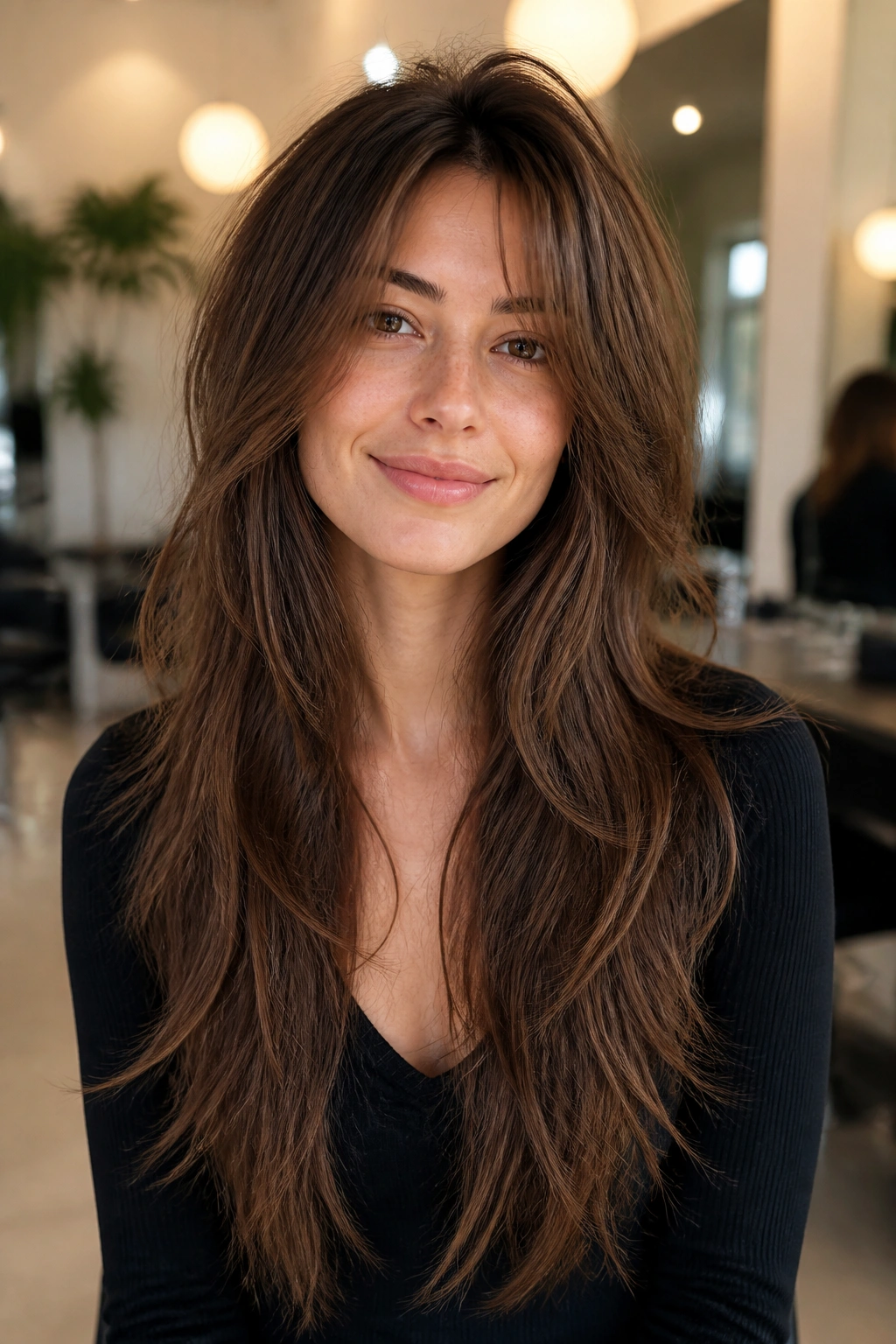
Can a wolf cut still look polished when the hair reaches past the chest? Yes, if the crown layers stay soft instead of aggressively short.
The long version of the wolf cut works because it keeps the rebellious shape without making the top look chopped up. You get height at the crown, a little bite around the face, and longer lengths through the back. It’s a smart choice if your hair falls flat at the roots but you still want the ends to stay long and swishy.
This is the one I’d point to for anyone who likes movement but hates over-styled hair. It can air-dry with a loose bend, or you can rough-dry the roots and leave the ends a bit undone. The best versions do not scream “wolf cut” from across the room. They just look alive.
How to wear it
If your hair is fine, keep the layers longer and ask for less crown removal. If your hair is dense, the stylist can carve out more shape around the top without making the perimeter look thin.
A little mousse at the roots helps. So does flipping your part from time to time. That’s a small thing, but it stops the top from settling in one direction all the time.
3. Feathered Shag with Bottleneck Bangs
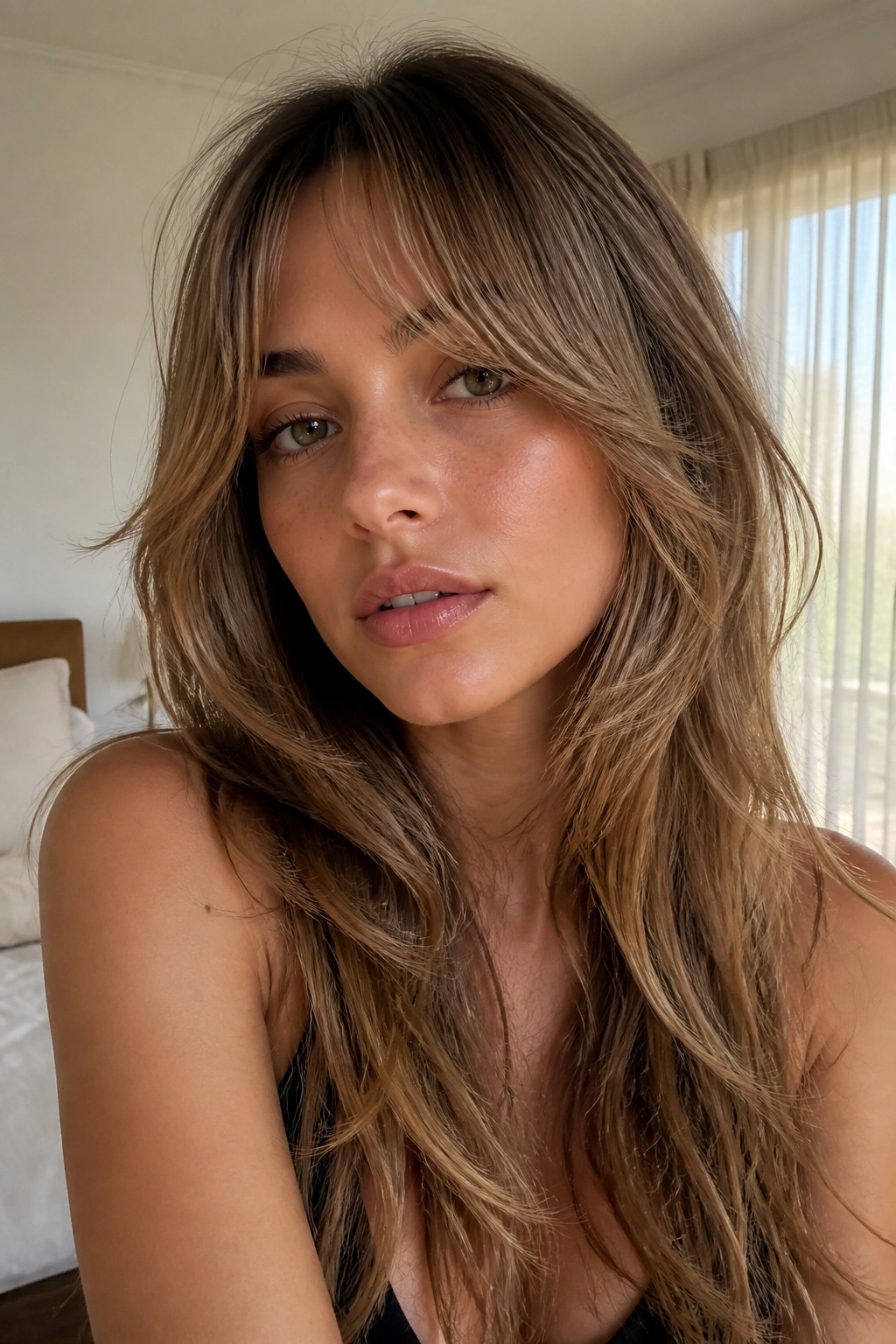
Picture long hair that falls heavy around the cheeks until the front pieces break up the line. That is where this cut shines.
Bottleneck bangs are shorter in the center and longer at the sides, which makes them easier to live with than a full blunt fringe. Add feathered layers through the body, and the cut starts to feel airy rather than dense. The whole look has motion, but it still keeps a clean frame around the face.
What to ask for
- Keep the fringe soft through the middle of the forehead.
- Let the side pieces flow into the longest face layers, not stop abruptly.
- Use point cutting or soft slide cutting so the edges don’t look blocky.
- Start the shortest layers at cheek level if you want the face to open up.
This cut is especially kind to hair that needs a little lift at the front. It can also soften a strong jawline or balance a longer face without stealing length from the back. And that matters, because no one wants to trade movement for inches.
The main thing is restraint. Feathering should feel light, not wispy in a fragile way. There’s a difference.
4. Razor-Cut Shag for Straight or Wavy Hair
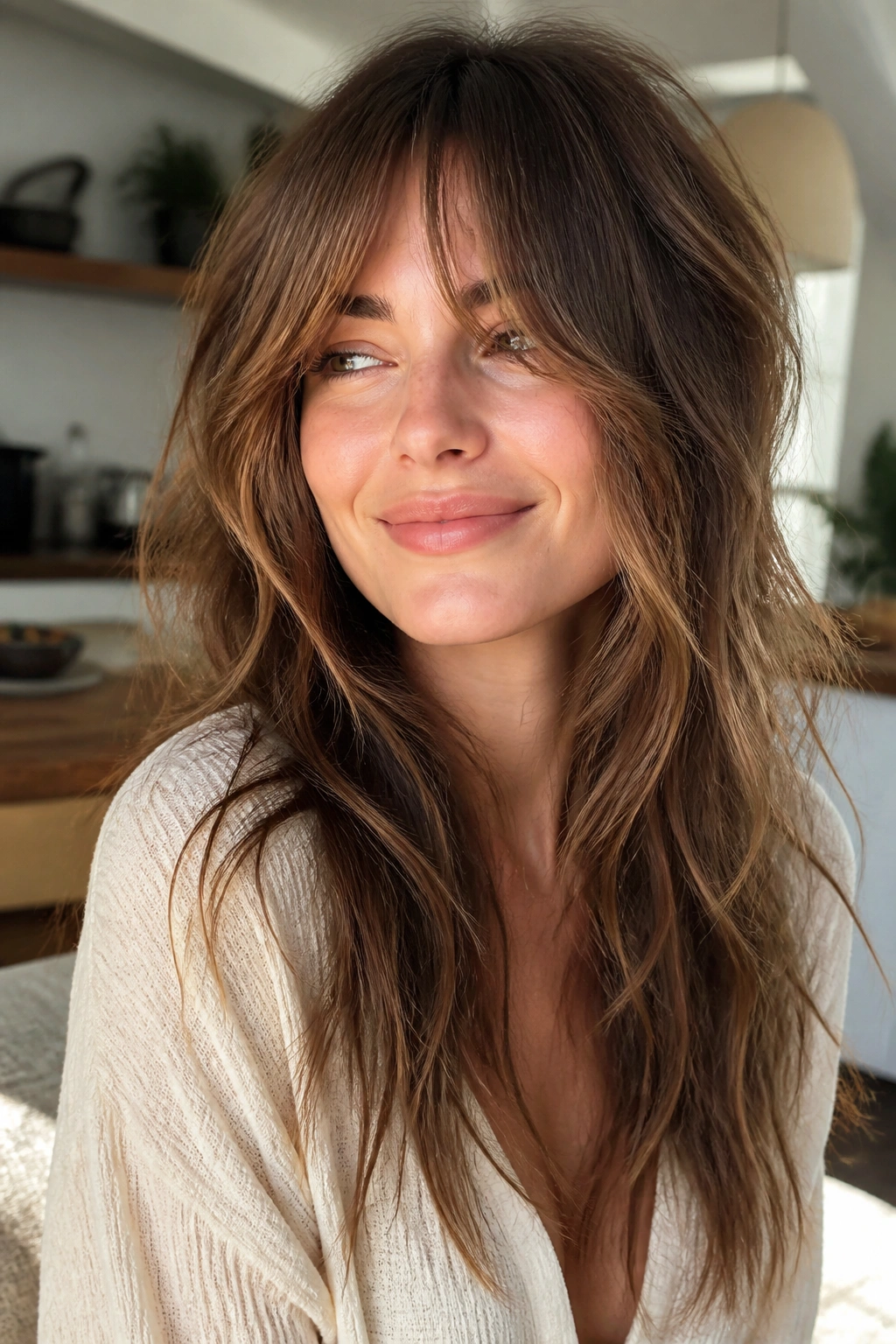
Razor work is not gentle.
That is exactly why it works so well on straight or slightly wavy long hair. A razor-cut shag creates soft, broken ends that move when you turn your head, which keeps the hair from lying there in one flat block. The texture looks piecey in a good way, not frayed, as long as the stylist keeps the blade controlled and doesn’t shred the ends.
This style has a little attitude to it. You can blow it out smooth and still see the separation between the layers, or you can let it dry with a rough bend and get a more lived-in shape. On sleek hair, that contrast is the whole point. On hair that’s already dry or damaged, though, a heavy razor hand can make the ends look thirsty. That’s the tradeoff.
The best version keeps the perimeter long and uses the razor to soften the interior. That means the hair still feels full when it’s down, but it doesn’t sit like a block at the shoulders. If your ends split easily, ask for a scissor-based version with point cutting instead. You’ll get a similar outline without pushing the texture too far.
5. Face-Framing Mermaid Shag
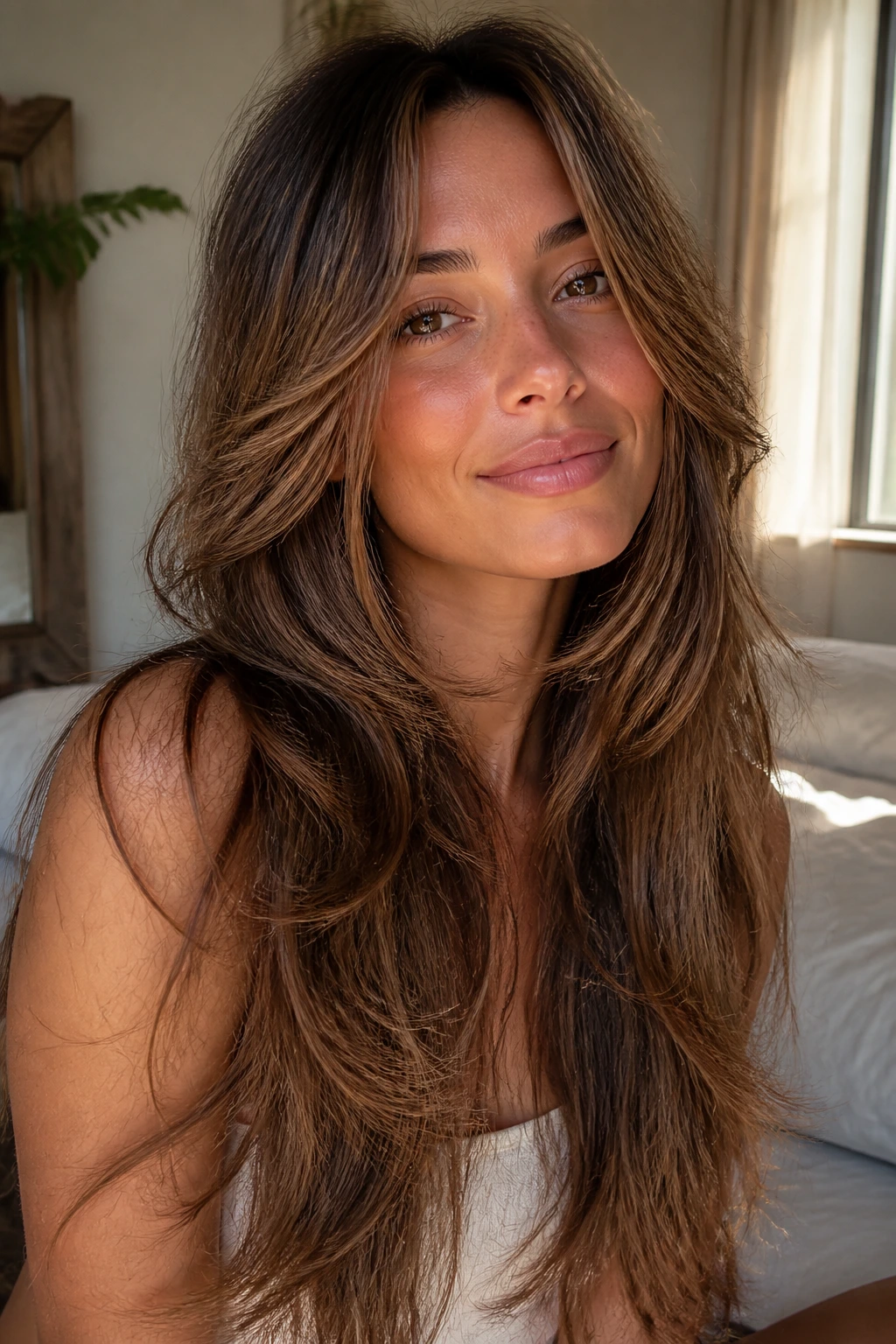
Unlike a pure mermaid cut, this one doesn’t just celebrate length and stop there.
A face-framing mermaid shag keeps the dreamy, long silhouette people like about mermaid hair, but it steals weight from the front so the cut can actually move. The face layers start somewhere between the chin and collarbone, then blend into long lengths that still fall well below the shoulders. That blend matters. Without it, the look can go flat fast.
What makes it different
The mermaid version is usually softer at the perimeter than a classic shag. Less choppy. More glide.
It suits people who want their hair to look long from every angle but still need shape near the face. If your hair gets bulky at the collarbone, these layers help the front fall inward instead of puffing outward. If your hair is fine, keep the layering subtle and let the front pieces do most of the work.
I like this cut on hair that’s worn down often. It’s also one of the easier long shags to tie back, which sounds boring until you’re living with it every day. A cut that looks good in a bun is a nice thing to have.
6. Curly Long Shag with Rounded Layers
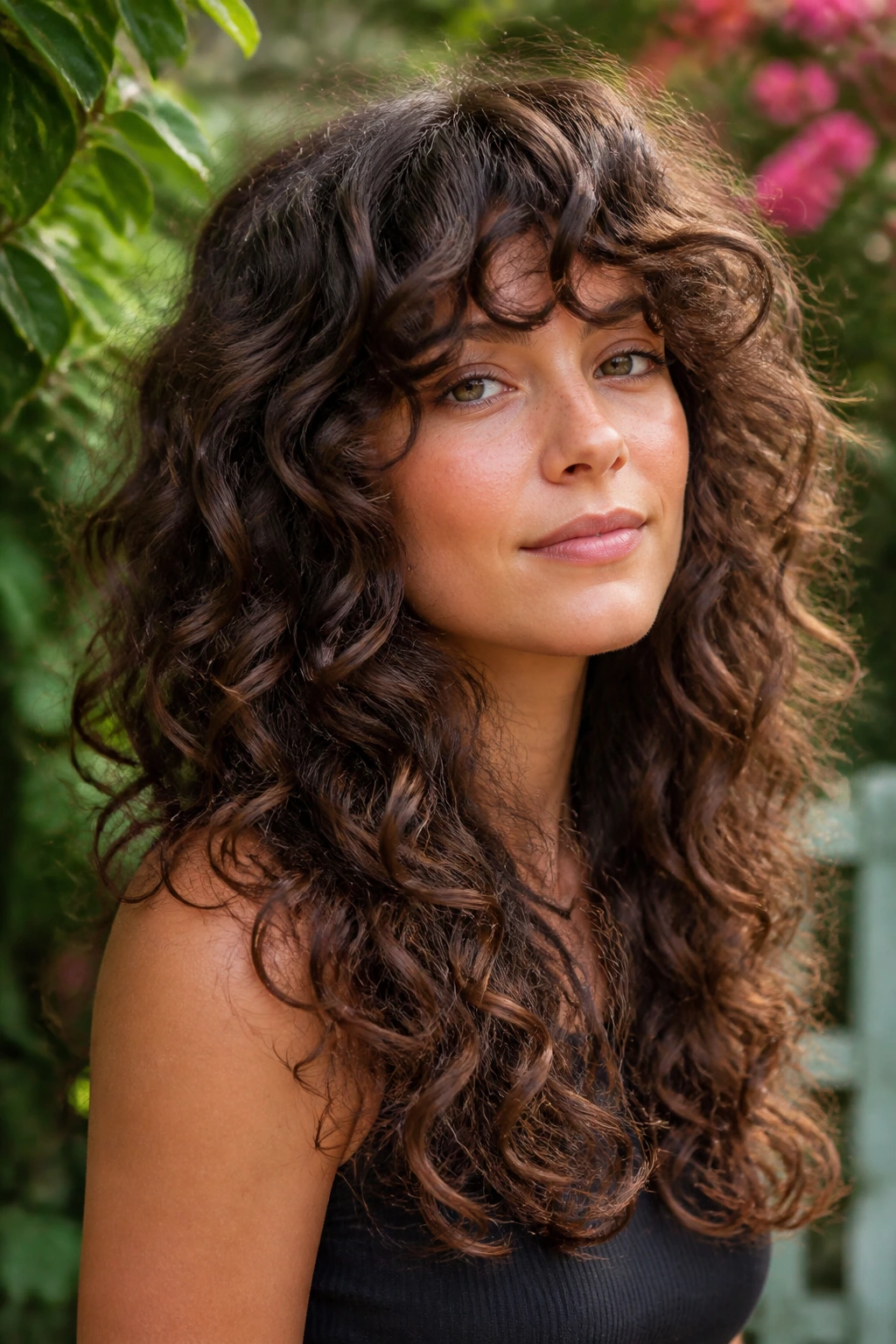
Can curls wear a shag without turning into a triangle? Absolutely, but the cut has to be shaped for the curl pattern, not against it.
A curly long shag works best when the stylist sees the hair dry, or at least partially dry, before taking the final shape. Curls spring up in their own way. A layer that looks tame when wet can sit an inch shorter once it dries. That’s why rounded layers are the smarter call here. They let the curl stack naturally instead of building a hard shelf.
How to keep the shape soft
The crown should not be over-thinned. That’s where curly shags go wrong fast. Too much removal at the top and the cut starts to puff out while the lengths collapse. The better move is to keep the layers longer and place them so they echo the curl pattern.
A curl cream or light gel helps define the bends, but the cut does most of the work. Diffuse if you want more volume, or air-dry if you prefer a looser finish. Either way, the outline should read round, not triangular and not square.
One more thing: the tighter the curl, the more useful long face pieces become. They give shape without asking the curl to do all the heavy lifting.
7. Piecey Shag for Fine, Straight Hair
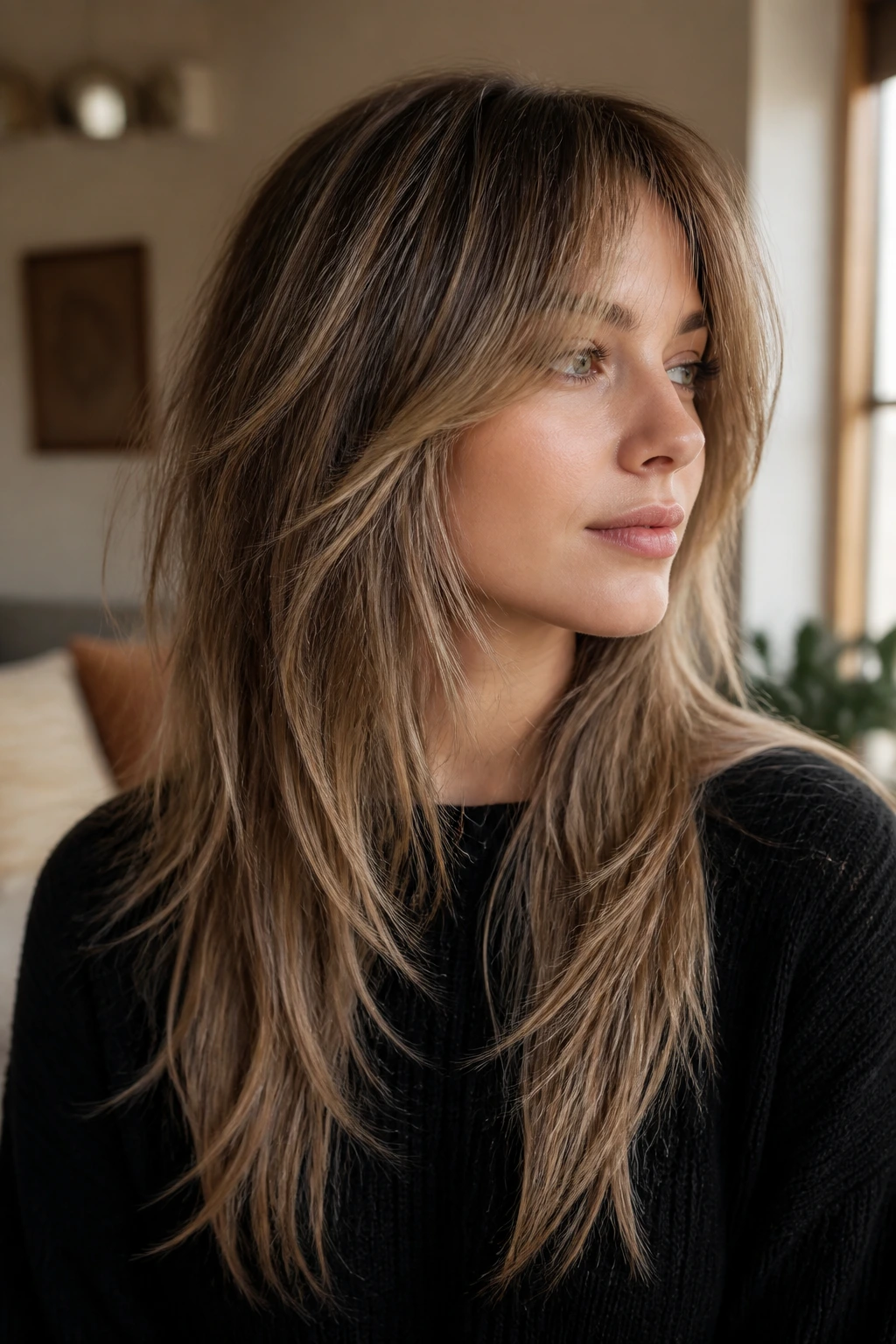
Fine hair needs a different kind of honesty. It cannot carry a ton of chopped-up layers without showing the gaps.
That is why a piecey shag for fine, straight hair keeps the perimeter a little stronger and uses internal layers to create movement where it counts. You want lift at the crown, a light bend around the cheekbones, and ends that separate just enough to avoid that heavy, curtain-like fall. The cut should feel feathered, not shredded.
This version looks best when the styling stays simple. A root spray at the scalp, a quick blow-dry with a round brush, and a small amount of texture product through the mids will usually do more than a shelf full of sprays. Too much dry texture can make fine hair look stringy fast. Less is safer.
The trick is not to chase volume everywhere. Put it at the roots and in the top third of the hair, then let the rest hang with a little soft separation. That gives fine strands a fuller outline without making them look overworked. Flat ends are the enemy here. A tiny bit of break-up goes a long way.
8. Heavy Fringe Long Shag
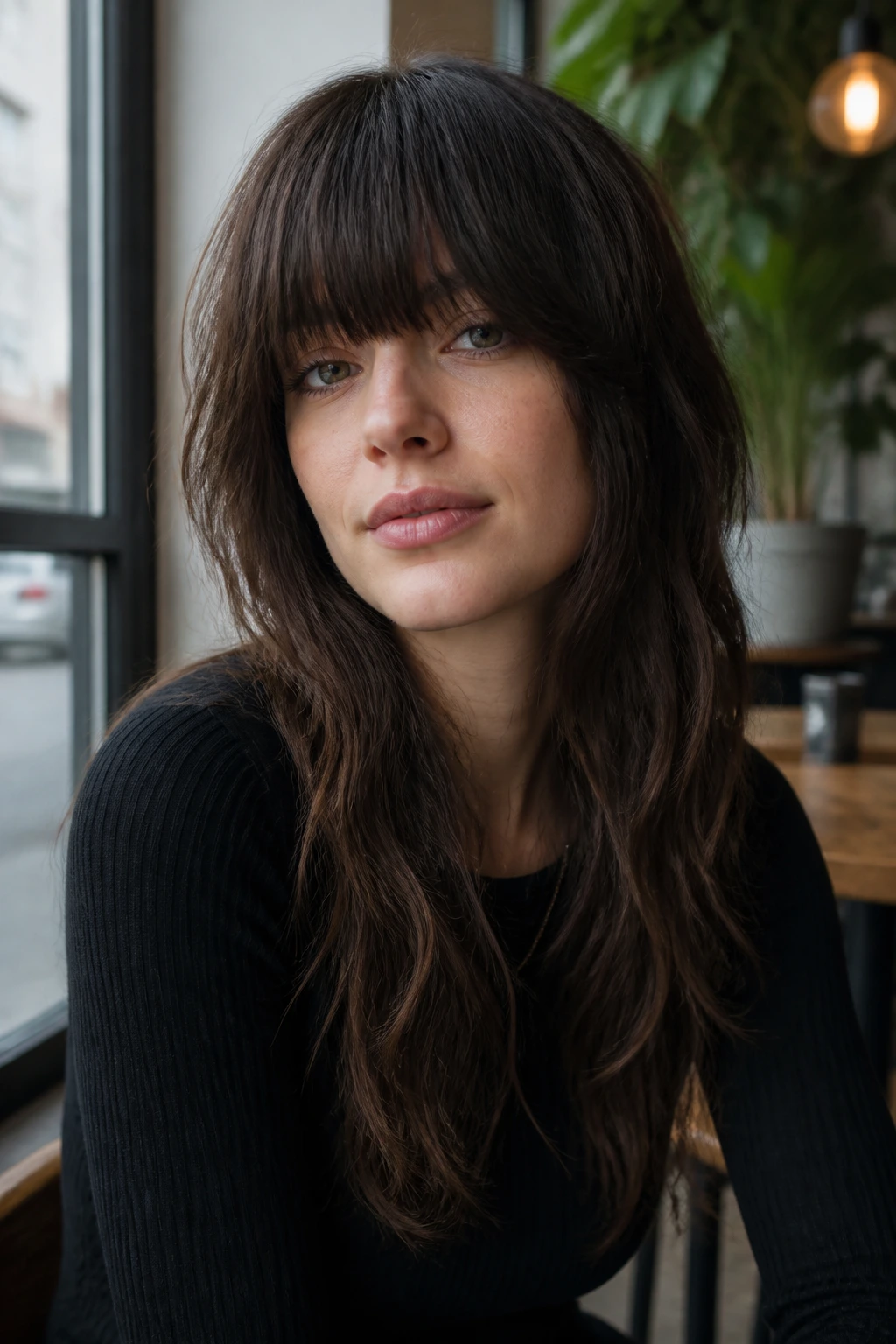
A full fringe changes the whole mood of a long shag.
It makes the cut feel denser at the front, which is useful if your forehead feels too open with curtain bangs or if you want the eyes to be the focus. The fringe can sit straight across, slightly arched, or softly textured at the ends. Behind it, the layers stay long and shaggy so the hair still moves instead of falling like one heavy panel.
What to watch for
- A heavy fringe usually needs trims every 3 to 5 weeks.
- It works best on medium to thick hair, or fine hair with a strong front hairline.
- Blow-drying the fringe from side to side helps it settle without splitting.
- If you hate maintenance, this is not the low-effort option.
The good part is the balance it gives to a long shape. Long hair can sometimes feel too much all at once, especially on narrow faces. A blunt or slightly broken fringe breaks up that weight in a way that feels intentional, not fussy.
This cut has a bit of attitude, too. Not loud. Just direct.
9. U-Shaped Shag with Soft Ends
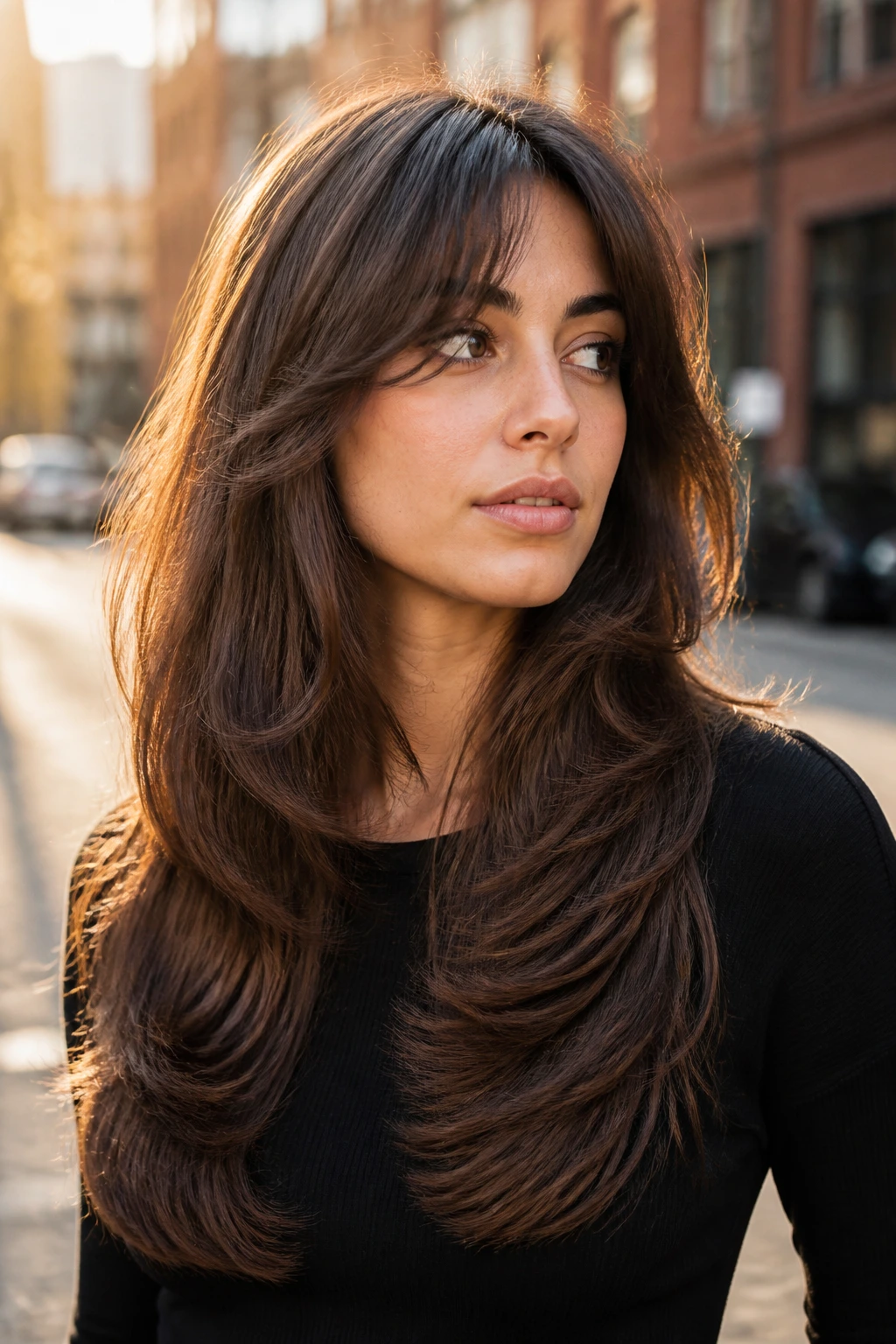
If you like length more than layers, the U-shape is the friendly version of a shag.
Instead of a straight-across back, the perimeter curves gently into a U, which lets the hair keep a softer outline as it gets longer. Add shag layers on top of that shape, and you get movement without losing the sense of fullness at the ends. It’s a clever cut for anyone who wants long hair to look cared for, not chopped to pieces.
Why the U matters
The curve helps thick hair fall around the shoulders more cleanly. It also gives the eye a nice line to follow, which makes the hair look longer from the back. That sounds small, but it changes the whole feel of the cut.
- Good for thick hair that gathers weight in the bottom third.
- Nice for people who wear ponytails often, because the perimeter still looks intentional.
- Works with curtain bangs, side-swept bangs, or no fringe at all.
- Keeps the ends looking fuller than a straight, heavily layered cut.
If you want shag movement without the choppy edge, this is a smart middle ground. It reads softer than a wolf cut and more shaped than a plain long layer cut.
10. 70s Rock Shag with Flipped Layers
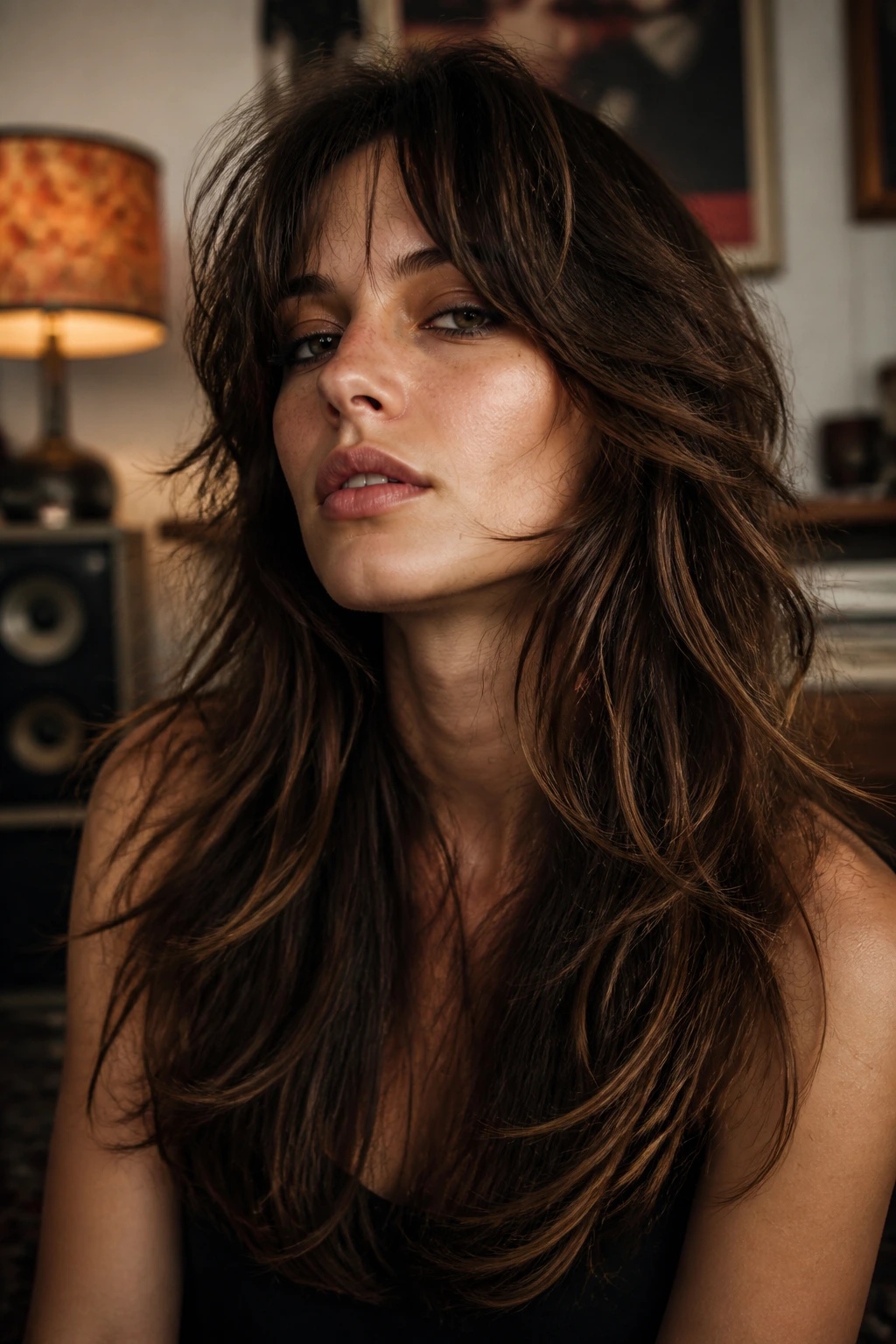
This cut doesn’t ask for perfection.
That’s part of the appeal. The 70s rock shag on very long hair leans into flipped ends, airy layers, and a little crown lift, which gives the whole style a loose, cool shape. It looks best when the hair feels touched by movement, not locked into place with a ton of product. If the ends flick outward a bit, even better.
The front pieces usually frame the face in a way that feels slightly rebellious without becoming messy. The back stays long enough to keep the shape grounded. You can wear it smooth, but it comes alive when there’s a bit of bend in the mid-lengths and a soft flip at the bottom.
Too polished ruins it.
A round brush and a quick blow-dry can set the movement, but air-drying with a little mousse is often enough. The goal is not a perfect curl. It’s a shape that looks like hair with a little history in it. If your style leans a little retro, this is one of the strongest long shag choices on the list.
11. Long Mullet Shag with Blended Length
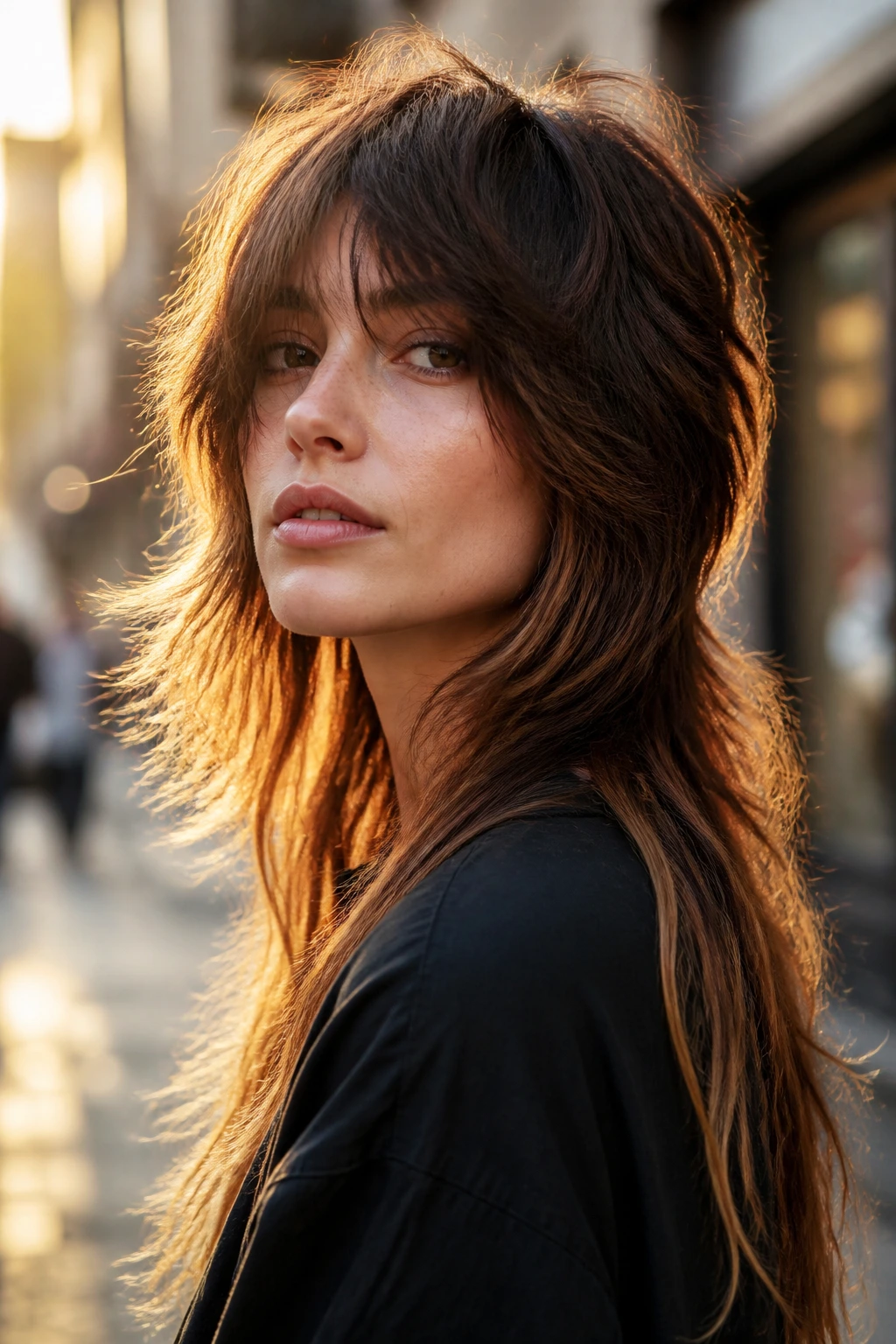
If you want something with more edge, this is the sharpest shape in the bunch.
A long mullet shag keeps length in the back while shortening the crown and front sections enough to create contrast. The trick is in the blend. A good long mullet does not look like two haircuts arguing with each other. The transition should be soft, with the shorter top layers folding into the longer back in a way that feels deliberate.
Who it suits
This cut works best for women who like hair with personality. Not “safe.” Personality.
It’s strong on dense hair because the shorter top removes weight and the longer back preserves drama. It can also be a good choice if you want a cut that looks interesting even when the styling is minimal. A little dry texture at the roots, a bit of bend through the sides, and it already reads styled.
The downside is obvious: it is less subtle than a curtain shag or a U-shape. If you want your haircut to disappear into the background, skip it. If you want people to notice the shape before they notice the length, this is the one that delivers.
12. Boho Shag with Invisible Layers
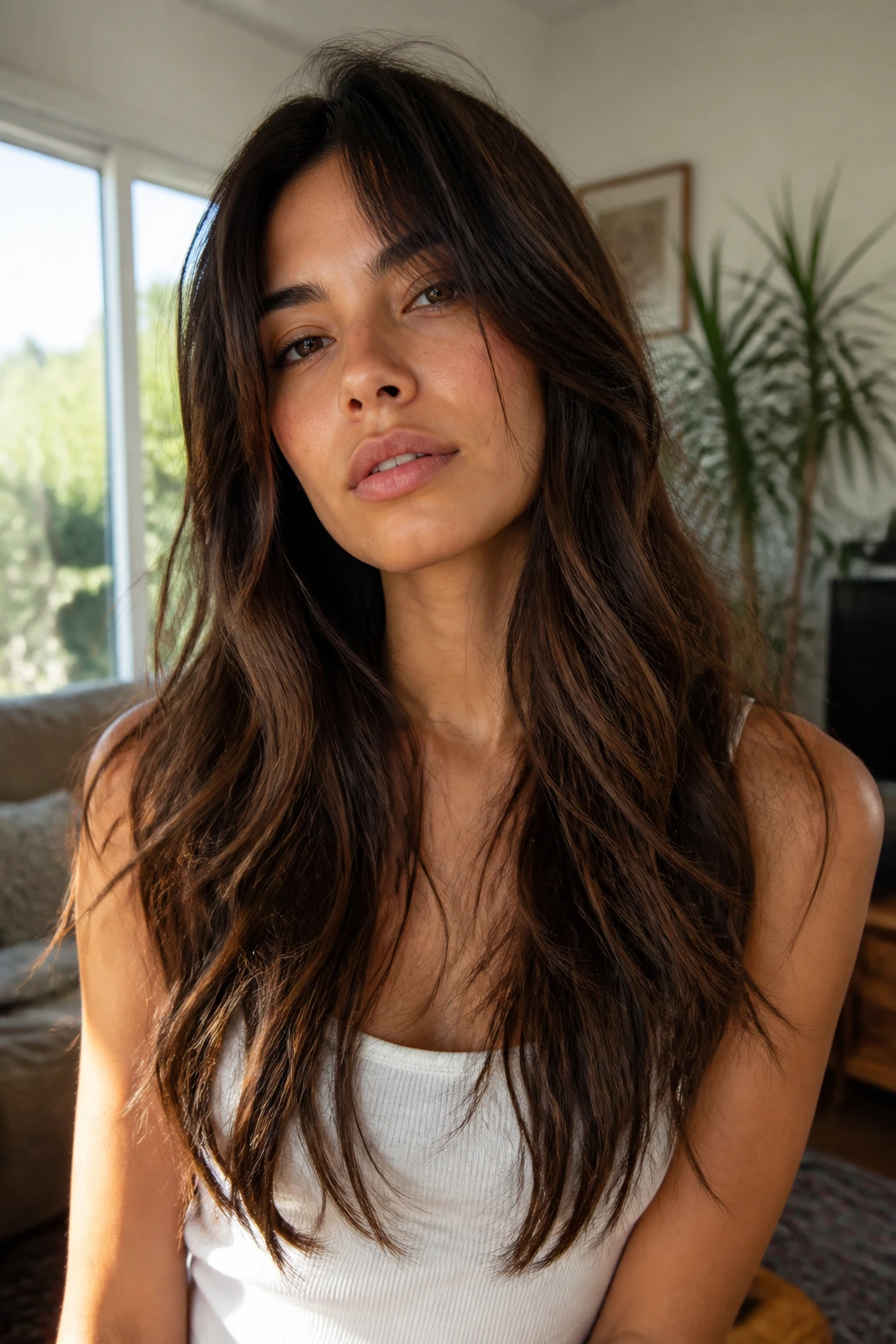
This is the sneaky cut on the list.
A boho shag with invisible layers gives you movement without obvious chopping, which makes it especially nice if you like soft hair that still has some air in it. The layers are placed deep inside the shape so the outer line stays long and smooth. From across the room, the hair still reads as long and flowing. Up close, there’s more bend and lift than you’d expect.
Why it looks softer
The layers are hidden in the interior instead of carved into the top surface. That keeps the finish gentle. It also means the cut grows out more quietly, which matters if you do not want to hit the salon every time the ends change by half an inch.
- Good for wavy hair that needs movement but not a dramatic chop.
- Smart for people who want a low-contrast shag.
- Works well with a middle part or a slight off-center part.
- Can be styled with loose bends, but it does not depend on heat every day.
There’s a softness to this one that a lot of layered cuts try and fail to get. It feels less staged. More lived-in. And yes, that matters.
13. Side-Swept Fringe Shag
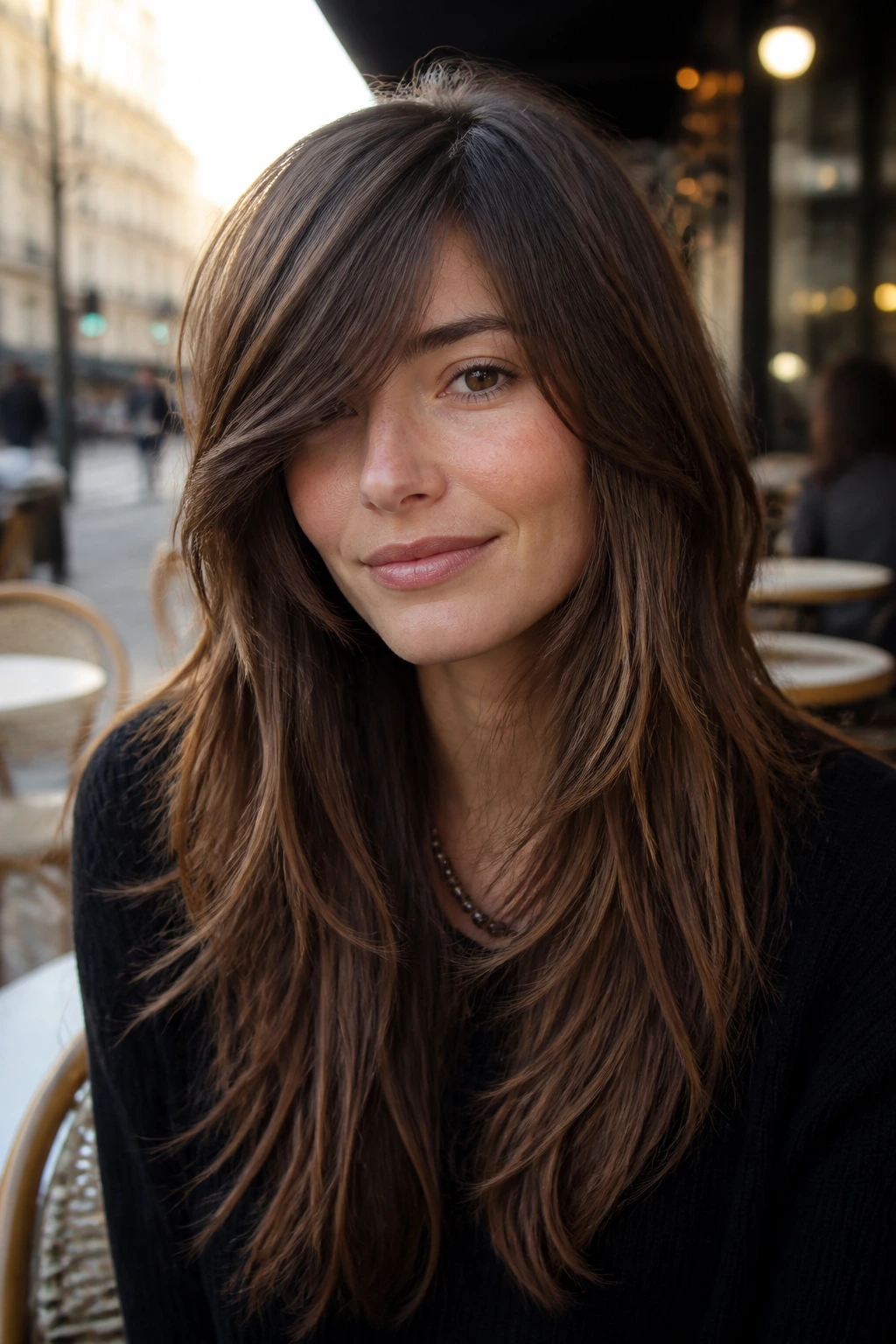
Not everyone wants a center part hanging down the middle of the face.
A side-swept fringe shag gives you the same long, layered movement, but the front is brushed off to one side so the cut feels a little easier and a little less symmetrical. That makes it a good option for anyone growing out bangs or anyone who simply likes the face to stay more open on one side. The sweep also softens the transition between the fringe and the length, which helps the whole cut read smoother.
This shape is flattering on a lot of faces because it breaks up width at the forehead without building a hard wall of hair. It also ages well as it grows out, which is one of those boring practical things that turns into a big deal later. If you hate sitting in the salon chair every few weeks, this is a friendlier path than heavy bangs.
A side part can shift the whole mood of the haircut in one minute. That’s the nice part. Same layers, different energy.
14. Thick-Hair De-Bulking Shag
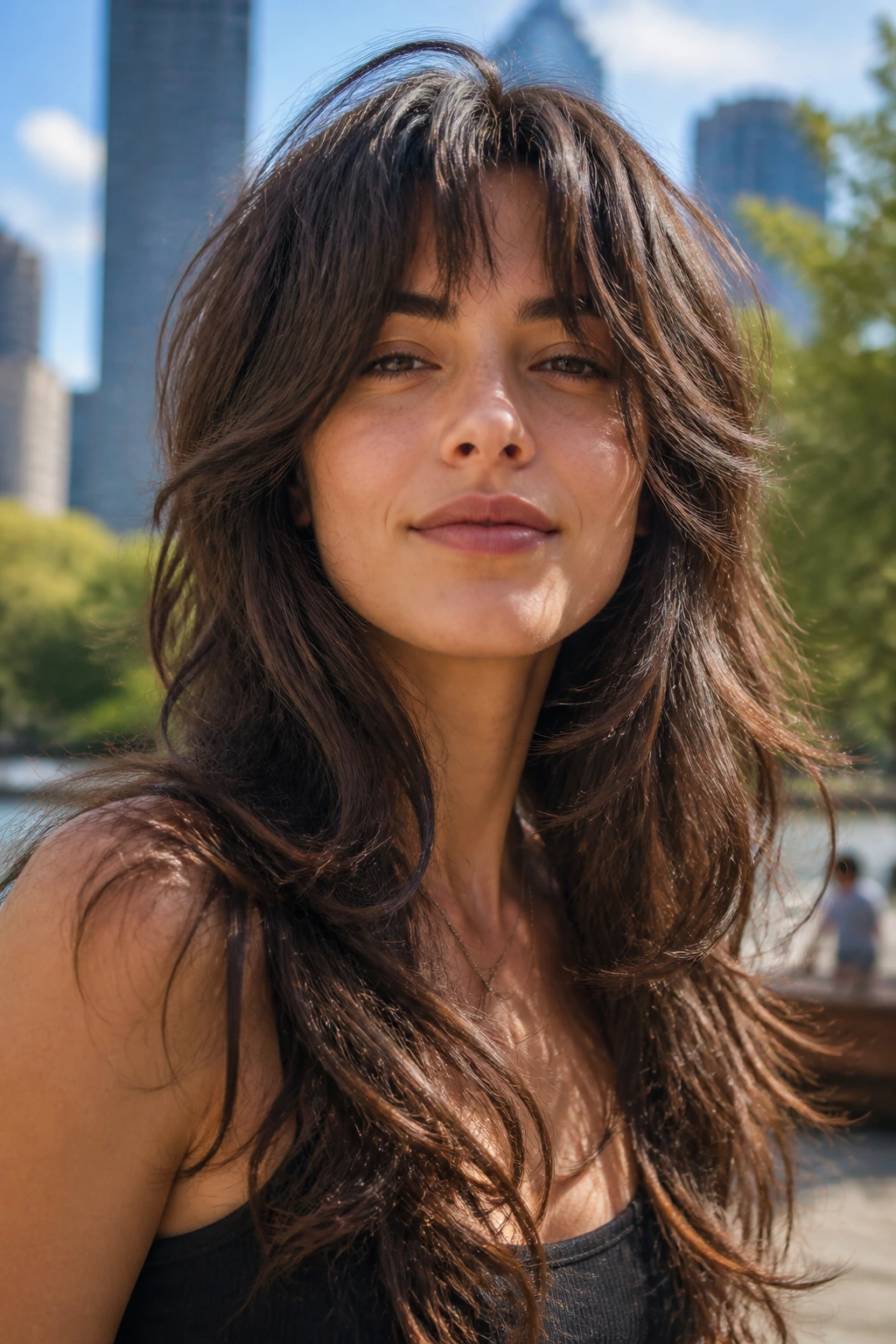
Thick hair can make even a good shag look like a pyramid if the weight comes out in the wrong places.
That is why this version is all about control. The stylist should remove bulk from the interior and the mid-lengths, not just hack at the ends and hope for movement. A well-cut thick-hair shag keeps some strength at the perimeter so the cut still feels full, but it lightens the places where the hair piles up around the shoulders and neck.
Where the weight should come out
- Through the crown, if the hair sits heavy and flat on top.
- Around the cheek and jaw, if the front pushes outward.
- In the mid-lengths, if the hair expands like a triangle.
- Lightly at the ends, but never so much that the outline turns wispy.
Point cutting helps here. So does soft slide cutting, when it’s done carefully. What you do not want is too much thinning at the very bottom. That can leave thick hair looking frayed instead of lighter. Coarse hair especially needs a clear perimeter, or the shape starts to lose structure.
This is the version that makes long hair feel easier to wear day to day. Less bulk in the wrong spots. More swing where you can actually see it.
15. Long Shag with Floating Face Layers
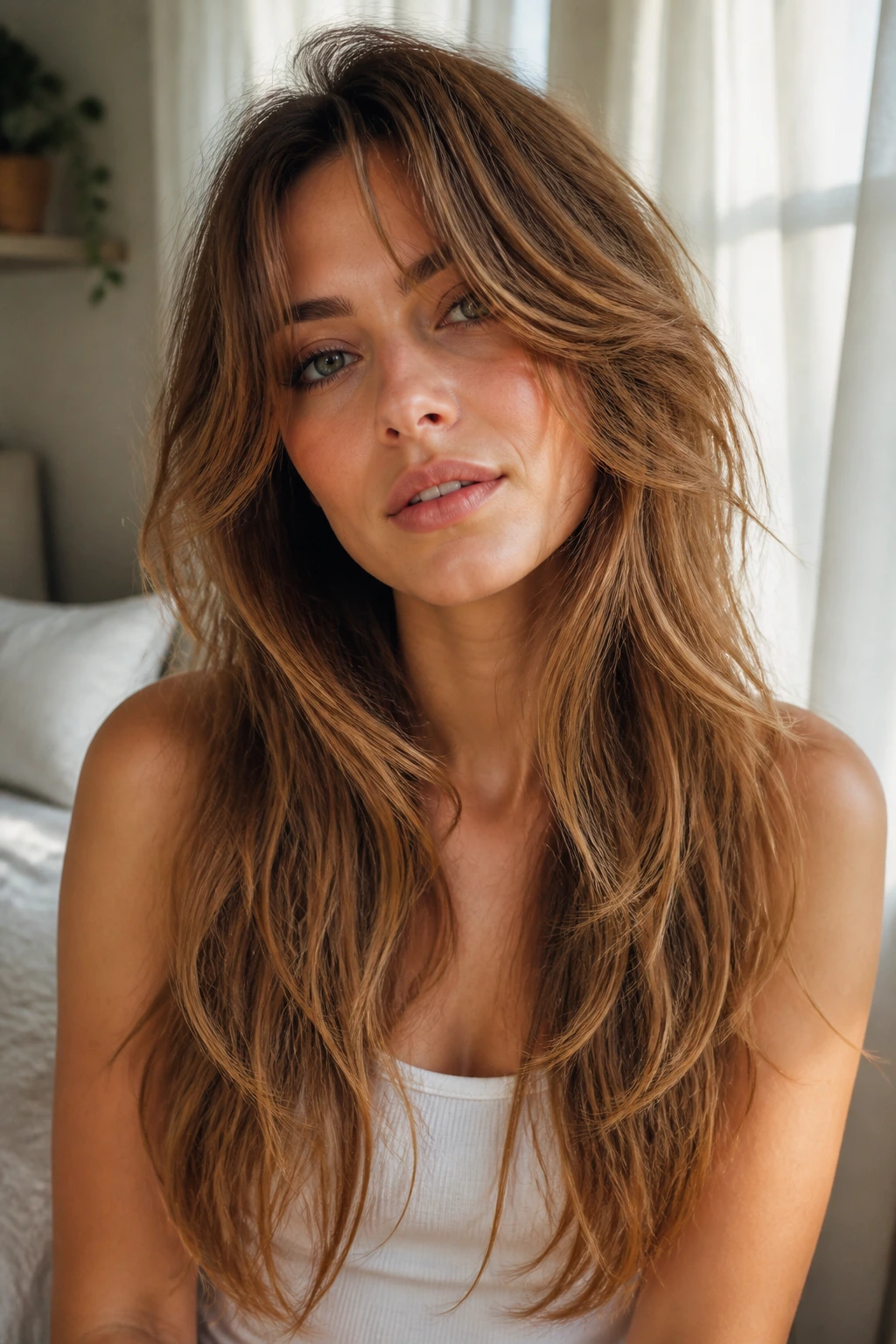
If you only want one shag that feels easy to live with, make it this one.
A long shag with floating face layers keeps the line soft from top to bottom and avoids the harsh chopped look that scares people off layered cuts. The face pieces start long enough to blend, not announce themselves, then drift into the rest of the haircut without a hard break. That gives you movement around the face and a shape that still looks calm when the hair is tied back.
This is the least risky option on the list. It works on straight hair, wavy hair, and some curl patterns, and it grows out without looking like a mistake after six weeks. That matters more than people admit. A cut that still behaves when your styling energy drops off is worth keeping.
I like this version for anyone who wants a shag but does not want the haircut to wear them. The layers are there, but they do their job quietly. No drama. No sharp surprises. Just long hair with enough shape to keep it from collapsing into itself, and that’s a pretty useful thing to have.
