



A shoulder-length wolf cut looks easy until the layers miss the mark. Too much chopping at the crown and it turns into a fuzzy triangle. Too little shape and you end up with a shag that forgot its attitude.
That middle ground is why shoulder length wolf haircuts for women stay so interesting. The length gives you enough weight to keep the style wearable, while the shorter layers at the top bring lift, movement, and that slightly untamed shape people want from a wolf cut in the first place. At shoulder length, the cut can feel softer than a full mullet and less precious than a neat lob. Good. That’s the point.
What makes this length tricky is also what makes it worth choosing. The cut has to work with your texture, not against it. Straight hair needs a little more internal layering to avoid looking flat. Wavy hair can take a lighter touch and still look full. Curly hair needs the layers placed with some care, or the whole thing balloons out like it has somewhere better to be.
Bring photos to the salon. Bring two if you can: one from the front and one from the side. That tiny detail saves a lot of disappointment, because wolf cuts live in the shape of the silhouette, not just the bangs. And that shape changes a lot from one version to the next.
1. Soft Feathered Layers with Curtain Bangs
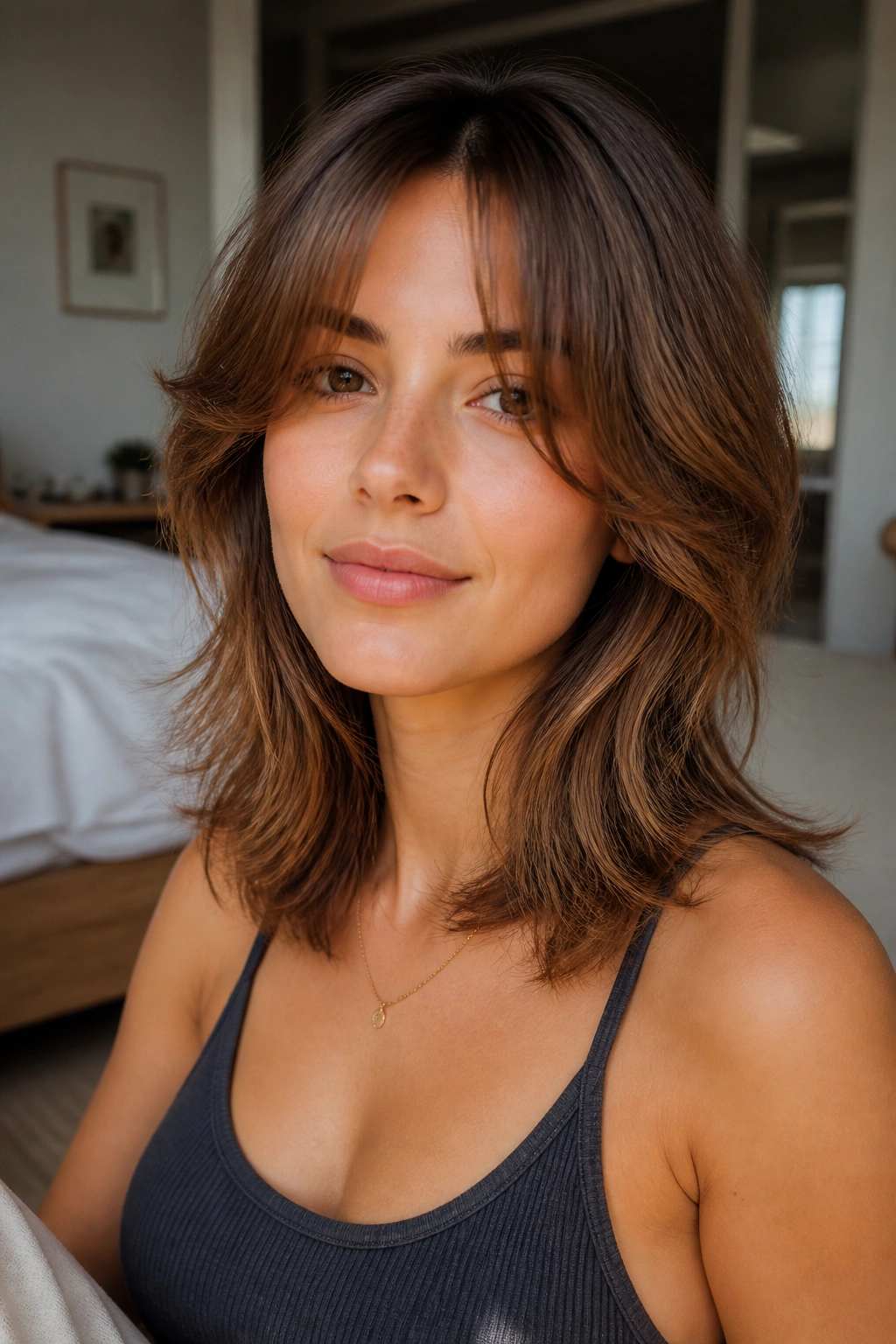
Soft feathered layers are the easiest entry point if you want the wolf-cut look without the hard edge. The shape stays airy around the face, and the curtain bangs split open in the middle, which keeps the whole cut from feeling boxed in. If your hair lands right at the shoulders or a little below, this version usually keeps the most movement at the least amount of fuss.
Why It Feels So Wearable
The trick is in the blend. Instead of a sharp jump from short crown layers to long ends, the feathering lets the sections melt into each other. That matters if your hair is medium thickness and you want body without a bulky outline.
Ask for the shortest face-framing pieces to hit around the cheekbone or upper lip, then keep the rest soft and layered through the mid-lengths. You want lift, not a cliff.
- Best on: straight, wavy, and loose curly textures
- Bang length: cheekbone to nose bridge
- Styling cue: blow-dry the bangs away from the face with a round brush
- Finish: a light spray wax or cream, not stiff hairspray
A small warning: if your bangs are cut too short, the whole shape loses that gentle swing and starts looking harsh fast.
2. Choppy Wolf Cut with Piecey Ends
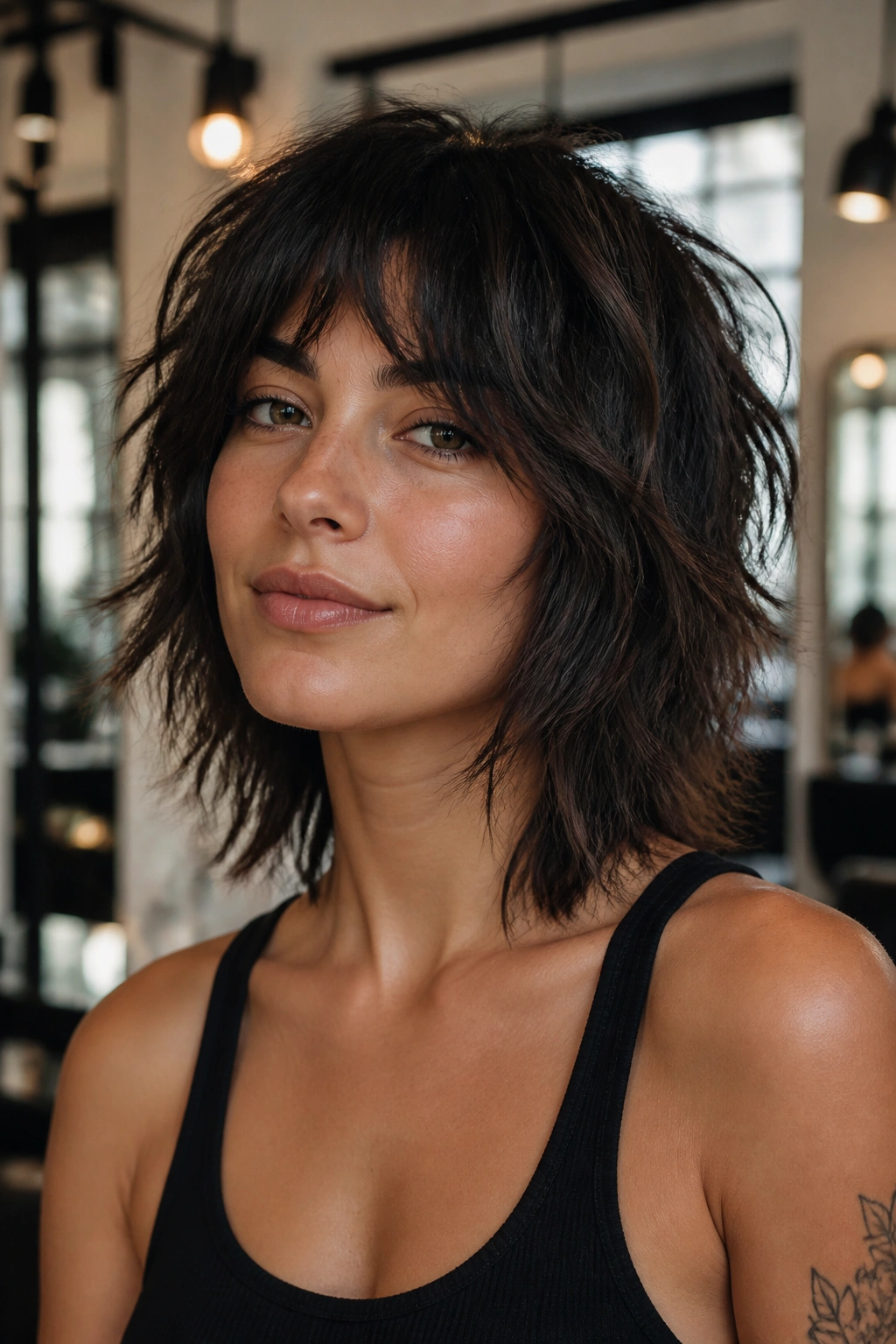
This is the version for women who want their hair to look a little mischievous. The layers are less feathered and more broken up, so the ends separate into defined pieces instead of falling in one soft curtain. It gives the cut a rougher outline, which is exactly why it works so well on shoulder length hair.
The best place for this shape is medium to thick hair that can hold texture. Thin strands can wear it too, but the layers need to stay longer so the ends do not disappear into wisps. A good stylist will cut with point cutting or razor work near the perimeter, then leave enough length for the style to still feel full around the collarbone.
Use a texture spray or a small amount of mousse on damp hair, then rough-dry with your hands. You do not need polished curls here. A few crooked bends are better than a perfect wave. That slightly uneven finish is the whole charm.
This version is also one of the easiest to grow out. The choppy ends keep their shape for months, which means you can stretch salon visits without the cut turning shapeless. Handy. Especially if you hate booking trims on a strict schedule.
3. Curly Shoulder-Length Wolf Cut
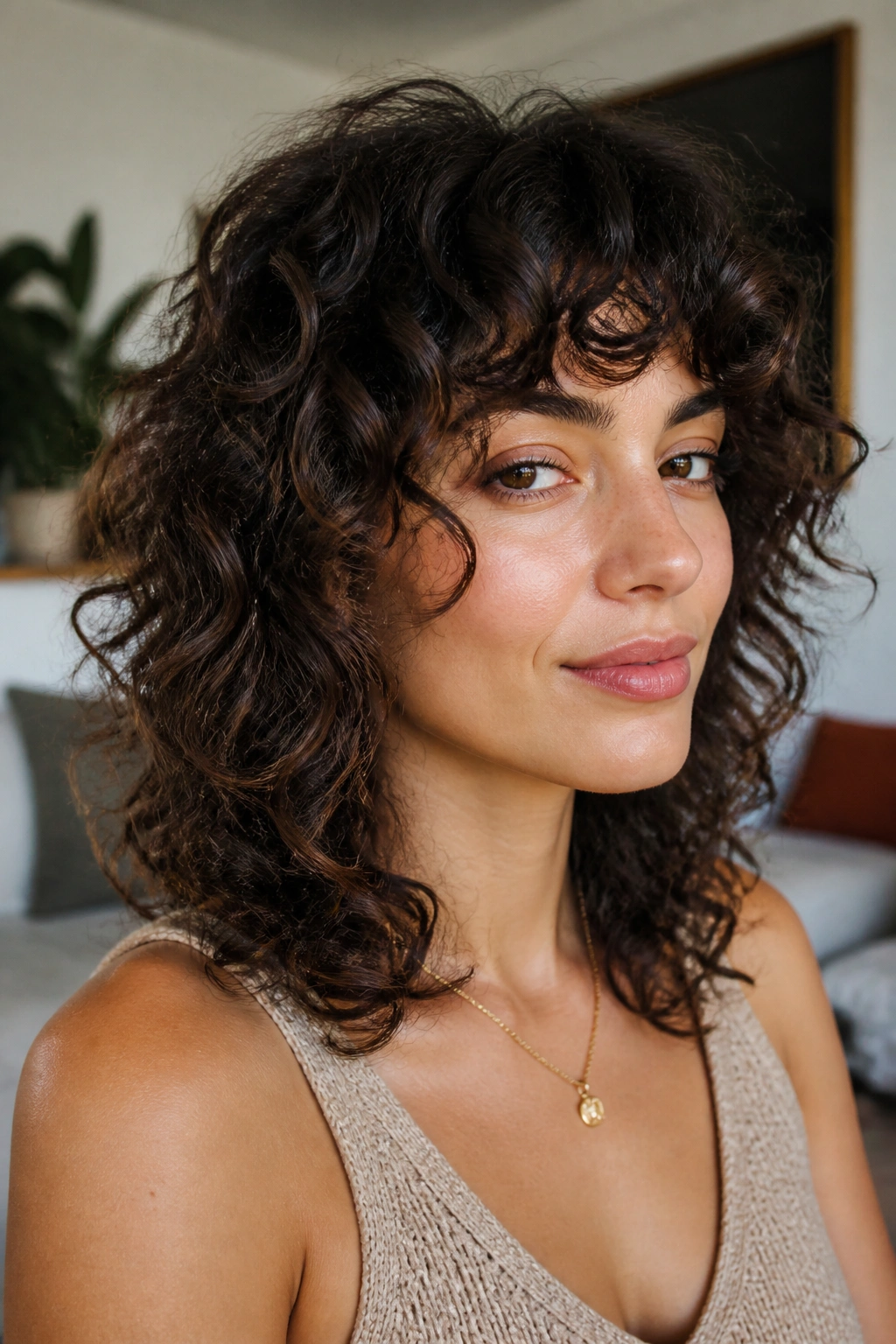
Can a wolf cut work on curls without turning into a puffball? Yes, if the layers are placed with the curl pattern in mind. That is the entire game here.
Curly shoulder-length wolf haircuts for women need to respect shrinkage. A curl that looks like a chin-length piece when wet may bounce up several inches once it dries, so the cutting line has to stay a little longer than you think. A dry cut, or at least a curl-by-curl approach, helps keep the shape honest.
How to Keep the Silhouette Balanced
The crown should have lift, but not too much. If the top is cut too aggressively, curls stack up and create a round shape that fights the wolf cut idea. The better move is to keep shorter layers around the upper head and leave the lower layers long enough to hang and separate.
Styling matters more here than people expect.
- Use a curl cream with enough slip to define the strands
- Apply it on soaking-wet hair, then scrunch once
- Diffuse on low heat until the roots are about 80% dry
- Stop touching it. The less you disturb the curls, the cleaner the shape stays
A curly wolf cut looks best when the bangs are soft and long enough to tuck or split. Hard micro bangs can work, but they are a bold choice and not the easiest place to begin.
4. Sleek Wolf Cut with Hidden Layers
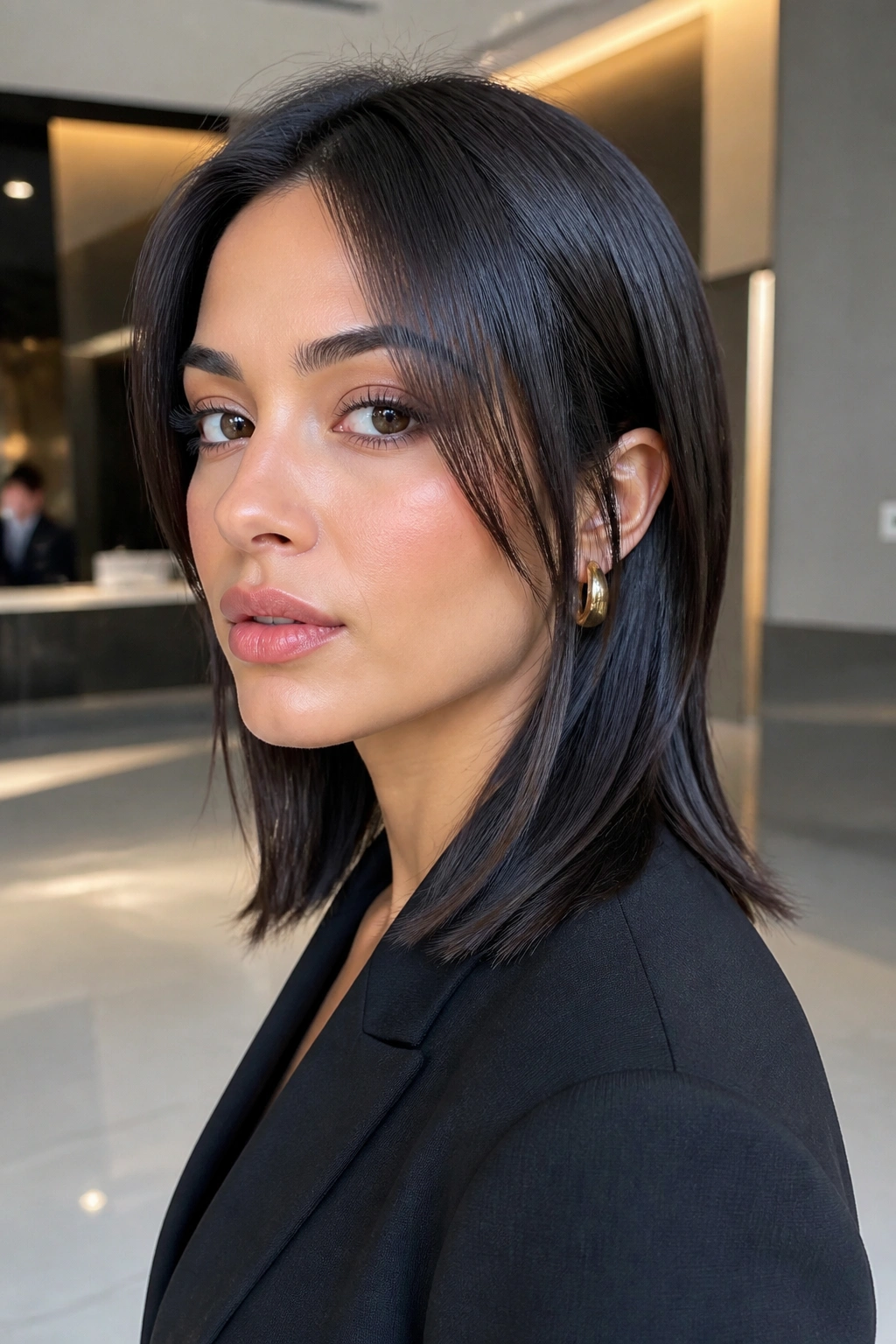
Most people picture wolf cuts as messy, and that’s fair. But a sleek version can be sharper in a good way. The movement is still there; it just hides under a smoother surface.
This cut works especially well if you wear your hair straight most of the time and want texture without visible choppiness. The layers stay internal, so from the outside the hair reads as polished, but it still flips at the ends and lifts around the crown when you move. It’s a smarter cut than it gets credit for.
Ask for long, blended layers that start around the jaw or collarbone, with the shortest pieces near the top kept soft rather than aggressive. A blowout cream and a paddle brush will give you the cleanest result. If you want a bit of bend at the ends, wrap the last inch of hair around the brush and flick it outward as you dry.
- Best for: office settings, smooth textures, and people who like structure
- Good detail to request: minimal debulking at the sides
- Styling tool: flat brush, not a tiny round one
- Finish: shine spray on the mid-lengths only
This is the wolf cut for someone who likes the idea of a shag, but not the full chaos of one.
5. Deep Side-Part Wolf Cut
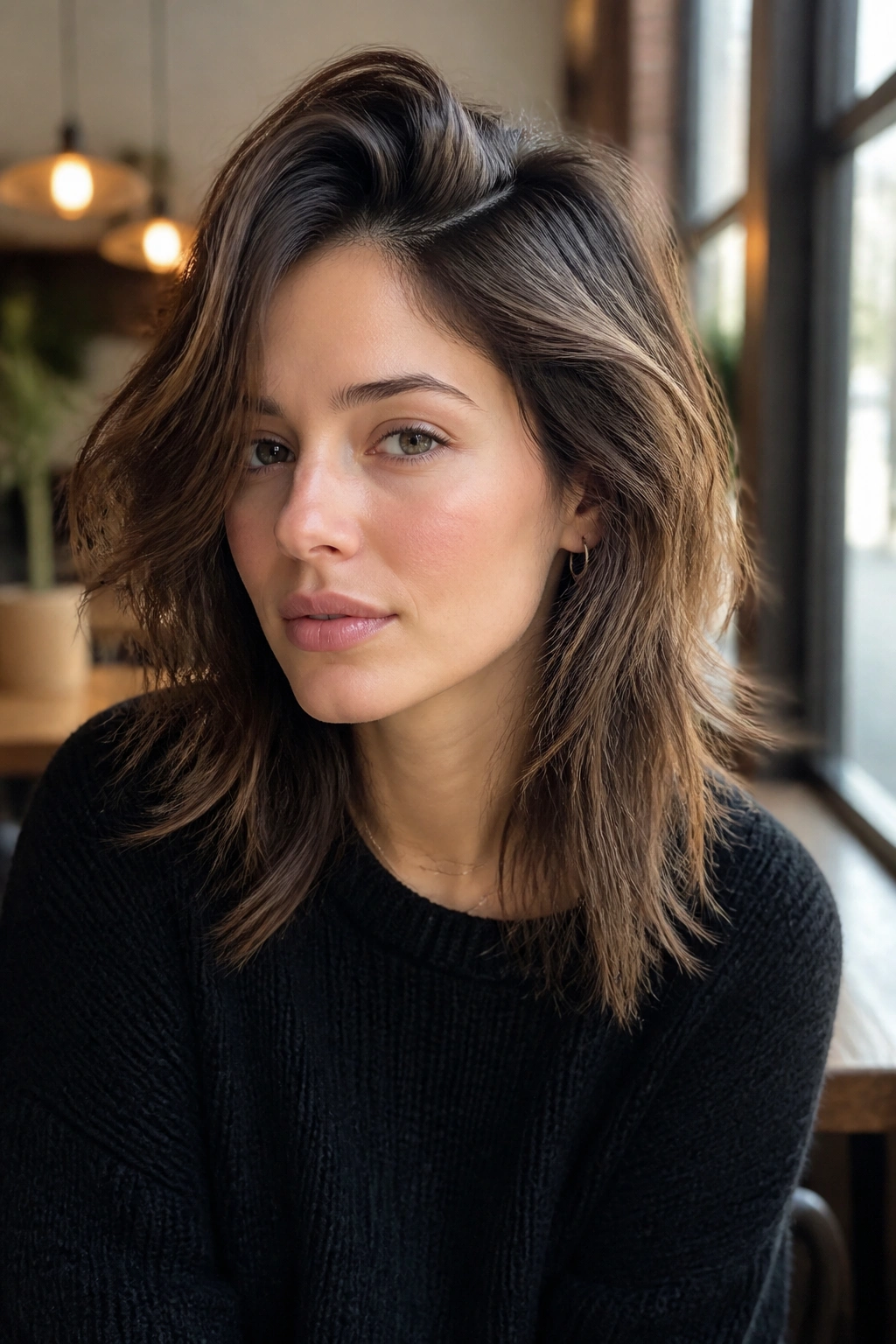
A deep side part changes everything. Seriously.
Move the part over by two to three inches, and the whole shoulder-length cut starts to lean, which adds drama without changing the actual layers much. The side with more hair gets a heavier drape, while the shorter side lifts at the crown and shows off the face-framing pieces. If your hair tends to collapse at the roots, this is one of the easiest ways to fake fullness.
The cut itself does not need to be extreme. In fact, that is part of the appeal. Keep the crown layers soft, let the front skim the cheekbone, and ask for enough length at the ends so the side sweep does not feel overdone. The finish should look like you brushed your hair over with purpose, then forgot about it.
What I like about this version is the shape it gives to round or heart-shaped faces. The diagonal line cuts across the face in a flattering way and breaks up width. It also looks good on second-day hair, which is a small but real advantage. The roots have a little grit by then, and that makes the side part hold better than it does on freshly washed hair.
6. Bottleneck Bang Wolf Cut
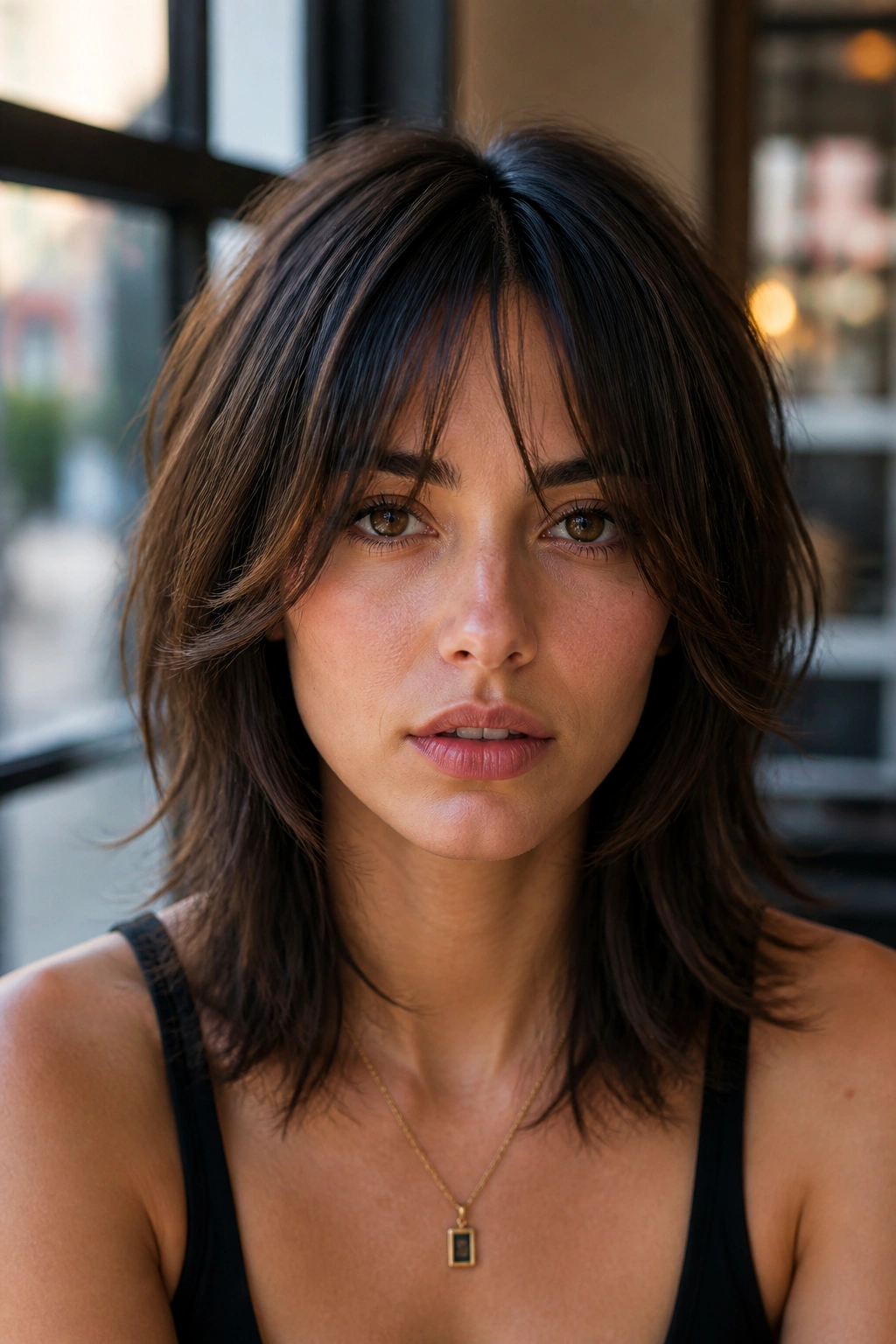
Bottleneck bangs are the quiet hero of this cut. They start narrow at the center, then open wider as they drop toward the cheekbones. That makes them softer than blunt bangs and less fussy than a full curtain fringe, which is why they fit a shoulder-length wolf cut so well.
The shape is flattering because it draws attention to the eyes without chopping the forehead into a hard line. It also gives the wolf cut a cleaner front view. Some versions of the style can look a little too scattered around the face; bottleneck bangs solve that by creating a clear center point and a smooth outward curve.
What to Ask Your Stylist For
- A short center section that starts near the brows
- Longer side pieces that graze the cheekbones
- Soft blending into the first face-framing layer
- Texture at the ends, but not ragged thinning
This cut suits women who want movement around the face but still want the front to feel styled. Use a small round brush or even your fingers and a blow dryer nozzle to bend the bangs away from the center. They should fall in a soft arc, not stick out like little horns. That happens when the shortest part is cut too bluntly, so caution there.
7. Razor-Cut Wolf with Crown Lift
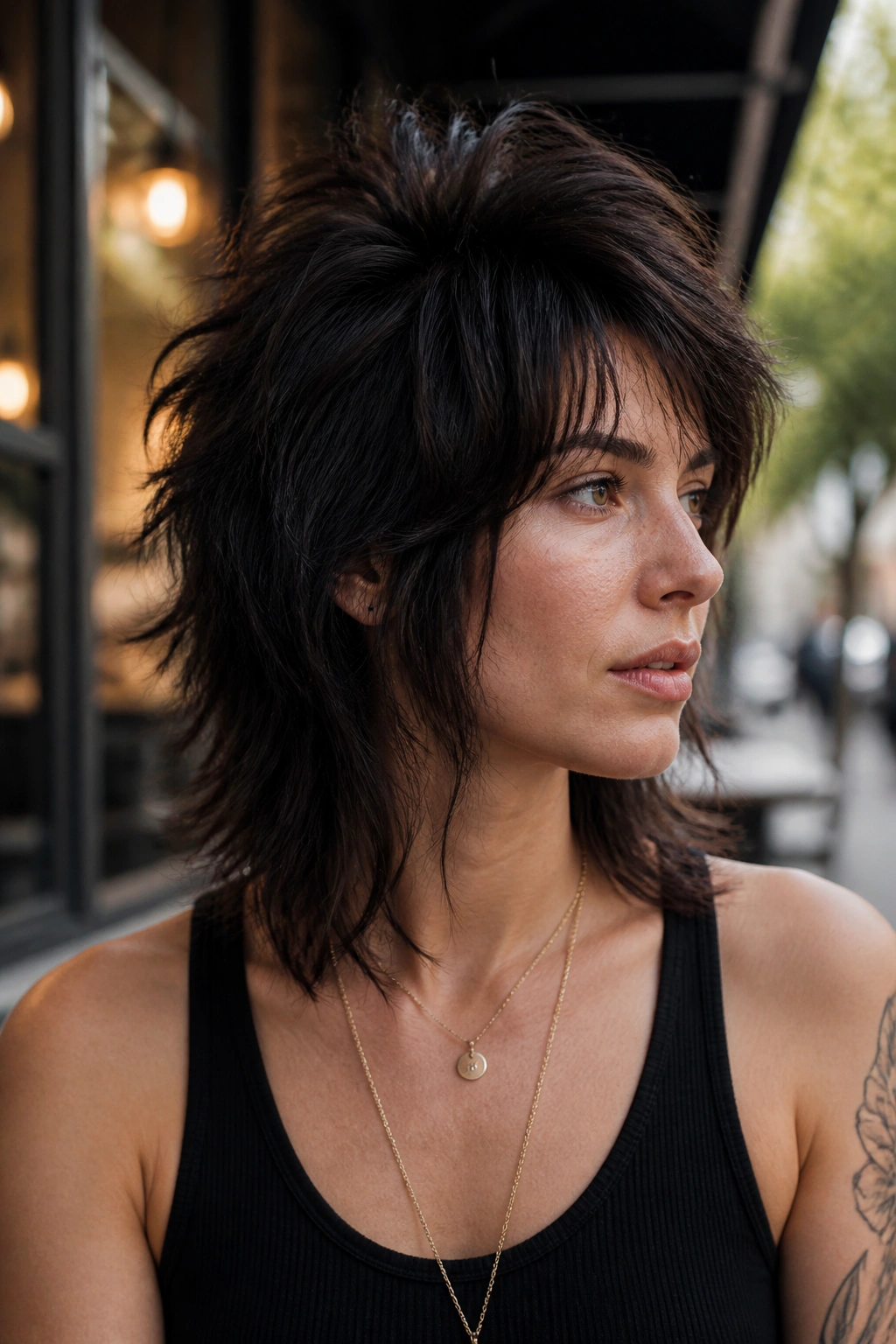
Razor cutting gives the wolf cut a slightly shredded finish. It can be gorgeous on the right hair, and a little annoying on the wrong hair. That’s the honest version.
On medium to thick straight hair, a razor can remove bulk while leaving movement in the ends. The top gets lifted, the sides stay lighter, and the shoulder-length perimeter keeps enough weight to prevent the whole style from floating away. On fragile or overly fine strands, though, heavy razor work can make the ends look stringy. Not ideal.
The crown lift is the part that gives this cut attitude. A stylist will take short layers higher up on the head, then keep the lower sections long enough to swing. You want a stacked feeling near the roots without a visible shelf. The difference is subtle in the chair and obvious once you shake your hair out.
Styling is simple: dry shampoo at the roots, a touch of texturizing spray through the mids, and a little pinch of the ends between your fingers. That’s enough. If you go too hard with product, the sliced layers can clump and lose their airy shape. A razor cut wants movement, not paste.
8. Thick-Hair Wolf Cut with Internal Weight Removal
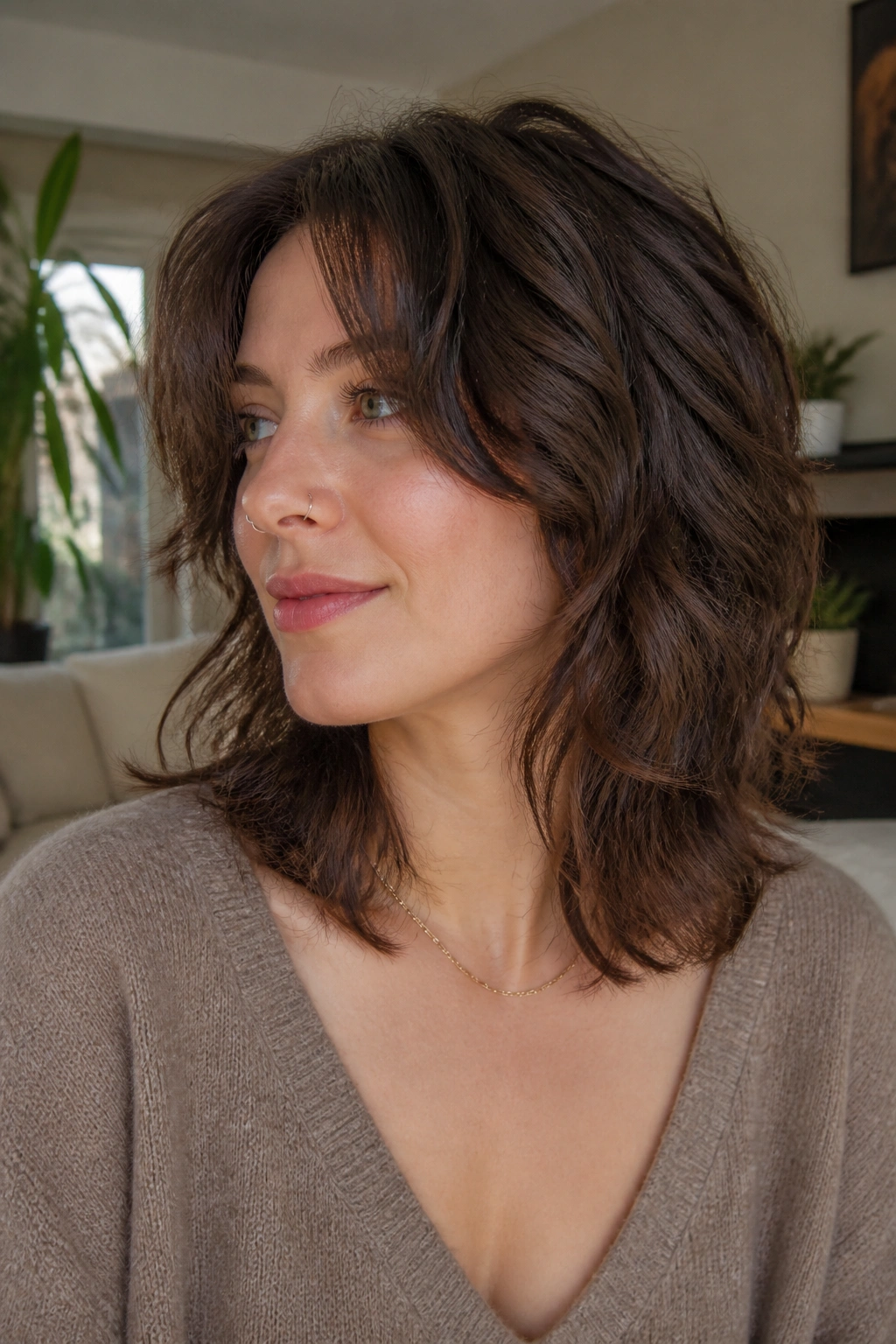
Thick hair can carry a wolf cut better than almost any texture, but only if the bulk is removed in the right places. If you thin the wrong spots, the cut gets wide at the sides and flat on top. That’s the mistake people keep making.
The better plan is internal weight removal. Ask for the underside and middle sections to be debulked while keeping the outer outline intact. That way the surface still looks full, but the hair sits closer to the head and the layers have room to move. Shoulder length is a sweet spot here, because the extra weight of the length helps prevent puffiness at the ends.
A Few Things That Matter
- Keep the shortest crown layers controlled, not tiny
- Leave enough density around the perimeter to balance the shape
- Avoid over-thinning near the ears, where volume can flare out
- Use a wide-tooth comb, not a brush, when the hair is damp
A thick-hair wolf cut usually looks best with some bend, not poker-straight polish. The hair has too much natural body for that anyway. Let it dry with a diffuser or a rough blow-dry, then break up the layers with your hands. The result should feel lively, not puffy. That difference matters more than people think.
9. Fine-Hair Wolf Cut with Airy Ends
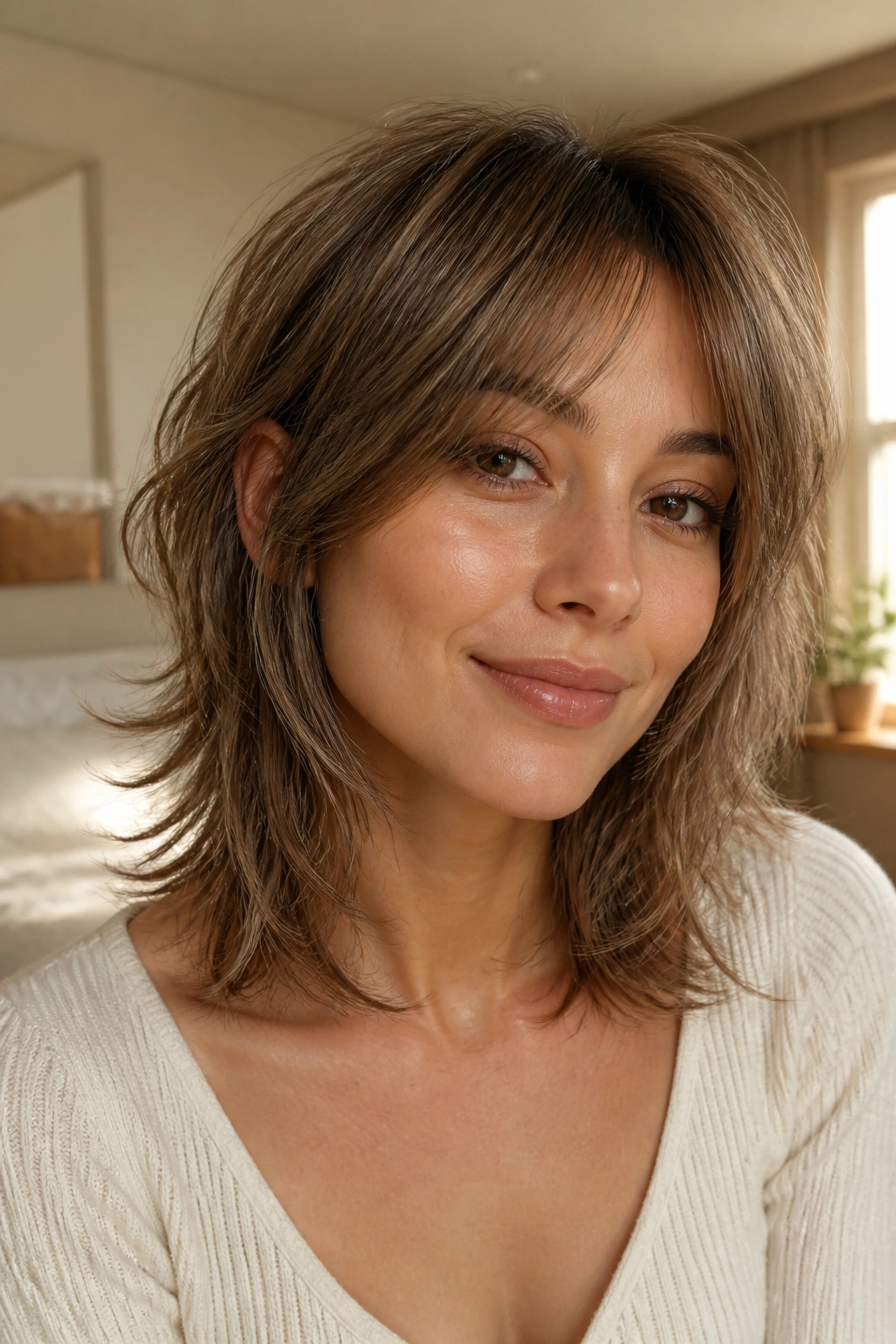
Fine hair needs a different kind of wolf cut. Too much layering can make the ends vanish, and then the whole shape looks thin no matter how cute the bangs are. The answer is restraint.
A good fine-hair wolf cut keeps the crown light but not shredded. The shortest layers should create lift at the top, while the bottom line stays soft enough to keep the illusion of fullness. Shoulder length helps here because the extra inches give the hair more visual weight. Shorter than that, and the style can lose its body quickly.
The styling trick is root support. A mousse at the roots, a quick blow-dry upside down, and a little round-brush bend through the top layers can make the cut look twice as full. You do not need to tease the hair into submission. That only creates tangles and makes the ends snap flat by the end of the day.
If you want bangs, keep them wispy and movable. Heavy fringe on fine hair often feels like too much hair in one place. Airy bangs spread the look out, which keeps the face open and the whole haircut lighter.
10. Wolf Cut with Money Pieces
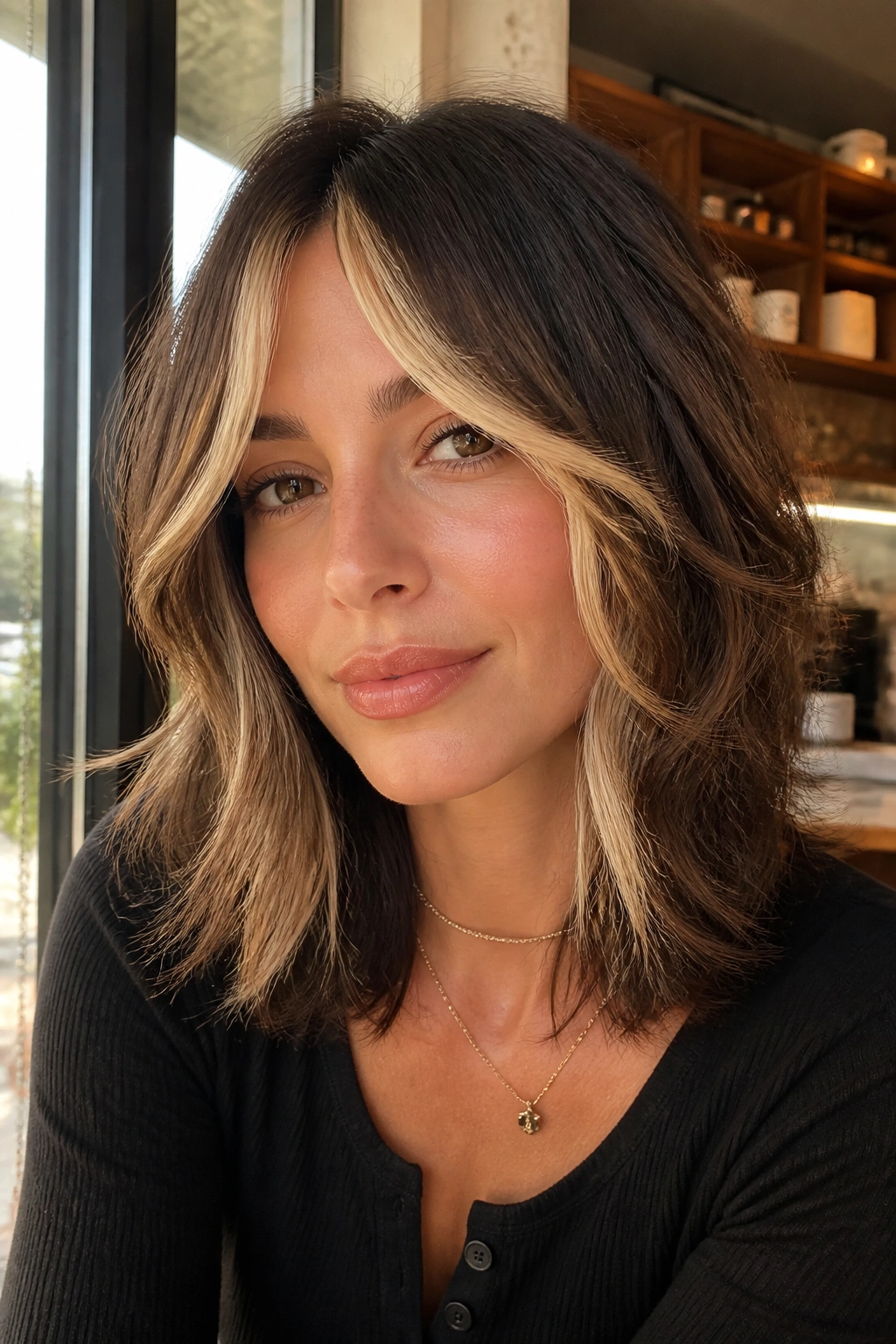
Bright face-framing strands can make a shoulder-length wolf cut look sharper without changing the haircut itself. Those lighter front pieces — the so-called money pieces — pull attention toward the face and make the layers read more clearly, especially when the rest of the hair is a deeper shade.
This version is especially good if your hair color feels flat and you want dimension without a dramatic color overhaul. A couple of lighter ribbons near the front can make the bangs and face-framing layers stand out, which is useful on cuts that rely on shape. The haircut suddenly looks more deliberate.
The placement matters. Keep the lightest pieces around the front sections that fall from the part down toward the cheekbones. If the color is too wide or starts too high, it can overwhelm the cut and make the front look stripy. A narrow, blended placement tends to age better and look softer as the hair grows.
- Works well with: brunette, blonde, copper, and dark red bases
- Best placement: front quarter sections only
- Maintenance note: root regrowth shows faster near the face
- Style pairing: loose waves or soft bends
A wolf cut with money pieces is a good choice if you want the haircut to stand out in photos and in real life, not just on a salon chair mirror.
11. Air-Dried Natural Texture Wolf Cut

Some hair just wants to be left alone. If that sounds familiar, the air-dried version might be your best bet.
This cut is built for natural texture, whether that means a loose wave, a soft bend, or a bit of frizz that you are done fighting with. The layers should be cut so they fall into place on their own, which means no overly sharp disconnection and no tiny top layers that need daily rescue. Shoulder length helps because the added weight steadies the shape while the shorter top still gives lift.
How It Looks Best in Real Life
The best air-dried wolf cuts have a little irregularity. One strand flips out, another tucks under, and the crown keeps a bit of cloudiness. That sounds messy on paper. In person, it reads relaxed and alive.
Use a leave-in conditioner or lightweight curl cream, scrunch the hair once, and walk away for a while. If you keep touching it, the texture gets frizzy and the shape collapses. Letting it dry undisturbed is half the battle.
This is the version for women who prefer a cut that looks good on ordinary days, not only after a careful styling session. That’s not lazy. It’s practical.
12. Mullet-Inspired Wolf Cut with a Longer Back
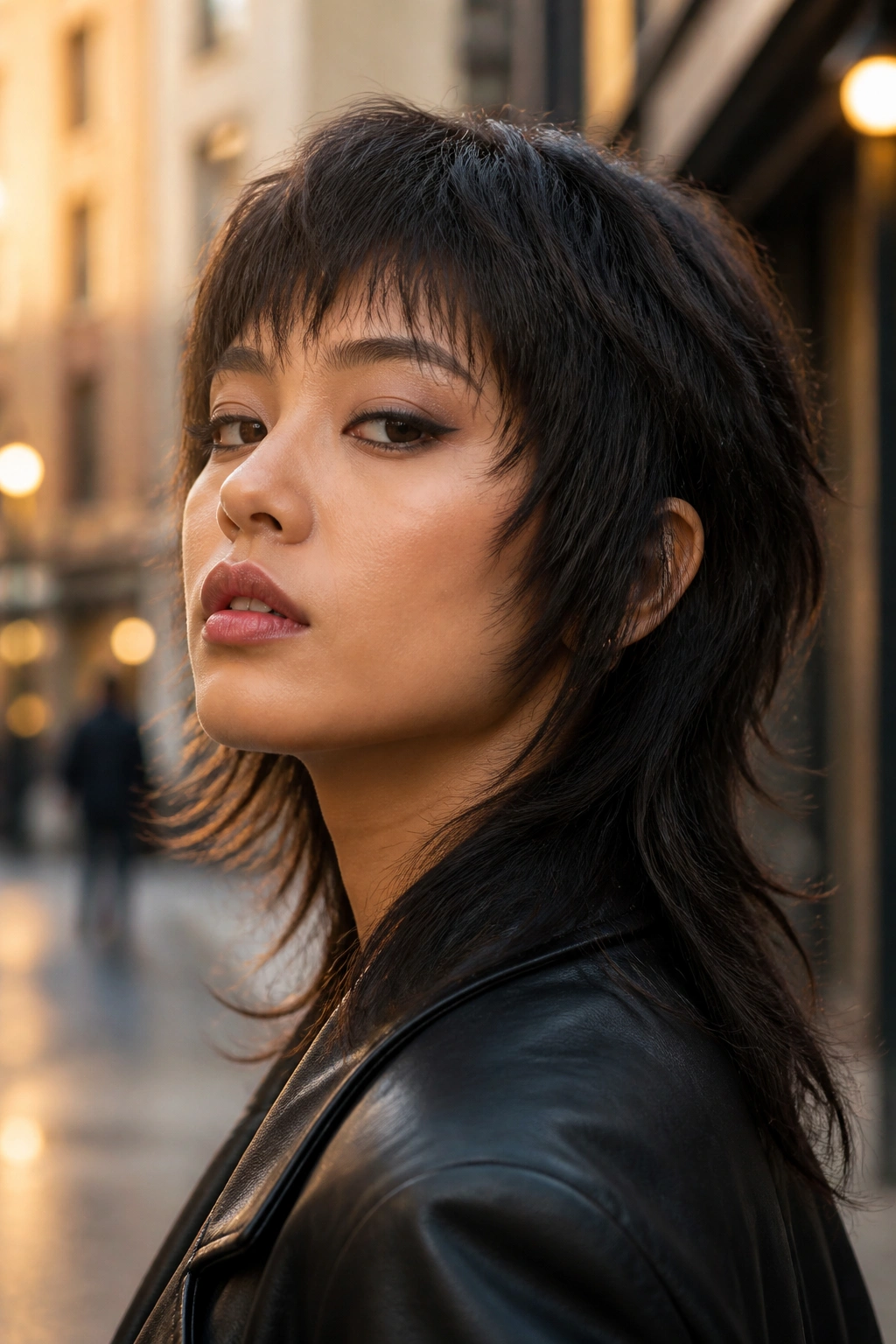
A wolf cut can lean harder into its mullet roots, and shoulder length is the perfect place to do it without going full costume. The front stays shorter and more face-framing, while the back keeps a little extra length so the silhouette has that unmistakable kick.
What sets this version apart is the contrast. The crown and top layers are brisk and choppy, but the back drops lower, often brushing the top of the shoulders or a little below. That creates a shape with attitude. It also moves well when you turn your head, which is part of why the style has such presence.
This version suits women who do not want the cut to feel sweet. It wants edge. A bit of grit. Maybe a leather jacket, maybe not, but you get the idea.
Style Notes
- Ask for a pronounced difference between the front and back lengths
- Keep the face frame soft enough to prevent a harsh outline
- A matte paste can make the ends look piecey without making them sticky
- Side pieces should still blend into the jawline, even if the back stays longer
A true mullet-inspired wolf cut can look incredible, but it needs confidence. If you want something soft and easy, skip this one. If you want shape that talks back a little, this is a good lane.
13. Soft Shag-Wolf Hybrid
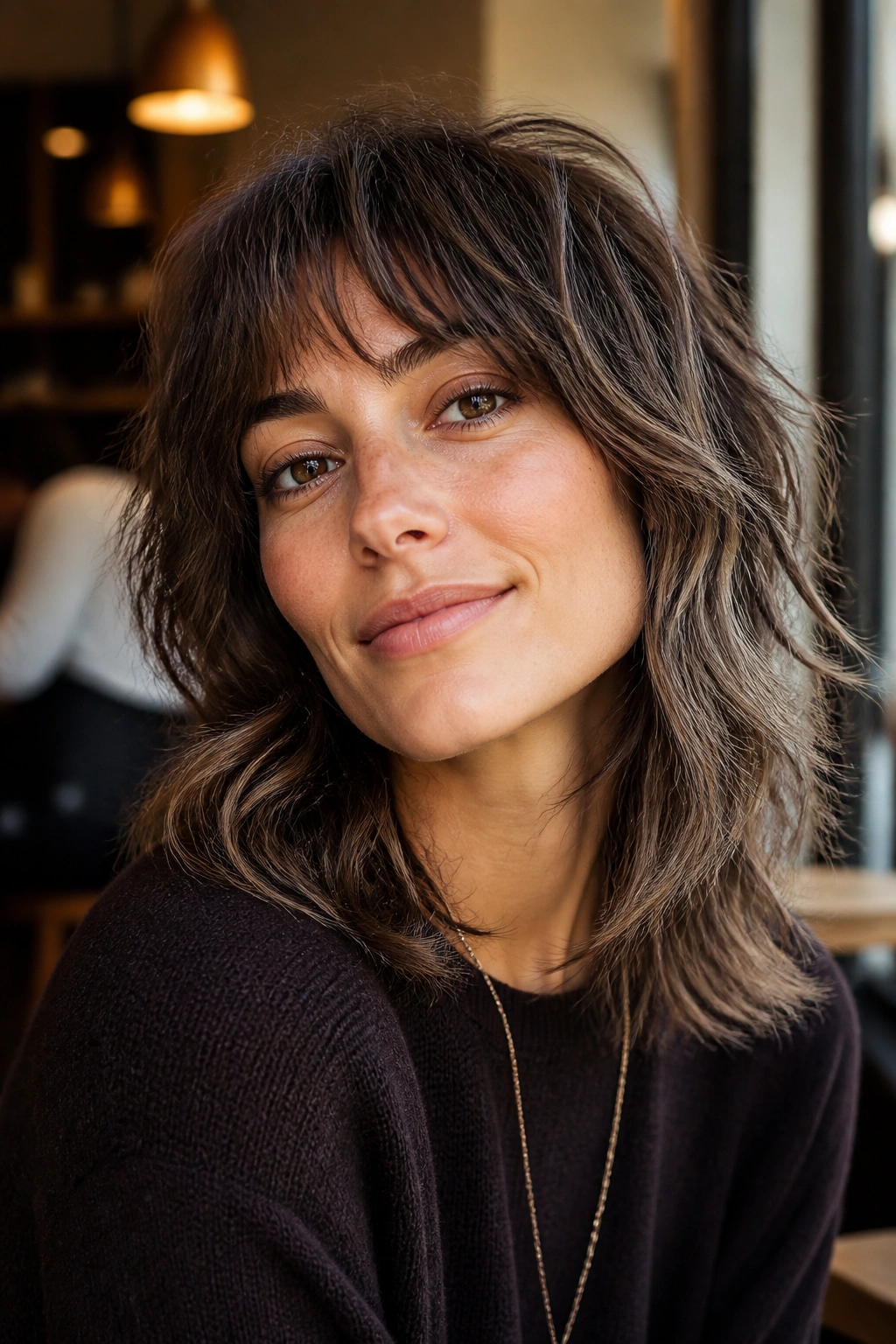
Not every shoulder-length wolf haircut has to be loud. A shag-wolf hybrid gives you the movement and the lift, but with a gentler outline that feels easier to wear every day.
The difference is in the transition. A pure wolf cut can jump from short crown layers to longer ends with a clear edge. This hybrid softens that jump, so the cut flows more like a shag and less like a statement mullet. If you like texture but not drama, this is the balanced choice.
It works across a wide range of textures, which is one reason stylists reach for it so often. Wavy hair gets nice separation. Straight hair gets body. Curly hair gets a little more order. The haircut does not force a dramatic shape; it nudges the texture you already have into a better version of itself.
The easiest way to style it is with a quick bend at the front and a bit of lift at the crown. You do not need a lot of product. In fact, too much product can flatten the softer layers and make the ends clump together. A light mist of texture spray and a finger-combed finish usually do the trick.
14. Piecey Wolf Cut with Micro Bangs
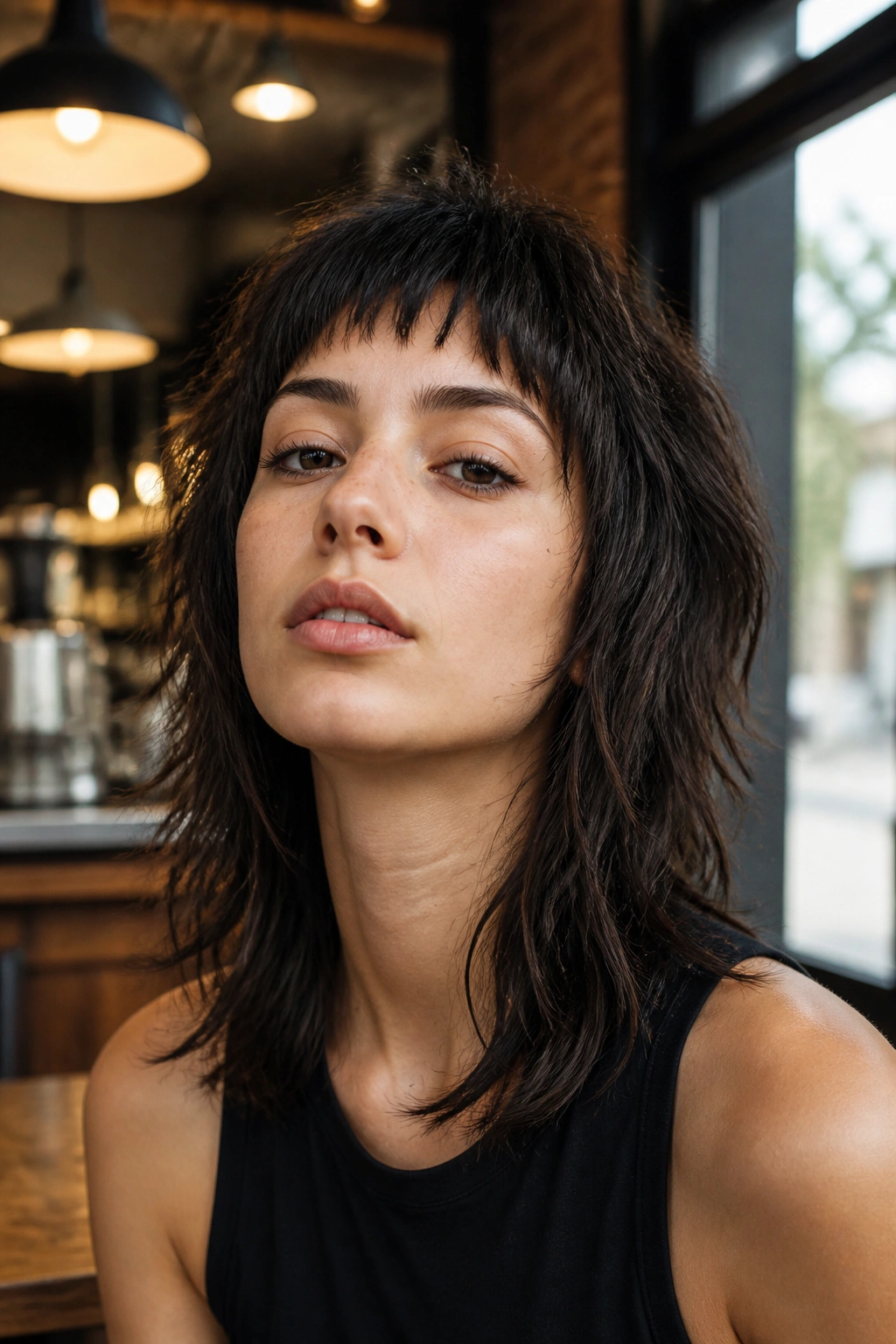
Micro bangs change the whole mood. They pull the wolf cut from soft and tousled into something sharper, a little artsy, and not afraid of a close crop in front.
This version is not for everyone, and I mean that in the nicest possible way. Micro bangs sit high on the forehead, usually well above the brows, so they create a strong front line against the messier layers around the sides and back. That contrast is the appeal. The shoulder-length body keeps the cut from becoming too severe, while the short fringe gives it bite.
The haircut works best when the rest of the shape stays piecey and broken up. If the layers are too smooth, the bangs can feel disconnected in a bad way. If the layers are too wild, the front can look like it belongs to another haircut. The sweet spot is a controlled mess.
- Best for: oval faces, strong brows, and people who like high-contrast cuts
- Maintenance: bangs need regular trims, more often than the rest of the cut
- Styling tip: keep the fringe separated with a tiny bit of dry wax
- Mood: sharp, modern, a little offbeat
This is one of those cuts that looks casual from a distance and very intentional up close. That’s the fun of it.
15. Low-Maintenance Grow-Out Wolf Cut
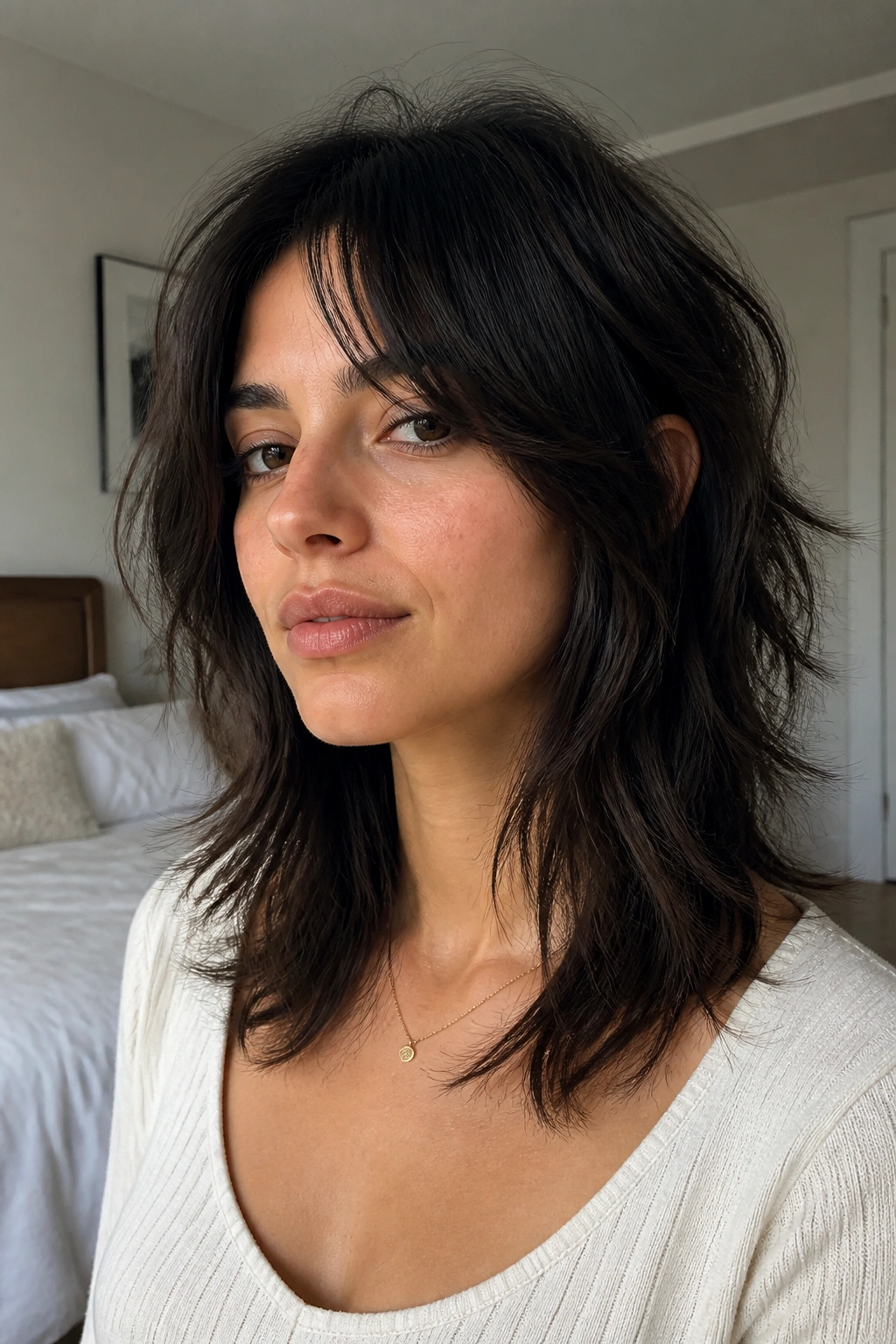
A good grow-out wolf cut is a small victory. It lets the shape get softer over time without turning into a sad triangle, which is more than I can say for a lot of layered cuts.
This version keeps the layers longer and the disconnection gentler, so it grows out with a built-in excuse to look slightly lived-in. The crown still has enough lift to feel like a wolf cut, but the ends are not chopped so short that they need constant repair. For women who want shoulder length hair they can wear for months without babysitting it, this is the one to keep in mind.
The front pieces should start around the cheekbones and slide down toward the jaw. The back can sit at or just below the shoulders, with enough layering to keep movement in the ends. Ask for shape, not aggression. That one change makes a big difference once the cut starts growing.
A soft grow-out wolf cut is also the easiest version to live with if you switch between styling and air-drying. It does not demand a perfect blowout to look good. On some days it will sit sleek. On others it will look messy in a way that feels on purpose. That flexibility is why I keep coming back to this shape when someone wants something edgy but not needy.
If you want, you can always nudge it sharper later with shorter bangs or a little more crown texture. Starting softer gives you room to move.
