



Some haircuts behave themselves. The wolf cut bob does not. It borrows the blunt honesty of a bob, throws in shaggy layers, a bit of mullet grit, and enough movement at the crown to make the whole thing feel awake.
That mix is why wolf cut bob haircuts hit harder than a plain bob and feel less precious than a polished lob. Done well, the cut keeps a clean outline while the inside goes a little wild. Done badly, it turns puffy at the sides, collapses at the top, or lands in that awkward triangle shape nobody asked for.
The details matter more than the label. A razor can make straight hair feel airy; scissors can keep curls from fraying; a heavier perimeter can stop fine hair from looking see-through. Small choices like that decide whether the haircut looks cool or just messy after one shampoo.
The good versions have personality. The better ones still look like you meant it.
1. Chin-Length Wolf Cut Bob With Soft Crown Layers
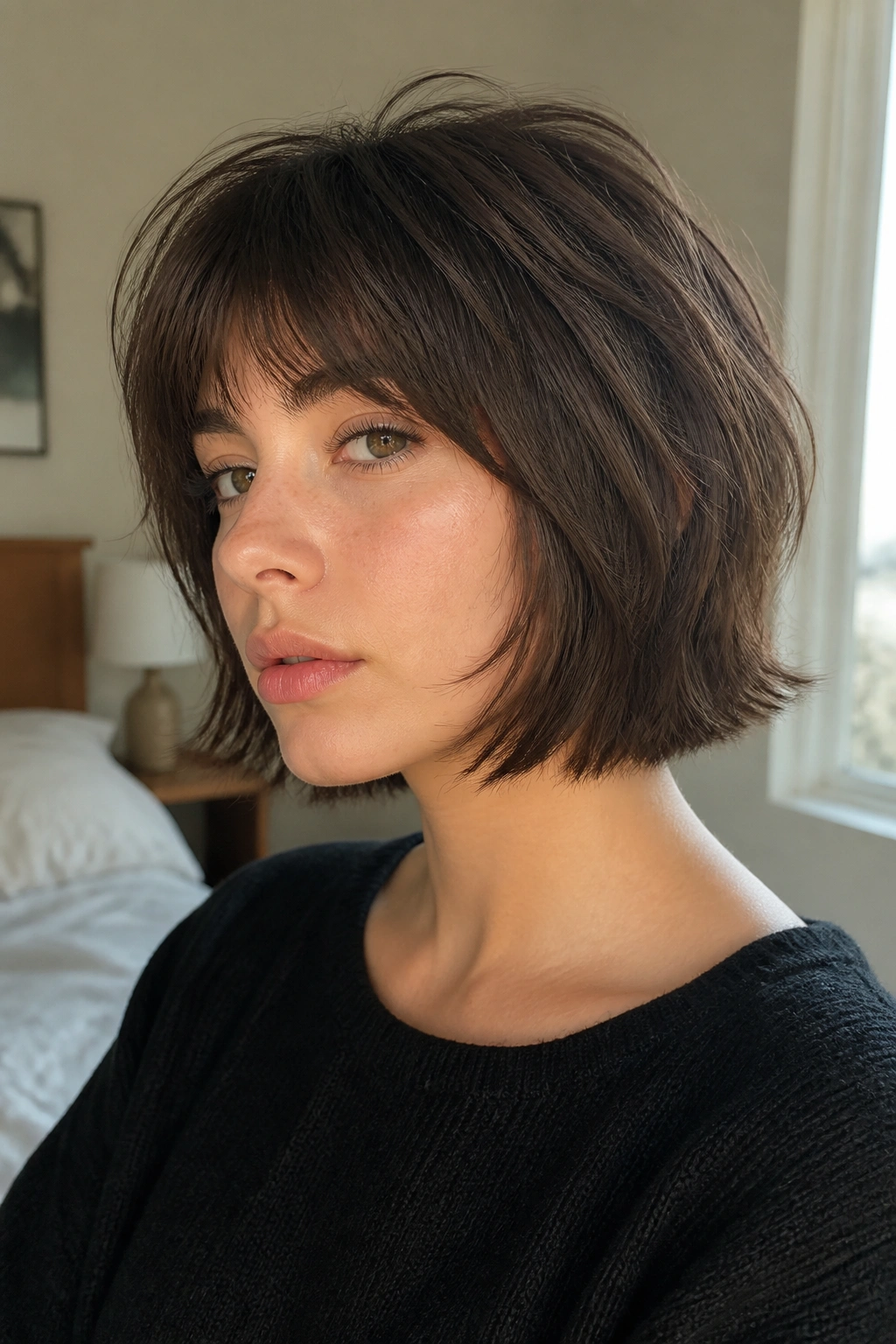
Chin length is the sweet spot if you want a wolf cut bob that reads sharp from across the room but still feels easy to wear. The line hits high enough to show off the jaw, while the crown layers keep the shape from looking stiff or helmet-like. It’s a good place to start if you want edge without losing the basic bob shape.
This version works because the hair falls in two jobs at once. The bottom keeps a clear edge, and the top moves a little more freely, which stops the cut from sitting flat against the head. That contrast is the whole point. Without it, you just have a short bob with some chopped ends.
What to ask for
- A chin-grazing perimeter that stays visible when the hair settles
- Soft crown layers, usually starting around the upper head, not halfway down the sides
- Face-framing pieces that hit around the cheekbone or a touch lower
- Enough texture to move, but not so much thinning that the ends go wispy and weak
Best for: people who want a haircut that looks intentional even on air-dry days.
If your hair tends to puff out, keep the layers close to the top and leave the bottom line a little heavier. That tiny choice makes the haircut sit better on the neck instead of ballooning out beside the ears. A small shift, sure. But it changes the whole mood.
2. French Wolf Cut Bob With Curtain Bangs
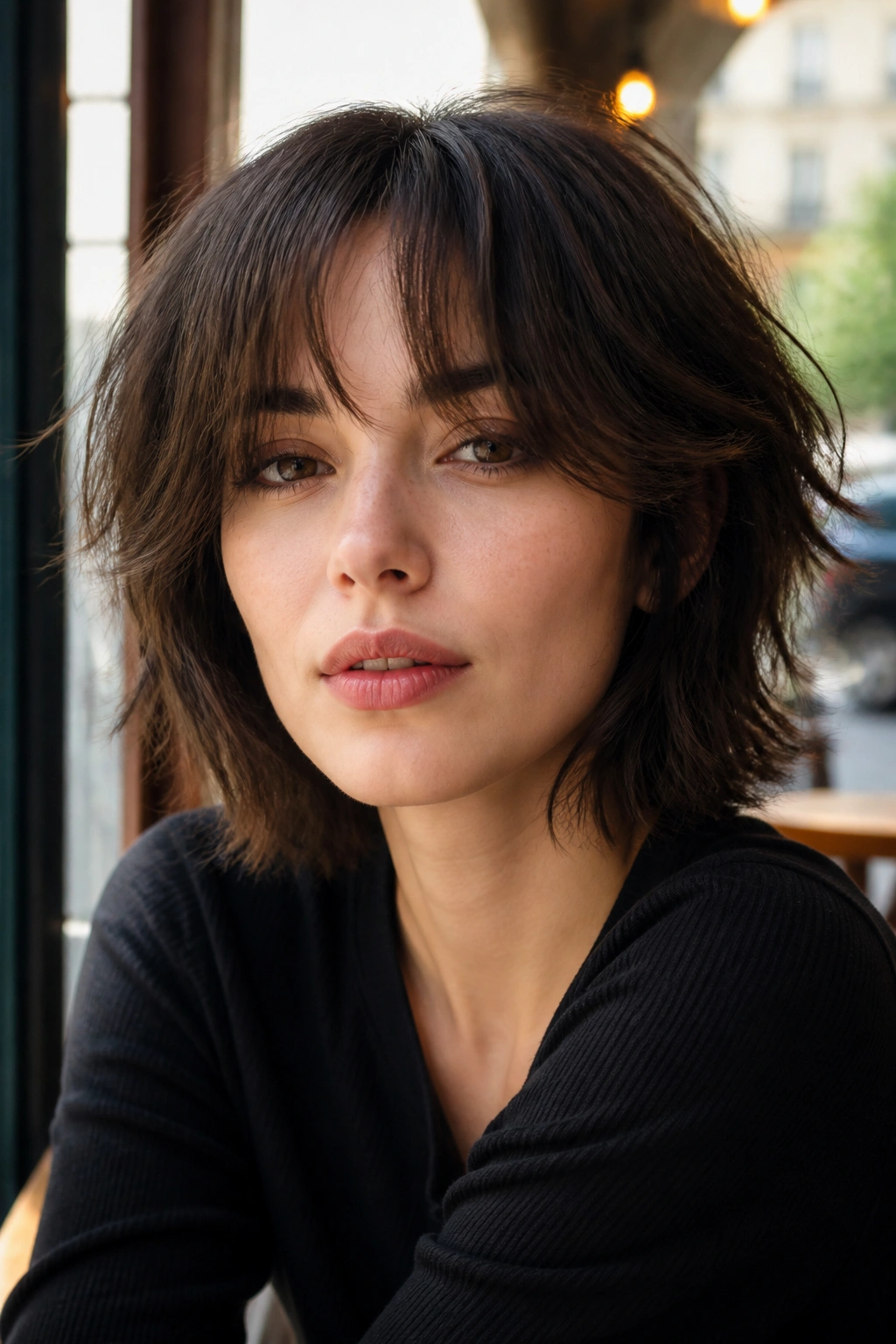
Curtain bangs make a wolf cut bob feel less severe fast. They soften the front, split the eye line, and help the whole cut move from punky to lived-in without losing the edge. If you like the shape of a shaggy bob but don’t want the haircut to feel too chopped up, this is the version that usually lands right.
Curtain bangs also solve one of the classic wolf-cut problems: the front can get too broken if the layers start too high. A longer fringe gives you a bridge between the crown and the face frame, so the haircut feels connected instead of busy. That matters more than people think.
Why the bangs matter
- They break up a wide forehead without hiding it
- They help the layers around the temples blend into the bob
- They grow out softer than blunt bangs, which is a mercy if you hate constant trims
A round brush and a quick bend away from the face are usually enough. You do not need a perfect blowout here. A little bend looks better than a polished curl, and a stray piece or two around the cheekbones makes the style feel more natural.
The best part is how forgiving this cut is on day two. The fringe separates a little, the layers loosen, and the whole thing gets a rougher edge without needing another styling session.
3. Razor-Edged Wolf Cut Bob for Straight Hair
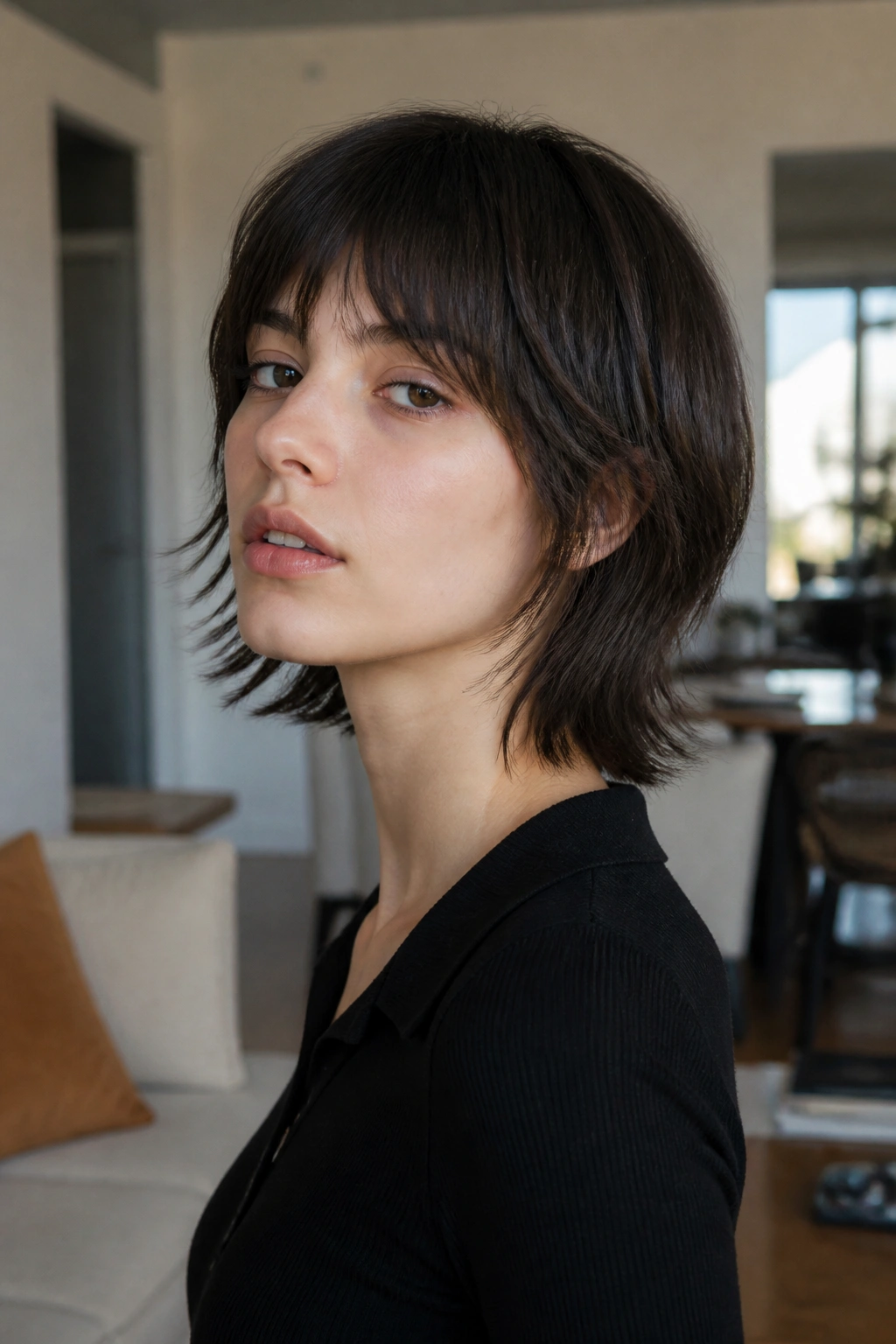
Can straight hair pull off a wolf cut bob? Absolutely. It just needs the right cut tool. A razor or razor-like texturizing technique can keep the ends from sitting in one blunt block, which is the usual problem with straight textures. You want lightness, not fray. There’s a difference.
On straight hair, the biggest risk is heaviness at the bottom and a flat crown. Razor work helps create movement through the mid-lengths, so the hair bends instead of hanging like one solid sheet. The shape feels sharper because the layers are visible, even when the hair is sleek.
How to style it
- Blow-dry with a small round brush or a vent brush, lifting the roots first
- Use a pea-sized amount of cream or paste on the ends only
- Add texture spray from the mid-lengths down, not at the roots
- Tuck one side behind the ear to show the cut line and make the shape look deliberate
The trick is restraint. Too much product and the layers clump. Too little and the haircut can look unfinished, especially if your hair is fine and tends to slip flat by lunch. A clean middle or slightly off-center part keeps the movement visible.
Straight hair shows every line, which is useful here. If the cut is good, you’ll see the structure immediately. If it isn’t, you’ll see that too.
4. Curly Wolf Cut Bob With Airy Shape

Curly hair and a wolf cut bob can be a beautiful thing, but only if the cut respects the curl pattern. That means dry shaping, or at least shaping with a clear understanding of shrinkage. Curls spring up. They always do. If the stylist forgets that, the bob can jump shorter than planned and start stacking weirdly around the cheeks.
What you want here is air, not bulk. Shorter crown layers keep the top from sitting like a helmet, while longer outer pieces let the curl pattern keep its bounce. A good curly wolf cut bob feels light around the head but still has enough length at the perimeter to frame the face.
A few things that matter
- Keep the first layer longer than you think you need
- Avoid over-thinning the curls; that often makes them frizzier
- Use a diffuser on low heat and stop drying before the hair gets brittle
- Work styling cream or mousse through soaking-wet hair so the curl clumps stay clean
This cut looks best when the curls are allowed to do some of the work. Scrunching helps. Raking every strand apart does not. If the ends start to look fluffy instead of defined, the cut probably needs more weight left in it the next time around.
The sweet spot is shape with a little wildness. Not a halo. Not a mushroom. Something in between.
5. Piecey Wolf Cut Bob With Micro Bangs
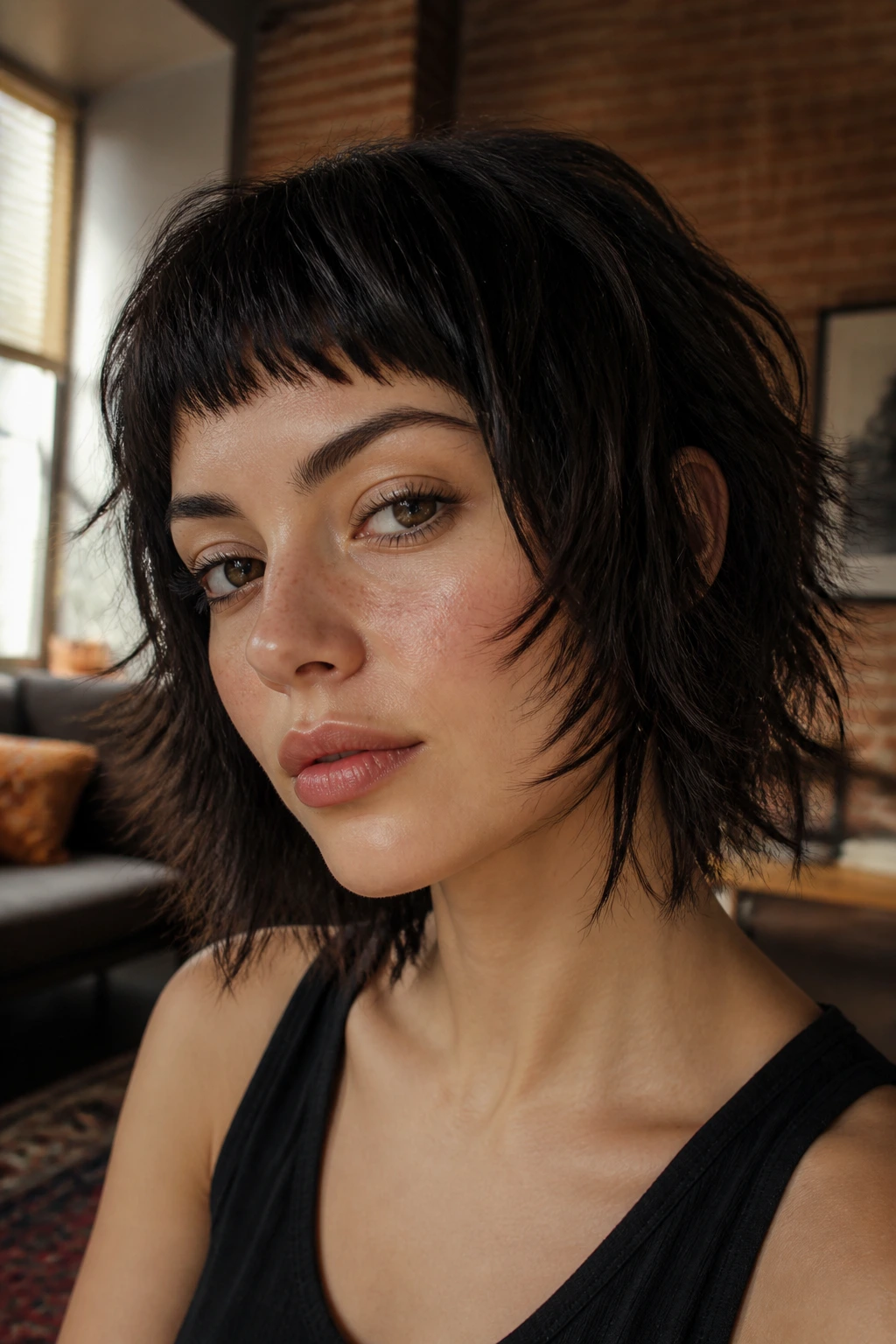
Micro bangs are not for people who want to disappear into the crowd. They are for people who want the haircut to enter the room first. Paired with a wolf cut bob, they make the whole look feel sharper, shorter, and a little bit feral in the best way.
This version has a clean line at the fringe and a messier feel everywhere else, which is exactly why it works. The tiny bangs create contrast. They make the eyes look louder, the cheekbones look more obvious, and the layered body of the cut feel even more deliberate. It’s a strong choice, and it doesn’t need much help.
The maintenance is the catch. Micro bangs ask for trims more often than curtain bangs, and they show cowlicks fast. But if you like that stark little strip of fringe, the trade-off is worth it. The cut has a graphic quality that softer fringe styles never quite touch.
I like this version best when the ends are left piecey rather than over-clean. A dab of matte paste, twisted through a few front sections, keeps the bob from looking too tidy. Tiny bangs plus polished ends can feel costume-y. Tiny bangs plus broken texture feel cool.
6. Collarbone Wolf Cut Bob With Wispy Ends
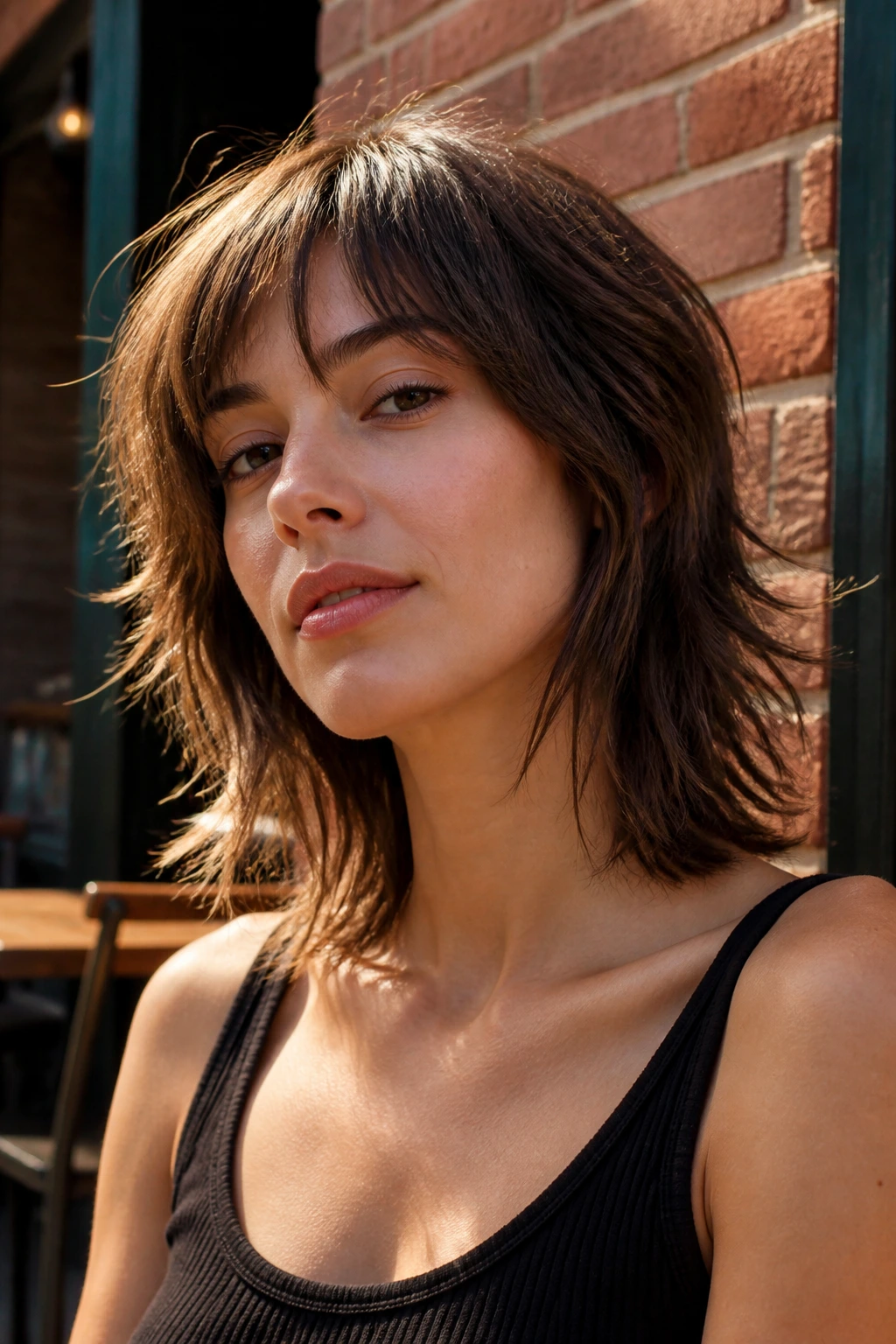
Unlike a classic chin bob, this version gives you room to move. The collarbone length lets the layers swing, flip, and settle in a way shorter cuts can’t always manage. If you’re growing out a shorter bob, this is a smart landing spot because it keeps the style edgy without forcing you into a high-maintenance shape.
The wispy ends keep it from feeling heavy. That matters, especially if your hair is thick or naturally full at the bottom. A collarbone-length wolf cut bob can start to look boxy if the perimeter is left too blunt. A little texture at the edges keeps the cut light.
Who it suits best
- People who want to tuck hair behind the ear without losing the shape
- Anyone growing out a shorter shag or a too-short bob
- Medium to thick hair that needs movement near the bottom
- Faces that look better with a little length under the jaw
There’s also a practical side. This length lets you clip up half the hair, wear it down, or bend it with a flat iron in under ten minutes. If you like options but hate long-hair maintenance, that’s a nice middle ground.
The wispy ends should still look controlled. If they get too sparse, the cut starts to feel unfinished rather than airy. That line between soft and scrappy is thinner than it looks.
7. Shaggy Inverted Wolf Cut Bob

Want the back shorter and the front longer, but without a polished stacked-bob vibe? This is the answer. The inverted wolf cut bob keeps the angle, then roughs it up with shag layers so the shape feels lived-in instead of salon-perfect.
The back usually sits higher at the nape, which gives lift and a little volume where the head naturally needs it. The front extends longer toward the chin or collarbone, depending on how dramatic you want it. That diagonal shape is useful because it pulls the eye forward and adds motion every time you turn your head.
Where the shape lives
The drama here is in the angle. Not the length.
If the crown gets cut too short, the style can tip into the wrong kind of spikiness. If the back stays too long, you lose the point of the inversion. The best versions keep the nape clean, the top layered, and the sides a little broken so the cut doesn’t look frozen.
This is a strong option for fine hair that needs a visual lift at the back. It can also work on thicker hair, but the nape must be controlled. Otherwise the shape turns puffy fast. Short in the back, longer in the front, soft through the middle — that’s the formula.
8. Wolf Cut Bob With a Heavy Side Part
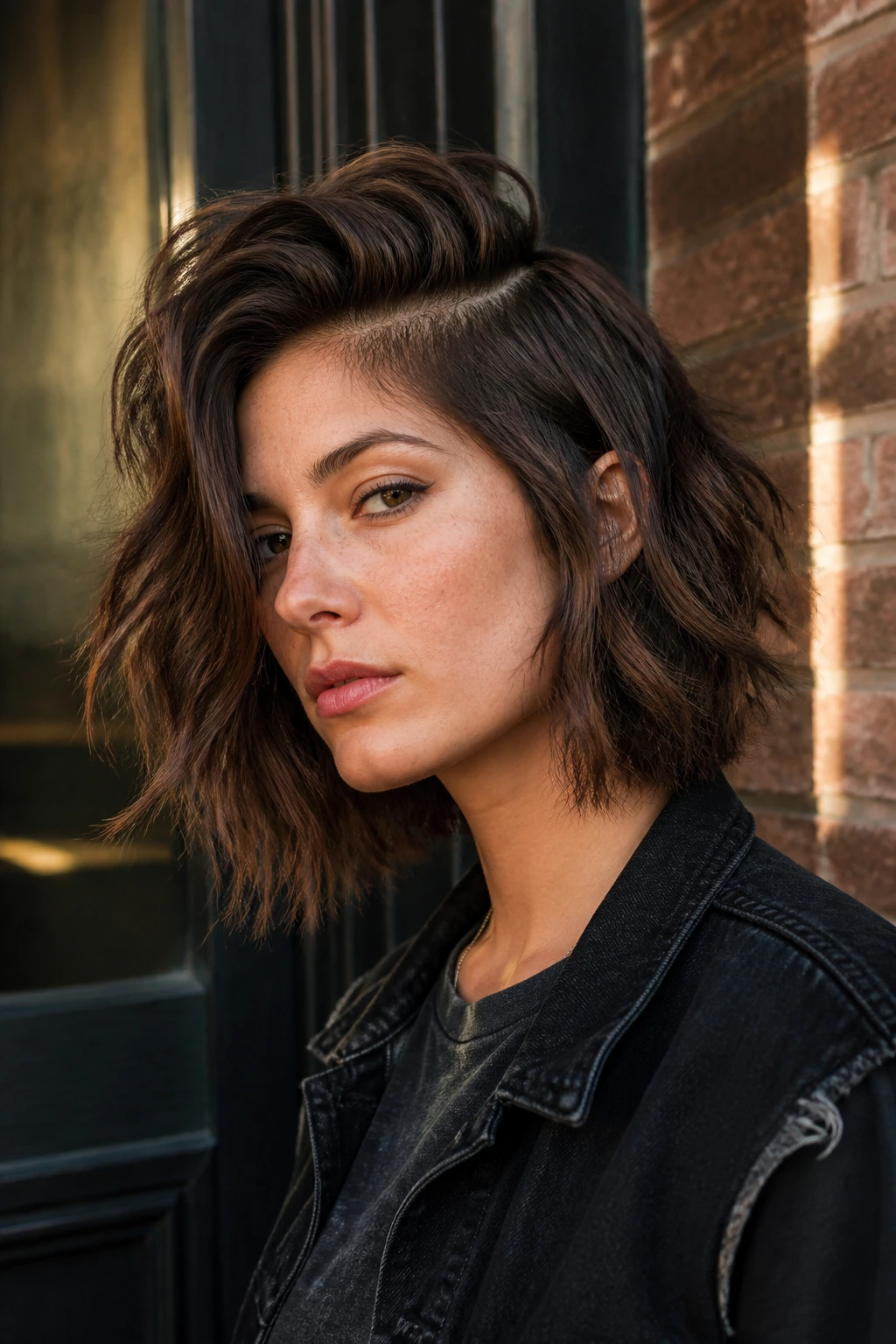
A deep side part can change this haircut in five seconds. It gives the wolf cut bob instant asymmetry, which is useful if you want the cut to feel more dramatic without changing the length. One side gets lift, the other side gets weight, and the whole thing starts looking sharper.
This version is especially good for people who are bored of center parts. A side part lets the fringe sweep across the forehead and makes the layers around the face appear more sculpted. If the cut is soft, the part makes it bolder. If the cut is already choppy, the part pushes it into sharper territory.
Styling notes that help
- Blow-dry the roots in the opposite direction first for lift
- Clip the front sections at the root while they cool
- Use texture spray only on the lifted side if you want extra asymmetry
- Keep one side tucked behind the ear for a cleaner finish
The part should sit where your hair naturally wants to split, or close to it. Fighting a stubborn cowlick is a bad use of time. A slightly off-center part often looks more modern anyway, and it keeps the front from collapsing into the eyes.
A heavy side part can also hide awkward grow-out. That’s a small thing, but it matters when the fringe is in-between lengths and not behaving.
9. Neck-Length Wolf Cut Bob With a Tapered Nape

If you hate hair brushing your collar all day, the neck-length wolf cut bob is worth a look. It keeps the cut short enough to feel breezy, but the tapered nape gives the back a cleaner finish than a blunt chop would. That makes the haircut feel sharp instead of fuzzy.
The taper matters. It removes bulk where the head curves inward, so the back sits closer to the neck and doesn’t kick out. The front can still hold a little length and movement, which stops the style from looking too boyish unless that’s the goal.
This is a smart cut for people who like a low-fuss shape but still want edge. It also works well with earrings, which sounds minor until you wear the haircut and realize how much the neckline suddenly matters. Short hair changes the whole frame.
The one thing to watch is the grow-out line at the nape. It can get fluffy faster than the front, especially on thick or wavy hair. A quick clean-up there keeps the cut looking fresh, even when the rest of it has relaxed a little.
10. Choppy Wolf Cut Bob With Bottleneck Bangs

Bottleneck bangs sit in that useful middle ground between curtain bangs and a fuller fringe. They’re narrow at the top, then open out a bit as they hit the cheekbones, which makes them a natural fit for a choppy wolf cut bob. The front stays soft, but not too soft.
This combo is good when you want the haircut to feel edgy without looking severe. The bangs frame the eyes, the layers bring texture, and the overall shape feels a little more tailored than a full shag. It’s a nice option for people who want movement around the face without a lot of forehead drama.
Why it works on short cuts
Bottleneck bangs connect the crown to the front in a way blunt bangs often don’t. That keeps the haircut from feeling split into two separate parts.
They also help shorten a long face visually, because the opening of the fringe lands around the upper cheek area. If your hair is straight, a bit of bend at the fringe makes the whole thing look more relaxed. If it’s wavy, the bangs can blend straight into the side layers with almost no effort.
A small warning: if the bangs are cut too full, the look loses its air. Too sparse, and they disappear. The best version leaves enough hair to frame the face but not so much that the fringe turns heavy.
11. Soft Mullet Bob With Feathered Face Framing
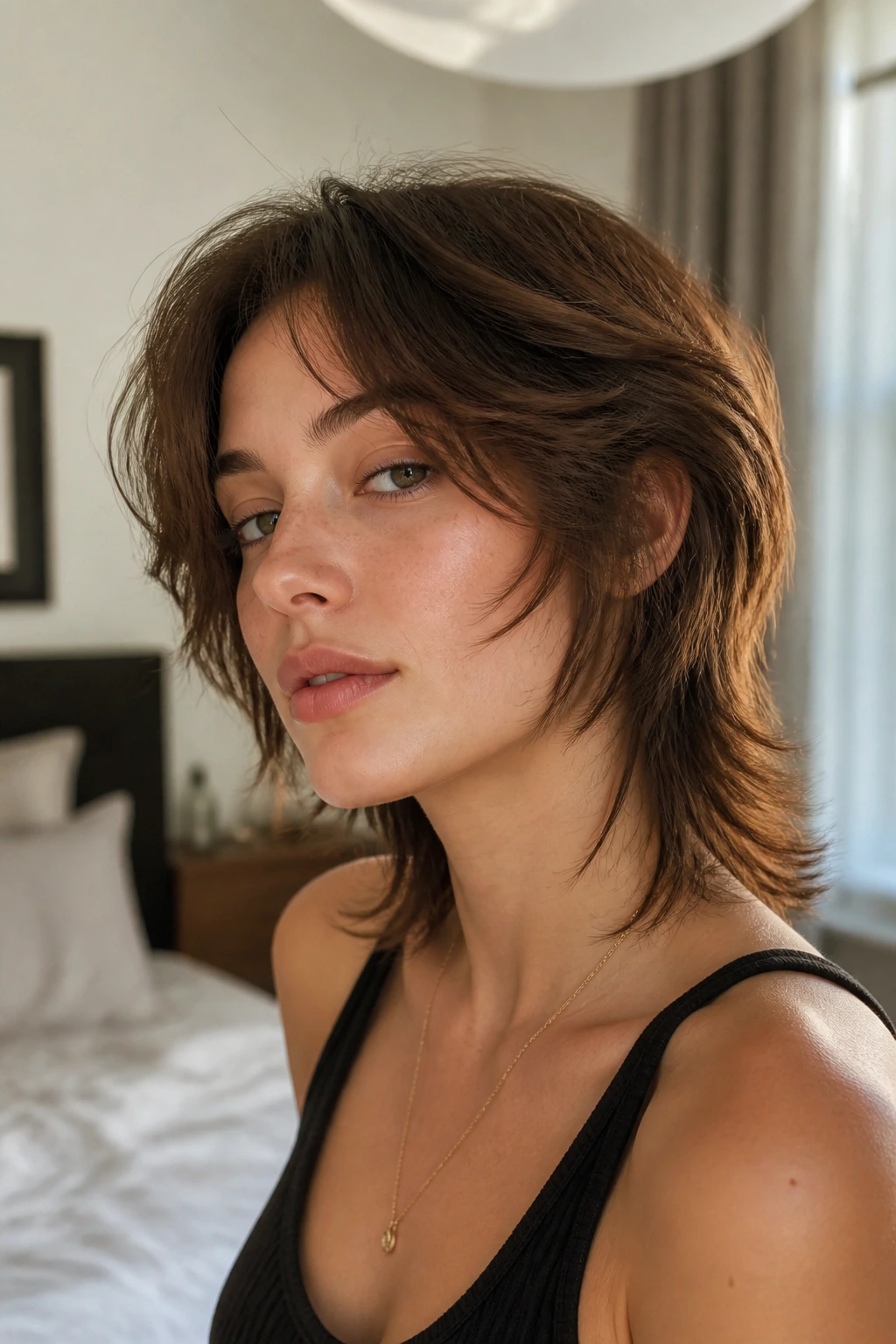
This is the most punk-adjacent option in the bunch, and I mean that as a compliment. The soft mullet bob keeps the front and sides a touch shorter while letting the back retain a little extra length. Then the feathered face framing pulls the whole thing back toward wearable territory.
The feathering is what stops this cut from looking like a costume. It softens the cheek area, opens the jawline, and gives the haircut some air around the face. That means you get the attitude of a mullet without looking like you borrowed someone else’s stage wig.
This style loves thick hair because thick hair can support the shape. On finer hair, it needs a careful hand so the back doesn’t thin out too much. You want suggestion, not exposed scalp. That’s the difference between edgy and overcut.
A good styling cream can help the front pieces stay separated. If the layers all merge into one soft cloud, the shape disappears. Keep a few strands distinct, keep the back slightly longer, and let the haircut show a little imbalance. That imbalance is the point.
12. Wavy Wolf Cut Bob With Beachy Bend
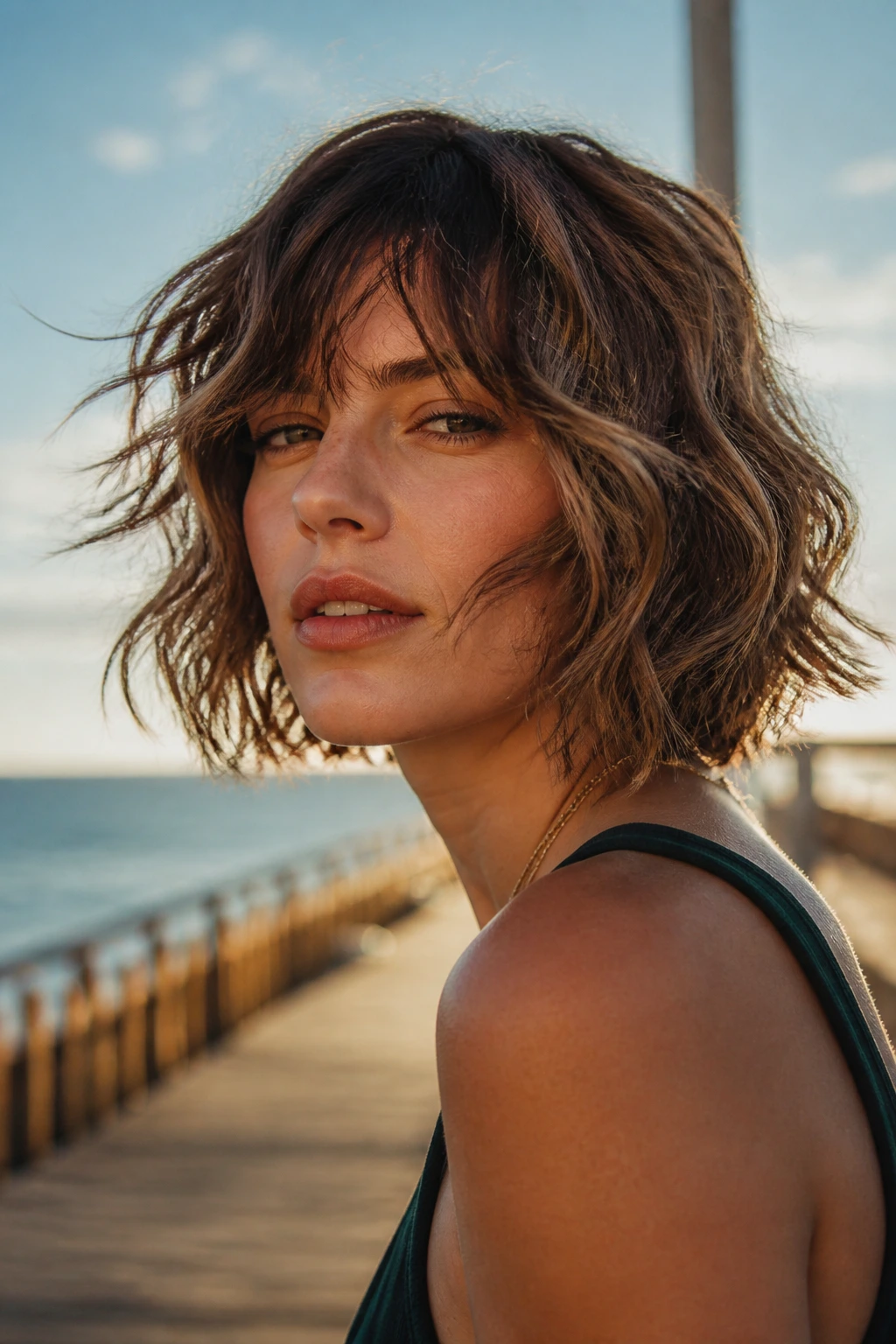
If your hair already bends a little, stop fighting it. A wavy wolf cut bob is one of the easiest ways to make texture look intentional instead of accidental. The layers catch the wave pattern, the perimeter keeps the bob shape, and the whole thing feels loose without looking unfinished.
This cut works because waves want to move. Give them a straight, blunt shape and they can swell in the wrong places. Give them layers and a little directional bend, and they start acting like they were meant to be there all along.
How to get the most from it
- Scrunch mousse into damp hair from mid-lengths to ends
- Use a diffuser on low heat until the roots are about 80 percent dry
- Twist a few front pieces around your fingers to guide the bend
- Finish with a light mist of texture spray, not a heavy coat
A 1-inch iron can help on stubborn sections, but only if you wrap the hair loosely and leave the ends a little undone. Perfect curls look too dressed up for this cut. What you want is a rough wave that still shows the layers.
This version wears well when the hair gets a little roughed up during the day. A hand through the ends, a bit of wind, and suddenly it looks better. That’s a nice thing to say about a haircut.
13. Wolf Cut Bob With a Blunt Baseline

A blunt baseline might sound like the opposite of a wolf cut, but that contrast is exactly why this version works. The bottom edge stays solid and readable, while the internal layers do the messy work above it. You get shape and movement at once.
This is a strong choice for fine hair, because a blunt edge gives the ends more visual weight. Without that line, the cut can look thin fast. The layers still lift the crown and face frame, but the base keeps the haircut from going soft in a bad way.
What to ask for
- A clean, blunt perimeter at the desired length
- Internal layers instead of heavy exterior thinning
- Soft face framing that starts around the cheekbone or jaw
- Texture at the crown that lifts without stripping out the ends
There’s also a styling upside. A blunt base means the haircut looks polished even when the texture gets messy. You can bend the front, add dry shampoo, and go. The outline still holds.
The one thing I’d avoid is aggressive thinning near the ends. That’s how you lose the point of the baseline. The edge should look like it means business while the inside does the wild stuff.
14. Layered Bob With a Disconnected Top
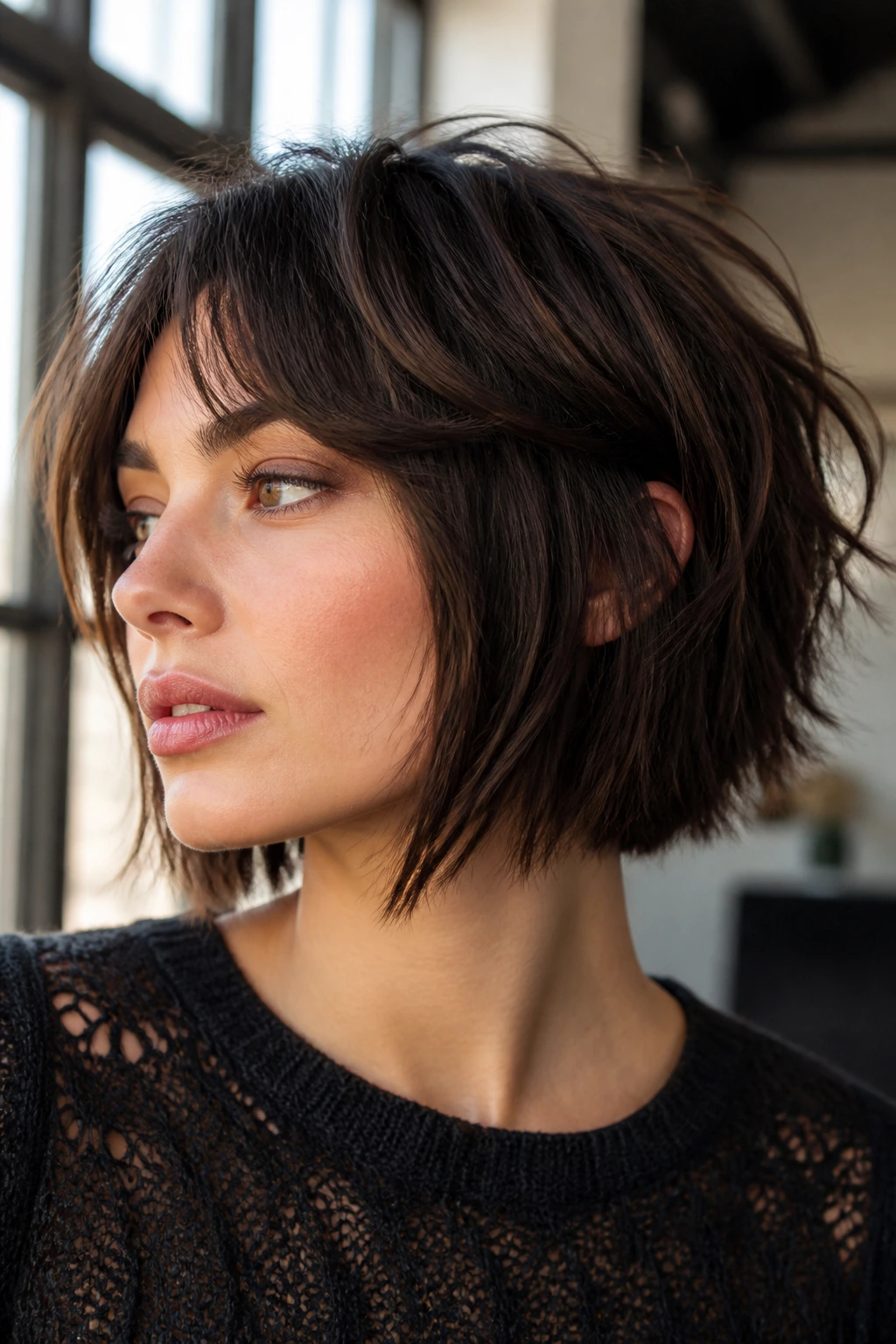
Sometimes the issue is not the ends. It’s the top. If your hair sits flat at the crown but feels bulky at the bottom, a disconnected top can fix the imbalance fast. The upper layers are cut to move separately from the perimeter, which creates lift without stealing length where you need it.
This version has a slightly more editorial feel than a classic wolf cut bob. The top moves on its own, the bottom holds a firmer line, and the space between them gives the cut that rough, lived-in edge people want from a shaggy bob. It is not subtle. That’s part of the fun.
A disconnected top works best when the transition is still controlled. Too much separation and the haircut starts looking split in two. Keep the layers close enough to talk to each other, as stylists say when they want the cut to stay balanced instead of choppy for no reason.
This is a useful option if you wear your hair air-dried. The top can lift while the rest settles, which creates natural shape without a round brush. A small amount of root spray at the crown helps, but the cut has to do most of the work.
15. Wolf Cut Bob With an Undercut Nape
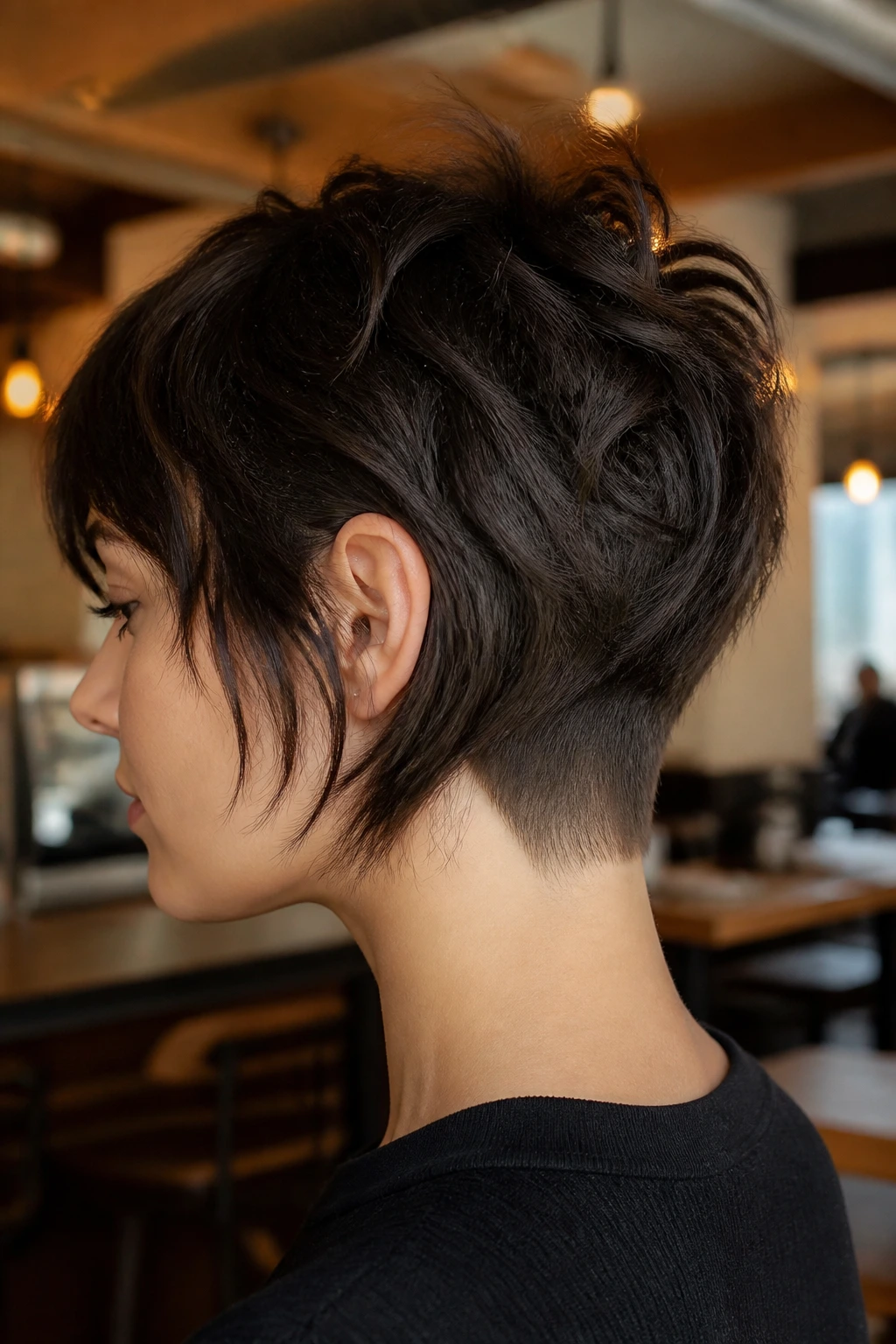
This is the practical one nobody talks about enough. An undercut at the nape removes bulk, which can make a wolf cut bob sit closer to the neck and feel much lighter on thick or dense hair. Hidden or visible, it solves the same problem: the back is too full and keeps ballooning.
The nice thing about an undercut is that it changes the haircut without screaming for attention. Most of the time, people just notice that the bob sits better. It lays flatter at the neck, flips less awkwardly, and takes less time to dry. That alone can make the whole style more wearable.
The trade-off is upkeep. Hair grows fast at the nape, and once it grows out, the shape loses some of its clean line. So this is for someone who doesn’t mind a little maintenance.
A hidden undercut works well if you want flexibility. Wear the top down and nobody sees it. Pull the hair up or clip it back, and suddenly the haircut gets a little edge from the underneath. That kind of secret detail feels good when you know it’s there.
16. Tousled Wolf Cut Bob for Fine Hair
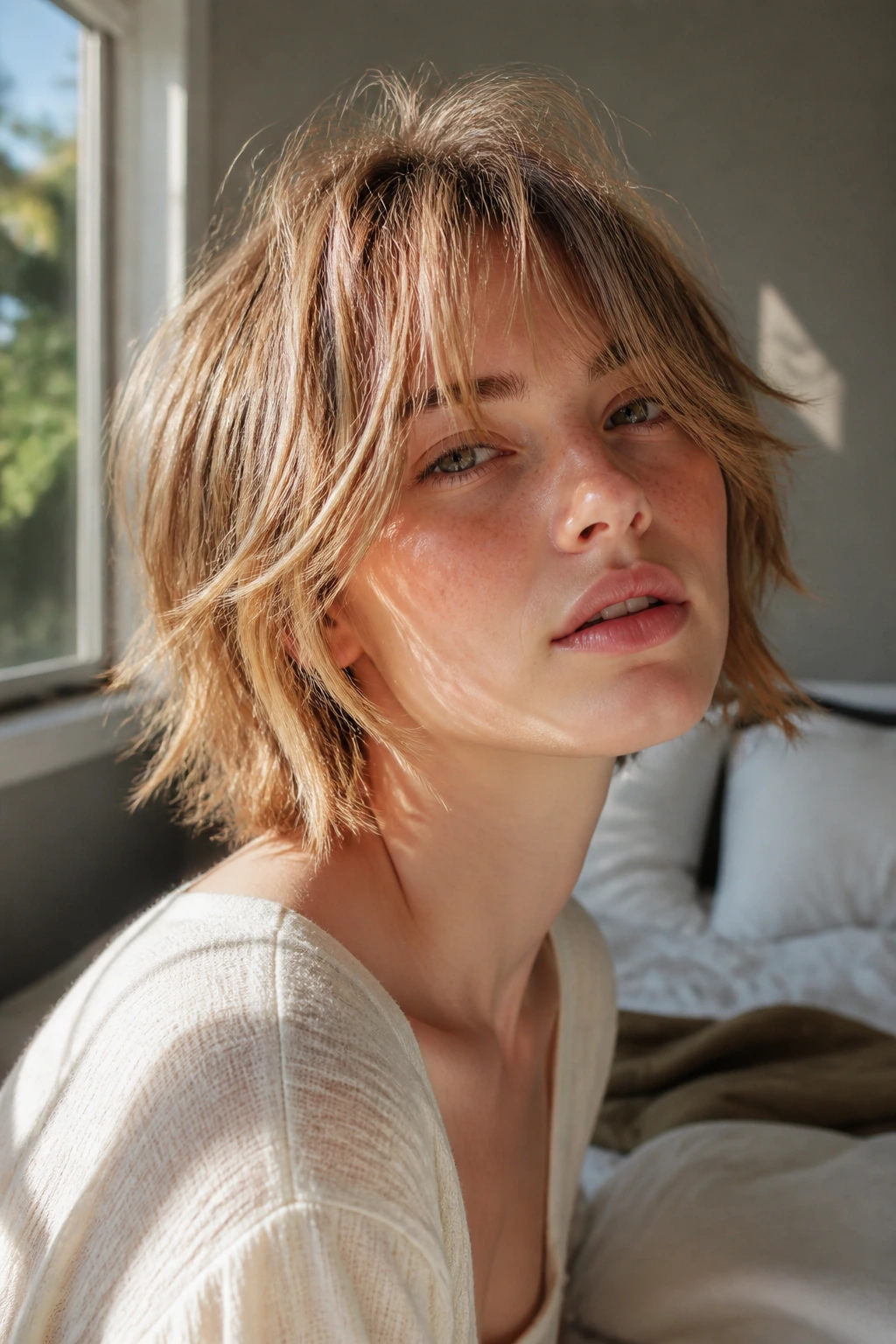
Fine hair needs a firm plan, not just a lot of layers. Too many layers and the ends go weak. Too little and the haircut falls flat. The tousled wolf cut bob gets the balance right by keeping the perimeter strong while adding enough texture at the crown and around the face to create movement.
The goal is lift, not fluff. You want the hair to feel light and airy, but not stripped. If the layers are cut too aggressively, fine hair can start looking transparent at the bottom. That’s the point where the style stops reading as edgy and starts reading as overworked.
Styling that helps
- Use a volumizing mousse at the roots on damp hair
- Blow-dry upside down for 30 to 60 seconds, then switch to upright shaping
- Add dry shampoo at the crown even when the hair is clean
- Finish with a light texture spray only at the mid-lengths
A round brush can help, but don’t chase a full blowout. A bit of bend is enough. Fine hair usually looks better when it has touchable separation and a slight mess to it, not a perfectly rounded shell.
This cut also grows out nicely if the baseline is kept solid. That makes it one of the safer wolf cut bob options for people who want edge without a constant salon schedule.
17. Thick-Hair Wolf Cut Bob With Internal Layers
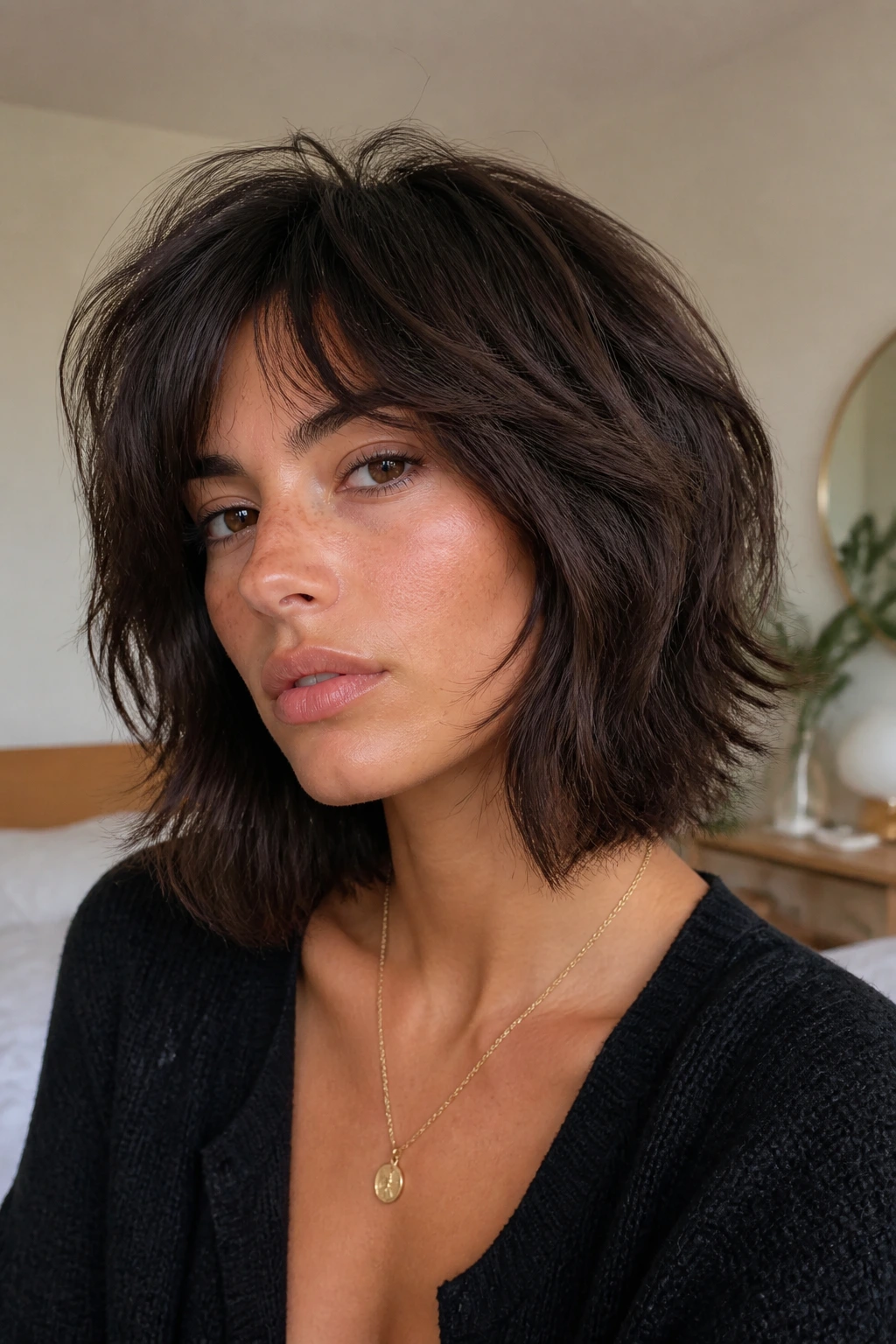
Thick hair can either swing or swell. Internal layers decide which one you get. When the layers are placed inside the haircut instead of carved so heavily into the outer shell, the bob keeps its shape while losing some of the bulk that makes thick hair feel heavy.
This matters a lot with a wolf cut bob, because thick hair already wants to take up space. If you attack it from the outside with too much texturizing, the ends can look frayed while the middle still feels bulky. Internal layers solve that by moving weight around more quietly.
What not to do
- Don’t thin the ends until they look wispy
- Don’t leave the crown untouched if the top is heavy
- Don’t cut the whole shape one length and hope styling will fix it
- Don’t remove so much weight that the outline gets hollow
A thick-hair wolf cut bob needs a read on the interior of the cut. The best versions keep the perimeter crisp enough to ground the style, then reduce the inside just enough to let it move. That makes the haircut feel lighter on the neck and easier to style with a brush or diffuser.
If your hair gets puffy in humid air, this is where thoughtful layering matters most. Bad layers make the puff bigger. Good layers break it up.
18. Asymmetrical Wolf Cut Bob With an Off-Center Fringe
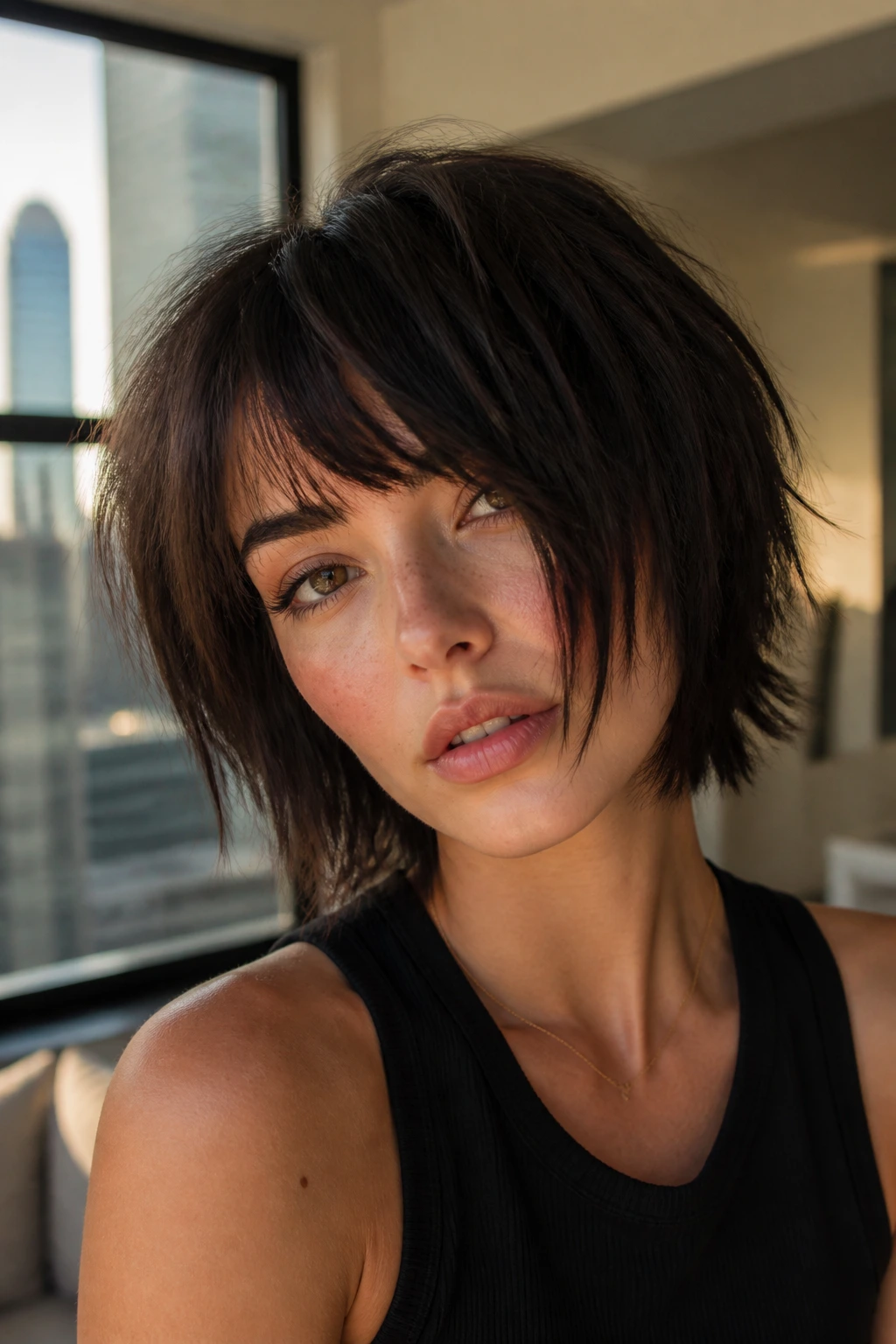
A little asymmetry can make the whole haircut feel more expensive-looking. Off-center fringe shifts the eye line, and that shift gives the wolf cut bob a sharper attitude without needing dramatic color or a drastic length change. It feels deliberate because it is deliberate.
The fringe does a lot of the visual work here. One side can skim the brow while the other drops toward the cheekbone, which creates motion before the rest of the haircut even gets involved. Pair that with layered sides and the style starts looking tailored instead of random.
This shape is especially good if you like tucking one side behind the ear. That small move exposes the jaw and leaves the other side heavier, which makes the asymmetry even more visible. It’s a simple trick, but it changes how the haircut reads in motion.
Best matches
- Oval faces that can carry uneven balance easily
- People who like a fashion-forward cut without going extreme
- Hair with enough body to hold the asymmetrical front
- Anyone bored by symmetrical bobs and center parts
The one caution is overdoing the difference. If one side is too short and the other too long, the cut can feel accidental. Keep the imbalance subtle enough that it still looks like a haircut, not a correction.
19. Retro Wolf Cut Bob With Rounded Volume
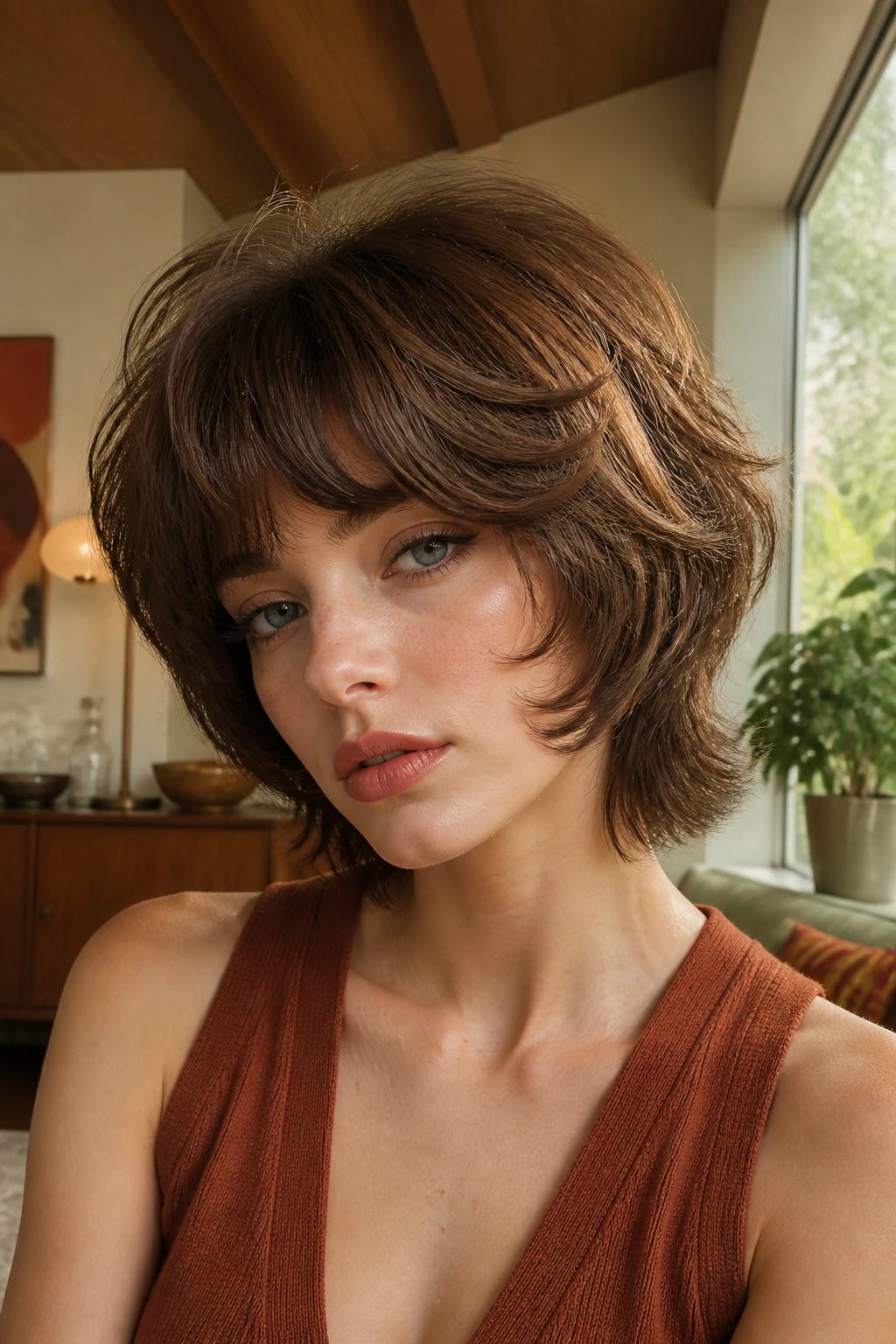
Think of this one as the softer, more nostalgic cousin of the sharper wolf cut bob. It keeps the layers, but the shape is rounder through the crown and sides, which gives it a bit of a seventies blowout feel. The edge is still there. It just comes with more curve.
This version is nice if you want movement but not a jagged finish. The volume sits higher, the ends flip a little, and the silhouette feels fuller around the head. That can be flattering on narrow faces, and it can also make thinner hair look more substantial without needing a lot of teasing.
A big round brush helps here, along with a quick bend at the ends so the layers don’t all curl under in the same direction. That’s where the haircut can go stale fast. Keep a few ends flipped out, keep the crown lifted, and let the front pieces fall in soft arcs.
How to keep it from looking dated
- Leave some texture through the top, not a perfect blowout finish
- Keep the perimeter a little uneven so it doesn’t turn into a pageboy shape
- Use just enough volume spray to support the roots
- Don’t curl every piece the same way
The result feels polished, but not stiff. That’s a hard line to walk, and this cut walks it well.
20. Short Wolf Cut Bob With Wet-Look Texture
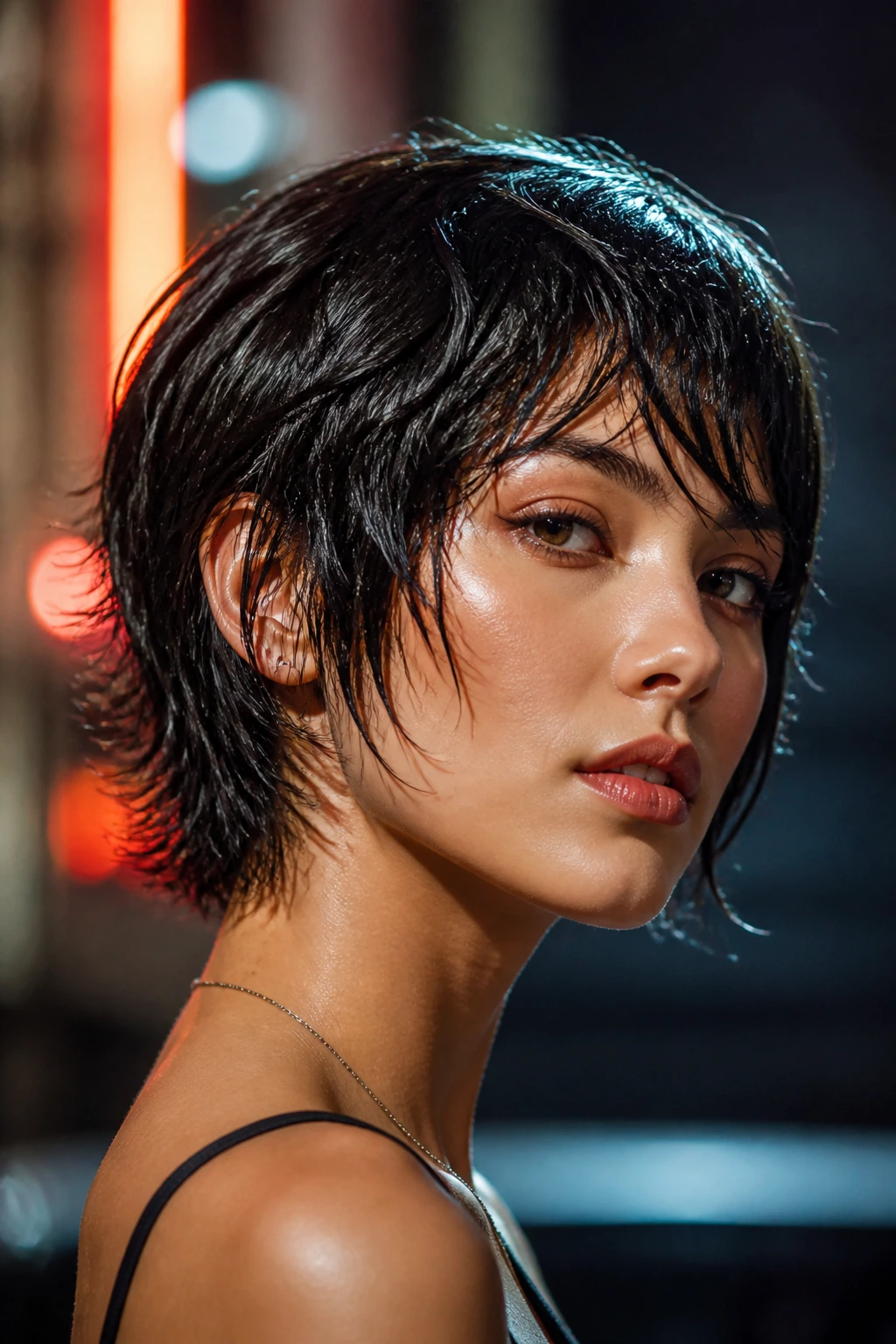
A short wolf cut bob with wet-look texture is the boldest version here, and honestly, it earns the attitude. The haircut stays close to the head, the layers are visible, and the styling pushes the whole thing into sharp territory with shine and separation. It’s sleek, but not sweet.
This is the kind of look that works when you want the haircut to feel like a statement, not just a shape. A small amount of gel or gel-cream on damp hair can create that slick, piecey finish, while the shorter length keeps it from sliding into heavy territory. The crown can stay controlled, the ends can stay broken, and the texture reads as on purpose.
The upkeep is real. Wet-look styling shows everything — the part, the ends, the product amount, the condition of the cut. If the layers are uneven, the shine will expose it. If the fringe is too heavy, the front can feel sticky instead of cool.
Still, there’s something about this cut that makes a plain outfit look sharper. A white tee, a leather jacket, and this haircut already say enough. No extra fuss needed.
