



The best shag hairstyles for medium length hair do one thing most blunt cuts never manage: they give shape without turning the ends into a heavy shelf. Medium length is the sweet spot. Long enough for movement, short enough to keep the layers visible, and forgiving enough that a little mess reads as style instead of neglect.
That’s why the shag keeps hanging around. It works on straight hair that falls flat by noon. It works on wavy hair that needs a little direction. It even works on curls, which is where a lot of people get nervous and then ask for too little layering. The trick is not “more layers” in some vague sense. It’s the right layers in the right places — crown, cheekbones, jaw, and those face-framing pieces that can make a cut look expensive even when it’s gloriously undone.
Medium length hair also gives you room to decide how far you want to push the look. You can go soft and lived-in, or sharp and choppy, or almost mullet-adjacent if you like a little edge. The cut can be romantic. It can be cool. It can look like you spent fifteen minutes on it, which is honestly the appeal for a lot of people.
1. Classic Shag with Curtain Bangs
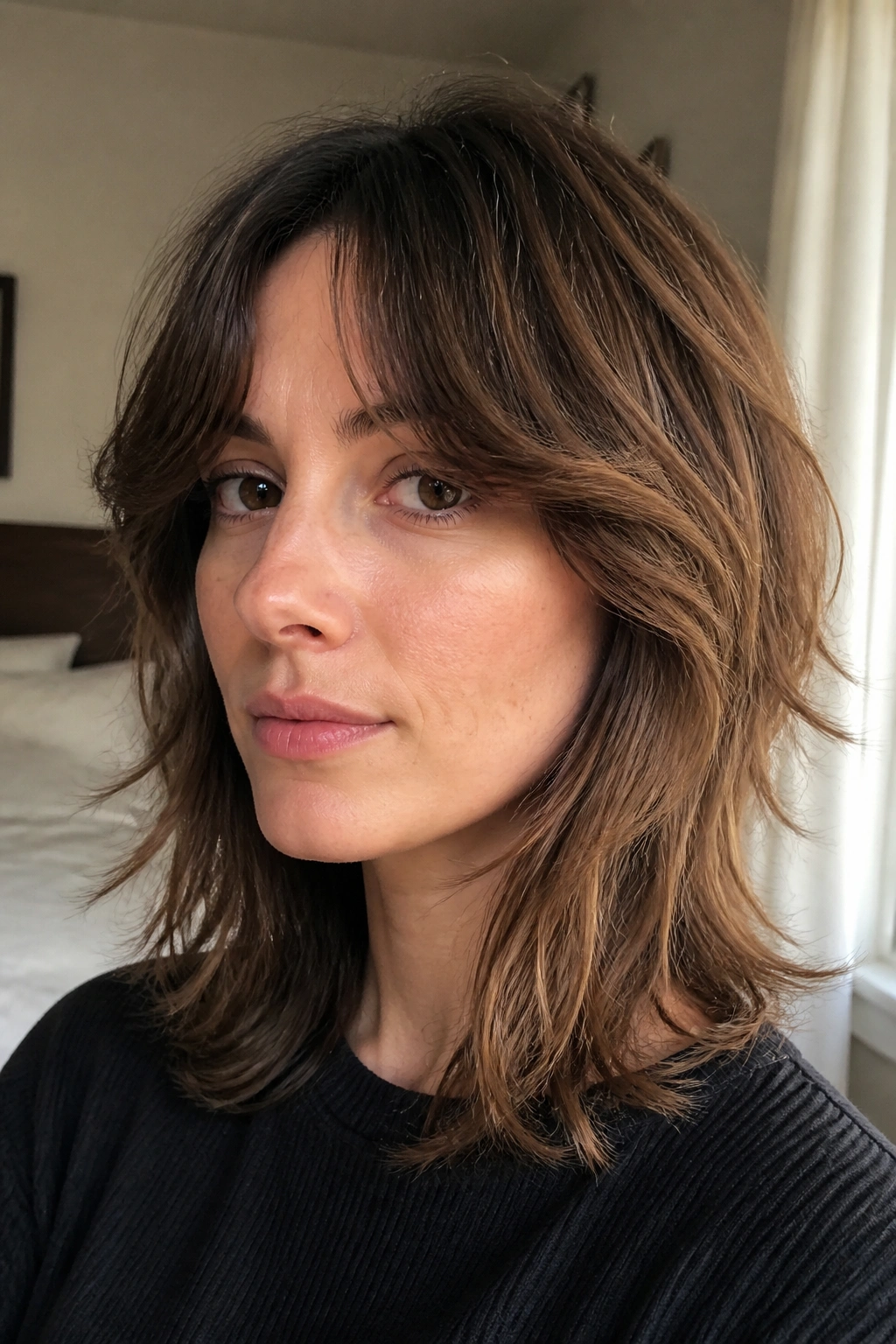
The classic version is still the one I’d hand to someone who wants movement without drama. It keeps the perimeter around the shoulders, then opens the face with curtain bangs that split softly at the center. That shape gives medium length hair a little swing every time you turn your head.
Why It Works
Curtain bangs blur the line between fringe and layers, so the cut feels easy to wear even when you let it air-dry. The crown gets a little lift, the cheeks get a frame, and the ends stay light instead of boxy.
- Best for straight to wavy hair
- Looks good with a round brush or a loose blowout
- Needs a trim about every 6 to 8 weeks
Tip: Keep the bangs a touch longer than you think. Too-short curtain bangs lose that soft fold fast.
2. Soft Shag with Face-Framing Layers
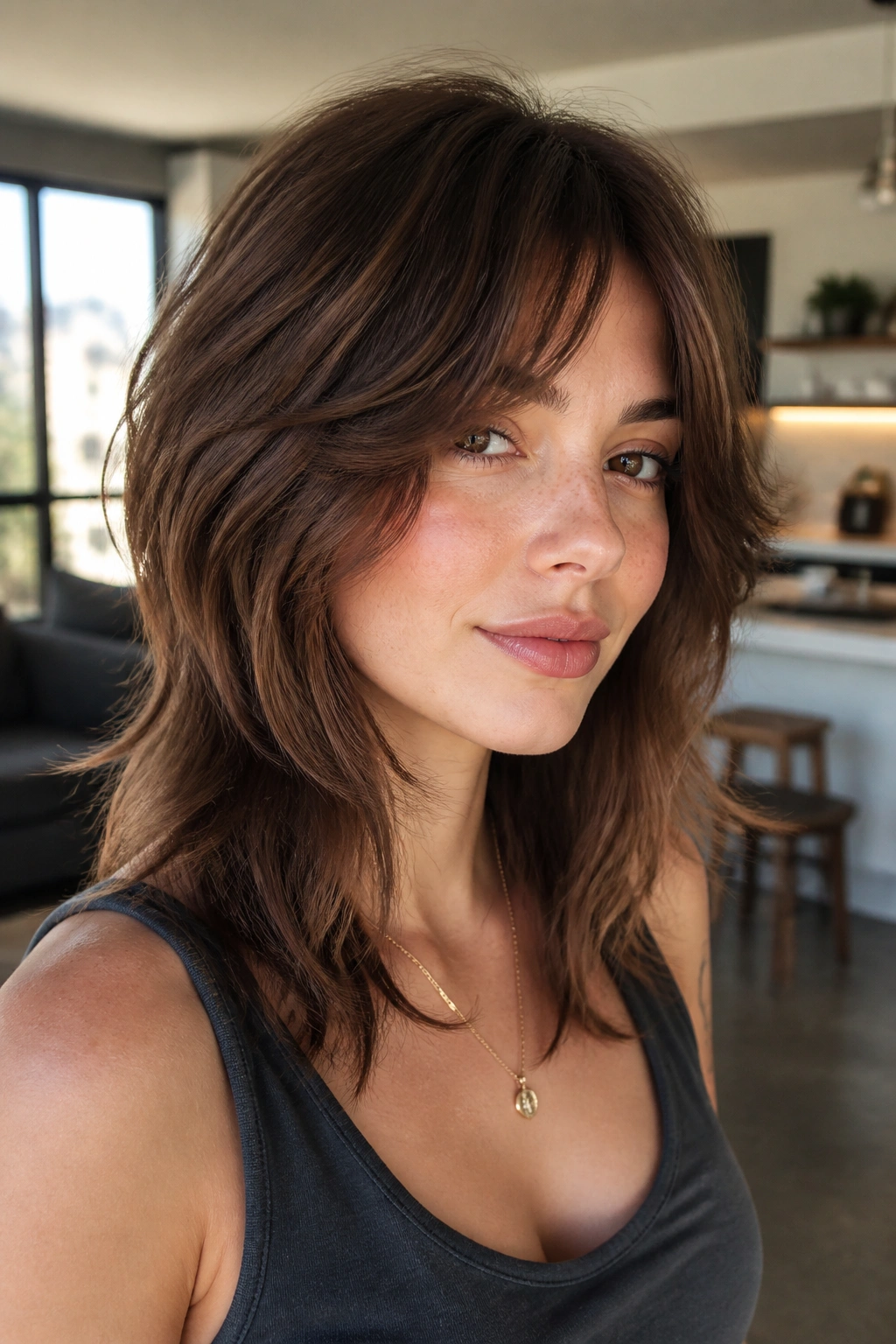
Soft shag cuts are the easiest way to wear this look if you do not want anything too choppy. The layers are there, but they’re blended enough that the haircut reads polished from across the room and a little messy up close.
The real magic is around the front. Face-framing pieces start near the cheekbones and slide down toward the collarbone, which makes medium length hair look fuller without giving you a triangle shape. That matters more than people think. A lot of bad shags happen when the front and back are cut with the same energy.
For styling, a 1.25-inch curling iron or a round brush gives this cut a gentle bend. You don’t need perfect curls. You want motion. A small amount of styling cream on damp hair helps the pieces stay separated instead of puffing out like cotton.
If your hair is fine or a little flat, this is the safe place to start. It still feels like a shag. It just does not shout about it.
3. Choppy Shag with Blunt Ends
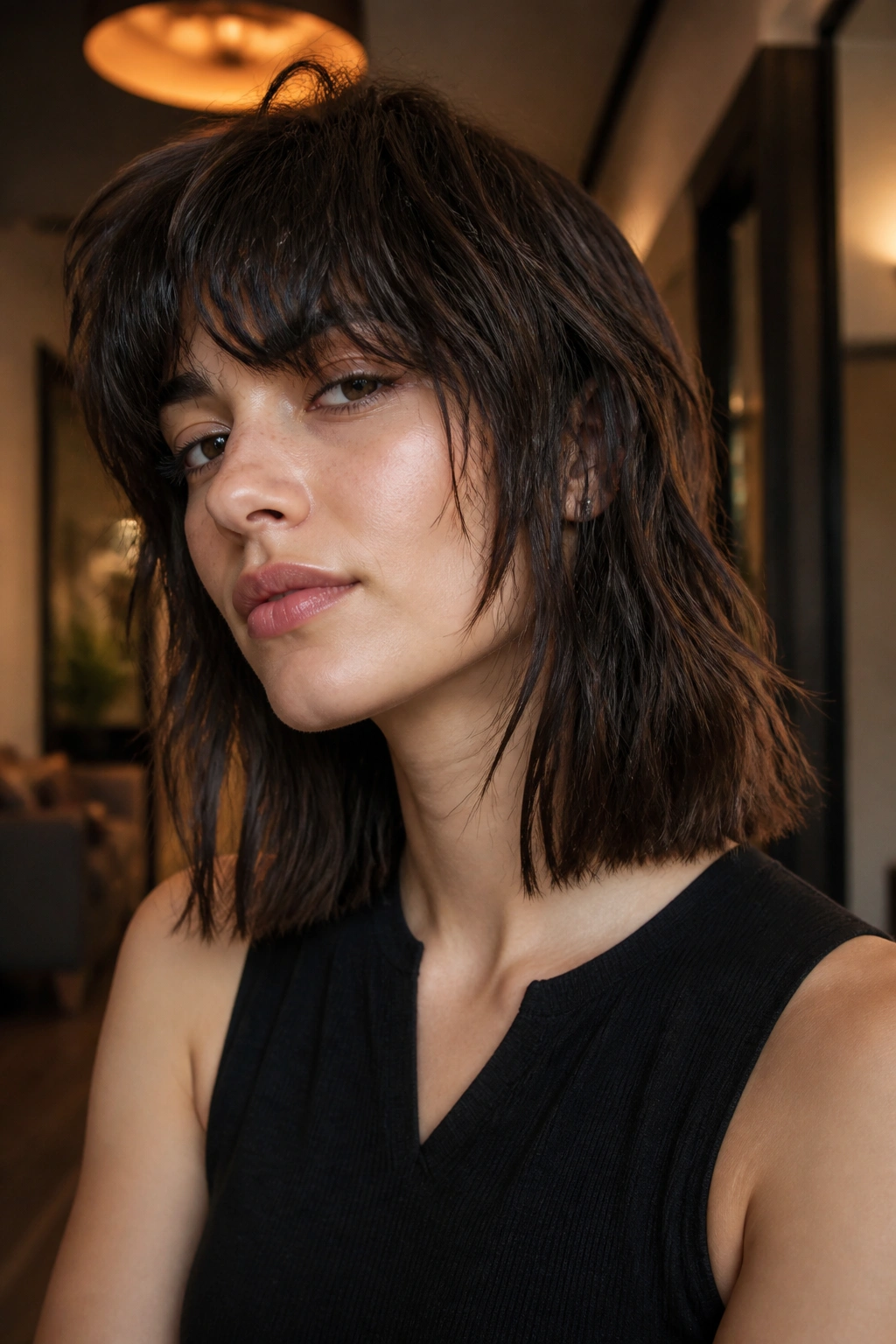
Why does this one look so fresh? Because the rough layers sit against a cleaner edge, and that contrast gives the haircut some attitude. The body of the hair moves around, but the ends land with a little more weight than a feathered shag, so it never turns wispy.
That balance is useful on medium length hair, especially if your ends tend to split or fray. You get the lived-in feel without the see-through bottom that can make a shag look tired instead of cool.
How to Wear It
A flat iron can be your friend here, but only if you use it lightly. Bend a few random sections away from the face, leave the ends a little straight, and stop before everything looks uniform.
- Works well on thicker hair
- Gives the illusion of density at the bottom
- Pairs nicely with a strong side part or center part
Use a pea-sized amount of wax paste on the ends. Not much. Too much and the shape goes limp fast.
4. Wolf-Cut Shag for Medium Hair
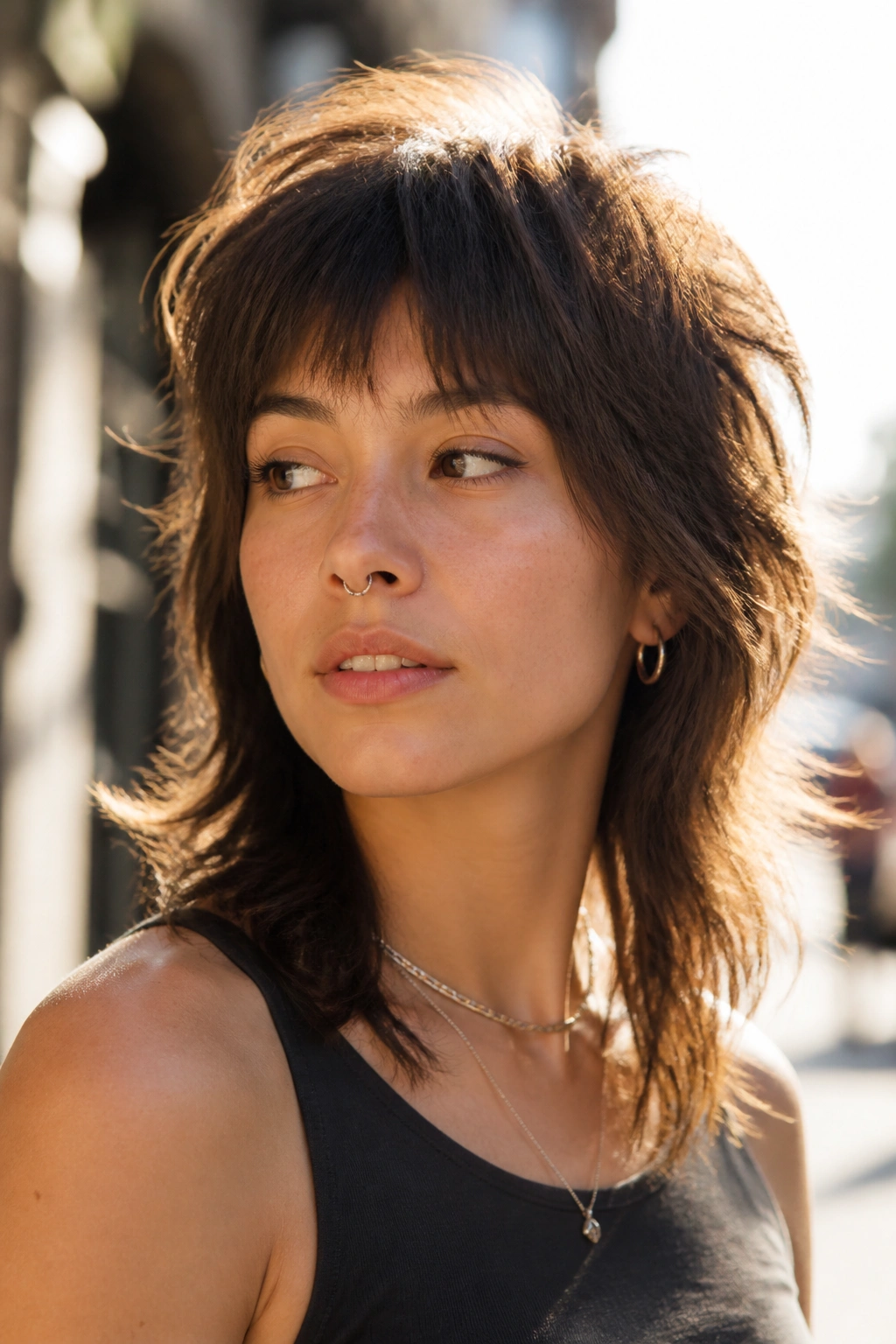
A wolf cut is what happens when the shag gets a little wild and stops apologizing for it. The crown is shorter, the lower layers are longer, and the whole cut has that slightly rebellious, grown-out feel that people either love immediately or warm up to over time.
I’ve seen this work especially well on medium length hair that has some natural wave. The layers stack in a way that makes the top look fuller and the lower half look lighter, so you get movement without losing too much width at the bottom. That matters if your hair usually falls flat near the crown.
The shape needs confidence. If the top is cut too timidly, the wolf-cut effect disappears and you just get uneven layers. Ask for visible disconnection between the crown and the perimeter, but not so much that the cut turns into a mullet by accident.
A sea-salt spray and a quick scrunch are often enough. If you blow-dry it smooth, the cut still has edge. If you rough-dry it, it looks louder. Good either way.
5. Curly Shag with Defined Layers
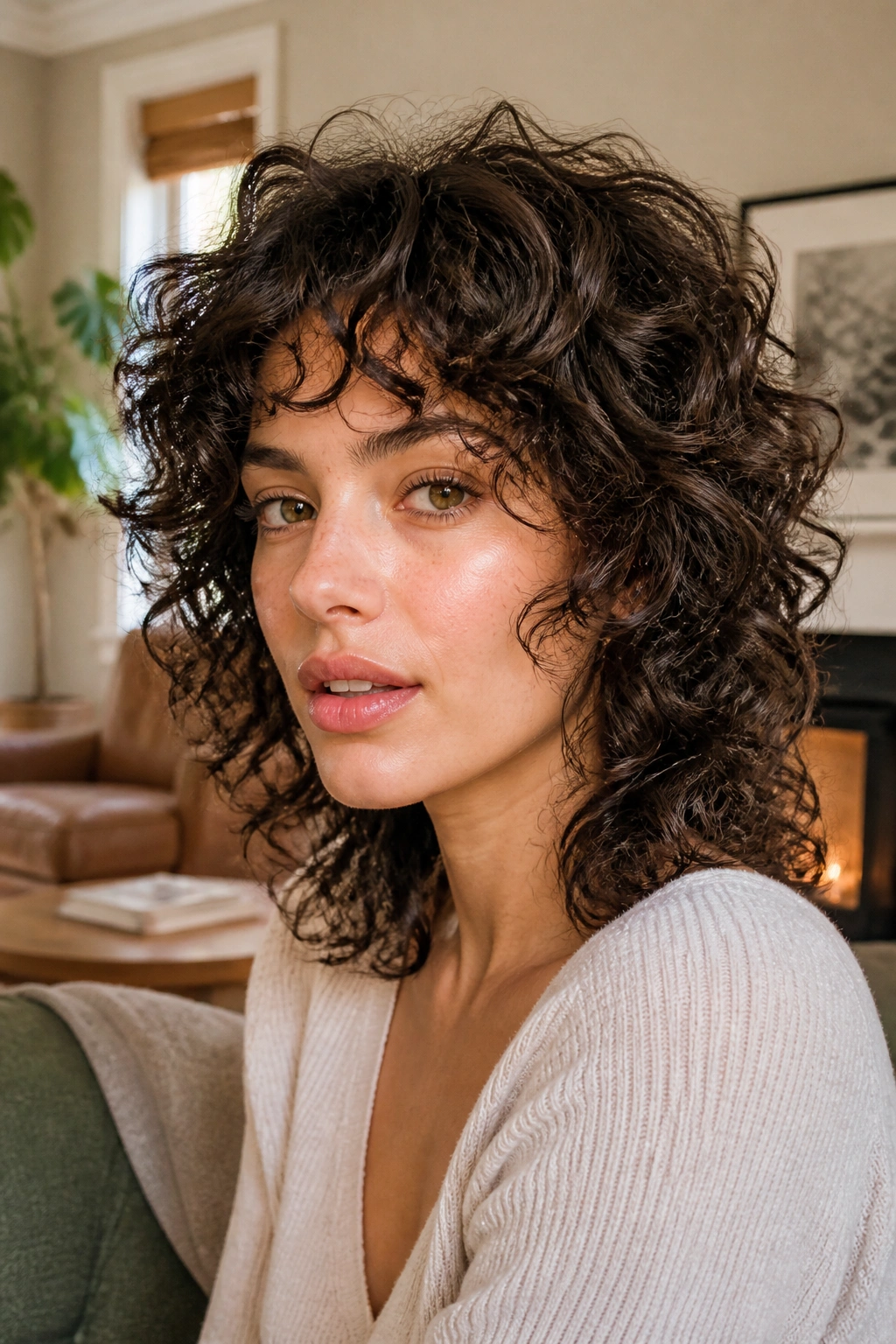
Curly hair and shag cuts get along better than people expect, as long as the layers are planned around the curl pattern instead of carved into it blindly. The goal is shape, not pyramid. A good curly shag removes bulk in the right places and lets the curls stack in a way that feels airy.
Medium length hair gives curls room to spring, which is a gift. Too long, and the curl can stretch out and lose bounce. Too short, and the cut can puff. This middle zone is where the texture gets to show off.
A diffuser helps, but the haircut does the heavy lifting. Leave in a curl cream, scrunch once, then stop touching it. Overhandling is the fastest way to ruin the shape. And no, you do not need to brush it dry. That road leads to frizz and regret.
This style looks especially good when the shortest layers sit around the cheekbone or just above the jaw. It opens the face without stealing the curl pattern.
6. Fine-Hair Shag with Airy Layers

Compared with a heavily layered cut, this version is lighter, cleaner, and less likely to leave the ends looking thin. That’s the whole point. Fine hair can lose its shape fast when layers are too aggressive, so this shag keeps the layers airy and the perimeter solid enough to hold weight.
The best version starts with a little lift at the crown and soft internal layers that move without exposing too much scalp. You want texture, not holes. That distinction matters.
If your hair slips flat by lunchtime, ask for a dry cut or a cut that respects how your hair behaves when it’s not wet. Fine hair often looks longer when it’s wet, then springs up and shows every mistake once it dries. A stylist who knows that will leave a stronger lower line than you might expect.
What to Ask For
- Long, blended layers around the face
- Light internal texture through the mid-lengths
- A perimeter that keeps enough thickness at the bottom
A texturizing spray at the roots can help, but the real win is the cut itself. Don’t overstyle it into submission.
7. Medium Shag with Bottleneck Bangs
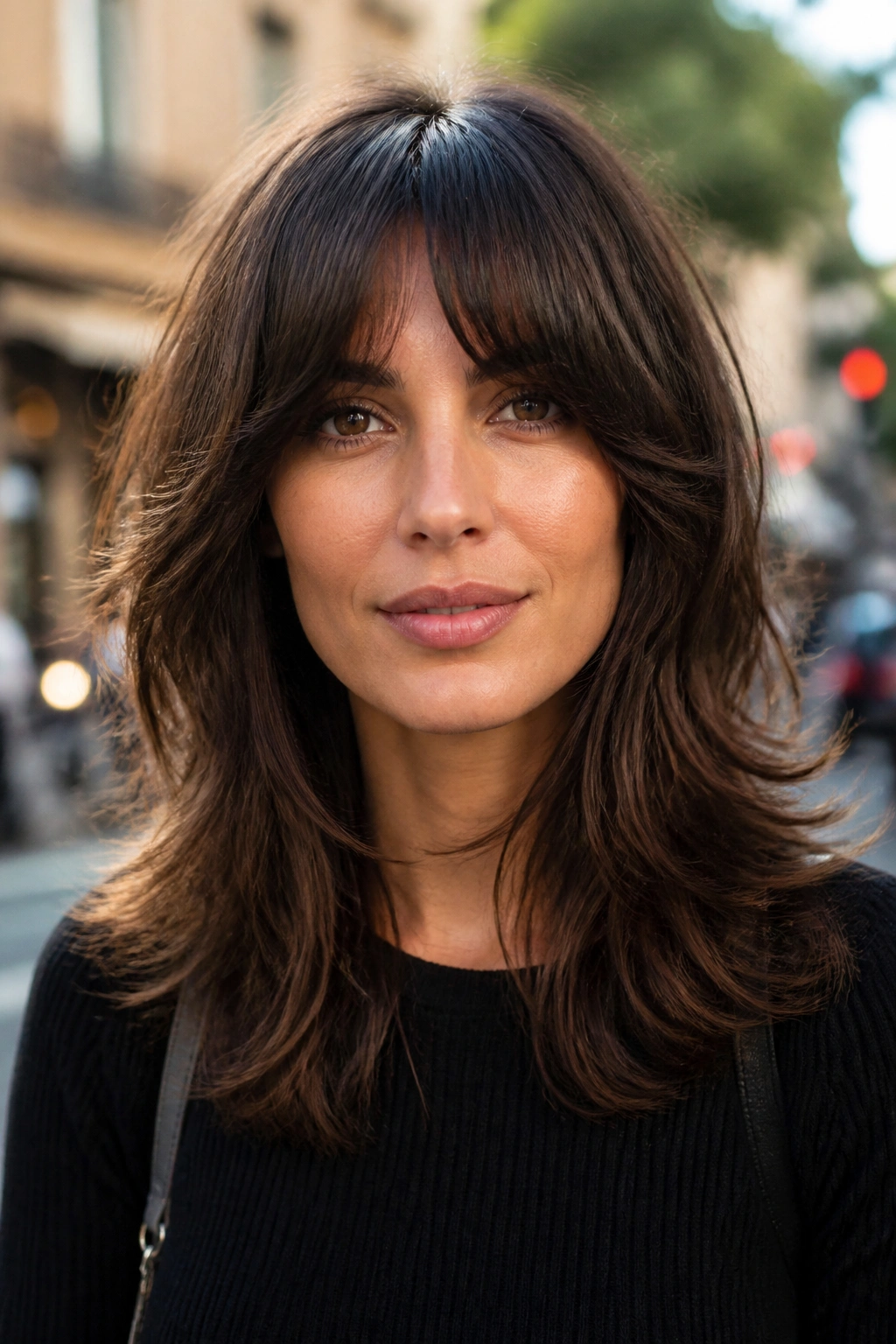
Bottleneck bangs are one of those fringe choices that quietly make the whole haircut look smarter. They start narrow at the center, then open wider as they travel toward the temples, which gives medium length hair a more custom feel than a straight-across fringe.
This shag works because the bangs and layers speak the same language. The front is soft, the body is layered, and the whole cut keeps moving even when the rest of your styling is minimal. If curtain bangs feel a little too common for you, this is the next step up.
Use a small round brush or even your fingers and a blow-dryer nozzle to direct the center slightly forward, then flick the sides away from the face. That tiny bit of direction keeps the fringe from collapsing into a flat curtain.
A lot of people underestimate how flattering this shape is on longer faces. The center softness shortens the forehead visually, while the wider sides balance the cheeks. Nice little trick.
8. Razored Shag with Feathered Ends
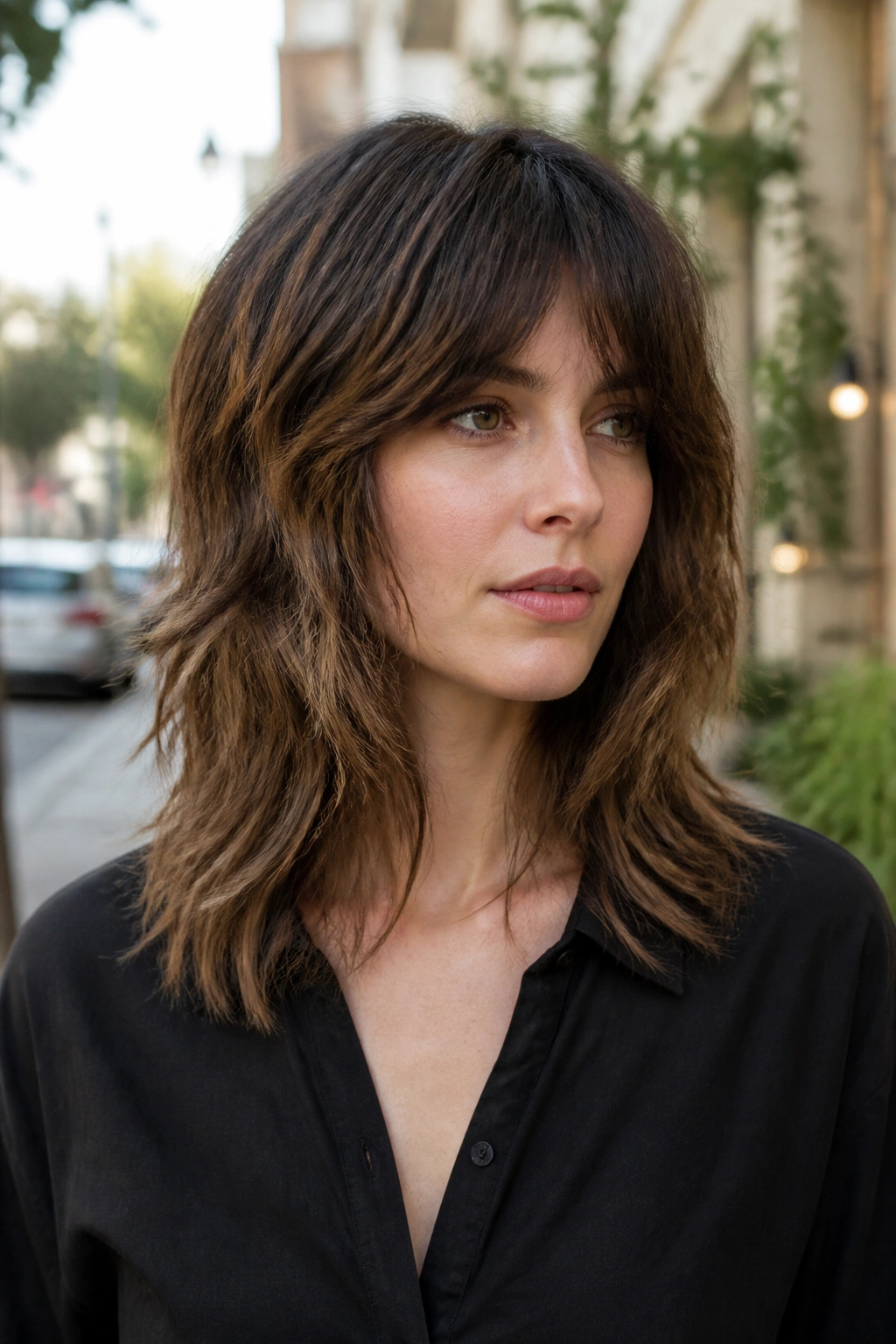
Razoring gives this shag its bite. Instead of blunt chunks, the ends taper out and the layers look almost sliced through the hair, which creates a softer edge and a lot of movement.
This cut can be gorgeous on medium length hair that feels too heavy in a classic layer pattern. The razored ends release bulk without making the cut look thin. You still get shape, but the finish feels lighter and a little more lived-in.
The downside? It needs a careful hand. A bad razor cut can leave weak ends fast, especially on hair that is already fine or damaged. If your hair frays easily, make sure the stylist is using the razor as a shaping tool, not a shortcut.
Best styling move: rough-dry halfway, then twist a few sections with your fingers while the hair is still damp. That keeps the feathered ends from separating too much. A light finishing cream helps the cut sit together instead of puffing apart.
This one has a bit of attitude. Not a lot. Just enough.
9. Seventies-Inspired Shag
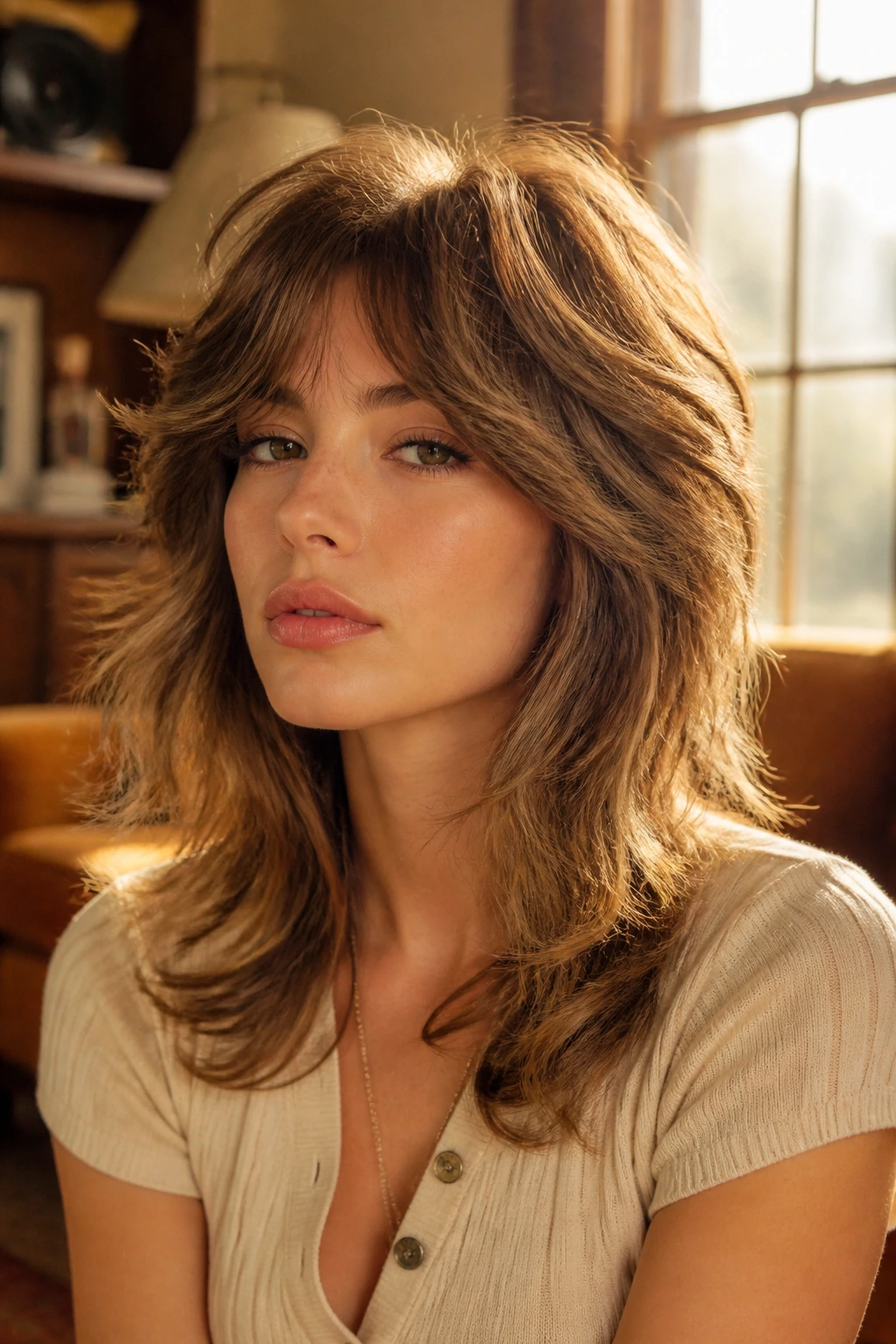
Can a haircut feel nostalgic without looking like a costume? Yes — and this is the proof. The seventies-inspired shag leans into volume at the crown, soft feathering around the face, and a slightly flipped perimeter that gives medium length hair some old-school charm.
The trick is restraint. If the layers are too severe, the cut starts looking dated in a bad way. Keep the motion soft and let the front pieces sweep gently out from the cheeks. That makes the style feel familiar without locking it into one era.
How to Use It
A medium-barrel round brush gives the right kind of bend, especially if you roll the ends under and away from the face in alternating directions. It should look touched, not rehearsed.
- Great with a center part or off-center part
- Works best on hair with a bit of natural body
- Needs a quick refresh with dry shampoo at the roots
The result is easy to wear and oddly flattering on almost everyone. There’s a reason this shape never really disappears.
10. Micro-Bang Shag
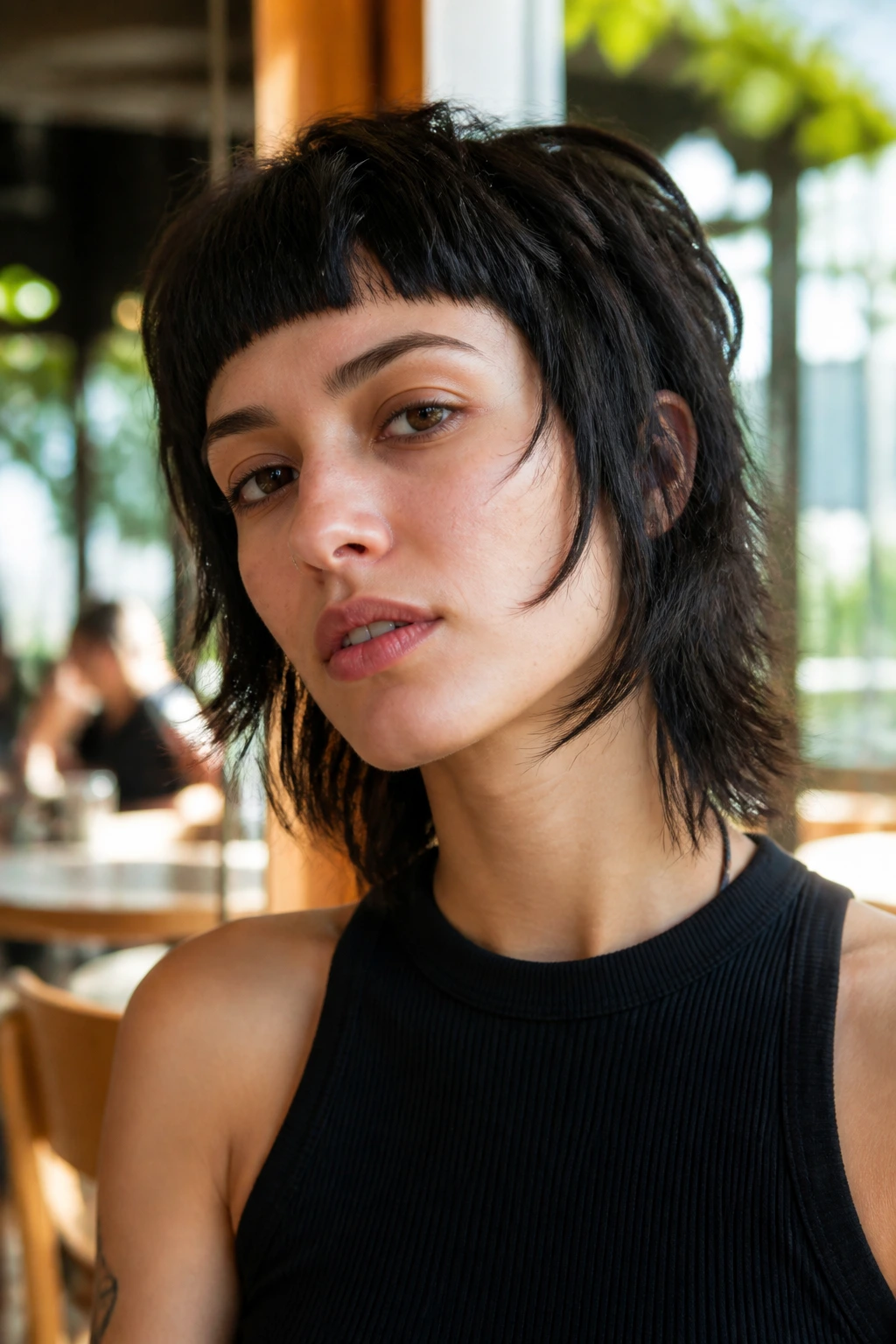
A micro-bang shag is not shy. The fringe sits high on the forehead, which instantly changes the mood of the cut and makes medium length hair look sharper, shorter, and a little more editorial.
This is the shag for someone who likes contrast. The bangs are cropped, the layers are messy, and the whole thing has a kind of deliberate imbalance that works best when the rest of your outfit is simple. You do not want competing noise.
The hair around the cheeks and jaw should stay soft, or the cut can start to feel severe. That contrast between tiny bangs and loose layers is what keeps it wearable. If the fringe is blunt and the layers are blunt and the ends are blunt, the haircut starts bossing you around.
Use a tiny bit of pomade or wax on the fringe after blow-drying. A rice-grain amount goes a long way here. Too much and the bangs separate in a greasy, sticky way that nobody wants.
This one is for people who like their hair to start a conversation before they do.
11. Shoulder-Grazing Shag
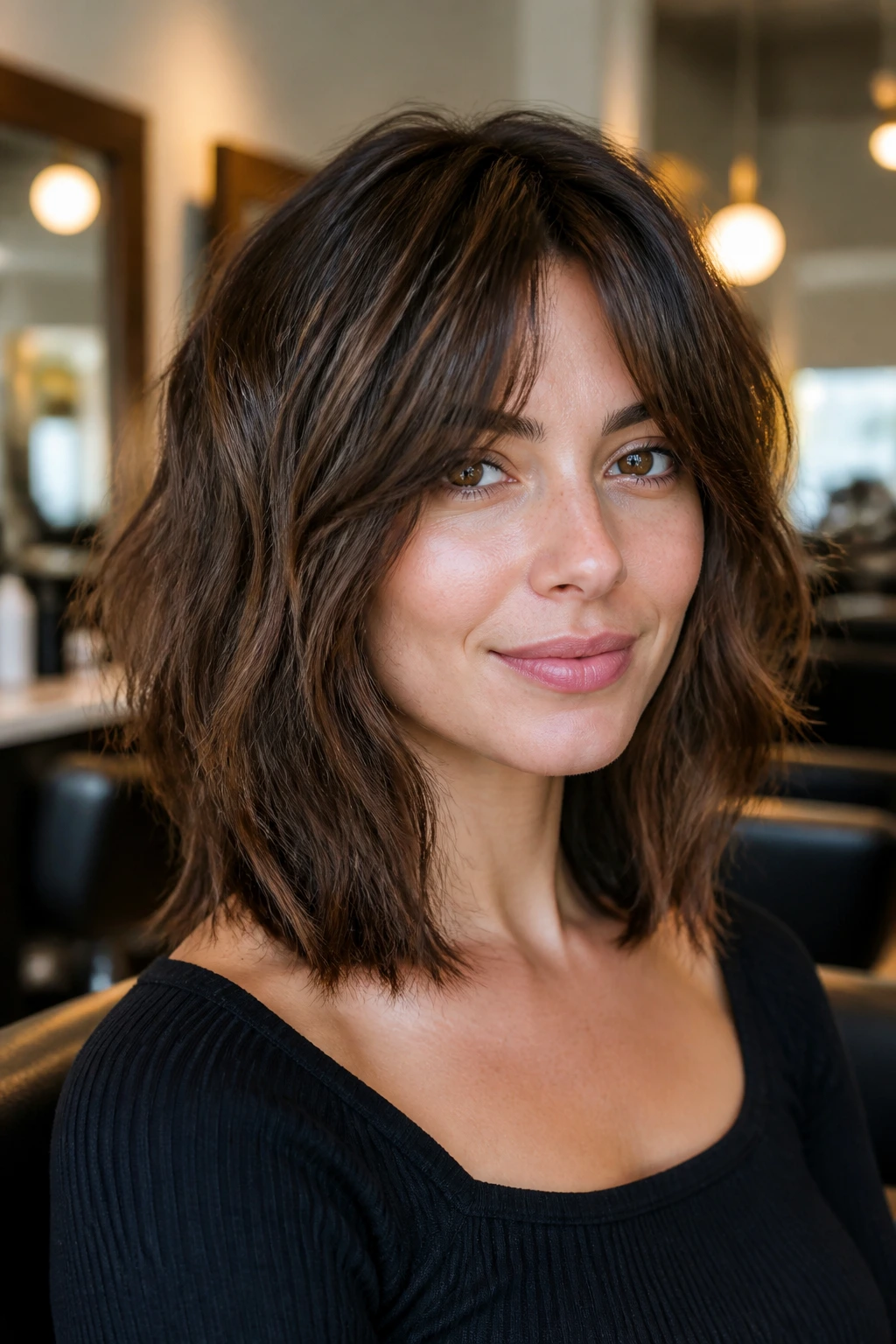
Shoulder-grazing length is a sweet spot. Long enough to tuck behind the ears, short enough that the layers still show, and practical enough that you won’t hate your hair on day three.
A shoulder-grazing shag often looks best when the lowest layers skim the collarbone. That gives the haircut a gentle swing, especially when you turn your head or wear it half-up. If the cut is too short, it can lose the shag feel and drift into a generic layered bob. Too long, and the movement hides.
This version is also one of the easiest to style with heat or without it. A quick bend at the front pieces, a little root lift, done. The shape does the rest.
I like this cut for people who want flexibility. You can wear it polished for work, toss it into a clip for errands, or rough it up with texture spray and pretend you did a whole routine. It still behaves.
12. Messy Air-Dried Shag
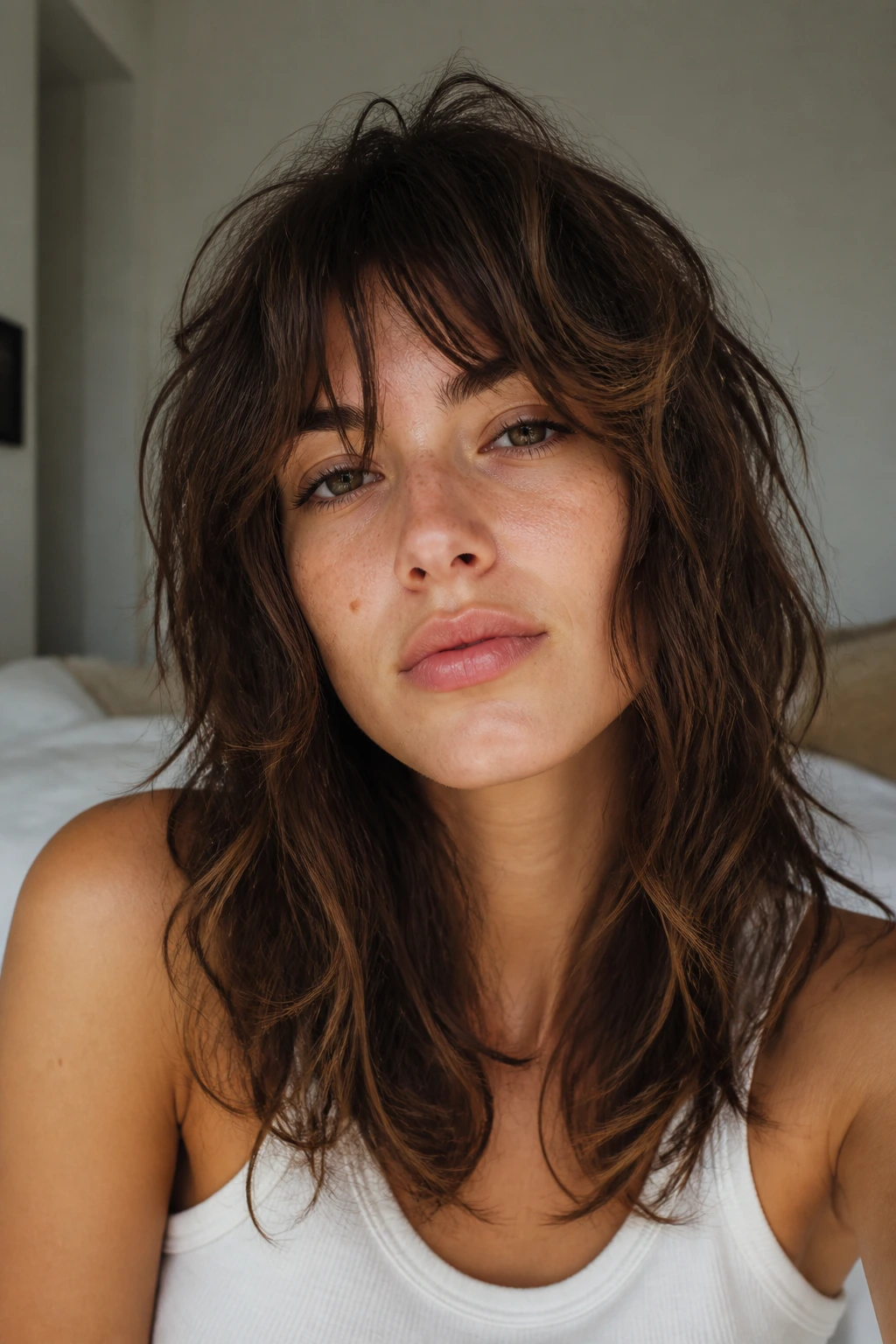
Some haircuts need a blowout to make sense. This one doesn’t. The messy air-dried shag is built for texture that looks better when it isn’t forced into a perfect shape, which is half the charm.
Compared with a smoother layered cut, this shag leaves the ends a little freer and the crown a little softer. That means your natural wave pattern gets to take the lead. If your hair bends in random places when it dries, this cut can turn that chaos into shape instead of fighting it.
Work a lightweight cream through damp hair, scrunch once, then leave it alone. If you keep poking at it while it dries, the pieces separate in the wrong places and the curl pattern gets fuzzy. Letting it be is harder than it sounds.
What Makes It Different
The layers are cut to keep the shape loose, not polished. That’s the point.
- Great for low-effort styling
- Better with a middle or soft off-center part
- Good choice if you hate hot tools
A little frizz is fine here. Honestly, it belongs.
13. Long Face-Framing Shag
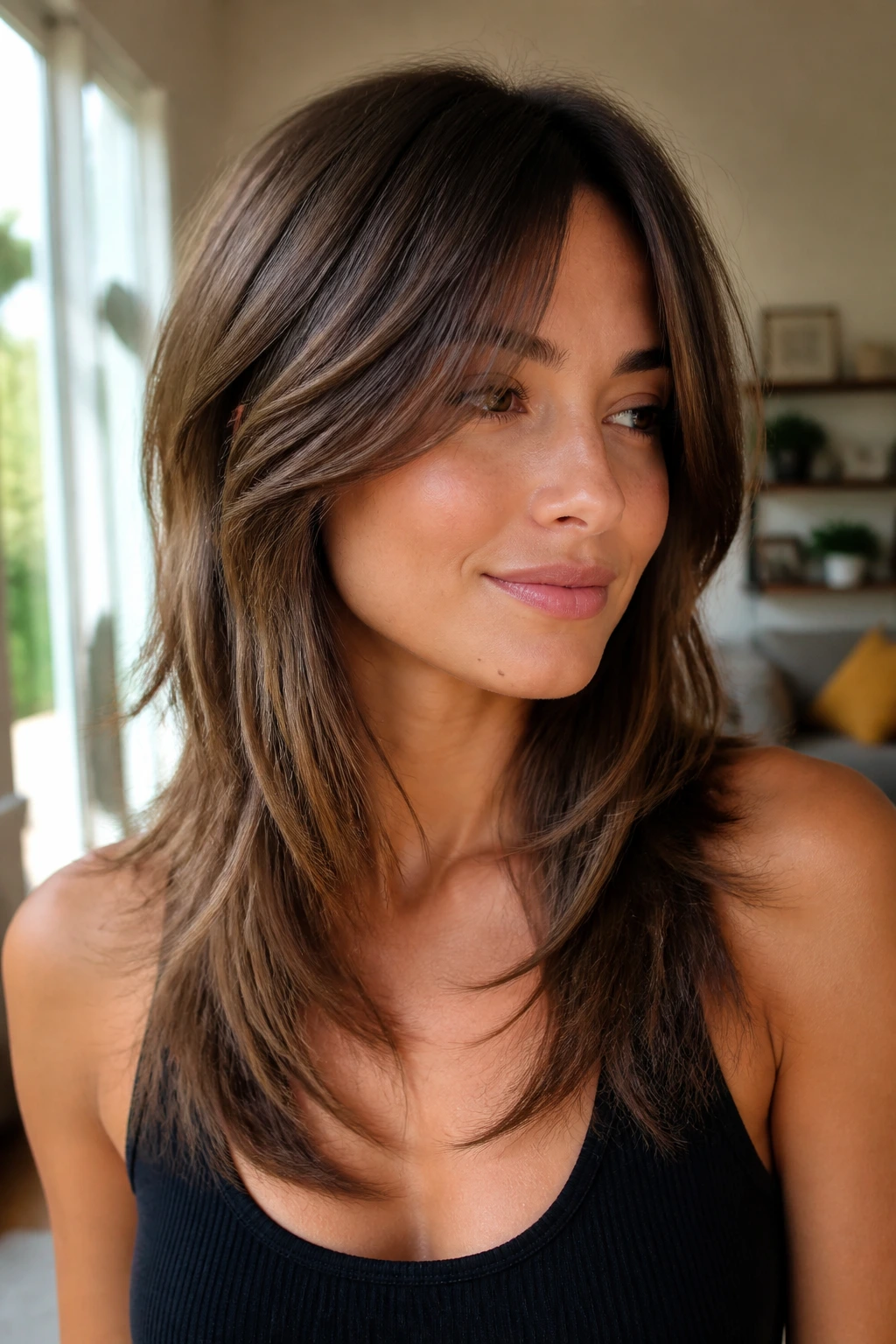
Long face-framing layers can do a lot of heavy lifting. They pull attention toward the eyes and cheekbones, then taper down into the rest of the cut so the shag feels balanced instead of choppy all over.
This version is useful if you want softness without losing length around the front. Medium hair can sometimes look blunt at the sides, especially when it grows out. Longer face-framing pieces solve that by creating a vertical line that slims the shape a little without turning the whole haircut into a layered mess.
A large round brush or a 1.5-inch curling iron gives the front pieces a gentle swoop. Leave the rest looser. If everything is curled the same way, the haircut loses its easy shape and starts looking overdone.
This is one of the better choices if you like to tuck your hair behind your ears. The front still looks intentional when it falls forward again, which is more useful than people think.
14. Polished Shag for Work Days

Can a shag look neat? Absolutely. The trick is keeping the layers controlled and the finish smooth enough that the haircut still moves without looking wild. This version keeps the personality of a shag, just under a cleaner surface.
I’d pair it with medium length hair that sits somewhere near the shoulders. That length gives the cut enough room to swing, but it still feels grown-up in a way that plays well with sharper outfits and simple makeup. A deep side part or a clean center part both work.
The styling difference is small but real. Use a heat protectant, blow-dry with tension from a paddle brush, then add a bend at the ends with a round brush or curling iron. Keep the front pieces soft. No need to stack curls on curls.
This is the shag for people who need hair that behaves in meetings and still looks good when it loosens up by dinner. Not flashy. Just good.
15. Thick-Hair Shag with Controlled Bulk
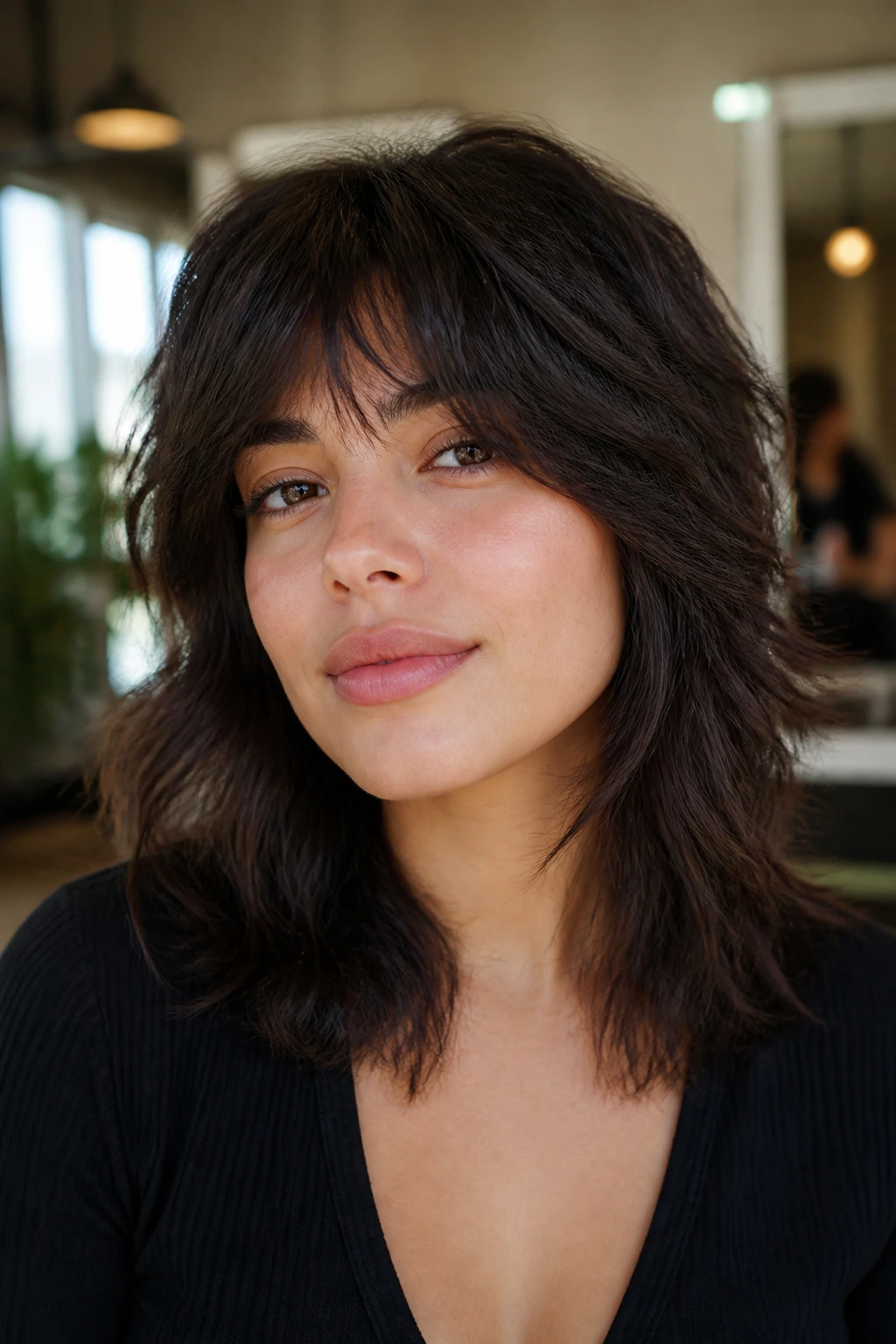
Thick hair can handle a shag, but it needs the bulk removed in the right places or the cut turns into a helmet. The best version keeps weight in the perimeter while carving out movement through the middle and crown.
That approach is what makes this cut different from a standard layered style. Instead of thinning the whole head, the layers should redirect the volume so the hair falls in soft sections. Medium length is perfect for that because there’s enough hair to work with, but not so much length that it drags everything downward.
Ask for internal debulking instead of aggressive short layers everywhere. Huge difference. A stylist who cuts too high near the crown can make thick hair stick out in a triangle. You want release, not collapse.
What to Watch For
- Keep the bottom line strong
- Avoid too much thinning near the ends
- Use a cream, not a crunchy gel
A diffuse blow-dry helps, but the cut should do the real work. Thick hair usually looks better when it moves in chunks, not in one giant sheet.
16. Side-Swept Fringe Shag

A side-swept fringe changes the whole attitude of a shag. It softens the forehead, adds motion across the face, and gives medium length hair a more relaxed line than a center-parted version.
This cut is especially handy if your hair naturally falls to one side anyway. Instead of fighting it, the shape leans into it. The layers around the front should be long enough to tuck or sweep, but short enough to create that slanted line over the brow. If the fringe is too long, it becomes boring. Too short, and it loses the sweep.
A medium round brush or Velcro roller on the front section can help train the fringe while it’s drying. After that, a little finger-tousling is enough. You do not need precision. You need direction.
This one feels less engineered than some of the sharper shags. That’s the point. It’s a good cut for people who want something flattering and easy without looking like they studied the mirror for half an hour.
17. Salt-and-Pepper Shag
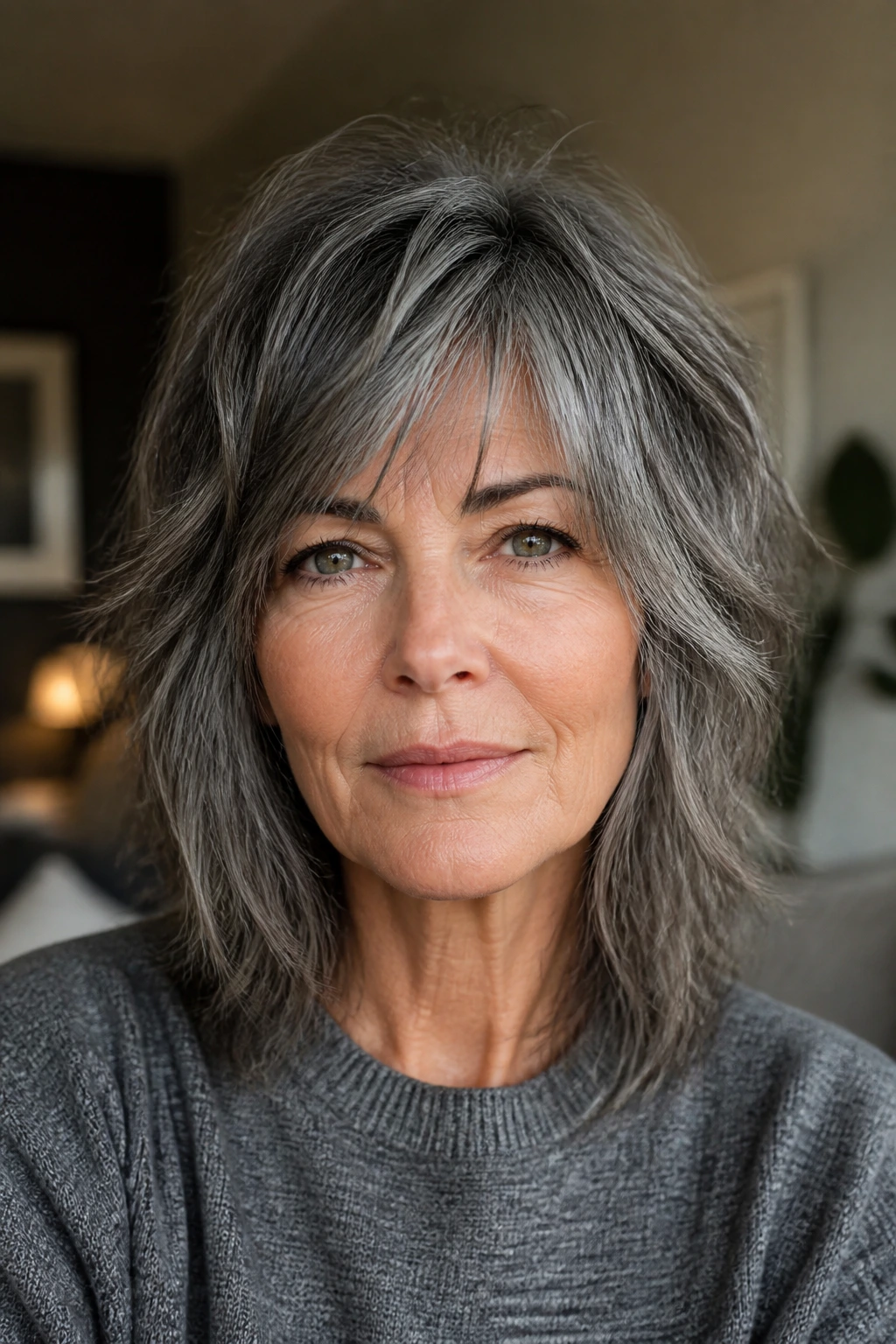
Gray hair, silver streaks, dark roots, and mixed tones all show off shag layers in a really satisfying way. The contrast between shades makes the movement easier to see, so even a simple cut can look fuller and more textured.
That’s why this shag works so well on medium length hair with natural color variation. The layers catch light differently across the head, and the shape reads clearly even when the styling is minimal. A flat cut can hide that. A shag lets it speak.
You don’t need a complicated routine here. A lightweight mousse at the roots and a soft cream through the ends is often enough. If your hair is coarse, a touch more moisture helps the layers sit together instead of separating into dry-looking pieces.
A Small Styling Note
Let the fringe or front pieces stay a little softer than the rest. It keeps the cut from looking too severe.
- Good for naturally silver or highlighted hair
- Looks best with soft, bendy movement
- Benefits from a trim before the ends get too scrappy
This is one of those cuts that looks richer when it’s not trying too hard.
18. Layered Lob Shag
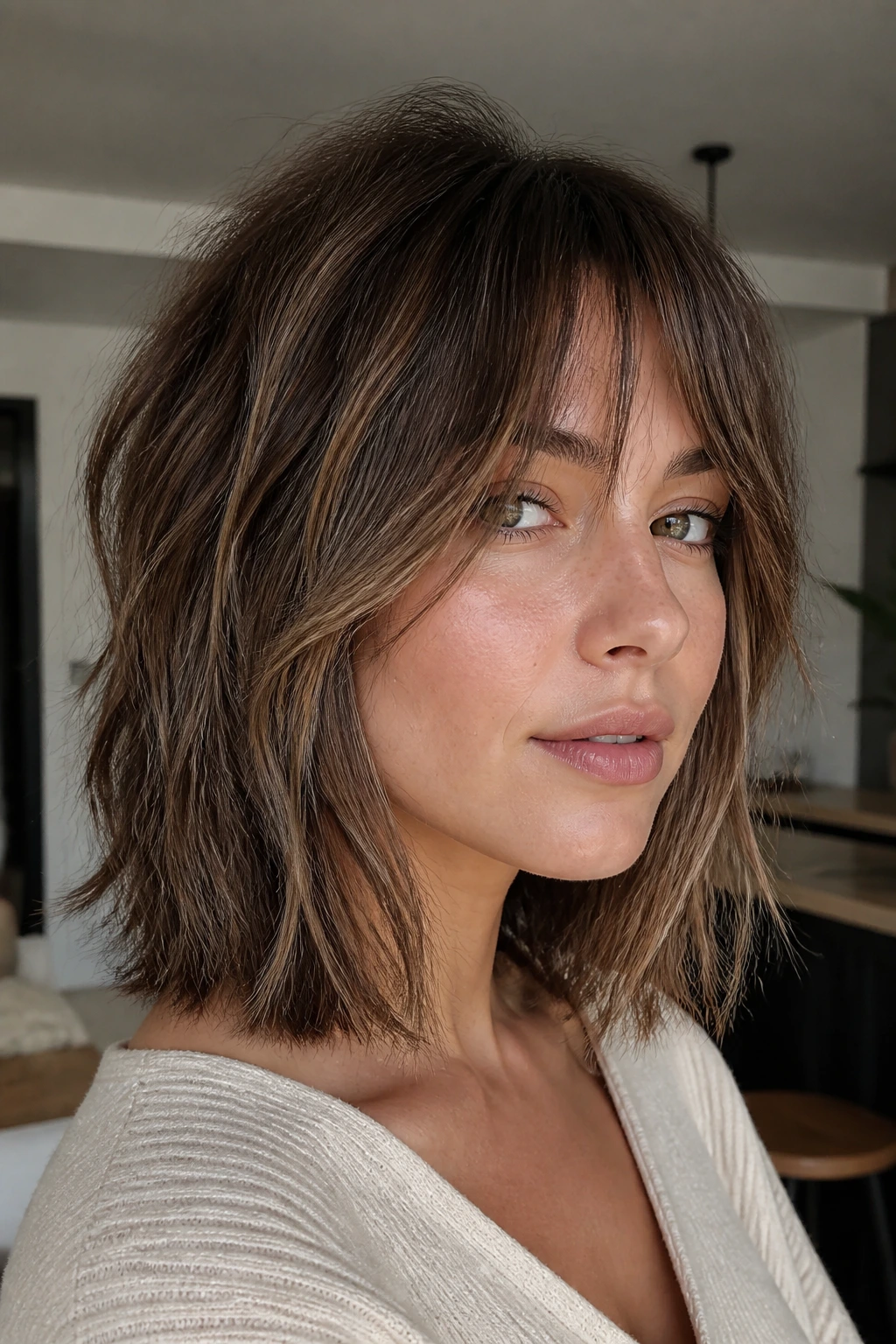
Unlike a regular lob, this one brings more texture to the surface and more movement around the face. The length still sits in that shoulder-to-collarbone zone, but the shag layers keep it from feeling plain or heavy.
That makes it a strong choice if you want a more grown-out shape without losing the benefits of a medium cut. It’s easier to tuck behind the ears than a long shag, and it dries faster too. Small things. They matter.
The best layered lob shag has enough structure at the bottom to avoid the “forgotten haircut” problem. You know the one — hair that’s long enough to look fine, but not shaped enough to feel finished. A little internal texture fixes that.
This cut can be worn sleek or rough. Sleek gives you a cleaner line and makes the layers feel expensive. Rough gives you the shag attitude. Both work, which is why it’s such an easy one to live with.
19. Flipped-Out Shag with Retro Movement
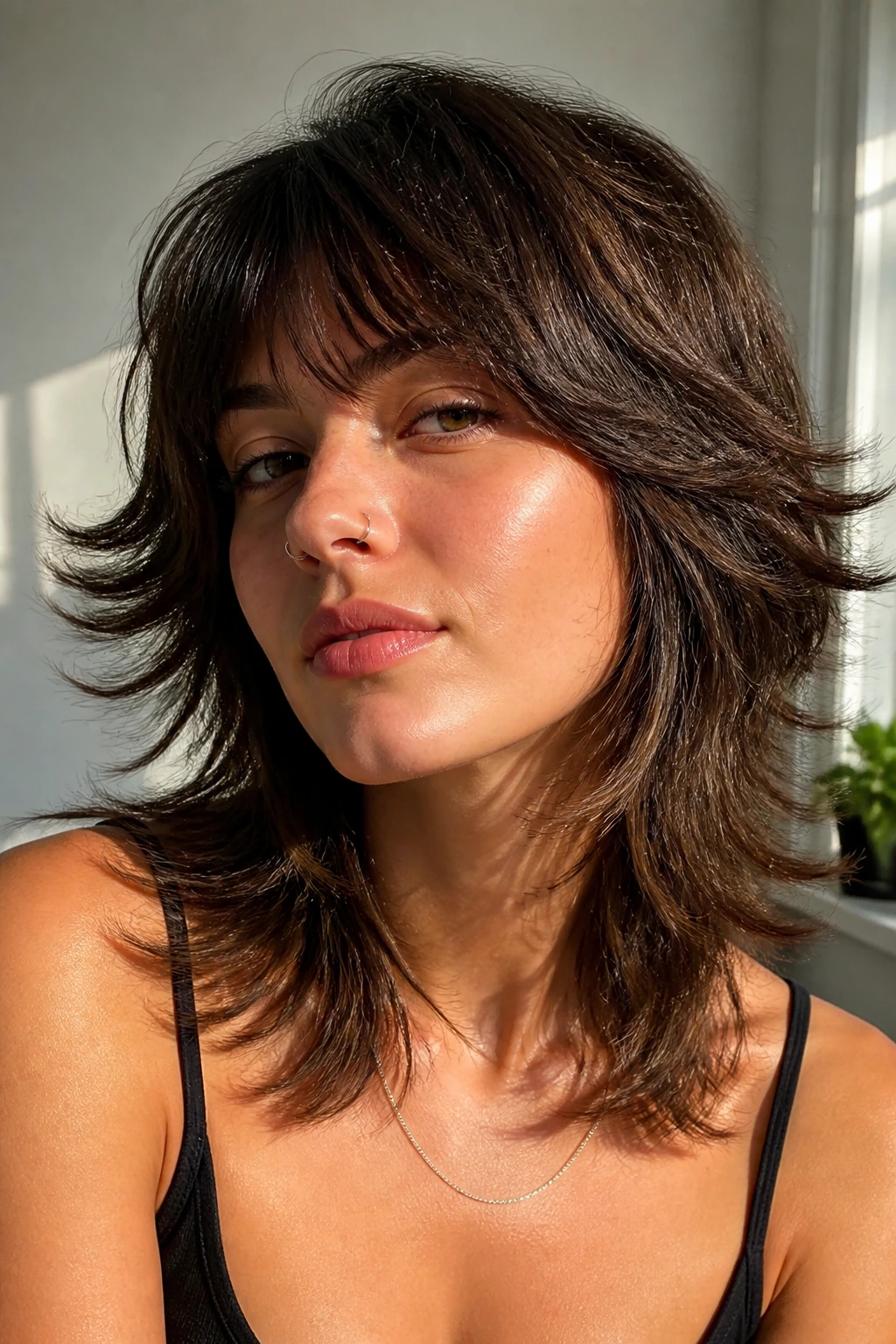
A flipped-out shag feels playful in a way that a lot of modern cuts don’t. The ends turn away from the face, the layers stay soft, and medium length hair gets a lively shape that looks especially good in motion.
The key is not flipping every section the same direction. That would look too stiff. Instead, turn a few pieces outward, leave a few nearly straight, and let the front frame the face in a looser way. The result feels casual but still intentional.
How to Get the Shape
Use a round brush or a straightener with a light wrist turn at the ends. The goal is a bend, not a curl.
- Best on hair with some natural body
- Looks strong with layered bangs or a side fringe
- Needs only a light mist of flexible hairspray
I like this version for people who want movement that reads from across the room. It has a little bounce. A little swagger. Not much fuss.
20. Mullet-Leaning Shag
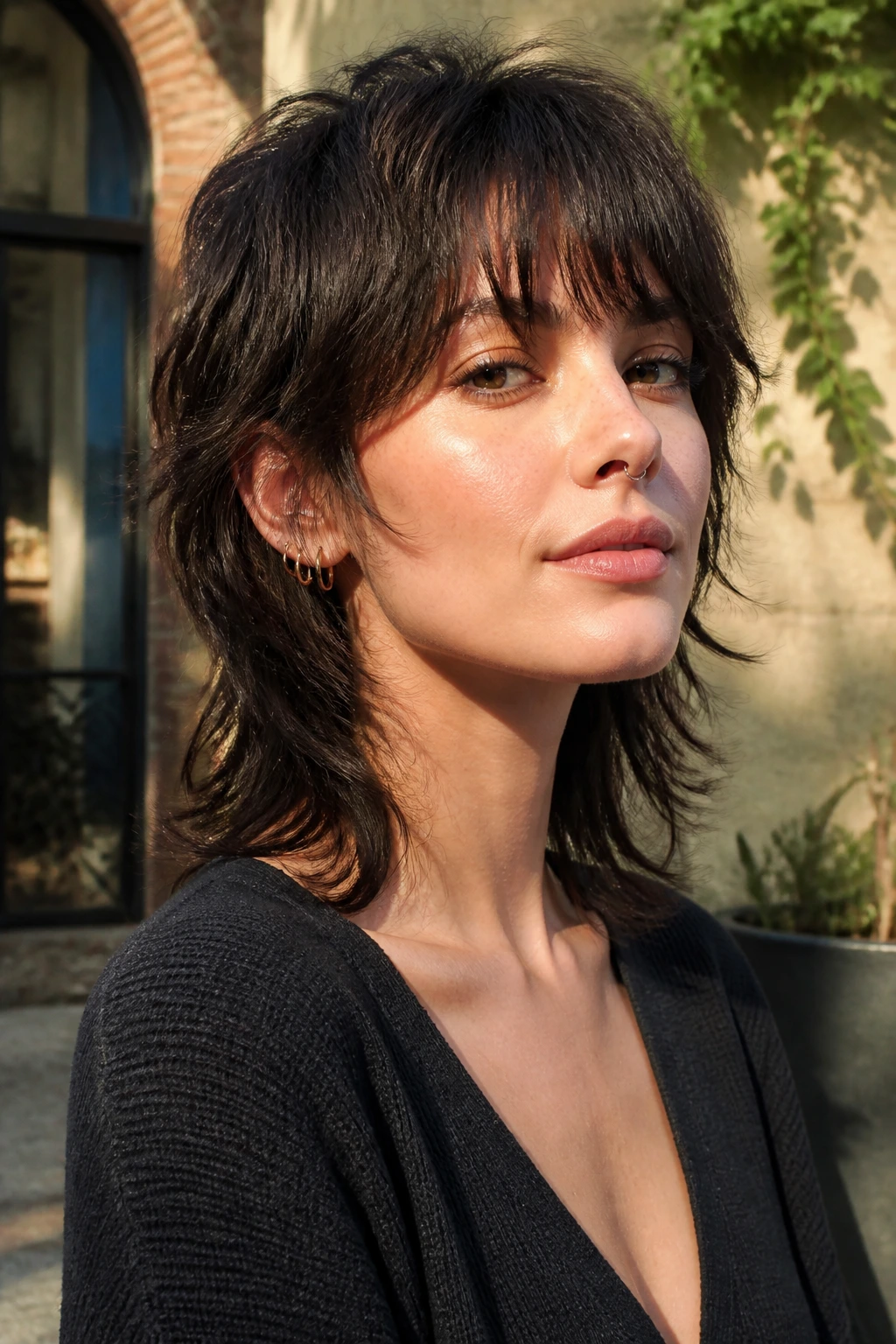
This is the boldest one on the list, and I mean that in a good way. The front stays face-framing and shaggy, while the back is left longer and looser, which gives medium length hair a sharper silhouette without going full punk.
The reason it works is the balance between softness and edge. If the front is too neat, the cut loses its charm. If the back is too short, it stops being a mullet-leaning shag and becomes something else entirely. The shape needs a little contrast to feel alive.
Ask for visible length at the nape and shorter, layered pieces around the crown and temples. That gives the haircut lift where it matters and keeps the overall vibe modern rather than costume-y. Styling can be messy, which is part of the fun.
A texturizing spray and a rough dry are enough on most days. If your hair is naturally straight, a few bends through the front will keep it from looking flat.
21. Round-Face-Friendly Shag
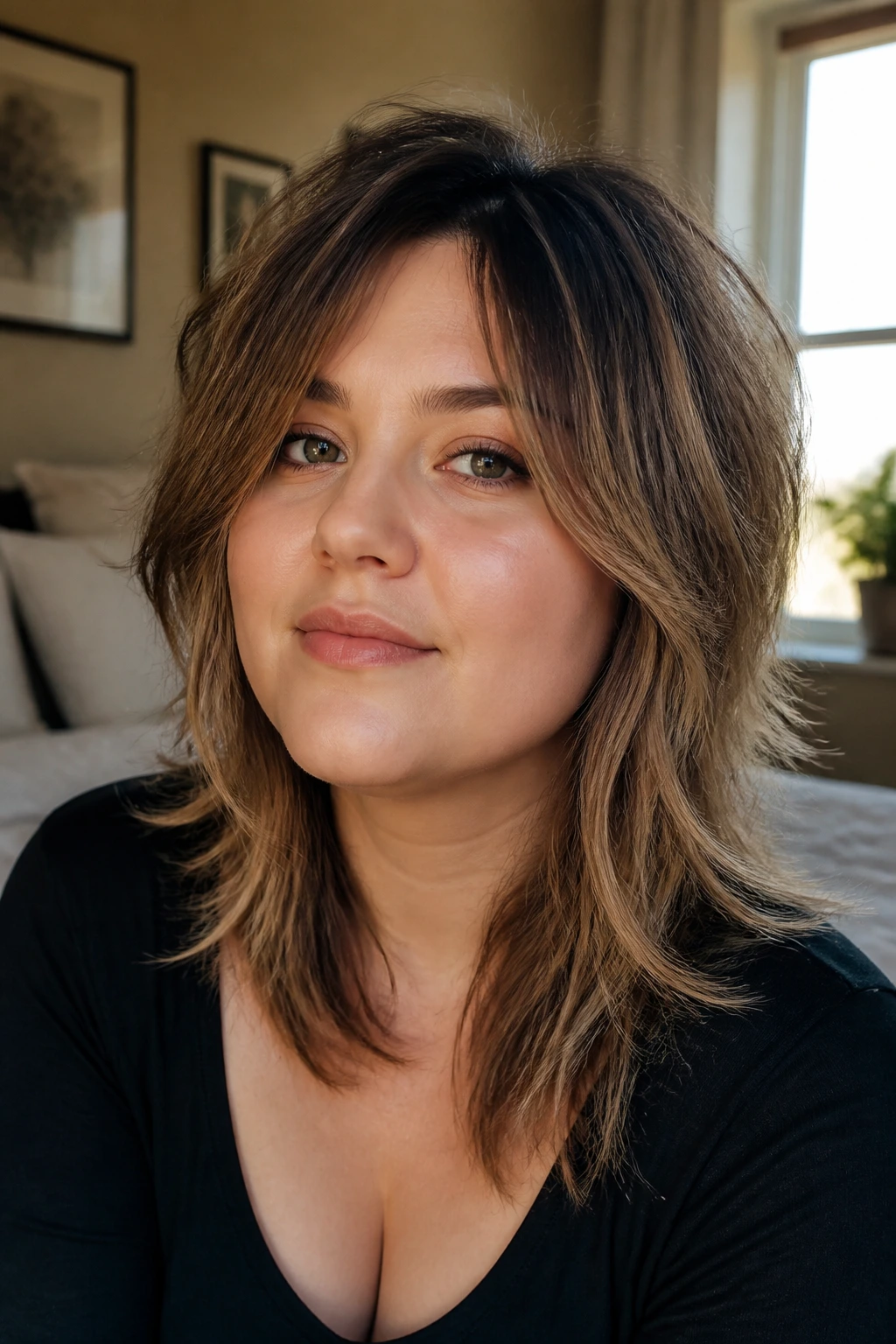
Can a shag work on a round face? Yes, if the layers are placed with some care. The trick is to avoid too much width at the cheeks and instead build vertical movement that draws the eye down.
This version uses longer front layers, a slightly off-center part, and a softer crown. That combination keeps medium length hair from puffing out at the sides. The cut still has texture, but it shapes the face rather than just sitting around it.
What to Ask Your Stylist
- Keep the shortest layers below the widest part of the cheek
- Add face-framing pieces that fall past the jaw
- Avoid overly blunt bangs unless you want more width
A middle part can work too, but it’s the layering that matters most. If the front is too short, the face can look wider than you want. Longer pieces solve that neatly.
This is one of those cuts that benefits from a little asymmetry. A tiny off-center part, a side sweep, or a bend on one side can make a big difference.
22. Square-Face-Softening Shag
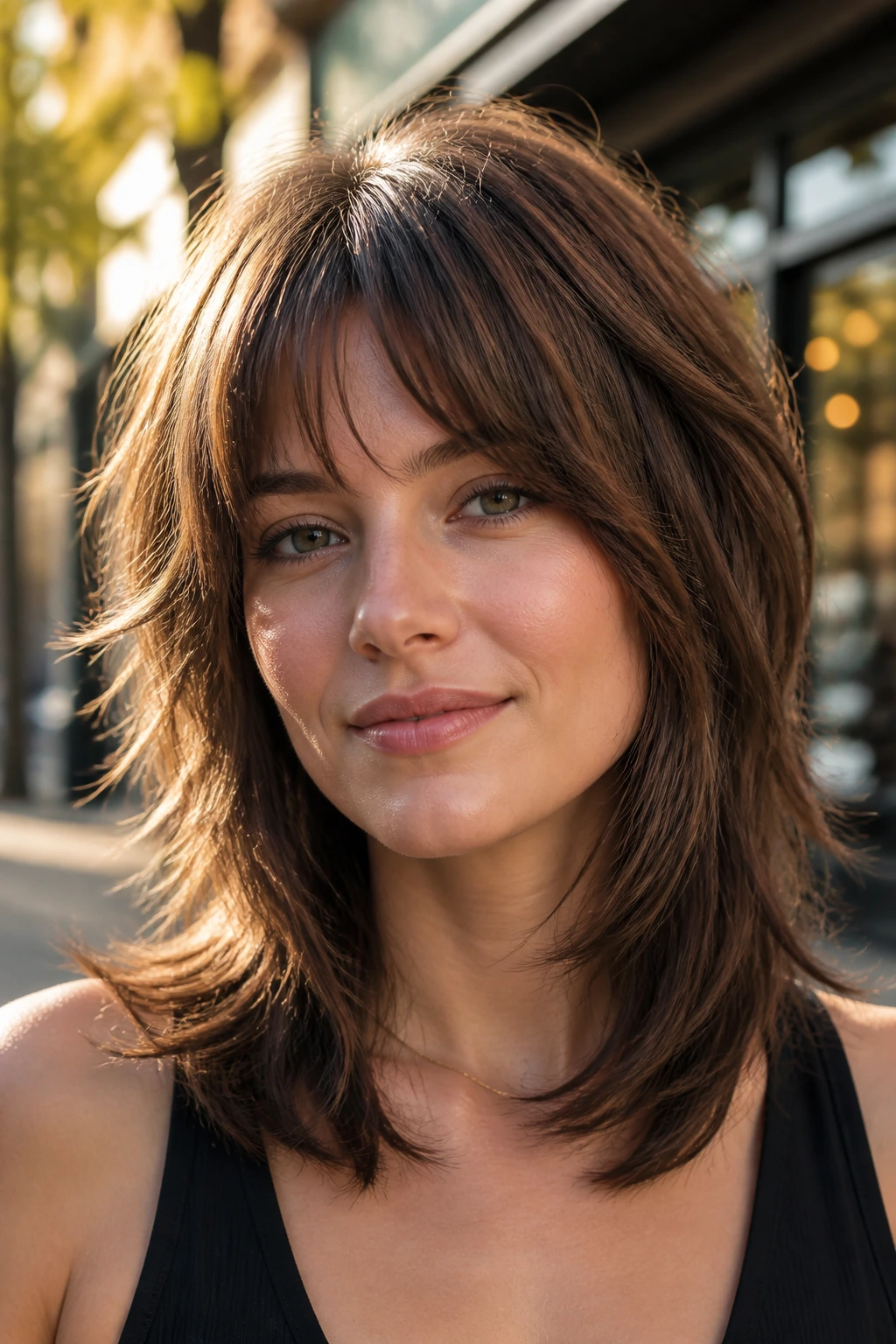
Sharp jawlines and strong angles can look incredible with a shag, but the layers need to soften, not fight, the shape of the face. That means curved front pieces, some movement around the temples, and a fringe that isn’t too straight.
A square face often looks best when the shag adds texture high up and softness around the jaw. Medium length hair gives you enough room to do both. The hair should skim, not box in, the lower half of the face.
I’d avoid a hard blunt line at the chin. That can make the jaw look heavier. Instead, go for feathered layers that land slightly below it and move outward when styled. That keeps the shape relaxed.
This cut is nicer with a bit of wave, but straight hair can wear it too. A medium barrel iron and a soft brush-out will keep the front from looking severe. The whole point is to soften the edges without making the haircut mushy.
23. Oval-Face Shag with Balanced Layers
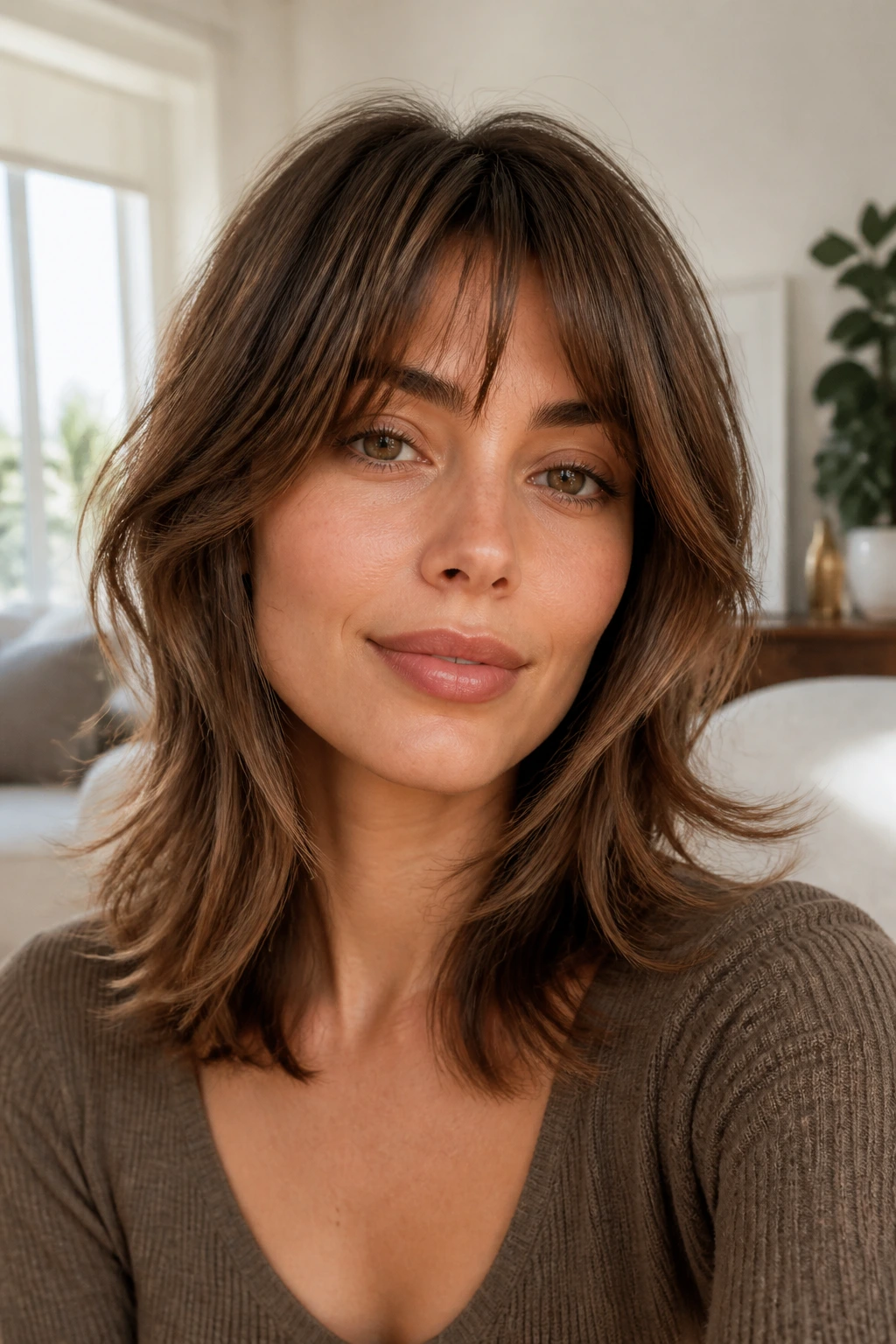
Oval faces can wear almost anything, which is unfair in the best possible way. Still, a shag that keeps the layers balanced around the face tends to look especially easy on this shape, because it doesn’t interrupt the natural proportions.
Medium length hair gives an oval face a lot of room to play. You can keep the bangs longer, go shorter at the crown, or add more movement at the ends without throwing the whole cut off. That flexibility is useful, but it can also lead to boring hair if nobody makes a decision.
A balanced shag should keep weight through the sides while letting the top move. Too many short layers and the face can look longer than you want. Too little layering and the haircut loses its shag identity.
This is one of the few face shapes where you can lean into the style choice you actually like instead of chasing correction. That freedom is nice. Use it.
24. Diamond-Face Shag with Cheekbone Focus
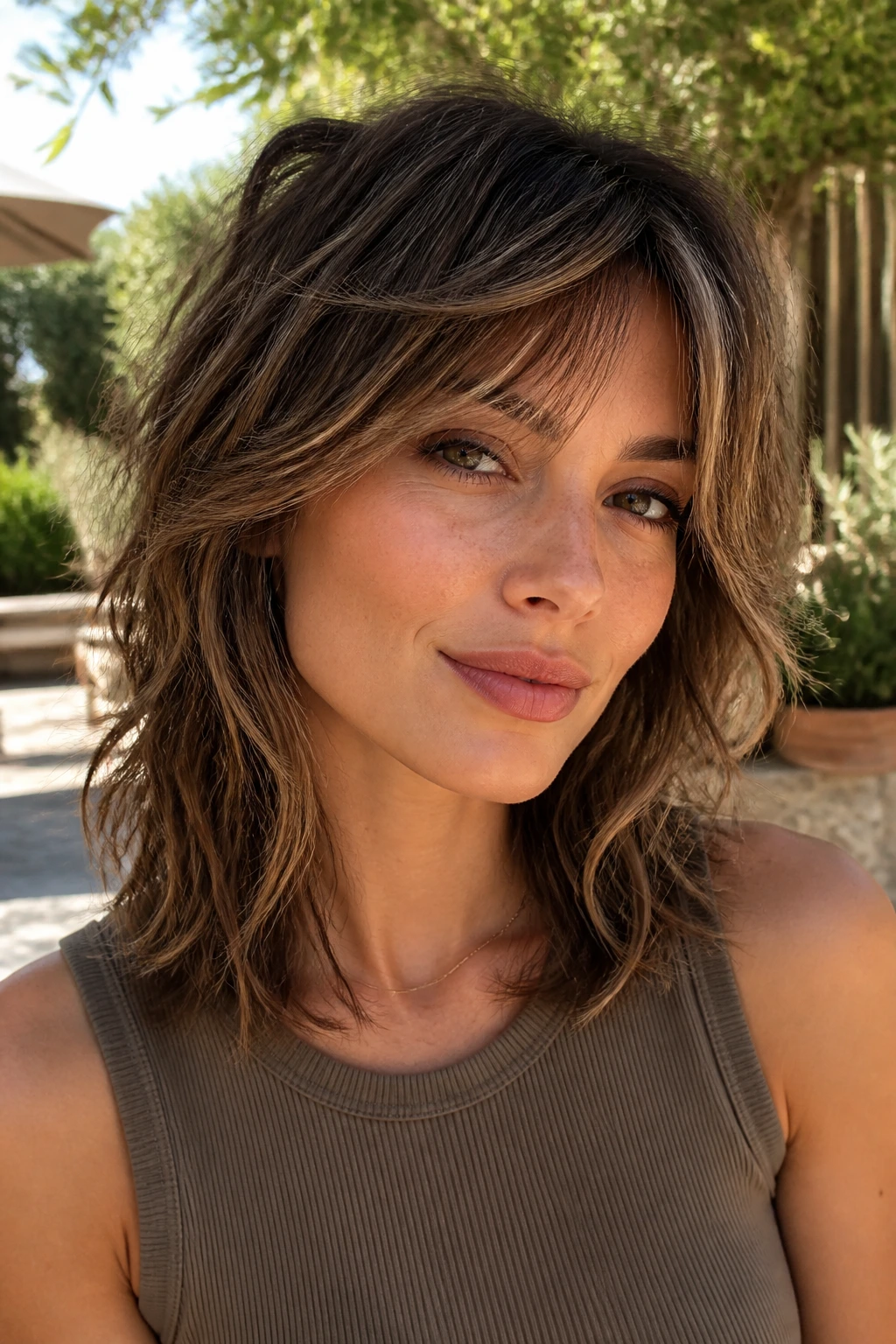
Diamond-shaped faces have strong cheekbones and narrower foreheads and chins, so the shag works best when it puts emphasis right where the face is already interesting. That means layers that start near the cheekbones and soften outward.
Medium length hair suits this beautifully because it gives the face room to breathe without hiding those angles. A long fringe, curtain pieces, or a side sweep can add width at the forehead, while the layers around the jaw keep the lower half balanced.
The worst mistake here is cutting all the interest too low. If the texture sits only near the ends, the cheekbones lose their frame and the haircut starts feeling bottom-heavy. Put the movement up higher.
I like this cut with a little shine spray or a smoothing cream on the front pieces. Not much. Enough to keep the shape visible, not so much that the layers collapse.
It’s a flattering shape. Strong, but not harsh.
25. Low-Maintenance Shag That Grows Out Cleanly
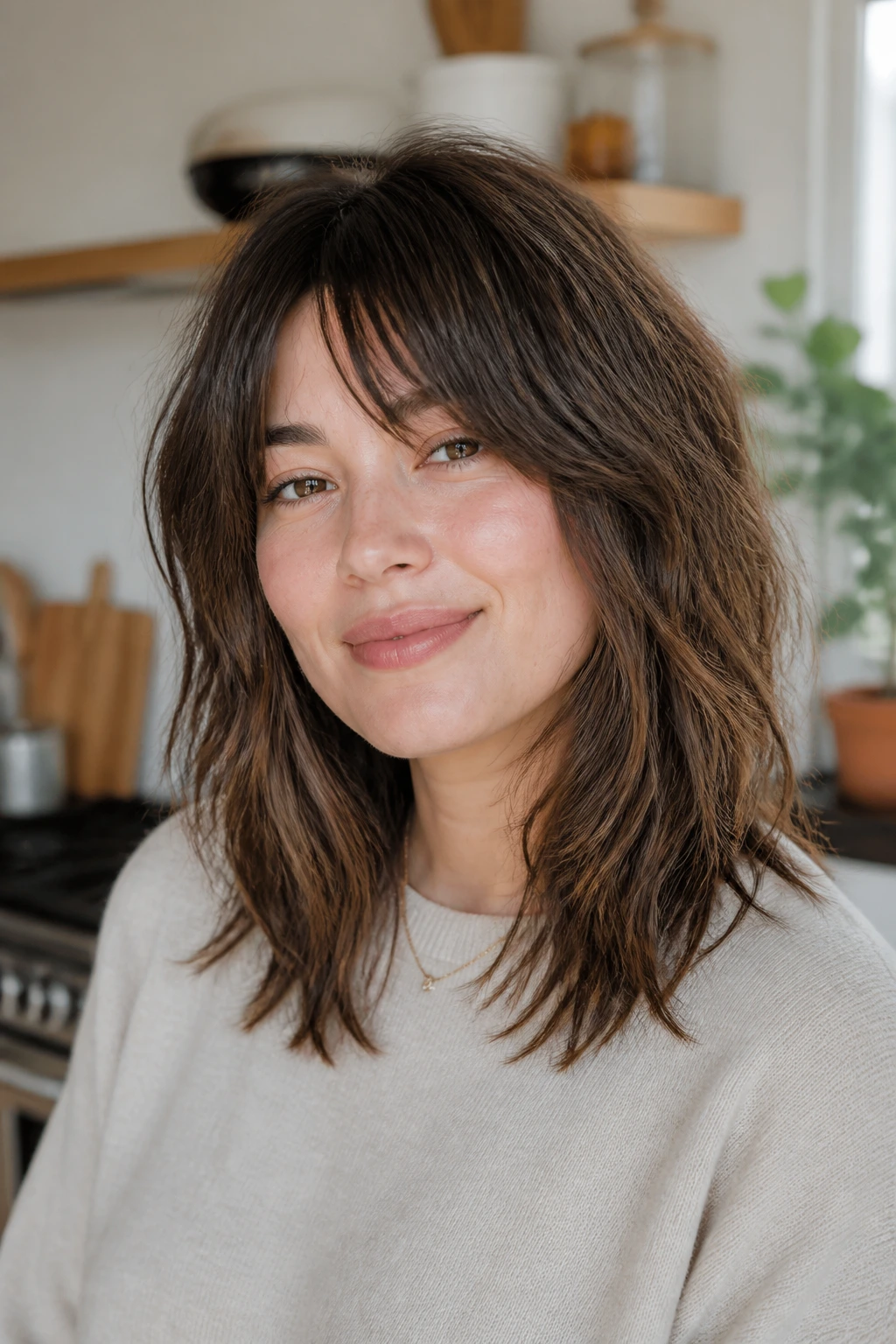
The low-maintenance shag is the one I’d recommend to anyone who wants the look but does not want to live in the salon chair. It keeps enough layering for movement, but the shape grows out in a way that still looks like a haircut, not an apology.
This version is especially good on medium length hair because the length itself hides some of the grow-out. The fringe can soften into curtain bangs, the layers can settle, and the perimeter stays usable for months if the cut was done with a steady hand.
Ask for layers that blend into the ends instead of jumping from short to long all at once. That single choice makes the grow-out much easier. You can style it messy, smooth, or somewhere in between, and it keeps its shape without demanding a perfect blowout every day.
If you’re not sure what kind of shag to get, this is the safest place to start. It gives you the texture, the movement, and the ease, without locking you into a haircut that feels high-maintenance the second you skip a wash day.
