



Long Asian hairstyles for women work best when they respect the hair’s actual behavior, not some glossy fantasy version of it. A pin-straight center part, a soft braid, a low bun with face-framing pieces — each one gives long hair a different mood, and the difference usually comes down to shape, finish, and where the weight lands.
Hair across Asian communities is not one thing. Some women have glassy straight strands that fall like ribbon; others have thick, coarse lengths that need layers so the ends do not look heavy and blunt. Some hair is fine but dense, which sounds contradictory until you’ve tried to blow it out and realized the whole head has opinions of its own.
The styles that keep winning are the ones with a clean outline and a little movement where it matters. A blunt line can look strong. A curl at the end can stop very long hair from feeling flat and stubborn.
Length alone is not the look.
1. Sleek Center-Part Hair for Long Asian Hairstyles
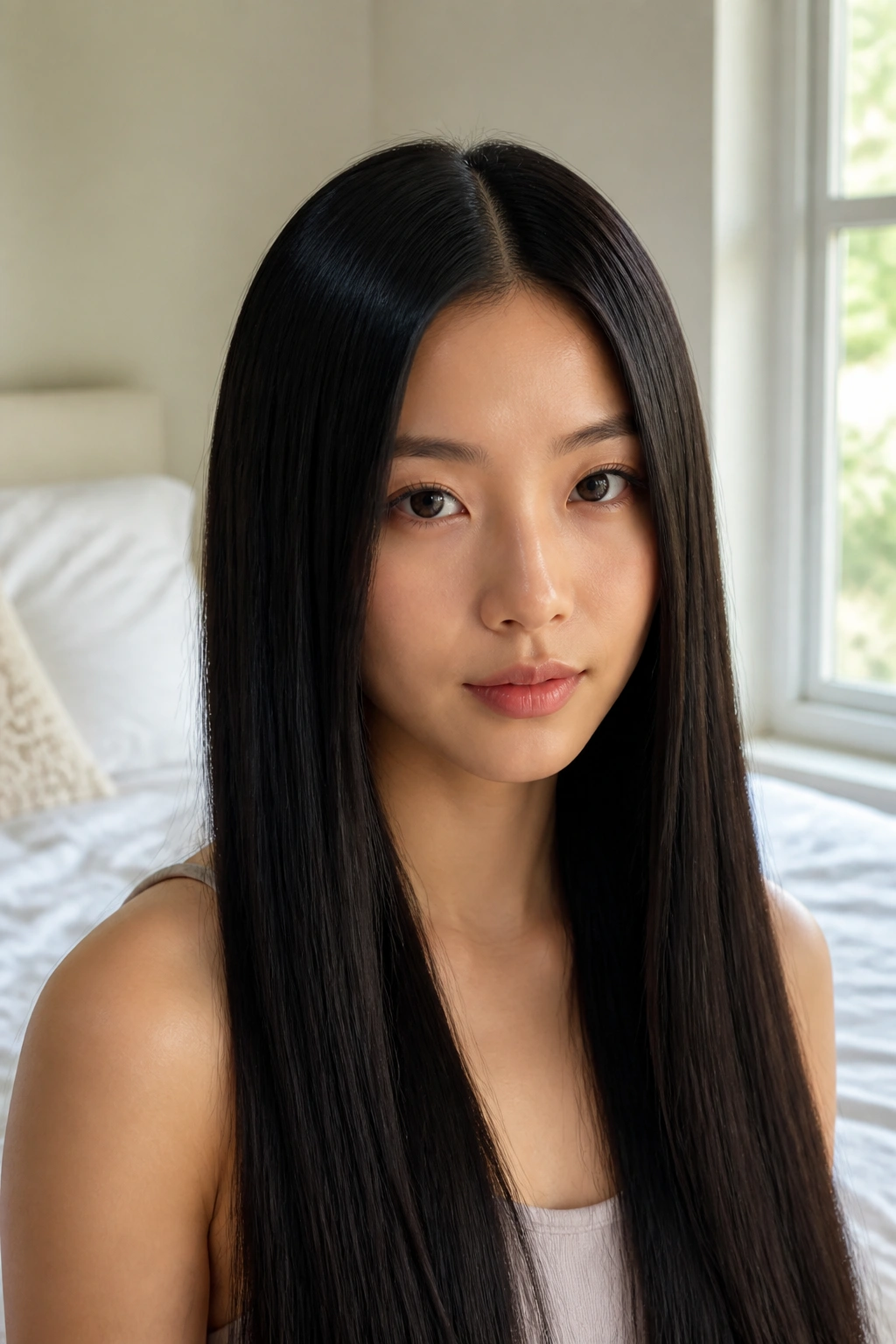
A clean center part is the quiet power move here. It turns long hair into something sharp and deliberate, and it works especially well when the strands already fall straight or almost straight.
Why It Looks So Good
The appeal is simple: nothing fights the hair’s natural line. If your lengths are smooth, a middle part makes the whole shape feel longer and more polished. It also gives you a straight frame around the face, which helps balance heavy cheekbones, a rounder face, or a very full mane that needs a bit of order.
Quick Styling Notes
- Blow-dry with a flat paddle brush for the smoothest base.
- Run a flat iron through 1-inch sections only once or twice.
- Finish with 1 to 2 drops of lightweight serum through the mids and ends.
- Keep the roots clean; too much oil up top kills the whole point.
Skip heavy cream near the scalp. That’s the fastest way to make this style look flat instead of sleek.
2. Soft Curtain Bangs With Long Layers
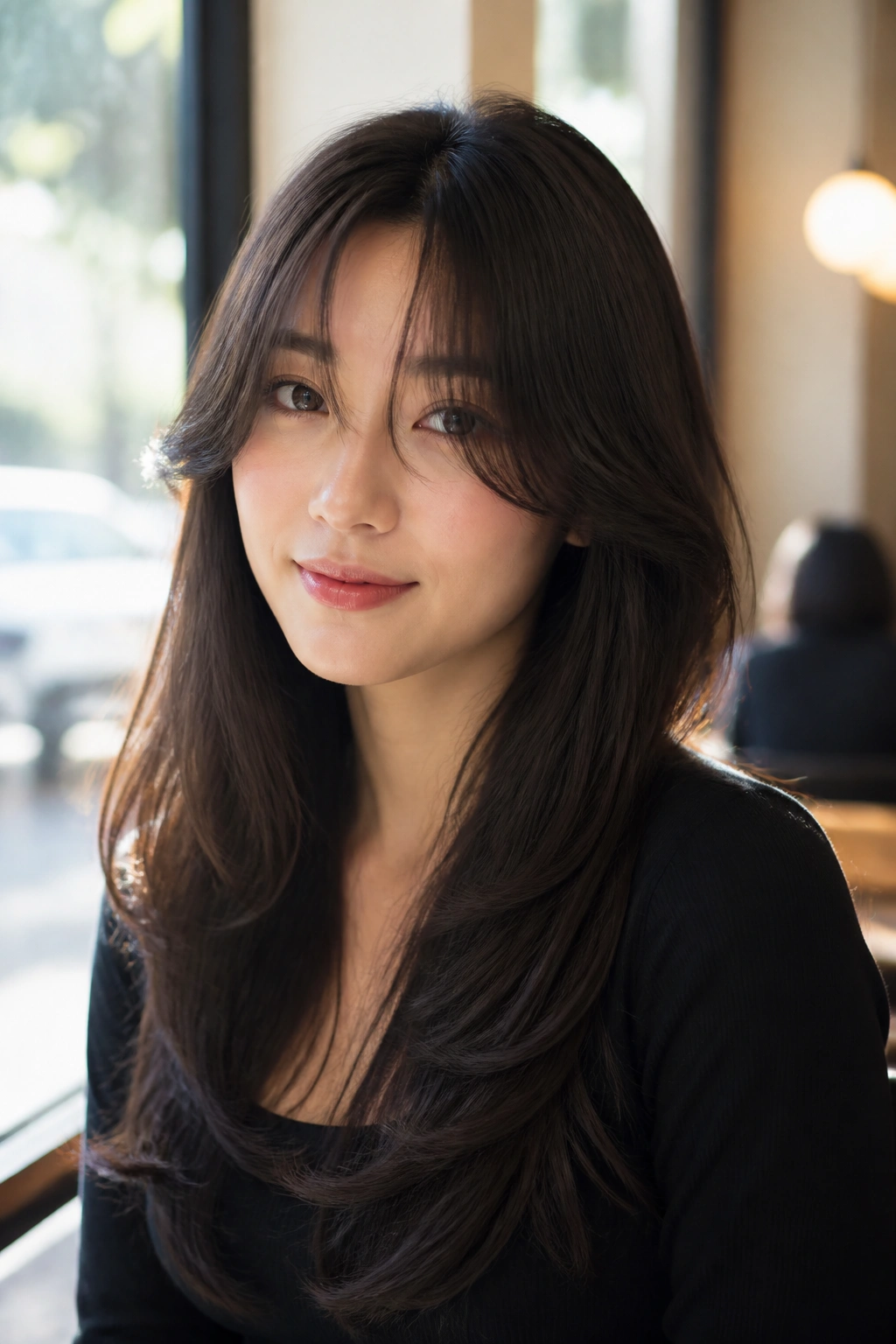
Want the easiest way to make long hair feel lighter without losing length? Curtain bangs do a lot of the work for you. They soften the front, break up a dense curtain of hair, and give the face a little movement even on days when the rest of the style stays simple.
The best version starts with bangs that hit somewhere around the cheekbone and drift outward into long layers. That shape matters. If the shortest pieces are cut too high, you end up with a fringe that feels fussy. If they’re too long, you lose the frame and the whole style just looks like grown-out bangs.
I like this look on women who wear their hair down most of the time but still want a bit of shape around the face. It’s especially good with straight or slightly wavy hair, because the bend at the front keeps the lengths from looking severe. A round brush and a quick blow-dry at the roots usually do the trick.
3. Half-Up Claw Clip Twist
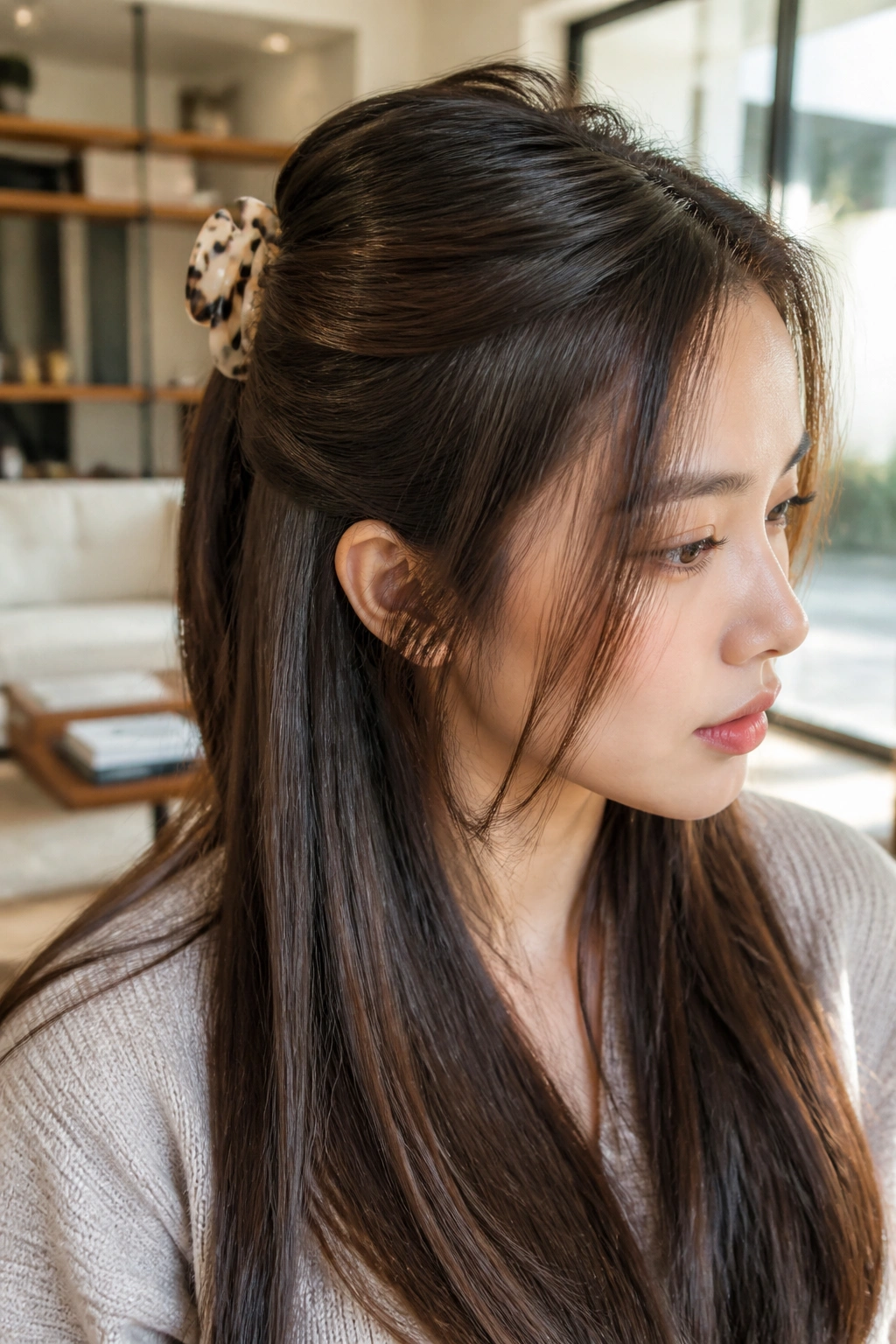
On rushed mornings, the claw clip earns its keep. Pulling the top half of long hair back with one twist gives you lift at the crown, keeps the front out of your face, and still lets the lengths hang down where they can show off shine.
How to Keep It From Slipping
The trick is not grabbing too much hair at once. Take the section from temple to temple, twist it once or twice, then clip it slightly higher than you think you need. Long hair needs space in the clip, and the bigger the hair, the more you’ll want a medium-to-large claw with strong teeth.
Small Details That Matter
- Works best on second-day hair or hair with a little texture.
- Use a small mist of dry shampoo at the roots if the top is too silky.
- Leave two face-framing pieces out if you want a softer finish.
- Choose a clip that is at least 4 inches across for thick hair.
Nope, it is not fancy. That’s the charm.
4. Low Braided Ponytail at the Nape
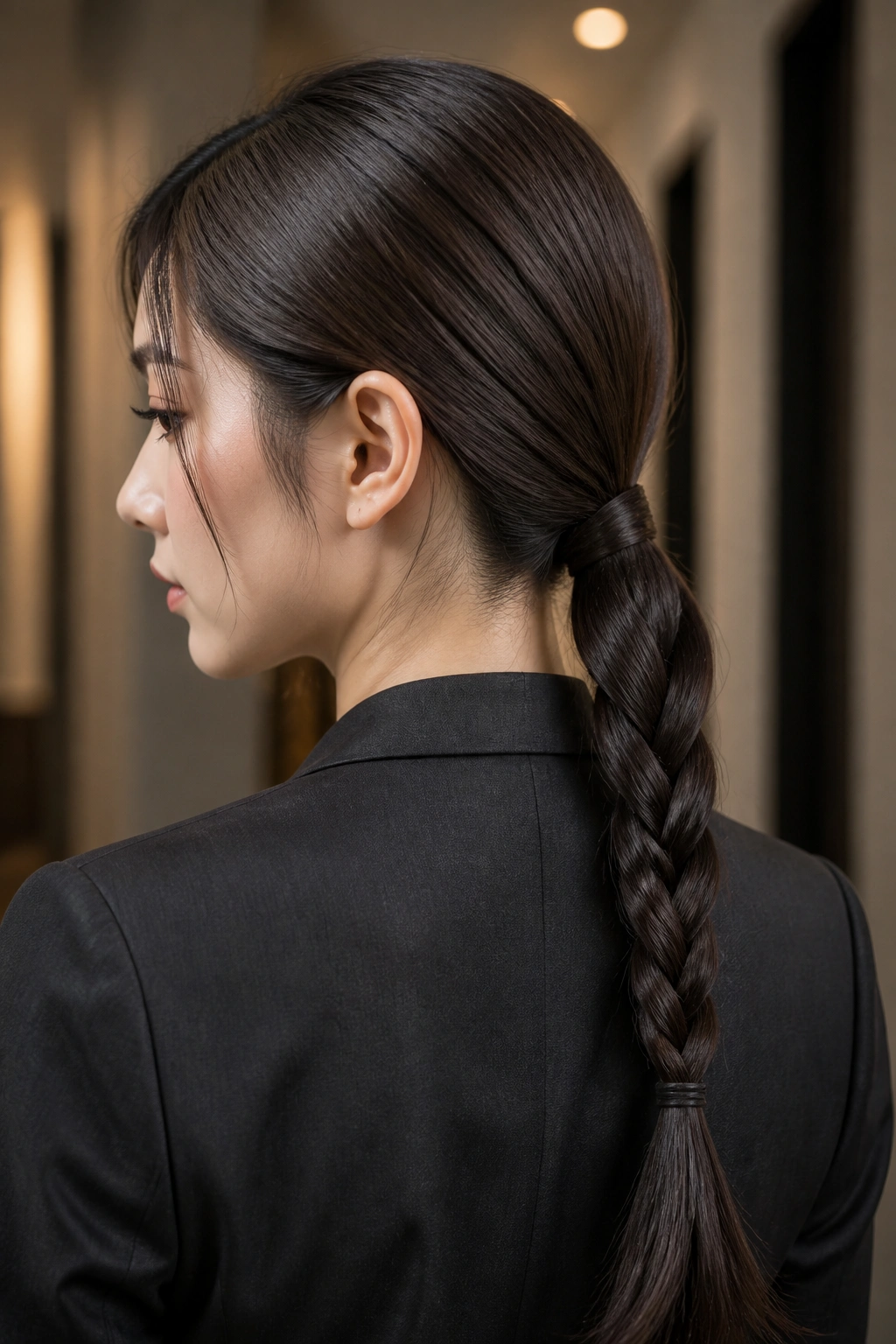
A braid can look polished, not childish, when you anchor it low. Put the ponytail at the nape, smooth the crown with a brush, and braid the length all the way down so the style stays neat instead of bouncy in a school-uniform way.
This one is useful when you want your hair contained but not severe. It sits close to the neck, so it feels calm and tidy, and it also works well under coats, scarves, or a collar with a sharp line. Long, thick hair does especially well here because the braid has enough weight to look full. Fine hair can still wear it, but a little texturizing spray helps the braid hold its shape.
If you want the braid to look thicker, gently tug the outer loops after tying it off. Just a little. Too much and it starts to look frayed, which is not the same thing as soft.
5. Loose Waves With a Middle Part
The smell of heat protectant, the soft bend of a 1.25-inch iron, the brush-through at the end — loose waves are one of those styles that look easy because the finish is relaxed, but they still need a steady hand. Straight long hair can feel heavy and one-note; waves break that up without making the whole look feel overstyled.
I prefer this on hair that sits somewhere between straight and wavy already, because it holds shape without a fight. Start with a center part, curl away from the face on one side, then switch direction on the next section so the waves do not all stack in the same pattern. Leave the last inch or so of the ends straighter if you want a more modern look. Old-school corkscrew curls at the bottom can feel too round on very long hair.
Let the waves cool before touching them. Then rake through them with fingers or a wide-tooth comb. That tiny wait makes a bigger difference than people think.
6. High Ponytail With a Wrapped Base
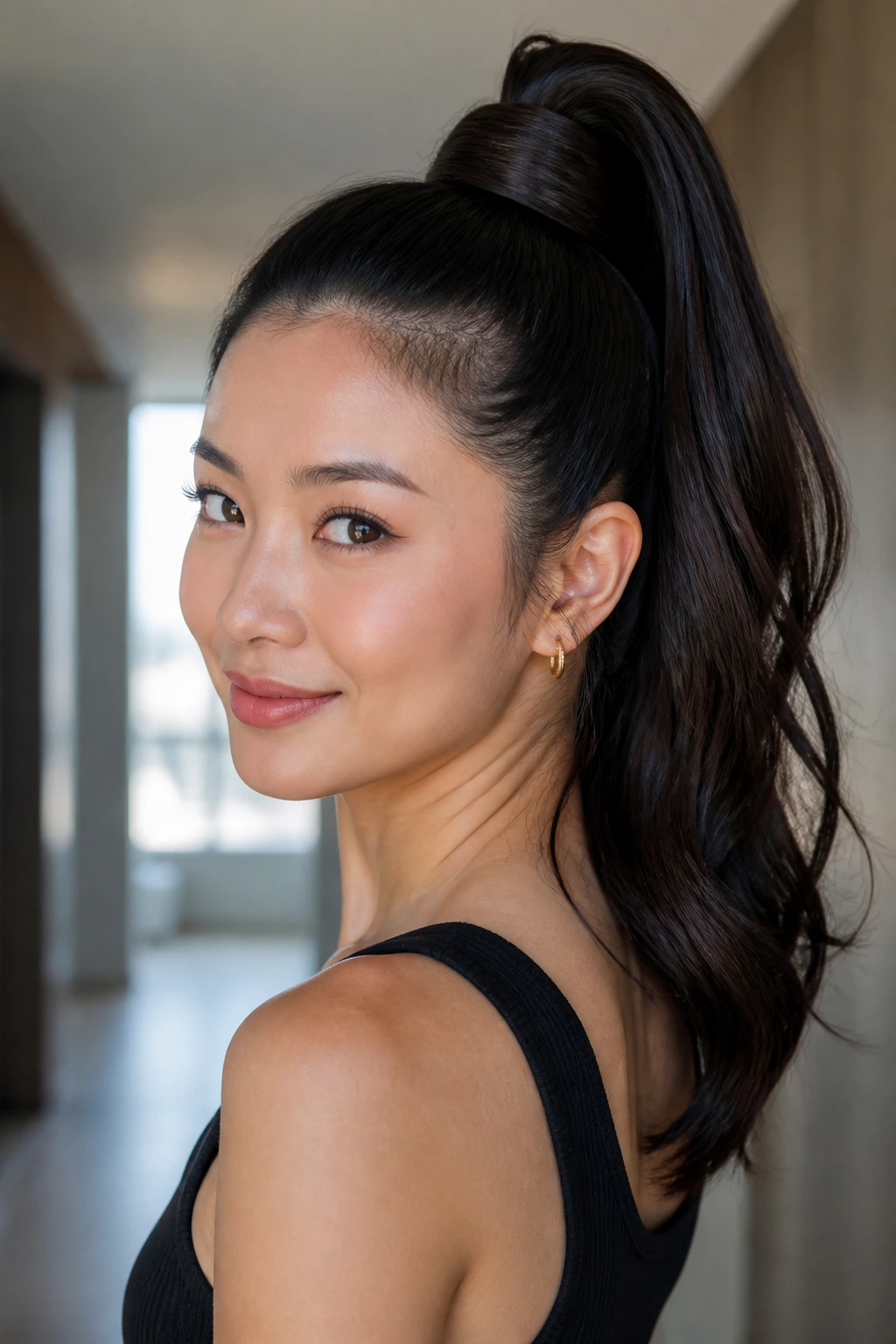
Lift at the crown changes everything. A high ponytail pulls the face upward, shows off cheekbones, and turns long hair into something clean and energetic instead of heavy.
This is the style I reach for when the rest of the hair is not cooperating and I still want the head shape to look intentional. Smooth the hair with a boar-bristle brush, gather it at the highest point that still feels comfortable, and fasten it with a strong elastic. Then take a thin strand from underneath, wrap it around the base, and pin it discreetly beneath the ponytail.
A high ponytail is not just for workouts. With a glossy finish and a tight wrap, it looks sharp enough for dinner, and with a little texture through the ends it reads more casual. If your hair slips easily, a dusting of texture spray at the roots gives the elastic something to grab.
7. Butterfly Layers for Long Asian Hairstyles
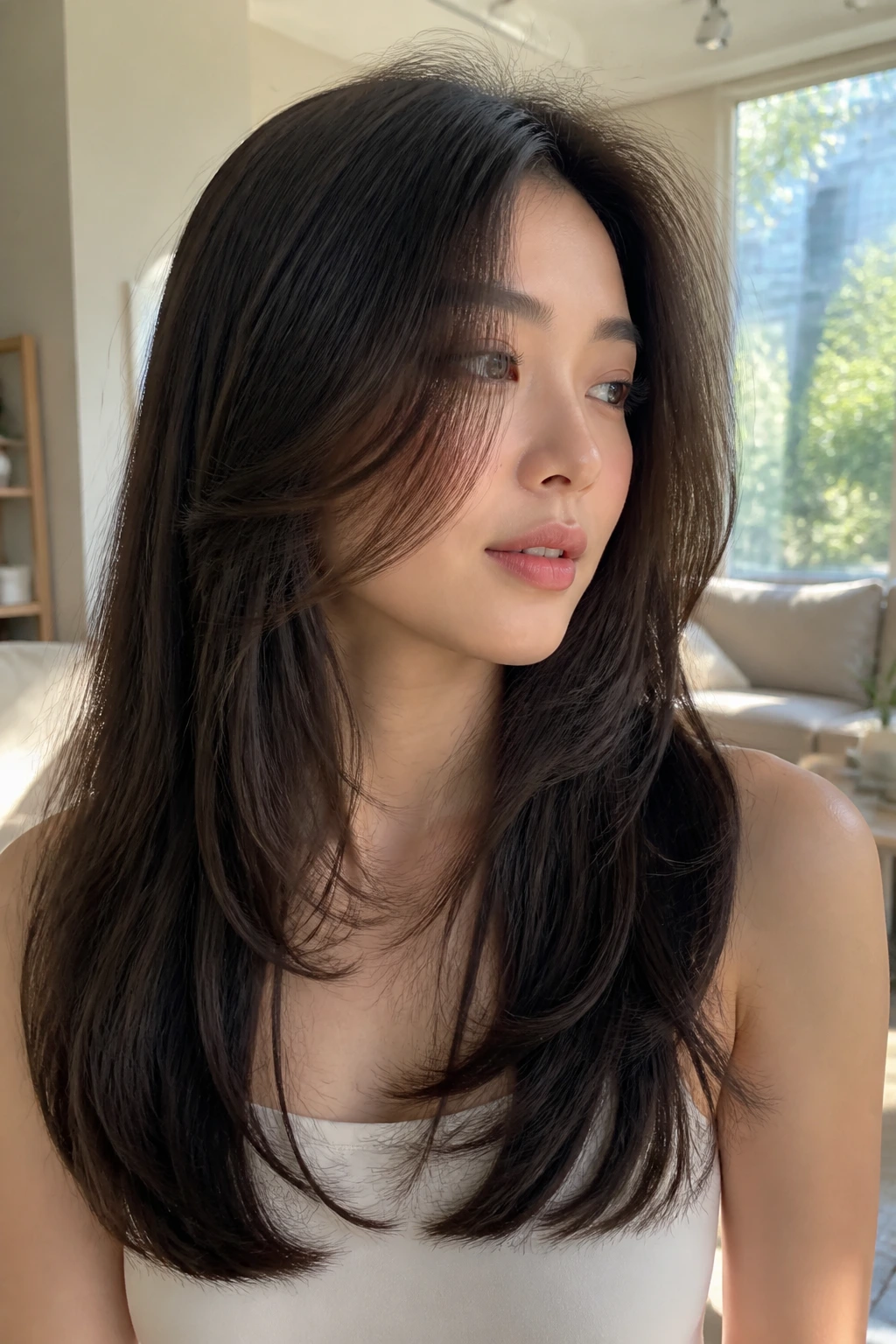
Butterfly layers are for people who want movement without giving up length. The cut keeps the bottom long and full, while the shorter face-framing layers open the front and stop the whole head of hair from feeling like one heavy sheet.
What to Ask Your Stylist
Ask for layers that start around the chin or collarbone, then blend downward so the ends still look thick. That part matters. If the shortest pieces are chopped too high, the cut loses its softness and starts acting more like a shag. If the ends are over-thinned, the length can look wispy in a bad way.
Why It Works
The butterfly shape gives you two looks in one. Hair looks airy when it is worn down, but it still reads long and full from the back. That makes it one of the smarter long Asian hairstyles for women who want shape without a big commitment to short pieces around the face.
If your hair is thick, ask for internal weight removal rather than aggressive thinning at the ends. Better silhouette. Less frizz. Less regret.
8. Korean-Inspired Low Bun With Wispy Strands
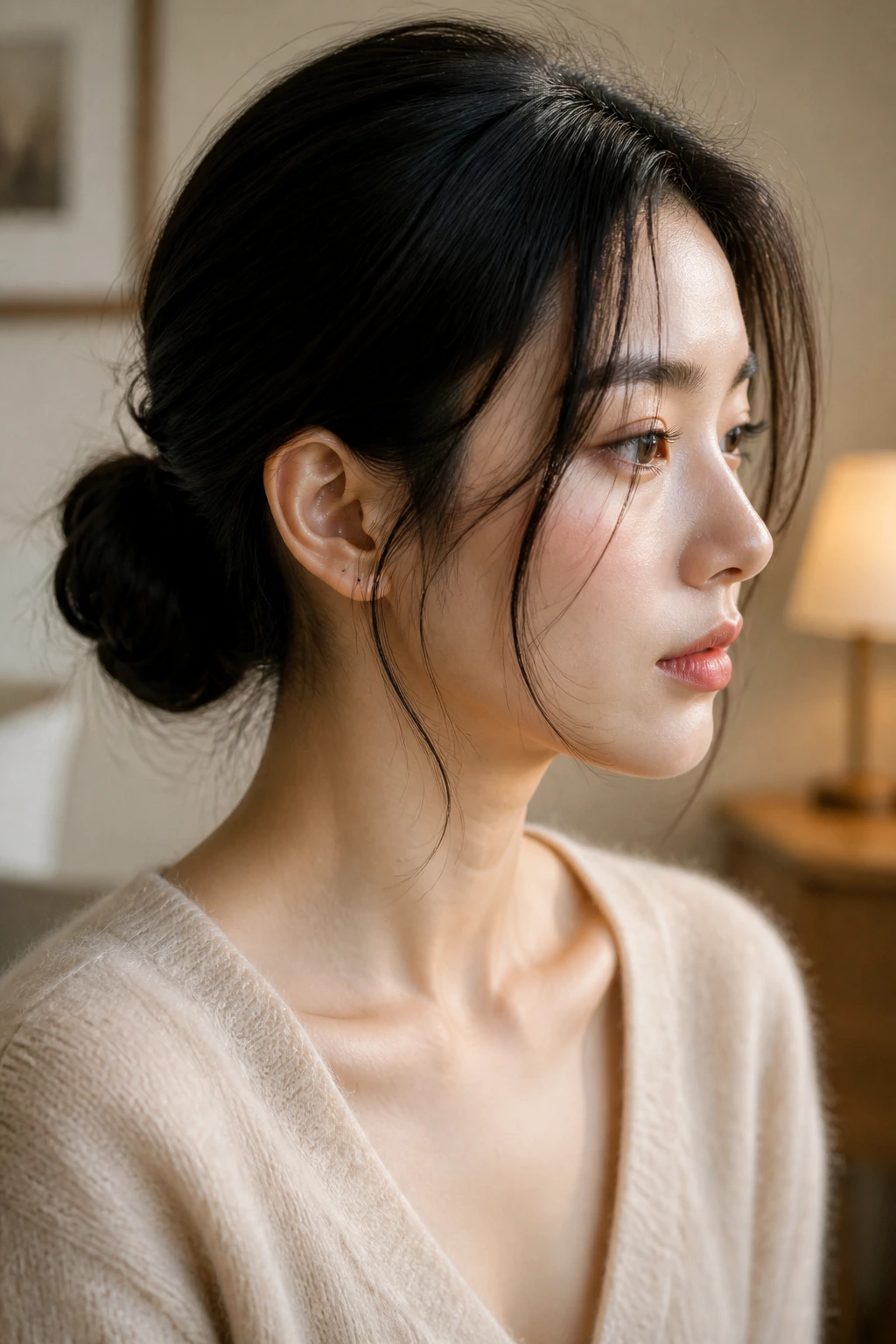
A low bun at the nape always feels a little more elegant than people expect. Keep it smooth at the back, then leave two thin pieces loose near the temples or jawline so the face does not look boxed in.
The appeal is in the contrast. Neat at the back, soft at the front. It works on straight long hair especially well because the surface can be polished quickly with a brush and a little serum, and the bun itself does not need to be perfect to look right. A few pinned twists often look better than one oversized knot.
I like using two or three U-pins instead of one giant hair tie for this. The bun sits flatter, and the shape lasts longer without that lumpy feel some elastic-heavy buns get. Curl the loose front pieces just a touch if they fall too straight; the bend keeps them from sticking to the face.
9. Hime Cut With Long Length
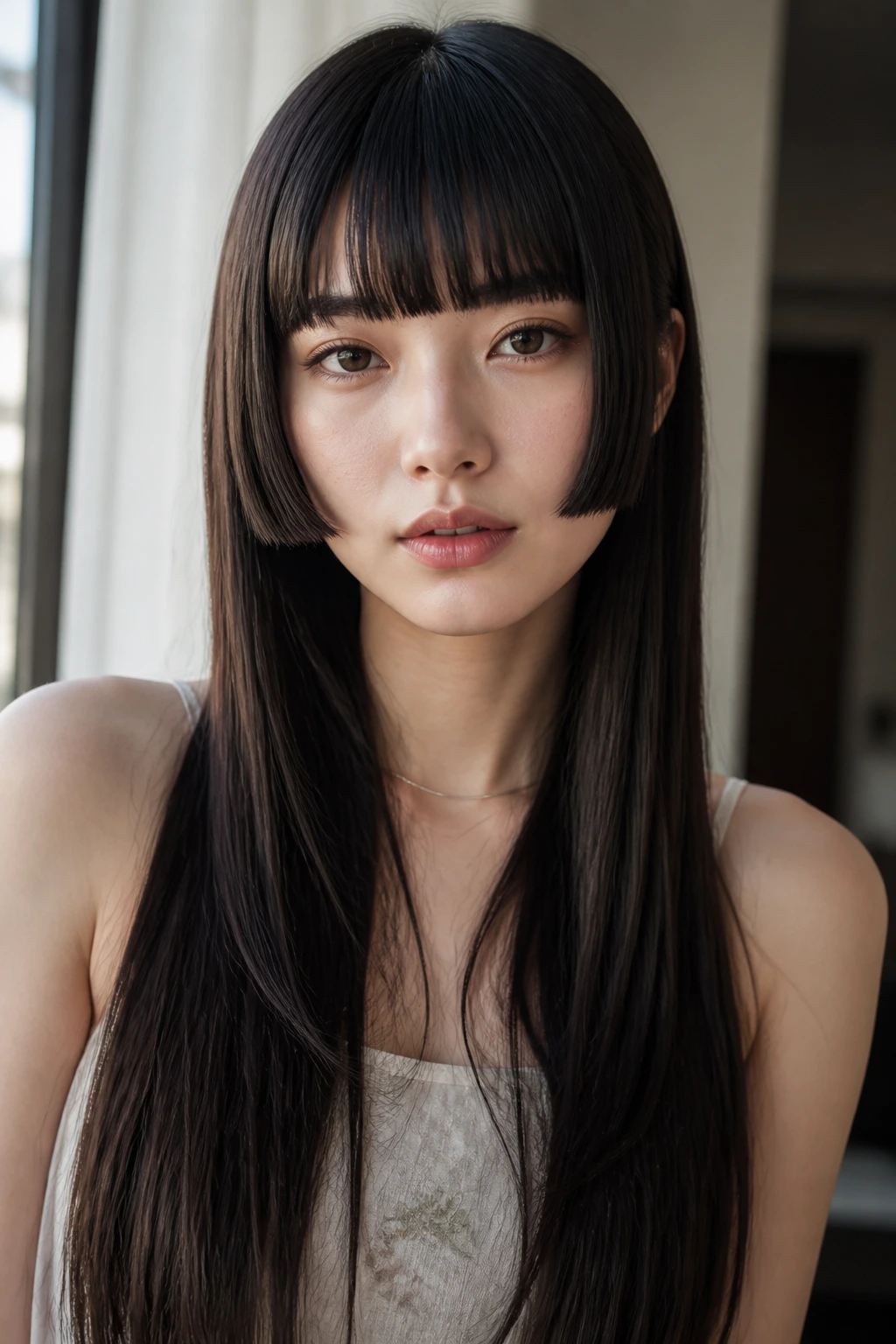
Are you ready for a cut that commits all the way? The hime cut is blunt, graphic, and unmistakable: straight fringe, shorter side pieces near the cheekbone, and long lengths left intact behind them.
It looks especially striking on very straight hair, because the lines stay crisp. That said, it is not a lazy style. The side pieces need regular shaping or they grow out awkwardly and lose the point of the cut. If you hate getting trims, this one will probably irritate you.
Who It Suits
- Women who like strong, structured shapes
- Straight or easily smoothed hair
- Faces that benefit from a sharper frame
- Anyone who wants a style that feels a little bold without sacrificing length
The hime cut is not for everybody. That is partly why it works. When it lands, it lands hard.
10. U-Shape Cut With Face-Framing Layers
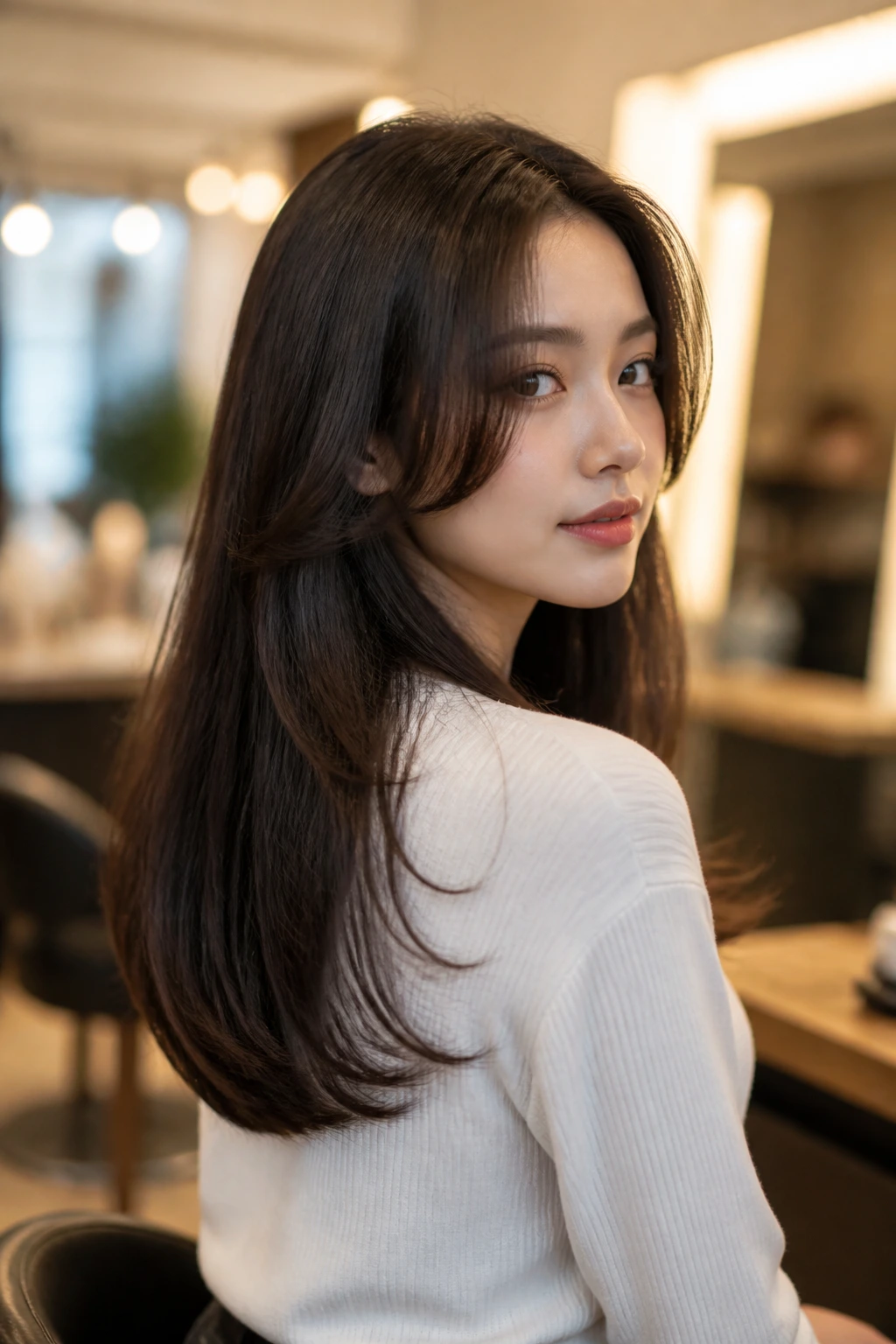
If you want long hair to keep its fullness, the U-shape is one of the safest bets. The perimeter curves gently instead of stopping in one blunt line, so the back looks rounded and the sides fall with more softness.
This cut is especially useful for thick hair, because it removes some of the blocky feeling without making the ends look thin. The face-framing pieces can start around the chin or collarbone, then drift into the longer lengths. Nothing dramatic is required. The shape does the work on its own.
A U-shape also plays nicely with a blowout. The curve at the back shows up when the ends are brushed under or softly flipped out, and the front layers help the face feel less hidden by all that length. Fine hair can wear it too, but I would keep the layers light so the perimeter still looks full.
11. Bubble Ponytail
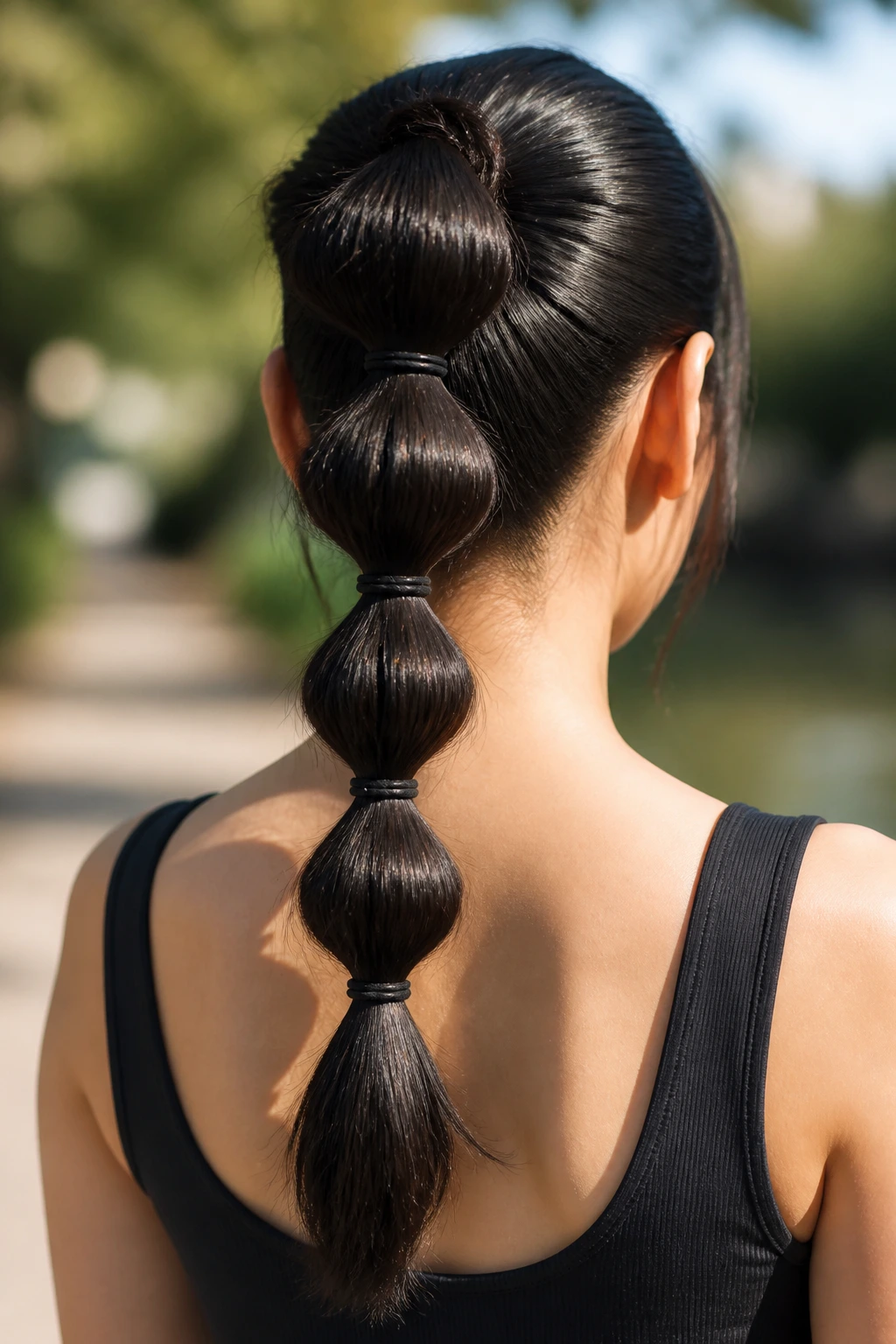
The bubble ponytail looks more involved than it is, which is exactly why people keep using it. You secure the hair into a ponytail, then add small elastics every 2 to 3 inches and gently puff each section outward to create the “bubbles.”
The style suits long hair because the length gives you enough sections to work with. If your hair is very fine, a little backcombing at each bubble helps the shape hold. If it is thick, the bubbles will feel fuller and more dramatic without much help.
Tiny Details That Help
- Tie the first elastic tight enough to hold, not so tight it dents the hair.
- Tug each bubble evenly from both sides.
- Hide the elastic with a thin strand if you want a cleaner look.
- A touch of shine spray keeps the finished shape from looking dry.
It is playful, sure, but it is also practical. Long hair out of the way, with a little attitude.
12. Decorative Long Braid With Hairpin Accents
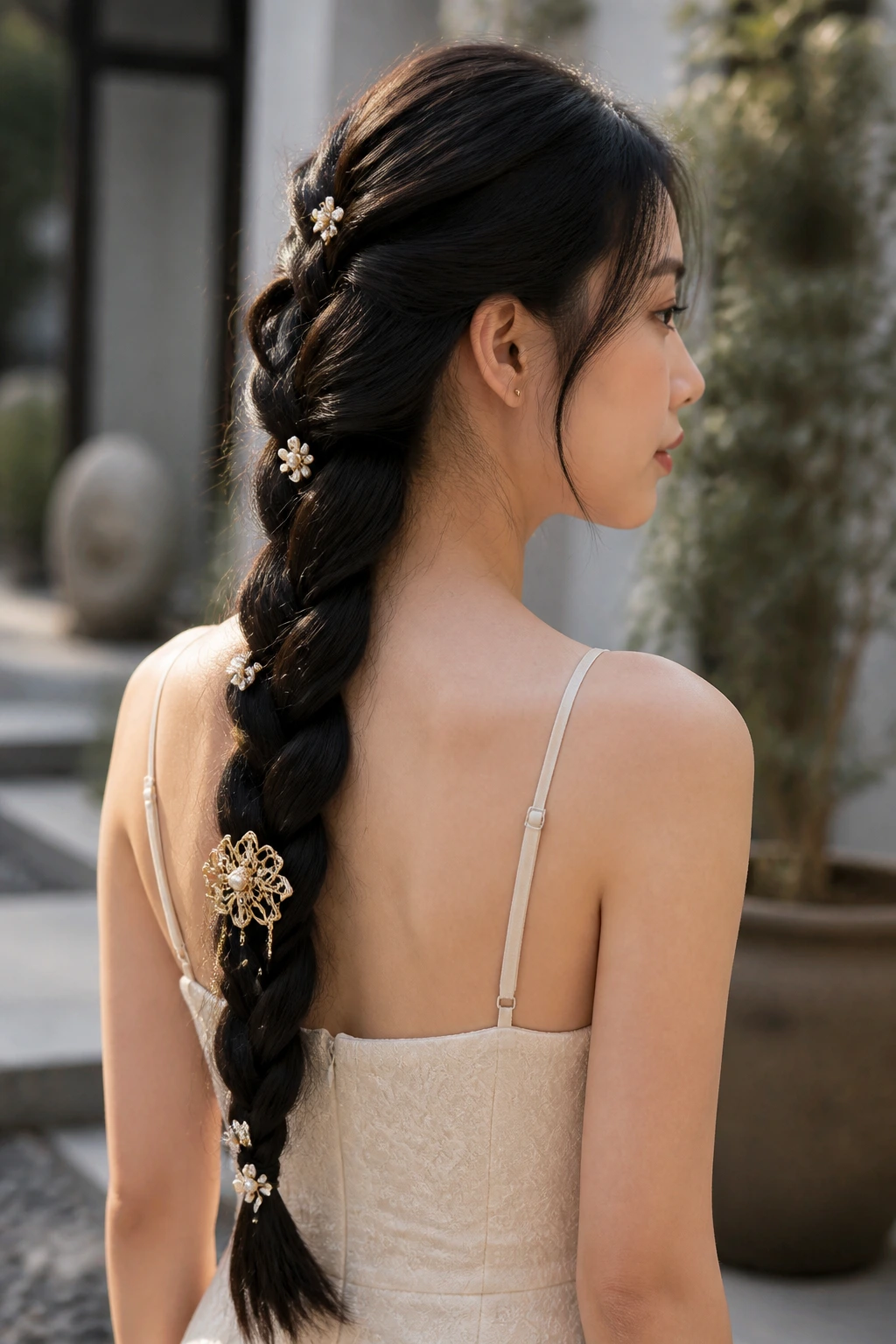
Unlike a plain braid, this version is about placement and finish. A long braid running down the back already gives you structure; add a few small pins, a ribbon, or a single decorative clip, and the whole style feels considered without turning stiff.
I prefer this on hair that has a little grip. Freshly washed, slippery hair can make braids slide apart, especially if the length is very straight. A bit of texturizing spray or dry shampoo at the mids solves that problem quickly. Then braid as usual — three-strand, fishtail, or rope — and fasten the end with a clear elastic.
What Makes It Different
How to Keep It Neat
- Use small pins, not oversized ones that tilt the braid sideways.
- Place the accent near the braid’s middle or lower third.
- Keep the braid snug at the crown and softer at the tail.
- Finish with a light mist of flexible hairspray.
A little shine. A little texture. That’s enough.
13. Shaggy Long Layers With Airy Fringe
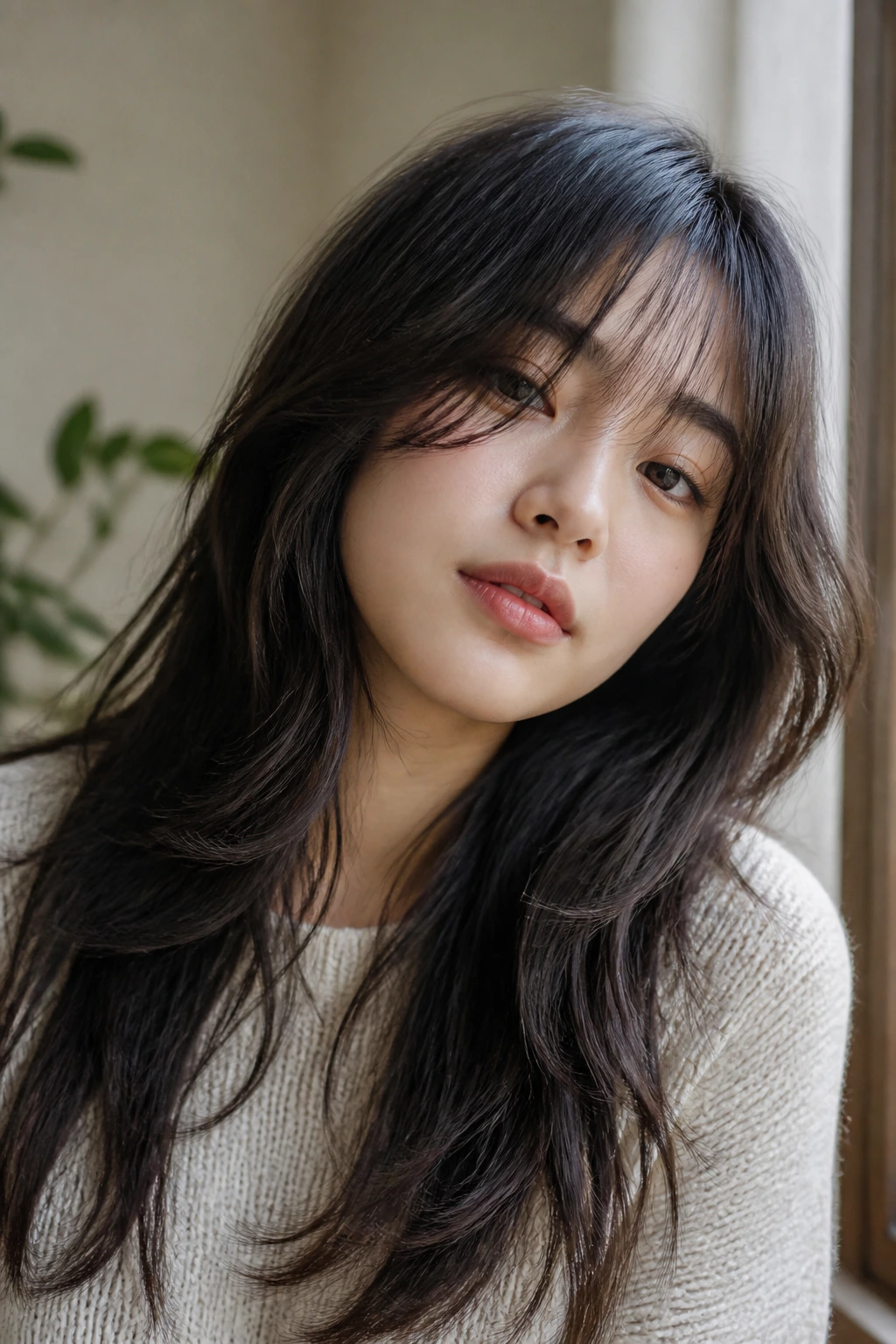
Shaggy layers are the answer when long hair feels too polite. The cut builds movement into the body of the hair, so instead of hanging like one long curtain, it breaks into pieces that shift when you walk.
The airy fringe helps, too. It can be a curtain bang, a wispy brow-grazing piece, or a soft fringe that sits high enough to show the eyes. What matters is that the front is not heavy. If the fringe gets too thick, the whole cut turns muddy.
This style works beautifully on wavy hair, because the texture does half the styling for you. Straight hair can wear it too, but you will want a bit of spray or paste at the ends to keep the layers from collapsing into a flat line. I like this cut when someone wants long hair with a little edge but does not want to lose the fact that the hair is still long. That balance is the whole point.
14. Deep Side Part and Glassy Blowout
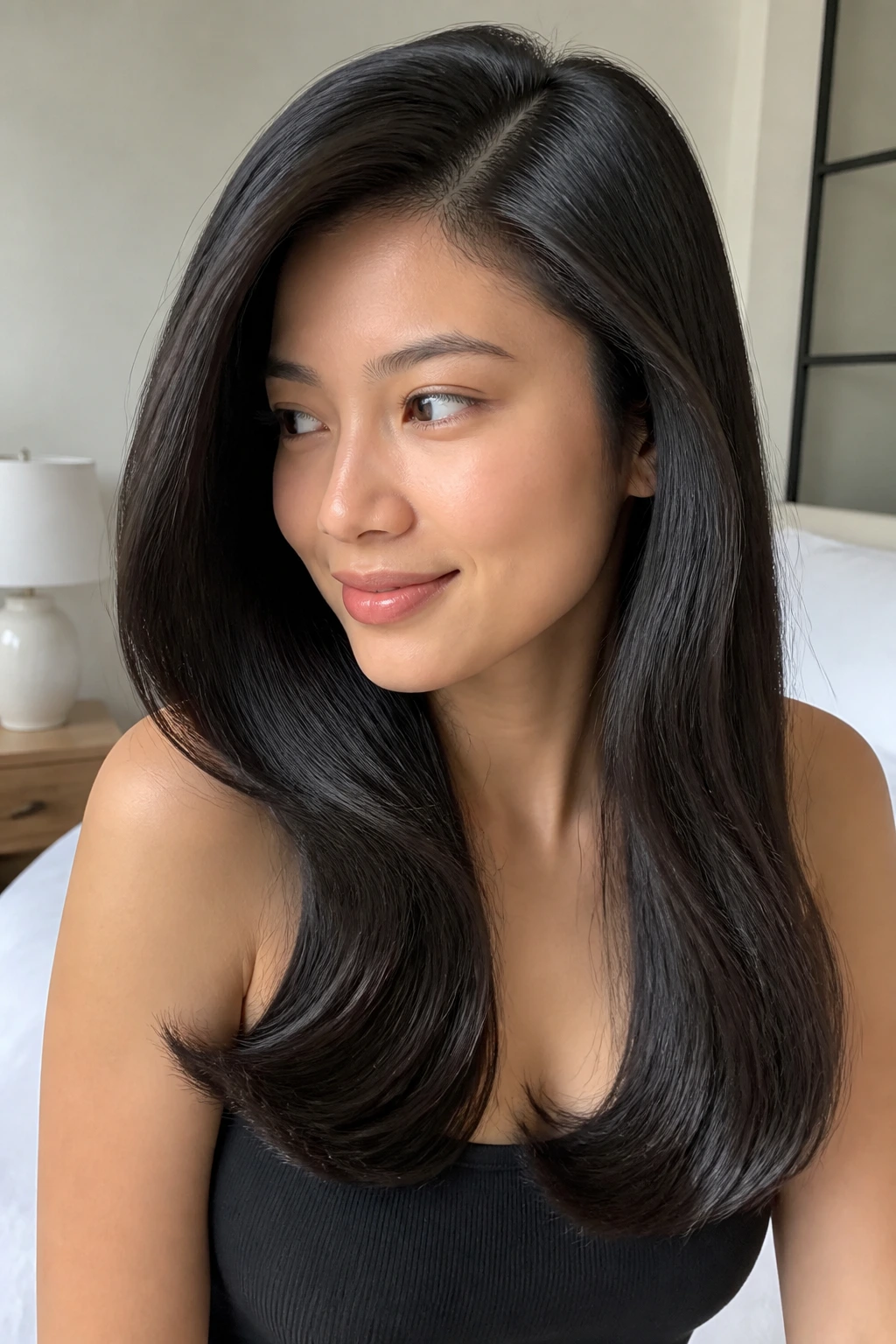
Need a style that changes the whole face with almost no extra work? A deep side part does exactly that. It creates instant lift on one side, sweeps the hair across the forehead, and gives long lengths a sense of movement before you even touch a curling iron.
The blowout is what makes it feel finished. Use a large round brush, aim the roots up and away from the scalp, and flip the ends under or out depending on the mood you want. A cool shot at the end helps lock the bend in place. Then finish with a tiny mist of shine spray from about 8 inches away. Too close, and the hair can look wet instead of glossy.
What the Finish Should Feel Like
The surface should feel smooth, not sticky. If your brush starts catching, you used too much product or your sections were too big. Slow down and rework the crown first; that’s where the part either looks crisp or falls apart.
15. Half-Up Knot With Curled Ends
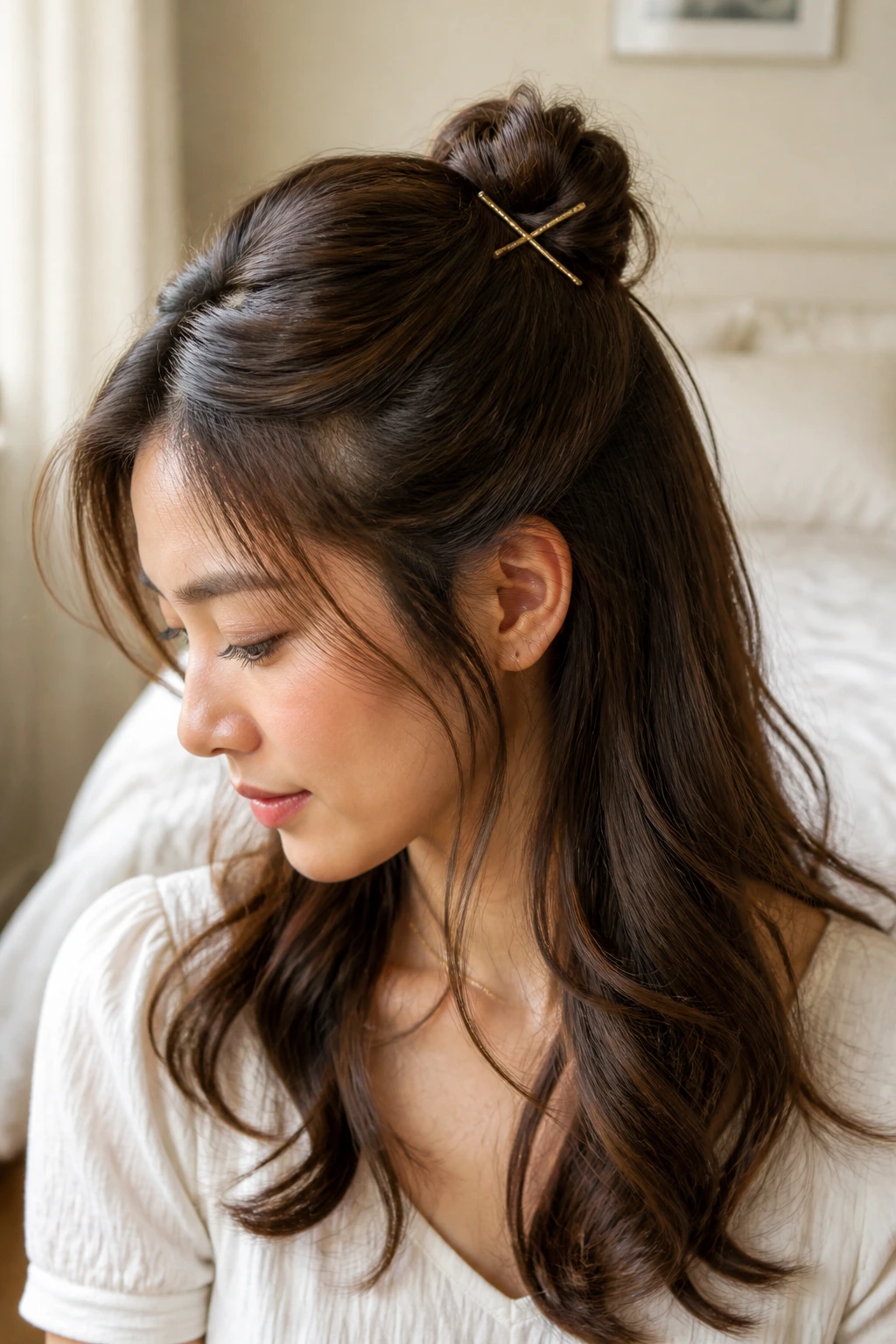
A half-up knot is a nice middle ground when you want some hair down but not all of it in your face. Pull back the top section, twist it into a small knot, secure it with two crossed bobby pins, and let the rest fall loose with soft curled ends.
This style is good for showing layers. The knot gives the top some lift, while the loose bottom keeps the length visible. It also works when the hair is a little messy and you do not feel like pretending otherwise. I often like it with slightly textured hair because the knot grips better and the curled ends have more body.
Small Things Worth Doing
- Curl the ends with a 1-inch iron for a softer finish.
- Leave the knot a touch loose so it does not sit too high.
- Pull out two thin pieces near the ears if you want softness.
- Use pins instead of a second elastic if the knot feels bulky.
It is casual, but not sloppy. There is a difference.
16. Waterfall Braid With Loose Length
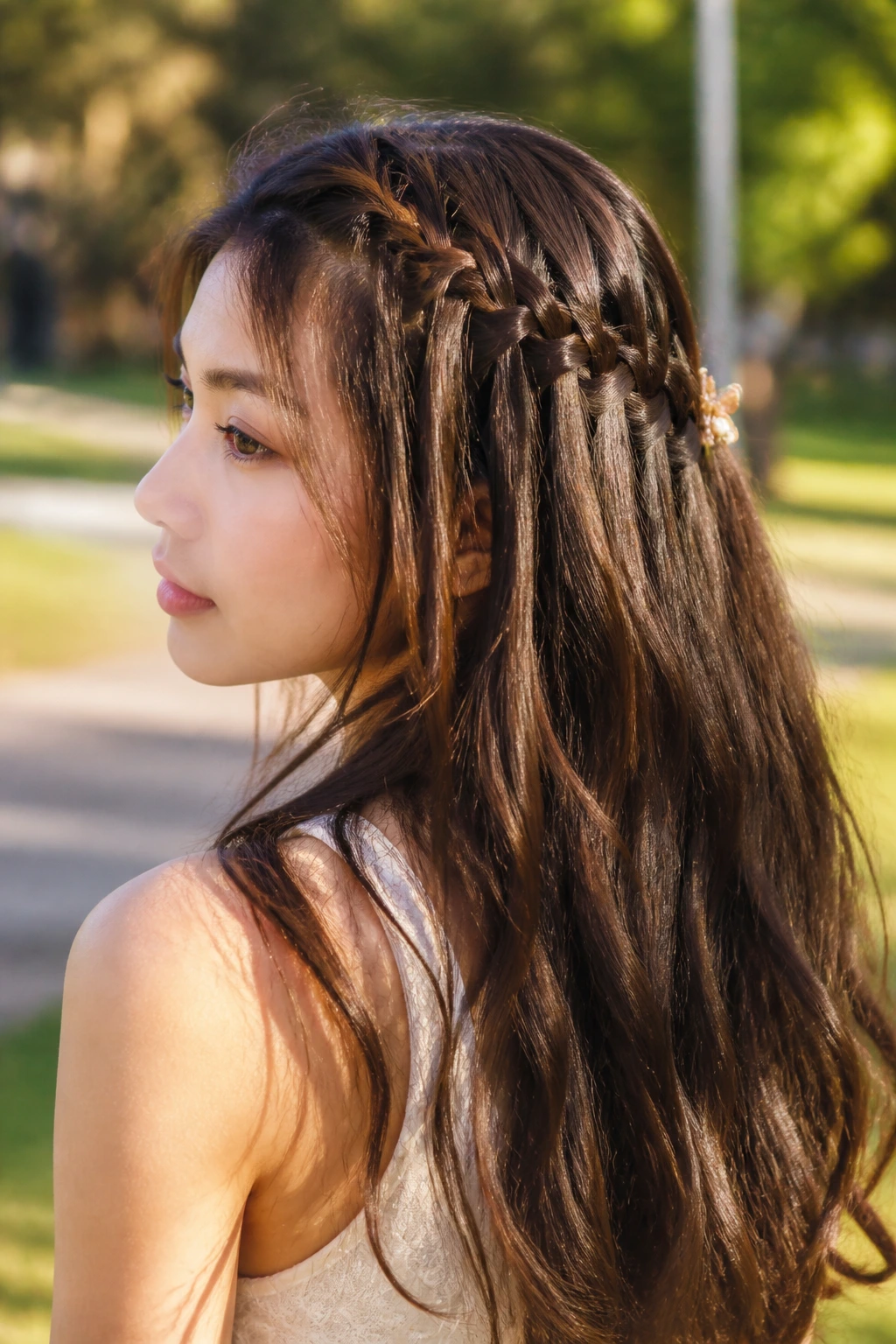
The waterfall braid works because it lets the hair keep moving. Instead of locking every strand into the braid, you drop one section as you weave and replace it with another from the top, so the length still spills down underneath.
That little trick makes the style feel lighter than a full braid. It is lovely on long hair that already has waves, since the loose pieces underneath echo the braid and keep it from looking too rigid. Straight hair can wear it too, but a bit of texturizing spray helps the woven sections stay put.
Steady hands help here. The first few crossings decide whether the braid looks neat or starts wandering all over the head. I usually tell people to practice on the side they can see in a mirror first, because once the pattern clicks, it stays easier than it looks.
A soft pin or floral clip near the braid’s end finishes it off nicely. Quiet, but not plain.
17. Soft Perm Waves for Long Hair
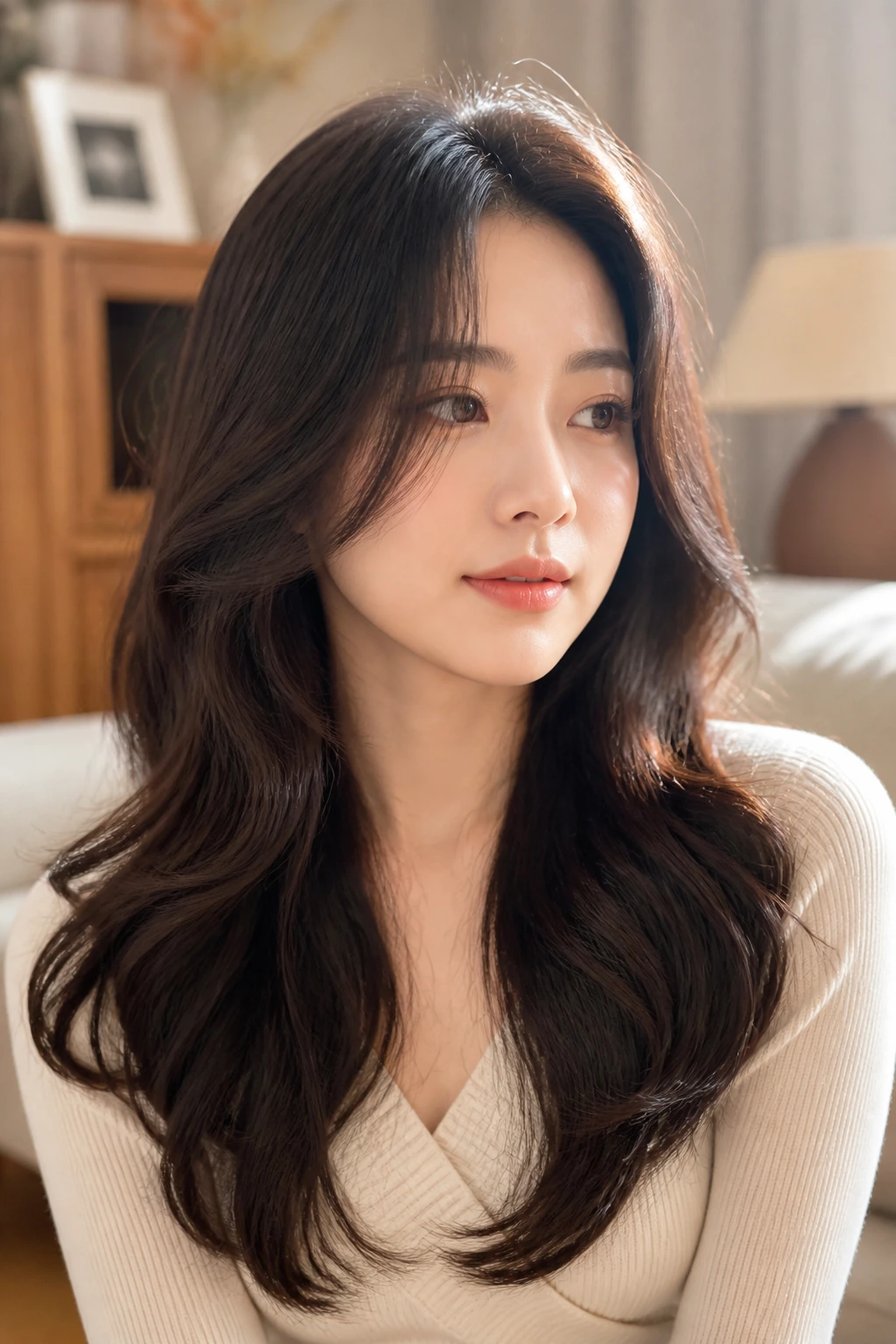
If your hair goes flat the second you stop styling it, a loose perm can save a lot of mornings. The modern version is not about tight curls bouncing around your head; it is about soft, bendy waves that add body and hold without a daily fight.
Ask for large rods or soft waves, not tiny coils. The curls should look loose enough to brush out a bit, so the result feels natural rather than set. This style can be a smart choice for long Asian hairstyles for women with very straight hair that never keeps a curl past lunch.
What to Expect
- You will need gentle shampoo and a solid conditioner.
- Heat styling afterward should be lighter, not heavier.
- The wave pattern usually looks best after it settles for a few days.
- Over-brushing can make the shape puffier than you want.
Not every head of hair wants a perm, and that’s fair. But if you love movement and hate daily irons, it can be a huge relief.
18. Sleek Twin Braids
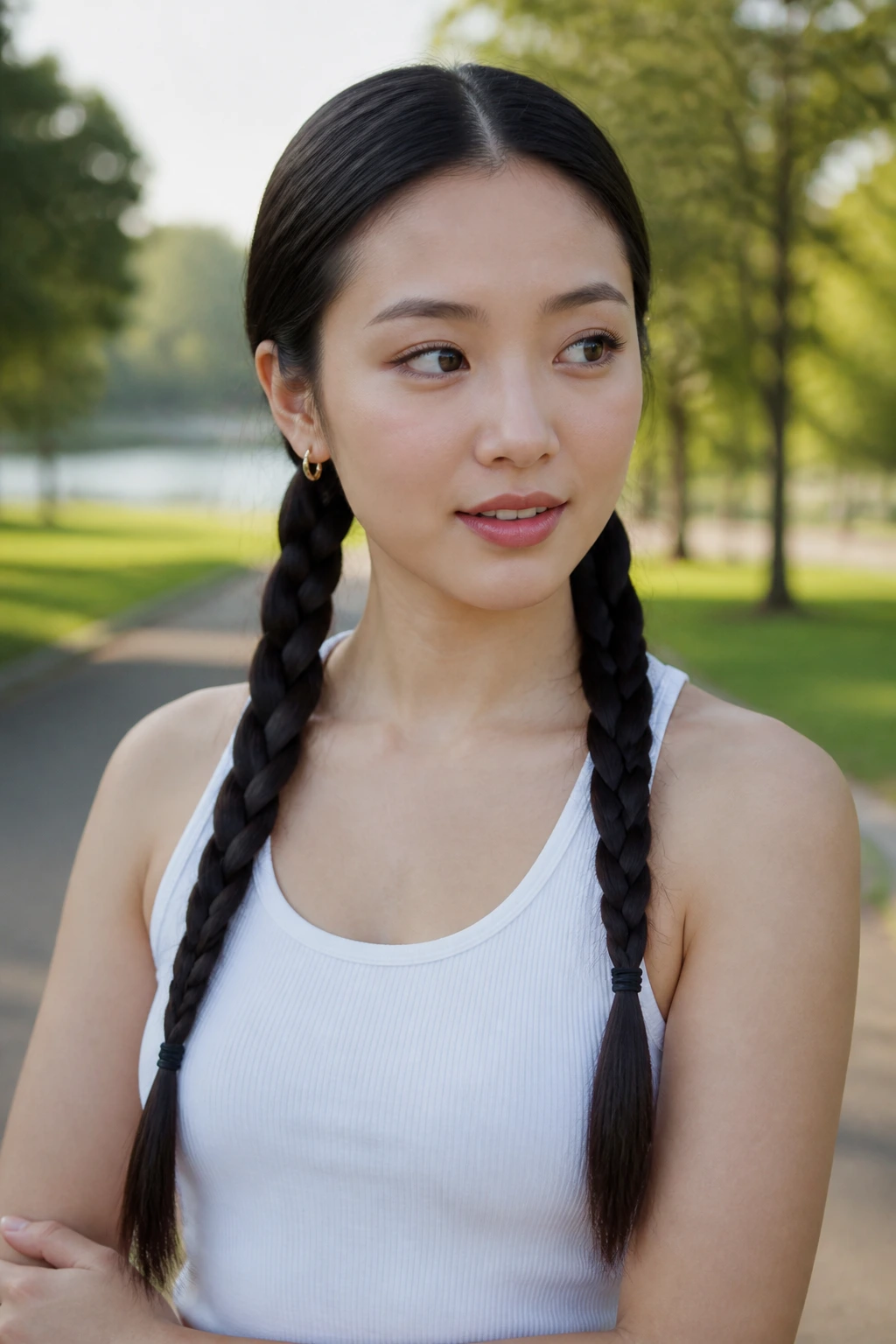
Twin braids can look sporty, neat, or even elegant depending on how tight you make them. Part the hair down the middle, smooth each side back, and braid from just below the ear so the shape hangs long rather than high and school-uniform neat.
Why It Works on Humid Days
Because the hair is split into two smaller sections, the style tends to hold shape better than one single braid on very thick hair. It also keeps the neck clear, which makes it useful for long commutes, travel, or any day that starts warm and gets messier from there.
A little smoothing cream on the top sections keeps flyaways down, but do not overload the ends. The braids need some grip if you want them to last. If your hair is very silky, rub a bit of dry shampoo through the mids before you start.
- Keep the braids even at the same height.
- Use elastic ties that match your hair color.
- Wrap each elastic with a thin strand if you want a cleaner look.
- Loosen the outer edges a little if you prefer a softer finish.
19. V-Cut Layers With Dense Ends
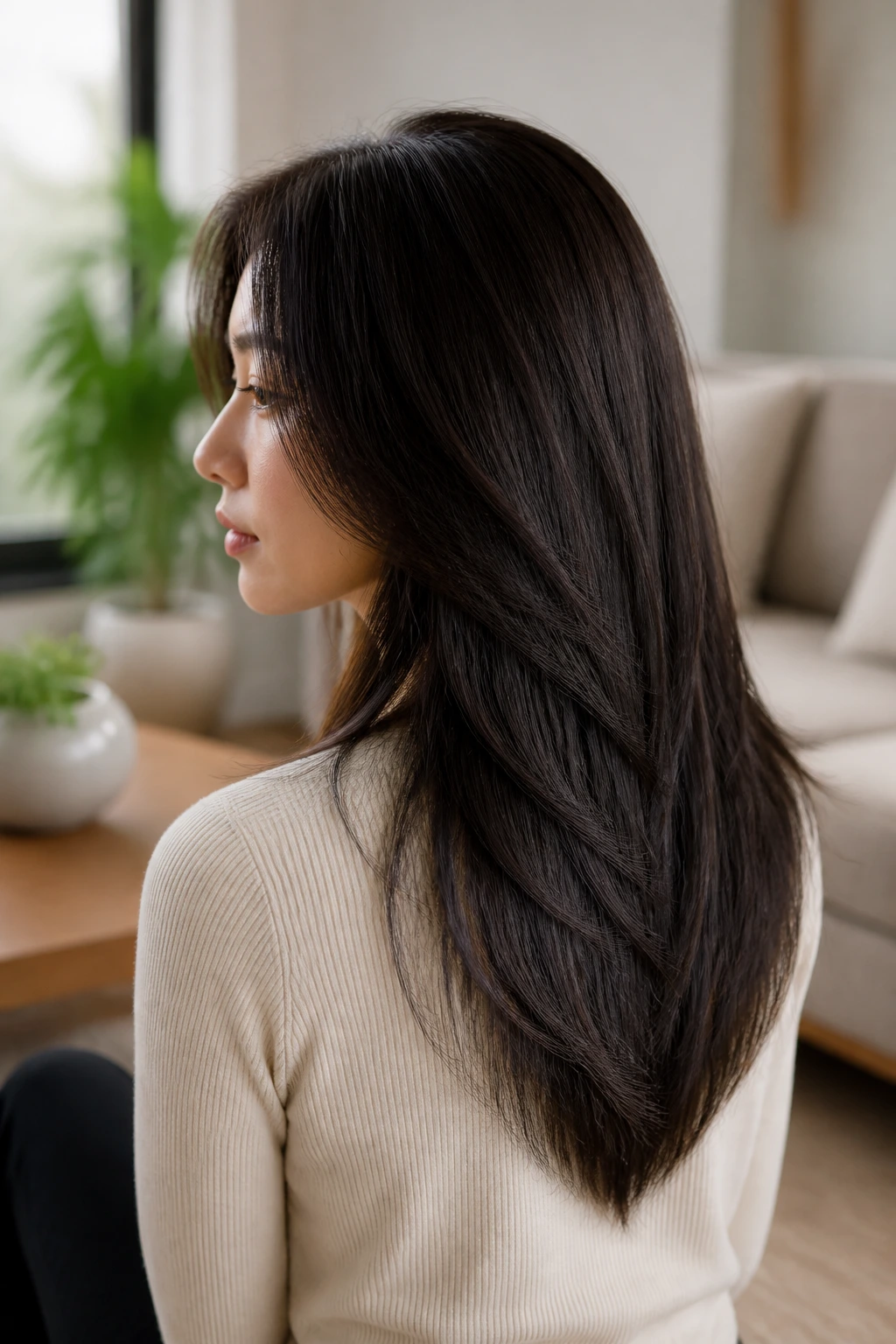
A V-cut gives long hair a pointed shape at the back, and that one detail changes the whole silhouette. Instead of a rounded perimeter, the longest pieces fall toward the center and create a sharper outline when the hair moves.
This is one of the better choices for thick hair because it keeps the ends from looking blunt and bulky. The point at the back gives the length a little drama, but the dense ends stop it from feeling stringy. That balance matters. If the hair is fine, the V can make the ends look too sparse unless the layers are handled very carefully.
I like this cut with either smooth blowouts or soft waves. The point shows up best when the hair has some bend through the body, not when it hangs dead-straight and pressed. Ask the stylist to keep the bottom dense. Too much thinning, and the V loses its punch.
20. Low Chignon for Asian Hairstyles for Women
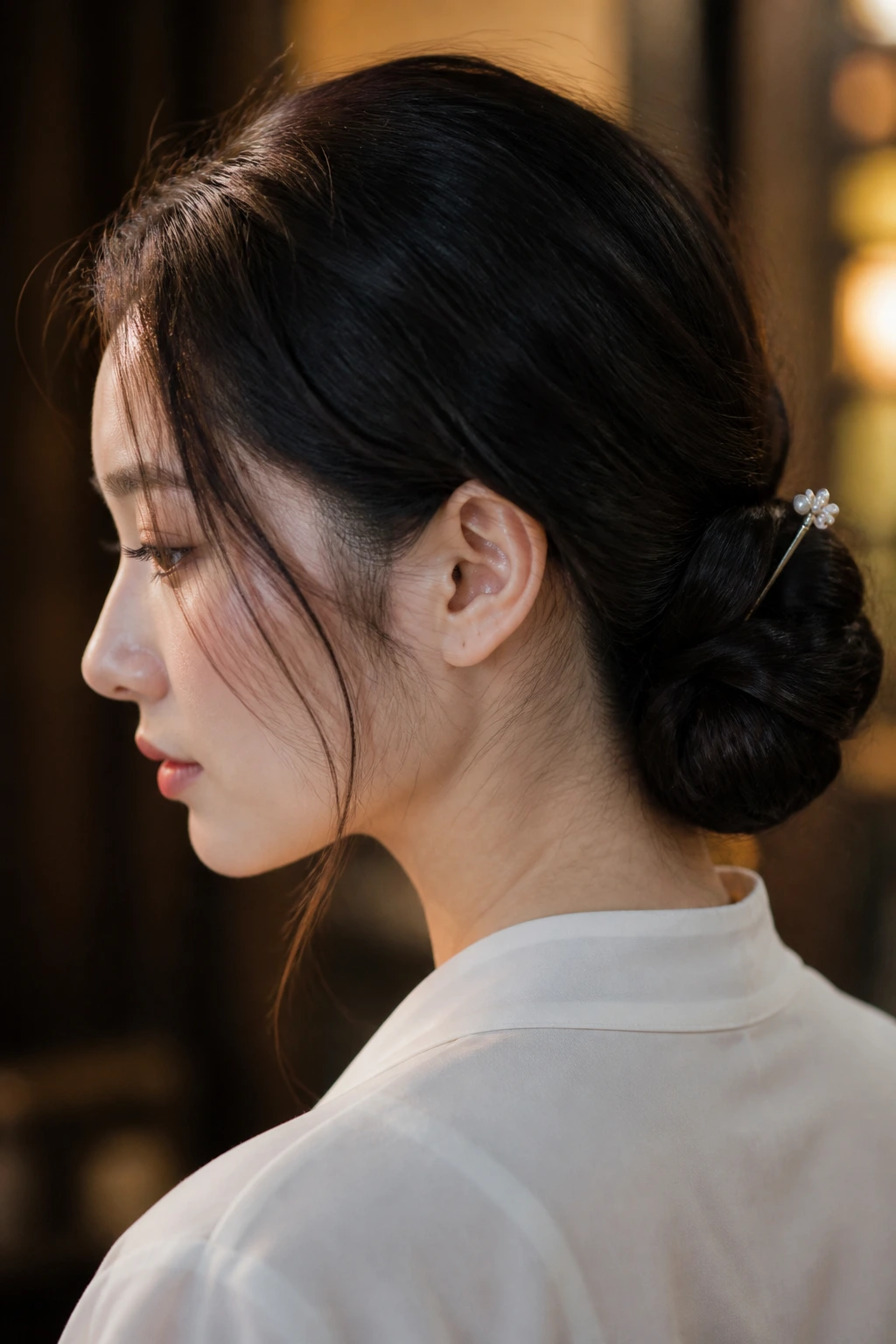
A low chignon is the style I reach for when I want long hair to look calm, intentional, and finished in under ten minutes. Twist the lengths into a knot at the nape, pin them close to the head, and let a satin ribbon or a slender kanzashi-style pin do the last bit of work.
Finishing Touches That Matter
A smooth top makes the bun feel elegant, but it does not need to be shellacked into place. Brush the crown flat, leave a little give near the ears if your face needs softness, and keep the bun itself compact. If the ends are slippery, a tiny bit of paste on the last inch helps them stay tucked in.
When to Wear It
- Weddings
- Dinner plans
- Work events
- Any day you want your hair off your neck without looking like you gave up
A low chignon is one of those long Asian hairstyles for women that works because it respects the shape of the head. Simple. Controlled. No drama, which is sometimes the nicest thing hair can do.
Final Thoughts
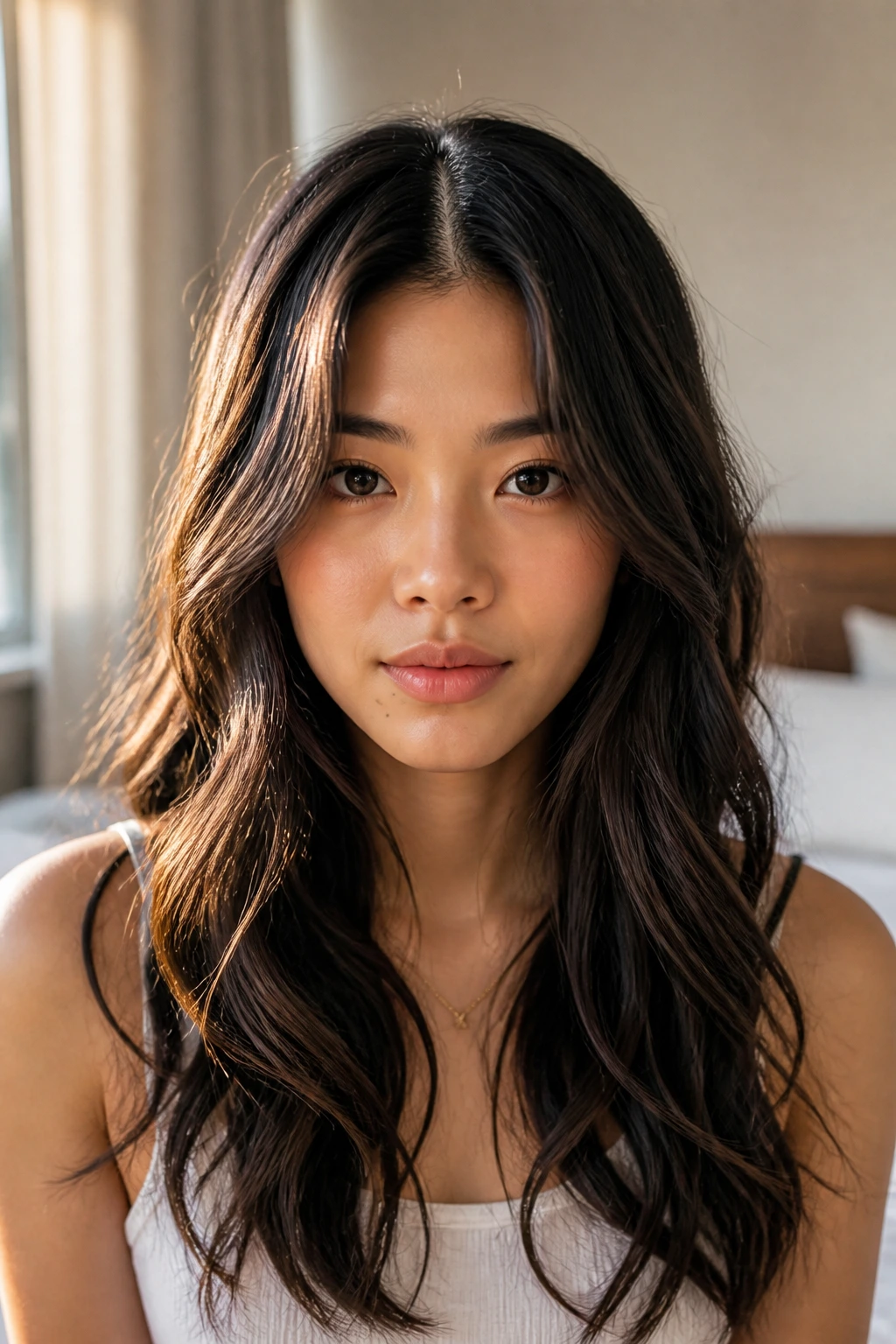
Long hair gets interesting when the shape has a point of view. Some styles lean clean and glossy, some lean soft and face-framing, and some are at their best when a braid or pin gives the finish a little edge.
The smartest choice is usually the one that matches how you live. If you want something fast, go with the claw clip, the low bun, or the wrapped ponytail. If you want movement, layers and waves do a lot of heavy lifting. If you want a sharper look, the hime cut, V-cut, or deep side part will give you that clean line.
Take a side photo before you leave the mirror. That one habit catches more bad proportions than any front-facing check ever will. Long hair is all about the silhouette, and once you get that right, everything else starts to fall into place.
