



Fine hair can look flat by lunchtime if the cut is wrong.
Short hairstyles for fine hair work best when they give the eye a clean edge, a little lift, and a shape that does some of the volume work for you. A blunt line can make the ends look denser. A tight crop can make the crown feel lighter. A well-placed fringe can pull attention upward, which is a neat trick when the lengths themselves are soft.
And yes, fine hair is not the same thing as thin hair. Fine hair is about strand diameter, not how many strands you have. That little distinction matters more than most salon talk ever admits, because a head of fine hair can be thick in total density and still collapse if the cut is too wispy. The right short cut does not fight that reality. It uses it.
Some of the styles below are polished. Some are messy in a good way. A few have edge, which is fun if your wardrobe already leans simple and you want your hair to do a little more work. The point is not to chase volume for its own sake. The point is to pick a shape that still looks good when the wind hits it, when your roots are a bit late for wash day, and when you do not feel like standing in front of a mirror for twenty minutes.
1. The Classic Blunt Bob for Fine Hair
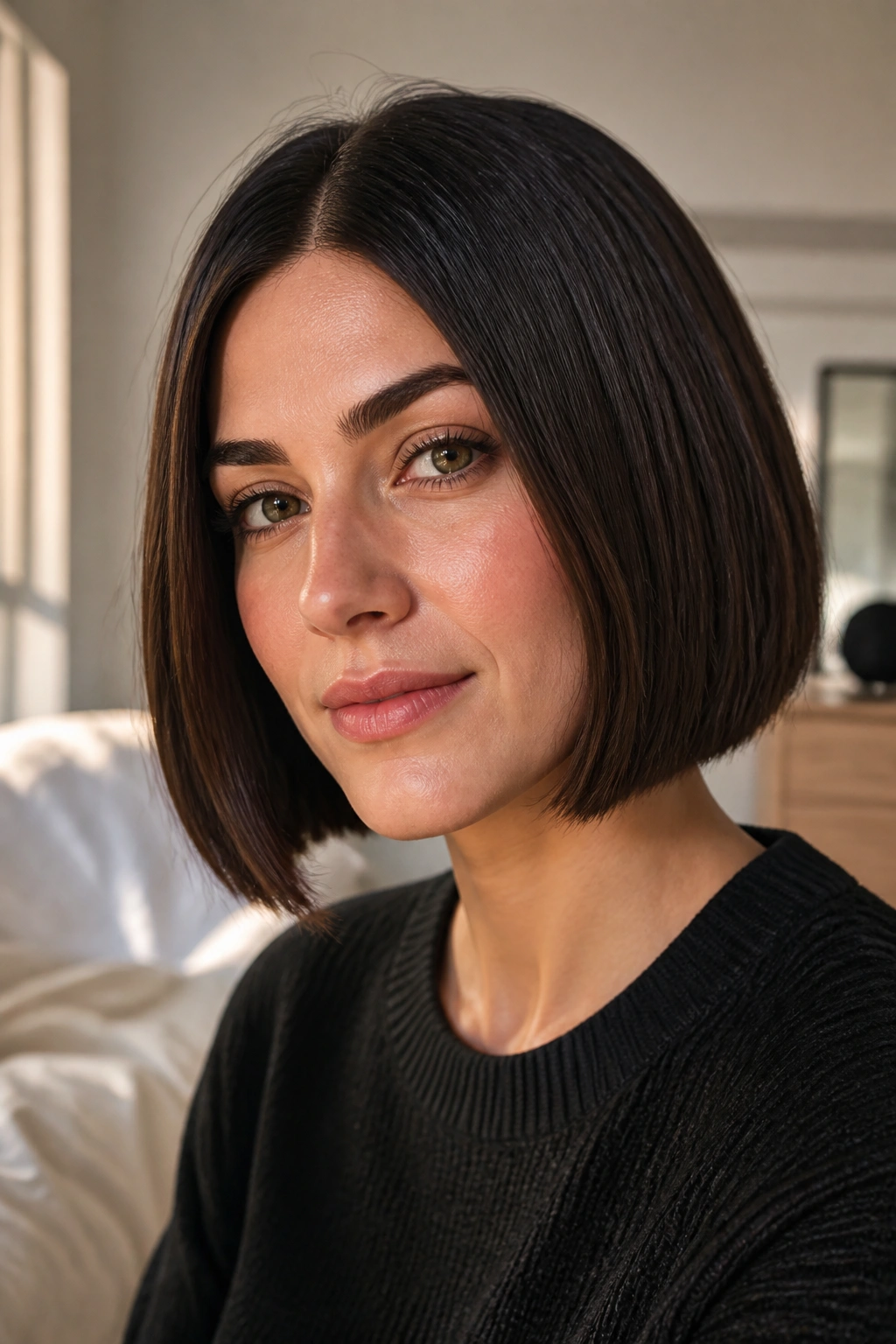
A blunt bob at jaw length is the old reliable move for fine hair, and I mean that in the nicest possible way. The clean edge makes ends look thicker than they are, which is exactly what you want when your strands are soft and lightweight.
What people often miss is that this cut works because it does not overcomplicate the shape. Keep the line crisp, keep the interior fairly empty, and let the perimeter do the heavy lifting. If you ask for too many invisible layers, the ends can start to look airy in a bad way.
A center part makes it look modern. A slight side part makes it a little softer. Either way, the finish matters: blow-dry with a paddle brush first, then bend the last inch under with a round brush if you want that tucked-in look.
- Best jaw length: right at the jaw or 1 inch below it.
- Best product: a lightweight volumizing mousse at the roots.
- Best styling move: flip the head over for 20 seconds before smoothing it out.
My blunt opinion: if your fine hair has been looking stringy, this is one of the safest places to start.
2. The French Bob With a Soft Fringe

Why does the French bob keep showing up in short hairstyles for fine hair lists? Because it cheats a little. The cut is short enough to keep the ends full, and the fringe gives the whole thing a deliberate shape up front.
Why It Helps Fine Hair
A soft fringe pulls attention to the eyes and cheekbones, so the hair does not have to do all the visual work. That matters when the sides are airy. The best version lands somewhere between the cheekbone and the jaw, not much longer, because a drifting fringe can make fine hair feel limp.
There is also a nice side effect: the short length at the neck stops the lower half from dragging the style down. You get movement without the floppy middle that can happen with longer fine hair.
How to Wear It
Keep the fringe piecey, not dense. Ask for it to be cut in a way that can sit flat or sweep to one side. A tiny amount of cream through the ends is enough; anything heavy will make the front separate and look greasy by noon.
This cut looks especially good when the hair has a slight bend, not perfect curls. Air-dried texture works. So does a quick pass with a small round brush.
3. The Long-Top Pixie That Keeps Some Length Up Front
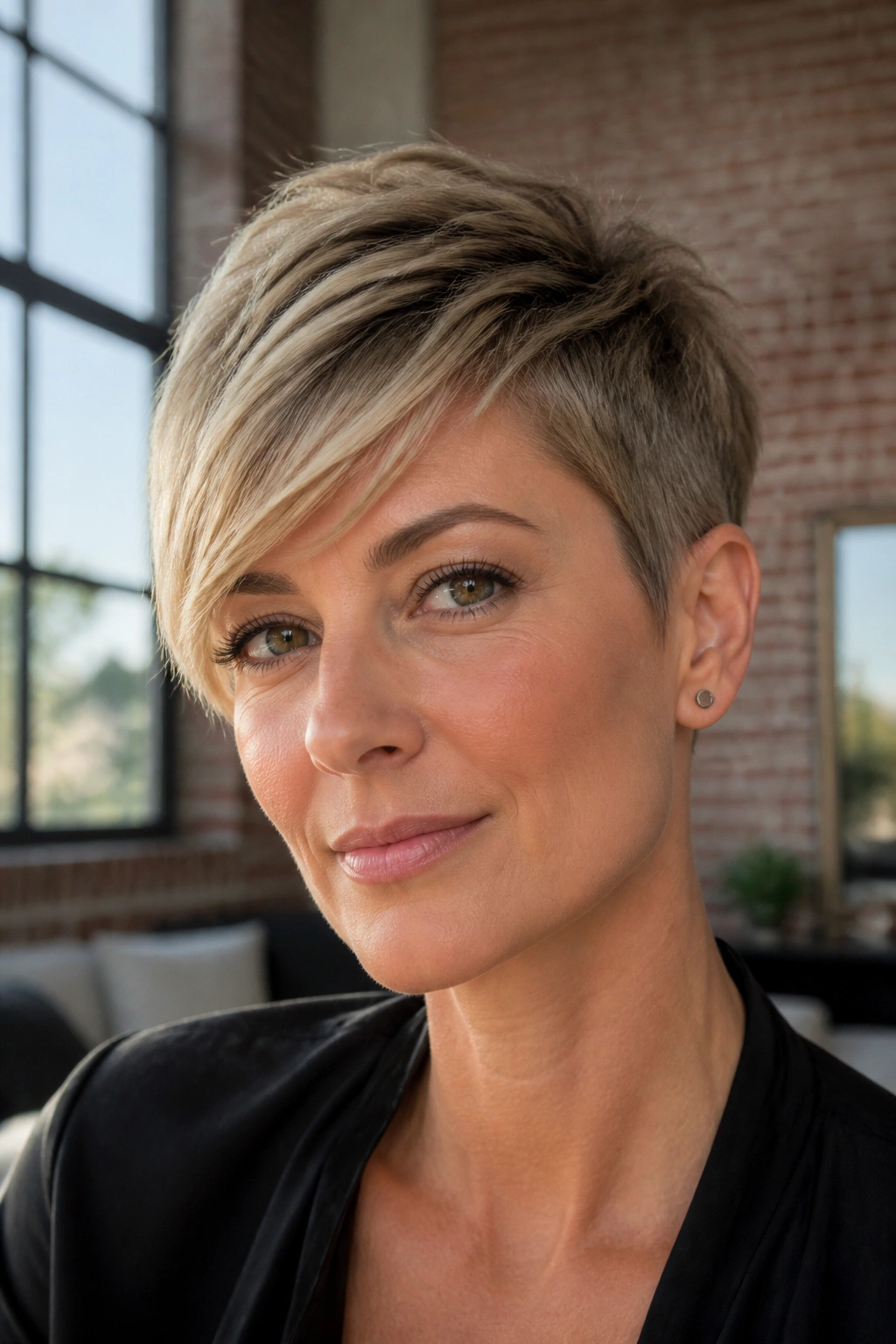
There’s a reason the long-top pixie keeps coming back. It gives fine hair a place to look fuller without asking the entire head to do the same thing.
I like this cut for anyone who wants short hair but is nervous about feeling overexposed. The sides and back stay close, which cleans up the shape, while the top has enough length to lift, sweep, or rough up with a bit of paste. That contrast is doing real work.
It also grows out better than a super-tight pixie, which is a nice bonus. The top does not lose its shape all at once, so you have a bit of breathing room between appointments.
Styling It Fast
- Work a pea-sized amount of mousse through damp roots.
- Blow-dry the top forward first, then push it up with your fingers.
- Finish with a matte paste only at the ends of the top layer.
Skip the shiny gels. On fine hair, they often make the style look flat before you have even left the house.
4. The Textured Crop With Piecey Ends
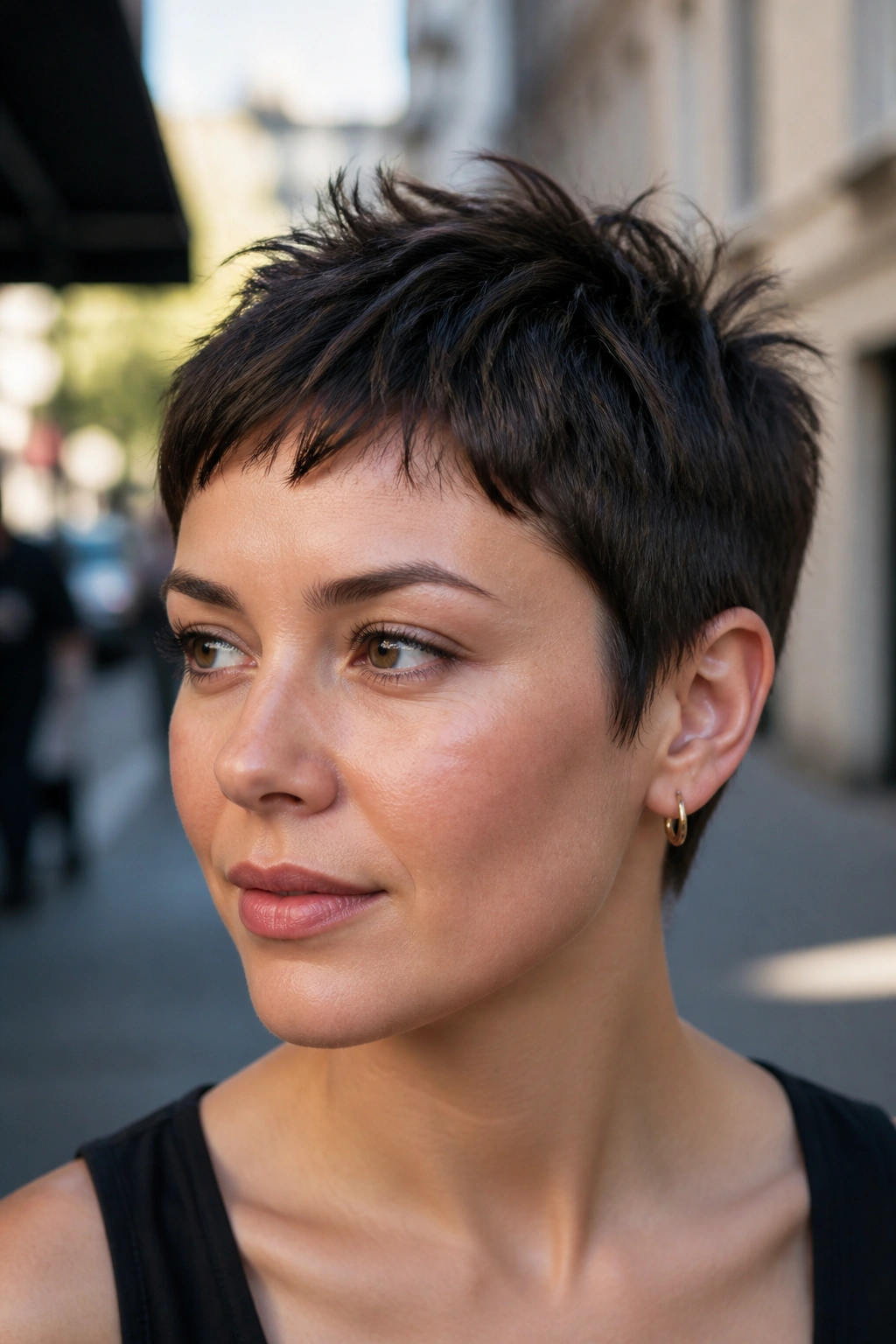
This cut has a point of view.
A textured crop works on fine hair because it makes the ends look active instead of sparse. The trick is restraint. You want visible separation, not shredded layers that turn wispy and thin. There’s a difference, and it’s a big one.
The best version sits close to the head with just enough length on top to break up the silhouette. It can be slightly rounded, slightly angular, or a little messy. What matters is that the texture lives mostly on the surface, where the eye can see it.
If you’ve got hair that collapses in humid weather or falls flat after a hat, this is a strong option. It dries fast, it does not need perfect styling, and a tiny dab of clay or paste can bring the whole thing back to life.
One good rule: if the cut looks better the messier it gets, you probably have the right amount of texture.
5. The Bixie Cut That Sits Between a Bob and a Pixie

The bixie is a useful little hybrid. It keeps the bob’s softness around the face and the pixie’s easy lift at the crown, which is handy when you want short hair but not a dramatic chop.
What Makes It Different
Unlike a standard bob, the bixie has more movement through the top and crown. Unlike a full pixie, it still leaves some length near the ears and nape, so it feels less severe. That balance can make fine hair look fuller without making the cut feel fussy.
The cut is especially good if your hair sits close to the head in some spots and sticks out in others. The slightly uneven shape smooths that out. You can tuck it behind the ears, let it fall forward, or break it up with a finger-combed finish.
Who It Suits
This is a nice middle ground for someone who is tired of long hair but not ready for something sharp and cropped. It also works when you want to keep styling down to a minimum.
Ask for soft graduation at the back and a longer top that can be moved around. That part matters. The bixie fails when it gets too heavy, and then it just becomes a flat little helmet. Nobody wants that.
6. The Asymmetrical Bob With a Longer Side
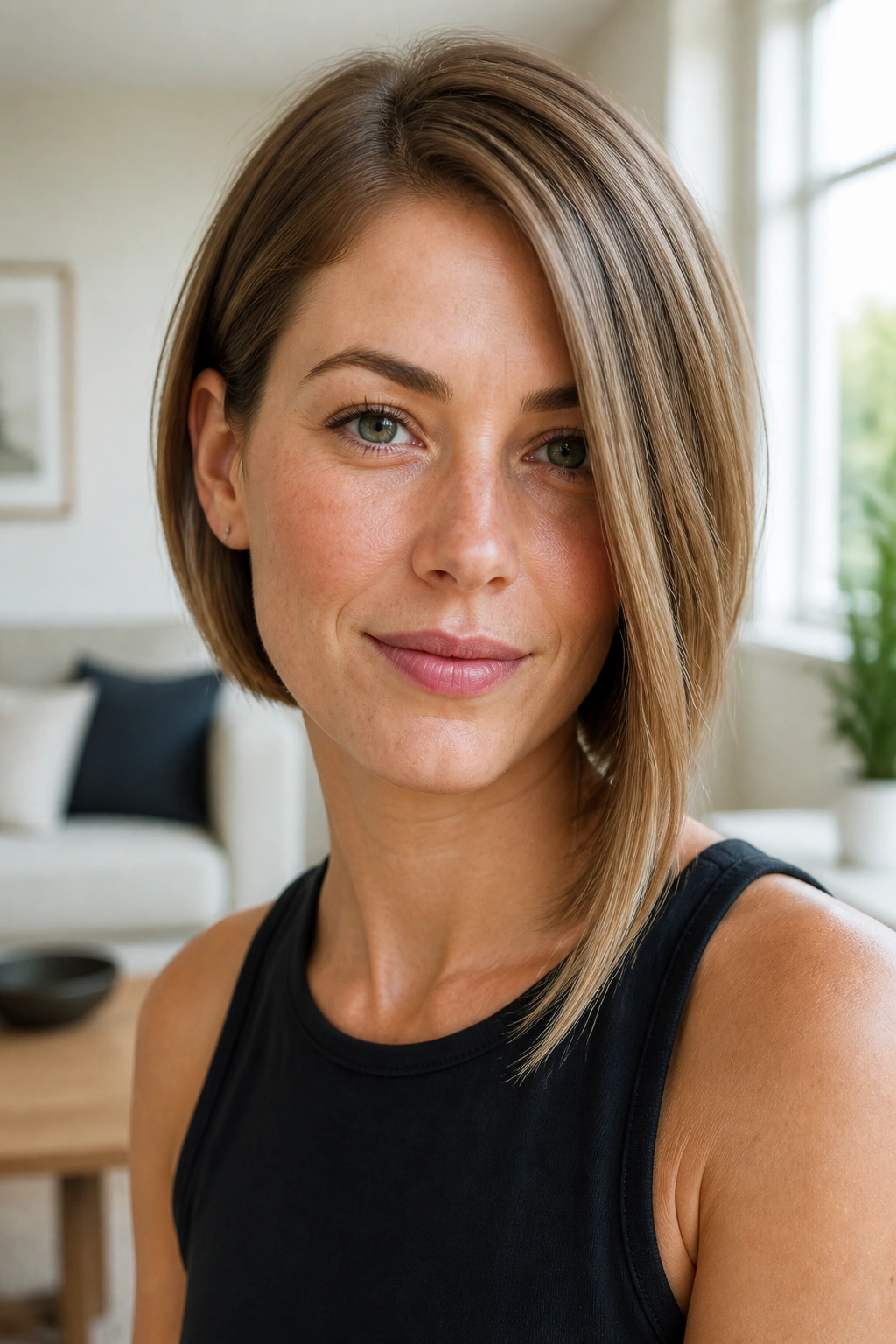
A small asymmetry can wake up fine hair fast. Even a difference of an inch or two changes how the eye reads the shape, and that diagonal line creates a little drama without needing a lot of density.
This cut works best when one side skims the jaw and the other side slips a bit lower, usually around the collarbone area if the hair is very short. The longer side gives movement, while the shorter side keeps the overall look crisp. It is a smart choice if straight hair tends to lie too neatly and you want a cut that looks intentional.
The maintenance is not bad, either. A side part helps reinforce the shape, and a flat iron pass on the longer side can make the angle cleaner. Just don’t overdo the layers. Fine hair needs the line to stay visible.
If your face is round or softly oval, this kind of cut can be especially nice because it gives the impression of length without making the hair itself longer.
7. The Layered Chin-Length Bob That Still Feels Full
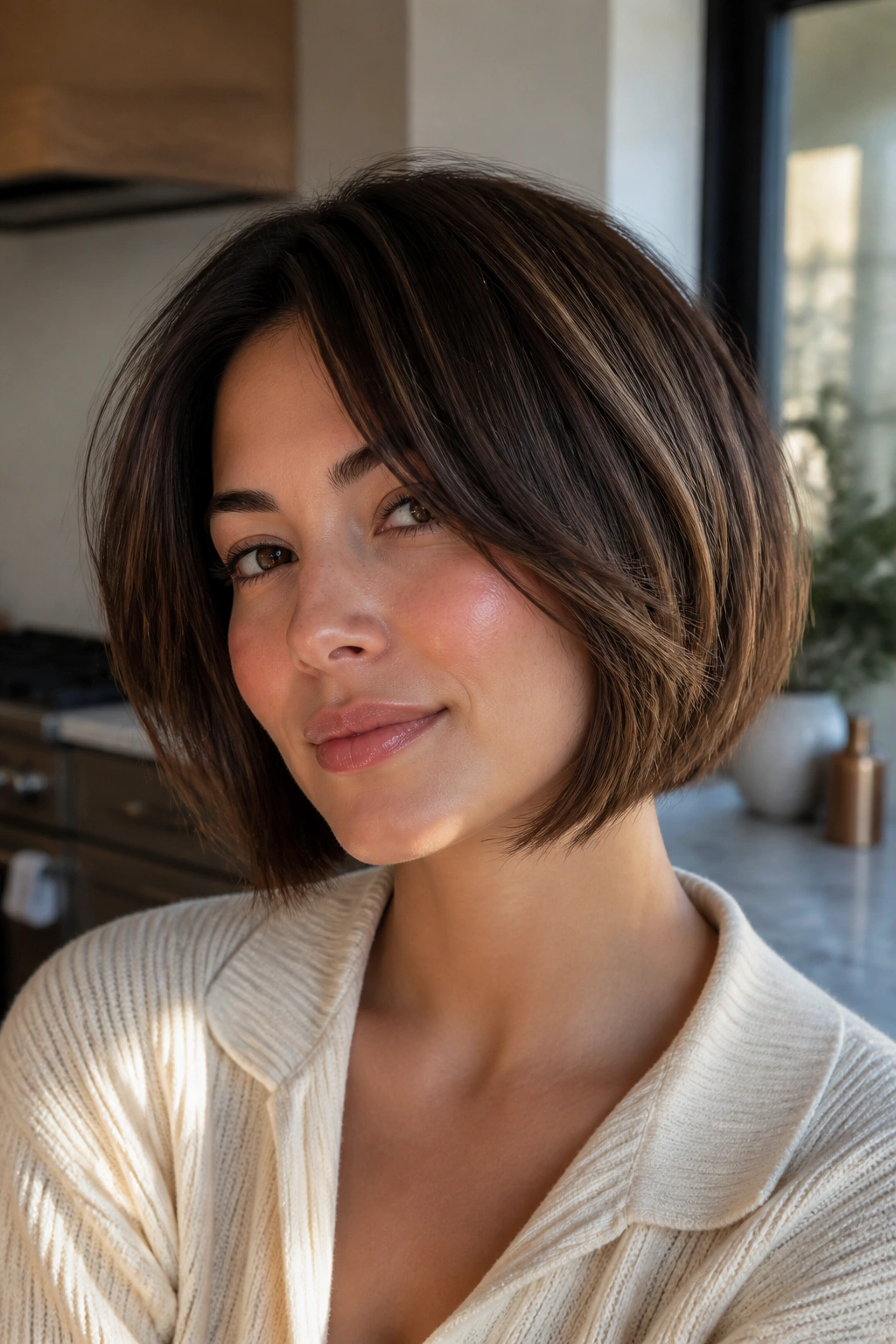
Can fine hair have layers? Absolutely. It just needs the right kind.
The Shape Matters
A chin-length bob with light, strategic layers can keep the bottom from looking heavy while preserving enough bulk at the outline. The longest layers should stay near the perimeter. If the interior gets thinned out too much, the cut can turn see-through fast.
That is the mistake I see most often. People hear “layers” and assume more movement means more body. Sometimes it’s the opposite. Fine hair often needs a quieter cut with a few smart pieces, not a shredded head full of gaps.
How to Ask For It
- Keep the base line at the chin or just below it.
- Add soft layers only around the face and upper crown.
- Leave the ends blunt enough to read as dense.
A round brush and a little root lift spray can give this bob a smooth, lifted shape. It feels easy, which is why I keep coming back to it for everyday wear.
8. The Sleek Side-Part Bob That Makes the Hair Look Denser

A side part can do more for fine hair than a drawer full of products. It shifts the weight, gives a little lift at the roots, and makes the top section appear fuller because it is no longer splitting evenly down the middle.
This bob is for the person who wants clean lines and low drama. It sits neatly around the jaw or just above the shoulders, and the side part helps the front pieces fall with a bit of sweep. The result is tidy without feeling stiff.
It also photographs in real life the way it looks in the mirror, which sounds small until you’ve had one of those cuts that only works from a single angle. This one is steady.
Use a flat brush while blow-drying the roots away from the part, then set the front with a cool shot. That little bit of cooling matters. Hair remembers shape better when it sets while it’s still warm.
9. The Soft Shag That Stops at the Cheekbones

Does fine hair need lots of layers to look interesting? Not really. It needs the right layers.
The soft shag is a good answer when you want movement but hate the look of over-thinned ends. Stopping the cut around the cheekbones keeps the shape lively without dragging the lower half too far apart. That can be a gift for hair that goes flat at the crown but frizzes out at the ends.
Keep the Weight at the Bottom
The smartest version keeps some weight in the perimeter. The top gets a bit of lift, the fringe or face-framing pieces get light shaping, and the bottom stays enough to hold the shape together. That balance is what keeps the cut from turning into a dry, floaty cloud.
A little texturizing spray on dry hair is often enough. You do not need to saturate it. In fact, overdoing product can make fine hair collapse faster than the cut itself ever would.
This is one of the best styles if you like hair that looks better a little undone. It has personality, and it does not demand a perfect blowout every morning.
10. The Tapered Pixie With a Feathered Fringe

A tapered pixie can make fine hair look thicker because it creates contrast where your eye expects volume. The close nape and sides clean up the outline, while the feathered fringe gives the front some softness and motion.
I’m fond of this cut for anyone with a fine texture that tends to puff out at the bottom and go flat on top. The taper fixes the shape. The fringe keeps it from feeling too severe.
Ask Your Stylist For
- A close taper at the nape.
- Slight length through the crown, not a flat cap.
- Fringe that can fall forward or sweep diagonally.
The styling part is easy, which is half the appeal. Warm a tiny amount of wax between your fingers and pinch the fringe into place. Leave some ends loose. If every strand is forced into position, the cut loses the airy effect that makes it work.
This one is small, but it has edge. That’s a nice combination.
11. The Pageboy Bob With Curved Ends
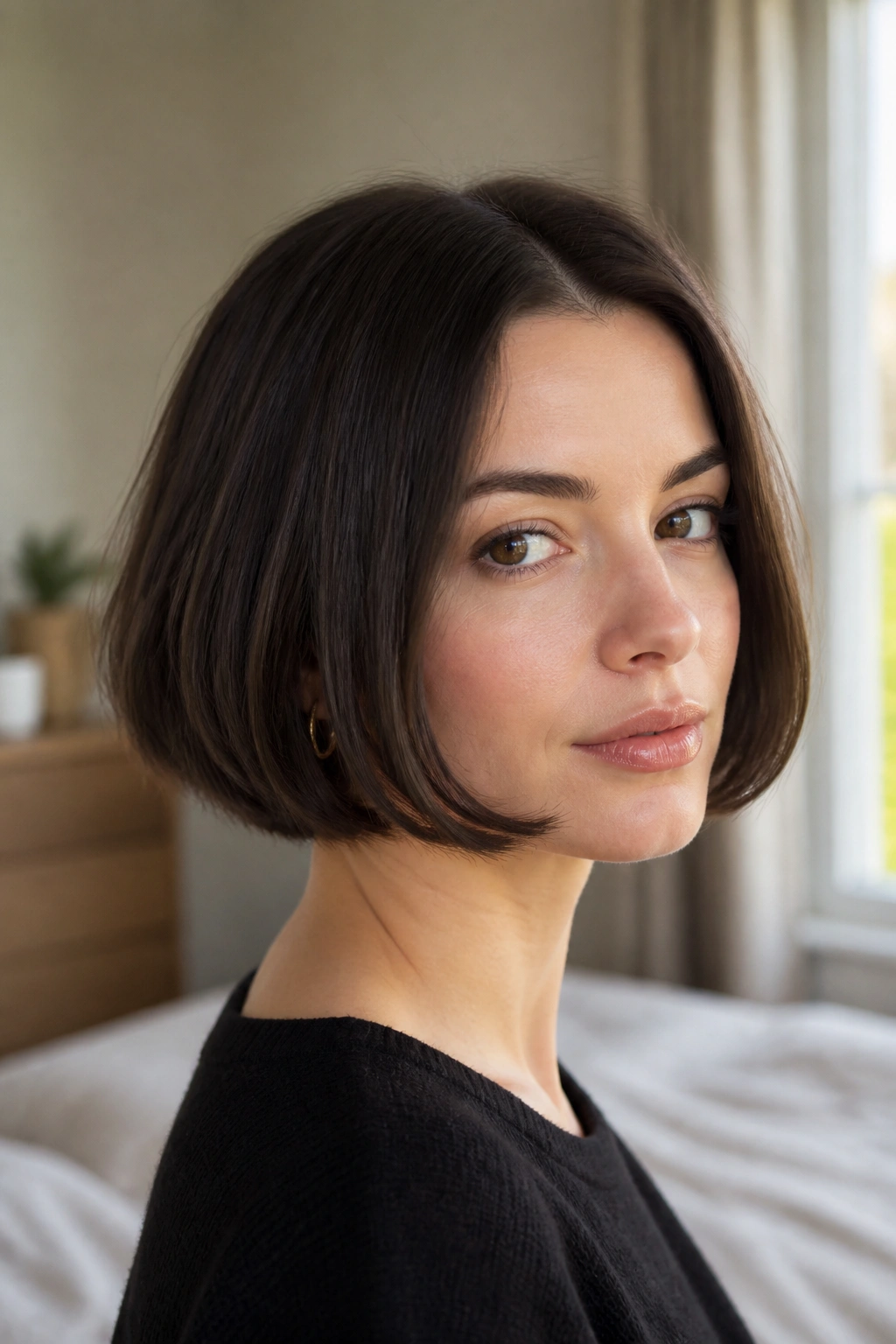
The pageboy is having a quiet comeback for a reason: it gives fine hair shape without relying on a lot of bulk. The ends curve under, the line stays tidy, and the whole cut feels deliberate.
That inward bend is not decorative fluff. It creates the sense of density because the eye sees a compact outline instead of loose, separated ends. For fine hair, that matters more than flashy texture.
The modern version should not feel stiff or costume-like. Keep the fringe optional, keep the line smooth, and let the ends brush under with a small round brush. If the cut is too round, it can look dated. If it is too flat, it loses the point.
I like this cut with simple clothes and good earrings. It does not fight for attention. It just sits there looking clean and expensive-looking in the practical sense — neat, solid, and easy to maintain.
12. The Inverted Bob With a Lifted Back

This is the cut for hair that sulks at the roots.
An inverted bob is shorter in the back and longer in the front, which means the nape gets a light, lifted shape while the front keeps enough length to skim the face. On fine hair, that stacked back section can make the whole head look fuller because the silhouette has built-in rise.
The danger is overstacking. Too much graduation in a fine texture can expose the scalp line and make the back look too skinny. So the shape needs to be controlled, not dramatic.
A little root spray at the crown and a round brush at the back can make the architecture show up. It’s a good choice if your hair sits flat behind the ears and you want a shape that feels a bit more sculpted. Not severe. Just clean and lifted.
13. The Rounded Bob With Curled-Under Ends

There’s something nice about a bob that curves inward at the ends. It feels finished without being stiff, and on fine hair that inward shape reads as fullness almost instantly.
The cut should graze the jaw or sit a touch lower, then fold gently under toward the neck. When the outline is rounded, the hair looks thicker because there are no ragged corners for the eye to chase. Everything comes back to that outer line again.
You can feel the difference when you run your hands through it. The ends should move as one shape, not split into little see-through bits. That’s the point.
A blow-dry brush or a medium round brush does the job here. Aim the dryer downward for smoothness, then wrap the ends under for 5 to 8 seconds. It sounds fussy, but it’s not. Once you’ve done it twice, it becomes a quick habit.
14. The Feathered Crop With a Light Fringe

Want movement without turning your hair into flyaway chaos? A feathered crop can be a smart answer.
The feathering should live mostly on the top and outer layer, not all the way through the ends. That keeps the cut light without making it see-through. Fine hair likes that kind of discipline. It does not need every section thinned out just because the word “feathered” sounds soft.
Where It Works Best
This style suits people whose hair falls flat at the front but still has enough density through the crown to hold shape. The light fringe helps break up the forehead area, while the cropped sides keep the outline neat.
A tiny amount of texture cream on dry hair is usually enough. Push the fringe forward, lift the crown with your fingers, and stop before it gets overworked. The best feathered crop still looks like hair, not a styling experiment.
If you like a casual look that can move from day to night without a restyle, this is one of the easier picks.
15. The Choppy Bob With Micro Bangs
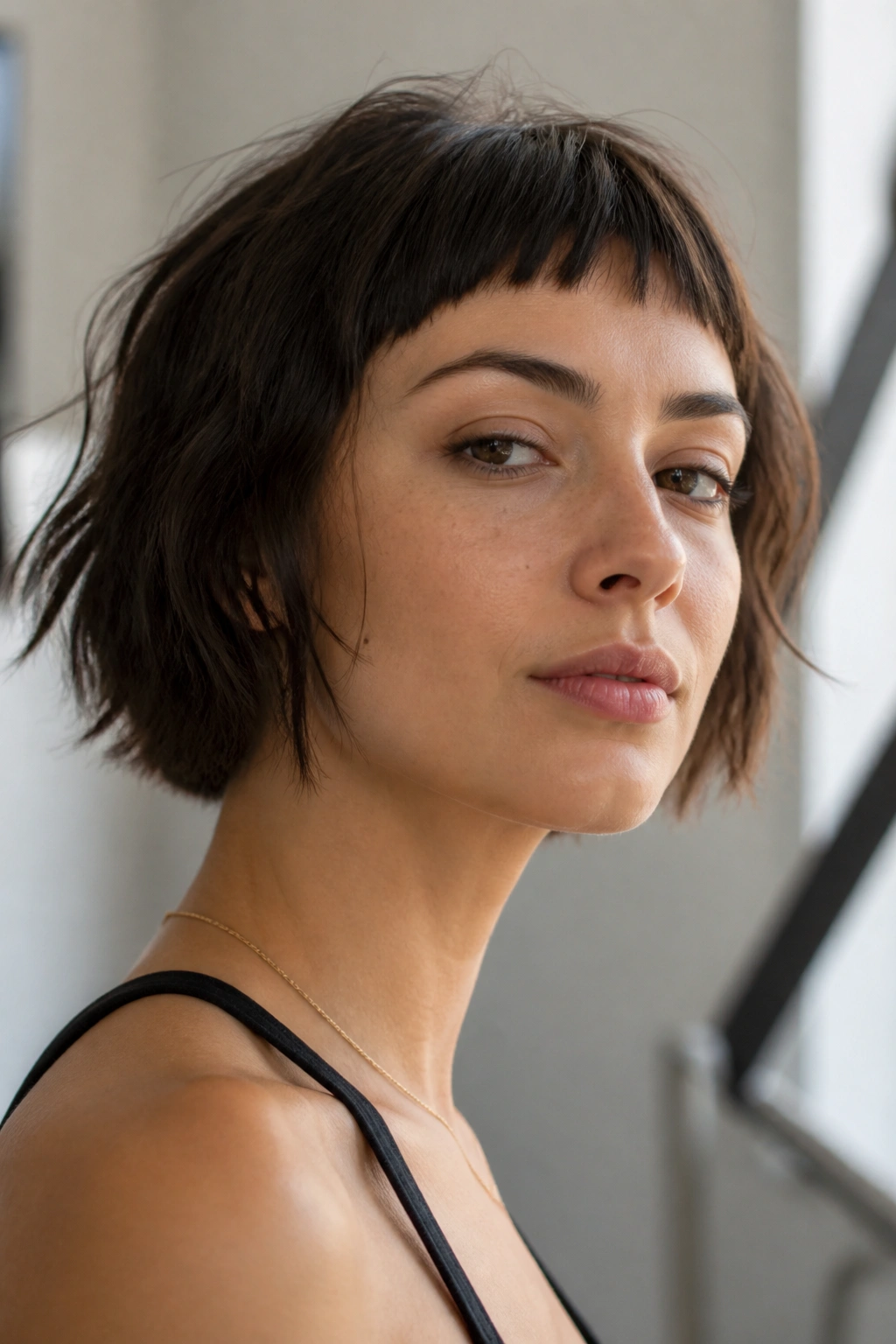
Micro bangs are not for everyone, and that is fine. On the right face and the right hairline, though, they can make fine hair look sharper and more modern in a way that a longer fringe never quite does.
The bob itself should stay short and slightly choppy, with enough roughness to keep the bangs from feeling too formal. The contrast is what makes it work: a crisp fringe above a soft, broken-up shape below. That tension gives the cut personality.
The catch? Micro bangs need upkeep. They grow out fast, and on fine hair they can separate if the hair is oily at the root. Dry shampoo near the front line helps. So does a light hand with conditioner near the fringe.
This style is best if you like a little edge and don’t mind regular trims. If you want a quiet haircut, keep walking.
16. The Curly Pixie That Lets the Texture Lead
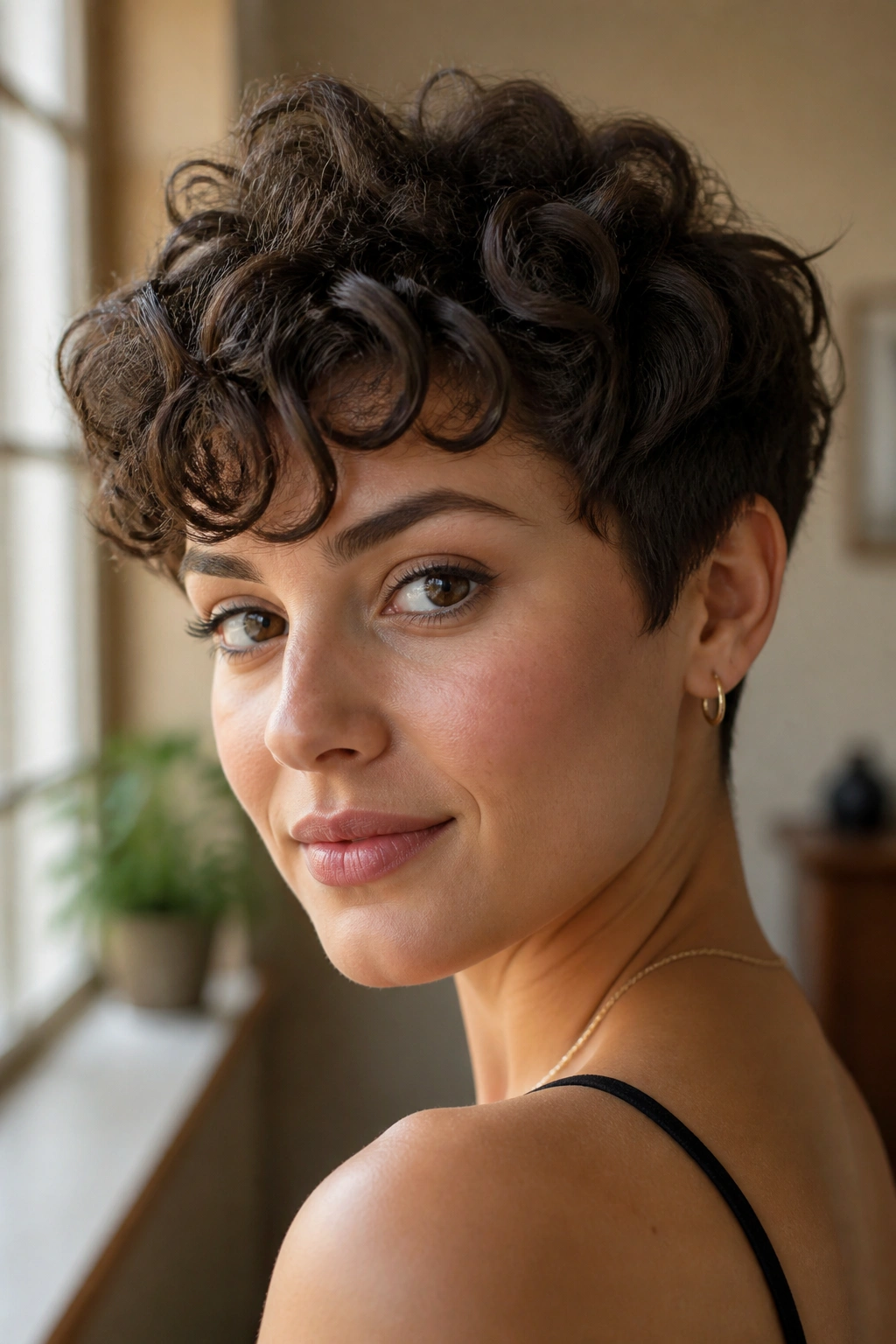
Curly fine hair can be a little misunderstood. People often cut it too short on the sides and too long on top, then wonder why it puffs in odd places. A good curly pixie solves that by shaping around the curl pattern instead of fighting it.
Shape First, Product Second
The silhouette should stay close at the nape and temples, with enough room on top for the curls to spring up naturally. Fine curls need space, but they also need a perimeter that keeps them from spreading out sideways.
How to Style It
- Apply a small amount of curl cream to soaking-wet hair.
- Scrunch once with a microfiber towel, not a rough bath towel.
- Diffuse on low heat until the roots are dry and the curls feel set.
Do not rake through the curls too much after drying. That breaks the pattern and can make the hair look frayed. Let the shape sit where it wants to sit, then lift only the crown if you need a touch more height.
This cut can be gorgeous. More importantly, it can be honest about what curly fine hair actually does.
17. The Ear-Length Bob That Feels Crisp and Fresh

An ear-length bob is tiny in the best way. It sits above the jaw, frames the face fast, and makes fine hair look denser because there’s simply less length for gravity to flatten.
I love this length when someone wants the hair off the neck but doesn’t want to jump all the way to a pixie. It has a neat, almost graphic shape, and that sharpness helps fine hair look intentional. Nothing floats around in search of itself.
The styling is straightforward. A little smoothing lotion at the ends, a side tuck if you want softness, and maybe a light bend with a flat iron if the hair is too straight. That’s it.
This cut pairs well with bold earrings, glasses, and simple necklines. The hair becomes part of the frame rather than the whole picture. Sometimes that is the whole appeal.
18. The Jaw-Length Razor Cut With Soft Edges

Can a razor cut work on fine hair? Yes, if it’s handled with restraint.
Why the Razor Matters
A razor can add softness to the outline without making the haircut feel heavy. On a jaw-length shape, that means the ends can move a little instead of sitting like a blunt block. The trick is not to over-thin the perimeter. Fine hair needs edge, not hollowness.
What to Ask For
- Keep the length at the jaw or just below it.
- Use the razor lightly on the surface, not through the whole head.
- Preserve enough density at the ends to keep the line visible.
I like this cut for people who want something a little looser than a classic bob. It has a bit of swing. It also works well if your hair tends to bend on its own and you want to play with that instead of ironing it flat every day.
A light mist of water and a quick scrunch can bring the shape back without a full restyle. Handy, that.
19. The Tousled Crop With a Side-Swept Fringe

Picture this: you roll out of bed, run your fingers through your hair, add a dab of paste, and you’re basically done.
That is the appeal of a tousled crop with a side-swept fringe. It is short enough to keep the ends looking solid, but loose enough that it does not need to be perfect. The fringe gives you a little softness in front, while the crop keeps the overall shape easy and compact.
This works well if your fine hair gets oily at the roots and flat in the crown. A dry shampoo mist at the base, then a light finger lift through the top, can wake the whole style up. You do not need a lot. A little movement goes a long way here.
If your daily routine is not built around a round brush, this style makes sense. It looks better with a bit of natural mess anyway.
20. The Mini Mullet With Soft Edges

A mini mullet sounds louder than it often looks. On fine hair, the softened version can be surprisingly wearable because it creates shape in the back without stripping away fullness around the face.
The front and crown stay a little fuller, the sides are shorter, and the back extends just enough to give movement. That contrast can make fine hair look more textured without turning it into a wispy mess. The key is keeping the edges soft. Hard lines make the style feel harsher than it needs to be.
This is a good choice if you want a bit of attitude. Not rebellion for its own sake — just a cut with a sharper profile than the usual bob or pixie.
A matte paste works better than anything shiny. You want the shape to read as lived-in, not slick. If the hair is very fine, keep the back a touch shorter than you think. Too much length there can look stringy fast.
21. The Undercut Pixie That Removes Bulk Where You Don’t Need It
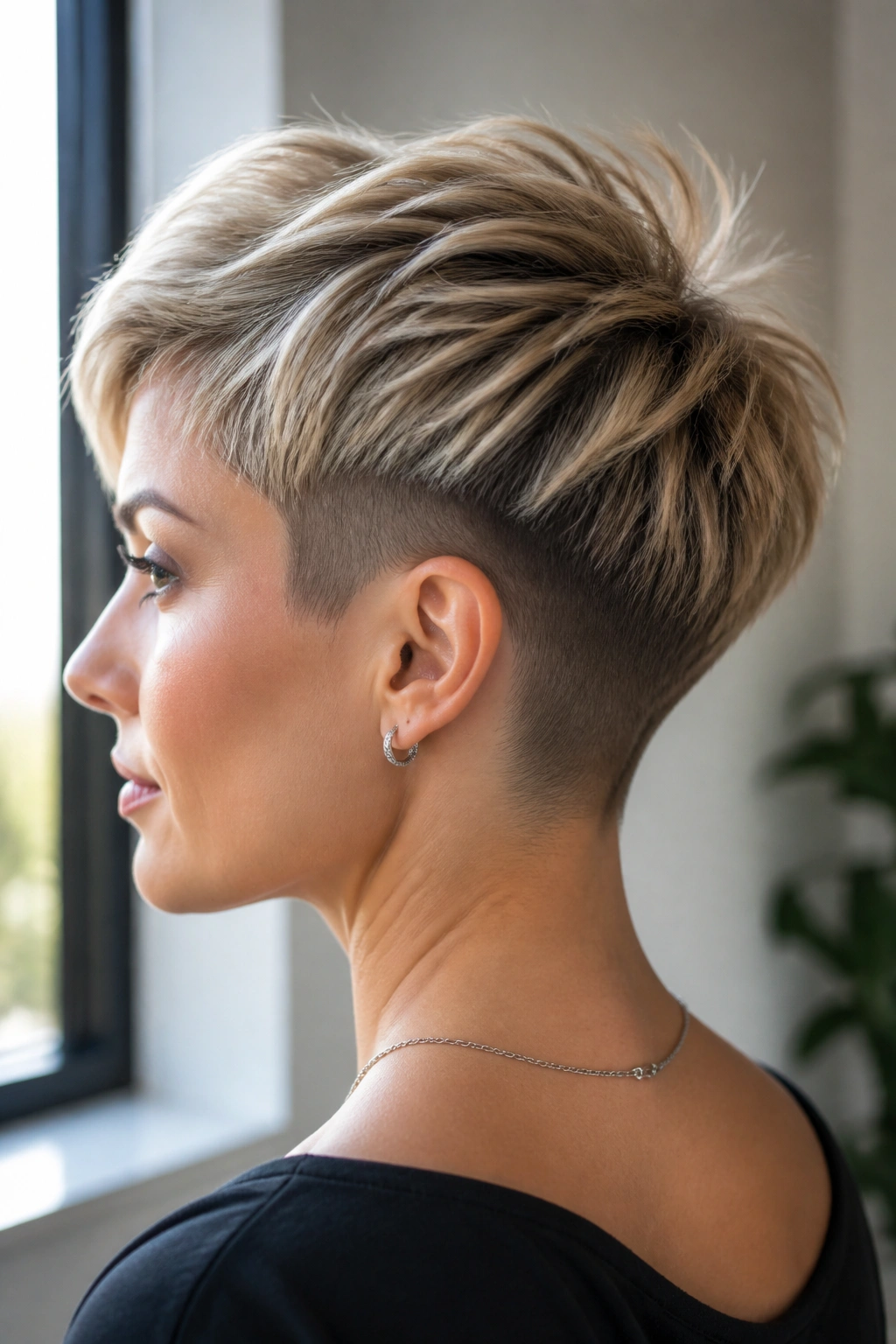
An undercut pixie can be brilliant for fine hair when the problem is not lack of volume everywhere, but too much bulk in the wrong places. Shaving or clipping the lower nape and sides lets the top sit higher and feel more lifted.
That sounds dramatic, but it can be a very practical cut. The top section gets more room to move, the sides stop puffing out, and styling often gets easier because there’s less hair to wrestle with. Fine hair can still look full on top even with an undercut below.
Best For
- Hair that grows out wide at the temples.
- People who want fast morning styling.
- Anyone happy to show a bit of scalp contrast.
The only caution is placement. Keep the undercut low and controlled so the top still has enough coverage to fall naturally. Too high, and the style can start looking sparse. That’s a problem you do not need.
22. The Tucked-Under Bob With a Deep Side Part for Fine Hair

A deep side part can rescue a flat bob faster than a new product ever will. It shifts the weight, lifts one side of the roots, and creates the kind of asymmetry that makes fine hair look fuller at the front.
The tucked-under finish adds even more structure. The ends curve in toward the neck, which keeps the silhouette compact and dense. Put those two things together — the side part and the inward bend — and you get a short style that looks polished without feeling stiff.
How to Style It Cleanly
- Create the side part while the hair is still damp.
- Blow-dry the roots in the opposite direction first for lift.
- Tuck the ends under with a round brush or a flat iron bend.
I like this cut because it works on busy days and better days. You can wear it neat for work, then shake it out a little for evening. The shape holds either way. That’s worth a lot when your hair is fine and not especially forgiving.
The Bottom Line

Fine hair does best when the cut gives it structure before you ever touch a styling tool. Short lengths help because they keep the ends looking denser, and the right outline can make a huge difference even when the hair itself stays soft.
If you want the safest bets, start with the blunt bob, the French bob, or the long-top pixie. If you want something with a little more personality, the bixie, the shag, or the mini mullet can take you there without making the hair feel thin.
Pick the shape that matches how much styling you’ll actually do. That part matters more than trend talk, and it usually decides whether a haircut feels like a good idea on Tuesday morning or just a nice photo from the salon chair.
