



Flat bobs can look sharp, tidy, and a little too precise if the cut is too blunt or the styling goes flat. A fluffy bob haircut is the opposite of that. It has movement. It has lift at the roots, soft edges around the face, and ends that bend instead of sitting like a shelf.
That softness does not happen by accident. The cut matters just as much as the blow-dry, and sometimes more. A good bob for a soft look usually keeps some weight at the perimeter, then sneaks in the right kind of layers so the hair can move without exploding outward. Too many layers and you get fuzz. Too little and you get a helmet. The sweet spot is smaller than most people think.
Hair texture changes the whole story, too. Fine hair needs clever shaping so it doesn’t collapse by lunchtime. Thick hair usually needs a bit of internal removal so the shape doesn’t puff out at the sides. Wavy and curly hair can look gorgeous in a fluffy bob, but only if the cut works with the bend instead of fighting it.
The twenty styles below all lean into that soft, touchable feel in different ways. Some are polished. Some are a little undone. A few are short and cheeky; a few sit closer to the collarbone and give you more breathing room. The first one starts with the easiest soft-bob shape of all.
1. Chin-Grazing French Bob
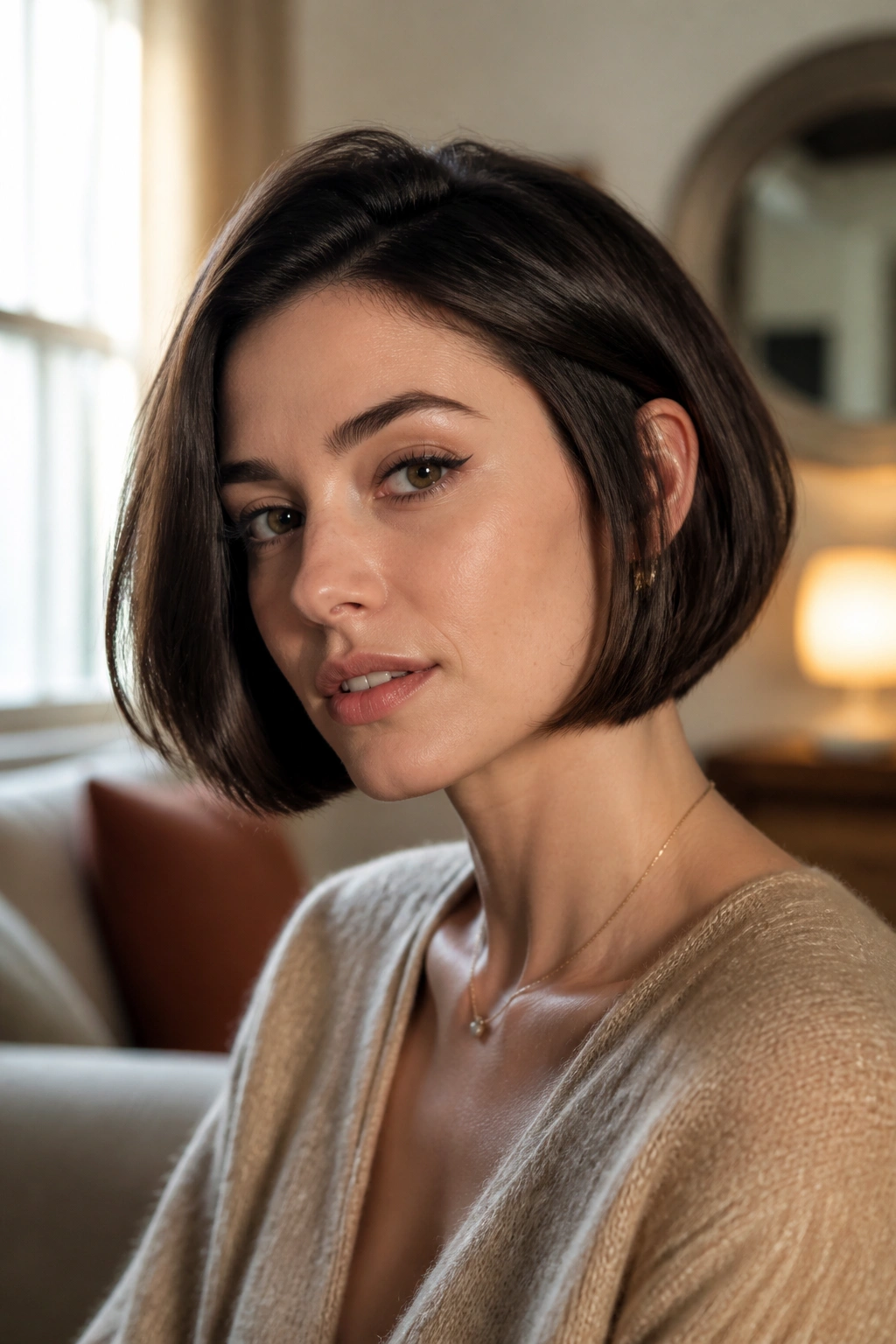
A chin-grazing French bob has a kind of built-in softness that a longer cut sometimes has to fake. The length sits right where the jaw starts to angle, so the hair frames the face instead of hanging past it and dragging everything down. If you want a bob haircut that looks airy without trying too hard, this is a strong place to start.
The trick is in the ends. Ask for a clean perimeter with a very slight bevel, not a hard, boxy line. That tiny curve at the bottom keeps the cut from feeling severe. It also gives the hair room to flick in a flattering way when you tuck one side behind the ear.
A center part keeps it modern. A side part makes it softer and a little more casual. Both work. The style looks best when the bend starts near the cheekbone, not the shoulders. That keeps the whole shape compact and pretty, not stretched out and sleepy.
You do not need heavy styling here. A round brush, a quick pass with a 1-inch curling iron, or a rough dry with a dab of mousse is enough.
2. Feathered Bob with Invisible Layers

A feathered bob with invisible layers is the quiet overachiever of fluffy bob haircuts. From the outside, it still looks like a bob. Inside, though, the hair has been shaped so it lifts and sways instead of clumping into one blunt block. That’s what makes the cut feel soft rather than heavy.
Why the layers stay subtle
The layers start low, usually below the cheekbone, and they’re cut to support movement instead of announce themselves. That matters. If the layers show too much, the haircut starts looking shaggy in the wrong way. When they stay hidden, the result is airy and flattering.
- Best for fine to medium hair that needs motion
- Works well when the hair falls flat at the crown
- Ask for internal layers, not choppy surface layers
- Finish with a light mousse at the roots and a pea-sized cream on the ends
If your hair turns puffy fast, keep the layers lower than you think you need. That one detail saves the cut from ballooning out near the temples.
This is one of those cuts that looks better after a day or two. The shape loosens a touch, and the ends settle into that soft bend people always try to fake with too much curling.
3. Bob with Curtain Bangs

Can bangs make a bob softer without making it look heavy? Absolutely — if the bangs split cleanly down the middle and graze the cheekbones the way curtain bangs do. That open shape pulls attention to the eyes and softens the upper part of the face, which is exactly what a fluffy bob haircut needs.
Curtain bangs work because they break up the blocky feel that some short cuts can have. They also add motion around the front without forcing you into a full fringe. The middle stays lighter, the sides sweep out, and the whole haircut feels breezier.
How to wear the fringe
Blow-dry the bangs forward for a second, then round-brush them away from the face so they fold softly at the temple. A small Velcro roller can help if your hair goes limp fast. Use it for five to ten minutes while you finish getting dressed.
Keep the bangs a little longer than your eyebrows if you want softness. Short, blunt fringe can look cool, but it changes the mood fast and makes the cut feel firmer.
This is a strong choice if you want the bob to frame your face without hugging it too tightly.
4. Collarbone-Length Wavy Bob

If your hair flips out at the ends and refuses to sit still, a collarbone-length wavy bob can work with that energy instead of fighting it. The extra length gives the waves room to move, and the collarbone itself becomes part of the shape. That little bit of length also keeps the cut from feeling too crisp.
This version is especially kind to medium and thick hair. You get the softness of a bob, but not the rigid line that sometimes makes a shorter cut feel boxy. The ends can be blunt or lightly textured depending on how much fullness you want. I prefer a cleaner edge here; it keeps the wave looking plush, not ragged.
A cream or light leave-in is usually enough. Then let the hair air-dry halfway before you touch it. Too much fuss ruins the texture. Too much brushing does, too.
- Collarbone length keeps the cut relaxed
- Wavy texture gives the style natural softness
- A middle part feels easy; a deep side part adds lift
- Works well with loose bends from a large-barrel iron or diffuser
This is the kind of bob that looks best when it moves.
5. Soft Blunt Bob

Blunt does not have to mean hard. That’s the mistake people make with this cut. A soft blunt bob keeps the clean edge, but the edge is beveled just enough to avoid that stiff, ruler-straight look that can swallow the face.
This shape is a favorite when hair is fine and needs a fuller outline. The straight perimeter makes the ends appear thicker, while the subtle softening keeps the bob from feeling severe. It’s a neat trick, and it works.
I like this cut when the hair is naturally straight or only slightly wavy. If the texture is extremely curly, the blunt line can disappear unless the hair is set with a fair amount of control. The softness then comes from styling rather than the cut alone.
A small round brush and a quick bend under the ends do more here than a lot of heavy layering ever will. Ask your stylist to soften only the last quarter-inch if you want the line to stay visible. Too much texturizing and the whole point gets lost.
This one feels clean, polished, and still touchable.
6. Shaggy Bob with Choppy Ends
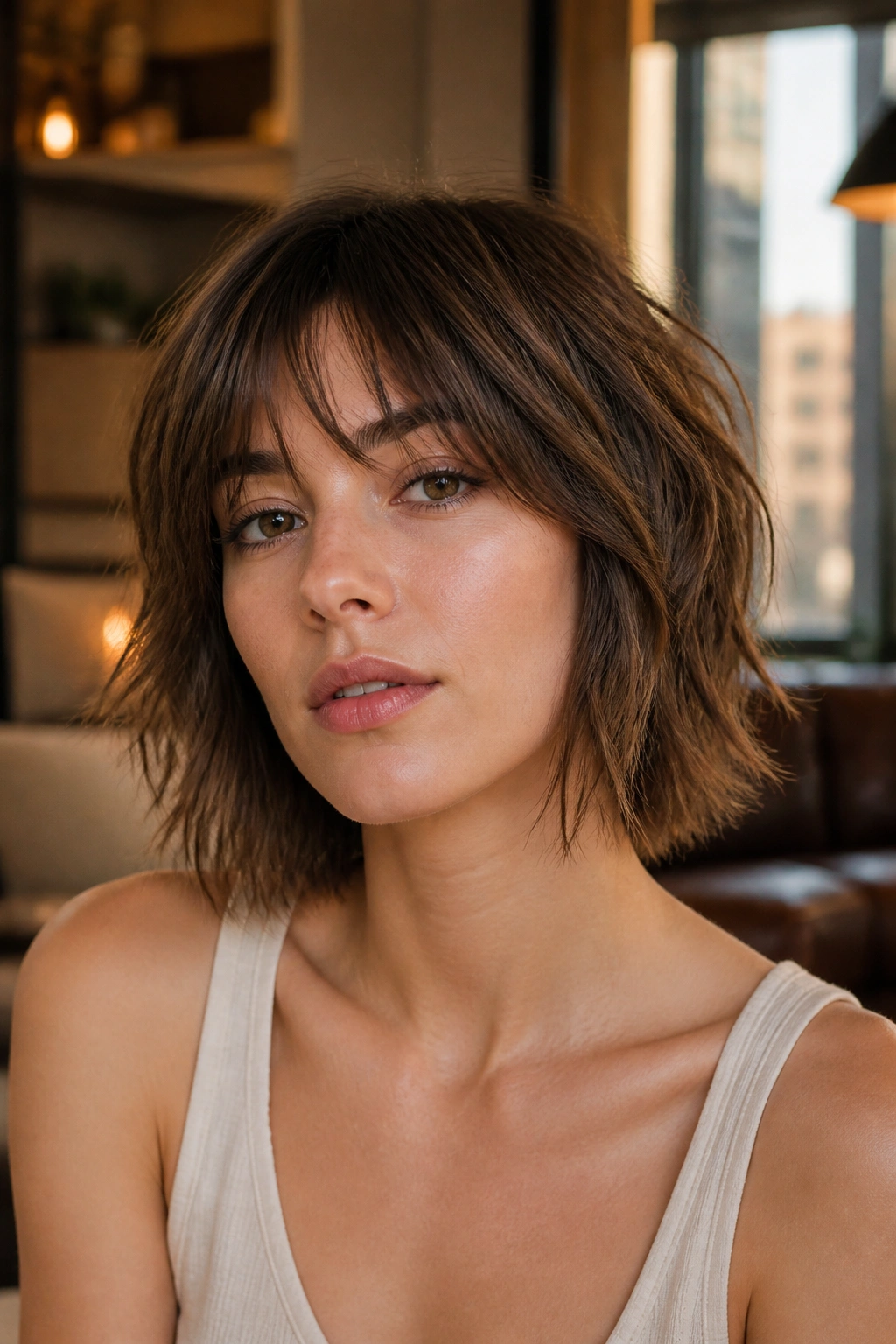
Unlike a classic bob, this version borrows just enough from the shag to keep the movement alive. The choppy ends make the shape feel less formal, which is handy if you hate hair that sits too neatly. It still reads as a bob, though. That matters.
The softness here comes from irregularity, but controlled irregularity. You want the ends to flick a bit, not stick out like broken pieces. A good stylist will keep the top from getting too short and will build texture mostly through the lower half of the cut.
This one is strongest on thick hair and loose waves. Straight hair can wear it too, but it usually needs a bit of styling paste or texture spray to show the shape. Without that, it can go slack.
A good reference point is the collarbone to jaw zone. Too short and the cut can feel busy. Too long and it loses the shag influence. The right version looks like the hair was cut to move, not to scream for attention.
It’s casual. A little messy. Very easy to wear.
7. Rounded Volume Bob

A rounded volume bob is for the person who wants softness but still likes shape. The silhouette curves inward at the ends and lifts gently near the crown, which gives the haircut that plush, cloudlike finish people tend to want from a fluffy bob haircut.
What makes it different
The roundness is planned. It is not just “big hair.” The shape starts with a slightly stacked back, then widens enough through the sides to follow the head without flaring out too much. That balance is the whole point.
- Best when the hair needs body at the crown
- Great for medium-density hair that falls flat at the roots
- Works with a large round brush or roller set
- A soft side part makes the curve feel less formal
A rounded bob can look old-fashioned if the ends are too tucked under and the top is too exact. Keep a bit of movement in the front pieces. That stops the cut from looking like a fixed helmet.
If your hair grows straight down like a curtain, this shape gives it a little architecture without making it stiff. It’s one of the most flattering soft bob options for people who want volume without obvious layers.
8. Inverted Bob with Airy Back
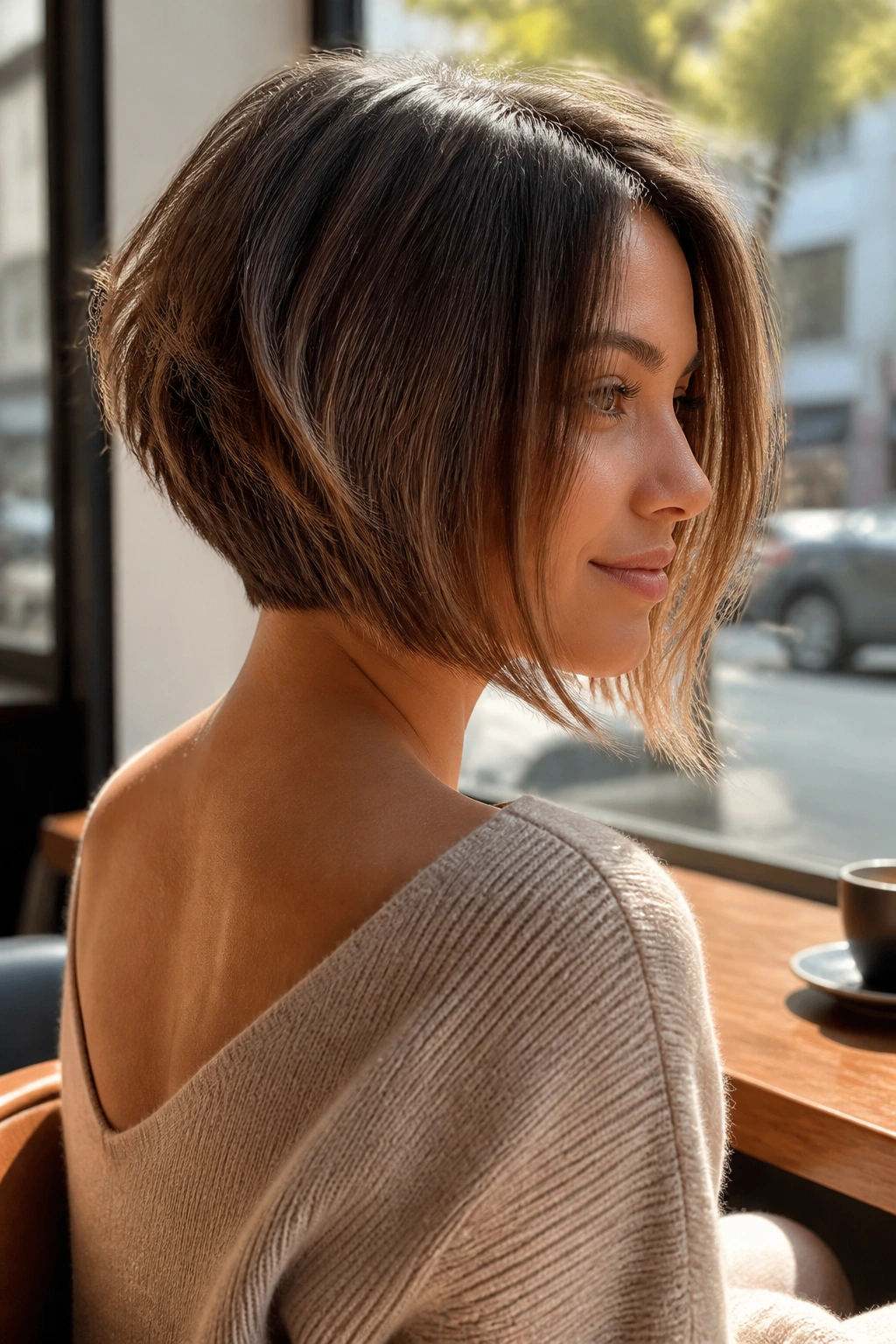
A gentle inverted bob is one of the smartest ways to get lift without a lot of daily work. The back sits shorter, the front stays longer, and the whole haircut angles forward in a way that naturally opens up the face. The key word here is gentle. A harsh inverted line can look sharp; a softer one looks elegant and easy.
Sharp doesn’t mean soft.
The angled shape helps fine hair appear fuller at the back, while the longer front pieces keep the cut from feeling too cropped. If the graduation is subtle, the result reads fluffy instead of severe. The side view is where this cut really earns its keep. It gives you movement without the need for a ton of layering.
This is a good pick if you wear glasses, because the longer front pieces can sit near the frames and soften the whole look. It also works well with a tucked-behind-the-ear moment, which adds a little asymmetry and keeps things relaxed.
Ask for a soft stacked back, not a hard shelf. That difference changes the whole haircut.
9. Side-Parted Fluffy Bob
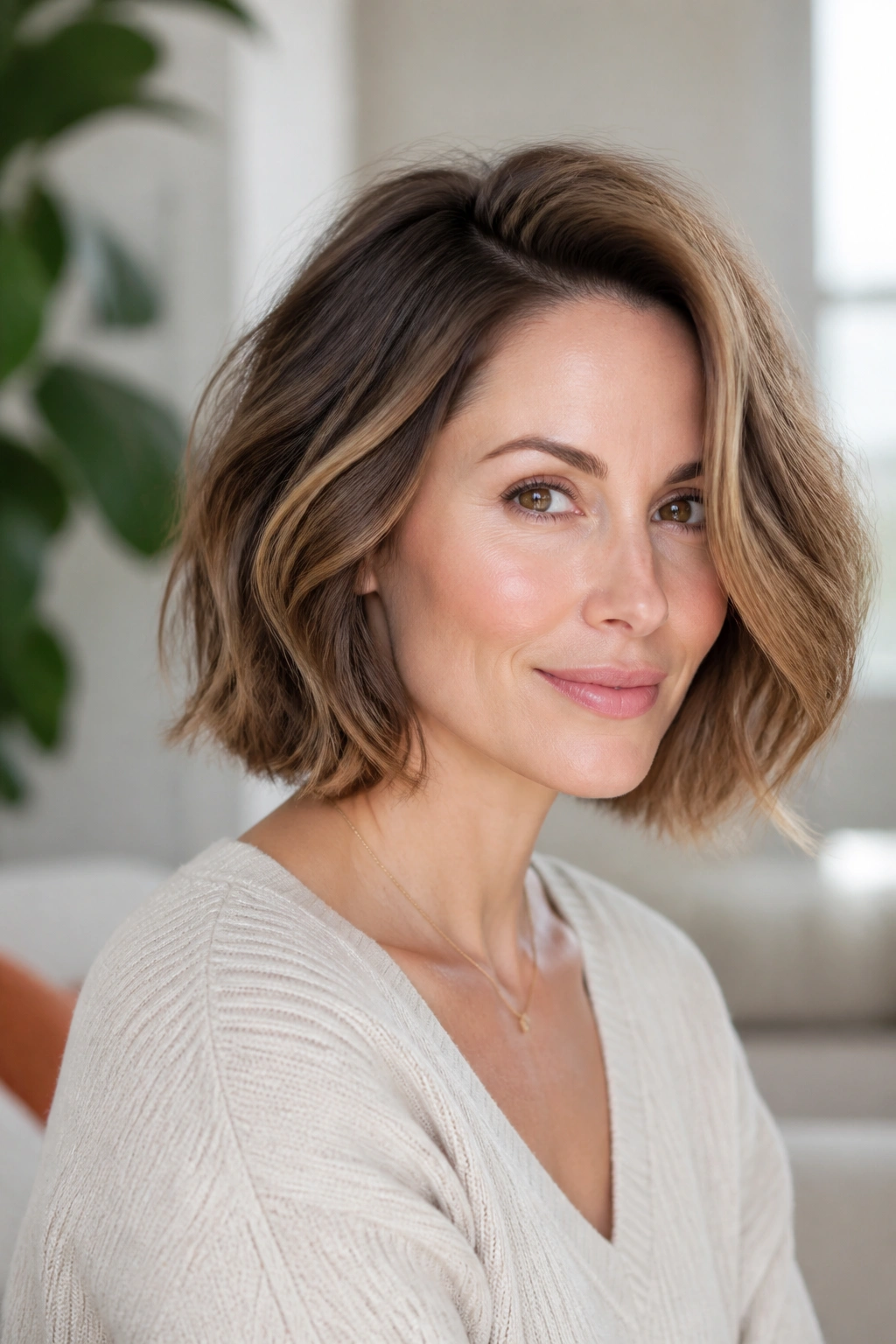
Why does a side part make a bob look softer so fast? Because it breaks the symmetry. A center part can be clean and pretty, but a deep side part gives the roots a little lift and lets the hair fall in a looser, more casual way. That small shift changes the whole mood.
This works especially well if your hair is flat on top or if your face shape likes a bit of angle. The larger side creates a wave-like curve across the forehead, which softens the features without needing bangs. It also gives the bob a more lived-in feel, even when the cut itself is quite neat.
How to get the most from it
Blow-dry the roots in the opposite direction first. Then flip the part back and let the hair settle. That little trick helps the roots stand up instead of lying down like wet paper. A light spray at the crown can hold the lift, but don’t drown it.
A side-parted bob can be short, medium, or collarbone length. The part does most of the work. If you want softness with almost no extra effort, start here. It’s low drama in the best way.
10. Wispy Bang Bob

Picture a bob that feels lighter the second it moves — wispy bangs do a lot of that work. A soft fringe removes bulk from the forehead area without stealing attention from the cut itself. That means the haircut stays fluffy, not heavy.
The best version keeps the fringe piecey and a little translucent. You should be able to see some forehead through it. If the bangs are too dense, the whole style turns closed-in, and the bob loses the open feel that makes it flattering.
- Ask for bangs that taper at the temples
- Keep the center lighter than the sides
- Use a small round brush or your fingers to dry them
- Trim every 4 to 6 weeks if you want the fringe to stay airy
I like wispy bangs on shorter bobs that might otherwise feel plain. The fringe gives the cut a front-facing shape, which is especially nice if you tuck your hair behind the ears a lot.
This is not the fringe for someone who wants a heavy, dramatic line. It’s for someone who wants the face to look softened in a very quiet way.
11. Curly Fluffy Bob
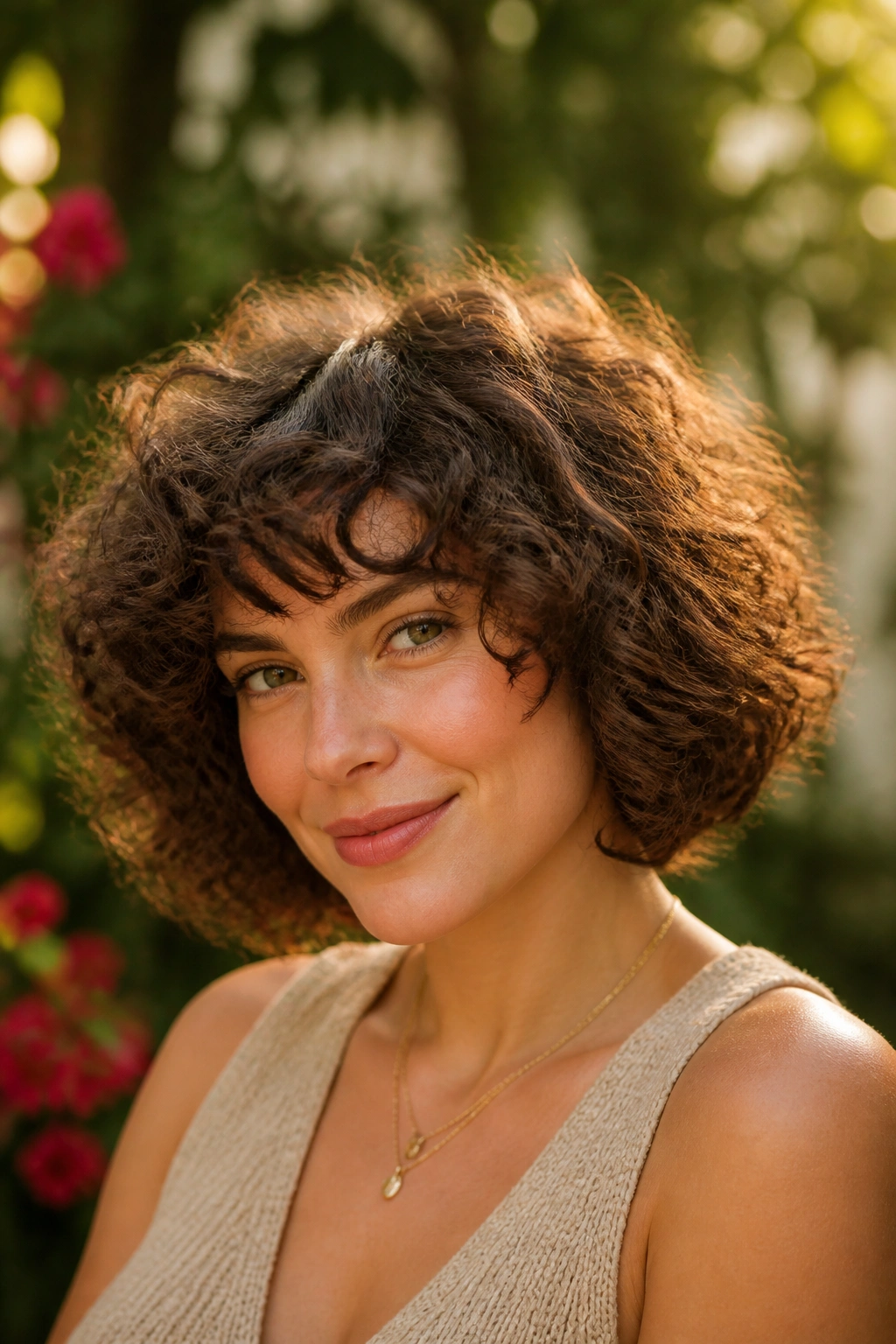
Curly hair and fluffy bob haircuts have a natural connection, but only when the cut respects the curl pattern. Chop the shape too bluntly and the bob can puff out at the sides. Layer it too hard and the curls lose their weight. The best version sits somewhere in the middle, with enough room for spring and enough structure to keep the outline neat.
A dry cut or curl-by-curl shaping often works better than hacking at wet curls and hoping they behave later. That sounds fussy, and sometimes it is, but the payoff is real. Curly bobs look softer when the curls land at different heights in a controlled way. The silhouette feels full, not mushroomy.
Hydration matters, though not in a vague “use moisture” way. Use a leave-in, a curl cream, and a diffuser on low speed. Then stop touching it. The less you disturb the curl while it sets, the better the fluff reads.
A curly bob can be chin-length, jaw-length, or a little longer. Shorter curls look bouncier; longer curls look looser. The cut should support the curl’s bounce, not bulldoze it. That’s the whole game.
12. Tapered Nape Bob

A tapered nape bob is not the same as a stacked bob, and that distinction matters. The nape is trimmed close enough to make the neckline look neat, but the taper is softened so it doesn’t form a hard ledge. The front can stay a little longer and more fluid, which gives the cut its soft finish.
This shape is useful when hair is thick at the back or when you want the bob to sit cleanly against the neck. It removes bulk where you do not want it, then keeps the sides light enough to move. The result is tidy but not stiff.
Ask for a soft taper, not a hard shelf
A hard shelf in the back can look dated fast. A tapered nape keeps the line close while still letting the hair fall naturally. If your stylist cuts the back too tight, the haircut starts shouting. That’s the thing to avoid.
This style looks especially good with a side sweep at the front or a gentle middle part. It gives a subtle lift where the head needs it and a smooth finish where the neckline wants breathing room. It’s a quiet cut, but it does a lot.
13. Layered Bob for Fine Hair
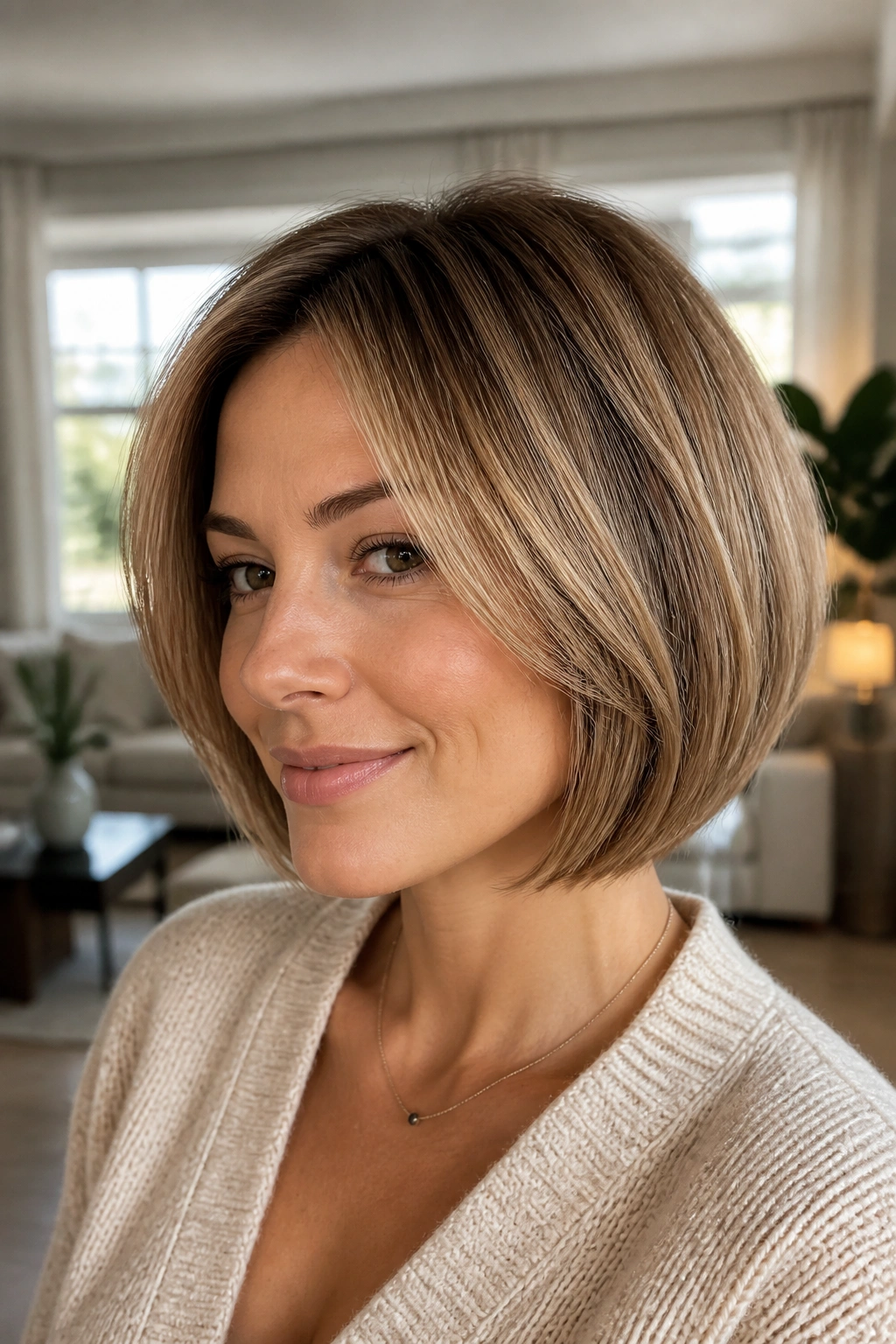
Fine hair needs a bob that knows how to fake fullness without stripping away the little weight it has. A layered bob for fine hair does that by keeping the perimeter fairly solid and adding only enough internal movement to stop the shape from going flat. Too many layers on fine hair is a fast route to wispy ends and a weak outline.
What to ask your stylist
- Keep the bottom line mostly intact
- Add soft internal layers below the cheekbone
- Avoid aggressive thinning shears near the ends
- Blow-dry with a root-lifting mousse, not a heavy cream
The goal is lift, not frizz. Fine hair often looks best when it’s allowed to hold a clean line at the bottom while the top stays airy. That keeps the haircut looking fuller from every angle.
This is a strong choice if your hair loses shape by noon. It gives you a little body where you need it most, and it does not depend on a lot of daily heat styling. If you have fine hair, the wrong layers can flatten your whole head of hair in one appointment. The right ones make the bob feel plush instead of thin.
14. Blowout Bob with Polished Bend
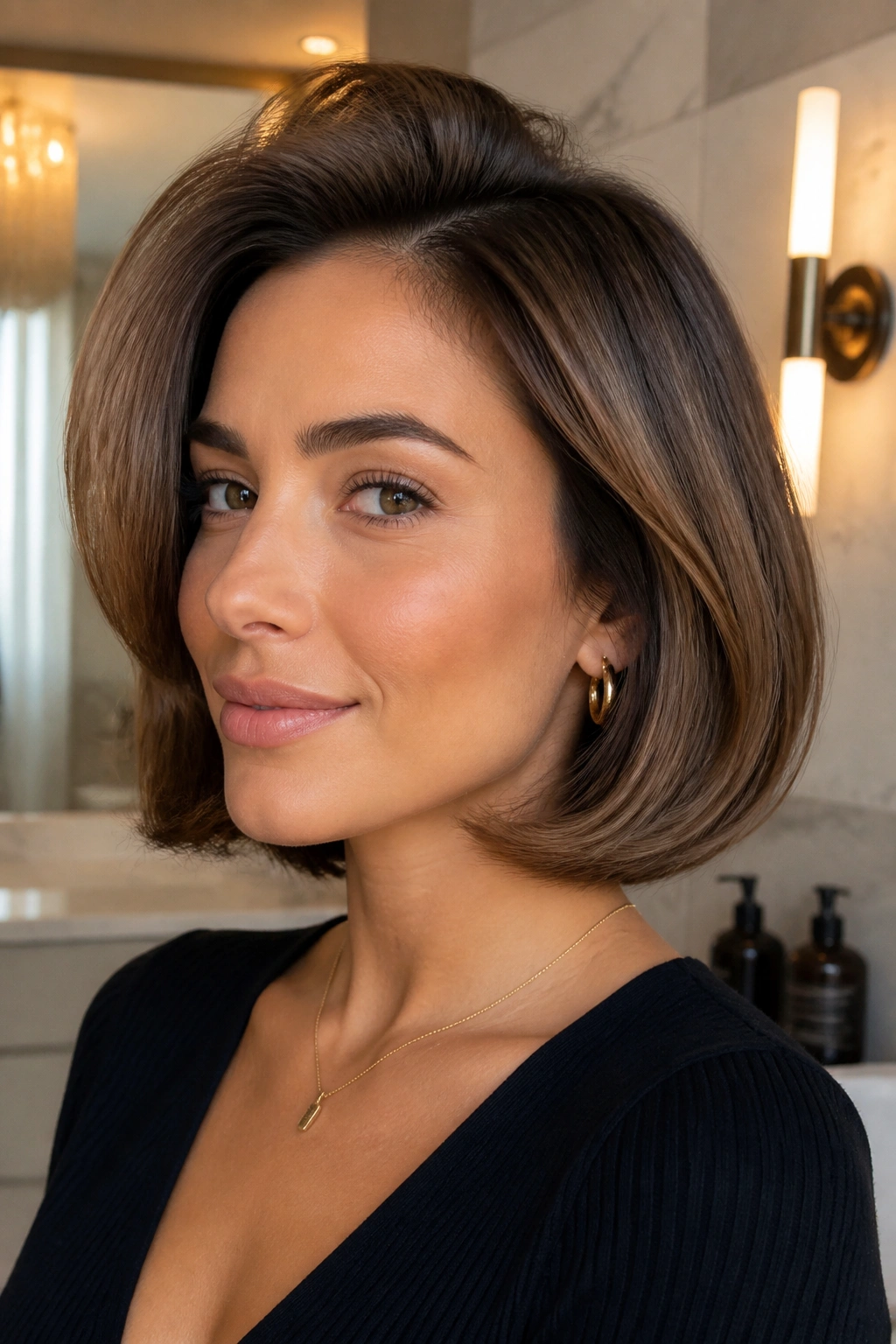
A blowout bob with polished bend is what happens when softness meets control. The shape still moves, but the movement is deliberate. The ends curve under or outward in a smooth arc, and the roots have enough lift to keep the haircut from sitting flat against the scalp.
This style usually looks best with a round brush somewhere between 1.25 and 1.5 inches, depending on hair length. Blow the hair up at the roots first, then guide the ends under or slightly away from the face. The bend should look effortless, but the shape needs a bit of work. That’s the tradeoff.
The good thing about this bob is that it makes the hair look healthy. It catches light along the bend, not because the style is loud, but because the surface is smooth and the outline is tidy. If your hair is frizzy, a small amount of heat protectant and a finishing serum go a long way.
It’s a polished take on the fluffy bob haircut, and it suits workdays, dinners, and any time you want your hair to look intentionally styled without feeling stiff.
15. Jaw-Length Baby Bob

Can a very short bob still feel soft? Yes, if the corners are beveled and the line is light around the face. A jaw-length baby bob is cropped enough to show the neck and cheekbones, but not so short that it turns severe. The softness comes from movement at the edges, not length.
This cut works best when the hair is straight or only mildly wavy. The shorter shape can look crisp in a good way, but the goal here is not sharpness. You want the outline to skim the jaw rather than cut across it like a blade. That means the ends should be softened slightly and the front pieces should not be too rigid.
How to wear it
Tuck one side behind the ear. Let the other side fall forward. That tiny asymmetry keeps the haircut from looking too planned. A small round brush or a quick pass with a flat iron on the ends is enough to add that soft bend.
If your neck is one of your favorite features, this cut shows it off beautifully. It is short, airy, and clean, but never dull when it is cut well.
16. Tousled Lob with Soft Ends

This is the cut for someone who wants fluff but isn’t ready to lose every inch. A tousled lob sits between the bob and longer shoulder-grazing styles, which gives the hair more swing and a little less pressure to behave perfectly. Soft ends keep it from feeling heavy, even when the hair is thick.
The longer length lets waves form in a looser way. That’s useful if your hair grows out fast or if you want a cut that still looks decent when you skip a styling day. It also gives you room for a middle part, a side part, or that slightly messy bend people keep trying to copy with spray and hope.
A light layering pattern near the front helps the lob avoid the triangle effect. Nobody wants that. The ends should be soft enough to move, but not so shredded that the shape falls apart. The best version feels breezy, not overworked.
This is one of the easiest fluffy bob haircut variations to live with because it gives you room.
17. Bottleneck Bang Bob

A bottleneck bang bob has a fringe shape that starts narrow in the center and opens out toward the temples, almost like the neck of a bottle widening at the shoulders. That shape softens the forehead without boxing the face in. It’s a little more shaped than curtain bangs, but still softer than a blunt fringe.
The fringe is the headline here, but the bob underneath matters just as much. A clean, slightly layered base keeps the style from feeling too busy. If the rest of the cut is heavy, the bangs can’t do their job. They need room to breathe.
This style works especially well when you want face-framing without a lot of daily styling. The bangs can be brushed down and then swept apart with your fingers. They don’t need to sit perfectly. A little irregularity is part of the charm.
- Narrow center gives the forehead a softer opening
- Wider sides draw attention to the eyes and cheekbones
- Best on straight to wavy hair
- Easy to style with a small round brush or a quick blow-dry
It’s a small cut detail with a big payoff.
18. Grown-Out Bob with Face-Framing Pieces
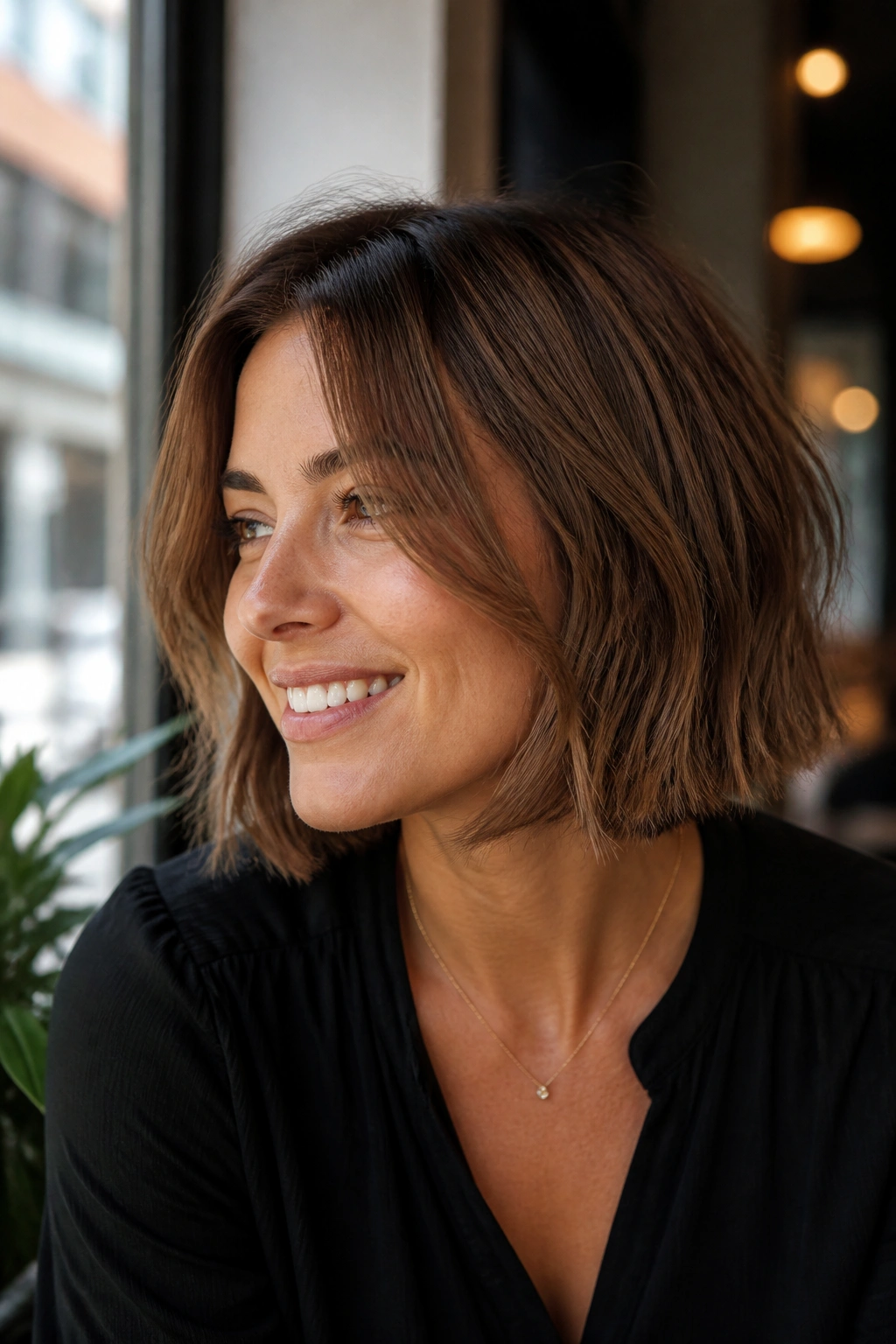
Unlike a freshly sharpened salon bob, this one lives in a slightly softer place. A grown-out bob with face-framing pieces has enough length to avoid looking severe, and the front sections are kept a touch longer so they can slide around the face instead of sitting like corners.
This is the haircut for someone who likes shape but dislikes constant trims. The grow-out can look intentional if the neckline stays neat and the front pieces stay light. That means your stylist needs to protect the outline while letting the perimeter relax a little.
The face-framing pieces matter more than people think. They take weight off the front, which is where a lot of bobs start to feel boxy. Keep those pieces around cheekbone to jaw length, and the haircut stays soft even when it’s not freshly cut.
It suits busy weeks, travel, and anyone who wants a bob that doesn’t demand perfection every morning. A little length can be the difference between tidy and harsh.
19. Mushroom Bob, Softened
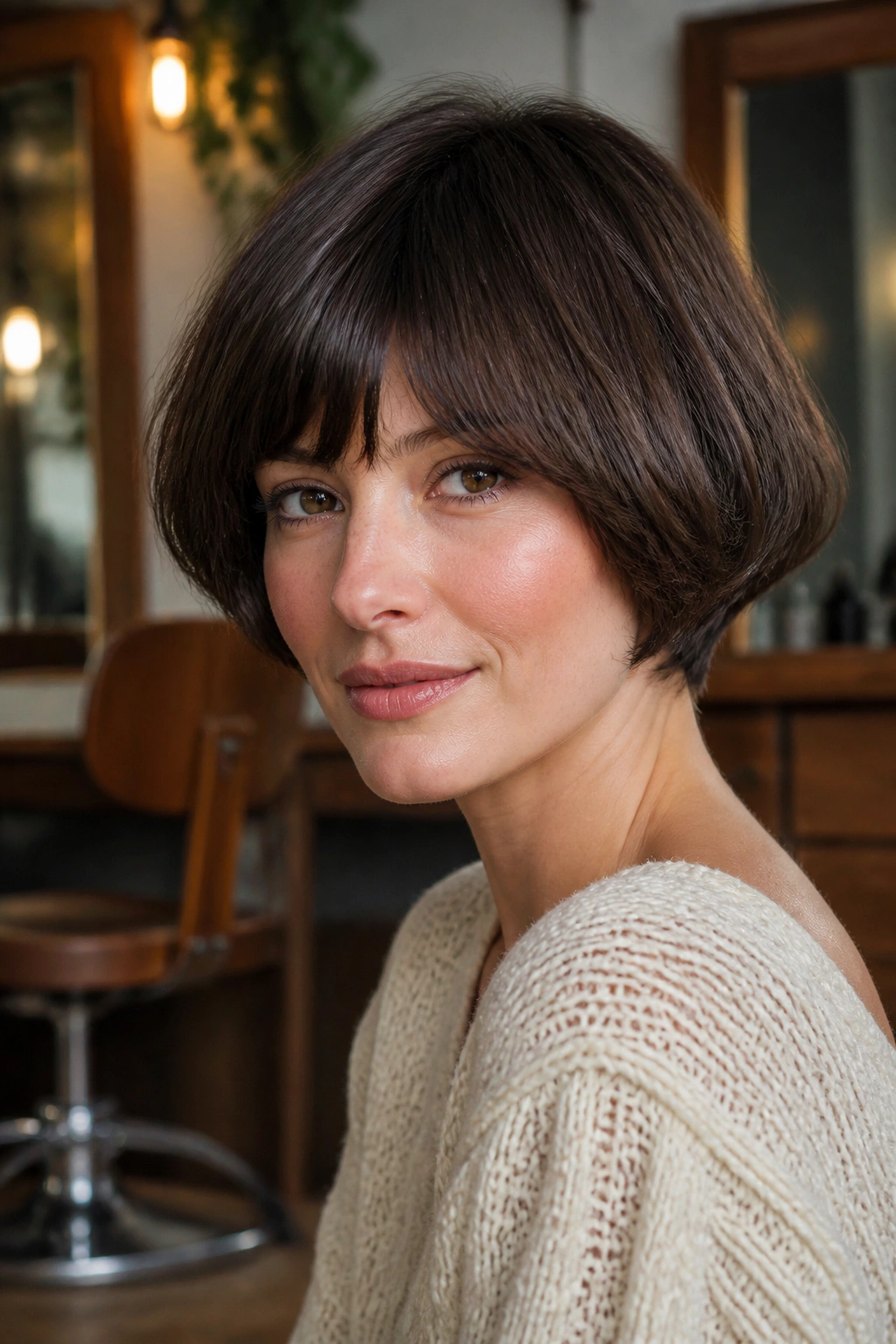
A softened mushroom bob takes a shape that can go very wrong and makes it wearable. The classic rounded silhouette is still there, but the edges are looser, the top is less helmet-like, and the sides have enough movement to keep the cut from feeling stuck in place. Done well, it has a little retro charm without the hard outline.
How to keep it from looking like a bowl
The answer is texture, but controlled texture. Keep the crown from getting too flat, soften the sides with gentle internal shaping, and avoid a blunt top-heavy line. If the haircut is too round and too precise, it can feel dated fast.
- Works best on straight or softly wavy hair
- Ask for softened corners near the jaw
- Keep the top lifted, not puffy
- Use a round brush only at the ends, not all over
This cut is not for someone who wants messy movement everywhere. It works because the shape is deliberate. The softness comes from the edges, not from making the whole thing fuzzy. That distinction matters more than people realize.
20. Air-Dried Texture Bob

If you want the least fussy version of the fluffy bob haircut, this is the one I keep coming back to. An air-dried texture bob starts with a cut that already has movement built in, then lets your natural bend do the rest. No perfect blowout. No overthinking. Just shape, product, and a little patience.
The right version usually has soft internal layers, a length that hits around the jaw or collarbone, and ends that are not cut too bluntly. That combination lets hair dry in a loose, touchable way instead of collapsing into a flat sheet. A leave-in conditioner plus a small amount of mousse or curl cream is enough for most hair types.
Scrunching helps, but only once. Then leave it alone. If you keep touching the hair while it dries, the texture turns rough and odd at the ends. That’s the part people mess up most.
This bob is perfect for anyone who wants softness without spending half the morning in front of a mirror. It looks casual, but not accidental. And when the cut is right, that’s the sweet spot.
