



Fine hair can look flat in a bob if the cut is too soft, too thinned out, or too busy with layers that eat up the ends. That’s why the Italian bob works so well when the hair is delicate. It keeps a clean edge, puts the weight where you can actually see it, and gives you shape without making the cut feel stiff or helmet-like.
The trick is that an Italian bob for fine hair is not one single formula. A jaw-length version can make the whole haircut look denser. A collarbone version can keep the perimeter thick. Curtain bangs, a side part, a tucked side, a rounded back — all of them change the way the eye reads fullness. Small changes matter here. A lot.
I’ve always thought the best bob haircuts are the ones that look intentional even when they’re a little undone. Fine hair needs that kind of structure. Too much layering and the ends go wispy. Too much softness and the shape disappears by lunchtime. Get the line right, though, and the hair looks fuller before you even touch a round brush.
1. The Jaw-Skimming Italian Bob
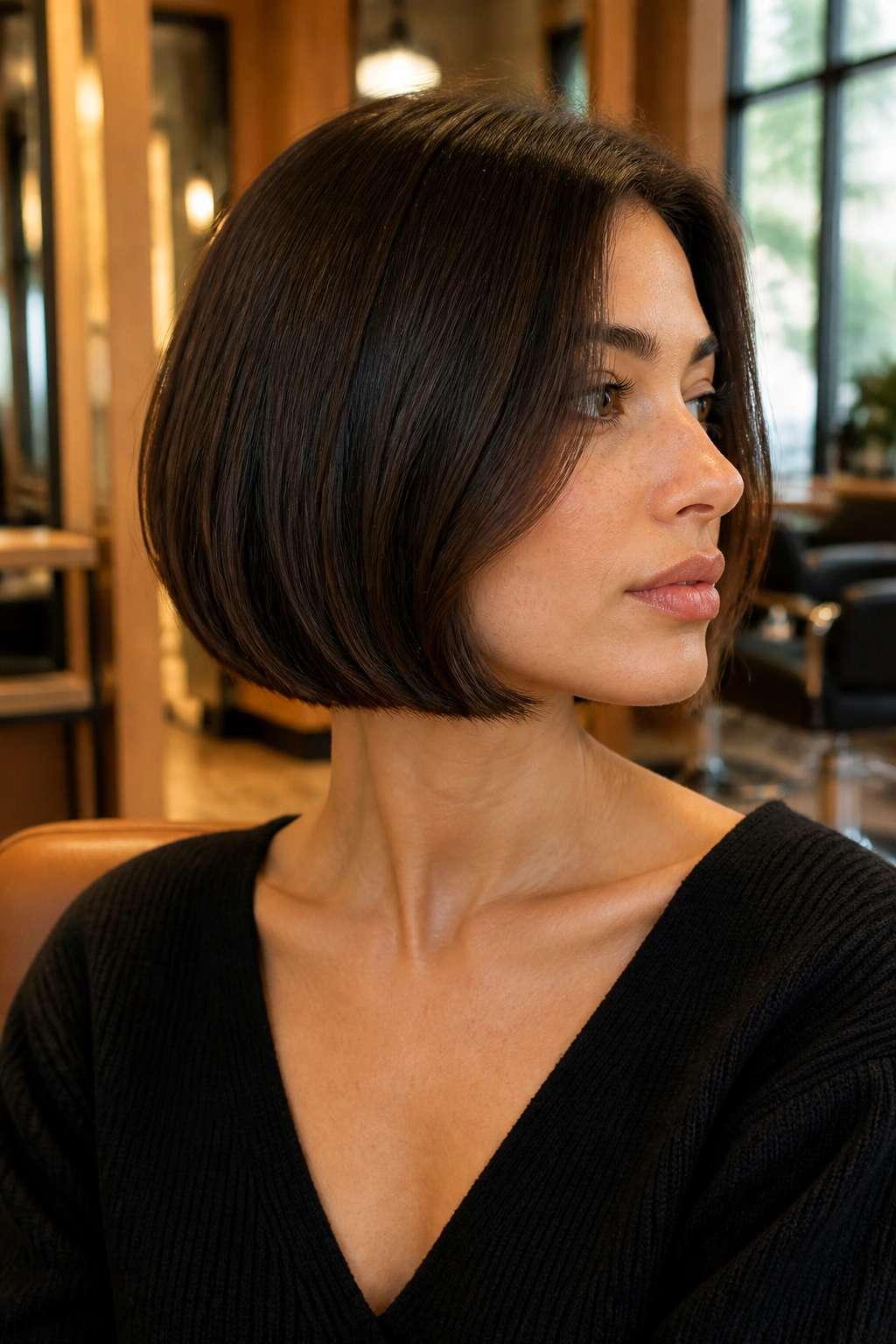
A blunt jaw-skimming cut does most of the heavy lifting here. The line sits right where the face naturally draws attention, so the haircut looks denser even if the actual hair count is modest.
Why This Shape Works So Well
The ends land at the jaw, which gives the bob a firm edge instead of a see-through bottom. That edge is what makes fine hair look more substantial. If the cut is sliced too much at the ends, the whole thing starts to look tired.
Ask for minimal internal layering and a clean perimeter. You want the outline to stay strong. A stylist can soften the inside just enough to keep movement, but the bottom line should still feel blunt when the hair swings.
- Best for hair that falls flat near the cheeks
- Works well on straight, slightly wavy textures
- Looks fuller with a side or off-center part
- Easy to style with a quick bend under the ends
Tip: Blow-dry with a small round brush and keep the ends turned in just a touch. That tiny curve makes the shape look deliberate, not puffed up.
2. The Chin-Length Italian Bob With a Soft Undercurve

Want the cut to look fuller without feeling boxy? Keep it at the chin and let the ends fold inward by a half-inch or so.
That soft undercurve is doing a lot of work. It gives the bob a little shelf at the bottom, which helps the hair look thicker from the side and from behind. On fine hair, the back view matters more than people think. If the outline looks stringy from the back, the whole cut feels lighter than it should.
This version is especially good if your hair has a gentle bend already. You do not need to force a tight curl. A loose bevel under the jaw is enough. Air-dryers and round brushes both work, but keep the finish smooth. Too much texture at the ends can make the cut lose its clean Italian shape.
A chin-length Italian bob also plays nicely with earrings, collars, and high necklines. It sits in that sweet spot where the hair feels styled even on a plain day. That matters when the cut itself is carrying the look.
3. The Side-Part Italian Bob With Hidden Root Lift
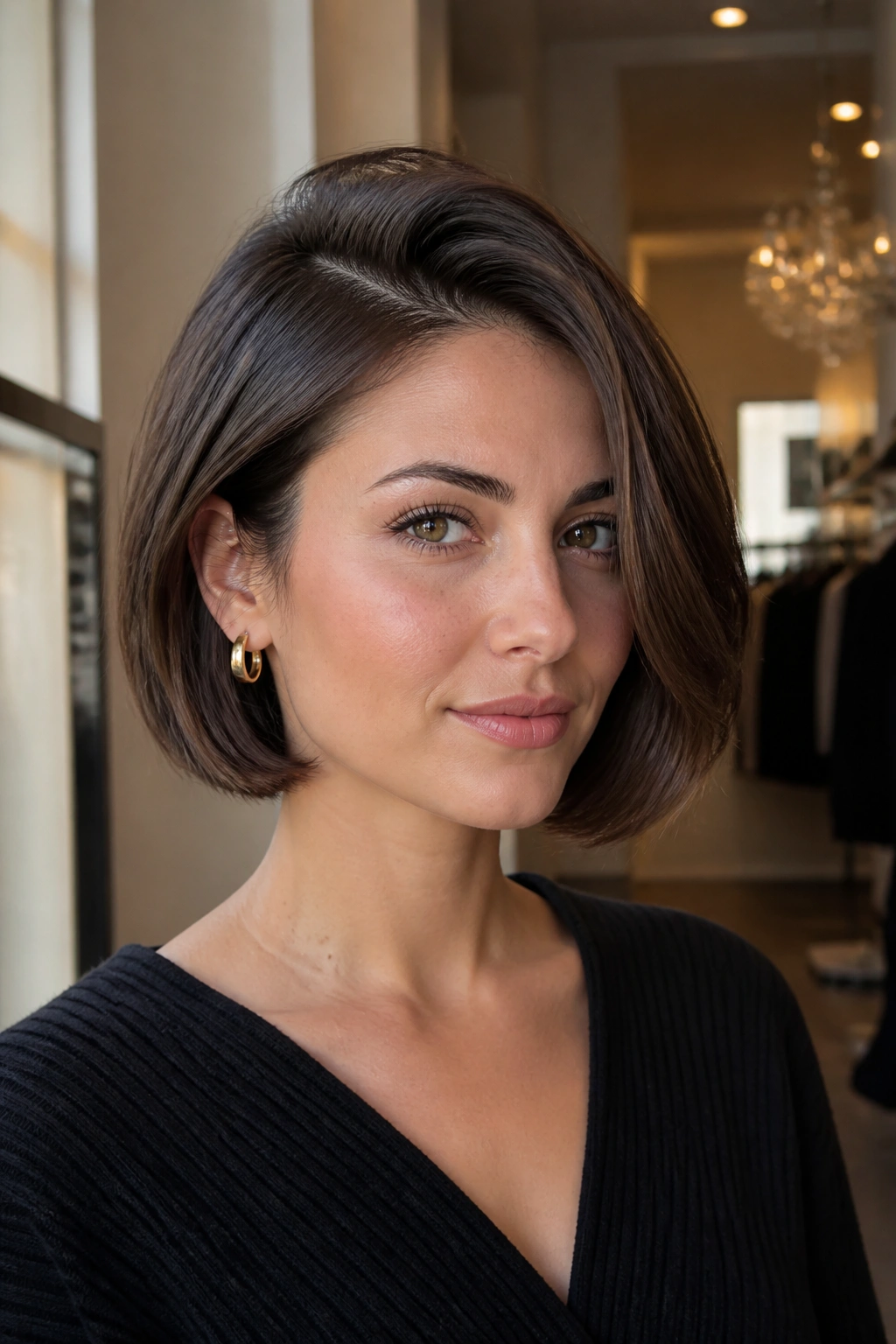
A middle part is not mandatory. In fact, a side part can be the fastest way to make fine hair look like it has more lift at the crown.
The reason is simple. When you move the part off center, one side gets a little more height, and that height makes the whole bob feel fuller. The cut does not need to be dramatic. A deep side part of even 1 to 2 inches can change the whole read of the shape.
How to Ask for It
Tell your stylist you want a soft side part with a strong perimeter. That means the top can be flexible, but the bottom line should still look solid. You do not want heavy graduation that collapses on thin strands.
Styling Notes That Help
- Blow-dry the roots in the opposite direction first
- Flip the part back once the hair is about 80% dry
- Use a pea-sized amount of lightweight mousse at the crown
- Keep serum off the roots; it kills lift fast
This is one of those cuts that looks a little plain in a chair and then suddenly starts making sense once the hair moves. That’s a good sign.
4. The Collarbone Italian Bob With Minimal Long Layers

Short isn’t the only path to fullness. A collarbone-length Italian bob can look thicker than a shorter one when the ends stay blunt and the layers stay light.
This length gives the hair more room to move without stripping away density. Fine hair often looks sparse when it’s cut too short and then overworked with layers. At the collarbone, the weight line can stay more stable. The result is hair that falls in a smoother sheet instead of breaking into airy pieces.
The key is restraint. You want just enough layering to keep the shape from feeling heavy, especially around the front, but not so much that the bottom starts to fray. A lot of stylists go too far here. They mean well. The haircut just gets thinner at the ends than it needs to be.
If your hair is fine but you like a little swing, this is a smart compromise. It feels more wearable than a chin-length chop for some people, and it still gives that Italian-bob polish.
5. The Italian Bob With Curtain Bangs

Curtain bangs can do something sneaky for fine hair: they make the front of the haircut feel richer without stealing too much from the sides.
That matters because a fringe changes where the eye goes. Instead of looking straight at the perimeter, people see movement around the face first. The bob then feels fuller by association. A soft curtain fringe can also hide a less-dense hairline if that’s part of what you’re working with.
What the Fringe Should Do
The bangs should open at the center and blend into the cheekbone area, not sit like a heavy curtain that eats the whole face. Fine hair usually looks better when the fringe is airy enough to move, but substantial enough to register as a shape.
- Keep the shortest point around eyebrow level or slightly below
- Ask for the side pieces to hit the cheekbone or upper lip
- Avoid razor-thin fringe ends
- Dry the bangs first so they don’t separate weirdly later
Curtain bangs need a little maintenance. Not a lot. Just enough to keep them from splitting in the wrong place. If you are the type who likes hair to look styled with minimal effort, this is one of the better bets.
6. The Sleek Middle-Part Italian Bob
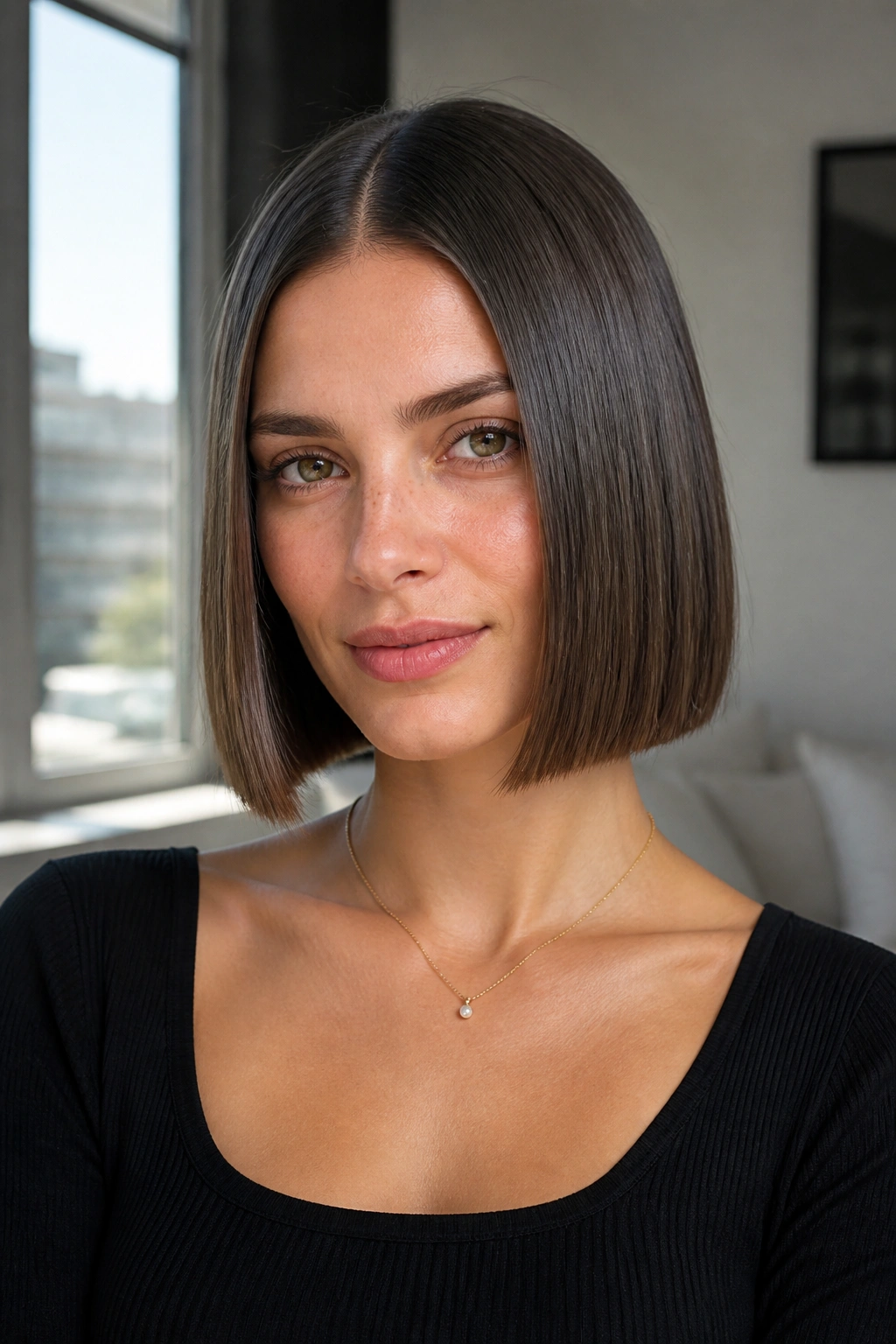
A sleek center part can sound risky on fine hair, but with the right length and finish, it can make the bob look denser, not flatter.
The trick is the line. A middle part gives symmetry, and symmetry makes the hair look intentional. When the ends are blunt and the surface is smooth, the eye reads one strong shape instead of a scattered one. That helps a lot with fine strands that tend to separate.
This version works best when the hair naturally wants to lie fairly straight, or when you’re willing to spend a few extra minutes with a brush and dryer. You want the root area neat and the body of the hair controlled, but not pin-straight to the point of looking thin. A tiny bend at the ends is enough.
Best if you like:
- Clean lines
- Low-fuss styling
- A polished look with little fluff
- Haircuts that grow out gracefully
Use a heat protectant, then finish with a light mist of shine spray from mid-length to ends. Keep the roots clean and the finish soft. That contrast is what keeps this bob from looking severe.
7. The Rounded Italian Bob With Internal Weight
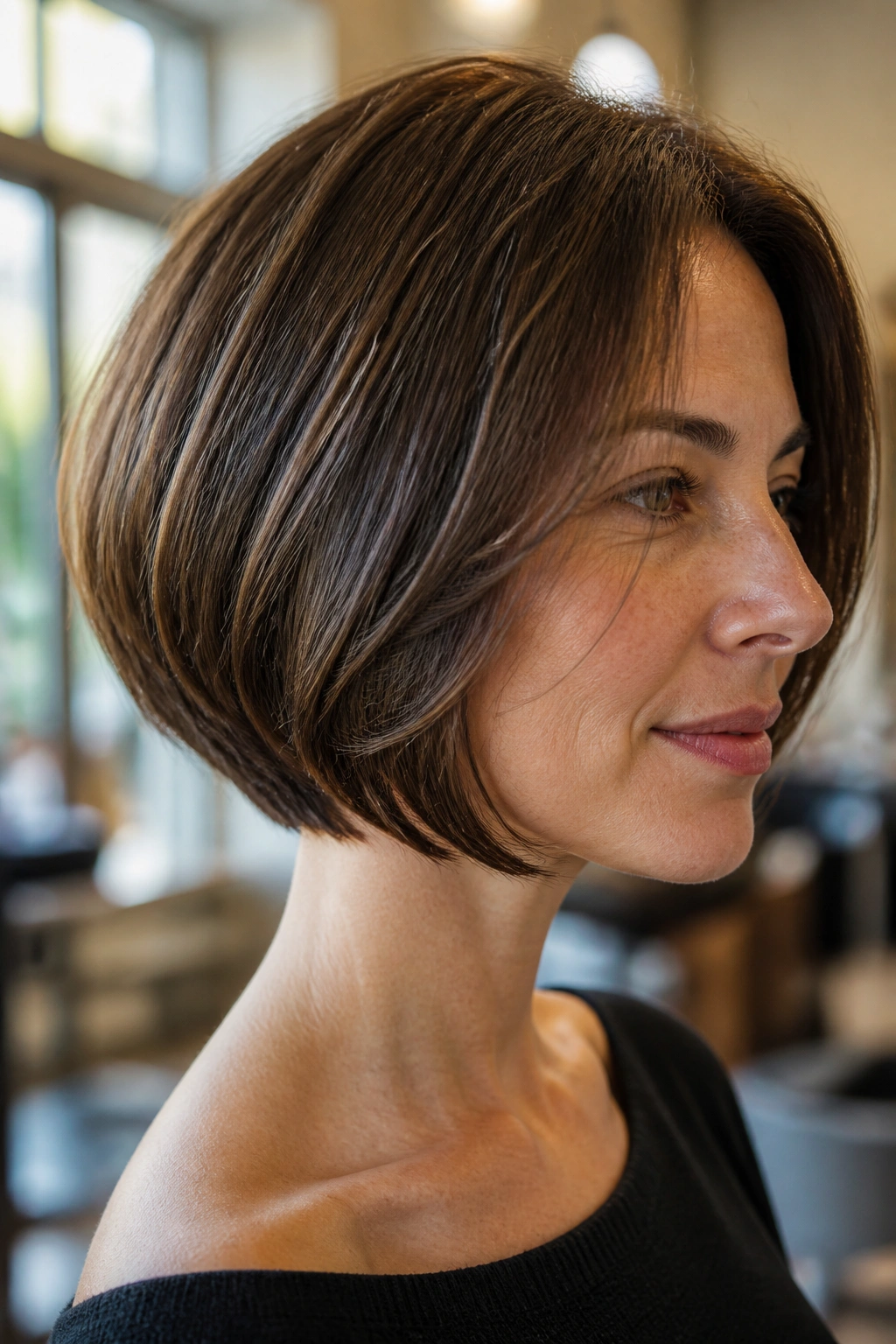
What if the back of the bob did more of the work than the front?
That is the idea here. A rounded Italian bob curves gently under at the nape and through the sides, which gives fine hair a sense of body without making the silhouette puffy. It feels fuller because the shape has a clear arc, and that arc catches the eye.
This is one of my favorite options for people whose hair lies flat in a straight line. The rounded back creates lift through the profile, and the front can stay soft enough to frame the face. You do not need a dramatic stacked cut. In fact, too much stacking can expose the density issue you are trying to hide.
What to Ask For
Tell the stylist you want a rounded outline with weight kept at the edge. That usually means the hair is slightly shorter in the back, but not choppy. The sides should connect smoothly into the front pieces.
A rounded Italian bob can be styled with a medium round brush and a quick under-turn at the ends. It’s not a fussy cut. It just needs shape. And shape, on fine hair, is half the battle.
8. The Micro-Layered Italian Bob

Small layers can help fine hair move without making the ends disappear. The word small matters.
A micro-layered Italian bob keeps the perimeter thick while slipping in tiny bits of internal movement. That means the haircut sways a little instead of hanging like a stiff sheet, but the edge still looks full. If you’ve had a layered bob that felt stringy after two weeks, this is the opposite of that.
The layers should live inside the shape, not on the outside. You want the blunt outline to stay visible. A good stylist will often cut these layers in a way that you barely notice until the hair moves in daylight or in a side view.
What Not to Do
- Do not ask for heavy face-framing if your ends are sparse
- Do not thin the hair with a razor all through the bottom
- Do not stack too many short layers near the crown
- Do not over-texturize the perimeter
Fine hair needs some air, yes. It does not need to be stripped down to feathers. This cut keeps a little softness while preserving the look of density. That’s the sweet spot.
9. The Wavy Italian Bob With a Soft Bend

A bit of wave can make the whole haircut feel thicker than it actually is.
That’s why the wavy Italian bob works so well on fine hair. The bend interrupts the eye just enough to create the sense of volume, especially when the wave starts around the mid-lengths and the ends stay intact. You want movement, not frizz. You want a loose pattern, not a messy halo.
A 1-inch curling iron or a flat iron bend can do the job. Wrap only the middle section of each strand, leave the last inch or so out, and alternate directions so the waves do not all fold the same way. Then brush through lightly. Not too much. If you overbrush, the wave disappears and you’re back to square one.
The Styling Difference
The wave should look lived-in, not crunchy. A touch of light mousse or cream before drying helps the strand keep shape. Afterward, a mist of flexible spray keeps the style from collapsing at the crown.
This cut is a good match for people who don’t want to spend ages making hair “perfect.” It can look a little undone and still feel finished. That’s useful.
10. The Tousled Italian Bob With Piecey Ends

A slightly messy bob can be a very smart move when the hair itself is fine. The mess creates texture, and texture creates the feeling of density.
The key is keeping the pieces intentional. You want a bit of separation at the ends, not a frayed outline. Think of it as a bob that has been softly broken in, not one that has been roughed up. That difference matters more than people expect.
Rough-dry the roots first, then add a small amount of texturizing cream through the mid-lengths. Scrunch lightly if your hair already bends. If it does not, twist a few sections around your fingers and let them cool. Then shake it out. Done.
A Few Things That Help
- A matte texture spray adds grip without heavy shine
- Dry shampoo at the roots can make day-two hair look fuller
- A dab of styling paste on the ends helps define piecey movement
- Too much product will flatten the whole thing fast
This version has a more casual feel than the sleeker Italian bobs, but it still needs a strong cut underneath. Otherwise the texture just exposes how little hair there is. That’s the trap.
11. The Italian Bob You Can Tuck Behind One Ear
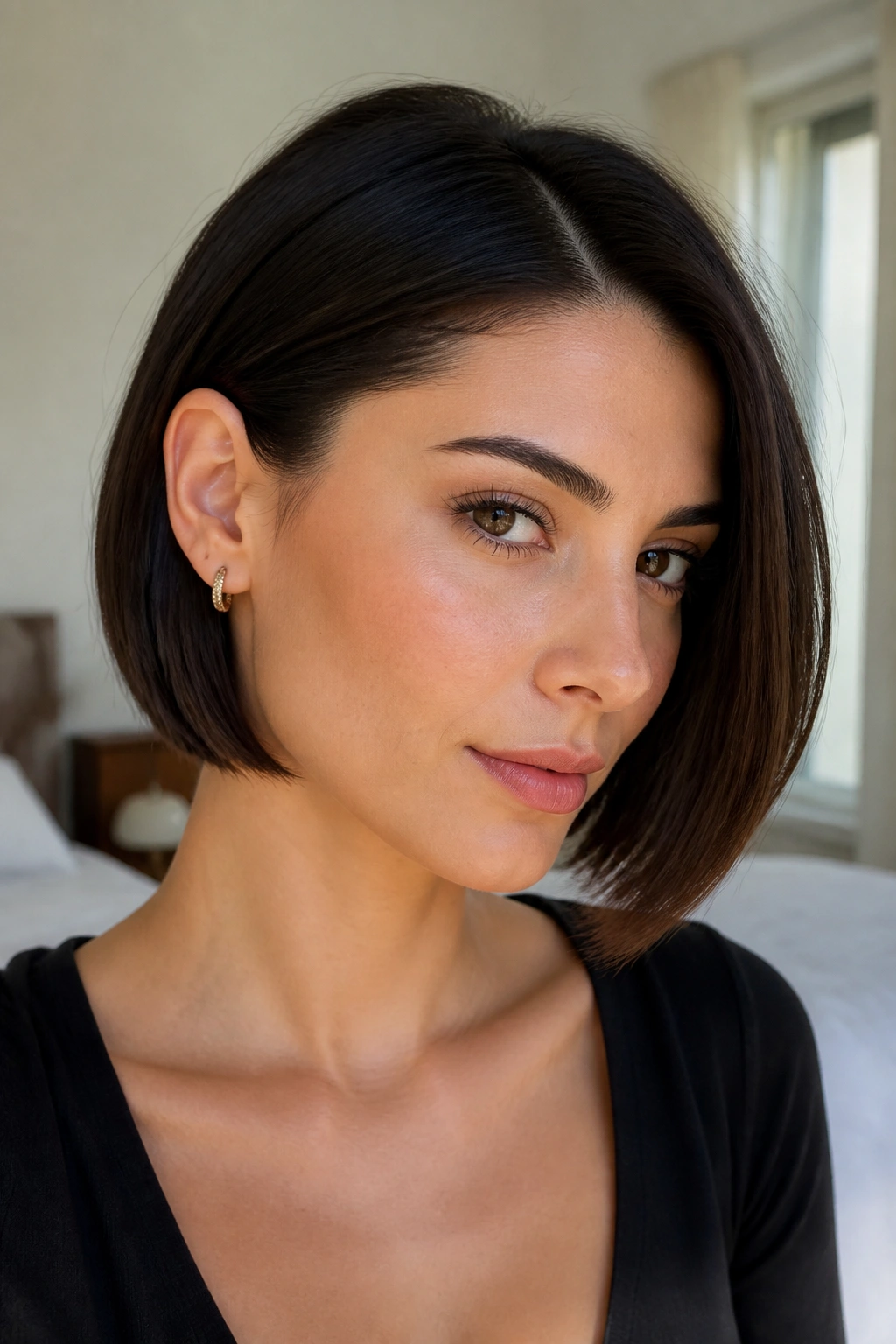
A bob can look fuller when part of it disappears. Strange, but true.
Tucking one side behind the ear opens the face and makes the untucked side look thicker by comparison. The asymmetry gives the cut movement, and the ear tuck creates a clean break in the shape. On fine hair, that contrast can be a gift. It keeps the style from feeling too controlled.
This works especially well when the bob has a firm jawline or chin-length edge. The tucked side should stay fairly sleek, while the untucked side keeps more width. If both sides are flattened the same way, you lose the effect.
What Makes It Work
- Keep the tuck low and loose
- Use a light styling cream so the tucked side stays smooth
- Leave a little bend in the opposite side for volume
- Pin the tucked side if your hair slips easily
There’s also a nice practical side to this cut. It gives you two looks in one haircut. Some days the hair falls naturally. Other days you tuck one side and get instant shape without needing a hot tool.
12. The A-Line Italian Bob With a Longer Front
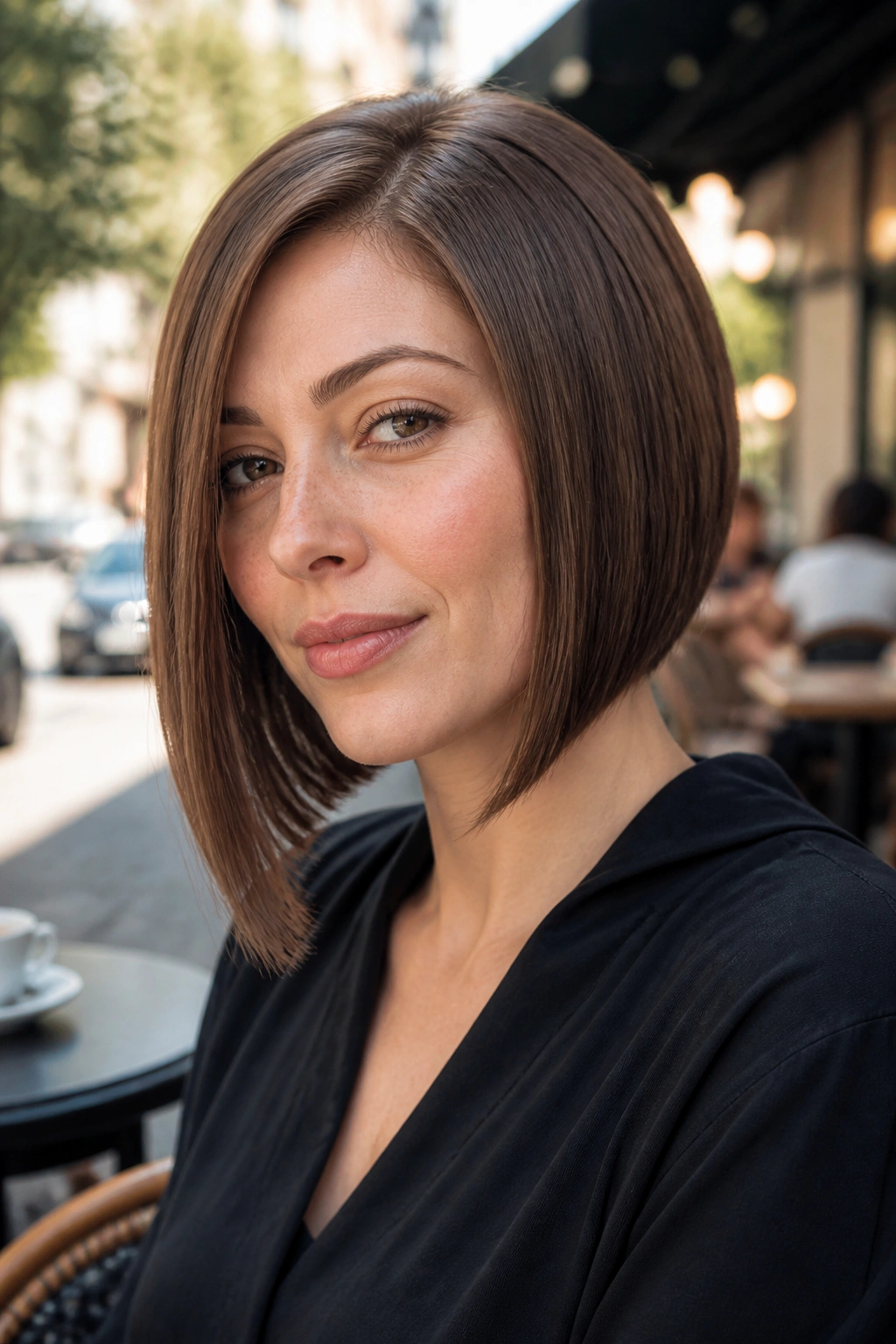
Need a little length around the face without sacrificing fullness? The A-line Italian bob is a smart place to land.
The back stays a touch shorter, and the front pieces extend forward by an inch or two. That angle helps the hair look denser because the eye follows the line down toward the front. It also frames the face in a way that feels clean, not blocky.
The angle should be subtle. If the front hangs too long, the haircut can start to feel like a grown-out lob. That’s not the same thing. The magic here is in the quiet slope from back to front. You want enough difference to matter, but not so much that the cut loses its bob identity.
If your fine hair tends to collapse at the sides, the A-line shape can help. The forward weight gives the front a little more presence, which stops the hair from looking too narrow at the jaw. It’s one of those cuts that photographs well in motion but also behaves on ordinary days. Handy.
13. The Full-Fringe Italian Bob
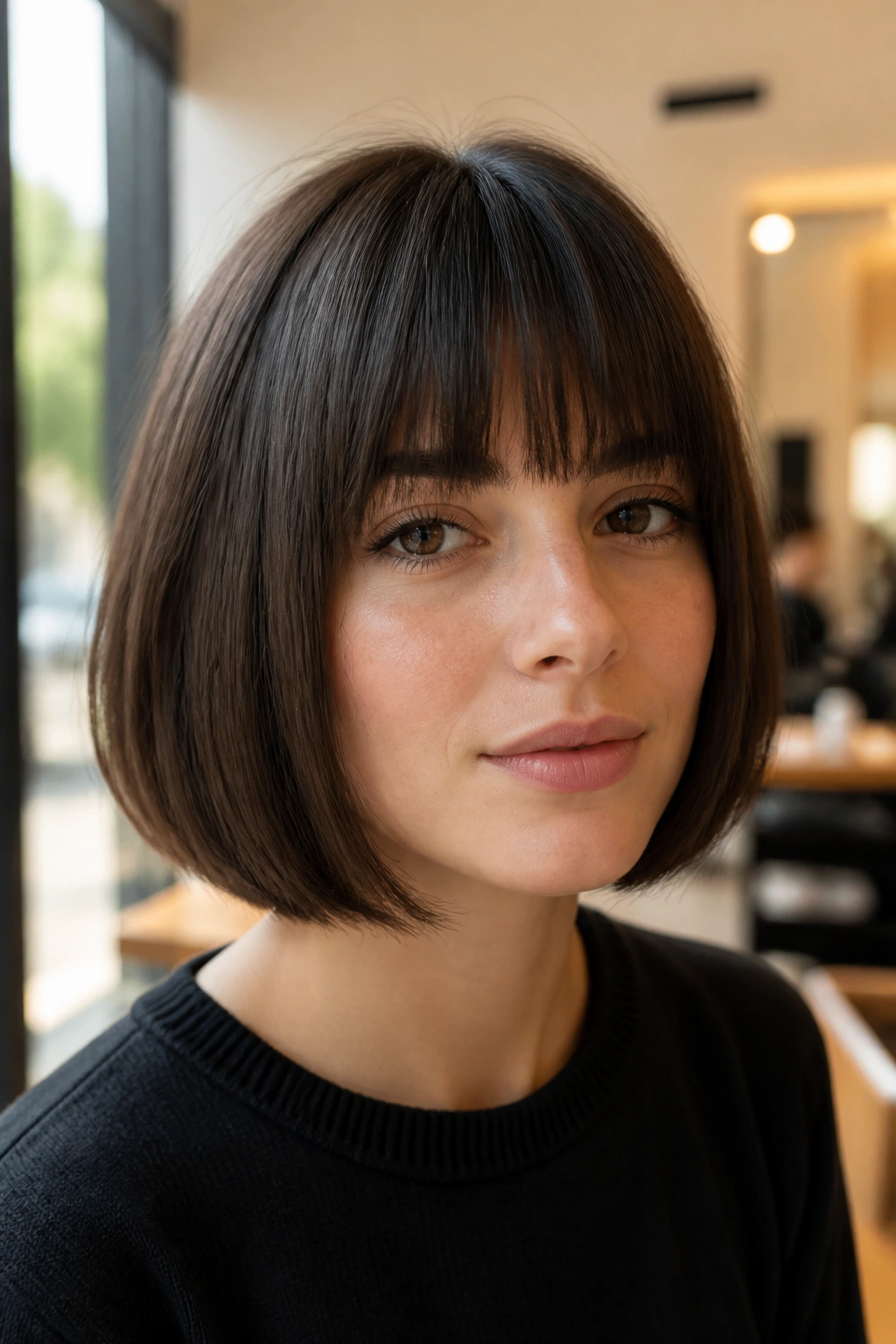
A fuller fringe can make the whole haircut read thicker from the first glance. That’s the big win here.
The front of the hairline becomes part of the design, not an afterthought. A straight-across fringe adds weight near the eyes, which draws attention upward and makes the bob itself seem denser. If the rest of the hair is fine, this can balance things out fast.
The fringe should not be too sparse. Sparse bangs on fine hair can look stringy within a week, which is annoying. Ask for enough density to hold its shape, but keep the ends soft so they move a little. A blunt bang with a tiny bit of texture at the tips is usually easier to live with than a wispy one that splits apart.
What to Keep in Mind
- Blow-dry the fringe from side to side so it sits evenly
- Trim bangs more often than the rest of the bob
- Use a tiny amount of serum only on the ends, never the roots
- Keep the fringe length close to eyebrow level if you want a fuller read
This is a strong choice for people who like a bit of attitude in their haircut. It looks deliberate. That alone makes fine hair seem more substantial.
14. The Asymmetrical Italian Bob
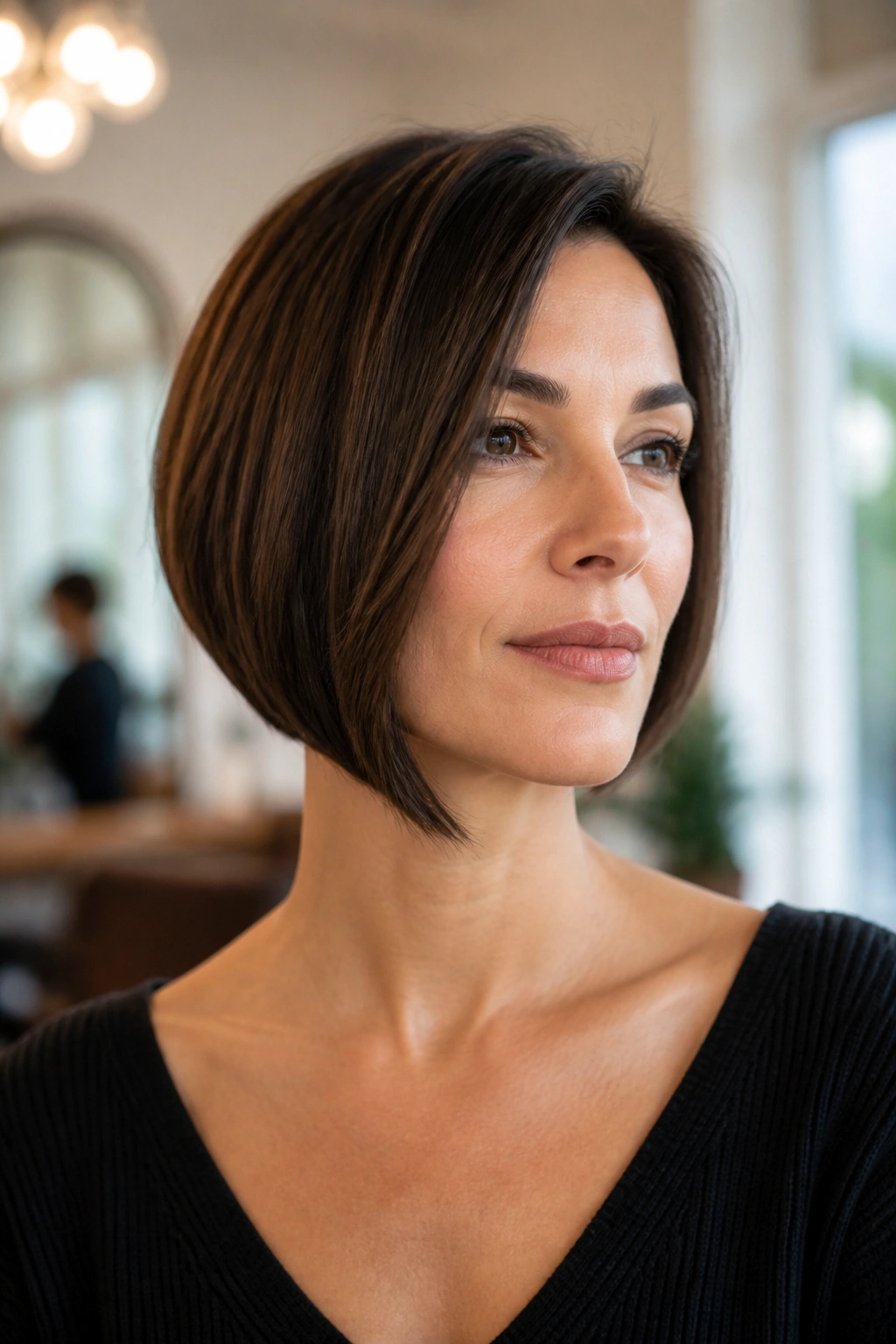
One side a little longer than the other, and suddenly the cut has more life.
Asymmetry changes the way the eye travels across the hair, which can make fine strands seem less sparse. A small difference in length — not a dramatic one — gives the Italian bob a sharper edge. It also prevents the haircut from looking too neat or too safe. That can be a good thing. Safe bobs often disappear.
The safest version of this cut keeps one side only half an inch to an inch longer. Anything beyond that can start to feel like a style choice rather than a fullness trick. On fine hair, subtlety tends to look richer than extremes.
This bob is good if you like a little structure with personality. It also works well with tucked sides, deep parts, and sleek finishes. Pair it with a clean blowout and the asymmetry looks modern without trying too hard. Pair it with air-dried texture and it feels more relaxed. Either way, the line does the talking.
15. The Shoulder-Skimming Italian Bob

A shoulder-skimming bob gives fine hair more room to breathe while still keeping the ends dense. That’s why it’s such a good compromise for people who want fullness but hesitate to go short.
The length sits just above or right at the shoulder, which means you keep a little swing without letting the hair hang too far below its strongest point. The perimeter still needs to stay blunt. That part doesn’t change. If the ends get too wispy, the whole shape starts to look tired, no matter how nice the cut is at the salon.
This version is also forgiving on busy mornings. You can blow it smooth, add a soft wave, or let it dry with a little bend and still have a decent shape. Fine hair often behaves better at this length than people expect. Long enough to move, short enough to keep the line. That matters.
If I had to pick one version for someone who wants the fullest-looking Italian bob without feeling too chopped up, this would be it. Keep the ends clean, the layers light, and the styling simple. The haircut does the rest.
