



There is a specific kind of freedom that comes with sitting in a salon chair and telling your stylist you want to go shorter—but not too short. The long bob, or “lob” as everyone calls it, occupies that perfect middle ground where your hair is long enough to pull back into a ponytail when you’re rushing out the door, but short enough to feel entirely transformed. It isn’t just a haircut; it’s a structural shift in how your hair interacts with your face, your neck, and your daily routine.
When you make the leap to a lob, you aren’t just chopping off length. You are fundamentally changing the weight distribution of your hair. This is why a great lob can make fine hair look thicker, heavy hair look lighter, and tired ends look refreshed. The secret, however, is rarely just the cut itself. It is how you tailor the length, the angles, and the texture to match your specific hair type and lifestyle.
Going to the salon with a vague “I want a lob” request is a recipe for a mediocre result. You need to know exactly what kind of movement, volume, or sharpness you are after. Whether you want something that requires ten minutes of styling or a cut that looks better the messier it gets, the options are surprisingly vast. Here are twenty ways to interpret the lob, broken down by how they actually work on different hair types and textures.
1. Classic Blunt Lob
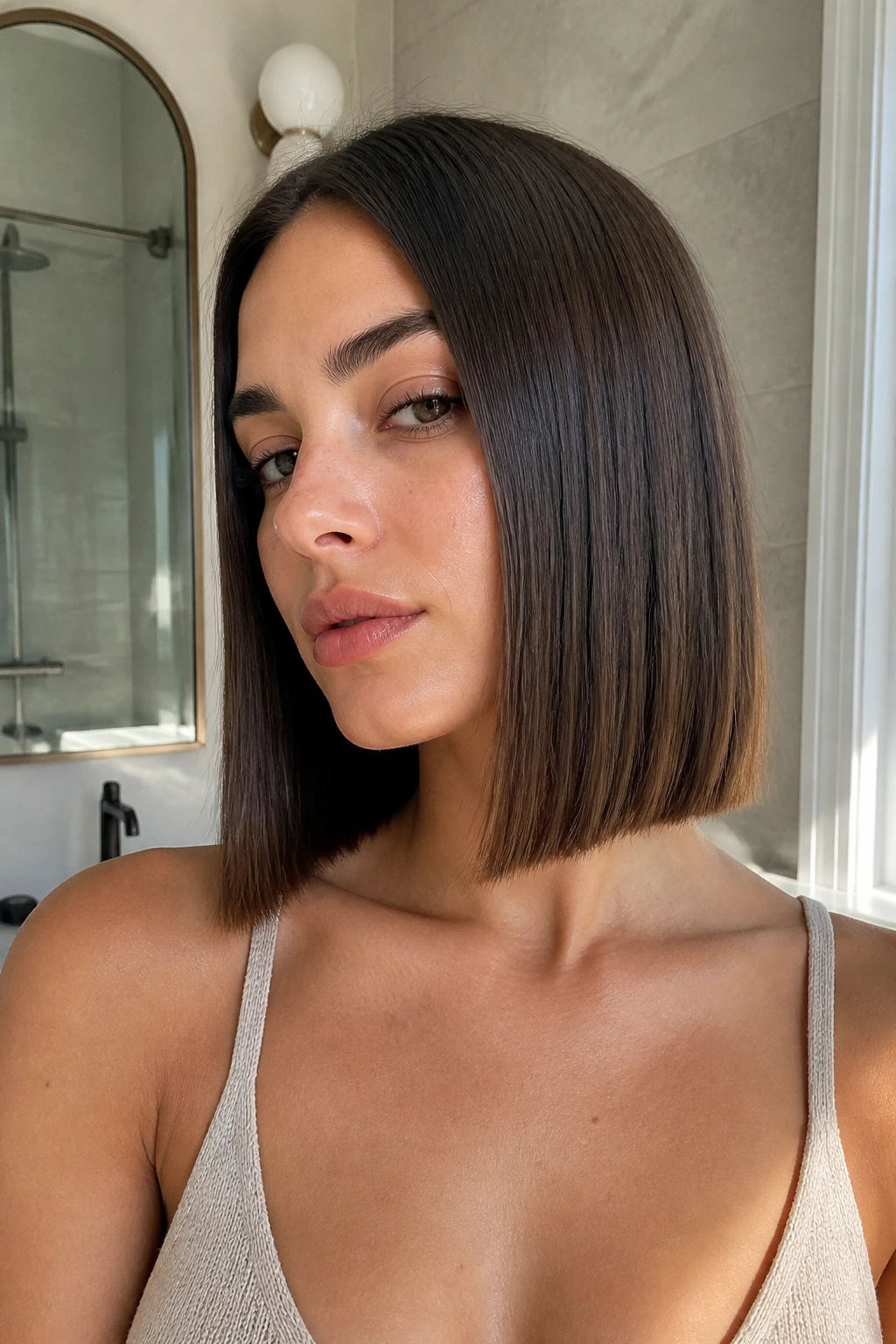
The classic blunt lob is the architectural standard. It is defined by a single, solid line that hits right around the collarbone or slightly above. There are no layers, no tapering, and very little internal thinning. This cut relies entirely on the precision of the blade to create a clean, heavy weight line at the bottom.
Why It Works
This is the ultimate choice for anyone with fine or straight hair who wants to create the illusion of density. Because the ends are cut perfectly flat, every single strand of your hair ends at the exact same point, which makes the perimeter look significantly thicker.
How to Keep It Looking Sharp
- Use a high-quality flat iron to keep the ends crisp.
- Avoid heavy, volumizing mousses that can make the ends look frizzy.
- Instead, opt for a light smoothing oil to keep the ends looking polished. Pro Tip: If your hair has even a slight natural wave, you will need to commit to heat styling every morning to maintain that razor-sharp, one-length aesthetic.
2. Textured Shaggy Lob
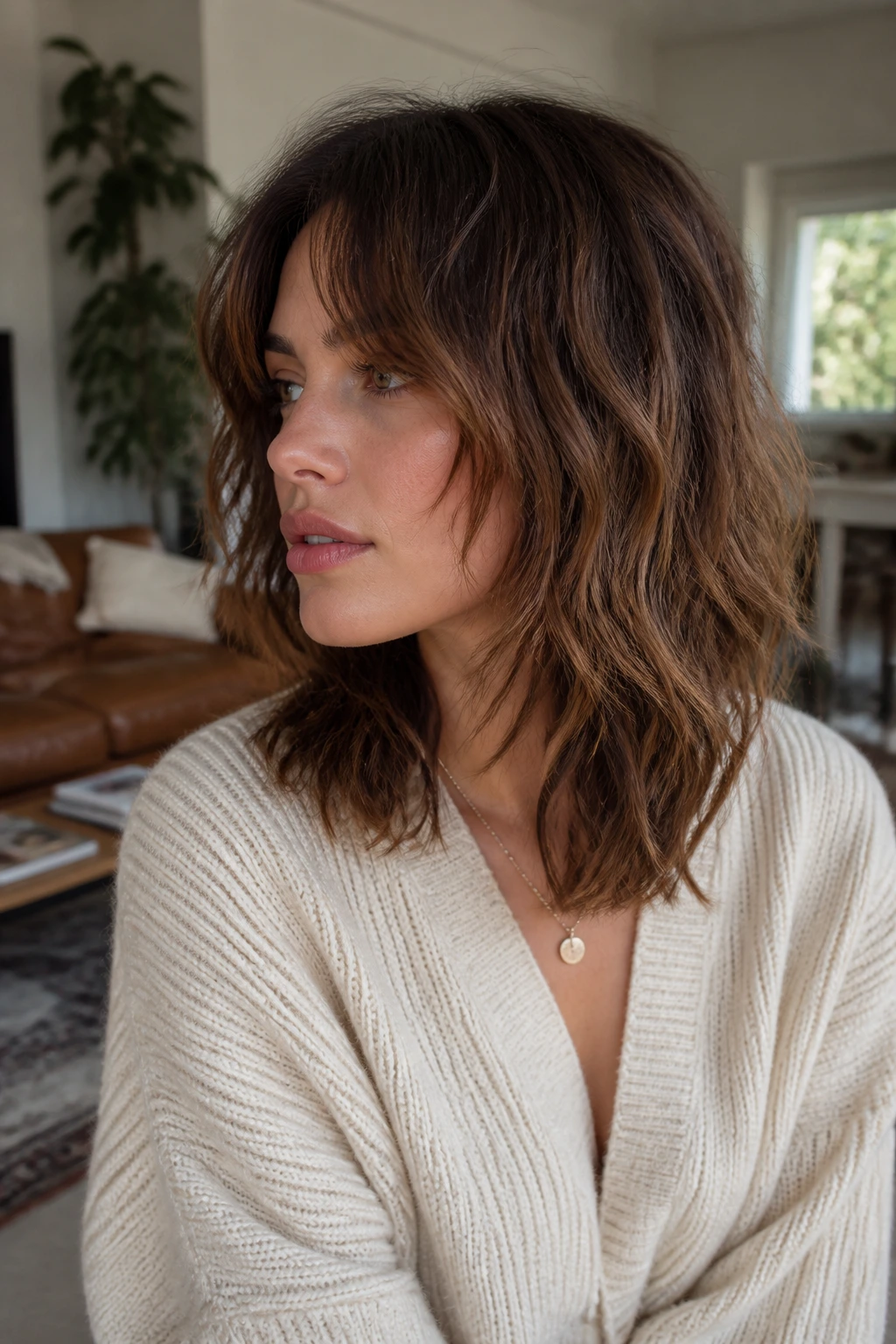
Unlike the blunt version, the shaggy lob is all about movement and deliberate imperfection. This cut incorporates plenty of internal layers, often starting much higher up, around the cheekbones or chin. It is designed to be worn air-dried and messy, leaning into the natural bends and kinks of your hair.
It is honestly one of the lowest-maintenance cuts you can get, provided your hair has at least some natural texture. If you are someone who hates blow-drying their hair and wants a “just woke up” look that actually looks intentional, this is the direction you should take. You are basically asking your stylist to remove weight from the interior of the hair so it can expand and sit in a more relaxed way.
The main thing to watch for here is the perimeter. You want the ends to be “point-cut,” meaning the stylist cuts into the ends with the scissors held vertically. This avoids the shelf-like look of blunt ends and keeps the style feeling soft and airy.
3. Side-Swept Bangs Lob
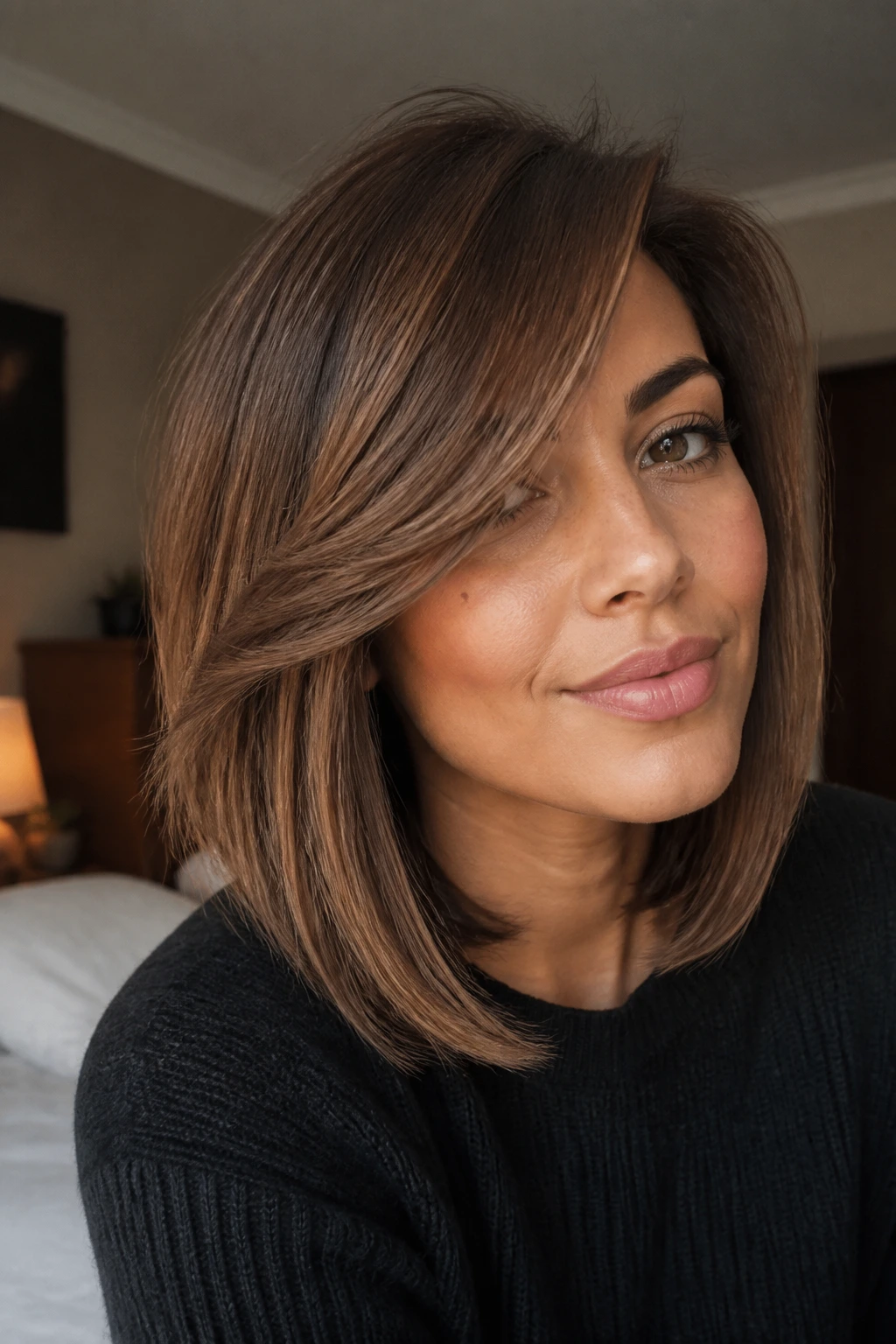
A lob with side-swept bangs is a classic way to soften the face. The key here is the transition between the bangs and the rest of the hair. You don’t want a harsh line where the fringe ends and the length begins.
The Balancing Act
The goal is to create a seamless flow. Your stylist should cut the bangs to graze the cheekbone, then gradually blend them into longer face-framing layers. This creates a diagonal line that draws the eye across the face, which can be incredibly flattering for anyone with a round or square face shape.
Styling for Volume
- Blow-dry the bangs using a round brush while they are still damp.
- Direct the heat away from your face for a second to set the root, then pull the hair across.
- Use a light texturizing spray on the rest of the lob to keep it from looking too “done” compared to the polished fringe.
4. Angled A-Line Lob

This is the cut that leans into geometry. An A-line lob is longer in the front and shorter in the back, creating a distinct, sharp angle that follows your jawline. The steeper the angle, the more dramatic the look.
It creates a very polished, professional vibe. When people talk about “power bobs,” they are often referring to this kind of silhouette. It forces your hair to frame your face by default, regardless of how you part it. However, be aware that this cut requires more frequent trims than a one-length lob. As the back grows out, the angle starts to lose its definition, and the transition from the nape of your neck to your shoulders can start to look a bit bulky if it isn’t kept tight.
5. Lob with Curtain Bangs
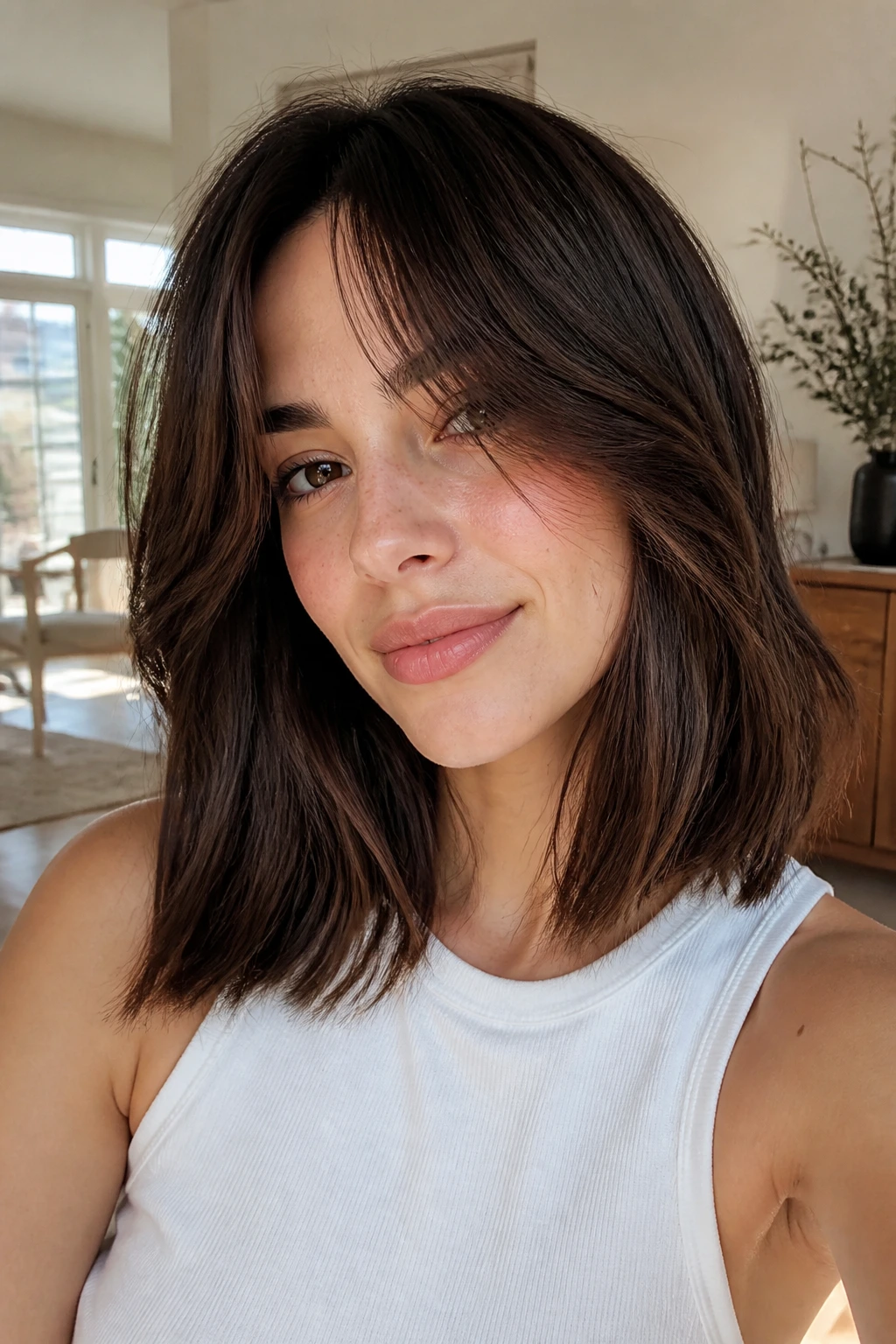
Curtain bangs have become a staple for a reason—they are essentially the “gateway” bang. They are long, split down the middle, and designed to frame the eyes rather than hide the forehead. Pairing them with a lob is a match made in hair heaven because the combination feels very 70s-inspired but remains completely modern.
The beauty of this cut is in the maintenance. Unlike blunt bangs that require a trim every three weeks, curtain bangs are designed to grow out gracefully. They can blend into the rest of your layers, meaning you can go months without a specific bang-trim appointment. Just make sure the rest of your lob is cut with some long, face-framing layers to match the softness of the fringe.
6. Choppy Layered Lob
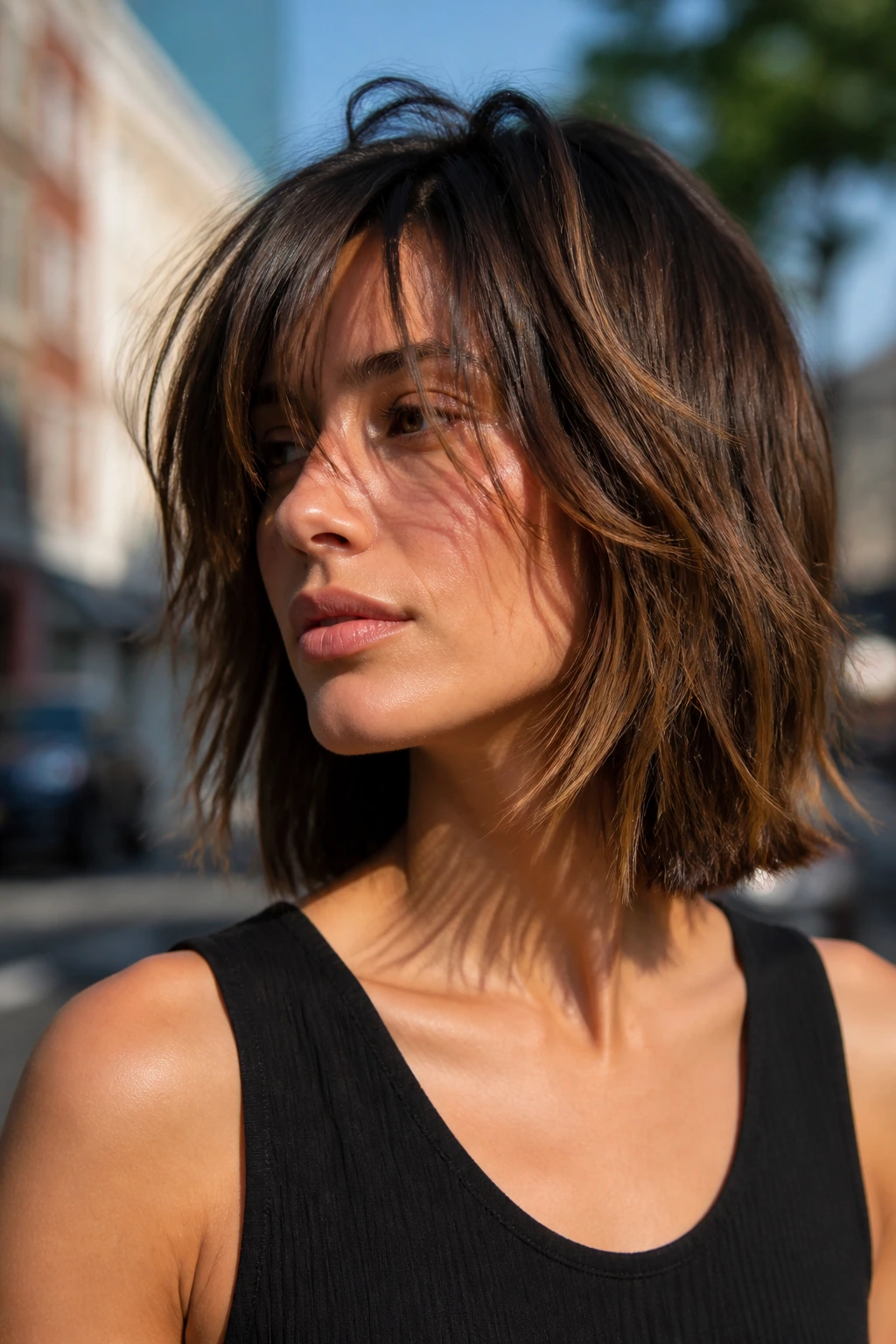
If you feel like your hair just sits there—flat, lifeless, and heavy—the choppy layered lob is your answer. This cut is characterized by distinct, visible layers of varying lengths. It is not about blending; it is about creating a tiered look that encourages the hair to stack and have volume.
Making It Work
- Ask for “piecey” layers that start below the chin.
- Avoid thinning shears if you have fine hair, as they can make the ends look wispy rather than choppy.
- Embrace styling products that add grit, like sea salt sprays or matte texturizing pastes.
Warning: Do not get this cut if you want a sleek, glass-hair look. The choppy layers will inherently create a messy, high-energy finish that doesn’t like to sit perfectly straight.
7. Sleek One-Length Lob
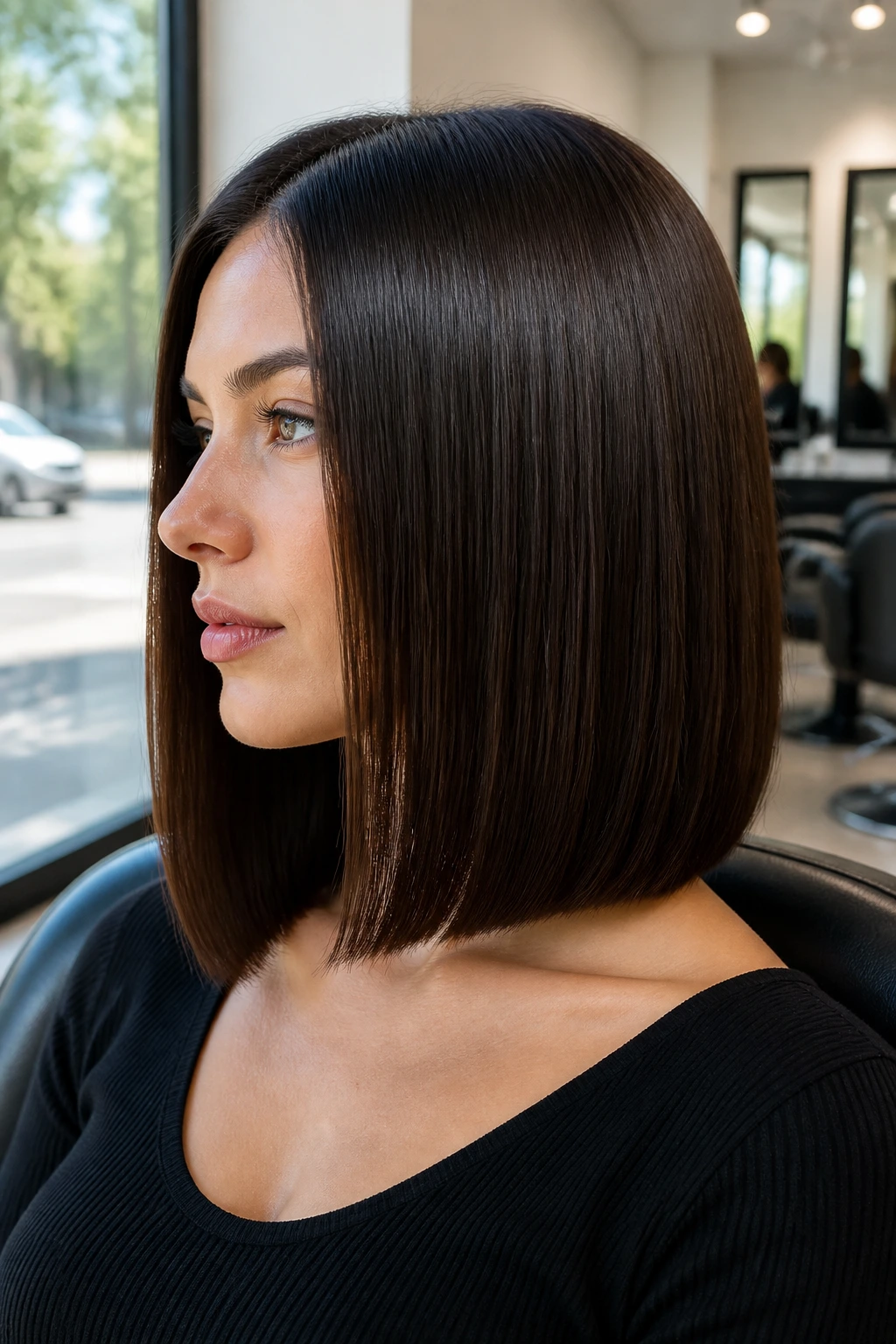
There is a stark, sophisticated beauty to a one-length lob that hits perfectly at the collarbone. It is the antithesis of the shaggy or layered lob. It is all about shine, health, and clean lines.
Because there are no layers to hide behind, this cut demands that your hair be in good condition. If your ends are split or frayed, a one-length lob will highlight them immediately. It works best for those with straight or slightly wavy hair who enjoy a daily styling routine involving a flat iron or a smoothing blowout. It is the “glass hair” look at its most accessible length.
8. Deep Side Part Lob

Sometimes, the cut isn’t the only thing that creates the style—it’s how you wear it. A deep side part lob is all about volume and dramatic weight. By pushing a massive amount of hair to one side, you instantly create a “swoop” effect that adds height at the root.
To make this work long-term, you need to train your hair. Start parting it deeply while it is still damp and use a volumizing mousse at the roots of that heavy side. Blow-dry the hair over to the opposite side to lift the roots, then flip it back over. It creates a natural, effortless-looking bump of volume that stays all day.
9. Curly Lob with Layers

Curly hair and bobs used to be a point of contention in the salon world, with fears of the dreaded “triangle head” (where the hair is flat at the top and wide at the bottom). The solution is layers. Specifically, a curly lob with internal layers prevents that pyramid shape and allows your curls to spring up individually rather than clumping into a singular heavy block.
The Curly Rulebook
- Never cut the hair while it is wet if you want to keep the length accurate.
- Ask for dry-cutting, where the stylist shapes the curls while they are in their natural, contracted state.
- Keep the face-framing layers slightly longer to ensure they don’t bounce up into bangs that are too short.
10. Lob with Undercut
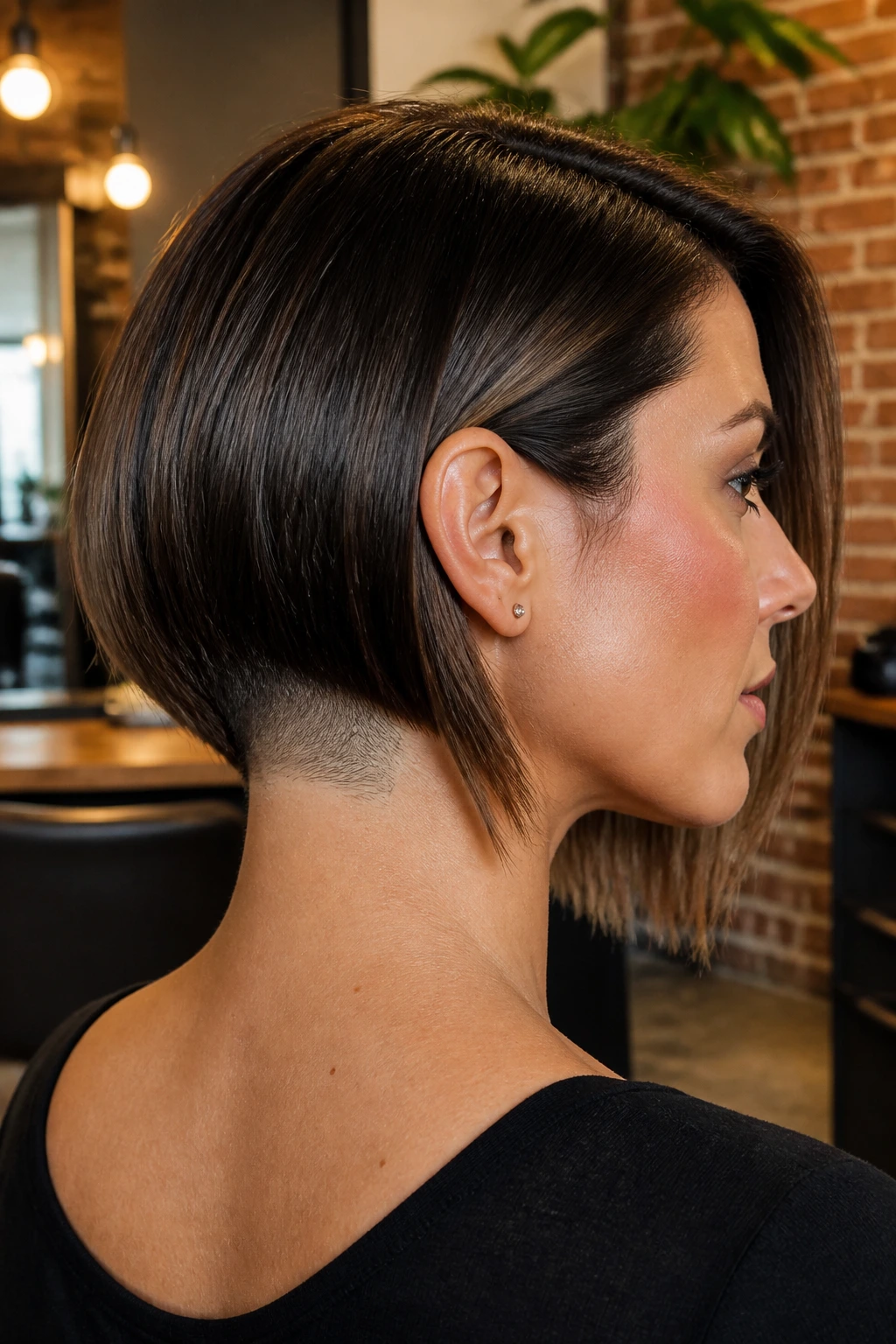
This is for the person who wants a bit of edge without committing to a full pixie cut or shaved head. An undercut lob involves shaving or buzzing a section of hair at the nape of the neck, underneath the main length.
When your hair is down, you would never know it’s there. But when you put your hair up in a ponytail or a half-up style, that cool, edgy undercut is revealed. It is a fantastic way to remove bulk from the back of the neck if you have thick, coarse hair that tends to feel heavy or hot during the warmer months.
11. Messy Beach-Wave Lob
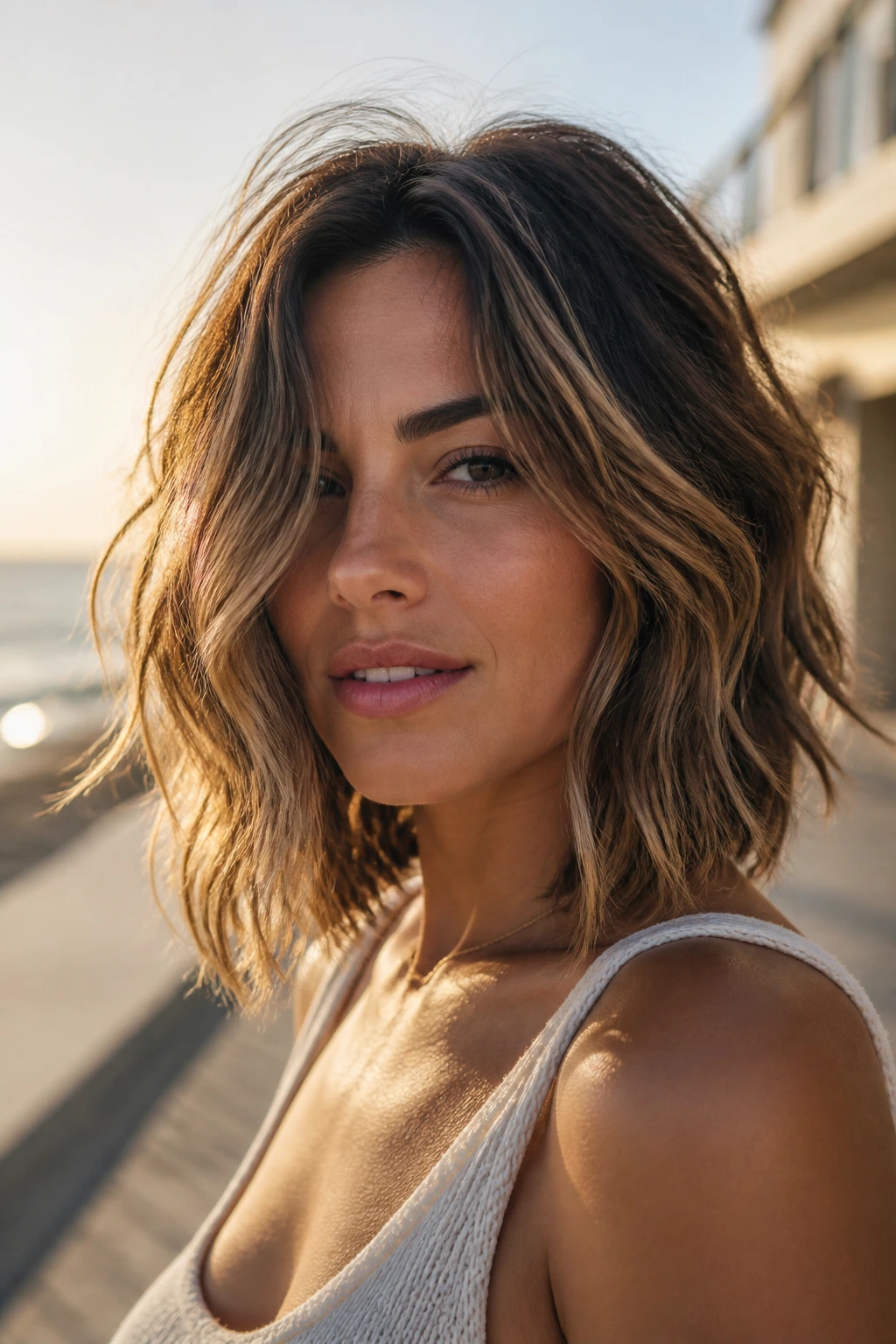
The beach-wave lob is the quintessential “cool girl” cut. It is generally cut to the collarbone with some subtle, long layers throughout to ensure the hair doesn’t clump together. The goal isn’t perfect, polished curls; it is a relaxed, lived-in bend.
The trick to this look is the product application. You need a mousse or a light cream applied to damp hair, followed by a rough dry. Once the hair is mostly dry, use a large-barrel curling iron to add just a few bends—not tight curls—focusing on the mid-lengths and leaving the ends straight. This prevents the “prom hair” look and keeps it firmly in the “I just came from the beach” category.
12. Blunt Cut with Highlights
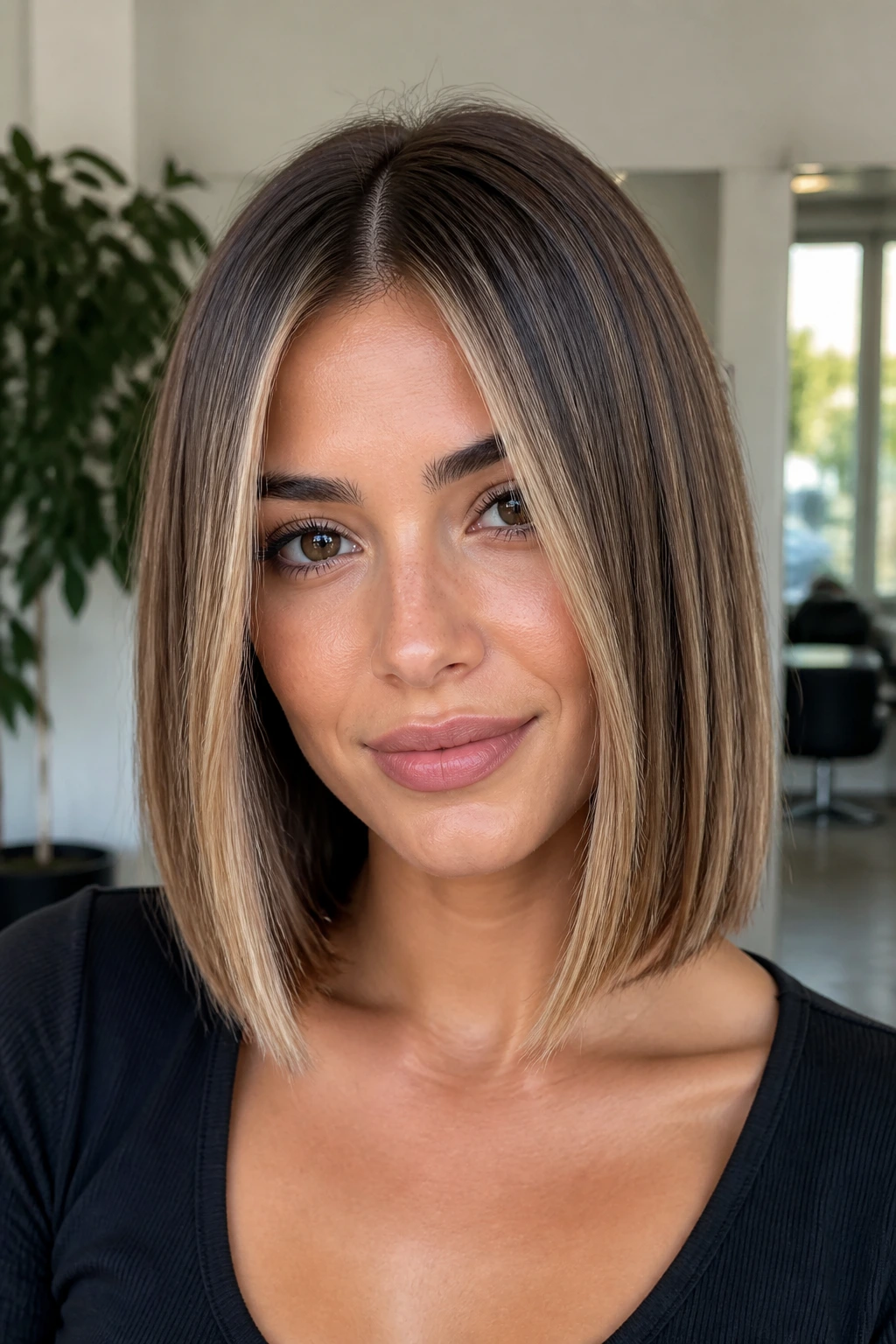
Sometimes the dimension of a lob doesn’t come from the cut, but from the color. A blunt lob acts as a perfect canvas for color placement. Highlights, specifically balayage or “money piece” highlights around the face, create a visual texture that makes the hair look like it has more movement than it actually does.
When you have a solid, blunt cut, highlights break up the visual density of the ends. They add depth, making the hair look less like a single sheet of color and more like a dimensional style. If you pair this with a slight beach wave, the color will look even better as it catches the light.
13. Graduated Stacked Lob

A graduated lob, often called a stacked lob, is the longer cousin of the traditional stacked bob. It features short, layered sections at the nape of the neck that gradually get longer as they move toward the front.
This provides built-in volume at the back of the head. If you have a flat crown or fine hair that struggles to hold a style at the back, this cut does the heavy lifting for you. The “stack” of layers creates a rounded shape that holds its form even as the hair starts to grow out, making it one of the more durable cuts on this list.
14. Face-Framing Layers Lob

This cut is all about the front. It is a classic lob base—either one-length or with very subtle layers—but with distinct, shorter pieces around the face. Think of these as “long bangs” or “face-framing shags.”
These layers can start anywhere from the chin to the collarbone. They add softness around the jawline and neck, which is helpful if you have a sharper facial structure and want to add some rounded edges to your look. It is a very flattering, feminine style that requires very little effort—just a quick blow-dry with a round brush to flick the front pieces outward.
15. Razored Ends Lob
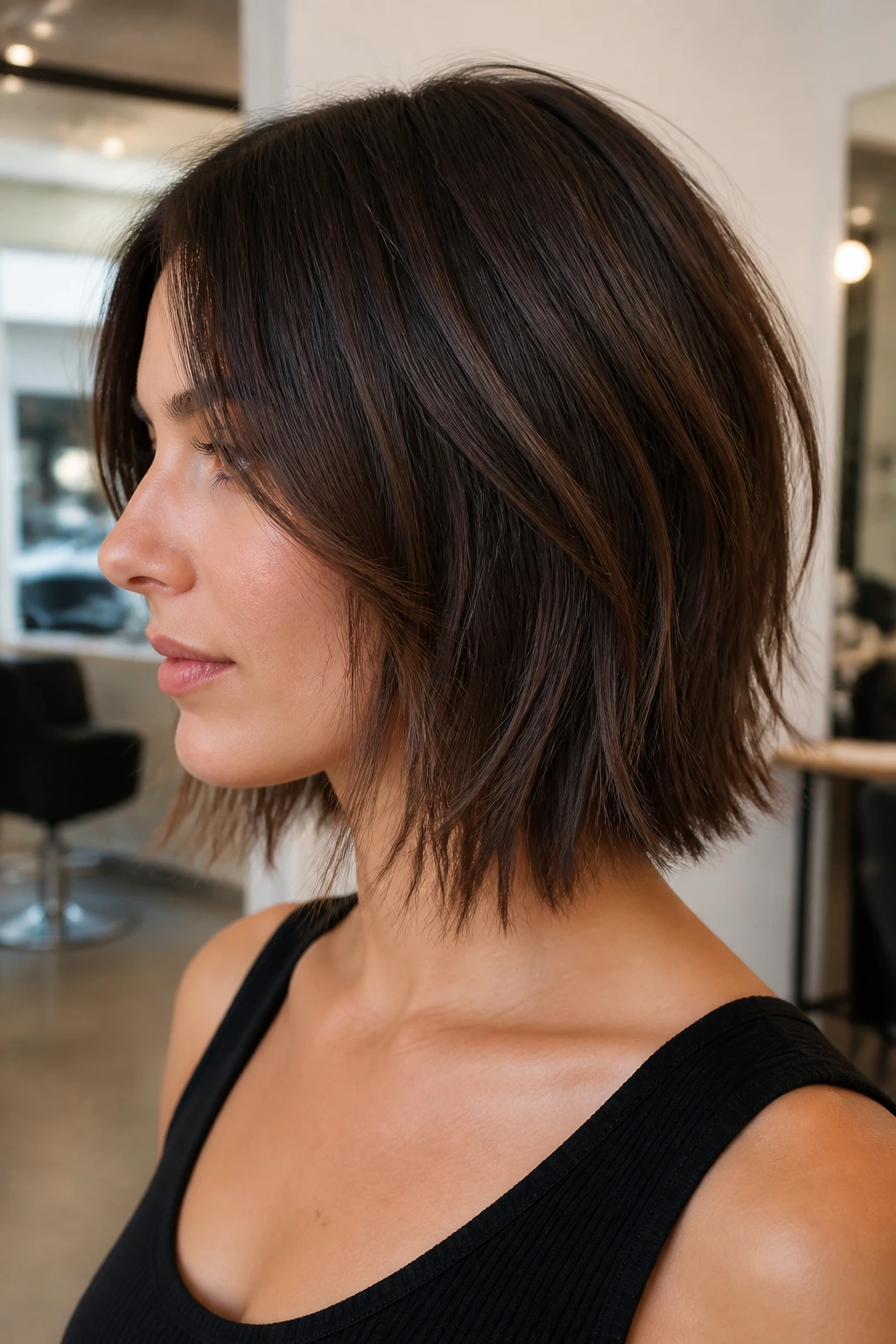
If you want that ultra-modern, piecey, “undone” look, ask your stylist to use a razor instead of scissors for the perimeter. A razor creates a feathered, tapered edge that looks inherently lived-in.
It is the opposite of the blunt lob. It creates a soft, whispy perimeter that feels light and airy. However, be cautious: if your hair is prone to split ends, a razor can sometimes exacerbate the issue by thinning out the ends. This cut works best on healthy, strong hair that can handle a bit of aggressive thinning.
16. Soft Voluminous Lob
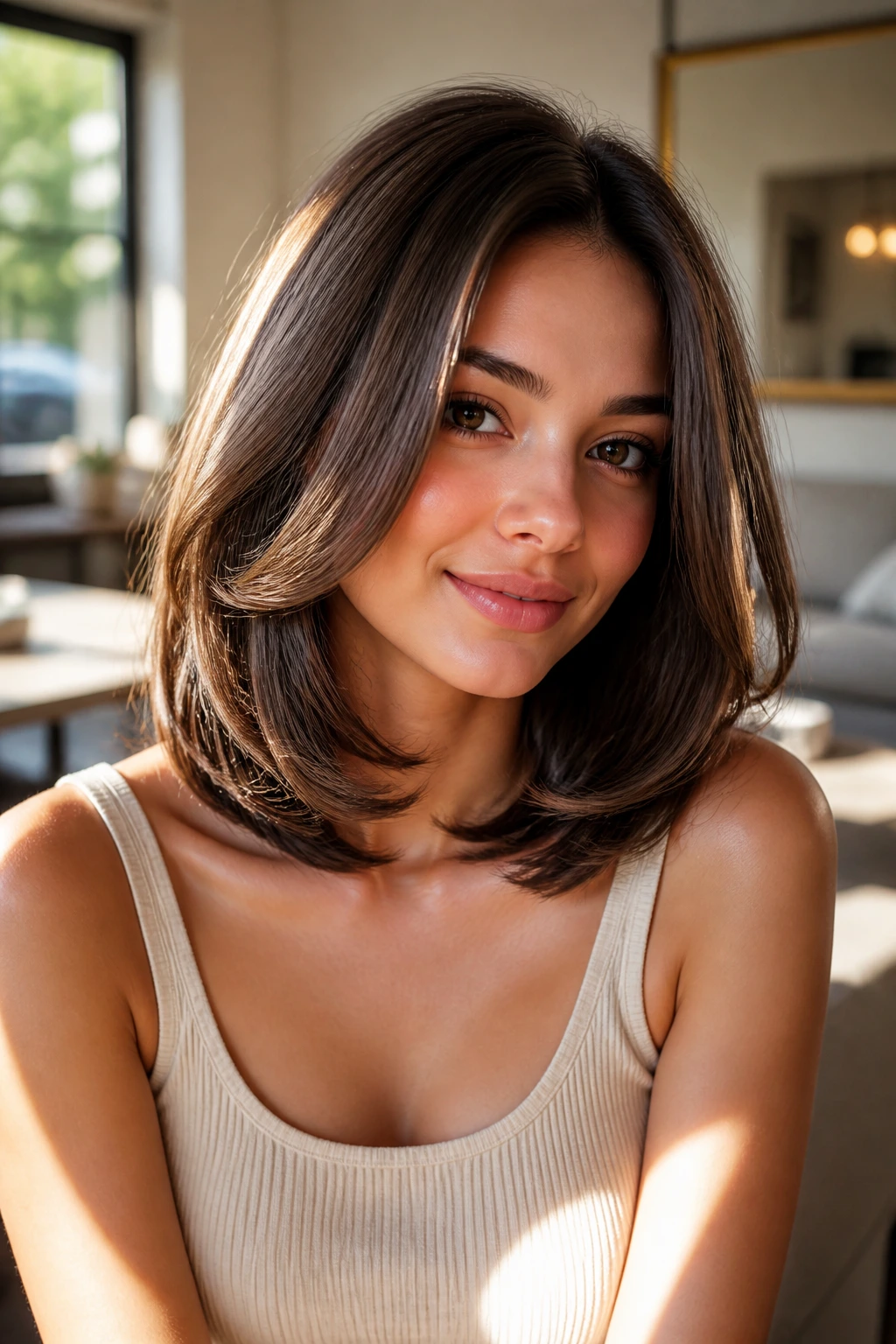
This is the “blowout” lob. It requires a bit more length to achieve the full effect, hitting slightly below the collarbone. The cut itself includes subtle, long layers that allow the hair to be rounded under with a large round brush.
The Blowout Method
- Apply a volumizing foam to damp hair.
- Rough dry until about 80% dry.
- Use a large-round brush to smooth and tuck the ends under, creating a C-shape.
- Finish with a lightweight shine spray. The result is bouncy, classic, and looks like you spent an hour in a professional salon, even if you did it yourself in fifteen minutes.
17. Braided Lob
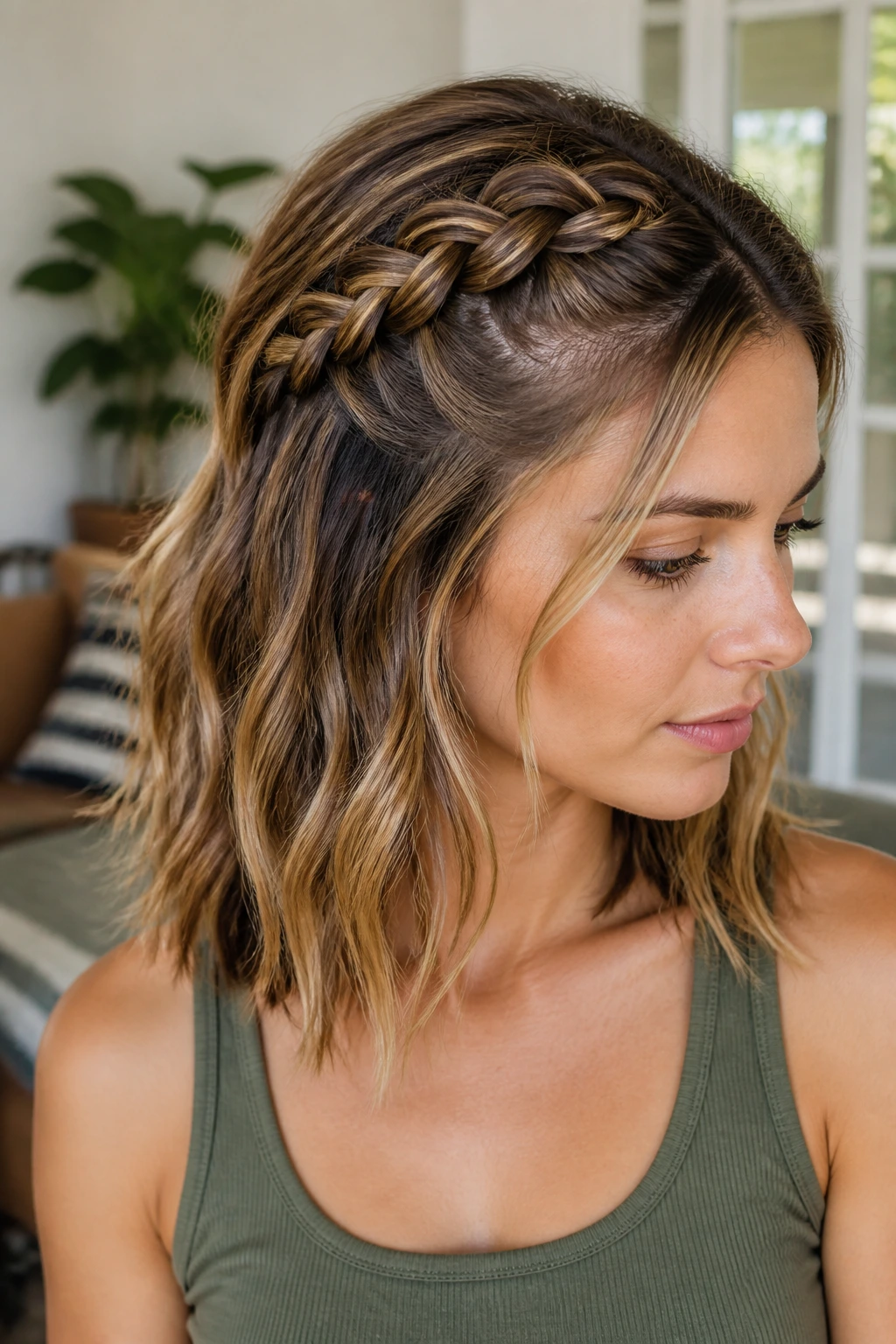
This isn’t a cut per se, but a style that defines how you should approach your lob. If you love playing with your hair, a lob is arguably the best length for braiding. It is long enough to pull back into a French braid or a Dutch braid, but short enough that the braid doesn’t feel heavy or cumbersome.
When getting a lob, ask for long, internal layers rather than choppy, short ones. If you have layers that are too short (like chin-length layers), they will constantly pop out of your braids and look messy. Long, hidden layers allow you to maintain the versatility of a braid while still having the bounce of a lob.
18. Lob with Blunt Fringe

This is a high-fashion, high-contrast look. It pairs a soft, collarbone-grazing lob with a sharp, heavy, eyebrow-skimming fringe. It is a bold move. It frames the eyes intensely and forces you to style your bangs every morning.
The contrast between the soft length and the hard, straight line of the bangs creates an incredibly striking silhouette. It is not for the faint of heart, and it definitely requires a commitment to maintenance—those bangs will need a trim every few weeks to keep them out of your eyes—but the payoff is a look that is distinct and memorable.
19. Wavy Lived-In Lob

For those with natural waves, stop fighting them. The lived-in lob is cut specifically to allow your natural wave pattern to shine without becoming frizzy. It involves slightly longer layers that are cut to “nest” into one another when the hair dries.
Maintenance Hacks
- Let the hair air dry to 90%.
- Apply a cream-based leave-in conditioner by scrunching it into the ends.
- Do not touch the hair until it is 100% dry; handling damp curls or waves is the fastest route to frizz. This cut is all about working with your hair’s natural texture rather than against it. It is healthy, easy, and looks great with zero heat styling.
20. Deeply Inverted Lob

We started with a blunt lob, and we end with the extreme version: the deeply inverted lob. This is a dramatic take on the A-line. The back is cut extremely short, almost grazing the neckline, while the front pieces are left long, hitting well past the collarbone.
The angle is severe. It is meant to be seen. This cut elongates the neck and creates a very slimming effect on the face. It requires a stylist who is confident with technical, geometric cutting. If you want a style that feels edgy, sharp, and totally in control, this is the one to ask for.
Final Thoughts
Choosing a lob is a process of figuring out what you actually enjoy doing with your hair. If you love the idea of a polished, one-length cut but hate using a flat iron, you will be frustrated every single morning. If you love the idea of a messy, shaggy cut but crave the feeling of sleek, shiny hair, you will never be happy with the results.
Be honest with your stylist about your commitment to styling. A great cut is one that fits your life, not just one that looks good on someone else’s social media feed. Take these ideas as a starting point. Talk about the weight, the angle, and the texture. Most importantly, don’t be afraid to try a slightly different version next time. That is the beauty of the lob—it’s long enough to play with, short enough to change, and always just a few months away from becoming something entirely new.
