



A short bob can look sharp enough to change the whole shape of a face, and edgy short bobs do that with very little fuss. The cut hits the jaw, neck, or cheekbone, and suddenly a plain sweater looks more deliberate. That is the magic here: not drama, but edge.
What matters most is not length alone. It is where the line falls, how much weight sits in the back, and whether the ends are blunt, shattered, or tucked under with a clean bend. A two-inch difference can turn sweet into severe. A razor edge can make fine hair feel airy instead of thin.
I love this corner of haircutting because it is practical. These styles are short enough to dry fast, but they still have room for attitude, which is rare. Some of them read polished. Some look cool in that slightly undone way that never tries too hard. Both can work.
From here, the fun part is in the details: the line, the fringe, the texture, and the little choices that make one bob feel sharp while another falls flat.
1. Blunt Micro Bob With Baby Bangs

A blunt micro bob with baby bangs has teeth. The cut sits high, usually around the jaw or a touch above it, and the straight line makes the whole head read cleaner. Baby bangs add that little shock factor, especially when they stop mid-forehead and leave the brows exposed.
Why It Feels So Sharp
This style works because the perimeter is heavy. No feathered fade at the ends. The blunt edge makes fine hair look thicker and gives straight hair a strong, graphic line. Keep the fringe sparse if you want the cut to feel modern instead of costume-y.
- Best on hair that lies fairly straight or can be blown smooth in 10 minutes.
- Ask for a blunt outline with minimal layering through the back.
- A flat brush and a small round brush are enough for styling.
- If your forehead is short, ask for longer micro bangs that skim the brow, not bangs cut way above it.
Pro tip: Add a tiny bend at the ends, not a curl. The shape stays crisp, and the haircut keeps its bite.
This is the kind of bob that looks expensive even when the outfit is simple. That is mostly because the shape does the heavy lifting. You do not need much else.
2. Asymmetrical Jaw-Length Bob

A small length difference can change everything. Asymmetry gives a bob some swagger without making it feel overdone. One side can sit an inch or two longer, and that diagonal line pulls the eye down and forward in a way that feels clean, not fussy.
The cut does a nice job on rounder faces because the slope breaks up width. It also gives straight hair a little movement when it swings. If your hair tends to sit flat, ask for a blunt back with a longer front panel; too much layering will kill the shape.
The part matters here. A side part makes the diagonal read harder, while a center part softens it and can make the cut look calmer. Either way, keep the ends sharp. The whole point is that the line looks deliberate when your hair moves.
This is one of those haircuts that looks more expensive in motion than in a still photo. A quick tuck behind one ear, then a loose fall on the other side, and the whole thing changes. Small trick. Big payoff.
3. French Bob With Choppy Fringe
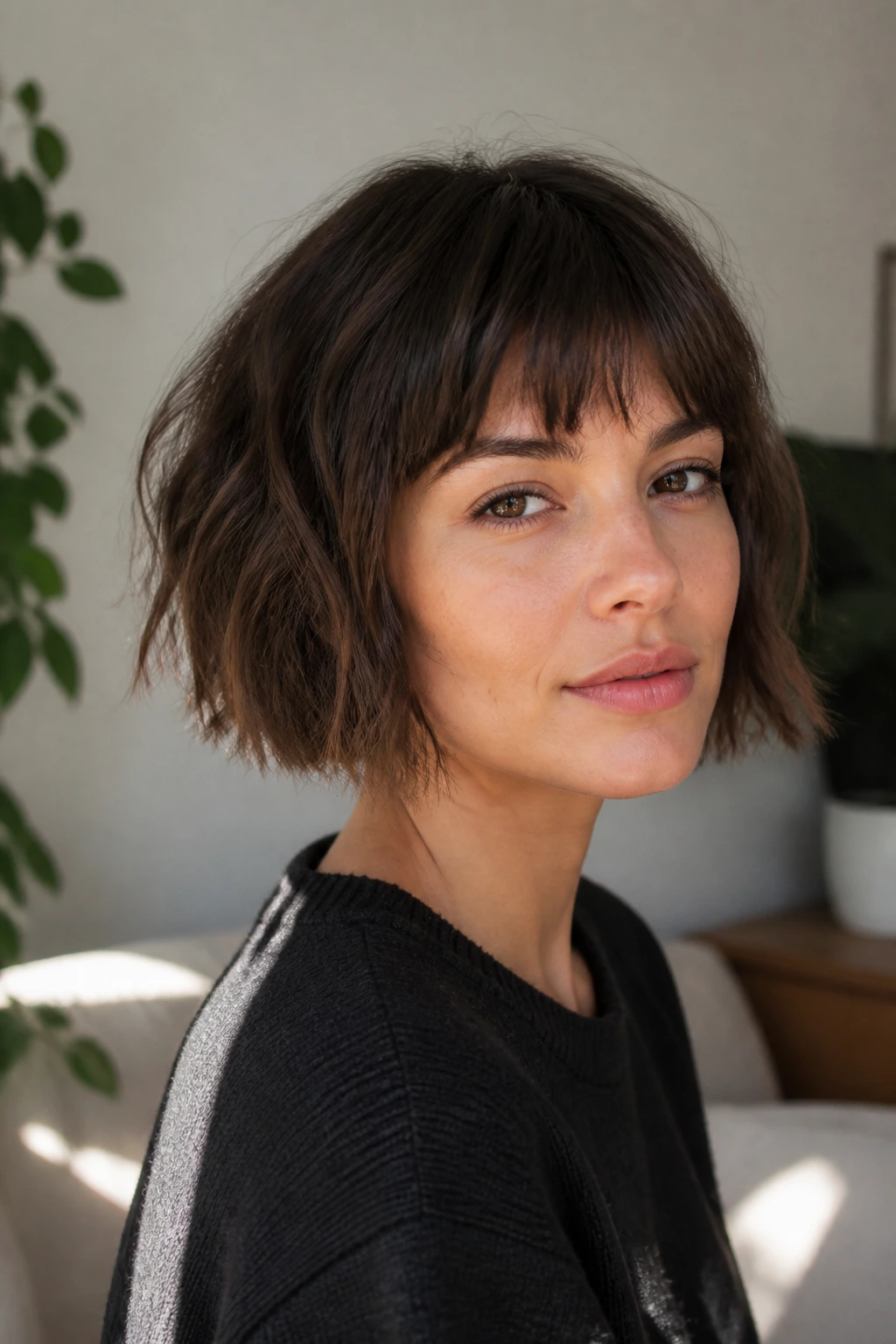
Why does a French bob feel cooler when it looks a little imperfect? Because the cut depends on texture, not polish. It usually falls at the cheekbone or lip, with a fringe that bends a bit and ends that are softly broken rather than stiff.
How to Wear It
- Mist damp hair with a light sea-salt spray.
- Scrunch the mid-lengths once, not five times.
- Let the fringe dry with your fingers instead of a round brush.
- Tap a matte paste into the ends only if they stick together.
The French bob does not need a perfect finish. That is the whole charm. It looks better when a few pieces fall across the forehead and the sides do not mirror each other too neatly. If you like hair that feels a little lived-in on purpose, this is a strong choice.
It also grows out in a forgiving way. The fringe softens first, which keeps the cut from looking harsh as it gets longer. That makes it a good option for anyone who likes to cut their hair short but does not want a trim every three weeks.
4. Stacked Bob With A Sharp Nape
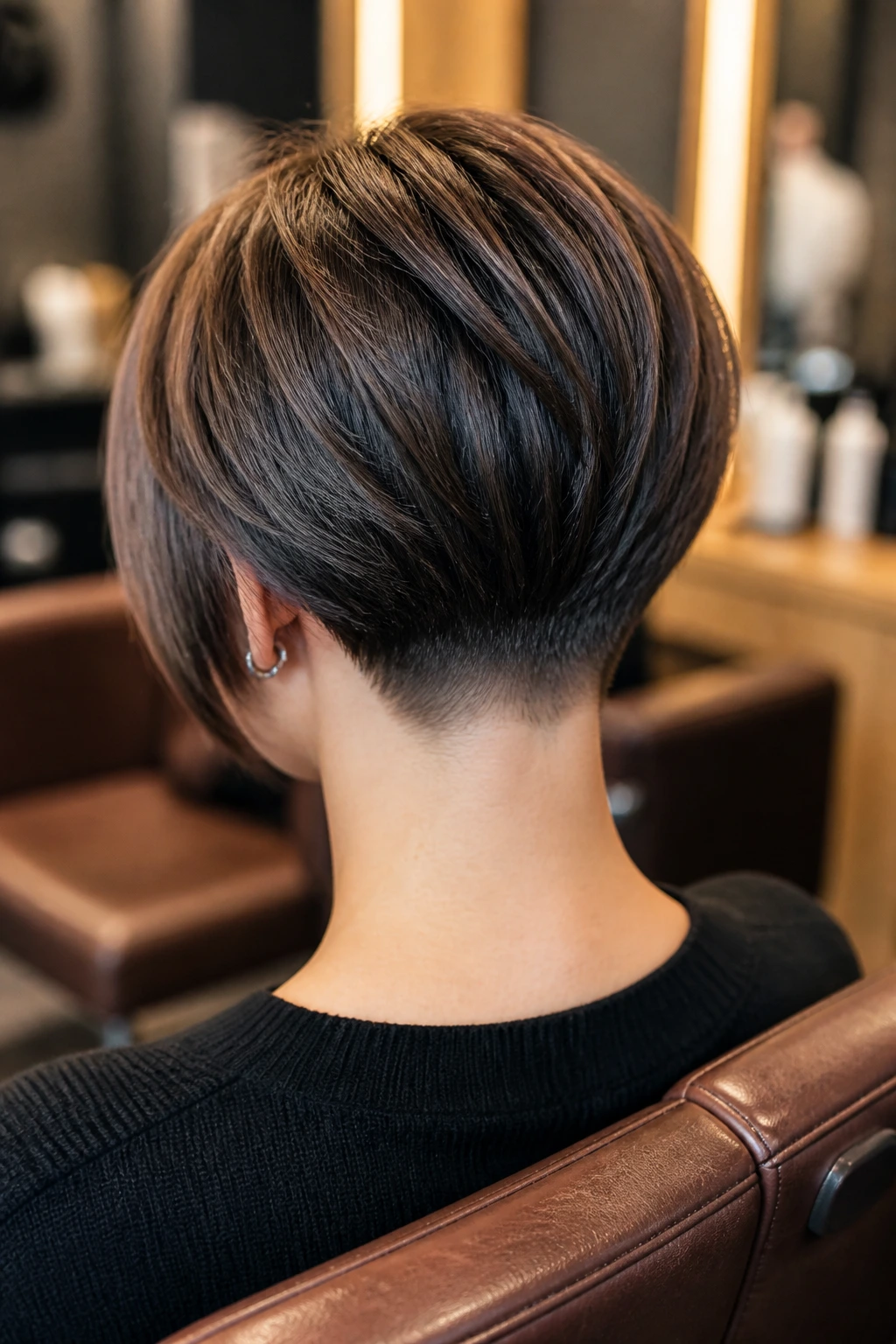
You notice it the moment the stylist turns the chair. The back sits lifted, the crown has a little push, and the neck looks longer. That is the stacked bob doing what it does best.
What the Stack Actually Does
The stack comes from short layers at the nape that build into longer pieces above. It is not about lots of visible choppiness; it is about controlled weight. On fine hair, that can be a gift. On thick hair, it can keep the back from ballooning.
- Ask for a clean nape and graduated layers through the back.
- Keep the top compact if you want volume, not fluff.
- A root spray at the crown helps the lift hold past lunch.
- Flat ironing the front pieces inward sharpens the shape fast.
If you like neat edges and a little height, this cut earns its keep. If you hate regular trims, though, skip it. The line grows out unevenly once the stack loses its shape.
There is a reason this bob keeps showing up in salons. It gives body without teasing, and body without teasing is worth paying attention to.
5. Razor-Cut Shag Bob

A shag bob is not about more layers. It is about better layers. Razor-cut ends give the hair a chipped, airy finish, and that matters because blunt ends on a shag just look unfinished. The texture should feel touchable, not stringy.
This cut loves movement. When you turn your head, the pieces separate a little, which keeps the bob from sitting like a helmet. It is one of the easiest ways to make a short cut feel lived-in, especially if your hair has a bit of wave. On stick-straight hair, you may need a wave iron or a quick bend with a flat iron to get the shape to wake up.
Be careful with damaged ends. Razor cutting can make dry hair look frayed fast. If your hair already splits easily, ask for point cutting instead of a heavy razor pass. That keeps the edge soft without tearing the fiber.
I like this version best with a bit of mousse at the roots and a rough dry. No polished curls. No glossy blowout. The mess is the point, and when it lands right, it looks like you knew exactly where to stop.
6. Undercut Bob With Tucked Sides
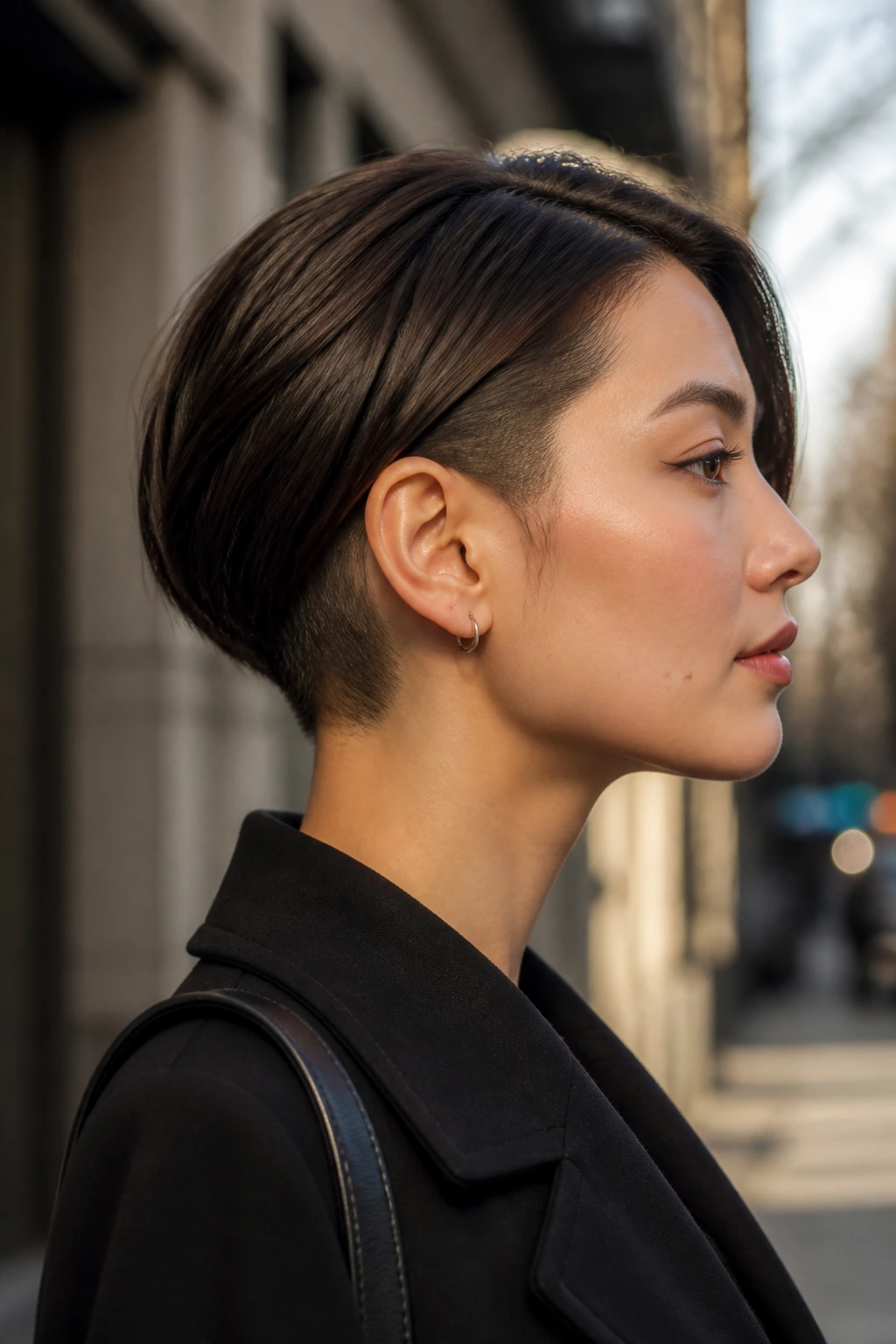
Unlike a standard bob, this one removes bulk underneath. A hidden undercut at the nape or behind the ears lets the top layer fall cleanly, which is why thick hair suddenly behaves. The visible shape stays sleek; the cut underneath does the heavy lifting.
This is the haircut I suggest when someone says their bob always puffs out at the sides. It also helps if you live with a neck that gets hot easily, because the cut takes weight away where it counts. The longer top still gives you coverage, so it does not read as shaved unless you want it to.
Best for thick, dense hair that takes forever to dry. Good for straight hair, too, if you want a line that tucks neatly behind the ear. Less ideal if your hair is already sparse at the temples, because too much removal underneath can make the top look thin. I would ask for a very small undercut first—maybe half an inch to one inch wide—then decide if it needs more later.
That small measurement matters. Go too high and the bob loses its body. Keep it hidden and the haircut stays sharp.
7. A-Line Bob With A Deep Side Part
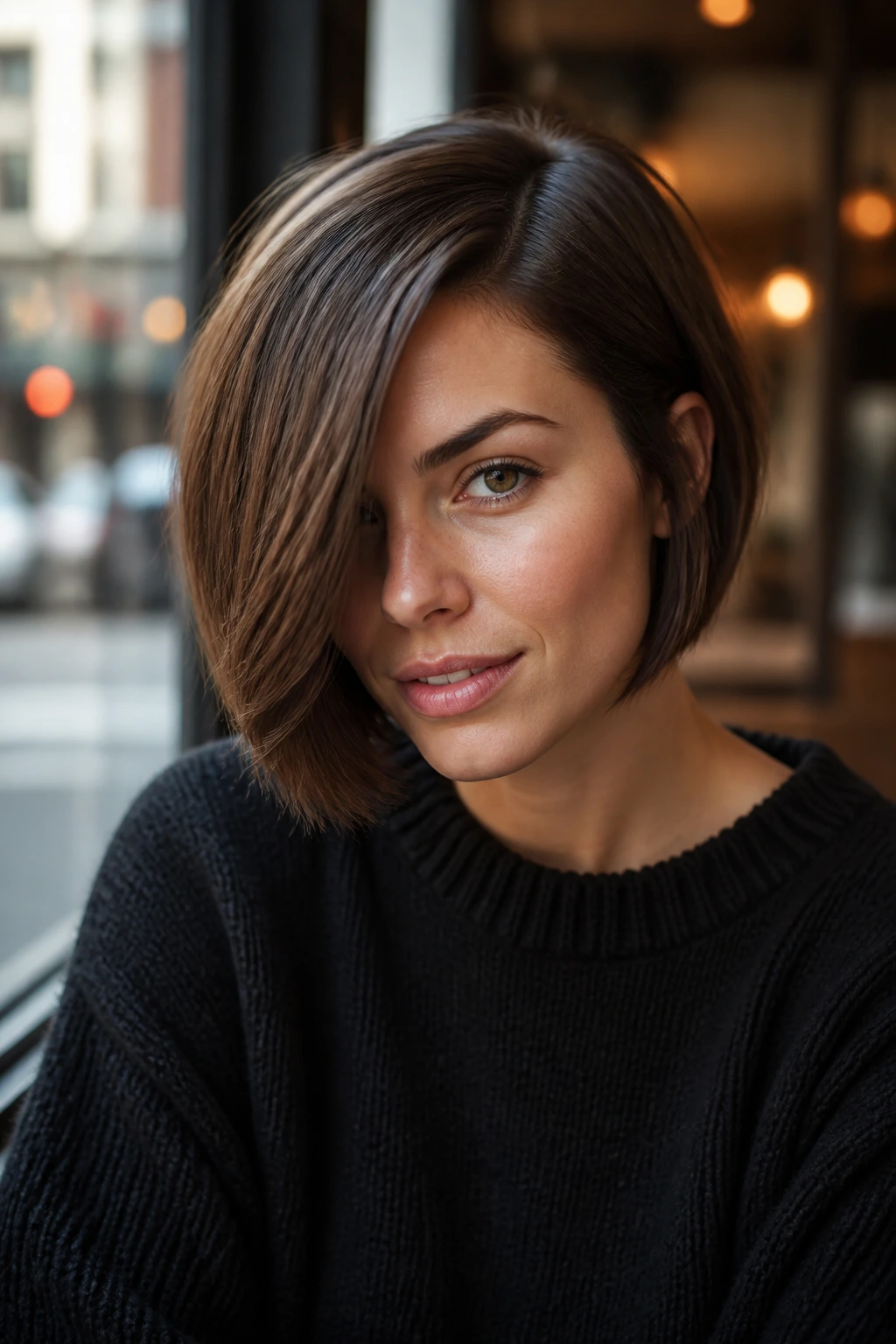
A side part can do more work than an extra inch of length. On an A-line bob, that part pushes the front pieces forward so they sweep across the cheekbone while the back stays shorter and neat.
Where The Weight Should Sit
The front should land somewhere between the jaw and the top of the neck. Too long, and the cut starts reading like a lob. Too short, and the diagonal disappears. The back can sit close to the nape, but not so tight that it looks severe.
- Works well on fine hair that needs a little body at the front.
- Ask for a clean diagonal from back to front, not stacked layers.
- Blow-dry the part first so the sweep stays put.
- A one-inch round brush is enough for that bend at the ends.
The reason this shape looks current is simple: it creates movement without needing messy texture. It is neat, but not stiff. Good for anyone who wants a bob that looks polished in a blazer and still holds up with a tee shirt.
If you like structure but not severity, this is a strong middle ground. The angle does most of the talking.
8. Curly Bob With A Boxy Shape
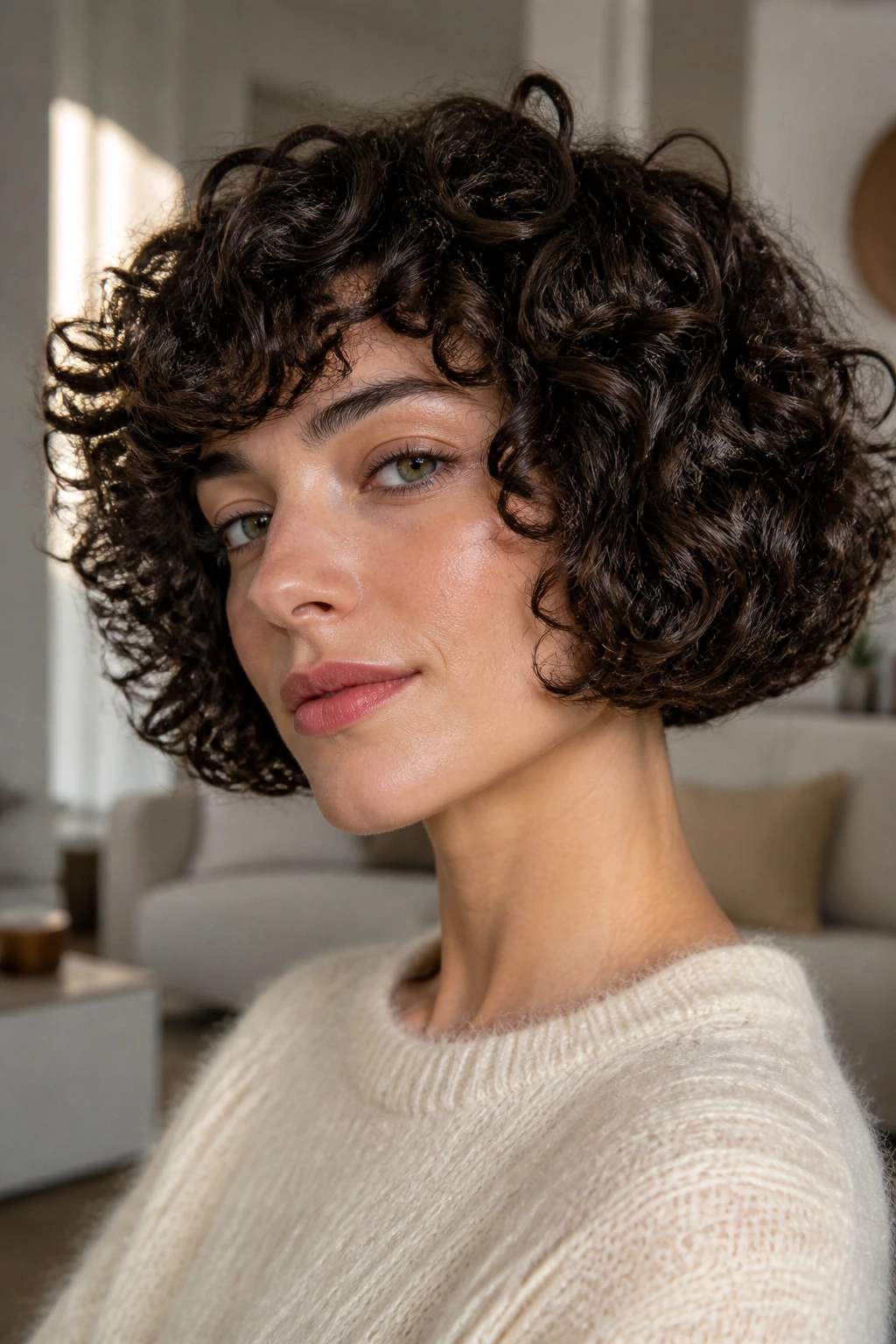
A curly bob looks strongest when it keeps its corners. If the cut gets too rounded, curls can puff away from the head and turn the whole thing soft in the wrong way. A boxy outline gives the shape some backbone.
That means the stylist should cut it dry, curl by curl, and leave the perimeter a little stronger than you might expect. Shrinkage changes everything. A bob that hits the chin when wet can jump to the cheek once it dries, so the length needs room. People forget that and end up with a cut that is far shorter than planned.
Use a cream that holds curl without making it crunchy. Then leave the diffuser on low, or air-dry and touch the roots only when they start to set. If you want edge, keep one side a touch longer and let a few face-framing curls fall forward. The shape feels intentional, and the texture gets to do the loud part.
This is not a shy haircut. Good curls like a strong outline, and this one gives them exactly that.
9. Sleek Wet-Look Bob
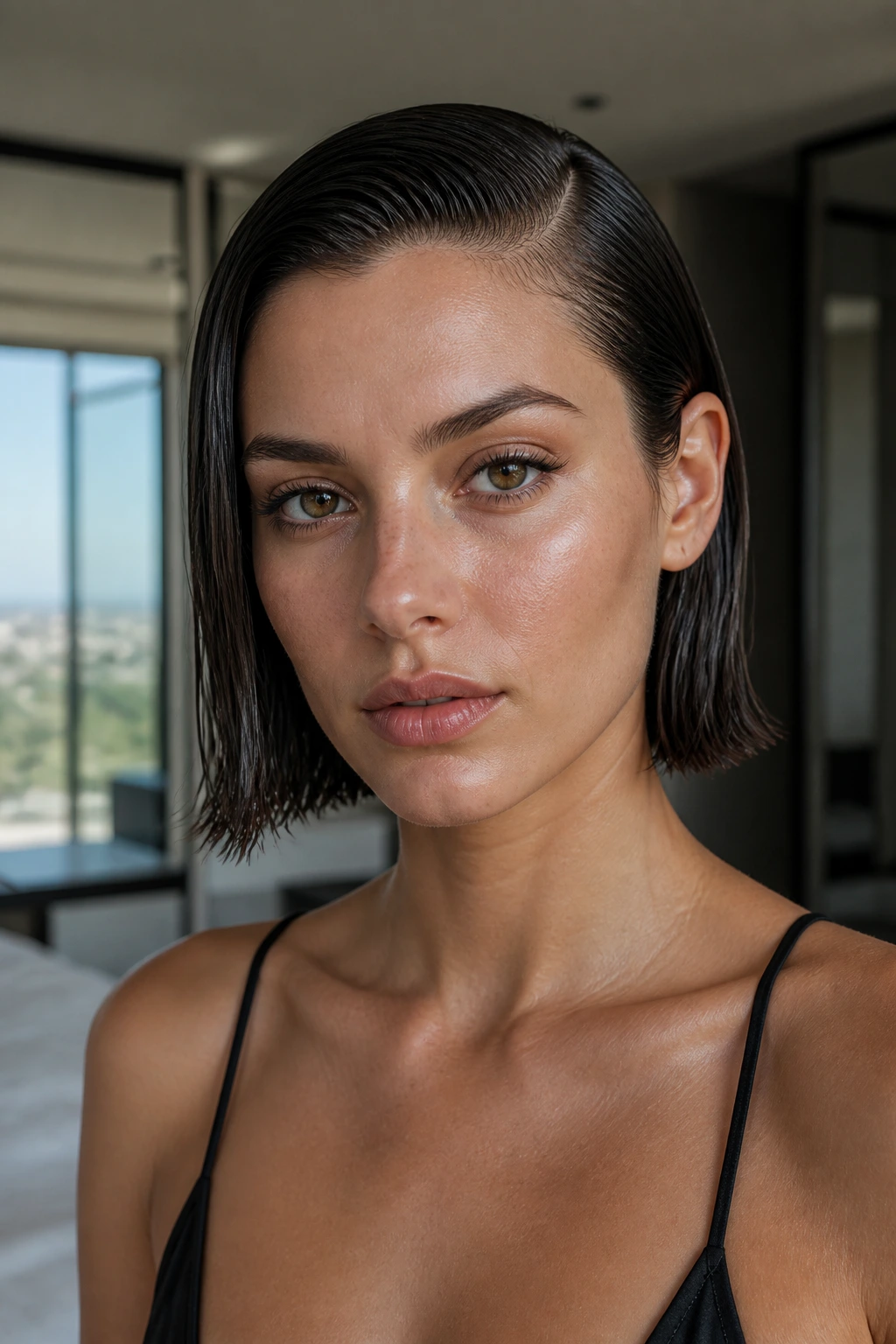
The shine is the first thing people notice. A wet-look bob feels slick at the roots, smooth at the sides, and almost glassy through the ends when the product is right. It is a neat little way to make short hair feel sharper than a blowout ever could.
Start with damp hair and comb in a gel that has hold, not oil. The wrong choice turns the roots limp before you leave the house. Push the front back from the face, tuck the ends under or let them hang straight, and keep the part clean. A middle part gives the cut a harder feel; a deep side part looks a little more dramatic. Either way, the finish should look deliberate, not greasy.
This style is not a wash-and-go cut unless your hair is already obedient. It is for days when you want the hair to look sculpted for a few hours. Keep a small comb in your bag, because wind will shift the part before anything else does. That is the tradeoff. The payoff is a sharp line and a neck that stays visible.
When it works, it looks almost effortless. It is not effortless at all, which is part of why it looks good.
10. Choppy Bob With Piecey Ends
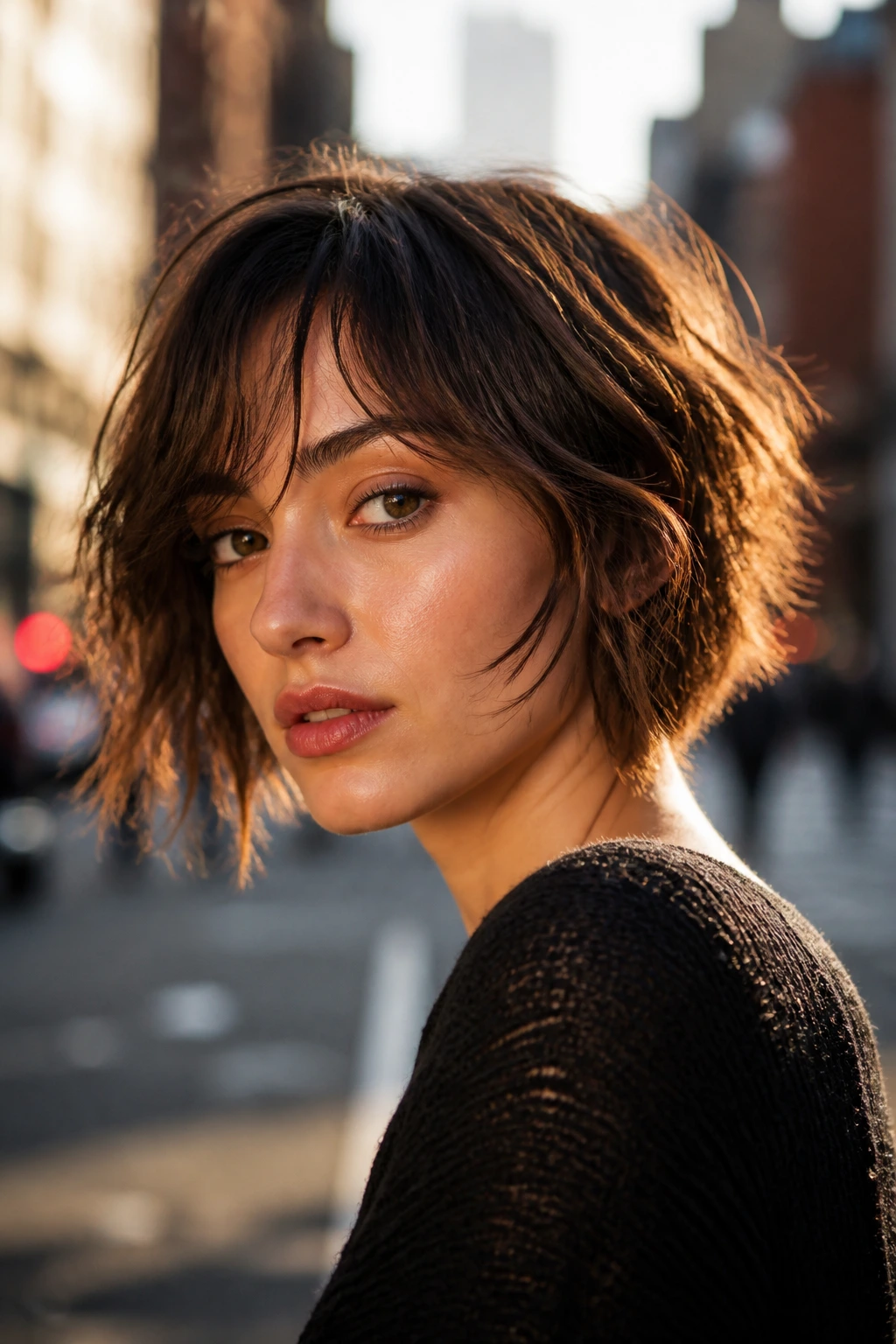
A little mess helps. Piecey ends keep a short bob from looking too neat, and that small bit of broken texture is often what makes the haircut feel current instead of stiff.
Ask the stylist to point cut the ends so they separate rather than sit in one flat sheet. That matters most if your hair is straight and tends to cling together. A light paste on dry hair—about a pea-sized amount—can be warmed in your palms and tapped through the ends, then twisted into a few random pieces. Do not smear it everywhere or the haircut goes flat fast.
What To Watch For
- Too much product makes the choppiness look greasy.
- Too many layers can thin the bob out.
- A soft fringe can keep the cut from looking harsh.
- A quick bend with a flat iron on just three or four sections is enough.
This is the cut for people who want texture without the shag. It has more bite than a classic bob, less attitude than a full mullet, and that middle ground is useful.
It also photographs well in real life because it moves. A clean bob can look frozen. This one keeps a little life in it.
11. Inverted Bob With A Tapered Back
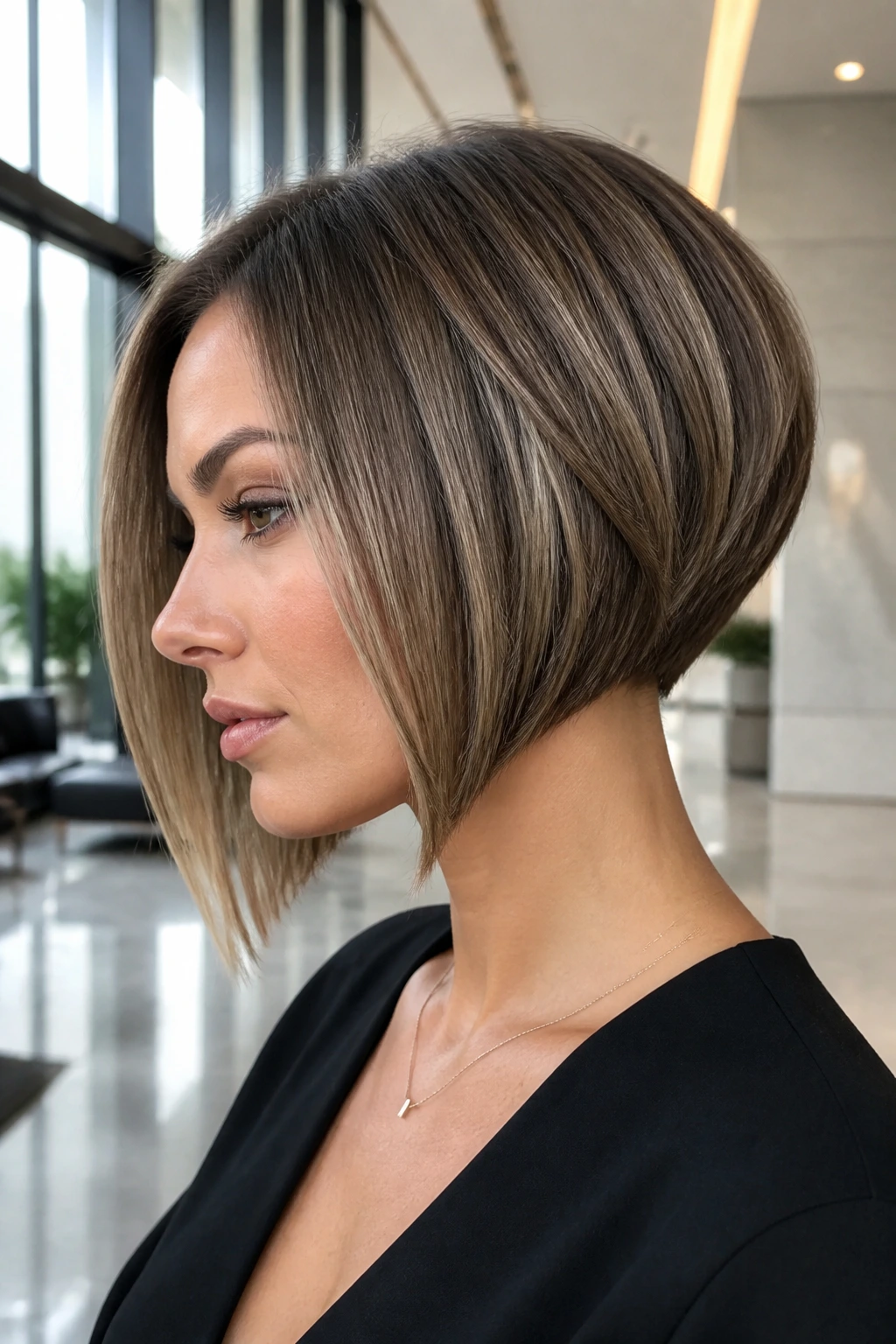
People confuse this with the stacked bob, but the mood is different. The inverted bob keeps the back short and the front longer, yet the slope feels smoother and a touch sleeker. The result is a diagonal line that shows off the jaw and neck without looking too built-up.
This shape works best when the front pieces are allowed to swing a little. If they are overtextured, the whole cut can lose its clean read. I like it on straight or slightly wavy hair, especially when the wearer wants something neat but not severe. The front can land right at the chin or a bit below, while the back stays tucked close to the nape.
The parting can change the whole mood. Center it if you want the slope to feel sharp and graphic. Move it off center if you want the face to soften a little. Either way, the cut asks for regular trimming. Once the back grows, the angle starts to blur, and the bob loses the line that makes it worth having.
If you like a haircut that gives the profile some shape, this one does the job with very little noise.
12. Bubble Bob With Soft Roundness

A rounded bob can look tougher than a spiky one if the line is clean. The bubble bob curves inward at the ends, so the shape sits like a smooth arc around the jaw. Done well, it feels polished and a little retro without drifting into old-fashioned territory.
How To Keep It From Looking Like A Helmet
The trick is to keep the weight low and the crown controlled. Too much lift on top and the silhouette turns cartoonish. Too much product at the ends and the curve gets stiff. The cut should sit close to the head, then roll in just enough to show shape when you turn sideways.
- Works best on straight hair or soft waves.
- Ask for internal weight removal, not choppy layers.
- Use a small round brush to turn the ends under.
- Finish with a light spray, not a heavy serum.
This one looks best when the edges are crisp and the curve is subtle. The whole point is the silhouette. No drama needed.
It is one of those haircuts that can look quiet from the front and surprisingly strong from the side. That side view is where it earns its keep.
13. Center-Part Micro Bob

Can a tiny bob look severe without feeling hard? Yes, if the center part and blunt edge are clean enough to carry the shape on their own. A micro bob that stops near the jawline can look almost graphic when the line is straight and the part slices the face in two.
This cut is especially strong on long or oval faces because it breaks up length without adding width at the wrong spot. It also lets the cheekbones do more of the talking, which is handy when you want a haircut that feels sharp but not noisy. Keep the ends blunt and the neckline tidy. Any roughness at the bottom will show fast.
I would not pair this with a lot of layers. It does not need them. A flat iron pass on dry hair, plus a tiny bit of shine spray on the ends, is enough to make the line hold. If your hair flips at the bottom, ask for a slightly heavier edge so the curve does not kick out.
The whole haircut depends on precision. Miss the line, and it loses the point. Get it right, and it looks clean from across the room.
14. Tucked-Behind-Ear Bob With Clean Edges

You know the haircut that looks calm until one ear gets tucked and the whole face changes? That is the quiet power of a clean-edged bob. The line is simple, but the ears-out moment gives it a little edge that feels almost accidental.
This style depends on a tidy perimeter. The ends should sit at the jaw or just under it, with the side pieces long enough to slide behind the ear without puffing out. A tiny sideburn left in place can soften the transition and keep the cut from looking too severe. I like this shape on hair that has some natural shine, because the exposed ears and neck make dull ends more obvious.
Little Details That Matter
- Keep the nape clean and close.
- Ask for a blunt line, then soften only the very front.
- A barrette or single tuck can change the mood fast.
- Fine hair benefits from a root lift at the part, not all over.
This is the bob that looks neat in the morning and slightly sly by evening. Not because it is trying hard. Because it does not have to.
It is a small styling trick, but the effect is real. One tuck, and the haircut suddenly has a point of view.
15. Boyish Bob With A Long Side Fringe
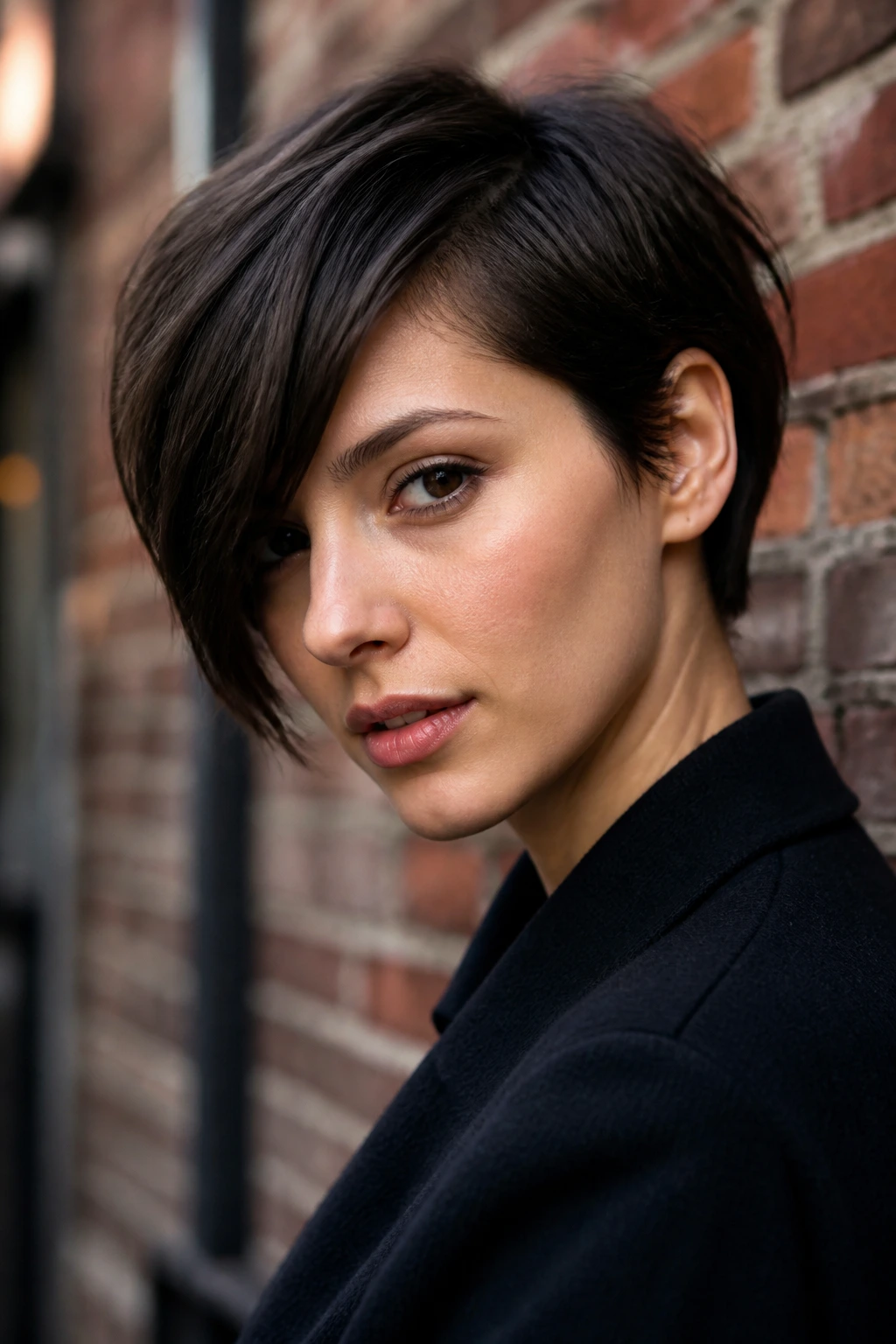
Not every edgy bob needs a hard line. A boyish bob with a long side fringe has a softer shape, but the attitude comes from the imbalance: a little cropped in the back, a little loose around the face, and one longer fringe piece that cuts across the forehead.
This is the cut I reach for when someone wants edge without the feeling of a helmet. The side fringe can hide a forehead, skim a brow, or break up a strong square face. The back stays neat, often just above the collar or nape, while the front carries the movement. That contrast is what keeps it current. Not the length. The contrast.
It also grows out better than a lot of sharper bobs. The fringe can slide to the side, the back can lengthen a touch, and the haircut still reads as intentional for a while. If you want something with a little indie feel, a little softness, and enough shape to wear with a leather jacket or a clean sweater, this is the one that keeps earning compliments without asking for much back.
A short bob looks best when the line makes sense from every angle. Get the shape right first, then worry about the styling products. That order matters more than people think.
