



A stacked layered bob can fake volume faster than almost any styling trick. When the back is cut with smart graduation, hair starts to sit on itself instead of hanging straight down, and that built-in lift changes the whole silhouette.
Weight is the enemy.
A bob can look thick in a photo and still fall flat by lunch if the interior is too heavy or the layers are scattered in the wrong places. The smartest stacked shapes trim the nape short enough to support height, then keep enough length through the front to avoid that helmet look nobody wants. Too much thinning on the sides, and the cut starts to fray. Too little stack, and you get a blunt box with no movement.
That is why this haircut keeps showing up in salons. It works on fine hair, dense hair, straight hair, waves, curls, and those awkward in-between textures that never behave the same two days in a row. You can wear it polished, airy, piecey, or soft around the face, and the volume comes from the cut first — not from fighting with your flat iron for half an hour.
Some versions are sharp and architectural. Others look softer and lived-in. A few are all about crown lift, while others use a longer front to make the back feel fuller by contrast. The first one is the cleanest place to start.
1. Classic Nape-Stacked Bob
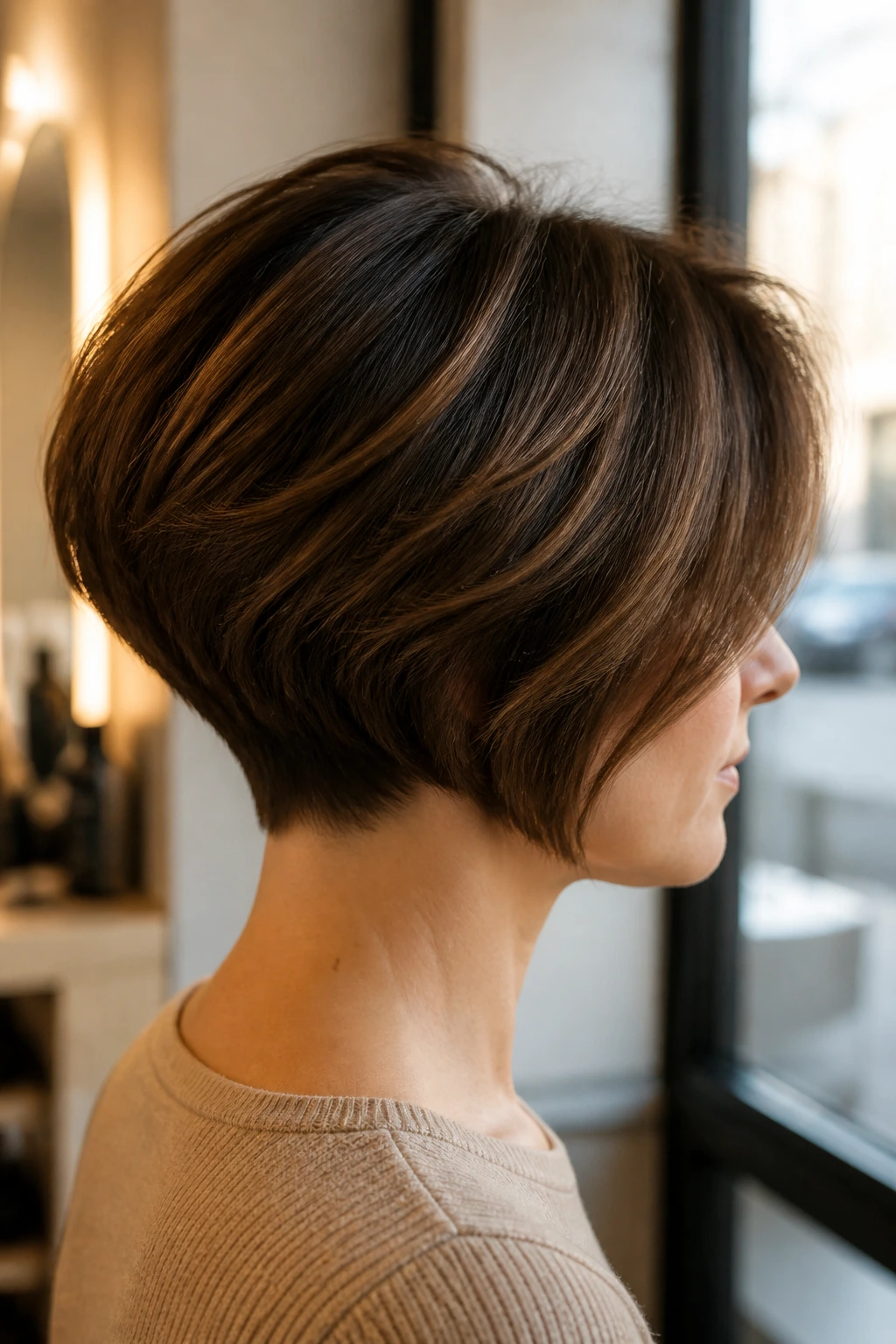
A classic nape-stacked bob is the haircut that makes volume feel built in instead of manufactured. The back is cut shorter and tighter, so the hair at the nape stops dragging the whole shape down. That little bit of graduation gives the crown somewhere to sit.
Why It Lifts
The lift comes from weight removal in the back third of the head. Hair naturally wants to collapse at the nape, so this cut gives it a shelf to rest on.
- Best on fine to medium hair
- Works with a round brush or 1-inch curling iron
- Needs a clean neckline so the stack reads clearly
- Looks fuller when the crown layers are kept soft, not shredded
Tip: Ask for the shortest layers to land just above the nape crease, not halfway up the back of the head. That keeps the stack visible without making the haircut jumpy.
2. Soft Rounded Stacked Bob
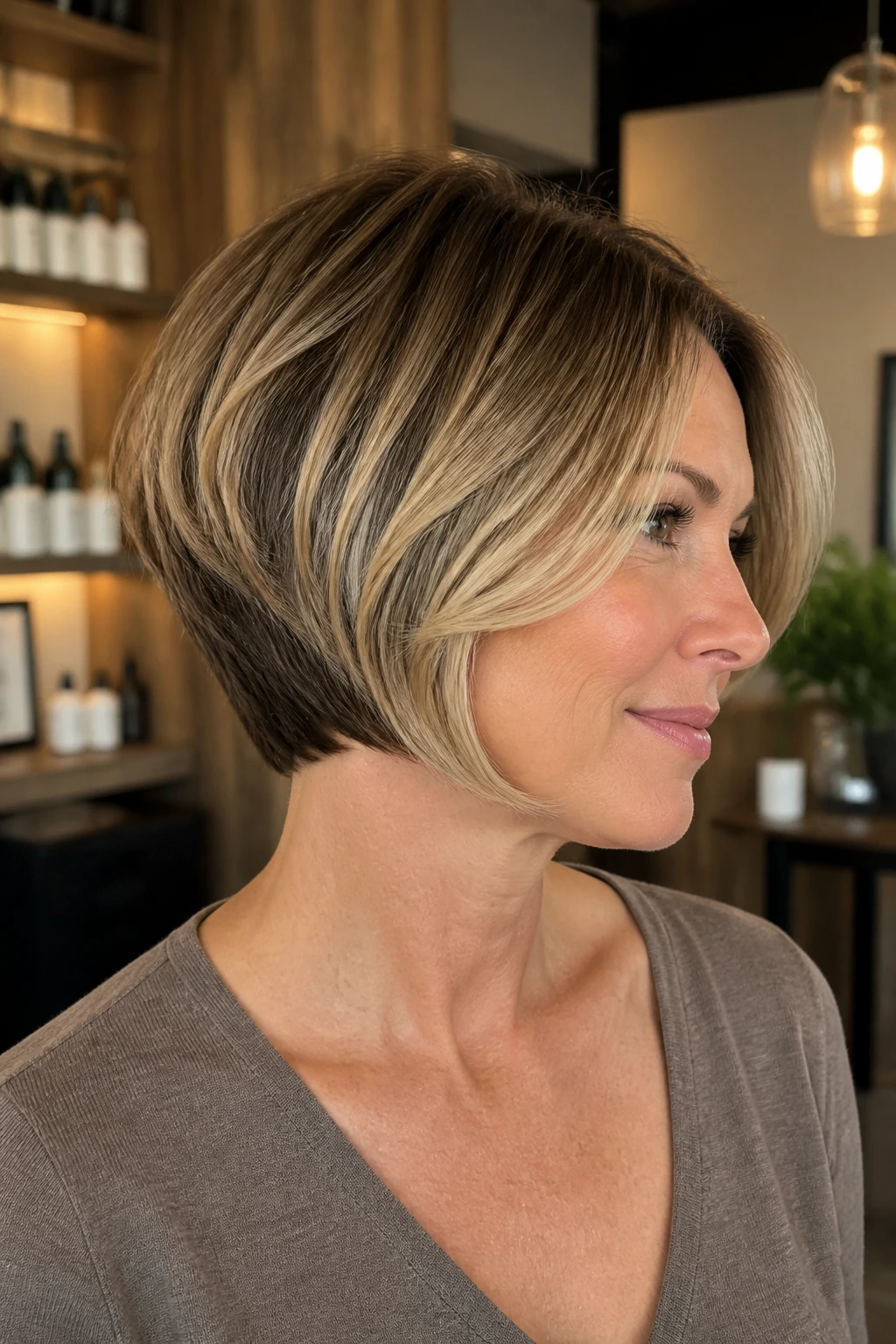
Rounded layers are sneaky. They don’t shout for attention, but they make the whole head look fuller because the outline curves under instead of sitting flat.
The shape works best when the back is stacked with a gentle hand and the perimeter gets a soft bevel. Straight hair likes this cut because it creates a little bend where the eye expects density. Wavy hair can use it too, though you may want to blow-dry the ends under with a medium round brush so the curve stays neat.
Flat-ironing this one pin-straight removes the point of the cut. It takes away the roundness and leaves you with a shape that feels smaller. I like this version for anyone who wants volume without a choppy finish — especially if you wear a side part and want the cut to look polished when you tuck one side behind the ear.
3. Deep Side-Part Stacked Bob

Can a side part change a bob that keeps lying flat? Yes. More than people think.
A deep side part pushes weight away from the center line, which gives the crown an instant lift and makes the top of the head look taller. On a stacked layered bob, that shift matters because the short back can do its job while the front sweeps over with a little drama. It also breaks up symmetry, which is useful when hair is fine and tends to cling to the scalp.
How to Wear It
Blow-dry the roots in the opposite direction of your part first. Then flip them back once they’re about 80 percent dry. That small detour helps the root stand up instead of lying down from the start.
A root-lifting spray at the crown helps. So does clipping the top section while it cools. Skip heavy oils near the part line. They sink the shape fast, and the volume disappears before you leave the house.
4. Curly Stacked Bob With a Lifted Crown

If your curls collapse at the root but puff out at the ends, a stacked cut can fix the shape without making the hair feel smaller. The trick is to keep the stack controlled at the back and leave enough length in the top curls so they spring up instead of shrinking into a helmet.
Curly hair does not need aggressive layering. It needs the right layering. Too many short pieces can make curls bunch up in the wrong places, while a careful stack gives the crown room and lets the silhouette taper cleanly into the neckline.
- Use a diffuser on low heat
- Style with a light curl cream plus a foam
- Keep the nape slightly shorter than the top row of curls
- Avoid razor thinning if the hair already frizzes easily
A curl pattern with some spring will look especially good here. The bottom line: let the stack support the curl, not fight it.
5. Angled Stacked Bob With a Longer Front

The angled stacked bob reads sharper than the classic version, and that diagonal line does a lot of quiet work. Shorter layers in the back build lift at the crown, while the longer front pieces pull the eye downward and forward, which makes the whole shape feel longer and slimmer.
That contrast matters if your hair is dense or tends to puff out at the sides. The back gets the lift; the front keeps the haircut from looking boxy. I like this version on jaw-length hair because it frames the face without swallowing it. It also grows out in a fairly graceful way, which is useful if you don’t want to be back in the chair every few weeks.
One thing to watch: the front should not be so long that the stack loses its punch. A good angled bob still reads like a bob from the side. If it starts feeling like a lob with a short back, the balance has gone off.
That diagonal is the whole point.
6. Choppy Stacked Bob for Fine Hair

Unlike a blunt bob, this one leans on texture instead of a clean edge. The ends are lightly point-cut, the stack is compact, and the whole haircut is meant to look a little broken up so fine hair can catch light and feel fuller.
Fine hair often goes limp when every strand is cut to the same line. Choppy layers fix that by creating tiny changes in length, which helps the ends separate instead of clumping into one flat sheet. It is a smart move if your hair is soft, slippery, or tends to collapse the minute humidity shows up.
I would keep the styling simple. A pea-sized amount of mousse at the roots, a quick blow-dry with a vent brush, and a dry texture spray at the crown is enough. Heavy creams will flatten the cut. So will brushing it a hundred times.
Best for: fine, straight hair that needs a little grit and shape.
7. Feathered Stacked Bob With Airy Ends
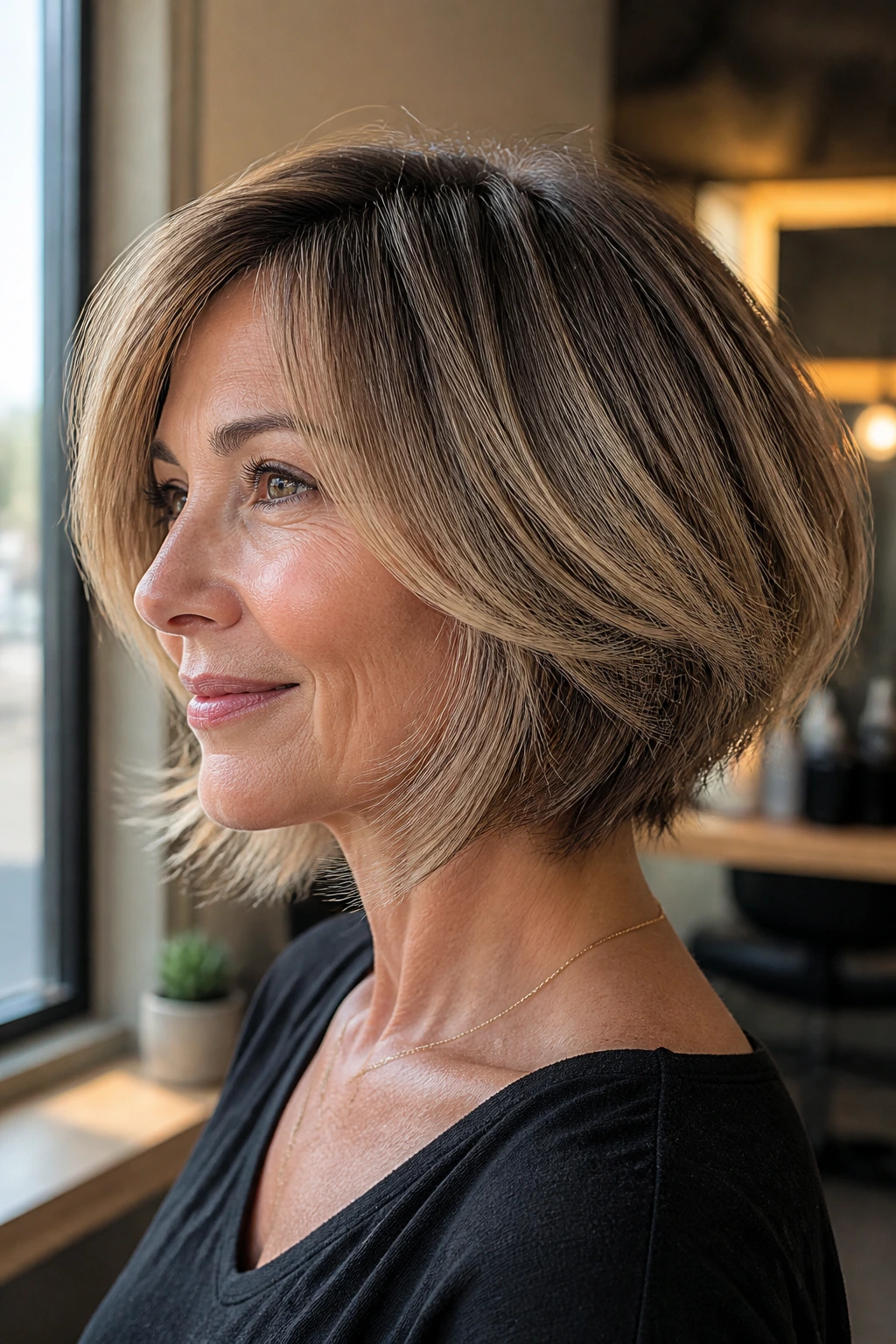
A feathered stacked bob is softer than a choppy one, but it still gives the back lift and the ends movement. The layers are sliced with a lighter hand, so the haircut feels airy instead of chunky. That makes it a nice pick if you want volume without obvious pieces sticking out everywhere.
What to Ask Your Stylist
Ask for soft internal graduation, feathered ends around the perimeter, and a stack that stays concentrated at the nape. That combination keeps the volume in the right place and stops the sides from puffing too wide.
The style works well on hair that has some natural bend. Straight hair can wear it too, but the blow-dry needs a little round-brush help. I’d avoid going too short at the crown if the hair is delicate, because feathering too high can make the top feel thin.
This cut looks especially good when the ends move. Not curled. Moved. That lighter, floating shape is the whole charm.
8. Stacked Bob With Curtain Bangs
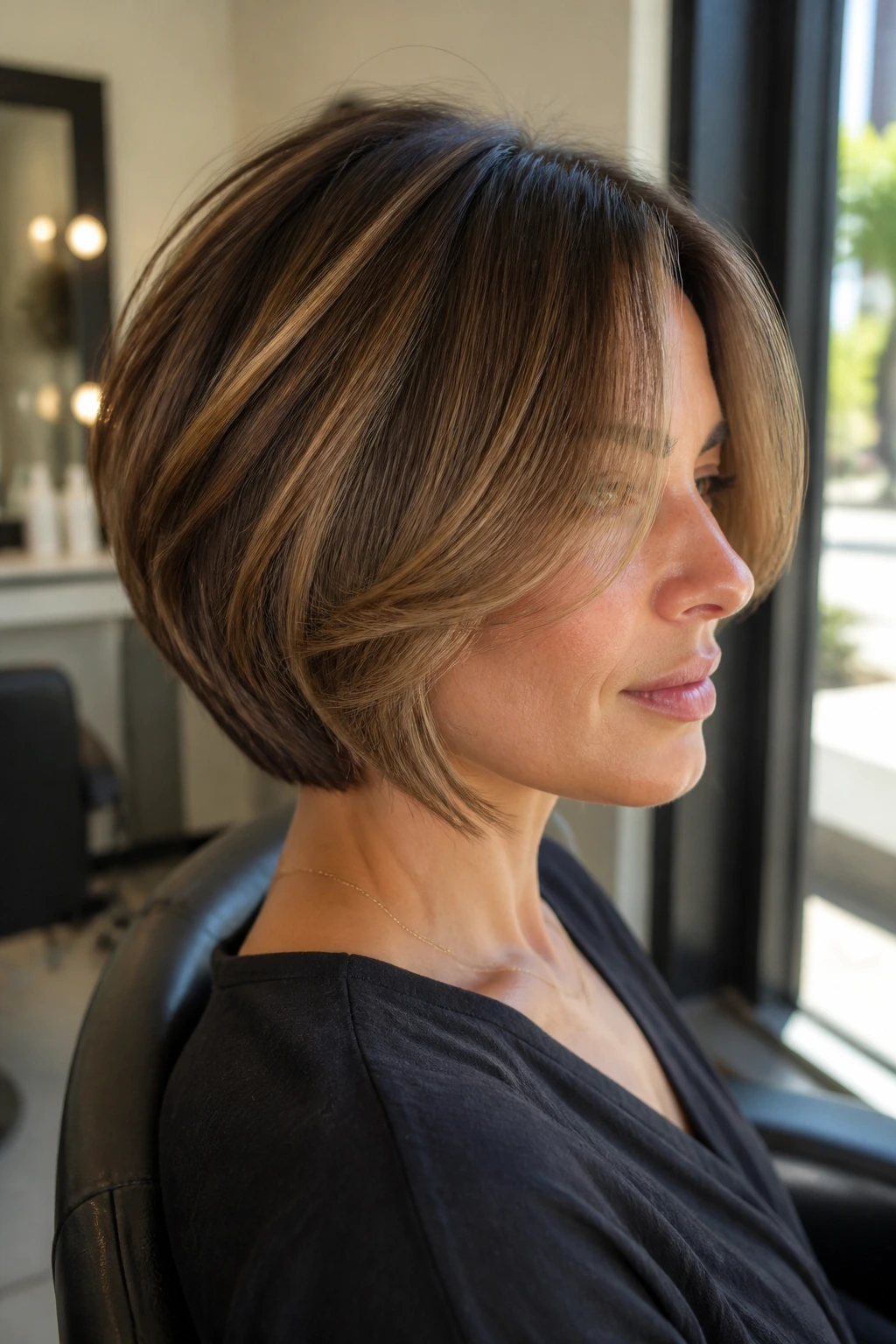
Curtain bangs change the whole feel of a stacked bob because they draw attention upward before the eye even reaches the nape. The face opens, the crown feels taller, and the haircut gets a softer top line that balances all that volume in the back.
If your forehead is a feature you like to soften, this is a smart choice. Curtain bangs also help a stacked bob feel less severe, which matters if you’re worried that short hair will look too sharp around the face. The bangs can be worn with a center split or pushed a little off-center, and both versions keep the cut from reading flat.
At home, blow-dry the bangs with a small round brush and bend them away from the center. The sides should skim the cheekbones, not sit like a hard fringe. Keep the stack crisp in the back and the bangs loose up front. That contrast is the appeal.
A little softness goes a long way here.
9. Collarbone Stacked Lob

Can a lob still count as a volume cut? Absolutely, if the stack is placed in the right spot.
A collarbone-length stacked lob keeps the front long enough to graze the shoulders, while the back is trimmed shorter so the cut doesn’t fall into one heavy line. That gives you lift without losing the comfort of some extra length. It is one of the easiest options for anyone who wants movement but not a super-short neck line.
How to Keep the Lift
The back needs a controlled stack, not a lot of loose layers everywhere. If the graduation spreads too far forward, the lob starts to look thin. Keep the weight concentrated below the occipital bone — the bump at the back of the head — and let the front stay slightly blunt or softly angled.
This version likes a blowout with a round brush and a little root spray. A large Velcro roller at the crown can help too. That is a tiny old-school move, and it works.
10. Inverted Stacked Bob

If you want the back to sit snug and the front to swing, the inverted stacked bob is the sharpest answer. The silhouette is steeper than a soft angled cut, so the back looks compact while the front drops longer toward the chin or collarbone.
The visual payoff is strong. The shorter rear section creates lift, and the longer front pieces make the head shape look more elongated. That contrast is especially useful on square or round face shapes, where a hard horizontal line can feel heavy.
- The nape should be tight and controlled
- The front can stay jaw-length or a bit longer
- A smooth blowout shows the angle best
- Curling the front under makes the difference more obvious
This is not the laziest cut on the list. It needs a clean finish. But if you like structure, it pays off every single time.
11. Shag-Inspired Stacked Bob

A shag-inspired stacked bob has more movement than polish, and that looseness is the reason it makes hair look fuller. The layers are cut to fall in different places, so the shape never sits as one solid block. It has lift at the back, a little swing in the crown, and some piecey texture around the edges.
That piecey texture is the whole trick. Hair with a natural wave often looks bigger when it’s broken up, not when it’s forced into one smooth outline. A shaggy stack uses that to its advantage. It can make medium-density hair feel lighter and more alive, while still keeping enough structure to read as a bob.
Messy, but controlled.
If you go this route, avoid overconditioning the roots. A light mousse or airy cream is enough. You want separation, not a slippery finish that glues the layers together.
12. Blunt Stacked Bob With Hidden Layers
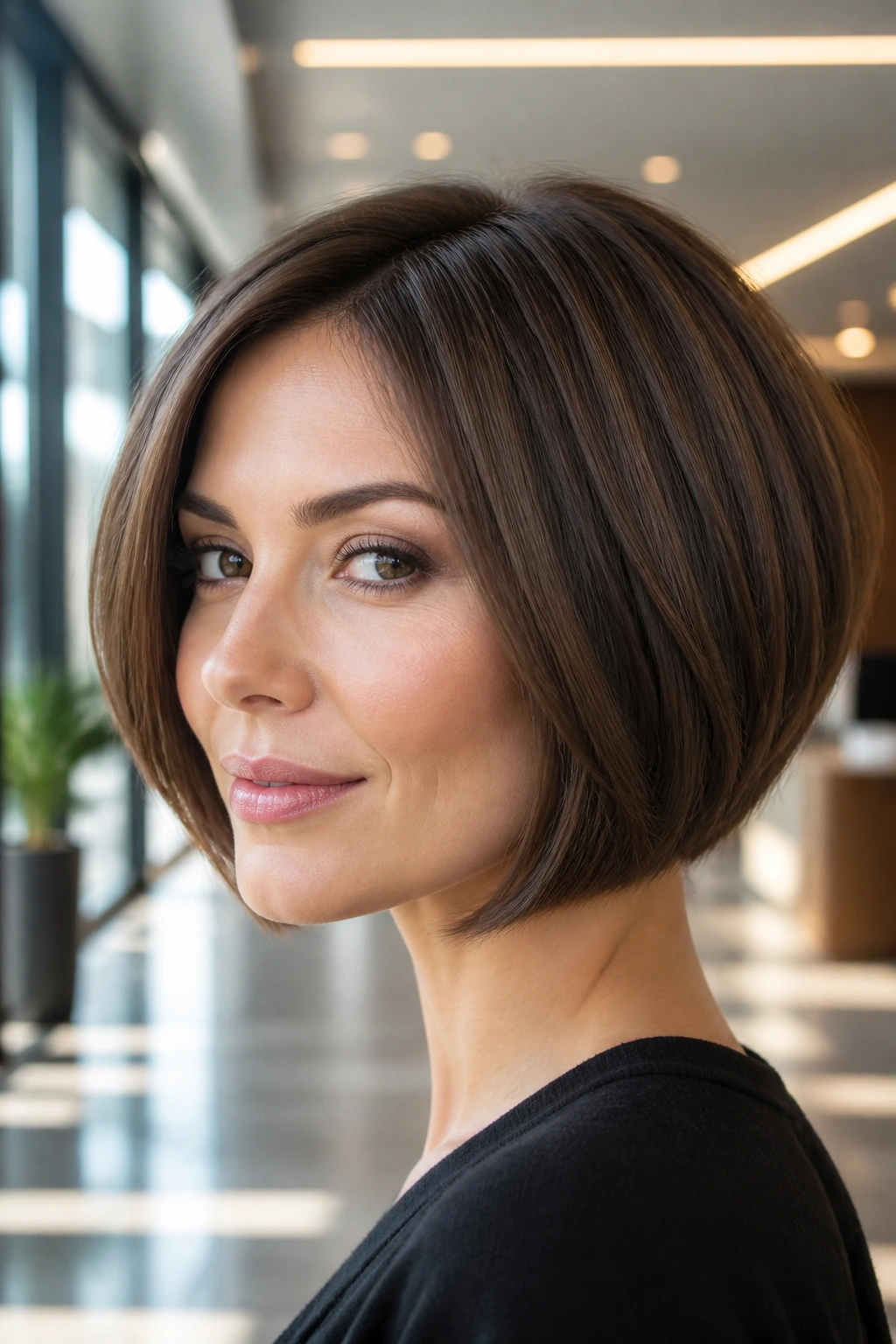
This one is for people who want a clean edge but still want the back to lift. Unlike a choppy cut, the outside line stays blunt and tidy, while the graduation hides underneath where it can build shape without looking busy.
That hidden structure is useful on hair that is thick enough to support a stronger perimeter. From the outside, the bob looks crisp. Inside, the shorter layers keep the nape from dragging down the entire cut. It’s a smart compromise when you like polish but hate flatness.
I’m a fan of this version for work settings or anywhere a neat outline reads better than texture. It grows out well, too, because the blunt edge keeps its shape longer than a heavily layered finish. If you have dense hair, ask for internal removal near the nape rather than thinning the ends to death. The finish stays stronger that way.
Clean outside. Lift inside. That balance is the point.
13. Tousled Stacked Bob With Beach Texture

A little bend changes everything. Once the hair has a loose wave through the mid-lengths, the stack stops looking stiff and starts feeling fuller in a softer way.
This version works because texture creates separation. A stacked layered bob can sometimes look too neat if it’s blown out straight every time, but a tousled finish breaks the outline enough to make the volume feel easier and less formal. It also hides the grow-out phase better, which is nice if you do not want to chase the salon chair every few weeks.
Styling Notes
Use a salt spray or a light texturizing mist on damp hair, then twist small sections as they dry. A diffuser helps if your hair already has wave. If it’s straight, a few bends from a medium curling wand are enough.
Don’t drown it in product. Two or three pumps, a mist, a quick scrunch. That’s enough. Heavy paste will turn the ends sticky and flatten the lift at the crown.
14. Silver Stacked Bob for Gray Hair

Silver and gray hair show off a stacked shape in a way darker colors sometimes hide. The reflective strands catch the layered cut from different angles, so the graduation at the back reads more clearly and the haircut looks fuller with less effort.
Gray hair can also be coarser or drier, which means the right cut matters even more. A stack can remove bulk where the hair puffs out, while keeping enough body at the crown to avoid that heavy triangle effect. I like a soft finish around the face so the silhouette stays modern, not helmet-like.
A shine serum on the ends helps, but keep it light. A pea-sized amount is enough for a short bob. If the hair is wiry, a leave-in cream with a bit of slip can keep the stack smooth without making it collapse.
There is no need to fight the texture. Work with it.
15. Side-Swept Fringe Stacked Bob
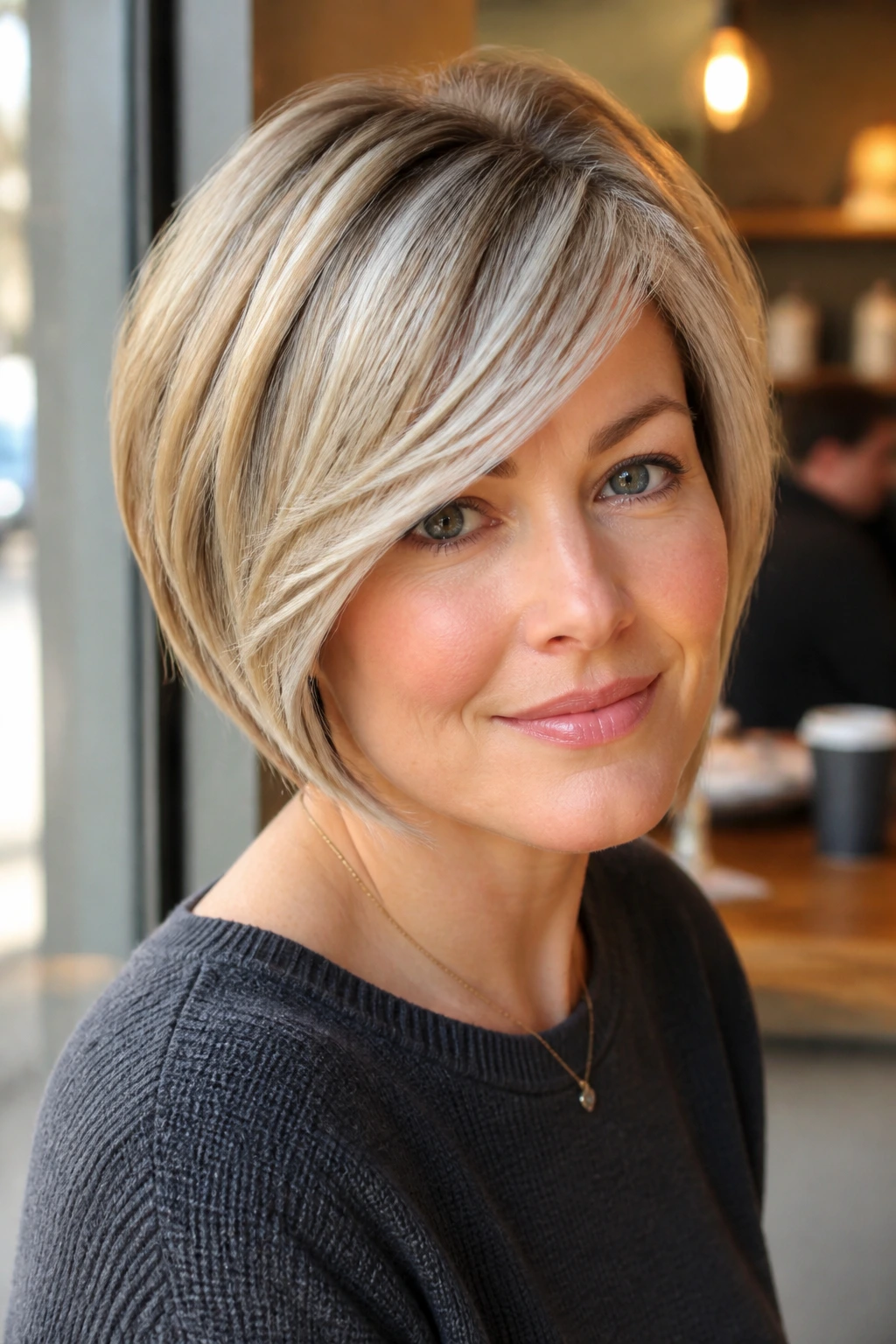
Does a fringe have to be blunt? Not at all. A side-swept fringe can carry a stacked bob in a softer direction and still give the crown plenty of lift.
The sweep pulls the eye across the forehead, which makes the haircut feel less boxy and more open. It also lets the top section keep a bit of height, since the hair is not split down the center and flattened from the start. That matters on bobs that sit close to the cheekbones, where shape can get lost fast.
How to Wear It
Dry the fringe first, using a small brush to guide it over and slightly back. Then move to the rest of the bob so the front doesn’t get squashed while you work. A light mist of flexible hairspray keeps the sweep in place without turning it stiff.
This cut suits anyone who likes a little softness around the eyes. It is not fussy. It just works.
16. Asymmetrical Stacked Bob
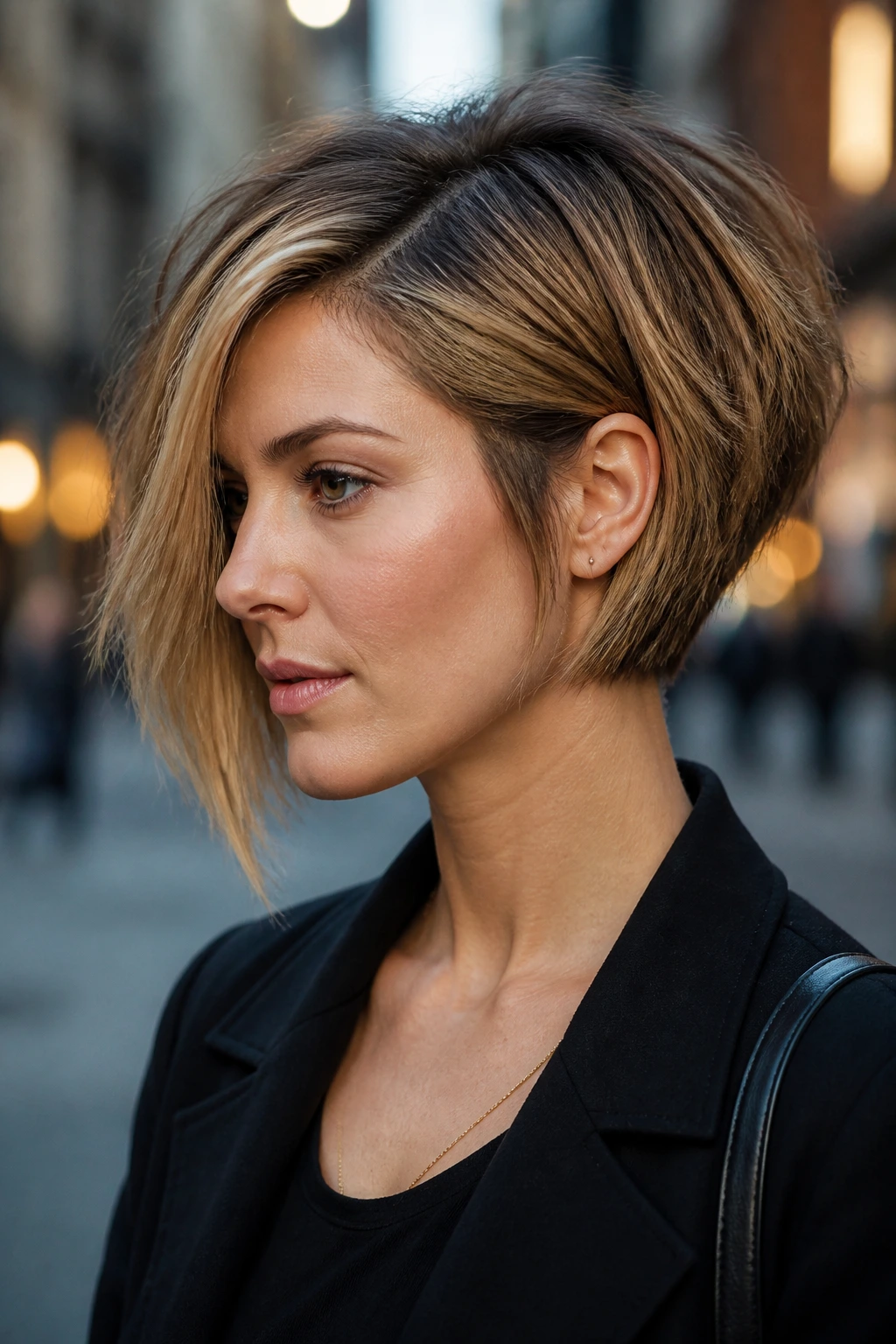
An asymmetrical stacked bob creates volume by making one side carry a little more visual weight than the other. That uneven line keeps the haircut from looking heavy, and the stacked back still gives the crown a lift.
The shape is especially good if you want something that feels a bit sharper than a standard bob. One side can skim the jaw while the other stays closer to the chin, which adds movement even when the hair is worn flat. It also gives you a built-in styling shortcut, because the cut already has personality.
- Keep the shorter side clean around the ear
- Let the longer side fall with a soft bend
- Ask for the stack to stay centered at the nape
- Use a flat iron only to refine the ends, not flatten the whole cut
The risk here is obvious: if the asymmetry is too extreme, the style can start wearing you instead of the other way around. Keep the contrast crisp, not cartoonish.
17. Stacked Bob for Thick Hair
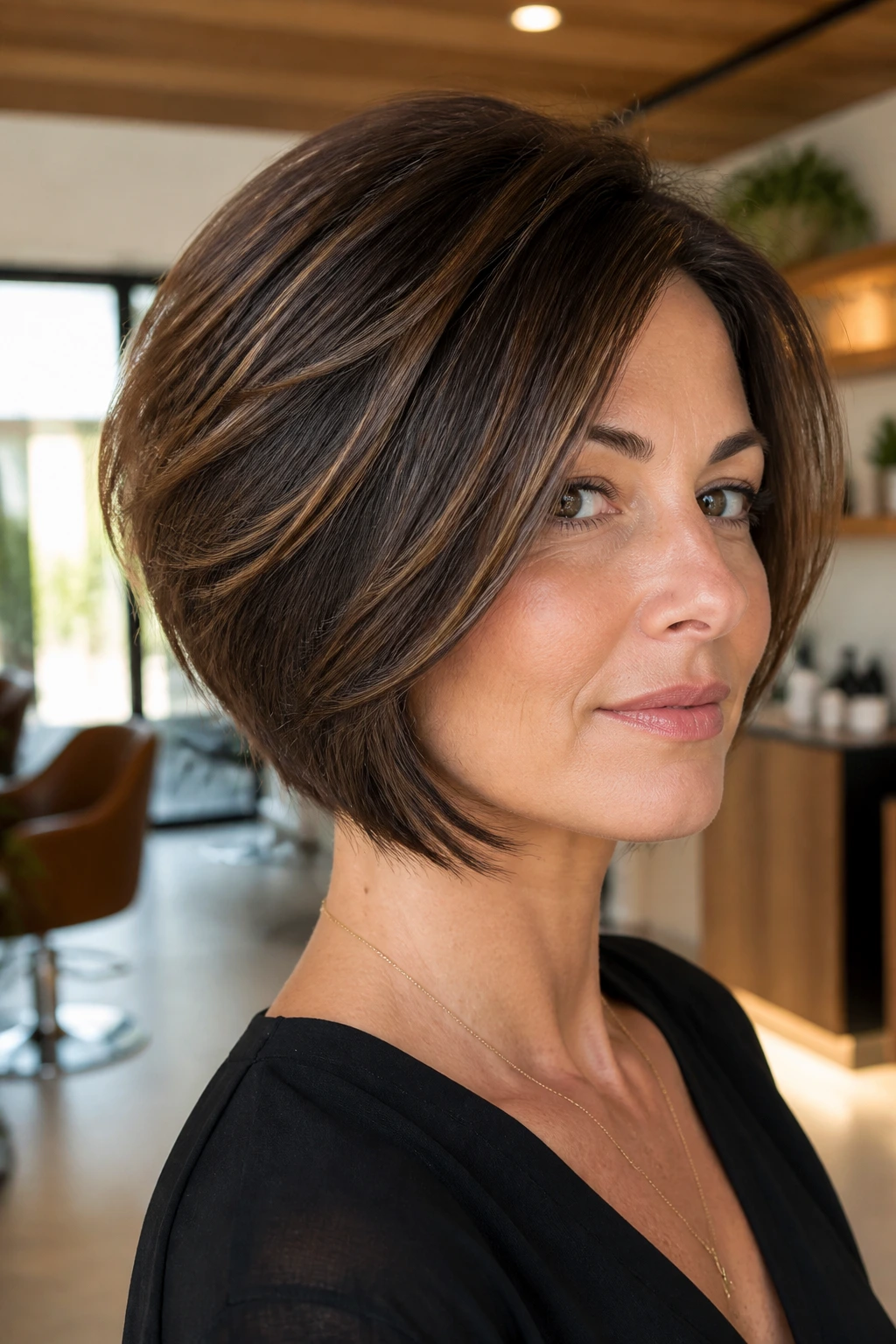
Thick hair needs a different kind of stack. Too much bulk in the nape turns into a block, and too many random short layers can make the ends puff out like a mushroom. The cut has to remove weight without making the shape frizzy.
The smartest version uses internal layering near the back and a controlled outline around the perimeter. That keeps the silhouette clean while letting the crown lift a little. I prefer this approach over aggressive thinning shears, which can leave thick hair fuzzy at the edges and hard to style after a few washes.
A blow-dry with tension helps here. Use a paddle brush first to rough-dry the roots, then switch to a round brush for the final bend through the ends. A smoothing cream on the mid-lengths can calm the bulk, but keep it away from the scalp. The scalp area needs air and lift, not weight.
Thick hair can wear a stacked bob beautifully. It just needs discipline.
18. Wavy Stacked Bob With Swoopy Ends
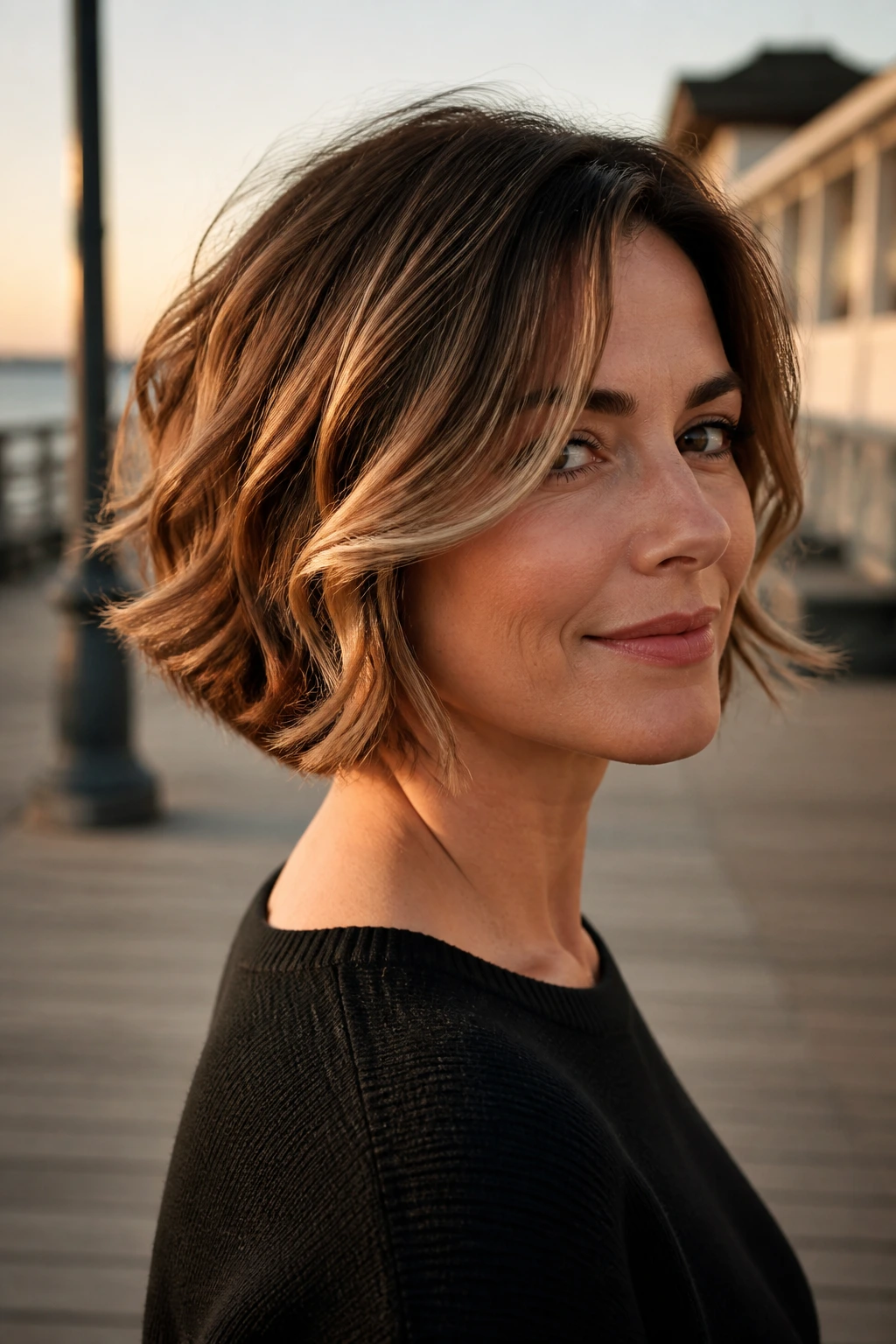
A wavy stacked bob works because the wave does half the styling for you. The back still gives lift, but the soft bends through the lengths create a swoop at the ends that makes the hair look fuller and a little more expensive-looking without much effort.
This is one of the easiest versions to live with if your hair naturally bends or if it holds a loose curl for a day or two. The stack adds shape, while the wave stops the cut from feeling too severe. It also grows out in a friendly way, which matters if your schedule is not built around monthly trims.
A mousse on damp hair and a few clips at the roots while it dries can make a big difference. You want a soft bend, not a crunchy curl. If the wave is too tight, it can hide the stack. If it is too loose, the cut loses its body. That middle ground is where this one shines.
19. Micro-Stacked Mini Bob

Short hair can look surprisingly plush when the stack is tight. A micro-stacked mini bob sits close to the head, but the short nape and compact layers make the crown look lifted instead of flat.
This is a good pick if you like short hair and want the neckline to feel clean. The shape can look sleek on straight hair, or a little edgy on finer textures that need structure. Because the length is shorter, the cut depends on precision. A sloppy mini bob looks chopped off. A careful one looks deliberate.
What Makes It Work
The stack should be compact, with the shortest point at the nape and gentle graduation up toward the crown. The front can stay close to the jaw or a little below it, depending on how much face-framing you want.
A tiny root-lift spray and a quick round-brush pass are enough for styling. There is not much room for error here, which is part of the appeal. Short. Sharp. Done.
20. Stacked Bob With Face-Framing Layers
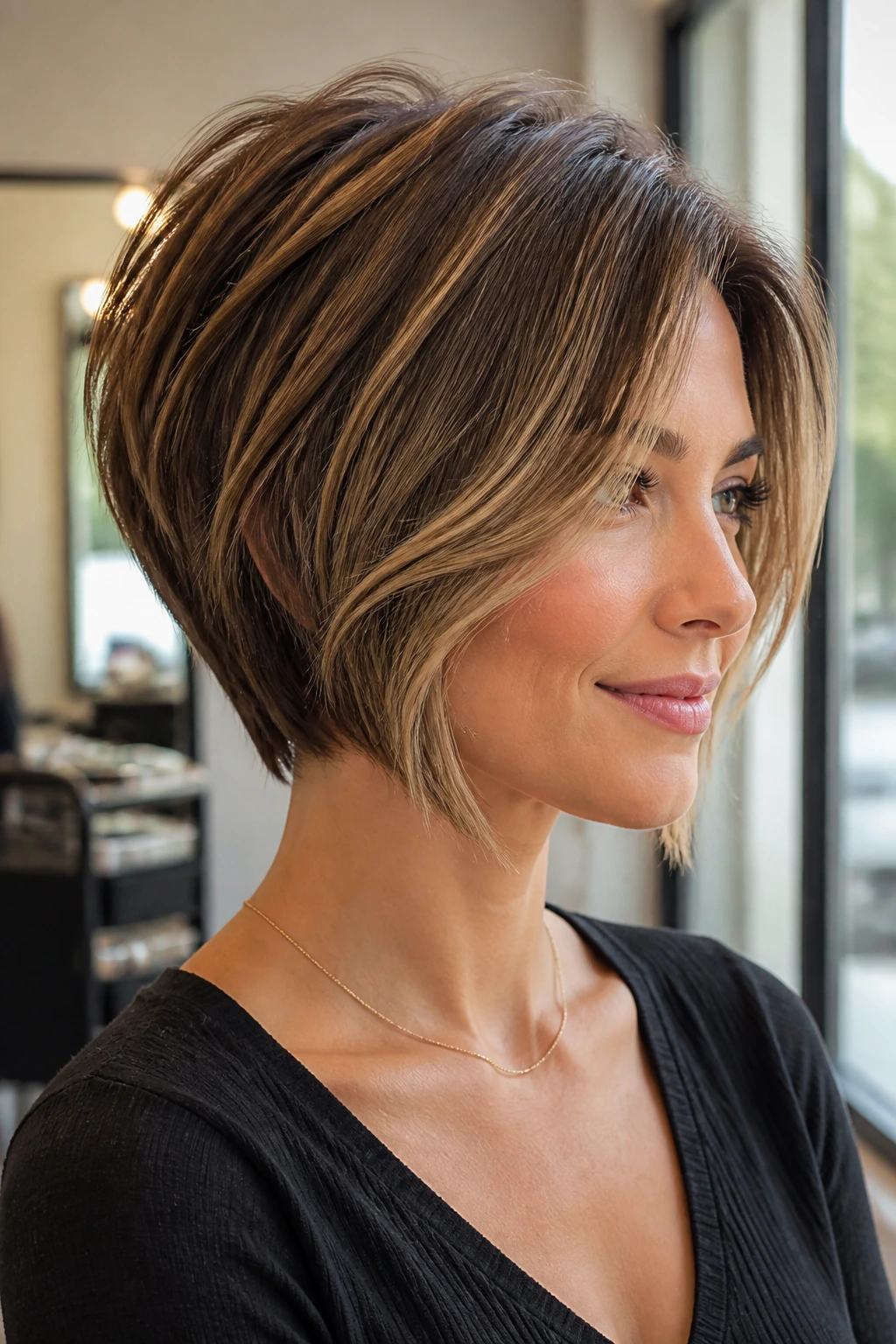
The face frame matters as much as the back stack. A good stacked bob can lift the crown, but face-framing layers are what make the whole cut feel finished instead of one-note.
This version is a strong choice if you want volume and softness together. The back still carries the height, while the front layers curve around the cheekbones or jawline to keep the shape from feeling too severe. It works on a lot of hair types because the face frame can be tailored so easily — shorter pieces for a lighter look, longer ones for a softer finish.
I like this option for people who want a bob that grows out gracefully. The front layers blur the line as the cut gets longer, and the stack in the back keeps the haircut from losing all its shape between trims. A quick bend with a flat iron or curling wand around the front pieces is enough to make the layers stand out. If you keep the ends healthy and the nape tidy, this one keeps its lift longer than you might expect.
It is the version I’d send someone to if they want volume, shape, and a cut that still feels easy on a regular day.
