



A bob haircut gets interesting the moment it stops behaving politely.
A clean line at the jaw can look sharper than a much shorter cut, and a little asymmetry can do more than a dramatic color change ever will. That is why cool bob haircuts for women wanting edge keep coming back into the conversation: the shape does the heavy lifting. No fuss. No extra drama. Just good geometry and the right attitude.
The details matter more than people think. A blunt edge makes fine hair look fuller; shattered ends make thick hair feel lighter; a deep side part can tilt the whole face; a tucked-under nape can make a bob look neat without feeling sweet. I’ve always thought the difference between a forgettable bob and a good one comes down to whether the cut has intention in the outline and a little swagger in the finish.
Some cuts here are soft around the face, some are almost severe, and a few are the kind of haircuts that make you want to wear a black turtleneck even if you own exactly one. Start with the shape that matches how much bite you want, and the rest falls into place.
1. The Blunt Chin-Grazing Bob
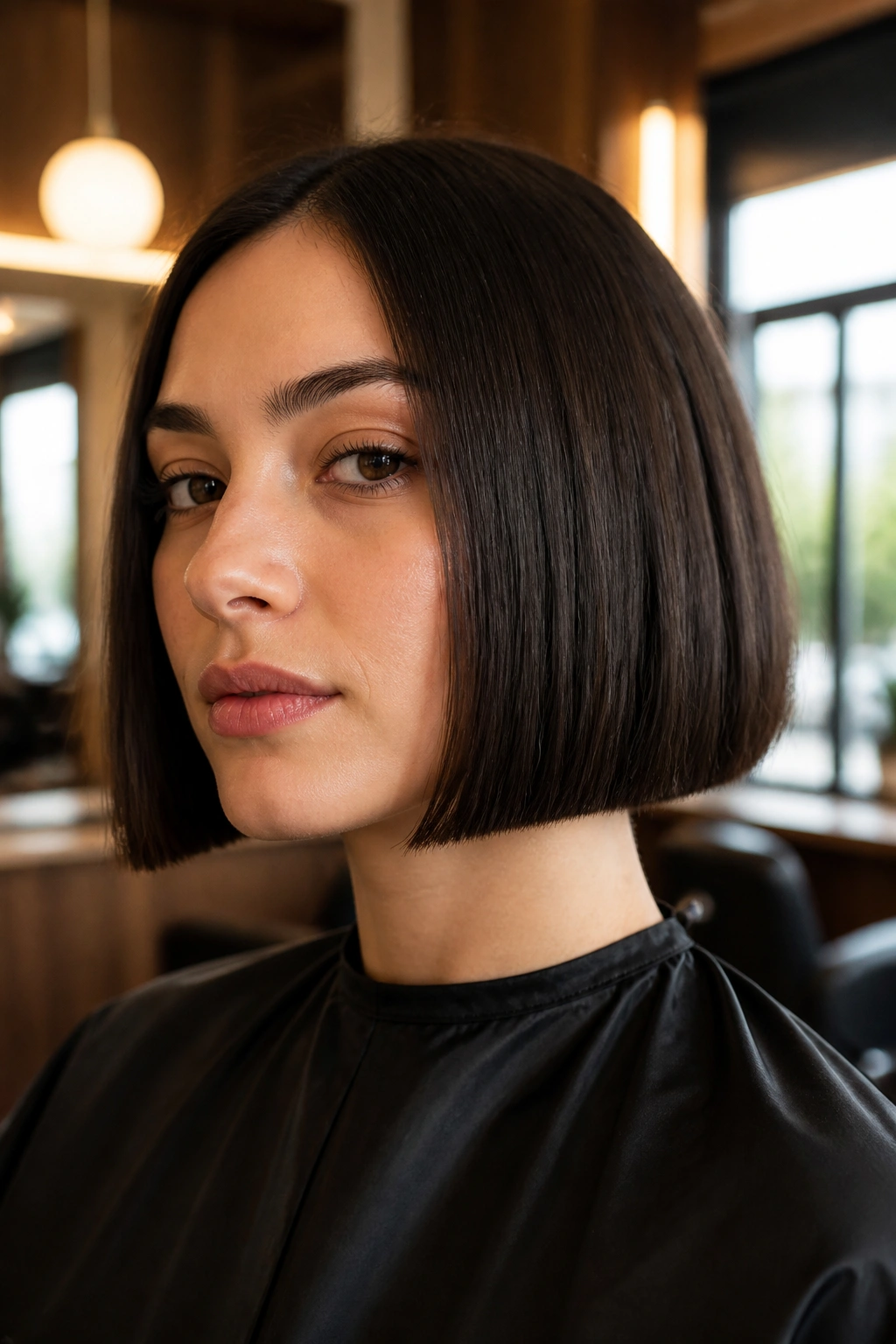
A blunt chin-grazing bob is the haircut equivalent of a straight line drawn with a ruler. It sits right at the jaw, ends clean, and does not apologize for being there. That is the whole appeal.
Why the blunt line reads sharp
The edge comes from weight at the perimeter. When the ends stay solid instead of feathered out, the eye reads the cut as crisp, dense, and deliberate. Fine hair usually loves this shape because the outline stays visible all the way across the jaw.
If your hair is straight or only lightly wavy, this bob gives you the cleanest result with the least struggle. Thick hair can wear it too, but the inside needs to be trimmed with some restraint so the sides do not puff out like a triangle.
- Ask for one length through the outer line.
- Keep interior layers minimal.
- Blow-dry with a flat brush for a smooth edge.
- Use a light cream, not heavy oil, so the ends stay neat.
If the ends flip wildly, ask for a tiny bevel rather than soft layers. That keeps the shape sharp without turning it into a helmet.
2. The Asymmetrical Bob with a Deep Side Part
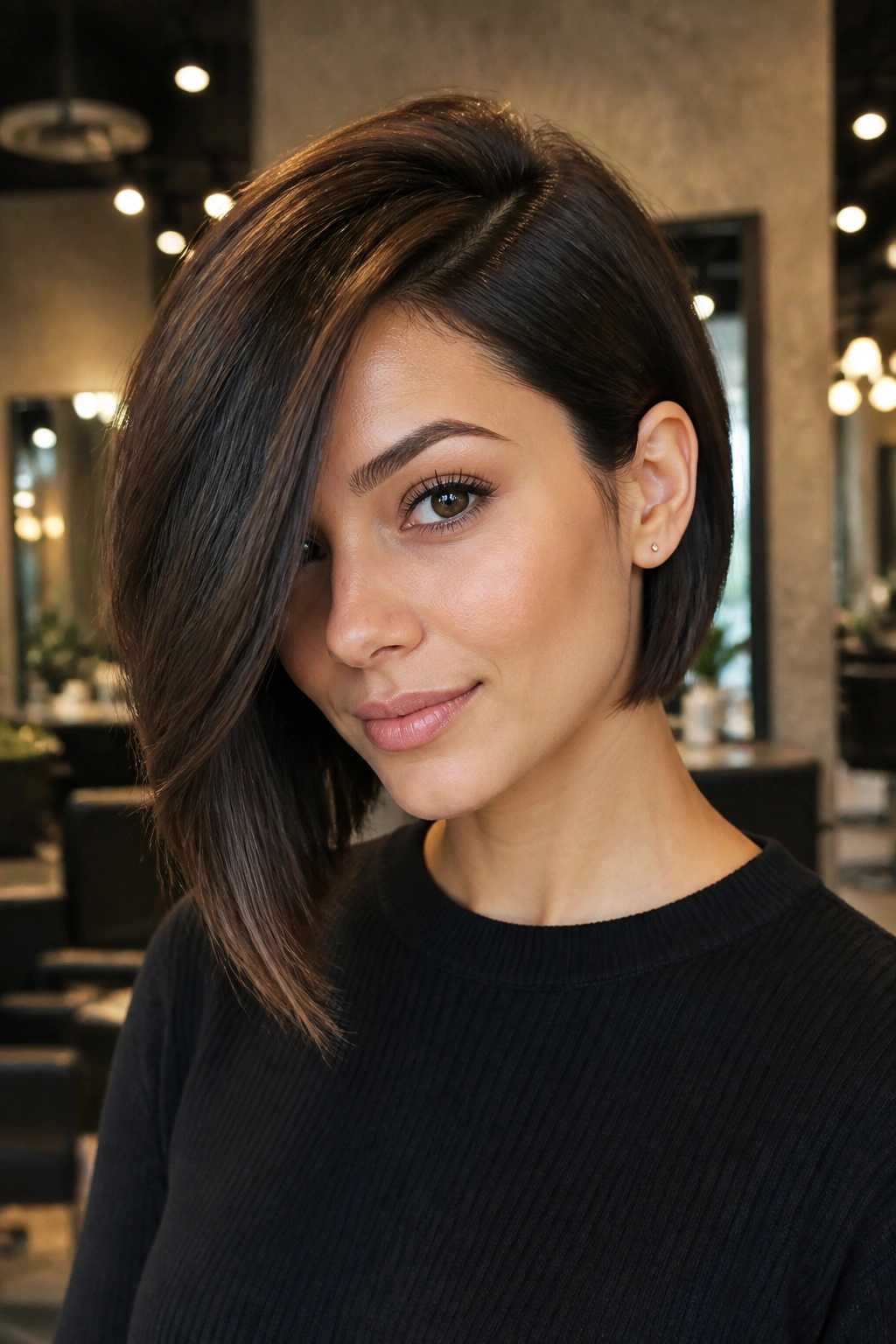
One longer side changes the whole mood. It turns a plain bob into something that feels a little sly, a little sharper, and a lot more intentional.
The best versions usually keep the difference subtle, maybe an inch or two between sides. You do not need a dramatic angle that shouts from across the room. A small shift is often enough, especially when the deep side part sends more hair over one cheekbone and leaves the other side open.
This cut works because the imbalance creates movement even when the hair is straight. It also gives you a built-in styling trick. Tuck the shorter side behind the ear and let the longer side fall forward, or curl only the front section on the long side for extra swing.
The sweet spot is somewhere between sleek and slightly messy. Too perfect, and the asymmetry feels stiff. Too loose, and you lose the point. Ask your stylist to keep the back balanced while letting the front get just a little longer on one side. That small detail is where the attitude lives.
3. The French Bob with Micro Fringe
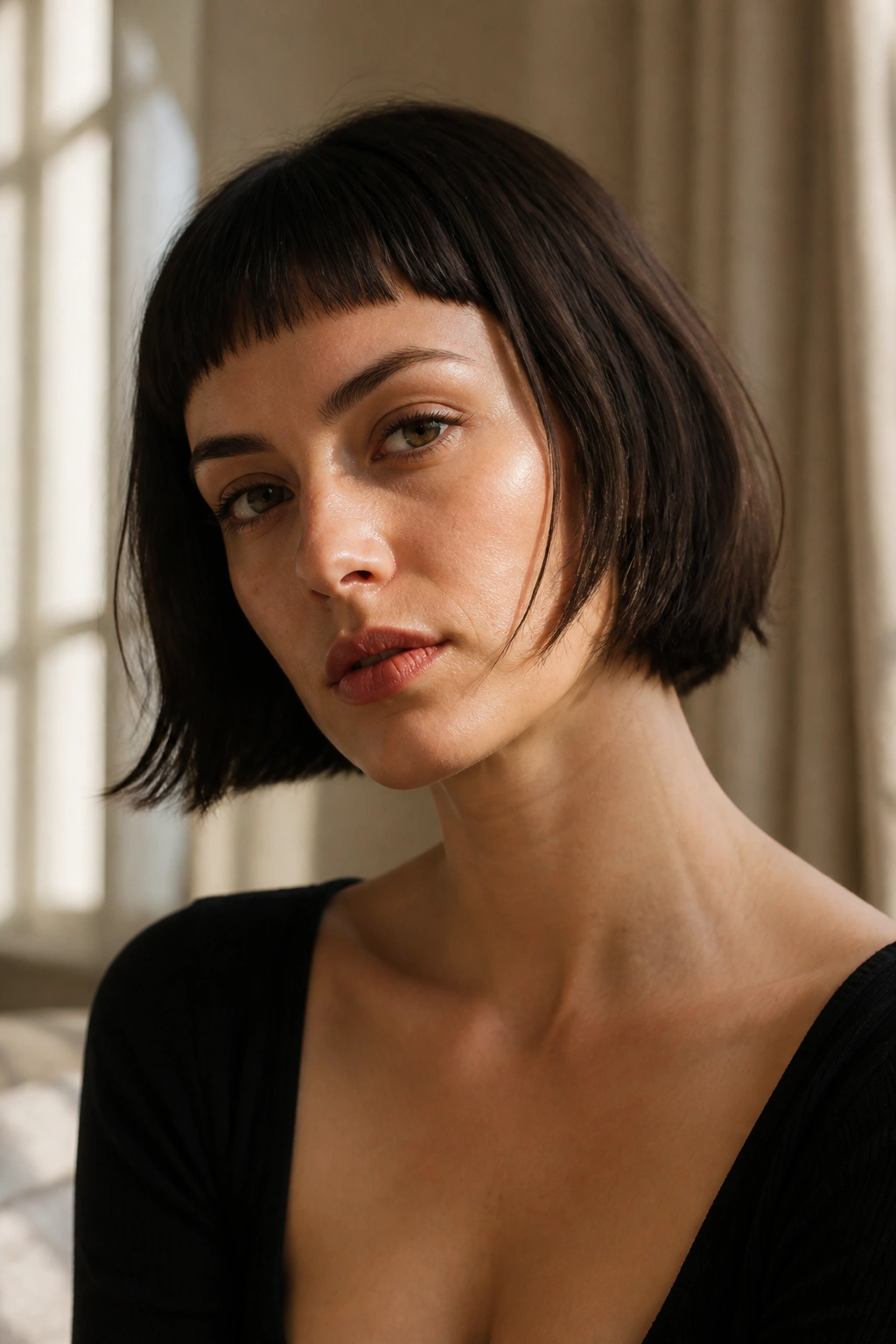
Why does a tiny fringe make a bob look sharper? Because it breaks the line of the face in a way that feels direct, almost cheeky, and it pushes the whole haircut away from safe territory.
A French bob usually sits around the jaw or just above it, and the micro fringe lands shorter than a classic brow-skimming bang. The result is compact and a little daring. It exposes more forehead, more brow, more expression. That is why it can feel edgier than a longer bob with heavy curtain bangs.
How to style it
The fringe matters more than the rest of the cut here. Keep the bob itself simple and let the bang do the talking.
- Dry the fringe first, while it is still damp.
- Use a small round brush or even your fingers.
- Add a pea-sized dab of styling paste only to the ends if they need separation.
- Keep the bob slightly tucked under at the jaw so the whole shape stays clean.
If your hair is very curly or very cowlick-prone, this cut needs a bit more effort. Worth it, though. The look has a kind of Paris-by-way-of-Downtown nerve that regular bobs just do not have.
4. The Stacked Bob with a Sharp Nape
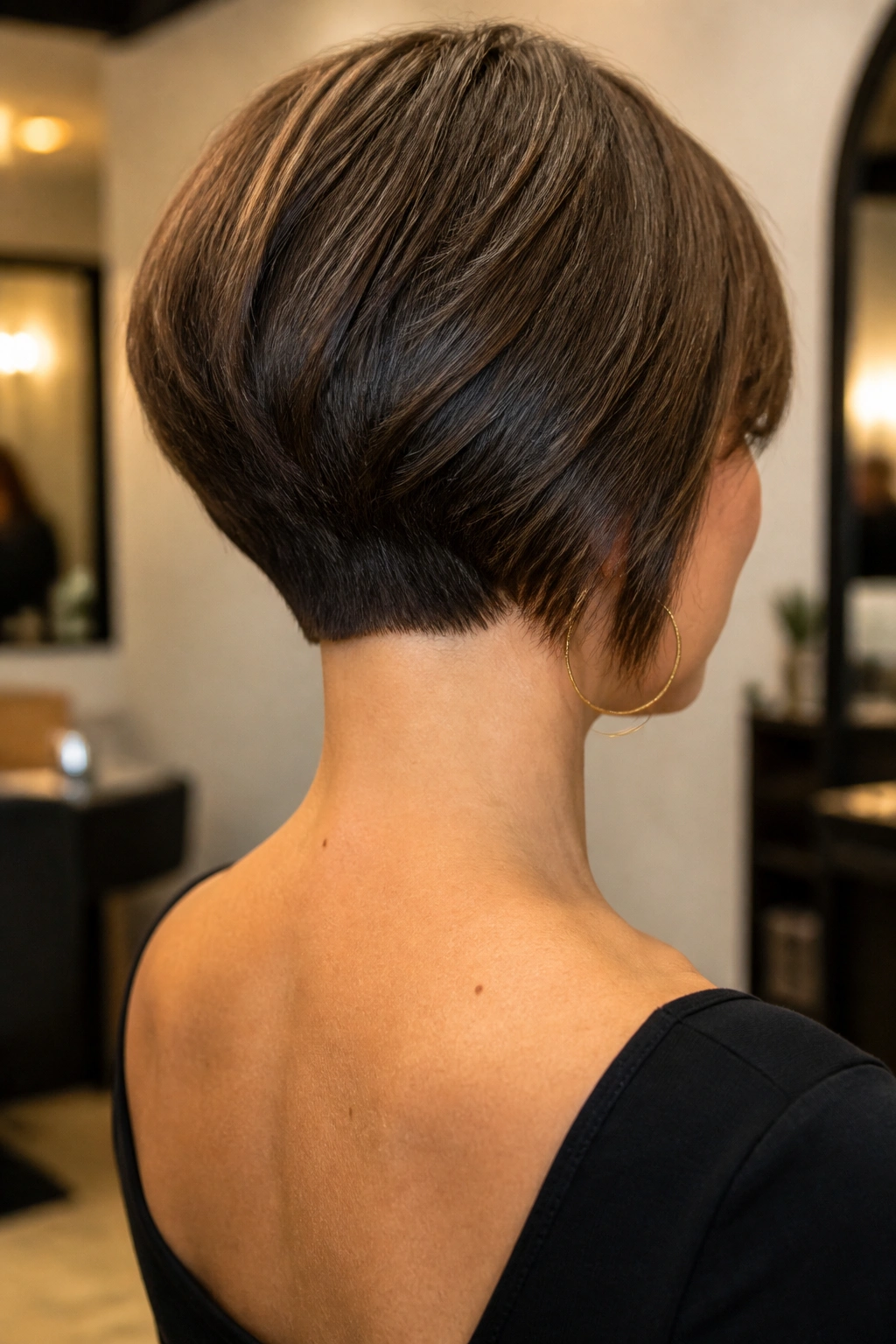
Picture the back shorter, the shape lifted, and the neck cleanly exposed. That is the stacked bob doing its thing.
The edge comes from the way the cut builds upward in the back while keeping the front a touch longer. It creates a curve that feels structured, almost architectural, and it is especially useful if your hair tends to droop flat by midday. There is a reason this shape hangs on in salons. It gives instant body where a lot of bobs go limp.
What makes it work
The trick is the graduation at the nape. Short layers sit underneath the outer panel, so the hair rises at the crown and hugs the head better.
- Ask for a 45-degree stack in the back.
- Keep the front length grazing the jaw.
- Use a round brush at the crown for lift.
- Trim every 5 to 6 weeks if you want the shape to stay crisp.
A stacked bob can look too sweet if the front gets rounded off. Keep the perimeter sharp, and it changes fast. Then it reads polished with a little bite instead of tidy in a school-photo way.
5. The Choppy Shag Bob
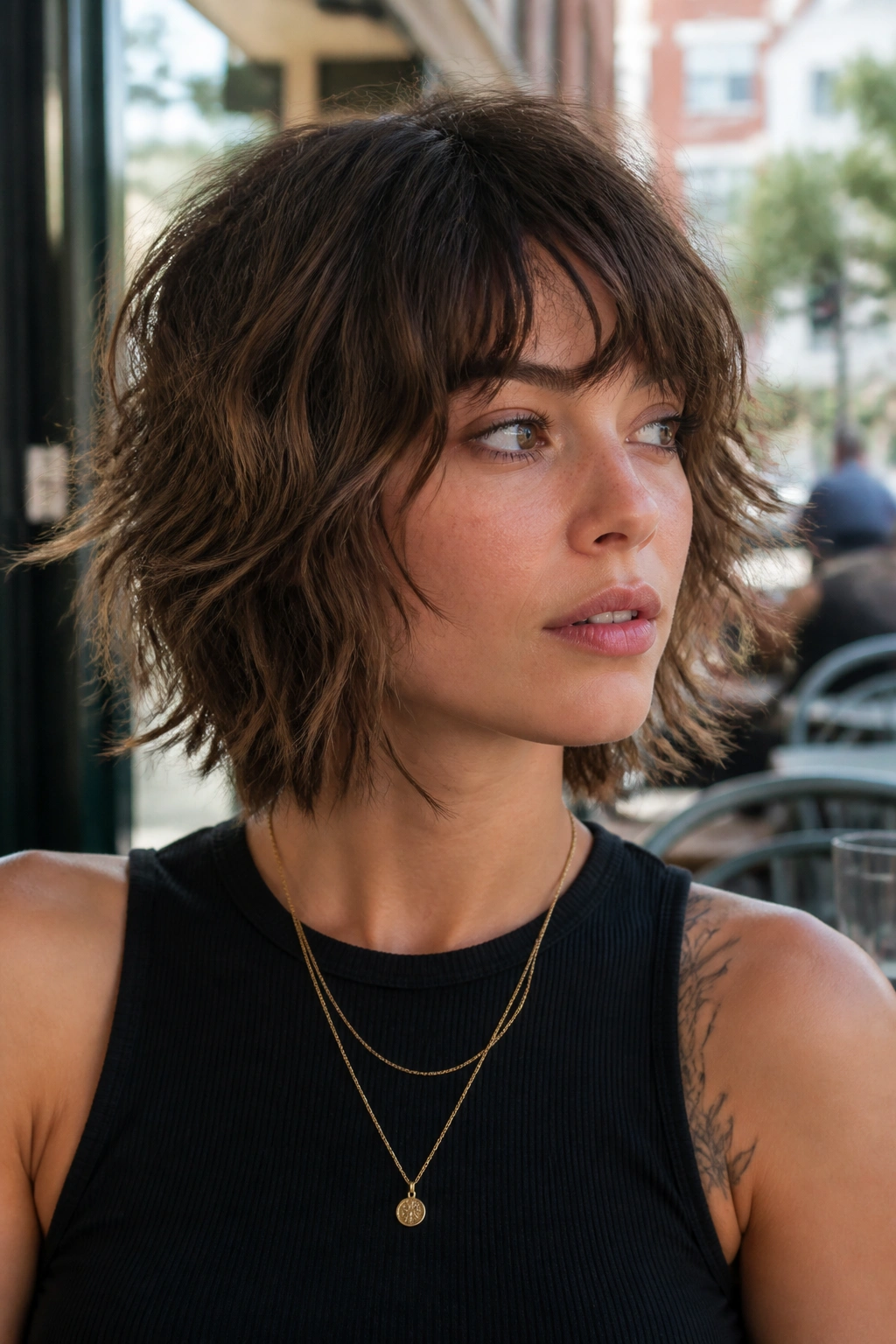
This is the cut for people who hate a rigid finish. The choppy shag bob keeps the bob shape, then breaks it up with uneven layers, sliced ends, and a little movement that feels lived-in instead of precious.
The edge comes from the texture. Not the length. A blunt bob says, “I had a plan.” A choppy shag bob says, “I had a plan, then I made it better.” That difference matters if you like hair that moves when you turn your head.
On straight hair, this cut needs product or it can look stringy in the wrong way. A light mousse at the roots and a dab of texture spray through the mids usually does the job. On wavy hair, it’s almost easier. Scrunch, diffuse a little, and let the ends fall where they want.
One thing to watch: too many short layers can make the cut frizzy rather than cool. Ask for broken-up ends, not a full feather explosion. The best shag bobs still have a shape. They just don’t behave like they’re trying to sit at attention.
6. The Razor-Cut Bob with Soft Ends
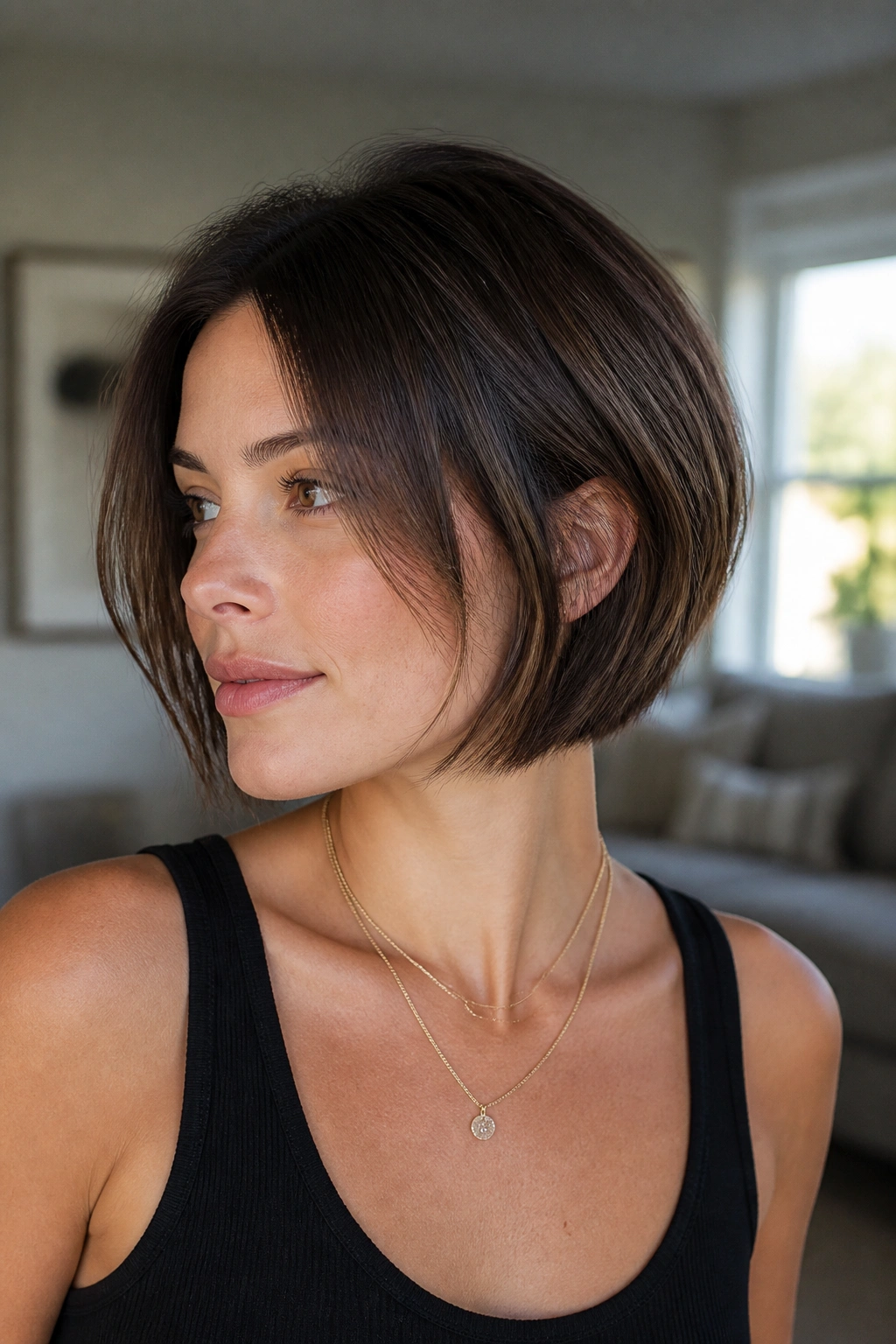
Unlike the blunt chin bob, this one trades hard edges for movement. The razor-cut bob keeps the same overall idea, but the ends are sliced so they land lighter and a little wispy.
That matters if your hair has a natural bend and you want the cut to move with it instead of fighting it. A razor can take the heaviness out of dense hair fast, which is useful, but it can also make fragile ends look frayed if the stylist goes too far. So the cut needs a careful hand.
I like this shape on medium-density hair that has some texture but not a ton of puff. It looks especially good when the front pieces are left a touch longer and the back is kept simple. That gives you a clean outline without the blocky feeling of a heavier bob.
Ask for the razor only on the lower inch or so of the perimeter if your hair is prone to splitting. That one detail keeps the finish soft without chewing up the whole cut.
7. The Hidden Undercut Bob
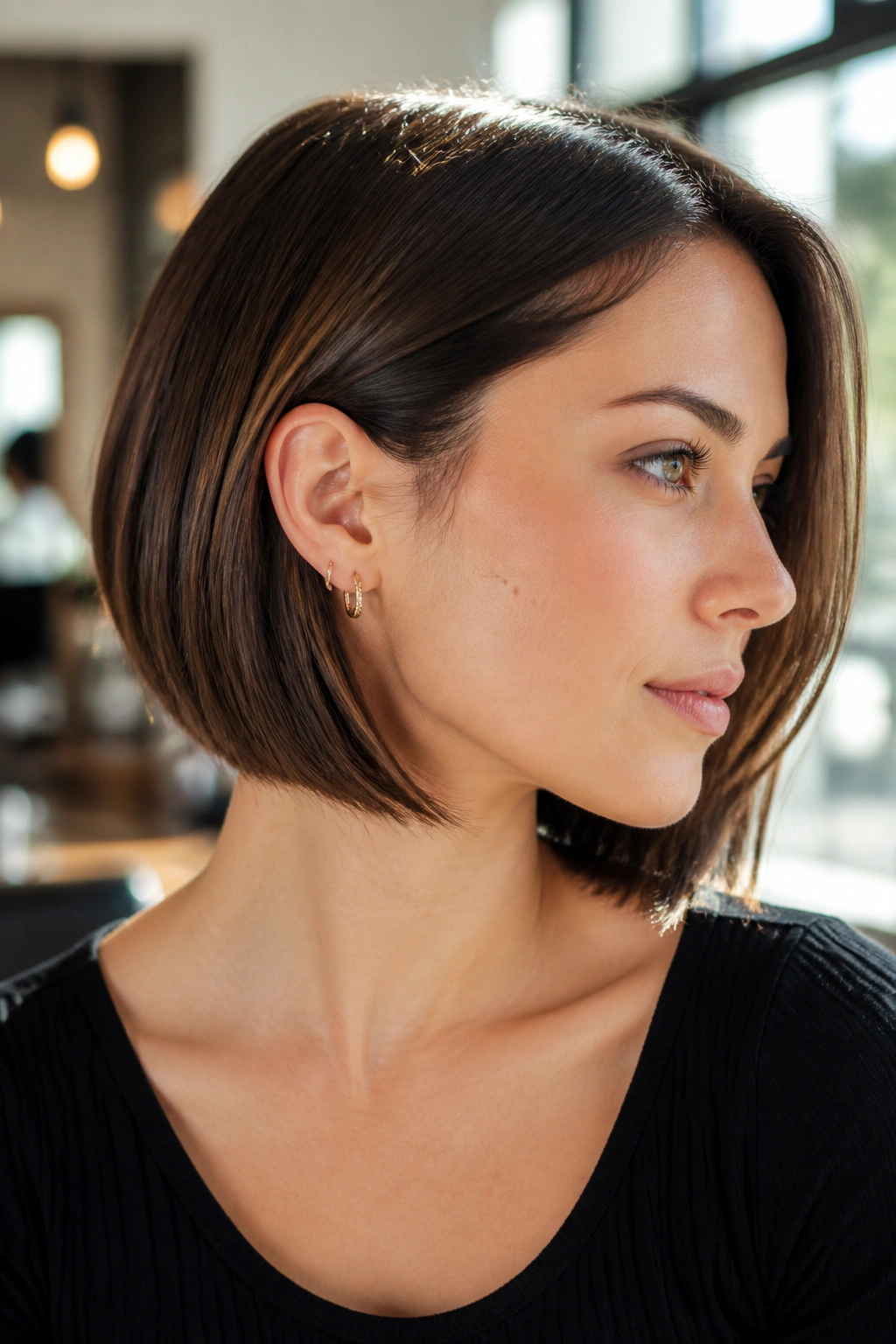
A hidden undercut can change a bob more than a fancy blowout ever will. The top layer looks normal at first glance, then you move the hair and see that the bulk is gone underneath.
Where the undercut hides
The best part is that the undercut stays tucked low, usually at the nape or just behind the ears. You get less puff, less heat trapped against the neck, and a shape that sits closer to the head. For thick hair, that can feel like relief.
This is one of those cuts that gives edge without making a big scene about it. The outside still reads as a bob. The underneath tells a different story.
- Keep the top layer long enough to cover the shaved section.
- Start the undercut low, not halfway up the head.
- Pair it with a blunt or slightly angled perimeter.
- Expect cleanup every 4 to 6 weeks.
Do not let the undercut creep too high. Once the hidden part shows from the side, the whole cut loses that sharp, secret feel and starts looking accidental instead.
8. The Collarbone Lob with Face-Framing Pieces
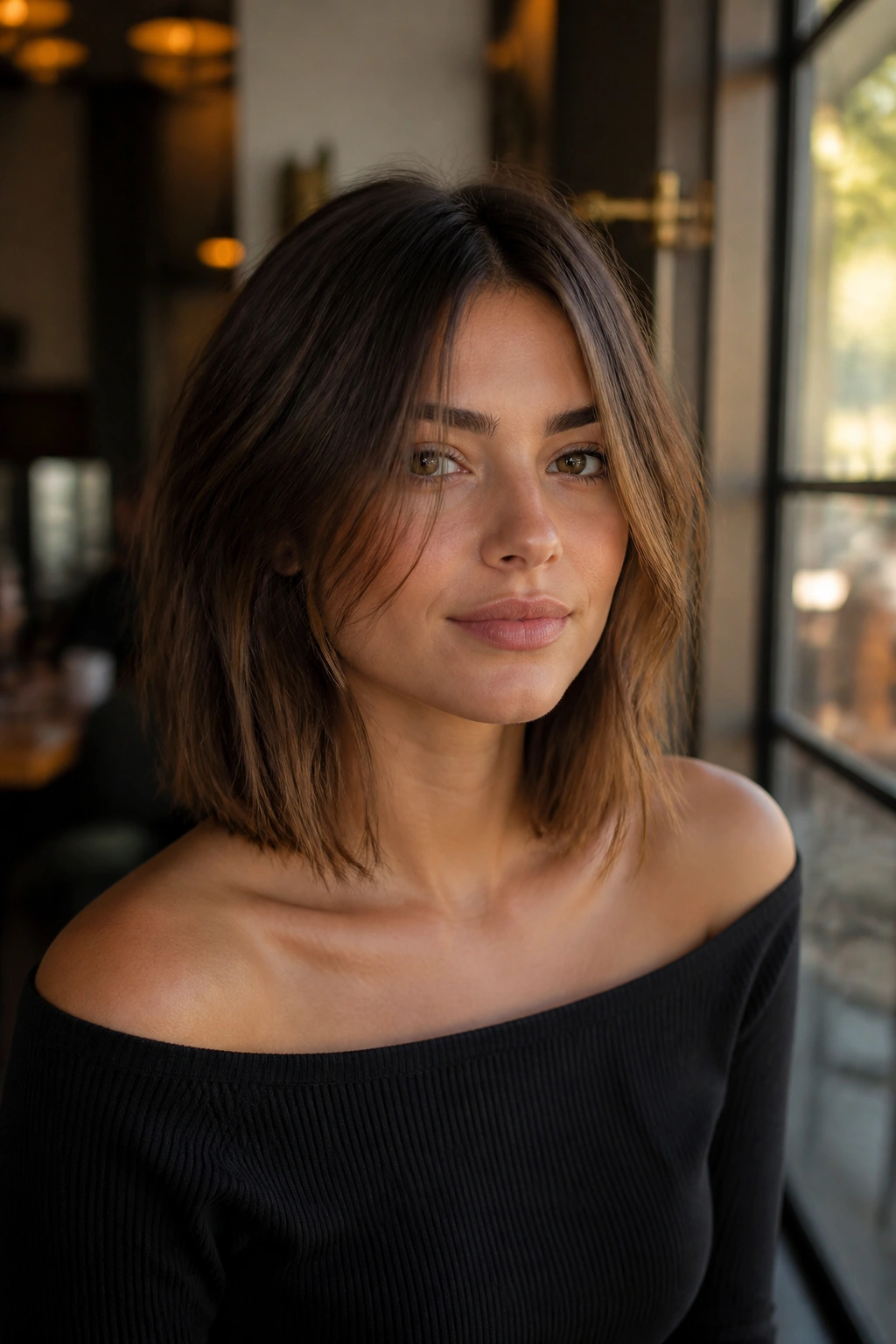
A lob can still have bite. It does not need to be chopped at the jaw to feel current or sharp.
The collarbone length gives you room to tuck it, wave it, or pull it into a low clip when you are over it. The edge comes from the front pieces. If they skim the cheekbones and angle down toward the collarbone, the cut suddenly has shape instead of just length. That is the move.
This is a smart choice if you want something that feels a little grown-up but not soft in the boring sense. The front can be blunt or lightly angled; either way, a clean perimeter helps. Too many short layers make a lob look like it’s trying too hard. A strong front line is cleaner.
Styling is straightforward. A 1.25-inch iron gives soft bends, not ringlets. Smooth the ends under by a half turn if you want it sleeker. Leave a few face-framing pieces loose if you want a little slouch. The cut works because it looks easy, but the outline still has shape.
9. The Curly Bob with a Tapered Shape
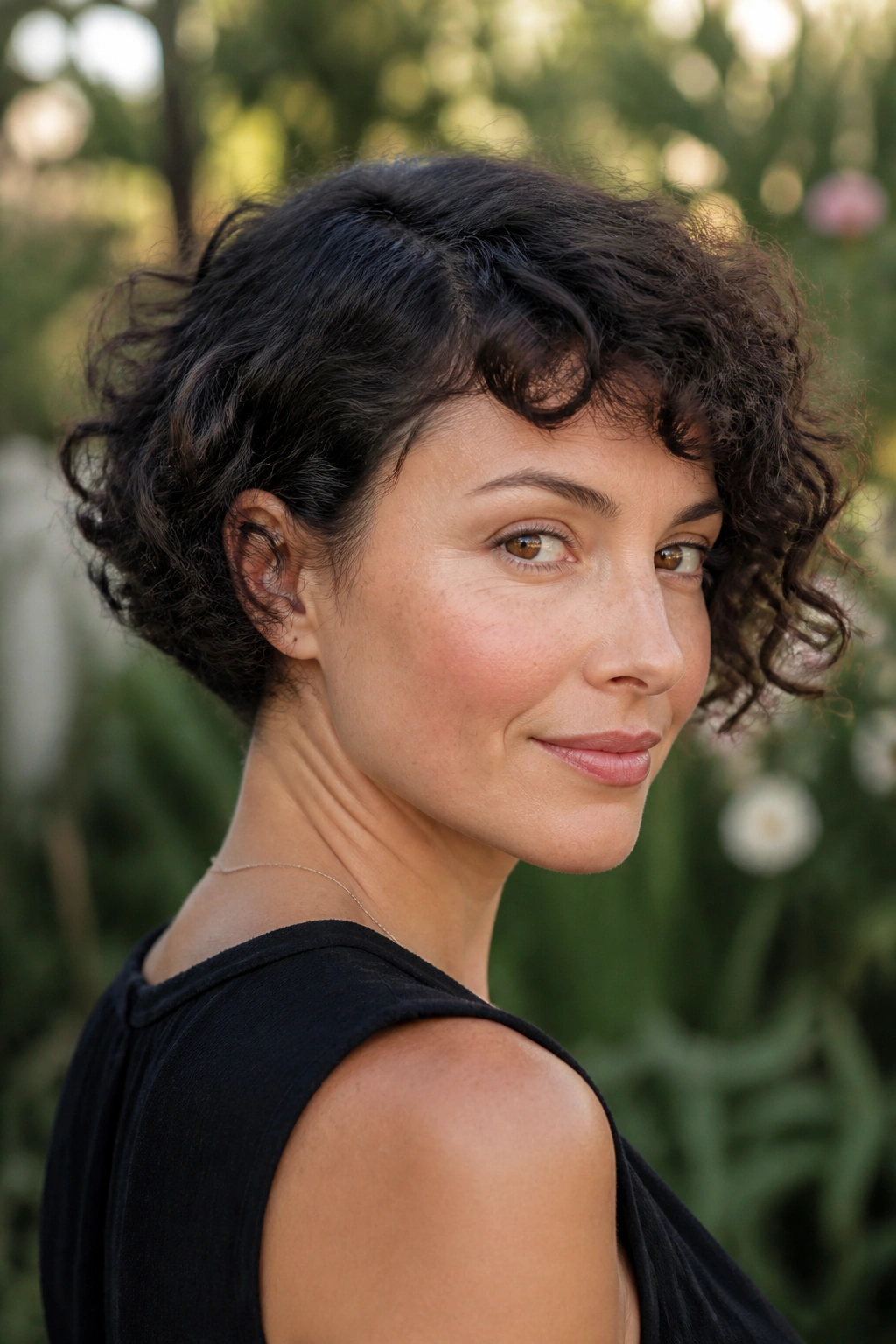
Can curls and edge coexist? Absolutely, if the cut follows the curl pattern instead of forcing every strand into the same place.
A curly bob looks sharp when it is tapered so the sides do not balloon out. The best version usually keeps the top a little longer and lets the shape narrow toward the nape or jaw. That keeps the silhouette neat while still giving the curls room to spring.
How to wear it
A dry cut is often the safest choice here, since curls can shrink in odd ways when they are wet. Ask for the curls to be cut in their natural state, one piece at a time, so the shape lands where you expect it to.
- Use a diffuser on low heat.
- Apply styling cream in sections, not all at once.
- Avoid brushing once the hair dries.
- Clip the crown while drying if you want extra lift.
The edge here is not about severity. It’s about shape control. A curly bob that has been cut with care looks confident. A curly bob that has been hacked into a blunt square looks like a fight with a triangle. Those are not the same thing.
10. The Wet-Look Sleek Bob
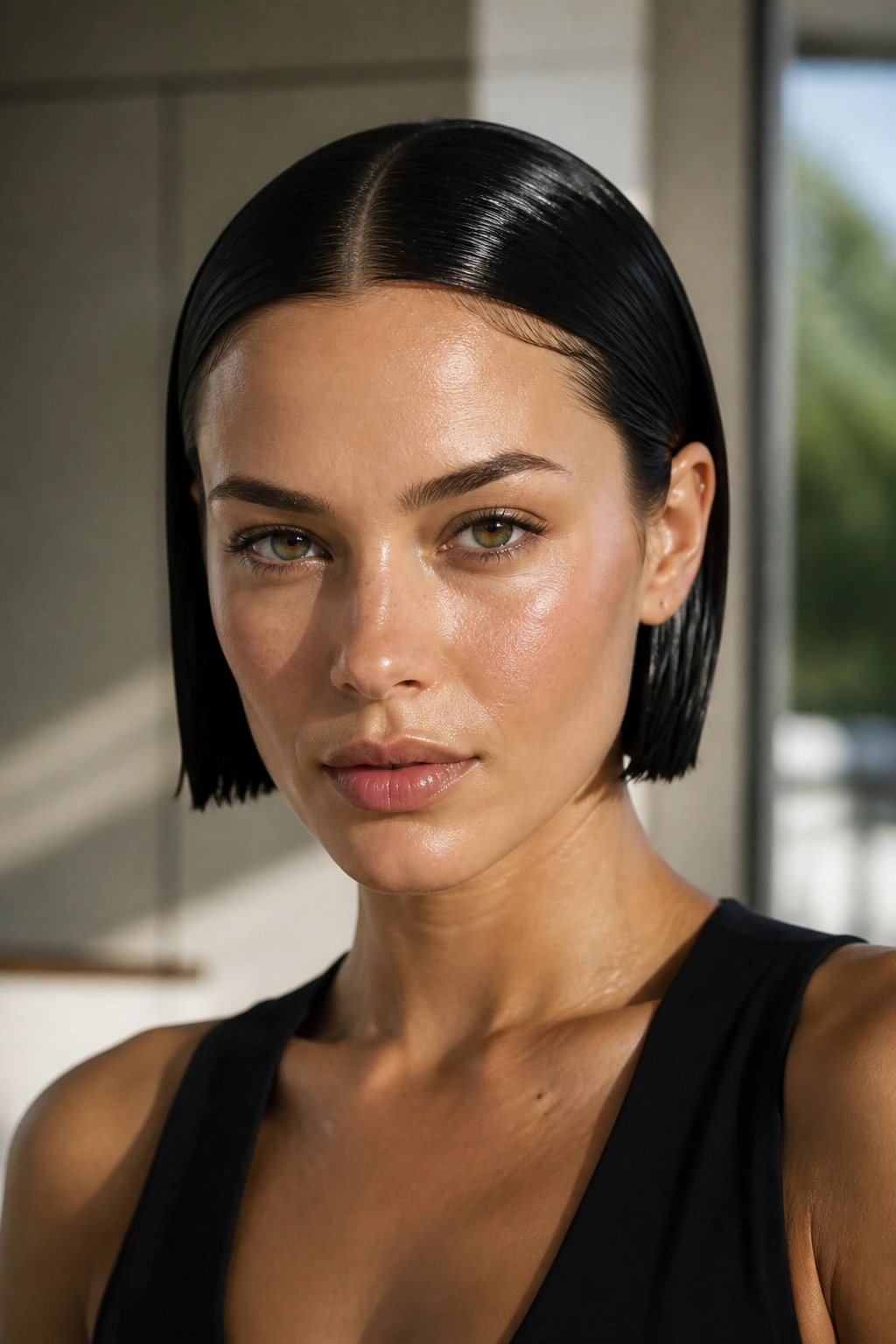
A slick bob can look like you meant business before you even say a word. That is half the charm.
The shine is what changes the mood. When the hair is combed back or parted deep and held with gel, every line shows. The jaw, the ears, the neck — all of it becomes part of the haircut. That makes the style feel clean and a little severe, which is exactly the point if you want edge.
This version works best on straight or lightly wavy hair. Start with damp hair, work in a firm gel from roots to mid-lengths, then comb it into place with a fine-tooth comb or a soft brush. If you want a slightly looser finish, stop the product lower and let the ends stay a bit touchable.
- Use strong-hold gel or styling cream with grip.
- Keep the roots flat and the ends smooth.
- Finish with a pea-sized shine product.
- Let the part stay exact; shifting it later ruins the line.
The edge comes from restraint. Leave the flyaways alone unless they are wild enough to distract. Clean hairline, sharp part, glossy surface. Done.
11. The Italian Bob with Heavy Shape
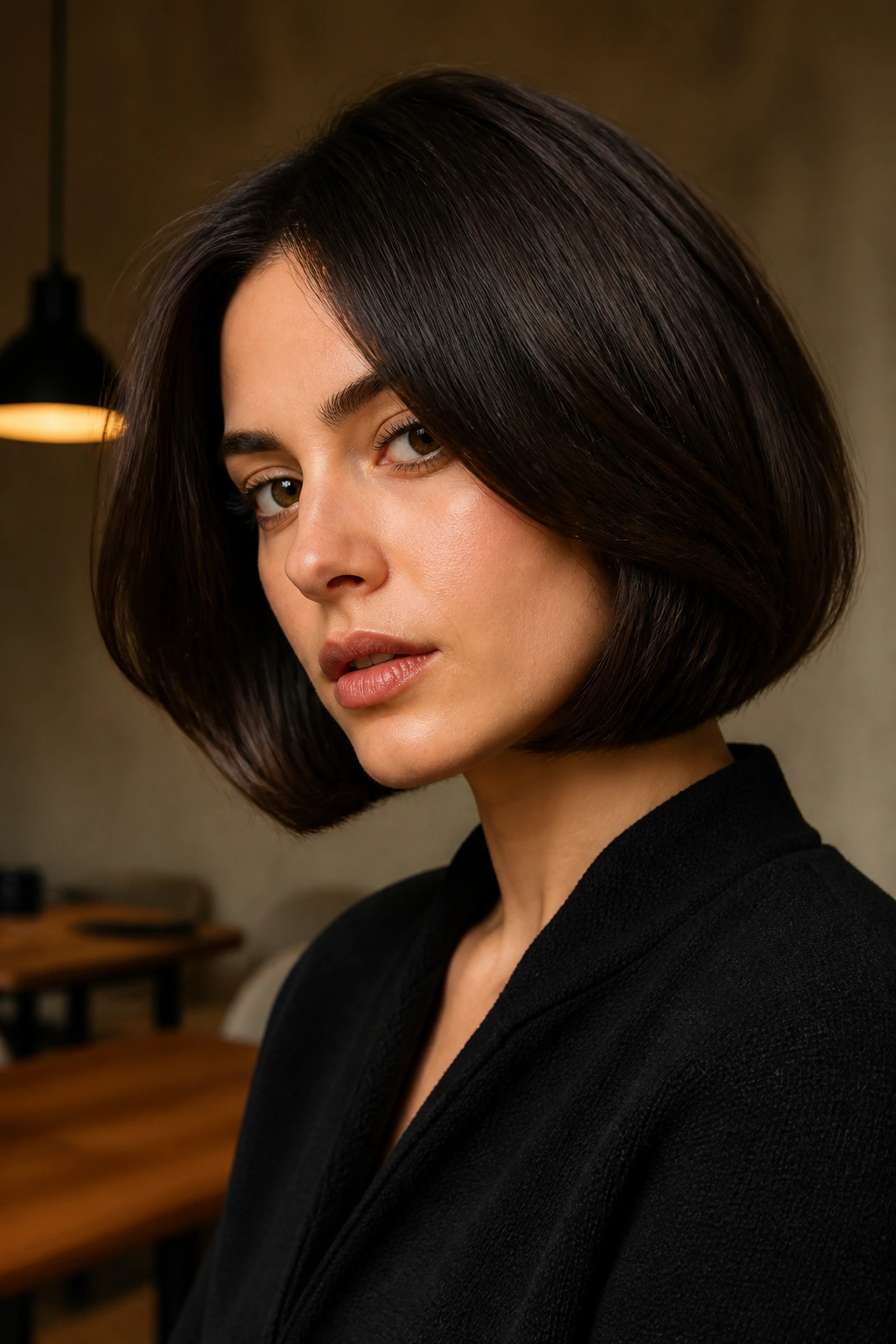
The Italian bob has a certain weight to it that I really like. It is not airy, and it does not pretend to be carefree. The shape is fuller, usually around the chin, with ends that sit together in a solid block rather than falling apart into pieces.
That density is what gives it attitude. Hair that has a strong perimeter feels expensive in the practical sense — not flashy, just considered. The cut often works best when the hair is blown out with a round brush so the ends tuck under a little. You get body, but not fluff.
This is a good choice if your hair is thick and you want it to look controlled. Too many layers would spoil the mood here. The point is a plush outline and a little swing at the bottom. If the cut is done well, it should move, but only enough to show that the person wearing it meant to keep it sharp.
A middle part gives it a harder feel. A side part makes it a little softer. Either way, the silhouette does the heavy lifting. There is nothing timid about it.
12. The Jaw-Length Box Bob
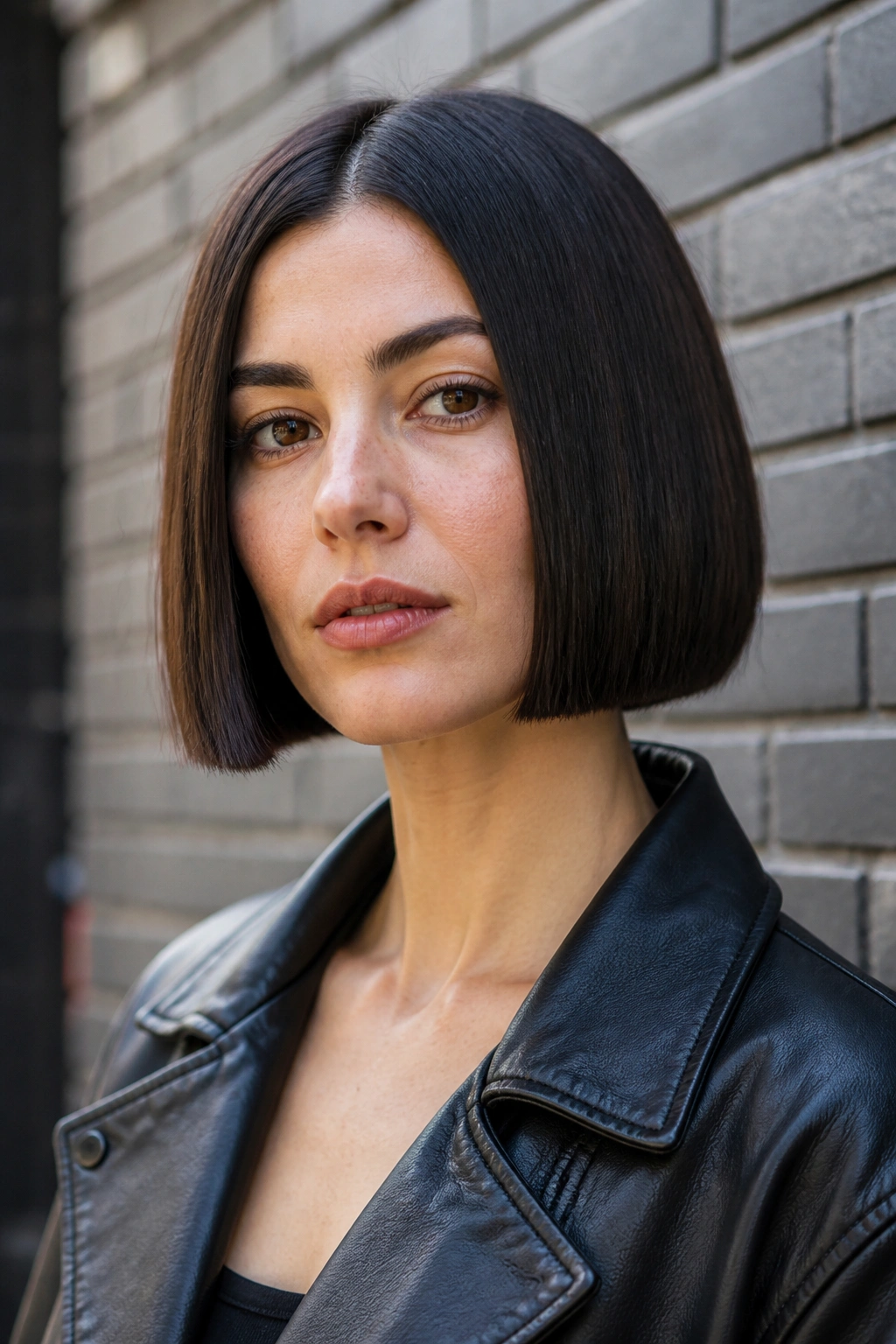
A box bob feels blunt in a different way from a rounder bob. The sides stay straighter, the corners are less soft, and the whole shape looks more graphic.
That difference matters. A round bob can read sweet. A box bob reads direct. It sits close to the jaw, usually with the perimeter kept even from side to side, and the ends are left solid so the outline holds from every angle. If you want edge without fringe or undercuts, this is a strong option.
It is especially good on straight hair because the clean line stays visible. On wavy hair, you may need a quick pass with a flat iron or a blowout brush to keep the corners from flipping too much. The cut should still look like hair, not a helmet. That part is not hard, but it does need a careful trim.
If your jaw is sharp already, this can double down on it. If your face is rounder, ask for the front to be a touch longer so the shape does not sit too square. Small adjustments make a big difference here.
13. The Flipped-Out Bob
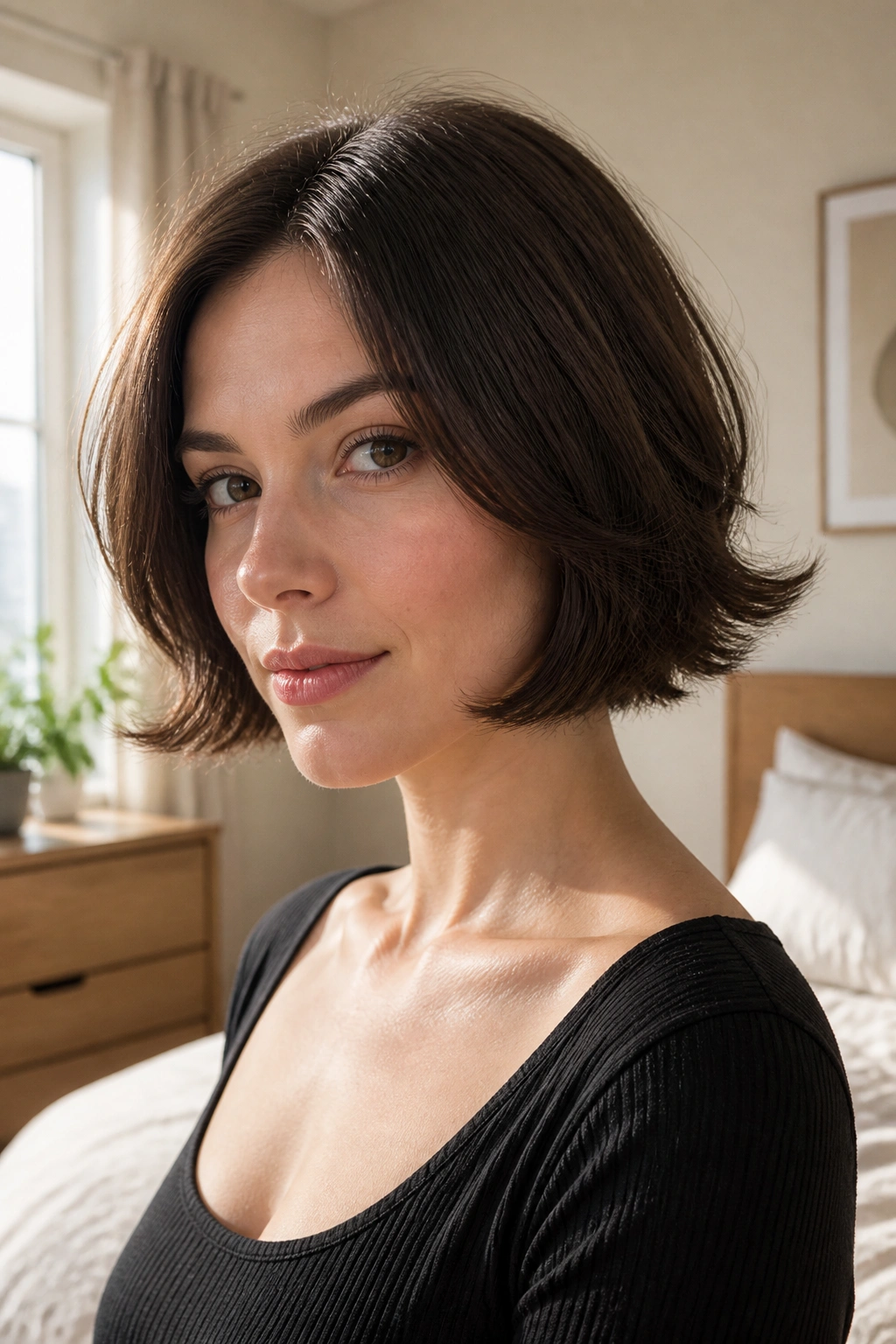
A flipped-out bob gives off a little attitude without needing extra length or drama. The ends kick away from the neck, which makes the whole cut feel light, quick, and slightly cheeky.
Why the flip reads modern, not retro
The finish is what saves it. Keep the crown smooth and direct the ends outward only at the last inch or two. That keeps it from sliding into costume territory. The shape should look deliberate, not like you borrowed a blowout from another decade.
This works well when the bob hits just below the chin or at the jaw. Shorter than that, and the flip can feel too sharp. Longer than that, and it starts to look like a lob with a memory of itself. The sweet spot is in between.
- Use a 1 to 1.25-inch round brush.
- Roll the brush outward only at the very ends.
- Spray lightly at the tips, not the roots.
- Keep the interior smooth so the outline stays clean.
The cut is playful, but not soft. That’s the point. It has movement and a little defiance, which makes it a nice break from the more polished bobs that dominate so many salon chairs.
14. The Curtain Bang Bob
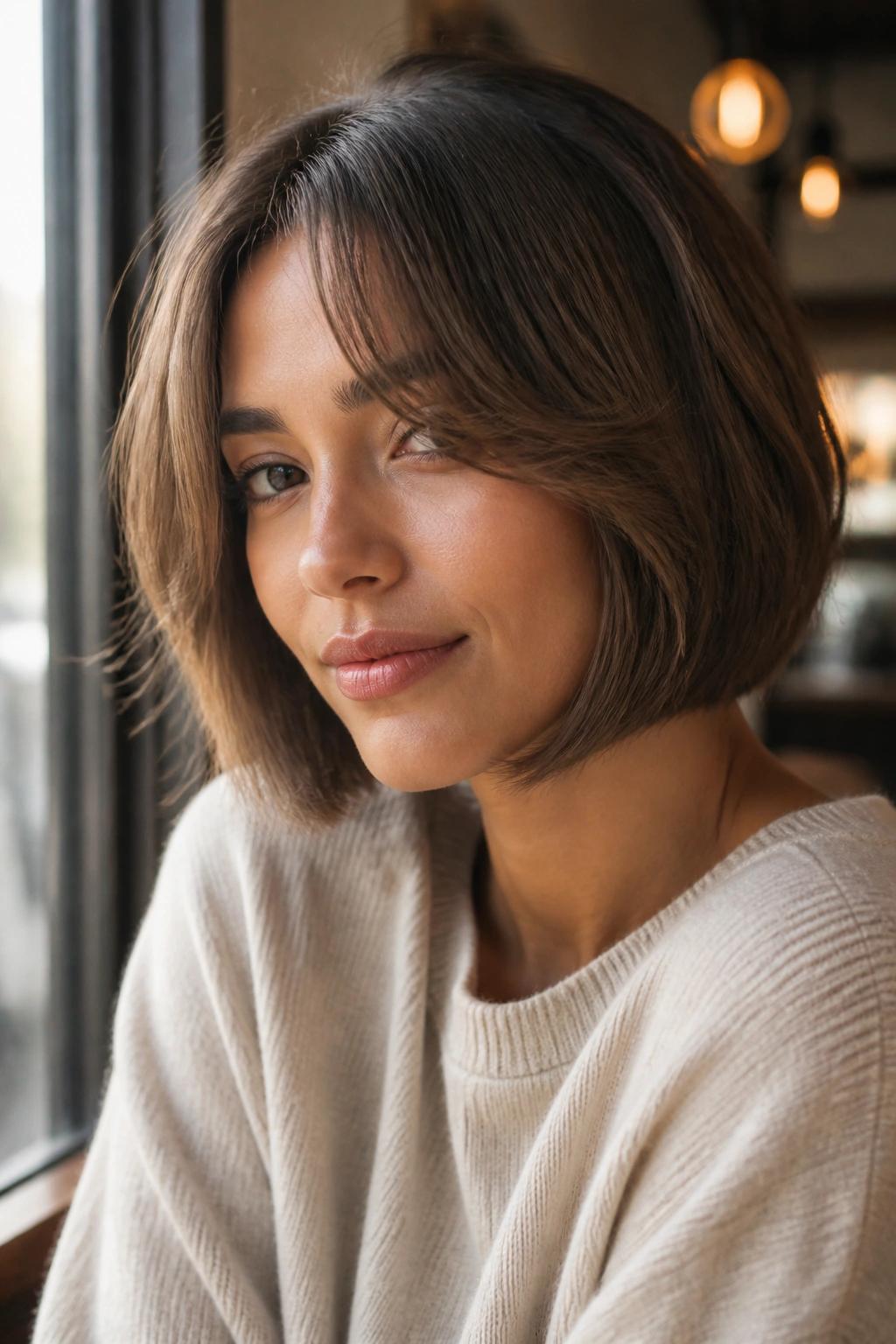
Curtain bangs can make a bob look softer without taking away its edge. That is why people keep coming back to them.
The fringe opens in the center and falls away from the face, which gives the cut a little movement around the eyes and cheekbones. If the bob itself is blunt or slightly angled, the curtain bang stops it from feeling too hard. You get contrast instead of one-note severity.
This shape works best when the bangs are not too thick. Heavy curtain fringe can swallow the face and flatten the style. Keep the shortest pieces around the bridge of the nose or cheekbone, then let them grow longer at the sides. That creates the soft sweep people want without making the front look like a curtain rod.
Styling is not hard, but it does ask for attention. Blow the fringe forward first, then bend it away from the face with a round brush or your fingers. Let the rest of the bob stay simple. A little bend through the ends is enough.
If you want edge that still feels wearable on a normal Tuesday, this is a smart place to land.
15. The Graduated Bob
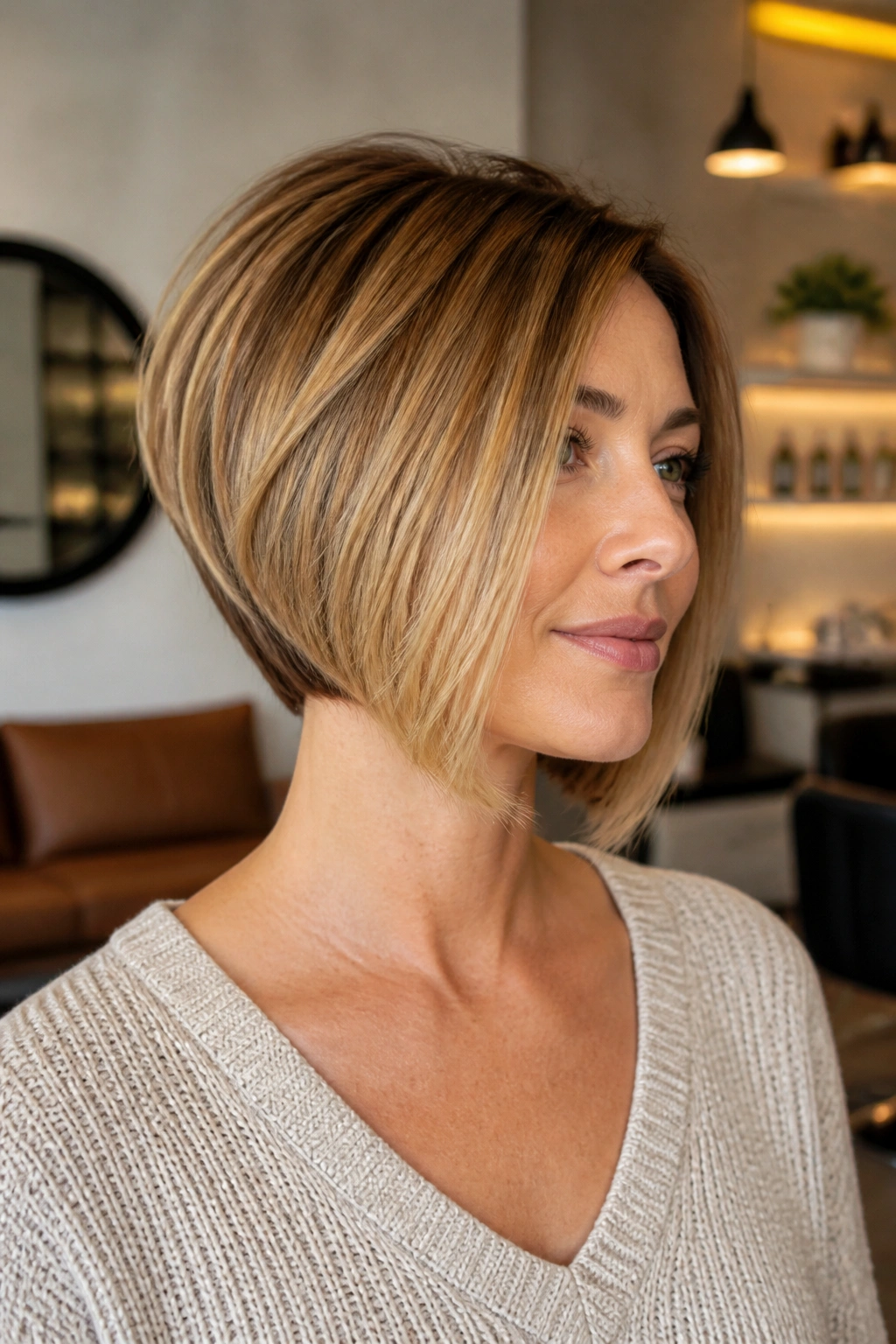
Why does a graduated back make hair look fuller? Because the shorter layers underneath push the longer top section up and forward, which builds volume without stuffing the whole head with product.
A graduated bob sits between stacked and blunt. The back rises, the front stays longer, and the shape curves neatly toward the jaw. It is a good choice when you want a bob that feels shaped rather than plain, but you do not want a severe angle or a shaved nape.
How to ask your stylist
The exact balance matters more than the name.
- Ask for a shorter nape with soft graduation.
- Keep the front long enough to skim the jaw or a touch below.
- Ask for less bulk in the crown if your hair is thick.
- Keep the outline clean, not wispy.
This cut has a tidy edge. Not aggressive, but not sweet either. It gives the head a lifted shape from behind, which can look especially good with earrings or a high collar because the neckline stays visible. A lot of people overlook that part, and they shouldn’t. The back view counts.
16. The Wavy Lob with Broken Ends

A wavy lob with broken ends has that slightly undone feel that looks better the less it tries. The hair sits around the collarbone, bends a little at the mids, and ends in pieces rather than one heavy line.
The edge here comes from the broken perimeter. The ends are not ragged in a damaged way; they are cut to move. A flat iron can make this shape easy if you bend each section in alternating directions, then brush it out just enough to soften the wave. A salt spray or texture mist helps the finish stay airy.
This cut is useful if your hair starts to look too neat when it gets longer. It breaks that problem fast. The lob length gives you room to play, but the ends keep it from feeling too pretty. That balance is what makes it cool.
- Leave the front slightly longer than the back.
- Create bends, not curls.
- Use a texture spray through the mids and ends.
- Let the part shift a little instead of sitting dead center every day.
The result should look touchable. Not perfect. Better than perfect, actually.
17. The Side-Swept Bob with a Long Fringe
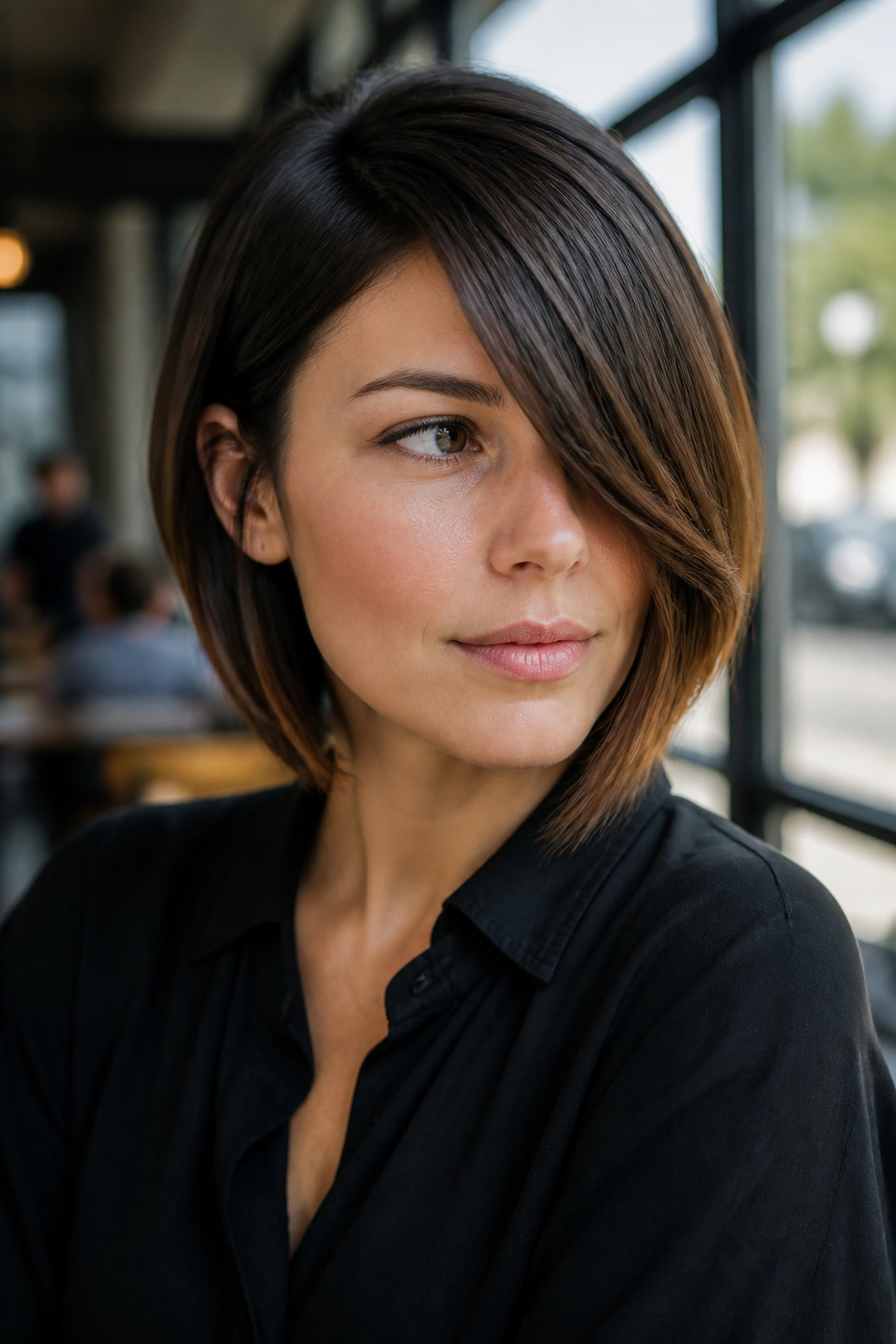
A side-swept fringe can make a bob feel instantly more dramatic. One eye gets a little cover, the face gets a diagonal line, and the whole cut takes on a more deliberate shape.
The nice thing here is how easy the styling is once the cut is right. The fringe does a lot on its own. You can wear the bob sleek, roughed up, or tucked behind one ear, and the long sweep keeps the look from feeling too plain. That gives you edge without needing a big technical haircut.
This version suits people who want movement around the face but do not want short bangs that need constant trimming. The fringe can be cut to skim the lashes or the cheekbone, then blended into the front of the bob so it does not look like a separate piece. If it is too blunt, it can feel heavy fast. If it is too wispy, it disappears. Middle ground wins.
One small thing matters here: the part should be a little deep, not dead centered. That tilt is what keeps the style from becoming sweet.
18. The Tucked-Behind-Ear Bob with a Short Side
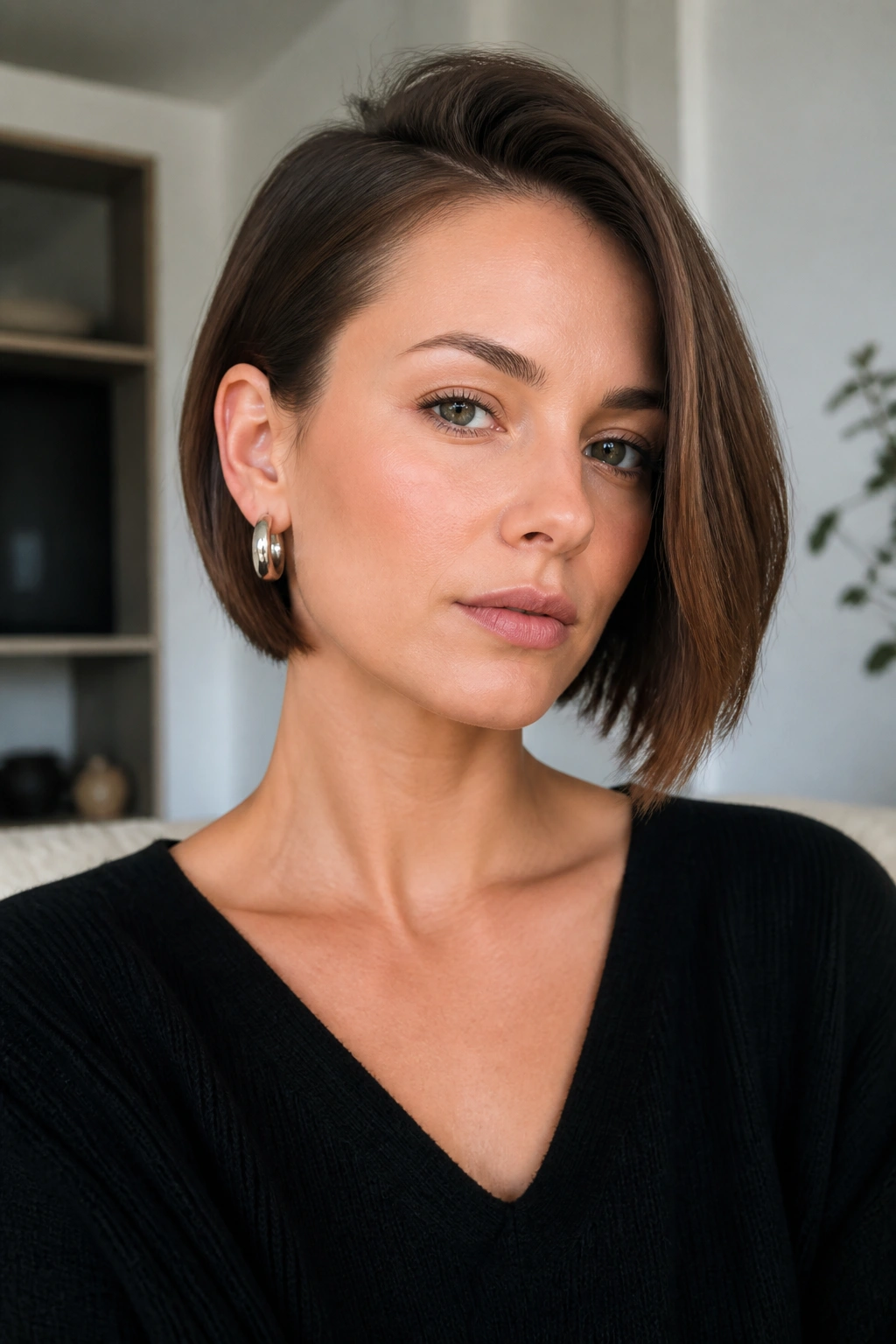
Unlike a symmetrical bob, this one builds interest from one side being a touch shorter and easier to tuck. That sounds minor, but it changes how the haircut moves through the day.
The cut is clean around the jaw, then one side is shaped so it naturally slips behind the ear. The other side can stay a little fuller or longer, which creates a nice contrast when you turn your head. It is a small detail, but it gives the bob a sharper personality.
This is a great option if you wear earrings often or if you like hair that clears the face without needing clips. The tuck feels casual, but the cut still looks planned because the lengths are not identical. That’s the point.
- Ask for one side to land about half an inch shorter.
- Keep the front pieces long enough to skim the cheekbone.
- Use a light smoothing cream so the tuck holds.
- Let the ear show; hiding it defeats the shape.
If you want low-effort edge, this is one of the easiest ways to get it. One ear out, one side tucked, no big performance required.
19. The Airy Layered Bob
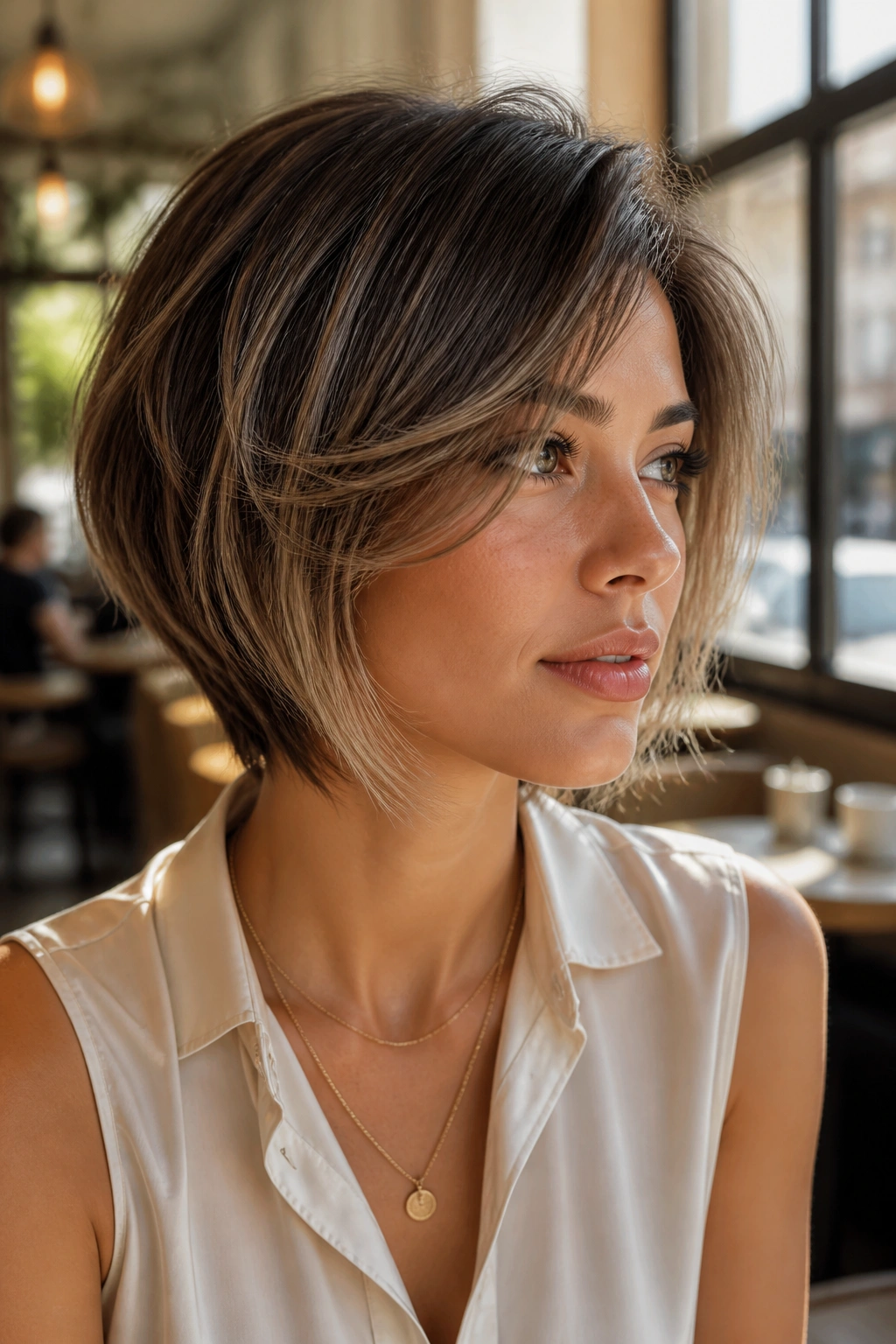
A layered bob does not have to be soft in a boring way. When the layers are placed well, the cut feels light, airy, and sharp at the same time.
Why softness still counts as edge
The trick is to keep the layers long enough that the outline still reads. Short, choppy layers everywhere can make the hair float too much and lose its shape. Longer internal layers around the cheeks and nape help the bob move while keeping the perimeter visible. That is where the style earns its keep.
This version is a good fit if your hair has too much bulk or if it goes flat under a blunt line. The layers remove weight without turning the whole haircut into a shag. That distinction matters. A lot.
- Keep the shortest layers below the eye line.
- Leave the ends controlled, not shredded.
- Use a blow-dry brush if you want a smooth finish.
- Add texture spray only after the hair is dry.
Too many short layers turn this from sharp to fluffy fast. If you want edge, the line still has to show through.
20. The A-Line Lob with a Sharp Front
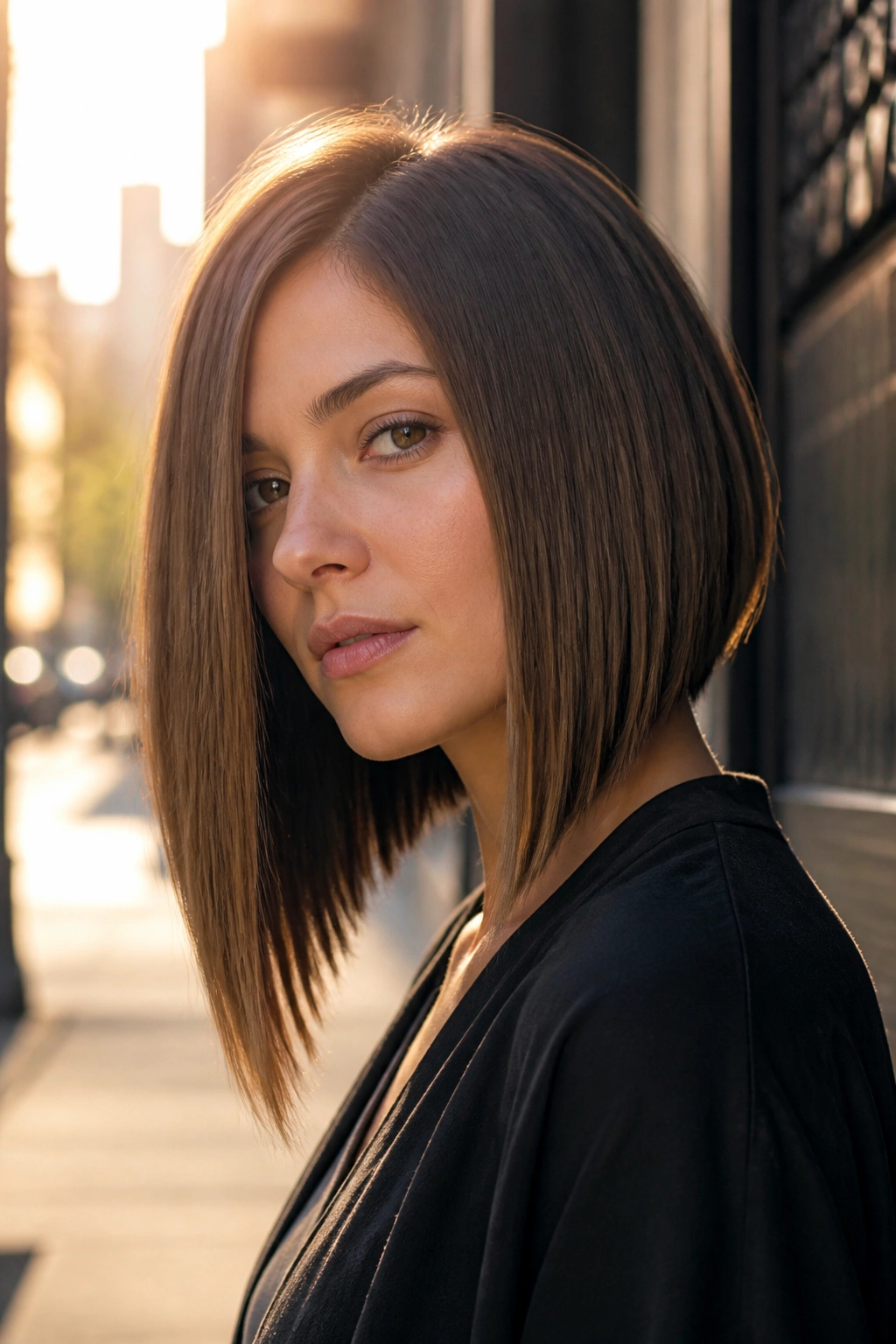
A longer front can look meaner than a short back. That is the whole reason the A-line lob works so well for women who want edge without losing length.
The shape angles from a shorter back to a longer front, usually with the front pieces grazing the collarbone or resting just below the jaw. That diagonal makes the face look longer and gives the haircut a clear direction. It feels intentional the second you see it. Not loud. Just pointed.
This cut is a smart middle ground if you are not ready for a full chop but still want something with attitude. Keep the front blunt and the back neat, and the line does the work. If the angle gets too soft, the haircut loses nerve. If it gets too steep, it starts looking theatrical. A modest A-line is usually the strongest version.
The best part is how easy it is to wear. Tuck one side back, wave the front slightly, or keep it dead straight for a harder feel. If you keep only one thing from all these cuts, make it this: edge lives in the outline, not the length alone.
