



A textured bob can rescue hair that looks flat, heavy, or too polite. The cut is short enough to feel fresh, but the texture keeps it from turning into a helmet. That balance is the whole appeal: clean shape, messy movement, and a little bit of edge without looking fussy.
Textured bob haircuts work because they break up the line. A blunt bob can be gorgeous, but when every strand lands in the same place, the haircut starts feeling stiff. Add point-cut ends, razor work, invisible layers, or a soft bend through the mid-lengths, and the whole thing wakes up. Suddenly the hair moves when you turn your head. Suddenly it looks touched, not carved.
What I like most about this family of cuts is how forgiving it is. Straight hair gets lift. Wavy hair gets shape. Curly hair gets room to breathe. Even a basic blow-dry looks better when the ends are slightly uneven on purpose. That little bit of irregularity is doing a lot of work.
And no, texture does not have to mean choppy in a harsh way. It can be soft. It can be polished. It can sit right on the jaw and still feel modern without trying too hard. That range is exactly why these bobs keep showing up on hair that needs movement more than it needs drama.
1. Choppy French Bob with Air-Dried Ends

The French bob gets its charm from restraint, and the choppy version keeps that same spirit while loosening the edges a little. The cut usually lands somewhere between the cheekbone and the jaw, with ends that are lightly point-cut so they do not sit like a hard shelf. It feels chic, but not precious.
Why It Works
This shape is especially kind to fine or medium hair that wants body without a ton of styling. Ask for soft internal texture, not big choppy layers, or the whole thing can start to look thin at the tips. The sweet spot is movement at the bottom and enough weight left in the body to keep the bob from puffing up.
Air-drying helps here. A little leave-in cream, a squeeze of mousse at the roots, and a rough dry with your fingers can leave the hair with that barely-done finish people love. The trick is not to over-handle it; once the hair starts drying, leave it alone.
- Best on straight to loose-wavy hair
- Length usually hits cheekbone to jawline
- Works well with a center part or a slight off-center part
- Ask for point-cut ends rather than heavy razor thinning
Pro tip: if your hair flips out at the ends, wrap the last inch around a 1-inch curling iron for five seconds, then let it cool in your hand.
2. Jaw-Length Razor Bob for Fine Hair

A razor bob can be a gift for fine hair because it adds air between the strands. The whole cut feels lighter, and that lightness gives the illusion of thicker movement. When it’s done well, the ends look feathered rather than wispy.
The catch is overdoing it. Too much razor work can leave the perimeter looking see-through, which is the opposite of what fine hair needs. I like this style best when the stylist keeps the outline clean and uses the razor mainly through the interior and around the face. You get lift without losing shape.
It also plays nicely with a side part. Fine hair often collapses at the crown, so shifting the part just a little can make the bob feel fuller right away. A root spray, a quick blow-dry with a round brush, and a blast of cool air at the end go a long way.
Short and airy. That’s the point.
3. Layered Bob with Curtain Bangs

Curtain bangs change everything here. They soften the front of the haircut, draw attention to the eyes, and make a bob feel less severe around the cheeks. When the bangs are blended into a layered bob, the whole cut has motion from front to back instead of only at the ends.
How to Style It
This one wants a bit of bend, not pin-straight precision. A round brush or a large Velcro roller through the fringe keeps the bangs from splitting in awkward places, and a 1.25-inch curling iron can add a soft wave through the sides. Do not curl the bangs under too tightly; that makes the cut feel dated fast.
The best version of this bob usually has layers that begin around the mouth or chin. That keeps the shape light without turning the hair into a shag. If the layers start too high, the whole thing can lose the clean bob line that makes it work in the first place.
It suits people who want a little softness near the face but still want a haircut that can tuck behind the ears and behave.
4. Wavy Italian Bob with Soft Bend

The Italian bob tends to look luxurious because it keeps a bit of fullness at the bottom. Add texture, and it becomes even better. The waves are usually broad and smooth rather than crimped or beachy, which gives the haircut that slightly expensive, slept-in feel without looking messy.
A shoulder-length or just-above-the-shoulder version works especially well if your hair has some natural wave. You can shape it with a large-barrel iron, but the real win is leaving the ends soft instead of polished to death. The line should feel plush, not rigid.
I like this cut on hair that is medium to thick and needs a little movement around the face. It’s also one of the easier textured bob haircuts to grow out, which matters more than people admit. A haircut that looks good for three days and then behaves badly is not a good haircut.
Use a light cream before drying, then finish with a drop of oil on the ends only.
5. Curly Rounded Bob with Shape

Curly bobs live or die by shape. If the cut is too blunt, the curl can balloon at the sides. If it is too layered, the silhouette can turn frizzy and uneven. A rounded bob sits in the middle: enough length to show the curl pattern, enough structure to keep the outline flattering.
Dry cutting is often the move here. Curly hair shrinks, and cutting it wet without accounting for that can leave you with a bob that bounces up too far. Ask for the cut to follow the natural curl pattern, with the shortest pieces around the jaw and slightly longer weight underneath to keep the shape grounded.
Moisture matters more than fancy styling. A curl cream, a light gel, and hands-off drying can make the difference between polished curls and fluffy triangles. Diffuse only until the roots are set; over-diffusing often expands the crown in a way you cannot undo later.
This is one of those cuts that looks casual but actually takes skill.
6. Angled Bob with Piecey Front Pieces

An angled bob gives you built-in movement because the front sits longer than the back. That shape already does some of the visual work, and the texture keeps it from looking severe. The result is sharp enough to feel intentional, soft enough to wear every day.
What Makes It Different
Unlike a classic one-length bob, the angled version has a clear direction. The eye follows the line from the nape toward the chin, which can be great if you want to slim the jaw visually or show off a necklace and neckline. Piecey front pieces keep it from feeling too architectural.
This cut is especially useful on thicker hair, where a blunt outline can feel heavy. A bit of internal layering removes bulk without making the whole style collapse. If you want the front to stay polished, keep the texture more concentrated in the back and lower sides.
For styling, a flat iron bend through the front pieces works well. One small twist at mid-lengths is enough. Do not over-flip the ends unless you want the style to lean retro.
It’s a strong, clean look. Not fussy.
7. Shaggy Bob with Broken-Up Layers

A shaggy bob has attitude, but it should still feel like a bob first and a shag second. The difference is important. You want the perimeter to stay readable while the inside gets broken up with light layers, choppy ends, and a little unevenness around the face.
Why It Works
This is the haircut for someone who likes movement more than polish. It’s especially good if your hair air-dries with some bend and you do not want to fight that texture every morning. A little mousse, a quick scrunch, and maybe a diffuser for five minutes is often enough.
- Best for wavy or loosely curly hair
- Layers should be soft, not disconnected
- A little frizz can look intentional here
- Works nicely with a middle or slightly off-center part
The danger is going too far into shag territory and losing the bob shape entirely. Keep the weight at the bottom. That’s what stops the style from becoming a mullet with good intentions.
This cut looks coolest when it is slightly imperfect. Freshly done, yes. But not shellacked.
8. Blunt Bob with Hidden Interior Texture

This is one of my favorites, honestly, because it gives you the best of both worlds. From the outside, it looks clean and full. Underneath, the stylist has point-cut or softly layered the interior so the bob does not feel like a block of hair sitting on your neck.
That hidden texture is the secret. You keep the strong line at the edge, which is especially flattering on straight hair, but the inside moves when you turn your head. The haircut never reads stiff, even when you do almost nothing to it.
Ask for subtle removal of bulk through the middle, not obvious layers. If the cut is over-thinned, the whole point disappears. The perimeter should still feel dense. That’s what makes the bob look expensive rather than stringy.
This version is excellent if you want a neat haircut for work but still want it to look soft on a night out with a little wave through the ends.
9. Side-Part Bob with Long Face-Framing Pieces

Why does a side part change a bob so much? Because it breaks the symmetry and makes the hair fall with more interest. A side-part bob with longer front pieces can sharpen the cheekbones, soften a strong jaw, and give straight hair a little drama without requiring a lot of styling.
The front pieces matter here. They should be long enough to graze the mouth or chin, not cut off at the cheekbones unless you want a very specific retro feel. Those longer pieces give the cut a little swing when you walk, which is a small detail that makes a big difference.
How to Wear the Part
Start the part about an inch or two off the highest point of the brow. That’s often enough. If you push it too far over, the bob can start to collapse on one side and feel lopsided in a bad way.
A quick blow-dry with a small round brush at the roots will keep the lift where it belongs. If you want a bit more bend, wrap the front sections around a 1-inch iron and leave the ends straighter. That contrast looks better than curling everything uniformly.
10. Box Bob with Soft Corners
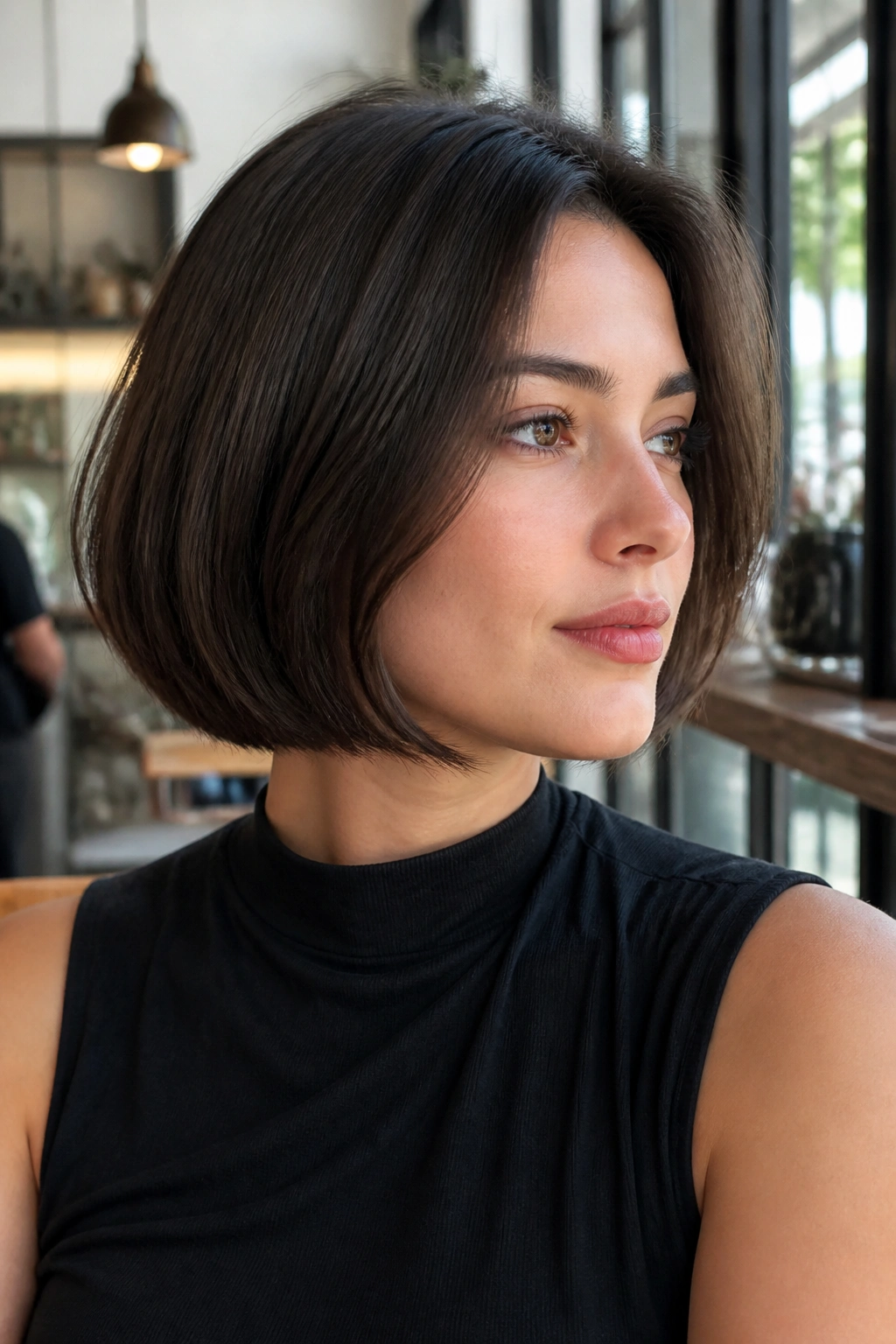
A box bob sounds severe, and that is why the softened version works so well. The shape stays broad and clean through the sides, but the corners are lightly rounded so the haircut does not look like a helmet. It has structure, then a little give.
This cut suits straight or slightly wavy hair that tends to fall flat in a round bob. The squarer silhouette adds presence around the jaw, which can be a nice counterbalance if your face is more narrow or oval. It also photographs with strong lines, though I hate that phrase; what matters more is how solid it looks in real life.
You do need a good blow-dry for this one. A paddle brush can smooth the surface, and a small round brush at the ends can keep the corners from sticking out. Keep the texture subtle; a box bob loses its point when you make it too beachy.
If you like a haircut that feels crisp but not harsh, this is a strong choice.
11. Chin-Length Bob with Micro Fringe

A chin-length bob paired with a micro fringe is not the shy option. It puts the face front and center, and the texture keeps it from feeling costume-like. The fringe should be short, broken up, and a little irregular at the ends so it sits lightly on the forehead instead of making a solid line.
This cut works because the bob and fringe balance each other. The short bangs create a sharp top edge, while the textured bob below gives movement and breath. Without the texture, the whole look can get too rigid. With it, the haircut feels deliberate and a little artistic.
What to Ask For
- Chin-length perimeter
- Point-cut fringe with light separation
- Soft texture through the side sections
- Enough weight left at the bottom to keep shape
It does ask for upkeep. The fringe grows quickly, and short bangs can be annoying if you hate trims. But if you like haircuts with a little attitude, this one earns its keep.
12. Inverted Bob with Tapered Nape
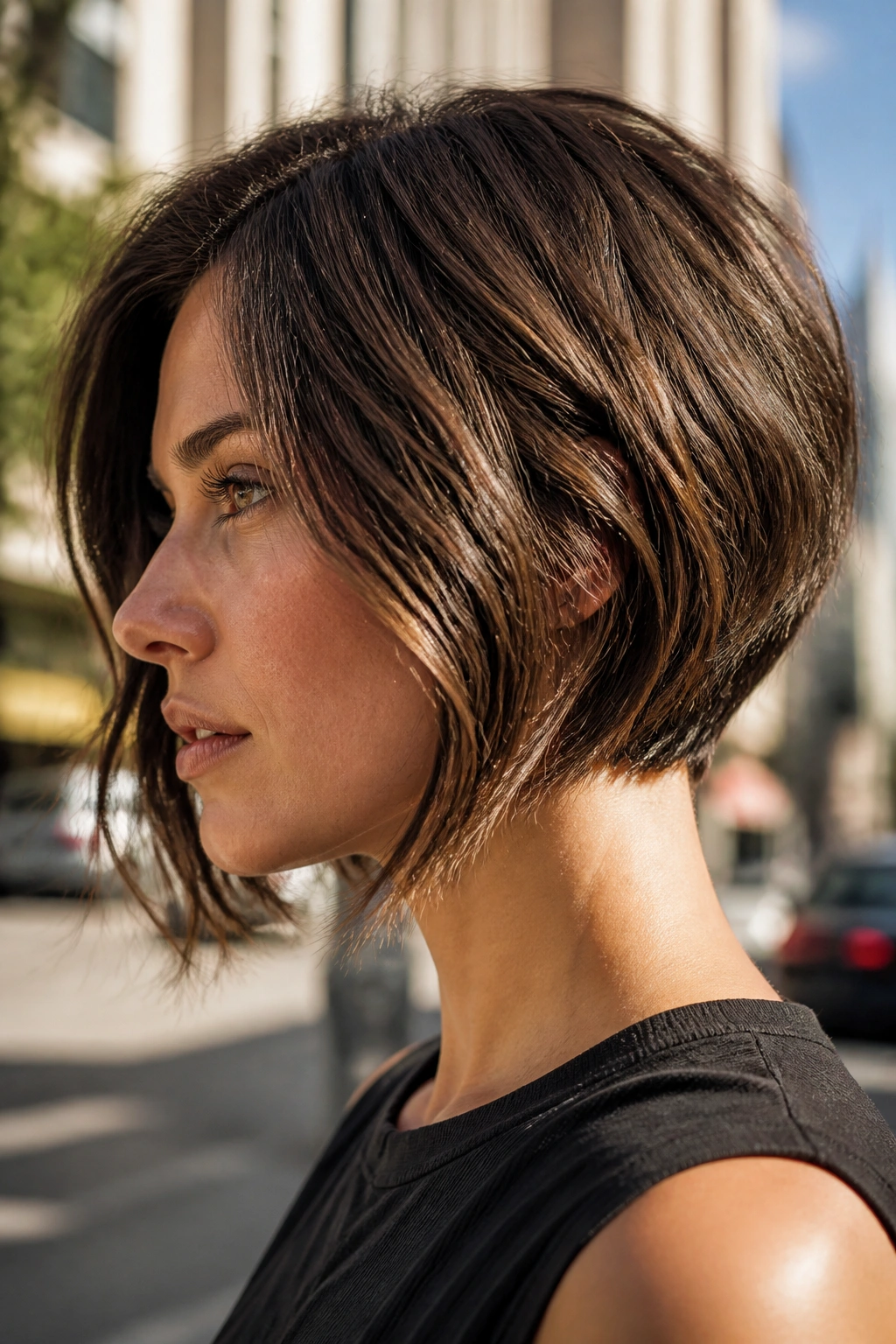
The inverted bob has a built-in shape story: shorter in the back, longer toward the front, with the nape tapered so the neck looks clean and the front keeps some length. Add texture, and the cut stops feeling stiff or dated. It becomes sleeker, lighter, and easier to wear.
This is a smart haircut for thicker hair because the back can get bulky fast. A tapered nape removes weight where it tends to sit hardest, while the longer front pieces let the style frame the face. You get lift without turning the back into a stack of visible layers.
What Makes It Work
Compared with a classic stacked bob, the textured inverted version looks less built-up and more fluid. That makes it easier to style flat or with a slight bend. If your hair grows out awkwardly in the nape, this cut can still look intentional between trims.
Ask for the front to be softened around the collarbone or jaw, depending on how bold you want the shape. A smooth transition matters more than dramatic length differences. That’s where the haircut starts to look elegant instead of overworked.
13. Shoulder-Skimming Lob with Texture

A shoulder-skimming lob is the answer for people who want bob movement without losing the comfort of extra length. It still counts as part of the bob family, just with more room to work. The texture keeps it from hanging there like a plain cut.
This version is especially good if your hair is thick, wavy, or prone to frizz. The added length helps weigh the shape down a little, which can be useful if your hair has a mind of its own in humid weather or after a long day. It also gives you enough hair to tuck behind the ear or half-up without frustration.
Why It Stays Useful
The lob can be blunt, but texture makes it easier to live with. A few long layers around the face, plus soft ends, let the hair move without losing fullness. You can curl it loosely, air-dry it with cream, or smooth it out and still keep the shape interesting.
If you are nervous about going short, this is the safe bet that does not look safe. That’s the nice trick here.
14. Razored Bob for Thick Hair

Thick hair can look beautiful in a bob, but it gets heavy fast. A razored bob helps by removing bulk and letting the cut move instead of sitting like a block. Done right, it feels lighter the second it hits your shoulders.
The best version keeps the ends airy and the layers internal. You want the razor to work through the density, not shred the perimeter into bits. Too much razor work on thick hair can create frizz at the ends, and then the whole style starts looking dry even when the hair is healthy.
This one benefits from smoothing products that are light, not greasy. A cream with a little slip, a paddle brush while blow-drying, and a finishing serum on the mid-lengths can keep the cut sleek without flattening it. Focus the product on control, not shine alone.
If your hair has a lot of body and a haircut always feels bulky, this is one of the better textured bob haircuts to try.
15. Fine-Hair Bob with Root Lift
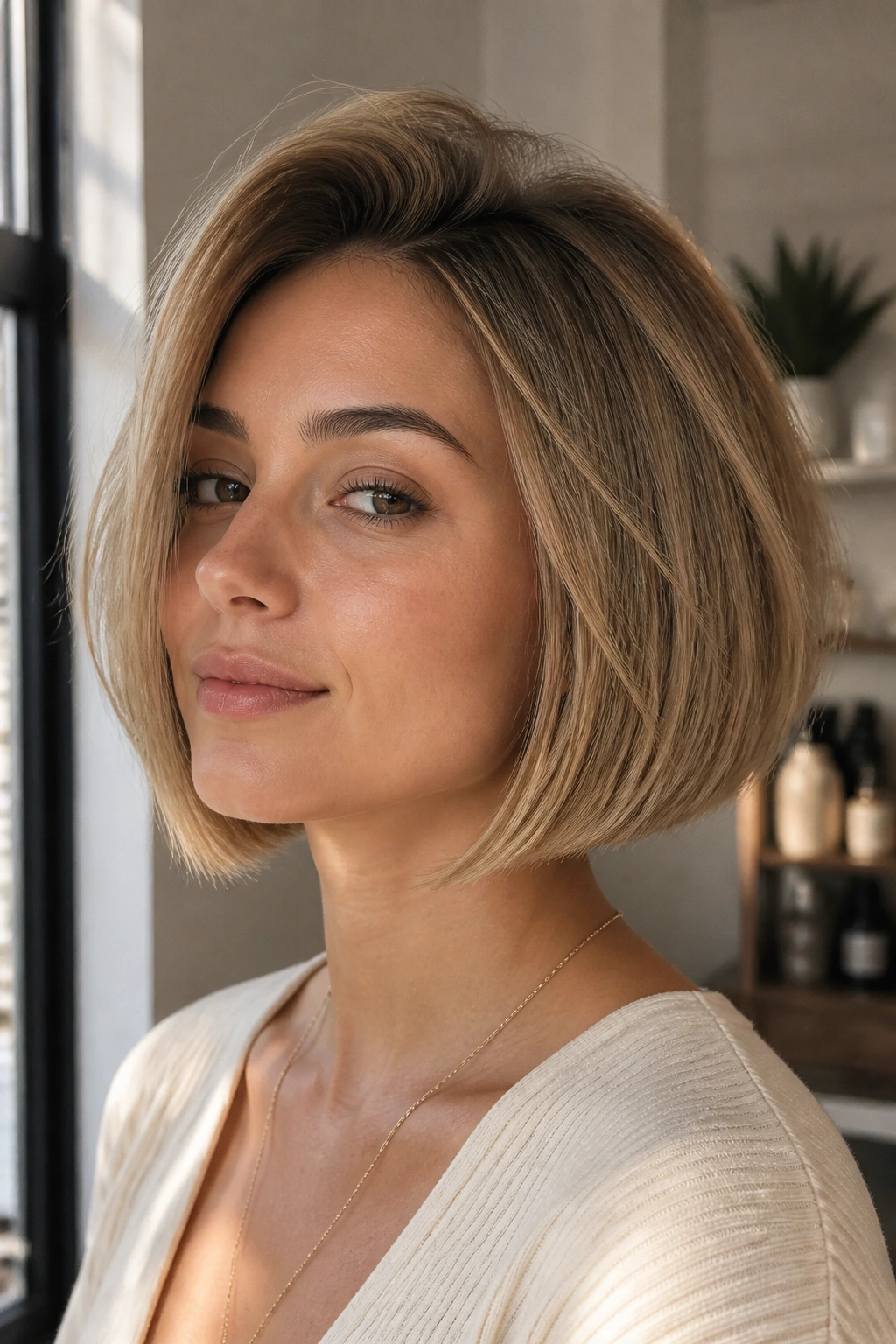
Flat roots can make a bob feel sleepy, even if the cut itself is good. A fine-hair bob with root lift solves that by building volume where it matters most: right at the scalp and through the crown. The ends stay clean, but the top gets enough air to keep the whole shape from drooping.
How to Get the Most From It
Start with a volumizing mousse at the roots while the hair is damp. Then blow-dry in sections with the nozzle pointed down the hair shaft, lifting at the crown with a round brush or even your fingers if you are short on patience. A cool shot at the end helps the root bend stay in place.
- Keep layers minimal so the ends do not disappear
- Ask for a soft, rounded crown
- Use a lightweight spray, not heavy oil
- Refresh the roots with dry shampoo only where needed
The mistake here is using too much product. Fine hair goes limp fast. A dime-sized amount of mousse can be enough if you distribute it well. More product is not more volume. Usually, it is just more collapse.
16. Undercut Bob with Light Ends

An undercut bob sounds bold, but a hidden undercut can be almost invisible from the outside. The benefit is weight control. If your hair is dense through the nape or underlayers, removing a small section underneath lets the top layer sit better and move more easily.
Compared with a standard bob, this one feels cooler and less bulky. The outline can stay soft and wearable while the hidden structure does the hard work. That makes it a smart option for people who hate the heavy, triangular look thick hair can create at the back.
It does need maintenance. A tidy undercut grows out faster than people expect, and once it starts pushing through, the shape can get puffy. Plan on cleaning it up every 6 to 8 weeks if you want the silhouette to stay neat.
Best of all, you can keep this choice understated. No one needs to know the haircut has a secret unless you want them to.
17. Textured Bob for Natural Curls

Natural curls in a bob need room, not a fight. The textured version lets the curl pattern show while still giving the haircut a clear outline. That’s the balance: enough shape to keep it from exploding, enough softness to let the curls do their thing.
Dry shaping matters a lot here. A bob cut on curly hair needs to account for shrinkage, and the curls often behave differently in the crown than they do at the temples or nape. A stylist who understands curl pattern will usually cut in a way that lets the silhouette sit slightly longer than you think you need.
I’d keep styling simple. A curl cream, a gel with hold, and a diffuser used only until the hair is set can leave the finish defined without crunch. Once the curls are dry, break the cast gently with a few drops of oil if you want softness.
This is not the haircut to overthink. It looks best when the curl pattern leads and the shape supports it.
18. Wet-Look Bob with Sharp Ends

A wet-look bob is one of the few textured bob haircuts that can go from daytime to evening with only product changes. The haircut itself can be simple, even blunt, but the styling creates the texture: sleek roots, glossy mid-lengths, and separated ends that look piecey rather than stiff.
The Product Setup
You need hold, but not helmet-level hold. Start with a lightweight gel or styling cream on damp hair, comb it through evenly, then tuck the ends into a natural bend with your fingers. If the hair is too dry when you apply product, it can turn sticky in uneven patches.
This style looks best when the part is deliberate and the finish is clean around the hairline. A toothbrush or small edge brush can help smooth flyaways without making the whole head look slicked back.
- Work on damp hair, not dripping hair
- Use a fine-tooth comb for the top
- Keep the ends separated with a small amount of cream
- Avoid heavy oils that make the style collapse
It’s a dramatic finish, yes, but it still starts with a good cut underneath.
19. Salt-Spray Bob for Natural Waves
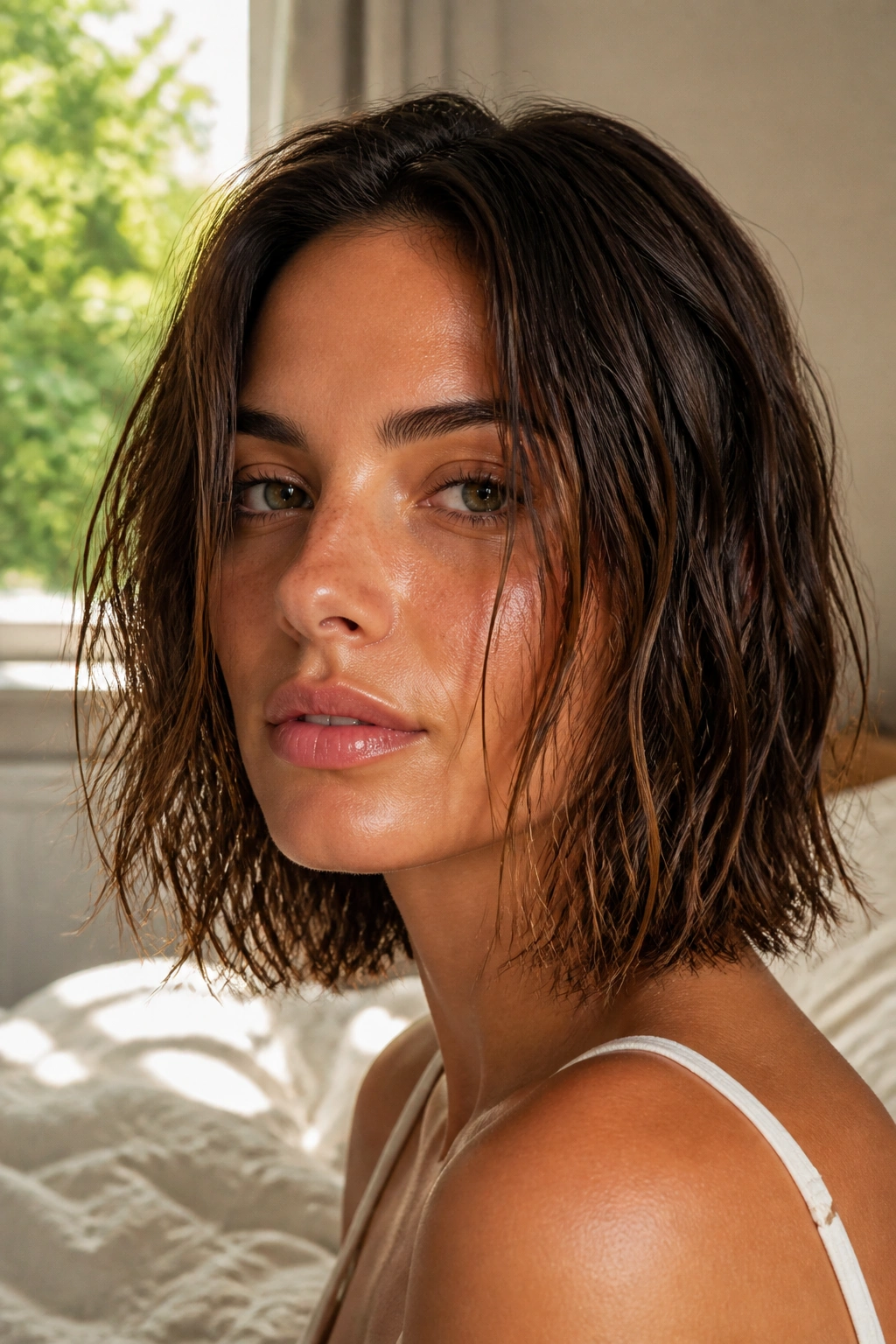
A salt-spray bob lives in that nice middle ground between polished and undone. It works especially well if your hair already has a wave pattern, because the spray just encourages what is there instead of forcing a new texture from scratch. The haircut can be shoulder-skimming or chin-length; the common thread is movement.
Use the spray sparingly. Too much and the hair gets dry, rough, and sticky near the roots. A few pumps on damp hair, scrunched through the mid-lengths, usually does the job. Then either air-dry or diffuse for a few minutes until the wave pattern sets.
What Not to Do
Do not flood the ends. That is where frizz starts. And do not pile on heavy conditioner before styling, because the spray needs a little grip to work properly. If your hair is very fine, pair the spray with a mousse at the root so the wave has support from the start.
This cut looks easy, but it still benefits from a deliberate shape. Without that, salt spray can turn into random fluff. With it, the bob gets that loose, broken-up texture people keep trying to fake with too much effort.
20. Soft-Grow-Out Bob with Loose Layers
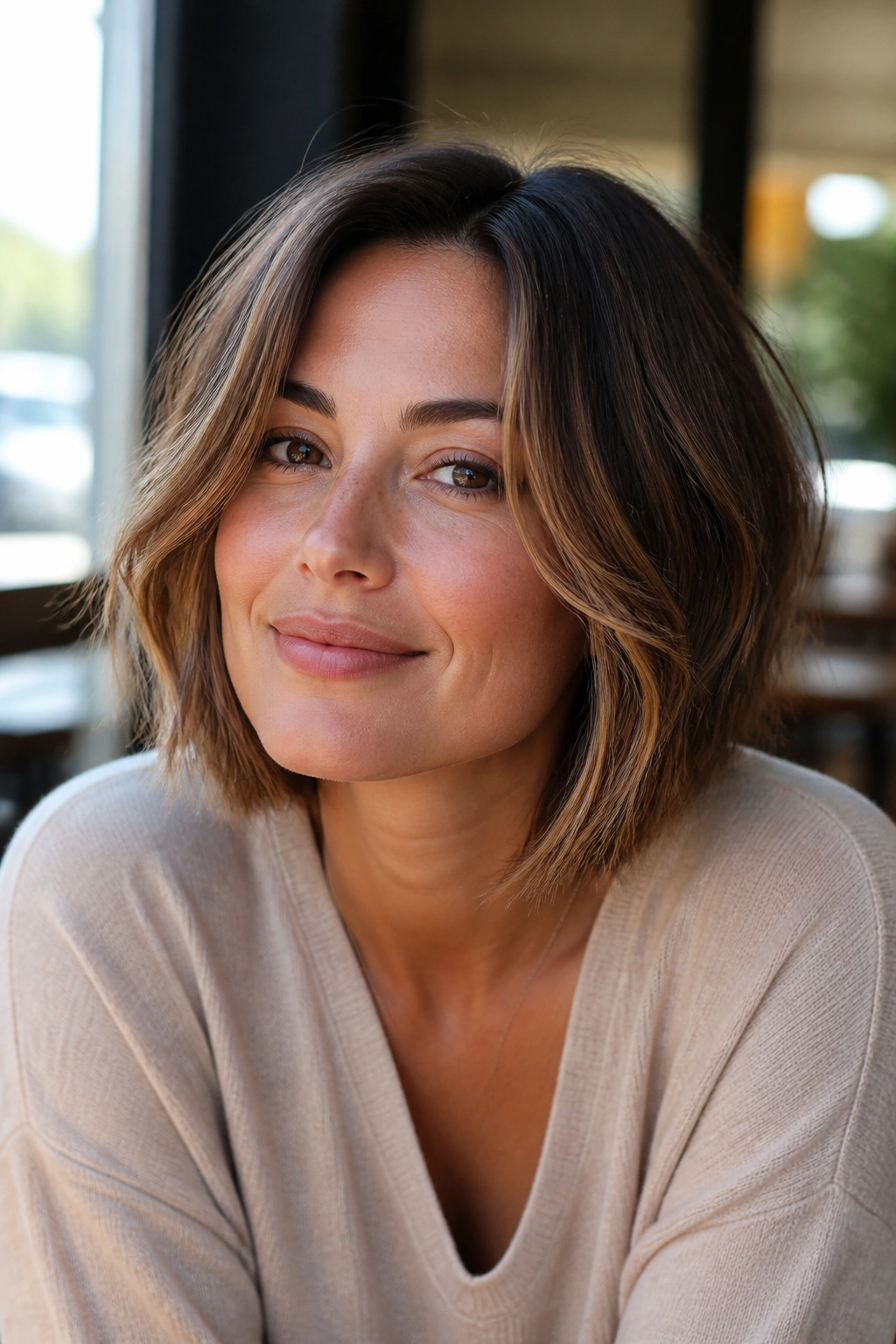
The soft grow-out bob is the one I keep coming back to because it respects real life. Hair grows. Trims get delayed. Some weeks you want it tucked, some weeks you want it swinging free. A bob with loose layers and soft texture handles all of that better than a sharp, over-designed cut.
This is the most forgiving textured bob haircut in the group. The layers are long enough to blend as the hair gets longer, and the perimeter stays readable even when the shape loosens up. It is a good choice if you want a style that looks intentional at eight weeks and still feels fine at fourteen.
The styling is easy, which helps. A quick blow-dry with a round brush, or a rough dry with a bit of cream, is enough most days. If you want a bit more polish, bend only the front sections and leave the rest soft. That small contrast keeps the haircut from looking overdone.
And that is really the charm of this whole category. Texture gives a bob life, but the right texture also gives you breathing room. That matters more than perfection ever will.
