



Fine hair is picky about length. Cut it too short, and it can kick out at the ends. Leave it too long, and the outline starts to look see-through before lunch.
Shoulder-grazing bobs sit in a useful sweet spot. They keep enough weight at the edge of the cut to make the line look fuller, but they stay light enough to move instead of hanging limp and flat. That is exactly why shoulder length bobs for fine hair keep showing up in salon chairs: they do more with less.
The smart versions lean on shape more than size. A blunt edge, a soft part, a touch of graduation, or a careful face frame can make the whole cut look denser without piling on layers that steal the body you already have. Fine hair can be dense, too, which is why the trick is not “more hair.” It’s better placement.
If your hair lies close to the head no matter what you do, a cleaner cut usually beats another can of spray. The right bob gives you a perimeter, a little lift, and enough swing to stop the style from looking stiff. Some of these cuts are neat and polished. Others are softer and a little undone. All of them are built to make fine strands look like they showed up with more of themselves.
1. The Blunt Shoulder-Length Bob That Makes Fine Hair Look Thicker
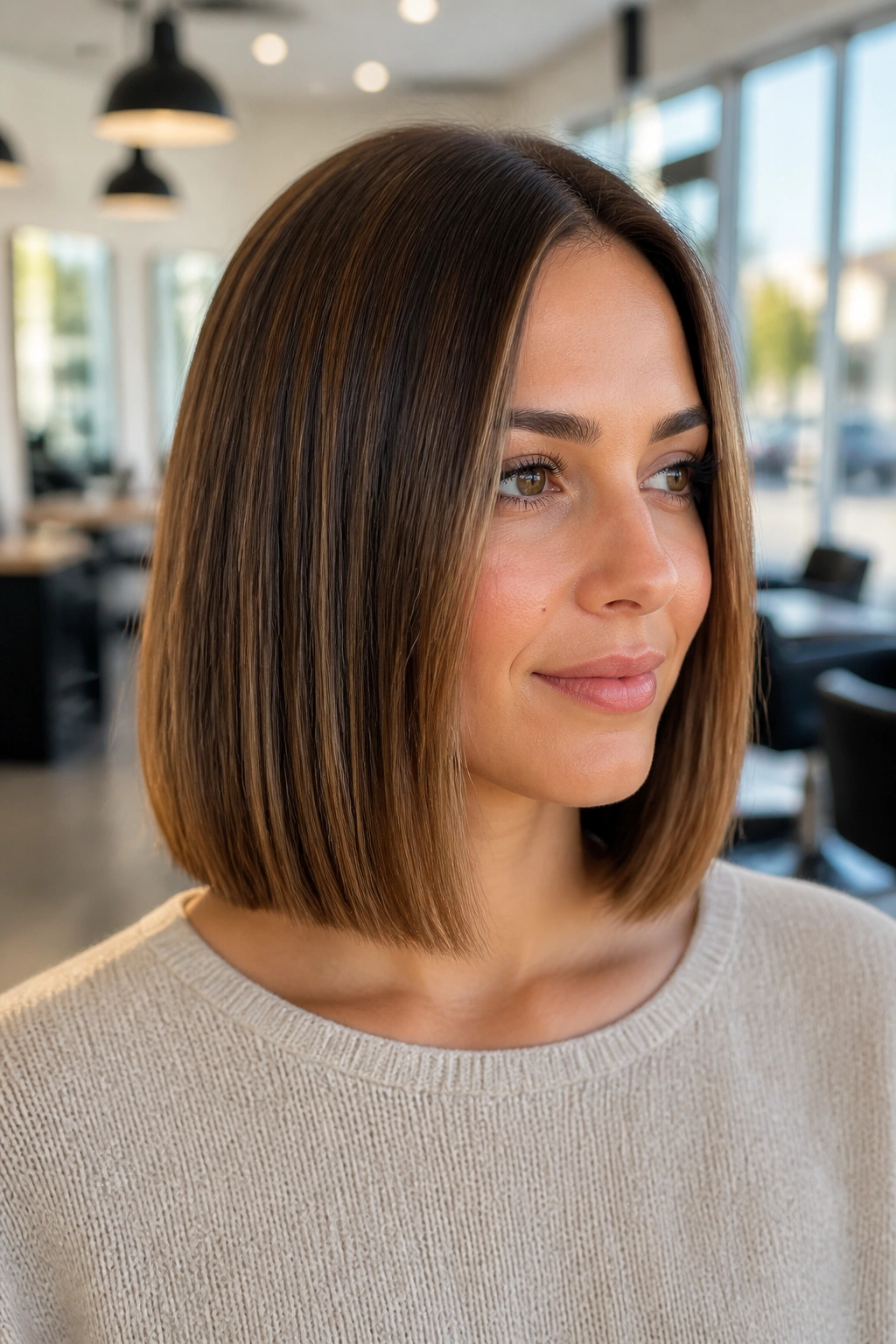
A blunt line is the easiest way to fake density. No wispy ends, no shredded perimeter, no apology built into the haircut. When fine hair keeps one solid edge at the shoulders or just above them, it reads as fuller because the eye catches a clean shape instead of broken pieces.
What to Ask For
- Ask for the longest point to sit right at the collarbone or half an inch above it.
- Keep the perimeter blunt and even, with only tiny texturing at the very ends if needed.
- Skip heavy internal layers unless your hair is unusually dense for fine hair.
- If your hair flips out, ask for the ends to be slightly beveled under instead of thinned out.
This is the cut I reach for when someone wants the hair to look expensive without looking fussed over. The shape does the work. Straight hair looks crisp, and soft waves get a sturdy frame that keeps them from scattering.
A 1.25-inch round brush, a heat protectant, and a quick blast of cool air are enough to keep this bob polished. Too much layering is the enemy here. The whole point is weight at the edge, because that weight gives the illusion of thickness.
2. The Collarbone Lob With a Center Part
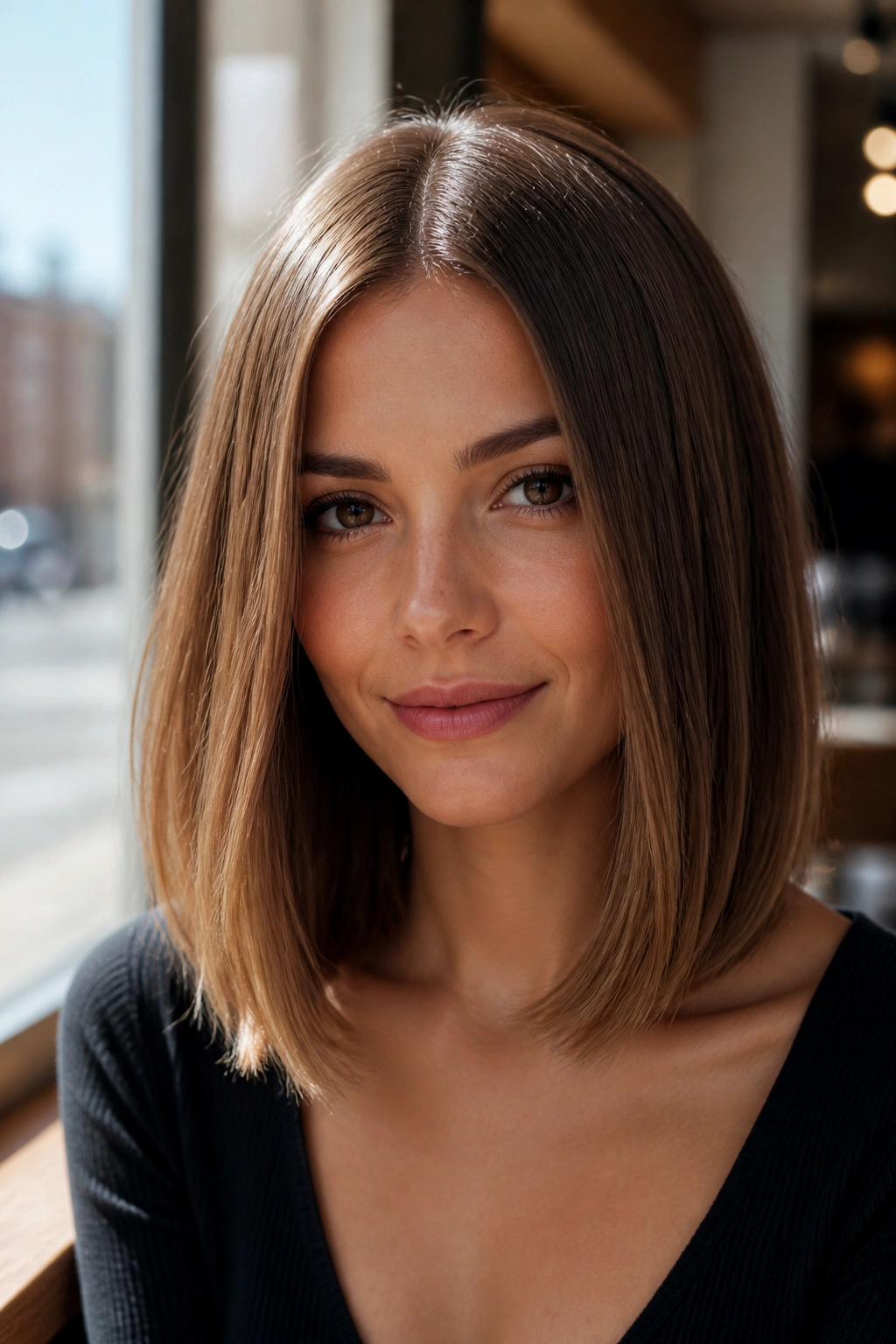
A center part can feel severe, but on a collarbone lob it does the opposite. It puts the hair in two clean sheets, which makes the whole shape look deliberate and balanced. Fine hair likes that kind of order because chaos shows through fast.
The cut should graze the collarbone, maybe a touch longer in front if your face is round or square. That extra length at the front gives the style a little swing, and swing matters on hair that can fall flat. I like this one best when the client wants something neat enough for work but soft enough to tuck behind one ear without ruining the shape.
Blow-dry the roots up and away from the scalp, not flat against it. Use a light mousse at the crown and a smoothing cream from mid-lengths down. The mousse gives the lift; the cream keeps the ends from looking dry and thin. If you try to load the roots with oil or heavy serum, the center part starts to look greasy instead of sleek. That is a quick way to lose the point.
3. The Soft A-Line Bob With a Longer Front
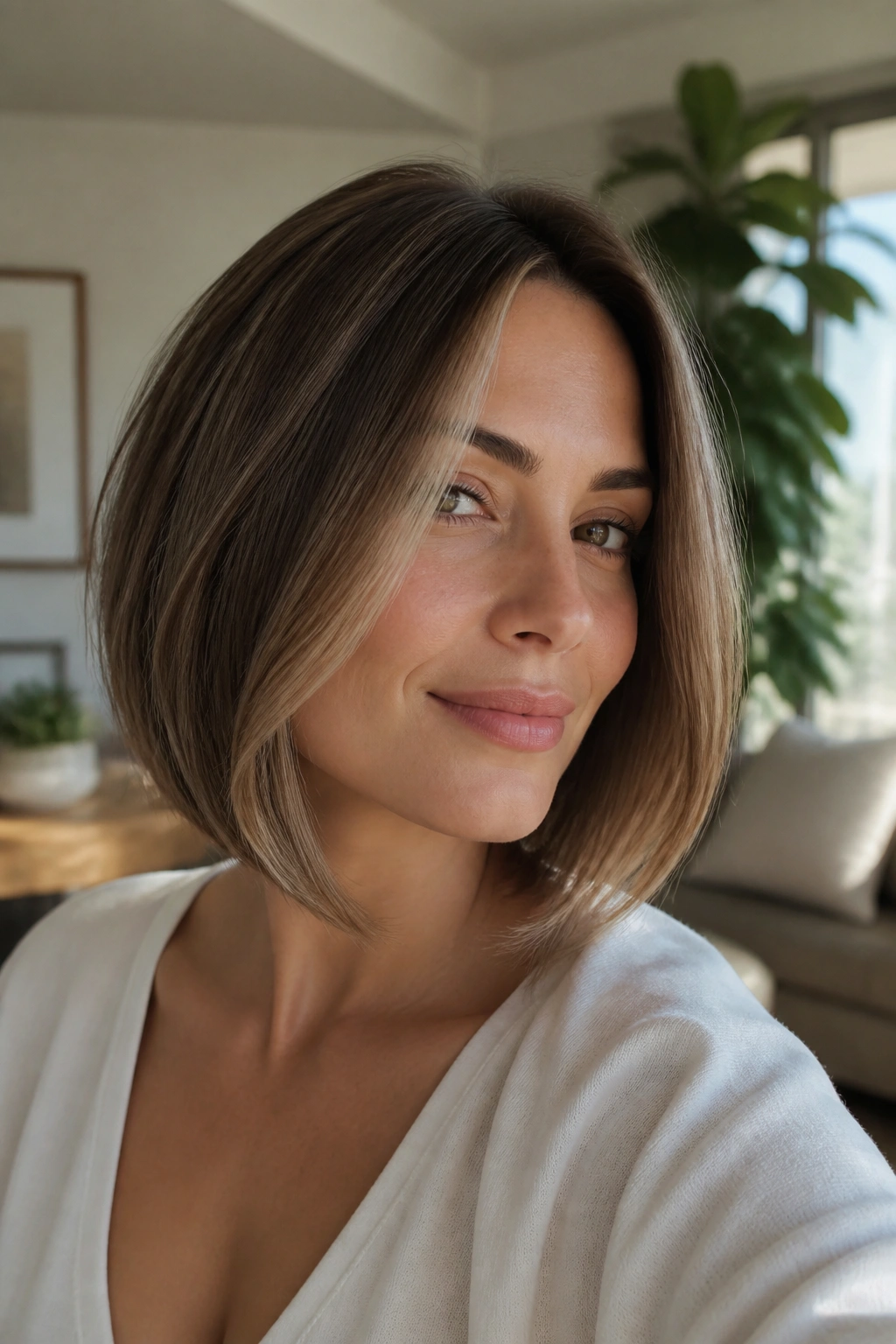
Why does a longer front help fine hair? Because it gives the eye somewhere to land. When the front pieces are a little longer than the back, the haircut feels more sculpted, and sculpted hair looks fuller than hair that hangs in one flat curtain.
Where the Front Should Fall
A good A-line bob for fine hair usually has the back sitting about ½ to 1 inch shorter than the front. That difference does not need to be dramatic. In fact, too much angle can make the cut feel dated or sharp in a bad way. Keep it gentle. The line should slope, not shout.
This shape is especially nice if your jawline feels strong or your neck is a feature you want to show off. The longer front pieces skim the face and keep the hair from puffing out around the cheeks. When blow-dried with a small round brush, the front gets just enough bend to look intentional. Not stiff. Just controlled.
Ask for minimal layering through the sides and keep the back clean. A fine-haired A-line starts to fall apart when the interior gets overworked. Better to leave the perimeter strong and let the angle do the flattering.
4. The Rounded Bob With Curved-Under Ends
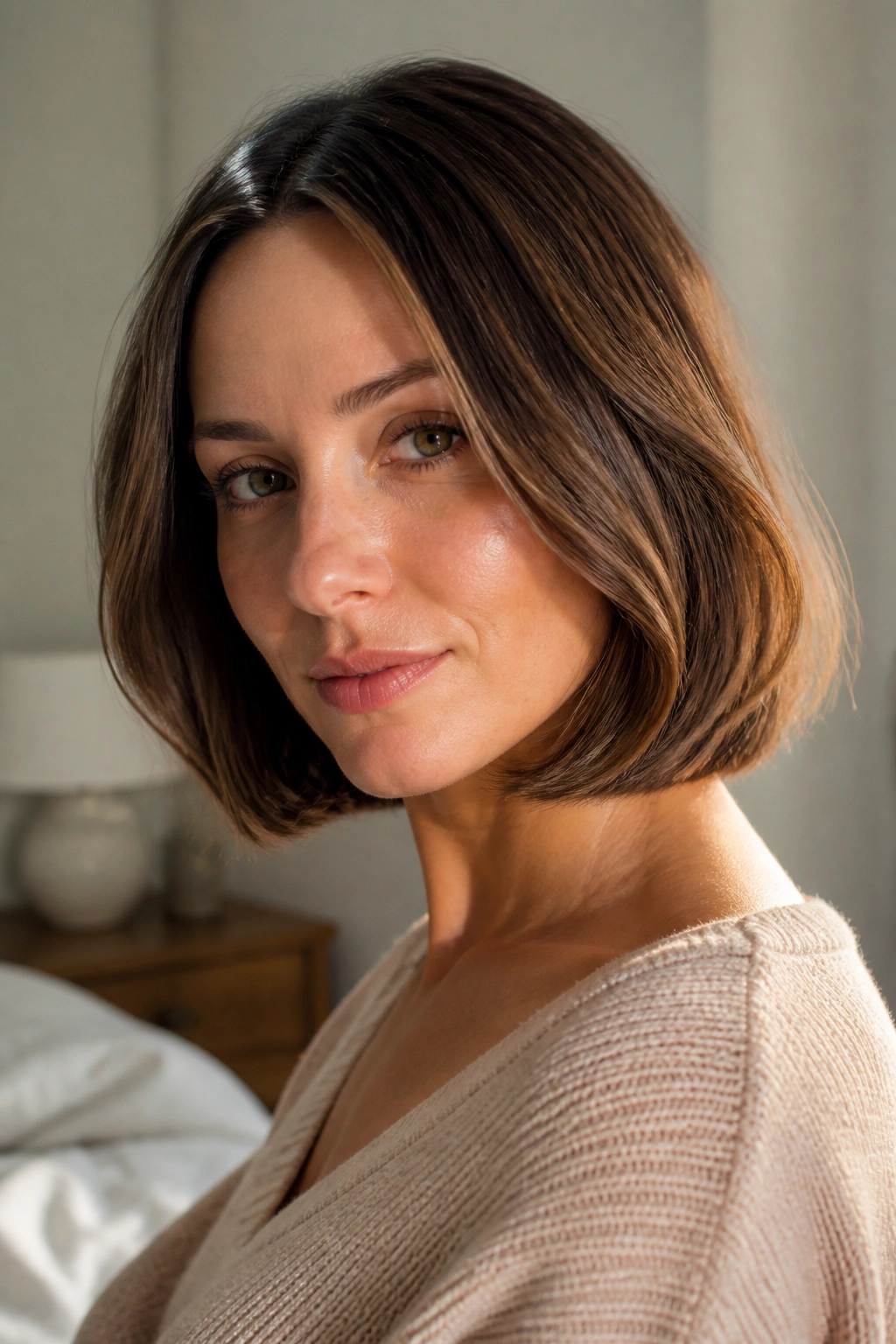
Picture this: you leave the salon with a cut that looks tidy, then two hours later the ends start flipping in every direction except the one you wanted. A rounded bob fixes that by building the bend into the shape instead of fighting it later.
The whole trick is in the curve. The hair is cut so the outline naturally turns under, especially at the ends around the chin and shoulders. On fine hair, that little curve makes the cut look softer and more finished. It also keeps the style from reading too boxy, which can happen fast on straight strands.
- Use a 1.5-inch round brush for a smoother curve.
- Blow-dry the hair in sections, aiming the nozzle down the shaft.
- Clip the crown up while the lower layers cool.
- Finish with a pea-size amount of lightweight cream on the ends only.
This bob is a quiet fix for hair that wants to puff or flick. The shape itself gives it discipline. That is worth more than a dozen styling products.
5. The Invisible-Layer Bob for Airy Movement

Invisible layers are one of those salon tricks that sounds almost too mild to matter, then ends up saving the cut. The layers live inside the haircut, not on the surface, so you get movement without obvious gaps in the outer line. Fine hair needs that restraint.
I like this version when the hair feels heavy at the bottom but still looks sparse if you start carving visible layers into it. A stylist can remove some weight from the interior with careful point-cutting while leaving the perimeter intact. The result is a bob that swings a little more, but still reads as full from the outside.
The danger is going too far. Fine hair does not forgive over-thinning. If the interior gets shredded, the ends start to look see-through and the whole style loses its shape. Keep the layers hidden, and keep them low.
This is a good cut if you air-dry half the time and blow-dry the other half. It behaves in both worlds. Not perfectly, maybe, but well enough that you do not feel trapped by the styling routine.
6. The Deep Side-Part Bob That Lifts the Crown
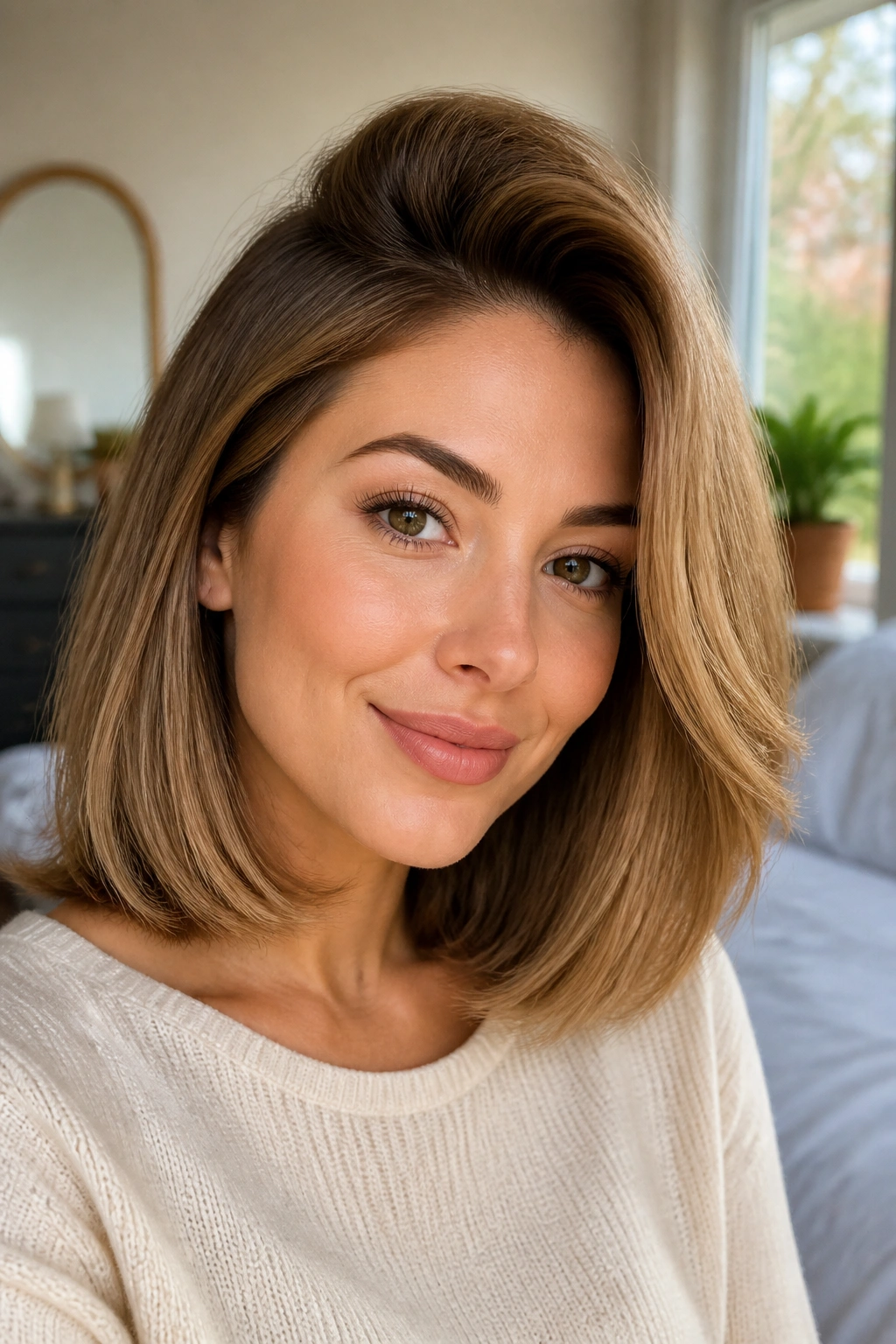
Compared with a center part, a deep side part does one thing almost unfairly well: it gives the crown instant height. Fine hair that lies flat at the top often looks twice as full when the weight is shifted off center. The root on the heavy side lifts, and the whole shape gets a better profile.
This bob works especially well if your hair is straight or only slightly wavy. Ask for a shoulder-length cut with clean ends, then flip the part far to one side and blow-dry the top section up and over a round brush. A little root spray helps, but only at the roots. If you mist the mids, you’ll flatten the very lift you wanted.
How to Wear It
Use a clip at the crown while the hair cools.
Direct the front section away from the face.
Let one side sit smooth and tuck the other slightly behind the ear.
Keep the ends blunt so the fullness at the top doesn’t get wasted below.
It is a strong choice for anyone whose hair collapses after twenty minutes. The side part buys you shape the moment you put it in.
7. The Face-Framing Lob With Cheekbone Pieces

She wanted softness around the face, not a sheet of hair hanging from the scalp. That is usually how this cut starts. The face-framing lob gives fine hair a little lift near the cheeks while keeping the body of the cut long enough to feel grown-up.
Where the Shortest Pieces Should Land
- Keep the shortest face-framing pieces around the cheekbone or just below it.
- Let the longest front pieces fall to the top of the collarbone.
- Avoid starting the shortest pieces too high if your temples are sparse.
- Ask for the ends to stay blunt, not feathered.
The nice part is that these face-framing bits do not need to be dramatic. A small shift in length can soften a long face, break up a strong jaw, or make the whole cut look less heavy around the neck. It also gives you a place to tuck the hair without losing all the shape.
I prefer this version over chunky layers because fine hair can turn streaky when the framing gets too aggressive. Keep the pieces narrow, keep the line soft, and let the collarbone do the rest. It’s a gentle cut, but it still has enough attitude to stand on its own.
8. The Choppy Bob With Light Texture at the Ends

Texture can help fine hair, but only when it’s controlled. A choppy bob is not about shredding the whole head into pieces. It’s about putting a little movement where the eye wants it most: the ends. That keeps the shape from looking rigid while preserving enough bulk through the middle.
The best version uses point-cutting and tiny interior breaks, not a razor attack from root to tip. I’m wary of razors on very fine hair because they can leave the ends looking soft in a bad way — flimsy, not airy. If your hair already slips flat, you want texture with a seatbelt on it.
A pea-size dab of texture cream is enough for styling. Work it through damp hair from mid-lengths down, then rough-dry the roots before deciding whether to add a bend with a flat iron. The goal is separation, not frizz. Those are different things, and hair can tell the difference from across the room.
This cut suits people who hate perfect hair. It has a little grit, a little bend, and enough edge to feel modern without looking messy.
9. The Curtain-Bang Lob That Opens the Face

Do curtain bangs ruin fine hair? Not if they’re cut with restraint. A narrow, feather-light fringe can make a shoulder-length bob feel softer and more lifted, especially when the bangs sweep away from the center instead of sitting in one heavy line across the forehead.
The trick is to keep the fringe small enough that it doesn’t steal too much density from the rest of the cut. If the bangs are too thick, they can swallow the front of the style and make the ends look thinner by comparison. A good curtain bang starts narrow at the middle and widens as it falls toward the cheekbones.
How to Style Them
Blow-dry the bangs first, while they’re still damp.
Aim them forward, then bend them away from the face with a round brush or a large velcro roller.
Use the cool shot to set the shape.
Keep the rest of the bob smooth so the fringe stays the focal point.
This version is flattering on round and heart-shaped faces, but the real win is movement. It gives fine hair a break from the same old flat perimeter.
10. The Bottleneck Bang Bob With Soft Forehead Coverage
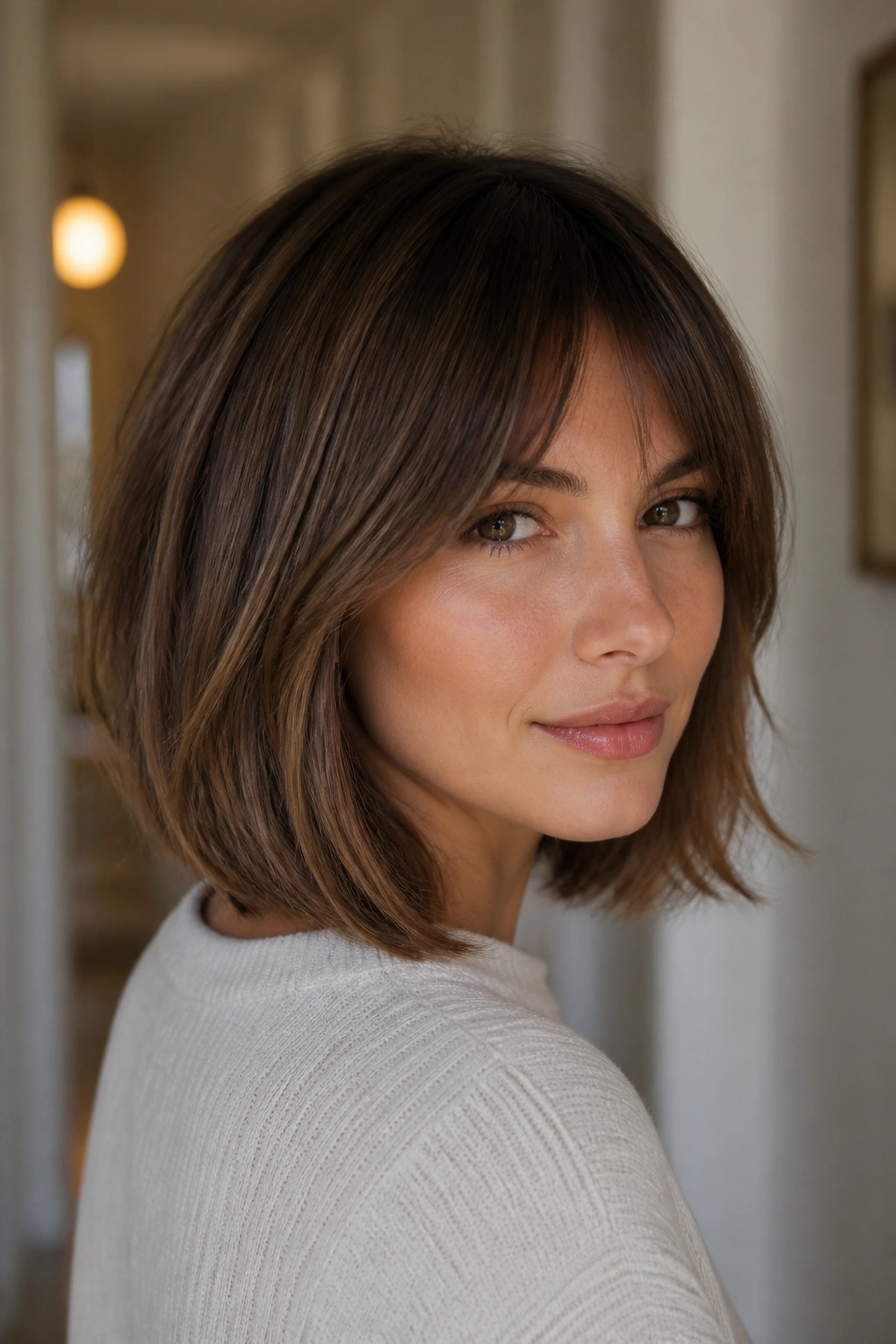
The bottleneck bang is a sneaky good choice for fine hair because it gives you the feeling of bangs without burying the face in hair. The center stays shorter, while the sides open out and blend into the cut. That shape keeps the front from getting heavy and keeps the bob underneath from looking crowded.
It is a smart move if blunt bangs have always felt like too much. Bottleneck bangs are lighter at the center and wider at the sides, so they frame the eyes without shutting down the rest of the haircut. The shoulders still show. The cheekbones still show. No visual clutter.
- Ask for the center to sit just below the brows if your forehead is short, or a little longer if you want softness.
- Keep the side pieces long enough to blend into the bob at the jaw or cheekbone.
- Style with a small round brush and a side-to-side motion.
- Use barely any product; bangs go greasy faster than people expect.
This cut feels polished in a low-key way. It’s one of those styles that looks like it took more effort than it did.
11. The Sleek Tucked-Behind-the-Ear Bob
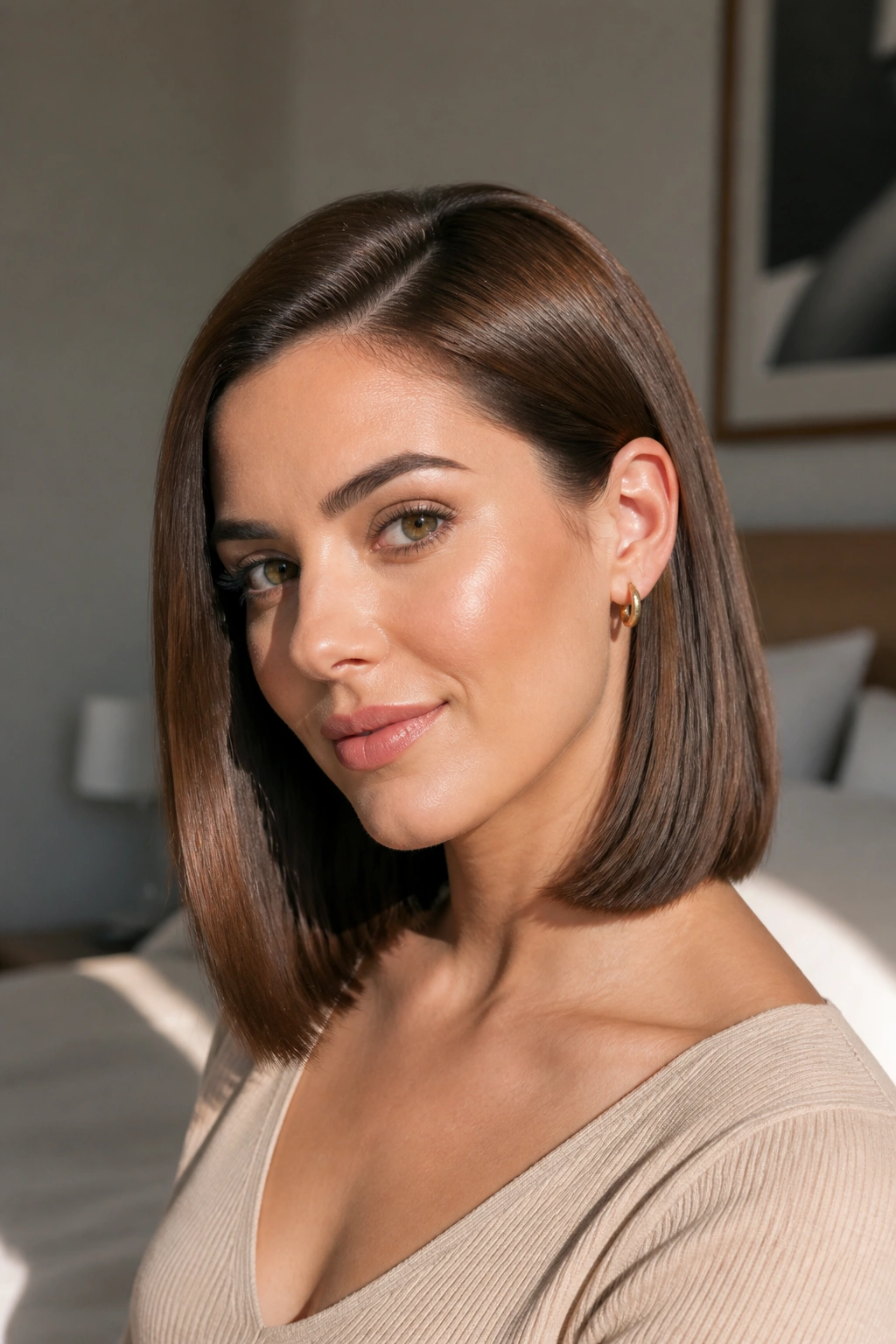
A sleek bob sounds simple, and that’s exactly why it works so well on fine hair. When the line is clean and the hair is tucked behind one ear, the eye reads shape first and strand thickness second. That little tuck can make the cheekbone look sharper and the whole haircut look denser.
The secret is shine without slip. You want the surface smooth, not oily. A heat protectant, a blow-dry nozzle, and one pass with a flat iron are usually enough. I like to keep the product on the mids and ends, not the roots. Put heavy serum near the scalp and the style goes soft in the wrong way.
This bob is great for anyone who likes earrings, clean necklines, or hair that stays neat through a long day. It also behaves well on second-day hair if you refresh the front with a quick brush and a tiny mist of water. The tuck gives it a built-in shape, even when the rest of the style starts to loosen.
One more thing. The tucked side should not be over-styled. If you force it, you lose the easy line that makes this cut look good.
12. The Subtle Inverted Bob With a Clean Back

A subtle inverted bob is the cousin of the A-line, but the back sits a little shorter and gets a touch more lift at the nape. That tiny shift matters on fine hair because it builds shape where flatness tends to start. The cut looks fuller from the side without turning into a stacked pyramid.
Too much inversion can feel harsh. A gentle version is better. The angle should be easy to see, not dramatic enough to dominate the whole head. When it’s done right, the front still brushes the collarbone while the back creates a neat little rise that keeps the silhouette from collapsing.
This is one of the better choices if your hair is very straight and refuses to hold volume for long. The shorter back removes a bit of dead weight while the longer front keeps the cut feeling modern. I also like it for people who wear jackets, scarves, or high necklines a lot. The nape stays tidy instead of getting swallowed.
If you like a haircut with a little shape in profile, this one earns its keep fast.
13. The Air-Dried Wavy Bob for Natural Bend
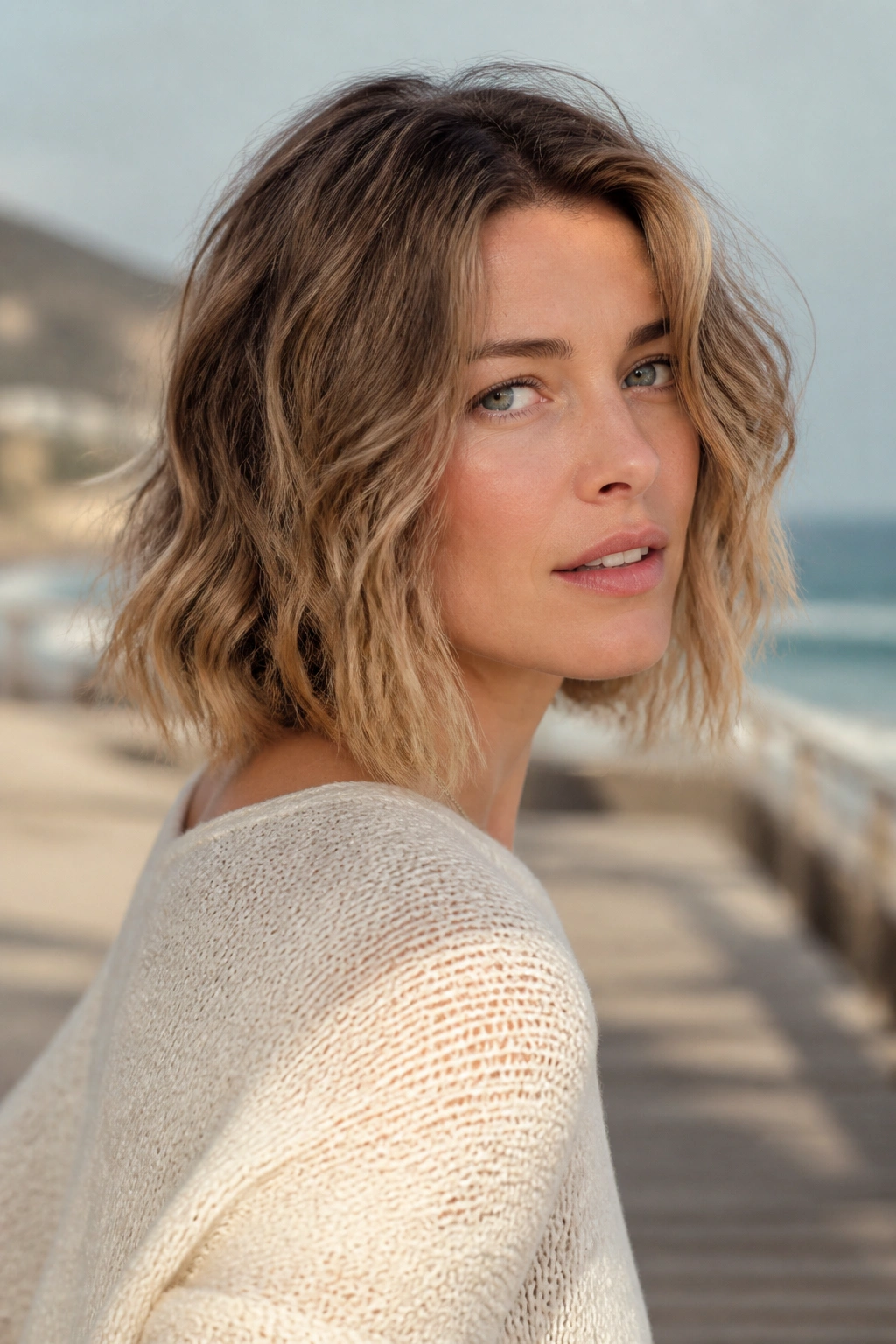
Can fine hair hold waves? Yes, if the wave is soft and the cut gives it room to sit. A shoulder-length bob is long enough for movement, but short enough that loose texture still shows. That balance is why air-dried versions can look so good when the hair has even a little natural bend.
How to Get the Bend
- Apply a light mousse or foam to damp hair from roots to mid-lengths.
- Scrunch the ends once, not ten times.
- Clip the crown up for extra lift while the hair dries.
- Stop drying when the hair is about 80 percent dry and let the rest air-dry.
Airdried texture works best when the hair is not overloaded. Heavy creams can make fine waves collapse into sticky strands. Keep the product light, and keep your hands out of it while it dries. I know, that part is boring. It also matters.
This bob suits beachy texture, soft bends, and people who want their hair to look casual without looking forgotten. The key is restraint. Let the wave live, but do not drown it.
14. The Glossy Straight Collarbone Bob
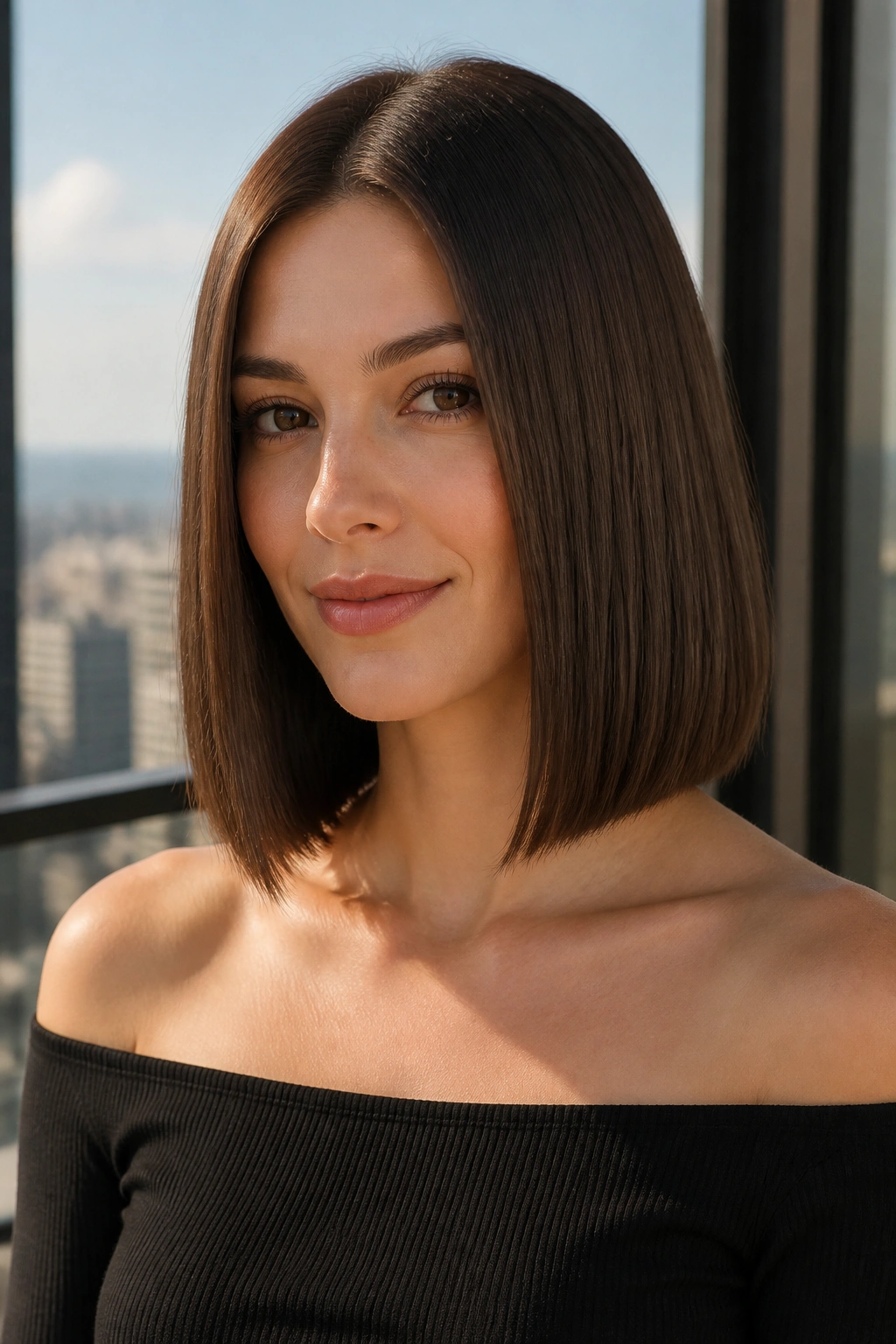
Shine is volume’s quiet cousin. On fine hair, a glossy finish makes the cut look denser because the surface reads as smoother, cleaner, and more intentional. A straight collarbone bob takes advantage of that. It gives you one long, unbroken line that feels rich instead of thin.
The best version starts with a precise cut and ends with careful smoothing. Work a heat protectant through damp hair, blow-dry with the nozzle pointed downward, and use a flat brush or paddle brush to keep the strands aligned. A flat iron can help, but one pass is enough. More than that and the hair starts looking pressed flat instead of polished.
Use a tiny amount of serum only on the very ends. That’s the part that tends to look dry first. If you put too much product near the roots, the cut loses the airy lift that makes the style useful in the first place.
This is a clean choice. Maybe almost severe, but in a good way. It suits anyone who likes hair that looks neat with minimal fuss and doesn’t mind a bit of discipline.
15. The Piecey Bob With Micro-Layers
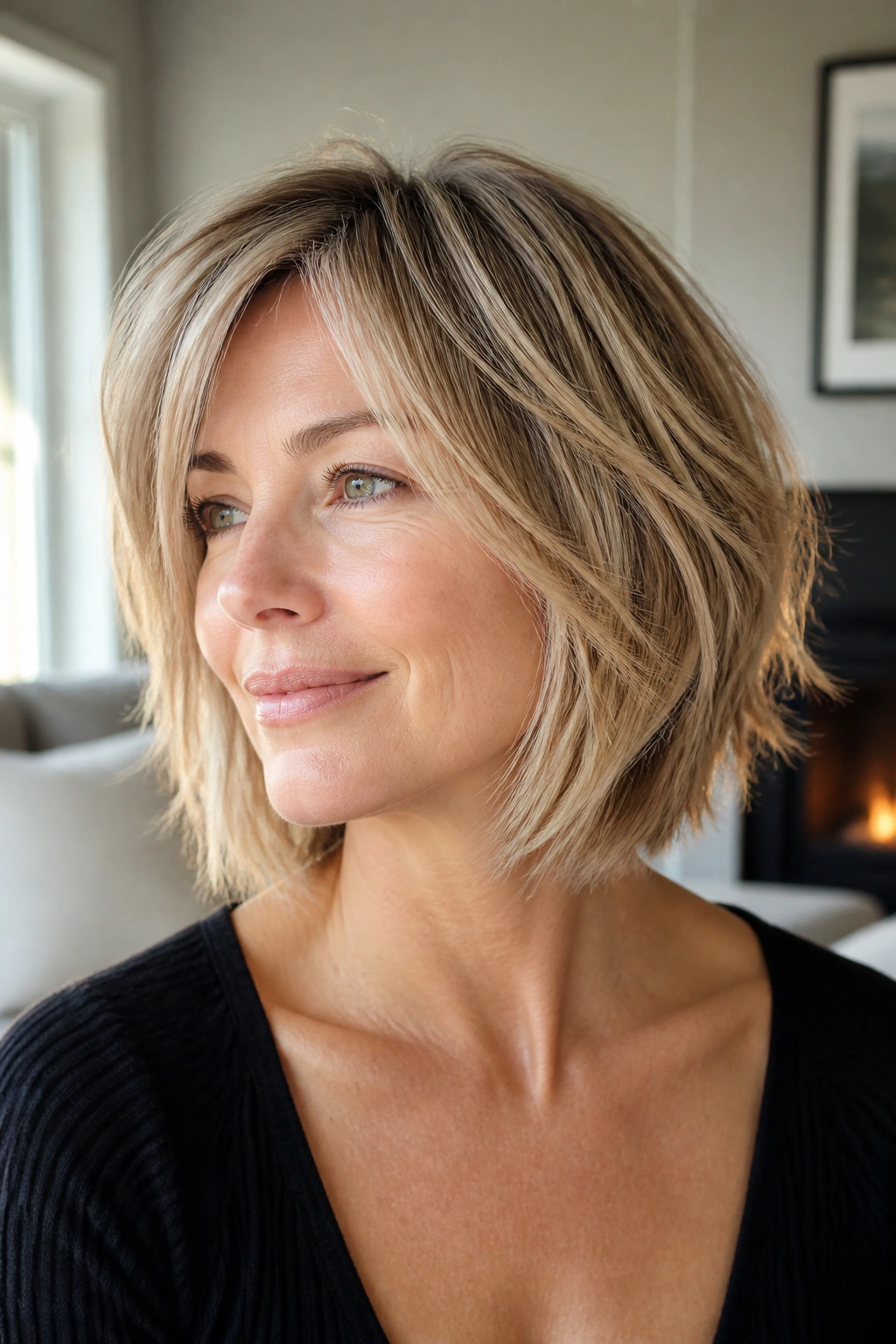
What do micro-layers actually do? They give fine hair movement without tearing open the shape. The layers are tiny, hidden, and placed with care, so the haircut still reads as a bob instead of a stack of broken pieces.
This cut is handy when the hair feels heavy at the bottom but loses volume the moment you over-layer it. The stylist removes just enough bulk to keep the ends from turning blunt and bulky, while leaving the silhouette intact. Think of it as support, not decoration.
Where They Belong
Micro-layers work best:
- around the lower back of the head,
- just under the occipital bone,
- and in a few soft pieces near the front.
That placement keeps the movement focused where it helps. Not every inch of hair needs texture. In fact, too much texture on fine hair can make the style look pieced apart before the day is over. Keep the layers tiny, and use a lightweight cream or lotion if you want separation.
I like this version for people who want a little modern edge but still need a haircut that survives humidity and lazy mornings.
16. The Tousled Bob With Bent Ends

Sometimes fine hair goes flat by noon no matter what you do. Bent ends help because they break the straight line just enough to make the cut feel fuller. The style is less about curl and more about direction. You’re giving the ends a little bend, not forcing them into ringlets.
A flat iron is often better than a curling iron here. Take 1-inch sections and alternate the direction of the bend so the finish looks loose. Leave the last half-inch to 1 inch slightly straighter if your hair is especially fine; that stops the ends from puffing into a frayed look. A soft mist of texture spray can hold it, but keep the spray far enough away that you don’t drench the hair.
- Start with dry hair and a heat protectant.
- Bend each section away from the face, then toward it.
- Shake the hair out with your fingers, not a brush.
- Finish with a light dry shampoo at the roots if they start to collapse.
This is the cut for people who want movement without the work of a full blowout. It looks relaxed, but it still has shape.
17. The Soft Graduation Bob for Thin Ends
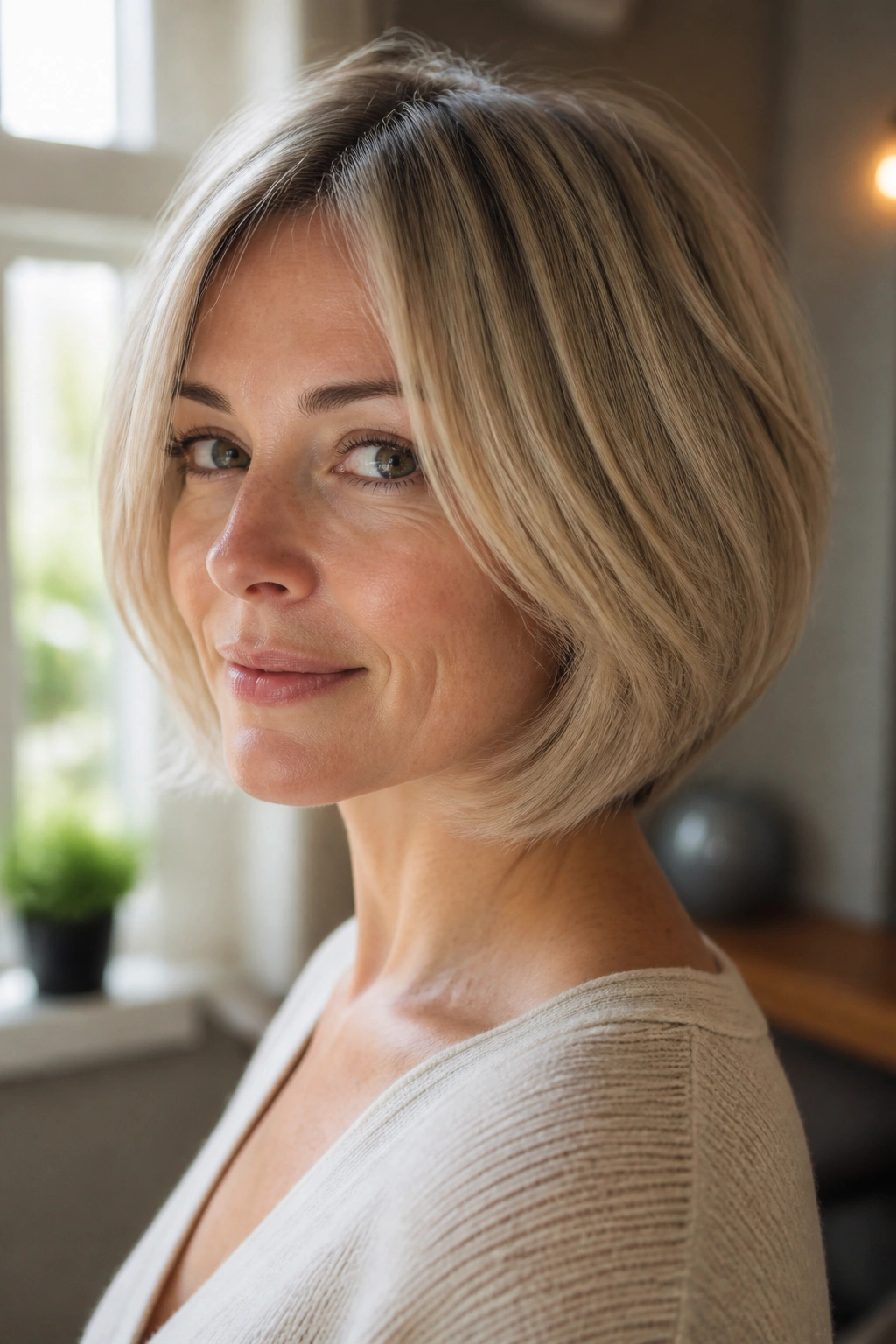
A soft graduation bob is one of the smarter choices when the ends of your hair look thin but the crown still needs lift. The back is built a little shorter underneath, so the top layers sit on a subtle shelf. That gives the hair support without creating a harsh stack.
The shape matters more than the label. A good graduation on fine hair should feel like a quiet slope, not a wedge. The back should support the top, and the front should still meet the shoulders or collarbone with enough length to keep the cut soft around the face. If the angle gets too steep, the haircut starts to look dated fast.
This style is useful for straight or slightly wavy hair that needs help staying off the neck. It can also make the hairline at the nape look cleaner, which is one of those tiny things that makes a haircut feel more finished than it does in the mirror at first glance. The difference shows up when the hair moves.
If you like structure but hate harsh lines, this one sits in a good place. It does a lot quietly.
18. The Minimal-Maintenance Bob With a Clean Perimeter

The clean-perimeter bob is for the person who wants the haircut to do the heavy lifting and the styling to stay light. No shredded ends. No overbuilt layers. No extra drama. Just a shoulder-skimming line that keeps its shape with a quick blow-dry and a trim when the ends start to lose their edge.
This is the one I’d hand to someone who says, “I want my hair to look better without thinking about it every morning.” Fine hair often looks better when the cut is allowed to be honest. A solid outline, a bit of softness at the front, and a length that brushes the collarbone can carry a lot more visual weight than a fussy shape ever will.
Ask for a blunt or softly beveled finish, keep the layers minimal, and let the hair settle where it wants. If you need a touch of movement, add it with styling, not with aggressive cutting. That keeps the haircut flexible. It also means the style stays readable after a day of living in it, which is half the battle with fine hair.
Sometimes the smartest bob is the one that stops trying so hard.
