



A short haircut can look sharp one day and oddly flat the next, and the difference usually sits right in the front. A few inches of well-placed hair around the eyes, cheekbones, and jaw can change the whole mood of the cut.
That is why face framing haircuts for short hair are such a smart move. They do more than soften a haircut. They give it direction. They pull the eye where you want it to go, and they stop short styles from reading as boxy, severe, or too grown-out.
The tricky part is that “face-framing” is not one thing. On one person, it means a wispy curtain fringe. On another, it means a longer front angle that skims the jaw. On thicker hair, it may mean removing bulk from the temples. On finer hair, it may mean keeping the perimeter clean so the front pieces do the talking.
So the best cuts here are the ones that respect your texture, your face shape, and the amount of styling you’re willing to do before coffee. That’s where the good stuff lives.
1. Soft Curtain Pixie
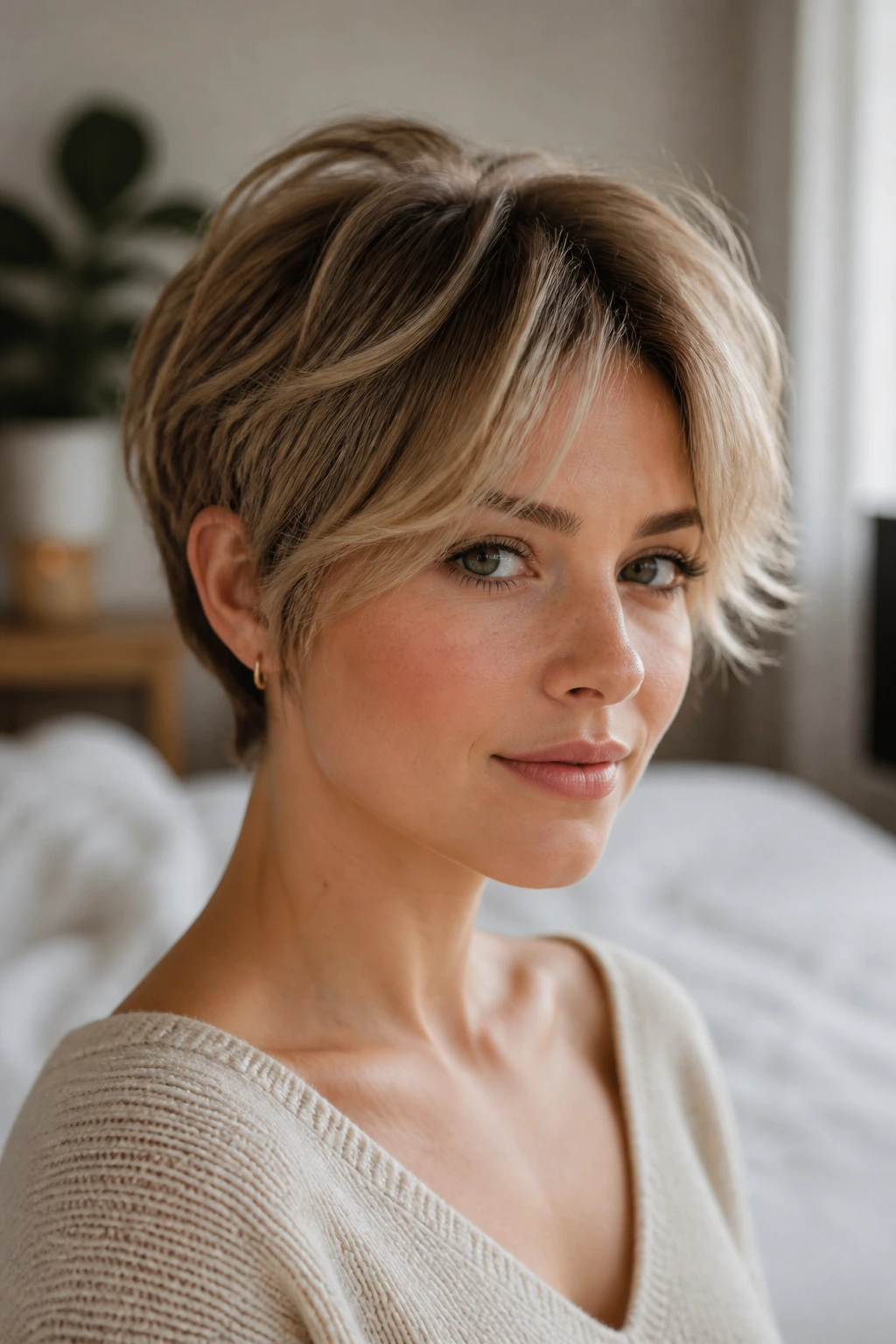
A soft curtain pixie gives you the easy shape of a cropped cut without pinning everything back from the face. The front stays long enough to split around the eyes or cheekbones, which is exactly where a short cut can feel too bare. I like this one because it makes a pixie look edited, not hard.
What to Ask Your Stylist For
Ask for longer top pieces, tapered sides, and a front section that can fall in two directions. The shortest parts at the sides can sit close to the head, but the fringe area should keep enough length to bend. Point cutting at the front keeps it from looking blunt.
- Top length: about 2.5 to 4 inches, depending on your hair density
- Front length: long enough to touch the brow or upper cheekbone
- Sides: snug, but not shaved unless you want a sharper edge
The styling is mercifully simple. A dab of lightweight cream, a quick blow-dry with fingers or a small round brush, and a tiny push away from the face is usually enough. If your hair wants to stand up at the crown, this cut can handle it. If it lies flat, the longer front pieces give it shape without needing a full styling session.
One small warning: if the fringe is cut too short, the whole cut loses its softness. Keep the front generous. That’s the point.
2. Jaw-Grazing Bob with Cheekbone Layers
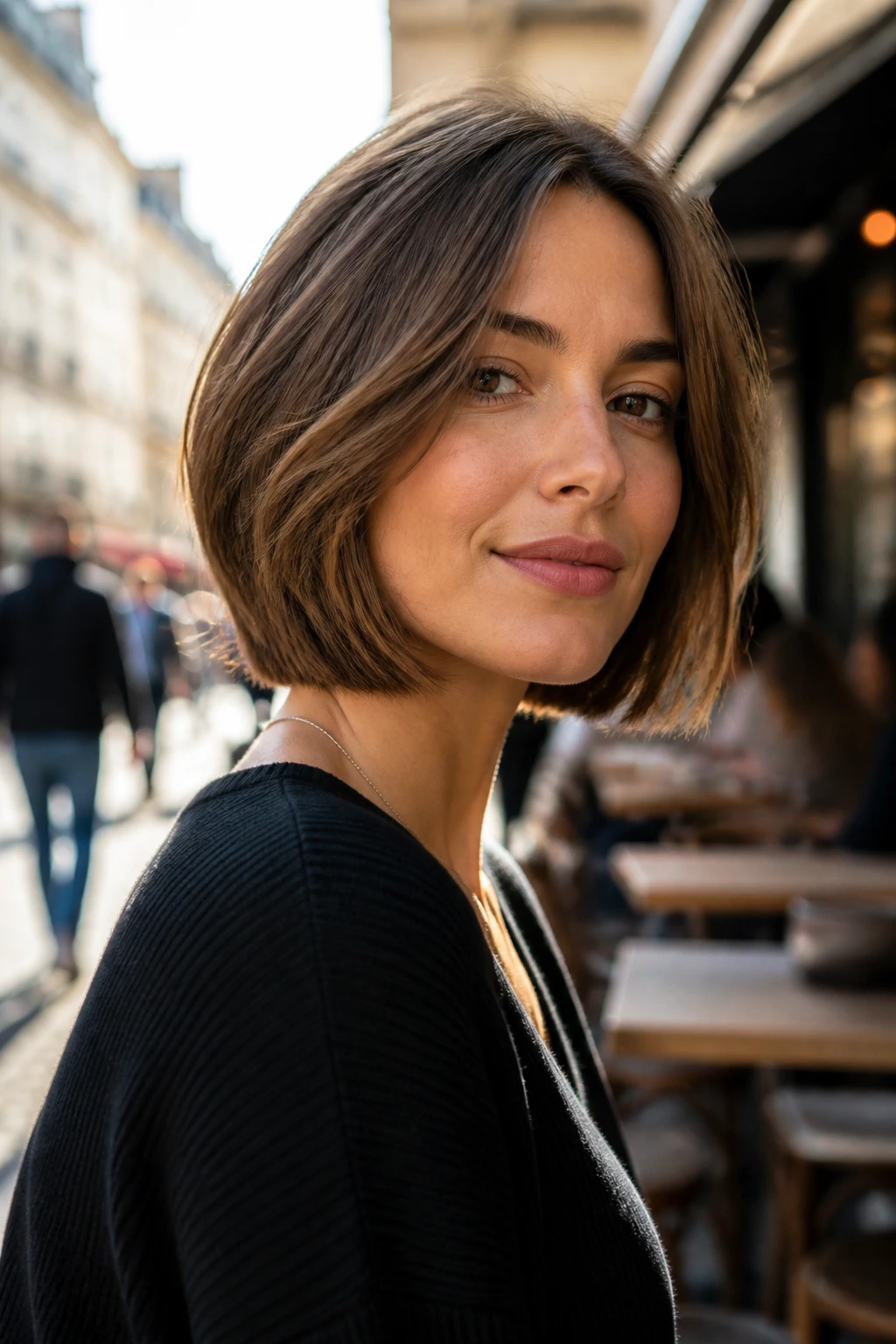
This is the cleanest way to frame a face with short hair. A jaw-grazing bob hits that sweet spot where the line feels crisp, but the front pieces still wrap around the face instead of sitting like a box. The cheekbone layers help the hair curve inward, which can make the eyes and cheekbones look more lifted.
The length matters here. If the front ends stop right at the jaw, the cut can feel blunt in a good way. If it sits a little below the jaw, it softens stronger features and works especially well on square or round faces. Straight hair shows the line clearly, while loose waves make the front fall in a more relaxed shape.
This cut is one of the few that looks polished with almost no drama. A side part or a center part both work, which is handy because you are not locked into one look. And if you wear glasses, the framing around the temples can make the whole style feel intentional instead of crowded.
I’d ask for the shortest front piece to sit at the jaw or just under it. That one detail keeps the cut from drifting into “too long to be short, too short to be a bob” territory.
3. Bixie with Wispy Fringe
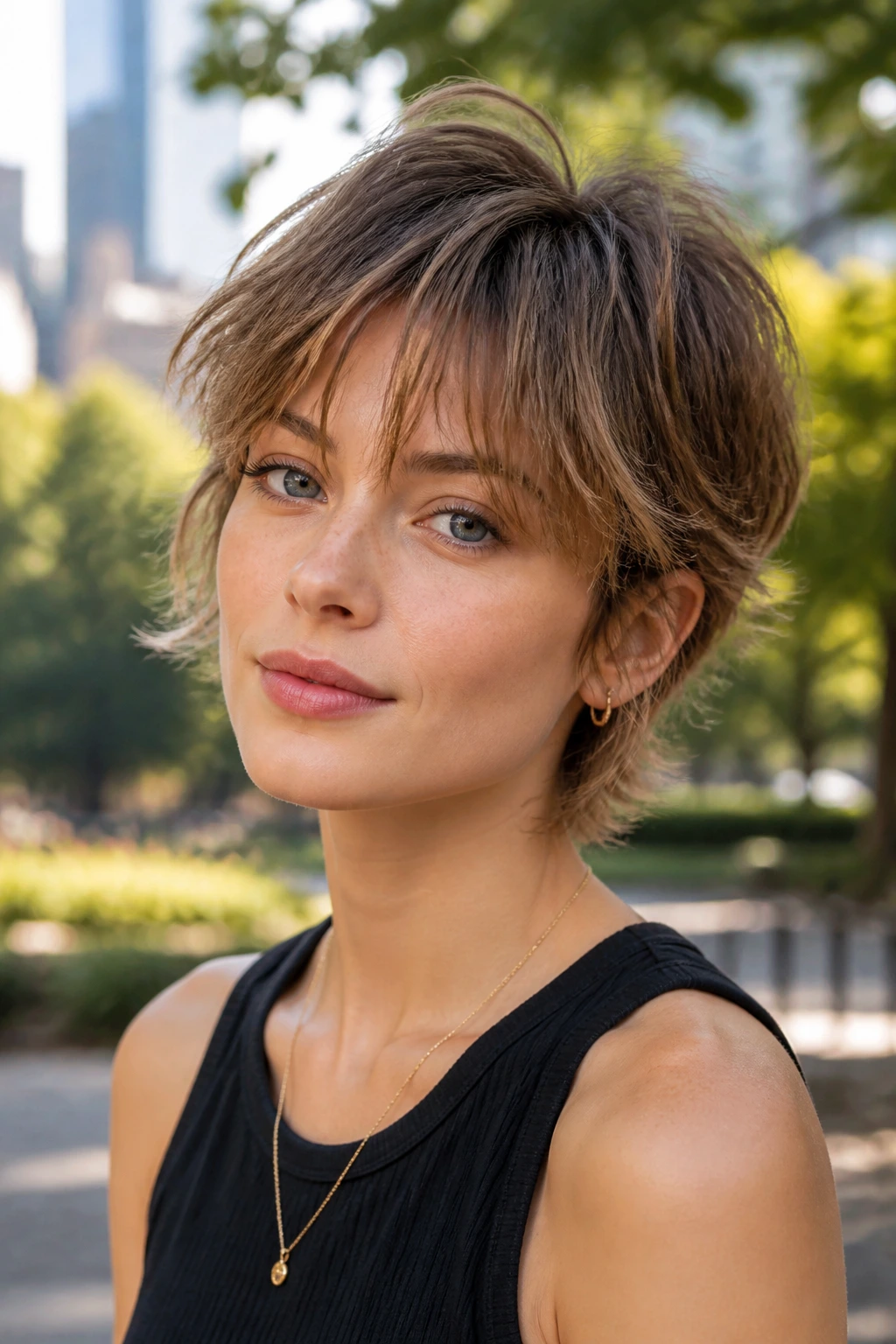
Why does the bixie keep hanging around? Because it steals the best parts of two cuts. You get the ease of a pixie, but the front still has enough length to soften the face, and that matters more than people think.
Why It Works
The bixie sits somewhere between a bob and a pixie, which means the top usually has more movement than a classic crop. The fringe can land at the brow, split at the center, or fall in soft pieces over the forehead. That makes it a good option if you want the cut to feel light instead of severe.
It also works on hair that is a little stubborn. Fine hair gets lift from the shorter shape. Thick hair gets relief from the internal removal of bulk. Wavy hair gets to keep its bend without turning into a helmet.
How to Wear It
- Use a pea-sized amount of styling cream on damp hair.
- Blow-dry the fringe forward first, then sweep it apart with your fingers.
- Keep the nape tapered so the front stays the focal point.
- Ask for wispy, broken ends, not sharp chunks.
The whole point is movement. If the edges are too neat, the bixie loses its charm. If the front is too heavy, it starts to feel like a short bob with no breath in it.
4. French Bob with Air-Dry Bend
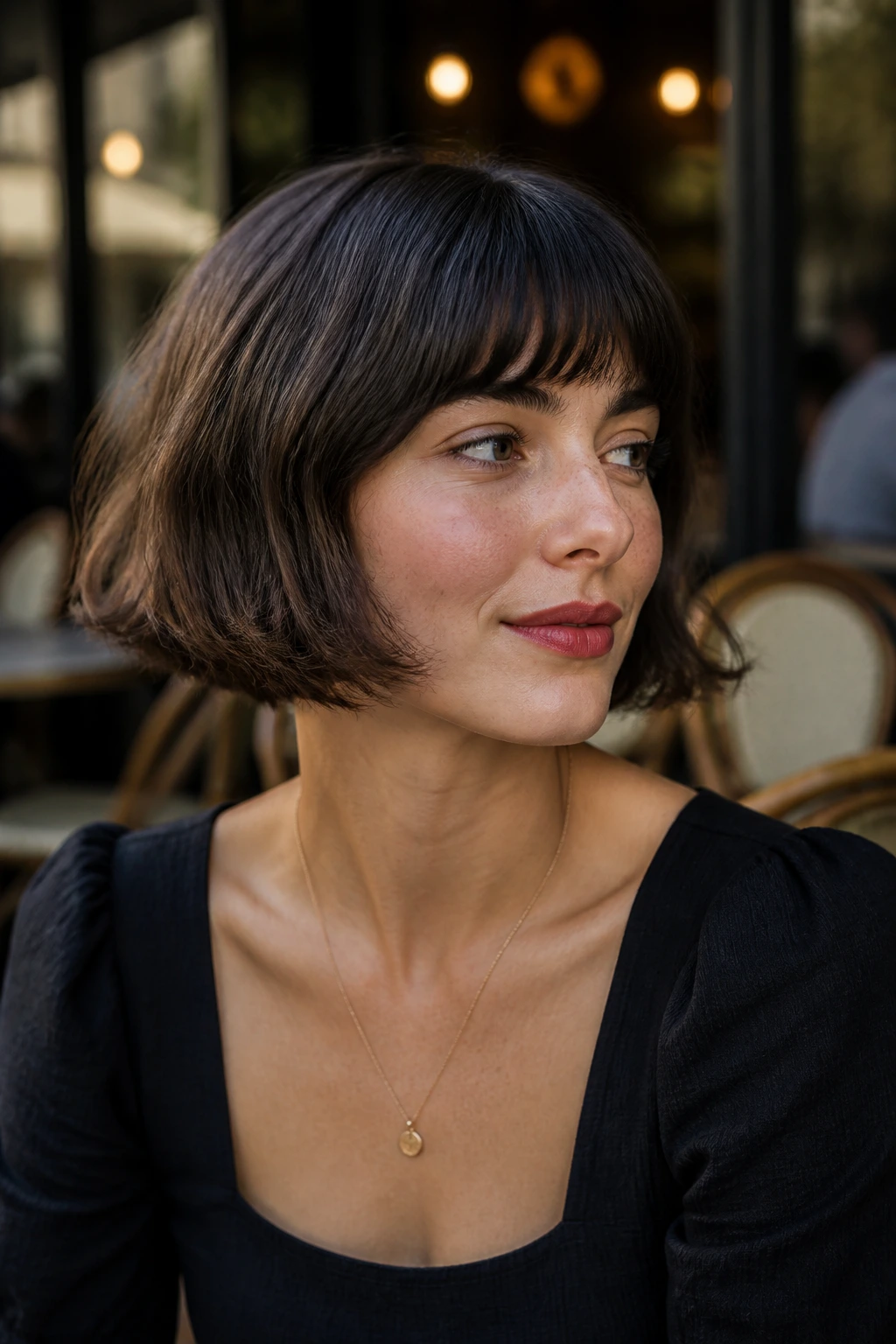
Picture this: you wash your hair, scrunch in a little cream, and let it dry while you get dressed. The front falls near the brows, the ends tuck in at the jaw, and the whole cut looks like it knew what to do before you touched it. That is the French bob at its best.
It’s short, but not fussy. The face framing comes from the rounded shape and the soft fringe, which usually sits around eyebrow level or just above it. The edges should bend inward a touch, never splay out. A little undercurve at the ends makes a big difference.
This cut loves natural wave. It can work on straight hair too, but then you usually need a quick blow-dry with a round brush to get that gentle inward movement. The good news is that it does not need perfect styling. A few bends are enough.
- Best for: wavy, slightly textured hair
- Watch out for: very tight curls unless you want a rounder finish
- Ask for: a soft perimeter, not a hard shelf line
Messy is fine here. Flat is not. The face frame should feel like a soft border, not a helmet visor.
5. Tapered Crop with Side-Swept Fringe
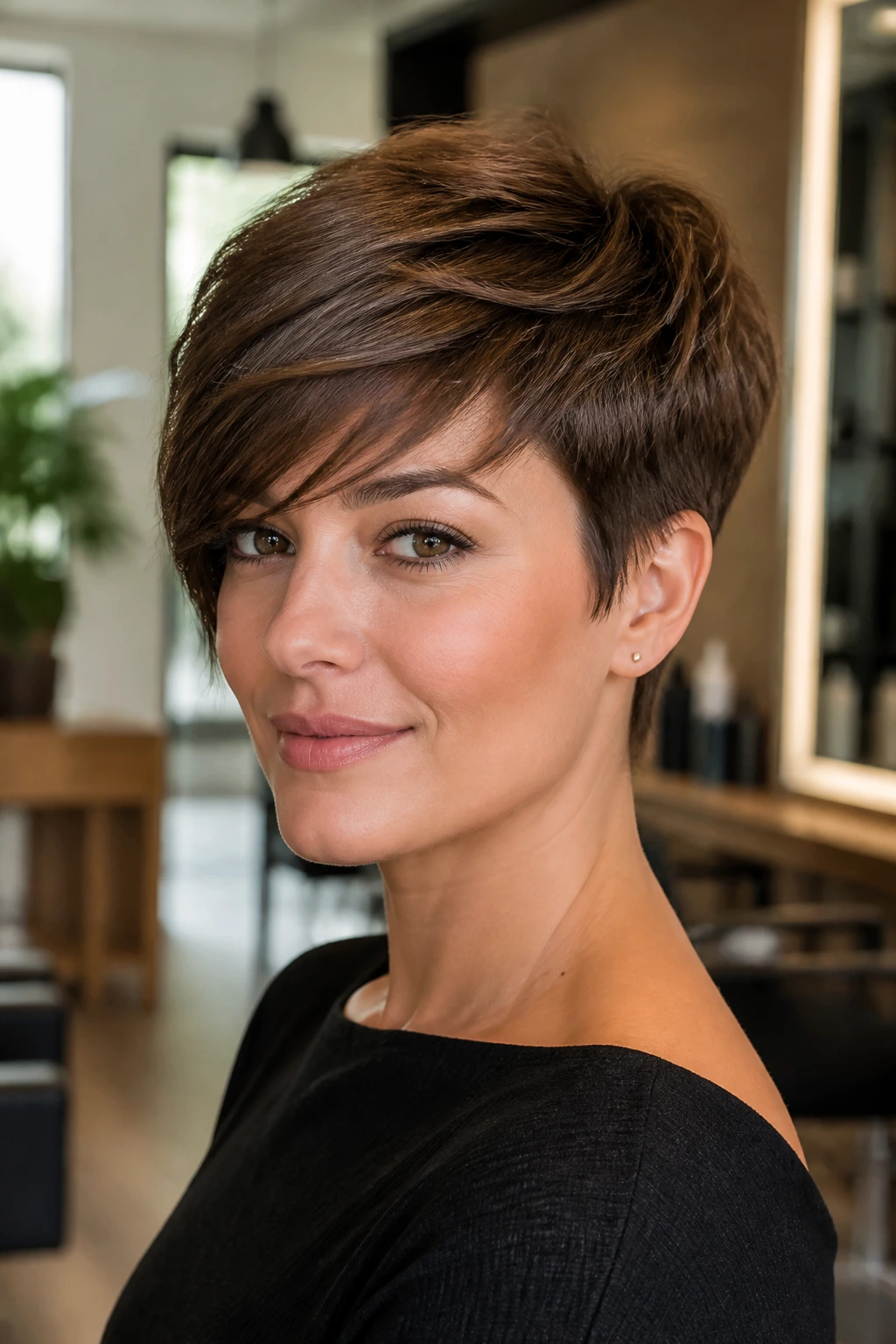
A tapered crop can look severe if the front is cut too short. Give it a side-swept fringe, though, and the whole thing changes. Suddenly the cut has motion, and the eye has somewhere to go.
The shape is simple: close at the nape and temples, fuller on top, then swept across the forehead or toward one cheek. That diagonal line is the magic. It breaks up the roundness of the head and gives the face a longer look without adding bulk. If your hair is thick, this is one of the smartest short cuts you can ask for.
It also plays nicely with glasses and strong brows. The fringe can sit over one side of the forehead without crowding the face. That means you still get some softness near the eyes, but the crop keeps its clean outline.
I like this cut most on people who want low-maintenance structure. You do not need to curl the whole head or fuss with a flat iron. A small amount of paste or pomade at the roots, then a finger sweep across the front, is usually enough. The neckline stays neat, the top stays a little piecey, and the face gets its frame.
6. Chin-Length Shag with Piecey Layers
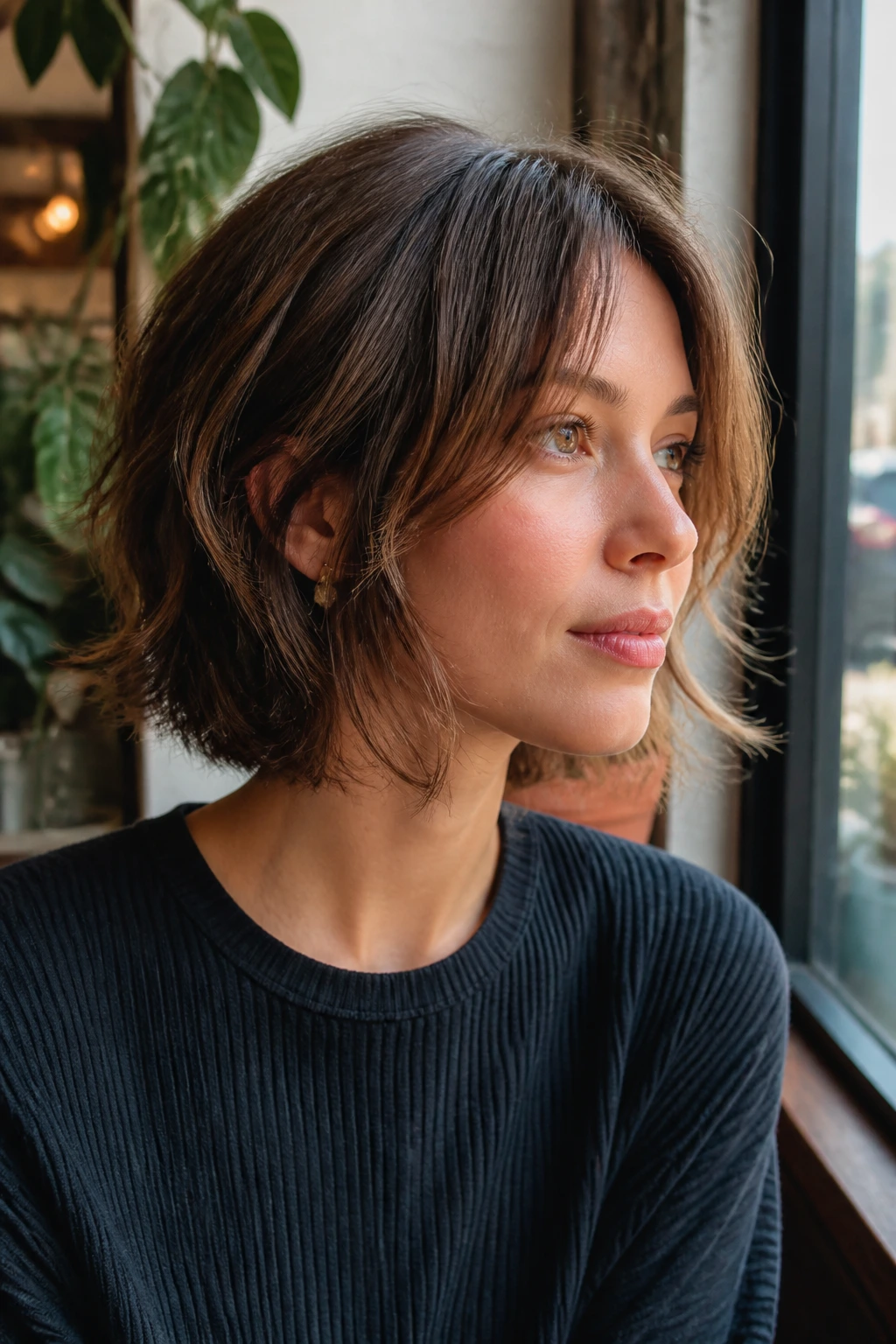
A shag at chin length is a different animal from a blunt bob. The blunt bob gives you a line. The shag gives you air. That’s the whole difference, and it matters a lot when you want the haircut to frame your face instead of sit around it.
The layers start around the cheekbone or lip area, then feather down toward the jaw. The end result is movement around the face without making the haircut look chopped up. If your hair has any bend at all, this cut can use it. If your hair is stick-straight, a rough blow-dry with a diffuser or round brush helps wake it up.
What to Look For
- Layers that begin above the jaw, not below it
- A perimeter that stays soft and not too heavy
- Pieces around the front that can be tucked behind the ear or left loose
- Enough texture to keep the ends from sitting in one solid block
The shag works because it does not try to hide texture. It uses it. And that makes it one of the easiest face framing haircuts for short hair if you like a little mess and do not want to rebuild the style every morning.
7. Micro Bob with Long Face Frame
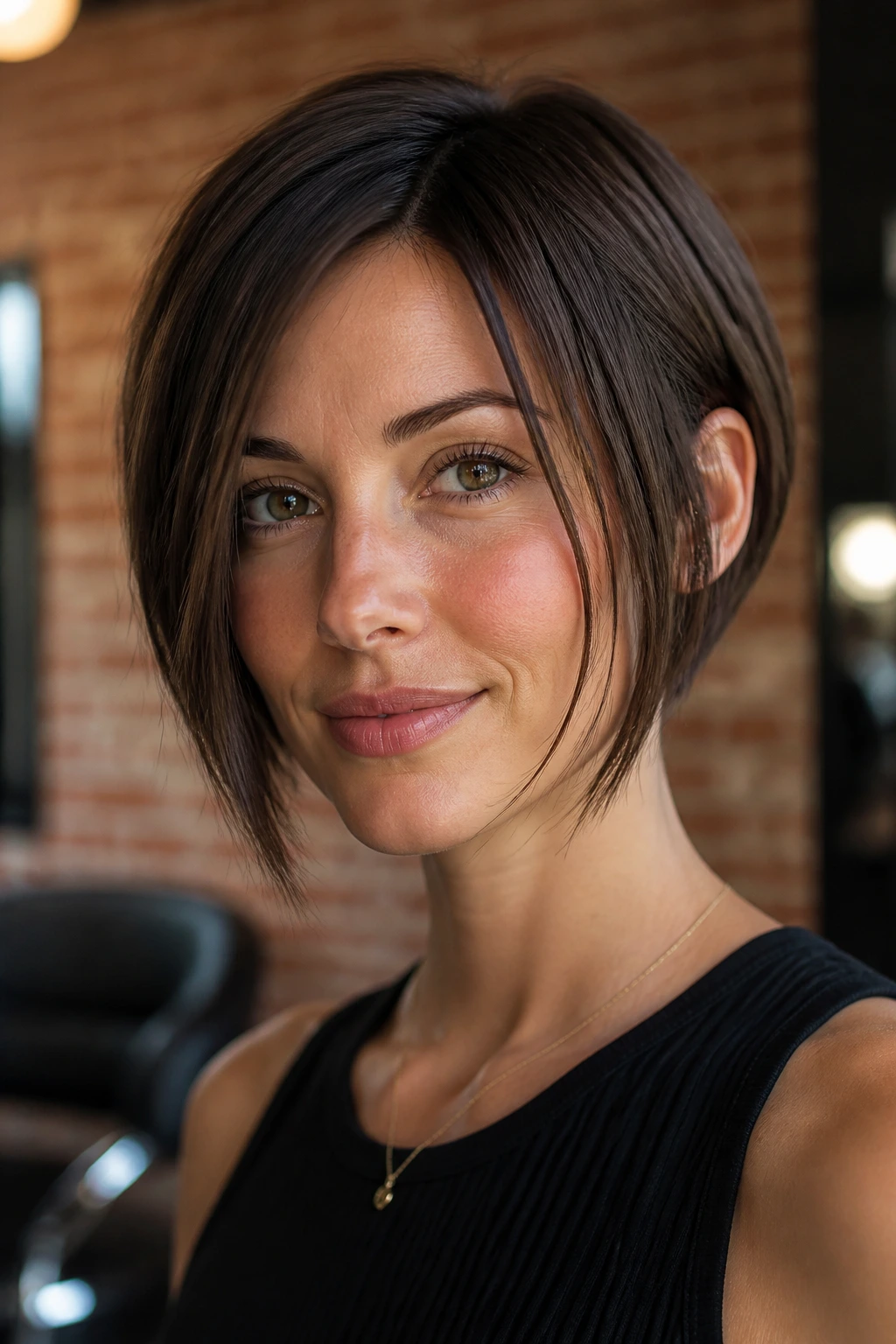
Can a very short bob still feel soft? Absolutely. It just needs one thing: long front pieces that stay a little longer than the back and side sections. Without that, a micro bob can go from chic to severe fast.
The Trick With Very Short Lengths
The back can sit close to the nape, even above it, but the front should keep enough length to skim the cheekbone or the mouth corner. That small difference creates a visible frame. It also keeps the cut from looking like one hard shape stamped onto the head.
You do not want the front to be identical on both sides unless you are going for a very graphic look. A little asymmetry helps. Even a half-inch difference at the front can make the cut feel softer.
Who It Flatters Most
- Faces that like clean lines
- Fine hair that needs the illusion of fullness
- People who want a short cut but hate the feel of a full pixie
The styling is usually quick. A side part, a bit of smoothing cream, and a flat brush are enough. If your hair is puffy, ask for the front to be beveled slightly so it curves inward rather than sitting blunt against the jaw. That one adjustment saves a lot of trouble.
8. Rounded Bob with Internal Layers
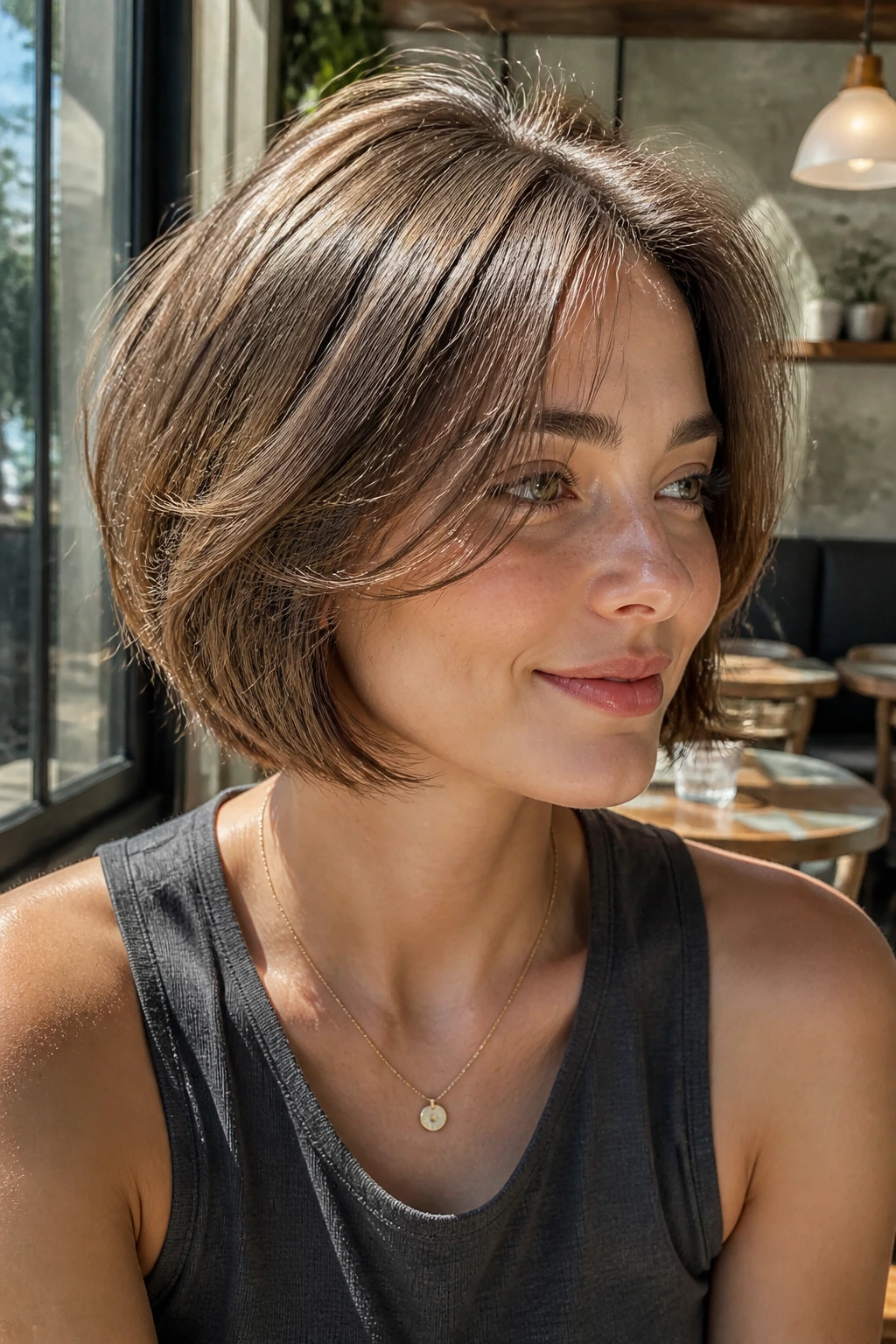
This is the sneaky option. From the outside, it looks like a soft, rounded bob. Underneath, though, the stylist has removed weight so the shape bends around the face instead of swelling out at the sides. That internal layering is what makes the cut work on dense hair.
The perimeter stays intact, which is good if you want the bob to look full. The inside gets lighter, which keeps the front from puffing out near the cheeks. On curly or coily textures, this can be a very good thing, because the shape stays controlled without turning flat.
Key Details
- The outer line should stay smooth and curved
- Internal layers should begin where the hair gets bulky, often near the temples or under the occipital ridge
- The front should graze the jaw rather than stop above it
- A round brush can exaggerate the curve, but it is not required
This cut works best when you want your hair to look polished without looking stiff. It is not flashy. That is part of the appeal. The face frame comes from shape control, not from obvious layers hanging in the front.
9. Asymmetrical Bob with Deep Side Part
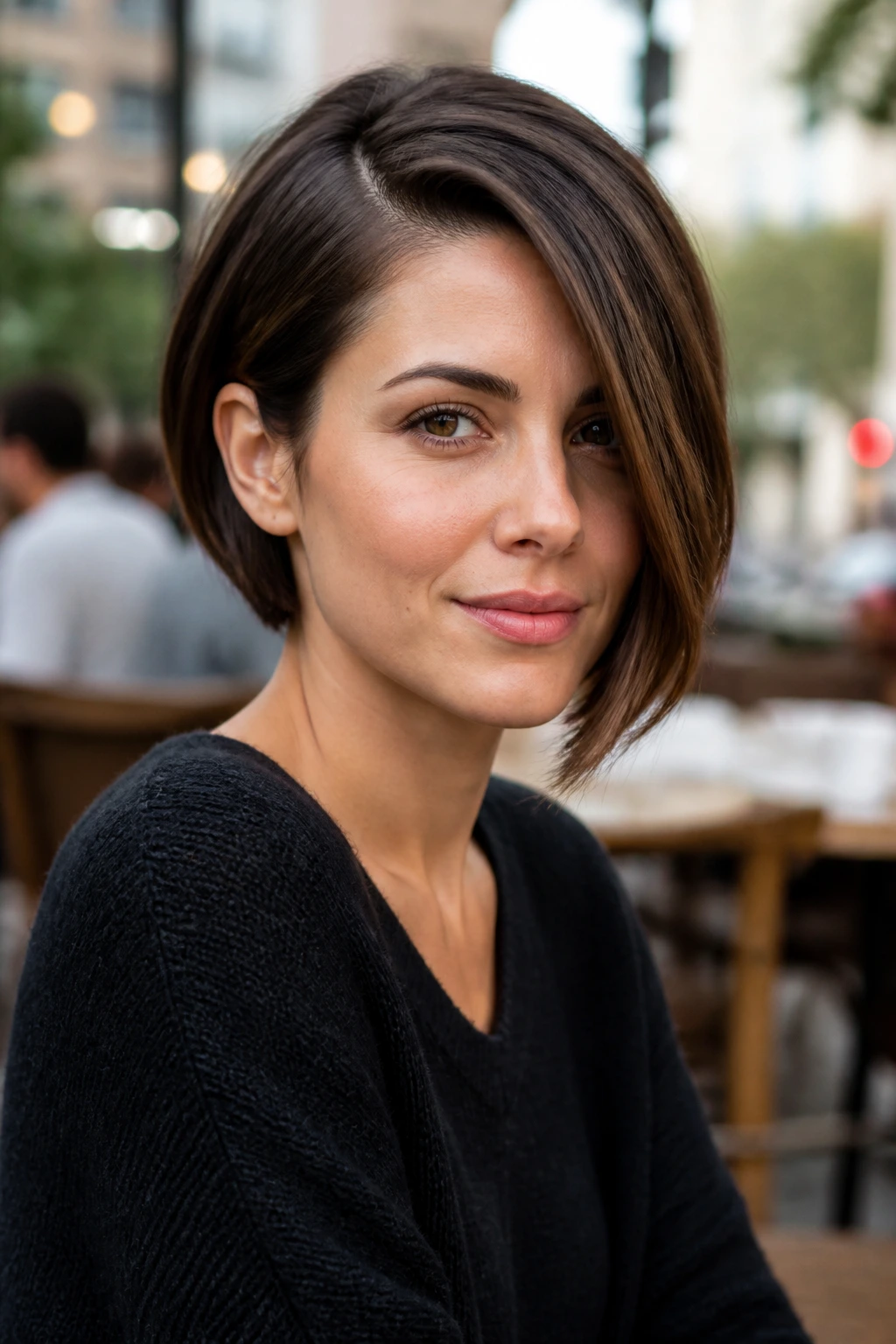
If you want the face to look longer and a little sharper, this one delivers. The asymmetrical bob uses a deeper side part and a visible front angle to create a diagonal line across the face. That diagonal is doing a lot of work. It breaks up width, lifts one side, and gives the haircut some attitude.
The shorter side can sit near the jaw while the longer side drops a bit lower, often toward the chin or just below it. That difference does not need to be extreme. Even an inch or two can change the whole feel. Too much, and the cut starts to look costume-like. Just enough, and it reads as deliberate.
It flatters round and heart-shaped faces especially well because the side part and angled front pull the eye downward. Straight hair shows the geometry most clearly, but waves can soften it in a nice way.
One caveat: this cut needs a little restyling after sleep. The part can drift, and the angle can collapse if you don’t give it a quick comb-through. If you hate touching your hair in the morning, choose a softer bob instead. If you like a bit of edge, this one has real presence.
10. Layered Wolf Cut for Short Hair
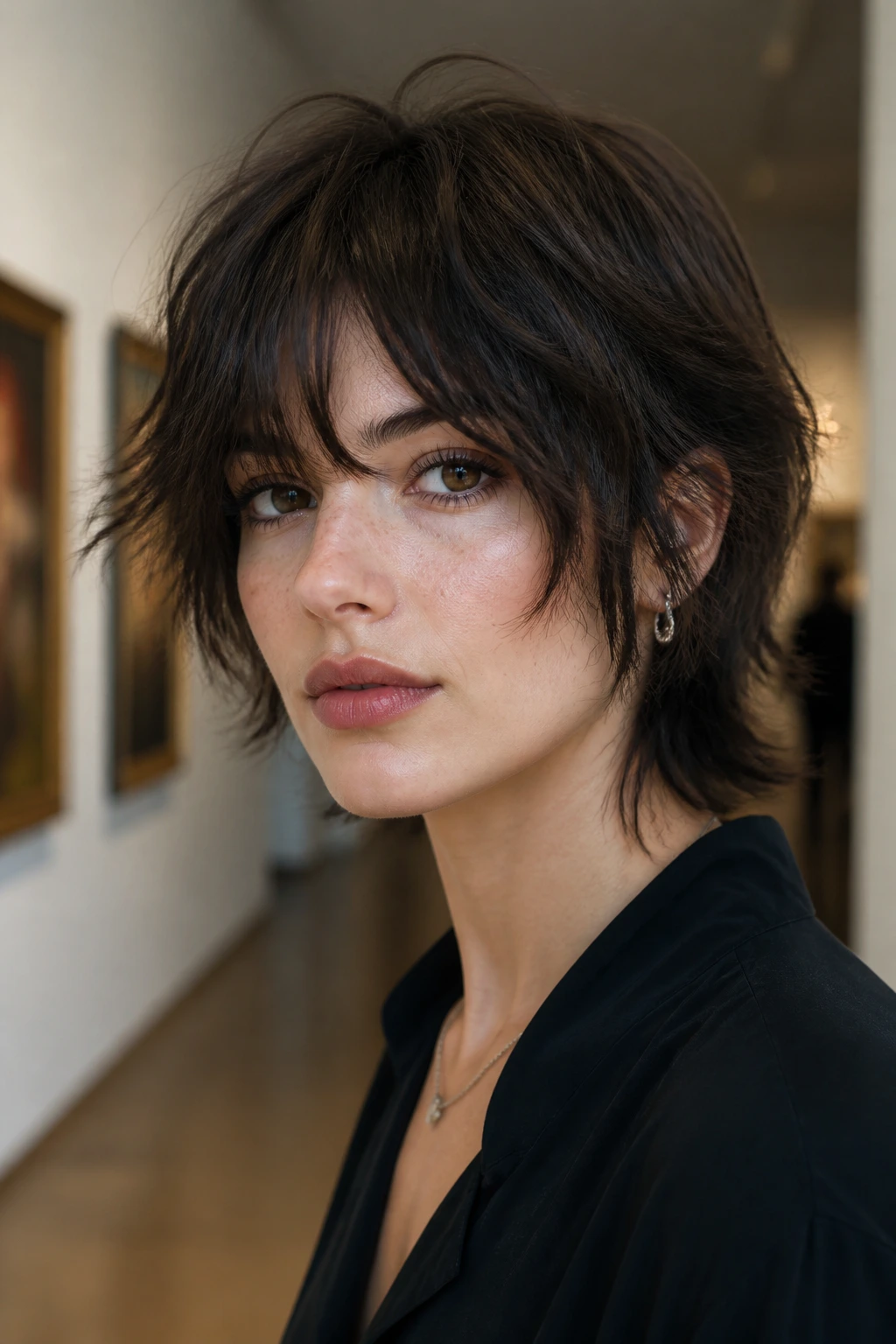
Can a wolf cut work when the hair is short? Yes, but only if it is tailored. A short wolf cut should feel airy and face-focused, not overbuilt. The crown gets lift, the sides get movement, and the front pieces stay soft enough to frame the eyes and cheeks.
What Makes It Different
The short version is less about wild length and more about uneven texture. The layers are shorter at the crown, then drop into longer pieces around the front. That creates that slightly undone shape people like, but it does not have to look messy in a sloppy way. Good cutting matters here. A lot.
If the front is cut too short, the cut loses the face frame and turns all texture, no shape. If the front is too long, the wolf cut starts to flatten and feels like a shag that missed the point. The sweet spot usually sits around the cheekbone or just below it.
How to Style It
- Use a light mousse at the roots for lift.
- Diffuse until the roots are about 80% dry.
- Twist a few front sections with your fingers while they dry.
- Finish with a small amount of texture spray on the ends.
This is a good cut for people who like hair that moves. Not people who want perfect symmetry. Different thing.
11. Classic Pixie with Longer Top and Face Sweep
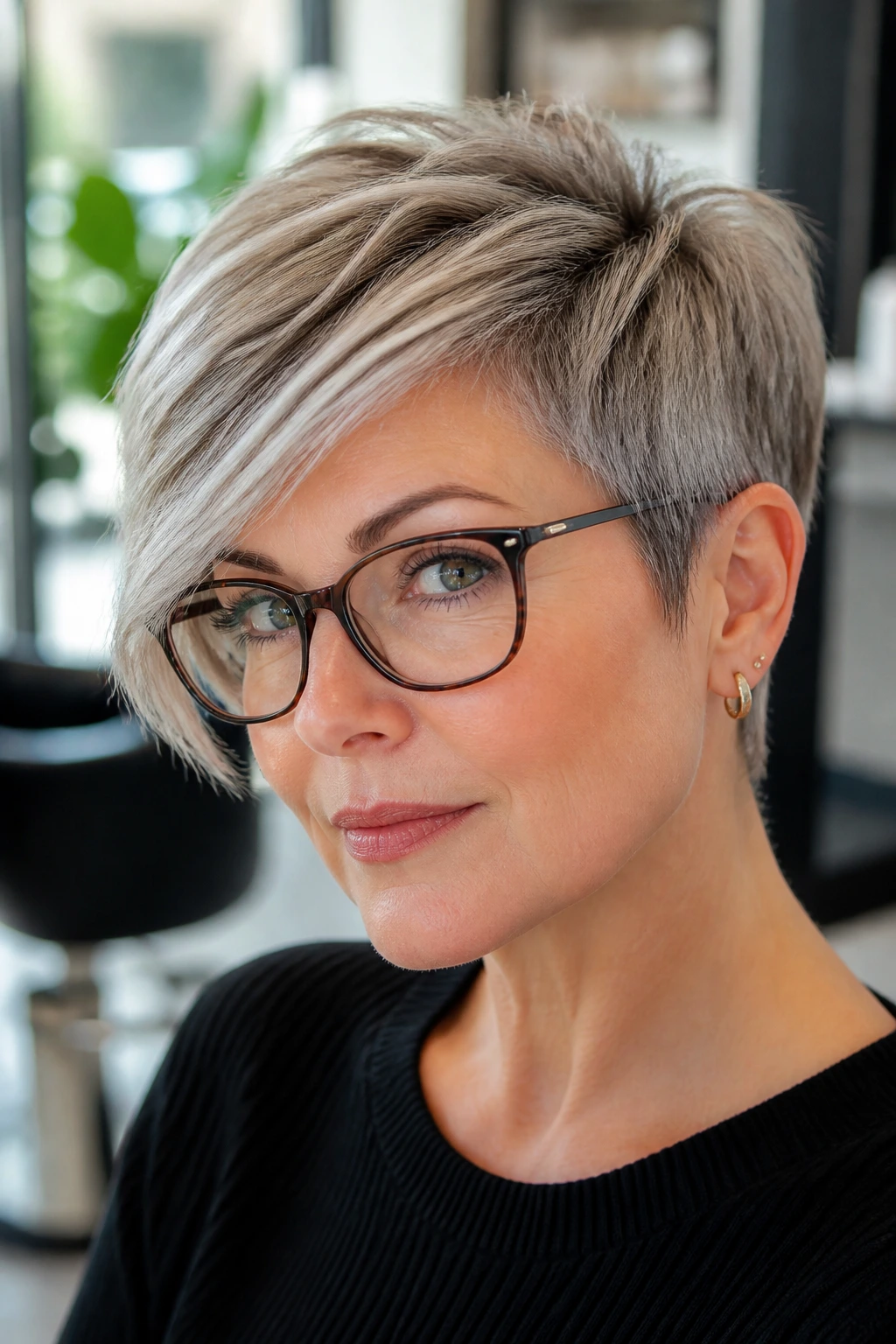
A classic pixie can still frame the face if the top is kept long enough to sweep across the forehead. That little bit of length is the difference between “cropped” and “styled.” It gives you a place to shape the hair, and it lets the cut respond to your features instead of sitting on top of them.
I like this version for anyone who wears glasses. The longer top and soft front keep the face from looking too open, while the short sides free up the temples and ears. Earrings can show. Brows can show. You get a lot of face back, which is nice when the cut is well balanced.
A Few Salon Notes
- Keep the top around 3 to 5 inches
- Ask for tapered sides, not a hard fade unless you want that look
- Leave enough length at the front to brush forward or sideways
- Soften the sideburn area so the haircut doesn’t feel abrupt
The best thing about this pixie is how flexible it is. Brush it up for lift. Sweep it forward for softness. Push it to one side when you want a little drama. The front pieces are doing the framing, but they are also doing the blending, and that keeps the cut from feeling too exposed.
12. Short Mullet with Soft Temples
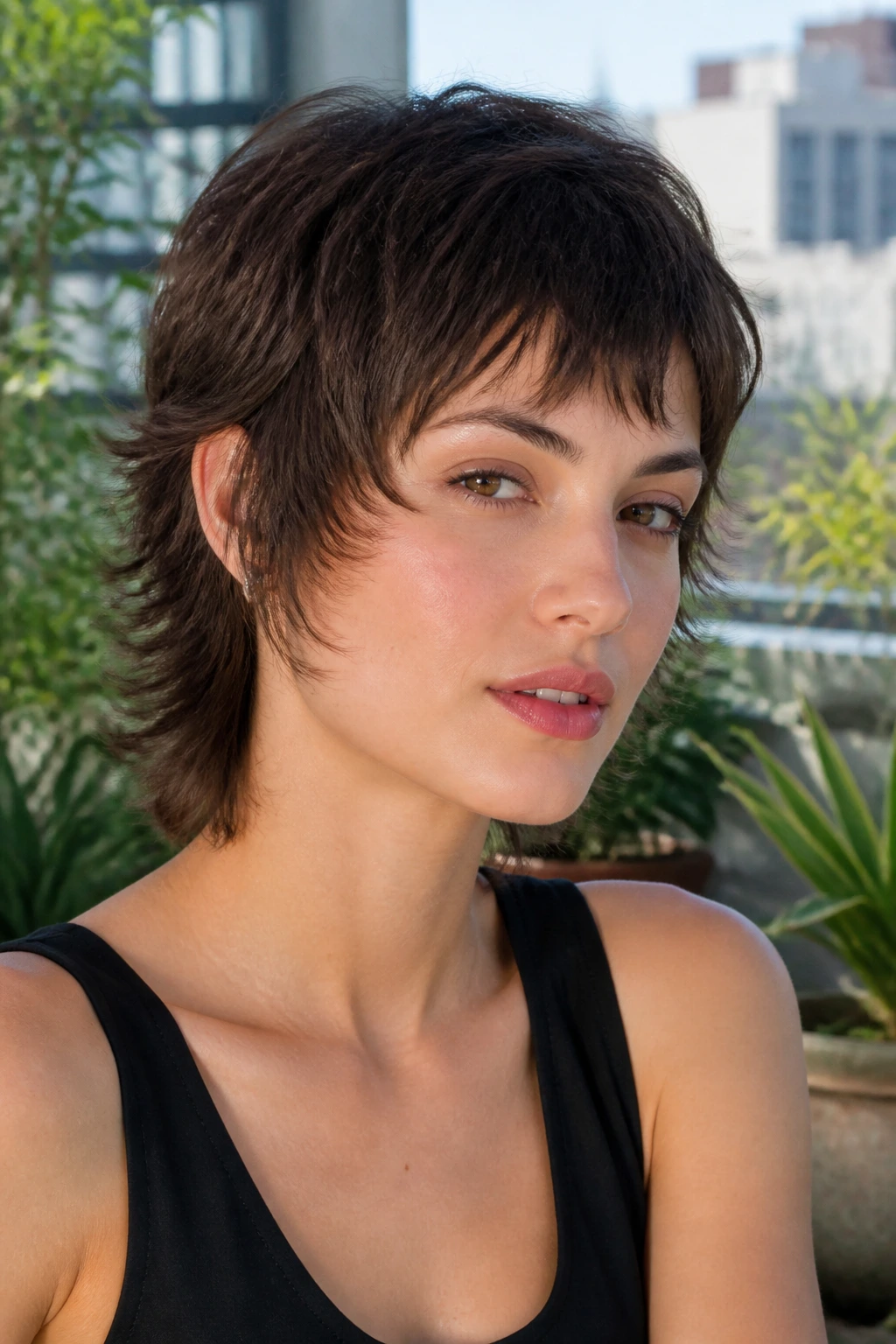
A short mullet sounds bold because it is bold, but the modern version is a lot more wearable than people expect. The key is softness around the temples and a front that still touches the face. Without those pieces, the cut can feel harsh. With them, it has shape and a little swing.
This is the closest short haircut on this list to a fashion cut. The crown can stay lifted, the back can be tapered and slightly longer, and the front can fall in narrow, face-framing sections. It works best when the haircut is cut with intention, not just left to grow into itself.
Compared with a wolf cut, the short mullet usually looks more deliberate. There is a bit less fluff, a bit more contrast. I like it on straight or wavy hair that can hold a piecey finish. Curly hair can wear it too, but the front framing has to be left long enough to balance the shape.
If you want something that feels current without being precious, this is a strong option. The short mullet can be surprisingly flattering around the jaw and neck, especially when the temples are cleaned up and the front pieces are kept soft.
13. Blunt Bob with Curved Face Frame
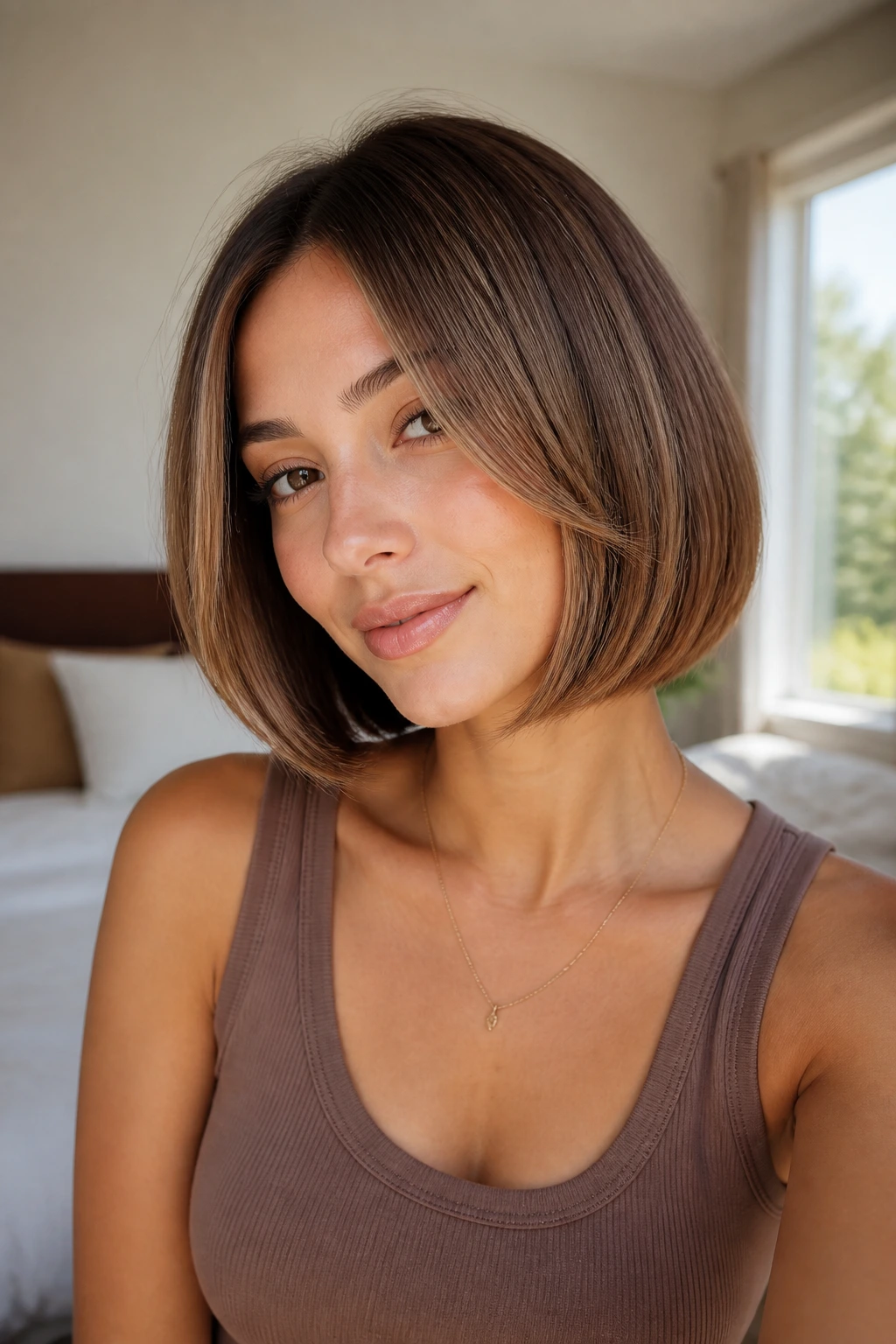
A blunt bob does not have to be hard. People assume it does, and that is mostly because they have seen versions cut too straight at the front. Add a gentle curve near the face, though, and the whole thing changes.
The perimeter still looks clean, which is why this cut is such a favorite for fine hair. The blunt edge gives the illusion of thickness. The curved front keeps it from feeling boxy. Usually the longest pieces sit near the jaw or just under it, then tuck inward by a fraction. That tiny inward bend is doing more work than it looks like.
This cut is a good match for straight hair, but it also behaves well with a soft blowout. A round brush, medium heat, and a pass that turns the ends slightly under is enough. You do not want a giant curl. You want a controlled bend.
One sentence here, because it matters: the face frame should be subtle, not obvious.
If the front pieces are too long or too layered, the bluntness disappears and so does the whole point of the cut. Keep the line clean. Let the front soften it.
14. Graduated Bob with Beveled Front
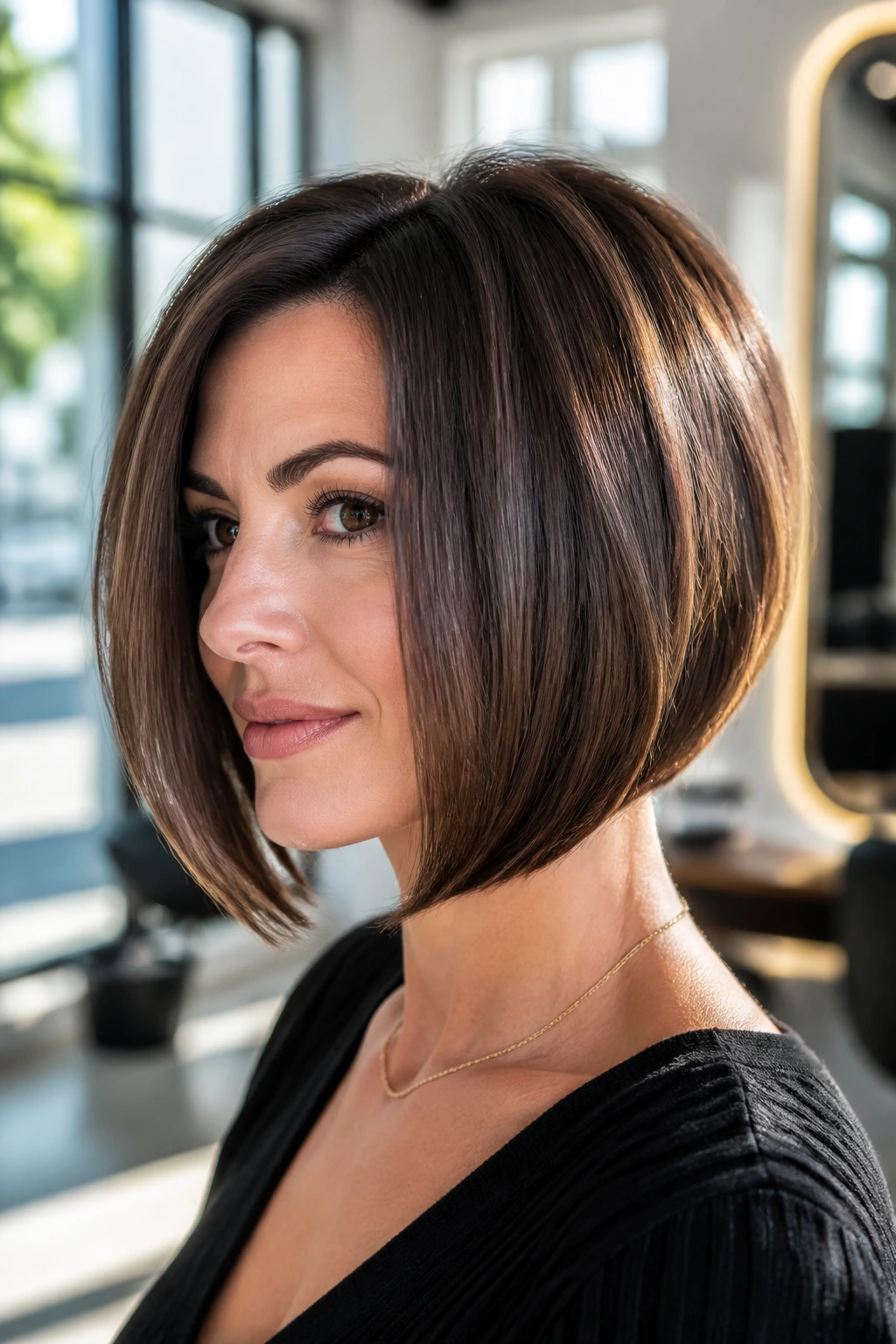
A graduated bob is all about shape. The back is shorter and stacked, the front is longer, and the line rises cleanly toward the face. That built-in angle gives you an instant frame, especially if the front is beveled instead of left flat.
How to Keep It from Looking Stiff
The biggest mistake with this cut is overbuilding the stack in the back. When that happens, the style can look puffy or dated. A softer graduation works better. You want lift, not a shelf.
A beveled front helps because the ends curve inward and follow the jaw. That keeps the cut from feeling square. On thick hair, this is useful because the front can control bulk. On fine hair, it can create a fuller edge without taking away softness.
- Ask for the back to be lightly stacked, not sharply stacked
- Keep the front slightly longer at the jaw or chin
- Use a round brush or flat iron bend to finish the ends
- Avoid too much texturizing near the front, which can weaken the line
This is one of those cuts that looks expensive when it is cut well. When it is not, the shape goes weird fast. So the geometry matters. A lot.
15. Shattered Bob with Bottleneck Bangs
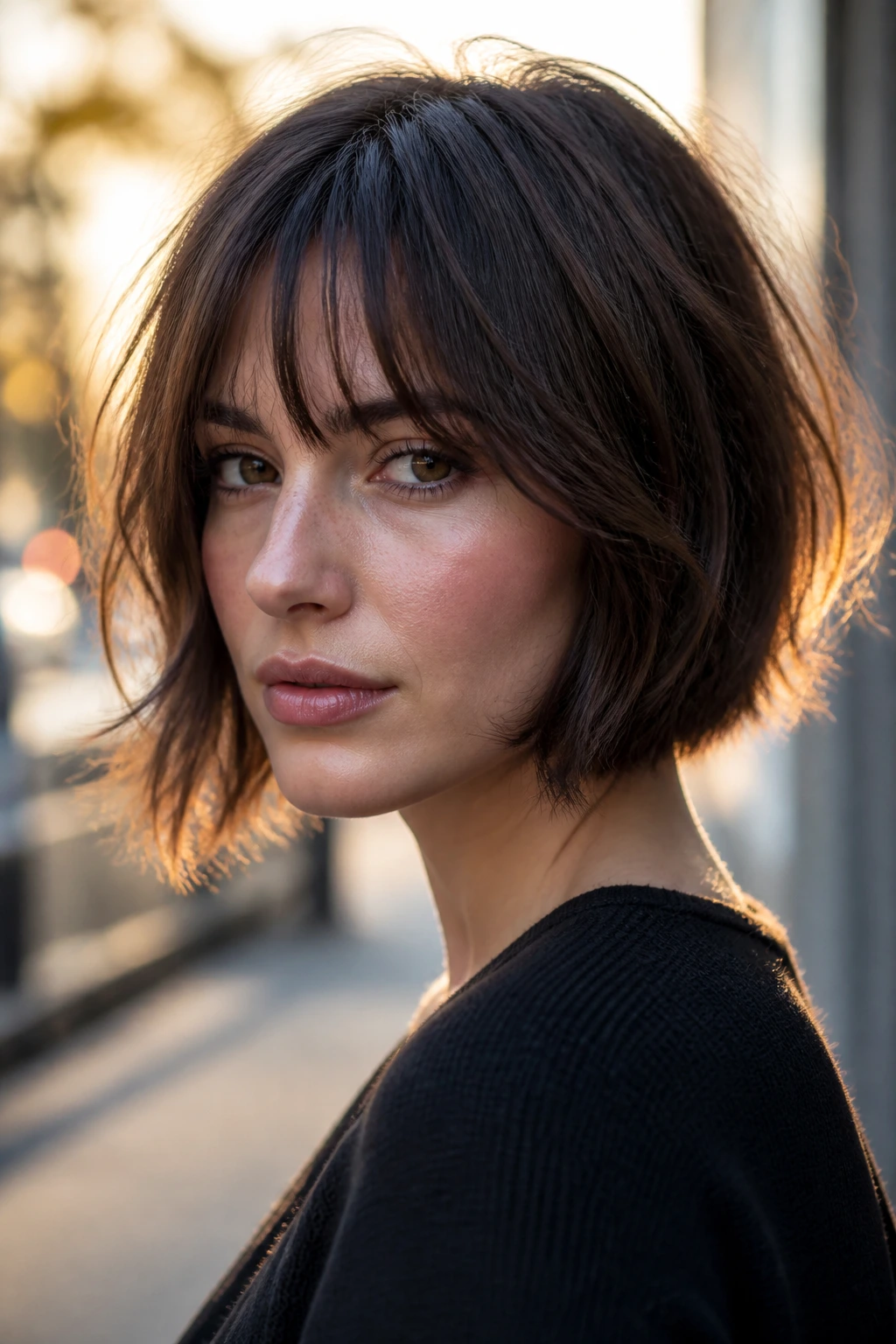
If you want face framing but you hate the look of a heavy fringe, this is the compromise I reach for. A shattered bob uses broken-up ends and soft, irregular pieces around the face. Bottleneck bangs sit narrower in the center, then open out toward the temples. Together, they make the haircut feel lighter and less sealed off.
The bangs matter most here. They should not sit like a wall. They should open the forehead a little, then blend into the side pieces. That gives you softness around the eyes without swallowing the face. The bob itself can sit at the chin or just above it, depending on how much neck you want to show.
This cut is especially good if your hair has a bit of wave, because the shattered ends keep the shape from turning heavy. It also works if your face shape needs a little narrowing at the cheeks. The side pieces help with that, and the fringe keeps the front from looking bare.
A few things help it behave:
- Ask for micro-texture, not big chunks
- Keep the bangs narrow at first, then feather them outward
- Style with a small amount of cream, not a heavy wax
- Trim the fringe often so it doesn’t drop into your eyes and lose the shape
It’s soft. It’s a little cool. And it does the face-framing job without shouting about it.
Final Thoughts
The best face framing haircuts for short hair are the ones that use shape, not just length. A clean jaw line can be softened with a curved front. A pixie can feel gentler with a longer fringe. A bob can stop looking square the moment the front pieces are cut with a little angle.
What I like most about these cuts is that they give you options. You can lean neat, messy, sharp, or soft. You can ask for more cheekbone, more jaw, more temple, or less forehead. That part is personal, and it should be.
If you are taking a photo to the salon, don’t just show the overall haircut. Point to the exact front pieces you want. That’s where the frame lives, and that’s where the cut either works or falls apart.
