



Some shoulder length step cut hairstyles look sharp because the steps are obvious. Others fall flat because the layers are too shy to do anything useful.
That line matters. A shoulder-length step cut lives in a narrow sweet spot: short enough to show movement, long enough to keep weight, swing, and shape. If the first step lands in the wrong place, the cut can puff out at the sides or sink into a limp little shelf at the ends.
The best versions do one of two jobs. They either open the face with a clear front step, or they take bulk out of thick hair without leaving the bottom stringy. The strong ones also behave well with air-drying, round-brush blowouts, and the occasional flat iron pass. That is why some step cuts feel easy on a Tuesday morning and others ask for a little too much patience.
1. Classic Shoulder Length Step Cut with Face Framing
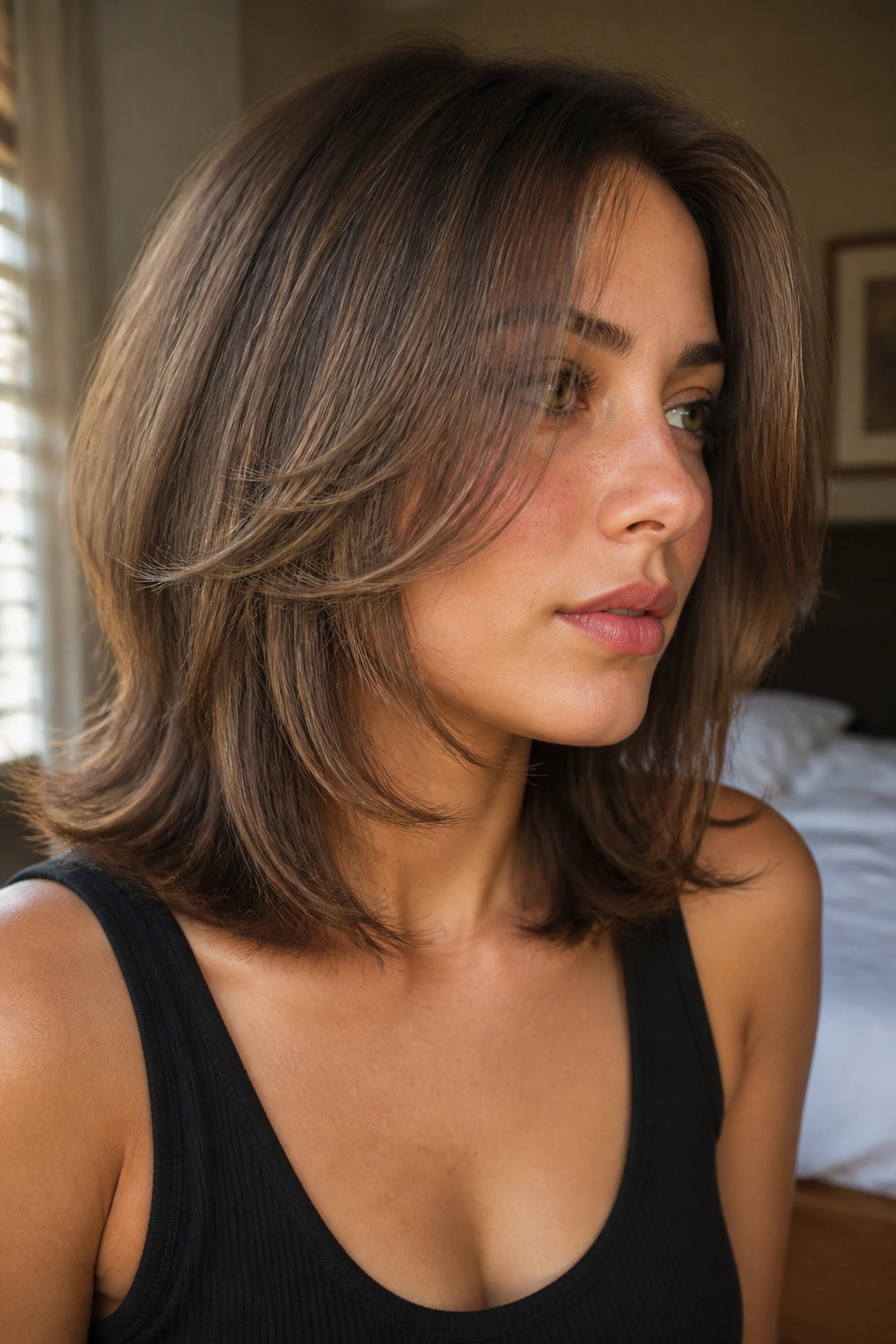
This is the safest place to start if you want the shape without the drama. The classic shoulder-length step cut keeps the overall length right around the collarbone, then drops the first visible step around the cheekbone or just below the chin. That gives you movement near the face and enough weight through the lower half to keep the style from looking thin.
Why it works so well
The front pieces do most of the talking here. They soften a strong jaw, narrow a wide forehead, and keep the haircut from feeling boxy. The back stays longer, so the cut still has that clean shoulder-length feel instead of tipping into a shag.
A good version should look layered, not shredded. If the steps are too short, the whole cut starts to look busy. If they’re too subtle, you lose the point of the haircut in the first place.
- Best for: oval, heart, and square faces
- Hair type: straight, wavy, or lightly bent hair
- Styling note: a medium round brush gives the front pieces a gentle curve
- Maintenance: trim every 8 to 10 weeks to keep the step line visible
Ask for the first step to hit the cheekbone, not the ear. That tiny change makes the haircut look intentional instead of accidental.
2. Curtain Bang Step Cut

Curtain bangs and a step cut get along fast. The bang opens the center of the face, then the first step drapes away from the temples and cheekbones, so the whole haircut feels soft without turning mushy.
That softness is the reason this version keeps getting chosen. It gives you shape around the eyes and cheekbones, but it does not lock you into a heavy fringe that needs perfect blow-drying every single morning. The bangs can be worn split, brushed to the side, or tucked back on lazy days.
The real trick is length. Curtain bangs that are cut too short fight the rest of the haircut. Let them fall somewhere between the eyebrow and cheekbone, then let the side steps start a little lower so the cut moves in two different directions. That contrast is what makes it look good.
If you wear glasses, this version is especially nice. The bangs frame the frames instead of crowding them. And if your hair is a bit flat at the roots, a quick lift with a round brush at the front can wake the whole thing up.
3. Sleek Straight Step Cut
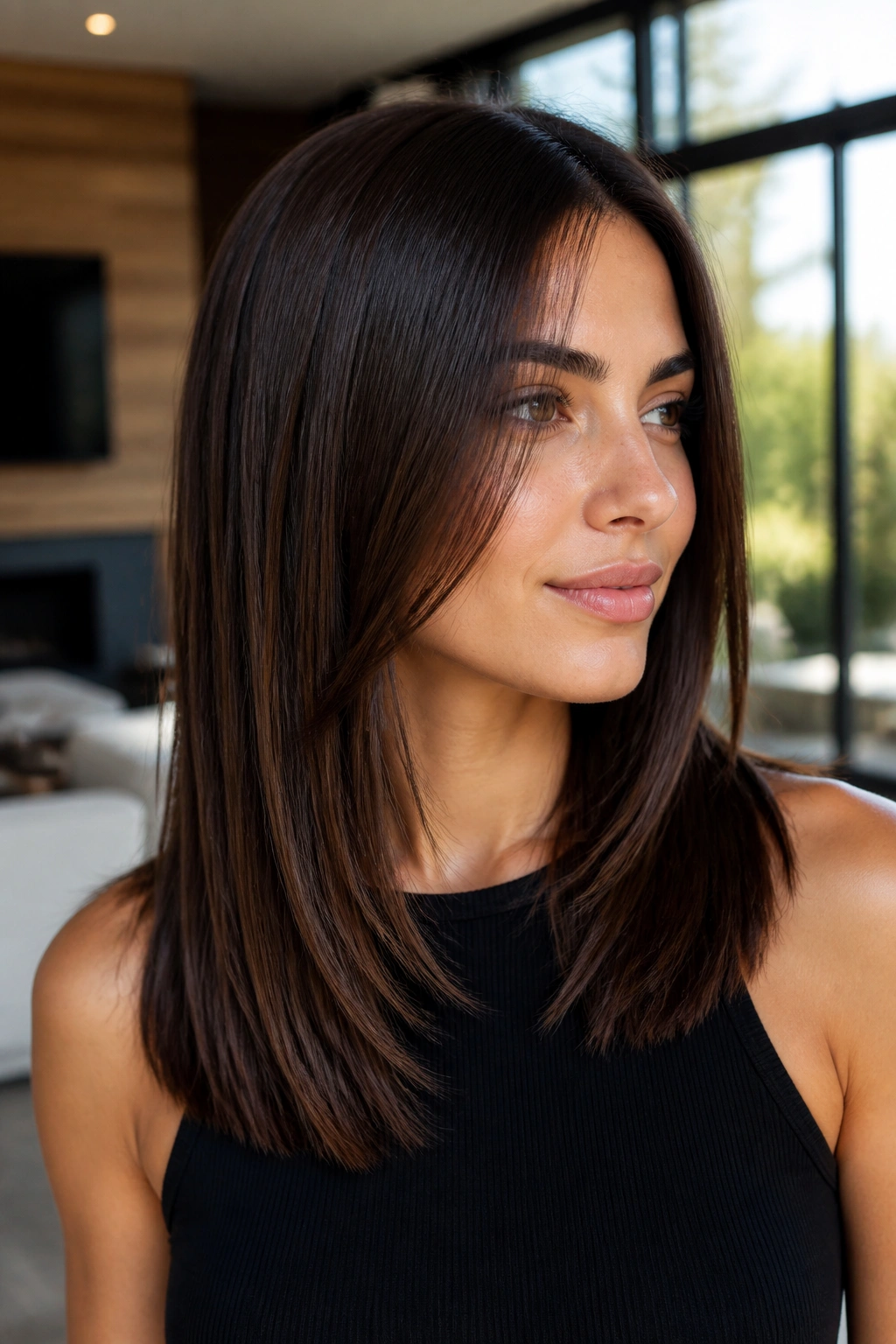
Can a step cut look polished? Absolutely. In straight hair, the layers show up as clean shifts in length, and that can look crisp in a way wavy versions never quite do. The effect is almost architectural, but without the stiffness of a blunt cut.
This version works best when the steps are precise and not over-layered. You want the ends to move, not fray. A straight shoulder-length step cut should still feel thick at the bottom, especially if your hair is fine or medium-density. Too many short steps will make it look hollow near the hemline.
How to wear it flat and smooth
Blow-dry with the nozzle pointing down the hair shaft. That helps the cuticle lie flatter and keeps the finish from puffing out at the sides. Then use a flat iron in one slow pass through the front pieces only, not every strand on your head. A tiny bit of shine cream on the ends is enough.
- Best with: glassy, one-length-adjacent styling
- Use: heat protectant before any hot tool, always
- Look for: steps that are visible when the hair moves, not when it just hangs
- Skip if: your ends are badly split, because straight hair shows damage fast
This is the cut for people who like shape but hate fuss. Clean. Neat. No extra drama.
4. Soft Wavy Step Cut
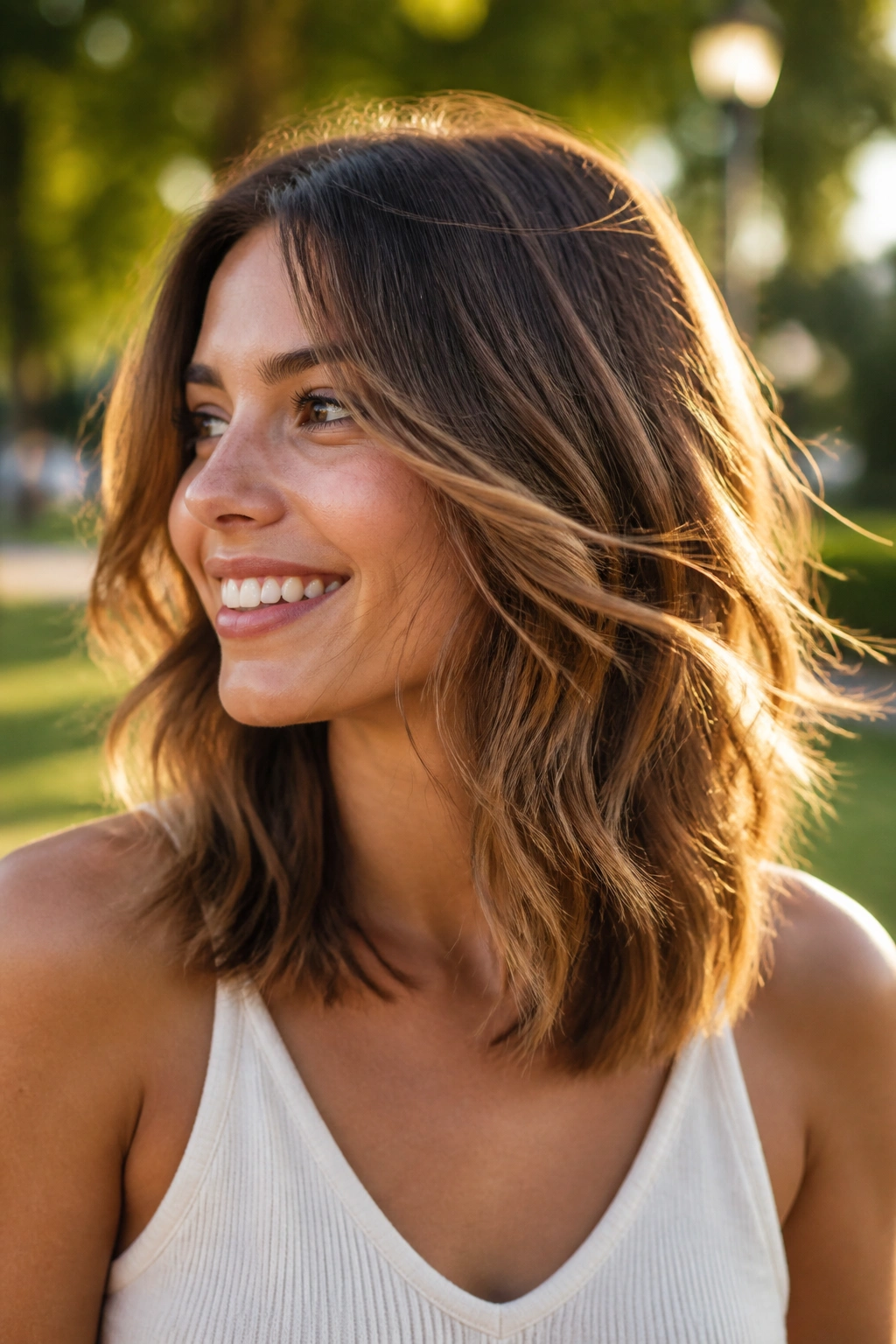
Loose waves make a shoulder-length step cut come alive. The bends land on different levels, so the haircut never sits like one flat sheet. Instead, it shifts a little every time you turn your head, which is exactly why this version feels easy to wear.
The best thing about wavy step cuts is that they forgive imperfect styling. You do not need a perfect curl pattern or a curling wand routine that takes half an hour. Even a rough blow-dry with a little mousse and a diffuser can give the cut enough lift to show its shape.
A lot of people worry that layers on wavy hair will look too messy. Fair concern. The fix is to keep the steps long enough that the waves still group together. Short steps can make wavy hair puff up around the crown and frizz at the ends. Longer, spaced-out steps keep the movement soft.
What helps this cut look its best
- Use a pea-sized amount of curl cream or wave cream through damp mids and ends
- Scrunch from the ends upward, then stop touching it
- If you curl with a wand, use 1.25-inch sections for a loose bend
- Finish with a light mist of flexible spray, not a hard shell of hairspray
The charm here is not precision. It is motion.
5. Choppy Razored Step Cut
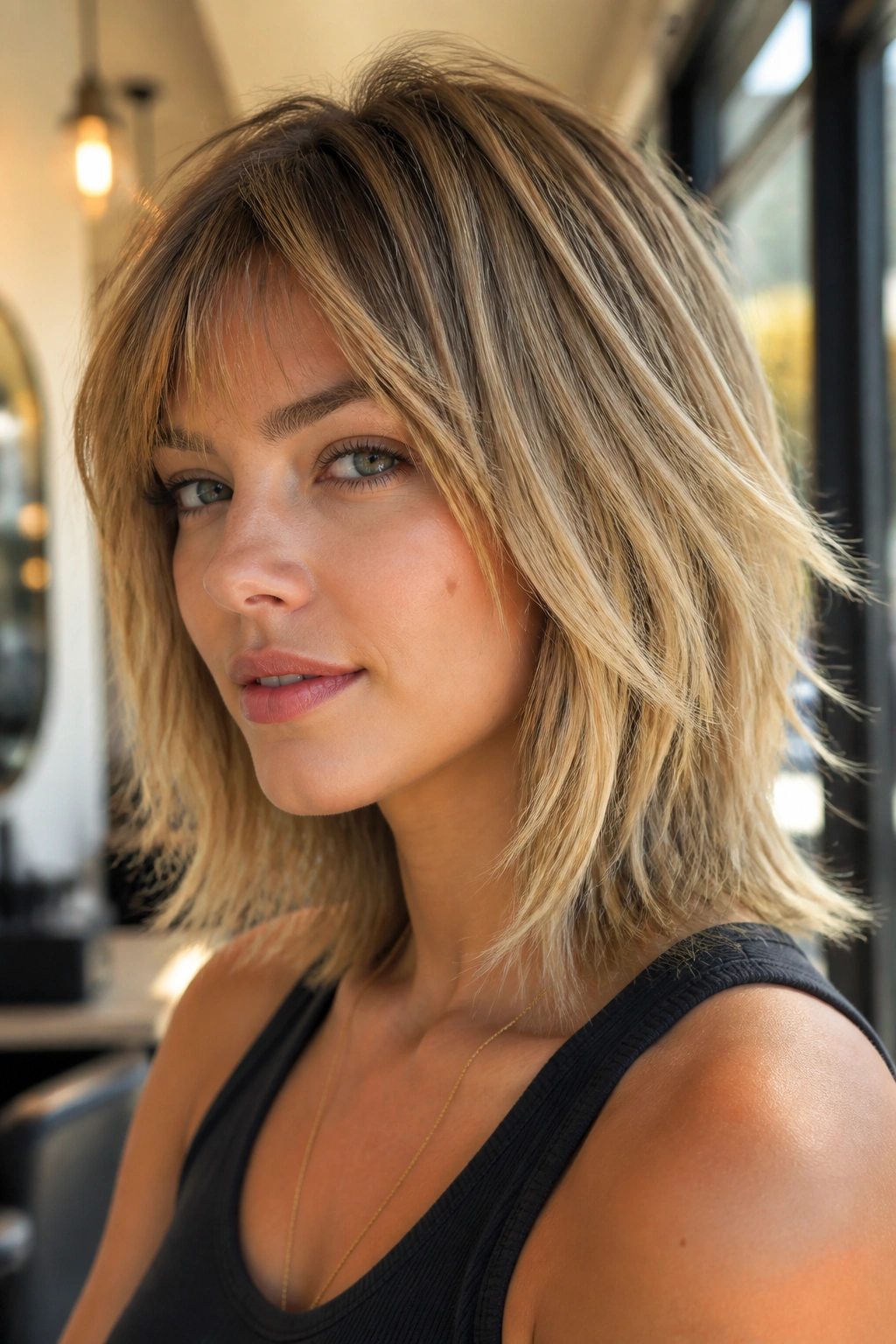
This one has teeth. A razored step cut gives the ends a little bite, which makes the shoulder-length shape feel lighter and more undone. It is a good choice if you like your hair to look a bit lived-in instead of polished to the millimeter.
A razor takes off weight in a softer, frayed way than scissors do. That matters for medium-thick hair, because blunt ends can make the cut sit too heavily on the shoulders. The razor helps the strands separate a little, so the haircut has movement even before you touch a styling tool.
But there is a catch. Razor cuts are not kind to dry, brittle ends. If your hair already snaps or splits easily, a heavy razor pass can make the finish look wispy fast. In that case, a scissor-based step cut with point-cut ends is a better bet.
I like this style on hair that naturally flips a little at the ends. It gives that movement a reason to exist. The shape feels casual, but not sloppy. That is a hard line to walk, and this cut walks it better than most.
A dab of texturizing cream at the mid-lengths is usually enough. Too much product and the airy texture turns sticky. Nobody wants that.
6. U-Shaped Step Cut
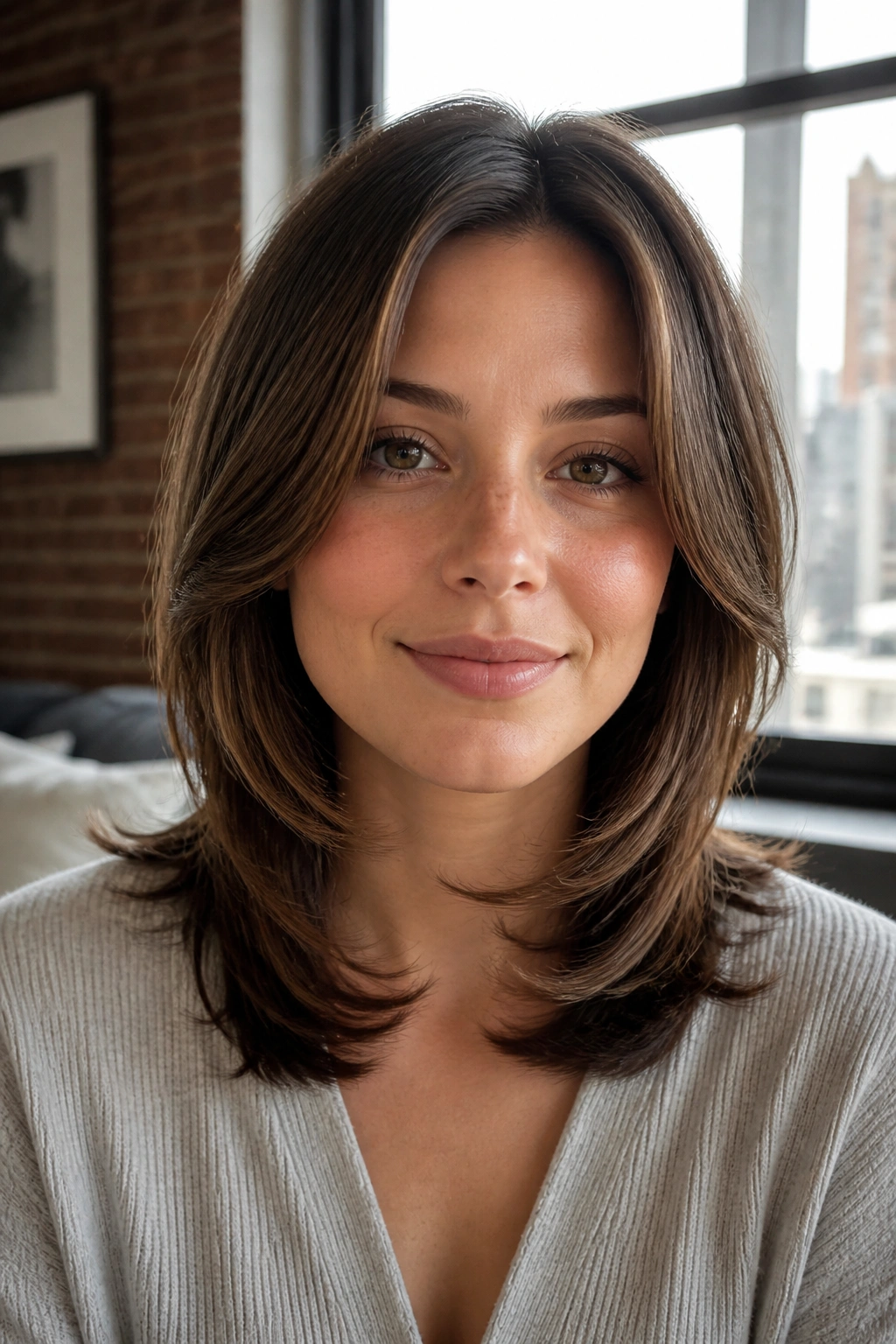
A U-shaped step cut keeps the back a touch longer, then builds the front pieces upward so the whole outline curves instead of cutting straight across. That little curve makes the shoulder-length cut feel softer from the side, especially when the hair is tucked behind the ears.
Compared with a blunt lob, this version gives you a smoother drop around the neck and shoulders. Compared with a full shag, it still looks tidy. That middle ground is why it works for people who want movement but do not want obvious, choppy layers everywhere.
The shape is especially nice if your hair grows out unevenly or tends to puff at the corners. The longer back keeps weight where you need it, and the shorter front pieces stop the haircut from feeling heavy around the face.
Best features to ask for
- A longest point at the back that still sits on or just below the collarbone
- Front steps that begin around the jawline
- Soft blending through the sides, not chunky shelves
- A rounded finish when the hair is dry
This is not a loud haircut. That is the point. It just sits well.
7. Side-Swept Fringe Step Cut

A side-swept fringe changes the whole mood of a step cut. Instead of a centered frame, you get a diagonal line that draws the eye across the face. That can soften a square jaw, slim a broader forehead, and make the haircut feel a little less expected.
The side fringe also gives you some practical flexibility. On clean hair days, you can wear it smooth and controlled. On day-two hair, you can tuck it behind one ear and let the rest of the steps do the work. That kind of ease matters more than people admit.
What makes this version useful is the asymmetry. The shorter side gets lift, the longer side blends into the cheek and jaw. That contrast creates movement without needing a pile of extra layers through the back.
A small warning: side fringes can go flat fast if they are cut too heavy. Keep them light enough to sweep, not thick enough to hang like a curtain. A quick blow-dry with the nozzle aimed across the forehead keeps the bend in place.
Best for: anyone who wants shape but does not want a full fringe commitment.
8. Shoulder Length Step Cut for Fine Hair

Fine hair needs structure more than drama. Too many short layers can make it look see-through at the ends, which is why a shoulder-length step cut for fine hair has to be handled with a lighter hand. The goal is lift, not thinning.
The smartest version uses only a few visible steps, placed strategically near the front and crown. That gives the illusion of fullness where the eye looks first, while the lower length keeps the hemline from collapsing. If the layers start too high, the haircut can go airy in a bad way.
How to keep the ends full
A root-lifting mousse at the crown helps, but so does drying in the right direction. Blow-dry the top sections up and away from the scalp, then smooth the mids and ends with a round brush. You want the shape to feel cushioned, not poofy.
- Choose a blunt-ish perimeter with a few soft steps, not a lot of slicing
- Avoid heavy oils near the roots; they flatten fast
- Use velcro rollers for 10 to 15 minutes if you want extra lift
- Trim often enough so the ends do not get stringy
This cut can make fine hair look like it has more body than it does. Not magic. Just smart placement.
9. Heavy Hair Weight-Removal Step Cut
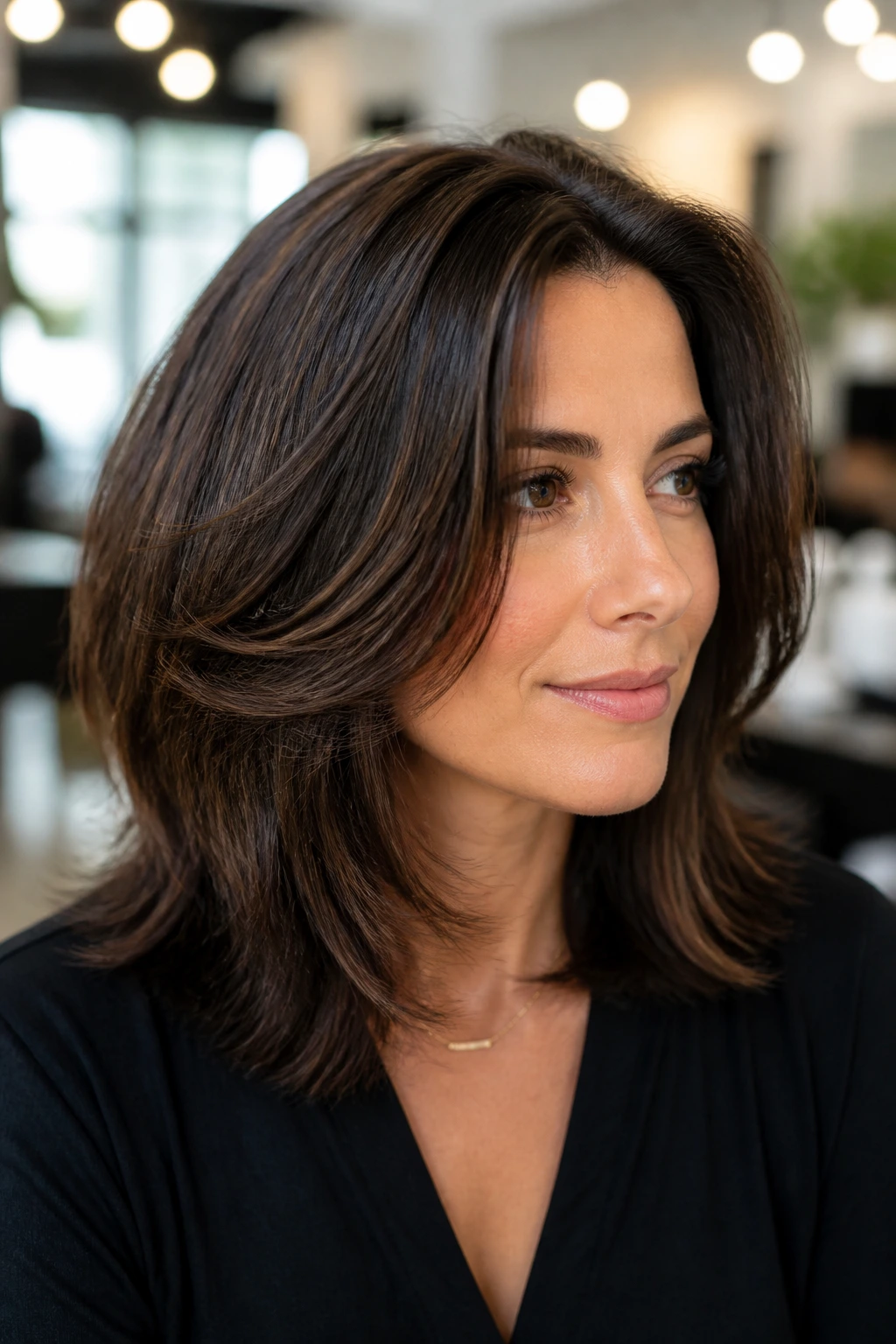
Thick hair can look lush at shoulder length, but it can also build into a triangle if the shape is wrong. A weight-removal step cut fixes that by carving out bulk in the right places while keeping enough length to hold the line.
The big mistake with thick hair is over-thinning. Some stylists reach for thinning shears and go too far, which leaves the ends fluffy and dry-looking. A better step cut uses layered sections to control the mass, especially around the sides and under the top layer.
I like this version because it gives thick hair room to move. That matters around the shoulders, where heavy hair tends to flip outward or sit like a shelf. Shorter internal steps stop that shelf from forming.
A strong consultation helps here. Tell the stylist where your hair feels biggest: under the crown, at the sides, or in the back near the nape. Each one calls for a different step placement. One cut does not solve every dense head of hair.
- Good for: coarse, dense, or heavy hair
- Watch for: over-thinning at the ends
- Style with: a smoothing cream and a paddle brush for a sleeker finish
- Best shape: longer step layers that still leave weight at the perimeter
Dense hair deserves structure. Not sandpaper.
10. Curly Shoulder-Length Step Cut
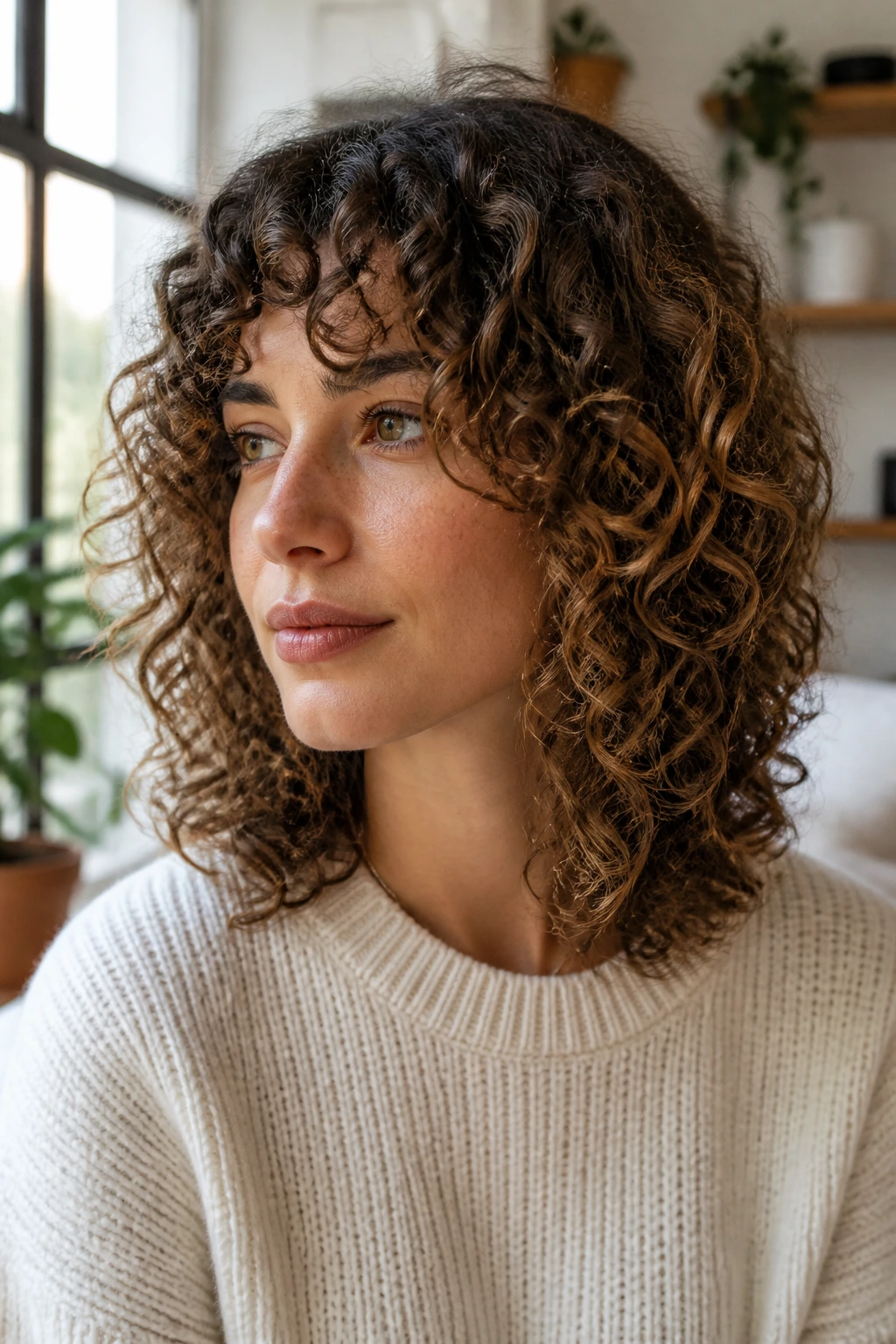
Curly hair needs a different kind of step cut because the curl itself already creates layers. If the steps are too short, the shape can spring up and get boxy. If they are too long, the haircut loses the definition that makes a step cut worth having at all.
The nicest curly shoulder-length step cut usually uses longer steps that respect shrinkage. A curl that falls to the jaw when wet may sit much higher when dry, so the stylist has to think in dry shape, not wet length. Dry cutting is often the safer move because it lets the curl pattern show its real behavior.
The result should be rounded and mobile. You want the curls to stack in a way that gives lift around the face and crown without making the bottom edge ragged. That means the steps need to follow the curl family, not fight it.
What to ask for
- Longer layers around the front, especially if your curls are tight
- A shape that is cut with the curl pattern in mind
- Weight left at the bottom so the haircut does not balloon out
- Diffuser-friendly styling so the shape holds after drying
A curl cream with enough slip helps the steps separate cleanly. No crunch. No helmet. Just shape.
11. Feathered Step Cut
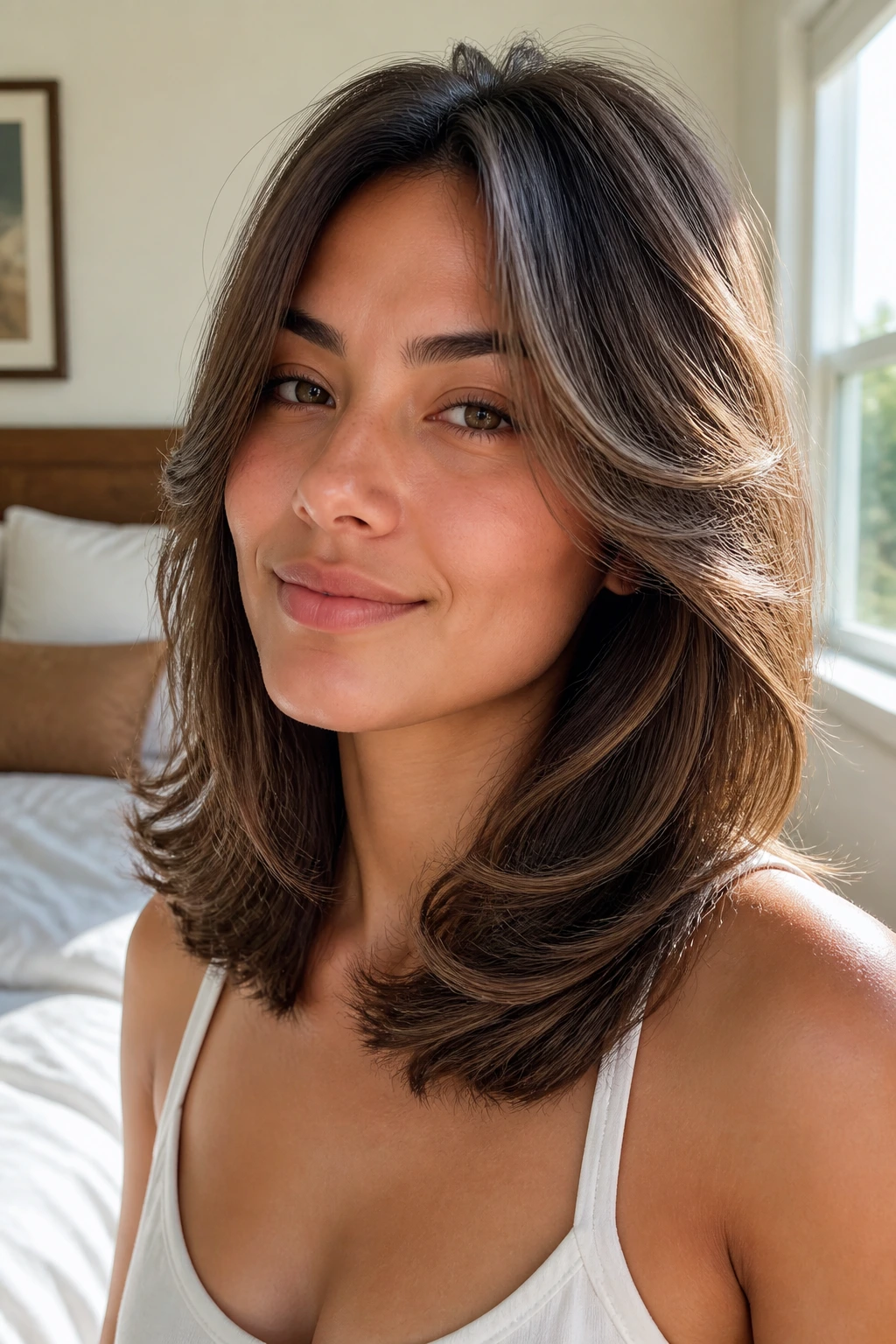
Feathered hair can sound old-fashioned, and honestly, sometimes that reputation is earned. Still, the feathered step cut has a real place at shoulder length when the goal is softness around the face and a blowout that moves nicely.
The feathering effect comes from ends that are directed away from the face rather than chopped into obvious blocks. That gives the haircut a light, swept feel, especially around the cheekbones and jawline. On straight or slightly wavy hair, the result can look polished without feeling stiff.
The styling part is half the charm. A medium round brush, a dryer with a narrow nozzle, and a little patience at the front sections usually do more than a stack of products ever will. Brush the ends outward or under, depending on the shape you want. Out gives lift. Under gives polish.
This is one of those cuts that benefits from a little discipline. Skip the heavy mousse. Skip the thick serum at the roots. The whole point is a clean, airy swing through the ends, not a weighed-down helmet.
If you want movement with a neater finish, this one earns its keep.
12. Deep Side Part Step Cut
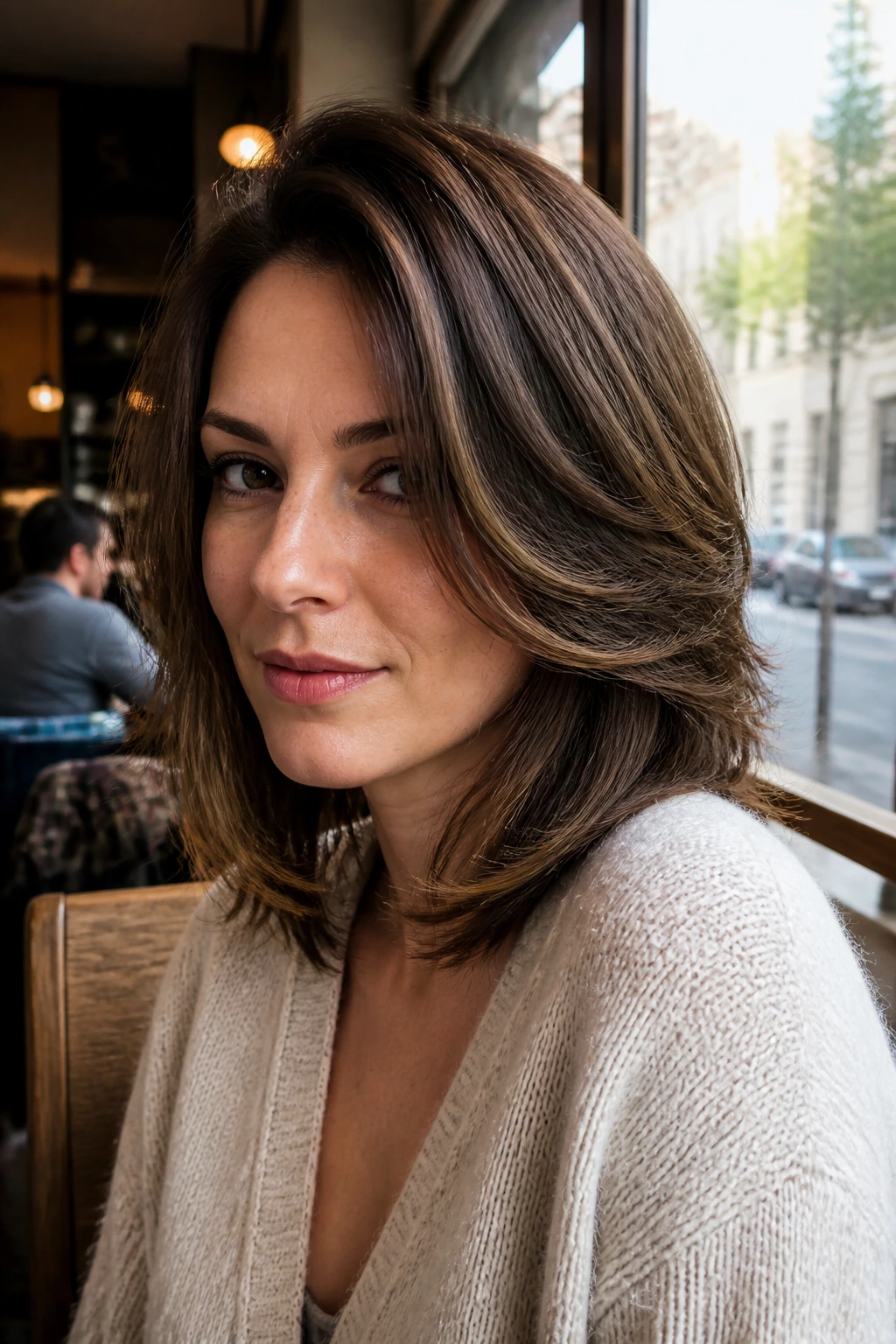
Why does a deep side part change the whole haircut? Because it shifts the weight of the hair, and the step cut immediately responds. One side gets lift and drama. The other side falls closer to the cheek and jaw, which creates a built-in frame.
That makes this version a smart choice for anyone who wants a shoulder-length cut to look fuller at the crown. A side part gives the roots a little push, especially if the hair tends to lie flat. The step cut then carries that lift down through the front pieces so the whole thing feels more alive.
The best part is how little you need to do once the cut is right. Tuck one side behind the ear, leave the other side loose, and let the asymmetry do the work. A root spray at the crown can help, but the haircut itself carries the shape.
How to wear it
- Part the hair about 2 to 3 inches off center
- Blow-dry the roots opposite the part first
- Let the front step on the heavier side fall toward the cheekbone
- Keep the ends smooth so the part stays sharp
This is a good fix for flat roots, but it also adds a little attitude. Not too much. Just enough.
13. Collarbone Step Cut with Long Front Pieces
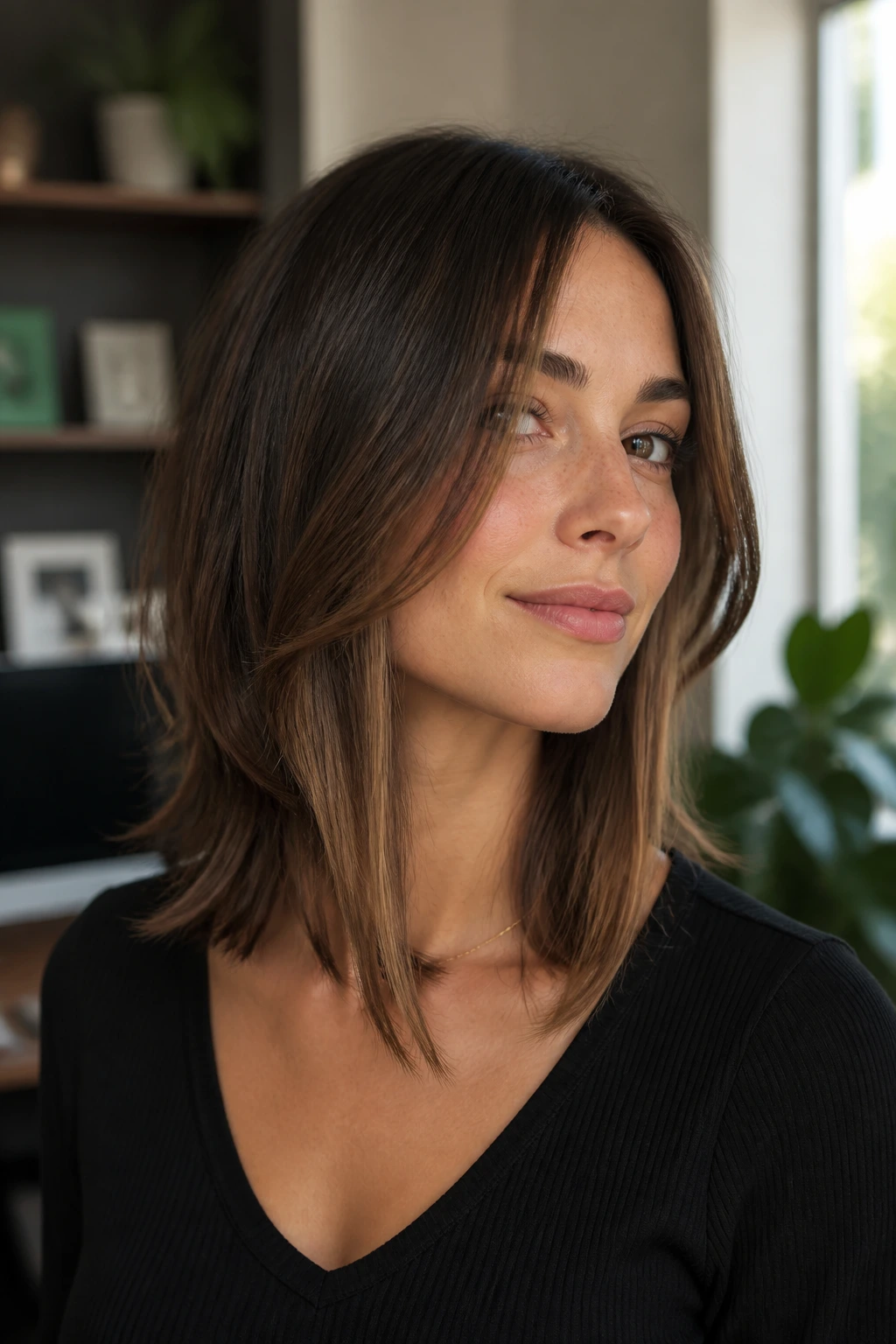
A collarbone step cut with long front pieces is one of the easiest styles to live with. The length stays long enough to tuck into a coat or clip back for work, while the front pieces create shape that keeps the haircut from feeling plain.
That balance is why people keep coming back to it. You get the clean line of a shoulder-length cut, but the front pieces frame the face in a way that makes the style look finished even when the rest of the hair is left alone. It is a useful haircut, not a fussy one.
This version also grows out well. The front stays intentional even after a few weeks, and the lower edge does not lose its shape overnight. If you like getting a haircut that still behaves two months later, this is the one to pay attention to.
One practical note: the front pieces should not be so long that they disappear into the rest of the hair. They need enough difference in length to show. A small change can make the whole cut look expensive. A weak change makes it look like the stylist hesitated.
That tiny line between those two outcomes is where this haircut lives.
14. Shag-Inspired Step Cut

A shag-inspired step cut is for people who like texture but do not want a full shag swallowing their shoulder-length hair. It borrows the movement and roughness of a shag, then keeps the outline cleaner and the length more controlled.
The difference is easy to spot in person. A real shag tends to push harder toward short crown layers and a messier outline. This version keeps the crown softer and the ends a little heavier, which means it works better if you still want to tuck your hair behind your shoulders without it exploding outward.
I like this cut on hair that already has some natural bend. The texture gives the step layers something to grab onto. On very straight hair, it can look flat unless you style it with a wave or a rough blow-dry. That is not a flaw, exactly. It is just the haircut telling the truth.
A sea-salt spray or light texture mist can help, but use less than you think. Too much product and the ends go rough in a dry, fuzzy way. A little movement goes a long way here. More than a little and the haircut starts to look tired.
15. Soft Shoulder Length Step Cut with Rounded Ends

Compared with a choppy step cut, this version feels gentler. The steps are still there, but the ends curve inward instead of sitting in sharp points, so the whole haircut reads as soft and tidy rather than edgy.
That rounded finish makes a big difference around the shoulders. Hair that lands exactly at that length can snag on collars, jackets, and the edge of a bag strap. A softer outline glides a bit better and usually grows out with less fuss. Small thing. Huge payoff.
This cut is a good fit if you want movement but you do not want everyone to notice the layers right away. The steps show when you walk or turn your head, then disappear into the overall shape when the hair is still. That kind of quiet detail can be more flattering than a louder layered look.
The styling is straightforward. Dry the front away from the face, roll the ends under with a round brush, and stop before the shape gets too polished. It should still feel like hair, not a lacquered helmet. A light cream or lotion is usually enough.
Best for: office wear, low-drama mornings, and people who want shape without too much edge.
Final Thoughts
A good step cut at shoulder length needs two things: clear placement and enough weight left at the bottom. If either one goes missing, the haircut starts to wobble. Too little structure and it looks soft in a lazy way. Too much structure and it turns stiff.
The smartest move is to bring a photo, then describe where you want the first step to land. Cheekbone, jawline, or collarbone — those details matter more than a vague request for layers. A stylist can work with almost anything if you give them a real target.
And if you want the haircut to stay flattering while it grows out, keep the front pieces long enough to frame the face. That is the part that saves a step cut from looking forgotten after a few weeks.
