



A blunt fringe can take over a face in a hurry. Soft bangs do the opposite. They break up the forehead, keep the eyes visible, and let the haircut move when you turn your head.
That gentleness is not magic. It usually comes from a few small choices: a lighter center, longer pieces at the temples, and ends cut so they fall in sections instead of forming one hard line. A good soft fringe still looks like bangs. It just does not shout.
I keep coming back to this kind of shape because it solves the same problem for so many people. You want something around the face. You do not want a heavy shelf, a harsh edge, or a cut that looks fussy if you miss one blow-dry. Fair enough.
The best part is how flexible these bangs can be. Some lean airy and wispy, some sit in a curtain split, and some melt into layers so smoothly you barely notice where the fringe ends. The first shape I reach for is the classic curtain version, because it is the easiest place to start.
1. Curtain Bangs That Open at the Cheekbones

Curtain bangs are the safest starting point when you want softness without losing shape. The center falls a little shorter, the sides stretch toward the cheekbones, and the whole line feels more like a frame than a wall.
Why the shape feels gentle
That middle split keeps the forehead from feeling boxed in, while the longer pieces at the sides blur the transition into the rest of the haircut. Ask for the shortest point to sit around the brow, then let the longest pieces graze the top of the cheekbones — that range usually gives the fringe room to move instead of hanging like a strip.
- Best on straight, wavy, and medium-density hair.
- Grows out neatly because the sides keep blending into layers.
- Usually takes about 2 minutes with a round brush and a dryer.
- Looks especially good when the rest of the cut starts at the chin or lower.
Small tip: keep the center a touch lighter than the edges; that one choice makes the whole shape feel softer.
2. Bottleneck Bangs With a Narrow Center

Not every soft fringe needs a wide split. Bottleneck bangs narrow at the center and open toward the temples, and that little squeeze in the middle is what keeps them from feeling bulky.
The shape starts tighter between the brows, then fans out near the outer corners of the face. I like this version when someone wants definition without a lot of forehead coverage. It gives you a built-in bend around the eyes, which helps the haircut look finished even on days when you skip heat styling.
No helmet effect. That is the whole point.
If your hair is straight or only slightly wavy, ask for the center to stay short enough to skim the top of the brow, then let the side pieces land closer to the cheekbones. If your hair is thicker, a stylist can remove a little interior weight so the fringe sits light instead of puffy. The shape still reads soft, but it has enough structure to hold up in the real world, which is where most bangs either win or fail.
3. Wispy Brow-Grazing Bangs That Let Skin Show Through
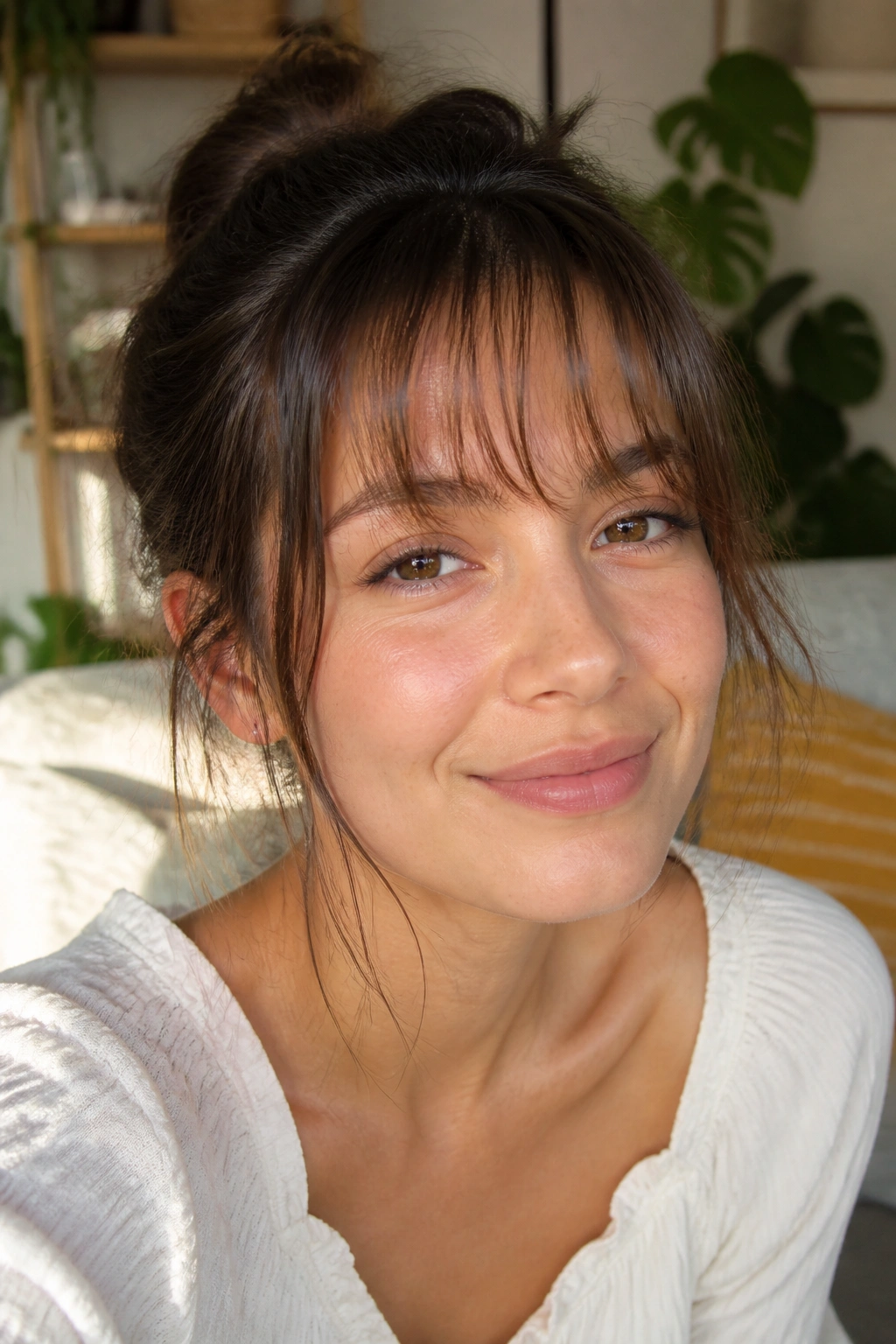
Why do wispy bangs feel gentler than a fuller fringe? Because you can still see bits of forehead through them. That small amount of transparency breaks the line up and keeps the cut from looking boxed in.
A see-through fringe works best when the density stays low and the pieces are separated on purpose, not thinned to the point of looking weak. The difference matters. You want airy, not sparse. The best versions skim the brows, then fall away from the face in little pieces that move when you blink or tilt your head.
How to ask for it
Tell the stylist you want a brow-grazing fringe with soft piecey ends. Mention that you do not want a blunt edge and do not want too much bulk at the center. If your hair is fine, this can look delicate in a flattering way. If your hair is thick, it needs extra care so it does not turn into a puffball by midday.
Keep styling loose. A flat brush and a quick bend at the root are usually enough. Heat it too much and the softness disappears fast.
4. Side-Swept Fringe That Falls in a Soft Diagonal

You know the moment when you are growing out bangs and the front starts doing that awkward half-state thing? Side-swept fringe is the graceful exit ramp.
A deep side part sends the fringe across the forehead in a long diagonal, which softens the face without putting hair directly in both eyes. It is a good pick if you have a strong cowlick, because the sweep gives the root a direction instead of fighting it all morning. I also like it for people who wear their hair tucked behind one ear a lot — the shape feels intentional even when the rest of the style is simple.
- Ask for the shortest point to sit near the brow on the heavier side.
- Keep the long edge near the cheekbone or just below it.
- Blow-dry the root across first, then brush it back in the sweep.
- Use a light mist of spray, not a stiff shell.
Small tip: this fringe looks best when it moves. If it looks frozen, too much product is in play.
5. Feathered Shag Bangs With Broken Texture
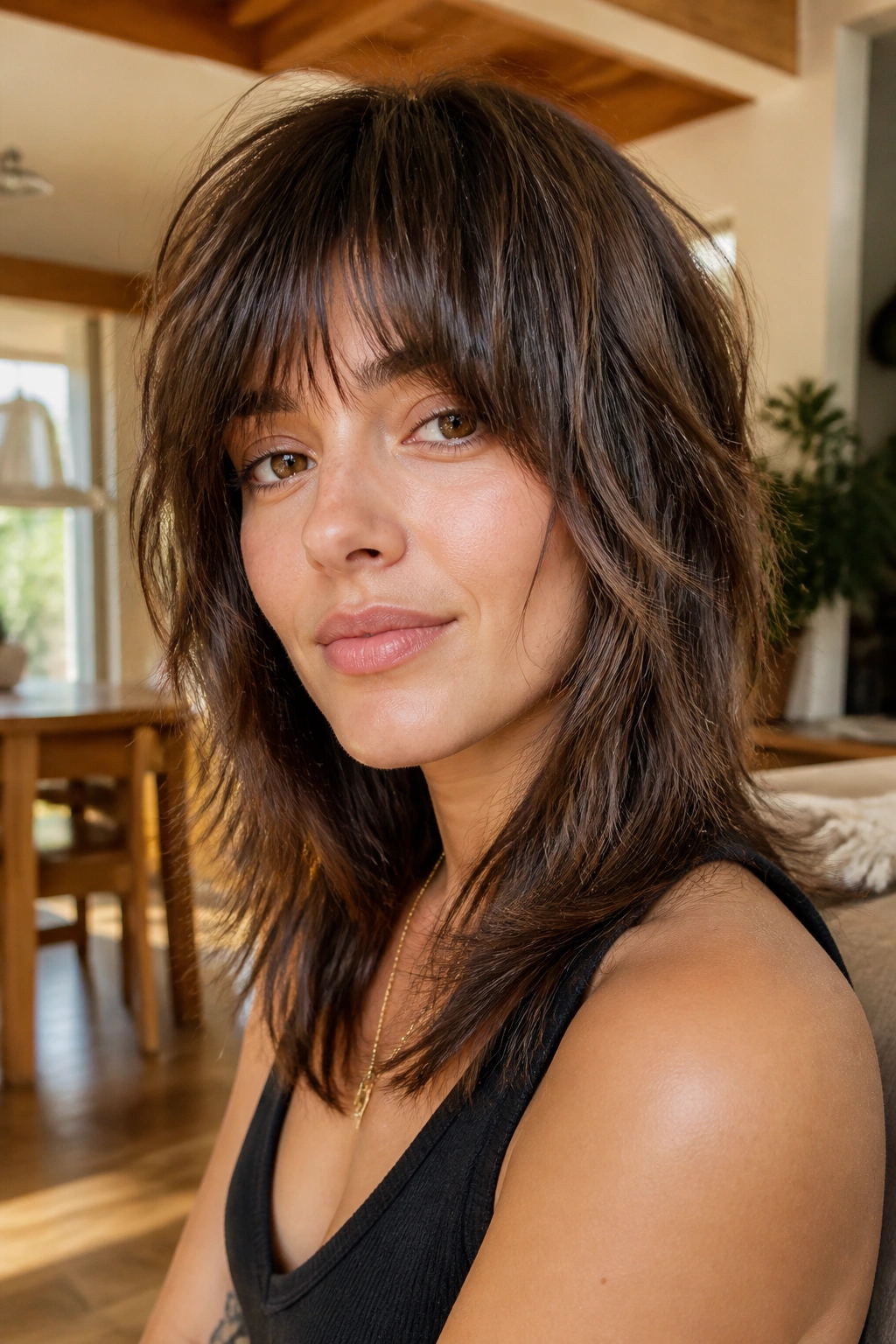
A shag with soft bangs is all about broken texture. No single line. No hard shelf. The fringe is cut so the ends separate a little, then the longer layers around it keep the whole front of the haircut from feeling flat.
That is why this shape works so well on hair that already wants movement. Wavy hair gets a little lift here. Medium-thick hair gets weight removed without losing body. Even straighter hair can benefit if you like a more lived-in front that does not need perfect styling every morning.
One-sentence truth: feathering matters more than length here.
Ask for the bangs to blend into the face-framing layers rather than sit alone. A stylist will often use point cutting to soften the edge, which means the scissors nibble into the line instead of chopping straight across it. If the cut is done well, the bangs should look a little undone in the best way, with ends that fall apart just enough to keep the forehead from feeling boxed in. That is a very different feeling from a heavy full fringe, and a much easier one to live with.
6. Rounded Fringe With Soft Corners
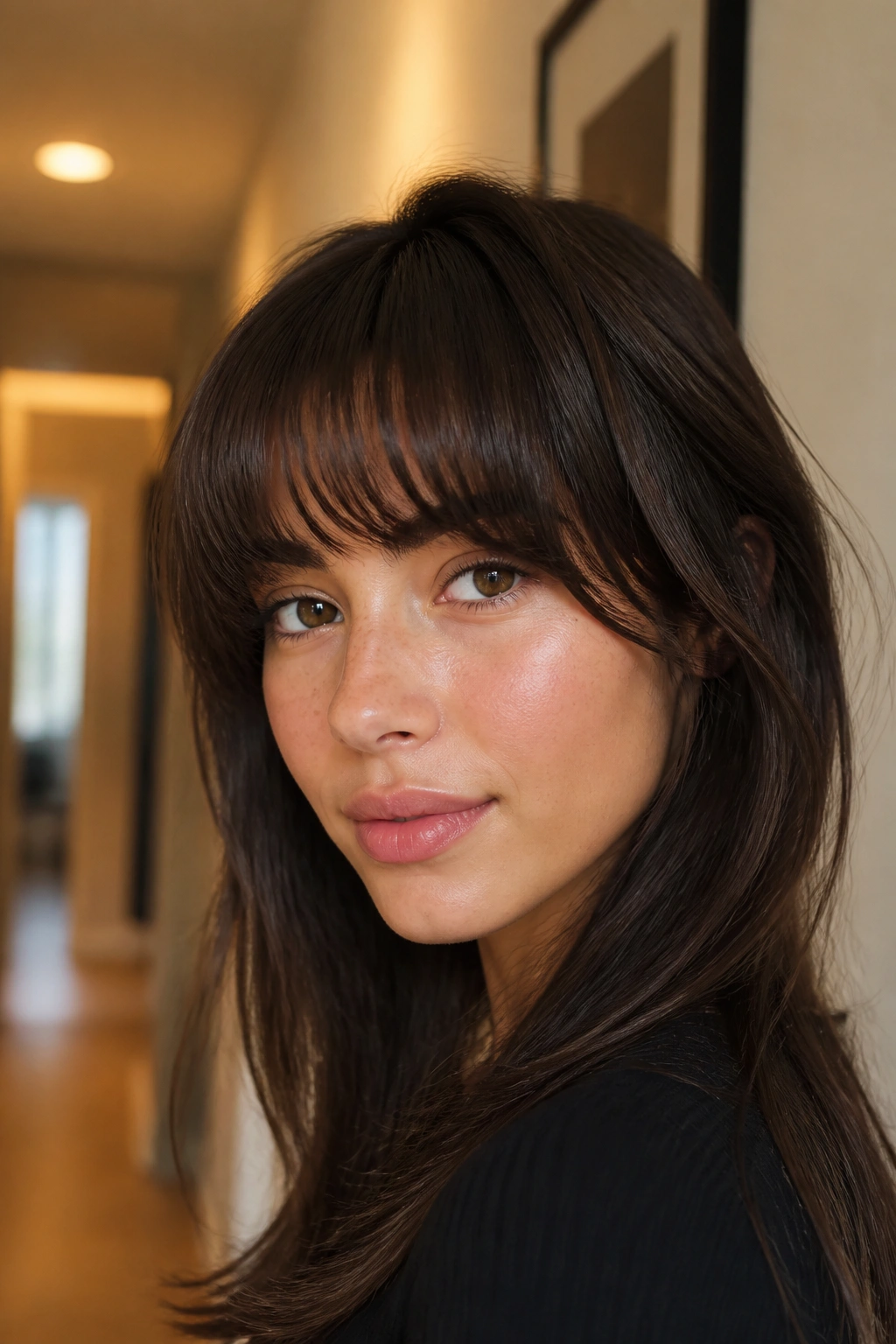
Unlike a blunt arch, a rounded fringe bends gently across the forehead and eases out at the corners. That tiny curve makes a big difference. It keeps the front of the haircut from feeling flat, but it still gives you more coverage than a curtain split.
This is a shape I like for long faces and high foreheads, because the curve brings the eye back down without creating a hard block. It also plays nicely with straight hair that tends to swing heavy if the bangs are cut too thick. The soft corners keep the line from looking severe.
If your hair is especially sleek, ask the stylist to leave the outer edges a touch longer than the middle. That keeps the line soft when the hair tucks behind the ear or bends after a blow-dry. The result is tidy, but not stiff. That part matters more than people think. A fringe that sits too even can look helmet-like in no time.
7. Mini Curtain Bangs for a Shorter Forehead

Mini curtain bangs are the move when you want that open, split front without committing to a long fringe. They sit higher than classic curtain bangs and leave more forehead visible, which makes the style feel lighter from the start.
Where the shortest point should sit
The sweet spot is usually just below the brow or right at brow level, with the longer sides brushing the top of the cheekbone. That keeps the center airy and the sides soft. If they are cut too short, they can look jumpy. Too long, and they lose the lifted feel that makes this shape worth wearing.
This version suits people who want bangs but hate hair sitting in their eyes all day. It also works for smaller foreheads, where a long curtain can swallow too much space. I like it with a bob or a collarbone cut, because the shorter front leaves the rest of the haircut looking clean and modern without turning severe.
- Keep the middle piece narrow.
- Let the sides taper early.
- Style with a small round brush, not a giant one.
- Skip heavy creams; they flatten the lift.
8. Lip-Skimming Face-Framing Bangs

Picture a low bun, a plain tee, and a few pieces falling around the mouth. That is the feel of lip-skimming face-framing bangs. They are not a full fringe at all. They are longer pieces cut to shape the face while still leaving the forehead mostly open.
The magic is in the placement. When the shortest front pieces start closer to the cheekbones and drift down toward the lips, the whole haircut gets a long, relaxed line. I like this on people who want movement near the front but do not want to babysit short bangs every morning. It also looks good when you wear your hair up, because the front stays present even if the rest of the hair disappears.
There is a small catch. If the pieces are cut too thick, they can fall in front of the mouth and feel clumsy. Ask for a soft taper through the ends so the front bends around the face instead of dropping in one heavy sheet. That one detail keeps the style easy.
9. French-Inspired Airy Bangs With Piecey Separation

These are the bangs that look like they barely tried, which is funny, because they still need a hand from the scissors. The charm comes from piecey separation, a little irregularity, and a fringe that never sits in one solid block.
The French-inspired version tends to be lighter through the center and a touch longer at the temples. It gives you forehead softness without looking overbuilt. On the right hair, it can look almost casual — a few strands near the brows, a few strands drifting out toward the sides, nothing too perfect. That is what makes it feel easy.
What to ask for:
- A light, narrow fringe with separated ends.
- Longer side pieces that blend into the front layers.
- Soft point cutting instead of a blunt line.
- Enough density to stay visible, even if the wind gets involved.
This style is best if you like hair that looks a little undone on purpose. Too much polish kills the effect. Leave a little air in it.
10. Soft Bangs for Thick Hair That Needs Lightening
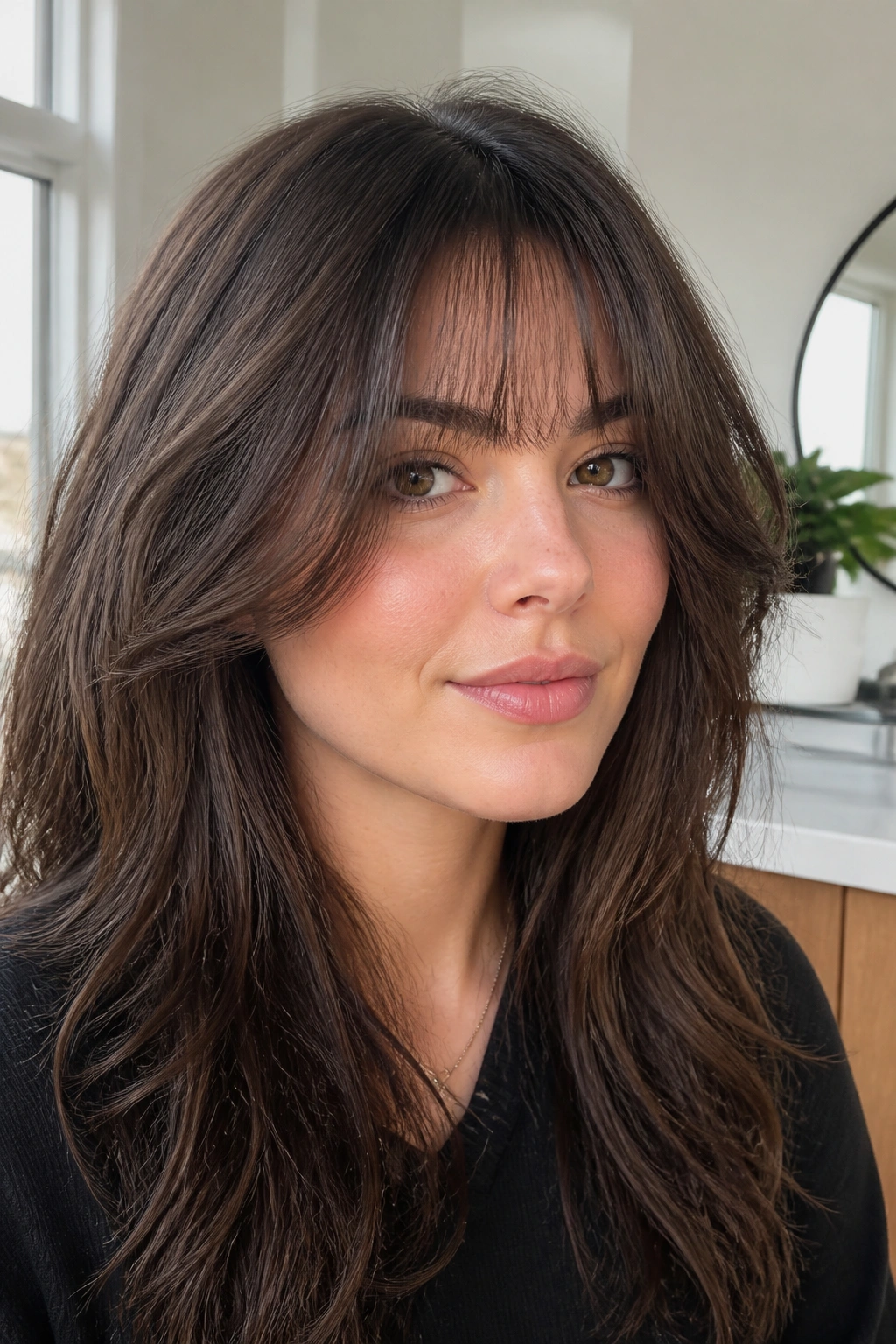
Thick hair can wear soft bangs better than most people think, but only if the bulk is handled well. Without that, the fringe can sit like a shelf. Heavy. Boxy. Annoying.
The trick is to keep the density under control without stripping out so much hair that the bangs go wispy in a bad way. I usually want the fringe to feel lighter at the center and more feathered at the edges, with enough fullness to stay visible when it dries. If the hair is really dense, the stylist may need to remove weight from the inside rather than just thinning the ends. That keeps the front from puffing up.
If your hair swells in humidity, ask for the bangs to be cut with a bit of extra length. Thick hair always shrinks some when it dries. That little allowance saves you from the too-short regret that can happen after the first wash. And yes, it happens fast.
The best thick-hair bangs still have movement. They should swing, not stand.
11. Soft Bangs for Curly Hair That Hold Their Bounce
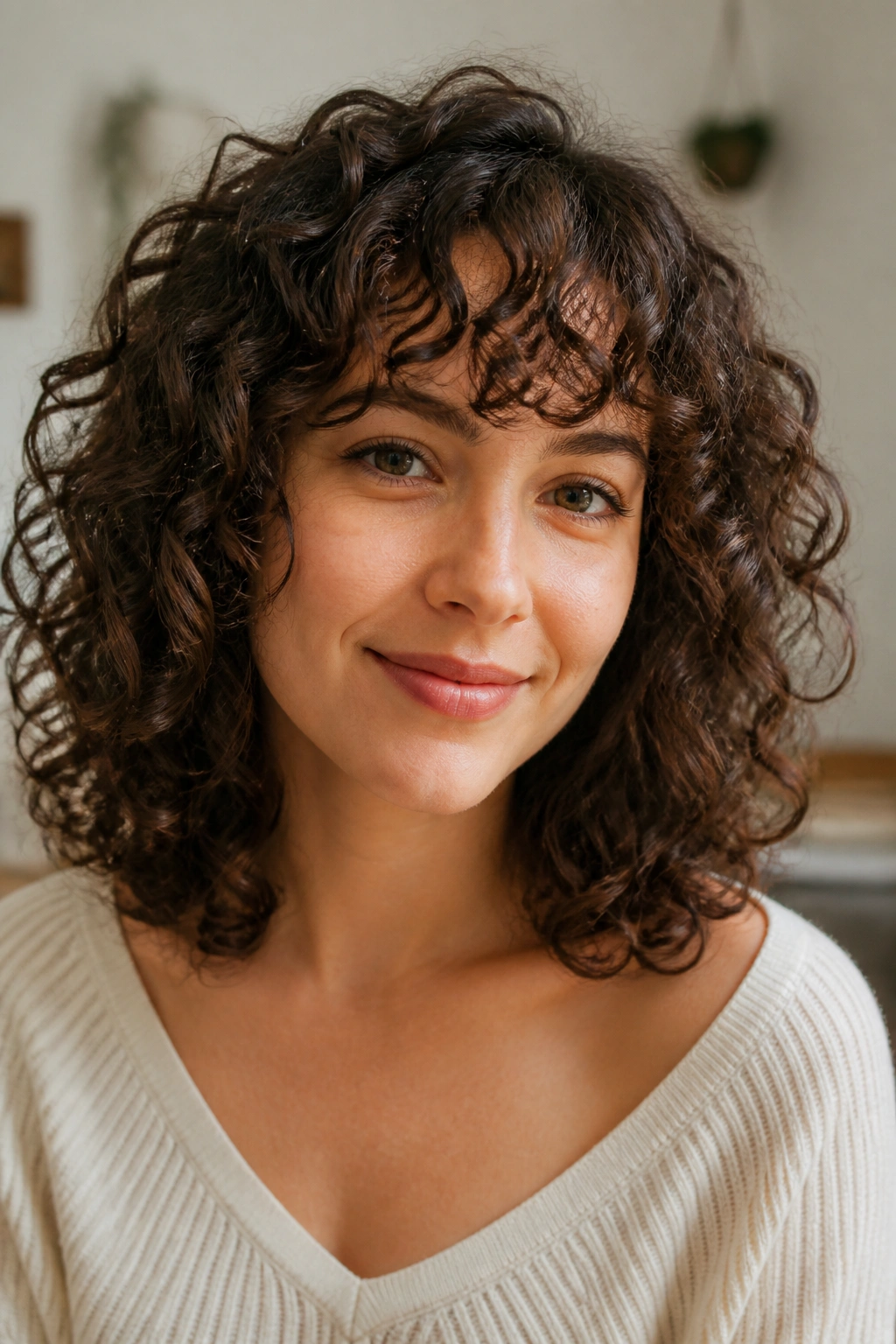
Can curly hair wear soft bangs without turning into a triangle? Absolutely. The key is to cut for the curl, not against it.
Curly fringe usually needs to be longer than straight fringe, because curls spring up once they dry. A curl that looks cheekbone-length when wet may land much higher later. That is why dry cutting matters so much here. The stylist should see the shape in its natural state, then trim the curls where they actually live, not where they pretend to live under tension.
How to wear them
- Let the curls dry fully before judging the length.
- Use a diffuser on low heat and low speed.
- Keep the front pieces a little longer than you think you want.
- Use a cream that defines the curl without making it sticky.
I love this look when the curls are loose enough to bend around the forehead instead of springing straight up. It gives softness without losing the bounce that makes curly hair fun in the first place. There is no need to force a straight line across the front. That usually backfires anyway.
12. Soft Bangs for Wavy Hair That Air-Dries Well
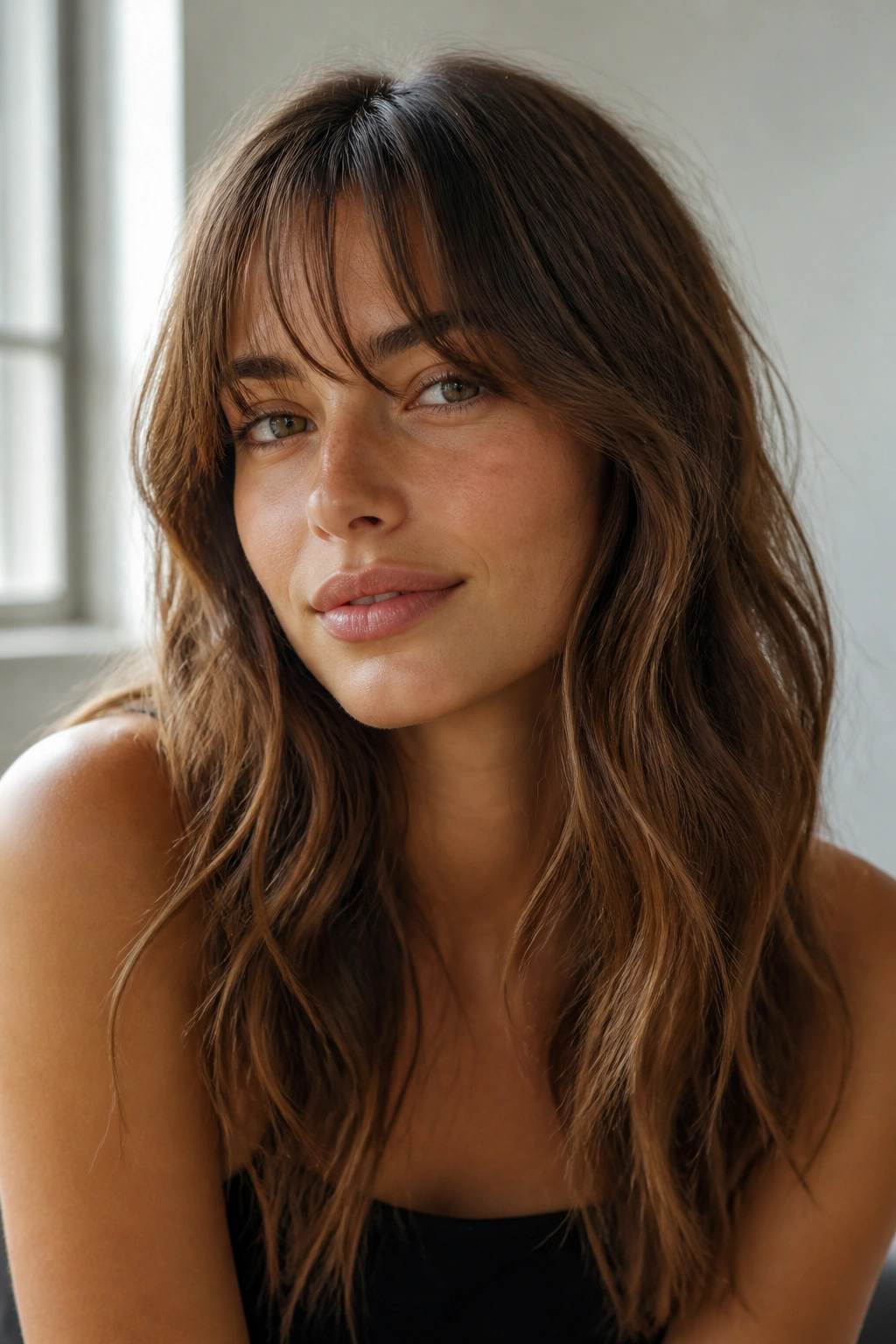
Wavy hair sits in a nice middle ground. It has enough movement to keep bangs from feeling flat, but not so much bend that the front turns unruly the second you walk outside.
That is why a soft, layered fringe can look so natural on waves. The bangs blend into the rest of the cut instead of sitting on top of it. I especially like this when the layers around the face start near the cheekbones, because the front pieces can fall into the wave pattern instead of fighting it. Air-dried hair tends to look best here; overworking it often takes out the easy shape that makes the style appealing.
This is also one of the easiest places to add softness without sacrificing polish. The bangs can start a touch shorter in the center, then stretch longer toward the temples so the eye keeps moving. If your wave pattern flips at one side, ask for a tiny bit more length there. That small adjustment stops the fringe from kicking into your glasses or sitting crooked after a few hours.
13. Feathered Soft Bangs for Fine Hair

Fine hair can absolutely wear bangs, but the shape has to stay light. A blunt edge on delicate hair often looks harsher than people expect, and it can expose the fact that the fringe is only a little too sparse.
Feathered soft bangs are better because they let the hair breathe. The ends are softened, the width stays narrow, and the front pieces are kept light enough to move instead of clumping together. You do not want too much thinning, though. That is a mistake I see a lot. Over-thinning fine hair can make the bangs look stringy by noon, which is not the goal.
- Keep the fringe narrow rather than wide.
- Let the shortest point stay just at or below the brows.
- Ask for soft ends, not razor-thin ends.
- Blow-dry the roots first so the bangs do not collapse.
I like this shape on fine hair because it gives the front some life without demanding a ton of volume. It feels airy, not empty.
14. Glasses-Friendly Soft Bangs That Stay Open

If you wear glasses, bangs need a little extra planning. The wrong shape sits on the frame, rubs the lenses, and starts to look annoyed before lunch.
A glasses-friendly soft fringe usually stays a little shorter in the center and opens out at the sides so the frames have room to breathe. The best version does not land right on the top bar of the glasses. It hovers above it or bends away from it, which keeps the face looking clean. I also like this with a slight center split, because the open space in the middle stops the whole front from feeling crowded.
- Avoid a heavy full fringe that lands on the frames.
- Leave enough room between brow and lens rim.
- Keep the sides soft so they do not hit the temples.
- Style with a small brush and a quick bend away from the face.
The nice surprise here is that soft bangs can make glasses look more intentional, not less. They give the frame something to sit beside.
15. Soft Bangs for Round Faces That Add Length
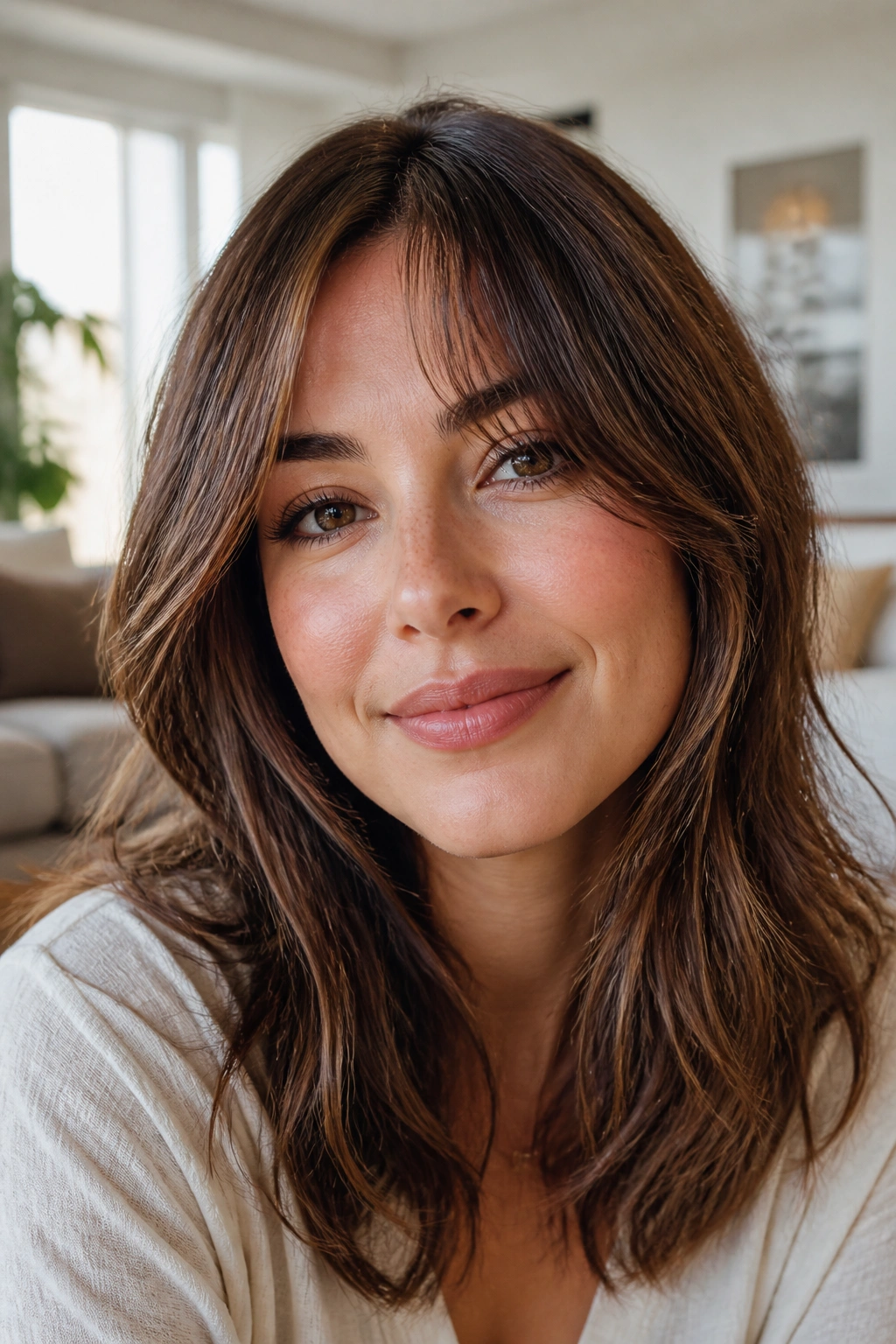
A round face does not need more width across the center of the forehead. It needs a little vertical pull. That is why soft bangs work best when they create length instead of spreading out in a straight line.
The simplest way to do that is with a center-opening shape or a fringe that starts slightly shorter in the middle and gets longer toward the cheekbones. You want the eye to travel down and out, not just across. Long side pieces help a lot here, especially if they land around the cheekbone or upper jaw. They carve the face in a way that feels soft rather than harsh.
I would skip a wide, dense bang that sits straight across the brow. It can make the face look shorter and fuller than you want. Instead, keep the front airy enough to show some forehead and let the side pieces do the shape work. That gives the hairline a little lift without boxing in the features. It is a small shift, but it changes the whole mood of the cut.
16. Soft Bangs for Heart-Shaped Faces That Balance Width
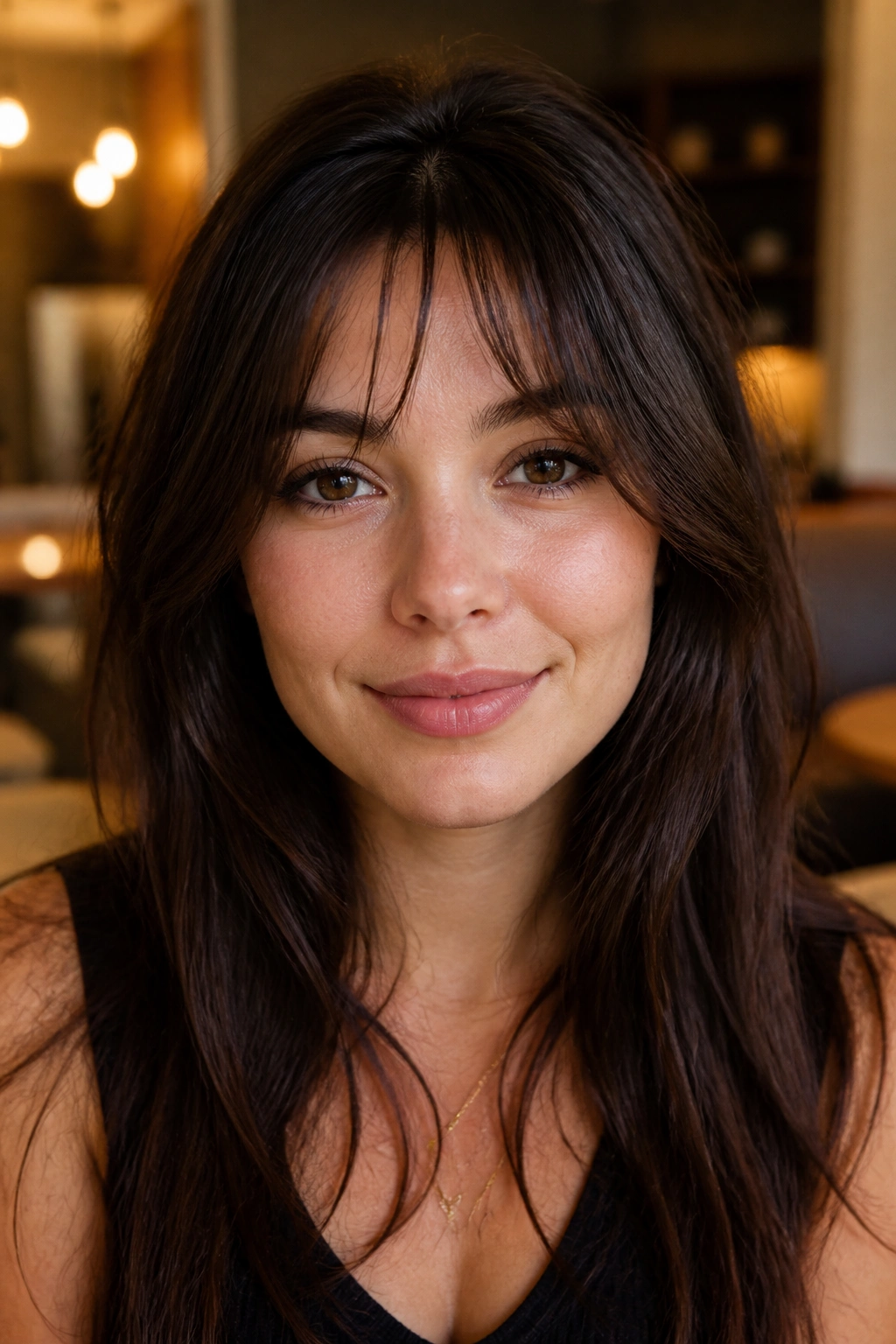
Heart-shaped faces usually look best when the bang softens the forehead without piling on more width up top. That is why bottleneck and curtain shapes are so useful here. They give coverage where you want it, then taper away before the sides get too busy.
The goal is to bring the focus lower, closer to the cheekbones and eyes. A very wide fringe can exaggerate the top of the face, which is the opposite of what you want. A softer center with longer side pieces keeps the shape balanced. I like a piecey edge here, too. It stops the fringe from looking too engineered.
If your chin is narrow, the front can carry a little more weight through the sides so the haircut feels grounded. If your forehead is broader, keep the center lighter and let the fringe breathe. Those little adjustments matter more than a generic “face shape” label ever will. No two heart shapes look the same in real life. Some need more cheekbone focus, some need more temple softness, and some need both.
17. Soft Bangs for Long Faces That Break Up Height
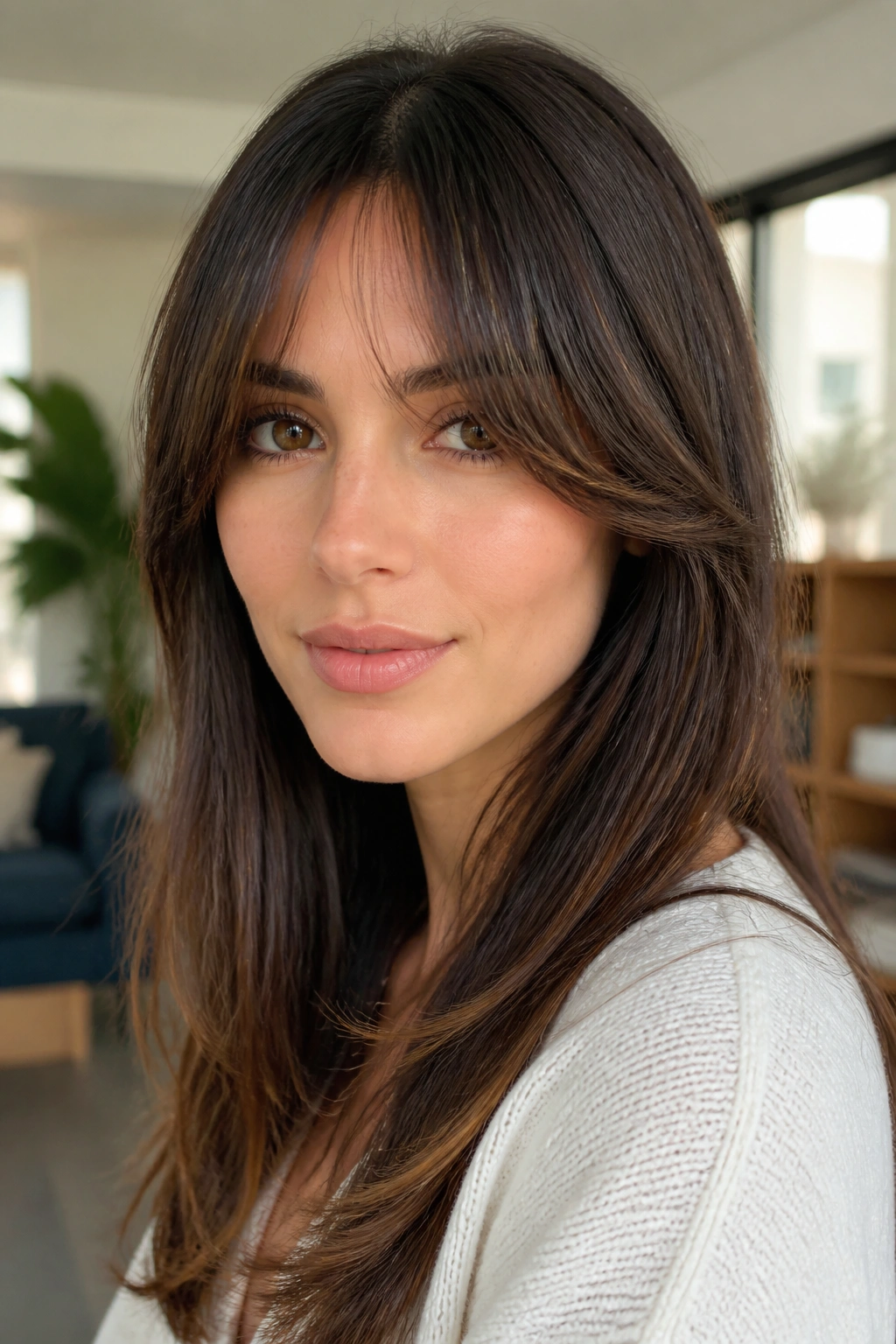
A long face can take bangs beautifully, but the shape has to do some real work. The wrong fringe only makes the face feel longer. The right one breaks the vertical line in a soft, useful way.
Where the weight should sit
The weight should live a little lower across the forehead, with the outer pieces broad enough to add a sense of width near the temples or cheekbones. Rounded soft bangs are a strong pick here, as are curtain bangs that open just enough to show skin. I would avoid a too-short micro bang unless you want a sharper look. For a gentler frame, the front should meet the eyes or brows and then drift outward.
This is where a few extra millimeters matter. A center that is too short can pull the eye upward. A side piece that is too thin can disappear. What you want is a visible frame that still moves. Think soft curve, not hard shelf.
- Keep the fringe a little lower on the forehead.
- Let the sides carry some width.
- Use a round brush or wide bend brush when drying.
- Ask for point-cut ends so the line stays light.
18. Soft Bangs With a Bob That Keep the Cut Light
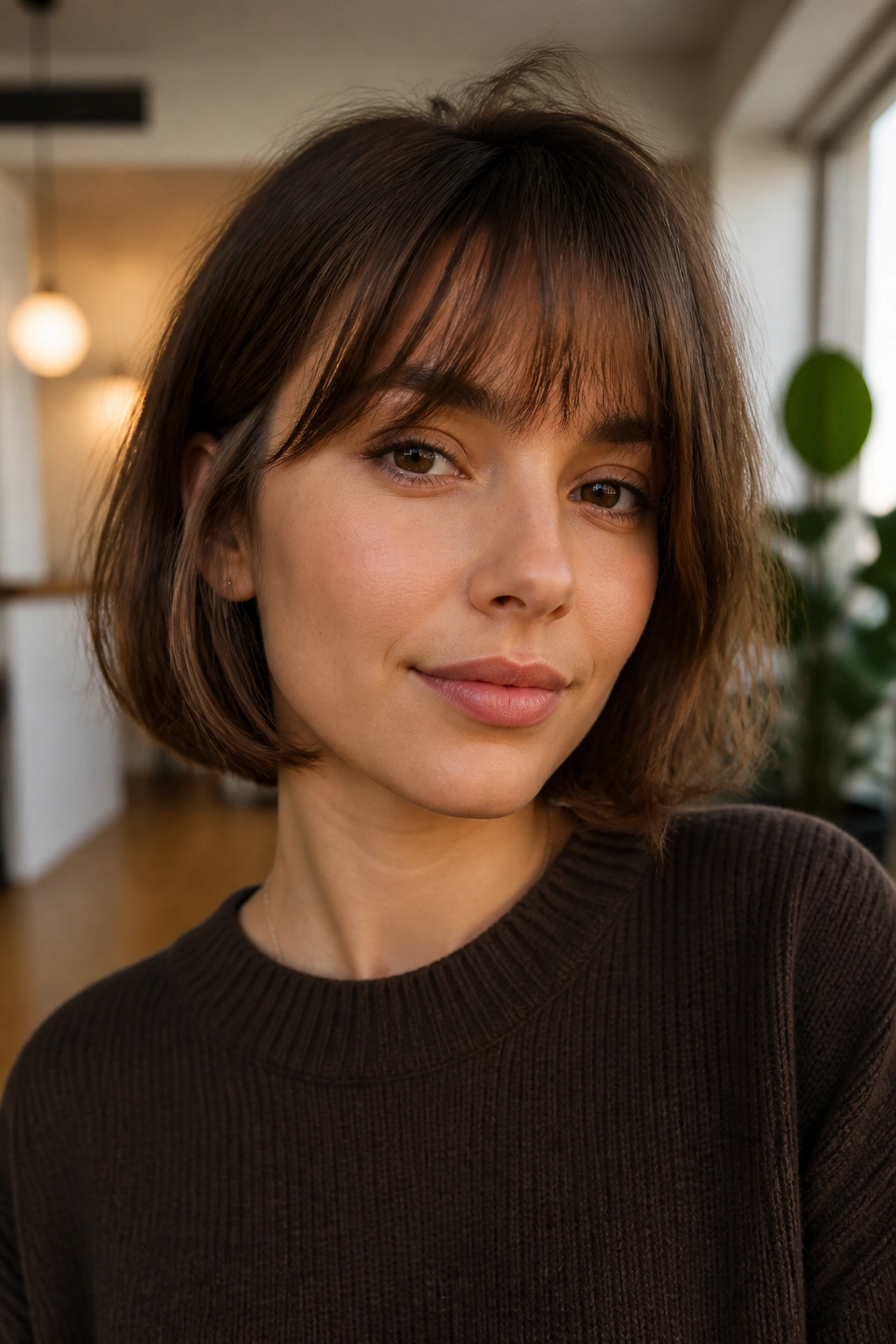
A bob can turn boxy fast if the bangs are too heavy. That is why soft fringe works so well with it. The two shapes keep each other honest.
When the bob is crisp at the jaw and the bangs are airy, the haircut feels balanced instead of blunt. I like a fringe that sits just above the brows or splits gently at the center, because it keeps the bob from looking like a helmet. If the bob is chin-length, the bangs can be a little longer. If the bob is jaw-length, a lighter fringe usually looks cleaner.
- Keep the front pieces narrow enough to avoid crowding the face.
- Let the bob itself carry the shape; the bangs should not compete with it.
- Dry the fringe first so it does not get flattened by the rest of the cut.
- Use a light cream or mist, not heavy oil.
This pairing is neat without feeling severe. That is a harder balance to get than people think.
19. Soft Bangs With a Lob That Add Movement

A lob is one of the easiest haircuts to pair with soft bangs because the length gives the front room to breathe. The fringe can sit shorter, then melt into the rest of the cut without looking chopped off.
The trick is not to make the bangs too separate from the rest of the hair. A lob already has a clean, simple line. The front should echo that shape, not fight it. I like soft curtains here, but a piecey side sweep can work too if you wear your hair off-center or tuck one side back often. The extra length around the collarbone leaves space for the bangs to feel light rather than crowded.
One nice thing about this combo: it looks polished even when the styling is a little rough. A lob with soft bangs does not need every strand perfectly placed. It needs movement near the face and a clean edge at the bottom. That is enough. Sometimes more than enough.
20. Grown-Out Soft Bangs That Still Look Intentional

What if the best soft bangs are the ones you do not rush to trim every few weeks? Grown-out fringe can be a smart, low-fuss choice if it is shaped with a little thought.
The length usually sits below the brow and drifts into the cheekbones, so it never feels like a hard line. That makes it easy to pin back, tuck to one side, or let fall loose when you want a little face framing. I like this for anyone who wants the idea of bangs without the constant maintenance. The front stays useful even as it gets longer.
This shape is forgiving, which is not the same thing as boring. A grown-out fringe can soften a ponytail, dress up loose hair, and make a simple cut feel finished. Keep the center a little shorter than the sides, and trim the ends before they reach that stringy, overgrown stage. After that, the whole style keeps its shape with far less effort than a blunt bang ever will. If you want the gentlest version of bangs, this is where I would start.
